




Abstract
This study examines the factors influencing distance education and online English learning in AI-driven education by integrating flow experience theory with the Technology Acceptance Model. Using a quantitative research approach, data was collected from 289 learners using AI-assisted platforms and analyzed through structural equation modeling (SEM). The findings revealed that flow was significantly associated with continuous intention. All the antecedents, including intrinsic motivation, immediacy, and feedback, significantly impacted flow, except telepresence and competition. Furthermore, flow significantly impacted online engagement, perceived ease of use, academic performance, and perceived usefulness. Lastly, online engagement, perceived usefulness, academic performance, and perceived ease of use significantly impacted CI. These findings offer theoretical insights into digital learning engagement and provide practical implications for designing AI-enhanced educational platforms that foster sustained learner commitment through optimized user experiences, personalized feedback mechanisms, and instructional strategies that promote flow.
Plain Language Summary
This research examines how students remain engaged with AI-powered English learning platforms and what motivates them to continue using these tools for learning. The study examined 289 students who use AI-assisted learning platforms to understand what motivates them and enables them to perform well. The researchers found that when students experience "flow" - a state in which they are entirely absorbed and engaged in their learning - they're more likely to continue using these platforms. This flow state is triggered by students' internal motivation to learn and how quickly they receive feedback from the system. Interestingly, while factors such as competition and virtual presence weren't as important as expected, the study revealed that when students experience flow, they find the platforms easier to use, perform better academically, and are more engaged with their learning. The research offers valuable insights for educators and developers designing AI-powered learning platforms, suggesting that they should focus on creating experiences that promote a state of flow through personalized feedback and engaging content.
Keywords
Introduction
Advancements in artificial intelligence (AI)-assisted learning technologies have transformed digital education, significantly enhancing accessibility, engagement, and effectiveness in higher education (C.-T. Chen, Chen, et al., 2024). Integrating AI-powered learning systems into educational platforms has helped mitigate traditional learning constraints, including time limitations, geographical barriers, and disparities in learning pace (Onesi-Ozigagun et al., 2024). Given the flexibility and adaptive learning opportunities offered by these technologies, AI-assisted learning has become an increasingly preferred instructional approach across universities worldwide. As digital knowledge drives the modern education economy, academic institutions leverage AI-driven platforms to disseminate knowledge, personalize learning experiences, and foster lifelong learning opportunities (X. Wang et al., 2024). Despite these advantages, empirical research indicates that AI-powered learning platforms face persistent challenges, particularly high dropout rates and fluctuating learner engagement levels (Onesi-Ozigagun et al., 2024).
The flow experience (FLE), a psychological state characterized by deep immersion, heightened concentration, and optimal engagement, is influenced by several key antecedents, including intrinsic motivation (IM), immediacy (IMME), competition (COMP), telepresence (TP), and feedback (FB). These factors collectively shape the conditions for learners to enter and sustain a FLE state, particularly in AI-assisted online learning environments. IM, which involves engaging in learning activities for the inherent satisfaction they provide rather than for external rewards, is fundamental to fostering sustained engagement and cognitive absorption (Sadoughi & Eskandari, 2024). IMME, defined as the psychological closeness learners feel toward their educational content and instructors, has enhanced perceived engagement and interactivity, critical precursors to FLE (T.-Y. Chen, Li, & Yang, 2024). When structured appropriately, COMP is a motivational driver that introduces challenging yet attainable goals, encouraging active participation and perseverance. Well-designed competitive elements within AI-driven educational platforms stimulate engagement and task persistence, reinforcing FLE (Y.-C. Lin & Hou, 2024). TP, or the perception of being fully immersed in a virtual learning environment, further strengthens cognitive involvement by creating an illusion of presence within the digital space, enhancing sustained attention and deep learning (Muhammad Sohail Jafar et al., 2024). Additionally, FB mechanisms clarify task expectations, reinforce competence, and help learners navigate academic challenges, fostering optimal engagement and prolonged FLE (Bae, 2014). Recognizing the pivotal role these antecedents play in shaping FLE, this study aims to examine their impact within AI-driven digital learning environments systematically. Furthermore, this research also aims to find the relationship between FLE and continuous intention (CI) to use AI-assisted learning platforms.
In the rapidly evolving domain of digital education, the FLE has emerged as a pivotal factor influencing learners’ online engagement (OE) to use AI-assisted learning environments (Y. Wei et al., 2024). Research indicates that learners who attain FLE demonstrate heightened interaction with AI-powered platforms, leading to greater OE (Sadoughi & Eskandari, 2024). Integrating flow-inducing elements, such as gamification, real-time FB, and immersive TP, has significantly enhanced students’ willingness for OE with online platforms, thus fostering a more profound commitment to self-directed learning (Arghashi & Yuksel, 2022). Given the persistent challenge of high dropout rates in online education, examining the relationship between FLE and OE is essential for developing more effective AI-assisted learning environments (Hamari et al., 2016). This study aims to contribute to this body of knowledge by analyzing how FLE fosters OE.
The technology acceptance model (TAM) asserts that an individual’s adoption and sustained use of technology are primarily influenced by their perceived usefulness (PU) and perceived ease of use (PEU; Davis, 1989). TAM has evolved significantly since Davis’s (1989) seminal work, particularly in AI-enhanced educational contexts (Abu-AlSondos et al., 2023; Ali et al., 2025). Recent research has demonstrated that traditional TAM constructs—PU and PEU—interact distinctly with FLE in AI-assisted environments (Ruangkanjanases et al., 2024). While classic TAM emphasizes cognitive evaluation, contemporary research reveals that AI-specific factors, such as algorithmic transparency and adaptive learning capabilities, significantly impact these relationships (Ali et al., 2025). When learners enter FLE, characterized by deep concentration and intrinsic motivation, they are more likely to view educational technology as an effective tool for enhancing learning outcomes, thereby reinforcing PU. Additionally, seamless navigation contributes to FLE, resulting in a heightened PEU, as learners find AI-powered educational tools more intuitive and enjoyable to engage with (Yan et al., 2024). Empirical studies suggest that the interplay between FLE and TAM constructs has a significant impact on learners’ CI when using AI-assisted platforms. Understanding the relationship between FLE, PU, and PEU is essential for optimizing AI-driven learning environments (Ruangkanjanases et al., 2024). Hence, this study aims to explore the relationships of FLE with PEU and PU.
Research has consistently demonstrated that students who frequently experience FLE within AI-assisted learning platforms achieve higher learning outcomes, demonstrate stronger critical thinking skills, and exhibit greater academic performance (AP; Sadoughi & Eskandari, 2024). Furthermore, FLE significantly fosters self-regulated learning behaviors, leading to enhanced AP (Y. Wei et al., 2024). The integration of adaptive AI technologies, which provide interactive, personalized, and immersive learning experiences, has been found to minimize cognitive barriers and sustain student motivation, both of which are critical for AP (Kaya & Ercag, 2023). Given these empirical insights, cultivating FLE in AI-assisted educational platforms is essential for maximizing student engagement and improving AP (Jahedizadeh et al., 2021). Hence, this research aims to examine the association between FLE and AP.
OE plays a pivotal role in shaping CI, reflecting a learner’s commitment to using AI-assisted learning platforms over time (Kumar & Kumar, 2024). OE, defined by active participation, meaningful interaction, and deep immersion in digital learning environments, contributes to positive learning experiences, reinforcing a learner’s CI to use the platform (Cheng, 2023). Empirical research highlights a strong correlation between higher OE levels and lower dropout rates in online learning environments, as learners who perceive value in their educational experience are more likely to develop CI to use learning platforms (Shao & Chen, 2021). Furthermore, AI-driven learning platforms, OE, and peer collaboration enhance learner interaction and commitment, strengthening their CI to persist in digital learning (Cheng, 2023). Understanding the relationship between OE and CI is essential for designing AI-powered learning systems that capture initial learner interest and foster long-term retention, motivation, and academic success (Kumar & Kumar, 2024). Consequently, this research aims to explore the association between OE and CI.
The TAM has been extensively utilized to examine the factors influencing CI’s use of educational technologies, particularly AI-assisted learning platforms. PU and PEU are key determinants of this framework, significantly shaping learners’ long-term engagement and technology adoption decisions (Ruangkanjanases et al., 2024). PU has a direct positive effect on CI, as students are more likely to persist in using an AI-powered system if they perceive it as beneficial to their academic success (Gani et al., 2024). Additionally, PEU plays a crucial role in shaping CI, as learners are less likely to engage with systems perceived as complex or challenging to navigate (Basuki et al., 2022). When AI-assisted learning tools feature intuitive interfaces, seamless interactivity, and user-friendly navigation, learners experience lower cognitive load, resulting in greater satisfaction and prolonged engagement (Liesa-Orús et al., 2023). Since sustained engagement with AI-driven educational platforms is critical for maximizing learning outcomes and ensuring long-term academic benefits, a deeper understanding of the interplay between PU, PEU, and CI is critical (Zhao & Khan, 2021). Hence, this research aims to explore the relationships of PEU and PU with CI. Additionally, this study will also examine the significance of PEU on PU.
AP is a key determinant in shaping learners’ CI to engage with educational technologies, particularly in AI-assisted learning environments (Maqableh et al., 2021). According to the Expectancy-Value Theory (Man et al., 2024), students are more inclined to continue using an educational platform when they recognize that their academic achievements are directly enhanced through sustained engagement. Empirical studies indicate that higher AP reinforces positive attitudes toward AI-driven learning systems, fostering a stronger CI (Wandira et al., 2024). Research in self-regulated learning further suggests that students who experience measurable AP through personalized AI-driven feedback and adaptive learning paths are more likely to maintain CI by using these platforms (Maqableh et al., 2021). Consequently, this research aims to explore the association between AP and CI.
Researchers have applied various behavioral and technology adoption theories to address the factors influencing the adoption and continued usage of AI-assisted learning. Notable frameworks such as the TAM, the expectation-confirmation model (ECM; Ruangkanjanases et al., 2024), and the theory of planned behavior (TPB; A. Khan et al., 2020) provide critical insights into learner engagement. While these models effectively explain the determinants of AI adoption, they often neglect the role of IM in sustaining long-term engagement within AI-driven e-learning ecosystems. Furthermore, CI with AI-powered platforms is critical for ensuring that students and educational institutions derive long-term benefits (Onesi-Ozigagun et al., 2024). This research significantly advances the understanding of AI-assisted learning platforms by integrating constructs from the TAM, FLE, and its antecedents, including IM, IMME, COMP, TP, and FB. It also includes AP and OE as significant mediators between FLE and CI, thereby constructing a comprehensive framework. This study uniquely investigates the interrelationships between FLE and CI by addressing existing gaps. Secondly, it investigates the impacts of antecedents of FLE on FLE. Thirdly, this research assesses the impacts of FLE on AP, OE, PEU, and PU. Lastly, this research measures the impacts of OE, PEU, PU, and AP on CI. Practically, this research provides actionable insights for optimizing AI-driven learning platforms, enhancing user engagement and academic outcomes.
Theoretical Background and Hypotheses Development
Flow and Continuous Intention
The impact of FLE on learning outcomes and CI has been widely recognized in digital education research. Learners who achieve FLE become fully immersed in the learning process, allowing them to engage deeply with the educational content (Cao et al., 2024). The level of user involvement in AI-powered learning platforms enhances concentration and cognitive absorption, leading to a more seamless learning experience (Yao et al., 2024). Several studies have employed the stimulus-organism-response (S-O-R) model to explore the relationship between learners’ FLE and their CI of learning (Gao, 2023; Zhao & Khan, 2021). It is indicated that students who experience enjoyment and satisfaction while interacting with AI-driven educational platforms demonstrate stronger learning CI and motivation (Gao, 2023). Similarly, research suggests that FLE significantly influences cognitive engagement, knowledge retention, and CI of platform usage in AI-assisted learning environments. Learners who find AI-driven learning interactive, adaptive, and stimulating are more likely to remain fully engaged and motivated to continue their online education (Zhao & Khan, 2021). Given these findings, learners are likelier to exhibit CI when using AI-assisted learning platforms if their educational experiences are engaging, immersive, and enjoyable. Positive interactions within adaptive AI-driven learning systems enhance FLE. The following hypothesis is proposed.
Antecedents of Flow
Intrinsic Motivation and Flow
IM motivation is pivotal in promoting engagement and enjoyment in AI-assisted online learning environments, particularly where direct instructor interaction and conventional classroom structures are absent (Rheinberg & Engeser, 2018). In these digital learning platforms, learners are not merely influenced by external rewards but are also driven by internal goals, intellectual curiosity, and the inherent satisfaction of acquiring knowledge (Hong et al., 2017). AI-powered educational systems further enhance IM by tailoring instructional content to meet individual learning needs and competencies (Kong & Wang, 2021). In AI-enhanced learning environments, achieving FLE has been linked to improved knowledge retention, enhanced problem-solving abilities, and overall academic success (Sadoughi & Eskandari, 2024). Empirical findings in educational technology and cognitive psychology indicate that IM is a key determinant of FLE, as it fosters an alignment between students’ interests and structured academic activities. This alignment reduces cognitive overload, supporting sustained attention and engagement (X.-M. Wang et al., 2023). By creating highly interactive, personalized, and adaptable learning experiences, AI-driven educational platforms increase FLE states’ probability, leading to higher retention rates, deeper conceptual understanding, and a more sustained commitment to lifelong learning (Hong et al., 2017; Kaya & Ercag, 2023). The following hypothesis is proposed.
Immediacy and Flow
AI-assisted learning technologies have revolutionized online education, enabling learners to access educational materials instantly, regardless of time or location. The concept of IMME pertains to the ease with which students can engage with AI-powered learning platforms as needed (Pedrero-Esteban & Barrios-Rubio, 2024). AI-driven educational systems, incorporating personalized learning pathways, automated tutoring, and real-time feedback, enhance accessibility by eliminating conventional constraints such as fixed schedules, physical classroom limitations, and instructor availability (T.-Y. Chen, Li, & Yang, 2024). Studies on digital engagement and learning motivation indicate that ubiquitous access to educational resources significantly fosters FLE states in technology-enhanced environments (Hew et al., 2024). Similarly, IMME to digital services strengthens user immersion, promoting sustained cognitive engagement. When applied to AI-assisted education, the ability to seamlessly initiate a learning session at any moment heightens the probability of FLE, allowing students to become deeply engrossed in their educational tasks (He et al., 2024). Features such as adaptive content delivery, interactive learning activities, and instant information retrieval further reinforce this effect, ensuring that learners maintain focus, engagement, and intrinsic motivation throughout their educational experience (Hew et al., 2024). The following hypothesis is proposed.
Competition and Flow
COMP is a critical psychological mechanism that fosters cognitive engagement, motivation, and sustained learning behavior in AI-assisted online learning environments (Hew et al., 2024). Rooted in self-determination theory (Waterman et al., 2024) and goal-setting theory (Locke & Latham, 2019), COMP has been identified as a key driver of performance and persistence in technology-enhanced learning. When learners are placed in competitive learning contexts, they experience a heightened sense of challenge and achievement, which enhances IM and engagement with the learning material (Y.-C. Lin & Hou, 2024).
While AI-assisted learning environments utilize adaptive leaderboards and performance analytics, the integration of VR/AR simulations, achievement systems, and gamification elements creates a multi-dimensional competitive landscape (Alkhwaldi, 2024; bayu dani Nandiyanto & Sidik, 2026). For instance, VR-enabled competitive scenarios provide immersive experiences, while gamification platforms offer achievement badges and competitive challenges, collectively enhancing FLE (Cinar et al., 2024). This technology-enhanced competition creates an engaging environment that promotes sustained FLE (Li et al., 2024). Through gamified assessments, AI-driven leaderboards, and real-time performance analytics, AI-assisted learning platforms introduce COMP that encourages learners to remain actively engaged, ultimately fostering FLE (C.-H. Chen et al., 2018). Studies in educational gamification suggest that AI-enhanced COMP mechanisms, such as adaptive difficulty scaling and dynamic feedback systems, significantly increase the likelihood of learners achieving and maintaining FLE (Hamari et al., 2016). Furthermore, gamified AI-driven learning environments, which integrate ranking systems, achievement-based rewards, and adaptive challenges, have been found to intensify learner engagement and increase their time-on-task, ultimately reinforcing FLE (Li et al., 2024).
This suggests that when learners engage in AI-mediated COMP, they are more likely to become fully immersed in their educational activities, demonstrating higher levels of FLE (Hew et al., 2024). The following hypothesis is proposed.
Telepresence and Flow
TP refers to the extent to which learners feel present in a digital environment despite being physically distant from an instructor or traditional classroom setting (Muhammad Sohail Jafar et al., 2024). This construct has been widely studied in human-computer interaction and educational technology, where it has been linked to higher levels of engagement, deeper cognitive processing, and improved learning performance (Doğan et al., 2024).
Within AI-driven educational platforms, TP is enhanced through interactive virtual environments, intelligent tutoring systems, and adaptive content delivery mechanisms, creating a seamless and immersive learning experience (Muhammad Sohail Jafar et al., 2024). TP demonstrates differently across various educational technologies, with each platform offering unique immersive experiences. While AI-assisted learning platforms offer adaptive interactions, VR environments foster a profound sense of spatial presence through immersion and feedback (Hilty et al., 2020). AR connections enhance real-world learning spaces with interactive digital elements. Gamification in AI-assisted learning platforms utilizes achievement systems and narrative elements to deepen engagement (Addas et al., 2024). This multi-technology approach creates a rich TP that significantly contributes to FLE by fostering deeper cognitive engagement and sustained attention (Muhammad Sohail Jafar et al., 2024).
Empirical research suggests that when learners experience a strong sense of TP, they are more likely to engage deeply with the material, sustaining focused attention and cognitive involvement, contributing to the emergence of FLE states (Q. Wang et al., 2025). Moreover, studies on technology-enhanced learning have demonstrated that TP mitigates cognitive load by creating a psychologically engaging environment, reducing distractions, and enabling learners to remain absorbed in complex learning tasks (H. Kim et al., 2023). This effect is further amplified in AI-powered learning environments, where customized AI-driven interactions and responsive digital interfaces create a dynamic and engaging educational experience (Parahiyanti & Dimara, 2024). The following hypothesis is proposed.
Feedback and Flow
Within technology-enhanced education, FB refers to the reciprocal exchange of information between learners and AI-driven learning systems, allowing for real-time guidance and self-regulation (Liu & Hwang, 2024). Through natural language processing, automated error detection, and predictive analytics, AI-powered platforms personalize learning pathways by offering timely and context-specific FB, helping learners refine their understanding and performance (Chien et al., 2024). Educational psychology and cognitive science studies highlight that well-structured FB fosters perceived competence, facilitating FLE (Buzady et al., 2024). Learners receiving prompt and targeted FB can effectively adjust their approach, set appropriate learning goals, and maintain focus, all of which are conducive to deep engagement and sustained FLE (Xu et al., 2021). Conversely, lacking FB can lead to uncertainty and disengagement, preventing learners from fully immersing in AI-assisted learning environments (Cao et al., 2024). AI-powered platforms that integrate machine learning algorithms, dynamic FB loops, and intelligent tutoring systems enable learners to develop a progressive sense of mastery, reinforcing FLE (Bae, 2014). The following hypothesis is proposed.
Flow and Online Engagement
The FLE, defined by deep immersion and sustained concentration, fosters learner OE within AI-assisted online learning environments (H. E. Park & Yap, 2024). The alignment of task complexity with learner skill levels in digital education platforms encourages optimal OE, creating an interactive and rewarding learning experience (Hsiao & Chang, 2024). The direct impact of FLE on OE is reflected in extended participation, increased cognitive involvement, and greater interaction with learning platforms (Sadoughi & Eskandari, 2024). This heightened engagement is instrumental for knowledge acquisition and skill development, particularly vital in technology-mediated learning contexts (K.-Y. Lin & Huang, 2024). Additionally, FLE generates a positive reinforcement cycle, where increased OE improves learning outcomes, motivating students to immerse themselves more deeply in the content (Sadoughi & Eskandari, 2024). Beyond increasing interaction frequency, FLE-driven OE enhances the quality of learning experiences. This depth of OE is essential for maximizing the effectiveness of AI-assisted learning systems, underscoring the need for instructional strategies that promote sustained FLE states to optimize educational outcomes (Y. Wei et al., 2024). The following hypothesis is proposed.
Flow and Perceived Ease of Use
Within AI-assisted online learning environments, the FLE, characterized by deep engagement and heightened immersion, is crucial in shaping learners’ perceptions of technology usability (S. Khan & Khan, 2021). The intense focus and IM associated with FLE may diminish users’ awareness of interface complexities, increasing their PEU toward the learning platform (Xu et al., 2021). This suggests that learners who attain FLE in AI-assisted learning environments may find the interface easier to navigate and develop greater competence in managing technological challenges (Q. Wang et al., 2025). Consequently, their PEU may be enhanced as they become more confident interacting with the system (Ruangkanjanases et al., 2024). Moreover, FLE has been associated with increased familiarity and proficiency with a platform’s functionalities, further reinforcing its perceived usability. As learners engage with the system more frequently, they develop FLE, which may lead to a progressive shift in their perception of the platform as user-friendly (Lu et al., 2022). FLE is not solely an outcome of individual engagement but is also influenced by how well the digital environment supports PEU. Once engaged in FLE, users may attribute their seamless interaction with the platform to its PEU, further reinforcing positive perceptions of the technology (Xu et al., 2021; Zhao & Khan, 2021). The following hypothesis is proposed.
Flow and Perceived Usefulness
Research suggests that when learners experience deep cognitive absorption in an FLE state (X. Wang et al., 2022), they evaluate AI-driven learning platforms as more intuitive and user-friendly, reinforcing PU and their technology acceptance (Wu & Xie, 2024). Self-perception theory posits that individuals adjust their attitudes and behaviors to maintain internal consistency, reducing any dissonance between their expectations and experiences with technology (Bem, 1972). This sense of cognitive control and familiarity enhances their PU, making complex technological interactions appear more seamless and intuitive. Moreover, FLE in AI-enhanced learning contexts has been linked to higher task engagement, reduced cognitive load, and greater technology adoption rates (X. Wang et al., 2022). Consequently, the initial learning curve of AI-driven education systems diminishes, reinforcing positive PU and system effectiveness (Kong & Wang, 2021). Furthermore, empirical studies emphasize the role of environmental structuring in sustaining FLE states, as AI-driven platforms optimize content delivery, engagement strategies, and task complexity alignment to foster an uninterrupted learning experience (Ruangkanjanases et al., 2024). When learners attribute their smooth and immersive interaction with an AI system to its design efficiency, their PU is further strengthened (Zhao & Khan, 2021). The following hypothesis is proposed.
Flow and Academic Performance
The FLE, characterized by deep cognitive absorption, sustained concentration, and IM, plays a vital role in shaping AP in AI-assisted online learning environments (Shkëmbi & Treska, 2023). FLE facilitates improved comprehension, problem-solving abilities, and task persistence within AI-assisted educational platforms, leading to enhanced AP (Shernoff, 2010). Empirical research highlights that students who experience FLE in learning environments are more likely to demonstrate higher levels of engagement, cognitive flexibility, and sustained effort, all of which contribute to AP (Jahedizadeh et al., 2021). AI-driven learning systems, incorporating adaptive learning pathways, personalized FB, and real-time content adjustments, optimize task complexity to align with learners’ skill levels, fostering an environment conducive to FLE (Elareshi et al., 2022). As learners experience higher levels of IM through FLE, they are more likely to exhibit greater AP and increased problem-solving skills in assessments and coursework. The cognitive load theory further supports the impact of FLE on AP by explaining how FLE minimizes extraneous cognitive load, enabling learners to allocate cognitive resources toward meaningful learning activities effectively (Jahedizadeh et al., 2021; Sweller, 2023). AI-assisted learning platforms facilitate this process by offering real-time scaffolding, automated assistance, and predictive analytics, which enhance learning retention and efficiency (Shernoff, 2010; Shkëmbi & Treska, 2023). By reducing cognitive overload and promoting structured knowledge acquisition, these platforms enable students to achieve higher AP scores more easily. The following hypothesis is proposed.
Perceived Ease of Use and Perceived Usefulness
When learners find AI-assisted educational platforms easy to navigate, their confidence in the system's ability to enhance learning performance increases, ultimately strengthening their perception of its usefulness (Yan et al., 2024). User-friendly AI-driven learning interfaces, characterized by adaptive recommendations and automated content structuring, reduce cognitive effort, reinforcing the perception that the technology is valuable for academic success (D. Y. Park & Kim, 2023). When AI-driven learning platforms offer intuitive interfaces, automated guidance, and personalized learning trajectories, learners require less effort to engage with instructional materials, leading to an increased perception that the technology enhances their learning efficiency (Lu et al., 2022). Furthermore, studies indicate that PEU strengthens PU by fostering a sense of control, essential for maintaining engagement and long-term system adoption (Liesa-Orús et al., 2023). Additionally, the self-regulated learning model suggests that when learners experience minimal barriers in navigating AI-assisted learning platforms, they internalize their interactions as efficient and productive, reinforcing their PU (Yan et al., 2024). As AI-driven adaptive learning models continuously optimize the user experience, learners develop greater digital literacy, enhancing their PEU and PU (D. Y. Park & Kim, 2023). The following hypothesis is proposed.
Online Engagement and Continuous Intention
OE, defined as the intensity and consistency of a learner’s interaction with an AI-assisted learning platform, is a crucial determinant of CI’s use of such systems (Cheng, 2023). Engagement Theory (Kearsley & Shneiderman, 1998) underscores that meaningful OE with digital learning resources fosters a deeper CI in educational activities. In AI-assisted learning environments, OE is a behavioral phenomenon and a cognitive and emotional process that directly influences the learner’s CI utilizing the platform (Shao & Chen, 2021). Within AI-driven educational platforms, OE promotes an enhanced connection to the learning environment, fostering a more profound sense of belonging and investment in the platform. This sense of involvement plays a pivotal role in transitioning initial adoption behaviors into long-term commitment as learners develop habitual OE patterns and integrate the system into their regular learning routines (Sokro et al., 2025). These theoretical perspectives and empirical findings suggest that OE within AI-assisted online learning platforms is a key driver of CI (Kumar & Kumar, 2024). The following hypothesis is proposed.
Perceived Ease of Use and Continuous Intention
In AI-assisted online learning platforms, the PEU with which learners navigate and engage with the system plays a crucial role in shaping their CI (Yan et al., 2024). When users experience PEU in an educational platform, their learning experience is enhanced, reducing cognitive load and fostering a more positive attitude toward CI for technology adoption. Empirical research in educational technology consistently highlights PEU as a determining factor in the CI’s use of digital learning environments (Filieri et al., 2021). Studies indicate that when learners experience PEU in a system, they are more likely to recognize its value and develop a higher inclination toward its CI to use (Gupta et al., 2021). This relationship is particularly pronounced in AI-assisted learning settings, where the PEU can efficiently navigate system features, access personalized content, and interact with AI-driven tools, which can significantly impact learning outcomes and overall CI to engage (Basuki et al., 2022; Ruangkanjanases et al., 2024). Furthermore, PEU indirectly enhances CI’s use of AI-assisted learning platforms by positively influencing perceived usefulness (Yan et al., 2024). When a system is user-friendly, learners are more inclined to explore its advanced functionalities, leading to a deeper appreciation of its educational benefits (Zhao & Khan, 2021). The following hypothesis is proposed.
Perceived Usefulness and Continuous Intention
PU shapes learners’ OE and CI within AI-assisted online learning platforms (Gani et al., 2024). When students recognize that a platform effectively contributes to their educational progress, they increase their CI in using the technology over time (Yan et al., 2024). Empirical research has consistently demonstrated a strong correlation between PU and the likelihood of CI for technology adoption (Basuki et al., 2022). This relationship is particularly pronounced in educational technology, where a learner’s PU directly influences the depth of overall satisfaction and CI (Wu & Xie, 2024). In AI-driven learning environments, the ability of adaptive algorithms to personalize instructional content and cater to individual learning needs significantly enhances the PU of the platform, thereby increasing the probability of long-term CI (X. Wang et al., 2022). Additionally, PU is a mediating factor between other key determinants and learners’ CI to engage with AI-assisted platforms (Zhao & Khan, 2021). While a user-friendly interface may encourage initial adoption, the platform’s PU in improving learning outcomes ultimately solidifies a learner’s CI to use it (Yan et al., 2024). The following hypothesis is proposed.
Academic Performance and Continuous Intention
AP, often measured by learning outcomes, student progress, and assessment results, serves as a strong predictor of a learner’s CI to use AI-driven educational platforms (Maqableh et al., 2021). Empirical research in technology-mediated learning supports the premise that positive AP reinforces a learner’s CI using digital learning tools (Tawafak et al., 2021). According to self-determination theory, students who perceive their AP as improving through AI-assisted platforms experience greater intrinsic motivation and self-efficacy, contributing to their CI to use the platform (Luarn et al., 2023). Additionally, AP serves as a mediator between learner satisfaction and TAM. When students achieve higher grades, better comprehension, and improved problem-solving skills through AI-driven instruction, they are more likely to view the platform as indispensable to their learning process (Tawafak et al., 2018). The model further explains that perceived AP fosters technology acceptance, reinforcing the learner’s belief in the platform’s value and effectiveness (O. Chen, Paas, & Sweller, 2023).
AP, measured through learning outcomes and assessment results, significantly predicts learners’ CI in AI-assisted learning platforms, particularly when facilitated through personalized learning paths and intelligent tutoring systems (Jiao et al., 2022). When students experience improved performance through AI-enabled features such as automated grading feedback, adaptive learning algorithms, and personalized content recommendations, they develop stronger motivation to continue using these platforms (Adewale et al., 2024). The integration of specific AI functionalities, including real-time performance analytics and automated progress tracking, reinforces students’ perceived value of the platform, thereby strengthening their CI (Lee et al., 2022). This efficiency encourages students’ CI to use AI-driven systems, as they recognize the platform’s role in enhancing AP. Integrating AI-based assessment tools and interactive educational simulations further strengthens AP, ensuring a continuous engagement cycle (Tawafak et al., 2018). The following hypothesis is proposed.
The theoretical framework of this research is indicated in Figure 1.

Theoretical framework.
Methodology
Data Collection
This study examined online students in China who actively participate in AI-assisted English learning platforms. A sample of 289 students was selected, and data collection was facilitated through an online survey using a purposive sampling technique. To ensure sample representativeness, this research implemented several screening criteria. According to the study’s criteria, the respondents must have used AI-assisted English learning platforms within the past 6 months. Furthermore, the respondents were required to have completed at least one full English learning module or course using these platforms. This sampling approach helped ensure that the data collected was representative of the target population of AI-assisted English learning platform users in China.
The surveys were mailed to users of online English learning platforms with the assistance of SOJUMP in China over 2 months from March to April 2024. Sojump was selected due to its widespread use in academic research and its ability to reach a diverse online learner population. The survey was distributed through multiple channels, including direct invitations to university students via institutional email lists at five major universities in different regions of China, social media platforms such as WeChat groups focused on online learning, and AI-assisted English learning platform user communities.
Research Instrument
To ensure precise measurement, the study employed Likert scale items, allowing respondents to express their level of agreement or disagreement on a seven-point scale, ranging from 1 (strongly disagree) to 7 (strongly agree), with four serving as a neutral category.
To ensure content validity, the questionnaire was first developed in English based on validated scales from previous studies. It was then translated into Chinese using a back-translation procedure involving two bilingual experts in educational technology.
Various constructs were measured using previously validated scales. The FLE, PEU, PU, and FB were adapted from the study by Xu et al. (2021). Items assessing CI were sourced from Cheng’s (2014) research. The measurement of COMP and IMME was modified and adapted from the study by Hew et al. (2024). The construct of IM was assessed based on the scale proposed by Hong et al. (2017), while TP was measured using items from N. Wei and Li’s (2021) research. Additionally, OE was measured using the framework developed by Taghizade et al. (2024). AP was evaluated using the approach suggested by Hashemi (2021). The details regarding the research items are provided in the Appendix A.
Before launching the full-scale survey, a pilot test was conducted with 40 randomly selected participants to assess the validity and reliability of the questionnaire items. The final sample consisted of 289 respondents who had experience using AI-assisted learning platforms. The research hypotheses were tested using partial least squares structural equation modeling (PLS-SEM) to analyze the relationships among the study variables and determine the robustness of the proposed model. The distributed close-ended questionnaires yielded a 93.78% response rate, which is considered optimal for research reliability. The demographic composition of the sample is provided in Table 1.
Demographic Profile of Respondents (N = 289).

Data Analysis
This study employed PLS-SEM to examine the dataset and test the hypothesized relationships. PLS-SEM is widely used in research because it can handle complex models and diverse data samples (J. Hair et al., 2023). The evaluation process followed a two-stage approach. Initially, the reliability and validity of the model were assessed to ensure robustness. Subsequently, path analysis was conducted to test the proposed hypotheses. The statistical analysis was carried out using SMARTPLS software (Ringle et al., 2015), which facilitated examining structural relationships within the model.
Convergent and Discriminant Validity
Convergent validity evaluates how multiple measures accurately reflect the same underlying construct. Interpreting research findings can lead to ambiguity when alternative measures exhibit weak convergent validity. To ensure internal reliability, this study utilized Cronbach’s alpha, a widely accepted measure of internal consistency. The reliability of the measurement model was assessed based on Cronbach’s alpha values.
Additionally, convergent validity was examined using Average Variance Extracted (AVE), Rho_A, and composite reliability (CR). As shown in Table 2, the Cronbach’s alpha and Rho_A values exceeded 0.7 (Taber, 2018). The AVE values surpassed 0.5 (Fornell & Larcker, 1981). The CR values were above 0.7, indicating strong convergent validity and a reliable measurement model.
Convergent Validity.

Note. AP = academic performance; COMP = competition; CI = continuous intention; FB = feedback, FLE = flow experience, IMME = immediacy, IM = intrinsic motivation; OE = online engagement; PEU = perceived ease of use; PU = perceived usefulness; TP = telepresence.
In research involving latent variables and multiple indicators, assessing discriminant validity is essential to confirm that the constructs measuring causal relationships remain conceptually distinct. This study employed both the Fornell-Larcker criterion and cross-loadings to evaluate discriminant validity.
The Fornell-Larcker criterion assesses discriminant validity by comparing the square root of the AVEs with the correlation coefficients. In this approach, the diagonal values represent the square root of the AVEs, while the off-diagonal elements denote the correlation coefficients between constructs. As shown in Table 3, the diagonal values exceed the correlation coefficients, confirming strong discriminant validity within the measurement model.
Fornell and Larcker Criterion.

Note. AP = academic performance; COMP = competition; CI = continuous intention; FB = feedback; FLE = flow experience; IMME = immediacy; IM = intrinsic motivation; OE = online engagement; PEU = perceived ease of use; PU = perceived usefulness; TP = telepresence.
As illustrated in Table 4, each indicator demonstrates acceptable discriminant validity (italicized) as its loading value is higher than other indicators within the latent structure (J. F. Hair et al., 2021). These findings confirm that the measurement model effectively distinguishes between different constructs, ensuring statistical robustness.
Cross-Loadings.
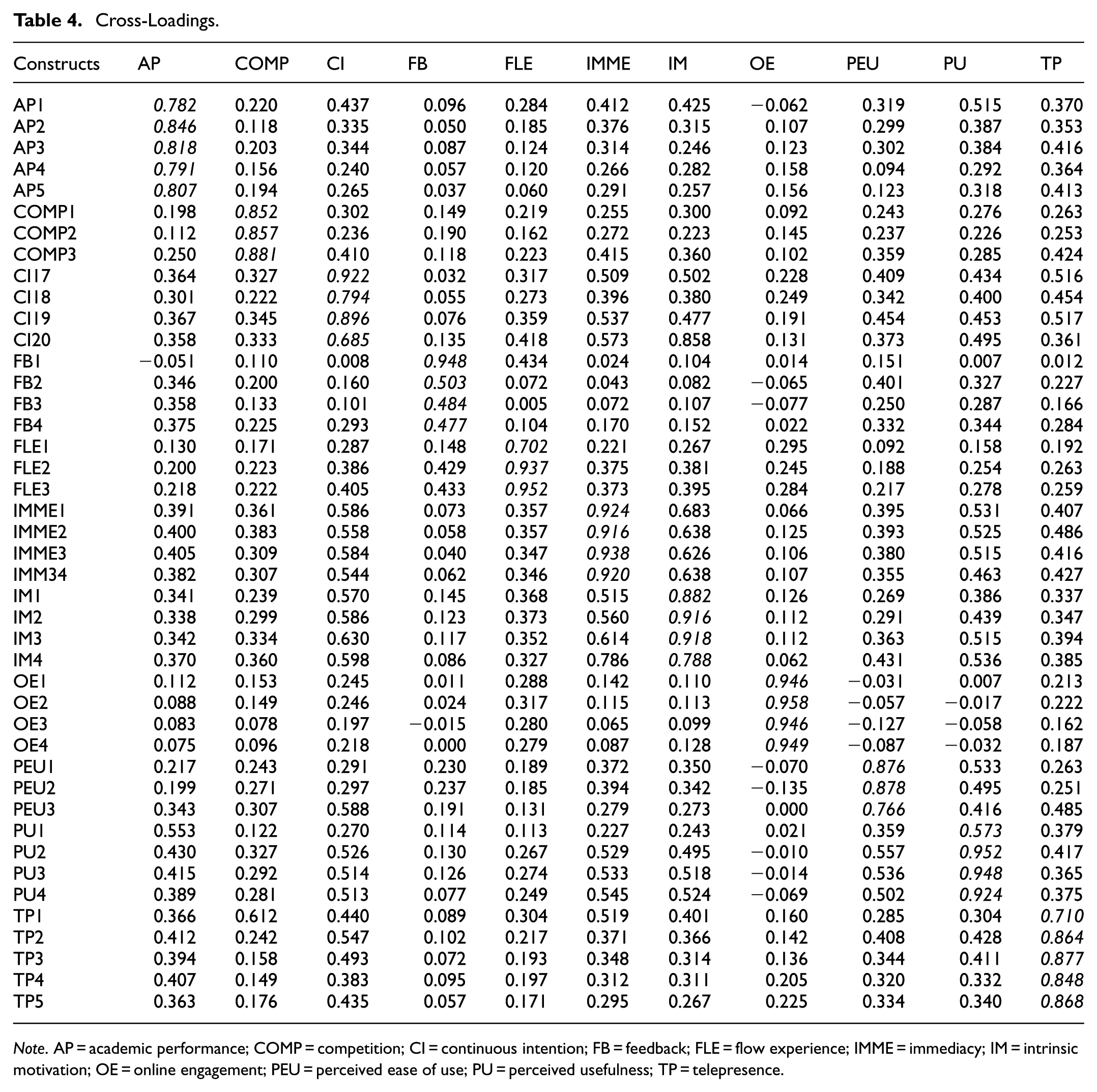
Note. AP = academic performance; COMP = competition; CI = continuous intention; FB = feedback; FLE = flow experience; IMME = immediacy; IM = intrinsic motivation; OE = online engagement; PEU = perceived ease of use; PU = perceived usefulness; TP = telepresence.
Additionally, the Heterotrait-monotrait ratio (HTMT) analysis in Table 5 reveals several significant relationships between the constructs in the AI-driven educational context. The results demonstrate discriminant validity among the constructs, as most HTMT values fall below the conservative threshold of 0.85, suggesting adequate construct distinction (Ab Hamid et al., 2017).
Heterotrait-Monotrait Ratio.

Note. AP = academic performance; COMP = competition; CI = continuous intention; FB = feedback; FLE = flow experience; IMME = immediacy; IM = intrinsic motivation; OE = online engagement; PEU = perceived ease of use; PU = perceived usefulness; TP = telepresence.
The goodness of fit (GOF) assessment for this research was conducted based on Tenenhaus et al.’s (2005) proposed methodology. It is calculated with the following formula.

The GOF values can be classified as small (0.1), medium (0.25), and large (0.36). The obtained GOF value of 0.391 exceeds the large effect size threshold of 0.36, indicating a robust global validation of the PLS model (Wetzels et al., 2009). This suggests that the model has satisfactory explanatory power and predictive relevance (Hair et al., 2019). Lastly, according to Tenenhaus et al. (2005), this result would be considered acceptable for complex structural models.
Empirical Results
The path analysis in this study was performed using the SMARTPLS statistical software (Ringle et al., 2024). The p-value and t-value criteria were applied to determine the significance of the proposed relationships.
According to the findings presented in Table 6 and Figure 2. FLE was significantly associated with CI (β = .193, T-value = 3.411). All the antecedents including IM (β = .194, T-value = 2.321), IMME (β = .166, T-value = 2.109), and FB (β = .366, T-value = 2.474) significantly impacted FLE, except TP (β = .079, T-value = 0.792), and COMP (β = .022, T-value = 0.227). Furthermore, FLE significantly impacted OE (β = .302, T-value = 4.041), PEU (β = .199, T-value = 2.575), PU (β = .163, T-value = 2.208), and AP (β = .214, T-value = 2.433). PEU was discovered to impact PU (β = .545, T-value = 8.870). Lastly, OE (β = .188, T-value = 3.076), PEU (β = .257, T-value = 2.939), PU (β = .272, T-value = 3.458), and AP (β = .152, T-value = 2.136) were found to significantly impact CI.
Empirical Results.
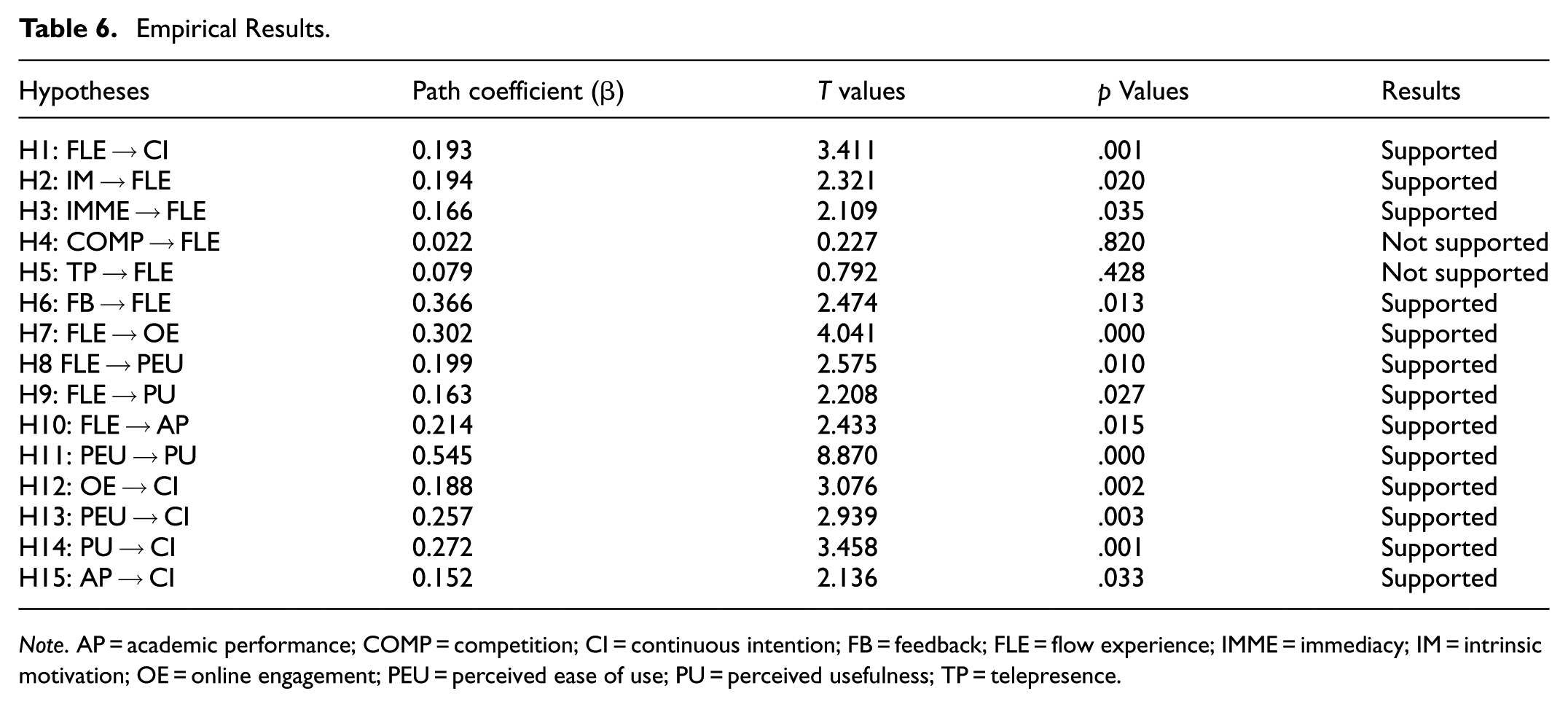
Note. AP = academic performance; COMP = competition; CI = continuous intention; FB = feedback; FLE = flow experience; IMME = immediacy; IM = intrinsic motivation; OE = online engagement; PEU = perceived ease of use; PU = perceived usefulness; TP = telepresence.
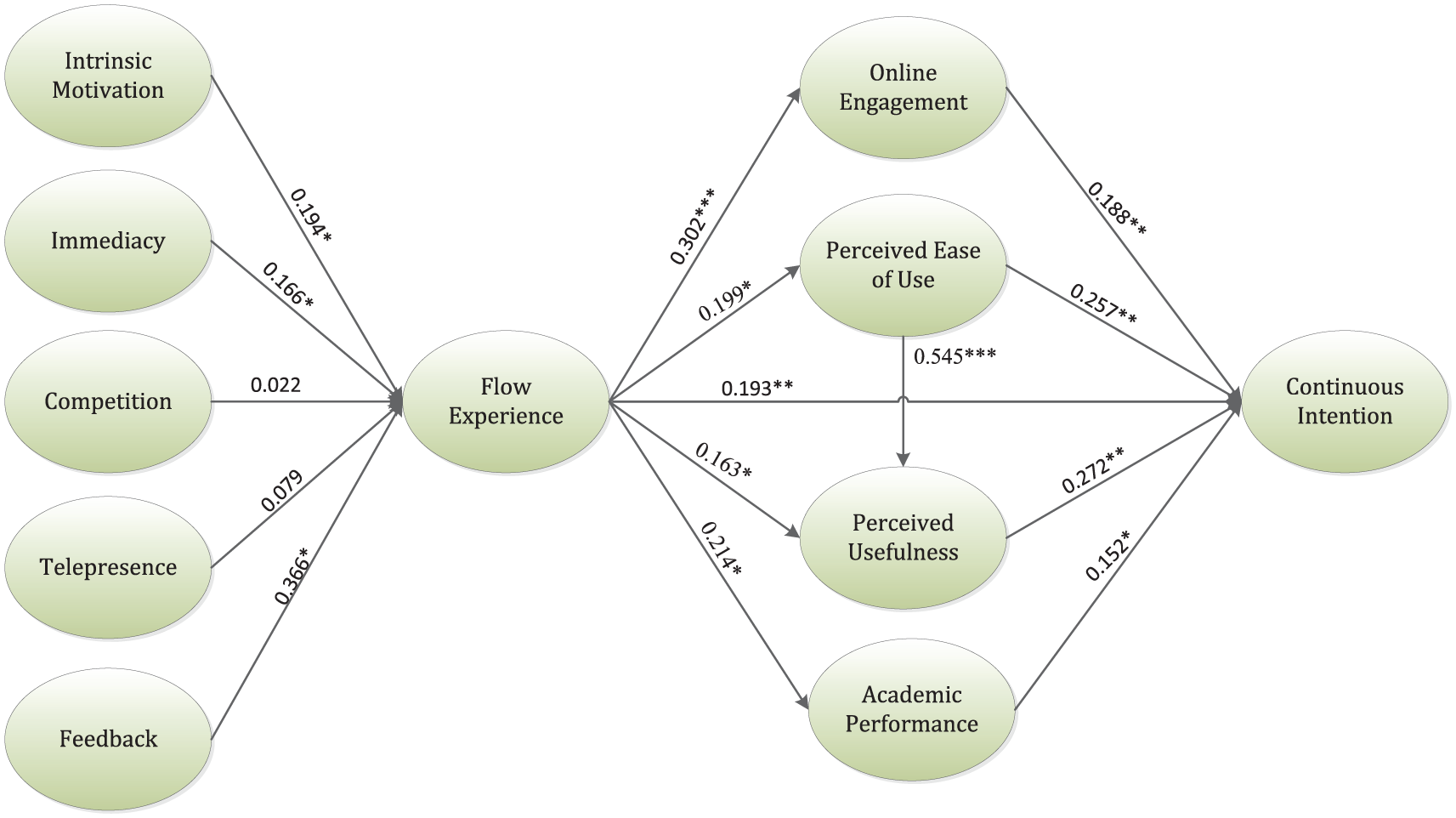
Empirical results.
Discussions
Comparison With Other Studies
According to the findings of this study, FLE was found to impact CI directly. This result is similar to a recent study by Muhammad Sohail Jafar et al. (2024). Their study proposed that the evolution of digital commerce is reaching new frontiers with the rapid expansion of the Metaverse ecosystem. Their results indicated that FLE strengthened the users’ CI to engage in Metaverse-based shopping. Their research contributed practical insights for technology firms and businesses seeking to leverage opportunities within this virtual space.
The present study found that IM was not a significant antecedent of FLE. The result can be somewhat comparable to a study by Mehta and Vyas (2022). Using standardized search queries, their research data were sourced from three peer-reviewed academic databases—Scopus, PubMed, and JSTOR. Their findings revealed a strong positive correlation between IM and the FLE. Their results provided valuable insights for educators and instructional designers aiming to enhance student engagement and optimize learning environments by fostering conditions that encourage IM and sustained attention.
Furthermore, according to this study’s findings, IMME had a significant impact on FLE; however, COMP was not significantly associated with FLE. The results of this study were somewhat similar to a study conducted by Hew et al. (2024). Their study was built on SOR and FLE theories and targeted the gaming industry. Their findings indicated that COMP and IMME have a direct and positive influence on FLE. Their results shed light on the dual nature of FLE in gaming as both a driver of engagement and a potential pathway to excessive dependency. The non-significant relationship between COMP and FLE deviates from the findings of Hew et al. (2024) in gaming contexts. This distinction likely stems from fundamental differences in motivational dynamics between educational and gaming environments. While gaming inherently thrives on competitive elements, educational settings may prioritize command-oriented goals over competition. Achievement Goal Theory (Urdan & Kaplan, 2020) suggests that COMP might actually delay FLE in learning contexts where the primary goals are targeted toward skill development and conceptual understanding, rather than outperforming others.
Additionally, regarding the findings of another FLE antecedent, TP was not found to be significantly associated with FLE. The finding differs from a previous study by N. Wei and Li (2021). Their study examined an English learning application through an online survey among university students. Their findings indicated that TP was significantly associated with FLE. Their research offered valuable implications for companies seeking to enhance system functionalities and optimize user experience. The non-significant relationship between TP and FLE diverges from the findings of N. Wei and Li (2021) in language learning contexts. This discrepancy may be attributed to the distinct cognitive demands of the AI-assisted learning tasks in the present study. While language acquisition inherently benefits from environmental immersion and social presence, the current study’s context emphasizes analytical processing and conceptual understanding, where TP might be less critical.
In terms of antecedents of FLE, FB was significantly associated with FLE. This result is similar to an earlier study by Xu et al. (2021). Their study developed a theoretical framework integrating key elements from the FLE and TAM to examine the antecedents of FLE and their impact on social media CI to purchase among senior shoppers. Xu et al.’s (2021) findings revealed that FB is positively associated with FLE.
Additionally, the present study also discovered that FLE significantly impacted OE. The result is somewhat comparable to an earlier study by B. Kim et al. (2020). Their research provided a valuable framework for understanding customer engagement in digital environments. Their findings indicated that FLE significantly enhances users’ attitudes and strengthens their OE, highlighting the pivotal role of FLE in fostering customer engagement.
Furthermore, according to the current study, FLE significantly impacted PEU and PU. These results are similar to a study by Yan et al. (2024). Their study identified key dimensions of learner motivation in E-learning. Their findings confirmed that FLE was a critical cognitive factor in shaping PEU and PU. Their research offered valuable implications for E-learning system designers.
The present research discovered that FLE and AP are significantly associated. The result is somewhat different from Bian et al.’s earlier study (2018). Their findings indicated that the impact of FLE on performance is insignificant in virtual environments where the primary task and the operation of interactive elements lack alignment. In such cases, interactive elements may independently induce FLE unrelated to task performance, weakening the overall effect.
In addition, the present study indicated a significant association between OE and CI. This finding is similar to an earlier study by Kumar and Kumar (2024). Their study examined the mediating role of user attitude in shaping the relationship between online service convenience and OE, as well as their CI using e-resources. Their findings indicated a significant association of OE with CI.
The present study also indicates that the TAM constructs PEU and PU had significant associations with CI. This finding is consistent with a previous study by Tao et al. (2022). Their study aimed to examine the key determinants of user acceptance by incorporating three critical massive open online courses (MOOCs) characteristics—usability, perceived quality, and perceived enjoyment—within the framework of the TAM. Their findings indicated that PEU and PU significantly impacted CI.
Lastly, the present study indicated a significant association between AP and CI. This result is similar to Tawafak et al. (2018). Their paper investigated whether the universities’ communication model and the TAM simultaneously enhance student satisfaction and improve the teaching method and AP level. Their findings indicated a significant impact of AP on CI.
Theoretical Implications
This study advances theoretical understanding in AI-assisted online learning by integrating multiple theoretical frameworks to examine learner OE (Taghizade et al., 2024) and AP in digital environments. It extends the TAM by demonstrating that FLE is a key mediator influencing PU and PEU, strengthening learners’ CI using AI-driven platforms (Wandira et al., 2024). The findings align with prior research, emphasizing the importance of usability, interactive feedback, and intuitive system design as critical factors for sustaining long-term engagement with educational technologies. The study further reinforces FLE by validating its role in digital learning, showing that TP and adaptive learning mechanisms contribute to sustained engagement (Muhammad Sohail Jafar et al., 2024). AI-enhanced learning tools are crucial in maintaining FLE by reducing cognitive overload and balancing task complexity with learner skills. The findings build on existing literature by emphasizing the importance of personalized learning in fostering cognitive absorption and IM, thereby strengthening the connection between FLE and digital learning persistence (Sadoughi & Eskandari, 2024). Applying EVT, the study establishes a direct link between AP and CI. Hence, it illustrates that students who experience academic improvements through AI-driven feedback and adaptive learning pathways are more likely to remain engaged with the platform (Wandira et al., 2024). This supports existing research highlighting the influence of perceived academic benefits and self-efficacy on long-term technology adoption. The research also contributes to self-regulated learning theories by demonstrating how AI-assisted environments support learners in monitoring progress, refining strategies, and engaging with personalized feedback. Students who engage in self-regulated learning behaviors within AI-driven platforms exhibit higher AP and a stronger commitment to digital learning. These findings highlight the need for instructional strategies incorporating adaptive learning pathways, intelligent tutoring systems, and interactive content delivery, ensuring a more effective and engaging digital learning experience.
Practical Implications
This study offers significant practical insights for various stakeholders, including practitioners, policymakers, administrators, and learners, by providing strategies to optimize AI-assisted online learning environments for enhanced engagement, usability, and AP. For practitioners, the findings emphasize the role of FLE in influencing CI, OE, and PEU. Hence, instructional designers should focus on developing interactive and adaptive learning pathways. Leveraging AI-powered content recommendations, personalized feedback mechanisms, and intuitive system interfaces can help educators foster higher engagement and sustained motivation among learners. Additionally, for practitioners, the findings emphasize the importance of developing engaging environments through intelligent tutoring systems, automated assessment tools, and personalized learning paths (Abdulmuhsin et al., 2025). Instructional designers should integrate AI-assisted features such as adaptive content sequencing and automated grading with detailed feedback to enhance FLE.
The study provides evidence for policymakers to support integrating adaptive learning technologies into formal curricula. Given the demonstrated impact of FLE on AP and sustained engagement, educational policies should promote investment in digital infrastructure, teacher training, and AI-driven learning solutions to ensure that technology-enhanced education remains inclusive, engaging, and effective. Additionally, data-driven monitoring systems should be implemented to track learner engagement and improve digital interventions through real-time analytics (Alkhwaldi et al., 2025). Policymakers should prioritize implementing AI technologies that support personalized learning courses, while administrators should focus on developing comprehensive solutions that combine automated grading, intelligent content delivery, and predictive analytics.
For managers and administrators, the study underscores the importance of user experience design in AI-assisted learning platforms. Enhancing PEU and PU through intuitive navigation, clear content organization, and AI-driven personalization can improve learner retention and reduce dropout rates. Educational institutions should also invest in faculty development programs, equipping instructors with the necessary skills to integrate AI-driven teaching strategies effectively. For learners, the study highlights the benefits of self-regulated learning strategies in maximizing AP within AI-assisted educational environments. Students who experience FLE demonstrate higher problem-solving abilities, improved knowledge retention, and long-term engagement. Using AI-enhanced tools, such as adaptive feedback, self-paced learning modules, and gamified assessments, enables learners to create a more immersive and productive educational experience.
Research Limitations and Future Research Directions
This study has several limitations that provide opportunities for future research. First, while this research focused on AI-assisted English learning platforms, the sample was limited to Chinese learners. Future studies should consider cross-cultural comparisons to validate the model’s applicability in diverse cultural settings, providing in-depth comparative insights.
Second, the cross-sectional nature of this study provides an analysis of online learners at a single point in time, limiting the understanding of how FLE and engagement patterns evolve. Hence, future researchers should employ a longitudinal research method to track changes in FLE and its impact on CI over the course of an academic term or program.
Third, this study primarily examined quantitative measures of FLE and its antecedents, potentially missing insights into learners’ experiences. Future research could employ mixed-method approaches, incorporating qualitative interviews or observational studies to provide deeper insights into how learners achieve and maintain FLE in AI-assisted learning environments.
A significant limitation of this study is that the hypotheses regarding TP and COMP significantly influencing FLE learning outcomes across all educational contexts are not supported. Empirical results did not support these results because TP might vary substantially between different learning scenarios, such as theoretical versus practical courses, or synchronous versus asynchronous learning environments. Future research should investigate how various contextual factors (course type, learning objectives, and delivery mode) moderate the effect of TP on FLE. Additionally, COMP’s effect on FLE could differ between collaborative project work and individual skill development within AI-assisted environments. Future research should employ contextual analysis to examine how various learning situations (individual vs. group-based) moderate the relationship between COMP and FLE.
Footnotes
Appendix

| Constructs | Research items |
|---|---|
| Flow experience | • I am absorbed in what I am doing while using the online AI-assisted learning platform. • I am often unable to keep track of the passage of time while using the online AI-assisted learning platform. • I find using the online AI-assisted learning platform to be enjoyable. |
| Feedback | • I was aware of how well I was performing. • It was really clear to me that I was doing well. • I had a good idea about how well I was doing. • I could tell by the way I was using the online AI-assisted learning platform how well I was doing. |
| Perceived usefulness | • Using the online AI-assisted learning platform enhances my learning effectiveness. • Using the online AI-assisted learning platform can improve my learning performance. • Using the online AI-assisted learning platform gives me greater control over learning. • I find the online AI-assisted learning platform to be useful in my learning. |
| Perceived ease to use | • Learning to use the online AI-assisted learning platform for my English learning needs is easy for me. • The process of using the online AI-assisted learning platform with regard to English learning is clear and understandable. • I find the online AI-assisted learning platform easy to use with regard to English learning. |
| Continuous intention | • I intend to continue using the online AI-assisted learning platform in the future. • I will use the online AI-assisted learning platform on a regular basis in the future. • I will frequently use the online AI-assisted learning platform in the future. • My intentions are to continue using the online AI-assisted learning platform than use any alternative means (traditional learning). |
| Intrinsic motivation | • I often attempt to use online AI-assisted learning platforms to enhance my English proficiency • I use English to chat with my friends to improve my English proficiency. • I watch TV programs with English subtitles to improve my ability to recognize more English words. • I work hard on my English homework in order to improve my English. |
| Immediacy | • Online AI-assisted learning platforms is accessible at any time and place. • Online AI-assisted learning platforms enables me to have a match in real time. • Online AI-assisted learning platforms allows me to have a match at the best moment for me. • I can use online AI-assisted learning platforms anytime, anywhere. |
| Telepresence | • When using the online AI-assisted learning platforms, I forget about myself. • After using the online AI-assisted learning platforms, I feel I just had a journey. • When using the online AI-assisted learning platforms, it seems that I was put in the world the application created. • When I stopped using the online AI-assisted learning platforms, the application environment suddenly disappears. • When using the online AI-assisted learning platforms, my body is in the room, but my mind is in the virtual world. |
| Online engagement | • I stay focused during online learning activities. • I talk about online learning topics even when I am offline. • I complete all online learning tasks on time. • I feel inspired to improve my online learning skills. |
| Academic performance | • Performing well in online AI-assisted learning platforms made me feel good about myself. • I felt that online AI-assisted learning platforms were good to advance my studies and that there were dramatic changes in my academic performance. • Using online AI-assisted learning platforms moved me closer to attaining my career goals. • I feel able to perform well in online AI-assisted learning platforms. • I have acquired more knowledge by using online AI-assisted learning platforms. |

Ethical Considerations
The manuscript was exempted by the ethics review committee of Shaanxi Normal University because this research is not for minors, pregnant women, those with physical and mental disabilities, or those with spiritual disabilities. In addition, this research has low risk, and the risk to the study subjects is not higher than that of those who did not participate. After the evaluation by the ethical review committee members, the exemption from review and verification is issued. The minimum risk mentioned in the preceding paragraph refers to the probability or intensity of the harm or discomfort suffered by the research subject and is not higher than the harm or discomfort suffered in daily life.
Consent to Participate
The participants provided their written informed consent to participate in this study. “We welcome your involvement in our investigation of online learning platforms and AI learning experiences. Our research examines how technological features shape learning outcomes and intentions to use online learning platforms. Eligible participants must have utilized online learning platforms and be of legal age (18+). The questionnaire requires roughly a quarter-hour to finish and explores your encounters with online learning systems. Please note that your engagement is entirely optional—you maintain the right to discontinue at any point without consequences. We implement stringent privacy protocols to safeguard your information. All responses undergo secure digital encryption; only authorized investigators can access the anonymized dataset.”
Author Contributions
W.R., J.Z., and L.L.: Conceptualization; W.R., J.Z., and L.L.: formal analysis; W.R., J.Z., and L.L.: methodology; W.R., J.Z., and L.L.: writing – original draft; W.R., J.Z., and L.L.: writing – review & editing.
Funding
The authors disclosed receipt of the following financial support for the research, authorship, and/or publication of this article: This study is supported by the following projects: Research Project on Integration of Production and Education in Undergraduate Universities in Henan Province (Project name: Comprehensive Reform and Application of Multiple Collaborative Practice Teaching Mode of Design Major under AI Enabling; Project number: 2023348073); Research and Practice Project on Undergraduate Education and Teaching Reform of Henan Agricultural University (Project name: Research and Practice on Teaching Reform of General Courses of Public Art in Colleges and Universities in the New Era of “Educating People with Aesthetics and Infiltrating Integration” Project number: 2024XJGLX002); Henan Provincial Department of Education, 2022 Research and Practice Project on Research-based Teaching Reform in Undergraduate Colleges and Universities (2022SYJXLX097).
Declaration of Conflicting Interests
The authors declared the following potential conflicts of interest with respect to the research, authorship, and/or publication of this article: Unlocking Continuous Engagement in AI-Driven Education: An Integrated Model of Flow Experience, Academic Performance, and Technology Acceptance
Data Availability Statement
The raw data supporting the conclusions of this article will be made available by the authors on request.