




Abstract
Managing sustainable innovation within complex New Product Development (NPD) processes presents a significant challenge, requiring robust decision-making tools. This study proposes and evaluates a computational decision support framework designed to optimise strategic choices for sustainable product design, thereby helping to achieve overarching sustainability objectives. The framework employs a hybrid method, combining the entropy technique for weighting objective criteria and the MARCOS approach for systematic ranking, effectively addressing the complexities inherent in managing sustainable innovation. The entropy method minimises subjective bias when evaluating important sustainability criteria, while MARCOS offers a structured way of selecting the best design options within complex NPD. An empirical study conducted within the ceramic industry highlights the importance of factors such as high-quality design and carbon neutrality, providing practical insights for engineering and technology managers. The findings demonstrate the framework’s utility as a versatile tool for the early stages of sustainable product development, enabling informed strategic decisions and supporting the effective implementation of sustainability practices in complex systems. This research contributes to the theory and practice of computational decision support for technology management and sustainable innovation, particularly in manufacturing and other data-intensive contexts.
Keywords
Introduction
The imperative for sustainable development, coupled with escalating technological complexity, presents unprecedented challenges for modern organisations, particularly within New Product Development (NPD). Integrating environmental, social and economic sustainability considerations into innovation processes necessitates navigating intricate trade-offs and managing numerous conflicting criteria (Sagar, 2023). This escalating complexity demands advanced computational tools and robust decision support systems to guide strategic choices towards truly sustainable outcomes (Bumblauskas et al., 2017; O’Hagan, 2019). Rowe and Wright (1999) reported that while the concept of sustainable design has significantly evolved since foundational works by Olgyay (1963) and Papanek (1971), emphasising long-term environmental well-being and resource stewardship. Arukala et al. (2019) mentioned that current efforts in sustainable design, such as the development of sustainable materials, life cycle assessment and green product design, have benefitted from various multi-criteria decision-making (MCDM) methodologies, including the Analytic Hierarchy Process (AHP) and Quality Function Deployment (QFD).
However, despite these advancements, Więckowski and Sałabun (2025) have noted that a persistent research gap exists in the development and application of robust, generalisable computational decision support frameworks that objectively evaluate and systematically rank sustainable innovation alternatives within data-rich, technologically intensive manufacturing environments. This gap is particularly acute in industries like ceramics, which are characterised by complex interdependencies, diverse material and process choices and a critical need for objective insights to balance competing sustainability objectives. Similarly, Paramanik et al. (2022) and Lin (2024) have noted the ongoing theoretical and practical challenges in developing and applying robust, objective and verifiable MCDM frameworks for sustainable product development, largely due to the existing MCDM frameworks, while valuable, often suffer from the following limitations: (1) Subjectivity in Criteria Weighting: Many established methods rely heavily on subjective expert opinions for weighting criteria, which can introduce bias and reduce the transparency and reliability of sustainability decisions in complex, multi-stakeholder environments; (2) Lack of Robustness in Complex Trade-offs: Some conventional ranking methods struggle to maintain stable outcomes when faced with the inherent data variability and intricate trade-offs characteristic of complex product development systems, potentially leading to unreliable strategic choices.
This comprehensive theoretical gap underscores the urgent need for a framework that can objectively determine criteria weights, provide robust and stable rankings for sustainable alternatives and be adaptable for integration within a firm’s evolving digital infrastructure. This challenge is particularly acute in industries like ceramics, characterised by complex interdependencies, diverse material and process choices and a critical need for objective insights to balance competing sustainability objectives.
Against this backdrop, the present research proposes and validates a novel hybrid computational framework that uniquely integrates the entropy objective weighting method with the MARCOS (Measurement of Alternatives and Ranking according to Compromise Solution) approach. This framework is specifically designed to provide a structured and adaptable assessment for optimising sustainable innovation in the Chinese ceramic product design industry, thereby directly addressing the aforementioned theoretical and practical gaps.
Thus, the specific objectives of this research are therefore as follows:
(1) To develop a comprehensive and adaptable computational framework for systematically evaluating sustainable design factors and optimal solutions for China’s ceramic product design industry, addressing the identified gap in objective, data-driven and robust assessment tools.
(2) To employ the Entropy objective weighting method to determine the relative importance of diverse sustainable design factors in a data-driven manner, thereby specifically minimising subjective bias in multi-attribute decision problems and enhancing the objectivity and transparency of industrial management in the evaluation process.
(3) To utilise the MARCOS method to rigorously assess and robustly rank proposed sustainable innovation pathways, providing a clear rationale for selecting optimal compromise solutions in complex decision scenarios, demonstrating its stability against trade-offs inherent in such systems.
(4) To demonstrate the framework’s practical applicability and derive actionable, evidence-based insights by applying it to a detailed case study within the Chinese ceramic product design industry, showcasing its potential to enhance sustainability performance and inform strategic decision-making in this and similar computationally oriented industrial contexts.
Literature Review
This paper introduces a hybrid multi-criteria decision making (MCDM) model for the sustainable evaluation of Chinese ceramic product design industry, including the entropy objective weighting method for calculating criteria weight coefficients and MARCOS for solution ranking.
In MCDM processes, it is widely recognised that the determination of criteria weights is crucial and highly influential (J. J. Wang et al., 2009). Meanwhile, various methods are described for assigning selection criteria weights, including subjective weighting, objective weighting and a mixture of both methods (Odu, 2019). Also, subjective weighting involves the use of expert opinion and experience, with decision makers providing direct input to assess the relative importance of criteria. However, this method is time consuming, especially if decision makers rarely consider discussions on weight values (Deng et al., 2000).
In contrast, objective weighting methods exclude subjective judgements by decision makers and rely on mathematical techniques based on structural data analysis to derive weights. The efficiency of computation is increased with objective weighting methods, making them essential for producing meaningful results and improving decision standards.
Accordingly, the integrated method of entropy-based and MARCOS methods is presented in this study, the relevant content of this hybrid MCDM technique will be explored and discussed in this chapter as follows:
Entropy-Based MCDM Approach
The concept of entropy was initially proposed by Shannon (1948) to quantify uncertainty and the amount of information. The core idea is that an index with a higher value is considered more significant than one with a lower value. The entropy weighting technique determines the objective weights of individual criteria by examining the variation in the original data, as greater dispersion reflects higher importance (Li et al., 2020).
The versatility of the entropy method is evident across a wide range of disciplines. For example, Hafezalkotob and Hafezalkotob (2016) introduced an integrated approach combining Shannon entropy with the MULTIMOORA technique to address material selection challenges. Similarly, Q. Wang et al. (2020) developed a model that merges AHP, entropy, and ANFIS for estimating the quantity of unfrozen water in saline soils. Şengül et al. (2015) presented a case study that utilised a hybrid model involving the entropy method and fuzzy TOPSIS to evaluate renewable energy supply alternatives, where the weights of the criteria were calculated using Shannon’s entropy. Additionally, Stanković et al. (2021) proposed an assessment framework for port region sustainability, employing the combined entropy–PROMETHEE methodology.
In addition to above research works, many scholars applied entropy method to the field of sustainability. For example, Q. Wang et al. (2015) proposed a case study of sustainable development capacity assessment using Shannon entropy methods in China. Sitorus and Brito-Parada (2020) proposed a sustainable criteria evaluation model through use of entropy-based method for renewable energy industry. Additionally, a case study of China’s sustainable society index and ranking system was developed using entropy method by Wu et al. (2018). Reddy et al. (2022) proposed a selection framework of sustainable building material using an entropy-based MCDM technique under uncertainty environment. C. N. Wang et al. (2022) developed a sustainable road transport measurement model using Shannon’s entropy method.
Measurement of Alternatives and Ranking According to Compromise Solution (MARCOS)
The MARCOS model, introduced by Stević et al. (2020), represents a recent advancement in MCDM. As an innovative and theoretically robust decision-making framework, the MARCOS method advances evaluative precision by addressing the inherent limitations of conventional MCDM approaches. Specifically, it mitigates the issue of disregarding the relative significance of alternatives’ distances from reference points and reduces the computational complexity typically associated with extensive data processing. By integrating multiple performance dimensions within a utility-based analytical structure, this approach facilitates a more comprehensive and rational assessment of alternative performance outcomes.
In recent years, the MARCOS method has been increasingly adopted in various application domains. For instance, Puška et al. (2020) implemented MARCOS to evaluate performance in the context of software project management. Chakraborty et al. (2020) introduced a supplier selection framework that integrates D numbers with the MARCOS technique. Ali (2022) proposed a model for managing solid waste under a fuzzy environment using the MARCOS approach. In another study, El-Araby (2023) highlighted the method’s relevance for engineering-related decision-making, noting its robustness against the rank reversal phenomenon (RRP). Additionally, Badi and Pamucar (2020) applied a hybrid model combining grey systems theory with MARCOS for supplier evaluation within the steel manufacturing sector.
In more recent studies, researchers have begun incorporating the MARCOS method into sustainability-related applications. For instance, Puška et al. (2021) developed a sustainable supplier selection model employing MARCOS within an environment characterised by uncertainty. Similarly, Badi et al. (2022) and Pamucar et al. (2021) utilised a combined FUCOM–MARCOS approach to evaluate sustainability performance indicators in the fields of green innovation and road transport. In 2023, two separate research teams (Birkocak et al., 2023; Krishankumar et al., 2023) introduced assessment frameworks addressing zero-carbon mobility and fibre fabric recycling, both employing the MARCOS technique.
Summary
As highlighted in the literature review, both entropy-based techniques and the MARCOS method have demonstrated effectiveness in addressing multi-criteria decision-making (MCDM) challenges within sustainability-related contexts. Tešić et al. (2023) emphasised that MARCOS serves as a strong and reliable approach for tackling multi-objective optimisation tasks, as it integrates both the ratio and reference point strategies to deliver a well-rounded structure for decision analysis. Likewise, Ecer (2021) noted that the MARCOS framework exhibits notable adaptability and efficiency, particularly in handling complex multi-criteria problems, offering an advantage over approaches grounded in fuzzy logic systems. Notably, the method retains its user-friendliness even as the number of criteria or alternatives increases.
Additionally, the MARCOS method is recognised for its clarity, efficiency, and adaptability, making it more user-friendly and extensible than several other decision-making techniques. For instance, in comparison with the TOPSIS approach, MARCOS has demonstrated greater consistency and resilience in outcomes when the measurement scales of decision criteria are altered (C. N. Wang et al., 2023). Furthermore, Ayan and Abacioğlu (2022) reported that MARCOS exhibits a remarkably high rank correlation when benchmarked against established MCDM methods such as MABAC, SAW, ARAS, WASPAS and EDAS.
Based on this foundation, a tailored framework will be constructed to assess sustainability-related design factors and potential solutions within the Chinese ceramic product design sector. In the next stage, the criteria will be assigned weight coefficients using the entropy-based objective weighting technique. Finally, the MARCOS method will be applied to prioritise the alternatives in alignment with the core aims of the research.
Methods
In this research, the weight coefficients for each criterion are determined using the entropy objective weighting technique. Subsequently, the MARCOS method is employed to order the alternatives. The research process is shown in Figure 1.

Research process.
The Establishment of the Evaluation Framework
To develop the evaluation framework, the problem was broken down into a set of assessment criteria (Sustainable Design Factors, SDFs) and potential alternatives, aligned with the selected research methodology. Tsai et al. (2008) have emphasised that both the formulation of evaluation criteria and the identification of feasible solutions should be refined through expert consultation to ensure relevance and validity. It is important to note that SDFs represent the specific criteria for sustainability assessment, while alternatives denote distinct sustainable design philosophies or strategic options for implementation.
In line with this, a focus group comprising 15 experts was rigorously assembled for the purpose of this study, employing a structured selection process to ensure high-quality and relevant input (O’Hagan, 2019). The selection criteria for these experts included:
A minimum of 10 years of professional experience in sustainable design, ceramic product development or related technology management.
Demonstrated expertise in areas relevant to the SDFs (e.g., materials science, energy efficiency, ethical production or eco-design principles).
Current or recent involvement in strategic decision-making processes within the ceramic or manufacturing industry.
The expert panel comprised diverse professionals: five occupied senior management roles in industries associated with sustainable ceramic product design, three served as experienced creative directors and the remaining seven were established professionals in ceramic product design. All experts possessed substantial practical and theoretical knowledge pertinent to the study’s scope.
Subsequently, each participant in the focus group evaluated the assessment criteria and alternatives individually, drawing upon their professional expertise. The purpose of this evaluation was to verify that the descriptions aligned appropriately with the study’s objectives. Subsequently, the experts conducted an inductive analysis of both the criteria and potential solutions to develop the preliminary hierarchical framework for the research, which included 6 SDFs and 3 alternative options.
While an initial hierarchical framework had been established, a preliminary test was conducted using 158 expert questionnaires, yielding 94 valid responses from a wider group of industry professionals. The findings showed that the majority of respondents believed that the provisional framework needed to be refined and expanded to include more sustainable design factors and alternative options in order to assess sustainability more effectively in the context of Chinese ceramic product design.
In the view of this, a further 15 experts were selected based on the same stringent criteria to refine the depiction of the principal SDFs and solutions within the evaluation framework, considering the outcomes derived from the preliminary test survey. Subsequently, the number of sustainable design factors and solutions were identified and modified based on the expert suggestions. Subsequently, the evaluation framework of Chinese ceramic product design sustainability was constructed, including 10 SDFs and 5 solutions, as shown in Figure 2.

The evaluation framework of this research.
Ethical Considerations
This study was conducted in accordance with the relevant institutional guidelines and regulations. Ethical approval for the research was obtained from the Institutional Review Board (IRB) at the authors’ respective universities. The protocols were reviewed and approved by the relevant human subjects protection committee.
Informed consent was obtained from all participants prior to their involvement in the study, in accordance with institutional guidelines. Participants were fully informed about the purpose of the study, the procedures involved, the potential risks, how their data would be anonymised and kept confidential and their right to withdraw at any time without penalty. As the study only involved non-invasive consultation and questionnaire responses, the risk of harm to participants was deemed to be minimal. The potential benefits—providing a robust framework to advance sustainable innovation in the industry—were deemed to significantly outweigh the minimal risks involved. All data were processed and reported in an aggregated and anonymised manner to ensure the strict confidentiality of all participants throughout the research and publication process.
The Entropy Objective Weighting Method
The entropy weighting technique objectively determines the weights of individual criteria by examining the inherent variation in the original data. This minimises the subjectivity often associated with expert-based weighting methods (Şahin, 2021). This objectivity is crucial for transparent decision-making in complex sustainability assessments, where multiple stakeholders may have different subjective views on the importance of criteria (Ponhan & Sureeyatanapas, 2022). Andria et al. (2021) emphasised that the strength of the entropy method lies in its data-driven nature, which allows the intrinsic importance of criteria to emerge from the data itself. This is particularly beneficial for the objective assessment of criteria in complex sustainable product development systems. For this reason, the entropy weighting method was employed to evaluate the performance of the SDFs in this research. The following details the steps of the entropy weighting method:
Step 1: The Establishment of the Initial Decision Matrix
In this study, the initial decision matrix X, representing a multi-criteria decision-making problem with m criteria and n alternatives, is constructed as follows:
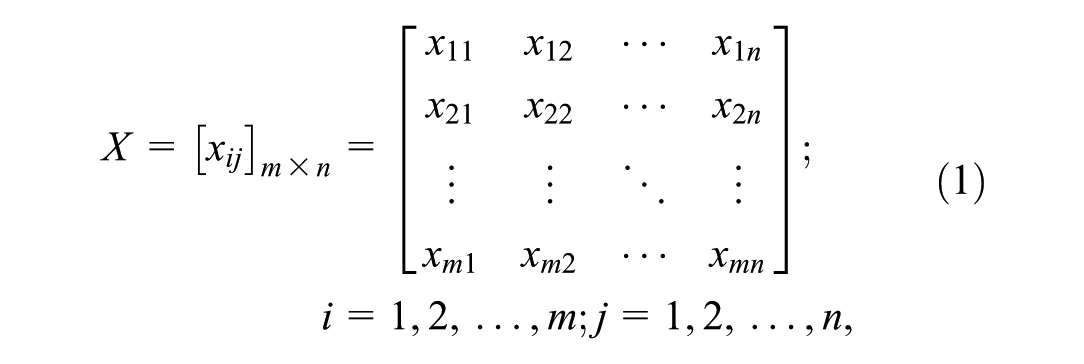
where
Step 2: The Calculation of Normalised Decision Matrix
The decision-making matrix can be normalised as follows:

where
Step 3: Calculating the Entropy Value for the
Criterion
The entropy value

where
Step 4: To Compute the Degree of Diversification (
)
The degree of diversification can be calculated using the following equation.

Step 5: The Computation of Objective Weighting for Each Criterion
The objective weighting for each criterion is computed as follows:

Measurement of Alternatives and Ranking According to Compromise Solution (MARCOS)
The MARCOS approach constitutes a contemporary and noteworthy development within the MCDM framework, primarily due to its capacity to refine decision-making by addressing several shortcomings inherent in conventional methodologies. In particular, it remedies issues such as disregarding the relative importance of distances between alternatives and the anti-ideal reference point, and it is known for its computational efficiency (Trung, 2022). Crucially, MARCOS has been successfully integrated into sustainability-related applications, including sustainable supplier selection, evaluation of sustainability performance indicators in green innovation and road transport, and assessment frameworks for zero-carbon mobility and fibre fabric recycling (Więckowski et al., 2025). Furthermore, MARCOS demonstrates greater consistency and resilience in outcomes compared to other methods like TOPSIS when measurement scales are altered and exhibits high rank correlation with established MCDM methods (Pinochet et al., 2025). These characteristics make MARCOS exceptionally well-suited for the systematic evaluation and robust ranking of sustainable innovation alternatives in our study. The steps of the MARCOS model are as follows:
Step 1: The Establishment of the Extended Decision Matrix
Within the MARCOS model, the extended decision matrix is constructed as follows:

The ideal solution (AI) corresponds to the alternative demonstrating the best possible performance, while the anti-ideal solution (AAI) reflects the least favourable option. Based on the nature of each criterion, the values of AI and AAI are determined using Equations 7 and 8 respectively.


where B denotes a benefit group of criteria while C denotes a group of cost criteria.
Step 2: The Construction of Normalised Decision Matrix
The normalised decision matrix can be calculated using the following equations.


where
Step 3: The Calculation of Weighted Normalised Decision Matrix
The weighted matrix V is derived by combining the normalised matrix N with the corresponding weight coefficient of each criterion

Step 4: The Calculation of the Utility Degree of Alternative
The utility degrees of an alternative in relation to the ideal (


where

Step 5: The Calculation of the Utility Function of Alternative
The utility function of alternatives is calculated as follows:

where utility function concerning the ideal


Step 6: Ranking the Alternatives
Within the MARCOS framework, the ordering of alternatives is determined according to the ultimate results of the utility function, denoted as
Numerical Analysis
Determining Criteria Weights Using the Entropy Method
At this stage, the relative importance of the criteria is objectively determined by applying the entropy weighting technique. Following the standard procedure for entropy calculation, the initial decision matrix was generated using Equation 1. As for the quantitative scores for the initial decision matrix, representing the performance value
Initial Decision-Making Matrix of the Entropy Model.

Normalised Decision-Making Matrix of the Entropy Model.

Subsequently, the entropy value of each criterion (
Objective Weights of All Sustainable Design Factors in the Entropy Model.

Subsequently, the objective weights of all sustainable design factors (SDFs) will be utilised in the MARCOS model to determine the performance of each solution.
Calculating the Values of Utility Degrees for the Alternatives Using the MARCOS Method
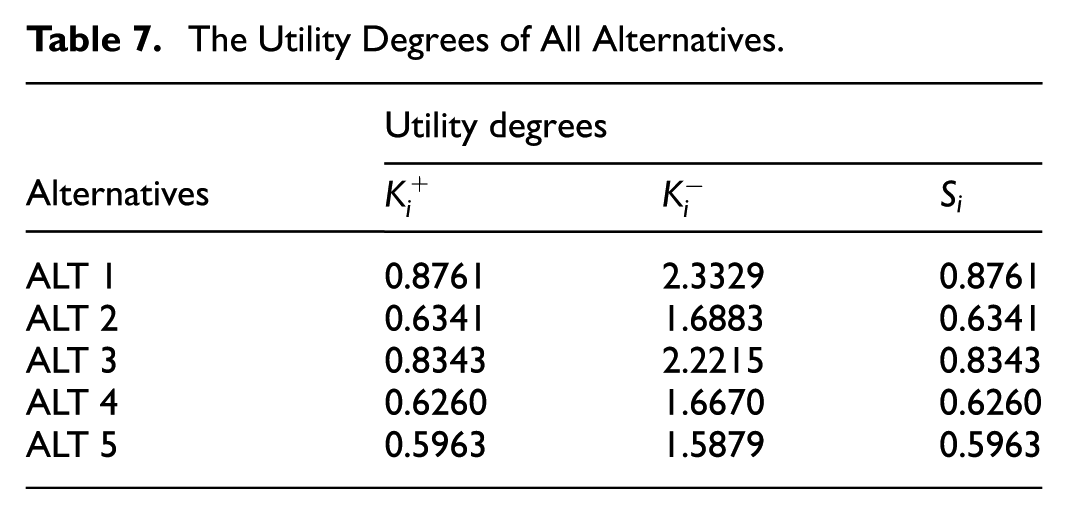
At this stage, the MARCOS model was employed to calculate the utility degrees (
The Extended Decision-Making Matrix of the MARCOS Model.

Subsequently, the normalised decision matrix and the weighted normalised matrix were formulated using Equations 9–11. The corresponding results are presented in Tables 5 and 6, respectively.
The Normalised Decision-Making Matrix of the MARCOS Model.

The Weighted Normalised Decision-Making Matrix of the MARCOS Model.

The calculation of utility degrees for all alternatives (
The Utility Degrees of All Alternatives.
Research Results and Validations
The Entropy Model
In the entropy model, the ranking of all sustainable design factors (SDFs) was determined by the objective weights, as shown in Figure 3.

The ranking of all sustainable design factors (SDFs).
In Figure 3, the top three SDFs were “Design for ethical production” (SDF 10, 0.1252), “Maximise original product life” (SDF 7, 0.1204) and “Energy efficiency in production process” (SDF 5, 0.112).
The objective weights of the SDFs ranked fourth to sixth were “Quality and sophisticated design process” (SDF 9, 0.1114), “Carbon reduction or carbon neutrality” (SDF 8, 0.1038) and “Reduce yield losses” (SDF 6, 0.1011).
The MARCOS Model
In the MARCOS model, all alternatives were ranked according to the values obtained from the final utility function. The utility values for all options, denoted as (
The Final Utility Function Value of All Alternatives.


The ranking results of all alternatives.
In Figure 4, the ranking results of all alternatives were “Eco-Design” (ALT 1, 6.2473), “Regenerative design” (ALT 3, 6.0941), “Circular design” (ALT 2, 5.3607), “Social design” (ALT 4, 5.3313) and “Climate neutrality” (ALT 5, 5.3607).
Sensitivity Analysis of Criteria Weight
In MCDM problems, input data are often dynamic and subject to frequent variation rather than remaining constant. Accordingly, sensitivity analysis is essential for strengthening the decision-making process. In this study, sensitivity analysis is applied within the MCDM framework to examine how changes in the weight of an individual criterion influence overall results. Such adjustments consider both the reallocation of weights among other criteria and potential shifts in the final ranking of alternatives (Alinezhad & Amini, 2011).
For this analysis, each criterion was removed individually, resulting in 11 distinct scenarios to evaluate the sensitivity of criterion weights. The weights of all criteria and the corresponding prospect values of the alternatives across these scenarios are reported in Tables 9 and 10, while the rankings are depicted in Figure 5. Although the prospect values vary, the overall ranking remains largely consistent, with “Eco-Design” (ALT 1) continually identified as the preferred alternative. These results demonstrate that the ranking of alternatives is resilient to changes in criterion weights, highlighting the robustness and adaptability of the proposed entropy-MARCOS model.
The Criteria Weights in All Scenarios.

The Prospect Value of Alternatives in All Scenarios.


Sensitivity analysis results.
Comparative Analysis of Other MCDM Models
In this stage, two well-known MCDM techniques are employed to cross-validate the results generated by the proposed approach. The selected methods include TOPSIS (Hwang & Kwangsun, 1981) and VIKOR (Opricovic, 1998).
The comparison of the entropy-MARCOS approach with other MCDM techniques is presented in Figure 6. The results obtained from these different methods indicate that the top alternative (ALT 1) consistently retains its position as the most preferred option, showing minimal variation across rankings. This uniformity across all examined MCDM approaches provides further validation of the findings produced by the proposed model.

The comparison of the proposed model with other approaches.
Discussion
This study successfully developed and validated a novel hybrid computational framework that integrates the entropy objective weighting method and the MARCOS approach. This framework directly addresses the previously identified research gap concerning the need for a robust, objective, and adaptable decision support system for optimising sustainable innovation within technologically intensive manufacturing sectors, with a particular focus on the complex field of ceramic product design in China. The presented results offer significant insights not only for the target industry but also for the broader field of computational decision support in complex systems, demonstrating how our framework effectively tackles the inherent challenges of managing sustainable innovation by providing objective criteria weighting and a stable ranking of alternatives.
Interpreting the Significance of Objective Factor Weighting (Entropy Objective Weighting Method)
The entropy objective weighting method is a cornerstone and was used to objectively determine the relative importance of the SDFs in this research. Our findings reveal key areas for improving sustainability within the investigated ceramic sector. Kazakova and Lee (2022) and Onyeka and Emeka (2025) both noted that responsible production practices, circular economy principles and decarbonised energy in manufacturing will be key trends in sustainable development. Specifically, the three most influential factors identified in this study—ethical production design (SDF10), maximising the original product lifespan (SDF7) and energy efficiency in production (SDF5)—are consistent with these trends.
More broadly, the entropy method in this research demonstrates the effectiveness of data-driven approaches to managing information in complex decision-making scenarios. Interestingly, Tutak et al. (2025) mentioned that the entropy method provides a more robust and transparent basis for evaluating sustainability criteria by minimising the subjective bias inherent in traditional expert-based weighting. Similarly, Dwivedi and Sharma (2022) reported that the main advantage of the entropy method is its paramount importance in complex, sustainable decision-making environments, where subjective judgements can lead to suboptimal or biased strategic decisions. These characteristics demonstrate the entropy method’s feasibility in the context of developing sustainable products, particularly with regard to its ability to capture contextually relevant and influential sustainability factors. This highlights the usefulness of the entropy method in meeting the requirement for objective performance assessments of key sustainability indicators.
Strategic Implications of Alternative Ranking (The MARCOS Approach)
From a computational perspective, the MARCOS method takes a structured approach to handling complex workflow applications in product development and innovation management. It systematically compares and ranks alternatives based on objective, multifaceted criteria, which is crucial in problem-solving scenarios (Badi et al., 2022). Khalid et al. (2025) emphasised that the MARCOS model effectively transforms objectively weighted criteria and alternative performance data into a clear, rational and stable ranking of sustainable design options. Additionally, the MARCOS model used in this study provides a clear ranking of each solution. “Eco-design” (ALT 1) is identified as the most favourable alternative, followed by “regenerative design” (ALT 3) and “circular design” (ALT 2), thereby providing practical guidance for decision-makers. This systematic ranking enables organisations to select design paths that best balance multiple sustainability goals, thus demonstrating the practicality of the MARCOS method. It provides a nuanced understanding of relevant trade-offs, offering a more comprehensive compromise than simply selecting the “best” option. This facilitates informed strategic planning and resource allocation to achieve the most impactful sustainable design initiatives.
Theoretical Implications
This research significantly advances the theoretical understanding of how MCDM methods can serve as powerful computational tools for addressing complex, illstructured sustainability problems, particularly from the perspective of complex system modelling and decision theory. Specifically, our study contributes to MCDM theory by:
Advancing objective decision-making in complex systems: We address the theoretical challenge of subjectivity in sustainability decisions by validating the Entropy method’s capacity to objectively derive criteria weights from data. This minimises the inherent bias often found in expert-based weighting, thereby strengthening the theoretical foundation for objective evaluation in complex systems characterised by numerous interacting and often conflicting factors.
Enhancing robustness for trade-off management: Our hybrid entropy-MARCOS framework offers a theoretical advancement in ensuring robustness in the face of complex trade-offs. The MARCOS method’s ability to rank alternatives based on a stable compromise solution, considering distances from both ideal and anti-ideal points, is particularly crucial for decision-making in complex systems where perfect solutions are rare and trade-offs are inevitable. The demonstrated robustness against rank reversal through our sensitivity analysis reinforces its theoretical reliability for navigating dynamic and multifaceted requirements.
Integrating a systemic view for industrial sustainability: The framework provides a robust theoretical model for adopting a systemic view when evaluating sustainable innovation. By objectively integrating diverse dimensions (SDFs) and their interdependencies, it moves beyond isolated assessments to a more holistic understanding of sustainability performance within complex product development systems, aligning with contemporary complex system modelling paradigms.
Empirical validation in a novel context: The application within the Chinese ceramic product design industry offers compelling empirical evidence for the effectiveness and robustness of this hybrid framework. This enriches the theoretical body of knowledge on sustainable innovation management in a technologically intensive manufacturing sector that epitomises complex interactions between design, materials, processes and market demands, thereby providing a practical grounding for these theoretical contributions.
Managerial Implications
The managerial implications of this study are multifaceted, offering direct and actionable value to industry practitioners, policymakers and organisational leadership:
Replicable Methodology for Sustainable Ceramic Product Development: The framework provides a clear, replicable methodology for organisations, particularly within the manufacturing sector, to systematically incorporate sustainability into their new product development (NPD) processes. For a ceramic company, this means transitioning from ad-hoc sustainability considerations to a structured, data-driven process for evaluating materials, production methods, and design elements, backed by objectively weighted criteria and robust rankings.
Actionable Strategic Guidance and Leadership Drivers: Our findings provide clear strategic guidance. For instance, the high ranking of “Eco-Design” (ALT 1) indicates a critical leverage point. However, as noted, the successful implementation of such green innovations is highly contingent upon proactive organisational leadership. Drawing on the findings of Van et al. (2023), leaders who can adeptly manage the paradoxes inherent in sustainability are best positioned to drive the adoption of our framework’s recommendations, ensuring that strategic choices translate into impactful organisational change.
Enhanced Data Integrity and Digital Integration: We acknowledge that our current study’s reliance on expert-sourced data represents a limitation due to its inherent subjectivity. To enhance robustness in practical application, the framework must evolve by integrating with a firm’s digital ecosystem to leverage objective, verifiable data. As highlighted by Nguyen et al. (2025), emerging technologies like blockchain are pivotal for enhancing data transparency and verifiability in sustainable supply chains. Future implementations of our framework could therefore source inputs directly from such systems. For instance, blockchain-verified data on material provenance and labour conditions could provide objective scores for “Prohibited and restricted substances” (SDF1) and “Design for ethical production” (SDF10), thereby strengthening the integrity and reliability of the decision-making process.
Contextualising the Framework in Digital Transformation: Our hybrid entropy-MARCOS model should not be viewed as a standalone tool but as an integral analytical engine within a company’s broader digital transformation for sustainability. Following the conceptual framework proposed by Nguyen et al. (2023), our model serves a crucial function by translating raw data from a firm’s digital infrastructure into strategic insights. Data from Supply Chain Management (SCM) systems, Internet of Things (IoT) sensors monitoring energy use and Enterprise Resource Planning (ERP) platforms can serve as direct inputs into our decision matrix. In turn, the framework’s outputs—such as the prioritisation of “Eco-Design” (ALT 1)—can inform and guide the firm’s strategic investments in digital technologies (e.g., advanced CAD software, digital twins for lifecycle analysis) that are necessary to achieve its sustainability goals.
Connecting to Strategic Outcomes and Enhanced Firm Value: Ultimately, the purpose of this strategic decision support framework is to enhance long-term firm value. The selection of “Eco-Design” (ALT 1) as the optimal choice is not merely an operational or ethical decision; it is a strategic imperative. Hoai et al. (2023) provided the robust, large-scale evidence showing that robust environmental, social and governance (ESG) practices are linked to better financial performance, lower operational risk and a stronger corporate reputation. Our hybrid entropy-MARCOS model helps to identify and prioritise relevant indicators and solutions, serving as a strategic tool for the implementation of high-impact ESG practices. This, in turn, enables managers to make more objective and robust decisions regarding sustainable innovation, thereby contributing directly to the creation of sustainable value.
Conclusion
This study successfully developed and validated a novel hybrid computational framework that integrates the Entropy objective weighting method and the MARCOS approach. This framework is explicitly designed to address the complex theoretical and practical challenges of subjective decision-making, robustness in trade-off management and digital integration in sustainable innovation within technology-intensive environments. Its empirical application within the Chinese ceramic industry highlighted the framework’s practical utility, demonstrating a robust methodology for evaluating objective criteria and ranking strategic alternatives. Crucially, the validation and robustness analysis, including detailed sensitivity and comparative studies, unequivocally affirmed the effectiveness, stability, and reliability of our hybrid framework in handling the intricate dynamics characteristic of complex product development systems.
Key sustainable design factors, such as ethical production, maximising product lifespan and improving energy efficiency, were objectively identified as critical priorities for the ceramic industry. In addition, the MARCOS method provided a clear and defensible ranking of sustainable design alternatives, with “Eco-Design” emerging as the most favourable option. These findings offer actionable insights for the target industry’s strategic planning. These findings offer actionable insights for the target industry’s strategic planning, specifically guiding leadership in championing sustainable innovation for enhanced long-term firm value. Moreover, by outlining its potential integration with verified digital systems (e.g., IoT, blockchain-enabled platforms), the framework provides a pathway towards greater data transparency and verifiability in sustainability assessments.
While this hybrid Entropy-MARCOS framework offers a robust solution for sustainable innovation, its limitations must be transparently acknowledged. Firstly, the initial decision matrix (Table 1) relies on expert judgement elicited through a structured consensus method, which, despite our stringent process (Section 3.1), remains inherently subjective and a snapshot of current knowledge. This constrains the generalisability of the specific numerical results. In addition, the study is a static analysis based on a single data set; it does not fully model the real-time, dynamic complexity of product development, a limitation that is addressed through suggested future research focusing on system integration.
Essentially, this research provides a practical and robust solution for a specific industry and makes a significant contribution to the development of advanced computational methods and tools for addressing complex sustainability issues. It paves the way for future research into more dynamic, scalable and integrated decision-support systems that can empower sustainable development across a range of technological and industrial sectors, thereby bridging the gap between theoretical models and practical implementation in an objective, verifiable and reliable manner (Zare et al., 2024). Future work could further explore the integration of real-time data from IoT sensors and blockchain-verified supply chain information to enhance the objectivity and dynamism of the initial decision matrix, moving towards a continuously adaptive decision support system for sustainability.
Footnotes

Ethical Considerations
Ethical approval for this study was obtained from the Institutional Review Board (IRB) of the School of Design and Art, Jingdezhen Ceramic University. The protocols used were also approved by the Committee of Human Subjects Protection at the same institution, Jindezhen, China.
Consent to Participate
A total of 188 individuals participated in the study. All participants provided informed consent prior to their involvement and were fully informed about the purpose of the study, the procedures involved, the potential risks, the anonymity and confidentiality of the data and their right to withdraw at any time without penalty, in accordance with institutional guidelines.
Funding
The authors received no financial support for the research, authorship, and/or publication of this article.
Declaration of Conflicting Interests
The authors declared no potential conflicts of interest with respect to the research, authorship, and/or publication of this article.
Data Availability Statement
Data are available from the corresponding author upon reasonable request, subject to institutional review board approval to protect participant confidentiality.