



Abstract
This study focused on English learning engagement, a core issue closely related to college students’ academic performance, and examined the association between academic self-concept and learning engagement while testing the chain mediating roles of self-efficacy and positive academic emotions. Data were collected through an online survey administered via the Questionnaire Star platform, using validated scales to assess academic self-concept, self-efficacy, positive academic emotions, and English learning engagement. A total of 1,054 valid responses were obtained. Partial least squares structural equation modeling (PLS-SEM) was used to test the hypothesized relationships, and bootstrapping was employed to examine mediation effects. The findings revealed that academic self-concept, self-efficacy, and positive academic emotions all had significant positive effects on English learning engagement. Both self-efficacy and positive academic emotions served as mediators in the relationship between academic self-concept and learning engagement. Moreover, a significant serial mediation was identified, whereby higher academic self-concept was related to greater self-efficacy, which was associated with higher levels of positive academic emotions, leading to stronger learning engagement. These findings enrich the understanding of how cognitive and emotional factors jointly contribute to English learning engagement in higher education and provide practical insights for fostering students’ academic beliefs and positive emotions to enhance engagement.
Keywords
Introduction
With the advancement of globalization and the widespread adoption of lifelong learning, English has become one of the core subjects in the field of education, serving as a bridge for global communication. The effectiveness of English learning is not only influenced by external factors and the quality of teaching, but is also closely related to students’ learning engagement. Learning engagement involves students’ active involvement in learning activities across cognitive, emotional, and behavioral aspects, including behavioral engagement, emotional engagement, and cognitive engagement (Cai & Liu, 2025). Existing research indicates that learning engagement is strongly associated with the maintenance of motivation, academic achievement, and self-regulated learning (Meyer et al., 2024; Namaziandost et al., 2025; Tan et al., 2025). Shao et al. (2025) pointed out that students with higher engagement generally have clearer goals, more proactive use of strategies, and maintain effort under difficult conditions, whereas lower engagement often accompanies shallower processing, declining achievement and loss of interest. With the rise of digitalization and lifelong-learning demands, identifying and clarifying the key antecedents of English learning engagement (ELE) has become a focus for both teaching practice and research (Gu, 2025; Wu et al., 2025). Therefore, studying ELE and its related factors is significant importance for enhancing students’ academic performance, and offers valuable theoretical insights and practical guidance for optimizing teaching strategies and improving the learning experience.
Although previous studies have explored various intrinsic factors influencing ELE, such as motivation, learning strategies, and emotions (D. Wang et al., 2025; Zhao et al., 2025), the interaction between academic self-concept, self-efficacy (SE), and positive academic emotions remains underexplored. Academic self-concept is the overall evaluation of one’s abilities and value in English learning (Rushdan et al., 2024), and often associated with goal clarity, strategy use, and persistent effort, serving as an upstream cognitive foundation of learning beliefs (Steinberg et al., 2024). According to Social Cognitive Theory (SCT; Bandura, 2001), self-beliefs influence learning orientations and behavioral performance within specific contexts (Zhao & Ma, 2025). Therefore, academic self-concept may influence ELE, but how it specifically affects ELE within the domain of language acquisition remain underexplored. The manifestation of academic self-concept differs across various subjects (e.g., language learning vs. other disciplines). Language learning involves unique elements such as communication skills, self-expression, and cultural understanding, which are less prevalent in other fields of study. Thus, the impact of academic self-concept in language learning should be examined independently.
SE and positive academic emotions also have a distinct impact on language learning. While SE has been shown to be an important predictor of learning engagement, research on the mediating role of SE between academic self-concept and ELE, particularly in the emotional dimension, remains scarce. SE is defined as the confidence and sense of control individuals have in accomplishing specific learning tasks (Yokoyama, 2024). It is stably related to proximal indicators of engagement such as effort, attention maintenance, and classroom participation, and functions as a motivational bridge linking self-beliefs to actual learning performance. Positive academic emotions refer to the feelings of interest, enjoyment, and hope experienced during the learning process (X. Wang et al., 2025). Although positive academic emotions have a certain impact on academic behavior, the mechanisms through which they mediate the relationship between academic self-concept and ELE remain unclear. In summary, academic self-concept, SE, and positive academic emotions represent cognitive beliefs, motivational beliefs, and emotional experiences, respectively. Exploring how these three variables interact not only helps us understand their independent effects on language learning engagement, but also sheds light on the psychological mechanisms underlying their combined influence. Therefore, this study aims to address the gap in the current literature regarding the interaction between academic self-concept, SE, and positive academic emotions in language learning, and their impact on ELE, based on SCT. It explores the interactions among these three variables, reveals how they collectively influence students’ ELE, and offers a more comprehensive view of the psychological processes underlying language learning engagement.
Theoretical Basis
SCT posits that behavior is shaped by the interaction of cognitive, emotional, and environmental elements (Bandura, 2001). Individuals acquire knowledge through personal experience as well as by watching others and the results of their actions. A key concept of this theory is SE, which is the belief in one’s capability to successfully complete a task. This confidence directly influences their learning behavior and level of engagement. Additionally, SCT highlights the reciprocal influence between behavior, environment, and cognition. A person’s behavior is not only shaped by the environment and cognition, but can also alter them in return (Bandura, 2001; Lena & Nikolov, 2025). Overall, SCT helps us understand how individuals learn and adjust their behavior through the interplay of cognitive, emotional, and environmental elements.
According to SCT, an individual’s behavior and learning engagement are driven by the interplay of cognitive, emotional, and environmental elements. Academic self-concept is a student’s overall view of their academic abilities. Based on SCT, when students hold a positive view of their academic capabilities, they are more likely to believe that they can successfully cope with academic tasks, leading to greater engagement in their learning (Weva et al., 2024; Yang et al., 2023). SE, as a core concept in SCT, may act as a mediator in this process. In English learning, a student’s SE can influence the level of effort and persistence they apply to learning tasks. Academic self-concept may enhance students’ SE, thereby increasing their confidence and encouraging greater engagement in English learning, which in turn fosters learning engagement (Chen & Shu, 2024; Wang & Yu, 2023). Positive academic emotions may also serve as a mediator between academic self-concept and learning engagement. According to SCT, emotions are crucial in shaping behavior and learning engagement. Students with greater SE tend to feel more positive emotions, such as a sense of achievement and satisfaction (Li, 2025; Xu, 2024). These positive emotions, consequently, further promote their engagement in learning tasks (Hu et al., 2024; Liu et al., 2025). In summary, this study, based on SCT, proposes a hypothesized path through which academic self-concept influences university students’ ELE via the chain mediation effect of SE and positive academic emotions. This theoretical framework provides a clear explanation of the relationship between academic self-concept and learning engagement and contributes to a deeper exploration of how enhancing SE and positive emotions can promote learning engagement.
Academic Self-Concept and English Learning Engagement
Academic self-concept specifically refers to students’ perceptions of their abilities within the school learning environment, including self-evaluations related to specific subjects or overall academic performance. Numerous studies have demonstrated a clear positive link between academic self-concept and student engagement in learning (Pan et al., 2025; Rushdan et al., 2024; Zhou et al., 2021). Zhou et al. (2021) reported that students with higher academic self-concept were more engaged in their educational activities, showing a strong positive correlation. Similarly, Rushdan et al. (2024) investigated the link between academic self-concept and ELE across different learning modes (face-to-face, online, and blended learning), revealing that academic self-concept and ELE were positively correlated in all modes, with the strongest correlation found in face-to-face learning. Higher academic self-concept acts as a key motivator for students to participate more deeply in their learning processes, leading to enhanced academic performance and a higher likelihood of sustained engagement with learning (Zhou et al., 2021). Research exploring the link between academic self-concept and ELE is still limited. Consequently, this study aims to investigate the specific effects of academic self-concept on ELE in greater detail.
Academic Self-Concept, Self-Efficacy, and English Learning Engagement
SE is essential in shaping human behavior. Individuals with strong SE tend to confront obstacles with a positive mindset and persistence, while those with weak SE are often inclined to avoid difficulties and are at a higher risk of giving up (Bandura, 1977). In the educational context, students with higher SE are typically better at setting challenging goals, actively engaging in learning, overcoming learning obstacles, and persisting, which leads to higher academic achievement (Hayat et al., 2020). Extensive research highlights a clear positive link between SE and learning engagement (Kaufmann et al., 2022; Yin et al., 2025; Zou et al., 2024). Those with higher SE tend to engage actively in learning activities, embrace challenging academic tasks, and persevere in overcoming difficulties (Kaufmann et al., 2022). In contrast, students with lower SE may exhibit a lack of motivation, procrastination, and a tendency to avoid taking initiative (Zou et al., 2024). Importantly, SE beliefs are not formed in isolation but are influenced by individuals’ perceptions of their own academic ability (Almeida et al., 2024; Masinga, 2025). In proactive learning environments, students with a stronger academic self-concept often demonstrate greater SE (Aguillon et al., 2020). Students with stronger academic self-concept generally possess stronger learning confidence, which leads to greater effort, persistence, and emotional engagement in English learning (Chen et al., 2025). However, empirical research on this mediating mechanism among Chinese college students remains limited. Further exploration of the role of SE between academic self-concept and ELE can help uncover the underlying motivational and psychological mechanisms behind college students’ English learning behaviors.
Academic Self-Concept, Positive Academic Emotions, and English Learning Engagement
Positive academic emotions, manifest in classroom, learning, and test contexts. These emotions not only broaden an individual’s cognitive and behavioral scope, helping students set goals, face challenges, and stimulate positive thinking, but also enhance students’ perseverance in learning (K. S. Zhang et al., 2021). As a result, positive academic emotions can effectively boost learning engagement (Dewaele & Li, 2021; Zeng et al., 2023). As an illustration, learners who find English classes enjoyable and free from monotony are more inclined to take an active role in participating in various class tasks (Dewaele & Li, 2021). The generation of positive academic emotions is often driven by academic self-concept. A higher academic self-concept can motivate students’ learning and performance, thereby triggering positive academic emotions in learning contexts (Lazarides & Raufelder, 2021; Paechter et al., 2022). Lazarides and Raufelder (2021) reported that students’ mathematics self-concept was positively associated with enjoyment and negatively associated with anxiety. Based on prior findings, this study further investigates how positive academic emotions serves as a mediator between academic self-concept and ELE in college students.
Academic Self-Concept, Self-Efficacy, Positive Academic Emotions, and English Learning Engagement
SCT posits that learners’ self-assessments and beliefs regarding their abilities during learning activities directly influence their learning behaviors and academic emotions (Bandura, 1977). The development of SE promotes students’ cognitive flexibility and leads to positive emotional experiences. In contrast, doubts about one’s abilities often trigger anxiety (Bandura, 2001). Existing research consistently shows a strong positive link between SE and positive academic emotions (Chen et al., 2022; Hayat et al., 2020; H. C. Zhang et al., 2023). Students with higher SE are generally better at regulating their emotions (H. C. Zhang et al., 2023). This emotional regulation ability not only helps students overcome negative experiences during the learning process but also further enhances their learning engagement (Hayat et al., 2020). Therefore, in the link between academic self-concept and ELE, SE and positive academic emotions may play a joint role through a chain mediation effect. A higher academic self-concept strengthens college students’ SE and enhances their ELE by promoting positive academic emotions.
Current Study
Despite the growing body of research, several gaps remain. First, most studies have tended to examine the connections between academic self-concept, SE, or positive academic emotions and ELE separately, lacking an integrative analytical framework to present their combined effects (Huang et al., 2024; Meng & Zhang, 2023; Zhao et al., 2024). Second, prior research has often focused on general academic learning, with relatively little attention to English learning as a specific context, thereby limiting the contextual validity of their conclusions (Chacón-Cuberos et al., 2025; Saks, 2024). To bridge these gaps, this study integrates academic self-concept, SE, and positive academic emotions into a unified structural model. It focuses on learners’ internal psychological resources to explore how these constructs jointly influence ELE, aiming to uncover the underlying motivational mechanisms and extend existing research. Accordingly, this study seeks to address the following four research inquiries:
To what degree is academic self-concept related to college students’ ELE?
Does SE mediate the link between academic self-concept and ELE?
Do positive academic emotions mediate the link between academic self-concept and ELE?
Do SE and positive academic emotions jointly form a chain mediation effect between academic self-concept and ELE?
Based on the above research and issues, the research model shown in Figure 1 is proposed, and the following hypotheses are put forward:

Hypothetical model.
Methods
Sample and Data Collection
Upholding ethical rigor and data validity, this investigation took place online using the Questionnaire Star platform from September to November 2024. Students from three Chinese universities were randomly sampled. All respondents received detailed instructions outlining the study’s aims and were electronically assured of data privacy before consenting to participate. The process was strictly voluntary. Instructors provided a brief overview in class, after which the survey link was delivered via class group messaging. Participation was left entirely to the students’ discretion.
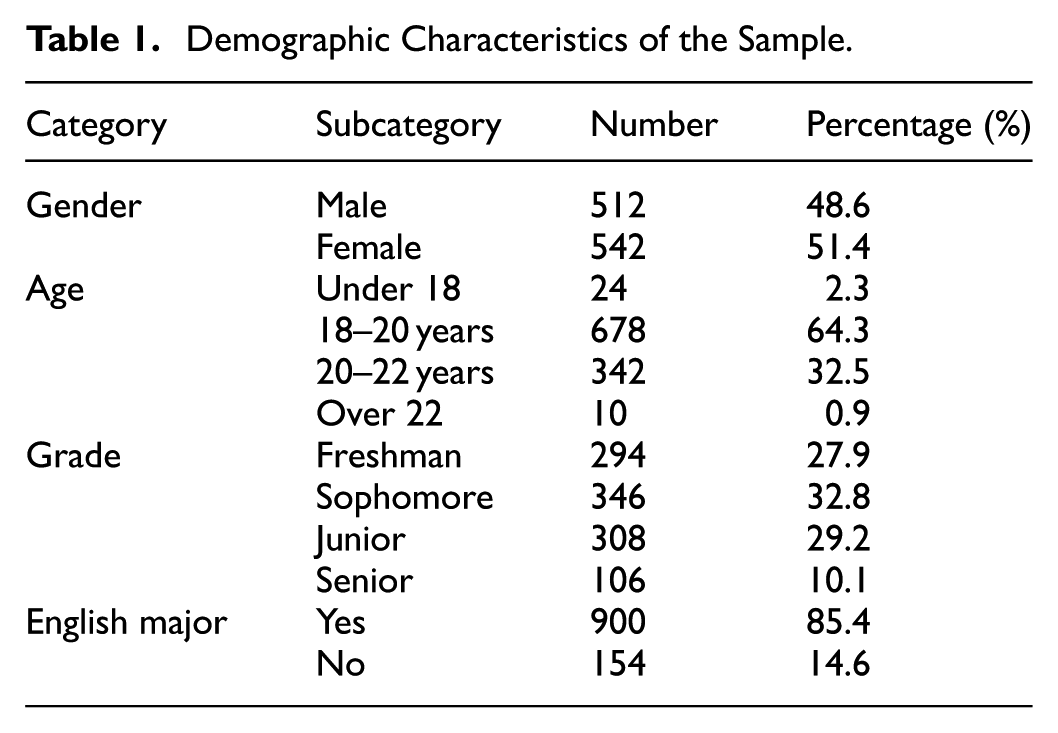
The study gathered 1,094 completed questionnaires. After removing invalid responses, 40 questionnaires were discarded, leaving 1,054 valid responses. Questionnaires were excluded if over 20% of the items were missing or if over 80% of the responses showed a tendency to select extreme options, indicating inattentive responding (D. Wang et al., 2012). In this study, up to three arrows were directed at the endogenous latent constructs. Hair (2011) stated that a minimum sample size of 65 is needed at the 1% significance level to achieve a model explanatory power of R2 = .10, this study far exceeded the minimum requirement. The participants included 512 males (48.6%) and 542 females (51.4%). The majority were aged 18 to 22 years (96.8%). Among the participants, 294 were freshmen (27.9%), 346 were sophomores (32.8%), 308 were juniors (29.2%), and 106 were seniors (10.1%). Most of the participants were English majors (85.4%; Table 1).
Demographic Characteristics of the Sample.
Based on the descriptive statistics provided in Table 2, we found significant positive correlations between academic self-concept, SE, positive academic emotions, and ELE. Specifically, the mean score for academic self-concept was 5.083 (SD = 1.139), and it showed significant positive correlations with ELE, SE, and positive academic emotions. The average score for ELE was 4.436 (SD = 1.159), and it exhibited significant positive correlations with SE and positive academic emotions. The mean score for SE was 4.525 (SD = .990), which also showed a significant positive correlation with positive academic emotions.
Descriptive Statistics and Correlation Coefficients for ASC, SE, PAE, and ELE.

Note. ASC = academic self-concept; PAE = positive academic emotions.
p < .001.
Measurement Tools
The questionnaire consists of two sections: the first section gathers demographic data, and the second focuses on self-reported information related to the constructs under investigation. This research employed validated scales to assess each construct, with appropriate adjustments made to the scale content to align with the research context and objectives. The translation of the scale was completed by two experts: one was a bilingual content expert, and the other was a linguistic expert focused on the Chinese language. The two experts translated the scale from English to Chinese, focusing on both content and language. During the translation process, major differences between the two versions were reviewed and discussed, and a unified final version was created. To finalize the adaptation of the scale in Chinese, the completed draft underwent pilot testing with 20 Chinese college students to identify and rectify any translation-related problems. In addition, a Likert scale with seven levels was employed, where participants could rate their agreement from the lowest (1) to the highest (7) level.
Academic self-concept scale was modified based on González-Nuevo et al. (2023) and primarily measures college students’ perceived academic ability. The scale consists of five items, with a Cronbach’s alpha of .884, demonstrating strong reliability. SE scale was modified based on Li et al. (2023) and assesses college students’ confidence in their learning abilities. It includes 10 items, with a Cronbach’s alpha of .935, demonstrating strong reliability. Positive academic emotions scale was modified based on Bieleke et al. (2021) and encompasses three dimensions: classroom emotions, learning emotions, and exam emotions. It primarily measures college students’ positive emotions in classroom, learning, and test contexts, with three items per dimension, totaling nine items. The Cronbach’s alpha is .947, demonstrating strong reliability. ELE scale was adapted from Meng and Zhang (2023) and is used to assess college students’ level of engagement in English classes. It includes three dimensions: vitality (6 items), dedication (5 items), and focus (6 items), with a total of 17 items. Higher scores reflect greater levels of ELE. The Cronbach’s alpha is .964, indicating excellent reliability.
Data Analysis
This study employed PLS-SEM to analyze both the measurement and structural models. The choice of PLS-SEM was based on its prediction-oriented methodological approach, which aligns with the exploratory and predictive objectives of this study (Hair et al., 2021). In addition, PLS-SEM demonstrates strong robustness against multivariate non-normality and is suitable for analyzing models that involve multiple latent variables and complex relationships (Premkumar & Bhattacherjee, 2008). Given that the sample size of this study was 1,054 and the research focus was on predicting path relationships, PLS-SEM was deemed more appropriate than CB-SEM, which imposes stricter normality assumptions and is primarily used for confirmatory analysis.
Results
Measurement Model
Assessing the measurement model entails determining the validity and reliability of the data gathered as well as the questionnaire. For reliability assessment, the external loadings of each construct can be examined. According to Byrne (2013), a factor loading score greater than .70 reflects strong reliability. In this study, the external loadings for items 1 and 2 of the academic self-concept scales, item 6 of the SE scale, items 8 and 9 of the positive academic emotions scale, and items 4, 5, 6, 9, and 17 of the ELE scale were all below .70. After deleting these items, the external loadings for each remaining item exceeded .70, as shown in Table 3, indicating high reliability. The alpha values (.884–.964) and CR values (.928–.968) all exceeded the acceptable thresholds, indicating strong reliability, as supported by Hair et al. (2021). AVE is used to evaluate convergent validity. The values observed in this study varied between .658 and .811, all above the .5 benchmark (Fornell & Larcker, 1981). According to Henseler et al. (2015), these values are deemed acceptable, confirming the results meet the convergent validity criterion.
Reliability and Validity of the Model.

Note. ASC = academic self-concept; PAE = positive academic emotions; CR = composite reliability; AVE = average variance extracted.
Discriminant validity denotes the degree to which a construct can be distinguished from other constructs (Zaiţ & Bertea, 2011). Discriminant validity was evaluated using the Fornell–Larcker criterion (Fornell & Larcker, 1981), which requires each AVE square root to exceed the highest correlation with other constructs (Henseler et al., 2015). This condition is satisfied, demonstrating sufficient discriminant validity (Table 4).
Fornell–Larcker Criterion.

Note. The bolded values on the diagonal represent the square roots of the AVE. ASC = academic self-concept; ELE = English learning engagement; SE = self-efficacy; PAE = positive academic emotions.
The Heterotrait–Monotrait ratio (HTMT) is a commonly used indicator for assessing discriminant validity, with a threshold value of .90 (Henseler et al., 2015). The HTMT between all pairs of constructs are below .90 (Table 5), indicating that the measurement model satisfies the requirements for discriminant validity.
Heterotrait–Monotrait Criterion.
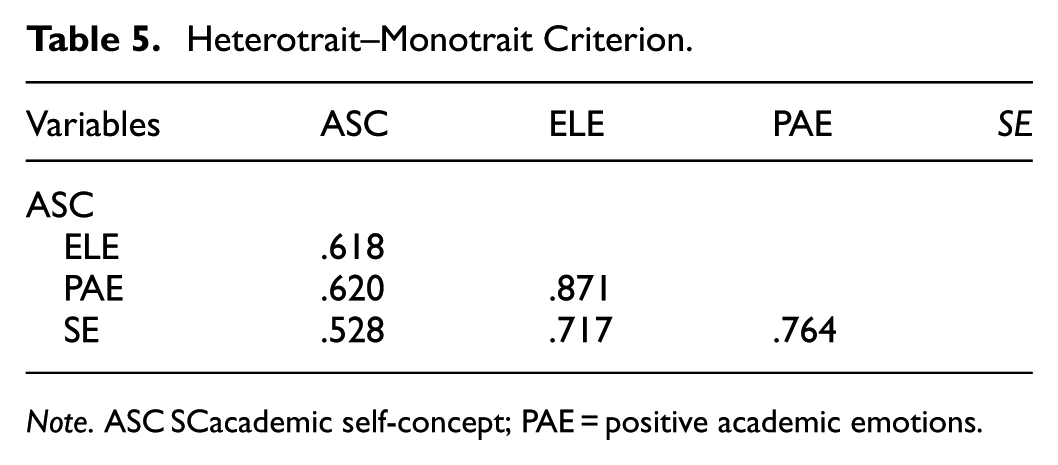
Note. ASC SCacademic self-concept; PAE = positive academic emotions.
Structural Model
Multicollinearity Test
Following Hair et al. (2021), VIF was used to check for multicollinearity, with values below 3.3 indicating no issue. Table 6 shows all VIFs range from 1.000 to 2.398, confirming acceptable levels.
Multicollinearity Test for the Structural Model.

Note. ASC = academic self-concept; PAE = positive academic emotions.
Path Hypotheses
The purpose of significance testing in structural model analysis is to assess whether the exogenous constructs have a substantial impact on the endogenous constructs. Table 7 and Figure 2 show that the proposed model is well supported by the data. First, academic self-concept significantly and positively predicted ELE (β = .130, t = 4.270, p < .001), thus supporting H1. This suggests that students’ positive evaluations of their own academic abilities enhance their ELE. In addition, the path analysis results confirm the rationality and structural validity of the proposed model.
Path Hypothesis Testing Results.

Note. ASC = academic self-concept; PAE = positive academic emotions.
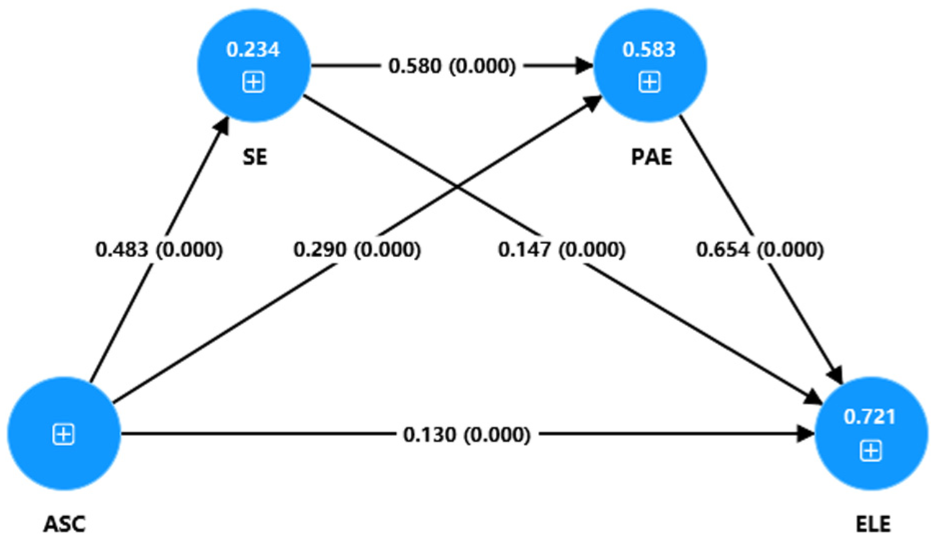
Mediation model.
R 2 and Q2
R 2 reflects how well exogenous variables explain the variance in endogenous ones. Chin (1998) suggests that thresholds of .67, .33, and .19 correspond to high, moderate, and low explanatory capacity. As shown in Table 8, ELE (.721), positive academic emotions (.583), and SE (.234) all meet or exceed these benchmarks. In addition, this study conducted a blindfolding test (Geisser, 1974; Stone, 1974). Q2 greater than zero signifies predictive relevance (Chin, 1998). As shown in Table 8, Q2 values range from .566 to .675, suggesting that all latent endogenous constructs in this study demonstrate strong predictive relevance. In addition, following the model evaluation guidelines of PLS-SEM, this study employed the SRMR and NFI indices to assess the overall model fit. The SRMR (.047) is below the .08 threshold, suggesting small residuals and a good absolute fit of the model. The NFI value (.873) was close to .90, suggesting a satisfactory comparative fit relative to the null model. Overall, these results suggest that the structural model demonstrated a good fit with the data.
Predictive Relevance of the Structural Model.

Note. ASC = academic self-concept; PAE = positive academic emotions.
Mediation Effect Analysis
This study conducted a mediation effect analysis using the bootstrap method of PLS-SEM (Nitzl et al., 2016) to examine whether SE and positive academic emotions mediate the relationship between academic self-concept and ELE. Table 9 presents the mediation effects of SE and positive academic emotions. First, SE partially mediates the effect of academic self-concept on ELE (β LE.071, t = 4.035, p .0.001), supporting H2. Second, positive academic emotions mediate the effect of academic self-concept on ELE (β βE.190, t = 6.364, p .3.001), supporting H3. Finally, SE and positive academic emotions jointly mediate the effect of academic self-concept on ELE (β βE.183, t = 8.883, p .8.001), supporting H4.
Mediation Effect Analysis.
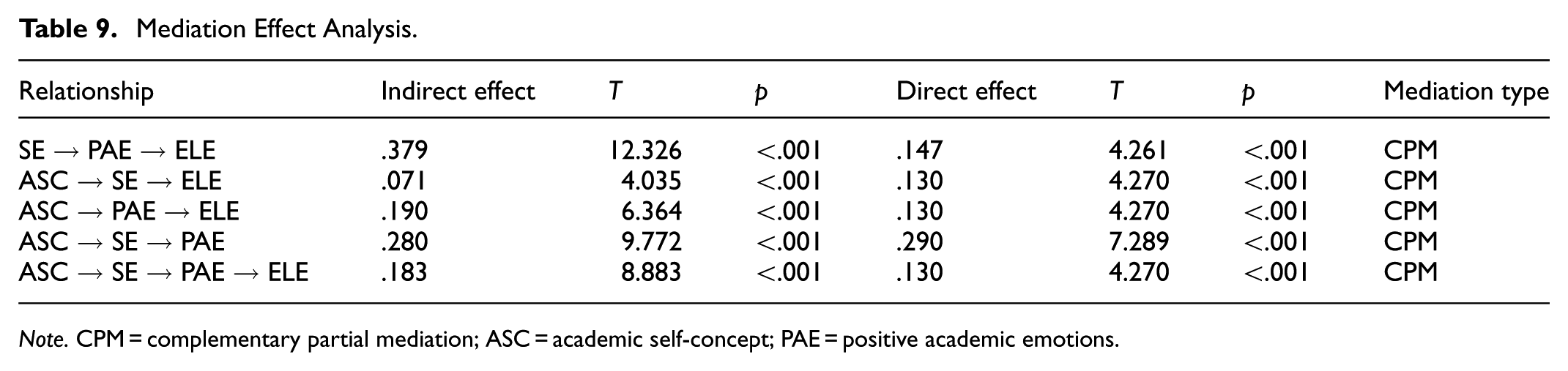
Note. CPM = complementary partial mediation; ASC = academic self-concept; PAE = positive academic emotions.
Discussion
Academic self-concept significantly and positively influences ELE, thus validating H1. This study aligns with Rushdan et al. (2024). The enhancement of academic self-concept leads to an increase in college students’ ELE. Specifically, the improvement of academic self-concept help students develop a more positive view of their own learning abilities, which in turn stimulates sustained participation in the English learning process and increases their learning engagement (Wang & Pan, 2025). Moreover, college students with a stronger academic self-concept are more likely to actively engage in English learning activities, including practicing language skills repeatedly and participating actively in class discussions and interactions (Alek et al., 2023). The findings of this research validate the positive effect of academic self-concept on ELE and highlight the importance of academic self-concept in the English learning context, providing theoretical support for promoting college students’ ELE.
SE mediates the link between academic self-concept and ELE, thus confirming H2. The improvement of academic self-concept significantly enhances students’SE, meaning their confidence in successfully completing English learning tasks is notably increased. This increase in SE improves students’ learning engagement in English learning activities. Specifically, students with elevated academic self-concept levels tend to maintain a constructive view of their ability to learn English (Aguillon et al., 2020). This affirmative self-recognition boosts their SE, driving them to exhibit greater determination and proactive engagement in the learning journey (Almeida et al., 2024). For instance, college students with high SE demonstrate greater resilience when confronting challenges, viewing difficulties as opportunities for growth (Yuan et al., 2024; Zou et al., 2024). This belief motivates them to devote more effort to accomplishing learning tasks, thereby increasing ELE (Vargas et al., 2024).
Positive academic emotions mediate the relationship between academic self-concept and ELE, thus confirming H3. The findings indicate that as college students’ academic self-concept increases, their positive academic emotions (characterized by emotions like joy, optimism, and pride) becomes more pronounced, and this emotional state significantly enhances their ELE. Specifically, the enhancement of academic self-concept leads to a more positive self-perception of their English learning abilities. This positive self-cognition often triggers positive academic emotions (Paechter et al., 2022). For example, when college students have a higher recognition of their academic English abilities, they tend to feel enjoyment from English learning activities (Dewaele & Li, 2021). Meanwhile, a high academic self-concept fosters stronger feelings of achievement and enjoyment during task completion and progress in English learning, thereby strengthening students’ pride in English learning (Busch et al., 2021). These positive academic emotions provide students with the psychological motivation to continuously engage in English learning activities, making them more focused and committed to their English learning tasks (Gellisch et al., 2024).
SE and positive academic emotions act as chain mediators in the relationship between academic self-concept and ELE, thus validating H4. Research results further demonstrating that academic self-concept directly influences ELE and indirectly affects it through a series of psychological mechanisms. Specifically, the improvement of academic self-concept first boosts students’SE, strengthening their confidence in learning activities (Guo et al., 2024). In addition, college students with high SE are more likely to experience enjoyment, hope, and pride as they work towards their English learning goals (Guan et al., 2025), leading to greater focus and persistence in their ELE (Zeng et al., 2023). Compared with previous studies that concentrated on single mediation paths, this study reveals a more complex psychological mechanism, thereby extending the theoretical application of academic self-concept and offering a more targeted theoretical basis for the design of future intervention strategies.
Additionally, this study extends SCT. Based on SCT by further illustrates the interactive link between academic self-concept and positive academic emotions within the dynamic interplay of individual and contextual factors, emphasizing that these two constructs are not independent but jointly serve as key psychological components of ELE. Therefore, this research provides a more nuanced theoretical explanation of how academic self-concept, SE, and positive academic emotions are interconnected with ELE and offers valuable insights for future domain-specific research and instructional interventions (Appendix).
Implications
Theoretical Implications
Based on SCT, this study explores the impact of university students’ academic self-concept on ELE, focusing on examining the chain mediation effect of SE and positive academic emotions.
Firstly, this study extends the use of SCT in educational psychology by revealing the indirect pathways through which academic self-concept influences students’ learning engagement. As an individual’s overall view of their academic capabilities, academic self-concept enhances students’ engagement in English learning by improving SE and positive emotions. Specifically, students’ beliefs in their academic abilities boost their SE, making them more proactive in the learning process, and the enhanced positive academic emotions further promote their learning engagement.
Secondly, this study provides new empirical support for SCT, highlighting the important roles of academic self-concept, emotional regulation, and SE in academic behavior. Through a chain mediation model, the study reveals how academic self-concept influences university students’ ELE through the sequential effects of SE and positive academic emotions, offering a new perspective for understanding the underlying mechanisms of academic behavior.
In summary, this study deepens the understanding of the relationship between academic self-concept and ELE from the perspective of SCT, providing theoretical insights and practical guidance for educational strategies and instructional design.
Practical Implications
This study provides actionable recommendations for educators and policymakers by outlining specific intervention pathways. Educators can design English teaching activities that strengthen students’ academic self-concept, such as providing personalized feedback, showcasing achievements, and guiding goal setting to help students develop positive perceptions of their English academic abilities. Additionally, fostering SE through strategies such as phased goal completion, task decomposition, and positive reinforcement can build students’ confidence in tackling English learning tasks (Song & Hu, 2024). Teachers can also create a positive classroom atmosphere to enhance students’ academic emotional experiences. For example, incorporating engaging classroom activities and establishing encouragement mechanisms can further boost students’ ELE (Sun & Liu, 2023). Universities can integrate the cultivation of academic self-concept, SE, and positive academic emotions into English course designs and learning support systems. For instance, developing hybrid online and offline English academic support platforms can provide students with timely feedback and opportunities to showcase their progress, thereby enhancing their academic self-concept and SE (Ha & So, 2023). Moreover, universities can organize psychological support initiatives or emotional management workshops to help students develop positive academic emotions, ultimately improving their ELE and learning efficiency. Students can increase their ELE by strengthening their academic self-concept, boosting SE, and fostering positive academic emotions. First, students should establish clear learning objectives and reflect on their achievements to build confidence and reinforce their self-concept. Second, by setting phased objectives and accumulating successful experiences, they can enhance their SE and build confidence in their English learning abilities. Finally, students should maintain a positive learning attitude, regulate their emotions, and seek social support to cultivate positive academic emotions, thereby improving their efficiency in English learning. These efforts can promote both academic and career development.
Limitations and Future Research
While this study has revealed the complex relationships among college students’ academic self-concept, SE, positive academic emotions, and ELE through a chain mediation model, it is not without limitations. First, this study primarily focused on learners’ internal psychological resources, while external contextual factors (such as teacher support and learning environment) and metacognitive strategies were not included in the current model in order to maintain theoretical parsimony. Future research could extend the model by incorporating external and strategic cognitive variables to provide a more comprehensive understanding of how multiple dimensions jointly contribute to ELE. Second, the reliance on self-reported questionnaires in this study could lead to biases such as social desirability or inaccuracies in recall, which might undermine the objectivity of the findings. Future research could integrate quantitative and qualitative methods, including incorporating physiological indicators or interview data, to improve the accuracy and comprehensiveness of the data. Additionally, the use of a cross-sectional framework in this study hampers the identification of causal links and fails to capture the evolving nature of the constructs. Longitudinal approaches in future studies may uncover how academic self-concept, SE, positive academic emotions, and ELE develop over time, enriching insights into their interconnections.
Conclusion
This study aimed to explore the impact of college students’ academic self-concept on ELE and further analyze the chain mediation roles of SE and positive academic emotions in this relationship. This research fills a gap in understanding how academic self-concept influences ELE through specific psychological constructs, particularly highlighting the chain mediation effects of SE and positive academic emotions. The findings deepen the insight into the complex relationships between academic self-concept and academic behaviors and offer new intervention strategies for enhancing college students’ ELE. Specifically, educational activities and psychological counseling programs that focus on improving academic self-concept can enhance students’SE while actively guiding them to cultivate and express positive academic emotions. These approaches can effectively boost students’ engagement in English learning. These findings offer valuable theoretical foundations for universities to create support strategies that promote students’ academic development and offer practical guidance for designing interventions based on psychological mechanisms.
Footnotes
Appendix

| References | Variables | Item |
|---|---|---|
| González-Nuevo et al. (2023) | Academic self-concept | I learn lessons easily |
| I get good marks | ||
| I am a good student | ||
| The teachers think I am a good student | ||
| My family think I am a good student | ||
| Li et al. (2023) | Self-efficacy | I can always solve problems if I try my best |
| Even if others oppose me, I still have the means to get what I want | ||
| It’s easy for me to stick to my ideals and achieve my goals | ||
| I am confident that I can deal with any unexpected things effectively | ||
| With my intelligence, I can handle the unexpected | ||
| I’m sure I can solve most of the problems if I put in the necessary effort | ||
| I can face difficulties calmly because I trust in my ability to deal with them | ||
| When faced with a difficult problem, I can usually find several solutions | ||
| When I am in trouble, I can usually think of some way to cope | ||
| No matter what happens to me, I can handle it | ||
| Bieleke et al. (2021) | Positive academic emotions | I enjoy being in class |
| I am confident when I go to class | ||
| I am proud of myself | ||
| I enjoy acquiring new knowledge | ||
| I have an optimistic view toward studying | ||
| I’m proud of my capacity | ||
| For me the test is a challenge that is enjoyable | ||
| I have great hope that my abilities will be sufficient | ||
| I’m proud of how well I mastered the exam | ||
| Meng and Zhang (2023) | English learning engagement | At my study, I feel bursting with energy |
| I am enthusiastic about my study | ||
| My study inspires me | ||
| When I get up in the morning, I feel like going to class | ||
| I feel happy when I am studying intensely | ||
| I am proud of my study | ||
| I am immersed in my study | ||
| I can continue studying for very long periods of time | ||
| To me, my study is challenging | ||
| When learning English, even when things are not going well, I always persevere | ||
| When learning English, I can recover quickly even if I am mentally tired | ||
| When I study English or have an English class, I feel energized | ||
| I find that my purpose of learning English is clear and meaningful | ||
| When I study English, I forget everything around me | ||
| I am difficult to put down the hands of learning | ||
| When I am learning English, I am very focused |

Ethical Considerations
The researchers confirms that all research was performed in accordance with relevant guidelines/regulations applicable when human participants are involved (e.g., Declaration of Helsinki or similar). This study was approved by the Ethics Committee of Inner Mongolia University of Technology (Approved No. IMUT-0014).
Consent to Participate
The participants received oral and written information and provided written informed consent before participating in the study.
Author Contributions
Conceptualization: Jun Song and Xin Wang; Methodology: Jun Song; Formal analysis and investigation: Jun Song; Writing – original draft preparation: Jun Song; Writing – review and editing: Jun Song; Supervision: Jun Song. All the authors have read and agreed to the published version of the manuscript.
Funding
The authors received no financial support for the research, authorship, and/or publication of this article.
Declaration of Conflicting Interests
The authors declared no potential conflicts of interest with respect to the research, authorship, and/or publication of this article.
Data Availability Statement
The data that support the findings of this study are available on request from the corresponding author.*