




Abstract
This study examines how energy consumption influences Ethiopia’s economic growth, focusing on its implications for sustainable development. It analyses the mediating role of energy efficiency and the moderating effect of renewable energy adoption. Using a quantitative design and data from 403 energy-related firms, the findings reveal that energy use significantly drives economic performance, with energy efficiency serving as a key moderating factor enhancing sustainability. The objective is to assess how improvements in energy consumption and efficiency drive economic productivity, while the adoption of renewable energy enhances sustainability. The quantitative research approach was used in the investigation. Structured questionnaires were used to gather data from 403 energy-related businesses. Results show that economic growth is significantly impacted by energy use, with energy efficiency acting as a crucial moderator. Furthermore, by reducing the negative economic and environmental cost of non-renewable energy, renewable energy eliminates this connection. Improved energy efficiency, for example, boosts economic production, while consuming renewable energy enhances long-term growth by lessening the burden on the environment. These findings highlight the urgent need for Ethiopia to diversify its energy resource base, prioritising renewable sources such as wind, solar, and hydroelectric power. Policymakers are invited to encourage technological innovation and infrastructure development to improve energy efficiency, invest in renewable energy sources, and promote fair access to energy. Through combining energy policy with sustainability goals, this study emphasises the fundamental role of energy in Ethiopia’s future economic stability and environmental sustainability.
Plain Language Summary
This study explores how energy use and economic growth are connected in Ethiopia and what this means for the country’s sustainable development. It focuses on two important factors: how improving energy efficiency can help the economy grow, and how using more renewable energy sources (like wind, solar, and hydro) can make that growth more environmentally friendly. The research used surveys from 403 energy-related companies to gather data. Results show that energy consumption plays a key role in boosting economic growth, especially when energy is used efficiently. In addition, using renewable energy helps reduce the negative effects of relying on fossil fuels. The findings highlight that better energy efficiency leads to stronger economic performance, and renewable energy supports long-term sustainability. The study recommends that Ethiopia expand its use of renewable energy and improve energy technologies. This would support a more resilient economy and protect the environment. These insights are useful for policymakers who want to design energy strategies that support both growth and sustainability.
Keywords
Introduction
This nexus assumes heightened significance in Ethiopia, a country undergoing industrialisation and urbanisation, given its implications for economic transformation, environmental sustainability, and social welfare (Dadi et al., 2024). Development studies place a strong emphasis on the intricate relationship between energy use and economic growth in emerging economies, aiming for sustainable progress.
Over the past 20 years, Ethiopia’s economy has grown rapidly, and between 2010 and 2020, services, construction, and agriculture accounted for most of the country’s average annual GDP growth, which ranged from 8% to 10% (A. K. Ali et al., 2024). At the same time, total primary energy consumption reached around 500 petajoules in 2022, with over 90% of energy still derived from traditional biomass sources such as wood and charcoal (Grabher et al., 2024). Despite recent investments in hydropower and grid infrastructure, about 45% of people lack access to electricity, and access to modern energy remains quite uneven between urban and rural regions. These numbers demonstrate the nation’s dual challenges of maintaining economic growth and advancing cleaner, more effective, and more egalitarian energy systems.
Ethiopia continues to struggle to sustainably balance growing energy demands with economic growth while accounting for the environment, despite notable advancements in infrastructure and expanded energy access (Kamp & Bermúdez Forn, 2016). Given Ethiopia’s distinct development backdrop, these two imperatives underscore the urgent need to examine the link between energy consumption and economic growth (Yalew, 2022).
Although there is a lot of study on the connection between energy and growth globally, not much of it focuses on Ethiopia in particular. The majority of earlier studies used aggregated national data, which obscures regional and sectoral differences in energy consumption (Montenegro et al., 2021). Additionally, much of the existing literature employs linear causal models that are unable to adequately capture the dynamic, nonlinear mechanisms by which energy consumption affects economic performance (Feng & Zhao, 2022). These limitations highlight the need for a more nuanced, multidimensional analysis that incorporates sector-specific realities, spatial diversity, and sustainability considerations.
This study fills these gaps by comprehensively examining the relationships among Ethiopia’s economic performance, the Sustainable Development Goals, and patterns of energy use. Unlike earlier studies that focused solely on energy or financial metrics, the current research is situated within Ethiopia’s broader development frameworks, such as the Growth and Transformation Plan (GTP). In addition to sophisticated econometric methods, it incorporates sustainability indicators (Erena et al., 2021). It offers valuable guidance on aligning energy policies with Ethiopia’s long-term development goals. Ethiopia provides a compelling context for academic inquiry, particularly for exploring how a sustainable energy transition supports economic progress. As one of Africa’s rapidly expanding economies, the nation stands at a crucial stage where adopting efficient and sustainable energy systems is essential to sustain growth.
In addition to satisfying the growing demands of urbanisation and industrialisation, such a change is essential for promoting inclusive and resilient economic growth, strengthening environmental stewardship, and improving energy security (Cantarero, 2020). National strategies, such as the GTP and Ethiopia’s commitments to the SDGs, underscore the central role of energy in the country’s economic transformation (Tesfay et al., 2024). However, empirical evidence linking these policy ambitions with actual energy and economic trends remains scarce. Therefore, this research fills a significant gap by investigating the economic, social, and environmental dimensions of the energy–growth nexus in Ethiopia, offering a comprehensive and policy-relevant perspective (Opeyemi et al., 2019).
This study makes several novel contributions. First, it uses advanced econometric methods to capture temporal, sectoral, and spatial variations in energy use and economic performance, offering more profound insights into Ethiopia’s complex energy dynamics (Bhattarai et al., 2024). Second, it integrates sustainability indicators to assess the long-term implications of energy policies. Third, by contextualising the analysis within Ethiopia’s development plans, the study offers academically rigorous yet policy-relevant findings (Hailu et al., 2023). Thus, this study aims to respond to the following queries to close the gaps that have been found and further the conversation about energy and economic development:
What kind of relationship exists between Ethiopia’s economic growth and energy use, and in what direction?
What part does energy efficiency play in mediating the relationship between energy growth and energy efficiency?
To what extent does the adoption of renewable energy sources alter or moderate the energy–growth nexus in Ethiopia?
How does the energy growth nexus impact broader sustainability outcomes, including environmental and social dimensions of development?
This research aims to provide a contextually grounded, policy-oriented, and sustainability-driven analysis of the energy-growth relationship in Ethiopia. The findings will help bridge critical knowledge gaps and inform targeted interventions as the country strives toward inclusive and sustainable development. Furthermore, by combining methodological rigour with contextual relevance, the study makes a meaningful contribution to the global discourse on energy and sustainable economic growth in emerging economies.
Review of Literature
Theoretical Basis
Resource-Based Perspective (RBV)
RBV is a basic theoretical approach that emphasises the organisation’s internal resources—both physical and human—as well as intangible assets as the most vital elements for gaining and sustaining a competitive advantage (Rao & Brown, 2024). The RBV asserts that resources must satisfy the VRIN criteria—value, rarity, distinctiveness, and non-substitutability—to establish a long-term competitive advantage. Energy can be viewed as an essential and strategic resource that supports and propels economic progress when this framework is expanded from the business level to a macroeconomic setting.
Energy consumption fuels productive activities, industrial operations, technological advancements, and infrastructure development, each of which is integral to elevating a nation’s economic output (C. C. Lin & Chang, 2023). From the RBV perspective, energy resources are not merely inputs, but strategic assets that enable economic systems to leverage productivity gains and enhance their competitive positioning. Moreover, the RBV’s dynamic capabilities framework emphasises the continual enhancement of energy efficiency, optimising energy use to minimise waste and environmental externalities while maintaining or improving output levels (C. C. Lin & Chang, 2023).
Crucially, energy efficiency serves as a pivotal mediating mechanism connecting energy consumption with economic growth. Through promoting technological innovation and optimising energy systems, it drives sustainable economic expansion while reinforcing environmental resilience and advancing sustainability objectives (Elkhatat & Al-Muhtaseb, 2024). This mediating function demonstrates the ability to disentangle economic advancement from excessive energy use and ecological deterioration, bridging the frequently conflicting objectives of environmental stewardship and economic expansion. Empirical evidence supports this by demonstrating that investments in energy efficiency drive both economic development and ecological sustainability, especially in rapidly industrialising contexts subject to resource constraints (S. Ali et al., 2022).
Thus, RBV provides a robust theoretical foundation for conceptualising energy as a core strategic resource, whose efficient management and innovative deployment are essential to attaining long-term economic expansion. It highlights the importance of internal resource optimisation within the broader economic landscape, which is shaped by energy availability, technological advancements, and environmental considerations.
Theories of the Energy-Economic Nexus
Energy-economic nexus theories, which offer a comprehensive framework for understanding the dynamic, often reciprocal relationship between energy use and economic growth, serve as a supplement to RBV (Alam & Murad, 2020). This nexus encapsulates the inextricable link between energy use and economic activity through feedback mechanisms, with different theoretical hypotheses offering nuanced perspectives on causality and interaction.
According to the growth hypothesis, energy use is a major driver of economic expansion, underscoring the essential role energy plays in transportation, industrial production, technological advancement, and service provision (Stern, 2020). In this view, increased energy availability and consumption stimulate economic expansion by enabling higher levels of productive activity and technological progress.
On the other hand, according to the conservation theory, economic expansion increases energy demand, implying that as economies expand, energy consumption inevitably rises to sustain growing industrial and consumer activity (Sadorsky, 2021). The endogenous character of energy demand, in response to broader economic developments, is reflected in this concept, which highlights economic growth as the primary driver of energy consumption.
The feedback or bidirectional hypothesis highlights the mutually reinforcing, cyclical association between energy consumption and economic growth, in which energy use not only stimulates economic expansion but also increases in response to it. This perspective aligns with complex systems thinking, which highlights how the energy-economic relationship mutually reinforces, co-evolves, and dynamically adapts (Stern, 2020).
These theoretical perspectives offer a comprehensive framework for analysing the energy-growth relationship, particularly in developing countries like Ethiopia, where rapid industrialisation, technological shifts, and resource constraints create unique dynamics. Energy consumption in such contexts is not merely a byproduct of economic activity but also a catalyst for technological innovation, industrialisation, and infrastructure development, which are key drivers of sustained economic growth (Ma, 2022).
By combining the systemic and dynamic interaction between energy consumption and economic growth (nexus theories) with the strategic significance of energy resources and their efficient management (RBV), we can enhance our understanding. This comprehensive theoretical framework clarifies how improving energy efficiency and optimising energy use can promote strong, environmentally responsible economic growth. The dual challenges of environmental sustainability and economic development must be addressed by developing economies.
Review of Prior Studies
Energy Consumption and Economic Growth
Several studies have examined how energy consumption relates to economic growth, particularly within the growth hypothesis, which posits that rising energy use drives economic expansion. This perspective is reinforced by evidence from both developed and developing countries. For instance, Nosheen et al. (2024) show that in Sub-Saharan Africa, accessible and affordable energy significantly contributes to GDP growth by supporting industrialisation, innovation, and productivity improvements. Similarly, Cantarero (2020) emphasises that enhancing energy infrastructure is essential for structural transitions from agriculture to industry.
Though these investigations have contributed to our understanding, their scope and generalizability are frequently constrained. Many rely on aggregated national-level statistics, which could mask notable differences in energy access and usage at the subnational level. Moreover, such studies typically adopt linear, static modelling approaches, often ignoring dynamic feedback effects, regional heterogeneity, and the evolving nature of energy systems. Another major limitation is the assumption of homogeneity in the energy-economic relationship across countries.
Odhiambo (2023) acknowledges that the energy-growth nexus is heavily influenced by the degree of policy coherence, technological capacity, and sectoral energy use patterns. Yet, few empirical studies adequately capture these moderating factors. As such, much of the literature fails to account for how context-specific institutional, infrastructural, and socioeconomic variables shape the energy-growth dynamic. This omission is particularly problematic for countries like Ethiopia, where the energy sector faces unique constraints.
Furthermore, while recent studies have introduced renewable energy into the discussion, the majority still treat energy consumption as a single, undifferentiated variable, without disaggregating between traditional fossil-based energy and renewables. This lack of differentiation is increasingly problematic, given that different energy sources have distinct economic and environmental implications. Another study by Adelekan et al. (2024) has also highlighted the growing significance of renewable energy sources in shaping sustainable growth trajectories, especially in emerging economies. Therefore, while energy consumption is integral to economic development, its role is frequently moderated through regional contexts, more significant policies, and infrastructural concerns.
Energy Efficiency and Sustainability
Since energy efficiency helps separate environmental degradation from economic advancement, it has become a crucial element of the global agenda for sustainable development. Studies by M. Wang et al. (2023) argue that energy-efficient technologies reduce operational costs and improve productivity, thereby aligning economic growth with sustainability objectives. However, these studies suffer from several critical limitations. First, much of the literature is based on technological optimism, assuming that the mere availability of energy-efficient technologies leads to their adoption and effective use. In practice, however, the diffusion of such technologies is often constrained by limited capital availability, institutional weaknesses, and a lack of awareness, especially in developing countries. It reveals a gap between theoretical potential and actual implementation that the existing literature fails to address adequately.
Second, most studies on energy efficiency are heavily skewed toward developed or industrialising nations, where market structures, regulatory environments, and institutional capacities are more mature. The findings from such contexts may not be directly transferable to low-income economies where informality, infrastructure deficits, and policy fragmentation are more pronounced.
Furthermore, although some studies have examined interlinkages between renewable energy and energy efficiency (Geels et al., 2023), little is known about the interaction between these two drivers. Empirical examinations of the interconnection between energy efficiency and renewable energy utilisation remain few, especially in countries with low energy access, such as Ethiopia. Enhancing energy infrastructure is necessary for long-term development in developing countries, where energy efficiency and renewable energy are crucial for sustainable economic growth (Azam et al., 2023). These shortcomings empathise the need for context-specific, interdisciplinary research on energy efficiency, especially in under-researched settings like Ethiopia, to better understand how efficiency measures can be effectively designed, adopted, and scaled to promote both economic and environmental objectives.
Finally, most existing studies do not adopt a systems-level perspective. They fail to consider how energy efficiency interacts with other sectors, such as transportation, agriculture, or services, and how institutional, behavioural, or cultural factors mediate the effectiveness of energy-efficient interventions.
Renewable Energy and Energy Development
Experts widely recognise renewable energy expansion as a cornerstone of sustainable development. Numerous studies have shown that supportive policies, including public investments, regulatory incentives, and subsidies, can increase energy security, reduce greenhouse gas emissions, and accelerate the adoption of renewable energy sources (Aparisi-Cerdá et al., 2024).
Yet, despite their valuable contributions, many of these studies offer overly broad or general assessments, often evaluating policy impacts at the aggregate or cross-country level. As a result, they tend to underestimate the importance of local governance structures, political economy dynamics, and socio-cultural acceptance, which significantly influence the success of renewable energy initiatives. Another limitation is that much of the literature adopts a technocratic lens, focusing primarily on technical and economic feasibility while paying insufficient attention to institutional capacity, coordination challenges, and policy coherence.
Comprehensive and supportive policies, especially those related to renewable energy, have helped many countries transition more quickly to cleaner energy sources. It is required for the world’s long-term sustainability (Aparisi-Cerdá et al., 2024). Recent research has also highlighted the importance of integrating incentives for renewable energy adoption with energy efficiency initiatives. Countries with strict energy efficiency standards record productivity gains in industry and operational cost cuts, which directly contribute to economic growth as they achieve their environmental conservation objectives (Baker, 2023).
Furthermore, the equity aspect of renewable energy growth is largely ignored in the research now under publication. There is still a dearth of empirical data on how the benefits of renewable energy are shared across demographic groups, especially between urban and rural areas and across different socioeconomic classes. In highly unequal cultures, where differences in access to contemporary energy services may exacerbate preexisting social and economic inequality, this issue is significant.
Another significant research gap is the lack of focus on localised and off-grid renewable energy sources. These systems are essential for expanding energy access in Sub-Saharan Africa’s rural and peri-urban areas, where high costs, logistical challenges, and a lack of institutional capacity frequently hamper the expansion of the centralised grid. Off-grid technologies may provide more practical and sustainable options for isolated populations in nations like Ethiopia, where the current emphasis on grid-based energy solutions, although beneficial, may not be appropriate.
As a result, while the existing literature offers valuable theoretical and policy perspectives, it often overlooks the intricate, grassroots realities that nations with weak infrastructure and institutional constraints face. Therefore, there is an urgent need for thorough, nation-specific empirical studies that examine the practical application of renewable energy policies and the observable benefits they yield for social inclusion, economic growth, and environmental sustainability.
Identification of Unresolved Issues in Ethiopia’s Context
While the global literature on the energy–economic growth nexus has proliferated, Ethiopia remains under-researched, particularly regarding the nuanced interplay among energy access, infrastructure development, and inclusive growth.
Ethiopia’s energy industry nonetheless faces several enduring issues, including limited access to electricity, particularly in rural areas; a heavy reliance on traditional biomass for household energy needs; and an inadequate, unstable grid infrastructure. With the goal of increasing electricity generation capacity, reducing energy poverty, and establishing the nation as a regional power exporter, the government has pursued ambitious large-scale hydropower initiatives, chief among them the Grand Ethiopian Renaissance Dam (GERD). Still, there are few empirical studies examining how these investments affect sectoral and regional economic performance. Ramachandran (2021) notes that inadequate rural energy access limits productivity in agriculture and small-scale manufacturing, yet no comprehensive studies have quantitatively modelled this impact.
Additionally, there is limited evidence on the role of energy efficiency in Ethiopia. Murshed et al. (2022) identify potential gains in industrial energy use. Still, there is little empirical work exploring which efficiency measures are viable, what barriers prevent adoption, or how such interventions affect productivity and growth. The lack of sector-specific efficiency studies leaves policymakers without the evidence needed to guide energy-saving initiatives. Future research will be required to identify the most effective energy-efficiency measures tailored to Ethiopia’s industrial and household energy consumption patterns.
Although Ethiopia is often praised for its commitment to renewables, particularly hydro and wind, the effectiveness of its renewable energy policies remains poorly evaluated.
Various renewable energy policies, among others, have made Ethiopia globally recognised for its ambitious initiatives, particularly in promoting hydropower and wind energy (Murshed et al., 2022). However, how such policies have effectively moderated Ethiopia’s energy-economic relationship for sustainable development remains an area that warrants further investigation. While Gebreslassie et al. (2024) recognises improvements in access, the integration of energy planning with broader economic development strategies is minimal. Without such integration, energy investments risk becoming isolated projects that fail to drive systemic change.
Furthermore, the interaction between Ethiopia’s energy development and its commitment to the SDGs (e.g., SDG 7, 8, and 13) remains underexplored. While some early studies have begun mapping this terrain, they are primarily descriptive and lack robust analytical frameworks for understanding trade-offs and synergies across different goals.
Hence, based on the above, a critical synthesis of the existing literature reveals several interrelated gaps that significantly constrain the applicability of global findings to the Ethiopian context. First, a pronounced contextual deficit persists across much of the literature, as most studies fail to adequately reflect Ethiopia’s distinctive socioeconomic conditions, institutional arrangements, and infrastructural limitations. This lack of contextualisation often results in policy prescriptions that are misaligned with the realities on the ground, thereby limiting their practical relevance. Second, although energy efficiency is widely recognised as a strategic pillar of sustainable development, it remains under-theorised and empirically underexplored in Ethiopia. In particular, there is a lack of evidence on sector-specific efficiency potentials, adoption barriers, and the broader economic implications of energy-saving interventions. Third, there is a disconnect between renewable energy policies and their measurable outcomes, as current studies rarely assess how these initiatives translate into inclusive economic growth and environmental sustainability at the local level. This gap is especially critical in Ethiopia, where ambitious policy commitments have yet to be rigorously evaluated for their real-world effectiveness. These deficits highlight the need for empirically supported, context-sensitive research that not only reflects the complexity of Ethiopia’s energy sector but also helps shape comprehensive, practical policy frameworks.
Conceptual Framework and Hypotheses Development
Energy plays a pivotal role in driving industrialisation, technological progress, and overall economic development, particularly in emerging economies such as Ethiopia. Consequently, the link between energy consumption and economic growth has been a central theme in academic research for decades. This study grounds its hypotheses in the Resource-Based View and the Energy-Economic Nexus Theory, drawing support from both theoretical discussions and empirical findings. Each hypothesis in this framework highlights the dynamic relationship between energy use and economic expansion, providing a foundation for achieving sustainable development objectives. The conceptual model and the associated hypotheses for this research are summarised below (Figure 1).

Author’s conceptual research model (Gaies et al., 2019).
Energy Consumption Drives Economic Growth in Ethiopia
Energy consumption is generally considered one of the fundamental enabling factors in economic growth, especially for developing nations in dire need of rapid industrialisation, innovative technology, and infrastructural transformation, as happened in the case of Ethiopia (Gaies et al., 2019). In this regard, such economies rely heavily on energy consumption to power vital sectors, including manufacturing, agriculture, and services. In many situations, there is a clear factual link between energy use and economic expansion, especially in developing nations industrialising.
For instance, increased energy access in Sub-Saharan Africa is positively associated with higher GDP growth rates, as energy facilitates industrial processes, boosts agricultural productivity, and improves service delivery (Gaies et al., 2019). Energy, especially electricity, is crucial for running factories, powering agrarian machinery, and supporting infrastructure such as transportation and telecommunications, all of which directly contribute to a nation’s economic output (Gaies et al., 2019). Given its generally low energy consumption compared to more industrialised countries, increased energy availability could yield significant dividends for Ethiopia’s economy by improving productivity across sectors.
Numerous studies have used data from several industrialised and developing economies to empirically establish the relationship between energy and economic growth. For instance, applying the ARDL bounds test (Prempeh, 2024) indicates that energy consumption statistically significantly affects economic growth in emerging economies. Growing industrialisation and urbanisation drive an increasing demand for energy resources, which are among the main determinants of GDP growth. Additionally, Wolde-Rufael and Weldemeskel (2020) found that energy consumption typically increases as industrial and agricultural activities expand in countries such as Ethiopia, in an effort to yield higher economic outputs. In addition, Stern (2020) has noted that energy consumption facilitates technological change, leading to more ideas and improved productivity, thereby being a key factor in increasing economic growth in developing countries such as Ethiopia.
In Ethiopia, energy consumption is expected to stimulate industrial output, enhance agricultural productivity through mechanisation and improved irrigation systems, and increase service-sector productivity, particularly in telecommunications and finance. Energy consumption supports productivity and drives technological innovation across various sectors, further propelling economic growth. Therefore, energy’s contribution to productivity improvement is a critical factor in achieving Ethiopia’s development goals.
Energy Efficiency as a Mediator Between Energy Consumption and Economic Growth
Energy consumption has long been recognised as a critical driver of economic growth, particularly in emerging countries, where industry, urbanisation, and productivity depend heavily on a reliable, affordable energy supply (Shahbaz et al., 2017). Economic development and energy consumption, however, are indirectly linked, with energy efficiency serving as a key mediating factor. The degree to which energy use translates into sustainable development and economic success depends on energy efficiency, the capacity to produce more with less energy. By minimising operational costs, boosting productivity, and reducing environmental impacts, energy efficiency maximises the financial benefits of energy use. Improving energy efficiency in industries, services, and agriculture can significantly boost economic performance in resource-constrained economies like Ethiopia.
Numerous studies have provided empirical support for the importance of energy efficiency in modulating the relationship between energy and economic growth. For example, increased energy efficiency boosts industrial output and speeds up economic growth, according to Gangopadhyay and Das (2022). In the same line of thought, B. Lin and Zhou (2022) realised that improvements in energy efficiency lead to better resource allocation, reducing costs and enhancing economic growth. In Ethiopia, increases in energy efficiency can unlock significant economic potential, which has been impeded by chronic inefficiency in the energy sector and infrastructure deficits.
Additionally, energy efficiency initiatives adopted by firms, such as the adoption of energy-efficient technologies, integration of renewable energy sources, and improved energy management systems, enable firms to reduce their energy use without compromising output levels (Gangopadhyay & Das, 2022). These initiatives are pivotal for achieving the Sustainable Development Goals, as they encourage the expansion of eco-friendly enterprises and lower carbon emissions. Enhancing energy efficiency is crucial not only for driving economic development but also for ensuring that developing countries like Ethiopia uphold a sustainable and consistent commitment to environmental protection, particularly through the development of hydropower and other renewable energy sources.
The findings by Wu et al. (2021) also revealed that energy efficiency mitigates energy price volatility, thereby stabilising economic growth and increasing its resilience in developing countries. This interaction effect is crucial for the Ethiopian economy, especially amid an unprecedentedly rapid increase in energy demand and economic vulnerability from fluctuations in energy supply and prices. Improved energy efficiency will ensure that energy consumption in Ethiopia supports long-term, stable growth and does not exacerbate energy shortages or environmental degradation.
Economic Growth and Renewable Energy Adoption
Ethiopia’s growing need for renewable energy reflects its importance in promoting economic expansion and reducing environmental damage. In light of this, the nation has been increasingly using renewable energy sources, including geothermal, hydropower, wind, and solar, to diversify its energy mix, reduce production costs, and support environmental sustainability. However, conventional energy sources—especially biomass and fossil fuels—have historically dominated Ethiopia’s energy sector, contributing to air pollution, deforestation, and inefficient energy use. Thus, the continuous transition to renewable energy is a calculated effort to support the country’s long-term development objectives and achieve sustainable energy security (Berta, 2015).
Adopting renewable energy in Ethiopia reduces dependence on fossil fuels, improves energy security, and decreases import costs. With abundant resources such as hydropower and solar energy, financial savings can be reinvested into key sectors like education, healthcare, and infrastructure, further stimulating growth. Works by Gebremeskel et al. (2021) have shown that exploiting hydropower resources has reduced energy costs, thereby increasing industrial productivity. This transition further supports environmental sustainability by reducing GHG emissions, thereby lessening climate change impacts, which are essential for long-term economic resilience. Renewable energy not only creates jobs but also spurs innovation and electrifies rural areas, ultimately enabling more economic activity and improved living standards in those communities (Tiruye et al., 2021).
Renewable energy has a favourable effect on economic growth, according to empirical research. For example, according to Hwang (2023), investments in renewable energy in Ethiopia have supported a 12% rise in GDP growth over the past ten years, supported by improvements in environmental sustainability and productivity. Correspondingly, Liyew et al. (2024) concluded that the adoption of renewable energy significantly mitigated the adverse impacts of climate change on the Ethiopian economy, thereby making its growth trajectory more resilient. Therefore, the use of renewable energy ensures sustainability and resilience while making a substantial contribution to Ethiopia’s economic growth trajectory.
The Moderating Role of Renewable Energy Adoption in the Relationship Between Energy Consumption and Economic Growth
Ethiopia’s current energy problems underscore the importance of implementing environmentally friendly and economically stimulating sustainable energy solutions, especially as demand for energy in emerging nations increases (Qudrat-Ullah & Nevo, 2021). Greenhouse gas emissions, environmental impacts, and reliance on fossil fuels can all be reduced through the use of renewable energy sources, including solar, wind, hydropower, and geothermal. As a result, the shift to renewable energy may change how energy and economic growth are related as nations advance, leading to both environmentally and economically sustainable advancement.
In nations with abundant natural resources, such as Ethiopia, the use of renewable energy can improve long-term cost-effectiveness. Ethiopia has the potential to increase production, lower energy costs, and lessen its reliance on foreign fuels by harnessing its vast hydropower, geothermal, and solar resources. Renewable energy technologies help Sub-Saharan Africa’s economy thrive and increase industrial efficiency, according to research by Mentel et al. (2022). Renewable energy also helps to maintain environmental sustainability by reducing carbon emissions and lessening the effects of climate change.
Shifting to renewable energy strengthens Ethiopia’s energy security, helps stabilise prices, and reduces the country’s exposure to external shocks, all of which are essential for sustainable industrial growth. Renewable energy also drives technological advancement, increasing efficiency and promoting development across different sectors. Research shows that renewables can influence the link between energy consumption and economic growth; specifically, the positive effects of energy use on economic development are amplified when renewable sources are utilised. Studies by Mahmood et al. (2020) demonstrate that adopting renewables strengthens this connection, and Nwanevu et al. (2024) emphasise that renewable energy improves efficiency while reducing environmental impact across Africa. Thus, Ethiopia’s economic progress depends heavily on the effective use of renewable energy, which ensures innovation, energy stability, and environmental protection.
Methodology
Design of the Research
This study explores the influence of energy consumption on Ethiopia’s economic growth, with a particular emphasis on sustainable development strategies. Employing a quantitative research design (Kumar et al., 2011), it assesses the impact of energy use as an independent variable on economic growth as the dependent outcome. Furthermore, the investigation considers the moderating effect of renewable energy and examines potential mediating factors that may shape or strengthen this relationship.
Essential stakeholders, including legislators, energy industry experts, and economic analysts, provided the study’s data directly. A standardised questionnaire with a 5-point Likert scale was used to gather the data. Although perception-based tools cannot directly measure large-scale economic indicators such as GDP growth and overall energy consumption, the Likert scale enabled participants to express their professional opinions, assessments, and insights on trends, impacts, and connections among the variables being studied. This method is widely recognised in social science and policy-oriented research, particularly for investigating complex phenomena that require informed judgement and stakeholder experience (Boone & Boone, 2012; Joshi et al., 2015).
The use of a five-point Likert scale is deemed both appropriate and methodologically sound in this context, as it enables standardised responses, facilitates statistical analysis, and minimises respondent burden compared to more extensive scales. Furthermore, it is particularly effective for evaluating qualitative dimensions, such as policy effectiveness, stakeholder participation, and the perceived economic performance outcomes of renewable energy integration. The fieldwork was conducted over 5 months, from March to June 2025.
Sampling Method and Sample Size Determination
This study targeted key energy-intensive sectors in Ethiopia, using purposive sampling to ensure representative sampling. A total population of 700 entities, including industries, agriculture, and services, was selected based on energy consumption levels, regional distribution, infrastructure, and renewable energy adoption. Purposive sampling is effective in identifying participants with specialised knowledge (Boddy, 2015). A sample size of 450 (64% of the population) exceeds the 10% threshold for representativeness (Memon et al., 2020), providing a solid basis for analysing energy consumption, economic growth, energy efficiency, and renewable energy adoption.
Data Collection Method
This study examined the relationships among energy consumption, energy efficiency, and economic growth using a quantitative, deductive research methodology. A structured survey targeting energy sector companies yielded 450 questionnaires, distributed via stratified sampling to ensure representation across regions and sub-sectors. Both primary and secondary data were used to provide a thorough and robust analysis. Of these, 420 responses were received. After excluding 17 incomplete or inconsistent questionnaires, a final sample of 403 valid responses was retained, yielding a response rate of approximately 89%, well above the standard 80% benchmark for survey-based research (Holtom et al., 2022). After being fully informed of the study’s goals, each participant provided their informed consent in compliance with ethical research norms. Secondary data from publicly accessible government reports, energy policy documents, and expert publications were used to supplement the study. These sources were used to contextualise the survey findings, offering additional insights into regulatory frameworks, national energy strategies, and macroeconomic indicators relevant to the study.
Method of Data Analysis
We conducted a PLS-SEM analysis of renewable energy uptake, energy efficiency, economic development, and energy consumption using Smart-PLS. As a second-generation regression model, PLS-SEM has robust capability in measuring both direct and indirect associations (Shiau et al., 2019). The validity and reliability of indicators of energy consumption, economic development, and renewable energy uptake were assessed using a measurement method. After evaluating the association between the variables, hypotheses were tested by a structural model. Its direct effect was first evaluated by examining the influence of energy consumption on economic growth.
To examine the mediating role of energy efficiency, a mediation analysis was conducted using PLS-SEM. To assess the impact of adopting renewable energy on this balance and its conditional effects, a moderation analysis was also performed.
Measurement Items
Dependent Variable
In this study, economic growth serves as the target variable, measured through an integrated approach combining objective macroeconomic indicators and firm-level perceptions. The core measurement is based on secondary data from national statistical agencies and international databases, using standard indicators commonly applied in the economic literature. These include Ethiopia’s annual GDP growth rate, capturing the percentage change in national output; GDP per capita growth, reflecting enhancements in living standards; and sectoral contributions to GDP across agriculture, industry, and services, illustrating structural changes in the economy.
To complement objective indicators, the study incorporated perception-based data from a structured questionnaire administered to energy sector firms. Using a 5-point Likert scale, the survey captured firms’ views on changes in the broader economic environment, including sectoral performance and market trends. While these Likert-scale items do not directly measure national economic growth, they provide essential context on how macroeconomic developments are experienced at the firm level. The study links national trends to sector-specific experiences, offering a more thorough view of economic growth by combining macroeconomic statistics with firm-level perspectives.
Independent Variables
In this study, energy consumption is an independent variable measured using several indicators that reflect Ethiopia’s total energy use. Energy consumption by sector (residential, industrial, transportation, and commercial) and by energy source (fossil fuels and renewable energy) will be analysed. This study measures energy consumption using indicators from Ting and Byrne (2020), including sectoral total consumption (kWh), per capita consumption, renewable energy share, and energy intensity (per GDP unit), sourced from government and energy reports. Economic growth is captured through six Likert-scale items (1 = strongly disagree to 5 = strongly agree).
Mediator Variable Measurements
Energy efficiency is the mediating variable between energy consumption and economic growth in this study. Six items are used on a 5-point Likert scale, with one indicating strongly disagree and five indicating strongly agree. Energy efficiency’s ability to convert energy inputs into economic outcomes —namely, GDP—is the measure. Two principal measures are used: energy productivity, which is GDP per unit of energy consumption, and energy intensity, which is the energy required to produce a unit of GDP. Moreover, energy efficiency gains suggest that, over time, lower energy use can make the same level of economic output. This helps identify how Ethiopia optimises its energy use in line with its economic development. It will also include technological advancements in energy efficiency, such as the diffusion of energy-efficient technologies in industry and agriculture, two of the most critical sectors in terms of energy consumption. The indicators for measuring the variables mentioned above have been adapted from Taneja et al. (2023) to provide a sound framework for evaluating the impact of energy efficiency on economic growth.
Measurements of the Moderator Variable
This study examines the effect of increasing renewable energy in Ethiopia’s energy mix on the relationship between energy consumption and economic growth, with renewable energy as a moderating variable. The use of renewable energy is assessed using a combination of quantitative and qualitative measures. A significant indicator of renewable energy provision is the share of total energy consumption from hydroelectric, wind, and solar power. The second sign is the renewable energy capacity growth rate, which states the rate at which renewable energy infrastructure has grown over the years. That is, it states how fast Ethiopia is producing more renewable energy. The rate also factors in government policies on renewable energy and the extent to which they support the shift towards renewables. These signs were drawn from renowned reports by Scott and Gössling (2021); thus, the study will adopt reliable, internationally recognised models to measure the utilisation of renewable energy
Results of the Study
Demographic Data
Analysis of the demographic data indicated that of the 403 genuine responses, 45.3% were female and 54.7% were male. Regarding age distribution, most participants fell within the 30- to 40-year-old age range, with an age span of 24 to 58 years. Education levels varied among respondents: 7.8% held doctorates, 31.1% held master’s degrees, and 26.4% held bachelor’s degrees. Occupationally, the sample comprised government officials (16.5%), private sector employees (23.8%), academicians (13.2%), entrepreneurs (18.9%), and individuals in other occupational categories (27.6%). On average, participants had 11.8 years of experience, with a substantial portion having over 5 years. The sample of 403 respondents demonstrated a balanced gender representation, diverse educational backgrounds, and coverage across various occupational sectors. The sample’s ability to provide significant insights into the intricate relationships among Ethiopia’s energy consumption, economic expansion, and sustainable development is examined using these descriptive statistics.
Measurement Model Analysis
Validity and Reliability
PLS-SEM was employed to assess the validity and reliability of the survey instruments. The measurement model was tested using convergent and discriminant validity, factor loadings, Cronbach’s alpha, and composite reliability (Shiau et al., 2019). Convergent validity results are presented in Table 1. Cronbach’s alpha and composite reliability were used to assess the scale’s internal consistency (Sarstedt et al., 2014). Both Cronbach’s alpha and composite reliability were greater than .70, as shown in Table 1 and Figure 2, indicating that the data are strong and reliable. Furthermore, the analysis corroborated strong item relationships, with factor loadings and average variance extracted (AVE) greater than 0.50. AVEs and factor loadings are meant to be greater than 0.50 for acceptable measurement quality, while Cronbach’s alpha and composite reliability are primarily meant to be greater than 0.70.
Model Analysis.

Note. EC = energy consumption, EE: energy efficiency, RE = renewable energy, EG = economy growth.

Measurement model output.
Discriminant Validity
Discriminant validity ensures that each construct measures a unique concept within the model. After confirming convergent validity and reliability (Ab Hamid et al., 2017), discriminant validity was assessed using cross-loadings, HTMT ratio, and the Fornell-Larcker criterion (Henseler et al., 2015). Results show that the square roots of AVE (bold diagonal in Table 2) exceed inter-construct correlations, confirming that all constructs are distinct (Larcker, 1981).
Fornell-Larcker Criterion.

Note. EC = energy consumption, EE: energy efficiency, RE = renewable energy, EG = economy growth.
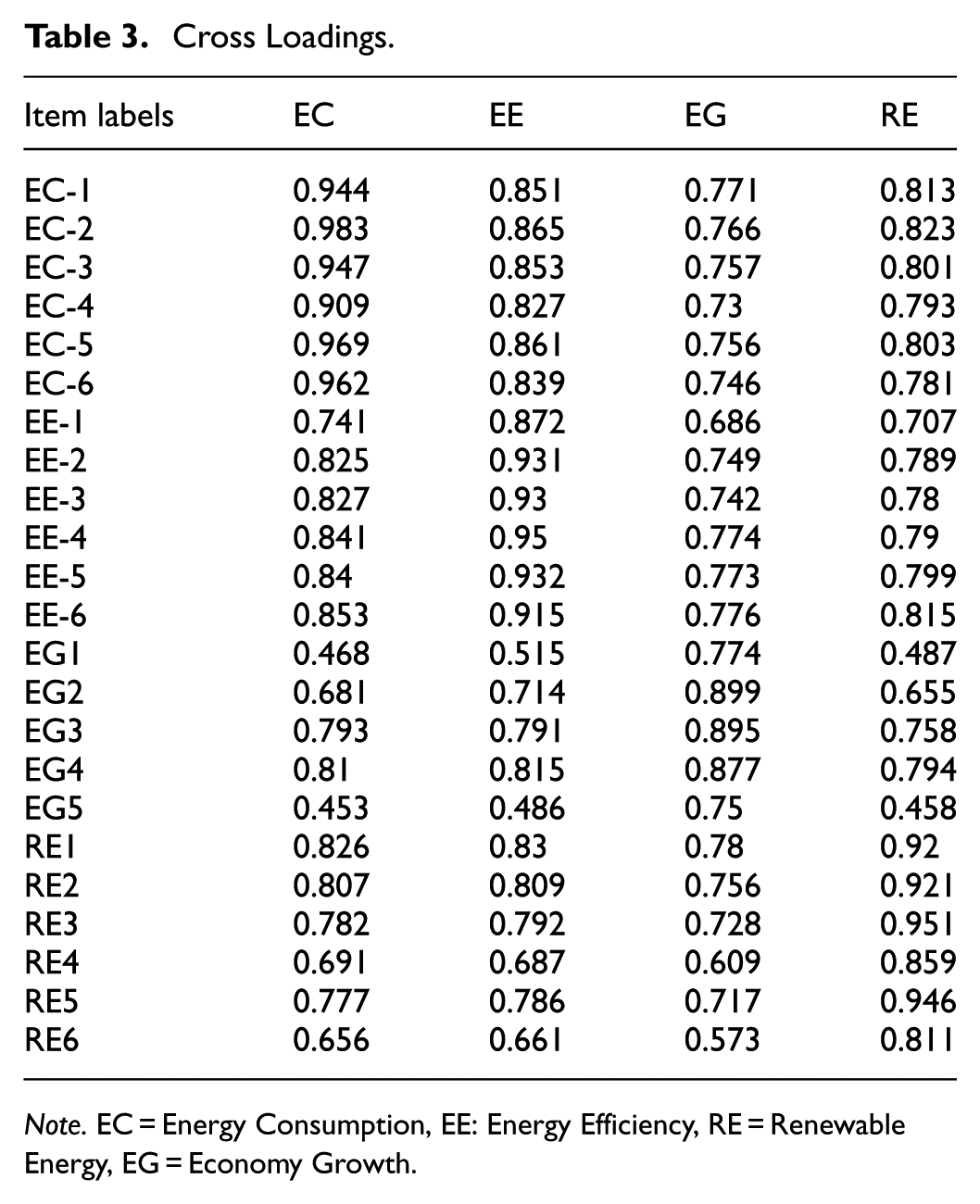
Subsequently, discriminant validity was further examined using cross-loadings (CL). This method requires that each measurement item show a higher loading on its own construct than on any other constructs in the model. As indicated in Table 3, all items load most strongly on their intended constructs, with minimal loadings on other constructs, demonstrating strong discriminant validity.
Cross Loadings.
Note. EC = Energy Consumption, EE: Energy Efficiency, RE = Renewable Energy, EG = Economy Growth.
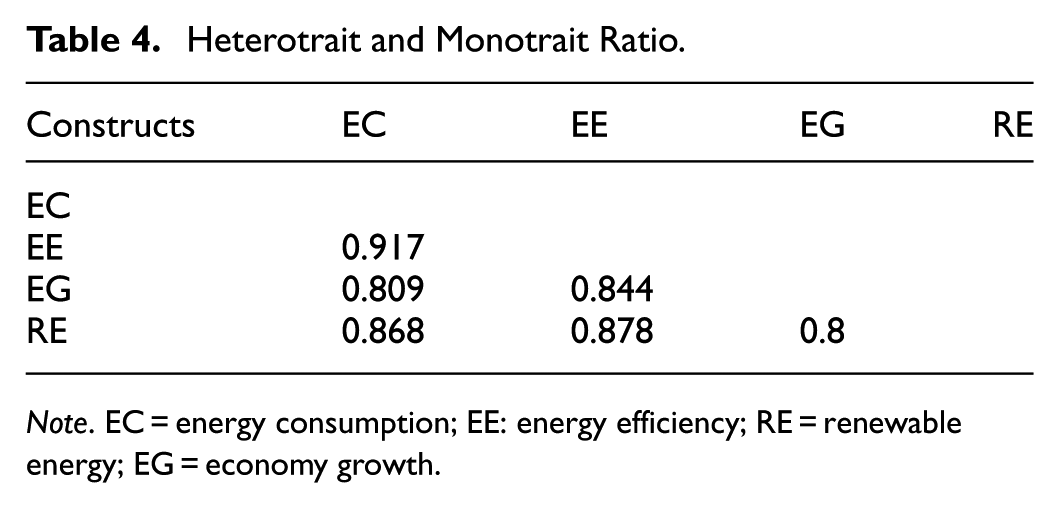
Finally, discriminant validity was further assessed using the Heterotrait-Monotrait (HTMT) ratio. A value below 0.90 is considered acceptable for concepts with similar meanings. In this study, HTMT values ranged from 0.774 to 0.87. According to the HTMT criterion, discriminant validity is lacking if the value exceeds 0.90. As presented in Table 4, all values fall below this threshold, indicating low correlations between constructs and confirming adequate discriminant validity.
Heterotrait and Monotrait Ratio.
Note. EC = energy consumption; EE: energy efficiency; RE = renewable energy; EG = economy growth.
Model Fitness Test
The suitability of the proposed model was evaluated using the Standardised Root Mean Square Residual (SRMR) and the Normed Fit Index (NFI). Table 5 presents the results relative to the recommended benchmark values to assess how well the model represents the observed data. The SRMR assesses the average difference between observed and predicted correlations, with a value of 0 indicating a perfect match between the model and the data (Savalei et al., 2014). In PLS-path modelling, an SRMR below 0.08 is typically considered acceptable (Henseler et al., 2015), with higher values suggesting larger residuals and potential measurement issues. In this study, the SRMR was 0.064, indicating a satisfactory alignment between the theoretical model and the dataset.
Model Fit Summary.

Source. Survey 2024.
Additionally, the NFI, a comparative fit index ranging from 0 to 1, evaluates the hypothesised model relative to a null model (Henseler et al., 2015). Higher values reflect better model fit (Sarstedt et al., 2016). The NFI value of 0.789 in this analysis indicates a reasonably good fit, confirming that the data adequately support the model’s theoretical assumptions.
Analysis of Structural Models
Evaluation of Collinearity Concerns
Evaluating multi-collinearity is essential in structural model analysis to guarantee the stability and reliability of the results. In this study, the Variance Inflation Factor (VIF) was employed to detect potential collinearity among the predictor variables. The VIF values in Table 6, ranging from 1.845 to 2.343, indicate that multi-collinearity is not an issue in this model. These figures are far below the generally recognised cutoff point of 3. The best VIF value of 2.343 between Energy Efficiency (EE) and Renewable Energy (RE) is still within a reasonable range. Consequently, the model’s collinearity is deemed within acceptable bounds.
Collinearity Statistics (VIF).

Note. EC = energy consumption, EE: energy efficiency, RE = renewable energy, EG = Economy Growth.
Path Coefficient Evaluation
Path coefficients were analysed to examine the direction, strength, and significance of relationships among the variables. Using bootstrapping with 5,000 resamples, the coefficients and corresponding p-values were calculated. A positive β indicates a favourable relationship, and statistical significance was assessed for all paths. As shown in Table 7, all relationships were significant at p < .01. For instance, energy consumption (EC) has a strong positive effect on energy efficiency (EE) (β = .892, p < 0.01), indicating that higher energy use is associated with improved efficiency. EC also significantly influences economic growth (EG) (β = .285, p < .01).
Path Coefficient Evaluation.

Note. EC = energy consumption; EE: energy efficiency; RE = renewable energy; EG = economy growth; M = sample mean; O = original sample; T = T statistics.
Furthermore, EE positively impacts EG (β = .423, p < 0.01), supporting the view that greater energy efficiency contributes to economic development. Renewable energy consumption (RE_CExEG) shows a more minor but significant positive effect on EG (β = .088, p < .05), suggesting that renewable energy indirectly promotes growth. Additionally, the direct relationship between renewable energy use (RE) and EG is significant (β = .26, p < .01), indicating that increased adoption of renewable energy supports economic expansion. Overall, the path analysis confirms the model’s robustness, highlighting strong positive links among the key variables. The findings validate the proposed hypotheses, demonstrating that energy consumption, efficiency, and renewable energy use are critical drivers of economic growth (Figure 3).

Standardised path coefficients and significance of the model.
Mediation Analysis
This research examined whether energy efficiency (EE) serves as a mediator in the relationship between energy consumption (EC) and economic growth (EG) using partial least squares structural equation modelling (PLS-SEM). The analysis was conducted following the approaches outlined by Hair et al. (2019) and the mediation framework described by Zhao et al. (2010). In particular, Hypothesis H2 was tested, proposing that EC affects EG indirectly via EE (EC → EE → EG).
To identify whether mediation exists and its type, a three-step approach was employed (Zhao et al., 2010):: (a) examining the significance of the indirect effect, (b) evaluating the direct effect of EC on EG, and (c) calculating the proportion of the total effect mediated using the Variance Accounted For (VAF). According to (2019), VAF values are interpreted as follows: values below 20% indicate no mediation, 20–80% indicate partial mediation, and values above 80% indicate complete mediation.
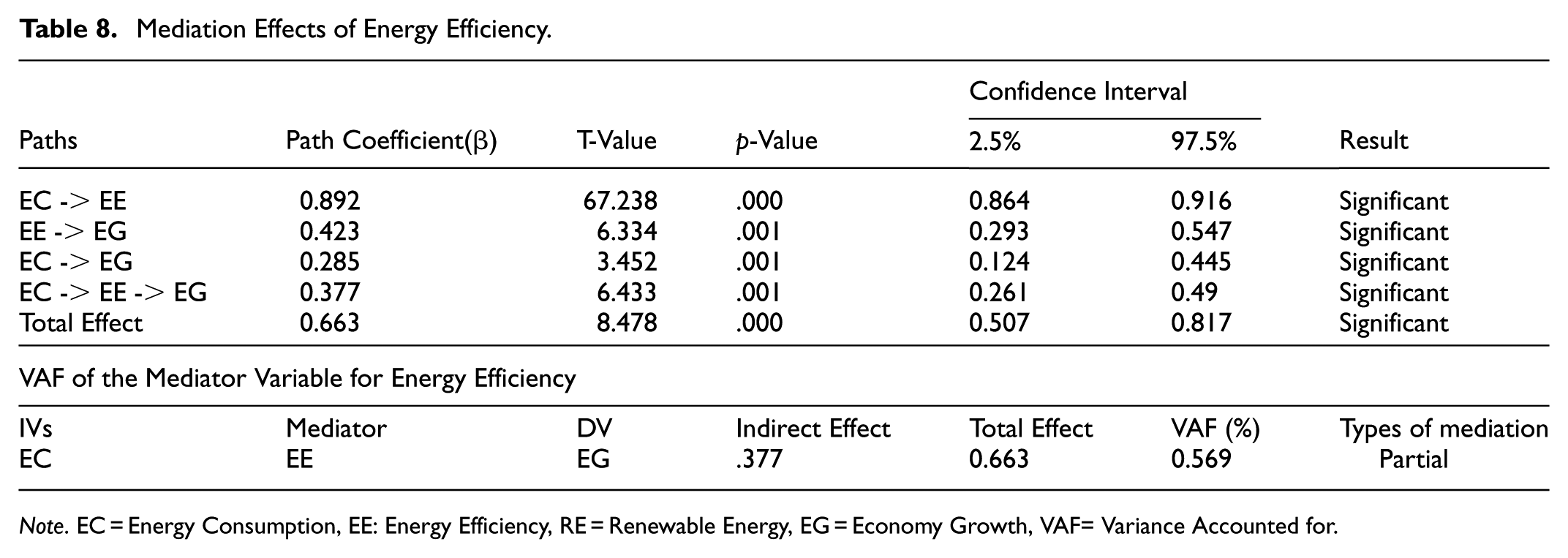
To ensure the path coefficients were statistically reliable and robust, 5,000 bootstrap resamples were used. With a 95% CI of 0.261–0.490 that excludes zero, Table 8 demonstrates the considerable indirect influence of energy consumption (EC) on economic growth (EG) through energy efficiency (EE) (β = .377, t = 6.433, p < .001). It confirms mediation. In addition, there is still a substantial direct influence of EC on EG (β = .285, t = 3.452, p = .001; CI = 0.124–0.445). The presence of significant effects along both direct and indirect pathways indicates partial mediation. The ratio of the indirect effect to the total effect (0.377/0.663) yields a Variance Accounted For (VAF) of 56.9%, confirming that it falls within the range for partial mediation. These results suggest that while energy consumption (EC) directly influences economic growth (EG), a notable portion of its effect is transmitted through energy efficiency (EE), establishing EE as a partial mediator between energy use and economic development. These findings highlight the critical role of energy efficiency in achieving economic growth objectives. Enhancing energy efficiency reduces waste and optimises resource utilisation, thereby improving energy productivity and contributing to the attainment of Sustainable Development Goals.
Mediation Effects of Energy Efficiency.
Note. EC = Energy Consumption, EE: Energy Efficiency, RE = Renewable Energy, EG = Economy Growth, VAF= Variance Accounted for.
Moderation Analysis
Using interaction terms within the PLS-SEM framework, this study examined whether renewable energy (RE) moderates the relationship between energy consumption (EC) and economic growth (EG). To ensure reliable results and reduce sampling bias, bootstrapping with 5,000 resamples was applied. As shown in Table 9, RE has a significant direct effect on EG (β = .260, t = 3.322, p = .001), indicating that greater renewable energy use positively affects economic performance. Additionally, the interaction term (RE × EC → EG) is significant (β = .423, t = 6.334, p < .001), demonstrating that RE strengthens the effect of energy consumption on economic growth.
Moderation Effects of Renewable Energy.

Note. EC = energy consumption; EE: energy efficiency; RE = renewable energy; EG = economy growth.
These results suggest that the beneficial effects of energy consumption on economic growth are enhanced by renewable energy. Practically speaking, in environments where renewable energy is more widely used, energy consumption accounts for a larger share of economic output. The sustainable energy-growth theory, which holds that cleaner energy sources can promote economic growth while minimising environmental impact, is supported by this result. As a positive moderator in the energy–growth link, renewable energy is confirmed by the significance of both the main and interaction effects, supporting hypothesis H4.
Hypothesis Testing
The proposed relationships are strongly supported by the empirical results of the hypothesis tests, displayed in Table 10. The hypothesis H1 states that energy consumption (EC) considerably increases economic growth (EG) (β = .285, t = 3.452, p < .001). Energy efficiency (EE) mediates the EC–EG relationship and has a significant indirect effect (β = .377, t = 6.299, p < .001), supporting Hypothesis H2. EG supports hypothesis H3 by having a positive correlation with renewable energy (RE) (β = .26, t = 3.322, p = .001). The EC–EG connection is also significantly moderated by RE, as indicated by the validation of Hypothesis H4 (β = .088, t = 2.301, p = .021). These findings demonstrate the importance of energy use, energy efficiency, and renewable energy in fostering economic growth, both directly and indirectly.
Summarised Hypothesis Testing Results.

Note. EC = energy consumption; EE: energy efficiency; RE = renewable energy; EG = economy growth.
Discussion
This paper carefully examines the connections between Ethiopia’s economic growth, energy efficiency, renewable energy, and energy consumption. The findings demonstrate essential dynamics and provide theoretical and practical implications for sustainable development in economies with limited energy resources.
Energy Consumption and Economic Growth: Mechanisms and Context
Energy consumption and economic growth are positively and significantly correlated, consistent with previous empirical findings that view energy as a critical input in production and economic expansion. (B. Lin & Zhou, 2022). This study also contributes to the literature by providing a contextual understanding of this relationship in Ethiopia. In this low-income country, energy access remains limited and infrastructural development is still in its early stages (Weldegiorgis, 2023).
In the Ethiopian context, energy is not merely a complementary factor of production but a foundational catalyst. Increased energy consumption supports agricultural mechanisation, enhances industrial productivity, and enables service-sector digitisation. It is consistent with the supply-led growth concept, which holds that energy availability drives economic growth, especially in developing nations. Moreover, the country’s reliance on manual labour and traditional energy forms highlights the transformative potential of modern energy access. Therefore, the results underscore that expanding a reliable and affordable energy supply is a precondition for sustained economic performance.
Energy Efficiency as a Mediating Mechanism
The identification of energy efficiency as a mediating factor in the energy-growth nexus is a significant theoretical achievement in this study. Although energy use boosts economic output, the degree of this gain depends on how effectively energy is used. The findings indicate that in energy-intensive sectors such as manufacturing and transportation, improving energy efficiency reduces energy losses and enhances productivity, thereby increasing economic returns from energy use. This finding aligns with the productive efficiency theory, which emphasises that improvements in technical and allocative efficiency can substantially enhance economic performance without necessarily increasing resource inputs (J. Wang et al., 2024). In resource-scarce countries like Ethiopia, this insight is particularly significant: boosting efficiency can serve as a substitute for capital-intensive energy expansion, offering a cost-effective growth path.
Furthermore, this result contributes to a growing body of work arguing that energy efficiency is not only a conservation tool but also a strategic economic lever (Harding, 2023). In contrast to studies in high-income countries that focus on efficiency from a climate mitigation perspective, this study highlights its developmental utility, supporting industrial productivity, lowering operational costs, and enhancing competitiveness in emerging economies.
Renewable Energy as a Moderating Factor
This research contributes to the literature by demonstrating that renewable energy acts as a moderator, strengthening the positive relationship between energy consumption and economic growth. It goes beyond the simple classification of energy sources as renewable or non-renewable, providing a more nuanced understanding of how the energy mix affects economic performance. In doing so, the study reinforces the sustainable energy-growth hypothesis, which suggests that clean energy sources can drive economic development while mitigating environmental degradation (Sitoe et al., 2023; Raihan et al., 2025). This aligns with global advocacy for a “just transition,” especially in developing countries, where the dual goals of economic resilience and climate sustainability are deeply intertwined.
Ethiopia’s renewable potential, particularly in hydropower, wind, and solar, positions it to lead such a transition in sub-Saharan Africa. Unlike studies from fossil fuel–dependent economies, where renewables are often found to have delayed economic benefits, this study finds immediate positive interaction effects between renewables and energy use in Ethiopia’s context.
This finding supports the sustainable energy-growth hypothesis, which posits that renewable energy, mitigating environmental externalities and enhancing energy security, fosters more stable and sustainable economic development (Raihan et al., 2025). Ethiopia’s abundant renewable resources, particularly hydropower, solar, and wind, position the country well to transition away from fossil fuel dependency. The empirical evidence here confirms that doing so not only aligns with climate objectives but also enhances economic performance. It aligns with, but also extends, prior studies (Adedoyin et al., 2021) by emphasising the interactive effect between renewable energy and conventional consumption, rather than treating renewables as an isolated driver of growth. It also diverges from earlier studies on fossil-fuel–dependent economies, which found that renewables had limited short-term effects. In Ethiopia’s case, renewables serve both environmental and economic imperatives.
Furthermore, this study demonstrates that energy consumption has a significant role in Ethiopia’s economic growth. However, the type of energy used (renewables) and how it is used (efficiency) have a considerable impact. By using energy efficiency as a mediating mechanism and renewable energy as a moderating factor, the study offers a comprehensive framework for understanding and improving the relationship between energy and growth in low-income economies.
The findings not only confirm established theories in new contexts but also introduce a more nuanced, policy-relevant perspective on energy development. In doing so, the research makes both conceptual and practical contributions to ongoing discussions on how countries like Ethiopia can achieve inclusive and sustainable economic growth through strategic energy-sector reforms. As such, it offers a roadmap for both scholars and policymakers working at the intersection of energy, development, and sustainability in Africa and beyond.
Implications for Policymakers
Theoretical Implications
The study offers robust theoretical evidence that energy efficiency, energy consumption, and renewable energy are all closely linked to Ethiopia’s economic growth. It advances the field of energy economics by emphasising how energy-related activities serve as a catalyst and a factor of production for sustainable development (Lawal et al., 2020). The findings suggest that energy efficiency and renewable energy do more than complement each other; they act as key factors that mediate and shape the relationship between energy consumption and economic growth.
This integrated approach enhances our understanding of the multifaceted role of energy in development, particularly in emerging economies like Ethiopia, where energy infrastructure and access remain significant challenges (Tiba & Belaid, 2021). The current study also extends RBV to demonstrate that conventional and renewable energy sources constitute internal value resources that confer a competitive advantage (Alola et al., 2021). Given that consumption, efficiency, and renewable energy sources all affect economic development, this theoretical perspective underscores the importance of investing in Ethiopia’s energy infrastructure.
Practical Implications
To effectively address Ethiopia’s national energy priorities and account for the various economic, demographic, and resource characteristics of its cities and regions, the key findings of this study must be translated into actionable policy recommendations. Ethiopia can encourage environmentally responsible behaviour and sustainable economic growth by tailoring its energy policies to local conditions.
The empirical findings offer several essential policy suggestions that could guide Ethiopia’s overall development plan and promote sustainable growth by increasing energy efficiency, boosting energy consumption, and accelerating the deployment of renewable energy sources. Establishing an environment that facilitates the easy adoption of energy-efficient practices and technology by businesses and industries is essential to this. Necessary steps include funding initiatives to reduce energy waste and offering financial incentives, such as grants, tax breaks, and low-interest loans, for energy-saving equipment. Prioritising energy efficiency enables Ethiopia to harness economic growth potential while ensuring the sustainable use of its energy resources (Tomala et al., 2021).
However, to maximise the impact of these recommendations, policies must be tailored to the unique characteristics of Ethiopian cities and regions. For example, in industrial hubs such as Addis Ababa and Dire Dawa, where energy consumption is concentrated, policies should focus on incentivising the adoption of energy-efficient technologies. Targeted financial support, including tax exemptions on energy-saving equipment and subsidised energy audits, can motivate industries to upgrade operations, reduce energy waste, and lower production costs, thereby enhancing competitiveness.
In regions endowed with rich renewable energy resources, investments should be strategically aligned with local potential and opportunities. Solar-rich areas, such as Mekelle and Hawassa, would benefit from decentralised solar initiatives, including rooftop solar systems and mini-grids. In contrast, areas with abundant wind or hydropower resources should prioritise developing the necessary infrastructure. To support these initiatives, policymakers should implement subsidies, grants, and streamlined regulatory frameworks to accelerate the adoption of renewable energy and diversify the national energy mix (Oyewo et al., 2021). It will go a long way toward improving Ethiopia’s energy security, meeting the country’s needs without compromising its environmental objectives.
Rapidly expanding urban centres, such as Bahir Dar and Jimma, face increasing energy demands driven by population growth and urbanisation. In these cities, integrating energy planning into urban development is essential. It can be achieved by enforcing energy-efficiency standards in new building codes and by promoting renewable-powered public transportation systems, thereby ensuring sustainable urban growth (Gebreslassie et al., 2024). Active municipal governance is crucial for coordinating energy expansion plans that cater to the unique needs of growing urban populations and meet the demands of expanding infrastructure.
In contrast, governments ought to prioritise expanding the electrical grid and installing off-grid renewable energy systems in smaller towns and rural areas where access to energy remains limited. Biogas plants and solar microgrids are examples of community-based renewable energy solutions that can improve local economies, reduce reliance on traditional biomass fuels, and provide reliable electricity. Purchasing energy storage equipment will increase the dependability and resilience of these rural electrical networks.
Furthermore, energy consumption, efficiency, and renewable energy policies should be fully integrated into Ethiopia’s broader economic planning framework. Prioritising energy access and sustainability in national development strategies is vital for long-term financial stability and inclusive growth. Equitable energy expansion ensures that all sectors of the economy benefit from the energy transition, establishing energy policy as a cornerstone of Ethiopia’s development agenda (Adedoyin et al., 2021).
Finally, the moderation effect of renewable energy underlines the importance of aligning Ethiopia’s energy strategies with environmental sustainability goals. Further diversification of energy sources will enable the country to pursue both economic growth and ecological preservation. Therefore, policymakers are interested in investing in green technologies and sustainable practices that reduce the carbon footprint from energy production and consumption, thereby preserving the country’s natural resources (Oyewo et al., 2021). In general, the findings emphasise the need for differentiated, location-specific energy policies that reflect the economic, demographic, and resource diversity across Ethiopian cities and regions. Tailored approaches will enhance policy effectiveness and better support Ethiopia’s aspirations for sustainable development.
Conclusion and Future Research Directions
This research highlights the significant influence of energy consumption, energy efficiency, and renewable energy on fostering sustainable economic growth in Ethiopia. It stresses the need to integrate energy-focused strategies into the country’s overall development plans to strengthen economic resilience while addressing environmental concerns. By exploring the mechanisms through which energy use affects economic performance, the study provides policymakers with practical insights into using energy efficiency and renewable energy as central drivers of Ethiopia’s economic progress.
The findings lend support to targeted investments in energy infrastructure, particularly in renewable energy sources, to reduce reliance on fossil fuels and enhance the country’s energy security. Besides, energy efficiency in industries is vital for achieving the best possible economic development while conserving energy resources for future generations. Energy policy should be an integral part of national economic planning to ensure that access to and the sustainability of energy remain the focus of long-term development.
Notwithstanding its contributions, this study has certain limitations. First, it primarily relies on cross-sectional data, which restricts the ability to establish causal relationships between energy use and economic growth. Second, the analysis is conducted at the national level, potentially overlooking regional and sector-specific variations in energy consumption and policy effectiveness. Third, while the study considers key energy-related variables, it does not encompass all socio-economic, technological, and institutional factors that may interact with energy use to influence economic outcomes. These limitations should be considered when interpreting the findings and provide a basis for refining future investigations.
Building on these insights, several avenues for future research are recommended. Longitudinal studies could examine the sustained impact of energy efficiency improvements and the adoption of energy-saving technologies on Ethiopia’s economic development. Comparative analyses across African nations may uncover regional differences in energy utilisation and policy effectiveness, providing broader lessons on energy-driven growth strategies.
Further exploration into the relationship between energy infrastructure development and industrialisation in Ethiopia could clarify how energy access supports industrial growth and diversification. Additionally, future research could examine the organisational and behavioural factors that influence the adoption of energy-efficient practices and renewable energy in businesses, shedding light on the barriers and motivators behind such transformations at the micro level.
The environmental sustainability aspect, particularly the moderating effect of renewable energy, also warrants deeper investigation. Future studies could explore how policies promoting renewable energy align with broader economic growth strategies, ensuring a balance between development and environmental protection. Moreover, future research could examine the impact of digital technologies, including smart grids and IoT-based solutions, on energy management systems to assess their potential to enhance energy efficiency and support sustainable growth.
In conclusion, this study identifies multiple promising directions for future research to deepen understanding of how energy use affects Ethiopia’s economic growth. Pursuing these research avenues can contribute to a stronger and more sustainable development trajectory, advancing the broader goal of achieving long-term economic sustainability in Ethiopia and across other African nations.
Footnotes
Acknowledgements
The authors gratefully acknowledge the academic and technical support received during this study. Author 1 acknowledges the Gerda Henkel Stiftung, through the German–Ethiopian scholarship initiative under the guidance of Prof. Wolbert Smidt, as well as their involvement in the city partnership between Adwa, Ethiopia, and Gotha, Germany, which provided invaluable institutional and intercultural experience. Author 2 acknowledges Unity University, Addis Ababa, Ethiopia, for their support and insightful technical guidance throughout the data collection process, which significantly contributed to the successful completion of this research.

Author Contributions
Both authors contributed equally to the conception and design of the study, data collection, analysis and interpretation of results, drafting and critical revision of the manuscript, and final approval of the version to be published. All authors agree to be accountable for all aspects of the work, ensuring integrity and accuracy.
Funding
The authors received no financial support for the research, authorship, and/or publication of this article.
Declaration of Conflicting Interests
The authors declared no potential conflicts of interest with respect to the research, authorship, and/or publication of this article.
Data Availability Statement
Data will be made available on request.