



Abstract
The development of the digital economy has provided new opportunities for farmers in counties removed from the poverty list who want to start businesses to carry out digital entrepreneurship. Identifying how to effectively improve the transformation from entrepreneurial intention to digital entrepreneurial behavior is the key to promoting entrepreneurial efficiency. In this study, we explored the mechanisms of implementation intention, psychological resilience and digital literacy in the transformation of entrepreneurial intention into the digital entrepreneurial behavior. The survey included 668 farmers in China’s counties removed from the poverty list who were willing to start their own businesses. Two surveys were conducted 6 months apart. The results of this study indicate that implementation intention plays an intermediary role between entrepreneurial intention and digital entrepreneurial behavior, enriching the theoretical research on the action stage and effectively expanding the applicability of the mindset theory of the action stage and its Rubicon model in analyzing the entrepreneurial process. Psychological resilience and digital literacy have positive moderating effects on the mediating relationship among entrepreneurial intention, implementation intention and digital entrepreneurial behavior. These five variables can form a moderated mediating effect model. In the context of the digital economy era, this research extends the factors affecting the digital entrepreneurial behavior of farmers in counties removed from the poverty list to digital literacy. For the first time, this study integrates the moderating roles of digital literacy and psychological resilience in entrepreneurship. This study provides valuable insights for policy makers and farmer-entrepreneurs.
Keywords
Introduction
The global economy is rapidly digitalizing, with China maintaining its position as the world’s second-largest digital economy for several consecutive years, as noted in the latest global digital economy white paper (2024). The Chinese government has actively promoted the construction of digital villages, and digital technologies have been widely applied in rural areas, providing new opportunities for farmers’ digital entrepreneurship. Digital entrepreneurship can increase employment and income for farmers in counties removed from the poverty list, effectively prevent a return to poverty and foster new economic development (Lee et al., 2023; S. Adam et al., 2025; X. He, 2019). Consequently, scholars have been paying more attention to the sustainable development of rural areas after poverty alleviation. Existing studies confirm that entrepreneurship positively affects poverty reduction and sustainable development (Dhahri & Omri, 2018; Han & Li, 2020; Miah et al., 2024).
Despite these advancements, a critical challenge remains: although many farmers wish to engage in digital entrepreneurship, not all entrepreneurial intentions translate into entrepreneurial behavior (Deller et al., 2022; Neneh & Dzomonda, 2024). This intention–behavior gap is particularly in the context of digital entrepreneurship in counties removed from the poverty list. For farmers who want to start a business, the transition from entrepreneurial intention to entrepreneurial behavior is complex, unfolding over an intermediate time span, and is affected by a variety of uncertain factors (Joensuu-Salo et al., 2020). To address this gap, this study adopts the Rubicon model of action phases theory (Gollwitzer, 2012) as its theoretical framework to examine how farmers’ digital entrepreneurial intentions are transformed into digital entrepreneurial behavior.
Within the Rubicon model framework, this study focuses on implementation intention as a key mediator and introduces psychological resilience and digital literacy as moderating variables to provide a better understanding of the psychological and contextual factors influencing the transformation of entrepreneurial intention into behavior. Previous research has established the importance of implementation intention in bridging entrepreneurial intention and behavior (Baluku et al., 2020; Gollwitzer, 2012; Van Gelderen et al., 2018). However, few studies have applied the Rubicon model to the context of rural digital entrepreneurship, particularly in counties removed from the poverty list. Some scholars have begun to study the influencing factors and mechanisms of the transformation of entrepreneurial intention into entrepreneurial behavior. Gollwitzer (2012) proposed the mindset theory of action phases, which divides the behavioral process into four different stages and three “turning points.” Implementation intention is regarded as the targeted behavioral orientation that individuals take to achieve goals when facing specific situations, which enhances the possibility of individuals engaging in target behaviors and promotes the transformation of entrepreneurial intention into entrepreneurial behavior. Empirical studies support this view; for instance, Van Gelderen et al. (2018) found implementation intention mediates the intention–behavior relationship, and Baluku et al. (2020) demonstrated its mediating role between entrepreneurial intention and behavior. While previous research has established the importance of implementation intention in bridging entrepreneurial intention and behavior (Baluku et al., 2020; Mir et al.,2023; Van Gelderen et al., 2018), few studies have applied the Rubicon model to the context of rural digital entrepreneurship, especially in counties removed from the poverty list.
Moreover, the integration of entrepreneurship research with psychology represents a current trend. Some scholars have focused on the influence of psychological factors on the transformation of entrepreneurial intention into behavior. For example, Van Gelderen et al. (2015) used the Rubicon model to study the positive moderating effect of self-control on entrepreneurial intention and behavior. Nevertheless, psychological resilience remains underexplored in entrepreneurship research. Psychological resilience refers to individuals’ psychological and behavioral reactions in the face of changing external environments, and this factor plays a crucial role in entrepreneurship. Entrepreneurs in counties removed from the poverty list often demonstrate the ability to take action amid adversity, adapt to change, and gradually transform entrepreneurial intentions into behaviors, thereby contributing to local economic development. This study thereby incorporates psychological resilience into the Rubicon model to examine its impact on the transformation from entrepreneurial intention to digital entrepreneurial behavior among farmers in counties removed from the poverty list.
Furthermore, in the digital economy, digital literacy, as an ability to effectively utilize digital tools and technologies, may significantly influence one’s capacity to act on entrepreneurial intentions. While the digital economy has brought substantial benefits to rural areas, regional development imbalances and variations in farmers’ internet use levels have resulted in a significant “digital divide” in some regions (Tinmaz et al., 2023). Therefore, considering digital literacy is essential when studying the entrepreneurial intention and behavior of farmers in these counties.
Therefore, this study aims to investigate the entrepreneurship of farmers in counties removed from the poverty list in China and, based on the Rubicon model, analyze how to effectively promote the transformation from entrepreneurial intention to digital entrepreneurial behavior. Specifically, the research purpose of this article is as follows:
Examine the mediating role of implementation intention in the relationship between digital entrepreneurial intention and behavior.
Investigate the moderating effect of psychological resilience and digital literacy on the relationship between the entrepreneurial intention and implementation intention.
Develop and validate a moderated mediation model that integrates entrepreneurial intention, implementation intention, digital entrepreneurial behavior, psychological resilience, and digital literacy, thereby providing a comprehensive theoretical framework.
This study provide several key contributions. First, it identifies implementation intention as a key mediator in digital entrepreneurial behaviors by farmers in counties removed from the poverty list, thereby enriching the theoretical research on the action stage and effectively expanding the applicability of the mindset theory of the action stage and its Rubicon model to the entrepreneurial process (L. X. He & Li, 2024; Van Gelderen et al., 2015). Second, it introduces psychological resilience into the field of farmer entrepreneurship based on the mindset theory. By examining its moderating effect on the intention–action transformation, this study addresses the call to explore entrepreneurial phenomena in diverse populations (Gartner & Carter, 2003) and expands the research on psychological resilience in entrepreneurship. Third, by incorporating digital literacy as a moderating factor, it extends the set of variables influencing farmers’ digital entrepreneurial behavior. The results indicate that digital literacy entrepreneurs with high levels of digital literacy are able to convert their entrepreneurial intentions into more digital entrepreneurial behaviors, further enriching the theoretical basis of the digital entrepreneurship of farmers in counties removed from the poverty list,which is conducive to consolidating poverty alleviation-related achievements and promoting rural revitalization and development.
Mindset Theory of Action Phases
The mindset theory of action phases is used to describe the entire process from motivation to behavior. The Rubicon model divides the behavior process into four different stages and three “turning points,” as shown in Figure 1 (Delanoë-Gueguen & Fayolle, 2019).
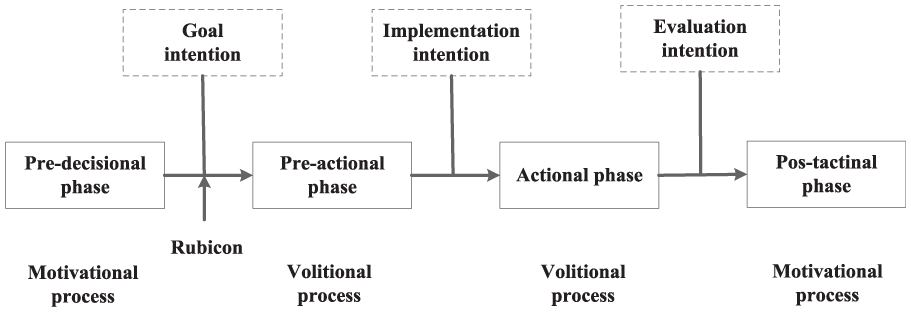
Schematic diagram of the Rubicon model.
Entrepreneurial intention is a rapidly evolving field of research, with a growing number of studies using entrepreneurial intention as a powerful theoretical framework. Some authors, however, are now calling for scholars to rethink the future direction of research into entrepreneurial intentions. This paper addresses this issue and, on the basis of numerous knowledge gaps in the literature and proposes future directions for research.
The transition from the predecision stage to the preaction stage is goal intention. Goal intention is the subjective judgment of the tendency to take a certain action in the future and determines what kind of goal will be chosen (Toli et al., 2016). After forming the goal intention, the individual must adopt the implemental way of thinking, which runs through the whole action stage. In the entrepreneurial environment, the goal intention is known as entrepreneurial intention. Based on a survey of employees in Austria and Finland, Kautonen et al. (2015) reported that there was a quantitative deviation in the prediction of entrepreneurial intention on entrepreneurial behavior. After 1 year, 63% of employees with entrepreneurial intention had not taken any concrete actions. Therefore, mere entrepreneurial intention is often not enough to ensure that action occurs. Implementation intention is a mental state that people adopt after they make a decision. Toli et al. (2016) proposed that implementation intention is a goal-oriented behavior that an individual may implement in response to a specific situation to better achieve a specific goal. Implementation intention represents a series of effective plans regarding time, place and scheme to achieve an effective transformation from intention to actual behavior. The implementation intention complements the goal intention and specifies where, when, and how to take the actions needed to achieve the goal (Mir et al., 2023). The action plan leads to the implementation intention, and many scholars use “action plan” and “implementation intention” interchangeably. In fact, implementation intention is the specific intention derived from the goal intention with the situation as the inducement (Ndofirepi, 2020).
With the development of the digital economy, farmers’ entrepreneurship is no longer limited to agricultural product entrepreneurship and has gradually shifted to digital entrepreneurship (Shen, 2021). Digital literacy has a significant effect on farmer entrepreneurs’ knowledge and management ability, perceptions of entrepreneurial opportunities, and integration of entrepreneurial resources and plays an important role in promoting entrepreneurial behavior (Bai et al., 2023; Goncalves et al., 2018). Farmers with high levels of digital literacy can make better use of internet tools to obtain entrepreneurial resources and carry out entrepreneurial behaviors (Blaic & Blaic, 2020; Chen et al., 2024). Therefore, the research should include digital literacy as an influencing factor for the transformation of entrepreneurial intention to entrepreneurial behavior.
Hypothesis Development
Entrepreneurial Intention and Digital Entrepreneurial Behavior
Entrepreneurial intention is a key antecedent of entrepreneurial behavior (Al-Mamary et al., 2022). Although not all entrepreneurial intentions may be translated into entrepreneurial behavior, on the basis of the theory of planned behavior, many studies have noted the ability of entrepreneurial intentions to predict subsequent entrepreneurial behavior (Bogatyreva et al., 2019; Thakur & Srivastava, 2015). Kautonen et al. (2013) used longitudinal survey data to prove that entrepreneurial intention is the basis of subsequent behavior. It is suggested that entrepreneurial intention has a direct positive relationship with entrepreneurial behavior. Baluku et al. (2020) and Neneh and Dzomonda (2024) reported that entrepreneurial intention has a significant positive effect on entrepreneurial behavior. Therefore, the entrepreneurial intention of farmers in counties removed from the poverty list is the premise of and basis for entrepreneurial behavior. Although their overall incomes are not high, they also face many difficulties, some of which may not be solved in the short term. However, farmer entrepreneurs with strong entrepreneurial intention will actively engage in relevant preparations for entrepreneurship. That is, the stronger the entrepreneurial intention of farmers in counties removed from the poverty list, the more likely they are to engage in entrepreneurial behavior. Therefore, the following hypothesis is proposed.
H1. The entrepreneurial intention of farmers in poverty-alleviation counties positively affects their digital entrepreneurial behavior.
Mediating Role of Implementation Intention
In the research field of social psychology, goal intention and implementation intention are divided into two concepts. However, in the field of entrepreneurship research, most studies use the concept of “entrepreneurial intention” to unify goal intention and implementation intention (Delanoë-Gueguen & Fayolle, 2019). In fact, after the establishment of entrepreneurial intention, due to various factors, entrepreneurial behavior may not occur. Therefore, exploring the influencing factors and mechanisms between entrepreneurial intention and digital entrepreneurial behavior is extremely important.
In terms of the mindset theory of action phases, many scholars have conducted research on the predecision-making and preaction stages. Gartner and Carter (2003) reported that progress in entrepreneurship is the result of a series of actions taken by individuals to start entrepreneurship. In the predecision-making stage of entrepreneurship, individuals make a series of entrepreneurial preparations. The preparation behavior of potential entrepreneurs when starting a business represents their transition from the volitional process to the intention process, crossing the Rubicon River (L. Wang et al., 2023). Entrepreneurial intention is an important predictor of the future at the predecision stage, but the explanatory power of entrepreneurial intention disappears when entrepreneurs cross the Rubicon. In the context of poverty alleviation through e-commerce, many farmers in counties removed from the poverty list will have entrepreneurial intentions. However, not all the farmers in poverty-alleviation counties with entrepreneurial intentions can engage in digital entrepreneurial behaviors. Farmers in counties removed from the poverty list face many challenges and difficulties in the process of entrepreneurship. Therefore, according to the Rubicon model, the formation of entrepreneurial intention is the first step in achieving the goal, but it is not enough to achieve the goal because many obstacles need to be overcome in this process.
The implementation intention occurs before the occurrence of entrepreneurial behaviors and after entrepreneurial intention. In a specific situation, implementation intention enhances the possibility of individuals engaging in target behaviors and further promotes the transformation of entrepreneurial intention into entrepreneurial behavior (Delanoë-Gueguen & Fayolle, 2019; González-López et al., 2021). As an influencing factor for intention and behavior, implementation intention increases behavioral intention and promotes the transition from intention to actual behavior (Brickell et al., 2006; Mir et al., 2023). Farmers in counties removed from the poverty list began to contemplate specific digital entrepreneurial behaviors after they had entrepreneurial intentions. Some examples are what they need to do first to start a business, how much money to raise, what kinds of agricultural products to prepare, how many people to hire, what channels to use for sales, and so forth. Therefore, in the context of poverty alleviation through e-commerce, farmers in counties removed from the poverty list further concretize their entrepreneurial intentions and generate entrepreneurial implementation intentions. Since farmers in counties removed from the poverty list have formulated specific execution plans, the intention to execute can, to a certain extent, encourage impoverished entrepreneurs to overcome difficulties in the process of entrepreneurial execution and promote the continuation of entrepreneurial goals (A. F. Adam & Fayolle, 2015). Carraro and Gaudreau (2013) reported that implementation intention can promote the transformation from goal intention to action intention and, to some extent, prevent difficulties in the execution of entrepreneurial goals. Therefore, after entering the will stage, the role of the entrepreneurial intention of farmers in poverty-alleviation counties gradually weakens, and the implementation intention enhances the possibility of realizing the entrepreneurial target behavior. Potential entrepreneurs will formulate a specific plan of execution for entrepreneurship, which promotes the further transformation of entrepreneurial intention into digital entrepreneurial behavior. Both views tend to suggest that implementation intentions are a mediating link between behavioral intentions and performance of the behavior. Empirical studies in the field of entrepreneurship support this assumption (A. F. Adam & Fayolle, 2015; Van Gelderen et al., 2018).Taking college students as research objects, researchers constructed a two-step extended entrepreneurial intention–behavior model and found that entrepreneurial implementation intention plays an intermediary role between the entrepreneurial intention and behavior of college students (Lihua, 2022).
In addition, implementation intention can effectively improve situational perception and automate behavioral responses (Messmer et al., 2025). Implementation intention can effectively promote the digital entrepreneurial behavior of farmers in poverty-alleviation counties. Therefore, the hypotheses of this study are proposed.
Moderating Role of Psychological Resilience
Research on entrepreneurship has paid little attention to psychological resilience, and analyses of individual units (farmers in counties removed from the poverty list) are rare. Farmers in counties removed from the poverty list have lived in economically difficult rural areas since childhood; they are often able to act in the face of adversity and have strong motivation to take action. Through the role of psychological resilience, various difficulties faced in the process of entrepreneurship can be overcome, and entrepreneurial activities can be actively carried out to provide employment opportunities for farmers and promote the development of the local economy (Shepherd et al., 2020; Westphal & Bonanno, 2007). On the basis of the theory of individual initiatives, rural entrepreneurs in counties removed from the poverty list must make continuous efforts to achieve the goal of entrepreneurship.
However, compared with the psychological resilience generated by ordinary entrepreneurs in this process, the psychological resilience of farmer entrepreneurs is unique and can change with the accumulation of time and experience. Resilient people exploit the opportunities around them to engage in activities that help alleviate difficulties. Notably, Duchek (2018) and Hartmann et al. (2022) proposed that psychological resilience plays a central role in entrepreneurship research. Entrepreneurs may adjust their psychological resilience in the face of adversity and setbacks. For example, an optimistic attitude is conducive to continuous entrepreneurship (Ma et al., 2024; Pidduck & Clark, 2021). Some rural entrepreneurs in counties removed from the poverty list have experienced failure in entrepreneurship. When faced with new entrepreneurial opportunities, psychological resilience has a greater impact. Specifically, psychological resilience facilitates the transition from entrepreneurial intention to implementation intention by enhancing farmers’ ability to anticipate and mentally prepare for potential obstacles, thereby fostering more concrete and actionable plans (Ratković Njegovan et al., 2022). It also strengthens their self-efficacy, increasing confidence in their capacity to formulate and execute such plans effectively under adverse conditions, which is crucial for committing to specific actions amidst uncertainties. Psychological resilience is a key factor in determining an individual’s tendency to act upon perceived entrepreneurial opportunities.
In the face of entrepreneurial opportunities, strengthening the psychological resilience of rural entrepreneurs in counties removed from the poverty list may help them endure entrepreneurial pressure and reduce the likelihood of abandonment. Moreover, psychological resilience enhances the relationship between the entrepreneurial intention and digital entrepreneurial behavior of farmers in poverty-alleviation counties. Therefore, the following hypothesis is proposed.
Moderating Role of Digital Literacy
The development of digital literacy is essential to learning, working and living in the 21st century (Churchill, 2020; Goncalves et al., 2018). Digital literacy is an important component of human capital; it significantly affects farmer entrepreneurs’ knowledge and management ability, perceptions of entrepreneurial opportunities, and integration of entrepreneurial resources and plays an important role in promoting entrepreneurial behavior (Goncalves et al., 2018; Tinmaz et al., 2023). Farmers with high levels of digital literacy can identify changes in market information in a timely manner and engage in entrepreneurial behaviors timely and accurately (Bai et al., 2023; Blaic & Blaic, 2020). They can use digital technology tools more effectively to understand business trends and effectively go beyond traditional thinking practices to start businesses.
More specifically, in the volitional phase of the Rubicon model, a high level of digital literacy strengthens the connection between implementation intentions and behaviors by reducing the perceived difficulty of implementing plans. It decreases the perceived difficulty of executing plans by equipping farmers with concrete skills, such as operating e-commerce platforms, using digital payment systems, and analyzing online market data, thereby reducing barriers to action and enhancing behavioral control. Additionally, it facilitates the translation of intentions into action by enabling access to critical resources, such as real-time market intelligence, supply chain partners, and government support programs, which are essential for implementing digital ventures in rural contexts (Chen et al., 2024).
Farmers with high levels of digital literacy can better use internet tools to break through the regional restrictions of social networks, increase their contact with relevant government departments and enterprises, and obtain preferential policy support for entrepreneurship in a timely manner. Furthermore, farmers can identify their target entrepreneurial community in the e-commerce community, learn from the entrepreneurial experience of others, and obtain competitive advantages with lower search costs, thus improving the probability of entrepreneurial success (Zhang, 2022). By using the communication functions provided by digital platforms, such as WeChat, live broadcasts, etc., to maintain smooth communication with consumers, farmers with entrepreneurial intentions can reduce their transaction costs and business risks, which enhances their implementation intention and ultimately effectively promotes the generation of digital entrepreneurial behavior.
With the promotion of Chinese digital village construction, digital technology empowers the rural economy. Farmers’ entrepreneurial environment is gradually becoming informationized, digitized and modernized, and farmers’ entrepreneurship is no longer limited to agricultural product entrepreneurship and is gradually shifting to digital entrepreneurship. Digitally literate farmers are knowledgeable about financial business channels, product safety and trading mechanisms. The awareness of the importance of online transaction mechanisms, store management and after-sales services for online shopping helps farmers in counties removed from the poverty list to strengthen their implementation intention. At present, some farmers in poverty-free counties have started rural digital entrepreneurship activities to solve the sales problem of agricultural and sideline products and maximize their earnings (Liu & Zhou, 2023). Therefore, farmers with high levels of digital literacy can effectively use digital dividends, reinforce their implementation intention and further engage in digital entrepreneurial behaviors suited to their own circumstances. Therefore, the relationship between the implementation intention and behavior of farmers in counties removed from the poverty list is enhanced by digital literacy. In this way, digital literacy acts as a critical volitional facilitator, enabling individuals to bridge the gap between planning and action in digital entrepreneurship. Therefore, the following hypothesis is proposed.
The conceptual model of this study is proposed on the basis of the above analysis, as shown in Figure 2.

The conceptual model of this study.
Research Methodology
Study Location
Owing to China’s poverty reduction initiatives, China has become the country with the greatest population experiencing poverty reduction in the world and the first country to achieve the UN Millennium Development Goals (X. Wang & Zhang, 2020). The Poverty Alleviation Office of the State Council of China once classified contiguous poverty-stricken areas across the country. There are 2 contiguous areas experiencing poverty alleviation in Xinzhou City out of the 14 mountainous areas in the country, accounting for 14.2% of the total, of which 6 counties span 2 concentrated contiguous areas experiencing poverty alleviation, namely, the Taihang Mountain–Yanshan Mountain (Wutai County, Fanshi County) and Lvliang Mountain (Jingle County, Shenchi County, Wuzhai County and Kelan County). There are 36 state-designated counties removed from the poverty list in 11 cities of Shanxi Province, and the number of state-designated counties removed from the poverty list in Xinzhou City accounts for 30.6% of the entire province. Owing to policies and support from local governments and enterprises, all of these counties achieved poverty alleviation by 2020. Therefore, taking Xinzhou City as the research area has a certain degree of representativeness.
Data Collection and Sample Profile
The nationwide training of rural wealth leaders has effectively stimulated innovation and development in impoverished villages and has played a leading role in the economic development of farmers. The training participants showed high levels of entrepreneurial intention. Therefore, in this study, farmers in counties removed from the poverty list who participated in the first rural wealth leader training in Xinzhou City in 2024 were selected as the research objects. Importantly, those who were in the first rural wealth leader training program may have more entrepreneurial motivation, more startup resources, or more social support networks than ordinary farmers do. This sampling approach introduces potential selection bias, which may limit the generalizability of the findings to the broader population of farmers in counties removed from the poverty list who have not received such training. This limitation will be further explored in the discussion section of the paper. There were 668 respondents to the survey. During the first survey, 165 people were undertaking entrepreneurship, and 503 people without entrepreneurial experience expressed their entrepreneurial intention. In the second stage, a follow-up survey was conducted on 503 people with entrepreneurial intentions. As of December 30, 390 people had actually started their own businesses. Owing to the follow-up survey being conducted with all real names, the questionnaire recovery rate reached 100%. Some questionnaires with consistent answers were deleted, and 365 questionnaires were considered to be valid, accounting for 94% of the total.
Among the respondents, the proportion of people with a junior high school education is the highest, accounting for 48.49% of the total sample. The proportions of people with primary school, high school and junior college education were approximately the same, and only 3.01% had a bachelor’s degree or above. Compared with the current Global Entrepreneurship Monitoring program, in our entrepreneurial model, in addition to the intention to achieve goals, the actual consideration of the implementation intention seems to represent an interesting research opportunity, as it will help to provide a better understanding of the relationship between entrepreneurial intention and entrepreneurship behavior.
Measurement
Widely used validated scales were selected for variable measurement. All the English scales involved in the design adopted a two-way back-translation method to avoid semantic deviation. The questionnaire uses a Likert scale, and the answer of each item is measured from 1 (strongly disagree) to 7 (strongly agree); that is, the degree of agreement gradually increases with the score.
Dependent Variable
Digital entrepreneurial behavior is the behavior that the entrepreneur has begun to put into action to bring the particular idea into fruition. Entrepreneurship scholars agree that the emergence of any organizational form is a process consisting of multiple entrepreneurial activities (Aldrich & Martinez, 2001). In reference to the research conducted by the Global Entrepreneurship Monitor (GEM) and Panel Study of Entrepreneurship Dynamics (PSED), digital entrepreneurial behavior was measured from the four dimensions of company registration, relationship, information and capital, with a total of five items (Reynolds et al., 2016).
Independent Variable
Entrepreneurial intention is measured mainly from the level of the behavior category itself (Ajzen, 2011). Common measures of entrepreneurial intention at the general action level are outcomes rather than action level measures. Therefore, the two items “considered entrepreneurship” and “prepared for entrepreneurship” proposed by Thompson (2009) are used as a robustness check. Similarly, according to the principle of behavioral specificity, the study used a unified time frame of 6 months. On the one hand, on the basis of TPB theory, the time between intention and action should be minimized to ensure that the intention produces an effect (Ajzen, 1985). On the other hand, if the time is too short, it may lead to limited practical utility (Marques et al., 2012). Moreover, in reference to the research of Liñán and Chen (2009), two other items of entrepreneurial intention were created: “I will try to take some measures to start a business in the next 6 months” and “I plan to start a business in the next 6 months.”
Mediating Variable
Implementation intention is a goal-oriented behavior that an individual may carry out when facing a specific situation (Toli et al., 2016). Rural entrepreneurs in counties removed from the poverty list decide when, where how, and how often to take action, thus creating an action plan that generates the intention to execute (Hagger & Luszczynska, 2014). Therefore, in combination with the context of the digital countryside, three questions were designed on the basis of the study of Van Gelderen et al. (2018).
Moderating Variable
The first predictor in this study was psychological resilience (PR), which is an individual’s ability to withstand the test and make appropriate adjustments when facing pressure and difficulties (Woods, 2017). The Resilience Coping Scale (BRCS) was used to measure psychological resilience (Kocalevent et al., 2017). Combined with the context of the construction of digital rural areas, four items are designed for the psychological resilience of farmers’ entrepreneurship in counties removed from the poverty list.
The second independent variable in this study was digital literacy (DL), which is the ability to access and use information through digital technologies and internet devices (Tinmaz et al., 2023). The digital literacy of farmers refers to the integration of the digital knowledge, digital ability and digital consciousness of farmers in counties removed from the poverty list. In addition to having an impact on their own entrepreneurial behavior, social networks may also have an impact on the entrepreneurial decision-making behavior of surrounding farmers. Farmers in counties removed from the poverty list with high levels of digital literacy can use digital technologies to overcome regional and cognitive limitations and influence their entrepreneurial behavior. On the basis of the situation of the farmers in counties removed from the poverty list, four items were designed on the basis of the measurement methods of digital literacy of Li and Yu (2022).
Control Variable
Different age groups and education levels influence the relationship between entrepreneurial intention and entrepreneurial behavior differently (Brüne & Lutz, 2020; Shirokova et al., 2016). In rural areas, whether an entrepreneur’s relatives or friends start a business also has an important effect on the entrepreneur (Ruiz-Palomino & Martínez-Cañas, 2021). To ensure sufficient internal validity, in this study, the age of the respondents and whether family members or close friends have entrepreneurial experience were selected as control variables to improve the accuracy of the empirical data analysis (Van Gelderen et al., 2015).
Data Analysis
After the preliminary data were screened and descriptive statistics were reviewed, IBM SPSS Statistics 23.0 and bootstrapping were used for analysis. (1) IBM SPSS Statistics 23.0 was used for the common method bias test, correlation analysis and multiple regression. (2) Confirmatory factor analysis (CFA) and exploratory factor analysis (EFA) were used to conduct reliability and validity tests. (3) The bootstrap method was used to test the mediation effect. (4) PROCESS Mode 21 developed by Hayes (2017) was used to conduct a moderated mediation effect analysis.
Findings
Main Analysis
Common method deviation is widely used in questionnaire survey methods (Podsakoff et al., 2003). We have adopted program control and statistical control methods (Harman single-factor test method). There were five common factors extracted from the 19 items, with eigenvalues greater than 1. The variance explained percentage of the first common factor was 19.23%, which was less than the general standard of 40%. In addition, the variance inflation factor (VIF) value for each variable is below the recommended threshold of 10.0 (ranging from 1.175 to 2.395). Therefore, there is no significant multicollinearity.
The reliability of the entire scale in this study is good. As shown in Table 1, the Cronbach’s α coefficients of the whole questionnaire and the Cronbach’s α coefficient of all the variables ranged from .855 to .937, which were greater than the minimum standard of .7. In terms of composite reliability (CR), each latent variable exceeded 0.8. The corrected item-total correlation (CITC) in each dimension are greater than the usual standard of .5. Validity analysis measures the validity of the scale, that is, whether the scale can accurately express the measured variables.
Construct Reliability and Validity.
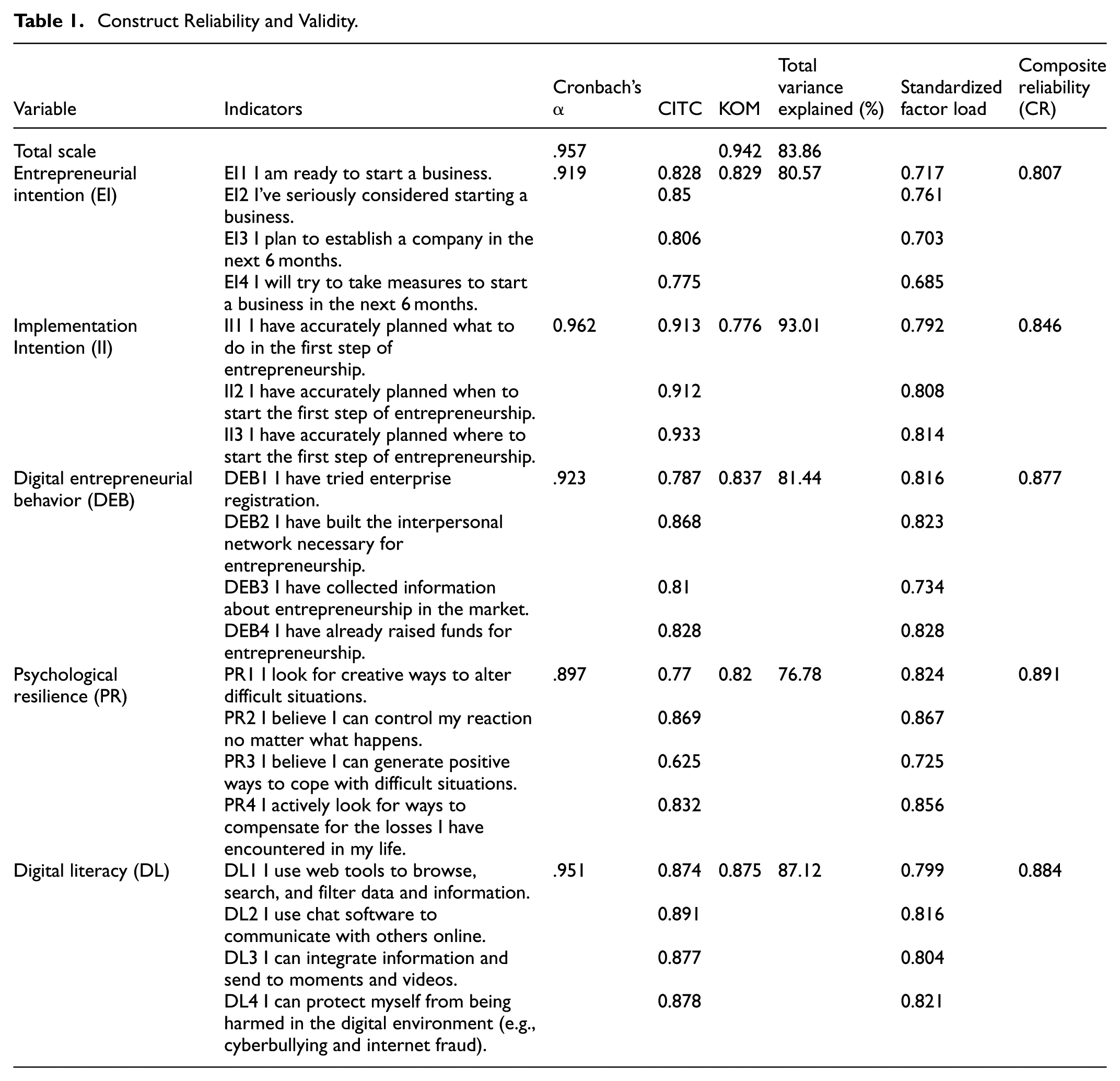
Four aspects of validity were tested: content validity, construct validity, convergent validity, and discriminant validity. In terms of content validity, the scale design of this study was based on existing research theories and scales, and a preliminary survey was conducted. Before the pre-survey, we consulted experts in related fields and made many modifications to clarify the description of each question and ensure the content validity of the scale. In terms of construct validity, the KMO values of all the variables or dimensions are greater than the general judgment criterion of 0.7. Moreover, the factor loading of each latent variable is greater than 0.7, which exceeds greater than the generally recommended criterion of 0.5 (Hair et al., 2010). In terms of convergent validity, the average variance extracted (AVE) value is used to evaluate the convergent validity. The AVE of each variable in this study is greater than 0.5, indicating that the scale has good convergent validity (Fornell & Larcker, 1982).
From Table 2, it can be seen that the entrepreneurial intention, implementation intention, psychological resilience, and digital entrepreneurial behavior of the farmers in counties removed from the poverty list are significantly correlated at the 1% level.
The Correlation Coefficient of the Variable and the Square Root of the AVE.

Note. The diagonal italics show the square root of the AVE, and the nondiagonal data are the correlation coefficients between the latent variables.
p < .001.
Owing to control variables and categorical variables, virtualization must be carried out before regression analysis. When considering the impact of the age of entrepreneurs and whether their relatives and friends start a business, the reference group consisting of 18 to 25 years of age and no entrepreneurial experience is used for virtualization. After data processing, multiple regression was used to verify the hypothesis. As shown in Table 3, model 1 shows the impact of the control variables on digital entrepreneurial behavior. Model 2 shows the impact of entrepreneurial intention and control variables on digital entrepreneurial behavior, with a regression coefficient of 0.708 (p < .001), indicating that entrepreneurial intention has a significant positive effect on digital entrepreneurial behavior. Thus, H1 was supported. According to model 3, the influence of entrepreneurial intention on implementation intention is significant for both the F value and the ΔF value (F = 37.02, p < .001; ΔF = 394.15, p < .001). The adjusted R2 value is .48, indicating that the model can explain 42.8% of the change in entrepreneurial intention. The regression coefficient (β = .676, p < .001) indicates that entrepreneurial intention has a significant positive effect on implementation intention. Thus, H2 was supported. According to model 4, both the F value and the ΔF value are significant at the 0.01 level. Adj.R2 is .498, indicating that the regression model can explain 49.8% of the change in digital entrepreneurial behavior. The regression coefficient (β = .667, p < .001) indicates that implementation intention has a significant positive effect on digital entrepreneurial behavior. Thus, H3 was supported. According to model 5, the new model can explain 61.1% of the variance variation in digital entrepreneurial behavior, and the F value and ΔF value are both significant (adj.R2 = .601, F = 357.623***, ΔF = 327.157***. Therefore, implementation intention plays a mediating role in the relationship between entrepreneurial intention and digital entrepreneurial behavior, and Hypothesis H3a is verified. As shown in Table 4, model 6 shows that entrepreneurial intention (β = .570, p < .001) and psychological resilience (β = .203, p < .001) had positive effects on implementation intention. Model 7 shows that the interaction term between entrepreneurial intention and psychological resilience (β = .185, p < .001) has a significant effect on implementation intention at the 0.01 level. In conclusion, psychological resilience has a moderating effect on entrepreneurial intention and implementation intention, which means that H4 is valid. Model 8 shows that the interaction term between implementation intention and digital literacy has a significant effect on digital entrepreneurial behavior at the level of 0.001. The results show that digital literacy has a moderating effect on implementation intention and digital entrepreneurial behavior, which means that H5 is valid.
Hierarchical Regression Test Results.

Represents a significance level of .01 < p ≤ .05.
Represents a significance level of p ≤ .01.
Represents a significance level of p ≤ .001.
Hierarchical Regression Test Results.

Represents a significance level of .01 < p ≤ .05.
Represents a significance level of p ≤ .01.
Represents a significance level of p ≤ .001.
Robustness Test
The hierarchical regression method has the problem of low statistical power to verify mediation effects. However, the confidence interval of the coefficient product calculated by using the nonparametric percentile bootstrap method to test the significance of the coefficient product directly has relatively high testing power (Wen & Ye, 2014). A bootstrap test was used to re-examine the mediating effect of implementation intention. Bootstrap resampling analysis was conducted 5,000 times through the PROCESS in IBM SPSS Statistics. Bootstrap analysis revealed that among the control variables, “Age 26–29” and “Age 30–39” were significantly correlated with implementation intention and digital entrepreneurial behavior (p < .001, p < .05). The results are shown in Table 5. The 95% confidence interval (CI) for the indirect (mediating) path effect was [0.167, 0.412], excluding zero, indicating that implementation intention mediates the relationship between entrepreneurial intention and digital entrepreneurial behavior. The statistics of the intermediary effect a × b are significant (0.803 × 0.353 = 0.283), and the effect strength of the intermediary path (indirect effect) is B = 0.283, p < .001. After controlling for the mediating variable, the direct effect of entrepreneurial intention on entrepreneurial behavior remained significant and positive (B = 0.560, p < .001), and the 95% confidence interval (CI) ranged from 0.466 to 0.653, excluding 0.This finding further supports H1. Finally, the a × b statistic of the mediating effect is significant, and the independent variable, entrepreneurial intention, has a significant direct influence on the entrepreneurial behavior of the dependent variable, which indicates that the intermediary path between the independent variable and the dependent variable does exist but is not unique.That is, implementation intention plays a mediating role in the process through which entrepreneurial intention affects entrepreneurial behavior (because the product of the model coefficients is greater than 0), and H3a is verified.
II Mediating Effect Values at Different Levels of the Moderating Variables PR and DL.

Implementation intention is a moderated mediation variable, and the moderated variable mainly regulates the first and second half of the mediation path. Using PROCESS Model 21 (http://www.processmacro.org), the mediation model with regulation was analyzed. As shown in Table 5, the regression model is significant (F = 39.887, p < .001), and the moderating variable “psychological resilience” is significant between entrepreneurial intention and implementation intention (B = 0.217, p < .001). The regression model was significant (F = 42.344, p < .001), and the moderating effect of the variable “digital literacy” was significant in the relationship between implementation intention and digital entrepreneurial intention (B = 0.106, p < .001). The direct effect of entrepreneurial intention on digital entrepreneurial behavior is B = 0.509, p < .001, with a 95% confidence interval (CI) of [0.399, 0.618], indicating partial mediation.
As shown in Table 6, we add or subtract a standard deviation from the mean value of the regulatory variable to distinguish the mediating effect of implementation intention and digital literacy on the impact of entrepreneurial intention on digital entrepreneurial behavior at different levels of psychological resilience. The results revealed that the confidence interval of the bootstrap test did not contain 0 for high, medium and low levels of psychological resilience, indicating that the mediating effects of implementation intention and digital literacy were significant. These results indicate that whether psychological resilience is strong or weak, as long as psychological resilience is present, it has a strong mediating effect on implementation intention, which further supports H4. Moreover, these results also reveal that whether digital literacy is strong or weak, as long as digital literacy is present, it has a strong mediating effect on implementation intention, which further supports H5. The moderation patterns are illustrated in Figures 3 and 4.
Test of the Moderated Mediation Model.

Note.** represents p < .01, *** represents p < .001 (two-tail test), and the coefficients are the estimation results of the parameters after the standardized treatment of the variables.
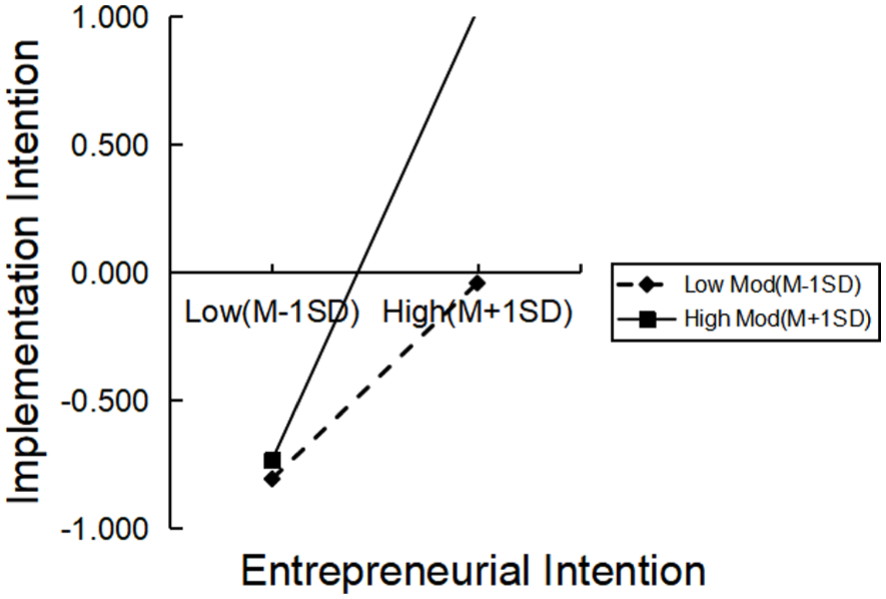
Moderating effect of psychological resilience.

Moderating effect of digital literacy.
Discussion
Conclusion
On the basis of the mindset theory of action phases, this study constructed a moderated mediation model to examine the psychological process through which entrepreneurial intention transforms into digital entrepreneurial behavior among farmers in counties removed from the poverty list, with a focus on the roles of implementation intention, psychological resilience, and digital literacy.
First, the positive effect of entrepreneurial intention on digital entrepreneurial behavior reaffirms the general premise of research on entrepreneurial cognition. Farmers with strong entrepreneurial intention are more likely to transform it into actual entrepreneurial action. However, this relationship is time-sensitiveit (Frese & Gielnik, 2014;Joensuu-Salo et al., 2020). This study selected a period of 6 months to observe farmers in counties removed from the poverty list who had the intention to start a business. We argue that this limited timeframe reflects not only the natural decay of motivation but also the structural constraints these farmers face. In an environment with limited resources and support systems, intentions that do not materialize quickly may fade due to daily economic pressures and a lack of reinforcement. This finding deepens the understanding of the deliberation phase in the Rubicon model by highlighting how contextual adversity can accelerate the dissipation of motivational momentum. The study thus reveals that in developing contexts but also involves actively combating contextual pressures that threaten to erode entrepreneurial intentions before they can be actualized.
Second, the mediating role of implementation intention indicates a crucial cognitive shift in the entrepreneurial process. As Carraro and Gaudreau (2013) and Mir et al. (2023) have shown implementation intention can effectively promote entrepreneurial behavior. For farmers in counties removed from the poverty list, the implementation intention transforms “I want to start a business” into “I will take specific steps A, B, and C at time X,” thereby crossing the Rubicon from motivation to volition. This is particularly important in an environment with scarce resources. Furthermore, the act of planning itself represents a shift toward embracing uncertainty, enabling individuals to navigate through high-risk environments with clarity and resolve. This finding supports the emphasis of the Rubicon model that the volitional stage is a unique and decisive stage in the pursuit of goals. This process is crucial in the volitional phase of the Rubicon model, as it represents the critical translation of a general goal (intention) into a concrete plan of action, thereby bridging the motivation–cognition gap. In the context of rural revitalization, entrepreneurs with entrepreneurial intention can positively influence the development of digital entrepreneurial behavior through their implementation intention. The strength of this implementation intention is positively associated with the likelihood of engaging in digital entrepreneurial behavior. Thus, implementation intention constitutes a key subprocess within the volitional phase, converting abstract goals into concrete, context-specific action sequences and enabling farmers to navigate the high-ambiguity environments typical of developing economies.
Third, the moderating effect of psychological resilience on the intention-implementation link can be explained by the high-adversity context of these farmers. Entrepreneurs with high psychological resilience may maintain an optimistic attitude in the face of adversity and setbacks, which helps to sustain their entrepreneurial efforts (Duchek, 2018; Hartmann et al., 2022). Unlike entrepreneurs in stable environments, farmers in counties removed from the poverty list routinely confront setbacks related to financing, infrastructure, and market access. Under such conditions, psychological resilience is not merely a personal asset but also as a planning tool. It enables individuals to mentally simulate obstacles, sustain self-efficacy amid difficulties, and maintain goal engagement when formulating plans (Ma et al., 2024). Therefore, psychological resilience strengthens the volitional phase by fostering proactive coping strategies during the planning stage, which is essential for those operating at the economic margin in counties removed from the poverty list. This strength of psychological resilience facilitates the formation of robust implementation intentions, highlighting a crucial yet underemphasized dimension of the volitional phase in developing contexts.
Similarly, digital literacy moderates the relationship between implementation intention and behavior by lowering the barrier to action threshold in the context of digital entrepreneurship. Many farmers possess motivation and even a plan but perceive a high barrier to entering digital economies because of skill deficits. Digital literacy reduces this barrier by equipping them with concrete capabilities that make the execution of plans feel attainable, such as operating e-commerce platforms, using digital payment systems, or analyzing online market information (Bai et al., 2023). Within the Rubicon model, digital literacy facilitates the volitional phase by enhancing an individual’s perceived ability to enact their intentions, thereby narrowing the intention-behavior gap. Thus, it acts as a catalyst in the volitional stage.
Therefore, the study ultimately presents a more nuanced understanding of the volitional phase in developing contexts. The volitional phase can be understood as a dynamic interplay between cognitive processes (implementation planning), emotional regulation (psychological resilience), and capability development (digital literacy). This tripartite conceptualization extends beyond the predominantly cognitive focus of the original Rubicon model, offering a more comprehensive framework for understanding how entrepreneurial intentions translate into actions in high-adversity, resource-constrained environments typical of developing economies. Rather than a simple transition from planning to action, the volitional phase is revealed as a complex adaptation process wherein farmer entrepreneurs continuously align their cognitive strategies, emotional resources, and technical capabilities to overcome context-specific barriers.
Theoretical Contributions
Although farmer entrepreneurship has gradually become an important part of the broader entrepreneurial landscape, few studies have investigated the topic of farmer digital entrepreneurship. This study draws on the mindset theory of the action phase, integrating perspective of psychology and human capital, to construct a model that explains the transition from entrepreneurial intention to digital entrepreneurial behavior among farmers in counties removed from the poverty list. This study contributes to the understanding of the “black box” of the transformation from the entrepreneurial intention to the digital entrepreneurial behavior of farmers in counties removed from the poverty list.
First, this study effectively expands the action-phase mindset theory, especially the Rubicon model, and applies it to the entrepreneurial process of farmers in counties removed from the poverty list in China. This is a background that previous scholars have not fully studied. The model helps delineate the transition from the preaction (motivational) phase to the postaction (volitional) phase. On the basis of the Rubicon model, we examined these stages to reveal the key factors and mechanisms influencing the transition from entrepreneurial intention to digital entrepreneurial behavior among these farmers. As a transition from the previous action stage to the behavior stage, implementation intention enhances the possibility of an individual taking the target behavior (Mir et al., 2023; Oettingen et al., 2015). This study demonstrates that implementation intention plays a key role in the enacting specific digital entrepreneurial behaviors among these farmers. These findings reinforce the significance of the volitional stage in the Rubicon model and demonstrate its utility in explaining how farmers transform entrepreneurial intention into digital entrepreneurship.
Second, this study introduces psychological resilience as a moderating factor, thereby enriching the psychological mechanisms within the volitional phase of the Rubicon model. Although psychological resilience has been studied in the context of psychology and general entrepreneurship, its role in the planning stage of farmers in counties removed from the poverty list, from entrepreneurial intention to implementation, has rarely been investigated. By identifying its moderating effect,this study not only applies the construct to the field of farmer entrepreneurship but also responds to the call to examine entrepreneurial phenomena in diverse populations (Gartner & Carter, 2003). More importantly, it theoretically clarifies how a key positive psychological resource operates in challenging environments and highlights its role in helping farmers transform entrepreneurial intention into digital entrepreneurial behavior, thereby adding nuance to the volitional phase of the Rubicon model.
Third, by incorporating digital literacy as a moderator in the later stage of the volitional phase, this study responds to the contemporary digital economy context and bridges digital human capital theory with the model’s behavioral enactment stage. Digital literacy is an important component of human capital, significantly enhances farmers’ and entrepreneurs’ market perception and resource integration abilities, thereby promoting entrepreneurial behavior (Tinmaz et al., 2023). This study focuses on the impact of digital literacy on digital entrepreneurial behavior after farmers in counties removed from the poverty list have implementation intention. Our findings confirm that digital literacy serves as a key boundary condition that amplifies the translation of implementation intentions into actual digital entrepreneurial behavior. This not only clarifies a pivotal enabling factor for digital venture creation but also extends the theoretical relevance of the Rubicon framework to the digital era by directly linking digital human capital to the behavioral enactment stage.
Managerial Implications
In the context of the digital countryside, the digital entrepreneurial activities of farmers in counties removed from the poverty list can boost employment and income, thereby driving local economic development. As entrepreneurship in these counties becomes an increasingly important component of the national entrepreneurial landscape, facilitating the transition from intention to digital entrepreneurial behavior is crucial. This not only continue to consolidate the achievements of poverty alleviation but also become an effective way to solve the issues concerning agriculture, rural areas and farmers. China’s experience may provide valuable insights for other countries in terms of their post-poverty development strategies.
The governments and enterprises should strengthen farmers’ implementation intentions—the bridge between the entrepreneurial intention and the digital entrepreneurial behavior. Policies should help farmers clarify concrete entrepreneurial steps and develop feasible implementation plans. Local governments should integrate implementation intention training into existing poverty-alleviation entrepreneurship programs. For instance, some farmers may lack relevant entrepreneurial knowledge, which leads to their inability to formulate specific plans. Local governments could collaborate with comprehensive agricultural enterprises to organize training on business planning, market analysis, and resource acquisition. Additionally, simplified enterprise registration procedures and operational guidance should be provided to increase farmers’ capacity to act on their intentions. Furthermore, policymakers should disseminate successful entrepreneurial case studies through workshops or mobile platforms. By analyzing real cases, farmers can develop a more practical understanding of entrepreneurship, refine their ideas, and create actionable plans, thereby increasing the rate of digital venture creation.
Psychological resilience is an important entrepreneurial resource. In addition to capital, technology and human resources, policy makers should emphasize psychological capabilities. These policies could be designed to provide resilience training workshops that focus on obstacle prediction, coping strategy simulation and the establishment of self-efficacy. Integrating psychological resilience into public-sponsored entrepreneurship training will improve farmers’ adaptability within the broader rural governance system. First, the government should foster farmers’ agency and enhance their psychological resilience through value-based guidance, helping them overcome various difficulties they may encounter in the process of engaging in digital entrepreneurship. Second, on the basis of incentive policies, the government should establish a support mechanism for failed startups. Measures such as temporary income support, business failure insurance or grace periods for loan repayment could alleviate the psychological and financial stress associated with business failure. Finally, the government and enterprises can establish digital entrepreneurship social platforms for sharing policies, success stories, and practical experiences. Interaction on these platforms can help create a supportive psychological environment, enabling farmers to cultivate resilience and persist in their entrepreneurial efforts in the face of difficulties.
The government should enhance digital village infrastructure and promote targeted digital literacy programs. These measures are essential for strengthening rural digital governance and bridging educational gaps. First, enterprises should be incentivized to participate in rural digital transformation, and college students ought to be encouraged to return home to start businesses, thereby narrowing the urban–rural digital divide and avoiding the Matthew effect. Second, digital talent programs should be strengthened, and local digital service platforms tailored to agricultural needs should be developed to provide online services for farmers and increase the registration rate for farmer entrepreneurship initiatives. Finally, digital literacy initiatives should be popularized, with training content adapted to farmers’ varying skill levels. Specifically, digital education should be embedded into local entrepreneurship training systems, such as e-commerce platform management, digital marketing, live streaming sales, and short video promotion. For farmers with lower digital proficiency, education on general digital skills and safety should be offered to prevent the risks associated with uninformed entrepreneurial ventures. Moreover, preferential policies aligned with local industrial advantages should be introduced. For example, big data represents “new agricultural materials,” digital technology represents a “new agricultural tool,” the internet represents a “new farm,” and live e-commerce represents a form of “new agricultural work.” Such measures can help scale digital entrepreneurship, create jobs, and fully leverage the poverty-reduction and income-growth potential of the digital economy.
Limitations and Further Research
First, this study should be interpreted in light of limitations inherent to its design.The samples in this study were mainly from farmers in counties removed from the poverty list in Shanxi Province. Furthermore, as the participants were recruited from a “rural wealth leader” training program, they likely represent a more motivated and resourceful subgroup, which may limit the generalizability of the findings to the broader farmer population. Given the distinctive context of digital entrepreneurship among farmers in Xinzhou City, Shanxi Province, this region was selected as the research site. Future studies should be extended to broader populations and select multi-regional samples.
Second, this study is subject to several methodological limitations beyond sampling. The use of cross-sectional survey data may introduce common method bias and precludes causal inference due to the non-experimental design. Moreover, the regional and cultural context of the study centered on digital entrepreneurship in Xinzhou’s counties removed from the poverty list may limit the generalizability of findings to other cultural or regional settings. Future research could employ longitudinal designs with multiple time points to mitigate these issues, incorporate qualitative methods to deepen insights into farmers’ entrepreneurial behaviors, or conduct cross-regional comparisons to enhance external validity.
Third, although this study introduced key variables such as implementation intention, psychological resilience, and digital literacy, constructing a moderated mediation model to explore the mechanism translating entrepreneurial intention into digital entrepreneurial behavior, other important factors may not have been fully considered. There may still be some important influencing factors that have not been considered, such as family factors, regional social culture and other influences on entrepreneurship. These factors will be studied in the future. In addition, how can digital platform enterprises and governments establish institutional innovation to promote farmers’ digital entrepreneurship? This question could be the subject of future research. Moreover, considering the background of the digital economy, future studies could also examine farmers’ digital entrepreneurial performance as an outcome variable.
Footnotes
Acknowledgements
We are thankful to the editorial board and anonymous reviewers of the journal for their insight in improving the manuscript.

Ethical Considerations
All procedures performed in this study were in accordance with the American Psychological Association (APA) ethical regulations regarding the treatment of human participants. This study has obtained written informed consent from the investigators.
Author Contributions
Conceptualization, Feiyan Han; data curation, methodology, Herui Wang; investigation, writing-original draft, Shuang Wu and Feiyan Han; writing—review and editing, Feiyan Han and Herui Wang; project administration, Feiyan Han; funding acquisition, Feiyan Han and Shuang Wu. All authors have read and agreed to the published version of the manuscript.
Funding
The authors disclosed receipt of the following financial support for the research, authorship, and/or publication of this article: This research was funded by: (1) General Project Planning Fund for Humanities and Social Sciences Research of the Ministry of Education, grant number 25YJA790024. (2) Project of Shanxi federation of social sciences, grand number, SSKLZDKT2025214. (3) Open Fund of Key Research Base of Philosophy and Social Science of Higher Education in Guangdong Province-Local Government Development Research Institute of Shantou University, grant number 07423002. (4) Hainan Provincial Natural Science Foundation of China, grant number 722QN287.
Declaration of Conflicting Interests
The authors declared no potential conflicts of interest with respect to the research, authorship, and/or publication of this article.
Data Availability Statement
The data presented in this study are available on request from the corresponding author.