



Abstract
Innovation approaches are the catalyst for born global firms (BGs) to penetrate international markets. However, it is challenging for resource-constrained BGs to solve resource problems during innovation and rapid internationalization. Open innovation ecosystems (OIE) benefit ecosystem actors by bridging external resources to promote innovation and increasing the chances of successful international expansion. Therefore, this study aims to explore how OIE facilitate the internationalization of BGs. Drawing upon Resource-Based Theory, this study employs a semi-structured interview method to collect data from BGs in China, and utilizes a multiple case study methodology to explore how OIE facilitate the internationalization of BGs. This study finds that OIE function as mutually reinforcing resource connection platforms and joint innovation platforms in the internationalization of BGs. Specifically, as a resource connection platform, the OIE provide international resources and innovation resources to support BGs internationalization. As a joint innovation platform, it facilitates the speed, extent, and scope of BGs internationalization through mechanisms of accelerated innovation, differentiated products, and enhanced technological capabilities. This study introduces a novel research direction within Born Global Theory by addressing the resource and innovation challenges of BGs through the lens of OIE. The findings also extend Open Innovation Theory by validating the role of OIE in fostering innovation specifically within BGs and by revealing its contribution to their internationalization processes. The practical implication of this study lies in providing actionable insights for managers in the internationalization and innovation departments of BGs. OIE facilitates the integration of resources and knowledge to enhance market responsiveness and mitigate the liability of outsidership, while simultaneously accelerating differentiated innovation and enabling technological diversification. These outcomes collectively advance the speed, scope, and extent of BGs’ internationalization.
Keywords
Introduction
The rapidly changing environment and fierce competition in international markets place significant pressure on the internationalization of small firms (Aldossari et al., 2023; Ghag et al., 2023; Sapienza et al., 2006). These circumstances are exacerbated in the rapid internationalization of born global firms (BGs), which necessitates the creation of new internationalization routines within a short period following their initial international entry (Ripollés & Blesa, 2020). Born global firms are defined as “entrepreneurial start-ups that, from inception or near inception, seek to generate a substantial portion of their revenues by selling their products in international markets” (Knight & Cavusgil, 2004, p. 124). The internationalization of BGs is often characterized as “rapid internationalization” (Cavusgil & Knight, 2015; Yang & Stoian, 2025), “early internationalization” (Andersson, 2025; Li et al., 2012) or “accelerated internationalization” (Weerawardena et al., 2007; Yang & Stoian, 2025). The unfamiliar environments, rapid technological changes, and time pressure BGs face heighten their need for product innovation to cope with the changing environment and gain international competitive advantages (Blomqvist et al., 2008; Chandra, 2017; Sui et al., 2023). As a result, innovation is considered a critical factor for BGs’ survival and a key differentiator from other international firms (Cavusgil & Knight, 2015; Malodia et al., 2023). For example, differentiated product innovation focused on niche markets can protect BGs from direct competition with resource-rich large rivals (Andersson et al., 2020; Franco & Haase, 2016; Vapola et al., 2008), enables BGs to break out of institutional routines, achieve early success in the lead market, thereby setting industrial standards and assisting firms in expanding into other markets (Christensen et al., 2015; Li & Deng, 2017; Zonta & Amal, 2018). However, the innovation process is resource-consuming, and most BGs cannot cover all the innovation activities necessary to successfully develop and commercialize an innovation (Chabbouh & Boujelbene, 2020). Moreover, both product innovation and internationalization require resources, it is challenging for resource-constrained BGs to deal with product innovation and rapid internationalization simultaneously (Kraus et al., 2017; Moogk, 2012; Zijdemans & Tanev, 2014).
To solve the resource-constrained problem of BGs, existing researchers studied a lot from the network perspective (Bembom & Schwens, 2018; Rost, 2011; Zahoor et al., 2020). However, networks with hierarchies are not efficient enough to respond to the fast technical change and requirement for innovation (Zijdemans & Tanev, 2014), scholars thus call for an innovation ecosystem perspective in international entrepreneurship areas (Zahoor et al., 2020; Zahra & Nambisan, 2012). Fast technological change, the requirement for product innovation under limited resources, and time pressure shape the internationalization strategy of BGs (Blomqvist et al., 2008; Chandra, 2017), which forces the firms to engage in open innovation initiatives and networked research and development (R&D) activities catering to more flexibility, fast access to resources, and high responsiveness (Zahoor et al., 2022; Zijdemans & Tanev, 2014). Open innovation ecosystems (OIE) mean that ecosystem actors open their boundaries to participate in innovation. Each ecosystem actor’s resources and innovative products are linked based on trust to obtain economies of scale and scope (Aftab Alam et al., 2022). Aiming at innovation development and commercialization jointly, OIE allow innovation of ecosystem actors to be cost-effective, flexible, and externally dependent (Heaton & Min, 2025; Lekovic et al., 2020). OIE actors open their corporate boundaries, knowledge and resource sharing are facilitated to achieve the development and commercialization of innovative products (Aftab Alam et al., 2022; Gimenez-Fernandez et al., 2022), and open innovation ecosystems are thus claimed to be superior to network-level co-creation methods (Bacon et al., 2019). Furthermore, by collaborating with ecosystem actors, more opportunities in foreign markets can be identified and capitalized through combining new knowledge with their knowledge base (Hilmersson et al., 2023; Johanson & Vahlne, 2009). Therefore, in the international entrepreneurship area, open innovation method can support the firm internationalization not only by bridging external resources to facilitate innovation but also by enhancing successful opportunities for international expansion (Aliaga-Isla & Rialp, 2013; Gurău et al., 2020).
However, the review of “international new ventures,”“born global firms,” and “open innovation ecosystems” reveals a significant gap in research specifically addressing OIE within the realm of international entrepreneurship. Nevertheless, innovation is considered to be the key factor that distinguishes BGs from others (Cavusgil & Knight, 2015; Gurău et al., 2020), which is different significantly from the innovation approach of other international firms (Blank, 2013; Sui et al., 2023). Based on this evidence, research on open innovation ecosystems in international entrepreneurship is still in the early stages (Fallah, 2022), and how open innovation ecosystems support the internationalization of BGs needs to be further explored. Therefore, this study intends to explore “How do open innovation ecosystems facilitate the internationalization of BGs?”
Guided by the research question, this study adopts a multiple case study methodology and a semi-structured interview method to collect data from BGs in China to identify the role of OIE in the internationalization of BGs. The findings are expected to enhance the understanding of the innovation strategies driving BGs’ internationalization and the role of OIE in international entrepreneurship. They provide actionable insights for managers in BGs’ internationalization and innovation departments, and offer valuable theoretical insights into Born Global Theory, Open Innovation Theory, and theoretical perspectives to explore OIE and the internationalization of BGs.
Literature Review
Internationalization of Born Global Firms
Born global firms are born with a global vision and often achieve internationalization within a short period after their inception (Knight & Cavusgil, 2004; Weerawardena et al., 2007). Based on the Born Global Theory, the internationalization of BGs is often reflected by indicators such as speed, extent, and scope (Cesinger et al., 2012; Yang & Stoian, 2025; Zahra & George, 2008). Internationalization speed, the time dimension, reveals the length of time from inception to first international sales of BGs (Madsen, 2013). Internationalization extent, the foreign sale dimension, revealing the degree to which a firm depends on international revenues (Yavuz, 2021; Zahra & George, 2008). Internationalization scope, the foreign market scope dimension, reveals international expansion across regions and countries into different geographical locations or markets (Hitt et al., 1997; Simba et al., 2024; Zahra & George, 2008).
Research by Knight and Cavusgil (2004) link innovation to rapid internationalization phenomena and propose that innovation helps firms create new knowledge and further leads to superior performance in dynamic and complex business environments. The innovation approach has been considered to be the main driving force for the rapid internationalization of BGs (Chetty & Campbell-Hunt, 2004; Falahat et al., 2020; Haddoud et al., 2023). In terms of internationalization speed, accelerated innovation allows BGs to accelerate internationalization, which stems from differentiated product strategies and niche market strategies (Hilmersson et al., 2023; Liu et al., 2022). Accelerated innovation enables them to break out of institutional routines and learn quickly, ultimately leading to rapid internationalization (Hilmersson et al., 2023). Additionally, existing research has shown the positive impact of new product development, innovation exaptation, business model innovation, and technological advance on the internationalization speed of born global firms (Denicolai et al., 2015; Hennart, 2014; Hilmersson et al., 2023). In terms of internationalization extent, product innovation is seen as a key predictor of the internationalization extent of high-tech global firms (Falahat et al., 2020; Haddoud et al., 2023). Specifically, high levels of product innovation drive the internationalization of born global firms (Baronchelli & Cassia, 2014), enabling them to avoid direct competition by pioneering technology in niche markets (Li et al., 2012; Zahra & Bogner, 2000). Empirical results from Haddoud et al. (2023) also show that external R&D fosters internationalization by driving product innovation. In terms of international scope, Li and Deng (2017) emphasize that the uniqueness of international new ventures’ international scope expansion lies in product innovation. Other strategies supporting international scope include developing differentiated products, process innovation (Andersson, 2025), technology development capabilities (Yoon & Park, 2024), establishing user-oriented inventions, gaining legitimacy through market leadership, ensuring rapid market entry through alliances and networks, and building a strong reputation (Andersson, 2025; Christensen et al., 2015; Li & Deng, 2017; Yoon & Park, 2024).
However, despite the recognized role of innovation in driving the internationalization of BGs, there is no consensus on the explanation of how innovation promotes the internationalization of BGs because the innovation process is cost-consuming and most BGs lack sufficient funds and capabilities to develop and commercialize products (Chabbouh & Boujelbene, 2020). Existing literature involves various innovation frameworks, such as accelerated innovation (Hilmersson et al., 2023), lean innovation (Zijdemans & Tanev, 2014), business model innovation (Kraus et al., 2017), and open innovation (Bell & Loane, 2010). Among the various innovation perspectives, the lean innovation and open innovation approaches specifically highlight the resource constraints that BGs face when managing both innovation and internationalization simultaneously (Zijdemans & Tanev, 2014). Open innovation, in particular, allows resource-constrained firms to extend their dynamic capabilities beyond organizational boundaries, thereby facilitating the emergence of BGs (Bell & Loane, 2010; TanTai et al., 2024). The lean innovation approach further emphasizes how BGs can develop a minimum viable product by leveraging external partners through open innovation (Zijdemans & Tanev, 2014). Therefore, scholars argue that both the open innovation and innovation ecosystem frameworks (Bogers, 2011; Zahoor et al., 2020; Zahra & Nambisan, 2012) are particularly well-suited to helping high-tech startups overcome the challenges posed by resource scarcity in international entrepreneurship.
Open Innovation Ecosystems
Open Innovation Theory posits that open innovation facilitates knowledge flow across organizational boundaries and contributes to achieving the internal innovation process and external commercialization process (Chesbrough, 2006). Open innovation ecosystems allow the resources of ecosystem actors to flow across organizational boundaries, achieving the generation and diffusion of innovation jointly (Xie & Wang, 2020). From a resource-based lens, resource acquisition attracts ecosystem actors to participate in OIE (Liu et al., 2022), the paradigm of the OIE in start-ups emphasizes the realization of the success of product innovation through collaboration in the context of innovation ecosystems (Fallah, 2022). OIE emphasize the diversification of ecosystem actors and the platforms of innovation resources through collaboration (Chesbrough et al., 2014), transforming the inputs of ecosystem actors into new products, accelerating ecosystem actors to effectively achieve product innovation (Zhao & Yi, 2023). Focusing on product innovation and OIE, existing research discusses how the OIE modes promote product innovation (Xie & Wang, 2020), the role of ecosystem actors in the innovation process (Barile et al., 2024; Heaton & Min, 2025; Remneland Wikhamn & Styhre, 2023; Xie & Wang, 2020; Zhao & Yi, 2023), how OIE promote the explorative and exploitative innovation of firms (Xie & Wang, 2021), and how ecosystem actors involved in the innovation diffusion process (Rohrbeck et al., 2009; Xiong et al., 2022).
OIE facilitate the collaboration between participants with heterogeneous knowledge bases and the exchange of knowledge flow is more open and agile (Gimenez-Fernandez et al., 2022). In collaboration with other ecosystem actors, ecosystem actors not only acquire and learn knowledge (Heaton & Min, 2025), but also identify and capitalize on opportunities in foreign markets by combining new knowledge with their knowledge base (Hilmersson et al., 2023; Johanson & Vahlne, 2009). Interfirm collaboration helps firms acquire missing knowledge, replenish resources, expand social networks, reduce costs (Hoffmann & Schlosser 2001), and reduce over-exploratory behavior to increase the effectiveness of innovation processes and market-related initiatives (van de Vrande et al., 2009; Zahoor et al., 2020), benefits brought by collaboration can help BGs cope with the resource-scarcity challenges of accelerated internationalization (Bembom & Schwens, 2018).
Born Global Firms and Open Innovation Ecosystems
According to Resource-Based Theory, a firm’s competitive advantage derives from its unique resources, including assets, capabilities, organizational processes, firm attributes, information, knowledge, etc (Barney, 1991, p. 101). For BGs, rapid internationalization requires access to external resources such as physical, financial, human resources, knowledge, market opportunities, social capital, reputation, and legitimacy (Bembom & Schwens, 2018). However, due to resource constraints, BGs often face challenges in managing both the resource-consuming innovation process and the resource demands of rapid internationalization (Chabbouh & Boujelbene, 2020). In this context, OIE provides a solution for BGs to overcome resource scarcity. Resource-Based Theory highlights that firms can enhance their competitive advantage by acquiring and integrating external resources to fill these gaps (Paul & Rosado-Serrano, 2019). OIEs enable ecosystem actors to expand their resources through collaboration across organizational boundaries, facilitating the flow, aggregation, and integration of resources (Xie & Wang, 2020). This collaborative environment is particularly beneficial for global startups, helping them access the external resources necessary to fuel both innovation (Gimenez-Fernandez et al., 2022) and international expansion (Aliaga-Isla & Rialp, 2013; Gurău et al., 2020).
In comprehensively, open innovation ecosystems facilitate innovation through resource linking (Chesbrough et al., 2014) by transforming the inputs of ecosystem actors into new products (Zhao & Yi, 2023), product innovation can thus be achieved and accelerated effectively (Xie & Wang, 2020). Furthermore, previous literature shows that the innovation approach is considered to be the main driving force for the rapid internationalization of BGs (Chetty & Campbell-Hunt, 2004; Falahat et al., 2020; Haddoud et al., 2023), the level of product innovation is positively related to the internationalization level of BGs (Baronchelli & Cassia, 2014). Therefore, this study argues that OIE can be an effective innovation approach for BGs to achieve rapid internationalization. Additionally, in collaboration with ecosystem actors, more opportunities in foreign markets can be identified and capitalized through combining new knowledge with their knowledge base (Hilmersson et al., 2023; Johanson & Vahlne, 2009).
However, most existing research has focused on a single network perspective (Bembom & Schwens, 2018; Rost, 2011), while research from the perspective of OIE has been largely overlooked. In response to scholars’ calls for an in-depth and holistic innovation ecosystems perspective in international entrepreneurship (Zahoor et al., 2020; Zahra & Nambisan, 2012), this study adopts a resource-based lens to explore how open innovation ecosystems influence the rapid internationalization of Born Global firms.
Methodology
The exploratory nature of this study—understanding how open innovation ecosystems support the internationalization of BGs—necessitates an in-depth exploratory research method using qualitative methodology (Melén & Nordman, 2009; Yin, 2018), which is particularly suitable for studies that aim to develop new research agendas, explore novel phenomena, and investigate settings that are not examined in the existing literature (Eisenhardt, 1989). As mentioned in the previous sections, the role of OIE in the context of BGs’ internationalization is a gap that has not yet been addressed by research.
This study employs the case study method, as the aim of this study is to formulate testable propositions based on an inductive theory building logic (Eisenhardt, 1989) to investigate appropriate models of how OIE can support BGs’ internationalization. A multiple case study approach is adopted to compare case data and theory iteratively and then achieve a close alignment between the two (Creswell, 2008; Gehman et al., 2018). Therefore, this study first develops theoretical ‘building blocks’ for the data analysis from the literature review and then links the theoretical discussion to empirical case data from five case firms (Eisenhardt & Graebner, 2007; Marozzo et al., 2024; Ritala et al., 2009).
Sampling Strategy
This study employs purposive sampling (Patton, 1990) and selects case firms based on theoretical sampling logic. In theory-building case studies, sampling case firms from a selected population relies on a theoretical sampling logic (Eisenhardt, 1989) that is based on conceptual relevance rather than representativeness (Miles & Huberman, 1994). The population of this study consists of born global firms in the high-tech industries in China that participate in the OIE. Therefore, this study establishes several eligibility criteria for the case firms. Consistent with the widely accepted definition of BGs as SMEs (Monferrer et al., 2021), case firms have to meet the classification criteria for SMEs in China as defined by the National Bureau of Statistics of China (2017), including having fewer than 1,000 employees or annual revenues of less than 40 million yuan.
While the industry is not a specific selection criterion, research conducted within a consistent context is essential for controlling external validity, and a similar industry context allows the study to better maintain the theoretical angle while broadening the scope of the study (Yin, 2018). High-tech firms, particularly, are more likely to build and engage in OIEs to compensate for limited resources and capabilities (Marozzo et al., 2024; Ritala et al., 2009). Therefore, this study focuses on BGs in the high-tech industry of China, as research on BGs in emerging economies has gained considerable traction in recent years (Falahat et al., 2023), and China remains the largest emerging market globally (Sun et al., 2019).
Additionally, the selection of case firms is further guided by widely accepted criteria for identifying BGs (Knight & Cavusgil, 2004): (a) They must have initiated global business operations within 3 years of inception; (b) International sales must account for more than 25% of their total sales; (c) Firms must be active participants in OIEs. These criteria ensure that the selected firms fit the profile of BGs and are engaged in the OIEs.
Data Collection
This study utilizes purposive sampling to select participants who are knowledgeable about the internationalization process and innovation strategies of the selected case firms. The participants for the interviews include at least three key informants from each of the five case firms, ensuring a diverse range of insights. The number of participants is determined based on the principle of data saturation (Guest et al., 2006). The chosen informants include: (a) CEO or founders, who are familiar with the firm’s history and major strategic decisions; (b) manager of the international department, who are familiar with the firm’s internationalization strategies and practices; and (c) manager of the innovation department, who can provide insights into the firm’s innovation strategies and practices in OIE. Finally, 15 semi-structured interviews were conducted across the five case firms.
The interview follows the semi-structured interview protocol (see Table A1), developed specifically to align with the research questions. This protocol includes seven open-ended questions to allow flexibility in obtaining detailed responses (Yin, 2018). The face-to-face interviews were conducted and voice-recorded to ensure accurate data collection and facilitate subsequent analysis.
A pilot interview was conducted with three relevant experts before the main data collection. Based on this pilot interview, several revisions were made to the interview protocol: (a) The explanation of OIE was simplified to ensure that all participants had a clear and consistent understanding of the concept; (b) The phrasing of questions regarding internationalization speed and scope was adjusted to improve clarity and consistency across interviews; (c) Additional introductory questions were included to help participants familiarize with the internationalization process and OIE before delving into the main topics, encouraging a smooth and in-depth conversation.
In addition to the primary data collected from the interviews, secondary data sources were employed to supplement and triangulate the interview data. These included internal company documents, annual reports, official news from the firm’s website, and product brochures. These data not only helped validate the interview responses but also provided deeper insights into the firms’ internationalization strategies and OIE practices. By integrating multiple data sources, this study ensures a thorough analysis and enhances the construct validity of the research (Stake, 2006; Yin, 1994).
This study is prone to biases due to its small sample size and industry concentration, especially in self-reported data. Social desirability bias and recall bias are common in qualitative case studies and interviews (Fisher & Katz, 2000). To minimize social desirability bias of this study, strict anonymity was ensured, leading questions were avoided, and multiple data sources were used for robust cross-validation (Fisher & Katz, 2000). To address recall bias, the study integrated data from various sources and cross-checked the information by interviewing multiple respondents from the same case firm, thereby enhancing the credibility and accuracy of the data (Yin, 2018).
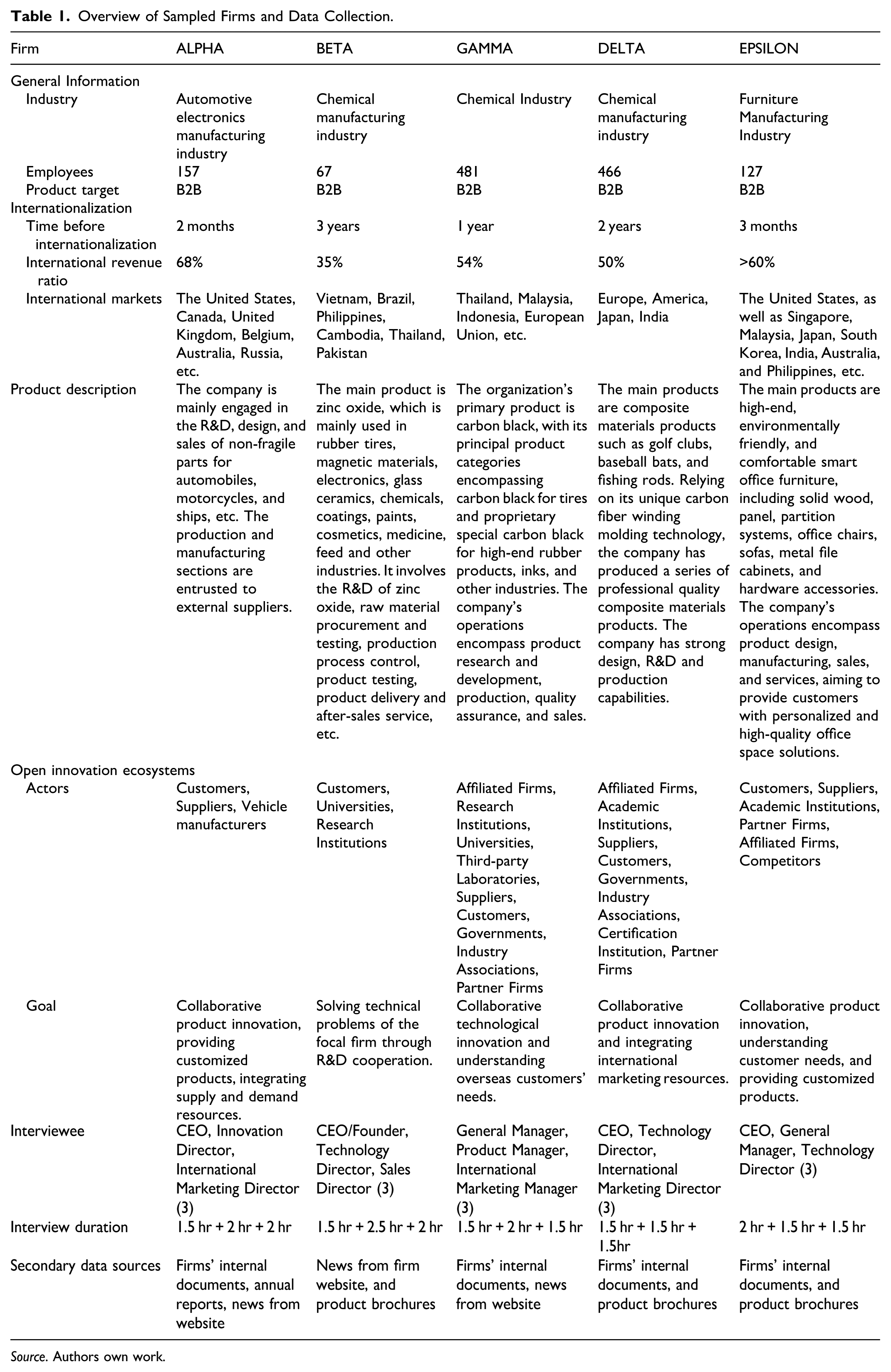
To mitigate potential risks for participants, the study ensured anonymity, informed participants of possible risks, and allowed withdrawal at any time. Researchers signed confidentiality agreements, and participants were thoroughly briefed on the voluntary nature of their involvement. Before the interviews, the study scope, potential risks, privacy measures, and voluntary participation were clarified, with participants subsequently signing informed consent forms (Yin, 2018). Additionally, this research can offer substantial societal benefits by providing BGs with a pathway to overcome resource and innovation challenges through OIE, thereby enhancing their global competitiveness. The findings also can offer policy recommendations for public institutions, such as cross-border innovation parks for SMEs in China, to optimize support policies, promote SMEs internationalization, and foster cross-sector collaboration. These societal benefits outweigh the minimal risks to participants, who are adequately informed and safeguarded throughout the process (Table 1).
Overview of Sampled Firms and Data Collection.
Source. Authors own work.
Data Analysis
The collected data were transcribed verbatim, and data analysis was conducted in the original language, Chinese. Subsequently, the findings were translated into English by a professional translator. To ensure the accuracy of the translation, a “back translation” process was employed, wherein a bilingual individual retranslated the English text into Chinese to verify its consistency with the original content (Sharan, 2009). Data analysis is conducted concurrently with data collection, providing greater flexibility for primary data collection and informing follow-up interviews as key events are identified (Taylor et al., 2021). Following Eisenhardt (1989), within-case analysis was carried out to provide an in-depth illustration of each case and thus be studied as a stand-alone entity. This allowed the unique pattern of each to emerge before being generalized. Next, this study conducted a cross-case search for patterns referring to the previous theoretical building blocks through comparing similarities and differences between the cases.
Thematic analysis in this study was conducted using Braun and Clarke’s (2006) six-step framework, starting with the researchers familiarizing themselves with the data through multiple readings of the transcriptions. This process was carried out independently by two researchers using Atlas.ti 9.0 software. In the subsequent step, the researchers manually and iteratively coded the data, with an initial coding framework based on the research questions. This process enabled the identification of first-order concepts and second-order themes related to internationalization speed, extent, and scope (Taylor et al., 2021). Secondary data was used to validate the findings and enhance reliability (Jick, 1979). The codes were then grouped into potential themes, which were reviewed and refined for coherence. Two additional researchers independently read the transcripts and engaged in discussions to achieve consensus on the final themes. Inter-coder reliability was assessed using percentage agreement, which yielded a 95% agreement rate, indicating strong consistency among the coders. The final themes were defined, named, and supported by illustrative quotes. To ensure the depth and trustworthiness of the analysis, participant validation was used to confirm the accuracy of data interpretation, and expert reviews were conducted to ensure objectivity and consistency. The data structure is shown in Figure 1.

Overview of data structure.
Finding
In the field of international entrepreneurship, the speed, extent, and scope of internationalization are usually considered to be the dimensions of the internationalization of BGs (Cesinger et al., 2012; Madsen, 2013; Zahra & George, 2008). As aforementioned, this study focuses on the supporting role of OIE in the internationalization of BGs (speed, extent, and scope).
Case Profiles
The five case firms in this study, based on the definition proposed by Knight and Cavusgil (2004), are all BGs that began expanding into global markets within 3 years of their establishment, with international business accounting for more than 25% of their revenue. These firms operate in automotive electronics manufacturing, chemical manufacturing, chemical, chemical manufacturing, and furniture manufacturing industries respectively. They are all SMEs that possess key technologies enabling them to compete in the global market, but also rely heavily on external resources.
Case firm ALPHA, established in China in 2004, launched foreign trade business immediately after its establishment and launched domestic trade business in 2017. The company specializes in the development, design, and sales of non-consumable parts for the automotive aftermarket. ALPHA focuses on key technologies, market research, engineering design, mold development, and product validation, while outsourcing the production process to external manufacturers. The early foreign markets ALPHA entered were the European and American markets. Sixty-eight percent of the international revenue ratio is generated from overseas markets, and the foreign customers are all well-known auto parts manufacturers or suppliers. ALPHA’s open innovation ecosystem is dedicated to collaborative product innovation, providing customized products, integrating supply and demand resources. ALPHA has R&D capabilities in key technologies, integrates demand-side and production-side resources, and uses domestic abundant and cheap resources and supplier production resources to meet the customized needs of foreign customers, thereby gaining competitiveness in the international market.
Case firm BETA, established in 2008, and began internationalization in 2011. BETA uses indirect zinc oxide technology to customize zinc oxide products to meet the specific needs of customers in various industries. The first foreign market that BETA entered was the Vietnamese market. Thirty-five percent of the international revenue ratio is generated from overseas markets, and the foreign customers are all large foreign tire manufacturers. BETA’s open innovation ecosystem aims to solve technical problems through R&D cooperation, and is committed to providing customers with highly active, low-cost zinc oxide.
Case firm GAMMA, a wholly-owned subsidiary established in 2016, began its internationalization process in 2017. It is a carbon new materials company primarily involved in the deep processing of coal tar and the production of carbon black. The company operates its own carbon black R&D center. Its main product lines include carbon black for tires and specialized carbon black for high-end rubber products, inks, and other related applications. The company’s initial overseas market is Malaysia. Overseas market revenue accounts for 54% of GAMMA’s total income, with major customers primarily from the rubber industry. GAMMA’s open innovation ecosystem focuses on developing more efficient and competitive carbon black products for tires and high-end rubber applications through collaborative technological innovation. This collaborative approach ensures that GAMMA’s products meet the diverse demands of various markets.
The case firm, DELTA, was established in 2003 and began its internationalization in 2005. The company’s primary products include composite materials, such as golf clubs, baseball bats, and fishing rods. Leveraging its proprietary carbon fiber winding molding technology, DELTA has developed a range of professional-grade composite products. The company excels in design, research and development, and production capabilities. Its initial international markets were in Europe and the Americas. Currently, international markets account for 50% of the company’s operating revenue, with its primary clientele focused on the high-end sporting goods sector. DELTA’s open innovation ecosystem focuses on promoting product technology innovation and enhancing international brand recognition. The company integrates internal and external resources to develop a diverse range of high-end composite materials centered around carbon fiber winding technology. DELTA understands the market demands and international standards through close collaboration with customers, technological partners, and international industry associations, thereby providing high-quality products that meet the requirements of various segments within the high-end sporting goods market.
Case firm EPSILON was established in 2008 and initiated its internationalization from inception. The main products are high-end, environmentally friendly, and comfortable smart office furniture, including solid wood, panel, partition systems, office chairs, sofas, metal file cabinets, and hardware accessories. The company’s operations encompass product R&D, design, manufacturing, and sales, aiming to provide customers with customized and high-quality office space solutions. Since its establishment, EPSILON has continuously promoted product innovation and achieved important technological achievements, focusing on the R&D of structural improvements, functional design, and aesthetic design for smart office furniture. At present, EPSILON’s International markets account for over 60% of the operating revenue, international market covers more than 30 countries around the world, including important markets such as the United States, as well as Singapore, Malaysia, Japan, South Korea, India, Australia, and the Philippines. EPSILON’s open innovation ecosystem focuses on collaborative product innovation, understanding customer needs, and delivering customized products. By leveraging domestic supply chain and R&D resources, it maintains flexibility, meets international customization demands, and ensures rapid delivery, thereby strengthening its global market competitiveness.
Cross-Case Analysis
In this section, a comparative case analysis is conducted to elucidate the findings regarding the influence of OIE on the internationalization of BGs. The data coding results is shown in Table 2. Subsequently, four propositions are presented and the role of OIE in the internationalization of BGs is identified.
Overview of Data Coding Results.

Source. Authors own work.
Influence of OIE on the Internationalization Speed
Resource scarcity within firms facilitates resource exchange activities through collaboration with other ecosystem actors, enabling the acquisition of more valuable resources from the ecosystems (Das & Teng, 2002). Evidence from this study suggests that OIE not only facilitates resource exchange but also actively accelerates innovation and internationalization for firms such as ALPHA, GAMMA, and EPSILON. Through rapid integration of innovation resources, OIE consolidates component innovation suppliers and enhances BGs’ capacity to link these innovations, leading to the accelerated innovation. This is demonstrated by ALPHA’s ability to rapidly connect market demand with component innovation resources and integrate them into their product development process, as confirmed by ALPHA’s official profile data. Additionally, OIE facilitates the efficient collection of user-driven ideas and connects innovative equipment and technologies for BETA. Consequently, participation in OIE allows BGs to rapidly integrate their innovation resources, achieve accelerated innovation, and further reduce their time to international market entry.
Our company has entered the international market since its establishment… The reason our firm started internationalization so quickly is that we can rapidly connect market demand with component innovation resources through this innovation platform. Our firm started in supply chain management, and thanks to our core R&D capabilities, we were able to link innovation needs with the supply of component innovations. (CEO, ALPHA)
Accelerated innovation enables organizations to transcend institutional routines and acquire knowledge rapidly, fostering competitive advantage and ultimately facilitating accelerated internationalization (Hilmersson et al., 2023; Liu et al., 2022). For BETA, OIE allows it to focus exclusively on their core technologies (such as indirect zinc oxide technology) by providing external R&D resources. OIE enables BETA to efficiently meet customer needs by developing corresponding low-cost, high-performance products, facilitating rapid entry into the international market. For ALPHA and DELTA, their unique core competitive advantage lies in rapid resource integration and innovative R&D capabilities, which allow them to swiftly develop novel and differentiated products tailored to customized needs. Data analysis shows that ALPHA and DELTA can promptly identify component suppliers upon recognizing new product demands, thereby efficiently developing products that meet customized product needs. The interview data of ALPHA and EPSILON also shows that some competitors focus on relatively single products and poor flexibility. For example, ALPHA’s competitors only focus on a single model and often encounter difficulties in purchasing components when switching models, affecting innovation and delivery speed. The three interviewees unanimously emphasized that EPSILON effectively integrates innovative resources through OIE and can quickly deliver products that meet customer customization needs. This rapid integration of innovative resources has greatly improved EPSILON’s market response speed, thereby bringing more international entry opportunities.
Compared to other competitors in the market, our company excels in resource integration. We can quickly identify component suppliers after recognizing new product demands, enabling us to rapidly develop products suitable for various vehicle models. Thus, resource integration is one of ALPHA’s core competitive advantages, driving the company’s leadership in international market. (CEO, ALPHA) OIE enables us to integrate the innovative resources of ecosystem members, such as our cooperation with a German company with advanced intellectual property rights, as well as cooperation with universities and other scientific research institutions. This approach allows us to use their advanced intellectual property rights, save time for product innovation, improve product development efficiency, and bring high-quality products to the international market faster. (CEO, EPSILON)
For resource-constrained BGs, accelerated innovation can be achieved through OIE, which integrate complementary technologies, ideas, and capabilities from various industries (Liu et al., 2022). These ecosystems facilitate effective product innovation by synthesizing innovative resources from diverse actors and transforming their contributions into novel products and services. Data from the case studies illustrate how the synthesis of complementary resources in the OIE accelerates the firms’ ability to meet customized demands and enter international markets faster than their competitors. This process involves the allocation of shared resources from component innovation provider, users, and academic partners to drive joint innovation. By leveraging their core R&D technologies in conjunction with the resources provided by OIE, BGs can achieve accelerated innovation. Consequently, participation in OIE effectively addresses the resource constraints of BGs and supports their early internationalization through accelerated innovation processes. Therefore, this study proposes the following:
Influence of OIE on the Internationalization Extent
Knowledge generates value and innovation when shared and utilized in collaborative systems (Olaisen & Revang, 2017). Knowledge transfer facilitated by the open innovation process enables ecosystem participants to access external resources for innovation success (West et al., 2014). Ecosystem actors occupying superior knowledge niches facilitate knowledge transfer (Bacon et al., 2019) and product innovation advancements (Xie & Wang, 2020) through interaction. In this study, the evidence from all cases indicates that OIE provide knowledge exchange and facilitate the acquisition and integration of market and technological knowledge, further facilitating the extent of internationalization. For instance, BETA’s involvement in the OIE allows them to exchange knowledge with customers, offering innovative ideas for product development and a deeper understanding of international market demands. The CEO of BETA and EPSILON asserts that comprehending market demand is crucial for a firm’s extent of internationalization. Empirical data from BETA shows that by participating in OIE, the firm gains comprehensive insights into customer needs, competitors’ strengths, and the regulatory and economic environments of target markets. This enables the firm to accurately adapt its product development process to meet the demands of international customers, thereby supporting the extent of its internationalization.
Reputational networks comprise partners who provide a firm with the reputation and legitimacy necessary for market success (Lechner & Dowling, 2003). For GAMMA, participation in the OIE fosters the development of reputational networks, enabling the firm to leverage market legitimacy and word-of-mouth endorsements to boost its international visibility. Reputational networks assist BGs in overcoming barriers resulting from newness and smallness by signaling to the market and other firms that this new firm is a viable partner. Data suggests that these networks help GAMMA access international opportunities by providing valuable market insights.
We established the reputation through the cooperation with ecosystem actors, especially the large customers and distributors. This led to word-of-mouth recommendations and constituted a network gradually, which is an important source of valuable market knowledge, such as customer needs, competitors’ strengths, regulatory environments, and economic conditions in the target market. (General Manager, GAMMA)
BGs tend to achieve rapid internationalization by offering innovative, differentiated products targeted at niche global markets (Gabrielsson & Manek Kirpalani, 2004; Knight & Cavusgil, 2004). The integration of technological knowledge from OIE actors enables BETA and EPSILON to remain flexible, quickly identifying niche markets and developing differentiated products that address unmet needs. This allows them to avoid direct competition with larger players and seize valuable international niche opportunities. By focusing on niche markets, these firms can establish a presence with lower competitive pressure. OIE provides essential insights that help BGs navigate global market shifts and reduce the liabilities of foreignness.
Participation in the OIE helps us focus on the niche market, keeping our core R&D capabilities while tapping into the complementary technological knowledge of other ecosystem actors. This lets us be more flexible when facing customized product needs. (Technology Director, EPSILON)
For DELTA, market knowledge of ecosystem actors facilitates firms’ comprehension of existing customer needs and regulatory requirements, and potentially enables the creation of new market demand based on their core technologies, which is essential for developing cutting-edge knowledge and innovative products (Arte, 2017). For ALPHA and EPSILON, technological knowledge enables BGs to target/create non-competitive market niches through differentiated products through delineating a firm’s familiarity with market demands and ensures product competitiveness. Overall, the OIE involvement improves firms’ understanding of existing customer needs, enabling them to sometimes create new market needs by combining core R&D capabilities with external technological knowledge, thus contributing to the internationalization extent. Therefore, this study proposes the following:
Influence of OIE on the Internationalization Scope
The data from BETA and DELTA show that enhancing technological capabilities is essential for international expansion because advanced technological capabilities facilitate opportunities for technology-based product diversification. Furthermore, technological capabilities enable the development of multiple innovative products to address the requirements of international market segments, thereby increasing the likelihood of successful international expansion (Ceipek et al., 2019; Kumar et al., 2012).
For the cases of this study, the core technological capabilities developed in the initial stages facilitated their product diversification strategies during their international expansion. ALPHA’s diversified product offerings, including braking systems, transmission systems, and more than 20,000 SKUs, have enabled them to cover over 90% of vehicle types, supporting their expansion into new international markets. Similarly, BETA and DELTA’s focus on core technology enables them to diversify into sectors like electronics and cosmetics, increasing their competitive advantage across multiple international markets.
BGs generally have a relatively specialized technical field and are very good in this field. Our company ranks among the top in the zinc oxide segment. Around the core technology of indirect zinc oxide, we develop other technologies to achieve a diversified product strategy in international expansion. (CEO, BETA)
Additionally, technological diversification expands a firm’s knowledge into new areas while strengthening its core technology, ultimately creating new capabilities (Cantwell & Vertova, 2004). Data analysis shows that technological diversification focusing on indirect zinc oxide technology allows BETA to enter other industries (e.g., the electronics, cosmetics, and chemical markets). For ALPHA and DELTA, they utilize key technologies in the main industry, employ a technology diversification strategy to enter the more related industries, thus providing opportunities for international expansion.
Our company has also developed new granular products focusing on zinc oxide technology… The multiple products enable BETA to enter various industries (rubber tires, magnetic materials, electronics, glass ceramics, chemicals, coatings, paints, cosmetics, medicine, feed and other industries) in the international expansion. (CEO, BETA)
The exchange of knowledge and information among participants in the network facilitates the technological diversification of firms (Torrisi & Granstrand, 2004). In this study, ALPHA, BETA, and DELTA benefit from accessing both market knowledge and technological expertise within their respective OIEs, which supports their technological diversification and accelerates their international expansion.
Collaboration with OIE actors—such as customers, suppliers, and research institutions—has complemented our technological capabilities and opened new market opportunities. For example, working with our helmet clients allowed us to enter the sports helmet industry, where customer-driven functional requirements guided joint R&D with ecosystem partners, resulting in more innovative products. (Technology Director, DELTA)
Therefore, OIE facilitates effective resource integration, helping BGs bridge knowledge gaps and strengthen their technological capabilities. The evidence from all cases in this study shows that collaboration with OIE actors significantly enhances their resource integration capacity, allowing them to access critical technical knowledge and physical R&D resources (such as equipment and materials). This support is crucial for developing the technological capabilities that, in turn, enable technological diversification and the development of innovative products, driving their international expansion. Based on these evidences, this study proposes the following:
Role of OIE in the Internationalization of BGs
In the context of this study, OIE actors provide ALPHA, GAMMA and EPSILON with international entry opportunities and founding capital. As a peripheral innovation complementor, BETA and GAMMA adhere to the internationalization pace of OIE actors, and its international entry is also driven by the internationalization activities of ecosystem actors, resulting in a stable and less risky internationalization. Furthermore, BGs’ networks can be extended through OIE actors to mitigate the liability of outsidership. Based on trust established through prior collaboration, all case firms of this study expand network through the social or business networks of ecosystem actors, thereby facilitating access to additional innovation resources and international support from the extended network. For instance, born global case firms in this study can identify new market opportunities through referrals from existing clients, enhance market reach through reputation networks, and establish connections to governmental resources through customer networks. In addition, both ALPHA and EPSILON emphasize that the OIE significantly enhances the firm’s ability to rapidly integrate external resources, thereby fostering flexibility in responding to customization needs. The general manager of EPSILON further highlights that this high level of responsiveness is crucial for meeting customers’ delivery expectations, which is a key competitive advantage for EPSILON. Drawing from these empirical insights, this study suggests that OIE serves as an important resource connection platform in the internationalization process. It helps BGs strengthen their dynamic capabilities and flexibility, thereby enhancing their competitiveness in international markets.
The support we get from the OIE helps us quickly gather the resources we need and stay flexible, so we can respond fast to customization requests… Flexibility, fast delivery, high responsiveness and customization constitute our key competitive advantage in the international market. (CEO, EPSILON)
In the context of this study, the innovation resource support provided by OIE allows ALPHA and DELTA to retain ownership of key R&D technologies while collaborating with the complementary R&D capabilities of ecosystem actors. The enhanced R&D resource integration capability of ALPHA and DELTA can be conceptualized through the resource connection (including technical knowledge and physical R&D resources) with OIE actors, subsequently facilitating joint product innovation. OIE provide all case firms with enhanced opportunities for technological collaboration and furnishes them with the requisite technological innovation resources, enabling them to focus on their niche technology and facilitate joint innovation. The integration of OIE’s innovative resources functioned as a mechanism to facilitate BGs’ accelerated innovation. For example, OIE consolidates component innovation suppliers and enhances ALPHA’s and EPSILON’s capacity to interconnect these innovations, resulting in accelerated innovation processes and further reducing their time to international market entry. Therefore, evidence from these case studies reveals the role of the OIE as a joint innovation platform that supports BGs’ internationalization.
Overall, the OIE function as a resource connection platform and joint innovation platform, within which the integration of market knowledge provides opportunities for BGs’ international entry and expansion. Concurrently, the integration of OIE’s innovation resources enables BGs to achieve accelerated innovation, enhance technological capacity, implement differentiated product innovation strategies, thereby facilitating BGs’ accelerated internationalization, as illustrated in Figure 2. Consequently, this study proposes the following:
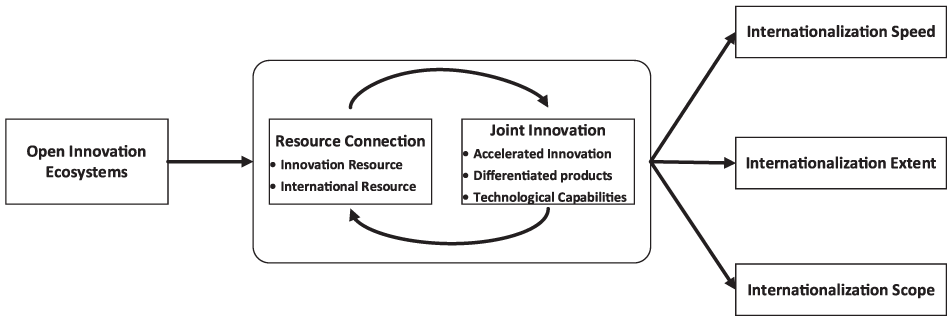
The role of OIE in the internationalization of BGs.
Discussion
This article explores how the open innovation ecosystems support the internationalization in the context of BGs. Previous research claimed that OIE emphasize collaboration and effective interaction among ecosystem actors to achieve common goals (Lin, 2018), making innovation of ecosystem actors to be cost-effective, flexible, and externally dependent (Lekovic et al., 2020). OIE support the internationalization of start-up members by providing R&D resources, supply chain partner collaboration, entrepreneurial support, and community support (Fallah, 2022). The findings of this study extend previous research on how OIE support the internationalization of SMEs and start-ups to the domain of international entrepreneurship, and further clarify the role of OIE in the internationalization of BGs. This positively addresses the resource-constrained challenges faced by BGs in achieving rapid internationalization through innovative approaches (Moogk, 2012). Underpinned by the Resource-Based Theory, this study employs a multiple case study approach and semi-structured interview method, elucidating the role of OIE as mutually reinforcing resource connection platforms and joint innovation platforms in the internationalization of BGs. Furthermore, as the resource connection platform, OIE provides international resources and innovation resources to support BGs’ internationalization. As the joint innovation platform, it facilitates the speed, extent, and scope of BGs’ internationalization through mechanisms of accelerated innovation, differentiated products, and enhanced technological capabilities.
Theoretical Implications
This study holds significant theoretical implications for Born Global Theory, Open Innovation Theory, and theoretical perspectives to explore OIE and the internationalization of BGs. First, this study contributes to the Born Global theory by opening a new research avenue that explores how BGs leverage OIE to address resource constraints and innovation challenges, thereby achieving rapid internationalization. Although previous research on BGs internationalization has emphasized the importance of innovation (Knight & Cavusgil, 2004; Zijdemans & Tanev, 2014), but not directly addressed how BGs overcome resource scarcity during the innovation process. Findings of this study provide new insights into how BGs use OIE to overcome resource limitations and accelerate innovation cycles, adapting to diverse international market demands. Findings of this study also demonstrate that the OIE function as a resource connector in the internationalization of BGs. It provides international resources and innovation resources to support BGs’ internationalization not only in the international entry phase but also during international expansion. These findings not only address the contradiction between resource-consuming innovation and resource demand in the BGs’ rapid internationalization but also clarify the mechanisms through which OIE facilitates the internationalization speed, extent, and scope of BGs.
Second, although the impact of OIE on innovation has been explored to a limited extent in the context of international start-ups and SMEs (Chesbrough et al., 2014; Shao & Shi, 2018), this study represents the first application of OIE to BGs’ internationalization, which differ due to their inherent international orientation (Knight & Cavusgil, 2004) and the importance of innovation strategies (Cavusgil & Knight, 2015; Malodia et al., 2023). Findings of this study broaden the scope of Open Innovation Theory, applying existing OIE research to BGs’ innovation and demonstrating how BGs can leverage OIE to support their internationalization process. Additionally, this study enriches the theoretical understanding of OIE by offering a framework that explains how external collaborations and resource-sharing within OIEs facilitate the innovation processes of BGs. Aligned with findings of previous studies, OIE assist ecosystem actors in combining complementary technologies, ideas, and capabilities across various industries, thereby accelerating innovation (Liu et al., 2022). Participation in OIE facilitates BGs to rapidly integrate technological knowledge and market knowledge (Radziwon et al., 2017), enabling BGs to create differentiated products for niche markets (Mort & Weerawardena, 2006; Park & Rhee, 2012). External connections between ecosystem actors and other actors facilitate interactions and further promote the development of technological capabilities (Xie & Wang, 2020). Therefore, these findings extend the Open Innovation Theory by identifying the role of OIE in the internationalization of BGs and clarifying how OIE promote the product innovation of BGs.
Third, this study uncovers the emerging theme of dynamic capabilities when revealing the mechanism of how OIE influence the internationalization of BGs. The ability of BGs to adapt quickly to international market changes and customer demands is facilitated by their participation in OIEs. This finding offers new insights into how dynamic capabilities, cultivated through OIE participation, enhance their responsiveness and flexibility to cultivate their global competitiveness. These insights contribute to both the internationalization literature and the OIE field, suggesting that the dynamic capabilities fostered through OIE collaboration play a critical role in overcoming barriers to international growth for BG firms. Specifically, by participating in OIE, BGs can quickly integrate external innovation resources, shorten the innovation cycle, and accelerate product development and entry into international markets. OIE enables BGs to obtain diversified market knowledge and support differentiated product innovation for market demand, thereby improving the extent of internationalization. By integrating R&D resources and achieving technological diversification, OIE helps BGs develop innovative products, improve technological capabilities, and expand the scope of internationalization. Overall, grounded in Resource-Based Theory, this study demonstrates how OIEs help BGs overcome resource constraints by strengthening dynamic capabilities and enhancing flexibility, thereby supporting an innovation pathway for achieving rapid internationalization.
Practical Implications
In addition to the aforementioned theoretical implications, this study offers practical insights for managers in the internationalization and innovation departments of BGs. For managers of the internationaization department of BGs, the OIE supports the international strategies by addressing resource scarcity during the rapid internationalization process. Firstly, BGs can integrate innovative resources from OIE to enhance their market responsiveness, thereby creating more opportunities for international market entry. Secondly, managers can leverage the market knowledge of ecosystem actors to develop a deeper understanding of existing customer needs and regulatory requirements, and even to stimulate new market demand, which is a critical pathway for expanding the extent of internationalization. Furthermore, BGs can utilize networks within OIE to mitigate the liability of outsidership, thus further promoting their international expansion.
For managers responsible for innovation, OIE enables BGs to implement innovation strategies in an open manner that supports rapid internationalization. Firstly, BGs can incorporate component innovations from ecosystem actors, allowing for accelerated innovation that facilitates international entry. Secondly, supported by the acquisition and integration of market and technological knowledge within OIE, BGs can remain flexible, quickly identify niche markets, and develop differentiated products to address unmet needs, thereby increasing their internationalization extent. Thirdly, through collaboration with OIE actors, BGs can strengthen their capacity for resource integration, gain access to critical technical knowledge and physical R&D resources, and achieve technological diversification and the development of multiple innovative products, ultimately driving their international expansion.
Furthermore, the findings of this study provide significant implications for public policy formulation. First, policymakers could consider the establishment of OIE to facilitate BGs’ cross-firm collaboration, for example in the form of innovation incubators, technology cooperation platforms, international exchange hubs, and global innovation parks. Such initiatives, particularly those targeting emerging markets and international partnerships, would contribute to creating a more supportive external environment for collaborative innovation and the resource sharing for BGs. Second, policymakers may develop targeted policies that incentivize innovation collaboration and resource sharing within the OIE ecosystem. These policies could include fostering linkages with international resources, promoting the exchange of innovative assets, supporting collaborative innovation activities, and offering tax breaks.
Conclusions
This study finds that OIE function as a resource connection platform and joint innovation platform in the internationalization of BGs, and significantly influence the enhancement of the internationalization speed, extent, and scope of BGs. These findings respond to the calls from previous scholars to adopt an innovation ecosystem perspective in explaining the rapid internationalization phenomenon of BGs (Zahoor et al., 2020; Zahra & Nambisan, 2012). The research provides a significant theoretical contribution to the intersection of OIE and international entrepreneurship fields, introducing a novel perspective from OIE for studying the innovation approach in BGs internationalization. It positively responds to the issue of insufficient resources between innovation and rapid internationalization. Nevertheless, certain limitations exist that may inform future research. Firstly, as with other qualitative studies, external validity is constrained due to the limited sample size. This study focuses on case firms in high-tech industries in China, where certain effects can be controlled by situating the research in the same context. Moreover, the primary aim of this study is not to provide generalizable results but rather to make original contributions to the intersection of OIE and born global fields. Consequently, future research may prioritize generalizability by including a larger sample size and involving diverse industries or countries. Secondly, openness plays a crucial role in OIE as it facilitates connections across organizations, enabling knowledge flow, integration, and aggregation of valuable resources (Dahlander et al., 2021). An appropriate level of openness provides enterprises with more opportunities to effectively interact and collaborate with other participants while protecting their core technology from replication by others (Adner & Kapoor, 2010). Aftab Alam et al. (2022) have conducted preliminary research on measuring the openness of OIE; however, further investigation into the impact of openness on internationalization strategy is warranted in future research. Thirdly, this study explores how OIE support the internationalization (i.e., speed, extent, and scope) and presents the influencing mechanism of OIE on BGs internationalization. Other constructs related to OIE, such as ecosystem types (Zahra & Nambisan, 2012), interaction mechanisms (Lin, 2018; Xie & Wang, 2020), value capture and creation paths (Olaisen & Revang, 2017), have not been discussed in the international entrepreneurship domain. Further studies focusing on these themes will contribute to a comprehensive understanding of the role of OIE in internationalization of BGs.
Footnotes
Appendix A
Interview Protocol.

| Interview Sections & Questions |
|---|
| A. Internationalization of firms |
| ● Could you introduce your firm? ● Could you describe the internationalization process of your firm (Speed, Extent, Scope)? |
| B. Open innovation ecosystem of firms |
| ● Could you introduce the open innovation ecosystems your firm has participated in? ● Could you describe open innovation ecosystems activities your firm has participated in (When, Where, How)? |
| C. Influence of open innovation ecosystems on the internationalization of firms |
| ● How do open innovation ecosystems influence the internationalization speed of your firm? ● How do open innovation ecosystems influence the internationalization extent of your firm? ● How do open innovation ecosystems influence the internationalization scope of your firm? |
| D. Firm Profile |
| ● Year of Founding/international debut: ● International Business Income Percentage: ● Number of employees at founding/current: ● Industry: ● Main activities: ● Foreign Market access Countries: ● Mode of entry: |
| E. Participant Profile |
| ● Name: ● Age (range): ● Gender: ● Position: ● Length of working experience: |

Ethical Considerations
The Research Ethics Committee at National University of Malaysia approved our interviews (approval: JEP-2024-775) on Aug 13, 2024.
Consent to Participate
All participants provided written informed consent prior to participating.
Funding
The authors acknowledge the financial support provided by the Faculty of Economics and Management, Universiti Kebangsaan Malaysia under the Special Fund (FEP1).
Declaration of Conflicting Interests
The authors declared no potential conflicts of interest with respect to the research, authorship, and/or publication of this article.
Data Availability Statement
Data sharing not applicable to this article as no datasets were generated or analyzed during the current study.