



Abstract
The metaverse is a rapidly growing sector of the gaming industry, currently engaging more than 2 billion players worldwide. Due to a lack of metaverse gaming research, practitioners and academics are unaware what influences Consumer buying behavior. This study seeks to understand the psychological factors that motivate Metaverse game buying. Social Determination Theory explained in-game purchases. Since players know gamers, Snowball sampling is used to obtain data from 204 Metaverse gamers. An online survey collects reliable data. PLS-SEM is used for data analysis. Findings depicts In-game purchases are directly affected by avatar identification, and the mediation effect of hedonic, utilitarian, and social motivation is consistent with previous research. Limitations are sample diversity may limit the study’s applicability to other gaming environments and populations. Future research should include longitudinal data. Further research should support results with evidence from many different cultures. This study extends digital user behavior research by providing a better knowledge of avatar identification, in-game purchases, and Self-Determination Theory in AI-powered metaverse environments. Practically, it contributes to SDGs 9 and 8 by illustrating how immersive AR/VR technology and appealing avatar identity generate micro transactions, empowering digital entrepreneurs and promoting the expansion of the virtual game economy.
Plain Language Summary
The metaverse gaming industry, with over two trillion players, lacks sufficient research on the psychological drivers of consumer purchase behavior. This study explores the motivational factors influencing in-game purchases through the lens of Self-Determination Theory. Using snowball sampling, data were collected from 204 metaverse gamers via an online survey, and analyzed using PLS-SEM. Results reveal that avatar identification significantly influences in-game purchases, with hedonic, utilitarian, and social motivations mediating this relationship in line with existing literature. Limitations include the sample’s limited diversity, suggesting caution in generalizing findings. Future research should adopt longitudinal and cross-cultural approaches. This study enhances understanding of digital consumer behavior in AI-powered metaverse environments and supports SDGs 8 and 9 by highlighting how immersive technologies and personalized avatars drive microtransactions, fostering digital entrepreneurship and virtual economic growth.
Keywords
Introduction
Augmented and virtual reality have transformed in-game transactions in Metaverse games and changed how customers engage with digital platforms during the past decade (Ciuchita et al., 2023). Non-fungible tokens (NFTs), virtual land ownership, and user-created content are becoming the trends that define the metaverse economy. NFTs open up the possibility of owning in-game items digitally and the virtual land market reflects the increasing economic potential of the immersive space. The content created by users also improves such ecosystems by creating creativity and promoting community participation. The recent research points at the impact of gamification and branding in metaverse platforms on the consumer behavior, such as purchase intention, word-of-mouth, and loyalty (Chang et al., 2011).
The metaverse is enhanced through AI-driven environments, which allow the process of personalization in real-time, the ability to adjust avatars, and offer predictive analytics. AI-powered spaces improve the metaverse through personalization in real-time, avatars, and predictive analytics (Y. Wang et al., 2025). Big data, the huge amount of behavioral data produced by avatars, virtual shopping, interactive games, and other activities fuel this digital transformation (Hadi et al., 2024).AI and machine learning use this information to tailor experiences and impact player behavior (Chang et al., 2011). Based on these technological trends, this paper analyzes the effect of avatar identification and player motivations on buying behaviors in metaverse gaming systems.
Metaverse video games include marketing duties such as content creation, badge distribution, avatar identification, and coupon distribution within the game scenario. More individuals should enjoy and engage in the Metaverse with these activities (Cheah et al., 2022). Furthermore, the metaverse games industry continues to expand. It is crucial to comprehend the purchasing behaviors of gamers in the metaverse (Gursoy et al., 2022). A recent study shows that the metaverse ecosystem uses micro transactions and virtual goods (Lee et al., 2021), reports that 25% of purchases are subscription-based, indicating that many gamers are prepared to pay for unique content and services. In-game purchases are seamlessly linked to the metaverse (Jungherr & Schlarb, 2022). These purchases may include Avatar identification or gameplay-enhancing gear (Guzzetti et al., 2024).
In-game purchases transform as how players engage with virtual surroundings in the metaverse and online gaming (Çallı & Ediz, 2023). Gamification increases user engagement and purchase intent. Challenges, rewards, and progression systems can make virtual apparel and property purchases more entertaining (Khelladi et al., 2024). Y. Cai et al. (2024), discovered that metaverse gamers wanted to show off their unique virtual assets, not blend in. The permanent nature of customizable avatars, alongside their use to convey and express oneself, can be seen as a means to an end in the construction of identity in the virtual worlds. According to psychological studies, avatars affect the behavior of the users, socialization, and the feeling of self-identification. This self-alignment with the avatars affects the way users browse the virtual worlds and adds extra immersion. As we explore the metaverse, avatars build virtual identities and substantially influence immersive world purchases. Identification explains how avatars affect in-game purchases (Green et al., 2021). Players’ perceptions of their avatars as extensions of themselves (Szolin et al., 2022). Research shows that avatar-identify gamers are more inclined to buy game identification choices and virtual products (Green et al., 2021). Avatars’ emotional connection and self-expression may drive in-game purchases (Park & Kim, 2024). As avatars have become essential to online gaming, gamers may customize them to their liking (Korkeila & Hamari, 2020).
The correlation between avatar identification and in-game purchasing behaviors has become a focal point of interest for researchers and industry experts alike (Park & Kim, 2024). This connection not only influences gameplay experiences but has also been linked to various motivations driving in-game activities (R. Wang et al., 2019).
Though the financial implications of in-game purchases are immense to marketers and developers, the motivations behind the purchases are not well understood. Previous studies on in-game features focused on game quality related incentives (Dejonckheere et al., 2024). This Research examines hedonic, utilitarian, and social incentives. Hedonic motivation gaming enjoyment engages players. Previous research depicts as motivations mostly affect virtual players. Entertainment value affects player involvement because games provide enjoyment and fulfillment (Khamaj & Ali, 2024). Gamers demand in-game rewards like resources or levels (Koivisto & Hamari, 2019). Motivation emphasizes the importance of gaming group relationships, improving the experience (Freeman et al., 2022).
This research addresses the gap in understanding player’s motivations for game purchases beyond game quality. In particular, hedonic motivation is concerned with the pursuit of enjoyment, utilitarian motivation is concerned with practical rewards, including the acquisition of resources, and social motivation is concerned with the development of relationships within gaming groups. These motives determine the behavior and involvement of a virtual player.
Identification of research gaps enhances knowledge and solution to problems. Even though most areas of science have developed, there are still some gaps that complicate situations to define. Metaverse games aesthetics, such as the in-game purchases, are analyzed. Despite the growing interest of the in-game purchasing phenomenon, the research conducted has a number of weaknesses. The initial studies have characterized purchases as highly utilitarian due to the functional benefits such as increasing faster or acquiring more resources (Peng et al., 2025). Although certain studies have used SDT to explain gaming behavior, they tend to ignore the mediating effect of hedonic, utilitarian, and social motivations, which would make a gap in the literature on how the said motivations relate psychological needs with purchasing choices. Contextually, most existing research has been conducted in Western settings, with minimal focus on emerging digital markets like South Asia, limiting the applicability of findings across countries like Pakistan. So, the present study aims to examine how avatar identification influence in-game purchase in the metaverse, incorporating the mediating effects of hedonic, utilitarian, and social motivations. Another gap is more research is needed on avatar identification and in-game transactions. The recent research also emphasizes psychological issues and design-oriented factors, in particular, identification with avatars, as the primary factors in purchasing behavior (Arya et al., 2022). This will not only broaden the current body of knowledge but also elucidate the intricate dynamics that are present in Metaverse games. Additionally, the current corpus of research offers distinct perspectives on the psychological aspects of avatar identification and the motivations behind game purchases (Park & Kim, 2024). However, there is a lack of studies systematically examining the intricate connections between these phenomena (Arya et al., 2022). Despite increased interest in how avatar identification affects player behavior, there is still a significant gap in understanding its interaction with hedonic motivation in the context of in-game purchases (Hussain et al., 2025). While previous research has looked at how avatars affect self-expression and identity (M. Wang et al., 2024), it is unclear how much avatar identification drives pleasure-seeking actions, such as hedonic motives. More study is needed to understand how the emotional relationship with avatars develops a desire for fun and amusement, particularly in terms of in-game purchase decisions (Cao et al., 2024). Another major gap is the investigation of the mediation effect of hedonic motivation on avatar identification and in-game purchasing behavior (Ghazali et al., 2023). While research has focused on the direct association between avatar identification and purchase, the particular function of hedonic motivation as a mediator has received less attention. Understanding how the desire for pleasure and satisfaction influences avatar identification on purchase decisions is critical for gaining a more thorough understanding of the psychological processes that drive in-game consumption habits. Addressing this gap might give important insights into the fundamental mechanics of player involvement and expenditure in virtual worlds. Previous research examined social factors, self-disclosure, and impact (Shang et al., 2012b), social experience, context, and virtual objects (Shang et al., 2012a), Addressing these gaps, the present study investigates how avatar identification affects in-game purchases in metaverse games, incorporating the mediating roles of hedonic, utilitarian, and social motivations. By explicitly mapping SDT needs onto these motivations, this study contributes a more nuanced theoretical model of the psychological processes underlying in-game purchasing, particularly in the underexplored Pakistani gaming context (Bhukya et al., 2023).
Gaming requires motivation, according to self-determination theory (Deci & Ryan, 1985). Social attachment, reward-seeking, and enjoyment-driven motivation are SDT motives. (Deci et al., 2017), addressed SDT in MMOs. The application of Self-Determination Theory (SDT) in this study highlights how avatar identification and metaverse gameplay environments influence in-game purchase behavior through the fulfillment of psychological needs for autonomy, competence, and relatedness. Recent research (H. Chen & Chen, 2021) confirms that social attachment, reward-seeking, and enjoyment-driven motivations in digital games align with SDT’s core dimensions. This study extends SDT by demonstrating that players’ identification with avatars not only enhances intrinsic motivation but also shapes their consumer behavior in virtual spaces. Moreover, digital literacy and game comprehension act as moderating factors, suggesting that players with higher digital competence exhibit stronger motivational responses and purchasing tendencies. These findings contribute to contemporary digital consumer psychology by offering insights into how avatar identity and motivational dynamics affect player engagement and decision-making in metaverse-based gaming contexts. Although SDT is a universal framework of needs related to autonomy, competence, and relatedness, it fails to inform the details of the psychological processes underlying in-game purchasing (Deci et al., 2017). To construct a more context-specific picture, this paper combines three other theories. According to Identity Theory (Enç, 1983), avatars are used as a form of self-representation, which strengthens hedonic motivation, which brings pleasure and self-expression. The Social Comparison Theory describes the motivation to be considered and socially more appreciated as a way of social motivation (Festinger, 1957). Fraud Triangle Theory is associated with the utilitarian motivation, which demonstrates the effect of the rationalized acquisition of instrumental benefits on the purchasing behavior (Mandal & Amilan, 2024). The Social Comparison Theory is a theory that adds value to the relatedness need of SDT in that it demonstrates the way the motivation of players to gain recognition, competition, and social approval promotes social motivation. Likewise, Fraud Triangle Theory concurs with SDT in terms of the competence dimension, in that a utilitarian rationalization of pressure, goals, and functional gains is viewed as the rationalization of utilitarian motivation. Combined, these theories give a more detailed and context-specific rationale of why avatar identification triggers different hedonic, social, and utilitarian motivations in the context of Metaverse gaming settings.
Although Self-Determination Theory (SDT) defines universal psychological needs of becoming autonomous, achieving competence, and relatedness, it does not fully elucidate the consequences of identification with avatars that result in various forms of motivation. The present paper combines different points of view, offering a more solid theoretical background. Concerning the hedonic motivation, Identity Theory assumes that the avatars are figurative representations of a person, which promote the buying of products to feel good and experience oneself. Socially speaking, Social Comparison Theory explains how avatar’s identification allows people to identify and rival other users, which results in the purchase of avatars to receive some attention and a feeling of inclusion. Fraud Triangle Theory, which sees spending as a rationalized reaction to the pressure and objectives, is used to understand the utilitarian motivation of buying performance-enhancing products. Combining SDT with these theories, the framework provides a more detailed answer to the questions of why avatar recognition triggers different motivational processes in the Metaverse. This study relates avatar identity, appealing in-game purchases, and metaverse gameplay foundations via self-determination. The influence of avatar identification on purchase is explored. The study shows that Metaverse game players’ digital intervention and game understanding skills affect their purchase behavior. This study examines how avatar identification affects game consumer behavior, affecting gaming psychology and consumer behavior. First portion illustrates the complex psychological processes that affect player decisions and in-game purchases. Second, this method boosts game motivation using motivation theory.
Third, game creators and marketers may use avatar identification to boost player engagement. It improves game business theory and practice, increasing player experiences and changing digital motivation and consumer behavior research. Relationship is shown in Figure 1. Model draws on theoretical framework of Avatar Identification on In-Game Purchases, with an Exploration of Motivation Theory as a Mediator.
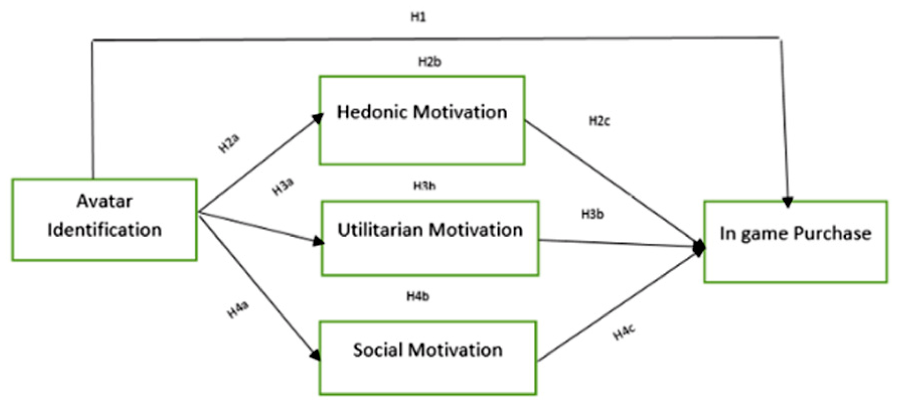
Theoretical framework.
The remaining part of this paper is organized in the following way: Section “Literature Review and Hypotheses Development” is a comprehensive review of the existing literature, identification of the conceptual framework, and establishment of the hypotheses of the study. Section “Study Methodology” addresses the research methodology, including sample procedures, measuring instruments, and data collection procedures. Section “Study Results” displays the empirical data that was achieved after the application of the Partial Least Squares Structural Equation Modeling (PLS-SEM). Section “Discussions and Conclusions” discusses the results concerning the available hypotheses and previous studies. Lastly, Section “Implications, Limitations, and Ideas for Future Research” will provide the theoretical and practical implications of the study and give the possibility of future research.
Literature Review and Hypotheses Development
The emergence of the metaverse represents the paradigm shift of the traditional form of online gaming, which was conventional, long-term, and AI-based virtual worlds that are combined with social presence, digital economies, and user-generated content (Choubey, 2025). Unlike the past online games, metaverse platforms are decentralized, interoperable, and allow co-creation in real time, virtual ownership and socialization (Mele et al., 2025). This renders them the best places to study consumer behavior, self-development, and mental involvement.
Well-known games like PUBG Mobile, Free Fire, Zepeto, and Avakin Life have fostered vibrant online communities that prioritize social interaction, avatar customization, and the purchase of virtual goods. These Metaverse-inspired platforms are perfect for investigating the psychological foundations of in-game purchase behavior because they provide immersive settings that encourage user identity expression through avatars. Self-Determination Theory (SDT) offers a robust theoretical framework for analyzing how players are motivated to interact with their avatars and invest in virtual assets by intrinsic factors including autonomy, competence, and relatedness. In the metaverse environment, autonomy connects to players’ flexibility in customizing avatars; competence shows mastery of in-game activities; and relatedness correlates with social connections and community belonging, which correspond to utilitarian, hedonic, and social motives, respectively.
By examining how avatar identification and motivational factors, specifically utilitarian and hedonic motivations, influence in-game purchasing behavior within the Pakistani gaming ecosystem, the current study expands upon this basis. Now, let’s examine the evolution of the theories that underpin this inquiry in more detail.
Avatar Identification and in Game Purchase
The recent investigations of the metaverse platforms show that avatars are a proven digital identity in the virtual world that enhances the degree of psychological attachment and results in purchasing intentions (Kim et al., 2025). When players believe that the avatars are their digital identities, they tend to spend more on virtual wealth to improve their status and presence in these virtual worlds of immersion. Organizational identification indicates how many people see their organization as part of them (Zagenczyk et al., 2021). Users’ avatar relationships may reflect how much they regard them as extensions of themselves (Peng et al., 2025) portraying ideal selves. Attractive avatars may affect user attachment (C. Chen et al., 2025), desire to act like a character. The metaverse’s growing emphasis on avatar-centered interactions highlights its usefulness. Ribeiro et al. (2024) highlighted that an avatar’s features can affect its livability and attraction and reduce user uncertainty. Despite these effects, avatar types can affect users’ perceptions (Praetorius et al., 2021). Users’ confidence in other virtual community members may increase if they identify with their avatars (H. Li & Pan, 2025). Thus, increased trust may increase community members’ credibility and reduce uncertainty (M. Gong et al., 2024). Research by Praetorius et al. (2021), demonstrates that enhanced avatar identification increases virtual environment engagement and investment.
In-game purchases exploit players’ emotional attachment to their avatars (Lassila, 2022). Hamari et al. (2020), showed that players who closely identify with their avatars invest more in game material to improve their virtual representation. Studies show that identifying avatars with personal attributes or intended self-images increases connection and buying intent (C. Liu et al., 2020). This individualized connection affects premium purchase decisions, boosting game income. In essence, avatar identification depth predicts users free and premium game participation (Khan et al., 2025). Hence, In-game purchases reflecting the psychological connection between the player and their virtual representation. According to alike (Berberović et al., 2023; Park & Kim, 2024), there can be a relationship between avatar identification and in game purchases.
Avatar Identification and Hedonic Motivation
Multiple studies, such as those by Berberović et al. (2023) and J. Wang et al. (2023), have demonstrated that enjoyment, playfulness, and emotional satisfaction can shape consumption through avatar, whereas enjoyment, playfulness, and emotional satisfaction relate to Hedonic motivation. Hedonic motivation is seeking pleasure and avoiding suffering. Regarding avatar identity (Mansoor et al., 2024), if individuals identify strongly with their avatars, they will feel more immersed in the digital world and have more time and motivation to play sports (Fokides, 2021). Avatar-self alignment promotes virtual connection. A gamer who emotionally connects with their avatar will want to earn big prizes. Hedonic motivation and avatar identification will affect VR game design, behavior, and experiences (Duan & Jeong, 2025).
Gamification has been studied in relation to hedonic motivation (H. Wang et al., 2022). Hedonic motivation increases when players feel emotionally connected and satisfied with their avatars (Mancini et al., 2019). This incentive may change their propensity to acquire items to improve and enjoy gaming. Gamer joy from associating with an avatar can drive purchases (Ma et al., 2025). J. Wang et al. (2023), believe that motivating value might be functional, social, emotional, epistemic, and conditional. A strong correlation between avatar identification and in-game purchase intention was found by H. Wang et al. (2022), findings opened the door to additional research into mediating factors. Hedonic motivation can function as a mediator for in-game purchases among people who strongly identify with their avatars, according to studies on the gaming community by X. Li et al. (2023). These studies offer nuanced insights into different spending behaviors within virtual environments.
This paper proposes that in-game purchases are affected by hedonic motivation. As spending actual money on virtual products to improve immersion, avatar modification, or enjoyment in digital games is known as in-game purchases (Abbasi et al., 2021). These purchases are often motivated by hedonistic motivation, which is the need to have enjoyment, pleasure, and emotional satisfaction and not usefulness (Green et al., 2021). Hedonic reasons are crucial in explaining why players voluntarily spend money in virtual worlds since many in-game objects have aesthetic or sensory functions (Duan & Jeong, 2025).
Players who want to have fun and enjoy themselves are more likely to spend money on virtual items like skins, avatars, and special effects, which help them immerse themselves in the game world and enjoy it more (Von Itzstein et al., 2024). Because hedonic players are driven by the emotional gratification and entertainment value these things give, as according to Saleem et al. (2024), it is believed that their purchasing habits would be affected favorably by a desire to improve the immersive and joyful aspects of games. As a result, the more a player is driven by hedonic considerations, the more likely they are to make in-game purchases.
Avatar Identification and Utilitarian Motivation
Avatar identification improves utilitarian motivation (X. Li et al., 2023). Furthermore, with the characteristics and goals of their avatars or virtual representations in the digital environment (Zimmermann et al., 2023). Users that identify strongly with their avatars are more likely to adopt utilitarian motivation, which aims to achieve practical goals or maximize virtual benefits (Lau & Ki, 2021). This relationship stems from the process of self-augmentation, in which people see their avatars as an extension of their own identities and actively seek virtual goals (Hutson, 2024). Thus, the stronger the identification with one’s avatar, the more inclined individuals are to pursue utilitarian goals in a virtual environment.
Chi et al. (2024), suggested utilitarianism may affect Avatar Identification and In-Game Purchases. Gamer incentives should be favorable. In-game benefits, abilities, equipment, and other functional features may increase gameplay or advancement (Palmquist et al., 2024). Avatars help players acquire stuff boost performance or provide them an edge (Marder et al., 2019). Avatar-identified players buy in-game things for practicality understanding how utilitarian aspects affect avatar identification purchase may help metaverse game creators please users. Hence Utility motivates avatar identification and game purchases. A focus on practicality, usefulness, and efficiency are the hallmarks of utilitarian motivation, which contrasts with the more traditional utilitarian approach (H. Li & Pan, 2025). According to Fayyaz et al. (2025), about the realm of gaming, utilitarian gamers are motivated by objectives such as enhancing their performance, accomplishing their goals, and making the most of their overall gaming experience. According to J. Chen (2023) these players place a high value on the benefits and utility that result from their investments. Some examples of these benefits and utilities include the capacity to access crucial components that make games simpler, time savings, and competitive advantages. This study suggests that utilitarian motivation mediates the relationship between avatar identification and in-game purchase. Players are channeling their identity connection into purpose-driven spending as they grow more attached to their personalized avatars and view in-game purchases as functionally valuable, particularly those that unlock features or improve performance (Butt et al., 2025). Avatar identification subsequently converts into real purchase behavior through utilitarian motivation, which is defined by efficiency and task-oriented decision-making.
High utilitarian motivation players are more inclined to buy in-game items because they believe these purchases will improve their overall gaming experience and efficiency (Marder et al., 2019). Additionally, these players place a high value on the benefits and utility that result from such investments, such as the capacity to obtain essential components that make games simpler, time savings, or competitive advantages. As a result, players who are utilitarian in nature value in-game purchases that have real-world applications above those that are only decorative or motivated by prestige. Hence that the greater a player’s utilitarian motivation, the more they will spend money in-game.
Avatar Identification and Social Motivation
Warmth and closeness come from avatars (R. Wang et al., 2019). Player self-image is also affected by virtual avatars (Lee et al., 2024). Player immersion, engagement, and pleasure can be affected by avatar connections (Lynch et al., 2022). Another benefit of avatar identification is internal drive, immersion, and happy feelings (Dechant et al., 2021). Yousefi et al. (2024) noticed avatar selection’s unintentional impact on customer motivation and behavior. We study how avatar identification influences metaverse game player interactions.
Lee et al. (2023), discovered Avatar identity and social goals drive gameplay. Social factors boost partnerships (Marder et al., 2019). Social incentives like identity-related purchases and social connections affect in-game purchases (Marder et al., 2019). Gaming fosters group identification (Vella et al., 2021). Games boost self-esteem and prestige (X. Gong et al., 2021). Metaverse games with social interaction may inspire. Gifts and numerous friends increase socializing and in-game purchase (SB et al., 2025). Between the third quarter of 2015 and the first quarter of 2017, social emphasis increased average daily online gaming length 33% (Yoo, 2024). Companies are emphasizing social connection and gaming experiences like online competition or sharing game features or statuses to increase game usage (H. Chen & Chen, 2021). Gamers are heavily influenced by their social motivation while purchasing in games (Cao et al., 2024). Those who are motivated by social demands like the need for approval from others, friendship rivalry, or the desire to rise in the eyes of their peers are more likely to make in-game purchases (Kahraman & Kazançoğlu, 2023). According to this, gamers would spend money on virtual products and services that increase their social capital and visibility to gain respect and prestige inside their gaming communities. Players use the perceived worth of these virtual goods like uncommon achievements or exclusive cosmetics to establish their social standing and win over their friends, which encourages them to spend more money on in-game purchases (X. Cai et al., 2022). Previous studies found that socially driven players buy more in-game items (Reza et al., 2022). Social factors include the need for social approbation, competition with friends, and prestige among peers push gamers to buy virtual goods and services (MacAloon, 2023). Specifically, social players who are driven by such social causes as the urge to rank higher than their peers, gain popularity, or become a top player in the gaming community purchase more in-game products (H. Wang et al., 2022). This behavior may be explained by the perceived value of social capital, such as special equipment, talents, or cosmetics that boost their gaming experience and peer visibility (H. Wang et al., 2022). Thus, players with higher social motivation are more inclined to spend money on the game to achieve their social goals.
Study Methodology
Metaverse gamers spend a lot of time in virtual worlds, therefore their data is gathered. In-game purchases are popular with youngsters and adults. They value social connections, customization, and discovery in metaverse games and digital product creation/exchange. Metaverse gamers can use new tech for sociable, amusing, and creative gaming. Cross-sectional data was collected from game players. This method collects participant behavior data well (Gay et al., 2012). In research methodology, the unit of analysis is the specific entity or degree of observation that researchers focus on when collecting and evaluating data (Hays, 2003). Data was gathered from Pakistani Metaverse game participants using an online survey process. The G power formula was utilized to determine the sample size. The sample size was determined by using the G*Power calculator. The effect size was 0.05, the power requirement was 0.90, and the minimum sample size needed for this investigation was 116. Since this technique for determining sample size has been more popular recently (Muhammad, 2020), 204 sample size was taken into consideration in this investigation. As a result, 91% of the responses were usable. Snowball sampling technique was used because, first, snowball sampling is popular for recruiting study participants, especially in hard-to-reach communities (Molina et al., 2022). Second, Snowball sampling is increasingly used to examine digital platforms with free and premium transactions (Liang & Lin, 2023). We used Google forms to collect metaverse game player data for our research due to its versatility and accessibility (Pyae et al., 2023). Google Forms was chosen because of its simplicity and extensive availability, allowing us to customize the survey for our research (Jaiswal, 2024). The Likert scale questionnaire was the only assessment method in this study. Likert devised an attitude test in 1932 (Burns & Lee, 2008). This method selects statements to assess people’s views on various topics. Respondents rate their agreement using options like Strongly/Totally Disagree, Disagree, Undecided/Neutral, Agree, and Strongly/Totally Agree. The Likert Scale, named after its creator, comprises seven categories, but the 5-point scale is usual. Numbering answers quantifies attitudes. A 5-point scale goes from Strongly Disagree to Strongly Agree. Total responses equal score (Bell et al., 2022).
Operationalization of Constructs
Avatar Identification was measured by four items adopted from Moon et al. (2013) for example, “I have strong feelings of ownership towards my avatar.” Respondents were asked to provide their opinions about these four items reflecting them. The Hedonic motivation scale was adopted from Chang et al. (2011), having four items. Scale asked game players to give their opinion by using a 5-point Likert scale for items, including “Metaverse Games are a way I like to spend my leisure time.” Utilitarian motivation was measured by six items (Chang et al., 2011). Scale asked game players to give their opinion by using a 5-point Likert scale for items, including “Metaverse games improve my performance.” For social motivation five items were adopted from Kim and Ross (2006). Scale asked game players to give their opinion by using a 5-point Likert scale for items including “Metaverse Games enable me to maintain friendships.” Four items measuring In-game purchases from Hamari and Keronen (2017), to give their opinion by using a 5-point Likert scale for items such as “I purchase free to play items that I enjoy.”
Method of Data Analysis
The research made use of Smart PLS-4 and PLS-SEM. PLS-SEM has strong support for complicated connection estimation (Gudergan et al., 2008). Furthermore, SmartPLS works well with small to medium sample sizes and does not need multivariate normality (Ramayah et al., 2018). It is especially suitable for cross-sectional data and is therefore perfect for investigations involving populations that are difficult to reach. Snowball sampling was utilized to reach a specific demographic of participants active metaverse players who make in-game purchases because it efficiently makes use of pre-existing networks to recruit people, particularly in situations when a formal sampling frame is not available. By depending on peer recommendations, this approach not only increased response rates but also complied with the time and resource limitations common to cross-sectional studies, allowing for the effective gathering of data from a targeted population that is both digitally linked and particular. Google Forms were used to run an online survey as part of the study. The study was designed to minimize risks to participants. The study was an anonymous online survey and voluntary participation of individuals was solicited. The benefits to the individual and to society, including a more informed understanding of digital behavior and motivation, outweighed the minor risks. Before consenting, participants received information about the purpose of the study, confidentiality, and withdrawal. The informed consent was provided by the very questionnaire. In the introductory part of the questionnaire, the research participants were given a statement of consent of what the research entailed, their rights as research subjects, and guarantees of confidentiality. By going ahead to fill in the questionnaire, participants indicated their voluntary consent to participate in the study. Furthermore, measures were made to avoid irrelevant entries and duplicate replies to guarantee data integrity. The forms response validation elements were activated to reduce the number of inconsistent or missing responses. During the data cleansing process, the data were checked for quality and consistency. All findings were examined and presented in aggregate form to make it impossible to identify specific individuals. To ensure data quality and integrity while guaranteeing that the study complied with the values of beneficence, fairness, and respect.
Study Results
Table 1 below provides a detailed longitudinal distribution of the demographic characteristics of the 204 respondents in this survey to enhance the level of clarity and transparency among survey participants. The respondents were the users of the Metaverse game living in Pakistan, and a structured online questionnaire was used to collect the data. This table categorizes participants by gender, age group, monthly income, and employment status. This method facilitates an improved understanding of the population from whom the behavioral insights were derived. It is the diversity of the sample and the basis of studying trends in the identification of avatars and in-game purchase activity. Frequencies and percentages have also been added to the table to present the facts in a comprehensible and scientific way. The demographic analysis has shown that the sample is mainly male (71.6%), and the majority of the respondents are between 21 and 25 years old (37.3%). The percentage of respondents was quite high (57.4% of them were students), and most of them earned less than 10,000 PKR monthly (41.2%). This reflected toward a young and student filled population that could not afford much. The research model was evaluated for reliability and validity (Hair et al., 2019). All item’s loadings fall under the acceptable range threshold value of 0.7 (Hair et al., 2019). Composite reliability was utilized to evaluate the structure’s dependability. Results for outer loadings, Composite reliability, and Average Variance Extracted are shown in Table 2. Whereas Table 3 provides the results of the Heterotrait-monotrait (HTMT) ratio criterion, which was measured to assess the discriminant validity of the model (Henseler et al., 2015). The HTMT value was found less than 0.90, which is acceptable (Henseler et al., 2015). All components have acceptable loadings, and the composite reliability minimum value of 0.880 was more than the threshold value of 0.7 (Henseler et al., 2015). The AVE value demonstrated convergent validity with each building surpassing the 0.5 AVE threshold (Hair et al., 2019). Table 2 shows the item loadings, composite reliability, and construct AVE values, Table 3 demonstrated the results of discriminant validity values.
Demographic Details.

Reliability and Validity of the Study.

Heterotrait-Monotrait Ratio (HTMT).

After obtaining appropriate findings from the measurement model, we moved on to measuring the structural model.
Structural Model
The structural model was evaluated using t-values, out-of-sample prediction, and R2 coefficient (Hair et al., 2019). PLS-SEM data was assessed using the structural model if the measurement model scores favorably. Path coefficient relevance, blindfolding-based cross-validated redundancy measure, coefficient of determination (R2), and statistical significance was frequent assessment criteria. PLS-predict used by researchers to assess predict performance Q2. According to Shmueli and Koppius (2011)R2 describes the variance explained by endogenous components, therefore clarifying the model’s explanatory power. R2 values range from 0 to 1, with higher numbers showing more explanatory power. As shown in Table 4, avatar identification favorably impacts in-game purchases (H1; β = .506, p < .001). Avatar identification positively affecting hedonic motivation (H2a) was also found (β = .644, p < .001). Further, this table shows that hedonic motivation mediates avatar identification and in-game purchase (H2b; β = .194, p < .001). Research indicates a favorable correlation between hedonic motivation and in-game purchases (H2c; β = .302, p < .001). Findings suggest the favorable influence of Avatar Identification on Utilitarian Motivation (H3a; β = .622, p < .001). The mediating function of utilitarian motivation in aesthetic design and game purchase (H3b) was confirmed (β = .165, p < .001). Additionally, utilitarian motivation positively affects in-game purchases (H3c; β = .265, p < .001). Positive influence of social motivation on in-game purchases (H4a, β = .567, p < .001), mediating role of social motivation in aesthetic design (H4b, β = .147, p < .001), and positive influence on in-game purchases (H4c, β = .259, p < .001) were found.
Results of Structural Model Analysis.

p < 0.01. ***p < 0.001.
Discussions and Conclusions
Through the use of structural model analysis, in-game purchases were predicted by avatar identification and other motivating factors. The results of this study demonstrated a positive relationship between avatar identification and in-game purchases (H1) addressing the research gap identified by Arya et al. (2022). Their work highlighted the need for further investigation into this connection to better understand how avatar identification influences players purchasing behaviors in virtual environments. This study contributed to filling that gap by offering empirical evidence of the link between these two factors. In particular, this study investigated the relevance of avatar-self alignment in decision-making processes. By doing this, the study hoped to shed more light on the behavioral and psychological aspects that affect in-game purchases. Results were aligned with the findings of (Ngah et al., 2024). It appeared that avatar identity influenced consumers in Pakistan while making purchasing decisions in virtual settings. Studies in East Asian metaverse platforms that emphasize the importance of the avatar customization in the formation of user loyalty and spending. This research makes avatars identification one of the primary forces of decision-making, which supports theoretical understandings of identity building in virtual environments and supplements current self-determination and consumer psychology models. In a similar vein, Hypothesis 2a (H2a) confirmed the substantial influence of Avatar Identification on hedonic motivation. This directly addressed the observed gap in the literature (Cao et al., 2024; Hussain et al., 2025), aligns with previous researches (Ben Saad et al., 2024), which has advocated for a better understanding of the relationship between players emotional identification with their avatars and their desire for pleasure and satisfaction in virtual settings.
Despite the fact that both hedonic and utilitarian motivation affect in-game purchases, the two motivations are divergent in nature in the sense that they represent different psychological process. Hedonic motivation is the delight and enjoyment and emotional fulfillment of interaction with avatars and experiencing the gameplay. On the contrary, utilitarian motivation lays emphasis on efficiency, functionality, and task-related gains for example, better performance or time savings. This difference has significance in the Metaverse since players can use money to get as much enjoyment (hedonic) as possible or to gain competitive and functional benefits (utilitarian). This study highlights the multidimensionality of motivation in avatar purchasing by clarifying the roles they play in motivation. The contribution of this work to the subject of hedonic consumption as a psychological variable within the gaming context is the contemplation of the variable. In contrast to Hypothesis 2b (H2b) which predicted a hedonic motivation-based contingent effect between Avatar Identification and in-game purchases, Hypothesis 2b (H2b) was also supported. This fills a research gap identified in the previous literature such as Ghazali et al. (2023). This paper reacts to the demand of exploration of the effect of emotional attachment to avatars on the buying behavior, specifically through the prism of hedonic incentive (Kohler et al., 2011). This study addresses a significant literature gap and shows the association between avatar identification, hedonic motivation, and in-game purchases experimentally, providing us with a more insight into the psychological processes that can lead to consumer behavior in the virtual world. Findings were consistent with other studies (Butt et al., 2021). In particular, the results showed that, just like in the global trend, Pakistani players with high levels of identification to their avatars tend to buy in-game comparatively more. Also, the gap was filled by hypothesis 2c (H2c) which portrays a correlation between hedonic motivation and in-game purchases as pictured (H. Wang et al., 2022). This may be due to a number of reasons, one of them being that the study was consistent with prior studies (Abbasi et al., 2021), that described how hedonistic gamers desire to experience happy, excited, and pleasant during their games, and this may likely motivate them to spend in-game money to elevate these rewarding sensations. In addition, it was also evidenced that Hypotheses 3a (H3a) that showed the positive relation in avatar identification and Utilitarian motivation. These results directly addressed the gap in the literature (Hsu, 2024; Xun et al., 2024), by showing how avatar identification rewards users in a functional way. As depicted previously that game players may play fewer video games for fun if instructional systems that use avatar identification are put in place (Baker et al., 2006). This study connected player’s identification with their avatars to real-world, goal-oriented benefits like better gameplay performance and efficiency. It provided valuable insights into how avatar identification extends beyond emotional and by revealing that avatars also function as functional tools that support utilitarian motivations, thereby bridging a significant knowledge gap about avatar-driven behaviors in virtual environments. Whereas hypotheses 3b was Supported which demonstrate that utilitarian motivation mediated relationship between Avatar identification and in-game purchases call for the gap identified by aligned with the results of X. Liu et al. (2024), signified that purchase behavior in Metaverse games is significantly influenced by utilitarian incentives, such as utility and practicality. Thus, in virtual settings, avatar-driven purchases are heavily influenced by utilitarian reasons, which emphasize the value of functioning in addition to emotional or aesthetic rewards. Similarly, Hypothesis 3c (H3c) showed direct impact of utilitarian motivation on in-game purchases was supported as with the results shown by Halat and Melike (2024), this was the gap filled as called by Hollebeek et al. (2020). Demonstrating functional benefits motivates game players in Pakistan to purchase in-game items, as they value utility and efficiency in enhancing their gameplay experience (Butt et al., 2025). Hypothesis 4a (H4a), there is a positive relationship in avatar identification and social motivation, also supported as supported by previous researchers (Hassan & Muhammad, 2025).
Furthermore, hypothesis 4b was Supported, indicating that mediation effect of Social motivation was present among Avatar identification and in game purchase, this finding aligns with scholars who have previously emphasized the role of social motivation as a mediator (Sharma & Shavneet, 2024). These results filled the gap called by Jain and Ajay (2024). Similarly, Hypothesis 4c (H4c) showed direct impact of Social motivation on in game purchases was supported, aligning with the results of Butt et al. (2025), highlighting social benefits motivate game players in Pakistan to purchase in-game items, as they seek to enhance their social status and interactions within the gaming community. The metaverse experience is based on social presence and community-building processes. Recent results stress the impact of social influence and interaction between peers on user interaction and collective action within such settings. In addition to the immediate findings, further studies can be enlarged to capture the effects of metaverse gaming to the society at large. It entails the examination of the effects of policy such as laws of virtual goods and privacy legislation, and the psychological effects in the long-term perspective of AI-based personalization on users and their behavior. It is the knowledge that would be useful to the scholars and industry players who are concerned with the cultivation of sustainable and ethical digital landscapes.
Implications, Limitations, and Ideas for Future Research
Snowball sampling was applied in this study and the majority of the respondents were students between the age of 21 and 25. Just as it would be correct to conduct the exploratory analysis, such concentration of demographics restricts the application of the outcomes on the general population that is, perhaps, applicable to younger groups of students but not the entire players of the Metaverse. Further studies can be done to improve the methodological rigor by going beyond the consideration of sampling limitations to the suggestion of a practical, replicable methodology. This may involve elaborate sampling mechanisms (e.g., stratified random sampling through various platforms) and longitudinal data plans to enhance causality. The study ought to employ cross-cultural samples that have wide age and income distributions to enhance generalizability in the future. Between commercialization and the welfare of players, a balance is essential. As attractive avatars encourage micro transactions, excessive pay-to-win systems are a threat to undermine fairness and long-term community health. Monetization strategies need to be created by developers in such a way that they do not damage the trust and sustainable interaction of the players. Motivation theory, avatar identification, and in-game purchases are of interest to academics studying games and digital environments. These features can reveal gamer interests and purchases. Important theoretical implications: This paper demonstrates that avatar identification affects in-game purchases and psychological attachments, which support the growth of VR self-identity. The paper investigates the issue of metaverse gaming buying based on the dynamic interactions and the tailored content through the use of AI-based platforms. AI allows customizing the avatars and predictive analysis of the transactions and AR/VR and AI technologies provide an opportunity to experience the immersion when avatars are recognized and the players are motivated by AI worlds. The research work adds to the knowledge of consumer involvement in virtual worlds that are integrated with AI. The motivation theory increases the avatar identification and purchase knowledge, whereas the model broadens the digital consumer theories by introducing the game-based evaluations. This study is a contribution to the study of digital behavior in terms of identification with avatars and self-determination theory. This research promotes SDG 9 through studying how the purchase of metaverse is influenced by AI platforms and SDG 8 through the emphasis on digital entrepreneurship. An attractive design boosts market sales and offers direction to the gaming industry using motivational schemes.
Although all constructs scored above the recommended value of 0.50 in AVE, the AVE of the utilitarian motivation (0.569) was low, which means that the items were not able to explain the variance of this construct much. The following section talks about this limitation. Moreover, there are HTMT values (e.g., UM-HM = 0.848) close to the conventional cutoff, which implies a conceptual overlap between hedonic and utilitarian motivation to some degree. This highlights the necessity of increasing theoretical differentiation of these constructs and suggests that new research should adopt more sophisticated scales that can elevate discriminant validity. Future research should expand on this topic by investigating several critical features. While the current study focuses on the short-term consequences of the in-game economy, future research should look at the long-term repercussions and total longevity of virtual economic systems. In addition, the marketing and promotion strategies, along with their advantages and influence on the retention of players should be further discussed. Despite the representative sample of this research, future research should expand the sample to include individuals of different ages, gender, and levels of gaming skills. It is also necessary to explore moderating or contextual variables that may have an impact on the connections under investigation. Finally, longitudinal studies are advised to gain a better understanding of how player behavior changes over time and is influenced by changes in in-game dynamics. The next study would be based on using the S-O-R (Stimulus-Organism-Response) model, where tendencies to form avatars (Real, Ideal, Utopian selves) are taken as stimuli, the process of the identification of an avatar as an organism, and attachment to the metaverse as a reaction. This would enable a comparative study of the effect of various self-concoction avatar identification and the attachment to the metaverse. Furthermore, the alternative theories, such as Identity Theory (hedonic), Social Comparison Theory (social), or the Fraud/Deviance Triangle (utilitarian) could be elaborated to make the study better.
Footnotes

Ethical Considerations
Throughout the investigation, strict adherence to national and international ethical standards was followed. The Research Ethics Committee of, Capital University of Science & Technology (CUST), Islamabad, Pakistan, reviewed and approved the study protocol titled “Understanding In-Game Purchases in the Metaverse: The Role of Avatar Identification and Motivational Factor” (Ref: CUST/FMSS/REC/2024-1244; Certificate dated October 21, 2024). This manuscript has been posted, along with the ethical approval certificate. Every method adhered to SAGE’s human subjects research policy as well as the ethical requirements of the American Psychological Association (APA). Participants in the research had no recognized threats to their physical, mental, or social health. To ensure utmost anonymity and confidentiality, all data was pooled and processed in an unidentifiable manner.
Consent to Participate
All participants in this study were completely volunteer. Before the survey began, participants were fully informed of the study’s purpose and nature. The anonymous nature of the replies ensured complete data confidentiality and participant privacy. Formal written consent was waived in accordance with the APA Ethical Principles (Section 8.05) and prior approval by the CUST Research Ethics Committee because (a) there was little to no risk to participants, (b) the data were collected anonymously without identifying information, and (c) the protocol had institutional ethics approval. To promote openness, participant autonomy, and institutional control, this study adhered to the strictest ethical norms in social science research.
Funding
The authors received no financial support for the research, authorship, and/or publication of this article.
Declaration of Conflicting Interests
The authors declared no potential conflicts of interest with respect to the research, authorship, and/or publication of this article.
Data Availability Statement
Data sharing not applicable to this article as no datasets were generated or analyzed during the current study.