




Abstract
The rapid development of modern technology due to the global pandemic has significantly reshaped the tourism industry, incorporating innovations such as QR codes, virtual reality (VR), robot services, and artificial intelligence (AI) to meet evolving customer expectations. The widespread availability of mobile internet and smart devices has further accelerated the adoption of these technologies, ensured safety and enhanced service efficiency. This study investigates the key factors influencing technology adoption in tourism, with emphasis on customer engagement, behavior, and perceived usefulness. Additionally, the study examines the intersection of tourism technology with niche markets such as adaptive diving for people with disabilities, sustainable marine tourism, and high-yield tourism highlighting the role of technology in fostering inclusivity and enhancing visitor experiences. Employing a Systematic Literature Review (SLR) and Preferred Reporting Items for Systematic Reviews and Meta-Analyses (PRISMA) approach, the research analyzes 23 studies across three phases: planning, implementation, and reporting. Beyond summarizing adoption determinants, this review emphasizes that technology adoption is also a pathway to inclusivity, sustainability, and resilience in tourism. Contactless and mobile technologies enhance accessibility for travelers with diverse needs, while digital tools reduce reliance on physical resources and support eco-friendly practices. Moreover, the integration of AI, VR, and other innovations equips the tourism sector to adapt more effectively to future disruptions. These insights position technology adoption not only as a functional necessity but also as a strategic enabler of a more inclusive, sustainable, and future-ready tourism industry.
Plain Language Summary
This review looks at 23 recent studies on how travelers and tourism businesses adopt digital tools such as QR codes, virtual/augmented reality, mobile apps, AI, and service robots. We searched Scopus and Google Scholar and followed a transparent, step-by-step process recommended for systematic reviews. Across the studies, some factors show consistent support: people are more likely to adopt a technology when they believe it is useful, easy to use, and trustworthy. Other factors—like hedonic (fun) motivation or social influence—can be context-dependent, varying by setting, population, or technology type. We organize these insights with well-known models used in tech-adoption research and also consider organizational and environmental conditions in tourism. Beyond efficiency, the evidence suggests that technology can promote inclusivity, sustainability, and resilience. Contactless and mobile solutions can improve accessibility for travelers with diverse needs, and digital tools can reduce resource use and help destinations adapt to disruptions. In short, tourism adopts new tech when it solves real problems (usefulness and trust), is simple to use, and fits the local context. These insights can guide designers, managers, and policymakers to deliver safer, greener, and more inclusive tourism experiences.
Keywords
Introduction
The importance of tourism to economic growth and development is undeniable (Khan et al., 2020). With this knowledge, businesses from other industries have increasingly entered the tourism market, recognizing its vast potential. Tourism businesses continually explore ways to enhance their products and services for both inbound and outbound travelers (Hoang et al., 2023). This competitiveness has fueled innovation and market expansion, with the sector contributing 10.4% of global GDP in 2019 (World Travel and Tourism Council [WTTC], 2020). In the same year, the United Nations World Tourism Organization (UNWTO) recorded significant increases in tourist arrivals in Asia and the Pacific, resulting in a seven percent growth in ASEAN tourism revenues (UNWTO, 2019).
However, the COVID-19 pandemic disrupted this growth trajectory, causing severe declines in international arrivals, revenues, and employment within the sector (Bisallah et al., 2023; Sobaih et al., 2021). Travel restrictions, social distancing measures, and border closures reshaped the industry. At the same time, the crisis accelerated the adoption of digital technologies such as Quick Response (QR) codes (Azmadi et al., 2023), Virtual Reality (VR) (Nazri et al., 2022), Artificial Intelligence (AI) (Chang et al., 2023), and robot services (Zeng et al., 2020), all of which supported contactless, safe, and efficient service delivery (Almusaed et al., 2023). Advances in mobile devices, interactive platforms, and connectivity (Allam & Jones, 2021; Haleem et al., 2022) have further enabled businesses to offer more engaging experiences (Leung et al., 2023).
Despite the growing literature on technology adoption in tourism, prior research remains fragmented across different models (e.g., TAM, UTAUT2, TOE) and contexts. Some studies focus narrowly on specific technologies, while others provide outdated or partial perspectives. This leaves a gap for an updated, systematic synthesis that integrates findings across diverse tourism technologies and identifies which determinants are robust and which are context-dependent.
To address this gap, this study conducts a Systematic Literature Review (SLR) of empirical research on technology adoption in tourism published between 2021 and 2024. Specifically, it aims to (i) identify consistent and context-specific determinants of adoption, (ii) synthesize these findings against established theoretical frameworks, and (iii) highlight tourism-specific extensions of existing models. Following the Preferred Reporting Items for Systematic Reviews and Meta-Analyses (PRISMA) approach, relevant studies were retrieved from Scopus and Google Scholar, screened against explicit inclusion and exclusion criteria, and appraised using the Mixed Methods Appraisal Tool (MMAT). A total of 23 studies were included for synthesis.
Literature Review
Technology Adoption in Tourism
Technology adoption in tourism has been widely studied through established models such as the Technology Acceptance Model (TAM) (Davis, 1989), the Unified Theory of Acceptance and Use of Technology (UTAUT/UTAUT2) (Venkatesh et al., 2003, 2012), and the Technology-Organization-Environment (TOE) framework (Tornatzky & Fleischer, 1990). TAM emphasizes the role of perceived usefulness and perceived ease of use (Davis, 1989), while UTAUT2 expands this perspective by incorporating social influence, facilitating conditions, hedonic motivation, price value, and habit (Venkatesh et al., 2012). TOE highlights organizational and environmental factors relevant to adoption. In tourism, these frameworks have been applied to examine technological services, reflecting both consumer and provider perspectives.
Process of Technology Adoption in Tourism
The adoption of technology in tourism can be understood as a multi-stage process, beginning with awareness, followed by evaluation, trial, and eventual integration into service delivery (Gogni & Picasso, 2025). Adoption is influenced not only by technological characteristics but also by cultural norms, customer expectations, and perceived value creation (Carranza et al., 2021). For tourists, adoption is often driven by ease of use, trust, and experiential benefits, whereas for providers, adoption is shaped by cost considerations, organizational readiness, and competitive pressures. Previous research such as Camilleri and Filieri (2023) highlights that adoption outcomes are strongly linked to customer satisfaction and engagement, which in turn influence loyalty and revisit intentions.
Co-creation and Technology Adoption
Recent study highlights the connection between technological adoption and co-creation in tourism. Borges-Tiago and Avelar (2025) stated that digital platforms, mobile applications, and immersive technologies enable tourists to co-create value with providers by personalizing experiences, sharing feedback, and engaging in participatory interactions. As Orts-Cardador et al. (2025) note in their bibliometric review, co-creation research has grown significantly, with strong links to technology-driven innovations. This suggests that technological adoption in tourism is not only about efficiency and convenience but also about empowering tourists as active participants in shaping experiences.
Methodology
This study incorporates both the Systematic Literature Review (SLR) method and a systematic review strategy, as stipulated by Pangarso et al. (2022). Pangarso et al (2022) stated that SLR is a structured and transparent method for identifying, evaluating, and synthesizing existing research on a specific topic. It follows predefined protocols to ensure comprehensive coverage, replicability, and unbiased conclusions. The SLR includes three major phases: planning, implementation, and reporting. The study follows Pickering and Byrne’s (2014) Preferred Reporting Items for Systematic Reviews and Meta-Analyses (PRISMA) approach. The PRISMA approach is a standardized guideline that ensures transparency and rigor in reporting the identification, screening, eligibility, and inclusion of studies in systematic reviews (Pickering & Bryne, 2014). This implies (i) developing a review protocol by identifying keywords, databases, and selection criteria; (ii) conducting literature searches across databases, screening results against criteria, and refining inclusion/exclusion criteria; and (iii) gathering literature by organizing summary tables, assessing literature quality, and recording bibliographic information. The PRISMA process chart is shown in Figure 1.
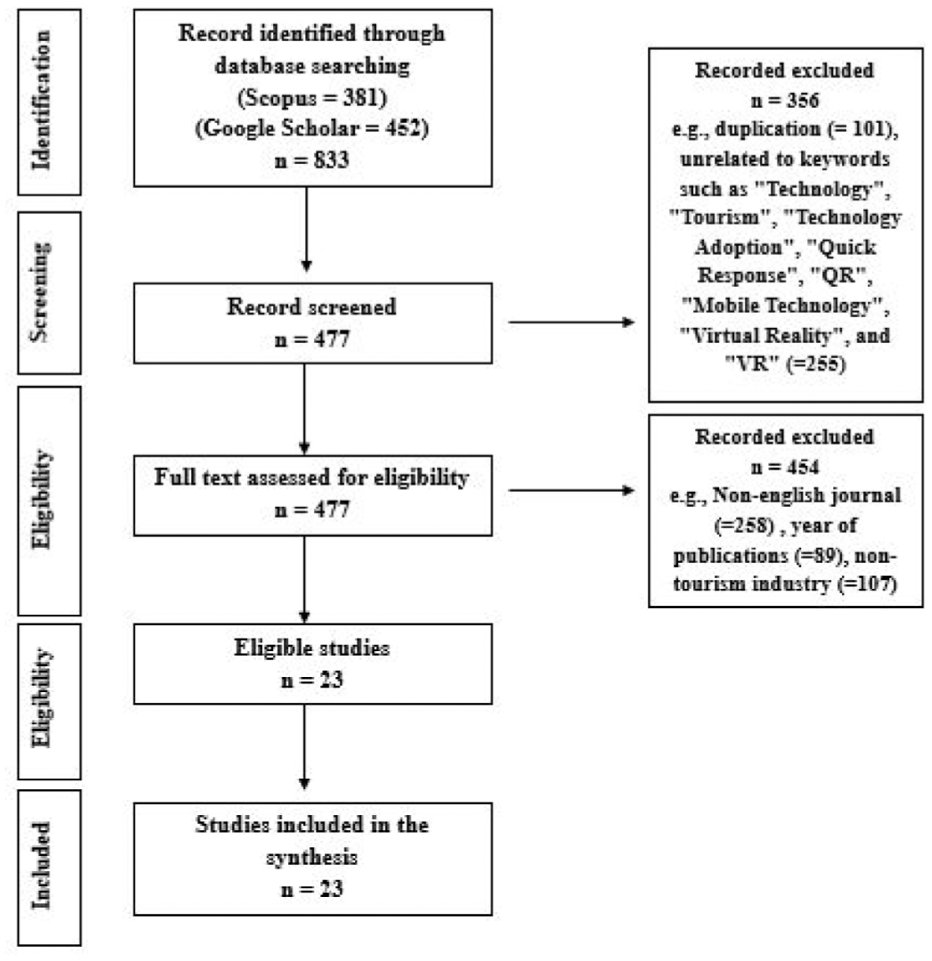
PRISMA process chart.
As shown in Figure 1, the initial search yielded 833 records (Scopus = 381; Google Scholar = 452). After removing 356 duplicates and non-relevant items, 477 studies remained for screening. Of these, 454 were excluded at the title/abstract stage, leaving 477 articles for full-text review. Following full-text assessment, 23 studies met the inclusion criteria and were included in the final synthesis. This stepwise explanation ensures transparency in the screening process.
PRISMA Process
Developing a Review Protocol by Identifying Keywords, Databases, and Selection Criteria
This study searched articles from 2021 to 2024 that focused on the interaction between tourism and technology. Scopus and Google Scholar databases were searched using keywords such as “Technology,”“Tourism,”“Technology Adoption,”“Quick Response,”“QR,”“Mobile Technology,”“Virtual Reality,” and “VR.” Searches were conducted separately in Scopus and Google Scholar to ensure both comprehensive coverage and inclusion of peer-reviewed sources. All records were exported into a reference management file (Excel/EndNote), where duplicate entries across the two databases were identified and removed by matching titles, authors, and DOIs. The merged dataset was then screened against the predefined inclusion and exclusion criteria, ensuring that each of the 23 included studies was unique and traceable.
The date was selected to highlight the growing adoption of technology by travelers following the epidemic for safety concerns. To guarantee dependability and efficiency, only research articles in English were examined. Articles were assessed based on their titles, abstracts, and relevance to the study keywords. The study’s dependability was ensured by sequential research techniques. Initially, 833 journals were discovered; however, 356 were removed owing to duplication or lack of relevance. Following full-text review, only 23 journals satisfied the qualifying requirements (see Supplemental Appendix 1; Figure 1). These selected publications received additional evaluation, with an emphasis on technology’s presence in the tourism industry. The inclusion and exclusion criteria are summarized in Table 1.
Inclusion and Exclusion Criterion.

Moreover, operational definitions were applied to ensure consistency. “Tourism technology adoption” was defined as empirical studies that measured tourists’ or tourism providers’ behavioral intention, actual usage, or acceptance of digital technologies (e.g., QR codes, VR/AR, mobile apps, AI). “English-language journal” was defined as peer-reviewed articles with full text available in English. Only English-language studies were included because of resource limitations and to ensure consistent interpretation of constructs across studies. While this may introduce language bias, it was necessary to maintain reliability in screening and synthesis. Studies outside the tourism/hospitality sector (e.g., agriculture, education) or those did not examine adoption determinants (e.g., usefulness, value, satisfaction, trust) were excluded.
To assess the methodological rigor and potential bias of the included studies, the Mixed Methods Appraisal Tool (MMAT, 2018 version) was applied. This tool evaluates research across five domains: clarity of research questions (Q1), appropriateness of study design (Q2), adequacy of data collection (Q3), rigor of analysis (Q4) and transparency of reporting (Q5). Each study was rated as high, moderate, or low quality. No studies were excluded based on their appraisal, but findings from lower-rated studies were interpreted with greater caution in the synthesis. Of the 23 studies appraised, 13 were rated high quality, 10 moderate qualities. High-quality studies generally provided strong sampling strategies, valid measurements, and appropriate analyses. Moderate-quality studies often lacked detail on sampling or risk of bias, and their findings were interpreted with greater caution. A summary of the appraisal results is provided in Supplemental Appendix 2.
Bibliometric Analysis
In accordance with the study, the 23 publications selected were published in a wide range of publishing frequencies. It seems that Sustainable published more between the year 2021 until 2024 followed by International Journal of Academic Research in Business and Social Science as well as Journal of Retailing and Consumer Services. Table 2 illustrates the results.
Journal Publication.

The VOSviewer programme was also used to determine the strength of keyword co-occurrence correlations. VOSviewer may also be used to show current connection patterns among some of the most referenced bibliometric components. According to the results of the VOSviewer mapping (Figure 2), 17 keywords were identified as the most often used in the whole sample of selected journals. According to the analysis, the terms digital technology and systematic review are still relatively fresh and related to one another. To summarize the VOSviewer study, the findings entirely correspond to the earlier forecast, which was extensively examined during the in-depth assessment of the publications.

VOSviewer titles and abstract.
Findings
Literature Review of Tourism and Technology
In today’s world, the economy’s trajectory is inextricably tied to technical breakthroughs, signaling a transition away from reliance on natural resources and towards science, technology, information, and innovation (Chan et al., 2022; Osman et al., 2021). This transition highlights the critical role of technology in boosting competitiveness and promoting economic growth. Mobile technology has emerged as a cornerstone for travelers, providing unprecedented ease and access to information (Hameed et al., 2023; Zhang et al., 2022). The widespread use of smartphones has changed the way tourists engage with locations, demanding innovative techniques to improve accessibility and mobility in order to provide high-quality tourism experiences. Following COVID-19, the need for efficient facilitation and technology-driven solutions grows even stronger, as smart tourism apps show potential for revitalizing the tourism industry in the aftermath of the pandemic (Abd Hamid et al., 2023).
The dynamic relationship between tourism and technology has had a profound impact on the current travel setting. The incorporation of technological advancements into the tourism sector has proven critical to increasing tourists’ satisfaction and supporting sustainable growth (Alam et al., 2024). Concepts like “smart tourism” emphasize the seamless integration of diverse technologies, such as Internet of Things (IoT) gadgets, virtual reality (VR), augmented reality (AR), and quick response codes (QR codes), to improve the experience of tourists (Abd Hamid et al., 2023; Çalışkan et al., 2023; Hamzah et al., 2023; Rahi et al., 2023; Sia et al., 2023; Zhang et al., 2022) . QR codes, for instance, have become a common tool in the tourism industry, aiding information transmission, payment, and even pandemic management (Ashrafi & Easmin, 2023). The broad use of these technologies demonstrates their revolutionary influence on the tourism ecosystem, allowing destinations to satisfy the changing needs of tech-savvy travelers while also supporting sustainability (Azmadi et al., 2023).
The widespread use of mobile payment systems shows the influence of technology and convenience in altering tourists’ behaviors in the tourism sector (Ashrafi & Easmin, 2023). Individuals born between 1980 and 2010, known as digital natives, are quickly dominating the travel market, and their desire for seamless, mobile-centric experiences pushes the development of new payment options. This provides seamless payment experience, which is consistent with the desires of digital natives who are used to making purchases using their smartphones (Hamzah et al., 2024). Furthermore, the cashless trend not only simplifies purchases but also adds to the larger transition toward sustainable tourism practices by eliminating reliance on paper-based currencies. The growth of digital natives as consumer demographics emphasizes the deep influence of technology on travelers’ choices and behaviors (Kusumastuti et al., 2024). This generation, distinguished by its intrinsic familiarity with digital technology, craves immersive and attributed experiences that seamlessly integrate into the physical and digital worlds. Hence, tourism stakeholders must tailor their products and services to the needs of digital natives, using technologies to provide personalized, tech-enabled experiences (Ashrafi & Easmin, 2023). Destinations that embrace digital innovation and sustainable practices may not only fulfil the changing expectations of modern travelers but also secure the tourist industry’s long-term sustainability in an increasingly digitalized world (Zhang et al., 2022).
On the other hand, the use of AI chatbots marks a paradigm change in the hospitality and tourism industries, meeting the growing need for responsive and self-service technologies (Chang et al., 2023). The COVID-19 pandemic has hastened the implementation of such technology, motivated by the requirement for seamless interactions and increased safety precautions. According to Hui et al. (2023), technology has the potential to alter the future of tourism and hospitality by providing answers to the pandemic’s numerous issues. AI chatbots, in particular, play an important role in enabling travelers, who rely extensively on mobile devices for research, navigation, and conversation throughout their journeys (Chang et al., 2023). By employing AI technology, hospitality and tourism service providers can adapt to the specific demands of travelers, providing personalized experiences and smooth booking procedures that match their interests and travel habits (Chan et al., 2023). The growth of AI-driven solutions reflects a larger trend of harnessing technology to improve tourism experience and meet changing customer expectations (Chang et al., 2023). Travelers, in particular, would benefit from the personalized help provided by AI chatbots, which ease trip planning and booking procedures while offering a feeling of connection and support during their journey. As the travel industry embraces technological breakthroughs, the role of AI chatbots is set to grow, serving as virtual assistants to travelers’ different demands while also contributing to the sector’s resilience and agility in the face of unprecedented difficulties.
Not only that, the adoption of Augmented Reality (AR) and Virtual Reality (VR) in tourism industry have been growing since 1960s (Çalışkan et al., 2023; Sia et al., 2023). Beyond just images, AR also includes interaction with the real world. It enhances reality by integrating all senses, including touch and scent (Nazri et al., 2022). It essentially creates a smooth transition between virtual and physical aspects. A technical framework known as AR makes it possible to combine real-world surroundings with virtual objects, images, and sensory experiences. By superimposing digital content over the real world, it enhances perception and changes the way we interact with it (Abd Hamid et al., 2023). Hotels, restaurants, travel, museums, and cultural tourist establishments can all benefit from AR technology (Çalışkan et al., 2023). It might be a useful tool for marketing. It can assist travelers in making decisions and finding information (Pranita et al., 2023). It can raise the caliber of visitors’ experiences. It is able to offer individualized services. Offers of unusual experiences are possible. Models for businesses can be developed. Based on the analysis conducted in this study, there are few determinants found by previous studies towards the adoption of technology in tourism among tourists. Addressing all the factors that affect technological adoption is necessary for discovering why it is adopted in the tourism sector. Today’s inventive, efficient, and competitive tourism is greatly influenced by technology. Several factors come into play, including their habits, preferences, external influence and numerous reasons behind it. Hence, this study can see how companies employ technology and how it affects the global tourism sector by examining these elements. Table 3 shows the previous studies focus on the determinants of technology adoption in tourism.
Previous Studies Focus on the Technology Adoption Determinant in Tourism.

Determinants of Technology Adoption in Tourism
Customer Engagement and Habitual Behavior
Abbasi et al. (2023) explained that customer engagement and involvement were found to be crucial mediators in developing the adoption of technology in the tourism destination especially in the context of E-Word of Mouth (EWOM) and behaviors. The study’s findings demonstrate how important it is for social media, consumer interaction, engagement, and electronic word-of-mouth (eWOM) to interact in the context of tourism destinations. The study suggests that consumer interaction and involvement in destination images operate as mediators between social media and eWOM. This highlights the critical importance that customers’ emotional attachment to destination images and their active engagement plays in influencing the internet conversation surrounding popular tourist destinations. The results underscore the significance of utilizing technology to not only advertise locations but also to cultivate significant interaction and participation from tourists, hence impacting the dissemination of favorable information on the internet. Ashrafi and Easmin (2023) added although behaviors does not directly mediate the relationship between perceived value and adoption intention, it plays a distinct role in shaping trust, which subsequently influences adoption behavior. This mediation pathway suggests that users’ behaviors contribute to the formation of trust, which ultimately drives their intention to adopt QR code payments (Hajazi et al., 2021). Azmadi et al. (2023) further explained habit is identified as a key determinant in tourist behavior, with a direct influence on technology usage and overall satisfaction. Moreover, younger generations exhibit habits favoring the use of QR codes and frequent reliance on the internet in their daily lives. Hui et al. (2023) integrating theories from the Media Richness Theory (MRT) and the Protection Motivation Theory (PET), that explored the impact of new media technologies, eco-literacy, and dispositional empathy on intentions towards regenerative tourism. Immersive media technologies like virtual reality (VR) and augmented reality (AR) were found to effectively convey tourism-specific environmental information and raise awareness, supporting previous research and MRT principles. Additionally, their study revealed that dispositional empathy acts as a moderator between eco-literacy and pro-environmental behavior, with higher levels of empathy enhancing the relationship, underscoring empathy’s crucial role in individuals’ responses to environmental issues, particularly in the context of regenerative tourism.
Kusumastuti et al. (2024) added marketing efforts focused on showcasing the village’s attractions online, leveraging social media platforms and online booking platforms. Interactive activities were organized to promote tourist engagement with local communities, offering insights into the culture and way of life. Moreover, creative events served as a focal point for community activities and cultural preservation efforts, promoting the adoption of creative economic innovations such as renewable energy and fostering community empowerment. Sia et al. (2023) posited habitual behavior also plays a significant role, with users becoming more inclined to adopt smart mobile tourism application (SMTA) as they grow accustomed to using mobile apps for travel-related tasks. Additionally, innovation, particularly in the form of AR features, positively influences users’ behaviors to use SMTA and at the same time highlights the importance of GPS-enabled location-based services (LBS) in providing contextually relevant information. Interestingly, while users express concern about disclosing personal information for SMTA adoption, these privacy concerns do not significantly affect their willingness, suggesting a level of trust in the security measures implemented by app providers. However, users may still be cautious about sharing personal data, especially during the COVID-19 pandemic. Enjoyment and habitual mobile use do not significantly impact users’ BI to use SMTA, indicating that users prioritize factors such as utility, innovation, privacy, and security over enjoyment when considering SMTA adoption, with gamification having little influence on their decision-making process.
Perceived Value
Abbasi et al. (2023) discovered the significant role of social media content in shaping customer preferences in the travel industry. Customers perceived value in content that is both entertaining and informative, as it increases their understanding and interest in a destination, thus enhancing the overall worth of their travel experience. These findings underscore the importance of using social media platforms as tools for destination marketing and promotion, aligning with the broader trend of digital transformation in the travel sector. By leveraging creative techniques and platforms, destinations can tell compelling stories and foster meaningful connections with tourists, ultimately driving interest and engagement in the digital age. On the other hand, Ashrafi and Easmin (2023) found that perceived value positively influences users’ attitudes and trust towards QR code payments. This indicates that when users perceive QR code payments as beneficial and valuable, they are more likely to develop positive attitudes and trust in the payment method (Rahi et al., 2021). Hamzah et al. (2023) added perceived value emerged as significant factors influencing E-wallet usage intention.
Furthermore, perceived value significantly predicts users’ intention to adopt QR code payments, highlighting its pivotal role in driving adoption behavior. Berakon et al. (2023) added their study found that digital halal tourism apps were perceived as an effective solution for Muslim travelers to adhere to health protocols during the COVID-19 pandemic while still being able to travel. Hameed et al. (2023) further explained that perceived value, typically a key driver in technology adoption, surprisingly does not significantly impact tourists’ intention to continuously use Mobile Payment Systems (MPS). This lack of influence suggests that current MPS offerings might not adequately meet tourists’ expectations, leading to a diminished motivation for sustained usage. Meanwhile, perceived threat does not seem to deter tourists from using MPS, while a sense of controllability positively influences their intention for continuous usage. This implies that when tourists feel in control of the outcomes associated with MPS usage, they are more inclined to persist in using these systems.
Perceived Usefulness
Perceived usefulness was positively associated with individual trust in using the digital halal tourism apps, which in turn influenced intentions to use them (Berakon et al., 2023). This indicates that linear perceived convenience increases individual confidence that technology will yield benefits. Lim et al. (2022) added users perceive travel apps as valuable due to benefits like variety, convenience, and time savings, and view them as compatible with their existing travel booking habits. However, complexity in app usage adversely affects attitudes, indicating a preference for simpler interfaces. Positive attitudes, effective communication about travel options, and perceived control over the purchasing process positively influence intentions to make travel bookings via apps, consistent with previous research emphasizing attitudes and perceived control in predicting purchase intentions. Attitudes towards travel app shopping mediate the relationship between perceived benefits, compatibility, complexity, and intentions to make app purchases, underscoring the importance of fostering positive attitudes to encourage app-based travel bookings. Lim et al. (2022) posited the results of their study reveal a high level of agreement among participants regarding the perceived usefulness, ease of use, enjoyment, and intention to use Interactive Virtual Reality (IVR) displays in nature tourism. Participants generally find IVRs useful, easy to use, enjoyable, and express a strong intention to use them. Moreover, a significant positive relationship was found between perceived usefulness and intention to use IVR in nature tourism. These findings collectively suggest that variables including perceived usefulness, perceived enjoyment, perceived usefulness, and intention to use IVR applications have a positive and significant relationship with IVR usage in the context of nature tourism, highlighting the promising potential of IVR in enhancing tourists’ experiences in natural settings (Nazri et al. (2022).
Osman et al. (2021) found high reliability among the variables examined, with perceived usefulness showing the good relationship with perceived usefulness, perceived credibility, and social influence. The intention to use E-Wallets among millennial tourists demonstrated overall high reliability. Their findings suggest that while perceived usefulness, perceived usefulness, and social influence positively influence behavioral intention to use E Wallets, users are still in doubts about their credibility, potentially due to the novelty of the technology and concerns regarding security. Sia et al. (2023) examines several factors influencing users’ willingness to adopt SMTA and their behavioral intentions to use them. Privacy concerns have a substantial negative impact on users’ willingness to disclose personal information for SMTA adoption, reflecting users’ hesitancy to share personal data, particularly in mobile apps and contact tracing apps. Perceived usefulness significantly affects users’ behaviour intention to use SMTA, emphasizing the importance of application performance and personalization in enhancing user satisfaction and retention. Alam et al. (2024) claimed that the results the study found no significant relationship between perceived usefulness and intention to reuse VR. This suggests that visitors may not see VR as beneficial for enhancing their experience at theme parks. One possible reason for this unexpected finding could be the age group of the participants, who were mainly between 30 and 49 years old. It is possible that this age group may not be as comfortable with or interested in new technologies like VR. On the other hand, Alam et al. (2024) did find a positive relationship between perceived usefulness and intention to reuse VR. This means that if visitors find VR easy to use, they are more likely to use it again in theme parks. This suggests that visitors who have fun with VR are more likely to want to use it again, which is consistent with previous studies.
Social Influence and Image
Abd Hamid et al. (2023) notably stated smart tourism destinations rely on websites as information hubs, emphasizing the provision of current, relevant, and reliable information alongside event calendars, high-quality multimedia content, and interactive features. The overarching aim is to bolster the destination’s image, monitor visitor motivations, and foster repeat visits by offering engaging online platforms. QR codes emerge as pivotal tools for interactive engagement, facilitating information access, bookings, payments, and enriching tourist experiences (Hajazi et al., 2021). Seamless integration with mobile apps and websites is essential to ensure easy access to information and services, enhancing overall visitor satisfaction. Meanwhile, stakeholders stress the importance of robust physical infrastructure, including high-speed internet connectivity (such as 5G and Wi-Fi), designated charging areas, and self-service internet kiosks. Governments and Destination Management Organizations (DMOs) play a critical role in ensuring the availability of these amenities to effectively support smart tourism initiatives. Hamzah et al. (2023) added brand image was found to amplify the positive impact of perceived value on usage intention, yet it diminished the positive effects of hedonic motivation. While brand image enhanced perceived value and social influence, it also potentially led to choose overload, thereby suppressing the positive role of hedonic motivation on usage intention.
Hedonic Motivation and Innovation
Mobile technology relies on telecommunication infrastructure for data exchange, which is vital for digital economy growth (Chan et al., 2023). However, despite this connection, a study by Chan et al. (2022) found inadequate telecommunication infrastructure in Sarawak, as many visitors have complained about unreliable network connections and slow internet speeds. Tourists depend on this infrastructure to stay connected between destinations and their homes. Hence, poor communication infrastructure leads to uncertainty, fear, and incomplete information, impacting tourists’ desire to visit and the destination’s competitiveness. Pranita et al. (2023) emphasis on community well-being and quality of life takes precedence over a focus solely on technology and infrastructure in the development of smart islands. Digital literacy emerges as a crucial factor for the successful implementation of both Blockchain Technology (BT) and smart island initiatives, facilitating better adoption and serving as a foundational element for the establishment of smart societies. Both digital literacy and the blue economy play significant roles in the development of smart destinations, ultimately contributing to the welfare and prosperity of local communities.
Trust and Perceived Credibility
Chang et al. (2023) posited that AI chatbots are perceived as multifaceted tools, serving not only as customer service agents but also as entertainment sources, offering current information and prompting immediate purchases when they meet communication standards and expectations. While customization and problem-solving are crucial in marketing endeavors, they were not identified as direct motivators for purchases. Additionally, solo travelers tend to place trust in the accuracy and reliability of information provided by AI chatbots. Trust also serves as a crucial mediator between perceived value and intention to adopt QR code payments (Ashrafi & Easmin, 2023). This suggests that users’ perception of value directly influences their trust in QR code payments, which in turn fosters their intention to adopt the payment method. This underscores the importance of building trust in facilitating the adoption of innovative payment technologies. (Ashrafi & Easmin, 2023). Moreover, trust partially mediated the relationship between perceived usefulness and intention and fully mediated the relationship between perceived usefulness and intention as found by Berakon et al. (2023). suggests that trust plays a crucial role in various contexts, such as online learning, consumer purchases, mobile banking, and online shopping. In the context of this study, it highlights the importance of trust in predicting the intentions of young Muslim travelers to use digital halal tourism apps (Berakon et al., 2023).
However, Hameed et al. (2023) highlighted several barriers hinder tourists’ intention to use MPS for trip reservations, including issues related to trust, risk, tradition, and image. These barriers, consistent with prior research, impede both the initial adoption and ongoing use of MPS. While the tradition barrier, representing resistance to technology’s novelty, tends to diminish over time with innovation, misconceptions about MPS contribute to the image barrier. Addressing these concerns through user education about the benefits and safety of MPS becomes crucial. Despite considering factors like habit, experience, web vendor reputation, age, and gender, these elements did not significantly influence the results, possibly due to the unique nature of the sample, comprised of individuals new to adopting MPS. Hamzah et al. (2023) further explained research on mobile wallets in Saudi Arabia indicated that consumers trusted the security of financial transactions more when they recognized and had positive perceptions of the brand. Additionally, studies on brand awareness have shown its moderating effect on purchasing decisions, such as in the case of Nike running shoes, where participants placed greater trust in the quality and functionality of the product due to their awareness of the brand.
User Satisfaction
Alam et al. (2024) also looked at the role of visitor satisfaction as a mediator between various factors and intention to reuse VR. Surprisingly, satisfaction did not mediate the relationship between perceived usefulness, enjoyment, and intention to reuse VR. However, it did mediate the relationship between ease of use and compatibility with intention of reusing VR. This means that visitors who are satisfied with the ease of using VR and its compatibility with their preferences are more likely to want to use it again. Moreover, a study by Azmadi et al. (2023) stated that smart tourism initiatives, including QR codes, can significantly enhance tourist satisfaction, happiness, and revisiting intention, ultimately benefiting the tourism industry. Moreover, the assessment of sustainability attitudes using the UTAUT 2 model as conducted in Azmadi et al. (2023)’s study shows a significant impact on technology satisfaction and intention to reuse it. The attitudes encompass considerations related to the economy, society, and the environment, indicating a likelihood of incorporating technology into everyday routines among individuals with such intention. Çalışkan et al (2023) found accommodation business managers predominantly favored QR technology as their go-to augmented reality tool. Particularly amidst the pandemic, they found augmented reality technologies, especially QR, immensely satisfying due to their facilitation of contactless interactions and their positive impact on guest experiences. Across various departments within accommodation businesses like front office, marketing, food and beverage, and rooms, augmented reality was seen as a boon, offering benefits ranging from enhanced marketing strategies to elevated guest satisfaction levels. Despite this optimism, concerns surfaced regarding potential sales declines, infrastructural hurdles, and the necessity for adequately trained staff. Moreover, participants highlighted the informative, educational, and engaging nature of augmented reality for tourists, envisioning its potential to bolster satisfaction levels and stimulate purchasing desires. In the realm of cultural tourism, augmented reality emerged as a particularly valuable tool, capable of delivering immersive experiences and educational content. Acknowledging its potential as a competitive edge, especially in bolstering marketing endeavors and crafting distinctive guest experiences, participants recognized augmented reality’s pivotal role in shaping the future landscape of the accommodation sector. Azmadi et al. (2023) added adoption of QR codes influences tourist satisfaction and revisiting intention, emphasizing the significant role of technology in shaping perceptions and experiences.
Shafei et al. (2023) highlights several key findings regarding public transportation services in Melaka. Most passengers utilize buses, taxis, and trishaws less than three times per week, predominantly for personal use, indicating a preference for convenience. While users generally express satisfaction with taxi and trishaw services, concerns arise regarding bus services, particularly regarding accessibility, interior comfort, and punctuality. However, there are concerns about implementing cashless payment methods, and while there is a significant acknowledgment of mobile technology among users and drivers, some individuals lack a full understanding of its purpose or significance. Zhang et al. (2022) identifies several key predictors influencing tourists’ perceptions and satisfaction with Smart Tourism Technologies (STTs). Accessibility emerges as the most significant predictor, emphasizing the importance of easy and convenient access to STTs for tourists, followed by interactivity, highlighting the significance of user engagement and communication facilitated by STTs. Surprisingly, information was not found to be a significant predictor, possibly due to inadequacies in the quality and relevance of information provided by STTs. Overall, the order of importance for STTs attributes is identified as accessibility, interactivity, personalization, security, and information. The implications suggest that visitor attractions should prioritize improving the accessibility and interactivity of STTs to enhance tourist experiences, employ communication strategies to solicit user-generated content and positive reviews, and focus on providing customized experiences and prioritizing security and privacy protection in STTs development. Furthermore, the study highlights that the perceived value of STTs positively influences tourist satisfaction, which in turn impacts revisit intention, word-of-mouth recommendations, and willingness to pay, underscoring the importance of efforts to enhance visitor satisfaction through STTs enhancements in driving positive behavioral intentions.
Discussion
The findings regarding determinants of technology adoption in tourism reveal several critical insights into customer engagement, perceived value, perceived usefulness, social influence, trust, user satisfaction, and more. Previous studies show the crucial role of customer engagement and involvement in shaping the adoption of technology in tourism destinations, particularly in the context of eWOM and behavior. Social media, consumer interaction, and engagement play vital roles in influencing the internet conversation surrounding tourist destinations, underscoring the significance of utilizing technology not only for advertising but also for fostering meaningful interaction and participation from customers. Furthermore, past studies also highlight the mediating role of behavior in shaping trust, which subsequently influences adoption intention, suggesting a sequential mediation pathway involving users’ attitudes, trust formation, and adoption intention, particularly in the context of QR code payments.
Perceived value emerges as a significant determinant influencing users’ attitudes, trust, and intentions towards adopting various technologies in tourism. The role of social media content in shaping customer behavior, emphasizing the value of entertaining and informative content in enhancing the overall worth of travel experiences. Similarly, few previous studies find that perceived value positively influences users’ attitudes and trust towards QR code payments, highlighting its pivotal role in driving adoption behavior. However, past studies point out a surprising lack of influence of perceived value on tourists’ intention to continuously use mobile payment systems, suggesting that current offerings might not meet users’ expectations adequately, leading to diminished motivation for sustained usage. The discussion also delves into the importance of perceived usefulness in driving technology adoption in tourism. The users’ perceptions of travel apps as valuable due to benefits like variety, convenience, and time savings, emphasizing the need for user-friendly interfaces to enhance attitudes and adoption intentions. Similarly, the positive relationship between perceived usefulness and intention to use interactive virtual reality (IVR) displays in nature tourism, suggesting promising potential for IVR applications to enhance tourists’ experiences in natural settings.
Trust and social influence play crucial roles in shaping users’ intentions towards adopting technology in tourism. Past research emphasizes the multifaceted role of AI chatbots in building trust and providing reliable information to solo travelers, suggesting that customization and problem-solving capabilities are crucial for marketing endeavors. Also, the mediating role of trust between perceived value and adoption intention in QR code payments, emphasizing the importance of trust-building strategies in facilitating the adoption of innovative payment technologies. This discussion underscores the complex of various factors, including customer engagement, perceived value, perceived usefulness, trust, and social influence, in shaping users’ attitudes and intentions towards adopting technology in tourism. These findings have significant implications for destination marketers, technology developers, and policymakers, highlighting the importance of fostering positive user experiences, building trust, and leveraging social media and interactive technologies to enhance tourist satisfaction and drive positive behavioral intentions. Recent bibliometric work by Carvajal-Trujillo et al. (2024) also highlights how research in tourism has evolved over two decades, particularly in the field of pro-environmental behavior. Similar to technology adoption studies, their review shows the increasing importance of behavioral determinants and contextual influences, reinforcing the need for integrated frameworks when examining emerging phenomena in tourism.
While this review confirms the consistent importance of determinants such as perceived usefulness, trust, social influence, and satisfaction, it also highlights several contradictions and gaps. For example, perceived value was significant in some contexts (e.g., mobile apps, QR codes) but non-significant in others, such as mobile payment systems, suggesting that expectations differ by technology type. Similarly, trust played a central role in the adoption of AI and chatbots, but was less prominent in studies of VR, where hedonic motivation was stronger. Social influence appeared more important in collectivist settings (e.g., Malaysia, Indonesia) compared to individualist contexts, pointing to cultural contingency. These variations indicate that while some determinants are robust, others remain context-dependent, leaving space for further empirical testing.
Based on these insights, this review proposes a conceptual model of technology adoption in tourism. The model integrates core constructs from TAM and UTAUT2 (perceived usefulness, social influence, ease of use) with tourism-specific determinants (trust, satisfaction, engagement, hedonic motivation). The model suggests that adoption is shaped not only by functional and social evaluations but also by experiential and trust-related factors unique to tourism contexts (see Figure 3).

Proposed conceptual framework.
Figure 3 presents the proposed conceptual model of determinants influencing technology adoption in tourism. The framework synthesizes findings from the reviewed studies into three broad categories: individual factors (perceived usefulness, ease of use, hedonic motivation, and habitual behavior), social factors (social influence, image, and customer engagement), and tourism-specific factors (trust, satisfaction, and perceived value). These determinants collectively shape tourists’ technology adoption intentions, which in turn drive critical tourism outcomes such as satisfaction, loyalty, and enhanced visitor experiences. By integrating these dimensions, the model highlights how technology adoption in tourism is not only dependent on functional and individual perceptions but also on social dynamics and context-specific trust and value, offering a more holistic view that extends traditional adoption theories.
Study Contribution
This review advances theory by clarifying how technology adoption models apply in the tourism sector. The review demonstrates that perceived usefulness, trust, and user satisfaction are consistently significant across diverse tourism technologies, reinforcing their role as robust constructs within technology adoption theory. Other determinants, such as social influence, price value, and hedonic motivation, appear more context-contingent, suggesting the need for greater cultural and situational sensitivity when applying models like TAM and UTAUT2. By integrating constructs that are not central in the original models (e.g., trust, satisfaction, engagement), this review extends existing adoption frameworks and points to the value of tourism-specific refinement of TAM and UTAUT2. These insights provide a foundation for future empirical testing, where researchers can examine the mediating or moderating role of these tourism-specific determinants. Beyond extending adoption models, this review also addresses a clear research gap in prior studies. Existing reviews of technology adoption in tourism have tended to be fragmented either focusing on single technologies, applying narrow models, or being outdated. By systematically reviewing 23 recent empirical studies (2021–2024), this article integrates diverse determinants across multiple technologies, highlights emerging constructs such as trust, satisfaction, and engagement, and maps them against established frameworks. In doing so, the article not only consolidates prior knowledge but also fills an important gap by providing a comprehensive, tourism-specific synthesis that future scholars can build upon.
Implication for Future Research
Based on the discussion above, several limitations should be acknowledged, which also open avenues for future studies. First, the number of included studies was relatively small (n = 23), which may limit the generalizability of the findings. Second, only English-language publications were reviewed, raising the possibility of language bias and the exclusion of relevant studies published in other languages. Third, despite searching multiple databases, publication bias cannot be ruled out, as unpublished or non-indexed studies may not have been captured. Finally, the heterogeneity of study designs and measures across the included studies limited the ability to perform a meta-analysis or standardized effect-size comparisons.
From a theoretical perspective, this review extends existing technology adoption models (TAM, UTAUT2, TOE) by identifying tourism-specific determinants such as trust, satisfaction, and customer engagement. It also highlights which constructs are consistently supported (e.g., perceived usefulness, social influence) and which are context-dependent, thereby refining adoption theory in tourism. Future research should build on this synthesis to develop integrative conceptual models that better capture the unique dynamics of tourism technologies. In terms of practical and industry implications, the findings suggest that tourism businesses should focus on enhancing perceived value, building trust, and improving user satisfaction to encourage adoption of digital solutions. Technology developers and service providers should prioritize ease of use, hedonic value, and credibility to align with user expectations. For policymakers, the results underscore the importance of creating supportive regulatory and infrastructural environments that facilitate digital innovation in tourism.
The societal and economic implications are equally significant. The adoption of tourism technologies can contribute to economic recovery by increasing efficiency, stimulating demand, and creating new business opportunities. At the societal level, technologies enhance safety, accessibility, and inclusivity, particularly important in post-pandemic travel contexts. However, unequal access to digital infrastructure may create disparities, suggesting that inclusive policies and investments are necessary to ensure equitable benefits across different regions and populations. Future research in technology adoption should expand into related sectors such as hospitality, food and beverage, transportation, and events and recreation. This broader scope would allow scholars to generalize findings across industries while identifying sector-specific differences and similarities in adoption patterns. Methodologically, qualitative approaches (e.g., interviews, focus groups) can provide deeper insights into user perceptions and motivations, complementing quantitative validation from large-scale surveys. Mixed-methods designs are particularly promising for integrating nuanced qualitative insights with statistical generalization. In addition, cultural and contextual influences should be examined more closely, as socio-economic and regulatory factors strongly shape adoption behaviors. Longitudinal studies could also capture the evolving nature of technology adoption over time, providing richer insights into trajectories of change. Finally, translating findings into actionable strategies for practitioners, policymakers, and industry stakeholders will remain essential to foster sustainable technological innovation in tourism and beyond.
Conclusion
This study identified key determinants shaping technology adoption in tourism. Consistently significant factors include perceived usefulness, trust, social influence, and user satisfaction, while perceived value and customer engagement appear more context dependent. Hedonic motivation and innovation also emerged as important drivers, suggesting that adoption in tourism is not only functional but also experiential. By integrating these insights, the study extends existing models such as TAM and UTAUT2 with tourism-specific constructs, thereby addressing gaps in prior fragmented and outdated reviews. The findings also carry implications for practice and society. Tourism businesses and technology developers should prioritize trust-building, perceived value, and ease of use to enhance adoption, while policymakers should strengthen digital infrastructure and supportive regulations. On a societal level, digital technologies can contribute to economic recovery, inclusivity, and resilience, though disparities in access remain a challenge. Future research should test these insights through longitudinal and cross-sectoral studies, providing a deeper understanding of how technology adoption evolves in tourism and related industries.
Supplemental Material
sj-docx-1-sgo-10.1177_21582440251388798 – Supplemental material for Determinants of Technology Adoption in Tourism: Insights from a Systematic Literature Review
Supplemental material, sj-docx-1-sgo-10.1177_21582440251388798 for Determinants of Technology Adoption in Tourism: Insights from a Systematic Literature Review by Ayuan Zhang, Ban Zhang and Yongjie Zhu in SAGE Open
Footnotes
Acknowledgements
We would like to thank Anyang Institute of Technology for supporting this research.

Ethical Considerations
We confirm that neither this manuscript nor any part of it is currently under consideration or published in any other journal. All authors have approved the manuscript and agree to its submission to your journal.
Author Contributions
Yongjie Zhu (corresponding author) led the overall design and coordination of the research, conducted the systematic literature review, and drafted the main body of the manuscript. He was also responsible for revisions, submission, and communication with the journal. Ayuan Zhang contributed to refining the research framework, organizing relevant data, and reviewing the manuscript for academic rigor. Ban Zhang assisted in the collection, screening, and classification of literature, and provided helpful suggestions during the writing and editing process. All authors have read and approved the final version of the manuscript.
Funding
The authors disclosed receipt of the following financial support for the research, authorship, and/or publication of this article: This article received financial support from Anyang Institute of Technology. The funding information is: Anyang Institute of Technology Doctoral Research Start-up Fund 40076512
Declaration of Conflicting Interests
The authors declared no potential conflicts of interest with respect to the research, authorship, and/or publication of this article.
Data Availability Statement
Data available on request from the authors.The data that support the findings of this study are available from the corresponding author upon reasonable request.
Supplemental Material
Supplemental material for this article is available online.
References
Supplementary Material
Please find the following supplemental material available below.
For Open Access articles published under a Creative Commons License, all supplemental material carries the same license as the article it is associated with.
For non-Open Access articles published, all supplemental material carries a non-exclusive license, and permission requests for re-use of supplemental material or any part of supplemental material shall be sent directly to the copyright owner as specified in the copyright notice associated with the article.
