



Abstract
This study investigates the correlation between motivation, test preparation, and speaking performance among undergraduates in Anhui Province, China, thereby addressing a deficiency in the body of research regarding the interplay between these variables in English language acquisition. The study investigates the impact of intrinsic and extrinsic motivation on performance in high-stakes language testing, drawing on self-determination theory, language management theory, and Shih’s washback model of students’ learning. Data were acquired from 387 students using a quantitative survey design. The results indicated substantial positive correlations between motivation, test preparation, and IELTS speaking scores. The effect of motivation on speaking performance was mediated by test preparation. These results offer educators practical strategies to improve learners’ motivation and performance in English proficiency examinations such as the IELTS and theoretical insights into the language learning process.
Keywords
Introduction
The demand for English language proficiency in China has steadily increased as a result of globalization and the increasing importance of English in numerous professional fields (Xie & Curle, 2022). For instance, numerous Chinese colleges and organizations have implemented the International English Language Testing System (IELTS) as part of their evaluation criteria for student admissions and employment placement (Read, 2022). More than half of the test-takers opt to apply for postgraduate programs overseas, and the 19 to 22 age group comprises the most significant proportion of IELTS candidates in mainland China (IELTS White Paper for mainland China 2018, 2019). Consequently, college students are an essential component of the IELTS test-takers in China, and their IELTS proficiency level is likely to determine the average IELTS score in the country. Nevertheless, there is a scarcity of research on IELTS speaking scores in the undergraduate context of Anhui.
The conventional approach to IELTS test preparation is no longer viable due to technological advancements. The traditional method of preparing for the IELTS test involves the repetitive drilling of an extensive vocabulary list and mechanical training, which may erode their interest in English language acquisition (Yang & Jirawit, 2025). Additionally, numerous language cram schools typically employ shortcuts to increase the IELTS scores of their students by providing candidates with “sample answers” or speaking prompts that they can memorize mechanically (Liang, 2024). Nevertheless, it is improbable that the test will enhance the English language proficiency of test-takers and merely fraudulently increase the test score on the surface. Additionally, it may pose underlying ethical concerns regarding the validity of the test. Besides, Chinese EFL students are generally unmotivated to learn spoken English. This is due to the English teaching pattern in China, which neglects the speaking component compared to reading, listening, and writing (Zhou et al., 2025). Consequently, students are unlikely to comprehend the significance of spoken English proficiency if they are fully immersed in the English language learning environment, which does not prioritize oral communication for an extended period.
IELTS speaking has consistently been the weakest link for test takers in Mainland China, as it is characterized by boring content, inadequate vocabulary, grammatical errors, and poor intonation among the four sub-tests of the IELTS exam (Li et al., 2022). These sub-tests are listening, reading, writing, and speaking. Based on the statistics from the 2023 to 2024 IELTS test taker performance, Chinese students achieved the lowest average score (5.5) in the speaking section compared to reading (6.3), listening (5.9), and writing (5.8). Furthermore, mainland China’s average academic speaking score was the lowest among the top 39 surveyed nations and regions, measuring 5.5, which was identical to Japan’s (British Council, 2025). Mirhosseini et al. (2025) predicted that an inadequate IELTS speaking score would be likely to impede their academic performance, emigration, or career aspirations (Mirhosseini et al., 2025). Regarding educational accomplishment, individuals who score 6.0–6.5 appear to underperform the IELTS ≥ 7.0 group (Schoepp & Garinger, 2016). Furthermore, to achieve an optimal score, particularly in speaking and writing, numerous Chinese students enroll in IELTS preparation courses for the third or fourth time, which are both costly and taxing (Zhang, 2024). While globalization has elevated the role of English proficiency in China, particularly through high-stakes tests such as IELTS, much of the existing research has primarily focused on general language outcomes rather than the nuanced role of speaking performance in specific regional contexts like Anhui Province. Prior studies highlight that Chinese students consistently underperform in the IELTS speaking module compared to reading or listening (MacKiewicz, 2022), yet the mechanisms linking learning motivation, test preparation, and speaking outcomes remain underexplored. This gap is particularly significant given the theoretical perspectives that suggest motivation and preparation are interdependent drivers of performance. Addressing this limitation, the present study explicitly applies Self-Determination Theory, Language Management Theory, and Shih’s Washback Model to explain how motivational orientations and preparation strategies interact in shaping IELTS speaking results. Existing research largely relies on national data or examinees from first-tier cities, leaving a lack of systematic research on the IELTS speaking performance characteristics of undergraduates in Anhui Province. This study, focusing on undergraduates from Anhui Province, reveals unique relationships between motivation, test-taking strategies, and speaking scores, thus filling this gap in the literature. Furthermore, this study explicitly acknowledges its scope and limitations- the data is confined to Anhui Province; it relies on self-reports; and it lacks observational and performance-based data. However, to minimize these limitations, this study employed a validated scale to ensure reliability and validity, and employed a representative sample from a central province to enhance the interpretability of the results. The four research questions are listed as below:
Literature Review
Related Theories
Self-Determination Theory
Previous descriptions of SDT often stop at distinguishing intrinsic and extrinsic motivation. However, a deeper analysis shows that its central tenets—autonomy, competence, and relatedness—map directly onto this study’s context. For example, students with greater autonomy in preparation (choosing strategies, scheduling practice) and a sense of competence (confidence in oral communication) are more likely to sustain long-term effort, which in turn predicts stronger IELTS speaking outcomes. Yet, despite SDT’s prominence in second language acquisition research (Ryan & Deci, 2020), few studies have explicitly examined how these motivational needs manifestation in test preparation contexts, particularly under the pressure of IELTS. This omission underscores the need for the present study to test whether SDT can illuminate the motivational foundations of Chinese undergraduates’ IELTS performance (Deci & Ryan, 2000).
Self-Determination Theory (SDT) is employed in the investigation of motivation by emphasizing the self-regulation of individual behavior and the various forms of motivation. The theory segregates motivation into three categories: intrinsic, extrinsic, and amotivation. Intrinsic motivation is derived from internal interests and satisfaction, while external rewards or constraints drive extrinsic motivation. A lack of willingness or goal-directed behavior characterizes Amotivation. Educators and organizations can enhance the effectiveness and satisfaction of learning or work by designing environments and support systems that enhance individuals’ autonomy and intrinsic motivation, which is achieved by comprehending these categories of motivation. For example, educators can cultivate students’ intrinsic motivation in educational environments by providing them with opportunities to make decisions, promoting self-directed learning, and establishing meaningful learning experiences (Ryan & Deci, 2020).
Language Management Theory
Language Management Theory (LMT) offers a framework for comprehending the manner in which individuals and institutions manage language use, particularly in multilingual or language-learning contexts (Muttaqin et al., 2025). The processes of noting language deviations, evaluating them, and designing adjustments to correct or enhance language behavior are the primary focus of LMT (Nekvapil, 2016). This theory is particularly relevant in the context of high-stakes language testing, such as the IELTS, where test-takers actively manage their language use to satisfy specific performance criteria.
LMT emphasizes how learners actively notice, evaluate, and adjust language behavior. In test preparation, this translates to how students identify weaknesses in speaking (e.g., pronunciation or fluency) and adopt corrective strategies. While LMT has been widely applied to multilingual education and policy contexts, its application to individual test-preparation behaviors is limited. By employing LMT, this study addresses a theoretical gap, showing how Chinese undergraduates systematically manage language learning under high-stakes pressure.
Shih’s Washback Model of Students’ Learning
Shih (2007) developed the Shih Washback Model, a framework that investigates the impact of high-stakes language tests, such as the IELTS, on students’ learning behaviors and outcomes. The term “washback” denotes the impact of testing on the learning and instructional processes. Shih’s model is particularly concerned with the manner in which students modify their learning strategies and behaviors in response to the demands and expectations of high-stakes exams. This model is especially pertinent to the examination of IELTS preparation, as it offers a comprehensive understanding of how the format, content, and scoring criteria of the test influence students’ learning processes (Shih, 2007).
Washback research has established that high-stakes tests shape teaching and learning behaviors. However, Shih’s model adds nuance by analyzing how test demands alter learners’ strategies. Although studies have shown that washback affects general preparation habits (Suryanto, 2025), limited work has connected washback specifically to IELTS speaking performance and its interaction with motivation. This study therefore extends washback research by demonstrating how speaking-specific washback interacts with motivational drivers and preparation strategies.
Previous Study
The Relationship Between Learning Motivation and IELTS Speaking Scores
The discipline of second language acquisition has been preoccupied with the relationship between language learning outcomes and learning motivation. Research suggests a substantial positive correlation between language proficiency and learning motivation, including IELTS speaking scores. For example, Purwanti and Puspita (2019) discovered a robust positive correlation between the English learning motivation of 77 Indonesian university students and their English proficiency, as assessed by TOEFL scores (Purwanti & Puspita, 2019).
In a similar vein, Yaw and Kang (2022) found that instrumental motivation, a critical component of the learner’s background, substantially predicted pronunciation improvement in the IELTS speaking sub-test among 52 adult Korean EFL learners (Yaw & Kang, 2022). These results indicate that heightened levels of learning motivation, particularly instrumental motivation, can improve specific language skills, including speaking proficiency, which is essential to attaining higher IELTS scores.
Nevertheless, the correlation between language learning outcomes and learning motivation is not always clear (Li et al., 2022; Yifei et al., 2025). Negative or negligible correlations have been identified in certain investigations. For instance, Y. Bai (2020) discovered that test-related learning motivation had a detrimental effect on test-takers’ performance on the CET (College English Test) in China. This finding implies that an excessive emphasis on test outcomes may impede actual language proficiency (Y. Bai, 2020). Furthermore, Rose et al. (2020) discovered that there was no significant correlation between motivation and high academic performance in an English-medium instruction (EMI) business program in Japan (Rose et al., 2020). These discrepant results underscore the intricacy of motivation’s function in language acquisition, underscoring the necessity of taking into account contextual factors, including the type of motivation (intrinsic vs. extrinsic) and the specific learning environment. In general, learning motivation, particularly instrumental and intrinsic varieties, frequently positively impacts language proficiency. However, its effect on IELTS speaking scores may differ based on individual and contextual factors.
The Relationship Between Test Preparation and IELTS Speaking Scores
The relationship between test preparation and IELTS speaking scores has been the subject of extensive research, particularly emphasizing three primary aspects: the efficacy of specific teaching and learning strategies, the impact of test preparation programs, and the role of digital tools and applications. According to research, structured test preparation programs, including intensive coaching, practice tests, and repetitive test-taking, are generally indicated to have a positive impact on IELTS speaking scores. For example, Sardi et al. (2022) discovered that intensive TOEFL preparation training significantly improved test scores (Sardi et al., 2022), whereas Knoch et al. (2020) emphasized that self-access test preparation activities, particularly for speaking, improved PTE Academic performance (Knoch et al., 2020). PTE (Pearson Test of English Academic) is an international English proficiency test launched by Pearson and is widely used in studying abroad and immigration applications. Similarly, Atashpanjeh and Shahrokhi (2021) found that IELTS preparation courses were positively correlated with higher IELTS speaking scores among Iranian EFL learners and enhanced intercultural competence (Atashpanjeh & Shahrokhi, 2021). These findings were further substantiated by Kang et al. (2021), who demonstrated that IELTS preparation programs, in conjunction with study hours and proficiency levels, significantly increased band scores, notably in fluency (Kang et al., 2021). Nevertheless, Maharani and Putro (2021) have reported that not all preparation programs produce significant improvements, indicating that program efficacy varies. The results of these studies are contrasting (Maharani & Putro, 2021). In most cases, test preparation strategies are positively correlated with language performance. But sometimes, it can even lower language results.
The Relationship Between Learning Motivation and Test Preparation
Even though the studies concerning the influence of learning motivation on test preparation are relatively sparse, the effect of learning motivation on test preparation is generally positive, and it has focused not only on the English language learning, but also on other educational areas.
Some studies have investigated the influence of learning motivation on test preparation regarding high-stake standardized English tests like IELTS and TEM-4 (Test for English majors Grade Four in mainland China) For instance, Liu and Yu (2021) found that four sub-dimensions of motivation are positively correlated with three types of test preparation practices based on the data from 258 TEM-4 candidates in China (Liu & Yu, 2021). Likewise, Lestary (2020) revealed that learning motivation was a major predictor of test-takers’ learning strategies for IELTS test preparation as assessed by semi-structured interviews with a qualitative case study research (Lestary, 2020). These findings indicate that language learning motivation could promote specific English language test-taking strategies such as test-drilling and rote learning, which is beneficial to language test preparation.
Some studies have explored the relationship between learning motivation and test preparation in other educational fields outside English language learning. Eckerlein et al. (2019) examined the role of motivational regulation in a psychology exam preparation period. The data was collected through questionnaires and standardized learning diaries from 115 university students. The findings showed that motivational regulation were positively influencing invested effort in test preparation (Eckerlein et al., 2019). Similarly, Hariri et al. (2021) explored learning motivation and its use for indicating student learning tactics in an Indonesian school setting. Through a quantitative research design for 408 public high secondary students, the results show that learning motivation is positively and significantly associated with learning strategies (Hariri et al., 2021). Generally, no matter in English language learning or other educational areas, learning motivation plays an important role in boosting test preparation level by promoting useful test-taking tactics. Tactics refer to specific methods or strategies used to achieve a specific goal.
The Mediating Role of Test Preparation Between Learning Motivation and IELTS Speaking Mean Score
Recent studies have increasingly explored the mediating role of test preparation activities, such as self-regulated learning (SRL) strategies and learning behaviors, in the relationship between learning motivation and academic outcomes, including IELTS speaking scores. In the context of English language learning, B. Bai and Wang (2023) found that motivational beliefs, such as growth mindset and self-efficacy, significantly influence the use of SRL strategies like monitoring and effort regulation, which in turn mediate the relationship between these beliefs and English test results (B. Bai & Wang, 2023). Similarly, An et al. (2021) demonstrated that technology-aided SRL strategies mediate English language self-efficacy, enjoyment, and learning achievements, highlighting the importance of structured preparation methods in enhancing language proficiency (An et al., 2021). These findings suggest that effective test preparation, particularly through self-regulated learning strategies, plays a crucial role in translating learning motivation into improved academic performance, including higher IELTS speaking scores.
Beyond English language learning, research in other educational fields further supports the mediating role of test preparation. For instance, Eom (2019) found that self-regulated learning strategies mediate the influence of intrinsic motivation on academic performance in online learning environments (Eom, 2019). Similarly, Yeh et al. (2019) revealed that mastery-approach goals positively correlate with the use of SRL strategies and supportive e-learning behaviors, which enhance learning outcomes (Yeh et al., 2019). Tokan and Imakulata (2019) also emphasized the mediating role of learning behavior in linking intrinsic motivation to academic achievement (Tokan & Imakulata, 2019). These studies collectively underscore the importance of structured preparation and self-regulated learning as key mechanisms through which learning motivation translates into improved academic performance. Whether in language learning or other disciplines, test preparation activities serve as a critical bridge between motivation and achievement, suggesting that fostering effective preparation strategies can significantly enhance IELTS speaking performance.
Conceptual Framework
Figure 1 is the conceptual framework. This conceptual framework outlines the components of learning motivation (independent variable) and their relationship with IELTS speaking scores. It categorizes motivation into amotivation, extrinsic motivation and intrinsic motivation. Extrinsic motivation includes external, introjected, and identified regulation, reflecting varying degrees of external influence on learning behavior. Intrinsic motivation is broken down into three types: motivation driven by the desire for knowledge, accomplishment, and stimulation, indicating internal drives that fuel learning.
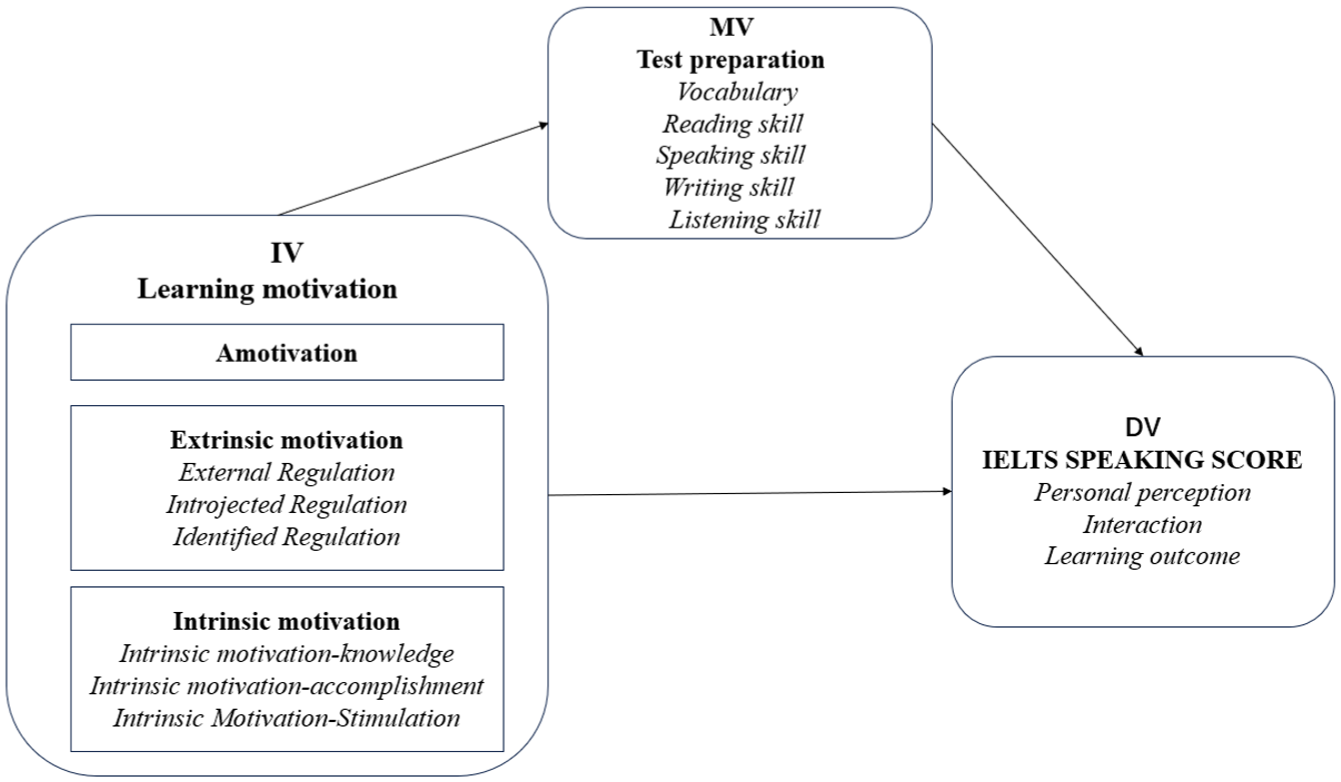
Conceptual framework.
The framework also highlights the importance of mediating variable-test preparation, which encompasses essential skills such as vocabulary, reading, speaking, writing, and listening. These skills are crucial for achieving a high dependent variable—IELTS speaking score—influenced by factors like personal perception, interaction, and learning outcome. This structure suggests that intrinsic and extrinsic motivational types and comprehensive skill-test preparation play significant roles in determining IELTS speaking performance.
Methodology
Research Design
This study employs a cross-sectional, non-experimental quantitative design using a survey method to investigate the relationship between learning motivation, test preparation strategies, and IELTS speaking scores among Chinese undergraduate students in Anhui province. A research design serves as the overall framework guiding a study, and in this case, a cross-sectional survey approach is used to collect quantitative data from IELTS test-takers through three research instruments.
Setting
This research was conducted in Hefei, Anhui Province, China, a region renowned for its medium-level performance among IELTS test-takers in mainland China and its high-quality universities. In 2018, the average IELTS score in Anhui Province was 5.61, with sub-scores of 5.64 (listening), 6.02 (reading), 5.3 (writing), and 5.21 (speaking). This score falls within the median range nationally. The author selected Hefei, the capital and largest city of Anhui, as the research location because of its status as a typical middle-sized city in Eastern China and its function as the province’s economic, political, and cultural center. Furthermore, Hefei is a global leader in scientific research, with a ranking of 16th worldwide and sixth in China. It is the location of 10 of Anhui’s 29 public universities, including prestigious institutions such as the University of Science and Technology of China, Hefei University of Technology, and Anhui University, as well as more ordinary institutions like Hefei Normal University and Chaohu University. Hefei is a representative of Anhui Province and an ideal location for the research of the relationship between learning motivation, IELTS speaking scores, and test preparation among undergraduates due to its diversity. To resolve a gap in the literature, the study will concentrate on the distinctive educational and socio-cultural context of Hefei, which can offer nuanced insights into the ways in which regional factors influence language proficiency outcomes.
Sampling
This study selected top five universities from Hefei, Anhui Province based on Ruanke rankings (widely accepted ranking in mainland China). And proportional random sampling method was used to determine the sample size of each school. Proportional random sampling was used to reduce selection bias and improve the representativeness of the results among undergraduate students (Abubakar et al., 2024). The top 5 universities were selected because they are highly representative of Anhui Province: they include both key universities and general undergraduate colleges, and can more comprehensively reflect the language learning characteristics of regional university students. Finally, the 387 samples were calculated. In this section, the author introduced the demographic information and three instruments for the three variables respectively, namely Learning Motivation Scale, Test Preparation Scale, and IELTS Speaking Score Scale.
Study Instrument
In terms of the outline of instruments, there are four sections in total. Section A is the demographic information where there are nine questions in total-gender, grade, age. program, frequency of IELTS test-taking, other English test-taking experience, time spent on IELTS speaking test preparation, IELTS score and IELTS speaking score.
Section B is the Learning Motivation Scale, which is a 21-item, Likert-scale instrument offering data on an interval scale. It was originally adapted from the Academic Motivation Scale by Vallerand and his colleagues (Vallerand et al., 1992). After that, it was modified for the goal of exploring motivation in second language learning by Noels et al. (2000) in the Language Learning Orientations Scale-Intrinsic Motivation, Extrinsic Motivation, and Amotivation Subscales (Noels et al., 2000). Under this scale, there are three main aspects: amotivation, extrinsic motivation, and intrinsic motivation. Under extrinsic motivation, there are three sub dimensions: external regulation, introjected regulation and identified regulation. Under intrinsic motivation, there are also three sub dimensions-knowledge, accomplishment and stimulation.
Section C is the Test Preparation Scale, which is a 20-item, Likert-scale instrument offering data on an interval scale. It was initially developed from the Strategy Inventory for Language Learning version 7.0 introduced by Oxford (Oxford, 1989). After that, it was modified for the purpose of examining the learning strategies for the IELTS test preparation to meet the English learning outcomes by Luu and Luu (2022) in the Learning Strategies of ELT Students for IELTS Test Preparation to Meet English Learning Outcomes (Luu & Luu, 2022). There are five aspects underpinning this scale-vocabulary, reading skill, speaking skill, writing skill and listening skill.
Section D is the IELTS Speaking Score Scale, which has nine items and can be divided into three aspects: personal perception, interaction, and learning outcome. This scale was initially created by Cheng (2005) to explore students’ attitudinal and behavioral changes related to classroom in the context of the Hong Kong College Entrance Exam (HKCEE; Cheng, 2005). And then the questionnaire was adapted by Hung and Huang (2019) to investigate the washback effect of the GEPT on students’ various aspects of learning (Hung & Huang, 2019).
To ensure the validity and reliability of the instruments used in this study, an Exploratory Factor Analysis (EFA) was conducted on the three main constructs: Learning Motivation (LM), Test Preparation (TP), and IELTS Speaking Score (ISS). The EFA procedure followed established best practices in psychometric analysis, with detailed specifications provided below to ensure replicability. All analyses were conducted using SPSS version 26.0. As for factor extraction method, the Principal Axis Factoring (PAF) method was employed because it focuses on shared variance and is appropriate when the goal is to identify latent constructs underlying observed variables, as opposed to data reduction alone. When it comes to rotation method, a Promax (oblique) rotation was applied, as it allows for correlations among latent factors, which is theoretically consistent with the expected relationships among motivation, preparation, and speaking performance. In term of the following criteria guided factor retention, Kaiser’s criterion (Eigenvalues > 1) was used to identify initial factor solutions while scree plot inspection was utilized to confirm the optimal number of factors. Factor loadings ≥ 0.50 were considered acceptable, while cross-loadings above 0.30 were carefully evaluated. Kaiser-Meyer-Olkin (KMO) measure and Bartlett’s Test of Sphericity were conducted to verify sampling adequacy and suitability of the data for factor analysis.
Table 1 is the Reliability analysis for each factor. This table presents a reliability analysis for different factors, categorized by variables (IV, MV, DV), dimensions, and the number of items within each dimension. The reliability is measured using Cronbach’s Alpha, which indicates the internal consistency of the items within each dimension. Higher Alpha values (closer to 1) suggest greater reliability. For instance, the DV variable in dimension 1 with 9 items has a high Alpha of .946, indicating excellent reliability. Overall, the table shows that most dimensions have good to excellent reliability, with Alpha values ranging from .782 to .946.
Reliability Analysis for Each Factor.

Table 2, this table presents the results of the Kaiser-Meyer-Olkin (KMO) measure of sampling adequacy and the Bartlett’s test of sphericity for three variables: IV (Independent Variable), MV (Mediating Variable), and DV (Dependent Variable). The KMO values, which range from 0 to 1, indicate that the sample size is adequate for factor analysis, with values above 0.8 generally considered good. The approximate chi-square values and their associated degrees of freedom and significance levels (all at 0) suggest that the data is suitable for factor analysis, as the null hypothesis of the Bartlett’s test is rejected, indicating that the correlation matrix is not an identity matrix. This implies that the questionnaire used in the study has good validity for factor analysis.
KMO and Bartlett’s Tests for Constructs.

Ethical Considerations
To minimize potential risks, participation in this study was entirely voluntary and anonymous. No identifying or sensitive personal information was collected, and participants were informed that they could withdraw at any time before submitting their responses without any negative consequences.
Because the questionnaire focused on general attitudes and learning experiences, it posed no physical or psychological harm.
The potential benefits of the study—such as contributing to a better understanding of how learning motivation and test preparation relate to IELTS speaking performance—were considered to outweigh the minimal risks involved.
Informed consent was obtained electronically before the participants could access the questionnaire. A consent statement was displayed on the first page of the online survey, explaining the study’s purpose, confidentiality assurance, and participants’ rights.
Only those who clicked “I agree to participate” were allowed to proceed with the questionnaire.
Findings
To orient the readers, this section first summarizes the sample’s demographic characteristics (Table 3). It then answers
1, The demographic profile of respondents
Demographic Information of Participants.

Pearson Correlation Between Learning Motivation (LM) and IELTS Speaking Score (ISS).

p < .05. **p < .01.
Pearson Correlation Between Test Preparation (TP) and IELTS Speaking Score (ISS).

p < .05. **p < .01.
Pearson Correlation Between Learning Motivation (LM) and Test Preparation (TP).

p < .05. **p < .01.
Mediation Effect Model Test.
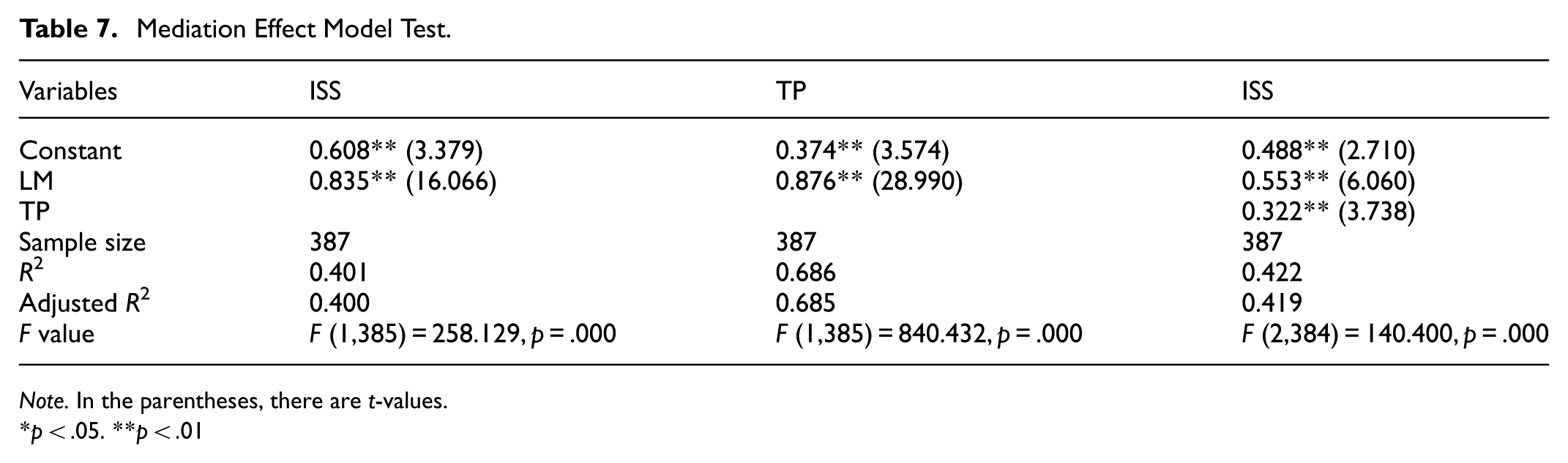
Note. In the parentheses, there are t-values.
p < .05. **p < .01
This table presents the demographic characteristics of the survey subjects, including gender, grade, age, program, number of IELTS exams, IELTS preparation time, and IELTS total and oral scores, offering valuable insights into the relationship between IELTS preparation strategies, learning motivation, and oral performance. The gender distribution shows that 45% of the participants are male (174) and 55% are female (213), indicating a slightly higher proportion of women. In terms of grade, sophomores (34.6%) and juniors (27.4%) make up the majority, suggesting that students in these stages are at the peak of IELTS preparation. Age-wise, the primary group is 19 to 21 years old (63.6%), aligning with the typical undergraduate study phase when IELTS exams are most commonly taken. Regarding academic background, 55.3% of the participants are from humanities programs, while 44.7% are from STEM fields, showing a relatively balanced distribution. The number of IELTS attempts reveals that most students (88.2%) have taken the exam one to three times, reflecting a certain level of test experience. As for IELTS speaking preparation, 38.8% of students allocated 40% to 60% of their study time to oral practice, highlighting its significance in IELTS training. The IELTS total scores are mostly concentrated between 5.5 and 7.0, with 33.3% scoring between 6.5 and 7.0, which aligns with common language proficiency levels. Similarly, IELTS speaking scores mainly range from 6.0 to 7.0, with 33.6% scoring 6.0 and 33.3% scoring between 6.5 and 7.0, suggesting that most students achieve a mid-range speaking level.
The findings are presented according to research questions posed earlier:
The table presents the results of a Pearson correlation analysis examining the relationship between Chinese undergraduates’ learning motivation (LM) and their IELTS speaking mean score (ISS) in Anhui province, China. The correlation coefficient of .634 indicates a strong positive relationship between the two variables, which is statistically significant at the p < .01 level. The p value of .000 further confirms the significance of this relationship. The analysis was conducted on a sample size of 387 students, suggesting that higher learning motivation is associated with better IELTS speaking performance among the surveyed undergraduates.
The table presents the results of a Pearson correlation analysis examining the relationship between test preparation (TP) and IELTS speaking mean score (ISS) among Chinese undergraduates in Anhui province, China. The correlation coefficient of .606 indicates a moderately strong positive relationship between the two variables. The p value of .000, which is less than 0.01, suggests that this relationship is statistically significant at the .01 level. The analysis was conducted on a sample size of 387 students, providing robust evidence that increased test preparation is associated with higher IELTS speaking scores in this population.
This table presents the results of a correlation analysis between learning motivation (LM) and test preparation (TP) among undergraduate students in Anhui Province, China. The Pearson correlation coefficient is .828, indicating a very strong positive relationship between the two variables. The p value is .000, which is much lower than the .01 significance level, demonstrating that this correlation is statistically highly significant. With a sample size of 387, the reliability of the analysis is further supported. Therefore, it can be concluded that there is a significant positive relationship between learning motivation and test preparation among undergraduate students in Anhui Province.
This table presents the results of a mediation effect analysis examining the relationships between learning motivation (LM), test preparation (TP), and IELTS speaking score (ISS). The linear regression model reveals that learning motivation significantly affects IELTS speaking scores (regression coefficient of .835) and significantly influences test preparation strategies (regression coefficient of .876). Additionally, test preparation strategies significantly impact IELTS speaking scores (regression coefficient of .322). The findings indicate that test preparation strategies partially mediate the relationship between learning motivation and IELTS speaking scores, suggesting that learning motivation indirectly enhances speaking performance by improving preparation strategies. This insight is valuable for understanding the complex interplay between motivation, preparation, and language test outcomes (Table 8).
Mediation Test Results - Horizontal Format.
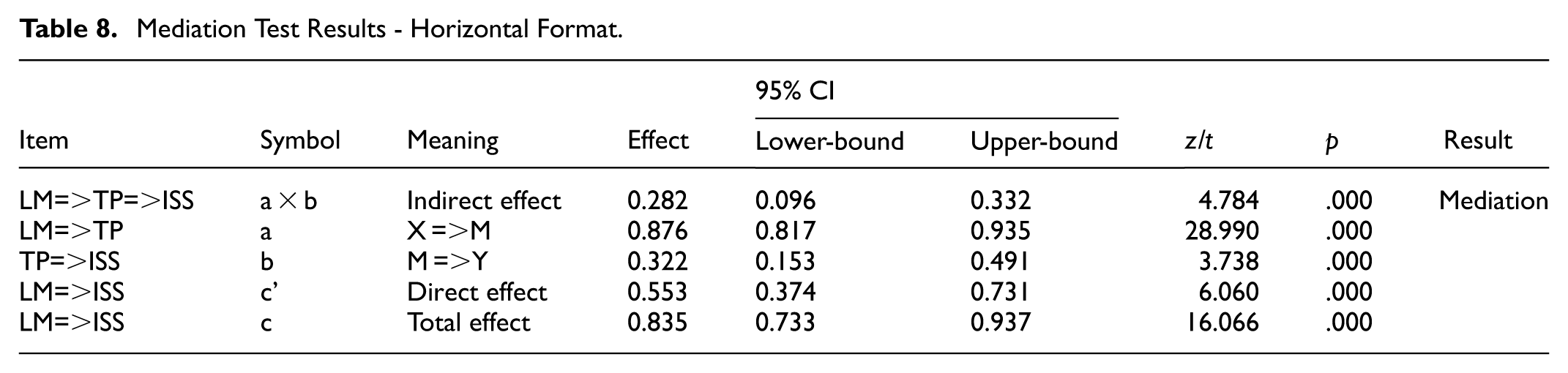
The table titled “Mediation Test Results - Horizontal Format” presents a mediation analysis examining the relationships between learning motivation (LM), test preparation (TP), and IELTS speaking score (ISS). The analysis reveals that TP mediates the relationship between LM and ISS. The indirect effect of LM on ISS through TP is 0.282, with a 95% confidence interval of 0.096 to 0.332, indicating a statistically significant mediation (z = 4.784, p < .001). This suggests that higher learning motivation leads to better test preparation, which in turn improves speaking scores.
The direct effect of LM on TP (path a) is strong (0.876, 95% CI [0.817–0.935], p < .001), showing that motivated students are more likely to engage in effective test preparation. The effect of TP on ISS (path b) is also significant (0.322, 95% CI [0.153–0.491], p < .001), indicating that better preparation strategies enhance speaking performance. Additionally, the direct effect of LM on ISS (path c’) is substantial (0.835, 95% CI [0.733–0.937], p < .001), highlighting the overall positive impact of learning motivation on speaking scores.
In summary, the results demonstrate that test preparation strategies play a crucial mediating role between learning motivation and IELTS speaking scores, providing valuable insights for educators to enhance both motivation and preparation strategies in language learning contexts.
Discussion
This study examined the relationships among learning motivation (LM), test preparation (TP), and IELTS speaking scores (ISS) within the undergraduate context of Anhui Province, China. Guided by Self-Determination Theory, Language Management Theory, and Washback Theory, four research questions were proposed to assess the direct and mediated effects among these constructs. The discussion below situates the findings within these theoretical perspectives.
RQ1: The Relationship Between Learning Motivation and IELTS Speaking Scores
The results revealed a significant positive relationship between LM and ISS, aligning with Self-Determination Theory, which posits that intrinsic motivation enhances persistence and achievement. Students with higher intrinsic motivation demonstrated stronger speaking outcomes, suggesting that their internal drive to master the language was more effective than external pressures alone. This is consistent with Rafiola et al. (2020), who reported that learning motivation positively influences academic achievement. Thus, the findings affirm that cultivating intrinsic motivation is a critical factor in improving oral proficiency (Rafiola et al., 2020).
RQ2: The Relationship Between Test Preparation and IELTS Speaking Scores
The significant positive relationship between TP and ISS reinforces Language Management Theory, which highlights the role of deliberate strategy use in enhancing performance. Learners who invested more time and effort in structured preparation—such as practice tests, coaching, and speaking rehearsals—achieved better results. This finding resonates with Aktar et al. (2021), who found that systematic preparation activities improved IELTS outcomes. From a washback perspective, the IELTS test exerted a positive influence by encouraging learners to adopt goal-oriented strategies that contributed to oral performance improvement (Aktar et al., 2021). The study’s results can be beneficial to test preparation programs by assisting learners in selecting a course that is suitable for their requirements. If they partition their training learning into multiple levels, IELTS learners will concentrate on assignments that are beneficial to their objectives. A variety of learning approaches, such as rehearsing test-type topics and engaging in discussions with instructors, can improve the capabilities of students (O’Sullivan et al., 2021). Moreover, the findings of this study indicate that IELTS candidates should engage in a stress-free learning and practice environment, which includes the opportunity to receive personal assistance with assignments and take exams, as well as a step-by-step outline for readability.
RQ3: The Relationship Between Learning Motivation and Test Preparation
The findings showed that LM significantly predicts TP, which supports the idea from Self-Determination Theory that motivated learners are more likely to engage in effortful and sustained learning behaviors (Noels et al., 2000). This result is in accordance with Lestary (2020) who found that learning motivation could stimulate IELTS test-takers to invest more efforts into IELTS learning practices in terms of IELTS test preparation (Lestary, 2020). To be more precise, learning motivation has the potential to significantly influence the learning strategies of IELTS learners by establishing a specific objective that will impact their foreign language performance, particularly their IELTS score. The results of this study appear to indicate that: (a) In order to ascertain the precise date of the IELTS exam, it is necessary to pay the exam fee several days in advance; (b) In order to enhance the motivation of IELTS learners during the preparation process, it is essential to establish a daily learning schedule and learning objectives; and (c) Receiving encouragement from parents or friends may assist IELTS learners in maintaining their motivation during the IELTS test preparation process.
RQ4: The Mediating Role of Test Preparation Between Learning Motivation and IELTS Speaking Scores
The mediation analysis demonstrated that TP partially transmits the effect of LM to ISS, confirming the central proposition of Washback Theory. The finding observed mirror that of An et al. (2021) who discovered that technology-based SRL strategies played a mediating role between English language self-efficacy and English learning results (An et al., 2021). This suggests that, although motivation is a critical factor in the development of learning behavior, its influence on test performance is primarily mediated by the implementation of effective preparation strategies. Highly motivated students who implement structured and comprehensive preparation plans are more likely to convert their motivation into tangible enhancements in their language proficiency and test results. In contrast, pupils who are highly motivated may not perform as well if they do not have access to effective preparation strategies. Educators should prioritize the development of students’ motivation and offer them scientifically rigorous preparation plans to guarantee that their motivation is effectively translated into productive learning behaviors. This discovery has significant implications. Educators can assist students in achieving superior results on high-stakes English proficiency tests, such as the IELTS, by implementing both motivation and preparation strategies.
Implications
The findings of this study offer significant theoretical implications by validating and extending the applicability of self-determination theory (SDT), language management theory (LMT), and Shih’s washback model in the context of IELTS preparation among Chinese undergraduate students. The study confirms that intrinsic motivation, driven by autonomy, competence, and relatedness, plays a crucial role in enhancing IELTS speaking scores. It also highlights the mediating role of test preparation strategies in translating motivation into tangible performance outcomes. By applying these theories, the study provides a comprehensive framework for understanding how motivation and preparation strategies interact to influence language learning and test performance. This enriches the theoretical foundations of language education and offers a structured approach for future research in high-stakes testing environments.
From a practical perspective, the study provides tangible insights for policymakers, educators, and IELTS learners. Policy makers in universities need to reorient the focus of college English course from listening, writing, and reading to speaking part and to combine learning motivation and test preparation with oral English proficiency achievement by reforming curriculum designs and assessment systems. Educators should focus on personalized teaching strategies, integrating comprehensive preparation methods, and providing continuous feedback to students. On the other hand, IELTS learners are advised to adopt diverse learning strategies, maintain consistent study plans, and actively seek resources to enhance their language proficiency. These practical implications aim to improve English language education and test performance, ultimately preparing students for global communication and academic success.
Beyond confirming the general importance of motivation, this study also reveals how specific sub-dimensions of intrinsic motivation—knowledge, accomplishment, and stimulation—differentially influence students’ preparation behaviors. Students driven by knowledge-oriented motivation tend to engage in exploratory practices, such as seeking authentic speaking materials and actively expanding their vocabulary. Those motivated by accomplishment are more likely to persist in repetitive practice, including regular mock tests and systematic error correction, in order to achieve measurable progress. Meanwhile, stimulation-driven motivation encourages active participation in interactive tasks, such as classroom debates, peer discussions, and role-play, where novelty and engagement are emphasized. These findings suggest that teachers should adopt differentiated classroom strategies: providing authentic resources and self-access tasks for knowledge-driven learners, structured goal-setting and progress feedback for accomplishment-driven learners, and dynamic, interactive speaking opportunities for stimulation-driven learners. Such alignment ensures that motivational orientations are effectively transformed into targeted learning strategies, ultimately enhancing students’ oral proficiency.
Conclusion
This study examined the relationships among learning motivation, test preparation, and IELTS speaking performance among Chinese undergraduates in Anhui Province. The findings confirm that motivation exerts both direct and indirect effects on speaking outcomes, with test preparation serving as a crucial mediator. By applying Self-Determination Theory, Language Management Theory, and Shih’s Washback Model, the study contributes to a deeper theoretical understanding of how individual motivation and structured preparation strategies interact in high-stakes testing contexts.
The study makes three key contributions. Theoretically, it extends existing models by linking motivational orientations with specific preparation behaviors and outcomes. Methodologically, it validates adapted measurement instruments for use in the Chinese undergraduate context. Practically, it highlights the importance of fostering intrinsic motivation while scaffolding effective preparation to improve oral proficiency.
Nevertheless, several limitations should be acknowledged. The cross-sectional design restricts causal inference, the sample is limited to Anhui Province, and reliance on self-reported data may introduce bias. In addition, the study focused exclusively on speaking performance, leaving other aspects of communicative competence unexplored.
Future research should therefore adopt longitudinal or experimental designs, extend samples to other regions or populations, and employ mixed-methods approaches to capture more nuanced learning behaviors. Expanding to other IELTS sub-tests and exploring the role of psychological factors such as self-efficacy or anxiety would further enrich the understanding of test performance.
Footnotes
Acknowledgements
I would like to thank the participating students and the universities for their support and cooperation in this study. I also extend my gratitude to my colleagues for their valuable insights and guidance throughout this research.

Ethical Considerations
This study was conducted in accordance with the ethical standards of the American Psychological Association (APA, 2017, Section 8.05). Formal ethical approval was not required because the study involved minimal risk, was conducted anonymously online, and did not collect any sensitive personal or health-related information.
Consent to Participate
Participants were informed about the purpose of the study, the voluntary nature of their participation, and their right to withdraw at any time. They provided informed consent electronically before completing the questionnaire.
Funding
The author received no financial support for the research, authorship, and/or publication of this article.
Declaration of Conflicting Interests
The author declared no potential conflicts of interest with respect to the research, authorship, and/or publication of this article.
Data Availability Statement
The datasets generated and/or analyzed during the current study are not publicly available due to ethical considerations and participant confidentiality but are available from the corresponding author upon reasonable request.