



Abstract
This study investigates the synergistic effects within China’s dual-track carbon reduction system integrating carbon trading (CT) and green certificate trading (GCT). It aims to empirically evaluate both the individual and combined impacts of these policies on regional carbon emission intensity. Using provincial panel data (2008–2021) and a multi-period difference-in-differences approach, we establish a quasi-experimental research framework. The results demonstrate that: both CT and GCT independently achieve significant emission reductions; their combination produces synergistic effects exceeding the sum of individual impacts (1 + 1 > 2); mechanism analysis reveals three transmission channels - energy structure optimization, green technology innovation, and industrial upgrading; heterogeneity analysis shows stronger synergistic effects in eastern regions with high environmental regulation intensity. These findings provide critical insights for designing integrated carbon-GCT markets and implementing region-specific policy combinations, ultimately supporting more efficient achievement of China’s dual carbon goals.
Keywords
Introduction
Climate change represents one of the world’s most severe challenges. The IPCC Sixth Assessment Report unequivocally attributes global warming to human activities and emphasizes that delayed action will escalate future climate risks and costs. This “temporal benefit” underscores the need for early, decisive intervention. Against this backdrop, energy transition and emission control have become a global consensus, with major economies integrating carbon neutrality into national strategies (T. Sun, Di, Cai, et al., 2025). As the world’s largest carbon emitter and renewable energy investor, China has committed to “peaking carbon by 2030 and achieving carbon neutrality by 2060.” Guided by the “1+N” policy framework, China aims to synergize carbon reduction, pollution control, green growth, and economic development through multi-policy coordination, accelerating a comprehensive green transition. Market-based environmental regulations are pivotal to achieving these “Dual Carbon” goals, given their cost-effectiveness and efficiency in incentivizing innovation and allocating resources. Among them, the carbon emissions trading market and the renewable energy green certificate trading market constitute China’s core “dual-track” carbon reduction mechanism. Carbon trading follows a “cap-and-trade” model, internalizing environmental costs into corporate finances to spur low-cost emission reductions (He et al., 2023). Since pilot initiatives began in 2011, China’s carbon market has expanded significantly, proving effective in curbing emissions and guiding industrial low-carbon transition (Y. Dong et al., 2024; T. Sun et al., 2024; C. J. Zhang et al., 2021). Complementarily, the green certificate trading system, launched in 2017, certifies the environmental attributes of renewable electricity, offering extra revenue streams, and stimulating clean energy investment (C. Cheng et al., 2024). Theoretically, these two markets are interlinked: green certificates provide traceable consumption and offset tools for carbon accounting, while carbon pricing enhances the environmental value of green certificates, jointly facilitating a shift from fossil fuels to clean energy (Feng et al., 2021; T. Sun, Di, Hu, et al., 2025). This synergy has been elevated to national strategy, as highlighted in the July 2024 state directive urging strengthened coordination among carbon, green certificate, and green electricity markets.
Extensive academic research has been conducted on both policies. Carbon trading studies confirm not only emission reductions but also multidimensional impacts-such as fostering innovation (J. Hu et al., 2020; G. X. Zhang et al., 2022), upgrading industrial structure (M. F. Liu & Cheng, 2022), and optimizing energy consumption (R. H. Li & Du, 2023). Similarly, green certificate trading is recognized for raising renewable energy integration (C. Li, Lei, & Wang, 2024) and reducing power sector carbon intensity via price mechanisms (Pan & Dong, 2023). Recently, scholars have begun exploring interactions between the two markets, using modeling approaches to simulate joint market operations and emission reduction potential (D. Liu et al., 2023; L. Wang, Chen, & Li, 2024), laying a theoretical groundwork for understanding dual-market dynamics. Nevertheless, shifting from theoretical simulation to empirical testing-and from single-policy assessment to identifying combined policy effects-reveals critical research gaps. First, most empirical studies evaluate single policies in isolation and lack a causal framework to quantify the “net synergistic effect” of both policies operating together. Does parallel implementation produce “1 + 1 > 2” gains, or do institutional frictions diminish outcomes? Large-scale empirical evidence remains scarce. Second, although synergy is often hypothesized, the mediating mechanisms-whether through energy structure transformation, green R&D, or industrial restructuring-have not been systematically unveiled. Finally, given China’s pronounced regional heterogeneity, it remains unclear how synergistic effects vary by geography, regulatory intensity, or population density. This gap impedes both theoretical advances in environmental regulation and the design of targeted regional policy mixes, risking fragmented implementation and suboptimal outcomes for the national “Dual Carbon” strategy. To address the aforementioned issues, this paper, based on Chinese provincial panel data from 2008 to 2021, treats the carbon trading and green certificate trading policies as a quasi-natural experiment. Employing a difference-in-differences model, it conducts the first systematic empirical test of the synergistic carbon reduction effects of the “dual-track” policies.
The possible marginal contributions of this article are mainly reflected in three aspects: (1) Regarding the research perspective, it moves beyond the conventional isolated analysis approach by integrating two major markets into a unified synergistic analysis framework. This provides a new analytical lens for evaluating the overall effectiveness of China’s composite environmental regulation system. (2) In terms of methodology, the study not only identifies the causal direction and net incremental effect of the synergy using a Difference-in-Differences (DID) model but also empirically tests three key transmission pathways—”optimization of the energy consumption structure,”“enhancement of R&D innovation,” and “industrial structure upgrading”—through a mediation effect model. This clearly reveals the internal mechanism through which policy synergy affects carbon emission reduction. (3) Regarding the depth of the research, detailed heterogeneity analysis uncovers the differential manifestations of synergistic effects across the eastern, central, and western regions, as well as areas with varying environmental regulation intensities and population densities. This provides a scientific basis for formulating more targeted and adaptable regional synergistic policies.
The organization of this paper is structured as follows: The first section is the introduction, outlining the research background and contributions; the second section is a literature review; the third section involves theoretical analysis and research hypotheses; the fourth section covers the research design, constructing appropriate models based on the content of the study, and summarizing the selection and definition of variables, data sources, and sample selection; the fifth section presents empirical analysis, using the difference-in-differences method for empirical testing and conducting a series of robustness tests; the sixth section examines the mechanisms, analyzing the impact mechanisms of the dual-track policy on carbon reduction effects; the seventh section conducts heterogeneity analysis; the eighth section concludes the study and offers policy implications, highlighting the limitations of this research. The specific research framework is shown in Figure 1.

Research framework.
Literature Review
Carbon Trading Policy’s Carbon Reduction Effect
As a market-based environmental instrument rooted in the Coase theorem, carbon trading integrates Pigouvian tax and property rights theory. It establishes carbon emission rights as a tradable commodity, internalizing environmental costs into corporate decisions and leveraging market mechanisms for cost-effective emission reduction (Stavins, 2021). Research on its effects has evolved from macro-level validation to micro-level mechanism analysis, and further to heterogeneity and side-effect examination.
At the macro level, most empirical studies using rigorous causal inference methods confirm the policy’s emission reduction effects. For example, using a difference-in-differences model with provincial data, J. Cai et al. (2024) found that the policy significantly reduced both total carbon emissions and carbon intensity in pilot regions. Studies have also deepened in focus: J. Wu et al. (2023) demonstrated significant effects in resource-based cities, highlighting broader applicability. At the micro level, Bai et al. (2019) emphasized that the policy’s market-based incentives guide firms to adjust production based on carbon prices, spurring green transition through productivity gains and improved resource allocation. Research has further unpacked the mechanistic “black box,” identifying three main pathways: Industrial restructuring: Carbon cost internalization shifts factors from emission-intensive industries toward low-carbon sectors (Y. Dong et al., 2024; X. Wang et al., 2024). Energy mix optimization: Carbon pricing alters relative energy costs, encouraging a shift from fossil fuels to clean energy (C. Li, Li, & Wang, 2024; X. C. Zhang et al., 2024). Green innovation: Under the Porter Hypothesis, carbon constraints stimulate low-carbon R&D and innovation (Ren & Fu, 2019; Shen et al., 2021; L. Wang, Chen, Gao, & Li, 2025).
However, some studies highlight limitations and negative effects. A key concern is carbon leakage: due to the pilot-based approach, high-emission firms may relocate to non-pilot regions, displacing rather than reducing overall emissions (Gao et al., 2020). Additionally, institutional imperfections-such as immature regulations, accounting standards, and allowance allocation-undermine market efficiency and fairness (Huang & Guo, 2024). The carbon price mechanism also remains underdeveloped, struggling to reflect the true social cost of emissions (H. Y. Wang & Wang, 2021).
Carbon Reduction Effect of Green Certificate Trading Policy
The green certificate trading system is a key market mechanism for promoting energy supply-side structural reform. It decouples and certifies the environmental attributes of renewable electricity separately from its energy attributes, creating an additional revenue stream for renewable power generation (Ganhammar, 2021). This design not only facilitates the low-carbon transition of the power sector but also generates economy-wide emission reduction effects through price signal transmission. Existing research has explored its impacts through theoretical, modeling, and policy evaluation approaches. Theoretically, the system internalizes the positive externalities of renewable energy through a quota-based market framework. L. X. Li et al., (2024) argue that introducing green certificate trading creates an environmental value signal independent of electricity prices, forming a dual-price system that incentivizes social capital investment in renewables and drives structural clean energy transition. Drawing on institutional economics, Wang et al. (2021) characterize the system as a property rights innovation that reduces transaction costs and mitigates fossil fuel “lock-in” by clearly defining environmental property rights, thereby supporting China’s low-carbon transition path.
Methodologically, scholars widely employ modeling approaches to quantify policy effects and optimize system parameters. Pan and Dong (2023) used a dynamic CGE model to demonstrate that a well-designed certificate system not only reduces power sector emissions but also reallocates production factors from energy-intensive to low-carbon sectors, achieving dual environmental and economic dividends. Complementarily, Y. Hu et al. (2024) applied a bottom-up energy system optimization model, simulating China’s power transition under eight scenarios. They found that coupling green certificate trading with carbon markets significantly influences renewable technology deployment and system costs, offering policymakers cost-optimal pathway insights. Notably, research is shifting from macro-system simulation to micro-level behavior and effectiveness analysis. Studies by C. Y. Ji et al. (2024) and Meng et al. (2024) show that certificate revenues improve the profitability of renewable projects, enhance operational efficiency, and attract investment-thereby expanding green energy supply and laying the foundation for economy-wide deep decarbonization.
Carbon Trading and Green Certificate Trading Policies to Reduce Carbon Emissions
The green certificate trading system decouples and independently certifies the environmental attributes of renewable electricity, creating additional value compensation for clean energy generation (Fowler et al., 2020). This market-based mechanism not only drives the power sector’s low-carbon transition but also generates economy-wide emission reductions through price signals. Research has examined these effects through theoretical, modeling, and evaluative approaches. Theoretically, the system internalizes renewable energy’s positive externalities via a quota-based market. J. Li et al. (2024) note that it establishes an environmental value signal separate from electricity prices, forming a dual-price system that incentivizes long-term renewable investment and structural transition. Wang et al. (2019) further characterize it as a property rights innovation that reduces transaction costs and helps overcome fossil fuel “lock-in” and path dependence in China’s energy transition.
Methodologically, scholars use modeling to quantify policy effects. Pan and Dong (2023) applied a dynamic CGE model, showing that a well-designed system reduces power sector emissions and reallocates production factors from energy-intensive to low-carbon sectors, achieving dual environmental and economic benefits. Complementarily, H. Wang et al. (2024) used a bottom-up energy system model under multiple scenarios, finding that coupling green certificate with carbon trading significantly affects renewable deployment pace and system costs, offering policymakers cost-optimal transition pathways. As the market evolves, research is shifting from macro simulation to micro-level analysis. C. Y. Ji et al. (2024) and Meng et al. (2024) indicate that certificate revenues improve renewable project profitability, attract investment, and expand green energy supply-laying the foundation for deep decarbonization.
Literature Analysis
Low-carbon policies play a pivotal role in advancing green economies and sustainable development. Scholars have gradually shifted their research focus from evaluating the environmental benefits of individual policies to exploring the multidimensional environmental impacts of policy coordination. Existing literature has yielded significant insights into how carbon trading and green certificate trading policies effectively reduce carbon emissions, mitigate environmental pollution, and promote sustainable energy development. However, notable gaps remain. Firstly, while most studies analyze carbon and green certificate trading from an electricity market perspective, interprovincial power transmission and grid interconnections ultimately influence the carbon reduction effectiveness of these policies across provinces, necessitating provincial-level analyses. Secondly, current research on carbon and green certificate markets predominantly employs quantitative analyses of individual policies, lacking in-depth exploration of synergistic mechanisms or systematic investigations into the integrated impacts of multiple green low-carbon policies. Thirdly, although some scholars recognize the importance of policy synergy, their reliance on coupling coordination degree models limits practical relevance. Given that carbon reduction effect analysis of these policies falls under policy evaluation research, applying quasi-natural experimental approaches would better capture dynamic effects and differentiated impacts across regions, thereby enhancing the credibility of conclusions.
Theoretical Analysis and Research Hypothesis
Carbon Emission Reduction Effect of Carbon Trading Policy
Carbon trading is a market-based institutional arrangement that optimally allocates emission rights and incentivizes voluntary emission reductions (C. Li, Wang, & Wang, 2024). Its theoretical foundation combines Pigouvian tax principles and the Coase Theorem (X. S. Li et al., 2024; Yang et al., 2024). The Pigouvian approach internalizes the external costs of emissions through pricing, compelling firms to incorporate environmental impacts into their decisions. Meanwhile, the Coase Theorem emphasizes that clearly defined, tradable emission rights can lead to optimal resource allocation through market transactions, regardless of initial allocation.
From a policy synergy perspective, carbon trading not directly influences corporate behavior through carbon pricing but also complements other environmental instruments. Policy mix theory suggests that coordinated policy combinations can generate synergistic effects. Carbon trading provides a market-based mechanism that effectively supplements and links with other policies like green certificate trading and energy efficiency standards, forming a multi-layered emission reduction system.
Furthermore, governments set emission caps based on historical emissions, industry benchmarks, and regional development conditions, while allocating allowances through scientifically designed methods. This process reflects principles of fairness and efficiency, balancing regional and industrial disparities while ensuring emission reduction goals. As the national carbon market matures, its incentive effect encourages growing enterprise participation, ultimately achieving cross-regional emission reduction objectives. Based on the above analysis, this paper proposes the following hypothesis:
Carbon Emission Reduction Effect of Green Certificate Trading Policy
Externality theory indicates that when a firm’s carbon emissions are not fully integrated into its production costs, a “carbon externality” occurs, imposing environmental costs on society and impeding efficient resource allocation (L. Wang, Chen, Jin & Li, 2025). The green certificate trading system addresses this externality through market-based mechanisms, advancing energy transition, and carbon reduction goals. Under this system, renewable energy generators earn additional revenue by selling certificates, improving project feasibility, and incentivizing clean power supply. Meanwhile, electricity consumers can meet quota requirements by purchasing certificates or using renewable energy, indirectly easing carbon compliance pressure, and promoting emission reduction through economic and technical pathways (N. Zhang et al., 2023).
This mechanism operates through multiple policy channels. First, renewable energy consumption quotas create sustained, institutional demand for green certificates, setting clear targets for power enterprises (Zheng et al., 2022). This demand-pull effect not only boosts renewable capacity but also attracts social capital into the green power sector, gradually replacing high-carbon sources. Second, price signals in certificate trading guide resources toward cost-effective renewable projects. Projects with lower costs and higher efficiency gain competitiveness, enabling greater emission reductions at lower social cost (L. Wang et al., 2023). Third, green certificate and carbon pricing policies reinforce each other, raising the cost of fossil fuel use. Energy-intensive industries face growing compliance costs, increasing their incentive to pursue energy efficiency and clean alternatives (Q. Ji & Zhang, 2019). Finally, the system also reshapes consumption patterns. As green electricity certification becomes widespread, more enterprises and end-users prefer environmentally friendly electricity, creating a green consumption preference. This demand further stimulates renewable energy development, forming a virtuous supply-consumption cycle that continuously optimizes the energy structure and enhances emission reduction efficiency (Umme et al., 2022).
In summary, the green certificate trading system incentivizes clean energy development on the supply side while guiding structural change on the demand side. Through its multidimensional market mechanism, it effectively internalizes carbon externalities and provides key institutional support for a low-carbon, sustainable energy system. Based on the above analysis, this paper proposes the following hypothesis:
Synergistic Carbon Emission Reduction Effect of Carbon Trading and Green Certificate Trading Policies
Carbon trading and green certificate trading are two core policy instruments for China’s low-carbon transition, sharing the common objective of curbing carbon emissions. While differing in operational mechanisms, they demonstrate significant complementarity in practice, with synergistic implementation expected to produce greater emission reduction effects than isolated policies.
From a policy perspective, the two systems exhibit clear complementary attributes. Carbon trading employs mandatory emission caps and allowance allocation to internalize environmental costs, focusing on near-term reduction targets while controlling compliance costs (J. Hu et al., 2023). In contrast, green certificate trading operates as a more flexible, sector-specific instrument targeting the power industry. Through market-based certificate trading, it incentivizes renewable energy development and long-term structural transformation (X. F. Liu et al., 2025; Guo et al., 2024).
Despite different designs, both policies share the fundamental goal of decarbonization. Their integration connects short, medium-, and long-term targets while establishing a multi-tiered regulatory framework spanning high-carbon and clean energy sectors. This combination enhances intertemporal decision-making and improves the sustainability of emission reduction pathways. Through coordinated implementation, strengthened policy integration and regulatory oversight motivate enterprises to introduce advanced talents and low-carbon technologies, increase R&D investment, and accelerate green transformation. This shift from external policy drivers to endogenous innovation helps achieve a “1 + 1 > 2” synergistic effect, significantly enhancing overall carbon reduction effectiveness. Based on the above theoretical analysis, this paper proposes the following hypothesis:
Mechanism Analysis
The dual track carbon reduction policy, through the organic combination of command and control and market incentive policies, is not simply a superposition, but has given rise to profound synergistic effects, systematically promoting the low-carbon transformation of the economy and society. The core mechanism of this synergistic effect lies in its ability to effectively compensate for the limitations of a single policy tool and form a driving force of complementary advantages. Specifically, this mechanism is mainly developed through the following three core paths. Firstly, setting clear emission reduction bottom lines and standards through administrative regulations, while using market signals to guide resource optimization and allocation, jointly driving the profound clean transformation of the energy structure. Secondly, through emission constraints and endogenous driving of corporate carbon asset benefits, there is a two-way incentive for cutting-edge innovation and large-scale application of green technologies. Thirdly, with the help of policy combinations, we can promote the evolution of industrial structure toward a knowledge intensive, low-carbon, and high value-added advanced form by eliminating outdated production capacity and cultivating emerging green industries. These three paths are intertwined and mutually reinforcing, together forming the inherent logic of the dual track policy leading high-quality development. The specific analysis pathway is shown in Figure 2.

Analysis of the mechanism of action of dual-track carbon reduction policy.
Energy Consumption Structure
As the world’s largest energy consumer and carbon emitter, China’s energy structure remains constrained by its “rich coal, poor oil, little gas” resource endowment, resulting in a coal-dominated pattern that creates a carbon lock-in effect-a structural cause of persistently high emissions (Ma et al., 2023). Against the “Dual Carbon” goals, transitioning to clean energy has become essential.
At the enterprise level, carbon trading and green certificate trading jointly create dual institutional pressures, compelling firms-especially energy-intensive ones-to internalize carbon costs and shift toward low-carbon pathways. Carbon trading sets a price on emissions, driving firms to increase clean energy use and improve efficiency (Y. Hu & Zeng, 2020). Meanwhile, green certificate trading offers a market mechanism to monetize renewable electricity, helping firms meet compliance needs while enhancing green branding and competitiveness (L. Wang, Chen, Long, & Li, 2024). This enables emission reductions without sacrificing output, aligning environmental and economic goals. At the industrial level, carbon trading imposes mandatory emission cuts on sectors like steel, chemicals, and cement, pushing them to adopt low-carbon technologies and reduce carbon intensity. Green certificate trading, through its certification mechanism, stimulates demand for clean power and directs capital and technology toward more efficient, cleaner enterprises, fostering industrial upgrading.
The synergy of both policies balances short-term reductions with long-term transition, combining “constraints” with “incentives” to shift energy consumption from high-carbon fuels toward clean alternatives. This dual approach enhances both the efficiency of energy allocation and the effectiveness of emission reductions, providing systematic policy support for a society-wide low-carbon transition. Based on the above analysis, this paper proposes the following hypothesis:
Research and Development Innovation
Amid the synergistic implementation of carbon trading and green certificate trading policies, technological innovation serves as a core driver for achieving carbon reduction and green development goals. Induced innovation theory suggests that stringent environmental regulations stimulate firms to innovate in response to cost pressures and market opportunities.
Innovation theory indicates that technological progress can reshape production functions by introducing cleaner, more efficient factor combinations, thereby transforming traditional high-carbon modes (B. Q. Lin & Xu, 2020). Carbon trading motivates enterprises to increase R&D in energy-saving technologies and low-carbon processes to reduce compliance costs and enhance green total factor productivity (C. Li, Wang, Zhang, & Wang, 2024). Meanwhile, green certificate trading creates market value for renewable electricity, guiding firms to ramp up R&D in renewable technologies and promoting commercialization of innovations in sectors like wind and solar power (C. Li, Yang, & Wang, 2024). Together, these policies not only impose constraints but also provide feasible pathways for green technology substitution.
Under dual policy pressure, energy-intensive enterprises are driven to rebuild internal technological capabilities-introducing high-end talent, increasing innovation investment, and advancing digitalization-to achieve refined carbon management and source control (C. Li, Zhao, & Wang, 2024). This builds foundational capacity for long-term low-carbon transition. Furthermore, policy synergy enhances regional innovation ecosystems. Pilot regions often introduce R&D subsidies and tax incentives, easing financial constraints for corporate innovation. Improved digital infrastructure also reduces information costs and accelerates knowledge spillovers, boosting regional innovation efficiency (C. M. Liu & Ma, 2020).
In summary, the “constraint-incentive” mechanism formed by synergistic policy implementation effectively stimulates green technology R&D, which in turn reduces emissions through energy efficiency gains, energy substitution, and process optimization. Based on this, this paper proposes the following hypothesis:
Upgrading of Industrial Structure
Industrial structure upgrading is central to synergizing economic growth with carbon reduction, serving as an engine for regional low-carbon transitions and helping balance emission control with economic quality improvement (Ge & Yu, 2022). Under the synergistic effect of carbon trading and green certificate trading policies, industrial structure undergoes systematic transformation across three dimensions:
At the micro level, policy synergy reshapes enterprise factor allocation. Carbon pricing raises the cost of high-carbon energy, while green certificates incentivize clean power use. Together, they drive comprehensive low-carbon transformation in energy inputs, production processes, and product design, fostering resource-efficient and emission-controlled production models (H. Zhang & Luo, 2023). At the meso level, policies promote industrial chain restructuring and green cluster development. Carbon constraints and green electricity demand direct capital, technology, and talent toward low-carbon sectors, accelerating the shift toward technology-intensive and less energy-dependent industries. The dual policies create a “constraint-pull” effect that spurs green technology innovation and cluster growth in sectors like new energy and advanced manufacturing. At the macro level, policy synergy facilitates systematic transition of the industrial ecosystem. The combined policies establish a screening mechanism that phases out energy-intensive industries while expanding green and digital sectors (Wei et al., 2023). This reduces carbon intensity per unit output and decouples economic growth from carbon emissions.
In summary, the synergistic implementation of carbon and green certificate trading drives corporate low-carbon behavior and guides industrial upgrading, systematically reducing emissions while improving carbon efficiency. Based on this, this paper proposes the following hypothesis:
Research Design
Model Construction
This study refers to the approach of Y. Y. Wu et al. (2021) and applies the double difference model (DID) to evaluate the carbon reduction effect of carbon trading policy. It is proposed to use the bidirectional fixed effect model of time and province to alleviate the interference of endogenous factors. The econometric model is set as follows:

Among them, the dependent variable Yit represents the per capita carbon emission intensity of each province; i represents the province, t represents the year; CTit is the explanatory variable representing the dummy variable of carbon trading policy; Controlit represents the control variable that affects per capita carbon emission intensity; The estimated coefficient
At the same time, in order to test the carbon emission reduction effect of green certificate trading policy and the synergistic emission reduction effect of carbon trading and green certificate trading policy, model (2) and model (3) are established according to model (1).


Variable Selection
At present, a large number of articles have systematically analyzed and observed the effects of energy conservation and emission reduction at the provincial level from various aspects, and summarized the various factors affecting provincial energy conservation and emission reduction, including energy consumption, economy, investment, and other factors. This paper selects several consensus indicators to measure provincial energy conservation and emission reduction, as shown in Table 1.
Variable Description.

Dependent Variable
The dependent variable in this study is the carbon emission intensity per capita (lnPCO2) across provinces, which is logarithmically transformed. Changes in per capita carbon emission intensity serve as a critical metric for evaluating the effectiveness of provincial low-carbon pilot policies (M. Dong & Li, 2020). This indicator reflects the average carbon footprint of residents in a region, ensuring equity in emission reduction efforts across diverse areas and populations. It avoids unequal responsibility allocation caused by population size disparities while providing policymakers with actionable insights to design adaptive policies tailored to regional variations in population density, lifestyle patterns, and specific decarbonization needs.
Explanatory Variables
First, the carbon trading policy variable (CT). The National Development and Reform Commission (NDRC) issued a notice in 2011 to launch carbon emission trading pilots. Pilot regions finalized their emission control standards and covered enterprise lists between 2012 and 2013, with actual market operations commencing between 2013 and 2014. This study sets 2013 as the policy intervention year for all pilot regions, constructing a Difference-in-Differences (DID) model based on the interaction term between regional and temporal dummy variables. Second, the green certificate trading variable (GCT). In 2017, the NDRC introduced a voluntary green certificate issuance and trading system for renewable energy. Accordingly, 2017 is designated as the policy intervention year, with green certificate trading data from 2008 to 2016 set to 0, retaining panel data post-2017. To measure the green certificate trading policy (GEC), this study calculates the proportion of renewable energy generation (summing hydropower, wind power, solar power, and other renewables) relative to total electricity generation in each province, reflecting regional progress in green electricity adoption. Finally, the policy synergy variable (CT × GCT). This term represents the interaction effect between carbon trading and green certificate trading policies, capturing their coordinated impact.
Control Variables
Considering the impact of other factors on carbon emissions based on previous literature (Chen et al., 2020; Shao et al., 2019), this paper selects the following control variables: industrialization level (IND), environmental regulation (ENV), government financial support (GOV), economic development level (lnGDP), financial development level (FIN), and foreign investment level (FDI).
Mediating Variables
The energy consumption structure (ES) is represented by the ratio of coal consumption to total regional energy consumption; the level of R&D innovation (R&D) is measured by the ratio of annual internal R&D expenditure to regional GDP in each province; the industrial structure upgrading (IS), which follows the method of M. Xu and Jiang (2015), this study quantifies industrial structure upgrading using an industrial hierarchy coefficient. The calculation method is as shown in formula (4), where

Sample Selection and Data Sources
This study examines carbon trading pilots implemented since 2013 in six regions: Beijing, Tianjin, Shanghai, Chongqing, Hubei, and Guangdong (incorporating Shenzhen), with the remaining 24 provinces as controls. Excluding Tibet, Hong Kong, Macao, and Taiwan due to data limitations, the analysis covers 30 provincial-level regions. For the green certificate trading policy launched nationally in 2017, the same 30 provinces are selected. Policy synergy effects are evaluated using interaction terms between the two policies while maintaining consistent treatment-control groupings.
Data on per capita carbon emissions (2008–2021) are compiled from the China Environmental Statistical Yearbook, China Statistical Yearbook, and China Carbon Emission Accounting Database (CEADs), cross-verified with existing literature. Clean energy generation data for quantifying green certificate effects come from the China Electricity Statistical Yearbook, with other provincial data sourced from respective statistical yearbooks.
Empirical Analysis
Descriptive Statistics
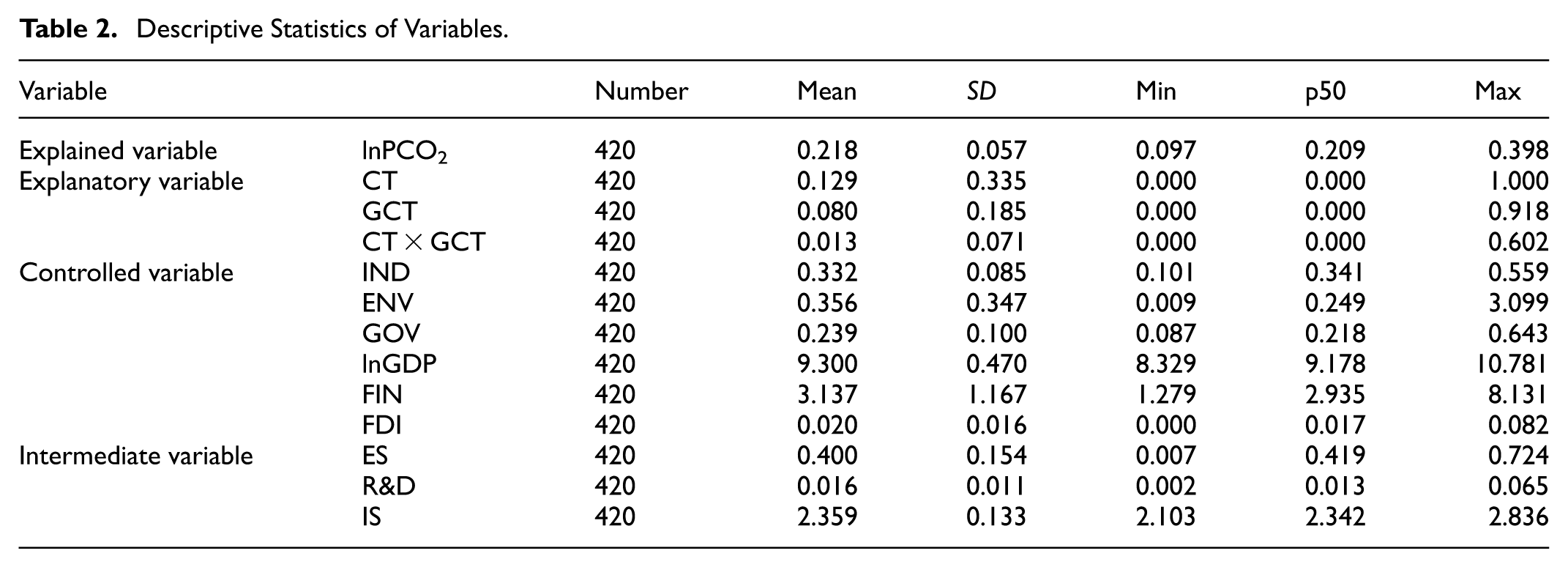
Table 2 presents descriptive statistics for all variables. The dependent variable, per capita carbon emission intensity, ranges from 0.097 to 0.398 with a mean of 0.218, indicating substantial regional variation. For the independent variables, the carbon trading policy dummy (CT) shows a mean of 0.129 and standard deviation of 0.335, reflecting considerable sample variability. The green certificate trading policy (GCT) exhibits moderate variation (SD = 0.185). The policy synergy term (CT × GCT) has a low mean (0.013) but wide range (0–0.602), suggesting potential localized synergistic effects despite the overall modest average.
Descriptive Statistics of Variables.
Benchmark Regression
This study employs a Difference-in-Differences (DID) model to evaluate the carbon reduction effects of carbon trading, green certificate trading, and their synergistic implementation using provincial-level data. Benchmark results are presented in Table 3. Columns (1) and (3), without control variables or two-way fixed effects, show statistically significant coefficients at the 10% level, indicating that both policies independently reduce regional per capita carbon emission intensity. After incorporating controls and fixed effects in columns (2) and (4), the negative coefficients remain significant, confirming that either policy alone effectively lowers carbon intensity and validating Hypotheses H1 and H2.
Results of the Benchmark Regression.

Note. The number in parentheses are standard error, the same below.
p < .1. **p < .05. ***p < .01.
Columns (5) and (6) examine policy synergy under the dual-track framework. In column (6), the interaction term between the two policies shows a coefficient of −0.0257, significant at the 1% level, indicating that coordinated implementation significantly suppresses carbon intensity. The absolute value of this synergistic effect exceeds those of individual policies, demonstrating a “1 + 1 > 2” effect that amplifies regional decarbonization, thereby confirming Hypothesis H3.
Parallel Trend Test
The validity of the Difference-in-Differences (DID) method for policy evaluation relies on the parallel trends assumption. This study employs an event study approach to test this assumption and analyze the dynamic effects of policy interventions. Drawing on the methodology of S. L. Wu and Liang (2024), we conduct parallel trends tests for both standalone carbon trading policy and policy synergy effects.
The analysis aggregates phased data from 3 years before and after the implementation of standalone carbon trading and coordinated policy actions, with the year preceding each policy launch set as the baseline. Figure 3 presents the test results. For standalone carbon trading (Figure 3(a)), coefficients for the three pre-implementation years are statistically insignificant, while those for the three post-implementation years show statistical significance, confirming that carbon emission trends between treatment and control groups satisfy the parallel trends assumption. Regarding policy synergy (Figure 3(b)), estimated coefficients remain insignificant prior to coordinated implementation but turn negative and statistically significant after policy coordination, largely meeting the requirements of the parallel trends test.

Parallel trend test results: (a) parallel trend test of carbon trading policies and (b) parallel trend test of policy coordination.
Placebo Test
To verify that the observed reduction in per capita carbon emission intensity indeed stems from the synergistic effect of carbon trading and green certificate trading policies rather than unobserved factors, this study conducts a placebo test following X. Cai et al. (2016). Six provinces were randomly selected from the sample of 30 as the treatment group, with the remaining 24 as controls. This random assignment was repeated 500 and 1000 times, with each iteration estimated using baseline regression model (3).
As shown in Figure 4, the estimated coefficients for the core explanatory variable CT × GCT are predominantly distributed around zero, with most remaining statistically insignificant (p > .1). Moreover, the randomly generated coefficients largely deviate from the actual benchmark estimate of −0.0257. These results confirm that regional low-carbon development is indeed driven by the synergistic policy effect rather than omitted variables, thereby verifying the robustness of the benchmark regression findings.

Results of placebo test: (a) 500 samples and (b) 1,000 samples.
Endogenous Processing and Robustness Testing
In order to improve the reliability of regression results, this article selected four methods for robustness testing: replacing the dependent variable, changing the sample period, lagging the dependent variable by one period, and adding control variables.
Addressing Endogeneity Using PSM-DID
To isolate the impact of the dual policy system’s synergistic effect on regional carbon emissions and verify the genuine emission reduction effect of policy synergy, this study utilizes Propensity Score Matching (PSM) to address endogeneity. We employed nearest neighbor, radius, and kernel matching methods based on all control variables. Before conducting the PSM regression estimation, all covariates passed the balance test. The regression results, presented in column (1) of Table 4, show that the findings after PSM treatment are consistent with the baseline regression, confirming the reliability of our research results.
Endogenous Processing and Robustness Test Results.

Note. The number in parentheses are standard error, the same below.
p < .1. **p < .05. ***p < .01.
Replace the Explained Variable
This article replaces the per capita carbon dioxide emission intensity with the logarithm of carbon dioxide emissions. The second column of Table 4 shows the robustness test results of the measurement method for replacing the dependent variable. This result shows that the coefficients of the explanatory variable CT × GCT are significantly negative at the 1% level, consistent with the previous results. The synergistic effect of carbon trading and green certificate trading policies will have a significant inhibitory effect on carbon dioxide emissions in pilot areas, and the original conclusion is robust.
Change the Sample Period
Since the impact of the COVID-19 in 2020 may affect the experimental results, the sample period is shortened from 2008 to 2019 (H. Wang et al., 2025), and the regression results are shown in column (3) of Table 4. The regression coefficient of CT × GCT is −0.0274 and significant at the 1% level. It can be seen that the synergistic carbon reduction effect of carbon trading and green certificate trading policies can significantly reduce the per capita carbon emission intensity in the region. Therefore, even after changing the sample period, the conclusion remains valid.
Lag One Dependent Variable
To further validate the robustness of the model, this study lagged the dependent variable by one period, generated new dependent variables to prevent endogeneity issues, and conducted fixed effects regression again. The results are shown in column (4) of Table 4: the coefficient of the synergistic effect of policies on per capita carbon emission intensity lagged by one period is −0.0193, which is significant at the 5% level and consistent with the baseline regression conclusion, further verifying the reliability of the conclusion.
Add Control Variables
In the benchmark regression of the previous model, industrialization level (IND), environmental regulation (ENV), government financial support (GOV), economic development level (lnGDP), financial development level (FIN), and foreign investment level (FDI) were used as control variables. However, there is a significant difference in the regional development level between the experimental group and the control group in this article. Considering endogeneity issues, this article increases control variables to exclude the influence of different pilot regions on the research results. The added control variables are urbanization level (URB) and degree of openness to the outside world (OPE). The regression results are shown in column (5) of Table 4. After adding more control variables, the coefficient of the core explanatory variable CT × GCT remains significantly negative, further enhancing the credibility of the conclusions in this paper.
Excluding Concurrent Policies Effects
During the sample period, China also implemented a series of other environmental governance policies, such as the Total Energy Consumption Control policy and the Environmental Protection Tax policy. These policies were potentially rolled out concurrently with the carbon trading and green certificate trading policies and could consequently influence carbon emission intensity. Neglecting the interference from these concurrent policies might lead to an overestimation or misjudgment of the synergistic effect of the dual-policy carbon reduction system. To address this, this study introduces controls for the Total Energy Consumption Control policy (EC) and the Environmental Protection Tax policy (ET) to isolate the potential confounding effects of these other major environmental regulations on the empirical results. The regression results, presented in column (6) of Table 4, show that after controlling for these concurrent policy variables, the coefficient of the core explanatory variable (CET × GEC) remains significantly negative at the 1% level, and its magnitude is similar to the baseline regression results. This indicates that the estimated synergistic carbon reduction effect of the carbon trading and green certificate trading policies is not exaggerated due to the presence of other concurrent policies, thereby further strengthening the robustness and explanatory power of this study’s conclusions.
Mechanism Test
The above empirical results show that the synergistic effect of carbon trading and green certificate trading policies can significantly suppress the per capita carbon dioxide emission intensity in the region, but its impact mechanism is still unclear. As explained in the theoretical analysis section of the mechanism, this study believes that the coordinated implementation of carbon trading and green certificate trading policies can reduce environmental pollution through three paths: optimizing energy consumption structure, enhancing research and development innovation level, and upgrading industrial structure. Therefore, drawing on the research of Jiang (2022), this article establishes a mediation effect model to explore the synergistic carbon reduction effect of carbon trading and green certificate trading policies. The model is as follows:

Among them,
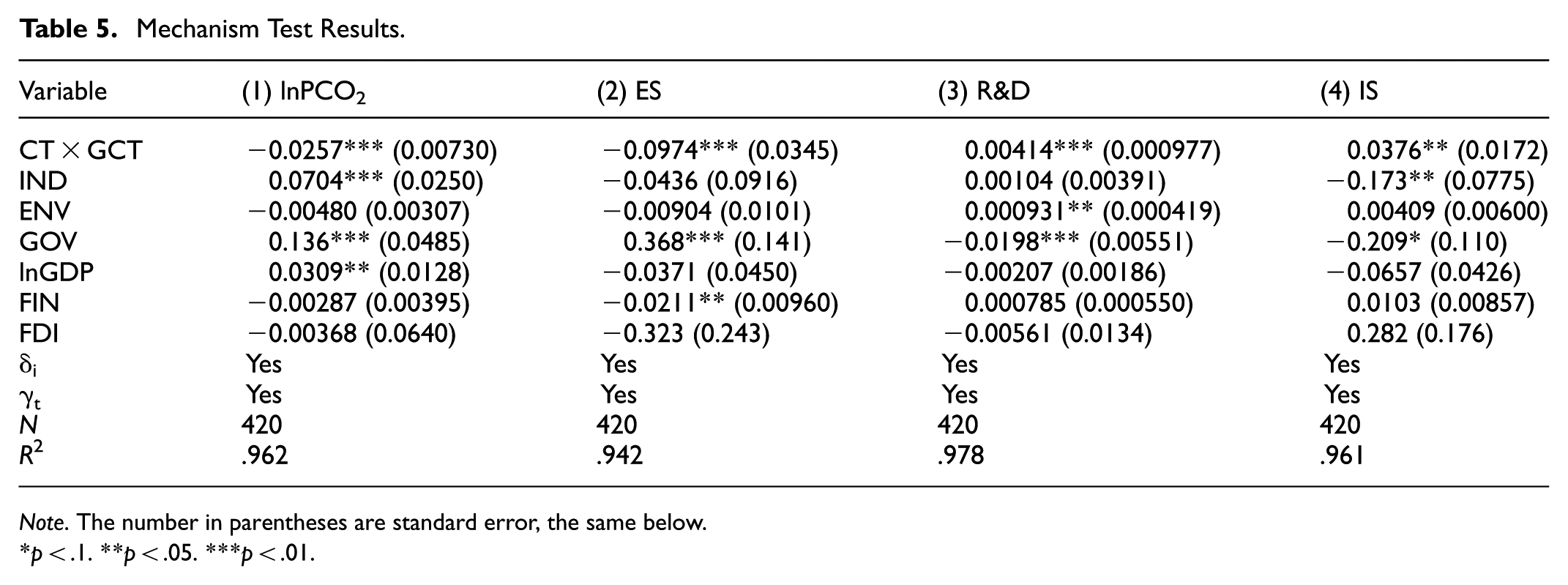
Mechanism Test Results.
Note. The number in parentheses are standard error, the same below.
p < .1. **p < .05. ***p < .01.
Energy Consumption Structure
To investigate whether the energy consumption structure serves as a mediating pathway for policy synergy in carbon emission reduction, this paper measures the energy consumption structure of each province by the proportion of regional coal consumption to the total regional energy consumption, and conducts a mediation effect test. The results of the mediation effect test are shown in column (2) of Table 5, where the synergistic effect of policies suppresses the proportion of fossil fuels in total energy consumption at the 1% level. The collaborative carbon reduction policy can significantly curb the proportion of non renewable energy consumption in the region and improve the energy consumption structure of the region. In order to further observe the changes in energy consumption structure in various regions of China, a heatmap of the energy consumption structure of each province from 2008 to 2021 was drawn, as shown in Figure 5. The proportion of non renewable energy consumption in each region showed an overall downward trend, but there were still significant differences between regions.
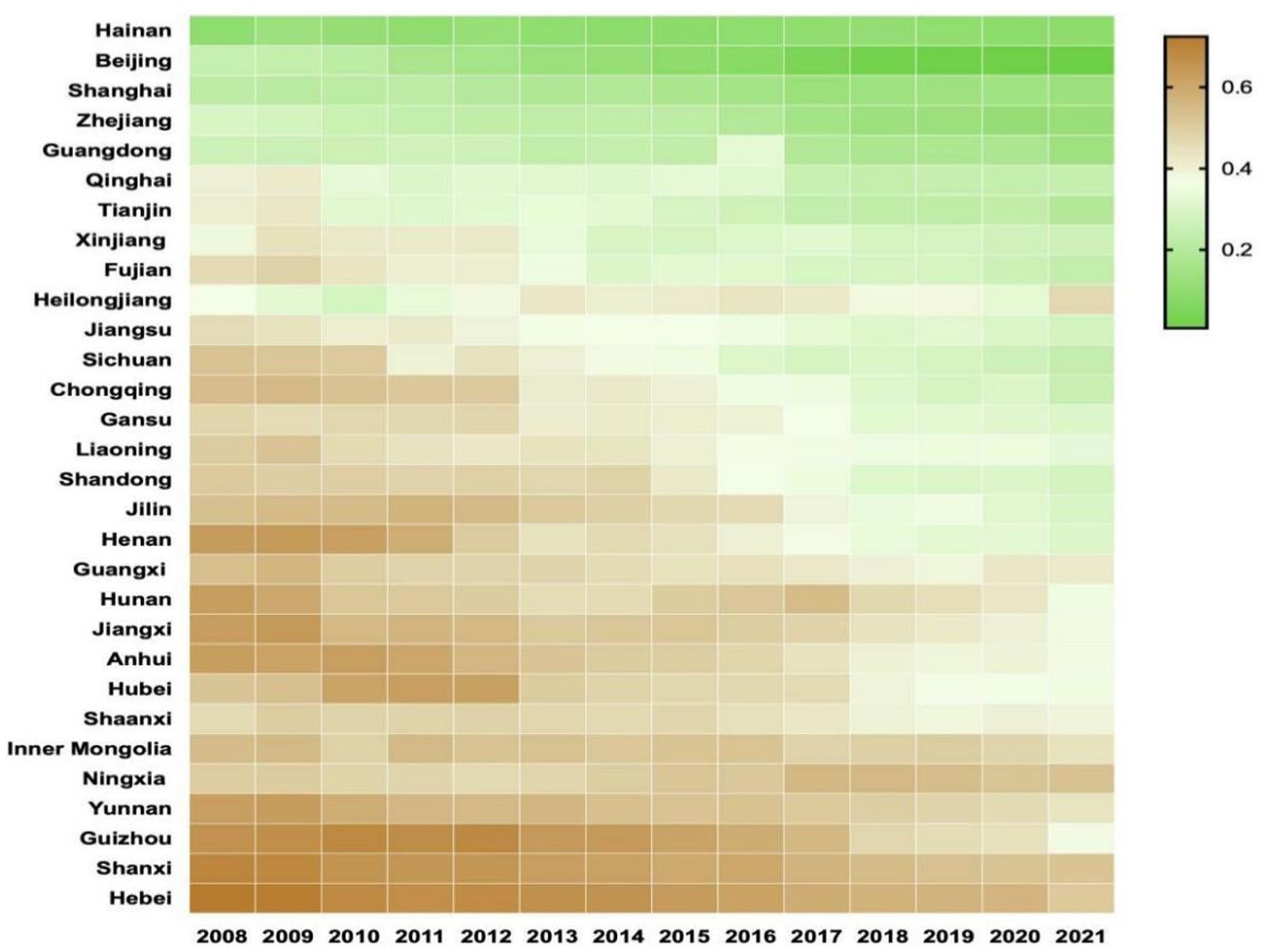
Heat map of energy consumption structure in China’s provinces and cities from 2008 to 2021.
Energy consumption plays a crucial role in carbon dioxide emissions (Lau et al., 2023). In modern energy systems, the ratio between conventional fossil fuels (coal, crude oil, natural gas) and clean energy (hydropower, nuclear, renewables) fundamentally determines carbon emission patterns. The relationship between energy endowment and consumption creates a triple constraint within the “energy-economy-environment” system: First, non-renewable dominated energy structures directly define the scale and composition of greenhouse gas emissions-each 1% increase in fossil fuel consumption raises CO2 emissions by 0.83% (Zhou et al., 2024). Second, traditional energy systems create a paradox between welfare creation and environmental costs, with global externalities from fossil fuels reaching USD 5.3 trillion in 2022. Third, balancing rigid energy demand with carbon reduction targets forms the core challenge of sustainable development.
The synergistic implementation of carbon trading and green certificate trading policies systematically addresses this structural contradiction. Carbon trading establishes a price signal that reshapes corporate energy budget constraints, while green certificates provide premium compensation that incentivizes renewable adoption. Together, they correct market entities’ energy preferences and enhance renewable utilization efficiency. This coordination reduces the share of non-renewable consumption across society, achieves an improved balance between ecological preservation and energy needs, and facilitates sustainable socioeconomic development. Therefore, this study concludes that policy synergy between carbon trading and green certificate trading enables regional carbon reduction through structural optimization of the energy mix. Therefore, it is assumed that H4a has been validated.
R&D Innovation Level
The mediating effect of research and innovation levels is shown in Column (3) of Table 5. The significantly positive coefficient of θ1 at the 1% level indicates that policy synergy stimulates R&D innovation. Expanding R&D investments under tightening resource constraints not only enhances productivity but also serves as a key mechanism for reducing carbon intensity (Liao, 2024). Under the dual mechanisms of carbon and green certificate trading, firms exceeding emission limits face increased compliance costs, compelling technological innovation to reduce expenses. Meanwhile, carbon pricing allows companies to monetize surplus allowances, further promoting production technology upgrades (Y. T. Cheng & Xiao, 2023). Consequently, the synergistic effects of these policies achieve carbon reduction by elevating R&D investment levels, validating H4b.
Industrial Structure Upgrading
The mediating effect of industrial structure upgrading is shown in Column (4) of Table 5. The coefficient of 0.0376 indicates policy synergy significantly promotes industrial restructuring. Environmental regulations drive enterprises to innovate and develop low-emission industries, thereby advancing industrial upgrading (W. L. Xu & Sun, 2023). This upgrading phase out polluting industries while accelerating emerging sectors, increasing clean energy adoption, and reducing fossil fuel dependence. Such transformation facilitates regional green economic transformation and supports sustainable development goals (Y. Zhang & Zhou, 2024). Therefore, H4c has been validated.
Heterogeneity Analysis
Due to the varying degrees of resource endowment and governance capabilities of regional governments, it is necessary to conduct heterogeneity analysis on the synergistic effects of carbon trading and green certificate trading policies. This section will analyze the heterogeneity of policy synergy carbon reduction effects from three aspects: geographical regions, environmental regulatory levels, and population density.
Geographic Regional Heterogeneity
China’s eastern, central, and western regions exhibit significant disparities in economic development and resource endowment, leading to heterogeneous responses to collaborative carbon reduction policies. As shown in Figure 6(a), per capita carbon emissions display concentrated distribution in the east but higher dispersion in central and western regions. Regression results in Table 6 demonstrate a declining synergistic effect from east to west: most pronounced in the coastal east through clean energy transition and technology innovation, moderate in the central manufacturing base due to path dependency, and insignificant in the less-developed west where traditional energy dominance and infrastructure constraints persist.

Analysis of heterogeneous group data: (a) geographic area, (b) environmental regulation, and (c) density of population.
Heterogeneity Test.

Note. The number in parentheses are standard error, the same below.
p < .1. **p < .05. ***p < .01.
Heterogeneity of Environmental Regulation Level
Regional heterogeneity in the synergistic carbon reduction effects of carbon trading and green certificate trading policies emerges due to varying levels of government environmental regulation across areas. This study categorizes samples into high-regulation and low-regulation groups based on the median environmental regulatory intensity. As shown in the environmental regulation heterogeneity analysis in Figure 6(b), per capita carbon emission intensity is significantly higher in regions with stricter environmental oversight.
The grouped regression results in Column (2) of Table 6 reveal that policy synergy demonstrates positive decarbonization effects in high-regulation regions but fails to achieve significant impacts in low-regulation areas. This discrepancy arises because regulatory stringency directly shapes corporate emission behaviors (L. Wang et al., 2023). In strictly regulated regions, stringent emission standards and elevated non-compliance costs compel firms to adopt effective mitigation measures-such as upgrading production technologies, adopting clean energy, and improving energy efficiency. Conversely, weaker regulatory environments often suffer from lax standards, inconsistent enforcement, and regulatory corruption, enabling enterprises to externalize environmental costs and increase emissions. Additionally, inadequate institutional capacity for emission monitoring and pervasive regulatory loopholes in low-regulation regions allow firms to evade environmental responsibilities, undermining the efficacy of decarbonization policies.
Population Density
The heterogeneous impact of population density on per capita carbon emissions involves multiple factors such as population distribution, economic development, and energy consumption, leading to varied effects of dual policies on regional carbon reduction. Based on median population density, this study categorizes regions into high- and low-density groups. As shown in Figure 6(c), under high population density, per capita carbon emissions are more concentrated (especially between 0.1–0.2), while under low density, the distribution is wider.
Group regression results in Table 6, column (3), indicate that low-population-density areas significantly suppress carbon emissions. This can be attributed to the following: High-density regions often experience higher urbanization, increased transport congestion, and greater energy consumption, which raise carbon emissions and weaken reduction outcomes. Low-density areas possess more land resources for renewable energy development. Dispersed residential and industrial activities lead to lower energy consumption density and reduced reliance on high-carbon energy. Moreover, richer natural ecosystems such as forests and wetlands provide carbon sink functions, enhancing carbon reduction effectiveness (L. Wang, Gao, & Li, 2024).
Research Conclusions and Policy Recommendations
Research Conclusions
To achieve the “dual carbon” goals (carbon peaking and carbon neutrality), it is essential to leverage the strengths of diverse policies and enhance their synergy to realize a “1 + 1 > 2” synergistic emission reduction effect. This study employs panel data from 30 provinces/municipalities (excluding Tibet, Hong Kong, Macau, and Taiwan) spanning 2008 to 2021, constructing a Difference-in-Differences (DID) model to explore the impact of carbon trading and green certificate trading policies on carbon emissions. It specifically investigates the effects and mechanisms of coordinated policy implementation on per capita carbon emission intensity, analyzes the mediating roles of energy consumption structure, R&D innovation, and industrial structure upgrading, and discusses heterogeneous outcomes across regions. Key findings are as follows: First, standalone implementation of either carbon trading or green certificate trading policies significantly reduces regional per capita carbon emissions. Second, policy synergy amplifies decarbonization outcomes, with its impact surpassing that of individual policies, confirming that the carbon and green certificate markets achieve a “1 + 1 > 2” synergistic effect. Third, mechanism tests reveal that these policies lower per capita carbon intensity by optimizing energy consumption structures, elevating R&D innovation levels, and upgrading industrial structures. Fourth, heterogeneity analysis demonstrates significant variations in policy effectiveness across geographical regions, environmental regulation intensities, and population densities. Specifically, synergistic effects are strongest in eastern and central regions, areas with stringent environmental oversight, and regions with lower population density. These findings provide critical insights for policymakers to design tailored decarbonization strategies, harness the complementary advantages of policy mixes, and maximize emission reduction outcomes.
Policy Recommendations
Based on the above conclusion, this article proposes the following suggestions:
First, we propose establishing a multi-level governance framework to enhance institutional coordination across electricity-carbon-certificate markets. At the national level, relevant authorities should jointly formulate an Action Plan for the Coordinated Development of Electricity and Carbon Markets. Near-term efforts should define methodologies for converting between carbon allowances and green certificates, while medium-term goals should establish a unified national carbon accounting standard to enable the transition from energy consumption control to carbon emission control. Pilot regions such as Guangdong and Hubei should explore a Dynamic Carbon Allowance Adjustment Model and build cross-provincial certification platforms for green electricity, certificates, and emission reductions by 2025. Successful models should be scaled nationally, while non-pilot provinces should accelerate infrastructure upgrades to align with the national market.
Second, we recommend optimizing resource allocation to incentivize emission reductions. A Special Fund for the Green Upgrading of Traditional Industries should be established to support sectors like steel and cement in phasing out outdated capacity and adopting energy-efficient equipment. Additionally, a Coordinated Plan for Coal Power Flexibility Retrofits and Renewable Energy Integration should set clear transition targets and dispatch rules, shifting coal power from baseload to regulating sources by 2025 and 2030.
Third, region-specific strategies should be adopted to leverage green resource potential. In renewable-rich but less developed regions like the Northwest and Southwest, the government should promote the development of Zero-Carbon Industrial Parks with dedicated green power and price subsidies. An East-West Green Synergy Development Fund could redirect green certificate revenues from eastern regions to support western ecological and infrastructure projects. In developed but environmentally stressed regions such as Beijing-Tianjin-Hebei and the Yangtze River Delta, new energy-intensive projects should be required to achieve net-zero energy growth through green certificate purchases or energy-saving upgrades. Key indicators like Carbon Emission Intensity and Green Electricity Consumption Proportion should be integrated into local government performance evaluations, prioritizing low-carbon sectors such as digital economy and advanced manufacturing.
Finally, we stress the need to reform performance evaluation and oversight mechanisms to ensure long-term policy effectiveness. The assessment system for local officials should be revised to increase the weight of Carbon Emission Reduction per Unit of GDP to over 10% in key pilot provinces. Regions consistently failing to meet targets could face restrictions on new project approvals or receive negative performance evaluations. To ensure data authenticity, central environmental inspections should employ satellite remote sensing and big analytics. Cross-regional environmental courts should also be established to address cases of pollution transfer.
Research Limitations and Prospects
This article explores the impact and mechanism of policy synergy on regional carbon reduction, and the research conclusions provide empirical evidence for policy synergy. However, there are still some shortcomings in this article. Firstly, there are limitations in data measurement and sample size. The carbon emission data in this paper depends on the estimates in the statistical yearbook and the third-party database. The sample area does not cover Xizang, Hong Kong, Macao, and Taiwan. In the future, we can build a more accurate carbon accounting system by combining enterprise micro emission data or satellite remote sensing data, and expand the sample coverage to improve the external effectiveness of the research. Secondly, the COVID-19 epidemic lasted for 3 years and had a great impact on China’s economy. With the economic recovery after the epidemic, follow-up studies can further investigate the impact of the epidemic on China’s carbon reduction policies from a dynamic perspective. Finally, the influencing factors of policy synergy are complex and varied. Future research can combine quantitative analysis of policy texts or market transaction data to construct more detailed synergy indicators.
Footnotes

Ethical Considerations
This study conforms to the ethical and moral requirements.
Consent to Participate
All the authors of this article were consented to participate.
Consent for Publication
This study was consented to published.
Author Contributions
Liping Wang: Conceptualization, Methodology, Writing—review & editing, Formal analysis, Funding acquisition. Shanyu Lin: Data curation, Resources, Writing—original draft, Formal analysis. Chuang Li: Formal analysis, Supervision, Writing—review & editing, Project administration.
Funding
The authors disclosed receipt of the following financial support for the research, authorship, and/or publication of this article: The research is supported by the National Social Science Fund of China (24FJYB037) and the Innovation Strategy Research Plan Project of Fujian Province (2025R0046).
Declaration of Conflicting Interests
The authors declared no potential conflicts of interest with respect to the research, authorship, and/or publication of this article.
Data Availability Statement
Data will be made available on request.