




Abstract
This study investigates how architectural studio environments influence student well-being through the lens of Self-Determination Theory (SDT). According to SDT, the fulfilment of three core psychological needs, autonomy, competence, and relatedness, is essential for motivation and learning. Using a convergent mixed-methods case study, we examined the lived experiences of undergraduate interior architecture design students at Osmaniye Korkut Ata University (Türkiye). Data were collected through an online survey (n = 114), classroom observations, and a design exercise in which students reimagined their ideal studio space. Survey results revealed consistent concerns about spatial inflexibility, inadequate lighting and insufficient equipment, which students perceived as undermining their autonomy and competence. Observations confirmed these limitations, while design proposals emphasised flexible layouts, individualised workstations, improved lighting, and informal gathering spaces to foster relatedness and collaboration. By triangulating quantitative and qualitative data, the study demonstrates how deficiencies in current studio design hinder learning outcomes while also identifying strategies to create environments that support psychological well-being. The findings provide evidence-based recommendations for aligning architecture studio design with SDT principles, offering practical guidance for institutions seeking to create learning environments that foster student motivation, engagement, and well-being.
Keywords
Introduction
The interest in academic research on learning environments, educational approaches, and their link to the well-being of students has grown significantly, particularly in the aftermath of the COVID-19 pandemic (Gopal et al., 2021; Makaremi et al., 2024; Sharif Nia et al., 2023; Zhu & Liu, 2020). Over the past decade, a growing body of work has examined how the design of learning spaces influences students’ wellbeing and academic performance (Colla & Mossman, 2023; Llorens-Gámez et al., 2022; O’Reilly et al., 2018). Studies in educational psychology, architecture, and design journals have explored various aspects of the physical environment, like air quality, acoustics, furniture layout, and biophilic design, highlighting their effects on comfort, concentration, and mental health (Hussein & Mustafa, 2023; Yang et al., 2022). Despite these advances, limited attention has been given to architecture design studios – learning environments that foster collaborative work, extended occupancy, and creative output (Grant et al., 2019; Hettithanthri & Hansen, 2022; Omale et al., 2024).
Whether shaping comfort, fostering wellness, or enhancing productivity, the physical characteristics of learning spaces profoundly impact human behaviours and emotional reactions. The physical attributes of space can immediately trigger physiological responses, leading to sensations that evoke emotions (Llinares et al., 2023; Yeom et al., 2019). As exemplified in Figure 1, when indoor temperatures are uncomfortably high or low, physiological reactions trigger emotions such as anxiety or irritability, sadness, or happiness, ultimately affecting psychological well-being (Alexander et al., 2021; Olsen, 2015; Tham et al., 2022).

The link between physical factors, sensation, and emotions.
Beyond thermal comfort, the concept of “affordances” explains how physical environments influence users’ psychological experiences by offering opportunities for action (Franz, 2019; Hartt & Vincent, 2024; Jian & Liu, 2025; Klitzman & Stellman, 1989). Research linking Self-Determination Theory (SDT) with environmental psychology emphasises that well-designed physical environments can help fulfil essential psychological needs- competence, autonomy, and relatedness-thereby enhancing motivation and well-being (Gay et al., 2011; Jutzi et al., 2025; Ryan & Deci, 2000; Sjöblom et al., 2016).
Self-Determination Theory and Learning Environments
Self-Determination Theory (SDT) posits that environments that support autonomy, competence, and relatedness foster intrinsic motivation, well-being, and better performance. The SDT theoretical premise suggests that all individuals are fundamentally self-directed, constantly developing organisms with an innate drive for ongoing psychological progress and advancement (Deci & Ryan, 1985, 2000, 2008; Ryan & Deci, 2000, 2009), and that people of all ages and genders universally share common basic psychological needs, such as autonomy, competence, and relatedness (Chirkov et al., 2003; Ryan & Deci, 2006). These needs are considered essential for individual well-being.
Recent cross-cultural research indicates that meeting basic psychological needs is important for psychological well-being in both individualistic and collectivist societies (Hoxha & Ramadani, 2023). A study comparing older adults in China and France found that these needs predicted motivation and well-being in both cultures (Tang et al., 2021). Research across diverse economic and political landscapes also shows that need-supportive environments lead to higher well-being outcomes globally (King et al., 2024). Deci and Ryan have used the SDT’s psychological needs framework to link human motivation, personality growth, and well-being to volitional behaviour and its supportive environmental factors (Sjöblom et al., 2016). These psychological needs have been increasingly applied in educational settings to understand how physical and social contexts impact student experiences (Nair & Minhas, 2022).
Autonomy means viewing oneself as the initiator or source of one’s actions (Deci & Ryan, 1985, 2002; Ryan & Connell, 1989; Ryan & Deci, 2006), competence is about feeling confident and effective in one’s behaviours, and relatedness refers to a sense of connexion and belonging with others and the community (Baumeister & Leary, 1995; Ryan, 1995; Ryan & Deci, 2002). When these needs are satisfied, individuals are more likely to experience psychological well-being, optimal functioning, and creativity (Deci & Ryan, 2002). Studies in traditional classrooms show that environments that support autonomy – through meaningful choice, collaborative decision making and acknowledgement of students’ perspectives – foster greater intrinsic motivation and deeper learning (Jang et al., 2010). Competence is supported through constructive feedback and appropriately challenging tasks, while relatedness is enhanced through peer and teacher relationships.
Physical learning environments can either support or hinder the fulfilment of these needs. As Sjöblom et al. (2016) note, the affordances offered by a space- its opportunities for action-enable learners to overcome barriers and, as “active agents,” take charge of their learning process. In contrast, a lack of supportive affordances may lead to difficulties completing tasks, hinder cognitive functioning, and cause feelings of inadequacy (Sjöblom et al., 2016). A dysfunctional environment can stifle intellectual activity. The physical environment’s design and function directly influence learners’ psychological needs (Figure 2). Therefore, we investigate how architecture studio space influences learning and well-being through the lens of Self-Determination Theory’s core psychological needs framework.

Factors of physical space affecting psychological well-being.
Applying Self-Determination Theory to Understand Architecture Studio Learning Spaces
Architecture students spend extensive time in studio spaces, where the physical and social environment profoundly influences their learning and psychological well-being. Interactive learning within these spaces is central to architecture education, shaping how students engage with peers and instructors during design tasks (Maghool et al., 2018; Saghafi et al., 2012). Increasingly, research has highlighted the impact of studio environments on academic outcomes, showing that well-designed and thoughtfully implemented spaces foster collaboration among students, encourage active learning, and enhance overall student satisfaction by supporting dynamic and engaging learning processes (Omale et al., 2024). Contemporary, flexible studio environments equipped with advanced technologies further enrich these experiences, promoting student engagement and improving learning outcomes across diverse educational contexts (Lee, 2025). Such settings support both collaborative group work and independent tasks, offering benefits for students in disciplines like architecture and fine arts (Papaioannou et al., 2023).
The COVID-19 crisis brought the significance of studio-based learning into sharp focus. The shift to online education disrupted the embodied, collaborative, and communal aspects of studio culture that are central to architectural education. As Eringfeld (2021) highlighted, students and academics alike expressed concern over the loss of face-to-face interactions and the shared experience of learning together in physical spaces. While online platforms offered accessibility and participation benefits, they could not fully replicate the experiential and social dimensions of studio learning, where creativity often emerges through peer exchange, informal discussions, and hands-on engagement. In studio environments, such disruptions often underscore the value of maintaining studio environments as sites of instruction and communities of practice.
The physical and spatial qualities of studios also play a crucial role in supporting student learning. Specific attributes – such as natural lighting, spatial configuration, and the integration of technology – can stimulate cognitive function and foster creativity, particularly in studio-based disciplines. In disciplines like architecture, well-designed studio spaces provide supportive environments that nurture students’ creative capacities, which in turn positively influence their learning outcomes. Dutton (1987) emphasises that “learning by doing” is crucial in a design studio, where students employ various thinking models, including analytic, synthetic, and evaluative approaches. The distinctiveness of the design studio lies in its use of peer learning, one-on-one interaction with tutors, frequent tutorials, and feedback sessions, as well as field trips and site visits. Additionally, Lueth (2008) suggests that the design studio is an educational space and a complex social setting that encourages collaboration among students outside formal course hours without tutor supervision. Physical elements – including lighting, colour, layout, spatial proportions, acoustics, indoor air quality, and material choice – stimulate users’ sensory perceptions, shaping their emotions, and behaviours in both architectural schools (Muniandy et al., 2015) and workplace environments (Briner, 2000). Pasenidou (2026) finds that the themes of calming spaces, emotional safety, and accommodating diverse student needs in general learning spaces are directly linked to relatedness and competence.
Integrating SDT into learning-space design involves aligning spatial strategies with pedagogical goals. A growing body of research advocates for a needs-supportive approach to learning environment design, wherein the spatial, social, and instructional dimensions work together to satisfy students’ psychological needs (Brooks, 2011). This perspective bridges environmental psychology and educational design, providing a human-centred framework for assessing the effectiveness of learning spaces. However, a significant gap remains in understanding how SDT applies to architecture studio spaces. While prior studies have examined SDT in general educational settings (Wang et al., 2019), few have explored how the unique physical and social dynamics of design studios influence students’ autonomy, competence, and relatedness. This gap highlights the need for focussed research on how studio design can support psychological well-being and academic engagement in architectural education. By addressing this, our research contributes to social-scientific scholarship on the built environment and offers insights to guide studio space design, enhancing student performance during the decision-making processes.
Methods
We used a convergent mixed-methods design for our case study to capture both the breadth of student perceptions and the depth of their design experiences in their architecture studio environment, framed by the Self-Determination Theory’s three core psychological needs: autonomy, competence, and relatedness. Quantitative survey data and qualitative data from narratives and design proposals were collected concurrently. This mixed-methods approach facilitated triangulation of quantitative and qualitative findings, enhancing the validity of the results (Creswell & Clark, 2017). Triangulation was used to analyse and validate the emergent themes and patterns across both datasets. An ethical framework guided all stages of the study, which followed these methodological steps: literature review, case study, field observations and analysis, survey, a design charrette, and analysis of quantitative and qualitative results.
Participants and Context
The study was conducted at Osmaniye Korkut Ata University (OKU) in Türkiye, focussing on first-, second-, and third-year students from the Department of Interior Architecture and Environmental Design (DIAED) who used the Architectural Design Studio A. At the time of the study, there were no fourth-year or postgraduate students enrolled. With a total student population of 17,000, OKU is a relatively young institution, established in 2007 (Osmaniye Korkut Ata University [OKU], 2022; Figure 3). The DIAED began offering its undergraduate programme in 2020, and as of May 2023, the department had 177 enrolled students (Figure 4).
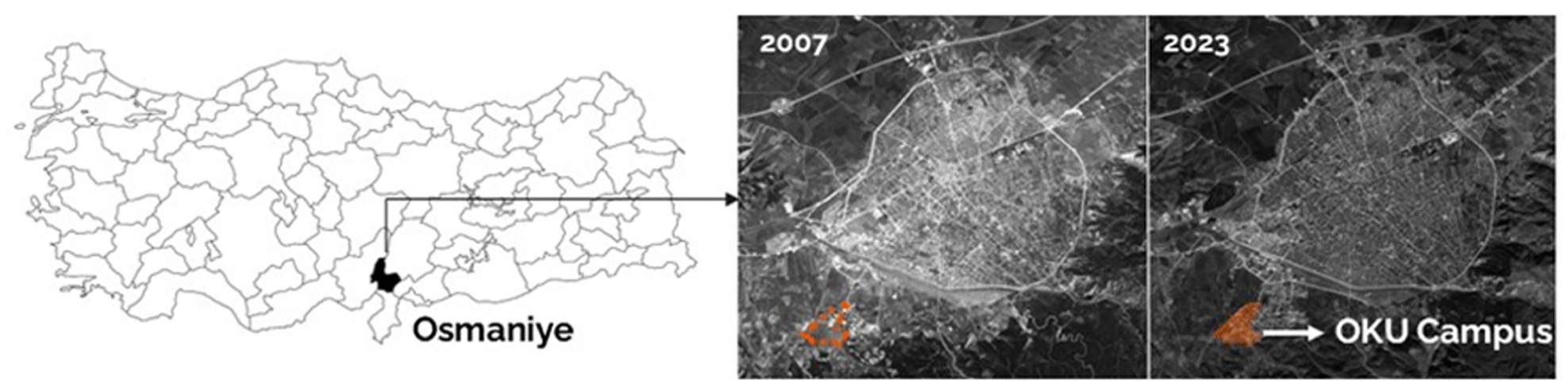
The location of Osmaniye and the university campus.

Demographic information of the students of the DIAED.
According to 2022 statistics, the city of Osmaniye had a population of 550,405 (Turkish Statistical Institute [TUIK], 2023). Following the catastrophic earthquakes of 2023, OKU – like many universities across Türkiye – was unable to open for in-person classes. As part of the national emergency response, student dormitories and campus facilities were repurposed to accommodate earthquake survivors. Students returned to their hometowns. Consequently, the initial methodological plan, which included in-person interviews, was revised to an online survey format.
The research began in Fall 2022 with preliminary observations and discussions about the studio environment, while the data collection was conducted via questionnaires over a 6-week period during March and April 2023. Although this online approach allowed safe and timely data collection, it induced certain limitations. Reliance on self-reported data may have led to response biases or inaccuracies, and the online format limited opportunities for the kind of observational or qualitative engagement that in-person methods might have enabled.
Data Collection
Students completed an online
After questionnaires were sent to all enrolled students, 114 completed surveys were received, resulting in a 64% response rate (Figure 5). To preserve anonymity, each student was named as S1, S2, …S114 in the survey. Informed consent was obtained electronically before data collection. The accompanying information sheet outlined the study’s purpose, voluntary participation, confidentiality measures, and withdrawal rights; only students who provided active consent were able to proceed.

Participation in the online survey.
Located at the ground level and northeast corner of the building, the total area of Studio A has a total area of 200 m2 (Figure 6). The space features a long and narrow layout with a central entry door and a ceiling height of 3.5 m, accommodating about 65 students during design studio sessions.

Observations in Studio A; (a) Blocked pinup boards by tables, (b) Openings with shades, (c) Central space, (d) Tables block doors and pinup spaces in Studio A, (e) Technical drawing with T-square, (f) Human proportions activity, (g) Sketching workshop, (h) Reorganized tables to exhibit student models, (i) Unmatching sizes of the projection view and screen, j. One type of waste bin in the studio.
Eighty-two students who use Studio A participated in a
This follow-up assignment was conducted after several collaborative class discussions and preparatory exercises introducing concepts of learning spaces that promote peer interaction, intellectual engagement and design activities such as drawing, model making, and critical thinking (Figure 7). To maintain consistency, the task required that the studio footprint of 10 × 20 m remain unchanged, while students were free to determine the ceiling height to reflect their proposed spatial strategies.
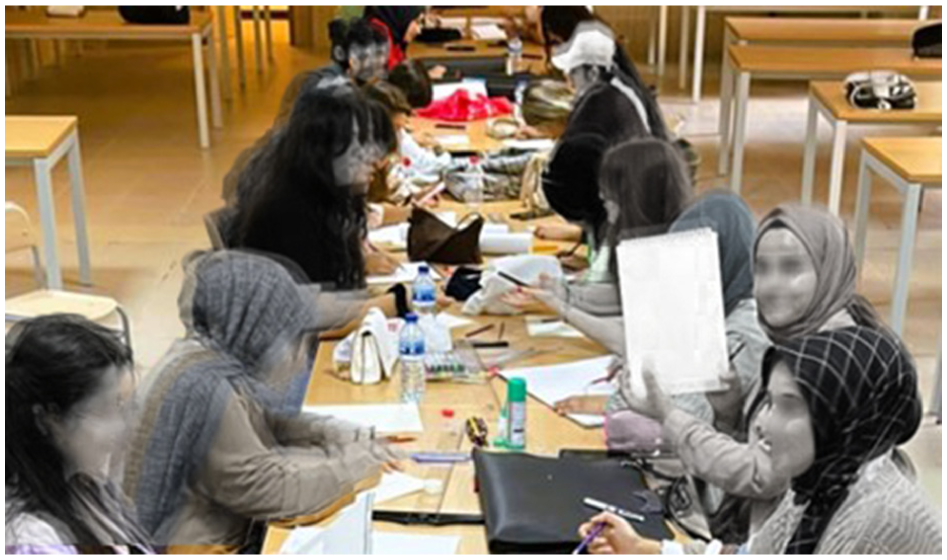
Collaborative design exercise.
The design process unfolded across four stages (Figure 8):
Observing the current studio environment
Analysing positive and negative features within space
Recalling and responding to survey questions
Crafting a reflective narrative and design

Stages of the given design exercise.
As an interactive activity, students were encouraged to initiate discussions that formalised the design process, guided by the following questions:
What features am I satisfied with in the current studio?
What aspects would I change in this learning environment?
What actions are constrained in the existing studio, and how might new spaces accommodate them?
What would I redesign if I had complete autonomy over the studio environment?
Quantitative Data Analysis
Survey data were analysed using Microsoft Excel to generate descriptive statistics, including frequencies and percentages, for all survey items. These results provided an overview of students’ preferences regarding spatial qualities, environmental conditions, and psychological needs within the studio environment. As noted earlier, anonymity was maintained to ensure candid responses; therefore, survey data could not be directly linked to individual design proposals or narrative reports. The quantitative dataset was therefore analysed independently from the qualitative data. This approach captured general trends across the student population while preserving confidentiality and encouraging honest feedback. The Results and Discussion Section further explains the limited design features of Studio A identified through students’ observations and analyses.
Qualitative Data Analysis
Oualitative data, including narrative and design proposals, and open-ended survey comments, were analysed thematically following Braun and Clarke’s (2006) six-step framework. Maintaining anonymity encouraged students to share perceptions freely, although it prevented direct linkage between survey responses and individual design outputs. While the survey data provided general trends, the qualitative analysis offered deeper insight into students’ experiences of studio affordances and constraints.
Thematic analysis was conducted through the following steps:
Design proposals, narratives and also students’ comments from the survey were analysed thematically. Using visual content analysis, data were reviewed for familiarisation and then systematically coded inductively, allowing themes to emerge directly from student submissions. Codes captured both physical elements (such as lighting, layout, and air quality) and behavioural indicators (such as collaboration and movement). These were then refined into broader themes and mapped onto the three dimensions of SDT (autonomy, competence, relatedness), illustrating how spatial design can support students’ psychological needs. This process ensured a transparent and rigorous qualitative analysis aligned with the study’s objectives (Figures 9–13 and Supplemental Appendix A).

Studio design with a mezzanine level and private areas by A1.

Studio design with open shelves, individual tables, and large windows by A2.
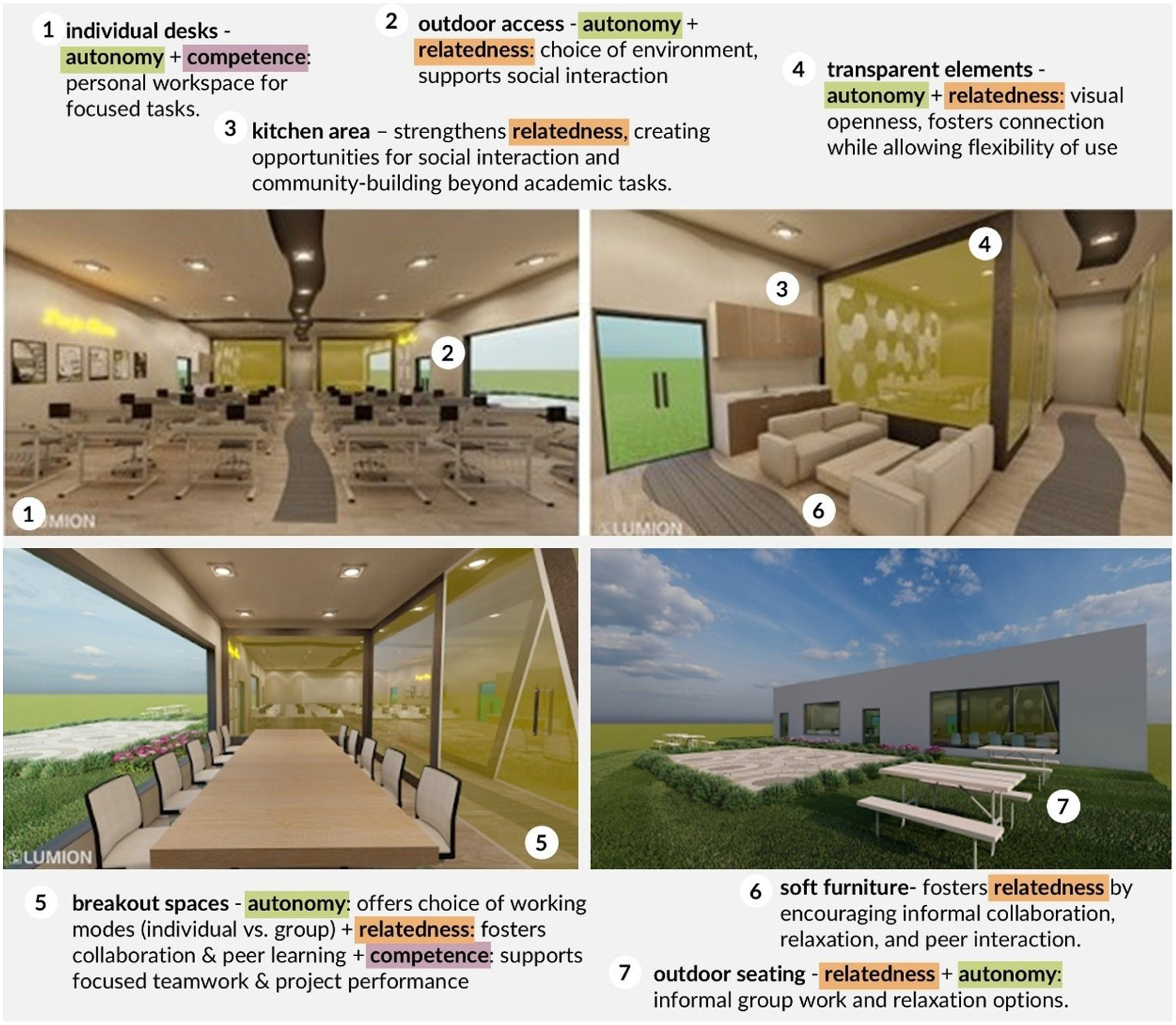
Studio design with transparent elements and an outdoor exhibition area by A3.

Studio design with mezzanine level for different activities by A4.

Key points from the student narratives.
Integration of Qualitative and Quantitative Data
Integration occurred during the interpretation phase using a table inspired by the joint display that Fetters et al. (2013) used in their study to align survey frequencies with qualitative themes and recurring design features. For example, high percentages of students reporting the need for quiet study zones in the survey were compared with qualitative themes of concentration and mental well-being, as well as with design proposals incorporating acoustic partitions or separate quiet rooms. Similarly, survey findings emphasising the importance of natural lighting were interpreted alongside narratives describing light-filled spaces as energising and design solutions that expanded windows or introduced patios.
This strategy of parallel analysis followed by thematic convergence allowed the two datasets to complement one another, offering a more comprehensive understanding of how studio environments support or hinder students’ autonomy, competence, and relatedness. Through the triangulation of survey results, narrative and design outputs, the study generated robust, multi-layered insights into the relationship between studio design, student well-being, and learning outcomes (Supplemental Appendix A).
Results
The Results Section combines data from the online survey (n = 114) and a design exercise (n = 82), examining how the physical environment of Studio A influenced students’ autonomy, competence, and relatedness through the lens of Self-Determination Theory. Figure 14, presents the raw data collected from the students, which were subsequently analysed within the SDT framework.

Student responses related to the learning environment.
The following subsections summarise key themes and trends emerging from the survey data, narratives reflections/observations, and related design proposals, organised under the three psychological needs:
Autonomy: Control Over Space and Learning Activities
Autonomy refers to students’ ability to manage their learning environment and workflow.
The degree of control they exercise over aspects such as the physical setting, furniture, and working hours strongly shapes their capacity to complete tasks effectively (Göçer et al., 2019; Ortiz et al., 2017; Yun, 2018). Fostering autonomy in design education requires a balance between individual initiative and appropriate external guidance. When access to resources or space is restricted, or when students are overly directed by educators, their sense of autonomy is diminished.
Survey Findings
61% of students reported that they could not modify the studio layout according to their learning needs.
95% wanted individual drafting tables.
85% emphasised the need for greater circulation space.
82% requested soft seating to create a more comfortable, flexible environment.
76% wanted control over lighting levels through adjustable lamps and dimmable fixtures.
Observations and Narratives
Observations revealed that bulky furniture, narrow circulation paths, and blocked access to pin-up boards limited students’ ability to adapt their environment to task-specific needs. The studio closure after class hours for cleaning or other reasons further reduced opportunities for independent work. Several students expressed frustration that these restrictions did not align with the open-access culture of typical architecture education. One student described the studio as “unnecessarily restrictive,” highlighting the loss of autonomy in managing their own workflow.
Design Proposal
Student design proposals frequently incorporated modular furniture, movable partitions, and mezzanine levels to enable reconfiguration for group or independent work. As shown in Figure 9, for example, student A1 proposed an amphitheatre-style presentation area combined with flexible personal workstations, reflecting the desire for adaptable learning zones. Other submissions introduced kitchenette areas and informal seating corners symbolising students’ aspiration to extend their sense of control beyond academic tasks and to cultivate comfort and ownership within the studio environment.
While many students integrated individual desks for each student, as in A2’s proposal, some narratives also expressed their complaints, reflecting their frustration: “Our desks are not functional enough. Studios are small, desks are cramped together, lighting is inadequate, ventilation is poor, and the atmosphere feels depressing and suffocating.” Another student added in the design narrative that: “I gave special attention to desk spacing to maintain both collaboration and personal working space.”
Interpretation
The student responses highlight a perceived lack of control over spatial configurations and furniture flexibility, which in turn undermines autonomy. Providing opportunities to reconfigure layouts through adjustable furniture and personalised workstations enhances students’ control over their environment, directly supporting the autonomy dimension of SDT.
Competence: Conditions Supporting Learning and Productivity
Students feel competent when they can complete their tasks effectively; however, physical constraints within the studio environment can hinder task performance and, consequently, compromise their sense of competence. Previous studies show that inadequate classroom resources negatively affect educational outcomes (Duncombe, 2017), particularly in the art and design disciplines. Within design studio settings, students are expected to produce original work through a creative processes that require dedicated drafting tables, model-making areas, and access to technical tools. Technology also plays a pivotal role in supporting both learning and individual growth, with well-designed learning spaces characterised by the diverse technological resources (Coley et al., 1997; Kerrigan, 2002; Mistretta, 2015). The integration of technology facilitates experimentation, collaboration and engagement in learning environments.
Although factors such as thermal comfort do not directly define competence, situations where individuals cannot regulate the temperature to create a comfortable environment illustrate how limited control over physical conditions can indirectly reduce both autonomy and competence. Perceived productivity is closely linked to perceived control, and personal control has been identified as a strong predictor of occupants’ perceived productivity in both high- and low-performance workplaces (Göçer et al., 2019).
According to Bandura (2006), an individual’s agency arises through interaction with both physical and socio-cultural contexts. Research supports that a well-designed interior environment improves the effectiveness of learning spaces and strengthens the confidence of those involved in teaching and learning (Scott-Webber et al., 2000) Eghosa et al., 2020), while also fostering students’ curiosity and passion (Demirbas & Demirkan, 2007).
Lighting conditions also play a significant role in supporting competence, though the topic remains debated (Earthman, 2004). Natural lighting is generally preferred for learning spaces, but there are concerns about its practicality in educational settings (Alaqtum et al., 2024; Benya, 2001). Depending on the season and time of day, it can cause glare or inconsistencies. Also, it's found that poor control of lighting levels hindered visual clarity during presentations and film screenings (Ministery of Education & Wall, 2016). Some studies suggest that fluorescent lighting can impair concentration and increase hyperactivity (Blackmore et al., 2011), while others associate higher daylight levels with improved academic performance and engagement (Harrigan, 1999; Heschong, 1999).
Survey Findings
86% complained about shared desks, citing insufficient equipment
80% relied on portable fans due to inefficient cooling systems
47% wanted more artificial lighting, while 80% reported insufficient daylight during the day
83% expressed that having colourful furniture and architectural elements were important (53%-very significant, 30%-significant).
Observations and Narrative
Observations revealed that students often supplemented the existing cooling system with portable fans. Studio A featured a combination of both passive and active ventilation systems, including double-glazed windows and ceiling-mounted cassette air conditioning units that provided heating and cooling. However, with an average annual maximum temperature of 23°C, students expressed discomfort, particularly during the warmer months. Students often kept the lower section of the windows open during hot summer days, reducing the efficiency of the air conditioning system (see Figure 6b). To avoid these situations, Ghaddar et al. (2024) suggested that spaces with poor insulation and/or high occupant density, like Studio A, require progress with advanced cooling systems for better thermal comfort and indoor air quality.
Further observations noted overcrowded and poorly ventilated studios, damaged or non-ergonomic furniture and limited technological resources. The studio contained only a projector, but no laser cutters or fabrication laboratories. Students described the atmosphere as “boring” or “like a chemistry lab,” reflecting how inadequate design and resources can suppress creativity. Complaints about unstable internet connexion, a shortage of electrical outlets and non-adjustable workstations, further underscored barriers to competence. Narratives repeatedly emphasised frustration at the mismatch between the scale of required tasks, which includes model-making and drawings, and the cramped, poorly resourced environment.
Design Proposal
Students’ design solutions often sought to address these deficiencies by incorporating digital fabrication laboratories, additional storage, specialised drawing and model-making tables, and improved lighting strategies. For example, student A3’s proposal included raised floors for integrated electrical systems and dedicated tables for drawing and modelling (Figure 11). The student explained the difficulty of using a single table for both drawing and model-making activities, which involved allocating different table sizes to suit specific tasks. Working areas for small groups were also positioned separately from the main space to support teamwork and enhance their performance.
This student in the narrative expressed that “A raised flooring system was implemented where the student desks are located. This allows electrical sockets and computer connections to be installed underneath, keeping the space tidy. The infrastructure supports technological integration for modern classroom requirements. Accessibility and safety were prioritised by concealing wiring while maintaining easy access points.” Another student mentioned their struggle during lectures mentioning that “in Studio A, the projector screen is too small and the lights create glare. In my design, I added adjustable ceiling lights and larger screens.” In addition, many students introduced high ceilings, atriums and increased access to natural light to stimulate productivity and improve the studio’s overall atmosphere
Interpretation
The findings demonstrate that inadequate environmental conditions and resources undermine students’ ability to perform effectively, thereby weakening their sense of competence. Improvements in lighting, technological infrastructure, and ergonomic furniture are essential to meet academic expectations, directly addressing the SDT dimension of competence.
Relatedness: Opportunities for Social Interaction and Collaboration
Relatedness captures students’ sense of belonging, peer connexion, and community within the learning environment. It concerns the extent to which students interact with their peers, and how the studio’s physical environment contributes or constrains these interactions. Much of design studio learning involves displaying, discussing, and defending the work. When students are unable to engage in these activities due to inadequate or poorly designed studio spaces, both relatedness and competence are affected.
Open classrooms featuring movable partitions, soft seating, and adaptable learning zones have been shown to foster active participation and more dynamic forms of learning (Papaioannou et al., 2023). However, distractions in such environments are a well-documented concern in educational research. Numerous studies demonstrate that increased noise levels significantly reduce cognitive, visual and auditory attention, negatively affecting students’ concentration and mental performance. Computational research explains this phenomenon by showing how noise disrupts activity in the frontal region of the human brain, responsible for personality characteristics, decision making, movement, recognition of smell, and speech ability (Hygge, 2003).
Similarly, classroom windows have been studied as a potential factor for distraction. Yarbrough (2001) provides a detailed review of the importance of the size and location of windows and their effect on student learning and interaction. In innovative classroom design, windows are deliberately positioned lower to encourage students’ visual connexion between inside and outside spaces effectively (Research New Zealand, 2010). Open and flexible layouts also enhance visual transparency. Post-occupancy evaluations have identified several advantages of transparency, including greater natural light, improved safety for students and staff, and a more collaborative teaching style (Osborne, 2013; Research New Zealand, 2010). However, transparency without adequate control mechanisms can compromise the privacy and individual focus.
Survey Findings
96% identified the need for quiet and private areas for teamwork.
82% requested soft seating and informal gathering spaces.
36% valued carpet-covered floor as a significant feature.
Observations and Narrative
Overcrowding, noise and narrow layouts limited peer interaction and restricted opportunities for collaboration. The absence of informal social amenities, such as kitchenettes or lounge areas, further weakened the sense of community. Security concerns also emerged as students reported that their models had been damaged in the studio.
Display areas within design studios enable students to engage actively in curriculum-related activities and discussions. Nonetheless, limited access to essential pinup boards for group discussions at designated times, as well as constraints related to layout adjustments, resulted in missed opportunities (see Figure 6a and d). Narratives frequently noted a sterile and uninspiring environment, with one student writing: “I don’t feel belong.” These reflections reveal that Studio A, despite being the central learning hub, failed to foster a sense of belonging or peer connexion.
Design Proposal
Students responded to these shortcomings by envisioning more socially supportive spaces. Many emphasised communal kitchens, coffee counters, informal resting spaces, and flexible group zones in their proposals. For example, student A4 created mezzanine levels for social gatherings, critiques and group work, complemented by a patio and outdoor seating to strengthen peer connections (Figure 12).
Several proposals also integrated display walls and exhibition zones, reinforcing the idea that showcasing work enhances both identity and belonging. For instance, one student explained, “In the patio, I gave tables for studying and resting. I created space both for lying down and sitting.”
Interpretation
Survey responses highlighted the dual need for collaboration and privacy, while observations confirmed the spatial and cultural barriers to relatedness. The design proposals vividly illustrated student-driven solutions, such as creating communal areas within exhibition spaces. Overall, relatedness within the studio was undermined by overcrowding and inflexible layouts. However, it can be strengthened through the incorporation of informal lounges, review areas, and exhibition zones that promote collaboration, shared identity, and emotional connexion within the studio community.
Integration of Quantitative and Qualitative Findings
The survey included a section with open-ended questions, allowing students to provide narrative responses. The qualitative data obtained from these comments offered deeper insight into the lived experiences of the students in Studio A (Figure 13).
All quantitative data from the surveys and design proposals, and qualitative data from the surveys/observation/narratives and design proposals were integrated, coded, and mapped for emergent themes under the SDT needs (Tables 1–3).
Integration of Quantitative and Qualitative Findings: Autonomy.

Integration of Quantitative and Qualitative Findings: Competence.

Integration of Quantitative and Qualitative Findings: Relatedness.

Discussion
We examined how the physical environment of an architecture studio affects students’ psychological needs for autonomy, competence, and relatedness, as described by Self-Determination Theory (SDT). By integrating survey data with design proposals and narratives, the analysis reveals consistent patterns in how students interpret and respond to environmental affordances.
The design exercises further confirmed that students internalised these challenges and proposed solutions that addressed each of the three SDT needs. Their visions emphasised flexible and reconfigurable layouts, individualised workstations, enhanced lighting, technological infrastructure, and the creation of informal lounges and collaborative zones. Collectively, these proposals highlight the ways in which studio environments can be reimagined to better support creativity, productivity, and community.
The findings suggest specific strategies to translate SDT-based insights into actionable architectural design principles:
By incorporating these strategies, studios can be transformed into environments that actively nurture students’ creativity, motivation, and learning outcomes.
Limitations and Future Research Directions
This study has some limitations that should be acknowledged. First, the survey included only first, second, and third-year students, as the Department of Interior Architecture and Environmental Design (DIAED) had not yet enrolled a fourth-year cohort. Consequently, the experiences of senior undergraduates and postgraduate students, who engage in advanced coursework and professional preparation, were not captured. In addition, the study was conducted within a single major at a newly established university. Expectations for studio environments are particularly high in this context, but the physical conditions do not fully meet the pedagogical needs of architecture education.
Future research should therefore expand to include all year levels as well as multiple institutions, enabling cross-institutional comparisons and broader generalisability. Longitudinal designs could further trace how students’ perceptions of studio environments evolve over time, while mixed-method approaches – integrating surveys, interviews, and ethnographic observations – would provide richer insights into the relationship between studio design and student well-being. Finally, lessons from learning environments in other disciplines could inform the planning of architectural studios, helping to develop design strategies that support diverse student populations in higher education.
Conclusions
This study highlights the importance of aligning studio design with students’ psychological needs. The findings show that when spatial environments support flexibility, comfort and social interaction, they foster motivation and well-being in architectural education. Student proposals offered practical strategies, ranging from individualised workstations to collaborative lounges that can guide future studio planning and design. More broadly, the study demonstrates the value of applying Self-Determination Theory (SDT) as a framework for evaluating learning environments, effectively bridging psychological theory and architectural practice. By investing in spaces that nurture autonomy, competence, and relatedness, institutions can foster studios that not only support academic achievement but also strengthen professional readiness.
Supplemental Material
sj-docx-1-sgo-10.1177_21582440251407947 – Supplemental material for Optimising Architectural Studio Spaces
Supplemental material, sj-docx-1-sgo-10.1177_21582440251407947 for Optimising Architectural Studio Spaces by Ezgi Bay-Sahin and Nadia Shah in SAGE Open
Footnotes
Acknowledgements
The authors sincerely thank the students of the Department of Interior Architecture and Environmental Design (DIAED) at Osmaniye Korkut Ata University for their enthusiastic participation in the surveys and design exercises. Their reflections and creative input were invaluable in shaping the findings of this study.

Ethical Considerations
Osmaniye Korkut Ata University, Scientific Research and Publication Ethics Committee. Ethics approval reference E.111917.
Funding
The authors received no financial support for the research, authorship, and/or publication of this article.
Declaration of Conflicting Interests
The authors declared no potential conflicts of interest with respect to the research, authorship, and/or publication of this article.
Data Availability Statement
The data that support the findings of this study are available from the corresponding author upon reasonable request.
Supplemental Material
Supplemental material for this article is available online.
References
Supplementary Material
Please find the following supplemental material available below.
For Open Access articles published under a Creative Commons License, all supplemental material carries the same license as the article it is associated with.
For non-Open Access articles published, all supplemental material carries a non-exclusive license, and permission requests for re-use of supplemental material or any part of supplemental material shall be sent directly to the copyright owner as specified in the copyright notice associated with the article.
