




Abstract
As avid users, university students find themselves immersed in the deluge of content being created and shared on digital platforms, which makes digital overload a significant concern. The present study examines the effects of digital overload on university students’ psychological well-being and how the use of coping mechanisms might help to mitigate some of these effects. The study developed a research model based on the S-O-R (stimulus, organism, response) framework and gathered data from undergraduate students at a major public university in the United Arab Emirates. To minimize the threat of common method bias, data collection was conducted in two rounds separated by two weeks. Hypotheses were tested using a partial least square path modeling approach. The findings show that digital overload causes psychological strains among students such as technostress and exhaustion, which subsequently encourage them to adopt coping mechanisms. The findings also show that the adoption of coping mechanisms is positively associated with student engagement. The study contributes to the literature by shifting the focus away from information overload—emphasizing digital overload instead—and investigating how students can respond to it by using coping mechanisms.
Plain Language Summary
This study explores how the excessive use of digital platforms affects the well-being of university students and how they cope with it. Many students are overwhelmed by the vast amount of content they encounter on digital platforms. The researchers used a model based on the S-O-R (stimulus, organism, response) framework and collected data from undergraduate students at a major public university in the United Arab Emirates. Their findings reveal that digital overload leads to negative effects like technostress and exhaustion, which prompt students to use coping mechanisms. In turn, these coping mechanisms are linked to increased student engagement. This study is valuable as it offers insight into how students can proactively deal with digital overload.
Keywords
Introduction
In the past decade, powerful digital platforms have emerged, offering content sharing (YouTube, TikTok, Twitter), instant messaging (WhatsApp, Messenger), social networking (Facebook, Twitter, Instagram), streaming (Netflix, Spotify, Twitch), and gaming services (PlayStation, Xbox) to users around the world (Armano et al., 2022; World Economic Forum, 2016). University students, due to their demographic characteristics—being young, educated, and enthusiastic about technology—have been at the forefront of consuming, sharing, and creating content and socializing on these platforms (Primack et al., 2017; Upadhyaya & Vrinda, 2021).
Digital platforms are awash with content such as social media status updates, photo and video uploads, blog posts, podcasts, and streaming content, among others (LaRose et al., 2014; Masood et al., 2022; Matthes et al., 2020). As much of this content deluge is highly attuned to the interests, lifestyles, and aspirations of university students, they cannot simply ignore it; instead, they are compelled to interact with it, making digital overload a significant concern on their psychological well-being and academic performance (Alt, 2015; Maier et al., 2019; Tarafdar et al., 2020; Whelan et al., 2020). In addition, those digital platforms that are particularly popular among university students, such as TikTok, YouTube, and Instagram rely on powerful algorithms that gather user data at scale and use it to make personalized content recommendations and serve push notifications (Lorenz-Spreen et al., 2020; Risi & Pronzato, 2022). For many students, this algorithmic nudge makes the task of regulating their digital behavior an uphill battle (Primack et al., 2017).
Teachers, university administrators, and policymakers alike express deep concern about the risks posed by digital overload on the psychological well-being and academic performance of university students (Lauri et al., 2020; Upadhyaya & Vrinda, 2021). Lanir (2019), citing the results of a nationally representative survey conducted by Pew Research Center, observed that most teachers (close to 90%) agreed with the statement that “today’s digital technologies are creating an easily distracted generation with short attention spans” and with the statement that“today’s students are too ‘plugged in’ and need more time away from their digital technologies.” Similarly, a series of academic studies have reported a range of diminished psychological functioning caused by digital overload including loneliness, anxiety, fatigue, sleep deprivation, and attention deficit (Alt, 2015; Matthes et al., 2020; Steele et al., 2020). Additionally, with students devoting an increasing amount of time and energy to digital platforms, academic work tends to take the back seat, adversely affecting their performance (Tokunaga, 2016).
Against the preceding backdrop, the current study aims to examine the effects of digital overload on university students’ psychological well-being and the role that coping mechanisms play in mitigating some of these effects. Specifically, the study seeks to answer the following research questions:
What are the effects of digital overload on students’ psychological well-being such as technostress and exhaustion?
What are the effects of technostress and exhaustion in terms of encouraging the use of coping mechanisms against digital overload? And finally,
What are the effects of using coping mechanisms on student engagement?
To answer these research questions, the study develops a research model based on the S-O-R (stimulus, organism, response) framework (Mehrabian & Russell, 1974), which suggests that people respond to a stimulus in their environment initially by forming internal, psychological responses. These internal psychological responses, in turn, shape their behavioral responses in the form of avoidance or approach behavior. In our context, digital overload serves as the stimulus in the environment that potentially induces negative psychological strains among university students including technostress and exhaustion (Maier, 2014). As these strains grow in strength, students might be forced to adopt coping mechanisms to minimize the effects of digital overload. Finally, the use of coping mechanisms is anticipated to improve student engagement as it offers students greater control over their digital habits, thereby enabling them to better focus on their academic studies.
To test its hypotheses, the study gathered data from students at a major public university in the United Arab Emirates and employed a partial least square path modeling approach (PLS-SEM). To reduce the risk of common method bias, data on the independent, mediating, and outcome variables were gathered in two rounds, separated by two weeks (Podsakoff et al., 2012). The findings offer insight into how students can improve their academic engagement by better managing their digital habits through coping mechanisms. More specifically, the findings contribute to the literature in three substantive ways. First, previous research has mainly focused on the negative effects of digital overload and how they manifest in student behavior (Loh et al., 2022; Masood et al., 2022; Matthes et al., 2020). This approach is based on the implicit assumption that university students are powerless against digital overload and cannot take proactive measures to reduce its impact. The current study extends this approach by investigating how students can proactively respond to digital overload through coping mechanisms. Second, the study contributes to the literature by shifting the focus away from information overload and instead emphasizing digital overload. Information overload assumes passive exposure to abundant information (Eppler and Mengis, 2004; Roetzel, 2019), but in the context of contemporary digital platforms, users do not just passively consume content but also engage with it (e.g., like, comment, share, etc.), create their own content (Roffarello & De Russis, 2021), and socialize on the platforms (Alhabash & Ma, 2017; Maier et al., 2015). These interactive experiences and behaviors are significant sources of digital overload and can better be accounted for using the concept of digital overload (Okeke et al., 2018). Third, the study employs student engagement as its primary outcome of interest. Previous research has mainly focused on singular measures of academic performance such as GPA scores (Whelan et al., 2020; Yu et al., 2019). Student engagement is a more comprehensive measure of students’ emotional, behavioral, and cognitive involvement in the learning process (Fredricks et al., 2004; Kuh, 2009). By measuring student engagement, therefore, the impact of digital overload on students’ overall learning experience can be better assessed.
Theoretical Foundation: S-O-R Framework
The S-O-R framework which originates in the environmental psychology research tradition (Mehrabian & Russell, 1974), posits that environmental factors act as external stimuli affecting individuals’ internal cognition and affective states, which subsequently shape their behavioral responses in the form of either approach or avoidance behavior (Koeske & Koeske, 1993). Approach behavior refers to actions that attract individuals toward a stimulus, whereas avoidance behavior refers to actions that repel individuals from a stimulus (Russell & Mehrabian, 1976). Approach and avoidance behaviors are governed by positive or negative affective states evoked by a stimulus such as pleasure, curiosity, or stress.
The S-O-R framework has been successfully applied in previous research to explain the consequences of information overload on students’ psychological well-being and academic performance (Lin et al., 2021; Loh et al., 2022; Masood et al., 2022; Xu et al., 2022; Yu et al., 2019). A summary of this literature is presented in Table 1. Given its track record of explaining students’ psychological and behavioral responses in the context of digital platforms, the present study draws on the S-O-R framework to develop a set of hypotheses about the effects of digital overload on students’ psychological well-being and academic performance.
Summary of Relevant Studies.

In a nutshell, the proposed research model links digital overload (the stimulus) to technostress and exhaustion (psychological responses). Technostress and exhaustion are subsequently linked to coping mechanisms (behavioral response). Finally, coping mechanisms are linked to student engagement (academic outcome). Digital overload refers to the difficulty that people face in managing the content deluge on digital platforms due to constraints related to time and processing capacity (Okeke et al., 2018). Individuals are exposed to an abundance of content on digital platforms, such as social media status updates, photo and video uploads, blog posts, podcasts, and streaming content (Joshi et al., 2022; Smith et al., 2021). Digital overload acts as a stimulus in students’ learning environment and can lead to negative psychological strains including technostress and exhaustion (Cao et al., 2018; Loh et al., 2022; Maier et al., 2015; Pflügner et al., 2021a). Technostress refers to the psychological stress and distraction resulting from failure to deal with digital platforms in a healthy manner, while exhaustion refers to feelings of boredom and fatigue from excessive and constant use of digital platforms (Upadhyaya & Vrinda, 2021; Yu et al., 2019).
In the proposed research model, coping mechanisms are posited as a behavioral response to the psychological strains induced by digital overload (Lin et al., 2021). Comping mechanisms represent proactive efforts made by students to minimize the negative consequences of digital overload on their psychological well-being (Jones & Kelly, 2018; Savolainen, 2007; Tarafdar et al., 2020). By enabling students to better regulate their digital habits and focus on their academic responsibilities, the adoption of coping mechanisms can improve student engagement (Tarafdar et al., 2020). Figure 1 visualizes the proposed research model, while the subsequent section elaborates on proposed relationships.
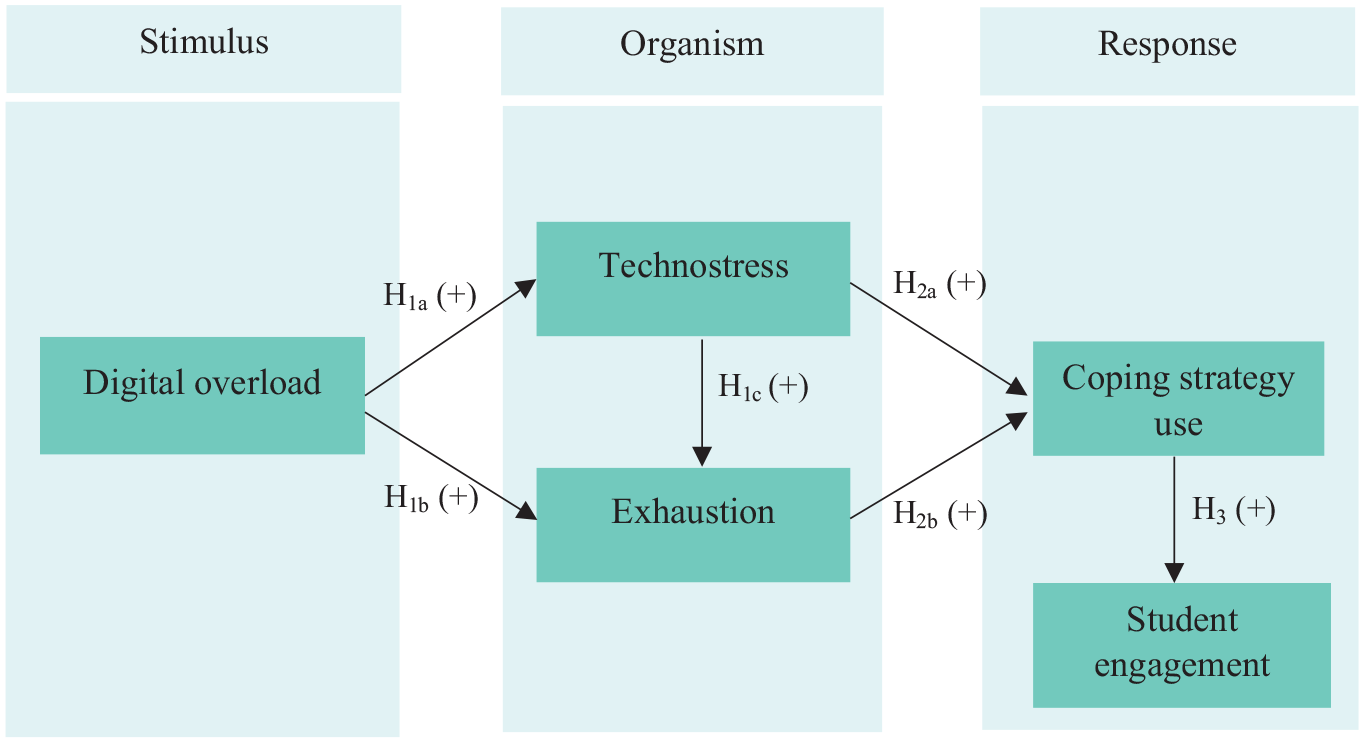
Proposed research model.
Hypotheses Development
Digital Overload, Technostress, and Exhaustion
The pervasive use of digital platforms, along with the large volume of engaging and interactive content being shared on these platforms, can cause digital overload among university students (Roetzel, 2019). Digital overload refers to excessive exposure to digital platforms as users constantly consume, create, and share content and socialize on these platforms (Graf & Antoni, 2023). Digital overload corresponds to the concept of information overload, which has a long history of research and theoretical development (Eppler & Mengis, 2004; Jackson & Farzaneh, 2012). Information overload occurs when decision-makers are presented with more relevant information than they can optimally process, resulting in negative consequences such as decreased attention, lower motivation, and reduced reasoning and decision-making abilities (Jones & Kelly, 2018).
In the current study, the concept of digital overload is chosen over information overload to capture students’ interactive experiences on digital platforms. The term digital overload encompasses the vast array of content students encounter on digital platforms including social media status updates, photo and video uploads, blog posts, podcasts, vlogs, streaming content, gaming, and multimedia web content (Joshi et al., 2022; Okeke et al., 2018; Smith et al., 2021). In contrast, information overload primarily focuses on exposure to work-related information, such as emails (Graf & Antoni, 2023; Jones & Kelly, 2018; Lauri et al., 2020). The emphasis on digital overload is also necessary as research on information overload tends to concentrate on passive consumption of information, while digital overload emphasizes users’ interactive experiences on digital platforms such as creating and sharing content and socializing with other users, not just passively consuming content (Matthes et al., 2020; Okeke et al., 2018; Roffarello & De Russis, 2021).
University students who experience digital overload are susceptible to psychological strains including technostress and exhaustion (Loh et al., 2022; Malik et al., 2020). On top of consuming content created by others, these students might feel the pressure to create their own content and keep track of how other users are engaging with this content (LaRose et al., 2014; Maier et al., 2015). It is also common for university students to establish a presence on multiple digital platforms simultaneously due to fear of missing out (Alt, 2015). These behaviors are further fueled by the algorithmic designs employed by digital platforms, which gather behavioral data at scale and use it to make highly personalized content recommendations and send out push notifications (Lorenz-Spreen et al., 2020). These algorithmic designs nudge students to be constantly present on digital platforms (Upadhyaya & Vrinda, 2021). Such excessive exposure to digital platforms while also managing academic responsibilities can exacerbate the negative effects of digital overload on students’ psychological well-being such as technostress and exhaustion (Tarafdar et al., 2020).
Technostress refers to the psychological stress caused by an individual’s inability to handle technology in a healthy way (Ayyagari et al., 2011). It is the feeling of being overwhelmed and distracted by technology (Ragu-Nathan et al., 2008). Technostress is mainly caused by digital overload and the constant availability of digital platforms (Tarafdar et al., 2020; Upadhyaya & Vrinda, 2021). On the other hand, exhaustion is a feeling of being tired or bored from using technology (Yu et al., 2019). It is an aversive state of emotional, mental, and physical fatigue resulting from prolonged use of digital platforms (Malik et al., 2020). Given the accumulated evidence in the literature (Alvarez-Risco et al., 2021; Loh et al., 2022; Yu et al., 2019), digital overload can be anticipated to be positively associated with both technostress and exhaustion. In addition, by causing students to experience platform-related stress, including the pressure to be present on multiple platforms, technostress might exacerbate students’ feelings of exhaustion (Loh et al., 2022; Shi et al., 2020). Based on the preceding discussion, the following hypotheses are proposed:
H1a: Digital overload will be positively associated with technostress.
H1b: Digital overload will be positively associated with exhaustion.
H1c: Technostress will be positively associated with exhaustion.
Technostress, Exhaustion, and Coping Mechanisms
A key contribution of the information overload literature is the identification of coping mechanisms that decision-makers utilize to manage information overload. In an organizational context, these coping mechanisms are categorized into four levels of implementation: at the information level (e.g., improving information quality and relevance), at the decision-maker level (e.g., enhancing information literacy, using time and information management tools), at the organizational level (e.g., standardizing procedures, increasing collaboration), and at the technology level (e.g., using intelligent information management systems and filters) (Eppler & Mengis, 2004; Lauri et al., 2020; Roetzel, 2019).
Other researchers focused on what individuals can do to alleviate the adverse effects of information overload (Jones & Kelly, 2018; Savolainen, 2007; Saxena & Lamest, 2018). These researchers highlight information avoidance, information withdrawal, information filtering, and information queuing as some of the most commonly used coping mechanisms. Information avoidance involves ignoring information, while in information withdrawal, limited sources of information are considered. Information queuing involves prioritizing information and processing it in smaller chunks at intervals, and filtering involves weeding out irrelevant information.
The coping mechanisms identified at the individual level are particularly promising in explaining university students’ response to digital overload as most students act in an individual capacity when dealing with digital overload. Avoiding certain digital platforms, reducing the frequency of visits to digital platforms, limiting the time spent on digital platforms, specializing in few digital platforms (as opposed to using several digital platforms simultaneously), and using education-oriented digital platforms (e.g., Wikipedia, Google, Medium, etc.), are some of the coping mechanisms that university students could employ to overcome digital overload (Lin et al., 2021; Loh et al., 2022). These coping mechanisms are consistent with the coping mechanisms identified in the information overload literature. For instance, avoiding certain digital platforms corresponds to information avoidance; limiting the time spent on digital platforms corresponds to information withdrawal; specializing on few platforms and seeking out more educational platforms correspond to information filter.
Students who encounter increased levels of technostress and exhaustion may resort to coping mechanisms to minimize these psychological strains (Eppler & Mengis, 2004). Avoidance is a general behavioral response that individuals develop against stressors (Graf & Antoni, 2023; Jones & Kelly, 2018; Tarafdar et al., 2020). Accordingly, the following hypotheses are proposed:
H2a: Technostress will be positively associated with the use of coping mechanisms.
H2b: Exhaustion will be positively associated with the use of coping mechanisms.
Coping Mechanisms and Student Engagement
Student engagement refers to students’ constructive involvement in learning and the quality of their overall learning experience (Kuh, 2009; Reeve et al., 2020). This study adopts the widely accepted, multidimensional conceptualization of student engagement consisting of cognitive, behavioral, and emotional dimensions (Fredricks et al., 2004).
Behavioral engagement refers to the observable action students take to be on-task and exert effort (Fredricks et al., 2004; Reeve et al., 2020). Students who are behaviorally engaged would typically comply with behavioral norms, such as attendance and involvement, and avoid getting involved in disruptive behavior (Fredricks et al., 2016). Emotional engagement refers to students’ affective responses to learning. Students with favorable emotional engagement exhibit positive affective reactions toward learning such as interest and excitement (Trowler, 2019). Cognitive engagement refers to the thinking process and strategies students deploy as part of their learning process (Reeve et al., 2020). Cognitively engaged students would be invested in their learning, seek to go beyond the requirements, and would relish challenges (Trowler, 2019).
As a multidimensional construct, student engagement embodies students’ multifaceted involvement in learning and the overall quality of their learning experience. It serves as a comprehensive measure of students’ ability to grasp the knowledge and skills they are expected to master (Appleton et al., 2008). Thus, student engagement is employed in the current study to assess students’ overall learning experience as opposed to using singular measures of academic performance such as GPA scores. Especially when measured with self-report, GPA scores are prone to socially desirable answers (Tafesse, 2022). Therefore, the use of student engagement, which assesses multiple dimensions of students learning, is a more appropriate choice (Kuh, 2009; Wang et al., 2016).
The adoption of coping mechanisms should enable students to develop healthier and more sustainable digital habits (Graf & Antoni, 2023). Coping mechanisms encourage students to proactively regulate their digital platform use, which should help them free up time for academic work (Lin et al., 2021; Whelan et al., 2020). These benefits of coping mechanisms are expected to result in improved student engagement (Tokunaga, 2016). Therefore, the following hypothesis is proposed:
H3: The use of coping mechanisms will be positively associated with student engagement.
Methodology
Sampling Procedure
Data were collected from undergraduate students at United Arab Emirates University, which is a major public university in the United Arab Emirates. Students enrolled in the various courses taught by the researchers involved in this study were used as a sample. Such classroom samples offer numerous benefits that can improve the quality of survey data in educational research (Wilson, 2017). Firstly, the classroom is a convenient and cost-effective source of data, as the students are easily accessible to researchers. Secondly, the classroom creates an opportunity to have students’ full attention during data collection, which is critical for obtaining high-quality responses. Thirdly, the classroom provides researchers with greater flexibility during the sampling and data collection process. For instance, sequential data collection would be easier to implement in the classroom, which increases the validity and richness of the data. Finally, when the classroom encompasses multiple undergraduate courses, as is the case with the present study, the resulting sample may be representative of the larger university population.
The demographic characteristics of the full sample of students (N = 142) are visually summarized in Figure 2. Most of the sample students are business majors specializing in human resources (22%), marketing (18%), and entrepreneurship concentrations (12%). Students from other disciplines are also represented in the sample including political science (8%) and tourism (5%). Most of the respondents are juniors (55%), followed by sophomores (27%), and seniors (15%). Female students are the majority in the sample (90%), which is reflective of the total student population of the university from which data was collected. The average age of the sample students is 20.81 years (standard deviation = 1.5).

Sample characteristics.
Data Collection
The data collection was conducted using a print questionnaire, which was designed using best practices with the view to increase the quantity and quality of responses. This included clear and simple question wording, logical ordering of questions, and limiting the number of questions to the minimum necessary (Krosnick, 2018). The questionnaire underwent multiple rounds of editing for brevity and clarity. To minimize the threat of common method bias, a systematic error that occurs when respondents respond to measures of multiple variables in the same way, the data collection procedure was broken down into two rounds, separated by 2 weeks. Such temporal separation of the data collection procedure is a recommended remedy for addressing common method bias (Podsakoff et al., 2012). In the first round, students responded to questions about digital overload, psychological strains, and demographic questions. In the second round, they responded to questions about student engagement and coping mechanisms. This approach ensures that students’ responses to the dependent variables are not influenced by their responses to the independent and mediating variables, and vice-versa, by making memories of their previous responses less salient for current responses. Participation in the study was voluntary and students were adequately briefed about the purpose of the questionnaire.
Measurement of Variables
To increase the validity of the results, the present study adopted established measures from existing literature to measure its constructs. Student engagement was measured reflexively using seven items rated on a five-point Likert scale, with responses ranging from “Strongly Disagree” (1) to “Strongly Agree” (5). The scale items were adapted primarily from Fredricks et al. (2016) and Wang et al. (2016) and captured students’ behavioral, emotional, and cognitive engagement.
Digital overload was measured reflexively using four items rated on a five-point Likert scale, with responses ranging from “Strongly Disagree” (1) to “Strongly Agree” (5). The items were primarily adapted from Lee et al. (2016) and Loh et al. (2022). They were modified to capture students’ interactive experiences on digital platforms such as content creation and socialization.
Technostress was measured reflexively using four items rated on a five-point Likert scale, with responses ranging from “Strongly Disagree” (1) to “Strongly Agree” (5). The items were primarily adapted from Cao et al. (2018) and Lin et al. (2021). Similarly, exhaustion was measured reflexively using three items rated on a five-point Likert scale, with responses ranging from “Strongly Disagree” (1) to “Strongly Agree” (5). The items were primarily adapted from Cao et al. (2018) and Yu et al. (2019).
Finally, coping mechanisms were measured reflectively using four items on a five-point Likert scale, with responses ranging from “Strongly Disagree” (1) to “Strongly Agree” (5). The scale items were adapted from the information overload literature, including Jones and Kelly (2018), Saxena and Lamest (2018), and Graf and Antoni (2023). As the original items primarily deal with how individuals cope with information overload, they were modified to highlight the strategies that students employ to cope with digital overload. All the items used to measure the study’s constructs are reported in Table 2.
Measurement Items, Factor Loadings, and Reliability.

Note. All factor loadings are significant at p < .01.
Assessment of the Measurement Model
To assess the adequacy of the measurement model, confirmatory factor analysis was conducted. The results show that the measurement items loaded onto their intended constructs in a statistically significant manner (see Table 2). In addition, the constructs demonstrated strong internal reliability, with high composite reliability scores (above 0.8). To assess the discriminant validity of the measurement model, the approach recommended by Fornell and Larcker (1981) was used. In this approach, the average variance extracted (AVE) for a given construct is compared to its squared correlation with all other measured constructs. If the AVE values are higher than the squared correlation values, it indicates discriminant validity, which is the case in our study. The results of these analyses are summarized in Table 3 together with descriptive statistics and pair-wise correlations.
Descriptive Statistics, Correlations, Construct Validity, and Reliability.

Note. The AVE values are reported in the diagonal in bold; pairwise correlations are reported under the diagonal; squared correlations are reported above the diagonal.
p < .01.
Results
PLS-SEM algorithm was run to estimate the structural model, which works by decomposing the observed data into a set of latent variables called components. Each component approximates the latent constructs as a linear combination of the measurement items while trying to explain the maximum variance in the data. PLS-SEM then uses a weighted least squares approach to estimate the path coefficients between the latent predictor and outcome constructs (Hair et al., 2021). The PLS-SEM algorithm relaxes the assumption of multivariate normality and the requirement for a large sample size, which makes it an attractive approach when these assumptions may not hold (Hair et al., 2021).
In PLS-SEM, the structural model is primarily assessed using R2 values, which measure the explanatory power of the estimated structural model. Large R2 values suggest strong explanatory power. The R2 values together with the path coefficients and their corresponding t-values are displayed for the estimated structural model in Figure 3. The hypotheses were tested using standardized path coefficients (Hair et al., 2021). A bootstrapping procedure with 10,000 subsamples was implemented to generate corresponding t-values and confidence intervals, which assess the statistical significance of the path coefficients.
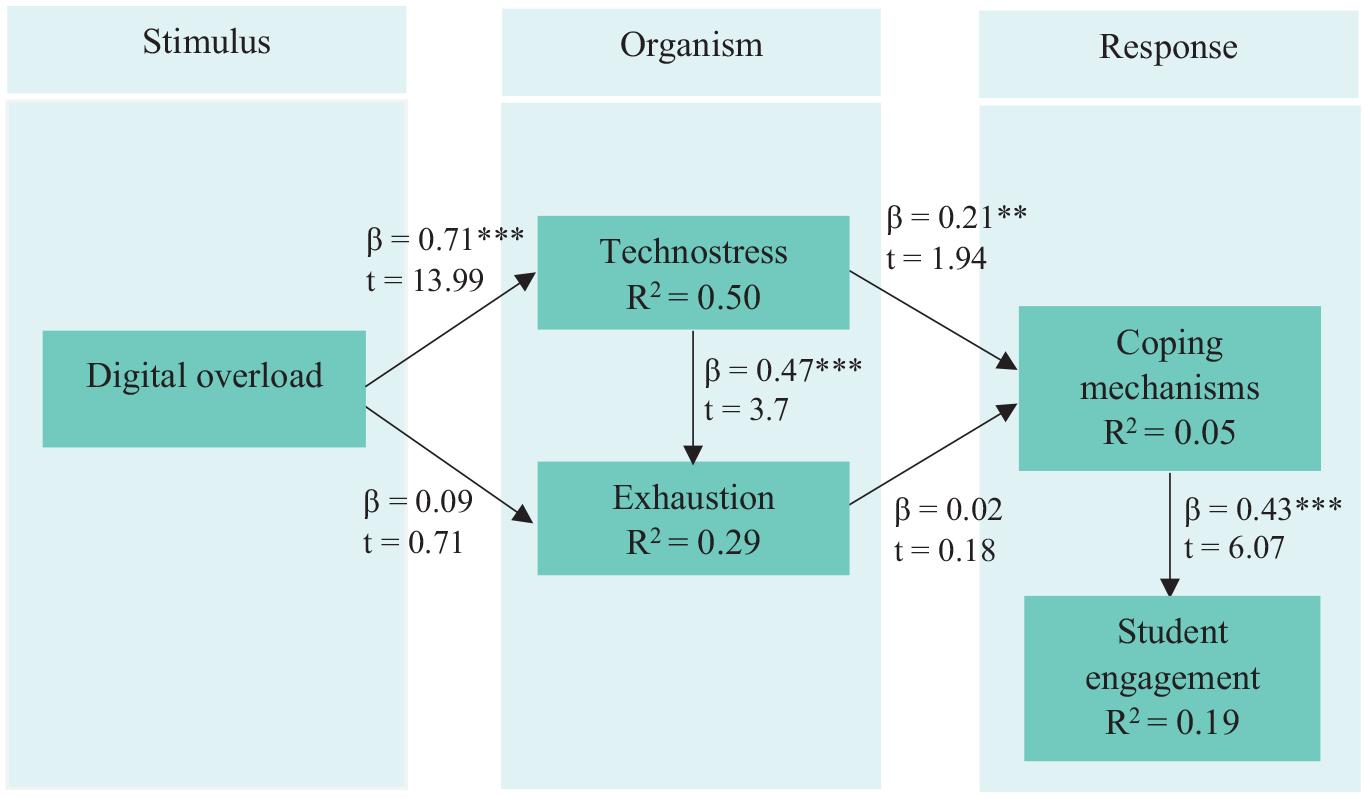
Summary of PLS-SEM estimation result.
First, the study finds a strong positive association between digital overload and technostress (β1 = .71, p < .01), which supports H1a. However, it could not find the strong positive association predicted between digital overload and exhaustion (β2 = .09, p = .48), which fails to support H1b. Additionally, the study finds a strong positive association between technostress and exhaustion (β3 = .47, p < .01), which fully supports H1c. Thus, while digital overload has a strong direct effect on technostress, its effect on exhaustion is primarily indirect. This can be observed from the indirect effect of digital overload on exhaustion, which is fully mediated by technostress (β = .33, p < .01).
Second, the study finds a strong positive association between technostress and coping mechanisms (β4 = .21, p < .05), which fully supports H2a. In contrast, it finds no significant association between exhaustion and coping mechanisms (β5 = .02, p = .86), which fails to support H2b. These findings thus suggest that increased levels of technostress encourage the adoption of coping mechanisms, but this is not the case for exhaustion. As much of the effect of digital overload on students’ psychological responses is channeled through technostress but not exhaustion, this finding makes sense. Overall, the findings suggest that technostress, not exhaustion, is the primary psychological strain that drives students to adopt coping mechanisms.
Finally, the study finds a strong positive association between the use of coping mechanisms and student engagement (β6 = .43, p < .01), which fully supports H3. This finding indicates that students who use coping mechanisms report greater emotional, cognitive, and behavioral engagement with their academic study.
The results of the hypothesis testing is summarized in Table 4.
Summary of Hypothesis Test.

p < .05. ***p < .01.
Discussion and Conclusion
As avid users of digital platforms, university students are exposed to the deluge of content being created and shared on these platforms (Alhabash & Ma, 2017; Armano et al., 2022). Considering the accumulated evidence in the literature that excessive exposure to digital platforms is associated with diminished psychological functioning and poor academic performance (Lorenz-Spreen et al., 2020; Whelan et al., 2020), the current study examined how university students deal with the effects of digital overload using the S-O-R framework as a guide. The findings reveal several interesting insights.
First, the study finds that increased levels of digital overload exacerbate students’ psychological strains through technostress and exhaustion. This finding is consistent with previous findings that information overload is associated with negative psychological strains (Maier et al., 2015; Saxena and Lamest, 2018). However, the current findings differ from previous findings by emphasizing digital overload. Unlike information overload, which is the focus of previous studies, digital overload captures students’ interactive experiences on digital platforms, where they create, share, and consume content and engage in social interactions (Okeke et al., 2018). Information overload primarily emphasizes the passive consumption of information (Jackson & Farzaneh, 2012; Jones & Kelly, 2018). Similarly, while information overload focuses on text information, such as emails, digital overload considers various content modalities including social media status updates, photo and video uploads, blog posts, and streaming content (Roffarello & De Russis, 2021; Steele et al., 2020). Therefore, digital overload captures students’ interactive experiences on digital platforms more broadly. It is also interesting to note that technostress fully mediates the effect of digital overload on exhaustion. That is, digital overload contributes to students’ feelings of exhaustion through technostress. This finding suggests the primacy of technostress as a potent psychological strain induced by digital overload (Ayyagari et al., 2011; Upadhyaya & Vrinda, 2021). In prior research, technostress and exhaustion are discussed on equal terms, with the mediating role of technostress between digital overload and exhaustion largely unexplored (Alvarez-Risco et al., 2021; Malik et al., 2020).
Second, the study finds that technostress is the primary psychological strain responsible for pushing students to adopt coping mechanisms, while exhaustion shows no such effect. This finding, therefore, reiterates the importance of technostress in shaping students’ behavioral responses to digital overload. As it turned out, what moves students to adopt coping mechanisms is not so much the mental and physical exhaustion they experience on digital platforms but the psychological stress that comes with the pressure to be constantly present on these platforms, by creating content and engaging with other users, which is how technostress is conceptualized and measured in the current study.
Third, the study finds that the use of coping mechanisms is positively associated with student engagement. Students who made robust use of coping mechanisms reported greater emotional, cognitive, and behavioral engagement with their academic study. This is a significant finding in that students are not entirely powerless in the face of digital overload, as is sometimes assumed in the literature but rather can take proactive steps to self-regulate their behavior and improve their academic engagement. Some of the key coping mechanisms considered in the current study include reducing the frequency of visits to digital platforms, limiting the number of hours spent on digital platforms, specializing on few platforms (as opposed to being present on many platforms simultaneously), and using more educational platforms such as Wikipedia, Medium, and Google. These strategies can contribute to student engagement by saving valuable time and energy that can then be directed toward academic work. While digital overload forces students to allocate time away from academic work (Doleck & Lajoie, 2018; Tokunaga, 2016), coping mechanisms reverse this process.
A final contribution is the use of student engagement to measure students’ academic performance as opposed to singular measures such as GPA scores. Student engagement is a broader, multidimensional concept that captures students’ overall learning experience (Fredricks et al., 2004; Kuh, 2009). Moreover, asking students to self-report their GPA scores can result in inflated responses (Tafesse, 2022). As a comprehensive, multi-item construct, student engagement is less likely to suffer from the response bias afflicting self-reported GPA scores.
To conclude, the current study contributes to the literature by showing how digital overload impacts students’ psychological well-being by way of technostress and exhaustion. The study further contributes to the literature by documenting how students can reduce the psychological strain caused by digital overload by adopting coping mechanisms. Coping mechanisms facilitate students’ emotional, behavioral, and cognitive engagement with their academic study. Therefore, by encouraging students to adopt coping mechanisms and regulate their digital behavior, it may be possible to minimize the impact of digital overload on their learning experience. For instance, universities can provide appropriate information, guidance, and training that enable students to balance the demands of their academic study with their digital platform use. They can also initiate digital well-being programs to promote a healthy and responsible use of digital platforms among students. Likewise, incorporating digital overload topics into existing digital literacy courses can be considered. Together, these university-level efforts can help address the negative consequences of digital overload on students’ psychological well-being and academic performance.
Limitations and Future Research Directions
Despite its contributions, this study has some limitations that should be acknowledged along with the opportunities these limitations provide for future research. First, the study did not measure student GPA for fear that self-reported GPA scores might be inflated. In certain research contexts, it might be possible to access students’ GPA scores directly from institutional records. Studies that could obtain such information could incorporate GPA scores in their model to further triangulate and validate the effects of digital overload on students’ academic performance.
Second, our sample is skewed toward undergraduate students majoring in business disciplines, whereas students from other disciplines are under-represented in the sample. While such a skewed sample is not uncommon in the literature (Tafesse, 2020; Whelan et al., 2020), having a more diverse sample from various undergraduate disciplines is more appropriate to produce generalizable findings.
Future research could also examine the effectiveness of different forms of coping mechanisms beyond those covered in our study in reducing the impact of digital overload on students’ psychological well-being and academic engagement. A more exploratory approach can be used to identify multiple coping mechanisms. Additionally, studies could explore the role of individual differences, such as personality traits, in moderating the relationship between digital overload, coping mechanisms, and academic engagement.
Footnotes
Acknowledgements
We would like to thank the participating students for responding to the questionnaire truthfully and to the best of their abilities.
Declaration of Conflicting Interests
The author(s) declared no potential conflicts of interest with respect to the research, authorship, and/or publication of this article.
Funding
The author(s) received no financial support for the research, authorship, and/or publication of this article.
Ethical Approval

Data Availability Statement
The data used in this study can be made available upon request from the corresponding author.