




Abstract
This work aims to investigate the cultural and psychological factors that significantly affect teachers’ intention to accept VR technology and use it long-term in their classes in elementary and secondary schools. The extended unified theory of acceptance and use of technology (UTAUT2) model effectively measured such factors in this context. We conducted a questionnaire survey with 351 elementary and secondary school teachers in four provinces in China and analyzed their responses utilizing Partial Least Squares (PLS) technique. The results of this work showed that performance expectancy, effort expectancy, social influence, facilitating conditions, and hedonic motivation significantly impacted continued usage intention. However, the habit did not promote continued usage intention. Based on the results, research on VR classroom application guidance and teachers’ professional development with VR technology applications should be strengthened. Meanwhile, increasing the publicity of integrating VR technology into classroom teaching, creating a favorable climate for VR technology adoption, and enhancing the fun of VR technology can also contribute to teachers’ continued VR technology usage intention in classroom teaching.
Plain Language Summary
Purpose: This study aimed to examine cultural and psychological factors that can significantly hinder or enable elementary and secondary school teachers’ intention to accept VR technology in their classes and use it long-term by the extended unified theory of acceptance and use of technology (UTAUT2) model. Methods: A questionnaire survey with 351 elementary and secondary school teachers in four provinces of China has been conducted, and the Partial Least Squares Structural Equation Modelling (PLS-SEM) has been used to analyze data. Conclusions: Performance expectancy, effort expectancy, social influence, facilitating conditions, and hedonic motivation significantly impacted elementary and secondary school teachers’ continued usage intention. However, habits did not promote continued usage intention. Implications: Research on VR classroom application guidance and teachers’ professional development with VR technology applications should be strengthened. Meanwhile, increasing the publicity of integrating VR technology into classroom teaching, creating a favorable climate for VR technology adoption, and enhancing the fun of VR technology can also contribute to teachers’ continued VR technology usage intention in classroom teaching. Limitations: First, although our proposed research model is based on rich previous literature, some factors related to the individual personality characteristics of teachers might be missing. Second, all data were collected from participants’ self-reports. Because participation was anonymous, we could not cross-validate the duration and extent of participants’ VR technology applications nor compare their reported post-adoption usage intention with their actual application.
Introduction
Along with developing information and communication technologies (ICT), elementary and secondary schools have exchanged many traditional education methods for new technology-based ones (Moore et al., 2011). The utilization of virtual reality (VR) technology, allowing individuals to engage in computer-generated environments that closely resemble their real surroundings and experience a deep sense of psychological immersion, is gaining popularity in elementary and secondary education (J. C. Yang et al., 2010). VR devices and software such as desktop VR (Ogbuanya, 2018), spherical video-based virtual reality (SVVR) (C. C. Chang et al., 2018; Hwang, et al., 2022), and other VR applications have been found effective for improving students’ learning motivation and achievement in several empirical studies (Liu et al., 2022; Yousef, 2021).
In China, policies are in place that strongly support the VR technology adaption in education. An action plan on Integration and Development of Virtual Reality and Industry Applications (2022–2026) was jointly issued by five departments, including the Ministry of Education, with regard to jointly advancing the construction of VR classrooms, VR laboratories, and virtual simulation training centers in all school stages (Ministry of Industry and Information Technology of the People’s Republic of China, 2022). Political initiatives have sparked the enthusiasm for exploring the applications of VR technology in classroom teaching. An increasing number of schools acknowledge the advancements offered by VR technology to enhance classroom teaching methods; they are willing to introduce VR technology to establish an immersive teaching environment, challenge conventional cognitive processes among students, and stimulate profound learning experiences (X. Wang et al., 2019).
However, besides political support, factors like student ability, teacher engagement, and evaluation feedback present potential challenges to the practical application of VR technology in educational contexts (Huang et al., 2010; Radianti et al., 2020; Shadiev et al., 2020; Shen et al., 2019; Sprenger & Schwaninger, 2021). Existing studies examined various contributions of VR technology to educational institutions, mainly from the student’s perspective, and have verified the relationship between users’ satisfaction and VR technology application by applying Constructivism Theory (Huang et al., 2010), Expectation Confirmation Model (Shadiev et al., 2020), Technology Acceptance Model (Sprenger & Schwaninger, 2021), etc. Unfortunately, little research has examined this question from a teacher’s perspective, despite teachers playing an essential role in implementing VR applications in classroom settings (N. Alalwan et al., 2020; Lu & Liu, 2015). Teachers are the designers of VR technology applications in classroom teaching and decide whether and how VR technology is applied to classrooms. It is imperative to explore teachers’ adoption and continued usage intention to use VR technology (Du et al., 2022).
The influence of teachers’ professional development and information literacy on the effectiveness of VR technology usage has been described in earlier research conducted by Geng et al. (2021), Cardullo and Wang (2021), and Mystakidis and Christopoulos (2022) in studies examining teachers’ utilization of VR technology. For example, Mystakidis and Christopoulos (2022) examined teachers’ attitudes toward VR escape rooms for use in STEM education, and found that teacher perception was a critical success factor in implementing any technology-enhanced learning innovation in the classroom. However, do teachers’ VR technology usage abilities determine their usage intention? Are there other antecedents affecting teachers’ intention of VR technology usage, even continuing to use it? The answer is unclear. Moreover, Du et al. (2022) explored elementary and secondary school teachers’ satisfaction and continued use of VR technology for classroom teaching. They revealed that teachers’ VR technology satisfaction did not positively affect (i.e., positively promote) their continued usage intention. The results of that study run counter to most of the general conclusions that have been reached about educational technology, making the question of which factors affect teachers’ continued VR technology usage intention all the more important to continue exploring.
As the unified theory of acceptance and use of technology (UTAUT) and the extended version (UTAUT2) integrate diverse views to explain cultural and psychological issues for accepting new technologies, they are considered to be the most comprehensive models currently used to explore users’ continued usage intention of IT (Venkatesh et al., 2016). Existing studies have excavated the antecedents in e-learning technologies application according to the UTAUT and UTAUT2 models (e.g., Ameri et al., 2020; Jakkaew & Hemrungrote, 2017; Nikolopoulou et al., 2020). For example, Raman and Don (2013) investigated precursors influencing preservice teachers’ usage intention of the Learning Zone (Moodle), a learning management system used by teachers and students, in their learning process by the UTAUT2 model, and found that hedonic expectancy and facilitating conditions were considerable predictors of students’ behavioral intentions. Tseng et al. (2022) examined factors of teachers’ application of massive online open courses (MOOCs) as an instructional delivery method according to the UTAUT2 model and found that teachers’ MOOCs usage intention was affected by price value, facilitating conditions, social influence, and performance expectancy. In that line, we adopt UTAUT2 as the theoretical framework to investigate predictors of school teachers’ continued VR technology usage intention. Concretely, we explored the relationships among habit, facilitating conditions, hedonic motivation, social influence, effort expectancy, performance expectancy, and continued technology usage intention. This work conducts an in-depth assessment of VR technology adoption and usage intention in elementary and secondary educational contexts from the perspective of teachers, which is currently lacking. Meanwhile, depending on the results, we offered recommendations for facilitating teachers’ continued use of VR technology in their classroom teaching.
Literature Review
Teachers’ Continued VR Technology Usage Intention
Immersive learning supported by virtual reality technology has become one of the essential learning methods in the intelligent age. A growing body of research (Erbas & Demirer, 2019; Garzón & Acevedo, 2019; Sprenger & Schwaninger, 2021) has proven VR technology efficiently promotes knowledge transfers and improves learning efficiency by providing learners with multiple spatial perspectives and contextualized experiences. Research on VR technology applications in education settings has conducted that the VR technology supporting quality is affected by various factors like knowledge type, learner characteristics, etc. (Billingsley et al., 2019; Garzón & Acevedo, 2019; Yildirim et al., 2018).
Among the antecedents of teachers’ VR technology adoption, attitude is unignorable (Du et al., 2022; Geng et al., 2021). Many studies have explored teachers’ attitudes and factors influencing their usage intention toward VR technologies (Cardullo & Wang, 2021; Makransky et al., 2019; Tarhini et al., 2017). Researchers (e.g., Özgen et al., 2021) proved that the perceived usefulness and ease of use of VR technology, the service support of technology providers for VR equipment, and teachers’ ability to utilize VR technology to create simulated learning situations significantly affected their satisfaction with VR technology. However, research on teachers’ VR technology continuous usage intention is scarce, and the influence of determinants of VR technology on continued usage intention is poorly understood (Serin, 2020; Stojsic et al., 2019). Continued usage intention represents the user’s continued use intention of the information system after initial use (Xu et al., 2021). According to Bhattacherjee (2001), although the users’ initial adoption is important to an information system’s success, the users’ continued use decides its long-term viability. In the context of current research, this topic warrants more scrutiny. It is imperative to test teachers’ VR technology’s continued usage intention systematically.
Unified Theory of Acceptance and Use of Technology (UTAUT)
The adoption and usage intention of information system (IS) has become an established area of research related to IS (Venkatesh et al., 2007). Many models have been proposed to explain factors that predict users’ IT usage intention, such as the theory of planned behavior (TPB) model (Ajzen, 1991), the technology acceptance model (TAM) (Davis, 1985), and the theory of reasoned action (TRA) model (Ajzen & Fishbein, 1977). In synthesizing these models, the unified theory of acceptance and use of technology (UTAUT) has been considered by Venkatesh et al. (2003). They suggested UTAUT test causal relationships among critical constructs, including effort expectancy, performance expectancy, facilitating conditions, and social influence, and four moderators, which involved gender, age, experience, and voluntariness of use (Venkatesh et al., 2016) (Figure 1). Studies demonstrated 77% of the variance in behavioral intentions to use technology and 52% in technology use could be explained by UTAUT (Venkatesh et al., 2003).

The UTAUT model, developed by Venkatesh et al. (2003).
UTAUT has been applied to describe the precursors of various IS’s acceptance and continuous usage intention in educational contexts (Abbad, 2021; Altalhi, 2021; Oye et al., 2014). For example, Oye et al. (2014) reviewed technology acceptance models’ history in education from TRA to UTAUT. They found that four constructs, including performance expectancy, social influence, effort expectancy, and facilitating conditions of UTAUT, significantly influenced academic staff’s behavioral intention to accept and use ICT. Meanwhile, Olasina (2019) identified attitude, social influence, stress, perceived usefulness, fatigue, and satisfaction as critical factors in students’ e-learning acceptance and usage intention. Other studies also indicated that UTAUT-related factors significantly influenced ICT application in educational settings (J. Kim & Lee, 2022; Teo & Noyes, 2014; Wijaya et al., 2022).
Nevertheless, the influence of some UTAUT drivers on the adoption of IT system is still uncertain (Tseng et al., 2022). For instance, Birch and Irvine (2009) examined the role of UTAUT variables in influencing preservice teachers’ acceptance of ICT and found that only effort expectancy could significantly predict behavioral intention. What is more, Garavand et al. (2019) reported that social influence and performance expectancy did not positively impact students’ usage intention with mobile health applications. These inconsistent results advise that more research on UTAUT in educational settings is necessary (Tseng et al., 2022).
Extended unified theory of acceptance and use of technology (UTAUT2)
UTAUT has been applied to examine individual-level technology acceptance and usage intention across various settings. Research has repeatedly confirmed the robustness and effectiveness of the UTAUT model (Donmez-Turan, 2019; Pynoo et al., 2011). Despite this, a growing body of research has indicated the UTAUT model may be inadequate to predict individuals’ IT adopt behavior since the model was developed in the organizational setting (Salloum & Shaalan, 2018; Thongsri et al., 2018; Tseng et al., 2022; H. Wang et al., 2020). What is more, Venkatesh et al. (2016) reviewed and synthesized the related works of the UTAUT model application, and found that few studies had tested the moderation effects in applying UTAUT to research on technology use. Thus, extending and adapting the framework to explain customers’ technology adoption and continued usage intention from a more individual perspective is necessary. Researchers were trying to extend UTAUT by incorporating motivation theory (Yoo et al., 2012), social capital theory (Sun et al., 2014), or Task-Technology Fit models (H. Wang et al., 2020) to test specific antecedents that effect individual user experience. Accordingly, Venkatesh et al. (2012) added price value, hedonic motivation, habit, and other causally related factors to the UTAUT model and presented a multi-level framework for the unified theory of acceptance and use of technology (UTAUT2) (Figure 2).

The UTAUT2 model, developed by Venkatesh et al. (2012).
Compared with the UTAUT model, the UTAUT2 model is more concise and can better reflect individual outcomes (Nikolopoulou et al., 2020; Venkatesh et al., 2016). Existing studies implementing UTAUT2 have found that it explained more than 74% of usage intention (Chopdar et al., 2018). Due to the effectiveness of UTAUT2 in examining users’ technology acceptance and usage intentions, various technology domains widely adopted it to explore precursors that affect users’ attitudes toward a given IT. For instance, using the UTAUT2 model, Gharaibeh et al. (2018) confirmed that mass media positively and significantly influenced consumers’ adoption of mobile banking, effort expectancy, facilitating conditions, performance expectancy, trust, and social influence. Further, Abrar et al. (2019) found that performance expectancy, price value, and effort expectancy were related to adopting online banking services.
In contrast to the original UTAUT, which is mainly designed in an organizational context, UTAUT2 is primarily based on the individual’s viewpoint. It explores the factors behind a user’s intention to apply new technologies (Abrar et al., 2019). Moreover, Scherer et al. (2019) proved that UTAUT was inadequate to describe factors predicting use behavior. As such, UTAUT2 is a better choice to explore the factors affecting teachers’ continuance of VR technology usage intention in classroom teaching. Studies (El-Masri &Tarhini, 2017; Nikolopoulou et al., 2020; Raman & Don, 2013) have consistently affirmed the role of UTAUT2 in explaining students’ and teachers’ usage intention (including continued usage intention) toward e-learning technology in pedagogical applications. For example, Mtebe et al. (2016) applied UTAUT2 to examine teachers’ usage intention with multimedia-enhanced content and found that, except for performance expectancy, all UTAUT2 factors influenced teachers’ acceptance. El-Masri and Tarhini (2017) verified the important antecedents in e-learning systems adoption and inferred that usage intentions of such systems differ for users in developed and developing countries. In a study on Google Classroom usage, Bervell et al. (2022) explored the effects of facilitating conditions and other factors on usage intention formation; they considered that hedonic motivation, effort expectancy, social influence, and habit significantly affect students’ behavioral intentions. In that line, it is reasonable to adopt UTAUT2 in this work to explore teachers’ continued usage intention for VR technology in classroom teaching.
Research Model and Hypotheses
According to the UTAUT2 model (Venkatesh et al., 2012), this study suggests that teachers’ intention to continue using VR technology is influenced by effort expectancy, facilitating conditions, habit, social influence, performance expectancy, and hedonic motivation. Since the VR equipment subject in this study is owned by the school and provided for free to teachers, the “price value” construct is not applicable. A series of hypotheses have been formulated to describe the relationship between the acceptance and usage systems. Figure 3 shows the research mode.

Research model.
Performance Expectancy
According to Venkatesh et al. (2003), performance expectancy (PE) is an indicator of users’ confidence in the ability of a given technology system to enhance their job performance. Previous research has confirmed that performance expectancy significantly affects individuals’ usage intention toward new technologies (A. A. Alalwan et al., 2017; Palau-Saumell et al., 2019; K. Yang, 2010). For example, A. A. Alalwan et al. (2017) investigated factors influencing customers’ behavioral intention with mobile banking. The result showed that performance expectancy positively influenced behavioral intention. Identical results have been generated in e-learning studies (Abbad, 2021; J. L. Chen, 2011; Dečman, 2015). For instance, Dečman (2015) evaluated higher education students’ acceptance and usage of specific mandatory e-learning technologies and determined that performance expectancy significantly affected participants’ technology usage intention. Performance expectancy for VR technology could represent teachers’ feelings about the advantage of using VR technology in classroom instruction. We expect teachers to demonstrate a behavioral preference for continued use of VR technology based on their feelings that virtual reality-supported teaching could produce benefits. By contrast, teachers may resist such technology. Accordingly, we postulated the following hypothesis:
H1: Performance expectancy positively influences teachers’ continued VR technology usage intention.
Effort Expectancy
The effort expectancy is considered to have a similar meaning to the perceived ease of use in the TAM model. This factor is used to measure users’ comfort in using the IS. In the pedagogical applications of IT, the effort expectancy is often used to measure how easily teachers integrate technology into their teaching practice. According to Venkatesh et al. (2003), effort expectancy is one of the most vital factors of technology usage intention. Other studies (Rahman et al., 2020; L. Wang & Yi, 2012) have reported similar results. For instance, Rahman et al. (2020) probed the effect of the UTAUT2 variables on the feeling of bKash agents (micro-entrepreneurs) and suggested that effort expectancy predicted their intention to adopt mobile financial services. In educational settings, existing research (Abbasi et al., 2015; Faqih & Jaradat, 2021; Kocaleva et al., 2015; Tarhini et al., 2017) has found that effort expectancy significantly affected participants’ intention to adopt new technology. For example, Kocaleva et al. (2015) surveyed 92 teachers to explore their attitudes toward e-learning, and found that effort expectancy and facilitating conditions had the most prominent effect on their new technology usage intention. Moreover, Faqih and Jaradat (2021) applied UTAUT2 as a research model to capture factors associated with augmented reality applications in a higher education setting and found that effort expectancy significantly affected users’ behavioral intention. As such, it is reasonable to believe that the ease of operating VR technology will impact teachers’ usage effectiveness and thus affect their continuous usage intention. Accordingly, we made the following hypothesis:
H2: Effort expectancy positively affects teachers’ continued VR technology usage intention.
Social Influence
Social influence measures the level of individuals’ perception that significant others recommend accepting the new technology (Venkatesh et al., 2003). Numerous empirical studies (Khalifa et al., 2012; Patil et al., 2020; Tarhini et al., 2016; Yadav et al., 2016) on IT/IS applications have demonstrated that social influence significantly affected persons’ technology use intention and that it is possible for individuals to change their perceptions and behaviors based on their external environments. For instance, Patil et al. (2020) examined potential predictors of consumer usage behavior with mobile payment applications and revealed that social influence significantly impacted consumers’ usage intention. Researchers in the e-learning technologies domain have produced similar results (P. Y. Chen & Hwang, 2019; Tosuntas et al., 2015; H. H. Yang et al., 2019). In the context of pedagogical applications of VR technology, this study posits that social influence can positively influence teachers’ continued VR technology usage intention in their classroom teaching. Hence, we postulated the following hypothesis:
H3: Social influence positively affects teachers’ continued VR technology usage intention.
Facilitating Conditions
Facilitating conditions measure the level of the users perceive that technical and organizational supports are available for their use of a given system (Rahman et al., 2020). Lots of research has proved the positive correlation between facilitating conditions and system usage intention (Banerjee & Dey, 2013; Nair et al., 2015; Saleh et al., 2022; Venkatesh et al., 2016). In the context of pedagogical applications of IT, facilitating conditions measure the support users perceive being able to obtain from other individuals, institutions, and technical facilities while using a given system (Khechine et al., 2020). Researchers (Maruping et al., 2017; Venkatesh et al., 2003) long held that facilitating conditions influenced adoption behavioral intention. If users perceive a technological system as credible, effective, and supported by the necessary infrastructure, they may accept and utilize it (Bervell et al., 2022). In this work, we argue that facilitating conditions, that is, teachers’ perceptions of whether they can access the required equipment and technical support to integrate VR technology into their instruction, impact their continued VR technology usage intention. Accordingly, we formulated the following hypothesis:
H4: Facilitating conditions positively affects teachers’ continued VR technology usage intention.
Hedonic Motivation
Hedonic motivation is defined by Brown and Venkatesh (2005) in the technology usage context as the enjoyment or pleasure one receives from such usage, with a focus on users’ intrinsic motivation. Various studies (e.g., El-Masri & Tarhini, 2017; Thong et al., 2006) have confirmed that hedonic motivation for technology constitutes a strong user belief that can enhance their effective use of IT, even in the case of organizational use of IT. Tamilmani et al. (2019) examined 46 UTAUT2-based empirical studies, including hedonic motivation in their theoretical framework. Their findings revealed hedonic motivation is one of the most important predictors of users’ technology usage intention.
Especially in cases of users rejecting utilitarian systems, designers should consider invoking hedonic motivation in order to achieve user acceptance, like “making a bitter pill sweet on the outside to make it go down easily” (Tamilmani et al., 2019). Hedonic motivation provided users with instrumental value, such as improved task performance and a pleasant, fun experience. Many researchers (Arain et al., 2019; Faqih & Jaradat, 2021; Kocaleva et al., 2015) have also found that hedonic motivation significantly enhanced IT adoption and continued usage intention in educational settings. Their findings suggested that teachers tended to accept and keep using a given educational technology in the classroom if the technology provided them with an enjoyable/fun experience. The immersive experience VR offers is novel and exciting for teachers and students, and the hedonic motivation may trigger teachers’ intention to continue using it. Accordingly, we formulated the following hypothesis:
Hypothesis 5: Hedonic motivation positively affects teachers’ continued VR technology usage intention.
Habit
In UTAUT2, habit measures the degree to which an individual exhibits automatic behavior (Limayem et al., 2007). Several previous studies have confirmed that habit as a significant antecedent of technology usage intention (Hsiao et al., 2016; Nair et al., 2015). In the e-learning setting, researchers (e.g., C. P. Chen et al., 2015; Dai et al., 2020; Limayem & Cheung, 2011) have argued that teachers and students tend to utilize IT to improve their instruction and learning behavior, leading to positive expectations of subsequent usage. Limayem and Cheung (2011) and Zwain (2019) found that habit influenced subsequent usage of a virtual learning environment. Building on previous work, we define habit in technology-support-teaching as the degree to which users automatically perform behaviors (such as using IS) because they have learned to do so. Thus, this study assumed that habit is a significant factor of teachers’ continued VR technology usage intention when using VR in their pedagogical practices.
Hypothesis 6: Habit positively affects teachers’ continued VR technology usage intention.
Control Variables: Gender and Age
Previous research (Barnes, 2011; Guo et al., 2017) has indicated that a user’s gender and age could affect his/her technology usage intention. Venkatesh et al. (2016) reviewed and synthesized IS literature on UTAUT and UTAUT2 and found that few studies that applied UTAUT examined the moderation effects. They labeled the discovery as “unexpected and unsatisfying” due to the lack of empirical evidence supporting the generalizability of UTAUT or the ability to draw inferences about all potential boundary conditions. In response to this critique, we added the demographic factors age and gender as control variables.
Methods
Research Design
This study argued that the UTAUT2 model is appropriate for investigating the antecedents affecting teachers’ continued intention to use VR technology in elementary and secondary schools. The UTAUT2 model has been affirmed by many studies as a theoretical framework for testing factors of technology adoption in classroom teaching (El-Masri & Tarhini, 2017; Jakkaew & Hemrungrote, 2017). This work considers the predictors of teachers’ effort expectancy, social influence, performance expectancy, facilitating conditions, habit, and hedonic motivation toward their continued VR technology usage intention to support classroom instruction.
Participant and Context
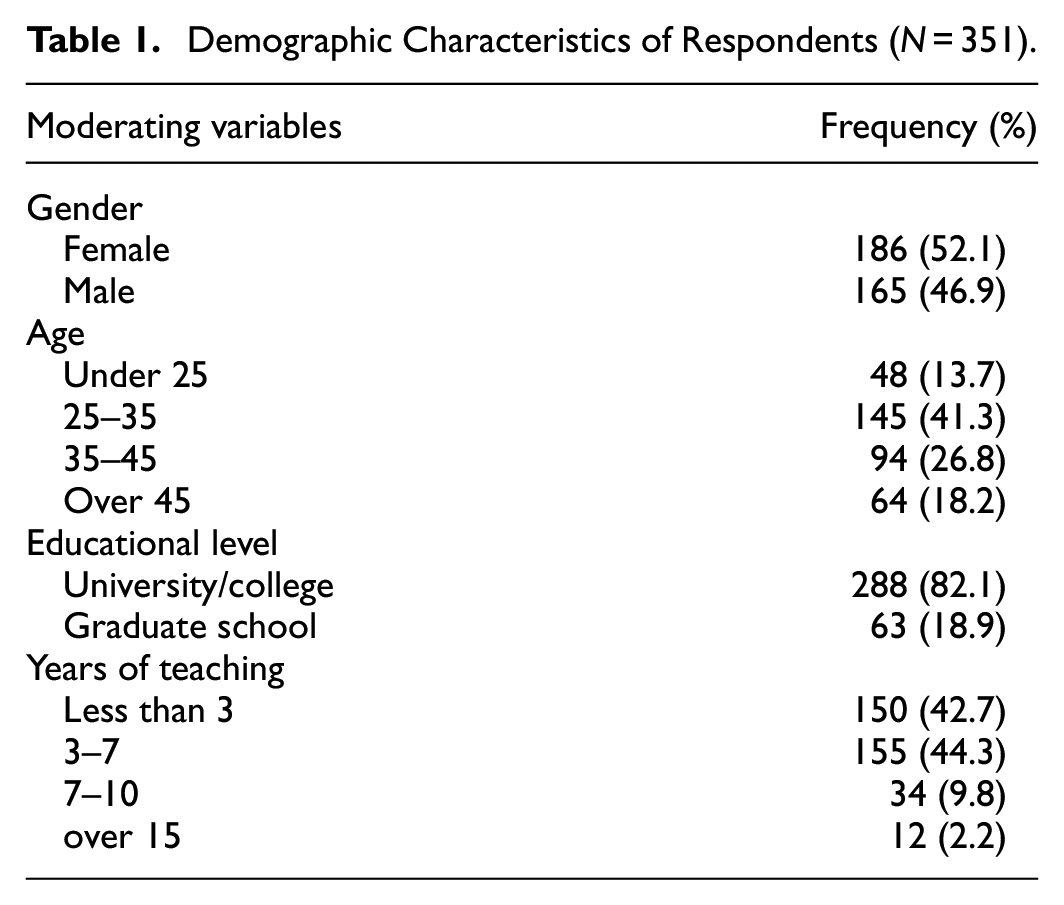
Our research model has been examined by samples collected from primary and secondary schools in Shanghai, Tianjin, Jiangsu, and Shandong Provinces. Due to government support and broad prospects for developing educational applications of VR technology, numerous resource platforms for VR applications in education have been established, and many of the platforms include multiple examples of successful cases of use. We collected information on primary and secondary schools that carry out VR technology teaching applications via these resource platforms, contacted the schools one by one through the phone number or email address provided by those resource platforms, described the survey’s aim and invited them to join in this research. Finally, we recruited 370 teachers from 30 schools to take part in the study. An email containing a questionnaire link was sent to these teachers, offering them a chance to win a prize for participating in the survey. Based on the rules of the “Wen Juan Xing” survey platform, incomplete questionnaires could not be submitted. The survey lasted 8 weeks. Ultimately, we collected 355 questionnaires. We excluded the invalid responses (e.g., overly regularized answers), which left 351 valid responses for analysis. Table 1 shows the demographic characteristics of the respondents.
Demographic Characteristics of Respondents (N = 351).
Instrument and Measure
A questionnaire survey was employed to explore the factors influencing teachers’ continued intention to use VR technology. The questionnaire consists of two sections. The first section collects demographic information, while the second section focuses on seven essential constructs related to continued usage intention, facilitating conditions, social influence, performance expectancy, habit, effort expectancy, and hedonic motivation. The measurement items used in this questionnaire draw upon six constructs from UTAUT2, adapted from Venkatesh et al. (2012), specifically for investigating the application of VR technology in the educational context. Furthermore, the measurement items assessing continued usage intention are based on research findings from Bhattacherjee (2001), Freitas and Campos (2008), and Du et al. (2022). To ensure comprehension among Chinese teachers, the questionnaire was translated into Chinese. A 7-point Likert scale, ranging from 1 (“strongly disagree”) to 7 (“strongly agree”), was utilized to measure the survey items. Table 2 lists the measurement items.
Constructs and Corresponding Items.

Before the survey officially began, we invited four teacher education experts and four educational technology experts to discuss the questionnaire’s validity. We modified the questionnaire’s language and structure according to their feedback. Then, we subjected the questionnaire to a second expert-review round and reached a consensus on the content.
Data analysis
Partial-least-squares (PLS) regression was deemed appropriate given this study’s purpose to examine factors in teachers’ continued VR technology usage intention. The PLS regression model is widely adopted for multiple independent and dependent variables regression (Hair et al., 2006). Meanwhile, it is applicable in scenarios involving small sample sizes and non-normally distributed data. A two-step approach was applied to data analysis (C. M. Chang et al., 2014). First, we examined the measurement model’s validity and reliability. Then, we interpreted the data in the context of the structural model. SmartPLS 3.3.9 software has been utilized for data processing and analysis (Ringle et al., 2005).
We tested all constructs for reliability, convergent validity, and discriminant validity. Tables 3 and 4 show the results. According to Gefen et al. (2000), the data are proved sufficiently reliable when all variables’ construct reliability (CR) is greater than 0.7. Moreover, in line with Fornell and Larcker (1981), the measurement model’s convergent validity is established when the average variance extracted (AVE) for all variables exceeds 0.5 and the observed variable loadings surpass 0.7.
CR, AVE, and Correlation Coefficients of Latent Variables.

Note. The numbers of the square roots of AVE are highlighted in gray and should be greater than other correlation coefficients.
Results of Confirmatory Factor Analysis.

Tables 3 and 4 present the findings, demonstrating that all variables exhibit construct reliability greater than 0.7, observed variable loadings exceeding 0.7, and AVE values ranging between 0.597 and 0.727. These results confirm that the model satisfies the statistical requirements for convergent validity.
Based on the criteria outlined by Kline and Santor (1999) and Fornell and Larcker (1981), discriminant validity can be evaluated through two measures. First, the correlations between constructs should be below the 0.85 threshold. Second, the square root of the average variance extracted (AVE) for each construct should exceed the correlations with other constructs. As shown in Table 3, the square roots of AVE and the correlations among constructs are presented along the diagonal. The results confirm that the model fulfills these criteria, providing evidence of satisfactory discriminant validity.
Meanwhile, according to Hair et al. (2006), the variance inflation factor (VIF) was calculated for all the constructs in the proposed model to avoid multicollinearity problems, and none of the VIF values exceeded 5, confirming the absence of serious multicollinearity problems.
Furthermore, it was necessary to examine the possible common method bias (CMB) issue due to the use of self-report measures for collecting all the study data, and Harmon’s one-factor test, as suggested by Podsakoff and Organ (1986), was conducted. The results revealed that the first factor accounted for 33.1% of the variance, indicating that no single factor explained the majority of the variance in the model. Furthermore, the correlations among the constructs, as presented in Table 3, were below the 0.9 thresholds, suggesting that CMB did not pose a significant concern for data validity according to Pavlou et al. (2006).
Results
In order to test the theoretical model and hypotheses, as well as determine the significance of the structural model’s paths and explanatory power, the bootstrap method was employed in this study. The bootstrap method involves the repeated sampling of valid sample data for statistical analysis. The sample size for this study was predetermined as 500. The structural equation modeling results are presented in Figure 4.

Results of PLS analysis.
As illustrated in Figure 4, the impact of performance expectancy, effort expectancy, social influence, facilitating conditions, and hedonic motivation on continued usage intention was found to be significantly positive (p < .001). However, no significant relationship was observed between habit and continued usage intention. Hence, hypotheses 1, 2, 3, 4, and 5 were supported by the findings.
Additionally, the explanatory power of the independent variables was assessed using R2 values, and the results demonstrated that the antecedents accounted for a substantial proportion (44.4%) of the variation in these variables. Regarding the moderating effects, it was determined that gender and age did not exhibit significant (p > .05) interactions with any of the constructs when considering all possible higher-order interactions.
Discussion
Major Findings
This study empirically tested an intent model to continue VR technology adoption in classroom teaching, and the model emphasized effort expectancy, performance expectancy, facilitating conditions, social influence, hedonic motivation, and habit as important forces driving teachers’ continuous usage intention. The empirical results indicated the proposed model has been strongly supported. Therefore, some findings warrant discussion.
First, consistent with previous studies, the results of this work confirm that teachers’ performance expectancy positively influences their continued VR technology usage intention (Ameri et al., 2020; El-Masri & Tarhini, 2017; Tseng et al., 2022). This finding underlines the essential role of performance effects in shaping teachers’ continued VR technology use intention. It implies that when teachers believe VR technology can effectively improve classroom teaching efficiency and promote students’ academic success, they are more inclined to continue using it in their classroom teaching. Existing studies (Boticki et al., 2015; Bressler & Bodzin, 2013; Kavanagh et al., 2017) have shown that VR technology offers students a first-person perspective and a high degree-of-freedom exploration space through 3D images, which can effectively improve students’ sense of immersion and autonomy. Therefore, using VR technology in classroom teaching significantly improves learners’ satisfaction and attitudes and strengthens their cognitive feelings (Cooper et al., 2019).
However, other studies (Makransky et al., 2019; Parong & Mayer, 2020) have pointed out that teachers should be attentive to balancing learners’ immersive experience and cognitive load when implementing VR technology-assisted teaching. In the immersive environment created by VR technology, the emotional arousal experienced by the learners may trigger their brains to carry out additional cognitive processing, thereby causing the formation of an extraneous cognitive load and reducing the learning effect (C. C. Chang et al., 2018). Teachers should fully consider the pedagogical content’s characteristics and individual learner differences and flexibly integrate diverse classroom teaching and classroom management methods when applying VR technology to support pedagogical behavior. As predicted, the present findings indicate that if teachers are capable of adopting VR technology to provide students with adaptive learning content and environments that meet their individual learning needs and are thus able to achieve better teaching effects, they are intent on keeping using VR technology in their classroom teaching (Du et al., 2022; Natale et al., 2020).
In terms of VR’s technical convenience and operability, facilitating conditions and effort expectancy were found to strengthen teachers’ continued usage intention. These findings are consistent with prior studies (Ameri et al., 2020; Attuquayefio & Addo, 2014). It suggests that the degree of technical support that teachers expect to receive from managers, technical services departments, and equipment suppliers significantly impacts their intention to continue applying VR technology. While the entry of artificial intelligence technology products such as VR technology into primary and secondary schools’ classrooms is inevitable, it should be recognized that teachers may not be ready to apply these advanced technologies skillfully. Operating advanced information systems and integrating advanced technologies into teaching poses new challenges for teachers. Thus, while introducing advanced IT equipment into classrooms, school administrators should prioritize teacher training, improving teachers’ familiarity with technology, and facilitating their convenient use of the technology (Dalgarno et al., 2016; Myers et al., 2017). This echoes the findings by S. C. Chang et al. (2020) and Chien et al. (2020), and suggests that schools should choose VR devices with a straightforward interface and simple operation to facilitate teachers’ easy use. For example, Spherical Video-based Virtual Reality (SVVR) utilizes 360° spherical images and videos to deliver learning content, providing valuable support for teachers in developing their instructional materials. As a result, SVVR substantially decreases the expenses and challenges associated with accessing VR content and garners increasing interest.
This study further validated the noteworthy influence of social influence on teachers’ intention to persist in using VR technology, indicating that social norms are likely to influence teachers’ continued usage intention. El-Masri and Tarhini (2017) conducted a study exploring the factors contributing to the intention to use e-learning systems in both developing and developed countries. They discovered that while social influence impacted students’ adoption of e-learning systems in Qatar, it did not have the same effect in the United States. They argued that one possible explanation involved Qatar’s collectivist culture contributing to students’ greater susceptibility to certain forms of social influence. Chinese people are generally believed to have a cultural tradition of collectivism (Gong et al., 2021). As such, Chinese teachers’ VR technology usage intention in the classroom may be decided more as a community rather than an individual (Hofstede, 1980). Cheung and Vogel (2013) and Chu and Chen (2016) found that social influence significantly affected participating teachers’ and students’ application of IT systems in the classroom. These findings suggest that to encourage teachers’ continued usage of VR technology, school management should formally announce that the technology is necessary and offer high-quality presentations on successful use cases to educate teachers on the potential benefits. In this way, Chinese teachers will be more predisposed to adopting a positive stance toward VR technology and making the decision to sustain its usage.
Moreover, this present study found that hedonic motivation significantly influenced teachers’ continued VR technology usage intention, which is congruent with previous research findings (Ahmed & Kabir, 2018; Kumar & Bervell, 2019; Moorthy et al., 2019). The critical influence of emotion on human cognitive processes, cognitive outcomes, and behavioral tendencies has been demonstrated by numerous researchers (Baumeister et al., 2007). When IS evokes more positive emotions in the user, it is more conducive to stimulating their interest and adoption motivation (Nikolopoulou et al., 2020; Venkatesh et al., 2016). This finding confirms that teaching with VR technology can be a novel and exciting experience for teachers. The immersive viewing and learning spaces created by VR technology can promote teachers’ enthusiasm for teaching and strengthen the connection and dialogue between teachers and teaching content, stimulating teachers’ cognitive feelings. Thus, adding interesting human–computer interaction may stimulate teachers’ joy in using VR technology in the classroom. Further research that focuses on this area and explores diversified teaching methods to strengthen the gamification characteristics of VR-assisted teaching is in order.
However, inconsistent with our hypotheses, the result did not show a positive relationship between habit and teachers’ continued VR technology usage intention. This finding contradicts results from previous research (Arenas et al., 2015; Kumar & Bervell, 2019; Venkatesh et al., 2012). In general, higher usage of e-learning systems in educational contexts leads users to a more active use process (Lewis et al., 2013). Considering the current situation of VR technology adoption, one possible explanation is that due to the limited number of VR devices available and the scant application time in primary and secondary schools in China, most teachers are still in the initial stages of applying VR technology in their classroom teaching. Thus, it is too early to talk about habit in the context of VR technology applications.
Numerous empirical studies (Lu & Liu, 2015; J. C. Yang et al., 2010) have revealed that VR technology’s immersion and emotional experience can stimulate students’ enthusiasm and improve their learning performance. As such, the present findings indicate that it is necessary to further promote and invest in VR technology, strengthen technical support for VR technology applications, and facilitate deep integration of normalize classroom teaching and VR technology.
Theoretical and Practical Implications
This work promotes studies on VR technology adoption in classroom teaching in several aspects. First, although explorations of adoption and behavioral intention have been a focus of VR technology research (Billingsley et al., 2019; Yildirim et al., 2018), few empirical studies systematically investigated factors of teachers’ continued intention to utilize VR technology in their classroom teaching. Hence, our work strengthens the literature foundation by applying the UTAUT2 research model to identify factors of continued VR technology usage intention in pedagogical applications. Our findings empirically confirmed that technological and social factors could significantly influence usage intention formation; this lays a groundwork for future studies on the behavioral intention for acceptance of VR technology from a comprehensive perspective.
Second, although researchers have realized the impact of the convenience of VR technology usage, service support from VR equipment providers, and teachers’ training for VR equipment on teachers’ post-adoption of VR technology behaviors (Tarhini et al., 2017; Yildirim et al., 2018), the factors that influence their determinants have not been considered systematically. Given the growing body of works (Bervell et al., 2022; El-Masri & Tarhini, 2017) confirming the role of UTAUT2 in explaining teachers’ post-adoption usage intention for e-learning technology in pedagogical applications, which is in line with our area of inquiry, we adopted UTAUT2 to evaluate teachers’ continuous intention to utilizing VR technology in elementary and secondary schools. The findings indicate that performance expectancy has a substantial impact on the intention to continue using VR technology, underscoring the importance of teachers’ belief in the ability of VR technology to enhance their teaching performance as a predictor of their sustained usage intention. This finding facilitates future research investigating teachers’ post-adoption behavior in-depth at the analytical level of matching pedagogical needs. It opens up enormous opportunities to explore the advantage of VR technology as a teaching aid.
Third, the empirical findings verified that facilitating conditions and effort expectancy significantly affected teachers’ continued usage intention, underscoring the essential role of technical operability in forming teachers’ post-adoption behaviors. Thus, we can recommend that research on VR application guidance be undertaken and that research on teachers’ professional development with VR technology applications be strengthened. Furthermore, our study participants expressed that incorporating the technology into their habitual routine did not contribute positively to developing usage intention. This contradicts the findings of previous studies (Dai et al., 2020; Zwain, 2019). The inconsistent outcomes present valuable prospects for future research to investigate whether the diverse nature of individual usage behavior leads to discordant results.
Our study also provides practical implications to technology providers and school managers for managing pedagogical applications of VR technology. First, performance expectancy and effect expectancy significantly affect teachers’ continued VR technology usage intention more than other factors. This suggests that school managers and technology providers should intensify efforts to enhance teachers’ ability to integrate VR technology into classroom teaching, such as by providing more technical support, training, and educational resources. In particular, school administrators can facilitate VR technology usage in teacher training to enable teachers to obtain the embodied experience of VR technology-assisted learning (Song & Fiore, 2017). This may awaken teachers’ cognitive and emotional empathy when using VR technology in the classroom and improve their performance expectancy and effect expectancy in terms of applying VR technology in their classroom teaching.
Second, as social influence positively affects teachers’ continued VR technology usage intention, school managers should create a favorable climate for VR technology adoption. Teachers’ trust in VR technology may be based on their colleagues having effectively used it. Thus, school managers should generate publicity and conduct significant and persuasive promotional activities, such as promoting and presenting compelling cases of VR technology-assisted teaching and organizing meetings for teachers to exchange experiences. Moreover, school managers should organize students’ and parents’ feedback on the effects of VR technology-assisted learning. This may contribute to teachers’ continued VR technology usage intention in classroom teaching.
Third, we found that hedonic motivation significantly predicted teachers’ continued VR technology usage intention. This implies that teachers use VR technology not only for practical purposes but also to bring about their own positive psychological feelings and emotional cognition. This entertainment experience can also eliminate the negative emotions brought about by teachers being forced to adapt to new technologies and teaching methods (Tamilmani et al., 2019). VR technology providers must enhance the fun of VR technology when developing pedagogical products to promote teachers’ application of the technology.
Conclusion
This work explored antecedents of teachers’ continued VR technology usage intention via the UTAUT2 model. As the body of literature includes few works that probe the antecedents of teachers’ post-adoption behavior intention with new IT for pedagogical application, we attempted to fill this gap through a systematic approach. The results revealed that both technological-related factors (effort expectancy, performance expectancy, facilitating conditions) and social-related factors (hedonic motivation, social influence) are strong predictors of continued usage intention formation. However, in contrast to UTAUT2 results in previous research (Nikolopoulou et al., 2020; Venkatesh et al., 2016), the positive effect of habit on continued VR technology usage intention did not be determined in this study. This research enriches the literature on the post-adoption behavior of VR technology for pedagogical application, increases knowledge on the antecedents of post-adoption behavior, and offers data and analysis that may help VR technology developers design their products more effectively.
Limitations
Several limitations restricted this study. First, although our proposed research model is based on rich previous literature, some factors related to the individual personality characteristics of teachers might be missing. The elements explored in this study might not cover all the predictors of teachers’ continued usage intention; as such, further works are expected to test other antecedents that determine teachers’ usage intention toward VR technology. Second, all data were collected from participants’ self-reports. Because participation was anonymous, we could not cross-validate the duration and extent of participants’ VR technology applications nor compare their reported post-adoption usage intention with their actual application. Further research would be advised to collect additional data on teachers’ actual post-adoption usage to track their behavior precisely.
Footnotes
Declaration of Conflicting Interests
The author(s) declared no potential conflicts of interest with respect to the research, authorship, and/or publication of this article.
Funding
The author(s) disclosed receipt of the following financial support for the research, authorship, and/or publication of this article: This research is funded by the “14th Five-Year Plan” for Educational Science Research of Jiangsu Province, China (Project No.: C-c/2021/01/30); The Xie You Bai Design Science Research Foundation (Grant No.: XYB-DS-202002).
Ethics Statements
No animal studies are presented in this manuscript.
No human studies are presented in this manuscript.
No potentially identifiable human images or data is presented in this study.

Data Availability Statement
Data sharing not applicable to this article as no datasets were generated or analyzed during the current study.