



Abstract
Disability social security is a crucial component of Chinese-style modernization and common prosperity. Tourism holds significant importance in enhancing the well-being and quality of life for people with disabilities. Using grounded theory, this study explores the unique experiences and challenges faced by individuals with different types of disabilities, investigates their tourism needs and factors influencing their travel experiences, and proposes recommendations. Key findings include: (1) Compared to non-disabled tourists, people with disabilities exhibit stronger demands for stress relief and self-growth through tourism. (2) Tourism provides people with disabilities with notable stress reduction, promotes social interaction and family bonding, enhances self-challenge and independent living capabilities, and fosters knowledge acquisition and profound satisfaction. However, (3) their tourism experiences are constrained by controllable factors (e.g., additional costs, time burdens, physical strain) and uncontrollable factors (e.g., poor service attitudes, social stigma, inadequate accessibility infrastructure). Based on these findings, (4) the study advocates for recognizing tourism as a fundamental right and welfare for people with disabilities. Practical measures include strengthening safeguards, increasing participation opportunities, improving staff training, promoting corporate social responsibility, establishing smart assistive tourism systems, and enhancing accessibility infrastructure.
Plain Language Summary
Making sure people with disabilities are supported is an important part of building a modern, prosperous China. Going on trips can make a big difference to their happiness and quality of life. This study looks at the tourism experiences of people with different disabilities in Jiangmen City, using a research method called grounded theory to understand their needs and the challenges they face. The study found that, compared to people without disabilities, those with disabilities often want more from tourism—like reducing stress and growing as individuals. When they do travel, it brings many benefits: it helps them feel less stressed, lets them connect more with others and their families, builds their confidence to challenge themselves and live more independently, and lets them learn new things, which makes them feel really satisfied. But there are problems too. Some issues are things that can be controlled, like extra costs, having to spend more time, or feeling physically tired. Others are harder to control, such as unfriendly service, people judging them unfairly, or places not being easy for them to get around. The study suggests that tourism should be seen as a basic right and a form of support for people with disabilities. To make this happen, we need to do things like strengthen protections, create more chances for them to travel, train staff better, get businesses to help more, set up smart systems to assist with their travel, and make sure more places are easy for them to use.
Introduction
Tourism, as an important means of enhancing personal happiness and quality of life, holds significance not only for general tourists but also plays a positive role in the social integration and psychological well-being of people with disabilities. The United Nations Convention on the Rights of Persons with Disabilities emphasizes that persons with disabilities have the right to participate in community life on an equal basis with others, and tourism is a key way to realize this right (MacKay, 2006). However, in reality, people with disabilities still face numerous constraints when participating in tourism activities. Research indicates they are often overlooked or even excluded from mainstream tourism service systems during their travels (Kastenholz et al., 2015). Globally, approximately 15% of the population lives with some form of disability (Bickenbach, 2011), and the disability prevalence is often higher in developing countries. Coupled with multiple barriers such as transportation, information, and facilities, this further limits this group’s participation in tourism (Gillovic et al., 2018). Although people with disabilities, like anyone else, possess a deep desire to explore the world (Devile & Kastenholz, 2020; Michopoulou et al., 2015), and may even have a stronger need for the spiritual solace provided by tourism due to their life circumstances, the tourism industry generally lacks sufficient understanding of their true intentions and experiences. A common misconception is that “people with disabilities are unwilling to travel” (Moura et al., 2023), while in fact, they often exhibit a false appearance of “unwillingness to participate” due to external environmental barriers—such as wheelchair users facing narrow passages and stair obstacles, or individuals with sensory impairments struggling to access effective information (Darcy et al., 2020).
International academic focus on tourism for people with disabilities continues to deepen, with research content gradually shifting from barrier identification to diverse issues such as experience co-creation, digital accessibility, and socially inclusive policies (Ali et al., 2023; Gillovic & McIntosh, 2020). In the Chinese context, research on tourism for people with disabilities, though starting relatively late, has gradually expanded in recent years to deeper dimensions like tourism experience, psychological benefits, and social identity (Stankov et al., 2024; Tao et al., 2024). However, existing studies still predominantly focus on the discussion of physical accessibility facilities, paying insufficient attention to the authentic experiences of tourists with disabilities as subjects and the meaning of their behaviors (Perangin-Angin et al., 2024). Most tourism service designs and related research remain centered on non-disabled tourists, failing to adequately identify the special needs and constraining mechanisms of people with disabilities during tourism (Mindell et al., 2025). In short, existing research focuses more on the feasibility question of “whether they can travel,” while relatively neglecting deeper issues such as “why they travel,”“how they experience,” and “what travel means to people with disabilities.” Therefore, to address the aforementioned research gap, this article proposes the following research questions: (1) What unique needs do people with disabilities have in tourism compared to non-disabled tourists? (2) How does tourism affect the quality of life and social integration of people with disabilities? (3) What factors constrain the realization of their tourism, especially in the context of Chinese local cities?
According to statistics from the China Disabled Persons’ Federation, the national population with disabilities is approximately 85 million, accounting for 6.21% of the total population. With increasing domestic societal emphasis on inclusive development, research on disability tourism is gradually emerging, and scholars have begun to pay attention to its “experience” and “significance” (Tao et al., 2024). As the “world’s largest minority group,” people with disabilities constitute a potentially huge tourism market (Lyu, 2017). To deeply explore the tourism needs and barrier mechanisms of this group, this study selects Jiangmen City in Guangdong Province as the research area. Jiangmen City has a permanent population of about 4.8 million, with over 200,000 certified persons with disabilities distributed across various urban and rural communities, providing a certain degree of representativeness. As an important node city in the Guangdong-Hong Kong-Macao Greater Bay Area, Jiangmen has actively promoted the construction of an “Accessible City” in recent years and introduced multiple policies to support people with disabilities (People's Government of Jiangmen City, 2022). Simultaneously, Jiangmen is rich in tourism resources, featuring both natural and cultural landscapes, such as the Kaiping Diaolou and Guifeng Mountain Scenic Area, providing potential travel spaces for tourists with different types of disabilities. Compared to first-tier cities like Beijing, Shanghai, and Guangzhou, Jiangmen’s economic and social development level is closer to the average of medium-sized cities in China. The progress and practical challenges of its accessible tourism construction also better represent the typical traits and obstacles that local cities in China confront in promoting inclusive tourism development (Tao, 2020). Therefore, using Jiangmen as a case study not only helps reveal differences in local tourism needs but also can provide valuable references for the development of accessible tourism at the medium-sized city level in China.
Literature Review on Tourism for People with Disabilities
International research on tourism for people with disabilities began in the late 1960s, but systematic studies only gradually developed in the mid-to-late 1980s, as scholars started to consider people with disabilities as active subjects of tourism activities (Scott, 2005). Entering the 21st century, alongside the rise of global issues concerning social inclusion and sustainable development, research on tourism for people with disabilities expanded rapidly. Its focus gradually extended from “physical accessibility” to multidimensional issues such as market demand, social significance, psychological experience, and behavioral mechanisms (Kim & Lehto, 2013). In contrast, research on tourism for people with disabilities in China started relatively late, primarily emerging in the early 21st century. As national attention to the cause of people with disabilities continuously increased, academic and policy focus on disability tourism has grown significantly in recent years. The research content has also gradually shifted from facility construction towards tourism needs, psychological significance, and social integration (Kastenholz et al., 2015; Qiao et al., 2025). Overall, existing research primarily focuses on the following four aspects.
Positive Impacts of Tourism on People with Disabilities
Tourism activities have positive psychological, physiological, and social significance for people with disabilities. On a psychological level, tourism helps people with disabilities shed the label of “care recipient,” enhancing self-identity and self-esteem. For example, adults with intellectual disabilities and obesity showed significant alleviation of inferiority complex after participating in eco-leisure tourism, and individuals who completed independent travel reported increased confidence in life (Eusébio et al., 2025). Physiologically, moderate tourism activities, such as low-intensity hiking or leisure vacations, can improve muscle strength for individuals with physical disabilities and enhance sensory coordination for those with visual impairments (Kim & Lehto, 2013; Qiao et al., 2023). Socially, tourism creates opportunities for cross-group interaction for people with disabilities, helping to expand their social support networks and reduce social exclusion (Friman & Olsson, 2023). Tourism also acts as a resistance strategy, encouraging people with disabilities to travel together, while simultaneously prompting society to no longer view them solely through the lens of their disability, allowing them to benefit equally in self-exploration (Rubio-Escuderos et al., 2024). Travel by people with disabilities aligns with the concept of social tourism, which emphasizes moral responsibility, reduces social exclusion through fair tourism practices, and provides equal participation opportunities for the disability community (Chikuta et al., 2017).
Tourism Barriers and Negotiation Mechanisms
People with disabilities face multiple barriers during tourism, mainly categorized into structural, interpersonal, and individual barriers (McKercher & Darcy, 2018). Structural barriers are primarily evident in the lack of accessible design in transportation, accommodation, and scenic area facilities. Interpersonal barriers involve service attitude discrimination, companion prejudice, and social stereotypes. Individual barriers include lack of tourism information, economic pressure, and lack of confidence, among other issues (Chikuta et al., 2017).
The barriers faced differ significantly depending on the type of disability. Studies point out that people with visual impairments are more concerned with information prompts and way finding systems (Kong & Loi, 2017); groups with intellectual disabilities are prone to activity isolation (Macdonald et al., 2018); while individuals with physical disabilities commonly face transportation accessibility limitations (Domínguez Vila et al., 2019). Chinese scholars note that policy implementation and the social environment are important external factors affecting tourism participation (Yin, 2018). Consequently, scholars propose multi-level negotiation mechanisms: at the individual level, enhancing travel confidence through information acquisition, psychological adjustment, and peer support (Zhuang & Wang, 2024); at the industry level, strengthening accessibility awareness training for tourism service personnel (Liu et al., 2023); and at the technical level, developing multi-modal guided tours and digital assistance systems to meet the differentiated needs of tourists with various types of disabilities (Ali et al., 2023).
Accessible Tourism and Market Supply
Accessible tourism is a service system based on the concept of universal design, providing equal tourism experiences for people with disabilities, older adults, and other special needs groups. Its core dimensions encompass facility, transportation, service, activity, and information accessibility (Michopoulou et al., 2015). Developing accessible tourism not only improves the experience for tourists with disabilities but also enhances a destination’s image and sense of social responsibility. The international community highly values the development of accessible tourism. For instance, the EU safeguards the tourism rights of people with disabilities through policies and legislation, promoting staff training and cooperation with disability organizations (Imperatore, 2018). Yin Wei points out that the tourism rights of people with disabilities are both a human right and a social right, and the state should fulfill its guarantee obligations from legislative, judicial, and administrative aspects (Yin, 2018). However, gaps remain in the global supply of disability tourism. Most countries still face dual barriers of facilities and attitudes in areas such as catering, accommodation, scenic spots, and transportation (Kamyabi & Alipour, 2022). Zhang and Li (2018) indicate that the constraints in China’s disability tourism market mainly stem from insufficient supply, inadequate exploration of demand, and a lack of social environmental support. To improve supply, scholars suggest strengthening policy guidance, developing differentiated products, establishing accessible information systems, and promoting inclusive tourism development through corporate social responsibility mechanisms.
Market Demand and Characteristics of Disability Tourism
Tourism behaviors of people with disabilities have distinct characteristics: their travel frequency is generally lower than that of non-disabled people, and their level of tourism participation may be related to the degree of disability; the main reason most cannot travel is external constraints rather than their own disability; and there are significant differences in travel barriers corresponding to different disability types (Tao, 2020). In the tourism decision-making process, people with disabilities typically undergo a complex psychological and behavioral process. This includes stages from initially viewing travel as impossible due to their disability, to reconnecting with the outside world and exploring possibilities, then to information gathering, actual travel, and post-trip reflection (Tao, 2020). From the perspective of demand characteristics, tourists with disabilities pay more attention to safety, accessibility, and psychological value. Research shows they exhibit a higher willingness to pay for accessible tourism products that enhance their independence and dignity (Lyu, 2017). For them, tourism is not only a leisure activity but also an important pathway for self-recovery, social integration, and identity reshaping (Eichhorn et al., 2013; Kastenholz et al., 2015).
Overall, the international academic community has formed a relatively systematic research framework in the field of tourism for people with disabilities, mainly covering core topics such as the positive impacts of tourism, participation barriers, accessible supply, and market demand. The development path of these studies reflects a shift from focusing on “physical accessibility” to emphasizing “psychological experience,” and “social integration,” indicating a continuous strengthening of the recognition of the agency and rights consciousness of people with disabilities (Eichhorn et al., 2013). However, existing research still has certain limitations. Internationally, most findings are based on the socio-cultural contexts of Western developed countries, with relatively concentrated sample sources, which limits the explanatory power and applicability of theoretical results in different cultural contexts. The tourism industry still lags in recognizing and responding to the special needs of people with disabilities, which to some extent hinders the full realization of their tourism rights. In comparison, local Chinese research started later and overall remains in a stage of theoretical borrowing and practical exploration. The main shortcomings are as follows: First, research topics are overly concentrated on “facility accessibility” and “policy guarantees,” with insufficient attention paid to the real tourism experiences and behavioral meanings of people with disabilities. Second, the research subjects are biased towards groups with physical disabilities, with limited coverage of tourists with other types of impairments. Third, most studies rely theoretically on foreign frameworks, lacking a localized conceptual system and analytical framework based on the Chinese socio-cultural context, which constrains the effectiveness of practical guidance. Therefore, this study, using Jiangmen City, China, as a case study, aims to reveal the characteristics and significance of tourism needs for people with disabilities, providing reference for the localized development and practice of tourism research for people with disabilities in China.
Research Design
Research Method
Grounded theory, proposed by American sociologists Anselm Strauss and Barney Glaser in 1967, is a qualitative research method that systematically constructs theory from empirical data (Glaser et al., 1968). As the research objective focused on understanding participants’ internal, subjective “lived experiences” rather than testing pre-set hypotheses, qualitative research was determined to be the most suitable paradigm. Unlike phenomenology, which emphasizes the analysis of the essence of experience, grounded theory focuses on generating substantive theory from empirical data, enabling it to effectively capture the complexity and individual differences in the tourism experiences of people with disabilities. During the data analysis process, this study followed the classic steps of grounded theory, including open coding, axial coding, and selective coding (Chen, 1999). Open coding identifies concepts and preliminary categories from the raw data, laying the foundation for subsequent analysis; axial coding analyzes the relationships between concepts and categories, constructing categorical structures, and internal connections; selective coding determines the “core category” of the research, integrating various categories around the core category to form the theoretical framework.
Interview Questions
To accurately capture the experiences of people with disabilities during tourism, the study utilized open-ended questions, encouraging interviewees to freely express their genuine feelings. To achieve this objective, four core categories of interview questions were designed based on existing literature. First, to explore the psychological needs and expectations of people with disabilities regarding tourism, we designed the question: “When you think about ‘travel’, what scenes or experiences are you most looking forward to?” This question helps reveal their idealized image of travel and understand their psychological needs and expectations. Second, to gain an in-depth understanding of the actual travel experiences of people with disabilities, the question was formulated as: “Please share any tourism activities you have participated in. What feelings did these activities evoke in you?” By describing specific tourism activities, we aimed to uncover how people with disabilities relieve stress through travel experiences and identify any areas of dissatisfaction. Third, to investigate the profound impact of tourism on people with disabilities, the question was set as: “How has travel changed your daily life? Please explain with specific examples.” Fourth, to analyze the practical obstacles faced by people with disabilities and to gather suggestions for improving tourism services, the question was designed as: “During your travels, what practical difficulties or inconveniences have you encountered? How did these issues affect your travel experience? What improvements do you believe could help you better enjoy tourism?”
Data Sources
This study strictly followed the definition of disability from the Convention on the Rights of Persons with Disabilities and employed a combination of purposive sampling and snowball sampling to select people with different types of disabilities (physical, hearing, intellectual, psychosocial, etc.) as research participants. Through collaboration with the Jiangmen Disabled Persons’ Federation and local disability social work service centers, an initial foundation of trust was established, and respondent recruitment was carried out. To address concerns held by some potential participants, the research team provided explanations of the study and ethical commitments through the partner organizations. After obtaining the initial sample, snowball sampling was used to further expand the sample coverage, enhancing its diversity and representativeness. The sample selection criteria were threefold: (1) aged 18 years or older; (2) having at least two travel experiences in the past 12 months; and (3) covering different types of disabilities, such as physical, hearing, intellectual, and psychosocial.
Interviews were conducted in accessible, quiet, and private venues (e.g., respondents’ homes, community activity rooms) to create a safe and comfortable communication environment. Before the interview, researchers explained the study’s purpose, confidentiality measures, and the purpose of recording in detail, and obtained signed informed consent. The interviews were semi-structured, guided by open-ended questions, encouraging respondents to narrate freely, with researchers asking follow-up questions at appropriate times to delve deeper into their tourism experiences and intrinsic needs. This study strictly adhered to academic ethics standards: all participant information was anonymized; audio recordings and text materials were encrypted; and participants had the right to withdraw at any stage of the research. The first phase of interviews was conducted from January to February, completing 14 in-depth interviews. Each interview lasted approximately 30 to 45 min, with the specific duration flexibly adjusted according to the respondent’s willingness and physical condition. The interview language was chosen based on the respondent’s preference, either Mandarin or Cantonese, to ensure smooth communication and accurate expression. To test data saturation, based on preliminary coding analysis, two additional supplementary interviews were conducted in March, which yielded no new information, at which point data collection ceased. Finally, 14 valid interview transcripts were coded and analyzed (Table 1).
Sample Information.

Data Analysis
The analysis involved line-by-line reading and annotation of the text to initially form raw concepts reflecting the respondents’ viewpoints. To enhance the systematic nature of the analysis, NVivo 12 software was used for coding and data management to improve efficiency and avoid omissions. The data analysis process included three stages: open coding, axial coding, and selective coding (Table 2). In the open coding stage, the researcher identified and labeled keywords and segments reflecting the characteristics of the travel experience from the raw text, forming preliminary concepts and categories through constant comparison and induction. For example, “family relationship enhancement” was extracted from “Having fun out with family is particularly joyful,” and “knowledge and skill learning” was extracted from “Learned a lot of knowledge not found in books.” In the axial coding stage, the researcher integrated interrelated concepts into higher-level categories through continuous comparative analysis, clarifying the conditional, interactive, and resultant relationships between categories. For example, “relaxation,”“happiness and joy,” and “exploration and growth” were refined into the tourism needs of people with disabilities. In the selective coding stage, the researcher revealed the deep logical structure of the tourism needs and significance for people with disabilities by backtracking and integrating the preliminary coding results, while also identifying the influence of controllable and uncontrollable factors.
Partial Coding Examples.

This study employed “data source triangulation” and “inter-coder reliability” to ensure the reliability and validity of the data analysis. The sample included participants of different ages, genders, and degrees of disability to test the stability of core concepts across groups. The coding work was conducted independently by two researchers. They first jointly coded two randomly selected transcripts to unify concept naming and classification standards. After formal coding, they independently compared consistency, and any disagreements were resolved through repeated discussion until consensus was reached. The entire analysis process followed the logic of constant comparison, reflective revision, and theoretical abstraction to ensure the explanatory power and credibility of the resulting theory.
Results
Compared to Non-Disabled Tourists, the Unique Needs of People with Disabilities in Tourism
This study reveals that the tourism needs of People with Disabilities exhibit a distinct hierarchical structure, extending beyond the physical conditions emphasized by the traditional “accessibility” perspective to focus more deeply on psychological empowerment, emotional regulation, and self-growth. Specifically, People with Disabilities first require a safe, accessible, and supportive external environment to ensure basic mobility. Building on this foundation, tourism serves as a key means of relieving stress and attaining positive emotional experiences. Furthermore, tourism is regarded as a context for capability building and self-actualization, where new experiences foster cognitive expansion and enhance self-efficacy. In other words, the tourism needs of People with Disabilities extend from “being able to travel” to “achieving psychological and social value through tourism,” reflecting a more profound and multi-layered need structure than that of general tourists.
Relaxation Represents a Core and More Fundamental Need
The pressures faced by people with disabilities are far more complex than those faced by ordinary people. Besides the daily pressures of work and family, they also face psychological pressures arising from physical limitations, social prejudice, and isolation. Tourism, by introducing new cultures and environments, can effectively help people with disabilities relieve stress. Therefore, relaxation is the most urgent need for people with disabilities in tourism, and they need to reduce life pressure through tourism more than ordinary tourists. Respondents mentioned phrases such as, “Travel relaxes my body and mind,”“Having time to rest, a chance to catch my breath,” and “Travel is for relaxation.” These remarks reflect that tourism provides them with a rare opportunity to temporarily escape from various troubles in daily life and achieve physical and mental release in a new environment.
Happiness and Joy are Stronger Emotional Pleasure Needs
Compared to ordinary tourists, people with disabilities have a more urgent need to obtain happiness through tourism. Tourism allows them to temporarily forget the inconveniences of life, bringing light and pleasant experiences. They emphasized that the “happiness” in tourism comes not only from interaction with family and friends but also from the appreciation and feeling of the hard-won beautiful things encountered during the journey. They stated, “Travel makes me feel happy and comfortable,”“Pleasant experiences make me forget the troubles in life,”“Travel makes parent-child relationships, family relationships much more harmonious, making me very happy,” and “When I stood on the mountaintop looking into the distance, I cried with joy.” Tourism provides them with more opportunities for companionship and experiencing beautiful things, helping them achieve emotional satisfaction and enhancing their psychological well-being.
Exploration and Growth Represent a More Pronounced Need for Self-Fulfillment
The significance of tourism for people with disabilities is not limited to relaxation and pleasure; it also provides important opportunities for self-improvement and personal growth. In daily life, people with disabilities have fewer opportunities to participate in social activities, resulting in relatively limited life experiences. Tourism provides them with opportunities to step out of their homes and experience different cultures and scenery. By contacting different cultures and challenging difficulties during travel, people with disabilities gain a sense of achievement and gradually enhance their self-confidence. People with disabilities mentioned statements like, “I hope to see a new world through travel,”“Every trip makes me feel more powerful,” and “Travel allows me to learn a lot of knowledge not found in books” indicating that tourism allows them to find self-worth and feel the growth of personal abilities in pleasant experiences.
Tourism Significantly Influences the Quality of Life and Social Inclusion of People with Disabilities
The findings demonstrate that tourism has a significant positive effect on the quality of life and social inclusion of People with Disabilities. Psychologically, tourism offers opportunities for emotional release, stress reduction, and self-affirmation, enabling individuals to experience a sense of freedom by temporarily escaping daily restrictions and socially imposed roles. Socially, it strengthens family relationships, enhances emotional bonds with companions, and creates spaces for gaining social recognition, reducing feelings of inferiority, and fostering a sense of belonging. In terms of functional capacity, tourism provides contexts for informal learning, improving skills in areas such as itinerary planning, problem-solving, and independent living. In summary, as a comprehensive experiential process, tourism enhances the quality of life and social inclusion of People with Disabilities through interconnected psychological, social, and functional dimensions.
Psychological Dimension
More Significant Stress Reduction Effect
For people with disabilities, the stress-reducing effect of tourism is far more significant than for ordinary tourists because their daily lives are often severely constrained by physical conditions and often require reliance on others’ help. Tourism allows them to experience long-lost freedom and independence, which is an important psychological empowerment process. Most interviewees indicated that tourism is an important channel for them to release stress. A12 pointed out: “My life is full of dependence and restrictions, and every trip is a time when I don’t need to rely on others and can move freely.” For people with disabilities, this is not only relaxation but also the regaining of a sense of control over life within a specific time and space. A52 added: “I usually have almost no chance to relax; travel is the only opportunity for me to briefly escape from this highly tense life.”
Greater Pleasure and Satisfaction
The sense of pleasure and satisfaction in tourism, for people with disabilities, is far more than just the appreciation of beautiful things; it is a deep-level self-affirmation and psychological fulfillment. Through tourism, they can not only enjoy sensory pleasures in a new environment but, more importantly, tourism brings them inner peace and satisfaction, especially after they successfully overcome various difficulties, this sense of satisfaction is stronger. A52 said: “Every time I travel, I feel very happy, not only because I can see beautiful scenery but also because I can experience these beauties myself.” A11 added: “Through travel, I felt a long-lost happiness. This happiness comes not only from exploring new things but also from being able to independently complete a full journey.”
Social Dimension
Tourism holds unique value in promoting the social inclusion of People with Disabilities. Through shared travel experiences, they not only strengthen emotional bonds with family and friends but also gain a sense of belonging and recognition in broader social interactions. In daily life, People with Disabilities often face feelings of inferiority and isolation in social contexts due to physical limitations and societal prejudices. Tourism, however, creates spaces for equal interaction, understanding, and acceptance. Some participants mentioned that people with disabilities often feel inferior when making friends in daily life and find it difficult to establish deep friendships with ordinary people. A12 shared: “After my accident, my circle of friends changed a lot. Because of my physical condition, it’s hard for me to make friends with normal people, and they don’t quite understand our group’s situation. So, only when traveling with my buddies can I let go of my inferiority complex and truly laugh heartily.” This kind of equal interaction and social acceptance established during the journey is a key step towards deeper social integration. A62 also said: “When traveling with friends, I feel a rare happiness; everyone understands and supports each other more. This experience makes me feel life is better.” At the same time, tourism has become an important platform for them to maintain family relationships. A21 mentioned: “Traveling with family not only relaxes me but also makes my relationship with them closer.”
Functional Capacity Dimension
Effectively Enhances Self-Efficacy and Independence
Tourism becomes an opportunity for people with disabilities to constantly break through themselves, allowing them to accumulate courage and confidence when facing external obstacles. Facing unfamiliar environments and various inconveniences, they must rely on their own abilities to overcome physical limitations, which gives them a great sense of achievement. A41 mentioned: “Every time I travel, I encounter various difficulties, but after overcoming these challenges each time, I feel incredibly proud. I feel that I can not only face these obstacles but even defeat them.” A22 stated: “Travel made me realize that although I have many limitations, I can still do many things. These experiences have made me stronger and more independent.”
More Knowledge and Skill Learning
For people with disabilities, tourism is not just a simple sightseeing activity; it gives them the opportunity to personally experience and understand different cultural backgrounds and history, thereby broadening their horizons and enhancing their knowledge level. Due to the generally lower education level among people with disabilities, tourism also becomes a practical classroom for them to learn how to better cope with life. During the travel process, they gradually master the ability to handle complex life tasks, and these experiences play an important helping role in their daily lives. A22 shared: “Through travel, I learned a lot of knowledge that I couldn’t learn from books. The cultures and histories of different places gave me a new understanding of the world and made me feel that my life is more fulfilling.” A21 said: “Through travel, I came into contact with many things I had never imagined, which gave me a new understanding of the world.” A41 mentioned: “During travel, I learned many skills. For example, I never knew how to book a hotel or how to plan an itinerary before, but through travel, I gradually learned these. Travel not only broadened my horizons but also made me more confident and independent, making me feel that I can handle more things.” The knowledge and skills acquired through this informal learning constitute their ability capital to cope with life and integrate into society.
Limiting Factors for People with Disabilities in Tourism
Travel restrictions are situations many people may face when traveling, but for people with disabilities, the impact is more pronounced. This study further categorizes the factors affecting the tourism experience of people with disabilities into controllable and uncontrollable factors. Among the controllable factors, additional travel costs, longer itinerary planning time, and greater physical burden are key considerations for people with disabilities and their families. At the uncontrollable factor level, imperfect accessible facilities, inconsistent service attitudes, and prevalent social prejudices constitute deeper obstacles. These factors work together to limit the tourism participation and experience quality of people with disabilities.
Controllable Factors
Additional Costs
People with disabilities often face higher living costs, including medical expenses, which relatively limits their tourism expenditure; simultaneously, economic support policies and measures for tourism for people with disabilities are not yet perfect and cannot effectively meet their tourism needs. Multiple respondents stated that due to the inability to afford these additional costs, they had to choose tourist destinations with poorer conditions and incomplete facilities, thus reducing the quality of tourism. In actual tourism consumption scenarios, the composition of tourism costs for people with disabilities is more complex and diverse compared to ordinary tourists. In addition to conventional accommodation and transportation expenses, it also covers additional expenditure items such as the rental of special equipment (e.g., wheelchairs, walkers) and personal assistance services (e.g., hiring professional caregivers). The accumulation of these extra costs makes the total tourism expenditure of people with disabilities significantly higher than that of ordinary tourists. A12 mentioned: “To afford the rental fees for wheelchairs and auxiliary tools, I have to cut down on spending in other areas, which undermines my travel experience.” A11 pointed out: “Every trip costs me much more than others, so I can’t travel as frequently as they do.” A34 stated: “I need to take medicine every day to stay stable, so my daily expenses are quite high. For us, the cost of traveling is still difficult to bear.”
Excessive Time Consumption
Time is particularly precious for people with disabilities, and they often need more time to adapt to the environment and complete various activities during tourism. Mobility difficulties make their movement time between attractions longer, usually requiring the help of others or assistive tools (e.g., wheelchairs, guide dogs) to complete daily tourism activities, and they need to reserve extra time to deal with sudden health needs. This time consumption not only makes them spend more time during tourism but also limits the depth of their tourism experience and even leads to partial itineraries not being completed as scheduled. For example, a person with physical disabilities stated: “I wanted to see more attractions, but because I move slowly, I could only visit a few of the closest ones in the end.”
Heavier Physical Burden
Physical fatigue and lack of energy are negative factors that cannot be ignored. Especially for people with physical disabilities, due to mobility difficulties, they often need more rest time, and the feeling of fatigue during tourism is more obvious. A52 mentioned: “I have to stop after walking a few steps in the scenic area, which prevents me from enjoying tourism as much as ordinary tourists.” This physical fatigue not only weakens their tourism experience but also requires them to take longer to recover physically after the trip.
Uncontrollable Factors
Poor Service Attitude
In the field of tourism services, people with disabilities are at a significant disadvantage compared to other travelers. The quality of service provided by businesses for people with disabilities has a significant gap; their incompetent or improper service leads to discrimination against people with disabilities during tourism, preventing them from enjoying the service quality and experience that ordinary tourists should have, seriously affecting their tourism enthusiasm and satisfaction. Unfriendliness and lack of patience from service staff may just be a bad service experience for ordinary tourists, but for people with disabilities, this not only hits their self-esteem but also further exacerbates their loneliness and discomfort during tourism. Because people with disabilities often need additional help and support, impatience, neglect, or even discriminatory treatment from service staff can make them feel disrespected and even lose the motivation to participate in tourism. Many people with disabilities mentioned that service personnel at some tourist destinations lack understanding and support for tourists with disabilities, have indifferent service attitudes, and provide them with service quality lower than that for ordinary tourists. When seeking help, they often do not get the response they deserve, which makes them feel ignored. For example, A15 mentioned: “When queuing for food in the restaurant, the service staff had an indifferent attitude, gave me half the portion of the previous normal person, and spilled the soup outside the plate.” A51 mentioned: “When taking a flight, I encountered flight attendants unwilling to provide writing tools for communication, leading to communication difficulties.” A14 mentioned: “When queuing for security check before boarding, the staff asked me to wait aside until everyone else had boarded before I could board, and it was the same when disembarking.” A3 mentioned: “When I visited Xinhui Bird Paradise before, admission was free for people with disabilities, but the gatekeeper intentionally refused entry to people with disabilities.”
More Social Prejudice
During tourism, people with disabilities face many complex cultural barriers, among which discrimination by non-disabled people is relatively common and frequent. People with disabilities, due to their obvious physical characteristics or mobility impairments, are highly vulnerable to social prejudice and discrimination during travel. This experience is in stark contrast to that of ordinary tourists. For ordinary tourists, they rarely face such dilemmas during tourism, while for people with disabilities, the negative impact brought by social prejudice cannot be underestimated. It not only negatively affects their psychological state but also reduces their enthusiasm and motivation for tourism. Most interviewees mentioned that whether in public places or scenic spots, the strange looks and unfriendly words from people around them often made them feel awkward, uncomfortable, or even embarrassed. For example, they mentioned prejudiced and discriminatory statements such as: “When I travel with friends, others stare at us with strange, pitiful, or disdainful looks. That feeling is like we are monsters, making me feel particularly uncomfortable,”“In the scenic area, I also hear others say without restraint that someone like me still travels, it’s simply a waste of resources. These words are like knives stabbing my heart,”“When queuing for amusement rides, others always look at our group with prejudice and openly refuse to be in the same team as us,”“Even friends around me think I should just stay at home, go to work, and meet my basic needs instead of traveling and enjoying life—they don’t understand my inner desire at all,” and “Some unfriendly people would say to our face ‘what bad luck’ seeing people in wheelchairs at the scenic spot. This kind of blatant discrimination makes me feel the world is so unfair to us.”
Insufficient Coverage of Accessible Facilities
In the current tourism environment, tourism venues often do not provide necessary support services and adapted facilities for different types of disability groups. For ordinary tourists, accessible facilities may only be auxiliary, but for people with disabilities, accessible facilities are an important guarantee for them to successfully complete their tourism. Many scenic areas lack accessible navigation tools and equipment, accessible voice prompts and interactive functions, accessible transportation vehicles and facilities, etc., leading to inconvenience, insecurity, discomfort, and difficulties in information acquisition and communication for people with disabilities. Even if scenic areas are equipped with accessible toilets and passages, due to design flaws or poor maintenance, these facilities often cannot be used normally. For example, wheelchair users may be unable to enter certain places due to insufficient door width, the presence of stairs, and other factors; individuals with intellectual and sensory disabilities may encounter difficulties in reading symbols and other interpretive information. Many people with disabilities mentioned, “I really like traveling; it releases me from the pressure of daily life, but the accessible facilities in many scenic spots are imperfect, limiting my experience.” Some individuals with physical disabilities mentioned: “Many accessible toilets are too far away, and the design is unreasonable; wheelchairs simply cannot get in.”“Accessible passages are usually in inconspicuous places and require a detour.” Individuals with visual disabilities mentioned: “Tactile paving is often blocked by vehicles, making it difficult to travel independently.” Insufficient facilities restrict their mobility, forcing them to rely on others, weakening their independence and travel fun, and reducing the quality of tourism (Table 3 and Figure 1).
Factors Influencing Tourism for People with Disabilities.

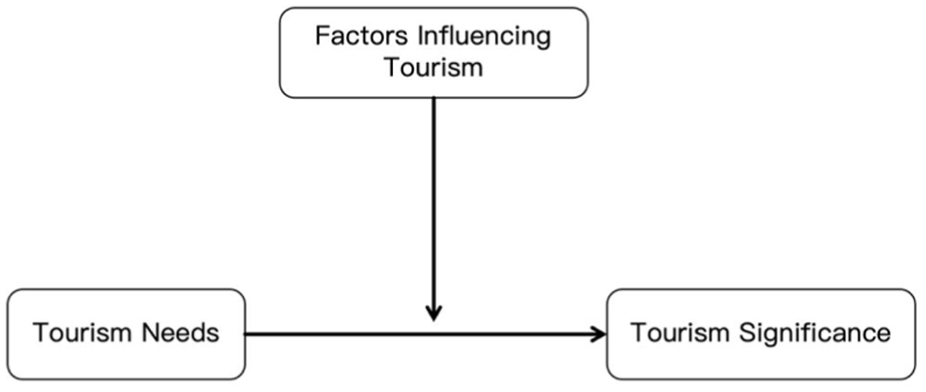
Model diagram of tourism needs, positive effects, and influencing factors for people with disabilities.
Recommendations
The fundamental reason why the tourism needs of people with disabilities are currently difficult to fully realize lies in the inadequate protection of their tourism rights. This reflects shortcomings in the social welfare system and is not merely an economic issue, but also a matter of social equity and inclusivity. Improving the tourism experiences of people with disabilities is by no means the sole responsibility of the tourism industry, but rather a shared responsibility of the whole society. All sectors of society should work together to focus on the tourism rights of people with disabilities, enhance support, and increase the coverage and service quality of tourism.
Government Level
Promote Legislative Protection for the Tourism Rights of People with Disabilities
In the process of safeguarding the tourism rights of people with disabilities, institutional development is crucial. The government should clarify the basic rights of people with disabilities in tourism through legislation, achieving equal treatment from conceptual to policy and regulatory levels. Although scenic areas often provide ticket discounts, the construction and maintenance costs of accessible facilities are high. It is difficult for scenic areas alone to bear the demand for comprehensive renovation. Therefore, systematic support must be provided through institutions, promoting legislative protection for the tourism rights of people with disabilities, improving the social security system, clarifying the tourism rights that people with disabilities should enjoy, and preventing service refusal or discrimination due to increased costs. For example, accessibility standards could be incorporated into the rating systems for scenic areas and hotels, ensuring they have more opportunities to enjoy various tourism services.
Improve the Preferential Tourism System for People with Disabilities
Beyond ticket discounts, the scope of preferential treatment should gradually be extended to transportation, accommodation, guided tours, and other aspects. Subsidy methods such as “tourism passports” or “tourism vouchers” should be established to reduce the actual travel costs for people with disabilities. Simultaneously, cost-sharing mechanisms for the construction and maintenance of accessible facilities should be established through government-purchased services, tax incentives, and special subsidies to alleviate the operational pressure on scenic areas and businesses.
Improve Accessible Facilities
During tourism, people with disabilities often face insufficient accessible facilities, making it difficult to obtain experiences comparable to those of ordinary tourists. Many scenic areas underinvest in the design and maintenance of accessible pathways, toilets, and elevators, and lack adapted textual, audio, or tactile guided tour services, which diminishes the tourism experience for disabled visitors. Therefore, governments and the tourism industry should prioritize the construction of accessible facilities, especially in popular scenic areas and public transportation, ensuring these facilities are both convenient and easy to use. The construction of an accessible environment can not only create more tourism opportunities for people with disabilities and promote social equity but also benefit older adults, pregnant women, and other groups requiring support, stimulating their desire to travel and consumption capacity, promoting the development of the entire tourism industry, and bringing greater benefits to tourist destinations.
Create More Tourism Opportunities
Economic conditions are a significant constraining factor for the participation of people with disabilities in tourism. Low-income groups face higher economic pressure during tourism, and additional costs make travel more difficult. The government should encourage and fund disability organizations, communities, and tourism agencies to conduct thematic tours, cultural exchanges, and public welfare travel projects targeting people with disabilities. Through organized, project-based approaches, feasible pathways for people with disabilities with different economic conditions to participate in tourism activities should be provided.
Enterprise Level
Enhance Staff Awareness and Skills in Assisting People with Disabilities
Professional service is crucial for people with disabilities, especially when facing different disability groups; service staff need sufficient knowledge and skills. However, currently, many tourism practitioners seem overwhelmed when dealing with the needs of disabled tourists, lacking basic awareness of disability service, leading to discomfort and dissatisfaction among disabled tourists. Therefore, scenic area managers should organize systematic disability service training for service staff, improving their understanding of the tourism needs of people with disabilities and their service capabilities, helping people with disabilities gain due respect and comfort during tourism. This not only creates a friendlier and warmer tourism environment for people with disabilities but also plays a significant role in promoting the overall service quality of the tourism industry.
Encourage Enterprises to Practice Social Responsibility and Humanistic Care
Corporate attention to the needs of people with disabilities not only enhances public image but also demonstrates humanistic care. Enterprises can provide flexible holidays, paid leave for employees with disabilities, and offer travel subsidies to people with disabilities, supporting their tourism rights and needs. Tourism service agencies should proactively undertake social responsibility, providing reasonable prices and services, rather than excluding disabled tourists due to service difficulties or increased costs. Such initiatives help improve employee satisfaction and loyalty, enhance team cohesion, and promote sustainable corporate development.
Establish Smart Technology Assistance Systems
Some people with disabilities report that even when scenic areas indicate free admission, they still face hassles and repeated questioning when presenting their disability certificate during actual travel, causing embarrassment. Even after entering the scenic area, the accessible services provided are minimal. Therefore, through intelligent and digital means, information accessibility should be strengthened, and smart technology assistance systems should be established. For people with hearing impairments, configure 5G sign language digital tour guides to provide real-time sign language translation services; for people with physical disabilities, develop dynamic accessible route planning systems that optimize wheelchair routes based on real-time crowd flow; install smart assistance devices in necessary areas to help people with physical disabilities easily navigate slopes or narrow sections. For the visually impaired community, configure smart guide bracelets achieving centimeter-level positioning navigation through bone conduction technology; AR glasses can intelligently identify obstacles and provide voice warnings, combined with landscape AI interpretation systems to provide contextual descriptions; for groups with intellectual disabilities, launch visual guide systems using graphical interfaces and scenario simulation functions to assist itinerary understanding. Through these measures, the quality of accessible services and the satisfaction of people with disabilities can be comprehensively enhanced.
Societal Level
The development of tourism for people with disabilities cannot be separated from the enhancement of overall societal awareness and broad participation. Protecting the tourism rights of people with disabilities is not only an important manifestation of social equity but also helps promote their transition from being objects of care to citizens entitled to enjoy tourism life. Through media publicity and public education activities, societal understanding of the tourism rights of people with disabilities can be enhanced, creating a social atmosphere of “equal participation, shared tourism,” and raising public attention and understanding of the disability community. Simultaneously, social organizations and public welfare institutions should be encouraged to provide tourism projects and services for people with disabilities, and more equal tourism opportunities should be created for people with disabilities through the integration of public resources, community participation, and volunteer services. This kind of social participation can form a positive cycle, promoting policy implementation and service innovation, and driving the sustainable development of tourism for people with disabilities.
Discussion and Conclusion
Discussion
Tourism constructs a unique transitional space for the disability community, allowing them to temporarily escape the dual constraints of physical limitations and social roles. In this space, relaxation becomes the core psychological need, achieving deep psychological restoration through environmental change and role release. Compared to ordinary tourists, people with disabilities have a more urgent pursuit of pleasure and happiness. This emotional experience stems not only from leisure itself but also carries the symbolic meaning of social acceptance and respect (Eichhorn et al., 2013; Kastenholz et al., 2015). Family companionship and interaction with relatives and friends play a key role in this process. Tourism, by strengthening emotional bonds and social belonging, becomes an important field for promoting family relationships and emotional support (Kim & Lehto, 2013). At a deeper level, tourism demonstrates significant empowerment value. By overcoming travel obstacles and completing independent tasks, people with disabilities gain a significant sense of achievement and self-efficacy in exploration and growth (Moura et al., 2023). This is not only an improvement in individual ability but also a process of responding to social expectations and reconstructing self-identity through practical results. Tourism thus becomes an important way for people with disabilities to break through social labels and demonstrate agency and independent character (Eichhorn et al., 2013). Through traveling together, people with disabilities gain emotional support in the company of family and friends, effectively alleviating social isolation (Zhuang & Wang, 2024; Wilson et al., 2017). This shared experience not only deepens intimate relationships but also creates a social space for equal participation, transforming them from passive recipients of aid into active participants (Reindrawati et al., 2022). At the same time, the challenges and achievements in tourism prompt people with disabilities to positively reframe their own experiences, achieving self-affirmation through psychological satisfaction and a sense of independence (Lehto et al., 2018).
Conclusion
Key Research Findings
Through in-depth interviews with individuals having various types of disabilities, this study explored and addressed the unique needs of People with Disabilities in tourism, how tourism influences their quality of life and social inclusion, and the key barriers that constrain their participation in tourism. The specific findings are as follows:
First, the tourism needs of People with Disabilities exhibit a distinct hierarchical structure, progressing from fulfilling “basic safeguards” to pursuing “self-realization.” The foundation of their needs is a safe, accessible supportive environment, but the deep core is achieving psychological compensation and value recognition. Multiple participants with physical disabilities pointed out that accessible facilities are a prerequisite determining “whether they can travel.” Beyond this, tourism is endowed with meaning beyond sightseeing, just as A52 with a visual impairment stated: “Travel allows me to relax, have time to rest, and a chance to catch my breath.” reflecting their urgent need for psychological respite. Further, the statement by A41 with an intellectual disability: “Every trip makes me feel stronger; I feel I can not only face obstacles but even overcome them.” profoundly reveals their deep motivation to break through social stereotypes and pursue self-validation and empowerment through tourism.
Second, tourism enhances the quality of life and social inclusion of People with Disabilities through three primary pathways: psychological, social, and functional. This study identified positive impacts in three key dimensions: psychological, social, and capability. On the psychological level, tourism provides a valuable sense of freedom and control, as emphasized by A12 with a physical disability: “Travel is when I don’t need to rely on others and can move freely.” On the social level, tourism becomes an important arena for strengthening social bonds and rebuilding a sense of belonging. The experience of A21 with a psychosocial disability was: “Traveling with family not only relaxes me but also makes my relationship with them closer.” On the capability level, tourism, as an informal learning scenario, significantly enhanced participants’ adaptive self-efficacy. A41 with a physical disability shared their gain: “Through travel, I learned to book hotels and plan itineraries. These skills have made me more confident and independent.” These three dimensions mutually reinforce each other, collectively promoting positive individual transformation and social integration.
Third, the factors constraining tourism participation among People with Disabilities encompass structural, service-related, and socio-attitudinal dimensions. Structural barriers are fundamental, manifested both as economic pressure, as stated by A34 with a physical disability: “The cost of traveling is still a bit difficult for us to afford,” and as exclusion by the physical environment, typically exemplified by “many accessible toilets are unreasonably designed; wheelchairs simply cannot get in.” Service barriers directly damage the quality and dignity of the tourism experience. The experience of A15 with a hearing impairment is thought-provoking: “In the restaurant, the service staff were indifferent and gave me half the portion of the previous non-disabled person.” Social cognitive barriers, meanwhile, cause deep psychological harm. Multiple participants mentioned encountering “strange, pitiful, or disdainful looks” in public places. This ubiquitous social prejudice greatly weakens their willingness to travel and the enjoyment of their experience.
Research Contributions
On a theoretical level, this study focused on the tourism experiences of Chinese people with disabilities, taking people with physical, sensory, and intellectual disabilities as research subjects. It revealed the hierarchical characteristic of tourism needs among people with disabilities, progressing from “basic security” to “self-actualization,” addressing the gap in existing research dominated by Western contexts. Simultaneously, the study explained the positive effects of tourism on people with disabilities from three dimensions: psychological, social, and capability, and further identified a systematic constraint mechanism formed by the intertwining of structural, service, and social cognitive barriers, providing a new theoretical perspective for understanding the causes of tourism inequality for the disability community. On a practical level, this study provided empirical insights and operational pathways for promoting the development of inclusive tourism. The results show that the core appeal of people with disabilities in tourism lies not only in facility accessibility but also in the realization of respect, equality, and a sense of participation. Therefore, tourism policies should expand from “physical accessibility construction” to “social and cultural accessibility development.” Furthermore, by restoring the authentic tourism experiences of people with disabilities, this study broke the stereotype of their “passivity and dependence,” highlighting the agency and initiative of the disability community in tourism. This finding helps promote public cognitive shift, enhance the overall inclusive awareness of society, and provides an important value reference for building a more equal and shared tourism society.
Limitations, and Future Research Directions
As a qualitative study, its findings are difficult to completely avoid subjective influence. On the one hand, researchers might be influenced by personal understanding and value judgments during data analysis and theme induction, thus bringing certain interpretive bias. Additionally, this study used purposive and snowball sampling to recruit participants; all interviewees were volunteers, there exists a certain self-selection bias. This type of bias may lead to the sample over-representing people with disabilities with positive attitudes towards tourism, while failing to adequately cover those who have given up tourism due to severe disabilities or limited economic conditions. On the other hand, the interviewees were mainly from Jiangmen City, Guangdong Province. Although Jiangmen City, as a representative Chinese medium-sized city, has a certain typicality, it still struggles to cover the differences in economic development levels, social support systems, and cultural concepts across different regions. Consequently, when applying the conclusions of this research to Chinese regions with varying socioeconomic and cultural backgrounds, including first-tier cities, western regions, and rural areas, their applicability must be evaluated with prudence. Based on the above limitations, future research can be improved in the following aspects: First, the sample size should be expanded to cover more cities, and cross-regional comparisons should be conducted to enhance the representativeness and external validity of the research results. Second, future research could adopt longitudinal tracking designs or diary methods to long-term observe the psychological states and behavioral changes of people with disabilities before and after single or multiple trips, in order to reveal the causal effects and dynamic experience processes of tourism. Finally, future research could more evenly cover different types of disabilities and segment research subjects, combining quantitative and qualitative research methods to conduct in-depth exploration of the experiential differences and impact mechanisms of different disability types and different tourism forms, thereby providing more targeted empirical evidence for inclusive tourism policy formulation and service optimization.
Footnotes
Acknowledgements
The authors sincerely thank all persons with disabilities in Jiangmen City who participated in this study and shared their valuable experiences. We also express our gratitude to the staff of Jiangmen City Employment Service Center for Persons with Disabilities for their assistance in data collection. In addition, we appreciate the guidance and suggestions provided by professors from the School of Economics and Management, Wuyi University during the research process.

Ethical Considerations
This study involving human subjects was approved by the Ethics Committee of Jiangmen City Employment Service Center for Persons with Disabilities (Approval Number: 20250620). All participants provided informed consent before participating in the study, and their privacy and rights were fully protected throughout the research process.
Funding
The authors disclosed receipt of the following financial support for the research, authorship, and/or publication of this article: This research was supported by the Undergraduate High-Quality Curriculum Construction and Innovation and Entrepreneurship Education Reform Project of Wuyi University (KC2022012), and the 2024 University-Level Undergraduate Teaching Quality and Teaching Reform Project of Wuyi University (JX2024042).
Declaration of Conflicting Interests
The authors declared no potential conflicts of interest with respect to the research, authorship, and/or publication of this article.
Data Availability Statement
Data sharing not applicable to this article as no datasets were generated or analyzed during the current study.