



Abstract
Despite increasing interest in immersive experiences within tourism, the specific psychological mechanisms that shape visitor engagement in show caves remain underexplored. This study investigates how aesthetic, and escape experiences contribute to visitor satisfaction in cave tourism, with a particular focus on the mediating role of decorative lighting. Drawing on the theoretical frameworks of servicescape and experience economy, a structural model was developed to examine the direct and indirect effects of lighting, perceived risk, and aesthetic appraisal on immersive engagement. Data were collected from 408 visitors to Gökgöl Cave in Türkiye and analysed using partial least squares structural equation modelling (PLS-SEM). The results show that aesthetic experience significantly influences both escape experience and satisfaction, while lighting enhances aesthetic perception but does not directly evoke psychological escape. Notably, perceived risk was not found to significantly affect escape, suggesting that regulated cave environments may attenuate emotional tension. Indirect effects further reveal that lighting improves satisfaction through its impact on aesthetic and escape experiences. The findings contribute to a nuanced understanding of sensory-driven immersion in nature-based tourism and underscore the role of aesthetic design in enhancing visitor outcomes in controlled cave settings.
Plain Language Summary
This study explores how lighting design inside caves influences the way visitors experience and enjoy their trip. We focused on Gökgöl Cave in Türkiye, a popular show cave known for its decorative lighting. Our aim was to understand how two key aspects—aesthetic experience (how beautiful and visually pleasing the cave looks) and escape experience (feeling mentally refreshed and transported away from daily life)—contribute to visitor satisfaction. We surveyed 408 visitors after their cave tour, asking about their impressions of the lighting, feelings of safety, and overall enjoyment. Using a statistical method called structural equation modelling, we examined how lighting, perceived risk, and aesthetic feelings were connected to immersion and satisfaction. The results showed that aesthetic experience strongly increased both the feeling of escape and visitor satisfaction. Lighting improved aesthetic impressions but did not directly create a feeling of escape. Visitors’ sense of risk had no significant effect on escape, likely because the cave is a safe, regulated environment. Importantly, lighting still boosted satisfaction indirectly by making the cave more visually appealing, which then encouraged feelings of escape. These findings suggest that thoughtful lighting design can enhance the beauty of a cave, leading to more memorable and satisfying experiences. For cave managers and tourism planners, this means that investing in well-designed, aesthetically pleasing lighting can improve visitor enjoyment even in safe, controlled environments.
Introduction
Tourism research has long emphasised that travel decisions and experiences are shaped by motivational and emotional factors, which ultimately affect engagement and satisfaction (Pearce, 2005). Since the 1960s, experiences have become a central theme of tourism studies (Blumenthal, 2020). Experiences are generally defined as subjective and personal responses to activities or settings (Packer & Ballantyne, 2016), with lasting memorability when strong enough to enter long-term memory (Larsen, 2007).
Beyond individual perception, scholars underline that tourism experiences can be intentionally designed and marketed as products. Middleton and Clarke (2001) note that successful marketing often involves presenting products as experiences, while Pine and Gilmore (2011) describe experiences along two dimensions: active versus passive participation, and immersion versus absorption. Building on this framework, Packer and Ballantyne (2016) identify 10 experiential dimensions, from sensory and hedonic to emotional and cognitive.
Recreation studies also conceptualize experiences through models such as hierarchical structures (Hung, 2018; Hung et al., 2020), planned behaviour (Meng & Cui, 2020), typologies (Bakas, 2017), and flow (Jiang et al., 2024; M. Kim & Thapa, 2018). Despite the breadth of these perspectives, experiences remain complex, multidimensional, and difficult to capture in a single model (Kandampully et al., 2017; Nguyen et al., 2023; Volo, 2009).
Environmental aesthetics play a crucial role in shaping immersive experiences. In cultural settings, technologies such as augmented and virtual reality often enhance immersion (Li et al., 2023), whereas in nature-based tourism these tools can sometimes undermine immersion (Sousa et al., 2024). In such contexts, sensory design and spatial arrangements remain the primary drivers of immersive engagement.
Given these insights, and the contrasting role of technology in cultural versus natural settings, this study focuses on cave tourism, where immersion, escape, and aesthetic experience emerge as central dimensions. Immersion reflects a deep involvement in the environment (Slater, 2009), escape relates to psychological withdrawal from daily routines (Iso-Ahola, 1982), and aesthetic experience captures emotional responses to environmental beauty (Kirillova & Lehto, 2015). Together, these dimensions provide a framework for analysing visitor experiences in Gökgöl Cave.
Previous cave tourism studies have mainly explored motivations and satisfaction (Allan et al., 2015; Antić et al., 2022; Ciki et al., 2024; Rachmawati & Sunkar, 2013). While valuable, this literature has largely overlooked the roles of aesthetic perception, lighting, and perceived risk in shaping immersive experiences. Addressing this gap, the present study investigates how these elements interact to influence aesthetic and escape experiences during a cave tour.
The theoretical perspective of servicescape (Bitner, 1992) provides the foundation, as it explains how physical surroundings generate aesthetic appeal and influence emotional, cognitive, and behavioural responses. In the case of show caves, decorative lighting and spatial design not only enhance visual coherence but also foster deeper immersion and psychological escape (Oh et al., 2007; Varley & Semple, 2015). Building on these insights, this study develops a structural model to examine how lighting, aesthetics, escape, and perceived risk jointly shape satisfaction in Gökgöl Cave.
Theoretical Background
Immersive and Escape Experiences
In tourism, immersion is a state where individuals lose track of time and space, focusing so deeply on the experience that they detach from their surroundings (Reichenbach, 2017; Slater, 2009). Slater (2009) explains this through two illusions: place illusion (feeling physically present elsewhere) and plausibility illusion (believing the experience is real). When both occur, visitors detach from the real world. A key result of this process is psychological escape—the temporary withdrawal from daily stress (Frochot & Lenglet, 2023).
Hirschman (1983) defines escape as the search for desirable alternatives to one’s current anxious or unpleasant state. Similarly, Iso-Ahola (1982) conceptualises escape as comprising physical, social, and psychological dimensions, emphasising that psychological escape plays a key role in tourist satisfaction.
The physical environment plays a pivotal role in this process. Bitner’s (1992) servicescape model suggests that environmental design influences emotional and cognitive responses, which in turn shape approach or avoidance behaviours. For instance, decorative lighting in a cave can enhance the atmosphere and trigger a sense of immersion. This immersive state can lead to a form of escape from daily life. The escape experience, in turn, may positively influence overall destination evaluations and increase visitor satisfaction (Oh et al., 2007).
Accordingly, this study proposes the following hypothesis:
Immersion and Aesthetic Experience
Caves, with their unique geological formations, colours, and spatial configurations, provide environments that evoke powerful aesthetic responses (S. S. Kim et al., 2008; Oh et al., 2007; Tongkul, 2006). Such responses relate to the concept of aesthetic value, which can be understood as a category of values that influence tourists’ judgements and decision-making, reinforcing its theoretical significance (Baker et al., 1994; Wagner, 1999). A key component of immersive tourism experiences is the aesthetic dimension, which enables individuals to engage emotionally and sensorially with their surroundings (Cheng et al., 2023). Aesthetic perception emerges from the interaction between environmental features and human interpretation and is often characterised by an immediate, emotionally charged response to visual or tactile stimuli (Antón et al., 2017; Böhme, 1993).
Aesthetic engagement fosters deeper immersion by enhancing the visitor’s sense of presence in the environment. According to Pine and Gilmore (2011, pp. 38–40), aesthetic experience constitutes one of the core realms of the experience economy and provides a passive yet immersive gateway to psychological engagement. In nature-based settings such as caves, aesthetic experience often arises from the passive appreciation of environmental features without direct interaction, aligning with Pine and Gilmore’s (2011) immersive experience model (pp. 46–48). Geological formations, colours, and spatial depth in cave environments evoke strong aesthetic responses, which in turn facilitate attentional focus and psychological distancing. S. Kaplan’s (1995) Attention Restoration Theory supports this idea, suggesting that such “soft fascination” reduces mental fatigue and fosters a sense of “being away” from everyday routines.
Lighting plays a particularly important role in shaping the aesthetic quality of these environments. As Kirillova et al. (2014) emphasise, aspects such as condition, shape, and spatial harmony can be enhanced through lighting design. In Gökgöl Cave, decorative lighting improves visibility while also increasing the perceived beauty and coherence of the surroundings. These enhancements elevate aesthetic engagement and support deeper psychological absorption.
Interpreted through Slater’s (2009) framework of place illusion (PI) and plausibility illusion (Psi), aesthetic stimulation via lighting can evoke both a strong sense of being in an alternate environment and belief in the authenticity of the experience. Consequently, aesthetic experience contributes not only to sensory engagement but also to psychological escape, as individuals detach from real-world concerns and immerse themselves in the experience.
Based on this theoretical reasoning, the following hypothesis is proposed:
Ambience, Lighting, and Experience
Recent studies show that artificial lighting strongly influences aesthetic perception and emotional responses in tourism environments, highlighting its central role in visitor experience design (Alabadleh et al., 2023). Coloured illumination, in particular, can enhance mood, attention, and imagination (Xie et al., 2022), while appropriate lighting has also been linked to a greater sense of safety and comfort in public spaces (J. Kaplan & Chalfin, 2022).
The physical environment plays a fundamental role in shaping both cognitive and emotional processes during tourism experiences. As Trentini (2015) notes, cognitive responses arise from environmental stimuli, and lighting is especially influential in guiding perception and affective evaluation. Bitner’s (1992)servicescape model categorises lighting as an ambient factor capable of eliciting emotional reactions and shaping visitor satisfaction. In this study, lighting is treated as a key environmental variable that can affect visitors’ perceptions and emotions (Hyun et al., 2018). Although ambience typically includes lighting, sound, aroma, and temperature (Uhrich & Benkenstein, 2011), this research isolates lighting as the primary input.
Lighting is not only a practical necessity in caves but also a stimulus that shapes sensory engagement. By strategically directing light toward formations such as stalactites or underground streams, lighting can create visual emphasis and aesthetic depth, thereby enhancing perceptual coherence and eliciting stronger aesthetic responses.
Lighting also serves as a cognitive cue that facilitates attentional immersion. Previous studies have shown that congruent sensory stimuli—such as scent and music—can intensify emotional responses and improve environmental evaluations (Mattila & Wirtz, 2001). Similarly, Ryu and Jang (2007) demonstrate that environmental cues influence affective states, which in turn shape behavioural intentions. Well-designed lighting can even help individuals lose track of time and become more fully immersed in an environment (Sengoz et al., 2024). These findings align with Pine and Gilmore’s (2011) experience economy framework, which emphasises the importance of sensory engagement and personal meaning in enhancing the overall intensity of experiences. Beyond its impact on aesthetic perception, lighting can indirectly influence escape experiences. Ambient lighting is frequently used in hospitality settings to promote relaxation and detachment from external stressors (Omland, 2023). Lighting and colour can create a theatrical environment that supports a sense of escape from everyday reality, a mechanism consistent with Mattila and Wirtz’s (2001) findings on atmospheric congruence in immersive settings and with Pine and Gilmore’s (2011, p. 6) framework. When applied in caves, lighting can transform a dark, unfamiliar space into a more comforting and even enchanting atmosphere, encouraging psychological distancing and facilitating escape.
Based on this reasoning, the following hypotheses are proposed:
However, in highly regulated environments such as Gökgöl Cave, these effects may be weaker due to the reduced presence of sensory uncertainty and environmental ambiguity.
Perceived Risk, Aesthetic Experience, and Psychological Escape
Risk perception in tourism is not merely a response to objective threats; rather, it is shaped by subjective interpretations of the environment. According to Rohrmann (2008), perceived risk arises from individuals’ personal judgements about potential dangers in a given space. These judgements are shaped by previous experiences, cultural beliefs, and individual psychological dispositions (Bronfman et al., 2020; Wachinger et al., 2013). As a result, the same cave environment may feel thrilling to one visitor but frightening to another (Kirillova & Lehto, 2015).
Perceived risk is closely linked to emotional responses such as fear and anxiety. Fear stems from the anticipation of potential harm (Farooqi et al., 2014). When the source of fear is ambiguous or exaggerated, it can lead to avoidance behaviours, as is common in phobias (Marks, 1970). In recreational contexts, however, perceived risk may paradoxically enhance enjoyment by adding elements of challenge and adventure (Priest, 1992). In cave tourism, factors such as dim lighting, narrow passages, or the presence of wildlife may cause discomfort in some visitors, creating an internal urge to psychologically withdraw. This disengagement can resemble or reinforce the sensation of escape from everyday reality.
Risk perception is also shaped by the aesthetic qualities of the environment. The “beauty-is-safe” bias suggests that people associate visually pleasing environments with greater feelings of security and comfort (Griffin & Langlois, 2006). When environmental features—such as harmony, lighting, or balance—appeal to the senses, they can reduce psychological tension and soften perceived threats. This supports findings that aesthetic experience mitigates perceived risk, particularly in unfamiliar or enclosed settings like caves (Castagna et al., 2021).
Taken together, these insights reveal a dual dynamic: while anxiety and fear may shape the extent to which a visitor seeks psychological escape, aesthetic enhancement can reduce perceived risk and foster a more positive experience.
Accordingly, the following hypotheses are proposed:
In structured and guided settings such as show caves, however, the emotional impact of perceived risk may be insufficient to trigger escape behaviours unless accompanied by heightened sensory arousal.
Aesthetic Experience and Visitor Satisfaction
Recent research highlights that destination aesthetics significantly influence tourist satisfaction and loyalty, even in cultural and nature-based tourism contexts (Gulertekin & Temizkan, 2023; Tulas et al., 2024). In tourism, satisfaction depends not only on a destination’s functional offerings but also on the holistic experience perceived by visitors. According to Prentice et al. (1998), the core product of tourism is the benefit derived from experiential engagement. Understanding how various experiential elements affect satisfaction is therefore essential for effective destination management (Packer & Ballantyne, 2016).
Among these elements, aesthetic engagement plays a particularly important role. Aesthetic experience refers to a visitor’s emotional and perceptual response to the visual and spatial qualities of the environment. Beautiful or harmonious surroundings evoke positive feelings that enhance overall destination evaluations (Oh et al., 2007). This perception is multisensory and cognitive, shaped by factors such as spatial layout, lighting, and environmental coherence (Kirillova & Lehto, 2015). When these features are carefully designed, they create settings that are pleasing, engaging, and emotionally resonant.
Bitner’s (1992) servicescape model provides a theoretical basis for understanding how environmental stimuli—such as lighting, spatial organisation, and ambient conditions—affect satisfaction. These physical features generate cognitive, emotional, and physiological responses, which in turn influence approach or avoidance behaviour. In Gökgöl Cave, decorative lighting and spatial coherence enhance visual appeal, creating an aesthetically rich experience that increases visitor satisfaction. This finding aligns with Ryu and Jang’s (2007) evidence that emotional states mediate the relationship between perceived atmosphere and behavioural outcomes.
Moreover, research indicates that aesthetically pleasing environments promote loyalty and revisit intentions through their effects on emotional appraisal (Breiby & Slåtten, 2018). In contrast, uninspiring or incoherent visuals can reduce satisfaction, even when functional aspects of the visit are adequate (Kirillova & Lehto, 2015). Consequently, the presence and quality of aesthetic features are critical determinants of visitor satisfaction.
Based on these theoretical arguments, the following hypothesis is proposed:
Figure 1 presents the proposed theoretical model, illustrating the hypothesised relationships among lighting, aesthetic experience, escape experience, perceived risk, and satisfaction. This model provides a clear conceptual framework before the paper proceeds to the “Data and Methods” section.

Proposed theoretical model.
Data and Methods
Prior studies emphasise that memorable tourism experiences emerge from a combination of cognitive, emotional, and sensory elements, underscoring the importance of measuring experience quality as a multi-dimensional construct (Coelho & Gosl, 2018). Experience quality has also been conceptualised and measured as a key determinant of tourist satisfaction and memorable experiences, offering a framework that can be adapted to cave tourism contexts (Chang & Horng, 2010; Coelho & Gosl, 2018).
This study investigates the relationship between aesthetics, escape, lighting, perceived risk, and satisfaction through an immersive experience. To design the survey, previously validated measurements in the literature have been considered. The analyses were performed using PLS-SEM. PLS is preferred over covariance-based structural equation models, widely used in the current literature, and leveraged in many areas of the social sciences (Sönmez Çakir, 2019). PLS is considered an essential research tool for customer loyalty in marketing (Richter et al., 2016) and especially for studies on satisfaction (Mateos-Aparicio, 2011).
Researchers may prefer PLS because it allows them to estimate complex models with many structures, indicator variables, and structural paths without imposing distributive assumptions on data (Hair et al., 2019).
Gökgöl Cave, Türkiye
The Gökgöl Cave is one of the longest caves in Türkiye. Its 875-metre walking path and four wide openings (Genis & Çolak, 2015) serve as a tourism area (Zonguldak Governorship, n.d.). This cave and its surroundings are part of a Lower Carboniferous limestone formation (Genis & Çolak, 2015), and it is an active, horizontally developed cave (Tay Project, n.d.). The cave consists of two branching side chambers next to the main gallery, and the collapse hall is where these side chambers meet. This cave is worth visiting with its stalactites, stalagmites, columns, flag dripstones, and dense macaroni stalactites on the stream. It has formation lighting, a walking track, glass bridges, and viewing terraces (Zonguldak Governorship, n.d.). Further, the entrance hall, one of the four large halls, is occasionally used for social activities such as music concerts (Genis & Çolak, 2015).
Figure 2 illustrates the geographical location and interior layout of the Gökgöl Cave, providing essential contextual information about the research site. Including this figure helps readers to better understand the physical setting in which the study was conducted, thereby contextualising the analysis and findings.

The location and interior of the Gökgöl Cave.
Survey Design
To design the survey items, a focus group interview was conducted on July 6, 2024, with a closed group of 8 people who visited the Gökgöl Cave. Also, face-to-face interviews were carried out with 12 visitors; the survey was finalised based on the opinions and suggestions on the survey items. The survey was then applied to those who visited the cave at the entrance of the Gökgöl Cave from August 1st to August 30th, 2024. The survey is a 5-point Likert-type survey.
According to Ahmed (2024), for a margin of error of 0.05, a sample of 384 units is sufficient for all universe sizes. Cheng et al. (2023) measured museum visitors’ aesthetic and escape experiences using a 295-unit sample; similarly, Antić et al. (2022) created a 304-unit sample to study cave visitors. These studies were also taken into consideration when determining the sample size. That said, although 384 participants visiting the Gökgöl Cave were considered sufficient, the sample size reached 408 participants.
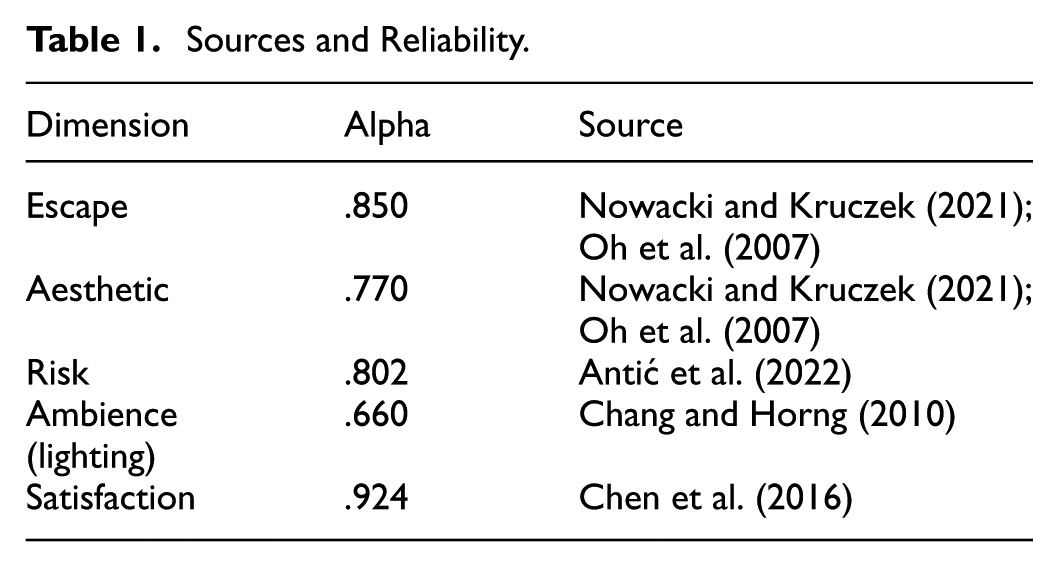
The survey items were revised from previous research. More specifically, three items on the escape experience were adapted from Nowacki and Kruczek (2021) and Oh et al. (2007); two items on the aesthetic experience were based on Nowacki and Kruczek (2021), and two items were adapted from Oh et al. (2007). Two items originally categorised under ambience were taken from Lee and Johnson (2010); however, since both items focused solely on lighting, the measurement in this study reflects only the lighting aspect of ambience. Four items related to the satisfaction dimension were revised from Chen et al. (2016), and the items on perceived risk were based on Antić et al. (2022) and Lee and Johnson (2010). One item related to the aesthetic experience was removed, as it did not contribute enough to the measurement. Table 1 summarises the sources and reliability coefficients of the survey items, demonstrating construct validity and ensuring that the measurement model is based on established and reliable scales.
Sources and Reliability.
In this study, all constructs were modelled as reflective. The measurement items represent manifestations of the underlying latent constructs, meaning that a change in the construct leads to consistent changes in all items. For example, aesthetic experience is reflected through multiple items describing perceived beauty and pleasantness of the cave, which are expected to correlate strongly. As Jarvis et al. (2003) emphasise misspecification between formative and reflective models can bias construct relationships; therefore, specifying the constructs as reflective ensures conceptual consistency. This choice is also consistent with methodological recommendations for PLS-SEM (Hair et al., 2017).
Results
This study uses SMART-PLS 4 for data analysis and structural equation modelling. To ensure the stability and accuracy of the parameters, the PLS algorithm was run for 300 iterations and 5,000 bootstrap subsamples with a 95% confidence interval, two-tailed, and 5% significance level.
Descriptive Statistics
A total of 420 visitors participated in the survey, though 12 responses were excluded for not meeting the participation criteria. Table 2 presents the demographic characteristics of the final sample (n = 408), which provide essential context for interpreting visitor experiences. These characteristics—such as gender, age, visit frequency, and phobia prevalence—are particularly relevant as they may shape perceptions of risk, aesthetic responses, and satisfaction
Demographic Characteristics of Participants.

Note. Percentages are based on the valid responses (n = 408).
Table 2 shows that 41.7% of the participants are women and 58.3% are men. By marital status, 66.4% are married, and 33.3% are single. 2.0% of the participants visited the caves independently, 72.5% with their family, 22.1% with their friends, and 0.7% with a tour programme. Out of the total visits, 71.1% are first-time visits, whereas 23.0% visited the caves 2 to 3 times, and 3.4% visited four times or more. 14.7% of the participants expressed that they had claustrophobia, 14.0% had a fear of darkness, and 26.2% had a fear of bats. Also, the average age of the participants is 35.55; 30.4% are between 18 and 28; 45.6% are between 29 and 44; 16.7% are between 45 and 59, and 2.5% are 60 years old or older.
Table 3 presents descriptive statistics and factor loadings, offering an initial assessment of how well each item represents its construct and pointing out indicators that may require closer examination.
Descriptive Statistics and Factor Loadings.

Table 3 shows the factor loadings of the items, which are between 0.656 and 0.883. According to Hair et al. (2017), the factor loading of items should be ≥0.70. The researchers suggest that these items should be removed from the model if the factor loadings range between 0.40 and 0.70 and if their AVE or CR values are below the threshold values. As the items Aest3, Escp2, Escp3, Risk1, and Risk3 had a factor loading between 0.40 and 0.70, their AVE and CR values were checked; Table 3 indicates the relevant results.
Validity and Reliability
There are three criteria for ensuring the validity of the PLS model. The first criterion is that each standard factor loading of the latent variables must be greater than 0.5 and statistically significant; the second one is that the construct reliability (CR) and Cronbach’s alpha (CA) values for each construct are more critical than .7; the third one is that the average variance explained (AVE) value for each construct must be higher than 0.5 (Fornell & Larcker, 1981; Hair et al., 1998). Table 4 demonstrates the CA, CR, and AVE values for the variables aesthetic experience, flow experience, perceived risk, lighting, satisfaction, and self-confidence.
Assessment of Reliability and Convergent Validity.

The findings of the construct validity yield that all values are between 0.75 and 0.89; the AVE values are between 0.51 and 0.68. Thus, these values meet the necessary criteria. Table 1 shows that the factor loadings of items Aest3, Escp2, Escp3, Risk1, and Risk3 were ≤0.70; Table 3 demonstrates that these items’ AVE and CR values were above the threshold values. For that reason, these items were removed from the measurement model.
Table 5 provides the values of the discriminant validity (the Fornell-Larcker criterion) of the measurement model for the variables of the aesthetic experience, lighting, immersive experience, perceived risk, and satisfaction. A model’s discriminant validity is tested by comparing the square root of the AVE value of each construct with correlations between the constructs. Accordingly, it is considered that if the square root of the AVE value is larger, the discriminant validity of the model is established (Fornell & Larcker, 1981).
Findings on the Fornell-Larcker Criterion.

Note. The bold values in the square roots of the AVE for each construct.
When the table of the Fornell-Lacker criteria is examined, it is seen that the values on the diagonal represent the square root of the AVE values of each factor, and the values outside the diagonal represent the correlation coefficients between the factors. Dec. Thus, the square root of the AVE values is higher than the correlation coefficients between the factors, which implies that the discriminant validity of the model is established.
The HTMT criterion, the geometric means of the correlations of the factors, is an alternative to the Fornell-Larcker criterion; accordingly, the HTMT value should ideally be less than 0.90 to establish validity (Hair et al., 2017). Table 6 includes the findings on the HTMT criterion.
Findings on the HTMT Criterion.

As the HTMT values in Table 6 range from 0.29 to 0.70, below the critical value of 0.90, discriminant validity is established based on the HTMT criterion.
Table 7 provides cross-loading values. Cross-loading values indicate the relationship of each item in the variables with other variables. A minimum of 0.10 units is expected between the loading value of an item in its variable and the highest loading value in other items. Loads of all items in the survey had such differences.
Findings on Cross Loading.

Note. The bold values represent the highest loading of each item, indicating the strongest relationship with its corresponding construct.
Fit indices are developed to measure the degree of fit for a SEM model (Hayashi et al., 2007). The goodness of fit of a statistical model explains how well it fits into a set of observations (Maydeu-Olivares & García-Forero, 2010). Yet, the Smart-PLS program may have shortcomings in terms of fit indices. For this reason, the fit indices of the model were calculated via the Jamovi program. Table 8 includes the frequently used measures of fit indices (Iacobucci, 2010; Schermelleh-Engel et al., 2003) and the calculated indices.
Fit Indices.

Source. Hu and Bentler (1999); Iacobucci (2010).
Note. The model's well-fitting indices were highlighted in bold to emphasize their goodness of fit. CFI = comparative fit index; TLI = Tucker-Lewis Index; NNFI = Bentler-Bonett Non-normed Fit Index; NFI = Bentler-Bonett Normed Fit Index; RFI = Bollen’s Relative Fit Index; IFI = Bollen’s Incremental Fit Index; PNFI = Parsimony Normed Fit Index; GFI = Goodness of Fit Index; AGFI = Adjusted Goodness of Fit Index; PGFI = Parsimony Goodness of Fit Index.
Assessing the model based on the fit indices, the PGFI index is within acceptable limits, while all the other indices fall within the good fit range. Also, Table 8 indicates that both the user and baseline model’s performance results are significant. The model is sufficient to carry out such measurement.
Figure 3 presents the hypothesised structural model, showing the estimated regression path coefficients (β) and the corresponding significance levels between the hypotheses, the external loads of the indicator items, and their significance levels. Figure 3 further demonstrates that the aesthetic experience has an effect of 0.37 on perceived risk, a positive impact of 0.57 on escape, and a moderately strong effect of 0.52. It is also clear that the escape experience has a positive impact of 0.29 on satisfaction and that lighting has an effect of 0.54 on the aesthetic experience and a weak effect of 0.13 on the escape experience. Finally, perceived risk affects −0.06 on the escape experience.

Structural path model.
Table 9 presents the effect size (f2) values for the main structural paths in the model. According to Hair et al. (2017) values of 0.02, 0.15, and 0.35 indicate small, medium, and large effects, respectively. The results suggest that the strongest effect comes from aesthetic experience on satisfaction, with a large effect size (f2 = 0.311). In contrast, the effect of risk perception on escape was minimal. These findings reinforce the mediating role of aesthetic experience and support the structural logic of the proposed model.
(f2) Values for the Main Structural Path.

Table 10 shows the results of the hypothesis. H1, that is, the hypothesis that the escape experience affects satisfaction, is accepted due to (β = .289, t = 3.084, p = .002). H2, the hypothesis that the aesthetic experience affects the escape experience, is accepted due to (β = .572, t = 6.004, p = .000). H3, the hypothesis that lighting affects the aesthetic experience, is accepted due to (β = .537, t = 9.209, p = .000). H4, the hypothesis that lighting affects the escape experience, is rejected due to (β = −.132, t = 71.495, p = .135). H5, the hypothesis that perceived risk affects the escape experience, is rejected due to (β = −.061, t = 0.758, p = .449). H6, the hypothesis that aesthetic experience affects perceived risk, is accepted due to (β = .367, t = 4.764, p = .000). H7, the hypothesis that aesthetic experience affects satisfaction, is accepted due to (β = .523, t = 5.630, p = .000). Moreover, the escape experience, aesthetic experience, perceived risk, and satisfaction have the following R2 values: 399, .289, .135, .546.
Overview of Hypotheses Findings.

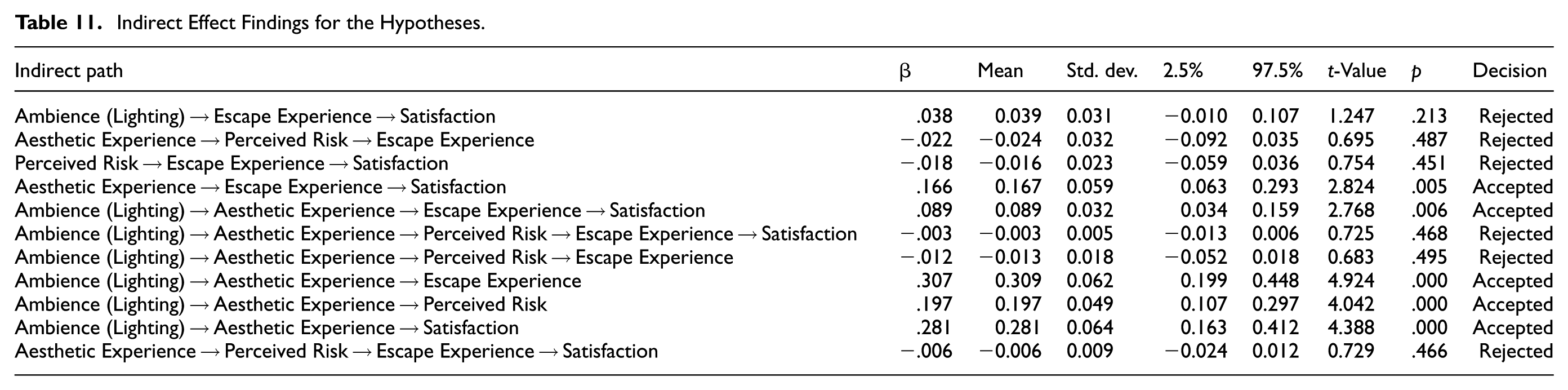
Table 11 shows the indirect effects in path analysis. The aesthetic experience affects satisfaction through the escape experience (β = .166, t = 2.824, p = .005). Ambience affects the escape experience through the aesthetic experience (β = .307, t = 4.924, p = .000). Ambience affects satisfaction through the aesthetic experience and the escape experience (β = .089, t = 2.768, p = .006). Ambience affects perceived risk (β = .197, t = 4.042, p = .000) and satisfaction (β = .281, t = 4.388, p = .000) through the aesthetic experience.
Indirect Effect Findings for the Hypotheses.
Discussion
This study deepens understanding of immersive cave tourism by analysing links between aesthetics, lighting, escape, and perceived risk. Results highlight the mediating role of aesthetics in connecting environmental design to escape and satisfaction. As prior studies show (Kirillova & Lehto, 2015; Oh et al., 2007), visually appealing environments increase emotional engagement and psychological distancing, which in turn raise satisfaction. These findings also support evidence that aesthetics enhance well-being and positive outcomes (Albarracín & Dai, 2024).
Lighting demonstrated a strong direct impact on aesthetic experience (β = .537, p < .001) but no significant direct influence on escape experience (H4 rejected). This suggests that visual enhancements alone may be insufficient to generate full psychological detachment. As previous studies on immersive experiences indicate (Cheng et al., 2023; Frochot et al., 2017; Slater, 2009), achieving a profound sense of immersion requires a combination of sensory, emotional, and cognitive engagement. In the controlled environment of Gökgöl Cave, where elements such as darkness and spatial disorientation are minimised, opportunities for deep immersion are limited. This aligns with research in nature-based tourism showing that environmental modifications can either enhance or diminish immersion (Sousa et al., 2024).
Similarly, H5 (perceived risk → escape experience) was not supported. The structured design of Gökgöl Cave—with paved paths, signage, and staff presence—likely reduced visitors’ sense of uncertainty and risk. Previous research has noted that perceived risk in recreational settings can sometimes enhance enjoyment by adding elements of challenge and adventure (Priest, 1992), yet this effect depends on contextual factors. The lack of significant findings here reinforces that risk contributes to escape only when uncertainty and sensory arousal are sufficiently high.
Importantly, the study confirms that lighting indirectly contributes to both escape and satisfaction through aesthetic experience. This supports prior findings that environmental cues, when designed thoughtfully, can elicit positive emotional responses and influence behavioural outcomes (Mattila & Wirtz, 2001; Ryu & Jang, 2007). These results also expand Pine and Gilmore’s (2011) experience economy framework by highlighting that aesthetic perception mediates the impact of sensory design in tourism environments. By doing so, the study demonstrates that lighting serves not only as a functional feature but also as a critical experiential tool that shapes visitors’ perceptions and emotions. The results strengthen and refine Pine and Gilmore’s model by identifying aesthetic experience as a mediating construct in sensory-dominant tourism settings.
Another important contribution is the positive relationship between aesthetic experience and reduced perceived risk (β = .367, p < .001). This finding aligns with the “beauty-is-safe” effect (Castagna et al., 2021; Griffin & Langlois, 2006), showing that visually pleasing environments can mitigate feelings of anxiety in enclosed or unfamiliar spaces. By incorporating this link, the study extends Bitner’s (1992) servicescape framework, illustrating how aesthetic improvements can simultaneously reduce perceived threats and enhance satisfaction.
The results collectively confirm that aesthetic experience is central to immersive cave tourism, mediating the effects of lighting on escape and satisfaction. Theoretically, the study integrates aesthetic and risk-related variables into existing models of immersive tourism, contributing to the growing literature on multi-sensory design in tourism experiences (Cheng et al., 2023; Robaina-Calderín Josefa et al., 2023). The inclusion of effect size (f2) analysis further shows that the relationships between aesthetic experience, lighting, and satisfaction are practically meaningful, with aesthetic experience having a large effect on satisfaction and a moderate-to-high effect on escape.
Practically, the findings highlight the importance of designing visually coherent and aesthetically appealing environments, especially through strategic lighting, to foster positive visitor outcomes. Managers of show caves and similar environments can consider specific techniques such as colour-adjustable LED lighting, spotlighting unique formations, and creating layered lighting schemes to enhance depth and focus. These approaches can simultaneously improve visibility, evoke emotional responses, and increase overall satisfaction.
Future research could build on these findings by examining additional sensory dimensions—such as sound, scent, and narrative storytelling—to better understand how multi-sensory design shapes immersive experiences. Comparative studies across different cave environments or other natural heritage sites could further validate the model and explore cultural differences in aesthetic appraisal and risk perception (Pearce, 2005; Velarde et al., 2007).
Conclusion
This study provides important theoretical and practical insights into immersive experiences in cave tourism by integrating aesthetic perception, lighting, escape experience, and perceived risk into a structural framework. The findings confirm that aesthetic experience plays a central mediating role, linking environmental design elements to both escape and visitor satisfaction. By showing that lighting has a strong effect on aesthetic perception but only an indirect effect on escape, the study refines Pine and Gilmore’s (2011) experience economy model by identifying aesthetic perception as a key intermediary in sensory-dominant environments. It also extends Bitner’s (1992) servicescape framework by demonstrating how aesthetic improvements can simultaneously reduce perceived risk and enhance satisfaction.
The inclusion of effect size (f2) analysis adds further practical significance to the findings, confirming that the relationships between aesthetic experience, lighting, and satisfaction are meaningful in real-world contexts. From a practical perspective, the results highlight the value of strategic lighting design in show caves and similar environments. Managers can consider specific techniques such as colour-adjustable LED systems, spotlighting unique geological formations, and layered lighting schemes to increase depth, focus, and visual appeal. These design choices can enhance visitors’ emotional engagement, foster psychological escape, and ultimately improve satisfaction and revisit intentions.
Future research should expand on these results by exploring additional sensory dimensions—sound, scent, and narrative elements—that could strengthen immersive experiences in natural heritage settings. Comparative studies across different cultural and geographical contexts could further validate the model and provide broader insights into how aesthetic perception and risk appraisal vary among tourists. By doing so, scholars can continue to refine theoretical models and offer evidence-based guidelines for designing meaningful, multi-sensory tourism experiences.
Limitations
This study has several limitations that should be acknowledged. First, the research was conducted in a single show cave—Gökgöl Cave—located in Türkiye. While this provides an in-depth understanding of one site, the findings may not be generalisable to other cave tourism destinations with different environmental, cultural, or managerial characteristics. Second, although the concept of ambience was theoretically defined to include lighting, sound, temperature, and aroma, the operationalisation in this study was limited to lighting alone. This narrow focus restricts the interpretation of results related to ambience and calls for caution when generalising the findings. Third, the study employed a convenience sampling method, which may introduce sampling bias and limit the representativeness of the sample. Finally, although aesthetic and escape experiences were central to the model, other experiential factors such as narrative, spatial disorientation, or social interaction were not included. Future studies could integrate these variables and apply comparative designs across multiple caves or tourism settings to enhance external validity.
Future Studies
Future research can build on these findings by exploring additional sensory dimensions, such as sound, scent, and narrative storytelling, to understand how multi-sensory design influences immersive experiences. Comparative studies across different caves and natural heritage sites could help validate the model and reveal how cultural, geographical, and managerial factors influence aesthetic perception, risk appraisal, and visitor satisfaction.
Further studies could also investigate the long-term behavioural outcomes of enhanced aesthetic experiences, such as revisit intention, word-of-mouth recommendations, and destination loyalty. Incorporating advanced technologies—such as augmented reality, virtual reality, and dynamic lighting systems—may provide new ways to test how technological interventions affect immersion and emotional engagement in natural settings.
Another promising avenue is to examine individual differences in personality traits, sensation-seeking, and cultural background to determine how these factors moderate the relationships between aesthetic experience, perceived risk, and satisfaction. Longitudinal research could explore how repeated exposure to the same environment changes aesthetic appraisal and risk perception over time.
By addressing these directions, future research can further refine theoretical models of immersive tourism and provide actionable insights for designing meaningful, multi-sensory visitor experiences that balance safety, authenticity, and emotional impact.
Footnotes
Acknowledgements
We would like to thank the staff of The Gökgöl Cave.

Ethical Considerations
This study was conducted in accordance with the ethical standards of the Bartın University Ethics Committee and approved under decision number 2025-SBB-0120.
Author Contributions
All authors contributed to the study conception and design.
Funding
The authors received no financial support for the research, authorship, and/or publication of this article.
Declaration of Conflicting Interests
The authors declared no potential conflicts of interest with respect to the research, authorship, and/or publication of this article.
Data Availability Statement
The data that supports the findings of this study are available from the corresponding author, upon reasonable request.