




Abstract
The increasing popularity of Internet Celebrity Check-in Places has stimulated research interest in these emerging tourist destinations. However, previous studies have predominantly focused on psychological satisfaction, neglecting the significance of embodied factors, such as physical conditions. To bridge this research gap, the present study adopts an embodied framework to comprehensively evaluate the quality of tourism experiences at these destinations. Drawing on the theoretical foundations of embodiment, an original evaluation index system is developed, encompassing dimensions of physicality, perception, and situational factors. Objective online reviews and subjective interviews are collected from the Yundong Library case study in Haikou City and transformed into numerical scores. The findings reveal that tourists’ physical experiences are hindered by constraints, such as restrictive age policies. Additionally, sensory engagement and active participation receive relatively low scores, indicating areas for improvement. While the perception of distinctive scenic attributes is positive, reception conditions, including dining and transportation, receive below-average ratings. By incorporating physical aspects into the evaluation, a more holistic assessment is achieved compared to conventional approaches. The standardized evaluation system provides destination managers with practical insights and a data-driven approach to benchmark strategies and enhance the quality of experiences over time. This study extends existing frameworks and underscores the importance of incorporating the embodied perspective in understanding and perpetuating experiences that hold essential value for the tourism industry.
Keywords
Introduction
In recent years, various highly sought-after locations have emerged throughout China, gaining recognition as popular internet celebrity check-in destinations. These locations include Universal Resort in Beijing, “Xiaomanyao” in Guangzhou, Yundong Library in Haikou, Kuanzhai Alley in Chengdu, Disney Theme Park in Shanghai, Balang Street in Tibet, and Chaka Salt Lake in Qinghai. These places not only encompass traditional renowned landmarks but also offer modern and technologically immersive experiences. Engaging in photo-taking and visiting these locations has become a prominent motivation for many people’s leisure activities, serving as a significant factor in the revival of the cultural tourism industry in the post-pandemic era.
The establishment of Internet celebrity check-in places has emerged as a fundamental approach adopted by numerous tourist destinations to differentiate themselves and captivate tourists with distinctive and innovative offerings. Nevertheless, prevailing scholarly investigations concerning tourism experiences at these novel destinations have predominantly concentrated on psychological and cognitive elements within the realm of consumer satisfaction, often disregarding the embodied and physical dimensions that contribute to the formation of experiences. The theoretical framework of embodiment posits that human cognition and behavior are not only influenced by external environments and cognitive processes but also by physical and biological factors. By integrating an embodied perspective, a more comprehensive comprehension of the factors that shape tourism experiences at Internet celebrity check-in places can be achieved. On December 6th, 2021, the Beijing Municipal Bureau of Culture and Tourism released an official list of 10 recommended internet celebrity check-in places in Beijing (L. Fan & Zhang, 2023; X. Zhang et al., 2021). These locations encompass a wide range of attractions, including natural landscapes, cultural landmarks, art and cultural centers, urban parks, night economy hubs, innovative consumption settings, technological innovations, digital economy spaces, reading areas, hotels and boutique bed and breakfast establishments, as well as unique dining and retail experiences. The aim is to leverage social engagement through comprehensive planning and promotion to enhance the influence of these internet celebrity check-in places in Beijing. This approach seeks to position these places as a fresh platform to showcase the city’s vibrancy and trendy consumer culture. The development of internet celebrity check-in places in cities has proven to attract a significant influx of visitors, resulting in multiple benefits that drive regional economic growth. Consequently, it has become a primary strategy for various tourist destinations to offer distinctiveness and novelty to attract visitors (Camilleri & Camilleri, 2018; Che et al., 2022; L. Fan & Zhang, 2023; Ma et al., 2003; X. Zhang et al., 2021).
The concept of tourism experience encompasses various dimensions, including tourists’ perceptions, emotions, and interactions within a destination (Buckley et al., 2022; Godovykh & Tasci, 2020; Z. Zhu et al., 2023). With the advent of social media and user-generated content, a new form of tourist destination has emerged known as Internet Celebrity Check-in Places. These destinations provide opportunities for tourists to engage in experiential consumption and foster a sense of social belonging (Kitsios et al., 2022; Uğurlu, 2022). However, existing studies on tourism experiences and Internet Celebrity Check-in Places have predominantly focused on psychological and cognitive factors within the framework of consumer satisfaction, overlooking the embodied and physical aspects of experience formation (Cao et al., 2021; Hall & Williams, 2019; Lv et al., 2024). Embodied theory posits that human cognition and behavior are influenced not only by external environments and mental processes but also by physical and biological factors (Shove et al., 2012). In the context of tourism, scholars have applied an embodied approach to explore how factors such as tourists’ gender, physical condition, and sensory perceptions shape their experiences (Agapito et al., 2013; Farkic, 2022; Small et al., 2012). For example, some studies of industrial heritage tourism found that physical disabilities can act as “embodied barriers” hampering full participation and immersion in activities (Devile & Kastenholz, 2020; Gregory, 2023; Portales & Nogués-Pedregal, 2019). However, existing research employing embodied perspectives remains limited, with few studies quantitatively evaluating tourism experiences based on physical and sensory dimensions. This study aims to address this gap by incorporating an embodied perspective to more comprehensively evaluate the tourism experience quality of Internet Celebrity Check-in Places.
Situated factors such as the architectural environment, facilities and services also play an important role in shaping tourism experiences (Jiang et al., 2023; Scerri et al., 2019; Seyfi et al., 2020; Tussyadiah, 2014). Previous studies note that aspects like traffic accessibility, dining options and activities on offer at a destination can impact tourists’ perceptions of its reception conditions (H. Zhang et al., 2014). For Internet Celebrity Check-in Places aiming to attract visitors and drive repeat visits, optimizing the situational elements is crucial but often overlooked in favor of prioritizing scenic attributes alone. This study aims to fill this gap by including situational dimensions in its tourism experience evaluation index system, thereby providing practical recommendations destination managers can adopt to enhance the overall quality perceived by tourists.
The sudden and substantial increase in tourist visits to Internet celebrity check-in locations frequently results in an overwhelming influx of visitors that exceeds the local tourism capacity (Lade et al., 2020; Vellas, 2016). Consequently, the quality of services deteriorates, leading to a subpar experience for travelers. Additionally, these check-in places often lack differentiation and specialization, with inadequate and suboptimal infrastructure and commercial formats. Consequently, many of these check-in places fail to establish themselves as long-term attractions, failing to encourage repeat visits from tourists. Therefore, addressing the urgent need to enhance the tourism environment of Internet celebrity check-in locations becomes imperative. This entails effectively highlighting their cultural significance and unique characteristics, thereby elevating the overall tourist experience (J. Li et al., 2023; Luong, 2023; S. Wang, 2023). Successfully integrating online popularity and cultural tourism development poses a significant challenge that warrants immediate attention.
Tourism experience is the accumulation of emotional value of tourists and the degree of satisfaction of tourism needs in the context of tourism (Sun et al., 2018). At present, the research results related to tourism experience are very rich, and the relatively mainstream basic theories mainly include service quality theory, benefit behavior theory, participation theory, gaze theory, role-playing theory, symbolic theory, phenomenological theory, etc. (Wu & Tang, 2018). The current research perspective tends to focus on the satisfaction of tourist destinations for tourist consumers and the psychological feelings of consumers in the experience process, ignoring the embodied factors during the tourist experience such as tourists’ physical state, physical condition, physical health, physical defects, and biological age.
The embodied theory emphasizes that the tourism experience is formed through physical interactions, and the quality of this experience is a reflection of both the psychological and physical satisfaction of tourists within a given context (Haimeng et al., 2021). Embodiment has emerged as a significant perspective in the study of tourism experiences, even evolving into a new paradigm for research on this subject (Wu & Tang, 2018). Presently, one notable characteristic of several Internet celebrity check-in places is the act of taking pictures, which serves as a form of interaction between the body and the attractions. Additionally, the marketing content of these places often involves experiencing exhibitions and indulging in food, representing further forms of bodily engagement with the attractions, encompassing visual, gustatory, and tactile sensations (Brochado et al., 2021; Gao et al., 2022; Haimeng et al., 2021; Ranteallo & Andilolo, 2017).
Previous scholarly investigations have underscored the significant focus dedicated by researchers to the examination of innovations in a wide range of domains (G. Chen et al., 2023; G. Li et al., 2024; Xi et al., 2022; Zhao et al., 2023). Noteworthy among these domains are the fields of management and tourism, which have received comprehensive analysis (Luo et al., 2024; Q. Wang et al., 2022; A. Xu et al., 2024; S. Zhang et al., 2023). The reports presented in earlier studies have played a substantial role in advancing knowledge within these specific areas (B. Li et al., 2021; Qiao et al., 2023; Xia et al., 2023; Zhou et al., 2023; D. Zhu et al., 2023). While previous studies have made significant contributions to understanding tourism experiences from an embodied perspective, there are still areas that require further investigation. Existing research predominantly relies on qualitative methods, lacking standardized quantitative measures for evaluating experience quality. Consequently, comparisons across different contexts and over time have been limited. To bridge this gap, this study aims to enhance the current understanding by developing an original index system for evaluating the tourism experience quality at Internet celebrity check-in places, building upon established embodied frameworks. By collecting and analyzing both objective online reviews and subjective interview responses, numerical scores will be assigned based on proposed dimensions of physicality, perception, and context. This mixed methods approach allows for a comprehensive investigation into the contribution of intangible elements such as sensory engagement and immersion to visitors’ overall experiences.
Therefore, this study aims to make a valuable contribution to the existing body of knowledge on tourism experiences, specifically from an embodied perspective. Firstly, it extends beyond conventional evaluation systems by integrating the embodied theory into the assessment framework. This approach effectively bridges a research gap where previous studies primarily emphasized the psychological and cognitive aspects of tourist satisfaction, while neglecting the significance of physical and sensory elements in shaping the overall experience. Furthermore, the developed standardized evaluation index system provides destination managers with a systematic and data-driven approach to assess improvement efforts and enhance experiential quality over time. This addresses a current limitation in the literature, as the absence of standardized quantitative measures has impeded the ability to compare experience quality across diverse contexts and over extended periods.
The specific objectives of this research are to (1) quantitatively analyze the tourism experience quality at the Yundong Library in Haikou City as a case study and (2) compare the results across tangible and intangible evaluation criteria. By doing so, the study aims to address the overarching research question: How do physical, perceptual, and situational factors, both individually and collectively, influence tourists’ holistic evaluations of experiences at Internet celebrity check-in places? The standardized evaluation index system not only advances theoretical understanding of embodied tourism experiences through a novel quantitative lens but also provides practical implications for destination managers who seek data-driven strategies to benchmark improvements and enhance quality over time. Ultimately, this research expands existing frameworks and offers a more robust approach to assessing experiences, which is crucial for optimizing competitiveness in an increasingly experience-centric tourism landscape. Therefore, building upon the embodied theory, this study aims to integrate physical aspects into the evaluation system for travel experiences at Internet celebrity check-in places. The research will focus on the Yundong Library, a prominent landmark in Haikou, as a case study.
The fundamental research problem addressed in this study pertains to the absence of comprehensive evaluation frameworks that incorporate the embodied dimensions of tourism experiences at Internet celebrity check-in places. Previous research has predominantly concentrated on the psychological and cognitive aspects of tourist satisfaction while overlooking the importance of physical and sensory elements in shaping the overall experience. This research gap is evident in the literature, as the majority of studies on tourism experiences have relied on qualitative methods and lacked standardized quantitative measures to assess experience quality. As a result, the capacity to compare experiences across different contexts and over time has been limited. The primary theoretical foundation underpinning this study is the embodied theory, which posits that human cognition and behavior are influenced not only by mental processes and external environments but also by physical and biological factors. By integrating this theoretical perspective into the evaluation of tourism experiences at Internet celebrity check-in places, a significant contribution is made to the existing knowledge base. Additionally, this research explores the various factors that influence the tourism experience in Hainan, a region that has received limited attention in the current literature. The findings derived from the case study conducted at the Yundong Library have the potential to inform the sustainable development of these attractions and guide the formulation of management strategies specifically tailored to Internet celebrity check-in places.
This study follows the following structure. Initially, it discusses the theoretical foundation of embodiment and its implications for research on tourism experiences. Subsequently, it outlines the significance of the study, emphasizing its academic and practical contributions. The proposed evaluation index system for assessing tourism experiences at Internet celebrity check-in places is presented, providing a comprehensive description of the three key dimensions and their corresponding indicators. The research methodology, incorporating the case study approach and data collection methods, is then described. Following that, the findings obtained from the analysis of the Yundong Library case study are reported, followed by the conclusions drawn and practical recommendations provided to enhance tourism experiences at these emerging destinations.
Theoretical Foundation
The theoretical foundation of embodiment draws upon various interdisciplinary perspectives, with its core principle asserting that the body significantly influences human psychological processes and that human behavior arises from the interaction between the body and the objective world (Vereza, 2001). The embodiment theory considers the body as a subject of cognition and highlights that individuals’ psychological experiences are rooted in bodily experiences. This theory offers a fresh perspective and paradigm for tourism research, particularly in the realm of tourism experience investigation. Since the 1990s, embodiment theory has been applied to the examination of tourism experiences. Numerous researchers have analyzed the content, structure, and characteristics of tourism experiences from the vantage points of tourists’ gender, physical condition, situation, and embodiment (Song et al., 2020). For instance, Wu et al. proposed a research framework for tourists’ embodied experiences in tourism research, focusing on three main aspects: the body, perception, and situation. In the formation of a tourist’s embodied experience, their body, perception, and situation collectively influence their cognition and subsequent behaviors. Specifically, factors such as body structure, nervous system (including sensory experiences), and varying physical conditions interact with tourists’ perception, subsequently impacting their overall experience. Moreover, the embodiment of cognition cannot exist independently of the situation; the tourists’ bodies interact with the changing situations they encounter, further influencing the tourism experience (Wu & Tang, 2018). Yanjun et al. underscores the necessity of embodiment in the tourism experience, emphasizing that the full engagement of the body serves as the core and foundation of embodied experiences. They also introduces the concept of embodied barriers in the study of industrial tourism (Yanjun et al., 2018). In their empirical research on the embodied perspective and tourism experience X. Chen and Chen (2020) integrated the concept of embodied experience proposed by Wu Jun and Fan Youmeng. They designed a research framework consisting of three dimensions and conducted related studies on the tourist experience in the ancient city of Phoenix. Their study revealed that the embodied experience of tourists in bars and ancient towns is intertwined and complementary (X. Chen & Chen, 2020). Haimeng et al. (2021), and others devised an evaluation system for the quality of tourist experiences in historical and cultural districts based on embodiment theory. They conducted research on the experience quality of tourists in the historical and cultural blocks of Jianghan Road and Zhongshan Avenue in Wuhan. The findings demonstrate that the quality of tourism experiences is influenced not only by tourists’ perceptual and situational factors but also by their physical factors. Integrating physical factors into the evaluation index system for the quality of tourism experiences enables a more accurate and comprehensive measurement and analysis of experience quality (Haimeng et al., 2021). Numerous scholarly investigations have explored diverse theoretical frameworks and factors that influence consumer behavior and the acceptance of technology, particularly in online and social media environments (Kimiagari & Keivanpour, 2015; Kimiagari & Malafe, 2021; Malafe et al., 2021). Some studies have integrated well-established models, including the stimulus-organism-response (S-O-R) framework and the Unified Theory of Acceptance and Use of Technology (UTAUT), to examine the direct and indirect impacts of internal and external stimuli on consumer responses. These responses encompass various aspects such as impulse buying behavior and the adoption of electronic services. The research methodologies employed in these studies have encompassed a combination of quantitative analysis techniques, such as structural equation modeling, and mixed-methods data collection strategies. This comprehensive approach has provided valuable insights into the intricate mechanisms underlying consumer decision-making and technology usage across diverse cultural and economic contexts (Kimiagari et al., 2021; Kimiagari & Baei, 2022a, 2022b).
While the aforementioned studies have provided valuable insights into the application of an embodied perspective in understanding tourism experiences, there are still certain areas that require further exploration. Specifically, most existing research relies on qualitative data derived from interviews and observations, lacking standardized quantitative measures. Consequently, the ability to compare experience quality across different contexts and over time is limited. The present study seeks to bridge this gap by building upon established embodied frameworks while introducing an original evaluation index system. By incorporating both objective online reviews and subjective interview responses, these data will be transformed into numerical scores based on the proposed dimensions of physicality, perception, and context. This diversified mixed-methods approach enables a comprehensive investigation into how intangible elements such as sensory engagement and emotional immersion contribute to the overall experience of visiting an Internet celebrity check-in place. Furthermore, the comparative analysis of evaluation criteria will yield practical insights for destination managers aiming to implement data-driven strategies that enhance experiential quality and visitor satisfaction in the long run. Thus, the study intends to advance the understanding of embodied tourism experiences by adopting a novel quantitative approach.
The utilization of an embodied perspective in tourism research has remained limited in existing studies, with only a few quantitative evaluations conducted on tourism experiences focusing on physical and sensory dimensions. This literature gap presents an opportunity to advance the understanding of embodied tourism experiences through a novel quantitative approach. By collecting and analyzing both objective online reviews and subjective interview responses, the present study aims to convert these data into numerical scores based on the proposed dimensions of physicality, perception, and context. This diversified mixed-methods approach allows for a comprehensive investigation into how intangible elements such as sensory engagement and emotional immersion contribute to the overall experience of visiting an Internet celebrity check-in place.
The integration of the embodied theory into the evaluation of tourism experiences at Internet celebrity check-in places represents the innovative aspect of this study, which has received limited attention in the existing literature. Previous research has primarily focused on the psychological and cognitive dimensions of tourist satisfaction, neglecting the significance of physical and sensory elements in shaping the overall experience. By utilizing a mixed-methods approach that combines objective online reviews and subjective interview data, this study introduces a fresh quantitative perspective to explore the impact of intangible experiential factors, such as sensory engagement and emotional immersion, on visitors’ holistic evaluations of these emerging tourist destinations. This departure from the predominantly qualitative nature of prior studies employing embodied perspectives in tourism research marks a notable advancement. Moreover, the development of a standardized evaluation index system, encompassing physical, perceptual, and situational dimensions, establishes a comprehensive and data-driven framework for destination managers to assess and enhance experience quality over time, thereby addressing the current limitations in the literature.
Significance of the Study
The current focus of tourism experience research primarily revolves around assessing the satisfaction level of tourism destinations for consumers and exploring consumers’ psychological experiences during the process. However, there is a lack of emphasis on the embodiment of tourism experiences. Therefore, one of the key academic contributions of this study is to expand the traditional evaluation system of tourist perception by integrating embodied theory into the existing framework.
Furthermore, this study will bridge the gap between embodied theory, tourism experience, and tourism evaluation by conducting research on Internet celebrity check-in places. It will investigate the various factors that impact the tourism experience in Hainan, which has never been explored before. Moreover, by conducting research on Internet celebrity check-in places, an unexplored phenomenon, this study aims to establish a connection between embodied theory, tourism experience, and tourism evaluation. Through an investigation into the diverse factors influencing the tourism experience in Hainan, this study endeavors to offer valuable insights. These insights can guide the sustainable development of these attractions and facilitate the formulation of management strategies that are specifically tailored to Internet celebrity check-in places.
In addition to its academic significance, this research will also contribute to a better understanding of tourists’ satisfaction with the experience of Internet celebrity check-in places. It has the potential to guide the sustainable development of these attractions and provide management strategies specifically tailored to Internet celebrity check-in places in Hainan. This research will assist marketers and policymakers in developing appropriate marketing strategies to promote Hainan as a desirable holiday destination.
In summary, the significance of this study encompasses two key aspects. Firstly, it extends the conventional evaluation system of tourist perception by incorporating the embodied theory into the existing framework. This constitutes a noteworthy academic contribution, as the prevailing research perspective has primarily concentrated on evaluating the satisfaction levels of tourist destinations and the psychological experiences of consumers, thereby overlooking the embodied factors that influence the tourism experience. Through the integration of the embodied perspective, this study provides a more comprehensive understanding of the diverse elements that shape tourism experiences at Internet celebrity check-in places.
Evaluation System for the Tourism Experience of “Internet Celebrity Check-in Places”
The phenomenon of “Internet celebrity check-in places” encompasses a range of tourism values, including cultural, esthetic, leisure, entertainment, interactive sharing, IP theme creation, and economic development. Consequently, the elements that contribute to the tourism experience in such places are more diverse compared to general tourist destinations. This study adopts Wu and Tang (2018) and Y. Fan and Xie (2017) concept of embodied experience as the foundational framework, combining it with the unique attributes of “Internet celebrity check-in places.” The identified elements of the tourism experience in these places are categorized into three dimensions: physical elements, perception elements, and contextual elements.
Within the formation of a tourist’s embodied experience, their body, perception, and situation influence their cognition and subsequently impact their behavior. The relationship between these influencing factors and the tourist experience is a complex system characterized by feedback dynamics. Notably, physical elements, as proposed by H. Xu and Li (2017), encompass the physical changes experienced during the tourism process, including the physical state and sensory experiences derived from sight, smell, touch, hearing, and taste. Many “Internet celebrity check-in places” in China heavily rely on scene design to create a sense of substitution, impact, crossing, and immersion. Therefore, the ability of these places to deeply impress tourists in terms of physical elements becomes a crucial factor influencing the quality of their experience.
The perception elements of tourist destination characteristics can be further divided into two subcategories: perception of the scene features and perception of the reception conditions. The former includes attributes such as scene distinctiveness, attractiveness, scale, and alignment with tourists’ expectations and positioning. The latter encompasses aspects like transportation location, dining, entertainment, accommodation, and leisure facilities within the Internet celebrity check-in places. Contextual elements play a pivotal role in shaping the Internet celebrity check-in places. Environmental factors, such as immersion, cultural ambiance, and commercial atmosphere, significantly influence the quality of the tourist experience.
To summarize, based on the research findings, embodied theory, and the analysis of the characteristics of “Internet celebrity check-in places,” an evaluation index system for the tourism experience quality in these places has been constructed. The system comprises four dimensions and 16 evaluation indicators, as presented in Table 1.
Evaluation Index System for the Tourism Experience Quality in “Internet Celebrity Check-in Places.”

Therefore, this study aims to develop a comprehensive and nuanced evaluation approach for assessing tourism experiences, depicted in Figure 1. Drawing upon established theoretical perspectives on embodied encounters and considering the unique characteristics of the phenomenon, the proposed framework conceptualizes the process of experience formation. The model highlights the interplay between objective and subjective aspects, with a focus on the intersections among physical bodies, sensory stimuli, and the natural and built environments that foster immersive situations. Surrounding this core are cognitive perceptions and interpretations that emerge from interactions mediated by the environment. Together, these interconnected tangible and intangible dimensions within the model enable a thorough examination of the micro- and macro-level influences that shape the formation and perceived quality of tourism experiences.

A theoretical model for understanding the multidimensional nature of tourism experience formation and evaluation.
A comprehensive analysis of the available literature pertaining to embodied tourism experiences and Internet celebrity check-in destinations has uncovered a notable void in research. Prior investigations have primarily concentrated on aspects related to psychological and cognitive dimensions of visitor satisfaction, while disregarding the significance of physical and sensory components in shaping the overall tourism encounter. Additionally, the absence of standardized quantitative measures for assessing the quality of experiences has hindered the capability to compare them across diverse settings and time periods. To bridge these gaps, the present study endeavors to fill this research gap by constructing an inclusive evaluation index system that integrates the embodied perspective. This comprehensive framework aims to provide a more holistic evaluation of the factors that influence tourism experiences at Internet celebrity check-in destinations.
Research Methodology
Case Study
The Haikou Yundong Library, an integral component of the “Haikou·Station by the Sea” large-scale public art project, emerged as a prominent public reading space. It encompassed various essential elements such as architectural brilliance, tourist attractions, urban history, and cultural and creative development. In February 2022, the Haikou Yundong Library garnered recognition as one of China’s top 10 notable architectural achievements in 2021. Over the preceding 2 years, the library had not only established itself as a prominent landmark in Haikou City but had also gained substantial popularity as a sought-after destination for visitors, particularly as an Internet celebrity check-in place.
The Haikou Yundong Library had gained prominence as a favored location for tourists to capture memorable photographs, commonly known as “check-in” place, owing to its remarkable architectural design, picturesque surroundings, and increasing popularity among visitors in search of extraordinary and visually appealing experiences suitable for sharing on social media platforms like Instagram. The library’s unique blend of contemporary and traditional elements, along with its captivating atmosphere, had established it as a highly sought-after attraction within the city. As a result, it had earned acclaim as a distinguished architectural landmark in China, solidifying its reputation as a preferred destination for Internet celebrities and social media enthusiasts seeking captivating photo opportunities.
Data Collection and Research Methods
In this study, a comprehensive and multifaceted methodology was employed to gather diverse insights into the quality of the tourism experience at the Yundong Library. Initially, a network text analysis was conducted to retrieve comments from the Meituan and Dazhongdianping websites. A total of 771 and 723 comments were collected, respectively, using the search keyword “Yundong Library.” To ensure data reliability and relevance, a rigorous review process was implemented, resulting in a final sample of 534 valid comments for subsequent analysis. In addition to the online reviews, two surveys were conducted on-site at the Yundong Library, utilizing semi-structured interviews and observations to capture tourists’ perceptions and experiences during their visits. The interview method employed purposive sampling, specifically targeting tourists who had either completed their visit to the library or were exploring the surrounding areas. This deliberate sampling approach facilitated the collection of in-depth, qualitative data that shed light on the various factors influencing the tourism experience. Furthermore, immersive observation techniques were utilized to gather additional data on tourists’ behaviors and the overall environment of the Yundong Library. The observation focus was directed toward tourists who had made appointments to visit the library, with particular attention given to capturing information such as their gender, the library’s environment, and the behavior exhibited by tourists inside the facility. Detailed observation notes were recorded to complement and enrich the insights obtained from the online reviews and interviews. The integration of network text analysis, semi-structured interviews, and observation methods allowed for a comprehensive exploration of the quality of the tourism experience at the Yundong Library. By drawing upon both objective data sources (online reviews, observations) and subjective data sources (interviews), this approach facilitated the attainment of a holistic understanding of the phenomenon under investigation, ensuring the robustness and depth of the findings. To quantify the collected comments, they were carefully reviewed and categorized based on the criteria presented in Table 2. Furthermore, two surveys were conducted at the Yundong Library in June 2021 and January 2022, employing semi-structured interviews and observations to gather data. The observation method utilized immersive observation, whereby the researcher directly observed the situation. This method was deemed suitable for collecting experiential data from tourists (Y. Fan & Xie, 2017). The observation primarily focused on tourists who had made appointments to visit the Yundong Library, including aspects such as their gender, the library’s environment, and the behavior exhibited by tourists within the library. Detailed observation notes were meticulously recorded. Regarding the interview method, purposive sampling was employed, targeting tourists who had completed their visit to the library or were exploring the surrounding areas. These interviews aimed to capture the participants’ perceptions and experiences during their visit.
Quantitative Basis of Tourism Experience Elements in Yundong Library.

Apart from the collection of 534 online reviews sourced from the Meituan and Dazhongdianping websites, the study also involved two rounds of on-site surveys conducted at the Yundong Library. To obtain qualitative data, the researchers utilized a combination of semi-structured interviews and observational methods. The semi-structured interviews specifically targeted tourists who had either completed their visit to the library or were exploring the surrounding areas, enabling the acquisition of comprehensive insights into their perceptions and experiences. The observational approach employed immersive techniques, focusing on tourists who had made prior appointments to visit the Yundong Library. Extensive and meticulous observation notes were diligently recorded to complement and enhance the insights derived from the online reviews.
The adoption of a mixed-methods research design in this study was motivated by our objective to conduct a thorough and rigorous examination of the factors that influence the quality of tourism experiences at popular Internet celebrity check-in destinations. Through the integration of diverse data sources, encompassing quantitative measures such as objective online reviews and qualitative data including subjective interview responses, our study aimed to achieve triangulation, thereby enhancing the validity and reliability of the findings. This methodological choice finds support in previous research employing similar frameworks within the field of tourism experience investigation. To illustrate, an evaluation system was developed by Haimeng et al. (2021) to assess the quality of tourist experiences in historical and cultural districts, utilizing embodiment theory. Their investigation involved the collection and quantification of online reviews and interview data, enabling an assessment of the impact of physical, perceptual, and situational factors on the tourism experience. Similarly, X. Chen and Chen (2020) incorporated the concept of embodied experience in their study on tourist experiences in the ancient city of Phoenix, employing a mixed-methods approach that combined both quantitative and qualitative data. These instances from existing literature serve as evidence for the suitability and value of employing a mixed-methods design when examining tourism experiences, particularly when adopting an embodied perspective. The integration of quantitative and qualitative data sources facilitates a comprehensive exploration of the multifaceted nature of tourism experiences, yielding statistically robust and contextually rich insights.
Research Methods
Content analysis is a research methodology that involves converting qualitative content, such as text and images, into systematic and quantitative data (Peng & Huang, 2019). In this study, the Lister 5-point scale was used to quantify online texts. The quantification process involved two professional researchers independently reading each comment, extracting relevant experience elements, and assigning scores based on the semantic content. Scores ranged from 1 to 5, with 1 indicating the lowest rating and 5 representing the highest. In cases where the scores assigned by the two researchers differed by more than 1 point, a third researcher provided a score, and the final rating was determined based on the two closest scores. This process was applied to all online texts to ensure consistency in scoring. A score of 3 was given to texts lacking evident attitudes or emotional tendencies. The entropy method was utilized to assign weights to each index, and expert judgments and adjustments were made to address any shortcomings in the entropy method’s neglect of index importance during weight assignment.
The robustness of the data utilized in this study is further enhanced through meticulous data collection and analysis procedures. The conversion of the diverse online reviews and interview responses into numerical scores, employing the Lister 5-point scale, facilitated a systematic and dependable evaluation of the quality of the tourism experience. This meticulous approach ensured the consistency and accuracy of the data analysis. Moreover, the application of the entropy method to assign weights to each evaluation indicator, combined with expert judgments and adjustments, served to further reinforce the validity of the assessment framework. The textual data were quantified using the Lister 5-point scale, which facilitated the assignment of numerical scores. Two researchers independently evaluated each comment, considering the semantic content and assigning respective scores. In instances where the scores diverged by more than 1 point, a third researcher provided a score, and the final rating was determined based on the two closest scores. This meticulous scoring process upheld the consistency and dependability of the data analysis. Additionally, the entropy method was applied to allocate weights to each evaluation indicator. Expert judgments and adjustments were incorporated to rectify any deficiencies stemming from the entropy method’s disregard for index significance during weight assignment.
The primary objective of the semi-structured interviews conducted at the Yundong Library was to gain insights into tourists’ perceptions and experiences during their visit. The interviews followed a purposive sampling approach that specifically targeted tourists who had either completed their visit to the library or were exploring the surrounding areas. This deliberate sampling strategy was instrumental in gathering detailed qualitative data, providing a deeper understanding of the diverse factors influencing the tourism experience. The interview questions were designed to elicit information regarding the tourists’ physical interactions with the library, their sensory engagement, and their overall impressions of the destination. Subsequently, the collected data underwent meticulous analysis and were integrated with the insights derived from the online reviews, resulting in a more comprehensive comprehension of the tourism experience at the Yundong Library.
The present study employed a content analysis technique to systematically quantify the qualitative data gathered from online reviews and semi-structured interviews. To this end, the Lister 5-point scale was utilized to assign numerical scores to the textual data. Two independent researchers evaluated each comment, considering the semantic content, thereby ensuring the consistency and reliability of the data analysis. In cases where the scores assigned by the researchers differed by more than 1 point, a third researcher provided a score, and the final rating was determined based on the two closest scores. Moreover, the entropy method was utilized to assign weights to each evaluation indicator. Expert judgments and adjustments were made to address any limitations in the entropy method’s failure to account for index importance during weight assignment. This rigorous approach to quantifying the qualitative data facilitated a systematic and data-driven analysis of the factors that influence the tourism experience at the Yundong Library.
By employing a mixed-methods approach that combines objective online reviews and subjective interview responses, a more comprehensive exploration of the intricate factors influencing tourism experiences at Internet celebrity check-in places is facilitated. Unlike prior studies that primarily relied on qualitative data, the quantification of these diverse data sources into numerical scores allows for systematic comparisons across various contexts and temporal dimensions. This mixed-methods framework surpasses purely qualitative assessments by offering a standardized and data-driven approach to evaluate the relative significance of physical, perceptual, and situational elements in shaping the overall quality of tourism experiences.
In summary, the selection of a mixed-methods research design for this study aimed to conduct a comprehensive and rigorous examination of the factors influencing the quality of tourism experiences at Internet celebrity check-in places. By integrating quantitative and qualitative data from diverse sources, including objective online reviews and subjective interview responses, the study achieved triangulation, thereby enhancing the validity and reliability of the findings. To evaluate the various dimensions of the tourism experience, the qualitative textual data underwent meticulous quantitative content analysis using the Lister 5-point scale, which transformed the data into numerical scores. This systematic and objective approach provided a robust framework for assessing the tourism experience. Multiple researchers were involved in the scoring process, and the entropy method was employed to assign weights to the evaluation indicators, further ensuring consistency and reliability in the assessment. Additionally, the research design incorporated a case study approach, focusing on the Yundong Library in Haikou City, which facilitated an in-depth and contextualized investigation aligned with the study’s overarching aim of understanding the impact of physical, perceptual, and situational factors on tourists’ holistic evaluations of Internet celebrity check-in places. Complementing the quantitative assessment, the use of semi-structured interviews and immersive observations captured rich contextual insights, contributing to a more nuanced analysis and a deeper understanding of the phenomenon under investigation.
Research Findings
The evaluation results of this study categorized the tourism experience quality of the Yundong Library into three levels: “excellent,”“good,” and “poor.” These levels were determined based on score intervals: [4–5], [3–4), and [1–3), respectively. The overall score for the tourism experience quality of the Yundong Library was 4.579, indicating an excellent level (see Table 3).
Analysis of the Tourism Experience Quality in Yundong Library.

The body experience dimension encompasses factors such as physical health status, sensory experience, participation, and the sense of movement. It helps identify how the tourist’s body responds to stimuli, reflecting their immersive experience. However, the physical experience dimension of the Yundong Library received the lowest score among the four dimensions, with a score of 4.233. This suggests that tourists’ physical experience during their visit was not ideal. The scores for “sensory experience” and “participation and sense of movement” within this dimension were relatively low, 4.1 and 4.2, respectively. This indicates that tourists did not have a favorable experience while engaging in tourism activities at the Yundong Library. Additionally, the development and construction of the library failed to fully engage tourists in physical participation, hindering their embodied experience.
Selected comments from visitors regarding their experience at the Yundong Library:
- “The Yundong Library has restrictions on the entry of people over 70 and foreigners. What I find most puzzling is why children under 10 are not allowed to enter. Is it because they are afraid the children will be too noisy? Children also need to read.”
- “Making an appointment at the Yundong Library is really difficult. I tried for over a week, but I still couldn’t secure one, so I gave up.”
- “I believe the Yundong Library adopts a scarcity marketing strategy. The number of daily appointment slots released is pitifully small.”
- “The lighting in the Yundong Library is too dim at night, causing strain on my eyes while reading.”
- “It’s cumbersome to change the shoe covers every time I enter the library. What’s more, it seems unfair that the staff members don’t have to change theirs.”
The perception of tourist destination characteristics plays a crucial role in how tourists perceive and differentiate various destinations. It significantly impacts tourists’ experiences at different stages and serves as the foundation for popular “Internet Celebrity Check-in Places” to shape their tourism image, conduct marketing activities, and attract tourists. In the Yundong Library survey, the perception of tourist destination characteristics scored 4.775, ranking it first among the four dimensions. This suggests that tourists have a favorable perception of the distinctive features of the Yundong Library. Specifically, the indicator of “scene image” received a perfect score of 5.0, indicating that tourists have the highest evaluation of the library’s external design and overall image.
Visitor comments expressing their positive perception of the Yundong Library:
- “The design of this library is absolutely stunning. I could spend an entire day here.”
- “It’s a fantastic place for photography and filming. The esthetics are on point.”
- “This building can be considered a landmark in Haikou. It’s truly beautiful.”
- “In my opinion, the Yundong Library is the most exquisite structure in Haikou.”
The reception conditions of a tourist destination reflect the fundamental level of hospitality provided and are essential for tourists to engage in tourism activities. They serve as a crucial foundation for the development of tourism functions. In terms of the perception dimension score, the reception condition of the Yundong Library received a score of 4.475, ranking third among the four dimensions. This suggests that the reception system of the library requires further improvement. The scores for “dining experience” and “traffic location experience” were both 4.3, indicating a relatively low level and acting as limiting factors for enhancing the reception quality of the Yundong Library.
Selected comments from visitors regarding the reception conditions:
- “Finding parking here is extremely challenging. I circled the parking lot for 20 min before finally finding a space.”
- “The cars are parked haphazardly, and there’s no one to assist with directing traffic. It’s quite frustrating.”
- “Apart from a few small food options, there’s nothing else to eat in the vicinity.”
Situational elements encompass the environmental conditions that facilitate tourism activities and provide a contextualized space for tourists to have a fulfilling experience. They significantly contribute to the quality of tourism activities and overall tourism experience. The situational elements of the Yundong Library received a score of 4.720, ranking second among the four dimensions. This indicates that the library has successfully created a comfortable tourist environment and an appealing atmosphere for visitors, resulting in positive perceptions. All five indicators within this dimension received high scores, except for the “business experience” indicator. Therefore, Significant attention is given to the overarching rating of 4.579, denoting a commendable standard of quality in the tourism experience. Furthermore, a comprehensive examination of the primary dimensions, namely the physical elements, perception elements related to tourist destination characteristics, perceived elements concerning reception conditions, and situational elements, has been meticulously conducted. Within each dimension, an exhaustive analysis of the identified strengths and weaknesses has been undertaken with the aim of facilitating a deeper comprehension of the research findings.
Figure 2 illustrates an evaluative framework for assessing the quality of tourism experiences at Yundong Library, offering valuable insights into the diverse dimensions that contribute to the overall visitor experience. The dimensions under scrutiny encompass physical elements, perception elements related to the characteristics of tourist destinations, perceived elements associated with reception conditions in tourist destinations, and situational elements. Each dimension encompasses a range of indicators that shed light on specific facets of the overall experience. This comprehensive assessment provides a profound understanding of the factors that influence the quality of tourism experiences at Yundong Library, empowering stakeholders to identify areas requiring improvement and enhance visitor satisfaction.

Dimensions of tourism experience quality at Yundong Library: an evaluation framework.
Conclusions and Recommendations
Conclusion
Embodied theory offers a fresh perspective in tourism research by emphasizing the significance of the body in shaping the tourism experience. This study combines previous research with embodied theory to develop an evaluation index system for assessing the quality of tourism experiences at Internet Celebrity Check-in Places. The analysis incorporates 534 user reviews collected from online sources before March 2022 and data from two field interviews. Specifically, the study focuses on quantitatively analyzing the tourism experience quality at the “Yundong Library” Internet Celebrity Check-in Place in Haikou City. The following conclusions are drawn:
- The quality of tourism experiences is influenced not only by tourists’ perception and situational factors but also by physical factors. The evaluation of tourism experience quality should consider elements such as sensory experiences, physical health status, and physical participation. By incorporating these physical factors into the evaluation index system, which includes physical elements, perception of tourism destination characteristics, perception of tourism destination reception conditions, and situational elements, a more accurate and comprehensive assessment of tourism experience quality at Internet Celebrity Check-in Places can be achieved.
- The comprehensive evaluation score for the “Haikou Yundong Library” is excellent, with a score of 4.579 points. The perception of Yundong Library’s characteristic features and situational elements receives high ratings, surpassing 4.700 points. However, the evaluation of the surrounding reception conditions of Yundong Library is average. Furthermore, the evaluation of physical elements is relatively poor, scoring below 4.3000. This indicates that tourists’ physical experiences during their visit to the library are not ideal.
- In-depth interviews reveal that constraints such as the reservation system and age restrictions at the Yundong Library contribute to low tourist participation, restricted behavior, hindered embodied experiences, and serve as significant obstacles to the overall visitor experience at the library.
The findings of this study support the notion that a comprehensive evaluation of tourism experiences, encompassing physical, perceptual, and situational factors, yields a more robust assessment compared to narrow approaches. By adopting an embodied perspective informed by established theoretical frameworks, this research pioneers a quantitative investigation into the influence of intangible experiential elements on visitors’ holistic evaluations of Internet celebrity check-in places. Notably, the quality of tourism experiences at such destinations is not solely determined by cognitive satisfaction but also by intricate bodily interactions with the environment. The results underscore the importance of optimizing the interplay between physical attributes, sensory stimuli, and tourist participation to positively shape experiences.
For destination managers and marketers, the standardized evaluation index system presented in this study offers actionable insights into the perceived strengths and weaknesses across tangible and intangible dimensions. Through continuous refinement, this system provides a systematic, data-driven approach for benchmarking improvement efforts and enhancing experiential quality in the long term. In relation to the primary aim of this research, an elaborate quantitative analysis of the quality of tourism experience at the Yundong Library is provided, delving into the diverse factors that impact visitors’ overall experience. Regarding the secondary objective, a comparative assessment of tangible and intangible evaluation criteria is undertaken, explicitly examining the relative significance and interaction of physical, perceptual, and situational factors in shaping comprehensive evaluations of the Yundong Library as a prominent destination for Internet celebrities’ check-ins.
However, it is important to acknowledge the limitations of this study and identify potential avenues for future research. The reliance on a single case study focusing on a specific Internet celebrity check-in location restricts the generalizability of the findings, thereby emphasizing the necessity for replication across diverse destinations. Additionally, longitudinal investigations that track changes in experiences following managerial interventions are essential. Considering the rapid evolution of cultural trends, embodied experiences may undergo paradigm shifts, necessitating updated theoretical foundations, and assessment frameworks. Conducting comparative studies that explore experiential similarities and differences among demographic groups, such as age, gender, and cultural background, present valuable opportunities for enhancing destination competitiveness by tailoring experiences to the preferences of diverse visitors. Continually advancing our understanding of embodied tourism experiences remains an impactful avenue for both destination management practices and the development of the experience economy.
In summary, this study aims to make a valuable contribution to the existing knowledge on tourism experiences by integrating an understudied embodied perspective. The development of a comprehensive evaluation index system, which encompasses physical, perceptual, and situational dimensions, represents an innovative approach that surpasses the conventional focus on psychological and cognitive aspects. By incorporating both objective online reviews and subjective interview data, the analysis gains increased intellectual rigor, enabling a more robust, and holistic examination of the factors that influence visitor experiences at Internet celebrity check-in places. Furthermore, this study delves into the distinctive characteristics of these emerging tourist destinations and their implications for the tourism industry, thereby enriching the current understanding of this phenomenon. By bridging the gap between embodied theory, tourism experience, and tourism evaluation, this manuscript establishes a solid foundation for future investigations and emphasizes the importance of incorporating physical, sensory, and contextual elements in the assessment of tourism experiences. The standardized and data-driven approach presented in this research can serve as a valuable guide for destination managers aiming to implement evidence-based strategies to enhance the quality of experiences and improve the competitiveness of Internet celebrity check-in places within the dynamic tourism landscape.
Recommendations
To enhance the tourism experience quality at Haikou Yundong Library, the following recommendations are proposed based on the aforementioned findings:
- Enhance the physical experience by strengthening the interaction between sensory stimulation and the body. Optimize the library’s access system to ensure convenient and quick reservations, visits, and tours for people of all ages. Create “immersive” cultural and creative products that integrate the culture and enjoyment of Yundong Library. Promote interaction between tourists and the library to encourage greater physical participation.
- Develop the surrounding area of Yundong Library based on market demand to create leisure and recreational spaces that offer cultural experiences, casual dining, shopping, and exhibitions. Provide opportunities for tourists to relax both physically and mentally, allowing them to enjoy a more enriching and spiritually fulfilling leisure and entertainment experience.
- Emphasize the distinctive characteristics of Yundong Library and enhance the recognition of its cultural symbols. Unearth the unique cultural connotations of Yundong Library and create a distinct brand and image. Design and promote cultural and creative products that embody the characteristics, practicality, and esthetic appeal of Yundong Library. Cater to tourists’ deep cultural consumption and experiential needs, thereby enhancing their awareness and appreciation of Yundong Library’s cultural symbols.
In addition to the suggested optimization of the physical environment of Yundong Library and its surrounding areas, there is potential in enhancing interactive digital platforms. Livestreaming guided tours and cultural events can enable virtual sharing of the destination experience, especially when in-person visits are challenging. Embracing augmented and virtual reality technologies provides opportunities for immersive pre-visit simulations and post-visit memory supplementation. User-generated content co-created on social media platforms facilitates two-way engagement, emotional connection, and positive word-of-mouth, which are crucial for enhancing experience quality and encouraging repeat visits. Adopting participatory place-making approaches through the collection and voting of crowd-sourced ideas fosters inclusive development of innovative programs that cater to the diverse needs of visitors. Nurturing experiential co-creationism cultivates a vibrant and interactive online-offline community of passionate storytellers who promote the Yundong Library experience at both the destination and individual levels. As times change, an integrated online-offline approach that embraces embodied experiences while remaining open to innovations offers a promising pathway for transforming Internet celebrity check-in places into delightful and hyper-personalized experience ecosystems.
In addition to evaluating tourism experiences, it is crucial for destinations to go beyond assessment and provide practical recommendations for improvement in order to maintain competitiveness. Previous research indicates that comprehensive approaches that integrate both tangible and intangible factors tend to have the most significant impact. In Figure 3, a proposed framework is presented, focusing on four key areas: the physical environment, digital technologies, cultural elements, and community engagement. The framework aims to enhance the experiences offered at the renowned Yundong Library. By recognizing the interconnected roles of place, people, and technology, this balanced strategy seeks to optimize experiences at both the micro and macro levels, acknowledging the importance of various factors in reshaping the overall visitor experience.
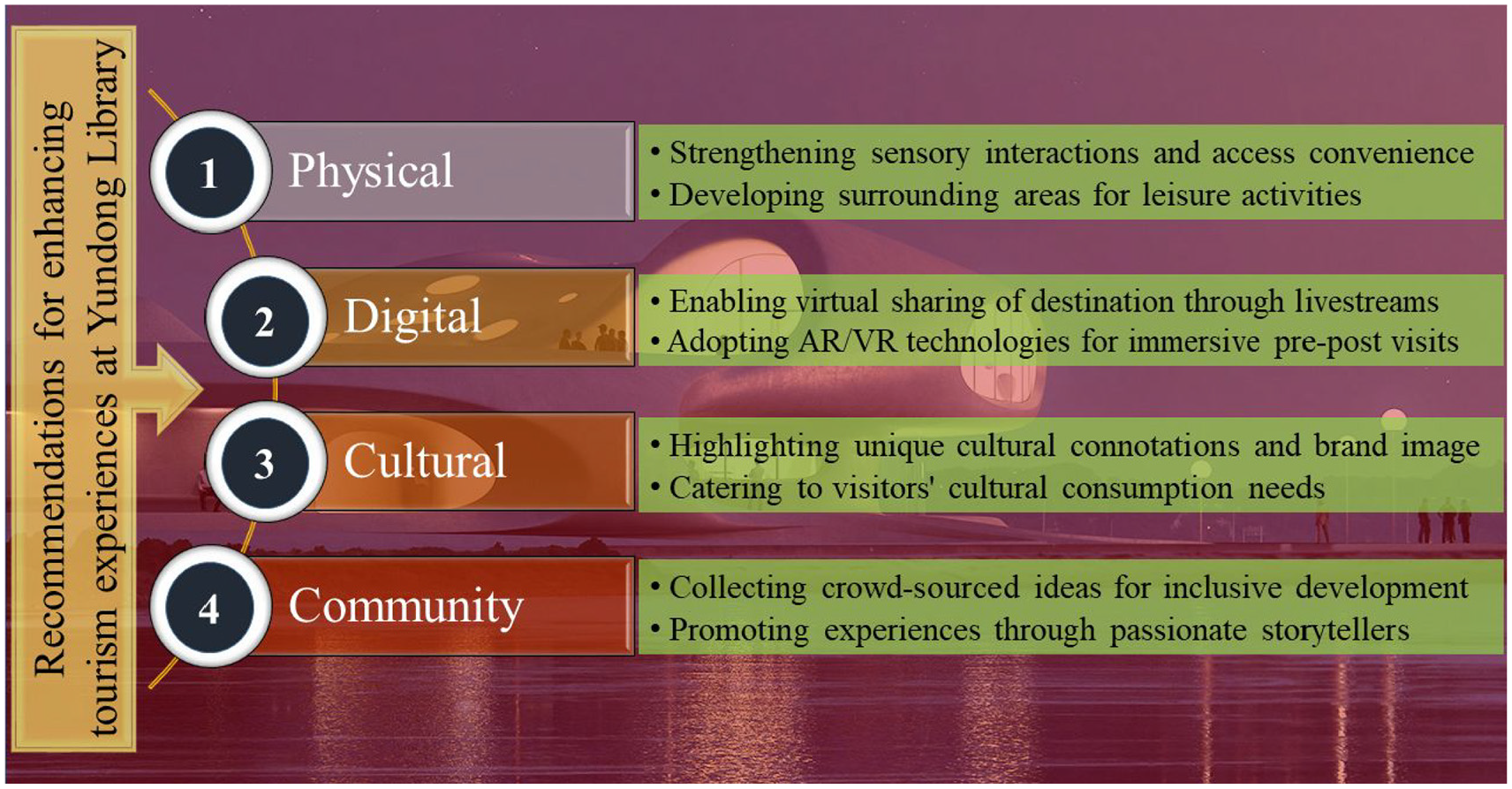
Optimizing tourism experiences: a holistic framework for enhancing place, people, and technology integration at Yundong Library.
Footnotes

Funding
The author(s) received no financial support for the research, authorship, and/or publication of this article.
Declaration of Conflicting Interests
The author(s) declared no potential conflicts of interest with respect to the research, authorship, and/or publication of this article.
Data Availability Statement
The datasets generated and/or analyzed during the current study are available from the first author upon reasonable request.