




Abstract
This research investigates how servant leadership influences team effectiveness within agile software companies. Additionally, it examines the mediating roles of intellectual stimulation and perceived supervisor support in this relationship. The study adopts a survey approach, with 327 IT professionals from various cities across Pakistan. The questionnaire achieved a response rate of 45%. Data analysis was conducted using regression and mediation analysis methods with IBM SPSS. The results revealed that servant leadership had a significant positive impact on team effectiveness in agile software companies. Intellectual stimulation mediated this relationship, showing that leaders who encourage creativity and critical thinking improve team outcomes. Perceived supervisor support further enhanced the positive effects of servant leadership on team effectiveness, highlighting the role of supervisors’ emotional and professional support in fostering a productive team environment. This research sheds light on the understudied domain of servant leadership in IT, offering insights for academic and practical leadership development. It pioneers a comprehensive analysis of servant leadership, intellectual stimulation, perceived supervisor support, and team effectiveness in agile software companies. Theoretically, the study advances our knowledge regarding how supervisor support and intellectual stimulation help connect servant leadership with better team performance, especially in agile settings. Practically, the findings guide IT companies to improve team outcomes by encouraging leaders to be ethical, supportive, and open to new ideas.
Keywords
Introduction
In today’s dynamic software development and information technology era, leadership is decisive in shaping organizational outcomes. Servant leadership, in particular, has gained prominence as a follower-centric style that enhances collaboration, productivity, and employee satisfaction. Unlike traditional top-down approaches, servant leaders emphasize empowerment, psychological safety, and trust, which resonate strongly with the software sector’s reliance on creativity, knowledge sharing, and rapid decision-making (Kusharyanti et al., 2020; Nauman et al., 2022; Zhang & Yang, 2021). Despite its pivotal role, Pakistan’s IT industry lags behind its Asian counterparts, highlighting the urgent need for effective leadership that fosters employee agility and project success (Deshwal & Ali, 2020).
Many studies have shown that servant leadership positively impacts team effectiveness by providing autonomy, delegating tasks, and creating opportunities for making critical decisions (Canavesi & Minelli, 2022; Sheng & Saide, 2024). In organizational management, servant leadership and team effectiveness are essential concepts with significant implications for agile software firms. Team effectiveness refers to how well a team achieves its objectives and operates cohesively. This is especially important in agile environments that rely on iterative development and cross-functional team dynamics (Hackman & Oldham, 1980).
Servant leadership has received growing consideration among scholars and practitioners in the healthcare system (Demeke et al., 2024). Despite the theoretical fit between servant leadership and agile methodologies, empirical evidence of servant leadership practices in the software industry is limited, indicating a potential gap in implementation (Northouse, 2018). This gap is critical because agile environments are characterized by rapid change, team autonomy, and high interdependence, which require leadership approaches that prioritize empowerment, collaboration, and support. Without understanding how servant leadership shapes team effectiveness in such dynamic contexts, organizations risk relying on traditional leadership models that may not align with the fluid demands of agile teams. The absence of this knowledge could lead to suboptimal team performance, reduced innovation, and missed opportunities for sustaining competitiveness in technology-driven markets. By addressing this gap, the research contributes to leadership theory and provides actionable insights for managers in the IT sector to foster more effective, empowered, and innovative teams. Another factor in improving team effectiveness is the availability of mentorship, team workshops, and other learning and knowledge creation opportunities. Recent scholarship suggests that servant leaders positively influence knowledge sharing, mentorship, and team learning opportunities, vital for sustaining innovation in software environments (Sheng & Saide, 2024). However, existing research often overlooks the mechanisms that explain how servant leadership shapes team effectiveness in fast-evolving agile settings (Zarei et al., 2024). To address this gap, the present study investigates how servant leadership practices influence team effectiveness in agile software companies, focusing on the mediating roles of intellectual stimulation and perceived supervisor support. By examining these mechanisms, the study aims to advance theoretical understanding of leadership in agile contexts while offering practical insights for managers seeking to foster organizational effectiveness and innovation. We are interested in addressing the following research question.
“How do Servant Leadership, Intellectual Stimulation, and Perceived Supervisor Support influence the Team Effectiveness?”
The remainder of this paper is structured as follows. Section “Literature Review” reviews the literature on servant leadership, intellectual stimulation, and supervisor support concerning team effectiveness. Section “Hypotheses Development” develops the theoretical framework and hypotheses. Section “Research Methodology” outlines the methodological design and data collection procedures. Section “Results” presents the data analysis and interprets the results. Finally, Section “Discussion” discusses the findings, highlights theoretical and practical implications, and Section “Conclusion” concludes with limitations and directions for future research.
Literature Review
In organizational management, servant leadership and team effectiveness are key concepts with notable implications for the agile software industry. As articulated by Greenleaf (2013), servant leadership focuses on leaders serving their team by prioritizing their needs and fostering growth, in contrast to more traditional authoritative leadership models. This approach aligns with agile principles emphasizing collaborative teamwork and empowerment (Beck et al., 2001). Team effectiveness, which encompasses how well a team achieves its objectives and functions cohesively, is crucial in agile environments that rely on iterative development and cross-functional team dynamics (Hackman & Oldham, 1980).
While there is a strong theoretical connection between servant leadership and agile methodologies, practical evidence of servant leadership practices within the software industry remains scarce. This scarcity suggests a significant gap in their implementation, indicating that organizations may not fully leverage the potential benefits of servant leadership to enhance team dynamics and project outcomes in agile environments (Northouse, 2018). This suggests that while agile frameworks advocate for supportive and collaborative leadership, actual practices in the software industry may not fully embody servant leadership principles. Additionally, “agile” emerged from manufacturing contexts and was later adapted to software development. This historical context necessitates careful usage of the term to avoid confusion and ensure its application in software development is accurately represented (Highsmith, 2002). Thus, future research should explore the presence and impact of servant leadership within agile software teams and refine agile terminology to better reflect its current application in the industry.
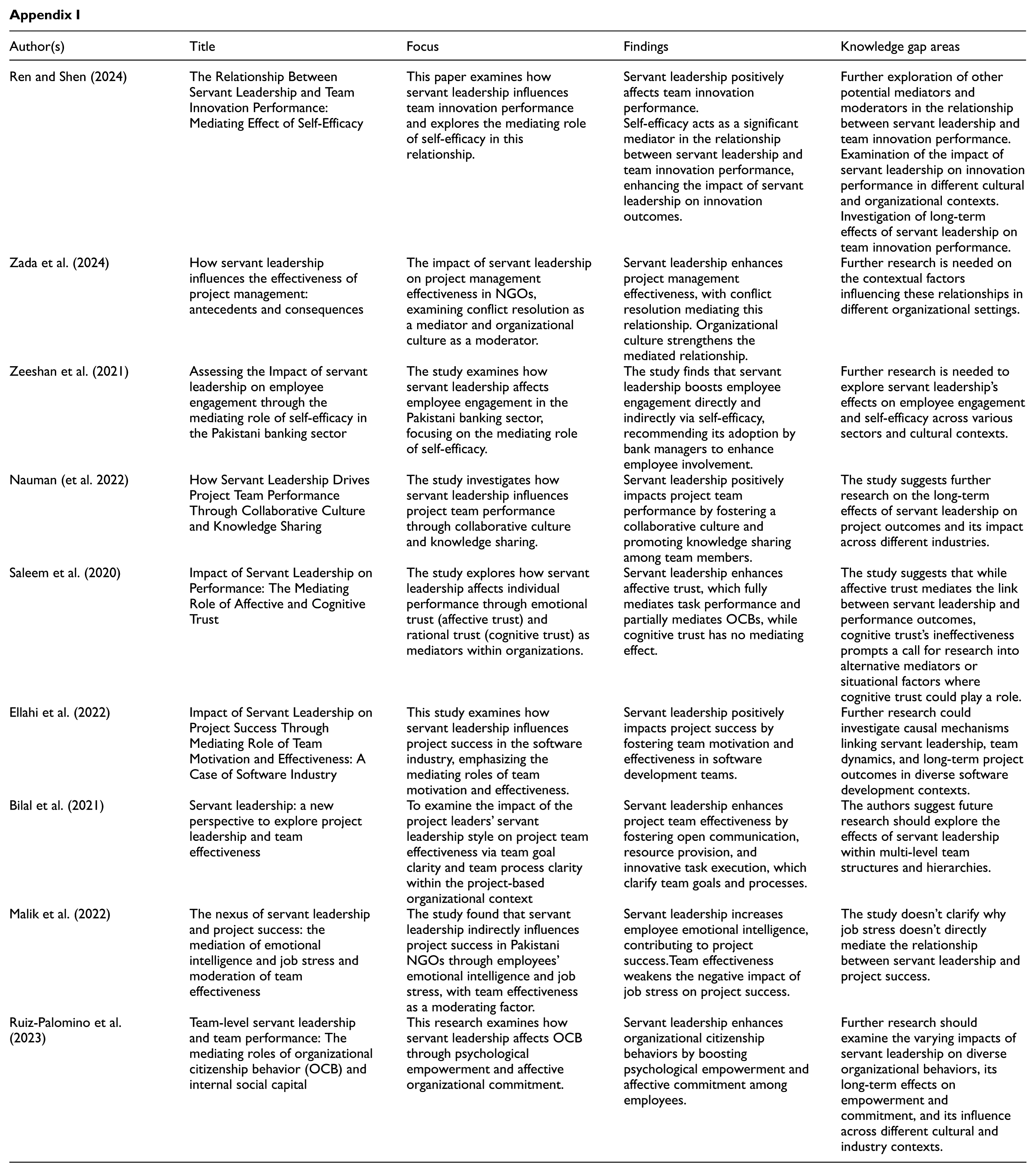
This research attempts to address leadership within agile software development contexts. While servant leadership has been extensively studied across various organizational settings, its application and effectiveness within agile environments remain underexplored. A table explaining certain studies in this domain and their knowledge gap areas has been added in Appendix I.
Servant Leadership
There are several definitions of servant leadership as a way of life that “begins with the natural feeling that one wants to serve, to serve first. Then conscious choice brings one to aspire to lead”. Spears (1998) established ten essential characteristics of servant leadership: listening, empathy, healing, awareness, persuasion, conceptualization, foresight, stewardship, commitment to the growth of people, and building community. A proliferation of studies continued portraying different variations of these servant leadership characteristics (Demeke et al., 2024).
Servant leadership is a concept that was first conceptualized by (Greenleaf, 2013), who explained this new style of leadership that puts others first. This leadership style, characterized by its impact on services, empowerment, and team growth, has emerged as a promising approach to improving team productivity and achieving organizational goals (Ellahi et al., 2022). The basis of servant leadership theory revolves around the idea of leaders prioritizing the needs and well-being of their team members, which in turn improves the organizational metrics and positive team outcomes.
The foundational basis of servant leadership theory requires supervisors to have a deep sense of responsibility and empathy toward their followers (Sendjaya et al., 2008). This effort comprises humility, mentorship, and a genuine desire to serve others in making decisions related to common organizational gains. Such leaders create an environment that fosters trust, collaboration, and mutual respect between leaders and their teams (Van Dierendonck & Nuijten, 2011).
Furthermore, servant leadership comprises several core principles that are a guiding map for interaction with teams. These principles include empathy, awareness, wisdom, mentorship, and commitment to the growth of followers (Spears, 1998). By incorporating these principles in their practice, servant leaders create a sense of support for their teams, encouraging their followers to put their best efforts into assigned goals, ultimately enhancing organisational performance (Holland, 2021).
Several applications of servant leadership in the available literature include fostering a conducive and innovative culture. According to Nathan and Chandrasekhar (2023), in their systematic review of servant leadership, providing teams with the necessary resources, guidance, and support leads them to achieve excellence in their roles (Eva et al., 2019). This supportive environment levels the ground for a culture of trust and empowerment inside teams, which encourages communication and knowledge sharing, and boosts problem-solving skills, ultimately improving their effectiveness (Kmieciak, 2021).
Similar research by Liden et al. (2008), which comprised a multi-dimensional, multi-level assessment, proved that servant leaders motivate their employees by engaging in vision and aligning the team’s objectives with organizational goals. By involving team members in the target-setting process and focusing on achieving a shared company vision, a sense of ownership and commitment flourishes among team members. According to Raveendran et al. (2020), this shared sense of purpose promotes cooperation, interaction, and magnitude of effort, which in turn helps in achieving organizational goals. While these studies establish the link between servant leadership, vision alignment, and collaborative effort, most of this evidence comes from traditional or moderately dynamic organizational contexts. In agile software companies, where goals often evolve rapidly and cross-functional collaboration is the norm. The process by which servant leaders foster ownership and cooperation may differ significantly.
By investing in the team’s learning growth and mental satisfaction, servant leaders provide opportunities for skills improvement and career advancement, and also emphasize the importance of the team’s learning growth (Sendjaya et al., 2008). According to Bashir and Gani (2020), this idea of personal growth and learning satisfaction is an excellent trigger for organizational commitment in employees, which motivates them to give their best towards shared goals.
Similarly, the research on Leader-Member Exchange Theory (LMX) sheds light on the importance of enhancing team effectiveness by fostering leader-employee relationships. According to Uhl-Bien et al. (2022), the LMX theory focuses on the positive relationship between leaders and employees, which is not free from several challenges that exist between them. High-quality LMX relations are fostered by trust, mutual respect, and shared objectives between teams. This relationship nurtures a sense of belonging and commitment, ultimately improving team productivity.
Moreover, Dulebohn et al. (2012) suggested that the LMX theory emphasizes the importance of a dedicated leader-member relationship. When leaders customize their interaction with individual members of the team, extending concern for their needs and preferences, they cultivate a supportive work environment where every team member feels valued and contributes their best towards the common goal.
Similarly, recent research from the Social Exchange theory (SET) perspective has emerged as a lens through which team effectiveness can be observed from a different angle (Meira & Hancer, 2021). According to SET, individuals who engage with others expecting mutual benefit respond similarly. As per Arsawan et al. (2020), this theory solidifies the concept of servant leadership in which a leader is reciprocated with trust and commitment if they show genuine concern and empathy towards their team members.
Furthermore, various scholars have found the importance of mental support for applying SET in the workplace. The research by Chen and Wu (2020) demonstrated that perceived supervisor support significantly predicts employees’ commitment and productivity. This also supports the idea of employees’ perception of a leader’s support, where they feel much obliged and reciprocate the efforts and engagement of their manager. However, most empirical evidence on this relationship comes from conventional organizational structures with relatively stable workflows. In agile software environments, where team autonomy, rapid iteration, and role fluidity are central, perceived supervisor support may function differently, potentially influencing not only commitment but also the adaptability and problem-solving capacity of teams.
Similarly, the path-goal theory enhances team effectiveness and provides a clear path to achieve goals by clearing out the opposite forces that discourage progress (House, 1971). According to this theory, managers motivated to ease their subordinates’ work are assigned to communicate and elaborate on the success factors to their teams. This understanding of end goals effectively motivates the team members to accomplish their goals (Nathan & Chandrasekhar, 2023).
Leader-Member Exchange (LMX), Social Exchange, and Path-Goal Theory offer interconnected perspectives that enhance our understanding of servant leadership’s impact on team effectiveness in agile software companies. LMX theory posits that high-quality relationships between leaders and members, characterized by mutual trust and respect, significantly influence organizational outcomes (Uhl-Bien et al., 2022). This high-quality exchange is associated with increased team cohesion and effectiveness, which are crucial in agile environments where collaboration and quick adaptation are vital (Manata, 2020).
Building on this, Social Exchange Theory emphasizes the reciprocal nature of these interactions, suggesting that when leaders invest in their followers’ development and well-being, followers reciprocate with increased loyalty and performance (Fortin et al., 2017; Poitras et al., 2024). This reciprocal relationship is a core tenet of servant leadership, which focuses on serving and empowering team members. By fostering an environment where intellectual stimulation and perceived support are paramount, servant leaders enhance the social exchange dynamics within teams, thereby boosting overall effectiveness (Ruiz-Palomino et al., 2025).
Job Demands–Resources (JD-R) theory classifies job features as either demands or resources to explain how work environments impact employee performance and well-being (Bakker & Demerouti, 2017; Ruiz-Palomino et al., 2025). A recent systematic review by Tummers and Bakker (2021) shows how leadership connects to JD-R: directly influencing job demands and resources, shaping the impact of demands and resources on employee well-being, and influencing job crafting and self-undermining behaviours. Servant leadership can be a higher-order job resource in agile software environments promoting empowerment and support. However, as Tummers and Bakker (2021) point out, servant leadership has gotten little attention in most studies that link JD-R with leadership.
Furthermore, the Path-Goal Theory further complements these insights by focusing on how leaders facilitate goal achievement by clarifying the path to success and removing obstacles (Northouse, 2021). Through their supportive and nurturing approach, servant leaders align with the directive and supportive behaviours highlighted in the Path-Goal Theory. They provide essential resources and guidance, helping team members navigate complex tasks, an approach that is particularly beneficial in agile software companies where adaptability and problem-solving skills are imperative (Strode et al., 2022).
Similarly, by integrating LMX theory, SET, JD-R theory, and Path-Goal Theory, we gain a comprehensive framework for understanding how servant leadership can enhance team effectiveness. High-quality leader-member relationships, the promotion of reciprocal support, and clear pathways to success all contribute to improved team dynamics and performance. This holistic approach underscores the importance of intellectual stimulation and perceived supervisor support as mediating factors in the relationship between servant leadership and team effectiveness (Zheng et al., 2017). For instance, if a project manager leading a complex development project observes that their team is struggling with understanding project requirements, they can adopt a directive leadership approach. They can hold a team session to communicate clear instructions on the project objectives, break the project into pieces, and outline the coding practices to implement. This application was observed where the path-goal practice improved project knowledge in the IT sector (Saide et al., 2019).
The theories offer complementary lenses for understanding how servant leadership enhances team effectiveness. SET provides the foundational logic by explaining that servant leaders, through genuine care and investment in team members’ growth, foster a sense of reciprocity that drives commitment and performance. LMX Theory builds on this by detailing how such reciprocity is embedded in high-quality leader–member relationships characterized by trust, respect, and mutual obligation, which are essential for enabling intellectual stimulation in agile teams. Path–Goal Theory adds a task-oriented dimension, showing how servant leaders guide team members toward success by clarifying objectives, removing obstacles, and offering tailored support. Together, these theories help in explaining how servant leadership boosts team effectiveness in agile software environments.
Perceived Supervisor Support
Perceived supervisor support as a result of servant leadership plays a crucial role in fostering a healthy work environment and driving team and organizational effectiveness. This support is a set of various elements, including demonstrating genuine care for employees’ well-being, helping provide guidance, and recognizing their contribution (Bergin & Jimmieson, 2020).
The research on the impacts of supervisor support highlights the team outcomes in every industry. Several studies have shown that employees who perceive high levels of support from their leaders have improved job satisfaction and organizational commitment with reduced work stress (Latif et al., 2022; Rhoades et al., 2001). This sense of support promotes a plethora of psychological safety for employees, allowing them to take risks, share new ideas, and learn from their mistakes without fearing consequences. As a result, innovation, creativity, and out-of-the-box thinking abilities flourish inside the teams, leading to improved performance and target achievement (Idris et al., 2020). However, much of this research is grounded in stable, hierarchical industries, where team structures and processes differ significantly from the fast-paced, adaptive nature of agile software companies. In agile contexts, where teams are self-organizing and roles are fluid, the influence of supervisor support may operate through different mechanisms, requiring further investigation.
Furthermore, supervisor support is critical in strengthening team dynamics by introducing collaboration, trust, and communication. Employees who feel that their supervisor is supportive are more likely to communicate and collaborate effectively (Nauman et al., 2022). This behaviour fosters a sense of collective responsibility and accountability, which leads to increased team bonding and performance outcomes (Paais & Pattiruhu, 2020).
Intellectual Stimulation
Building upon the well-established importance of servant leadership in IT organization settings, it is also crucial to understand its synergistic relationship with Intellectual Stimulation in improving team effectiveness (Sánchez-Cardona et al., 2018). When supervisor support provides the basis for a positive work culture and employee psychological safety, intellectual stimulation acts as a catalyst that boosts creativity, ingenuity, and continuous learning within teams (Thuan & Thanh, 2020).
Supervisors who actively promote critical thinking and experimentation, constantly challenge their employees with various tasks, and create opportunities for introducing intellectual stimulation in teams. This practice can involve asking thought-provoking questions, frequent brainstorming sessions, and adding resources for research and development (Kiernan et al., 2021). Hence, by fostering a supervisor-employee relationship that promotes critical thinking, supervisors enhance individual employee growth and the team’s collective potential.
Another key relationship that has not yet been investigated in research is the impact of intellectual stimulation on perceived supervisor support. Recent research suggests that supervisor-initiated intellectual stimulation, a leadership behaviour characterized by a supervisor encouraging the team to think critically and innovatively, and challenging them to think out of the box, may significantly promote the employee’s perception of supervisor support. Leaders who engage their employees in challenging tasks and encourage them to think of different solutions to a problem may be perceived by their team as more supportive (Lai et al., 2020).
However, although the impacts of servant leadership style on team effectiveness are significant, there is still a need to investigate the factors that contribute to the efficiency of this style. Since traditional servant leadership does not directly involve intellectual stimulation initiated by the team leaders, and the perception of supervisor support is caused by the servant leadership method, we will investigate the contribution of these variables in improving team effectiveness (Iqbal et al., 2024; Madison & Eva, 2019).
Hypotheses Development
The dynamic nature of agile software companies demands leadership approaches that foster collaboration, innovation, and support. Servant leadership, which emphasizes the well-being and development of team members, has gained attention for its potential to enhance organizational outcomes (Iqbal et al., 2024; Nauman et al., 2024). This study explores the relationships between servant leadership, team effectiveness, intellectual stimulation, and perceived supervisor support. The following hypotheses are developed based on recent empirical studies and theoretical frameworks to investigate how these variables influence team performance in agile software environments. Each hypothesis is grounded in contemporary research, providing a robust basis for understanding the impact of servant leadership on team dynamics.
Servant leadership has been widely recognized for enhancing team effectiveness through fostering trust, collaboration, and empowerment. For example, Eva et al. (2021) found that servant leaders encourage open communication and mutual respect, translating into stronger team performance. Drawing on Social Exchange Theory (SET), these leadership behaviors are reciprocated by followers through greater trust, commitment, and mutual support (Arsawan et al., 2022). At the same time, the leader-member exchange (LMX) theory explains that high-quality leader–follower relationships strengthen employees’ willingness to contribute beyond formal role expectations, thereby increasing team effectiveness. In addition, insights from the Job Demands–Resources (JD-R) model highlight that servant leaders provide critical resources such as guidance and empowerment, which help employees cope with demanding agile environments (Bakker & Demerouti, 2017). While previous studies consistently demonstrate positive associations, contextual tensions remain. For instance, the effectiveness of servant leadership may vary depending on organizational culture, team hierarchy, or national work values (Ruiz-Palomino et al., 2025). Servant leadership enhances project effectiveness by enhancing team trust in leaders (Nauman et al., 2024). By integrating these perspectives, our study positions servant leadership as a driver of team effectiveness, particularly in agile software companies, where adaptability and collaboration are crucial for project success.
This relationship can be explained through Social Exchange Theory (SET), which posits that when leaders invest in their team members’ growth and well-being, employees feel obliged to reciprocate with greater commitment, cooperation, and discretionary effort which can directly contribute to team effectiveness. Given the dynamic nature of agile software companies, where teamwork and adaptability are critical, servant leadership is expected to influence team effectiveness positively. Thus, we hypothesize that servant leadership is positively associated with team effectiveness.
H1: Servant Leadership Is Positively Associated with Team Effectiveness
Perceived supervisor support is a critical psychological resource for employee well-being and performance. Servant leadership strengthens this perception by showing genuine concern for employees, recognizing individual contributions, and fostering a culture of care (Neubert et al., 2022). Drawing on Social Exchange Theory, supportive behaviours from leaders are reciprocated by employees through loyalty and discretionary effort, which reinforces their sense of being supported (Arsawan et al., 2022). Likewise, the Job Demands–Resources model identifies supervisor support as a vital resource that buffers high job demands and enhances motivation (Tummers & Bakker, 2021). However, existing research also highlights that the strength of this relationship may depend on contextual factors such as organizational structure and cultural values. For example, employees may interpret servant leadership behaviours differently in high power-distance settings, affecting how they perceive supervisory support. By addressing these nuances, our study extends prior work by situating servant leadership in agile software environments, where continuous feedback, collaboration, and resource availability are indispensable for employee adaptation and success. Path–Goal Theory also explains how servant leaders clarify objectives and remove obstacles, ensuring that perceived supervisor support is not only emotional but also instrumental, helping employees achieve their goals effectively.
Similar findings have been observed in the healthcare sector, where servant leadership has improved nurses’ job satisfaction and organizational commitment (Nwaobia, 2020). Servant leadership practices in the education sector have also increased teacher morale and reduced burnout (Davis, 2024). Little is known about how this dynamic operates in agile software teams. By addressing this gap, the present study examines the relationship between perceived supervisor support and supervisor leadership. In agile settings, where continuous feedback and support are essential, we hypothesize that servant leadership is positively associated with perceived supervisor support.
H2: Servant Leadership Is Positively Associated with Perceived Supervisor Support
Empirical research consistently shows that perceived supervisor support enhances team effectiveness by fostering trust, open communication, and collaboration among team members. Rhoades and Eisenberger (2002) demonstrated that employees who feel supported by supervisors are more committed and perform better in collective tasks. Social Exchange Theory helps explain this mechanism, as employees who perceive genuine support from supervisors reciprocate through higher levels of cooperation and engagement. Complementing this, the Job Demands–Resources framework views supervisor support as a key job resource that mitigates work strain, sustains motivation, and promotes well-being, strengthening team effectiveness (Tummers & Bakker, 2021). However, while prior studies emphasize these positive outcomes, some evidence suggests that the impact of supervisor support may vary depending on team structures or the degree of autonomy provided to employees (Vera et al., 2016). In agile software environments, where continuous collaboration and adaptability are critical, supervisor support becomes particularly influential in ensuring team effectiveness. Therefore, we hypothesize that perceived supervisor support is positively associated with team effectiveness.
H3: Perceived Supervisor Support Is Positively Associated with Team Effectiveness
Organizational research has widely emphasized the role of perceived supervisor support in linking leadership behaviours with team outcomes. Mujeeb et al. (2021) showed that the positive influence of servant leadership on team performance is transmitted through employees’ perceptions of being supported by their supervisors. Similarly, Eisenberger et al. (2002) demonstrated that when employees perceive higher supervisor support, they display more substantial affective commitment and improved job performance. Social Exchange Theory explains this mechanism: servant leaders who demonstrate empathy, concern, and fairness cultivate a sense of obligation among employees to reciprocate with higher levels of cooperation and dedication, boosting team effectiveness. Complementing this, the Job Demands–Resources framework conceptualizes supervisor support as a key job resource that helps employees manage high workloads, sustain motivation, and remain engaged (Tummers & Bakker, 2021). Empirical evidence also indicates that in high-pressure and dynamic work settings, such as agile software development, supervisor support is a buffer against stress and role ambiguity, strengthening the link between leadership and team outcomes (Neubert et al., 2022). Therefore, servant leadership directly influences team effectiveness and indirectly contributes to it by fostering perceptions of supervisor support. This way, perceived supervisor support is a critical explanatory mechanism that translates servant leadership behaviours into improved team outcomes. This suggests that servant leaders enhance team effectiveness by fostering an environment where employees feel supported and valued. Consequently, we hypothesize that perceived supervisor support mediates the relationship between servant leadership and team effectiveness.
H4: Perceived Supervisor Support Mediates the Relationship Between Servant Leadership and Team Effectiveness
Intellectual stimulation encourages creativity and critical thinking, which are essential in agile environments. Recent research by Fisher and Amabile (2023) indicates that intellectual stimulation is promoted by challenging employees to think innovatively and solve problems independently. According to JD-R, intellectual stimulation is a tool that encourages involvement and lessens stress brought on by demanding work requirements. This leadership style nurtures an environment conducive to intellectual growth and innovation. Therefore, we hypothesize that servant leadership is positively associated with intellectual stimulation.
H5: Servant Leadership Is Positively Associated with Intellectual Stimulation
Intellectual stimulation has significantly enhanced team effectiveness by fostering innovation and problem-solving skills. A study by Carmeli et al. (2021) found that teams experiencing high levels of intellectual stimulation from their leaders perform better and are more adaptable to changes. Intellectual stimulation is likely to improve team effectiveness in agile software companies, where innovation is key to success. Thus, we hypothesize that intellectual stimulation is positively associated with team effectiveness.
H6: Intellectual Stimulation Is Positively Associated with Team Effectiveness
Recent research emphasizes that team outcomes are closely tied to leaders’ ability to provide intellectual stimulation, as it encourages employees to think critically, challenge assumptions, and develop innovative solutions (Jaroliya & Gyanchandani, 2022). Servant leaders foster such stimulation by empowering team members to explore new approaches and valuing diverse perspectives, indirectly enhancing team performance. Drawing on Social Exchange Theory, this process can be understood as a reciprocal exchange. When leaders create an environment that promotes learning and cognitive growth, employees reciprocate by engaging more deeply in tasks and contributing novel ideas that benefit the team. Similarly, the Job Demands–Resources model identifies intellectual stimulation as a psychological resource that enhances intrinsic motivation and problem-solving capacity, especially under demanding work conditions (Schaufeli, 2017). Leader–Member Exchange (LMX) Theory further explains that high-quality relationships between leaders and members provide the trust and openness necessary for intellectual risk-taking, enabling employees to experiment with new approaches without fear of negative consequences. This combination of relational trust, reciprocal commitment, and goal-focused guidance positions intellectual stimulation as a critical mechanism through which servant leadership is translated into higher team effectiveness—particularly in agile environments where rapid innovation is essential.
Empirical studies also support this mediating pathway. Fisher and Amabile (2023) highlighted that leadership behaviours that stimulate intellectual engagement translate into greater creativity and team innovation. Gong et al. (2009) found that leader-provided intellectual challenge strengthens employees’ learning orientation, improving performance outcomes. More recently, Hayat (2024) demonstrated that intellectual stimulation enhances perceptions of supervisory support, further reinforcing team collaboration and effectiveness. Research suggests that servant leadership not only directly influences team effectiveness but also operates indirectly through intellectual stimulation, transforming servant leadership behaviours into concrete team outcomes. Furthermore, recent findings suggest that the team outcomes positively relate to stimulation (Jaroliya & Gyanchandani, 2022). Servant leaders, through their focus on intellectual growth, indirectly enhance team performance by encouraging innovative thinking and problem-solving. This mediation effect highlights the critical role of intellectual stimulation in translating servant leadership into effective team outcomes.
Therefore, we hypothesize that intellectual stimulation mediates the relationship between servant leadership and team effectiveness.
H7: Intellectual Stimulation Mediates the Relationship Between Servant Leadership and Team Effectiveness
Intellectual stimulation not only promotes innovation but also enhances perceived support from supervisors. According to Hayat (2024), employees intellectually stimulated by their supervisors feel more supported and valued, as their contributions to creative processes are recognized and encouraged. Intellectual stimulation from supervisors not only promotes creativity and innovation but also reinforces employees’ perceptions of being valued and supported. When supervisors encourage employees to challenge existing assumptions, engage in problem-solving, and explore new approaches, they implicitly communicate trust in employees’ capabilities. Social Exchange Theory explains this link by suggesting that when leaders invest in employees’ intellectual growth, employees interpret this investment as a form of socio-emotional support, strengthening their sense of being cared for and motivating them to reciprocate with more substantial commitment. Likewise, the Job Demands–Resources perspective views intellectual stimulation as a resource that enhances employee engagement and resilience, while simultaneously signalling that the supervisor is committed to their development (Schaufeli, 2017).
Empirical research supports this connection. (Gong et al., 2009) demonstrated that leader-provided intellectual stimulation enhances employees’ self-efficacy and reinforces supportive leader–follower relationships. More recently, Fisher and Amabile (2023) found that intellectual stimulation promotes creativity and employees’ perceptions of supervisory encouragement and backing. These findings indicate that intellectual stimulation functions as both a cognitive resource and a relational signal of support. This dual effect becomes even more critical in agile environments, where continuous learning and adaptability are indispensable. This relationship is particularly relevant in agile environments, where constant learning and support are crucial. Hence, we hypothesize that intellectual stimulation from supervisors is positively associated with perceived supervisor support among employees.
H8: Intellectual Stimulation from Supervisors Is Positively Associated with Perceived Supervisor Support Among Employees
Based on our research concept, we propose a framework demonstrating the eight hypotheses among our independent, dependent, and predictor variables. (Figure 1)

Hypothesized research framework.
Research Methodology
This study was conducted with the approval of software development firms and the individuals who gave verbal consent to participate in this research. All items were measured initially on 7-point Likert scales but were adapted to a 5-point Likert format (1 = strongly disagree, 5 = strongly agree). This adaptation was made to reduce respondent fatigue and align with local survey practices. Prior research has found that shortening Likert scales does not affect scale reliability or validity (Dawes, 2008).
Measures
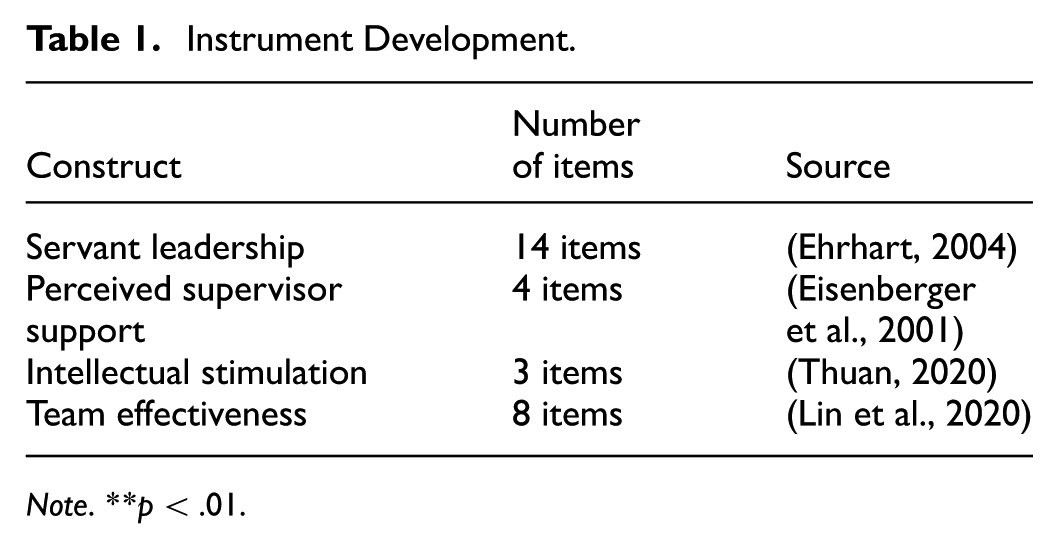
The instrument used was developed using four studies. The details are added in Table 1
Instrument Development.
Note. **p < .01.
Research Participants and Procedures
The research participants consisted of 327 employees from software development backgrounds working in different agile software companies. A total of 712 survey questionnaires were distributed among these participants, of which 327, that is, 45% submissions, were received and were valid for data analysis. Collecting data from a developing country is very complex, as it needs repeated follow-ups, and the participants largely overlooked the important details. The response rate is consistent with prior studies conducted in a similar context (Baruch & Holtom, 2008). The Google Form was created and shared with participants in two ways. The first method included visits to four software development firms located in Islamabad. The second method was an online approach using social media in that region, using Facebook, WhatsApp, and LinkedIn search. In this method, most forms were submitted by the participants, and it holds a significant share in our research.
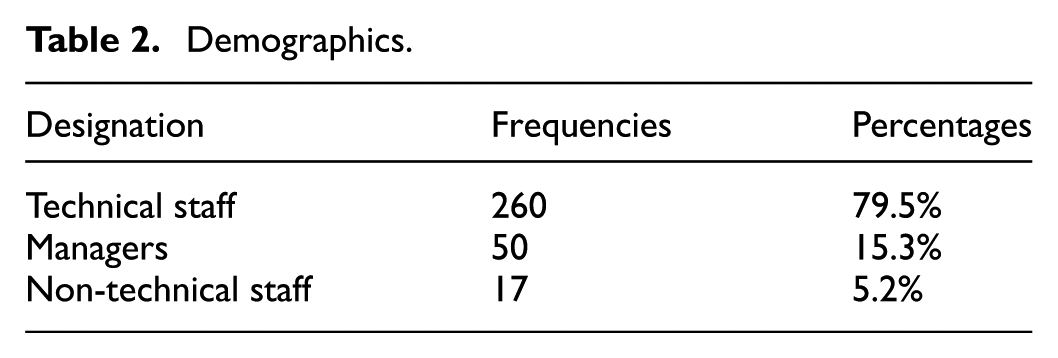
The target sample was selected using a convenience sampling method, as Etikan et al. (2016) suggested, which was deemed appropriate given the practical challenges of reaching project-based employees through organizational gatekeepers, where a direct approach is limited. To ensure relevance, only participants with engineering or computer science backgrounds actively engaged in project-based roles were targeted. Data were collected with the assistance of HR managers from PASHA-affiliated software houses, who distributed the surveys to eligible employees. In total, 327 responses were received. Among them, 260 (79%) were technical staff, including developers, quality assurance, and technical support personnel; 50 (15%) held managerial positions; and 17 (5%) were non-technical staff from customer support and graphic design. The demographic profile of the sample is presented in Table 2.”
Demographics.
Data Analysis
Drawing on our hypothesized research model, this study included a quantitative survey questionnaire designed using questions from 4 different research studies. The variable items were collected from research papers published by (Ehrhart, 2004; Lin et al., 2020; Rhoades et al., 2001; Thuan & Thanh, 2020). The survey consisted of 33 questions broken down into four dimensions (Servant leadership, perceived supervisor support, intellectual stimulation, and team effectiveness) and one section with demographical questions. For hypothesis testing, we utilized SPSS in conjunction with the PROCESS macro, which is highly recommended for conducting mediation analysis with bootstrapping (Hayes, 2018). This method is effective for estimating indirect effects without requiring the distributional assumptions typical of structural equation modeling (SEM). A structural equation modeling (SEM) approach was employed in this research to examine the survey questions and the relationships among all variables.
Results
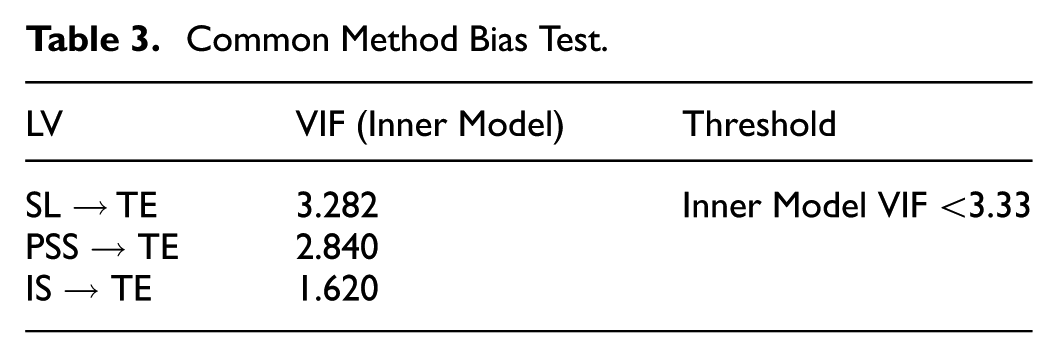
The standard method variance test applied to the SEM yielded the VIF values of 3.282, 2.840, and 1.620 for servant leadership, perceived supervisor support, intellection stimulation (predictors), and team effectiveness as dependent variables. These values are less than the commonly used threshold for multicollinearity, that is, 3.33 (Kock, 2015). Hence, these results indicate that there are no major multicollinearity concerns. These results are available in Table 3.
Common Method Bias Test.
The intercorrelation of all variables was found using Pearson product-moment correlation. According to Table 4, it has been found that the direct positive correlation between servant leadership and Team effectiveness was positive (r = .785, p < .001). These results confirm the validity of hypothesis 1 (H1).
Correlation Analysis.

Note. **p < .01.
Similarly, the correlation between servant leadership and the mediator-perceived supervisor support was found to be significantly positive (r = .804, p < .001), which validates the mediation effect as hypothesized in hypothesis 2 (H2). There was a positive correlation between mediator-perceived supervisor support and outcome variable team effectiveness (r = .751, p < .001), which validates hypothesis 3 (H3) of mediation (Memon et al., 2018).
The intellectual stimulation correlation with the independent variable, servant leadership, was significant (r = .616, p < .001), which validates the mediation effect and validates hypothesis 5 (H5). Similarly, there is a strong correlation between Intellectual stimulation and the outcome variable, team effectiveness, which came out to be of a high degree (r = .641, p < .001), validating hypothesis 5 (H6). The correlation between mediators, intellectual stimulation, and perceived supervisor support is also significant, which was hypothesized to be of a moderate degree (H8). But unlike our inference, the relation is calculated to be in a highly substantial category (r = .531, p < .0001).
Correlations Between Individual Components
The correlation between individual components of servant leadership, i.e., Relationship Building, Empowerment, Developmental Support, Ethical Conduct, Conceptual skills, and Selflessness, as compared to the individual components of team effectiveness, shows significant correlations in some cases. This correlation is demonstrated in Table 5.
Correlations Between Individual Components.

The correlation between relationship building with all components of team effectiveness was significant (r = .576, .578, .675, .541, .594, .596, p < .01), which signifies the direct impact of relationship building on effective team outcomes. These results are concurrent with the results of Suknunan and Bhana (2022) about the positive effects of the employee-manager relationship on employee performance and productivity.
The analysis reveals that the correlation between external stakeholder focus and all components of team effectiveness was less favorable than all others (r = .417, 0.410, 0.478, 0.381, 0.430, 0.408, p < .01). This result was expected in our case since the concept of volunteer and community work, and its emphasis from IT organizations on employees, is non-existent in Pakistan.
Reliability and Validity
Construct Validity
The questionnaire used in this research was subjected to construct validity. In this step, pre-survey pilot research was run, which comprised 10 participants from the target population and three experts from a software company. This pilot group was asked to review the questionnaire and rate it in terms of clarity and completeness. As per the suggestions given by the focus group, the questionnaire was improved before its distribution to the final sample. As the focus group suggested, the questions were grouped into sections, and introductory paragraphs were added before each section.
Internal Validity
To ensure internal validity of research findings, it is crucial to ascertain that the findings accurately reflect the data collected. However, the sampling method employed in this survey may introduce internal limitations. Utilizing a purposive sampling approach, while advantageous in reaching diverse participants, could potentially introduce community bias. To mitigate this limitation, an initial group of participants was deliberately diversified across various regions of Pakistan. Nevertheless, it is acknowledged that the surveyed companies and software professionals may not fully represent the entirety of the software practitioner population. Hence, the sample was explicitly targeted at professionals from all four provinces, aiming to capture diverse perspectives. It is anticipated that the inclusion of a varied sample will remove the internal community bias.
Discriminant Validity (HTMT Ratio)
Due to the limitation of the sensitivity issue of the Fornell-Larker test, we calculated the HTMT ratio of the results collected via correlation. Upon measurement of the HTMT ratio between 4 variables or constructs, it was found that all HTMT ratios were below the maximum desirable limit of 0.85; hence, the research’s discriminant validity was confirmed (Henseler et al., 2015). Table 6 represents the results of the discriminant validity test. Also, factor loadings were assessed for all the study variables' items, with factor loadings, all the values confirmed to meet the threshold value of above 0.50, which leads us to AVE and composite reliability. These refinements confirm that the constructs demonstrate satisfactory discriminant validity.
HTMT Ratio of Variables.

Before proceeding with the reliability analysis, we performed two tests. According to Harman’s single-factor analysis, our values indicated a variance of less than 50%. This value confirms that there is no existence of common method bias in our values. We also tested our data on Bartlett’s Test for Sphericity (BTS) (1950) and Kaiser Meyer-Olkin (KMO) to determine data validity. The analyses reveal a significant chi-square value of 639.595 and KMO test results of 0.818. This test demonstrates that the variables used in the research are correlated. The reliability and validity tests for our data set in Table 7 result in the Cronbach alpha value of .893 for the whole scale, and for each latent variable, it ranged from .791 to .932, which indicates the data set is reliable since all the Cronbach alpha values are greater than .70 and prove good reliability. These values are given in Tables 7 and 8.
Results of the Reliability Test of Components.

Reliability Test of Individual Components.

Hypothesis Testing
Regression Analysis
The regression analysis between all variables resulted in a strong positive relationship, supporting all hypotheses. As per Table 9, the values of mediators are positively related to partial mediation between the Lower and Upper bounds of confidence intervals. The confidence interval in this case was set up to be 95%.
Regression Analysis.

The analysis shows that all beta values are positive, which validates our inference of positive relationships. This thesis aimed to assess the impact of servant leadership on team effectiveness. It also evaluated the effect of two mediating variables: perceived supervisor support and Intellectual stimulation in the relation between servant leadership and intellectual stimulation. Another target of this research was to evaluate if and how intellectual stimulation would affect the perceived supervisor support.
Our results describe a significant control of SL to TE (β = .797, t = 22.816), which proves our first hypothesis. This result validates that the teams that servant leaders lead perform better than the ones whose leaders miss one or more of these qualities. This conclusion is concurrent with (Gašková, 2020; Nauman et al., 2024), who assessed the relationship between servant leadership and team performance and work effectiveness, respectively.
The results found during the analysis between servant leadership and perceived supervisor support also show a strong positive control (β = .879, t = 24.340), which validates our hypothesis H2. This concurs that servant leadership is statistically linked with perceived supervisor support. This supports the idea that the employees who perceive their leaders as supportive, collaborative, and empathetic towards them feel more supported by them.
The analyses also revealed an indirect effect of perceived supervisor support on team effectiveness, a strong positive relation (β = .697, t = 20.477). This result suggests that whenever a team perceives its supervisor as supportive, it performs better in its tasks. This result is also coherent with a study by Shanock and Eisenberger (2006), that showed a positive relation between perceived supervisor support and in-role and extra-role performance.
The correlation between servant leadership and intellectual stimulation has yielded intriguing results. The two variables are positively related (β = .739, t = 14.082). This highly positive relation confirms the hypothesis (H5). These results suggest that servant leaders who foster employee involvement in the decision-making process, give employees responsibility and authority, and are empathetic towards them, foster an environment that boosts creativity, growth, and intellectual engagement.
The regression analyses for the impact of intellectual stimulation on team effectiveness also resulted in strong positive results (β = .542, t = 15.066). This result again validates several studies done in employee-manager combination environments, as discovered by (Sánchez-Cardona et al., 2018), supervisors who challenge their team intellectually, and assign tasks that promote out-of-the-box thinking, result in better team performance.
Lastly, the regression analysis shows a positive but comparatively weak relation between intellectual stimulation and perceived supervisor support (β = .484, t = 11.307). This result indicates that when employees are given thought-provoking and intellectually stimulating tasks by their managers, they consider their managers more supportive. This relation (hypothesised as H8) also suggests that exposing employees continuously to problem-solving tasks gives them learning satisfaction, resulting in better behaviour towards their manager. The results show that when servant leaders support their employees and foster an intellectually stimulating environment, their teams are more effective and mentally satisfied.
Mediation Analysis
A mediation analysis was performed using bootstrapping to understand the effects of servant leadership (SL) on team effectiveness (TE) mediated by perceived supervisor support (PSS) and Intellectual stimulation (IS). For this purpose, we have used the SPSS PROCESS macro v 4.2 (Hayes, 2022). Model 4 was used to test this mediation analysis at a 95% confidence interval and 5000 bootstrapping samples. Our initial hypothesis was that servant leadership would positively affect team effectiveness. This relation will be partially mediated by perceived supervisor support and team effectiveness. This analysis is represented in Table 10.
Mediation Analysis.

The total effect of servant leadership on team effectiveness was significant, β = .797, SE = 0.035, t(df) = 22.82, p < .001. Upon decomposing this effect, the direct impact of servant leadership on team effectiveness remained significant, β = .392, SE = .057, t(df) = 6.89, p < .001.
The analysis has revealed the significant indirect effects of servant leadership on team effectiveness through the mediator’s perceived supervisor support and intellectual stimulation. The indirect effect through perceived supervisor support was β = .257, SE = 0.062, BootLLCI = .135, BootULCI = .376, and the indirect impact through intellectual stimulation was β = .148, SE = 0.040, BootLLCI = .073, BootULCI = .231.
Moreover, Figure 2 represents our hypotheses and results in our models describing their direct and mediating effects.

SEM of the hypothesized framework.
Discussion
Results of this study provide consistent support for all eight hypothesized relationships, underscoring the central role of servant leadership in shaping team effectiveness within agile organizational contexts.
This research aimed to examine servant leadership’s effects on team effectiveness, incorporating perceived supervisor support and intellectual stimulation as mediating factors. Our findings support the idea that servant leadership behaviors are positively associated with team outcomes, aligning with previous research emphasizing the importance of servant leadership in creating a supportive and intellectually stimulating work environment (Seto & Sarros, 2016). These results are also consistent with SET, which explains why employees are more likely to show higher levels of commitment in return for servant leadership behaviors (Arsawan et al., 2020). JD-R theory also supports these results by highlighting how servant leadership provides job resources such as autonomy, social support, and empowerment. These resources help sustain employee engagement and effectiveness under the high demands of agile environments (Bakker & Demerouti, 2017). Our study revealed that servant leadership's influence on team effectiveness is mediated by perceived supervisor support, suggesting that servant leaders not only directly contribute to team effectiveness but also indirectly through fostering supportive supervisor-team relationships. This finding underscores the importance of supervisor support as a mechanism through which servant leadership translates into enhanced team performance. This finding also relates to LMX theory by highlighting the importance of leader-follower relationships in facilitating team success. Additionally, it suggests that the positive effect on team performance may diminish in environments where supervisor support is inconsistent.
In addition, servant leadership is undeniably essential in agile software companies. Agile methodologies prioritize collaboration, adaptability, and rapid iterations to deliver high-quality software products efficiently (Shastri et al., 2021). Servant leadership aligns seamlessly with these principles, emphasizing empowering team members and prioritizing their needs. This approach fosters a culture of trust, transparency, and open communication, essential for successful agile implementation. Furthermore, servant leaders actively support their teams by removing obstacles, providing resources, and facilitating continuous learning and improvement (Nauman et al., 2022). By nurturing a supportive and collaborative work environment, servant leadership enables agile software teams to thrive, innovate, and deliver customer value efficiently. This effectiveness may, however, vary depending on team maturity and organizational culture. Furthermore, in conditions where the team is required to work under pressure, collaboration may cause slower response times. Decisions made during times of crisis are highly crucial in such companies. Here, servant leadership’s collaborative nature may delay critical decision-making. Combining servant leadership with elements of other styles, such as transformational or transactional leadership, may offer better results. Transformational leadership meets the higher-order intrinsic needs of followers by developing innovation and knowledge-sharing within teams (M. M. Raziq, Saleem, et al., 2025; Wang et al., 2018). Transactional leadership, on the other hand, supports these outcomes through contingent rewards and active management by exception. These are important in crucial time-sensitive situations (M. Raziq, M. M. Raziq, et al., 2025).
Moreover, our investigation highlighted that the relationship between servant leadership and team effectiveness is also mediated by intellectual stimulation. Servant leaders who promote intellectual stimulation within their teams by assigning challenging tasks and encouraging innovative thinking contribute to the team's effectiveness. This finding is consistent with Anjali and Anand (2015) examination of similar behaviors in the healthcare industry, suggesting that the benefits of intellectual stimulation extend across different organizational contexts. These findings validate the importance of leader-member exchange by promoting a culture where employees are constantly exposed to challenging tasks, which improves their confidence and innovative capabilities. However, in cases where resources are inadequate, increased task complexity is associated with stress rather than improved confidence and innovation. Such situations require alternative approaches in leadership for better effectiveness. Transformational leadership has been found to have a profound impact on innovation and organizational development in dynamic industries such as telecom and ICT in the UAE (Sandhu & Al Naqbi, 2023). In agile environments, where teams face rapid change, fluid roles, and high decision-making autonomy, intellectual stimulation is not just desirable but necessary. Servant leaders encourage employees to question assumptions, explore alternatives, and engage in collaborative problem-solving. This intellectual stimulation is amplified in agile firms because frequent sprint reviews and retrospectives create structured opportunities for reflection and innovation. Thus, stimulation becomes the mechanism through which servant leadership translates into adaptive and creative outcomes that directly improve team effectiveness. Empirical evidence shows that employees’ creative process engagement mediates the relationship between servant leadership and creativity, particularly when paired with knowledge sharing (Chen et al., 2022).
Furthermore, it has been found that servant leadership positively influences team creativity through its effects on employee psychological empowerment, highlighting the role of individual-level factors in mediating the relationship between leadership and team outcomes. In agile firms, where cross-functional teams operate with short iteration cycles, rapid feedback loops, and a high degree of autonomy, psychological empowerment becomes a critical lever for creativity. Servant leadership, by design, empowers team members through autonomy, meaningful work, competence building, and participative decision-making. This empowerment is especially potent in agile settings because empowered employees can make on-the-spot adjustments without waiting for top-down approvals, enabling creative problem-solving within sprint timelines. Furthermore, Agile teams thrive on self-organization; when members feel their input shapes decisions, they are more willing to take creative risks. A study by Chen and Wu (2020) also asserts these findings by revealing that servant leadership enhances team innovation by fostering a climate of psychological safety and trust, facilitating idea generation and experimentation within teams. This finding explores individual-level mechanisms, such as psychological empowerment and protection, through which servant leadership improves team outcomes.
This research also revealed that perceived supervisor support significantly influences team effectiveness by facilitating open communication channels and promoting trust among team members (Han et al., 2023). As suggested by the Leader-Member Exchange (LMX) theory, when team members perceive their supervisors as approachable and supportive, they are more likely to share information, seek assistance when needed, and collaborate effectively to achieve team objectives. Additionally, perceived supervisor support enhances job satisfaction and reduces turnover intentions among team members, leading to greater continuity and stability within the team (Ruotsalainen et al., 2023). These findings emphasize the quality of the relationship between leaders and followers. When supervisors demonstrate support, trust, and respect towards their team members, it fosters high-quality exchange relationships, contributing to greater job satisfaction, commitment, and cooperation among team members (Kedharnath et al., 2020). Perceived supervisor support plays a heightened role in agile settings because employees operate with considerable autonomy and responsibility, which can also increase role ambiguity and stress. Servant leaders who recognize contributions, provide resources, and nurture employee well-being reduce uncertainty and enhance trust. This supportive climate amplifies the team’s capacity to remain motivated and resilient in fast-paced project cycles. Support from leaders offers both emotional reassurance and tangible resources such as clarifying directions, reducing ambiguity and stress, and reinforcing confidence to act. In autonomous agile teams, this emotional and instrumental backing becomes a psychological safety net, preserving drive and focus amid dynamic demands. Particularly in uncertain or high-pressure contexts (e.g., virtual, agile, teleworking environments), servant leadership enhances perceived supervisor support, which then contributes to task performance, well-being, and emotional commitment (Lamprinou et al., 2021; Saeed et al., 2022).
This study makes several important contributions to the literature on servant leadership, perceived supervisor support, and team effectiveness, particularly within the context of agile organizational. First, drawing on Social Exchange Theory (SET), our findings extend the theoretical understanding of how servant leadership fosters reciprocal exchanges between leaders and employees. While prior studies have primarily confirmed the positive link between supportive leadership and employee outcomes, our results highlight the mediating role of intellectual stimulation as a distinct mechanism. This extends SET by demonstrating that the exchange is not solely based on socio-emotional support, but also on the cognitive enrichment leaders provide, which employees reciprocate through enhanced collaboration and performance.
Second, in line with Leader–Member Exchange (LMX) Theory, our study refines the understanding of high-quality leader–member relationships by showing that intellectual stimulation can act as a catalyst for transforming basic leader–follower trust into proactive problem-solving behaviors at the team level. This shifts the LMX conversation beyond relational quality alone and toward how leaders’ cognitive investments in employees strengthen the functional capacity of teams.
These findings hold several key takeaways for individuals working in Pakistan's IT sector. Firstly, they underscore the significance of adopting servant leadership behaviours among managers and leaders. By prioritizing the needs and development of their team members, leaders can enhance team effectiveness and performance. Secondly, cultivating supportive supervisor-employee relationships is crucial. Employees who perceive their supervisors as supportive are more likely to feel valued and motivated, which can positively impact their work performance (Panda et al., 2022). Furthermore, having a flexible approach using servant leadership as the foundation and integrating transformational or transactional styles can improve overall efficiency and innovation. Organizations could implement targeted leadership training integrating servant leadership principles with agile project management. This would help with better decision-making and the resolution of conflicts.
In practice, firms could propose training that combines servant leadership with agile principles. These would help managers learn how to empower their teams while meeting their demands. Organizations could also introduce KPIs that are aligned with servant leadership. By linking leadership behaviours with tangible performance metrics, companies can ensure that servant leadership is embedded into everyday practices.
These findings can play an important role for practitioners in Pakistan’s IT sector, allowing them to translate these principles into structured leadership development programs. Such programs can help agile team leaders build trust, empathy, and collaboration, which would improve project outcomes. Servant leadership attributes may also be used in the processes of recruitment and promotion to ensure that leadership behaviours align with the organizational culture.
Managers can also foster intellectual stimulation through regular knowledge-sharing sessions and reflective team discussions, encouraging a creative culture of learning and problem-solving. It is also important to note that as a result of these findings, perceived supervisor support can be strengthened in organizations through the use of transparent communication channels and feedback mechanisms that prioritize employee well-being.
While our findings highlight the benefits of servant leadership, it is also essential to recognize its potential limitations. Servant leadership is inherently follower-oriented. It prioritizes the well-being and development of its team members. However, this emphasis on follower needs may sometimes shift the focus away from goals or organizational outcomes. Other leadership styles, such as transformational leadership, foster innovation and align followers with collective goals (Zheng et al., 2017). In high-pressure situations requiring quick decision-making, servant leadership’s collaborative nature may slow responsiveness. In such contexts, transformational approaches can provide stronger direction and mobilize followers toward urgent objectives. Thus, while servant leadership enhances trust and long-term commitment, its effectiveness in agile software settings may depend on boundary conditions such as time pressure, resource constraints, and organizational culture.
In summary, the research reveals the importance of servant leadership in enhancing team effectiveness and the positive impact of mediation by perceived supervisor support and intellectual stimulation. For professionals in Pakistan's IT sector, embracing servant leadership principles, fostering a culture of confidence and support between teams, and giving them tasks that emotionally challenge them can drive organizational success.
However, future research should examine how these relationships may differ in diverse teams under different conditions, such as varying levels of resource availability. Studying cultural differences could also provide deeper insights into these relationships.
Conclusion
In conclusion, this research illuminates the significant impact of servant leadership on team effectiveness within agile software companies. Servant leadership behaviors positively influence team outcomes by promoting intellectual stimulation and fostering supportive environments. Incorporating perceived supervisor support and intellectual stimulation as mediating factors enhances our understanding of how servant leadership reinforces its impact on team effectiveness. Specifically, the individual factors of servant leadership, such as ethical conduct and concern for team well-being, are positively associated with team morale and trust, aligning with the core principles of servant leadership theory.
Additionally, promoting intellectual stimulation within teams enhances problem-solving capabilities and fosters critical thinking, consistent with the servant leader's focus on empowering and developing their team members. Moreover, the alignment of goals between leader and follower, along with the provision of individualized support and encouragement, underscores the servant leader's commitment to serving the needs and aspirations of their team, thus strengthening the relationship between leader and follower. These findings highlight the importance of embracing servant leadership principles in enhancing team effectiveness and driving organizational success within the IT sector. They emphasize the servant leader's role in creating a supportive and empowering environment that fosters team development and productivity, aligning closely with the core tenets of servant leadership theory.
An important point to note here is that relationship between the exploration and exploitation of ambidexterity and Quality Management practices may vary depending on the organizational and industrial context. For companies to achieve long-term success, integration of exploration and exploitation with Quality Management systems is crucial. This can be achieved by embedding exploration into continuous improvement frameworks (e.g., Kaizen, Six Sigma), leveraging exploitation through process standardization and monitoring, and developing dynamic capabilities such as cross-functional learning and adaptive process design. Such alignment ensures that Quality Management does not become overly rigid while ambidexterity remains strategically structured, thereby enabling organizations to sustain competitiveness and long-term performance.
This study offers insights into servant leadership's impact on team effectiveness in Pakistan's IT sector, but it has a few limitations. Firstly, its industry-specific focus may limit generalizability to other industries. Moreover, Pakistan is a developing country with different economic conditions and organizational norms from other developed economies. These differences shape team dynamics and leadership practices in various ways, so applying these findings to different countries is essential to explore these relationships further. Additionally, the exclusive use of self-reported quantitative data raises the risk of common method bias. Future research could employ triangulation by combining surveys with interviews, observational methods, or objective performance outcomes. Upcoming studies could explicitly test the moderating effects and determine whether servant leadership and employee agility operate differently across small versus large firms or within varying team structures.
Future research could explore cross-industry implications. Secondly, relying solely on perceptions and quantitative methods overlooks objective team outcomes like revenue generation. Incorporating such measures could provide a more comprehensive understanding. A mixed-method approach involving surveys and interviews could triangulate the results and improve robustness.
Additionally, while the study identifies a positive association between servant leadership and perceived supervisor support, longitudinal or experimental designs could explore causality further. Moving forward, qualitative approaches may offer deeper insights, while examining specific team groups could inform tailored leadership practices. Studies across different countries and industries can help us observe the consistency of our results, reducing the risk of overgeneralisation. Extending research beyond the IT sector may elucidate servant leadership's efficacy across industries, guiding initiatives to create positive work environments and enhance team outcomes.
Future studies can also include control variables such as job tenure, team size, education, or organizational type, which could affect both perceived leadership and team effectiveness.
Footnotes
Appendices
| Author(s) | Title | Focus | Findings | Knowledge gap areas |
|---|---|---|---|---|
| Ren and Shen (2024) | The Relationship Between Servant Leadership and Team Innovation Performance: Mediating Effect of Self-Efficacy | This paper examines how servant leadership influences team innovation performance and explores the mediating role of self-efficacy in this relationship. | Servant leadership positively affects team innovation performance. Self-efficacy acts as a significant mediator in the relationship between servant leadership and team innovation performance, enhancing the impact of servant leadership on innovation outcomes. |
Further exploration of other potential mediators and moderators in the relationship between servant leadership and team innovation performance. Examination of the impact of servant leadership on innovation performance in different cultural and organizational contexts. Investigation of long-term effects of servant leadership on team innovation performance. |
| Zada et al. (2024) | How servant leadership influences the effectiveness of project management: antecedents and consequences | The impact of servant leadership on project management effectiveness in NGOs, examining conflict resolution as a mediator and organizational culture as a moderator. | Servant leadership enhances project management effectiveness, with conflict resolution mediating this relationship. Organizational culture strengthens the mediated relationship. | Further research is needed on the contextual factors influencing these relationships in different organizational settings. |
| Zeeshan et al. (2021) | Assessing the Impact of servant leadership on employee engagement through the mediating role of self-efficacy in the Pakistani banking sector | The study examines how servant leadership affects employee engagement in the Pakistani banking sector, focusing on the mediating role of self-efficacy. | The study finds that servant leadership boosts employee engagement directly and indirectly via self-efficacy, recommending its adoption by bank managers to enhance employee involvement. | Further research is needed to explore servant leadership's effects on employee engagement and self-efficacy across various sectors and cultural contexts. |
| Nauman (et al. 2022) | How Servant Leadership Drives Project Team Performance Through Collaborative Culture and Knowledge Sharing | The study investigates how servant leadership influences project team performance through collaborative culture and knowledge sharing. | Servant leadership positively impacts project team performance by fostering a collaborative culture and promoting knowledge sharing among team members. | The study suggests further research on the long-term effects of servant leadership on project outcomes and its impact across different industries. |
| Saleem et al. (2020) | Impact of Servant Leadership on Performance: The Mediating Role of Affective and Cognitive Trust | The study explores how servant leadership affects individual performance through emotional trust (affective trust) and rational trust (cognitive trust) as mediators within organizations. | Servant leadership enhances affective trust, which fully mediates task performance and partially mediates OCBs, while cognitive trust has no mediating effect. | The study suggests that while affective trust mediates the link between servant leadership and performance outcomes, cognitive trust's ineffectiveness prompts a call for research into alternative mediators or situational factors where cognitive trust could play a role. |
| Ellahi et al. (2022) | Impact of Servant Leadership on Project Success Through Mediating Role of Team Motivation and Effectiveness: A Case of Software Industry | This study examines how servant leadership influences project success in the software industry, emphasizing the mediating roles of team motivation and effectiveness. | Servant leadership positively impacts project success by fostering team motivation and effectiveness in software development teams. | Further research could investigate causal mechanisms linking servant leadership, team dynamics, and long-term project outcomes in diverse software development contexts. |
| Bilal et al. (2021) | Servant leadership: a new perspective to explore project leadership and team effectiveness | To examine the impact of the project leaders’ servant leadership style on project team effectiveness via team goal clarity and team process clarity within the project-based organizational context | Servant leadership enhances project team effectiveness by fostering open communication, resource provision, and innovative task execution, which clarify team goals and processes. | The authors suggest future research should explore the effects of servant leadership within multi-level team structures and hierarchies. |
| Malik et al. (2022) | The nexus of servant leadership and project success: the mediation of emotional intelligence and job stress and moderation of team effectiveness | The study found that servant leadership indirectly influences project success in Pakistani NGOs through employees' emotional intelligence and job stress, with team effectiveness as a moderating factor. | Servant leadership increases employee emotional intelligence, contributing to project success.Team effectiveness weakens the negative impact of job stress on project success. | The study doesn't clarify why job stress doesn't directly mediate the relationship between servant leadership and project success. |
| Ruiz-Palomino et al. (2023) | Team-level servant leadership and team performance: The mediating roles of organizational citizenship behavior (OCB) and internal social capital | This research examines how servant leadership affects OCB through psychological empowerment and affective organizational commitment. | Servant leadership enhances organizational citizenship behaviors by boosting psychological empowerment and affective commitment among employees. | Further research should examine the varying impacts of servant leadership on diverse organizational behaviors, its long-term effects on empowerment and commitment, and its influence across different cultural and industry contexts. |

Data Availability Statement
Data can be provided for review purpose and on request.