




Abstract
Due to growing geopolitical tensions and uncertainty, energy supplies have recently become more vulnerable, endangering the safety of energy supply chains. It has therefore become essential to enhance the security and sustainability of energy supplies by establishing energy hubs (EHs) along energy transmission routes. These hubs offer a practical solution that facilitates energy import, conversion, storage, and export, thereby improving energy trade and exchange between producing and consuming countries. Nevertheless, the successful establishment and operation of these EHs is difficult and calls for several requirements. This study aims to develop a practical framework that includes the main requirements for the effective establishment and operation of global energy hubs (GEHs). A mixed-method approach was employed, incorporating in-depth interviews with key stakeholders and survey data from 53 oil and gas companies. The study identified critical success factors for establishing and operating GEHs, including geographical location, infrastructure readiness, environmental stability, geopolitical positioning, and stakeholder collaboration. It combines scientific and practical components into a comprehensive reference that provides policymakers and energy planners with actionable guidance for establishing and operating GEHs. The research findings would support the sustainability and resilience of energy supply chains. The study also offers a strategic roadmap for nations looking to develop GEHs. Future research is encouraged to assess energy hub performance under different geographies and markets to enhance adaptability and efficiency.
Keywords
Introduction
Despite the limited availability of oil and gas, imbalances in their supply and demand, the continuous growth in their consumption rates, and increasing geopolitical threats related to their supply, they continue to dominate the global energy portfolio (Aykin et al., 2017; Murele et al., 2020). These factors create substantial risks to the stability of global oil and gas supply chains and energy in general (El Sakty, 2023; Urciuoli et al., 2014). Therefore, securing sustainable supplies of energy, especially gas and oil, at reasonable prices has become a primary concern for nations (Altundeğer, 2015; Guo et al., 2019).
In reality, countries with scarce energy resources import their energy needs from countries with rich energy resources (Seljom & Rosenberg, 2011). However, this may make energy-importing countries dependent on exporting countries, leaving them vulnerable to any disruption or stoppage in energy supplies (Coq & Paltseva, 2009; Ekram et al., 2023). Perhaps the case in Russia and the European Union sets the best example for this situation (Hammad et al., 2023). Hence, the presence of energy hubs (EHs) represents a key strategy to overcome energy supply challenges, support the sustainable flow of energy, and achieve the overall efficiency of the global energy supply chain (Coşkun & Carlson, 2010; Hammad et al., 2022). Energy resources can be imported, processed, stored, transported, and re-exported via these EHs, facilitating energy trade and exchange between supply and demand countries (LYNX, 2019; Vieira et al., 2016). However, establishing and operating EHs is not an effortless process. Becoming an energy hub entails complex requirements that are not fully explored or empirically validated in the literature. Although several theoretical frameworks have highlighted potential criteria for energy hub development, they lack practical testing (Altundeğer, 2015; Hammad et al., 2022, 2023; Yilmaz-Bozkus, 2019). Hence, despite the strategic importance of GEHs in the global energy supply chain, there is a severe lack of empirical research that addresses the requirements for establishing and operating these GEHs, especially in developing countries.
Accordingly, this study empirically fills this critical gap through investigating strategic requirements for establishing and operating global energy hubs (GEHs), with special focus on oil and gas. The paper addresses two main research questions:
(1) What are the strategic requirements of establishing and operating GEHs?
(2) How do these requirements affect the efficacy and sustainability of GEH establishment and operation?
The objective of this paper is to develop and validate a practical framework for establishing and operating GEHs. To achieve this, the study used a mixed-method approach combining semi-structured interviews with key stakeholders and a survey of 53 oil and gas companies in Egypt. The purpose for selecting Egypt stems from its unique geographical location and increasing energy ambitions, in addition to the global push to diversify, secure, and sustain energy supplies. However, the study assesses the Egyptian context and provides insights that are transferable to other countries with similar aspirations.
The paper is organised as follows: Section 2 reviews the relevant literature; Section 3 describes the research methods; the results and findings are presented in Section 4; Section 5 discusses the implications; and Section 6 includes the conclusion, recommendations, and directions for further research.
Literature Review
This section deeply discusses the literature related to establishing and operating GEHs. The section is divided into three parts:
Global Energy Supply Chain
Recent research has confirmed the growing complexity and uncertainty of global energy supply chains as a result of geopolitical shifts, supply-demand mismatches, and unsustainable energy flows. Khan (2025) emphasised the relationship between the global supply chain and energy security, as well as investigated the impact of geopolitical risk on the global supply chain and energy security. Moreover, Hammad et al. (2022) highlighted the increasing importance of energy transit countries as strategic players in the global energy supply chain by adopting value-added roles beyond mere energy transfer. These studies are built on previous work such as (Babali, 2010; Bilgin, 2010; Coq & Paltseva, 2009; Doulah & Shafee, 2016; Erşen & Çelikpala, 2019; Yilmaz-Bozkus, 2019), which determined the structure of the global energy supply chain through three major players, as follows:
Supply/exporting country: an energy-producing nation rich with energy resources and reserves.
Consuming/importing country: a nation with limited domestic energy resources that imports its energy needs.
Transit country: a third nation in which pipelines are laid to connect energy-exporting and importing nations.
However, a transit country can become an energy hub by importing energy locally, offering logistics services, and re-exporting to other customers. Accordingly, previous studies indicate a clear change in the map of global energy supply chains, and the literature is in increasing demand for developing integrated hub-and-spoke network models that support energy storage, reprocessing, and redirection flexibly in response to market shocks and regional crises (Khosravi et al., 2024; Zhou et al., 2021).
Energy Hub Country
This subsection focuses specifically on the hub country and reveals its role in the global energy supply chain.
The energy hub country serves as a connecting bridge between energy-supplying and consuming nations (Gokirmak, 2017). This country purchases energy within its borders and processes, stores, and resells it to other buyers (Yilmaz-Bozkus, 2019). In return, the hub country will reap several benefits, including securing its energy supplies by exercising its offtake rights as a transit country, making money from the services rendered, creating jobs, and gaining more geopolitical clout (Erşen & Çelikpala, 2019). Nevertheless, being an EH is more complicated than being an energy transit or corridor country (Akyener & Apaydin, 2016). Although the energy transit country offers transit services and collects certain transit fees in exchange, it doesn’t have any decisions on demand provisions or delivery conditions (Bilgin, 2010). In contrast, the energy hub country can control energy distribution and determine export options and domestic needs (Akyener & Apaydin, 2016).
These EHs can overcome the challenges facing the global energy supply chain through diversifying, securing, and sustaining energy supplies. However, turning a country into an energy hub requires certain qualifications and prerequisites (Hammad et al., 2023; Novikau & Muhasilović, 2023).
The Requirements of Establishing and Operating a GEH
A country must meet several criteria to establish and operate as an energy hub (EH).
Being an energy hub requires not only physical aspects, such as geographical and infrastructure considerations, but also political flexibility and market adaptation (Moghani & Loni, 2025). This is consistent with previous results by Bilgin (2010): the storage facilities, the amount of investment, the energy mix, and the contractual terms and agreements of the host country, which are necessary for the country to become an energy hub. Krauer-Pacheco (2011) also highlighted the contribution of a country’s geographic location, foreign policy, geopolitical position, cooperation, and relationships to its development as an energy hub. Altundeğer (2015) added that an energy hub requires a more sophisticated physical and virtual environment for producers and consumers. Moreover, Yilmaz-Bozkus (2019) concluded that energy infrastructure, geographical location, energy market liberalisation, geopolitics and regional power, and political will are key elements for a country to be an energy hub. Recent literature also emphasises the significance of energy composition as a foundational condition for developing energy hubs. A diversified energy mix enables countries to serve a wider range of markets and respond flexibly to demand fluctuations (Miciuła, 2019; Xue et al., 2025).
While these studies focussed on infrastructure, geopolitics, relationships, and liberalisation, recent studies have expanded the list of requirements. Hammad et al. (2022) stressed the role of transparent financial and legal frameworks that permit safe and secure trade as a crucial prerequisite for enabling successful energy hub establishment and operation.
A comprehensive theoretical framework was developed by Hammad et al. (2021) that comprises the essential specifications needed to establish and run a GEH from a logistics standpoint. The proposed framework identified seven requirements that must be considered to establish and operate a GEH, namely geographical location, infrastructure and logistics facilities, political and economic environment, geopolitical position, cooperation and interrelationships, level of competitiveness, and market liberalisation. The framework additionally supplied the necessary ecosystem, which consists of both external and internal environmental components that could influence the GEH’s unsafe and unsustainable construction and operation. However, the proposed framework provided the theoretical foundation for the establishment and operation of GEH, yet it has not been practically verified or tested.
Building on this theoretical framework, Hammad et al. (2023) also conducted interviews with practitioners and stakeholders in the energy market, specifically in the oil and gas industry, to determine the extent to which that theoretical framework is applicable in the real-world setting. The study ended by verifying the theoretical framework in the practical context. Therefore, the study identified the primary practical requirements for establishing and operating GEHs, in addition to highlighting the most urgent practical issues they face. However, the study did not empirically measure the proposed framework, supporting the need for practical validation as undertaken in this study.
To conclude, while previous research has addressed various aspects of energy supply chains, energy hubs, and the requirements for establishing and operating GEHs, most of these works remain conceptual or context-specific due to their limited empirical validation. Accordingly, the purpose of this study is to close this gap and complete the research series by empirically evaluating a comprehensive framework that consolidates the main requirements for establishing and operating GEHs. This goal is achieved through conducting an empirical investigation of the framework provided by Hammad et al. (2023) in the context of Egypt’s oil and gas business, thereby providing practical insights and academic value.
Methodology
This study adopted a mixed-methods approach, integrating qualitative and quantitative research methods to provide a deep and comprehensive understanding of the key requirements for establishing and operating global energy hubs. The qualitative phase included semi-structured interviews with selected stakeholders, while the quantitative phase consisted of a structured survey targeting oil and gas companies operating in Egypt. This methodological integration ensures that the findings are deep and generalisable.
Research Design
The study was carried out in two successive stages, using two different research approaches as follows.
In the first stage, the qualitative approach was adopted to understand the state of the Egyptian oil and gas market and to reconstruct and convert the framework presented by Hammad et al. (2023) into a conceptual framework with correlational relationships between variables. This phase was completed by conducting interviews with key players and stakeholders in the Egyptian oil and gas industry. We created the SWOT (strengths, weaknesses, opportunities, and threats) matrix for the Egyptian oil and gas industry by applying qualitative analysis to the interview results. We also modified the conceptual framework.
The second phase utilised the quantitative method to verify the conceptual framework adapted in the first stage by investigating Egypt’s oil and gas companies using a questionnaire. This stage produced the following outcomes:
– Develop an applied framework for establishing and operating a GEH.
– Assess and measure Egypt’s readiness to become a GEH.
– Identify the obstacles that Egypt faces in becoming a GEH and draw a roadmap to overcome them.
Sampling Techniques
In the first stage, the researchers used semi-structured interviews. Face-to-face interviews were conducted whenever possible, and telephone and Zoom meetings were arranged based on interviewees’ convenience and schedules. As is common in qualitative research, the study selected participants for semi-structured interviews using purposive or judgemental sampling (Etikan et al., 2016). The researchers relied on the key stakeholders participating in the international oil and gas system mentioned by Mustafayev (2016) as a target population to conduct the interviews with the application in the Egyptian market. A purposeful sample was then selected depending on the interviewee’s accessibility. However, the researchers used specific standards to identify a candidate with a high managerial level and relevant experience. A total of 13 separate interviews were done. The study followed standard ethical research practices to minimise any potential risks to participants. All interviews were conducted in a professional context, with participants informed of the study’s purpose, voluntary nature, and confidentiality of their responses. Informed consent was obtained from all participants before data collection, and the study’s potential societal benefits were deemed to outweigh any minimal risks involved.
For the second phase, the research model resulting from the previous stage was empirically tested and assessed through performing a survey using a questionnaire. The study adopted stratified random sampling to ensure that each sector or stratum is represented proportionally within the final sample, as the Egyptian oil and gas sector is divided into stratified sectors, and each sector/stratum involves an unequal number of companies (Fink, 2003; Saunders et al., 2019). The study’s final sample included 53 companies out of 197 registered oil and gas companies in Egypt. The sample consisted of 28 companies from the private sector, 10 foreign companies, 9 shared sector companies, 4 companies affiliated with the Egyptian Ministry of Petroleum and Mineral Resources, and 2 public sector companies. The survey was designed to be brief and straightforward, with an average response time of 15 to 20 min, depending on participants’ answers to the open-ended questions. The survey was also administered online, with a response rate of approximately 60%.
Sampling Limitations and Bias Considerations
For the qualitative stage, purposive sampling was used to select key informants with relevant strategic and operational roles in the energy sector. While this improves depth and contextual understanding, the findings from interviews are not statistically generalisable and are instead intended to complement the survey insights. This two-phase approach increases the internal validity of the findings while recognising limitations in external generalisability.
Regarding the quantitative phase, a 60% response rate was achieved, which is acceptable for organisational surveys; however, the results may still introduce a nonresponse bias. To mitigate this concern, responses were monitored for sectoral distribution and consistency across company sizes and types. The diversity of respondents minimises the potential for systematic bias, although caution is warranted when generalising the findings outside the sample group.
Conceptual Model and Hypotheses
The research/conceptual model shown in Figure 1 was developed based on semi-structured interviews with stakeholders in the oil and gas sector in Egypt.

Research model, adapted by the researchers based on the interviews.
The model includes four different types of variables. The dependent variable is establishing and operating a GEH that respects major international criteria. The seven independent variables represent the strategic requirements that can influence the establishment and operation of GEH: geographical location, infrastructure and logistics facilities, political and economic environment, geopolitical position, cooperation and interrelationships, level of competitiveness, and market liberalisation.
The model also involves three moderating variables: long-term agreements, investments, and domestic consumption. Finally, the model includes six control variables: market uncertainty, legal and regulatory framework, international energy market, energy charter treaty, environmental concerns, and information sharing.
Independent Variables (Strategic Requirements)
Geographical Location
Kiliç (2006) pointed out that the geographical location has a direct impact on the candidate country for the energy corridor. Gromule and Yatskiv (2007) also proved that strategic location is one of the critical factors for passenger logistics hubs, while Wanitwattanakosol et al. (2010) tackled it for the freight logistics hub. Lee (2007) quantitatively demonstrated the relationship between the location of the global logistics hub and its competitive position. Misiągiewicz (2012) stressed the importance of the country’s geographical position as an energy hub. Raimbekov et al. (2017) further highlighted the importance of the country’s geographical location in the development and deployment of the logistics centre. Yilmaz-Bozkus (2019) emphasised the advantages of a nation’s geographical location as an energy hub. Based on the above, the following hypothesis is proposed:
Infrastructure and Logistics Facilities
Researchers such as (Gromule & Yatskiv, 2007; Wanitwattanakosol et al., 2010) proved that infrastructure and logistics facilities are critical factors for logistics hubs. Winrow (2013), Akyener and Apaydin (2016), Firat (2016), Ibrayeva et al. (2017) analysed energy infrastructure as a key element for assessing the energy hub country, whereas (Raimbekov et al., 2017) focussed on evaluating logistics infrastructure in the development of logistics centres. İşeri (2015), Çeviköz (2016), and Mustafayev (2016) revealed the relationship between the security of critical energy infrastructure and the country’s possibility to be an energy hub or corridor. Therefore, it is hypothesised that:
Political and Economic Environment
Previous studies, such as Bilgin (2007), Doukas et al. (2010, 2011), analysed the effects of economic, geopolitical, political, and security indicators on being an energy corridor country. Other studies, like Lee et al. (2009), Coq and Paltseva (2009), studied the relationship between the political and economic environment and the development of global energy hubs. Therefore, the following hypothesis is proposed:
Geopolitical Position
Coşkun and Carlson (2010) affirmed the close relationship between geopolitics and energy. They agreed with Babali (2010) that the nation’s geopolitical policies towards neighbours have a significant impact on the nation’s transformation into an energy hub. Kakachia (2011) and Ibrayeva et al. (2017) also emphasised the relationship between geopolitical tension or conflicts and the risks of functioning or operating the transit energy corridor. Pourghasemi and Akhbari (2018) revealed the significance of the country’s geopolitical position on energy transportation and regional and international energy trade. Moreover, Erşen and Çelikpala (2019) elaborated on the influence of geopolitical factors and how they can strengthen or weaken the country’s position as a regional energy hub. Based on that, the following hypothesis can be proposed:
Cooperation and Interrelationships
Stegen (2015) studied and stressed the importance of cooperation in the energy field. Ozturk and Hepbasli (2003) also added that international cooperation is an important factor for acquiring more reliable energy supply policies. Babali (2010), Misiągiewicz (2012), and Çeviköz (2016) analysed the impact of energy cooperation and relations with nations on the energy transit routes and hubs. Raimbekov et al. (2017) proved that there is a positive relationship between the cooperation between participant nations in the international transport corridors, the implementation of export and transit transportation potential, and then the development of the transport and logistics centres. Consequently, the hypothesis can be proposed as follows:
Level of Competitiveness
Lee et al. (2009) have evaluated the competitive position of GEHs for GEH location development. Raimbekov et al. (2017) also used competitiveness level as a key factor for the development of transport and logistics centres. Gokirmak (2017) showed the importance of market competitiveness in attracting investors to the energy sector. Thus, the following hypothesis can be proposed:
Market Liberalisation
Coşkun and Carlson (2010) point out the importance of energy market liberalisation for hub developments. Winrow (2013) argues that a country needs to fully liberalise its local energy markets in order to become a trade hub. Gokirmak (2017) also highlighted the necessity for the state to adopt policies for energy market liberalisation that serve as transportation corridors and hubs. According to Yilmaz-Bozkus (2019), there is a relationship between the liberalisation of internal and international energy markets and the energy production operations, transport, distribution and trade. Accordingly, the following hypothesis is proposed:
Moderating Variables
Long-Term Agreements
Coşkun and Carlson (2010) affirmed that an energy hub country should have long-term agreements with oil and gas supplier states. Mustafayev (2016) and Sharify and Mokarrami (2016) proved the significance of agreements for energy transit projects and secure energy supplies. Hence, the following hypothesis can be proposed:
Investments
Stegen (2015) demonstrated the importance of investments in energy transportation. Mustafayev (2016) proved the relationship between investments in energy infrastructure. Raimbekov et al. (2017) emphasised the impact of investments on the deployment of transport and logistics centres. Therefore, it is hypothesised that:
Domestic Consumption
Gokirmak (2017), Ibrayeva et al. (2017), and Zhao et al. (2022) agree that controlling domestic energy consumption levels is a crucial and essential factor in energy trade and export. Energy-importing countries should work to lower their domestic consumption to reduce their energy imports and dependency, while energy-production, transit and hub countries also need to reduce their energy consumption for export markets. Therefore, the following hypothesis can be proposed:
Control Variables
Eriş (2009), Seljom and Rosenberg (2011), and Mustafayev (2016) argued that market uncertainty and environmental issues play a key role in the considerations of the energy industry. Doulah and Shafee (2016) studied the impacts of the Energy Charter Treaty on oil and gas transportation. İşeri (2015) emphasised that the status of the international energy order, or market, has a direct effect on all participants in the global energy system and their decisions. Mustafayev (2016) and Sharify and Mokarrami (2016) studied the relevance of legal and regulatory regimes in energy transit and protecting the rights of all energy collaboration partners. Gromule and Yatskiv (2007) and Trappey et al. (2011) demonstrated that information and technology shared between energy partners is a must for information and knowledge exchange. Accordingly, the following hypotheses are proposed:
–
–
–
–
–
–
Interview Structure and Questionnaire Design
The interview consisted of three parts: the introduction, the interviewee’s data, and the interview questions. The interview is in English and Arabic, so interviewees can speak in their preferred language. The interview’s questions aimed to:
– Gain a practical understanding of the state of the Egyptian oil and gas sector.
– Understand how Egypt’s recent oil and gas production and discoveries affect imports, domestic consumption, the economy, and society.
– Recognise Egypt’s potential excess oil and gas exports, as well as initiatives to enhance production capacities.
– Understand the agreements and treaties pertaining to oil and gas exploration, production, and export, alongside Egypt’s initiatives to enhance cooperation and relations with other nations.
– Acquire understanding of the reform initiatives within the oil and gas sector, along with their significance and effects.
– Discuss the foreign partners’ participation in the Egyptian oil and gas sector and the capability to attract new foreign investments and contracts.
– Acknowledge the enhancement and advancement of the infrastructure and logistical capabilities within the oil and gas sector.
– Know the role of human resources in the oil and gas sector and their development strategies.
– Evaluate Egypt’s strides to become a GEH for oil and gas trading.
– Affirm the components and structure of the proposed theoretical framework.
Regarding the survey, the study adopted a quasi-structured questionnaire that includes a mixture of closed-ended questions, which constitute the majority, with a few open-ended questions. The questionnaire diversifies open-ended and closed-ended questions to gather the information that each part seeks and to provide respondents a chance to voice their ideas without making the survey too lengthy or tedious. Another important issue in questionnaire design was the format and wording of the question since they directly impact the validity and reliability of the questionnaire (Saunders et al., 2019; Sue & Ritter, 2012). Therefore, the questions were revised several times to eliminate any confusion or mystery and reduce the level of word difficulty by using simple and understandable words and terminologies. Moreover, the questions and statements were revised twice, during the interviews and in the pilot survey. At this stage, the researchers dedicated additional time to translating the questionnaire from English into Arabic in order to present it in the local language of the target respondents, thereby ensuring an acceptable response rate (Bourque & Fielder, 2003). A well-translated questionnaire is a very critical issue for research (Harkness, 2006). Therefore, the researchers translated all the questions twice from English into Arabic and translated them back into English to ensure the proper translation that reflects the conceptual equivalence across cultures, the semantic equivalence across languages, and the normative equivalence to the source questions.
It is worth noting that the target respondents answering the questionnaire are a certain group of employees of oil and gas companies operating in Egypt, such as senior employees, heads of departments, sector managers, upper-level management managers, and CEOs/owners.
The questionnaire was also divided into three main sections as follows:
Section A: General and Personal Information
The nine questions in this section are designed to gather general and personal information about the respondent and the business, such as the name of the business, its subordinates, its primary activity, years of experience, job title, and credentials. The employment of the respondent in one of the aforementioned occupations is crucial for meeting the sample’s conditions. Identifying the sector to which the organisation belongs is essential to meet the required sample sizes for each sector.
Section B: Requirements (Variables) of the Host/Candidate Country to be a GEH
The main purpose of this section was to measure the nation’s readiness to be a GEH for oil and gas with an application to Egypt. The section includes four types of variables: seven independent variables, one dependent variable, three moderating variables, and six control variables. Each variable was measured by at least four closed-ended items or statements for the dependent and independent variables and three closed-ended questions for the moderating variables using a seven-point Likert scale. Answering the questionnaire with the targeted sample reflected their perceptions about the potential of Egypt to transform into a global energy hub. Acceptance or approval of the statements provided implies that the participant sees whether Egypt can be converted into a GEH for oil and gas or not. The variables’ conceptualisation and statements are adapted and developed from the previous literature, as presented in Table 1.
Variables Conceptualisation and Statements Used to Assess the Ability to Establish and Operate a GEH.

Section C: Open-Ended Questions
The section included five questions designed to evaluate the Egyptian oil and gas sector, assess Egypt’s readiness to become a GEH, and offer an overview of the obstacles that hinder Egypt from achieving this goal. Likewise, the last open-ended question asked the respondents if they recommended or suggested other factors or requirements that could contribute to turning Egypt into a GEH.
Empirical Analysis and Findings
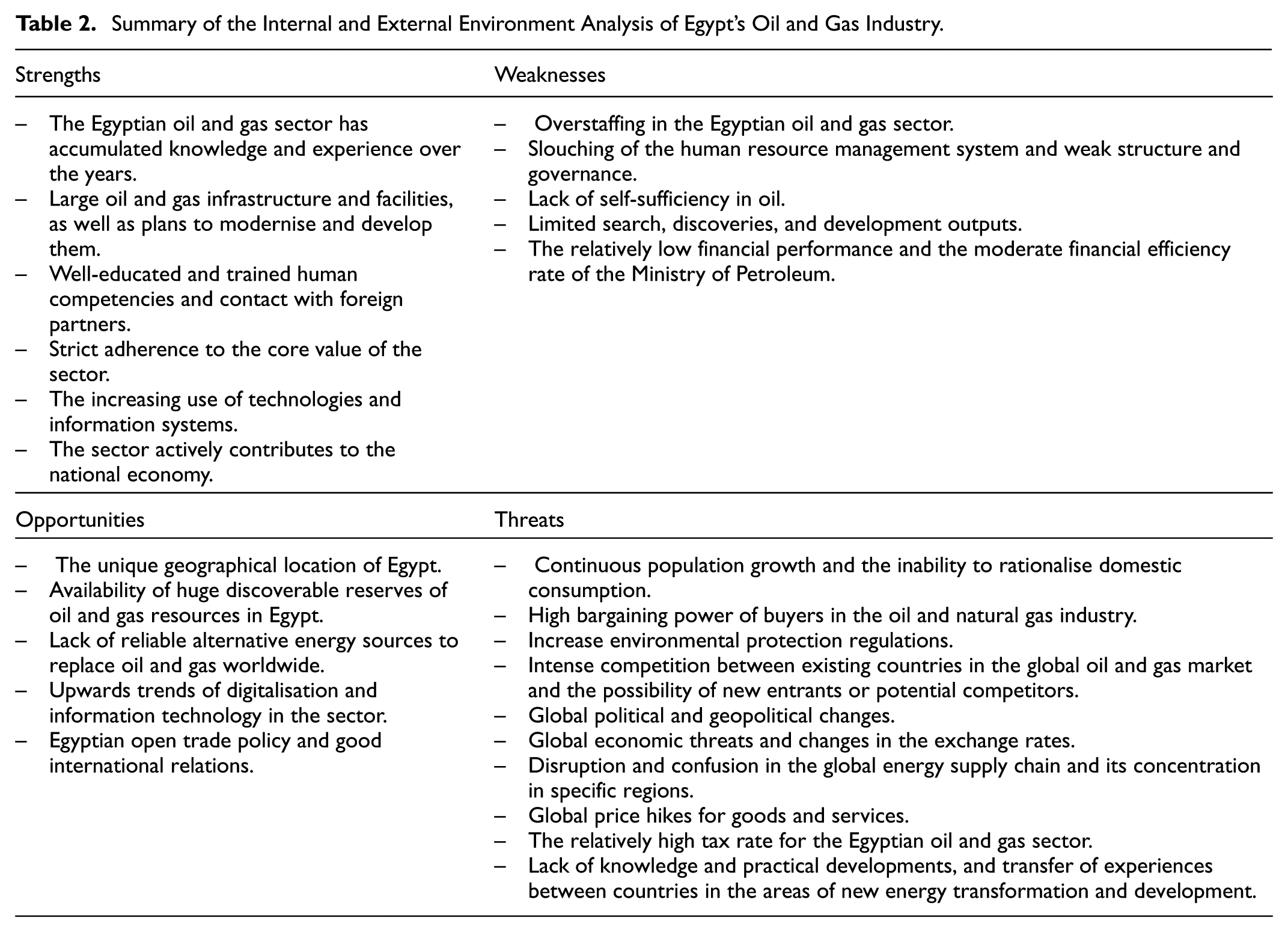
In order to assess the Egyptian oil and gas market and identify the internal and external surroundings of the Egyptian oil and gas industry, a qualitative content analysis was conducted on the interviewees’ responses in addition to pertinent literature. The analysis resulted in the SWOT matrix for the state of the industry as presented in Table 2, providing researchers with a comprehensive understanding of the current situation and key factors involved in planning and decision-making in the Egyptian oil and gas sector.
Summary of the Internal and External Environment Analysis of Egypt’s Oil and Gas Industry.
The survey analysis and results using SPSS and SmartPLS software are presented as follows.
Descriptive Statistics
This section includes the descriptive analysis of the respondents’ profiles and presents the descriptive analysis of the research variables.
The results showed around 50.9% of the respondents work in private sector companies; the foreign sector and shared sector have percentages of 18.9% and 17%, respectively. Conversely, the ministry’s holding companies employ 9.4% of the respondents, while the public sector employs only 3.8%. The activities of the participating companies included 72 different fields, the majority of which work in exploration and production operations. The responses revealed that the participants had the most years of experience, with five respondents each having 18, 15, and 13 years of experience, and all were familiar with the concept of an energy hub nation. The position/title of those employees: 22 respondents (41.5%) were sector managers, 13 (24.5%) worked at upper-level management, 9 (17%) were senior employees, 6 respondents were heads of departments (11.3%), and only 3 were CEOs/owners (5.7%). Regarding the overall evaluation of the Egyptian oil and gas sector, about 41.5% of respondents rated it as very good and 34.0% as good, while “excellent” and “fair” took the lowest percentages with 13.2% and 11.3%, respectively. In terms of Egypt’s readiness to be a GEH, around 37, or 69.8%, of respondents believe Egypt is ready, but some actions still need to be taken. Around 12 respondents see that Egypt is ready, whereas only four respondents say it is not ready yet.
Measurement Model Analysis
This section shows the data measure’s reliability and validity to ensure the instruments’ appropriateness for the application. Convergent and discriminant validity were used to test the constructs’ validity, while Cronbach’s alpha was used to confirm the consistency of the statements used to measure a particular construct.
The study employed Fornell-Larcker to assess discriminant validity. Fornell and Larcker’s (Fornell & Larcker, 1981) approach for assessing the discriminant validity relies on the root of the average variance extracted (AVE) in each latent variable. The square root of the AVE is compared to the correlation of latent constructs with this technique. A latent construct’s variance should be explained better than the variance of other latent constructs. Hence, the square root of the AVE of each construct should be more relevant than its connections with other latent constructs (Aljarallah et al., 2024). Table 3 shows the discriminant validity of the study, where it can be concluded that all constructs’ square roots of AVE are more significant than their correlation coefficients.
Correlation Coefficient Between the Research Variables.

Moreover, convergent validity measures how many variants share concept indicators (J. F. Hair et al., 2021). The AVE influences convergent validity, according to J. Hair et al. (2017), from which the constructs of 0.5 or greater average variance AVE should be extracted.
On the other hand, Cronbach’s alpha and composite reliability measure each factor using words demonstrating how consistently and steadily the tool taps the variable. The alpha coefficient ranges from 0 to 1, with higher values denoting more reliability. Alpha and composite reliability coefficients greater than or equal to 0.7 suggest a suitable level of reliability.
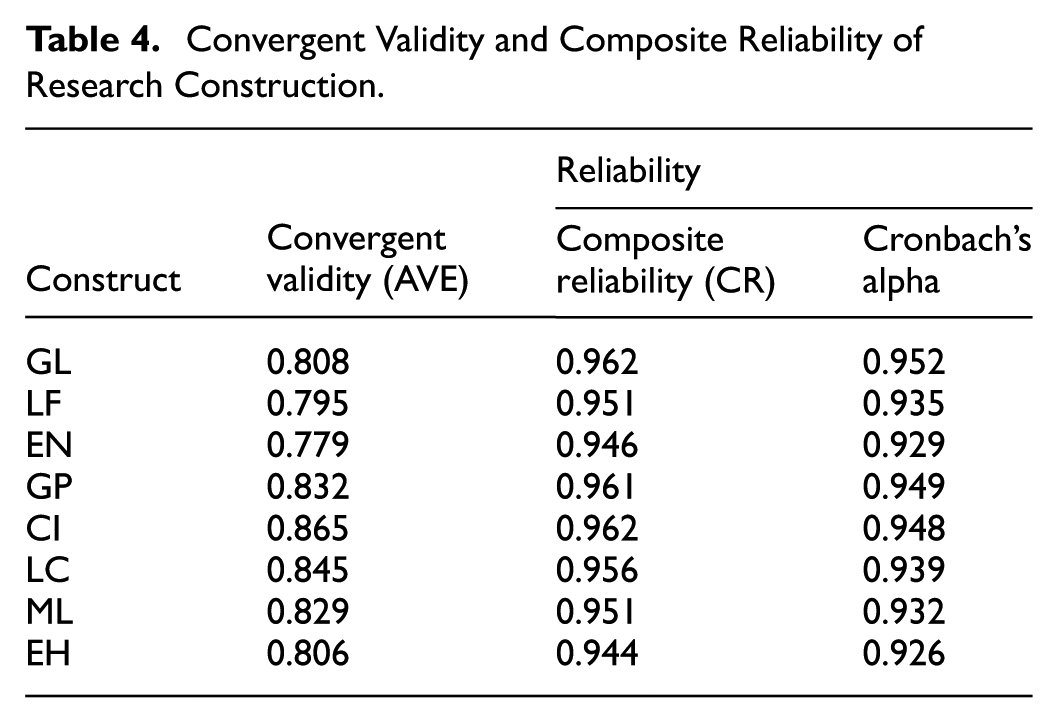
Table 4 presents the AVE, Cronbach’s alpha, and composite reliability of research constructs. The table shows that all AVE values are over 0.5, meaning all research variables are valid. In addition, all the values of Cronbach’s alpha and composite reliability are greater than 0.7, which refers to the reliability of all the research variables.
Convergent Validity and Composite Reliability of Research Construction.
Furthermore, the variance of the model in each construct is calculated by measuring the coefficients of determination of the dependent variables (R-square “R2”). Tests also include the effect size (F-square, “F2”) that represents the impact of each external latent construct on the endogenous latent construct. When an independent construct is removed from the path model, the coefficient of determination R2 changes, and it is determined whether the removed latent exogenous construct has a substantial impact on the latent endogenous construct. The F2 values of 0.35 refer to a strong impact, 0.15 means a moderate effect, and 0.02 suggests a weak effect. The results of the R2 and F2 analyses are shown in Table 5, where the effect size of all the variables is moderate, except for the level of competitiveness, which is weak.
F-square (Effect Size) and R-square.

Structural Model Analysis
This section employs correlation and structural equation modelling (SEM) analyses to test the hypotheses under study.
The non-parametric Spearman correlation test was used to verify the relationship between the research variables. The results of the correlation analysis showed a positive significant correlation between all independent variables and the dependent variable (EH). The correlation coefficients were GL = .878, LF = .878, EN = .888, GP = .874, CI = .889, LC = .888, and ML = .879. Regarding the moderating variables, it is observed that all variables (GL, LF, EN, GP, CI, LC, ML, and EH) have a negative significant correlation with the long-term agreement (LTA) equal to −.584, −.530, −.540, −.561, −.551, −.576, −.584, and −.614, respectively. For the investments (INV) as a moderator, it is proved that the relationship between all variables (GL, LF, EN, GP, CI, LC, ML, and EH) with the INV were also significant negative correlations, where the correlation coefficient was, respectively, −.677, −.631, −.688, −.640, −.721, −.702, −.623, and −.747. Concerning domestic consumption (DOC) as the third moderation, it is concluded that there is a negative significant correlation between all variables and DOC, and the correlation coefficients were GL = −.794, LF = −0.779, EN = −0.597, GP = −0.625, CI = −0.597, LC = −0.755, ML = −0.661, and EH = −0.770. In terms of control variables, the correlation test revealed positive significant correlations between all control variables (ECO1:ECO6) and the dependent variable (EH). The correlation coefficients for ECO1 were .922, ECO2 was .958, ECO3 was .935, ECO4 was .947, ECO5 was .887, and ECO6 was .875 when compared to the EH.
After presenting the correlation analysis results, this section discusses the results of testing the research hypotheses through SEM analysis. Table 6 shows the SEM analysis for the impact of the research variables. The following results can be concluded:
SEM Results of Main Hypotheses Testing.

For hypothesis
For hypothesis
For the
Regarding hypothesis
As for hypothesis
For hypothesis
For hypothesis
Based on the standardised regression weights in Figure 2, the relative importance of the independent variables in terms of their importance for establishing and operating an EH showed that GP ranked first at 2.775, followed by LF with 2.448, then CI at 2.437, EN = 2.224, GL = 2.144, ML = 1.229, and LC with 0.833.
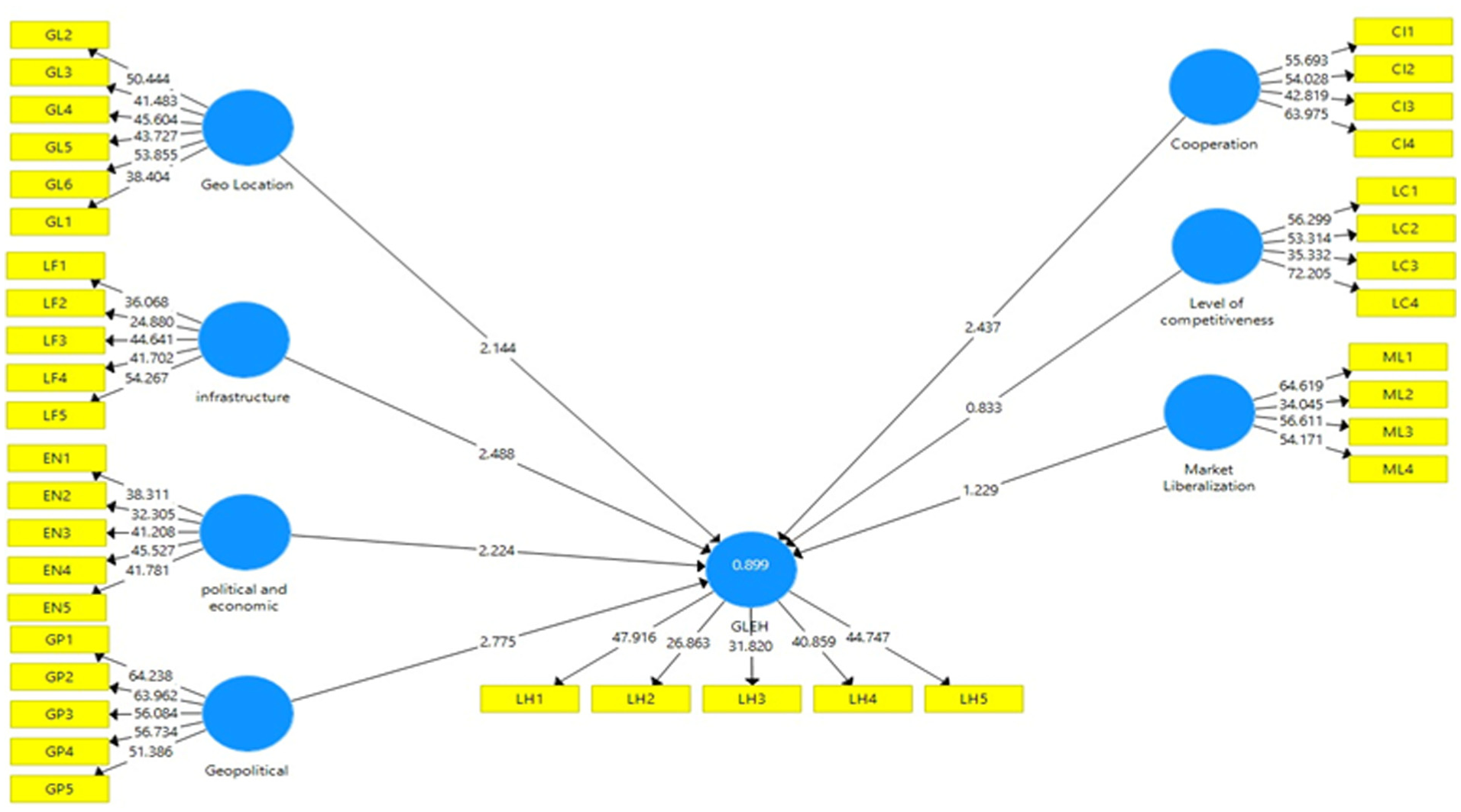
Standardised regression weights for the research model.
Regarding the SEM of the moderation effect of the moderating variables, the analysis observed an insignificant moderation role of the LTA, INV, and DOC in the relationships between all independent variables and the dependent variable. Accordingly, the hypotheses
Lastly, the SEM analysis of the control variables indicated that the market uncertainty (ECO1) has a positive significant effect on EH at a P-value of .010, and the estimate is .259. The legal and regulatory framework (ECO2) and the international energy market (ECO3) have an insignificant effect on EH, with the corresponding p-values for the interaction variable being 0.082 and 0.227, respectively. Therefore,
A summary of the hypothesis testing is provided in Table 7. It can be concluded that
Summary of Hypothesis Testing.

Dependent Variable: Establishing and Operating a GEH.
These findings support previous research on the complexity of becoming a GEH by Hammad et al. (2021). The results reinforce the significant influence of geographical location, infrastructure, and geopolitical alignment on establishing and operating GEHs, in line with previous studies. However, this study adds empirical depth by confirming these variables. The findings also reveal a relative lack of market liberalisation and competitiveness in comparison to political considerations, suggesting that developing countries may prioritise physical and diplomatic preparedness over regulatory maturity in the early stages of hub development. This information is critical for politicians and investors assessing the sequence of changes and investments.
The finding that infrastructure and geopolitical positioning are key critical strategic requirements aligns with recent research, such as (Fayyaz, 2023; Novikau & Muhasilović, 2023; Rentschler et al., 2025), which emphasises the strategic importance of the geopolitical significance and infrastructure in the hub development. Moreover, Muhammad (2023) and Hussain et al. (2024) stressed the relationship between hub development and strengthening strategic cooperation and relationships between countries. In addition to strengthening ties, Sharif and Mansoor (2025) also concluded that the development of a trade corridor, or hub, is highly related to economic, political, and social environments. Hence, these perspectives collectively reinforce the validity of this study’s findings and extend their applicability.
While the study’s findings are based on empirical data from the Egyptian context, the identified strategic requirements are applicable to other countries with similar characteristics and ambitions to become global energy hubs. Accordingly, the findings are reasonably generalisable, especially to similar countries in the MENA region or other transit-orientated energy markets.
Discussions and Implications
Considering the previous results and based on the Egyptian context, it can be concluded that the primary requirements for establishing and operating a GEH are geographical location, infrastructure and logistics facilities, political and economic environment, geopolitical position, and cooperation and interrelationships, as these variables showed significant relationships with the establishment and operation of GEH.
Despite the lack of support for some hypothesised relationships, like competitiveness and market liberalisation, the findings validate the majority of the conceptual framework. While competition and market liberalisation were originally hypothesised as significant strategic requirements for GEH development, the empirical results do not support their influence in the Egyptian context. These findings may be attributed to the nature and structure of Egypt’s oil and gas industry, which remains largely state-driven, since regulatory structures and competitive dynamics are still evolving. In such environments, infrastructure and geopolitical alignment may outweigh liberalisation as key drivers. However, these requirements could be reconsidered in the future as the private, investment, and foreign sectors gain more participation, or as the Egyptian oil and gas sector expands globally.
Additionally, the moderating factors—long-term agreements, investments, and domestic consumption—had also minimal effect on the linkages between the logistics requirements and setting up and running a GEH. The non-significance of moderating effects could indicate a relatively stable policy environment or limited institutional responsiveness to external pressures. These findings align with emerging literature on energy governance in transitional economies, where structural transformation often precedes full market openness or competitive dynamics.
Accordingly, the applied framework has been developed in Figure 3 after removing the variables that showed insignificant impacts on establishing and operating GEH. The applied framework includes five dependent variables that represent the requirements: geographical location, infrastructure and logistics facilities, political and economic environment, geopolitical position, and cooperation and interrelationships. Additionally, it contains two control variables—market uncertainty and the Energy Charter Treaty—and one independent variable: establishing and operating a GEH.
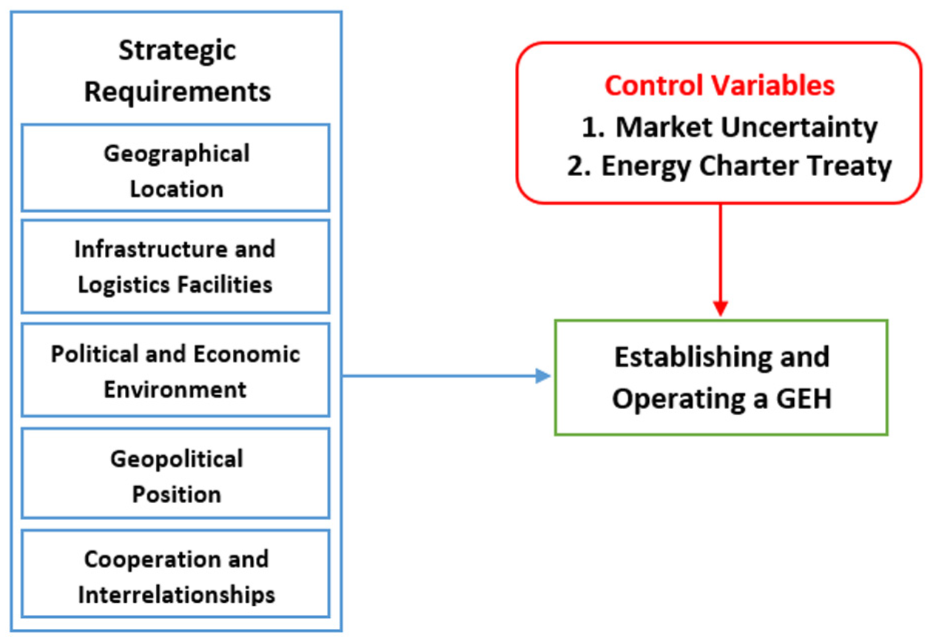
Applied model.
The participants listed few difficulties that Egypt faces as a GEH in the Egyptian setting. They emphasised that the primary issues are internal in nature and essentially managerial, technical, and economic. They also note that one of Egypt’s most significant challenges to becoming GEH is the restricted production and availability of gas and oil, particularly given the country’s inadequate reliance on alternative and renewable energy sources and its steadily rising domestic consumption. Additional challenges arise from the state’s inability to attract investments, the volatility of the economy, established routines, and poor governance. Participants noted that the country must build additional infrastructure soon because the Egyptian oil and gas sector lacks specialist facilities and infrastructure. They also brought up other issues, like the lack of a contemporary legislative framework for foreign commerce and investment. Furthermore, the Egyptian oil and gas industry has a significant need for administrative and logistical skills despite its highly skilled workforce. In addition to the oil and gas industry’s gradual digital transformation, the country lacks contemporary technologies in this field. Finally, some respondents believe that Egypt’s poor foreign policy and its incapacity to collaborate with other countries and form regional and global alliances are the main causes of the problem.
In light of the respondents’ perspectives, researchers proposed remedies and a plan of action to get over these challenges. Egypt must increase its investments and draw in more capital in all sectors of renewable and non-renewable energy, according to most respondents. Additionally, the search, exploration, and production of oil and gas operations require special attention. Rehabilitating and preparing the entire investment environment in terms of organisational, legal, and economic factors is also necessary. Offering alluring incentives for investment, being more accommodating and lowering obstacles for investors, encouraging and expanding the involvement of the private and investment sectors, establishing a clear and stable business environment, modifying management policies and terms, and revising certain investment laws and regulations are all ways the Egyptian government can try to improve the overall investment environment. The Egyptian government should also adopt a bold strategy to diversify its energy mix and reduce local consumption. Such an outcome is achieved by raising public and consumer awareness and establishing a clear, shared vision across government agencies for the best use of energy resources. Regarding economic issues, Egypt must create a well-defined economic strategy based on the interests of the state, forge solid business partnerships, refrain from government intervention in the economy, boost exports while lowering imports, and maintain a stable exchange rate. Moreover, to comply with international regulations, Egypt must also enact some legal changes in the areas of trade and investment in general, particularly in the energy industry. Expanding Egypt’s role both regionally and internationally, as well as fostering collaboration and relationships with other countries, should be the goals of Egyptian foreign policy. Egypt’s oil and gas industry needs some internal development and reorganisation. The work and promotion system can be improved, governance mechanisms can be introduced, staff efficiency can be raised through training and technology and expertise sharing with foreigners, and dependence on information systems and technology may be increased.
These implications are important for supporting the development and operation of GEH. The study’s findings have unique implications for various stakeholder groups. For policymakers, the findings illustrate the importance of investing in infrastructure and fostering geopolitical partnerships to strengthen the country’s positioning as an EH. Energy companies can use the identified strategic criteria to better match their operations and investment plans with energy hub objectives. The study stressed to regulators the importance of developing flexible, transparent legal frameworks that attract investors. Investors could also use the findings to assess preparedness and strategic risk in energy-related ventures. Finally, the study offers researchers a validated framework for implementation and testing in various sectors and geographic contexts.
Conclusion, Limitations, and Future Work
The study identified and empirically verified seven strategic requirements for establishing and operating GEHs, with data drawn from the Egyptian oil and gas sector. The research results point out the importance of geographical location, infrastructure and logistics facilities, political and economic environment, geopolitical position, and cooperation and interrelationships for the establishment and operation of GEHs. The study also highlighted some managerial, technical, economic, and technological elements that could enhance the framework’s application in the Egyptian context.
Based on these findings, the following recommendations are proposed. For policymakers, prioritise infrastructure investments, strengthen geopolitical alliances that enhance energy hub positioning, and promote integrated energy strategies among neighbours to leverage shared infrastructure and improve hub connectivity. Energy regulators should implement transparent, adaptable regulatory frameworks to attract foreign energy players and facilitate competitive energy exchange mechanisms. Investors can also match their investment plans with hub development objectives, focussing on strategic assets including infrastructure and facilities for storage, processing, and re-export. These guidelines may help inform both energy planning and the larger literature on energy hub development.
Like any other research study, this study came with some limitations and challenges. It focussed mainly on the energy hub country rather than the transit, corridor, or centre countries. The study also dealt with oil and gas resources without other energy sources. Additionally, the proposed framework in this study addressed establishing and operating GEH at the strategic level. Therefore, more studies can be done to put this framework into practice and expand on it in order to break down the technical or operational components using different factors and viewpoints. Moreover, although the survey achieved a 60% response rate, the potential for nonresponse bias cannot be fully excluded, which may limit the representativeness of the findings. The framework can be adapted and used in various contexts, even if the empirical study was done in Egypt. This provides opportunities for the application of the framework in various countries and areas.
The suggested methodology can be used and tested in future studies by other countries looking to set up or run energy hubs using the same scientific processes. The proposed architecture has the potential to improve the efficiency of energy supply chains and the overall performance of energy hubs. Future studies can evaluate its applicability to different countries and examine how much the proposed approach can enhance energy flow and sustainability. Furthermore, we can use the results of this study to develop criteria and key performance indicators (KPIs) for analysing and evaluating the performance of energy hubs. Building on the suggested strategic framework, further studies might concentrate on the operational and technical elements required to create and run energy hubs. More research is needed to adapt and verify the proposed framework with other energy sources, such as electricity and renewable energy, especially green hydrogen.
Footnotes
Acknowledgements
The authors thank all participants of this study. The authors would like to thank the reviewers and editor for their careful and thoughtful comments.

Ethical Considerations
This study did not involve any procedures requiring formal ethical approval. However, all procedures involving human participants were conducted in accordance with recognised ethical standards.
Consent to Participate
All interview participants were adult professionals who voluntarily participated after being informed of the study’s purpose, data usage, their right to withdraw at any time, and the measures implemented to ensure anonymity and confidentiality.
Funding
The authors received no financial support for the research, authorship, and/or publication of this article.
Declaration of Conflicting Interests
The authors declared no potential conflicts of interest with respect to the research, authorship, and/or publication of this article.
Data Availability Statement
The data that support the findings of this study are available from the corresponding author upon reasonable request.