




Abstract
Numerous studies have been conducted on sustainable transportation and its impact on global energy efficiency. However, the evolution and performance patterns of this field remain relatively unknown and limited. A bibliometric analysis was conducted to explore the global research trends to determine the state-of-the-art sustainable transport linked to energy efficiency over the past 21 years. The Web of Science (WoS) database was searched to explore the research related to sustainable transport in response to energy efficiency from 2002 to 2022, resulting in the identification of 2,884 articles. In this study, VOSviewer was used to analyse collaboration networks between authors, countries, institutions and co-occurrence analysis of keywords in three defined periods. The results reveal that the majority of studies on sustainable transport and energy efficiency were primarily conducted in the USA, with limited research conducted in Asian countries. The study found that the subject categories of “transport planning,”“transport policy,”“climate change,”“electric vehicles,” and “public transport” are the most prolific research contributors. During Phase III (2016–2022), most studies were centred around electric vehicles in the field of sustainable transportation, as opposed to Phase II (2009–2015). These findings enhance our understanding of the research landscape in this field and offer valuable insights for future studies. Future studies could examine how the latest technology enhances energy efficiency in the transportation sector and focus on the usage and benefits of hydrogen fuel cell vehicles (HFCVs).
Keywords
Introduction
As the global population and individual wealth continue to increase, it is undeniable that there will be a corresponding rise in energy demands and resource consumption (Shah et al., 2021). According to Popkova and Sergi (2021), the existing literature on energy efficiency lacks comprehensive information on the factors and conditions that contribute to energy efficiency in both developed and developing nations. Total carbon dioxide (CO2) emissions increased worldwide by 7% from 2020 to 2021 due to transportation which reached 7.64 billion metric tonnes (Meredith Alda, 2023). In developed countries Asim et al. (2022) showed that transport accounts for between 18% and 20% of total carbon emissions with 16.2% of all CO2 emissions worldwide originating from the transportation sector (Shah et al., 2021).
Decarbonizing the transportation sector is currently one of the most pressing concerns on a global scale in terms of lowering greenhouse gas emissions and protecting against the catastrophic effects of climate change. Long-term greening of the transport sector will lower costs and enhance energy efficiency indicators as a result of ecological consideration in global development. Energy efficiency in the global transport sector can be improved through strategies such as incorporating energy-efficient vehicle technology, upgrading logistics technologies to reduce transit frequency and distance, and expanding access to and sustainability of low-carbon fuel types (Petrenko, 2021). In recent years, there has been a growing focus from governments and legislators in addressing traffic congestion in highly urbanised areas including developing alternative transportation systems to reduce pollution. For instance, policies have been implemented to promote the use of bicycles or public transportation (de la Torre et al., 2021) to reduce emissions in the transport sector through decreasing the distance travelled in energy-intensive modes of transport. Another approach is transition to shared and zero-emission modes. Improving energy efficiency can also contribute to reducing emissions. The rapid advancement of technology on transportation has had a significant impact on the availability of sustainable vehicles, such as e-bikes, electric-powered cars, and hybrid cars (Shekhovtsov et al., 2020).
In the years leading to 2030, a significant emphasis will be placed on electrifying passenger cars in order to reduce the growth rates of both car and aircraft travel (Kany et al., 2022). In order to implement an environmentally sustainable transport system, several key conditions must be met, including protecting human health and maintaining the integrity of ecosystems. It is also important to adhere to health and environmental constraints, such as specific levels and critical loads. Additionally, efforts should be made to prevent and minimise emissions from polluting substances. The sustainable use of both non-renewable and renewable resources is crucial, as with the case of avoiding any man-made changes to global environmental systems. When formulating strategies and decisions, de la Torre et al. (2021) included the factors of user’s preferences regarding communication channels, transportation options, and consumption patterns.
Many developed and undeveloped countries have implemented policies aimed at making the transport sector clean and sustainable targeting both customers and manufacturers, to reduce dependence on fossil fuels and minimise harmful emissions. Kany et al. (2022) estimated that between 2030 and 2045, there will be a significant increase in the use of electric vehicles for road transport resulting in reduced zero tailpipe carbon emissions and consequent improved air quality compared to internal combustion engine vehicles. Additionally, there will be a shift in the emphasis on mobility from roads to rail and bicycles and consequent transition from fossil fuels to electro fuels. The move is expected to drive the complete decarbonization of various sectors such as aviation, shipping, and heavy-duty road transport. A literature review conducted by Asim et al. (2022) indicated that the adoption of electric vehicles (EVs) is associated with significant reductions in CO2 and other harmful emissions which may subsequently assist in reducing the heavy dependence on fossil fuels. In order to prevent severe climate consequences and rapidly reduce carbon emissions, it is crucial for all nations to prioritise the reduction of fossil fuel combustion in the transportation sector. This can be achieved through the implementation of effective, sustainable energy policies, which will not only help mitigate greenhouse gas emissions and other harmful pollutants but also contribute to the overall decarbonization efforts.
Further investigation into bibliometric analysis is required to address the scarcity of sustainable transportation research. According to Roman (2022) bibliometric literature pertaining to sustainable transport is very limited. Considering the growing volume of publications, it is imperative to sustain this form of analysis in order to identify future shifts in subject domains. There is however, a growing inclination focused on scholarly publications examining technologies and digitization in transportation as well as a surge in scholarly interest on new sources of fuel and advancements in sustainable transportation policy (Roman, 2022; Styring et al., 2021). None of the existing studies however have examined the worldwide patterns of sustainable transport in relation to energy efficiency research through bibliometric analysis.
In order to address this research gap, the present study aims to employ a bibliometric analysis of recent and influential studies pertaining to the energy efficiency of sustainable transportation between 2002 and 2022. The aims of this study are as follows: (a) To conduct a bibliometric analysis of research patterns in sustainable transport toward energy efficiency spanning 2002 to 2022. (b) To examine the social network connections among authors, countries, and institutions through a social network analysis. (c) To conduct an author-keyword analysis to explore existing hot topics and prospects. Following the introduction, Section “Materials and methods” will present the methodological approach used in this study. In Section “Results and discussion,” the results and discussion will be discussed based on the number of published articles, the publishing performance of the authors, the analysis of the authors’ countries, and the analysis of the authors’ institutions. In the following sections, Section “Future research direction” will discuss future research direction, and Section “Conclusion” will discuss the conclusion.
Materials and Methods
Data Sources and Search Strategy
Scholars utilise bibliometric analysis as a method to effectively visualise the progress and achievements of worldwide scientific literature within a particular field of study. Bibliometric analysis offers a comprehensive and broad perspective on significant academic literature within a specific field or topic. The purpose of this analysis is to identify the leading authors, journals, institutions, and countries in the specific field. The Web of Science (WoS) database, developed by Thomson Reuters, is widely recognised as a significant scientific search engine and relevant database for accessing bibliometric data (H. Chen et al., 2017; Kasavan, Yusoff, Guan, et al., 2021). It is widely recognised as the top-quality database globally, relative to other databases such as PubMed, Scopus, and Google Scholar. Furthermore, it provides a standardised database for accessing scientific literature from around the world across different study subjects and fields (Abd Majid et al., 2022).
The WoS database offers crucial metadata for bibliometric and network analysis. This includes information such as the list of authors, types of documents, years of publication, citation counts, web of science categories, countries, affiliations, titles of publication, and impact factors of journals. For the bibliometric analysis in this study, the scientific data source chosen was WoS (Web of Science). The study utilised a database that includes a variety of indices, such as the Social Sciences Citation Index (SSCI), Science Citation Index Expanded (SCI-EXPANDED), Emerging Sources Citation Index, Book Citation Index- Social Sciences & Humanities (BKCI-SSH), Book Citation Index- Science (BKCI-S), Conference Proceedings Citation Index- Social Science & Humanities (CPCI-SSH), Conference Proceedings Citation Index-Science (CPCI-S), and Arts & Humanities Citation Index (A & HCI).
The advanced search function of the WoS Core Collection database was employed at the initial stage to retrieve publications related to energy efficiency in sustainable transport. The search covers a period of 21 years, from 2002 to 2022. This study determined suitable keywords for the search through reviewing highly cited literature on sustainable transport research. The search terms included the title, abstract, and keywords as follows: TS= ((“sustainab* transport*”) OR (“green transport*”) AND (“energy efficien*” OR “energy saving” OR “fuel efficien*” OR “energy management” OR “decarboni*” OR “emission control” OR “emission reduction”)). This study used boolean operators in selecting the final dataset, to ensure all relevant articles are covered.
On January 3, 2023, a search was conducted to find publications on sustainable transport that addressed the issue of energy efficiency. Researchers limited their article search to a single day due to the fact that the WoS database is updated daily and also to avoid any possibility of bias. In addition, the research solely investigated publications written in English given that the language is predominantly used in academic research. In this study, the analysis was focused on publications while book chapters, proceeding papers, early access papers, and data papers were not considered. The research project required the extraction of 2,884 articles from a file labelled “Full Record and Cited References.” These publications were sourced from the “Tab-delimited (window)” format by utilising the export function explicitly designated for “saves for other file formats.” VOSviewer was employed for data statistical analysis. The primary data sources for the bibliometric study presented in this paper are displayed in Figure 1.

Research procedure.
Statistical Analysis
This study focuses on analysing the research output, journal impact factors, and citation rates of sustainable transport. The research assessment in this study incorporated four main aspects: (a) analysing the publication trend by year, (b) identifying the top 10 journals in the field, (c) determining the top 10 most cited articles, and (d) evaluating the productivity of authors, institutions, and countries involved in the research. The average citation counts from the 2020 Journal Citation Reports (JCR) was used to determine the impact factors. The SCIMago Journal Rank (SJR) indicator was applied to assess the performance of the journals based on these impact factors. Microsoft Excel 2019 was employed to examine the effectiveness of output publications and subject areas.
Furthermore, social network studies were conducted to analyse the dynamic trends in relationships and focused on the most productive countries, institutions, and authors related to the researched issue. The co-authorship analysis was conducted using VOSviewer, a software developed by Leiden University in the Netherlands. It is a notable tool for creating clear visualisations of bibliometric data connections across various knowledge domains, as displayed through cluster and graphic maps, making it easier to understand and analyse. Compared to programmes like CiteSpace, SciMAT, and BibExcel, VOSviewer revealed clear advantages, particularly in its capability to use mapping knowledge domains for the analysis of complicated networks. The study elucidated the affiliations between writers, countries, and institutions. Based on the number of articles they cooperated on, network maps were created to show the relationships between these attributes shown as lines of varying thickness that connect the nodes, corresponding with the changing “link strength” of the associations and partnerships. The number of nodes or “total link strength” indicate the output volume of publications and colour similarity of connecting lines signify groups of academics with extensive collaboration (Kasavan, Yusoff, Fadhli, et al., 2021; Pauna et al., 2019).
The co-occurrence analysis examined the entire connection between keywords in their joint publications used earlier by Andrade et al. (2019) to spot emerging topics, trends, and areas of study. The VOSviewer programme is a cluster-based visualisation tool for scientific mapping and network analysis which uses data from scientometrics networks to produce diagrams. The study employs keyword cluster analysis to determine the most prominent category of sustainable transportation research, spanning three independent time intervals (2002–2008, 2009–2015, and 2016–2022), to identify the most productive research areas. The co-occurrence analysis of author keywords also helps this study to establish and display the relationships among various research networks. Insight into the development of a study topic and suggestions for future research can be gained by combining author keyword co-occurrence analysis with author keyword frequency analysis. The article used author keywords to generate a map that defined the scope of the discussion, summarised the authors’ important points, and highlighted relevant subtopics.
Results and Discussion
Number of Published Articles
Publication Output
Figure 2 depicts the publishing trends on sustainable transport in relation to energy efficiency, which includes the five major WoS subject groups. The WoS database yielded a total of 2,884 research publications on sustainable transport as a solution to energy efficiency issues published during the period 2000 to 2022 (see Figure 2). Research on the selected subject increased gradually from 2002 to 2011, albeit with occasional fluctuations, with a total of 91 articles recorded. In the subsequent nine years (from 2013 to 2021), the number of research publications rapidly expanded leading to considerable amount of attention from various academics. However, in 2022 the total number of publications declined to 354 articles compared to 441 in the previous year. Notably though, between 2002 and 2021 a total of 2,530 articles were published representing 87.7% of the total 2,884 publications.

Top 5 subject categories and total annual number of published articles.
To conduct an analysis of all five types of subject categories, the total 2,884 publications were subjected to statistical examination. Each of the categories, namely, Transportation, Environmental Science, Green Sustainable Science Technology, and Environmental Studies, has grown rapidly in response to research in energy efficiency and sustainable transportation. The Web of Science subject category under “Transportation” grew fastest with 856 articles produced, or 29.7% of total publication, between 2002 and 2022 followed by “Environmental Studies” with 26.7%. Next on the list was “Green Sustainable Science Technology” (25.7%), followed by “Environmental Science” (24.4%). The “Transportation Science Technology” with 17.9% had the least number of publications.
Number of Articles Published by Journals
Table 1 shows the ten most prolific journals that have published research on the most sustainable transport in response to energy efficiency studies in the last 21 years. These journals have published a total of 131 distinct publications across multiple fields or specific disciplines. These top ten journals account for 38% of all publications that total 1,090 research articles. The circulation of articles in diverse types of journals indicates the wide range of topics within the field. Most journals (approximately 46%) have published less than ten publications in the past two decades. “Sustainability,” with an impact factor of 3.889, is the top journal with 369 papers published, followed by the “Journal of Cleaner Production,” with impact factor 11.072, which has 103 articles. “Transportation Research Record” is the third most influential journal, and also one of the most prolific, with 100 research articles and an impact factor of 2.019. The “International Journal of Sustainable Transportation,” with impact factor 3.963, occupies the fourth place with 98 publications. The journal with the highest impact factor is “Transport Policy” (impact factor 6.173), with an h-index of 103. The journal ranks fifth with 88 publications, and followed by “Transportation Research Part D” with 84 publications.
List of the Top 10 Productive Journals.

Note. TP = total number of published documents.
In general, these journals reflect the numerous fields of study that encompass single or multiple disciplines viewed from an interdisciplinary perspective. The current research informs on the numerous fields of study that appear to gain increasing interest in this topic. In addition, Table 1 demonstrates that the leading ten journals cover a wide variety of topics across five distinct categories. Nine out of ten of the most prestigious publications cover more than one subject area within their pages. As expected, the subject matter of “Transportation” is found to be the most prevalent with half of the top-tier journals; namely, the “International Journal of Sustainable Transportation,”“Transport Policy,”“Transportation Research Part D,”“Transport and Environment” and “Transportation Research Part A Policy and Practice.” These top 10 journals are published by various countries and publishers with four originating from the United States, three from England, and the remainder from Switzerland and the Netherlands. The distribution suggests that the majority of the top ten journals are published in Western countries, with none from Asia.
Most Cited Research Articles
An article’s impact and quality can be gauged by its citation count with weighting given to articles with the most citations. The top ten most-cited research articles on the topic of sustainable transport and energy efficiency during the past 21 years are summarised in Table 2 below. A total of 42,772 citations have been made from the 2,884 output publications in this study, with 41,114 of these being non-self-citations. The average number of citations count for each article is 18.81. Notably, 482 publications between 2002 and 2023 have yet to receive any citations although they may be cited in the future. A total of 298 articles were cited only once. The top ten most referenced research articles have been cited a total of 3,831 times, representing 8.96% of all citations. This emphasizes the significant role played by these articles in promoting sustainable transportation and energy efficiency. Remarkably, seven of the ten most-cited articles were written between 2005 and 2010, thus suggesting the importance of this crucial period in the expansion of knowledge in this area. In addition, the majority of these impactful articles are mainly published by countries and journals that are highly cited. This would suggest that academicians do recognise the fact that publishing in high-quality journals is the most effective method to accelerate the future development of this field.
Top 10 Most Cited Research.
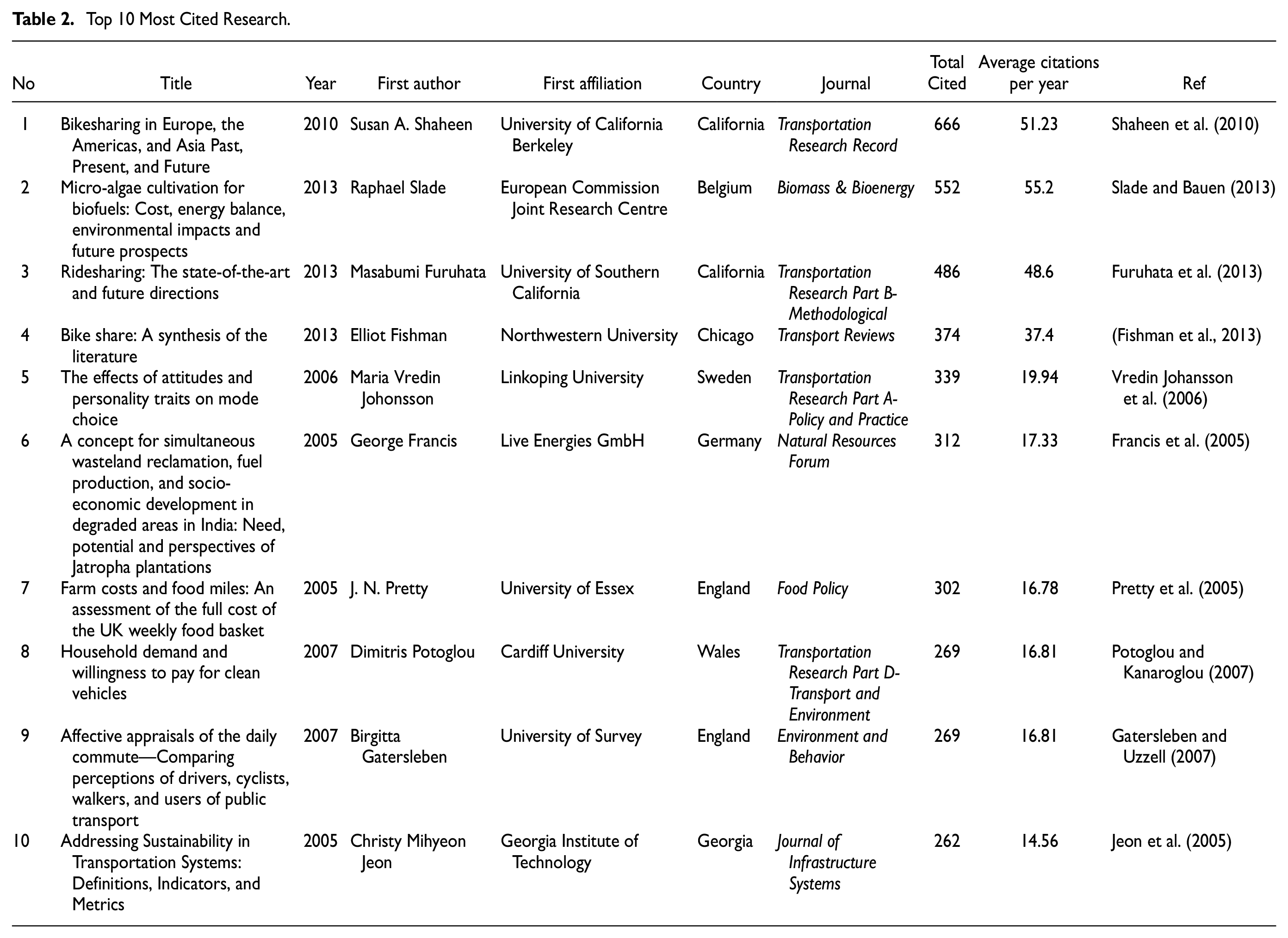
The study by Shaheen et al. (2010) titled “Bikesharing in Europe, the Americas, and Asia Past, Present, and Future” has earned the most citations with a total of 666 citations from 2010 to 2023, with an annual average of 51.23 citations. This article focuses attention on the bike-sharing systems that are demand-responsive and multimodal throughout Europe, the Americas, and Asia. It is closely followed with the article “Micro-algae cultivation for biofuels: Cost, energy balance, environmental impacts and future prospects” by Slade and Bauen (2013) which garnered the second highest number of citations at 552 and averaging 55.2 per year. Slade and Bauen (2013) identified three aspects of microalgae production as being ultimately decisive for the industry’s future viability and environmental sustainability. The next article is “Ridesharing: The state-of-the-art and future directions” by Furuhata et al. (2013), which has received 486 citations overall with an average of 48.6 citations per year. Conversely, the study “Addressing Sustainability in Transportation Systems: Definitions, Indicators, and Metrics” by Jeon et al. (2005) received the fewest overall citations with a total of 262 and an average of 14.56 per year. These articles are primarily published in the West with none in Asia.
The Publishing Performance of Authors
Number of Articles by Authors
Findings on sustainable transportation research and its linkage with energy efficiency showed a total of 197 participating authors. Remarkably, eight of the authors have published over ten scholarly articles. Table 3 shows the top 15 writers who have published more than four publications, emphasising their expertise in sustainable transport and energy efficiency research. Among these authors only four are from Asia, specifically China, Japan, and South Korea, while the remainder come from Western countries. Interestingly though, none of the authors are Americans despite the USA being the most influential and productive region in this field. The most productive author is Loo BPY from China, with a total of 18 articles, accounting for 0.62% of the total of publications in this study. Bannister D, Onat NC, and Wang Y are the second most productive authors, with each contributing 15 publications (0.52%). The remaining eleven authors collectively wrote between five and twelve articles. The Chinese author Loo BPY emerges as one of the top five writers in this domain with their impressive total citations of 382 and a notable h-index of 9. The total number of citations for other notable writers, including Bannister D (TC = 727, h-index of 10), Onat NC (TC = 556, h-index of 10), Kucukvar M (TC = 501, h-index of 9), Gossling S (TC = 467, h-index of 9), totalled less than 278. It is noteworthy that authors from England and Sweden achieved the highest number of meaningful citations. The study of WoS data revealed the existence of several collaborations between writers from the same country or institution.
Top 15 Most Prolific Authors.

Co-authorship Among Authors
Only research articles with fewer than 25 authors were included in the analysis of co-authorship. This restriction resulted a total of 7,617 authors included in the analysis. Figure 3 illustrates a network map that includes 18 authors who are actively engaged in research on sustainable transport and energy efficiency. The map displays a substantial number of interconnected nodes, indicating the strong connections between these authors and their respective areas of study. According to the authorship analysis, the network map mainly consists of two clusters. Each cluster is comprised of a group of three to fifteen core authors. Cluster 1, which is represented by the colour red, comprises fifteen authors, as shown in Figure 3 below. Meanwhile, Cluster 2 (green colour) comprises three authors; “Guzman, Luis,”“Monzon, Andres,” and “Orjuela, Juan Pablo.” It shows that Cluster 2 (green colour) is connected closely to Cluster 1 (red colour). The network map displays the research network groups that are most active in studying sustainable transport in relation to energy efficiency. In addition to this, it provides an illustration of the authorship connections that exist among the scholars participating in this field of study.
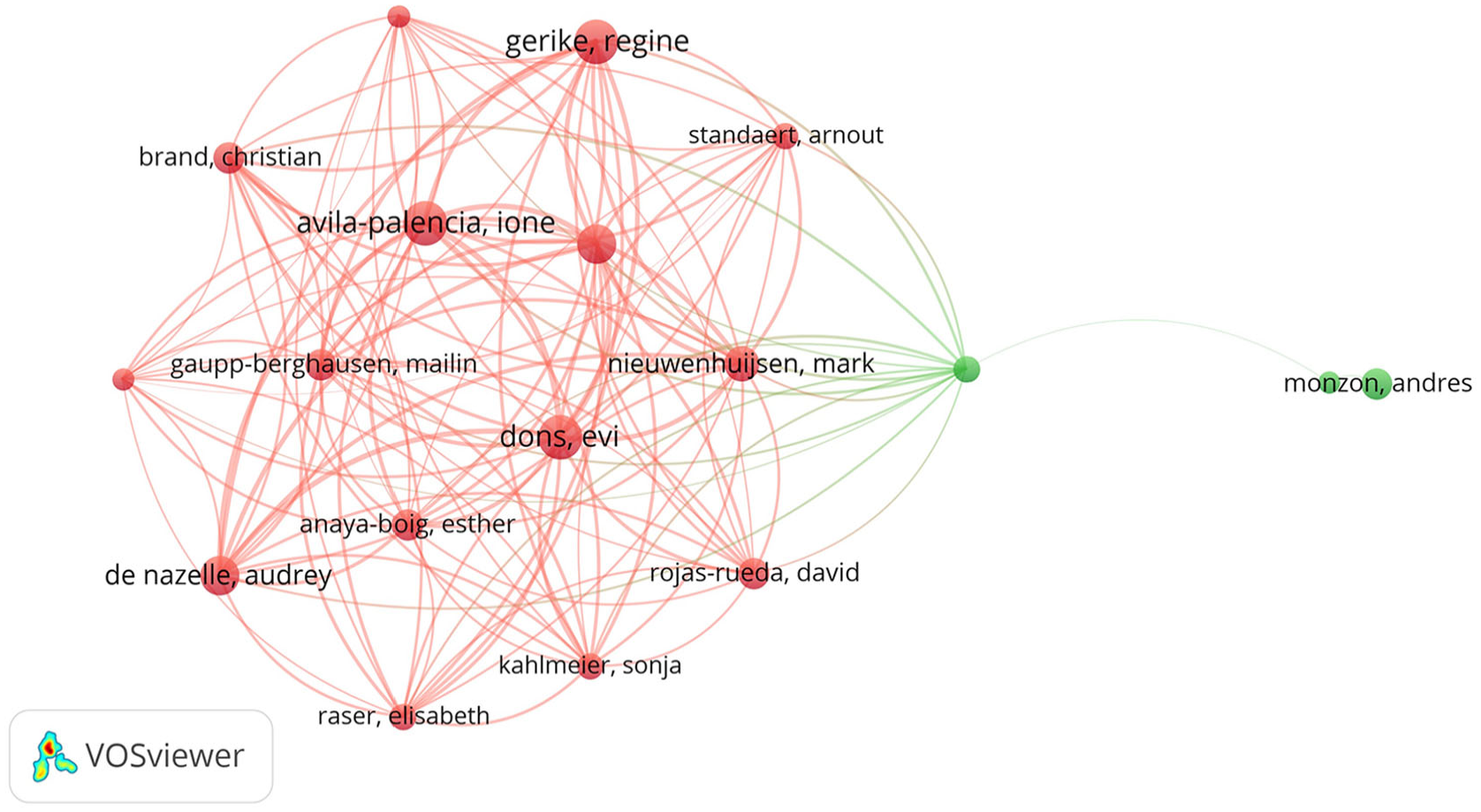
Network of authorship among authors using VOSviewer.
The Analysis of Authors’ Countries
Number of Articles by Countries
The classification of output articles by various nations and areas is shown in Figure 4. Over the last 21 years, the top ten most productive nations in publishing research on sustainable transportation in response to energy efficiency research publications are the USA, China, England, Australia, Sweden, Canada, Germany, Poland, India, and Italy. The United States accounts for about 16% of all research articles published (469 publications) or co-published with other countries. The country ranked top position due to its research into energy efficiency which led to the discovery of the most sustainable modes of transportation, with 48 such papers published between 2002 and 2022. It is the result of the new policies and regulations implemented by the US government, including increased investment in scientific research and transport infrastructure and international cooperation on sustainable transport. For example, the National Natural Science Foundation of China (NSFC) (32 publications), the National Science Foundation (NSF) (26 publications), and the United States Department of Energy (DOE) (20 publications) fund a significant share of sustainable transportation research in the United States.

The number of publications for each geographic region in the world map. The map was generated using the web link: https://mapchart.net/world.html.
Notably, China is the second most productive nation in Asia, having produced 424 publications. It is followed by England (300 publications), Australia (172 publications), Sweden (166 publications), Canada (151 publications), Germany (147 publications), and Poland (141 publications). Remarkably, the Western countries emerged as the prominent region, publishing 1,713 scholarly publications on sustainable transport in response to energy efficiency accounting for approximately 59% of the total number of research papers retrieved. over the past 21 years. India at the same time has published 161 papers on the research area. Other nations have also contributed substantially with Italy publishing 128 articles.
Co-authorship Among Countries
Nearly 102 countries meet this condition; 67 of them are connected in the network map and meet the threshold of having at least five articles on sustainable transport in response to energy efficiency publications. The co-authorship map in Figure 5 illustrates the level of collaboration and communication between writers from different nations on the research area. The size of the nodes affects the strength of the linkages with larger ones typically indicating greater cooperation and collaboration between researchers from different countries. The United States (47 links, 285 total link strength) plays a significant role and interacts closely with other countries in this study area, as evidenced by the largest nodes and densest links on the co-authorship map.
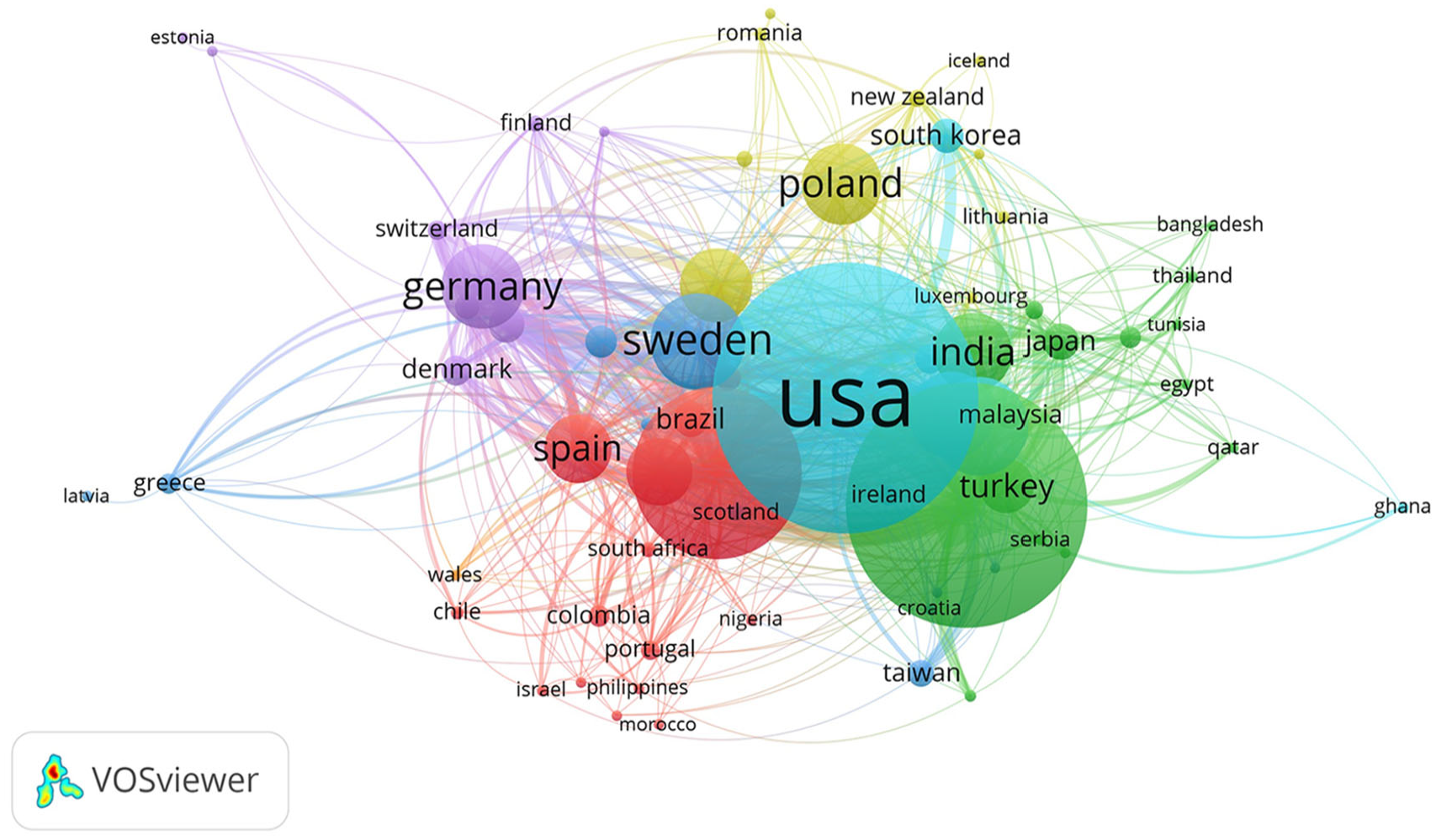
Research network among authors across the countries using VOSviewer.
The findings on co-authorship also reveal that China (51 links, 282 total link strength) and England (50 links, 282 total link strength) have greater link strength compared to other countries. Following them is Germany with 43 links (a total link strength of 183), followed by Sweden with 38 links (a total link strength of 153), the Netherlands with 40 links (a total link strength of 134), Spain with 117 links (a total link strength of 32), Australia with 37 links (a total link strength of 116), Belgium with 23 links (a total link strength of 113), Canada with 33 links (a total link strength of 109), and Italy with 36 links (a total link strength of 108), it has been noticed that India (with 35 links and 80 total link strengths) and Poland (with 23 links and 37 total link strengths) surprisingly have very small node sizes despite publishing a substantial number of research articles. This study also reveals that Brazil, Colombia, Portugal, and Japan engage in active collaboration with scholars from various countries. Relative to other countries, Canada and England were among the first to implement sustainable transport as a result of energy efficiency research, since 2002. The main publications are primarily focused on the year 2021. China has 83 publications, while the USA has 60 publications. Both countries engage in exclusive collaborations with various nations.
Analysis of Author Institutions
Publication of Institutions
Table 4 presents the rankings of the top 10 institutions based on the number of publications, citing articles, and h-index from 2002 to 2022. Out of the top 10 institutes, four are located in England, while two are from Sweden, and two are from the USA. The study interestingly noted that despite Australia, Canada, Germany, Poland, and Italy being influential countries, none of their respective institutes ranked among the top 10 most productive institutes that impact those countries. However, the institutions that demonstrated the highest levels of productivity were located in the top ten countries with the most significant impact (refer to Table 4 and Figure 4). The University of London secured the top position in terms of total publications, with 58 articles representing 2.01% of the overall count. The University of California System closely follows with 49 publications (1.7%), and the University College London with 48 publications (1.66%). The Indian Institute of Technology System (IIT System) produced 40 publications (1.39%). The University of California System is ranked second in terms of total citing articles, with a total of 2,485 and an h-index of 18. The University of London, with a total count (TC) of 991 and an h-index of 15, is ranked third among the most productive institutions. The Indian Institute of Technology System (IIT System), with a TC of 945 and an h-index of 13, occupies the fourth place. The number of citations from these output publications ranges from 425 to 2,485. This information provides valuable insights into recent research developments at the institutional level, including their influence and patterns of cooperation.
Research Productivity From the Most Productive Institutions-the Top 10 Institutes.

Co-authorship Among Author’s Institutions
The network interaction between author institutions is depicted in Figure 6. Institutions that have a larger presence in the field of sustainable transport have demonstrated a greater emphasis on collaborating with other institutions to conduct research on energy efficiency. The study reveals that certain institutes in the USA, such as the University of California System, State University System of Florida, University of California Berkeley, and University System of Georgia, tend to foster greater collaboration with other institutes. Both Beijing Jiaotong University and the University of Hong Kong in China have established numerous connections with other institutes in China and formed partnerships within the country. Several institutes from Iraq, such as Middle Technical University, University Mashreq, National Defence University, and University of Belgrade, as well as institutes from Singapore, including the National University of Singapore, Nanyang Technological University, and National Institute of Educational, Singapore, appear to be conducting internal research on sustainable transport in response to energy efficiency. However, it seems that these institutes have limited connections with institutes from other countries.

Research cooperation network among institutions.
The Research Hotspots and Emerging Trends Based on Keyword Co-occurrence Analysis
Keywords are important in scientific publications since they help readers comprehend the research trends and study’s focus. They also facilitate the identification of research gaps and areas that need further investigation. High-frequency keywords are indicative of current research hotspots. Keyword co-occurrence analysis was used in this section to discover topical relationships within three distinct time periods. According to the results of the keyword analysis, it is evident that the concepts related to the research topic can be traced by examining interconnected clusters of keywords as clearly depicted in Figure 7. Table 5 presents the links, overall link strength per cluster, and keyword co-occurrences. The presence of frequently used keywords in this study is crucial in enhancing the visibility of the articles in both current and past research issues. A thick connecting line indicates a close link between two items, whereas the presence of a large node in the graph implies that the items are seen frequently.

Keyword analysis in three defined phases: (a) Phase 1 (2003–2008), (b) Phase II (2009–2015), and (c) Phase III (2016–2022).
Author-keyword Based on Clusters.
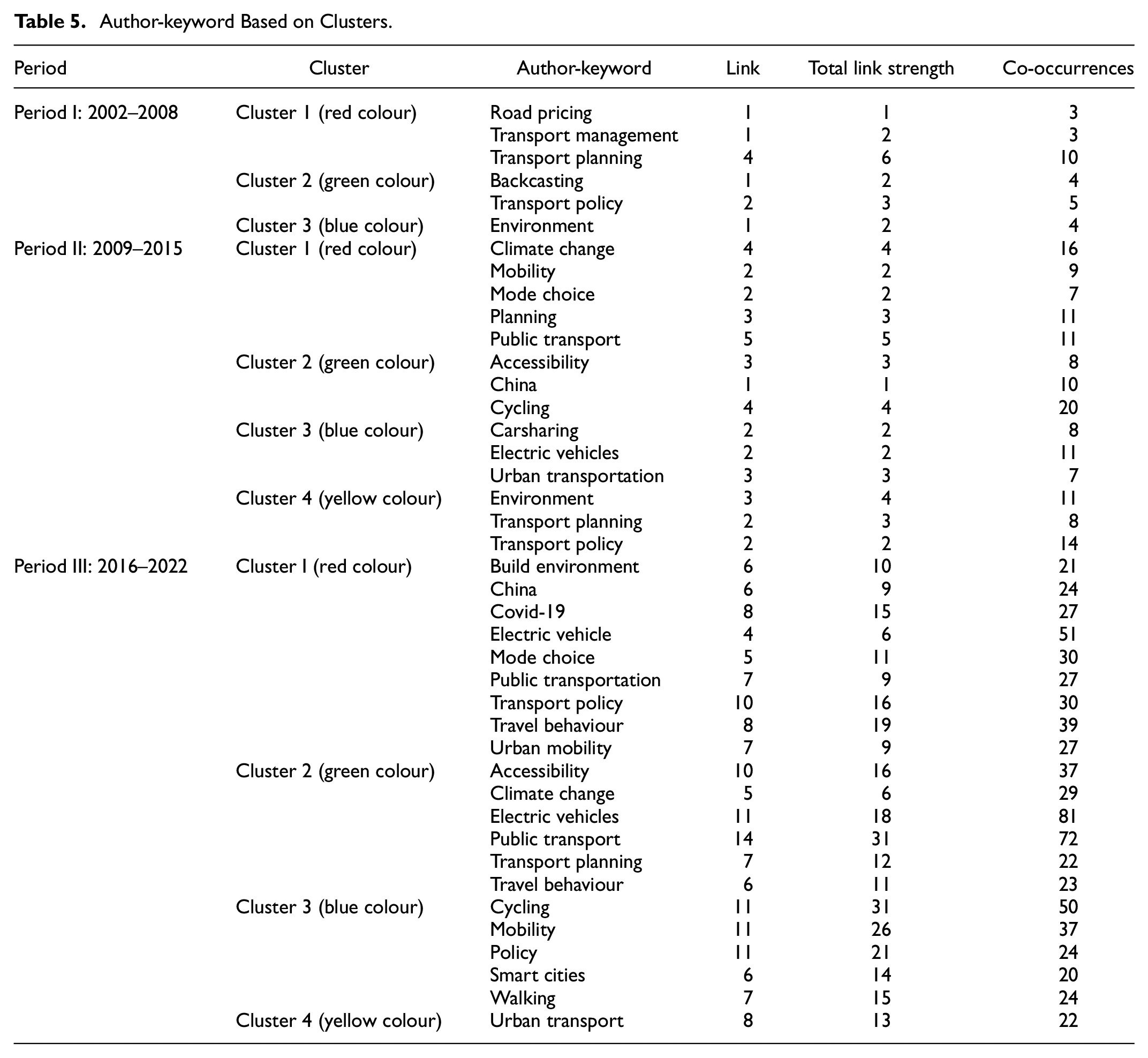
During Phase I, a total of 366 keywords and 142 publications relating to sustainable transport are recorded in the WoS database between 2002 and 2008. The co-occurrence keywords network map was generated using VOSviewer software’s limitations (included a minimum of three occurrences of a keyword), resulting in six author keywords with three clusters (Figure 7a). As shown in Table 5, the relative total link strength values of the various keywords are indicated by the size variation. Donaghy et al. (2004), Johnston (2008), Lan et al. (2006), and Litman (2017) identified transport planning as the most critical issue in sustainable transport. For example, Litman (2017) discusses the selection of indicators for comprehensive and sustainable transportation planning and Donaghy et al. (2004) examine social and behavioural aspects of sustainable transport from a transatlantic perspective. Meanwhile, Hatzopoulou and Miller (2008) and Hull (2008) discuss the existing process for funding and evaluation of transport policy and its associated pitfalls, as well as the desired state of policy appraisal. The planning for sustainable transport encompasses a range of planning activities, including the formulation of overarching planning strategies, allocation of investments towards urban development and physical infrastructure, implementation of technological measures (such as digitalization), and implementation of strategies aimed at managing mobility and promoting behavioural change (Hermelin & Henriksson, 2022).
During Phase II, a total of 1,933 keywords are recorded for analysis. This is accomplished by establishing seven co-occurences, which consist of four clusters, and presenting 14 author keywords (Table 5). According to the map illustration (spanning 2009–2015; Figure 7b), the keyword cycle has the largest node size, with 20 co-occurrences, thus indicating a larger value in Phase II. During the second eight years (2009–2015), the most popular author keyword is the “cycling” term represented by Cluster 2 (highlighted in green). This is followed by the authors’ keywords “climate change” (Cluster 1, marked in red) is also linked to another keyword in Phase II with 16 co-occurrences (four total link strength). Bonham & Wilson (2012), David (2015), Gössling and Choi (2015), Ismail and Zakaria (2014), Sagaris (2010), and Weed et al. (2014) highlighted cycling as the most critical issue in sustainable transport-related field. Cycling is characterised by its minimal environmental impact, positive contribution to public health through physical exercise, efficient utilisation of space, and cost-effectiveness in terms of both individual expenses and public infrastructure investments (Pucher & Buehler, 2017). Previous studies discuss various types of cycling in sustainable transport, such as cycling in tourism (Weed et al., 2014) cycling on university campuses (David, 2015; Ismail & Zakaria, 2014) cycling in the city (Gössling & Choi, 2015; Sagaris, 2010) and women cycling (Bonham & Wilson, 2012). Weed et al. (2014) discovered that UK recreational cycling tourism has a positive, sustainable transport effect, but it is however much smaller than expected. According to David’s (2015) findings, a low level of bicycling activity is observed among students on campus due to a lack of infrastructure, which encourages sustainable transportation activity around campus. According to Sagaris (2010), cycling riding has become a presidential priority due to its use of minimal fossil fuels, pollution-free mode of transport, and conservation of roadway and residential space.
In Phase III (2016–2022; Figure 7c) four clusters emphasise the establishment of closely connected clusters among their nodes. These clusters contain the 6,039 author keywords that have a frequency of occurrence of at least 20 times. Table 5 (Phase III) contains a listing of the 29 most frequently used terms that are pertinent to sustainable transport as a reaction to energy efficiency. Within this specific investigation, the keyword “electric vehicles (EV)” (with an occurrence frequency of 81) is the most common to emerge from Cluster 2 (coloured green). The keyword, “public transport” (Cluster 2, marked in green) is the second-highest, with 72 occurrences. Previous studies highlighted various issues of electric vehicles in response to sustainable transport, such as charging stations (H. Liu et al., 2021; Luo & Qiu, 2020), potential adopter attitudes of university students (Bridi & Al Hosani, 2020), dynamic charging deployment (Nguyen et al., 2022) and factors influencing purchasing decisions (Knez, 2017). The transition from diesel/gasoline-powered vehicles to EVs has attracted considerable attention among scholars across diverse academic disciplines (Secinaro et al., 2022). The overall study of EVs helps to identify the most effective strategies for enhancing energy efficiency and cater to consumer demands through a diverse range of environmentally friendly vehicles.
Electric vehicles are one of the effective instruments for reducing pollution and ensuring sustainable transport in emerging markets, as mentioned by H. Liu et al. (2021). As suggested by Lopez-Arboleda et al. (2021), governments should develop policies to encourage the use of EVs) as a means of addressing environment concerns. Lopez-Arboleda et al. (2021), posited that the majority of the research on the transition to EVs has focused more on the potential positive effects on the environment and less on the potential negative effects on the economy and society. Additional charging issues in EV advances include the lengthy charging time and range anxiety experienced by drivers. Nguyen et al. (2022) highlighted the deployment of dynamic charging systems, such as electrified roadways that wirelessly charge EVs while they are in motion, with the goal of accelerating the rate at which EVs are being adopted by the general public. Bridi and Al Hosani (2020) discovered that university students hold the view that preferences of EVs are influenced by a number of social, economic, and environmental issues.
Travel behaviour has a profound impact on sustainable transport responses to energy efficiency. Understanding how individuals and communities choose to travel, the modes of transportation they use, and the frequency and distance of their trips is critical for designing effective strategies to enhance energy efficiency in the transport sector (L. Chen & Felkner, 2020). Travel behaviour significantly affects the choice of transportation modes, as mentioned by Profillidis et al. (2019). Individuals may opt for private vehicles (cars) over public transit, cycling, or walking. The modal choice has a direct impact on energy consumption and emissions. Sustainable transport responses should target shifting preferences toward more energy-efficient modes, such as public transit, carpooling, cycling, and electric vehicles. In their study, Hamad et al. (2021) highlighted the distance and frequency of trips taken by individuals and communities impact energy consumption. Longer trips and frequent travel contribute to higher energy use. Sustainable transport initiatives can encourage the reduction of unnecessary trips, promote telecommuting, and improve the efficiency of travel routes to minimize energy consumption. Economic considerations, including the cost of transportation, fuel prices, and vehicle ownership, influence travel behaviour (X. Liu et al., 2020). According to Zafri et al. (2021), policies such as congestion pricing, fuel taxes, and subsidies for public transit can alter travel decisions and incentivize energy-efficient choices. Individual and societal awareness of environmental concerns plays a crucial role in travel behaviour (Arroyo et al., 2020). People who are conscious of the environmental impact of their travel choices may be more inclined to use energy-efficient modes or adopt eco-friendly driving habits. The availability and quality of transportation infrastructure affect travel behaviour. Well-designed cities with efficient public transit systems, pedestrian-friendly infrastructure, and dedicated cycling lanes can encourage sustainable travel behaviour. Urban planning should prioritize energy-efficient transport options. Social and cultural norms can shape travel behaviour. As stated by Hrelja and Rye (2023), car-centric cultures may lead to a higher preference for private vehicles, while societies that value public transit and active transportation modes may exhibit more energy-efficient travel behaviour. Sustainable transport responses should consider these cultural factors. The adoption of advanced transportation technologies, such as electric and hybrid vehicles, is influenced by consumer preferences and travel behaviour. Policies and incentives that promote the adoption of energy-efficient technologies can have a significant impact on overall energy efficiency in transportation. Liyanage et al. (2017) discover that Government policies and regulations, such as emissions standards, fuel economy regulations, and incentives for clean transportation, can strongly influence travel behaviour. These policies can either promote or discourage energy-efficient travel choices. Travel behaviour is a central determinant of energy efficiency in the transportation sector. To promote sustainability and energy efficiency, it is essential to analyse and influence travel behaviour through a combination of policy measures, infrastructure improvements, economic incentives, and awareness campaigns.
Future Research Direction
The scope of the current study is limited in terms of the methodology employed. The database used is limited to Web of Science (WoS) and does not include other databases such as Scopus or Google Scholar. Firstly, in future research, it may be advantageous to utilise multiple databases in order to ensure the robustness of the findings. Secondly, it is important to note that this research focused solely on English-language research articles and did not encompass other languages or various forms of literature. One unexpected discovery was that the majority of studies on sustainable transport and energy efficiency were primarily conducted in the USA, with limited research performed in other Asian countries. Thirdly, there is a need for further studies to enhance scientific research endeavours in Asian countries, particularly in low-middle-income and developing countries.
The transportation sector is a major consumer of fossil fuel energy and also contributes significantly to global greenhouse gas emissions. Hence, the progress made in achieving sustainability in the transport sector is of great significance in our broader efforts to promote sustainability. Through the exploration of relevant research papers, this study aims to establish a baseline for the emerging field of sustainable transport research in relation to energy efficiency. This will enable future researchers to investigate the utilisation and advantages of transport development technologies. Fourthly, a potential future study could examine how the latest technology is enhancing energy efficiency in the transportation sector. During Phase III (2016–2022), a majority of studies were centred around electric vehicles in the field of sustainable transportation, as opposed to Phase II (2009–2015). Fifth, future research could focus on the usage and benefits of hydrogen fuel cell vehicles (HFCVs). These vehicles are an alternative to traditional energy sources and have the potential to promote sustainable transportation systems in both developing and developed countries.
The analysis of keyword co-occurrence is centred around prominent themes in sustainable transport that address energy efficiency. The most commonly used keywords in this context are transport planning, transport policy, climate change, electric vehicles, and public transport. The majority of past studies published from 2002 to 2022 were focused on the adoption of sustainable transport options, including walking, cycling, car sharing, public transport, and electric vehicles. Recent discussions have highlighted the importance of behaviour and public adaptation in the successful evolution of a sustainable energy system in the transportation sector. This includes effectively managing the environment and addressing climate change to achieve optimal energy efficiency. Sixth, additional research is required to determine how road pricing can be implemented in practical and efficient ways to promote sustainable transportation. Moreover, there has been a comprehensive discussion on various other issues in transport management, such as government initiatives and the provision of financial and technical support.
Seventh, research in this area should prioritize interdisciplinary collaboration between economists, engineers, environmental scientists, and policymakers. Cross-disciplinary approaches are crucial for developing comprehensive solutions that consider both technical and economic aspects of sustainable transport and energy efficiency. Eight, the results and analyses of emerging topics in sustainable transport linked to energy efficiency research suggest that future studies should be devoted to emerging technologies with the potential to revolutionize sustainable transport, such as advancements in battery technology, fuel cell development, and alternative fuels. Research could focus on assessing the feasibility, scalability, and environmental impact of these technologies. Ninth, future studies should focus on the role of behavioural economics in promoting sustainable transportation choices via incentives, nudges, and information campaigns, which influence individuals and businesses to adopt more energy-efficient transport options. Tenth, the study also suggested that future scholars must explore the design and implementation of energy-efficient transport infrastructure, including smart transportation systems, renewable energy integration, and sustainable urban planning. Eleventh, future research may also focus on the effectiveness of policy measures and regulatory frameworks at the national and international levels in promoting knowledge exchange in the field of energy-efficient transportation.
Twelfth, the current study’s findings also suggested extending research into the environmental consequences of sustainable transport solutions, including life-cycle assessments of various transportation modes and their impact on greenhouse gas emissions, air quality, and ecosystems. Lastly, future studies might expand the research base to develop advanced economic models that can predict the long-term economic benefits of transitioning to energy-efficient transportation systems while considering job creation, reduced healthcare costs, and improved productivity. Future contributions in this area of knowledge will focus on consumer preferences and market dynamics related to sustainable transport options including the adoption of electric vehicles, public transit, or shared mobility services from an economic standpoint. These future directions aim to advance the academic understanding of sustainable transport linked to energy efficiency while also contributing to the development of practical solutions and policy recommendations for a more sustainable and energy-efficient transportation system on a global scale.
Conclusion
This study offers a thorough bibliometric analysis of research related to sustainable transport and energy efficiency. It covers research articles published between 2002 and 2022 using the WoS database. The results can assist researchers identify the strengths and global trends in sustainable transport and energy efficiency research, along with providing recommendations for future research areas. A total of 2,884 publications were analysed in the field of sustainable transport and energy efficiency involving 17,599 authors who contributed to more than 241 journals. The authors came from 152 different countries, and their work was cited a total of 64,902 times. The findings indicate a steady increase in the number of research articles focused on sustainable transport and energy efficiency over the past 21 years especially since 2013. The top five journals that are considered the most influential in the field of sustainable transport and energy efficiency research are The Sustainable Cities and Society, Transportation Research Part D, Journal of Cleaner Production, Transportation Research Part A Policy and Practise, and Transport Policy. Notably, the Sustainability Journal has emerged as highly productive, having published a total of 369 articles across four subject categories, including sustainable transport and energy efficiency research.
The majority of publishers for the top journals are from the United States and England. The United States has emerged as the leading country in terms of publishing articles on sustainable transport in response to energy efficiency research, with a total of 469 articles thus indicating its prominence in this field relative to other countries. This study also indicates that the United States is the highest-ranking country in terms of producing articles on sustainable transport and energy efficiency in the Americas. Among the top 15 prolific authors, Loo BPY stands out as the most productive, with 18 publications followed closely by Bannister D, Onat NC, and Wang Y, each with 15 publications. The remaining authors individually produced fewer than 13 publications. A social network analysis was conducted to visualise the connections between authors, countries, and the co-occurrence of keywords in research collaborations. The United States, China, England, Germany, and Sweden are actively engaged in collaborating and establishing a cooperative network with researchers from around the world. The findings suggest that research on sustainable transport, focusing on energy efficiency, primarily revolves around transport planning and policy with a strong emphasis on implementing solutions that promote energy security and ecological friendliness.
In conclusion, the examination of global research trends in the realm of sustainable transport linked to energy efficiency reveals a multifaceted and dynamic landscape. This bibliometric analysis highlights the dominant importance of addressing the complex interplay between transportation systems and energy consumption as a fundamental pillar of sustainable development. Findings from the comprehensive review of the literature suggest that researchers and policymakers are increasingly recognizing the urgency of transitioning towards more energy-efficient transportation modes and systems. The pursuit of sustainable transport solutions has gained substantial momentum, with a growing body of research focusing on innovative technologies, policy frameworks, and behavioural interventions aimed at reducing energy consumption and environmental impacts associated with transportation. Furthermore, the study highlights several key areas of emphasis within the field. These include the exploration of alternative propulsion technologies such as electric and hydrogen-based vehicles, the integration of renewable energy sources into transportation infrastructure, the promotion of multimodal transportation systems, and the development of intelligent transportation systems for optimizing energy efficiency. As the global community continues to wrestle with the pressing issues of climate change, air quality, and energy security, it is imperative that scholars and practitioners collaborate in advancing the state of the art in sustainable transport research. This necessitates fostering international partnerships, conducting rigorous empirical studies, and advocating for evidence-based policies that can catalyze the transition towards a more sustainable and energy-efficient transportation system. In conclusion, the exploration of global research trends in sustainable transport and energy efficiency represents a critical endeavour that not only contributes to the academic discourse but also informs the strategies and actions needed to create a more sustainable and environmentally responsible future in the realm of transportation.
Footnotes
Declaration of Conflicting Interests
The author(s) declared no potential conflicts of interest with respect to the research, authorship, and/or publication of this article.
Funding
The author(s) disclosed receipt of the following financial support for the research, authorship, and/or publication of this article: The authors thank Tenaga Nasional Berhad (TNB) and UNITEN R&D Sdn Bhd (URND) through TNB seeding fund under the project code U-TD-RD-21-09 and Graduate School of Business Universiti Kebangsaan Malaysia (UKM-GSB) (GSB-2024-020) for supporting this research.

Data Availability Statement
Data sharing not applicable to this article as no datasets were generated or analyzed during the current study.