




Abstract
In recent years, there has been a growing interest in employee engagement in the literature. This study presents a systematic literature review to synthesise existing research linking employee engagement and internal communication. The examined set, comprising 55 papers, is selected using the PRISMA method. The paper identifies current trends, topics, the most relevant authors and journals, and explores geographical distribution and collaboration networks among authors. This is achieved through data and content visualisation using VOSviewer, which enables scientific mapping. Three main thematic clusters emerge: employee engagement, internal communication, and job satisfaction. The findings of this review provide valuable insights for both academic and professional contexts, extending knowledge on the topic and highlighting emerging lines of research.
Plain Language Summary
In recent years, more people have become interested in employee engagement. This study reviews existing research to understand the connection between employee engagement and internal communication. The review includes 55 research papers chosen using the PRISMA method. It identifies key trends, topics, important authors and journals, and examines where researchers are located and how they collaborate. The study uses VOSviewer, a tool that helps visualize data and create scientific maps. The research highlights three main themes: employee engagement, internal communication, and job satisfaction. The findings provide useful insights for both researchers and professionals, helping to expand knowledge on the topic and identify new areas for future research.
Keywords
Introduction
Since the 1990s, employee engagement has become an important factor for organisations, given its influence on key aspects like organisational performance, effectiveness, and human resource productivity (Saks, 2006; Tkalac Verčič & Men, 2023). The literature shows that organisations need to adopt a strategic approach to compete and survive in changing environments (Arif et al., 2023). In his extensive research on employee engagement, Gallup (2023) states that organisations with high levels of engagement can see profits increase by up to 21%. As a result, employee engagement can be seen as a major indicator of organisational success (Stein et al., 2021).
Organisations utilise internal communication to facilitate understanding of organisational goals and the knowledge required to support employee performance (Arif et al., 2023; Suh & Battaglio, 2022). Internal communication is thus proposed as a critical mechanism for employee training and organisational success, owing to its proven impact on multiple dimensions of employee engagement and organisational performance. Furthermore, literature on employee engagement highlights the critical role of internal communication as a relevant driver (Lemon et al., 2024).
The concept of employee engagement has been established in the literature as a key factor in achieving organisational goals (Karanges et al., 2015). Moreover, Kahn (1990) conceptualised employee engagement as a state in which individuals are physically, cognitively, and emotionally committed to their professional roles. This holistic approach suggests that employee engagement is essential for developing a positive and collaborative work environment, which is particularly relevant during organisational change processes.
Several studies have demonstrated that engaged employees not only improve organisational engagement but also promote behaviours and attitudes that enhance firm performance and effectiveness. In this vein, Bakker and Demerouti (2008) confirmed that employees with high levels of engagement show a greater willingness to invest additional effort in their tasks. This phenomenon results in increased productivity and improved work quality. Similarly, Harter et al. (2002) showed that employee engagement is positively correlated with customer satisfaction and talent retention, which, in turn, contribute to improved organisational performance (Gallup, 2023).
Saks (2006) observed that employee engagement significantly influences the reduction of turnover and absenteeism, as well as enhancing organisational loyalty and commitment. These findings align with those of C. A. Yue et al. (2021), who found that engaged employees are more likely to adopt proactive attitudes and behaviours during organisational change (Arif et al., 2023).
Focussing on the role of internal communication as a significant driver of employee engagement, Welch and Jackson (2007) noted that effective internal communication fosters employee engagement, which in turn boosts performance and job satisfaction. Men and Stacks (2014) corroborated these findings by asserting that internal communication promotes trust, loyalty, and proactive attitudes. Additionally, Ruck and Welch (2012) argued that efficient internal communication facilitates change implementation and adaptation to new organisational dynamics. The substantial impact of internal communication on employee engagement and organisational performance was reaffirmed by Karanges et al. (2015). Simonsson and Heide (2021) demonstrated that 90% of respondents identified communication skills as a crucial factor in enhancing employee engagement. Collectively, these studies underscore the importance of internal communication as a key strategic mechanism for fostering employee engagement and improving organisational outcomes.
It is also important to note that the business landscape has shifted following the emergence of the COVID-19 pandemic. The rapid spread of new information and communication technologies, along with new tools and a remote working environment, has introduced the concept of disengagement, as evidenced by increased levels of stress and job dissatisfaction (Lemon et al., 2024). As a result, research on this topic has evolved, with subsequent studies on internal communication and engagement focussing on how to adapt core concepts to the new remote working environment (J. Lee, 2023). Therefore, examining the current state of research on employee engagement and internal communication in today’s turbulent and uncertain environment could be highly valuable.
The increasing interest from academia and organisations in employee engagement (Gallup, 2023) has highlighted the need to understand the current state of scientific knowledge regarding its relationship with internal communication. Although a substantial body of academic literature exists on each concept separately, research examining both concepts together remains a relatively new area needing further exploration. Several studies have emphasised the need for empirical analyses linking the two concepts (Karanges et al., 2015; Taylor & Kent, 2014; Tkalac Verčič & Men, 2023; Verčič & Vokić, 2017). To provide a comprehensive overview of this subject, the present paper investigates the number of publications and citations, the authors involved, the journals publishing these studies, the methodologies used, the geographical locations of the authors, and the thematic clusters that emerge.
The objective of this research is to examine the foundations of the literature on employee engagement and internal communication, and to identify the thematic clusters to detect potential future research lines. To achieve this, the following research questions have been proposed:
Literature Review
Employee Engagement
Employee engagement is a complex concept that has garnered significant scholarly interest across various disciplines, including organisational psychology, human resource management, and organisational behaviour. Despite the growing body of literature on the topic, a universal definition remains elusive, and conceptual confusion persists (Bailey et al., 2017; Verčič & Vokić, 2017).
The most common understanding defines employee engagement as a positive, work-related state characterised by vigour, dedication, and absorption. Conceptually, the concept of anchoring engagement is one that is significant in this context. in role-based investment of cognitive, emotional, and physical energies at work, and operationalise it using established measures aligned with this definition (Kahn, 1990; Schaufeli et al., 2002). This definition distinguishes engagement from related constructs such as job satisfaction, commitment, or involvement by emphasising activated energy and role performance rather than attitude alone. This view, which originates from the work engagement literature, highlights the psychological and emotional experiences of employees concerning their work tasks. Kahn’s influential 1990 study introduced the idea of engagement, defined as the process of aligning oneself with work roles.
This process involves the physical, cognitive, and emotional aspects of individuals’ self-expression during role performance. More recent research has broadened the concept’s scope. For example, Bakker and Albrecht (2018) suggest that engagement is not merely a state but also a dynamic process shaped by job demands and resources, based on the Job Demands-Resources (JD-R) model. They emphasise the importance of job resources (autonomy, feedback, and social support) and personal resources (optimism and resilience) as key factors influencing engagement levels. Additionally, employee engagement has been linked to outcomes such as job performance, innovation, and retention. Abraham (2012) describes engagement as the degree to which employees understand and are committed to organisational goals, feeling pride and a sense of belonging. This relational aspect indicates that engagement goes beyond individual task involvement to include a broader emotional and motivational connexion with the organisation.
To better illustrate how the concept has developed, Table 1 presents a selection of key definitions put forward by leading scholars in the field.
Definitions of employee engagement.

Despite differences, most definitions focus on key aspects: emotional involvement, cognitive connexion, and behavioural effort. Engagement is seen as a multidimensional concept that includes affective (e.g., enthusiasm, pride), cognitive (e.g., focus, alignment with organisational goals), and behavioural (e.g., discretionary effort, persistence) components (Rich et al., 2010).
In combining these views, employee–organisation engagement can be understood as the level of emotional, cognitive, and behavioural harmony between employees and their organisation. It includes not only an employee’s psychological presence at work but also their dedication to the organisation’s values and goals, along with their willingness to put in sustained effort.
Additionally, combining emotional attachment and value congruence suggests that commitment is a core pillar of engagement. This aligns with Meyer and Allen’s (1991) model of organisational commitment, where affective commitment is closely linked to the idea of engagement.
In conclusion, although the definitions of employee engagement have changed over time, the academic community increasingly recognises its complex and evolving nature, influenced by contextual, psychological, and relational factors. Understanding employee engagement requires a comprehensive approach that considers the full employee experience at work.
Saks (2006) also differentiated between job engagement and organisational engagement, proposing that engagement results from the reciprocal relationship between employees and their employer, in line with social exchange theory. This suggests that employees are more likely to show higher levels of engagement with their work and organisation when they perceive support and fairness from their organisation.
Internal Communication
Internal communication is a key part of corporate communication, playing a vital role in aligning employees with company goals and building a unified culture. Although it has changed a lot over the past 20 years, its strategic importance has become clearer, especially during organisational change and crises.
Capriotti (1998) offers one of the early definitions of internal communication as “the exchange of information across all levels within an organisation, essentially reporting on the organisation’s activities to its members” (p. 2). This definition highlights the informational role of internal communication. However, newer research underscores its strategic and relational aspects (Tkalac Verčič & Men, 2023; Welch & Jackson, 2007).
Padamo and Cornelissen (2014) describe internal communication as a strategic management practice aimed at making sure employees are well-informed and aligned with the organisation’s mission, vision, and goals. In this view, internal communication isn’t just transactional; it acts as a tool for organisational integration, reinforcing shared purpose and values. Consistent with this, Arif et al. (2023) suggest that internal communication helps develop a unified communication strategy, boosting employee engagement through transparency, involvement, and empowerment.
Several studies support the link between effective internal communication and employee engagement. For example, Welch (2011) points out four core aspects—content, channel, timing, and feedback—that are crucial in shaping how employees feel about their work and organisation. When these aspects are managed well, internal communication helps foster employee identification, commitment, and extra effort, increasing engagement (Men & Stacks, 2014).
Špoljarić and Tkalac Verčič (2022), along with Gallup (2023), highlight the perceptual side of internal communication, showing that employees’ satisfaction with internal communication improves their view of the employer brand, which then boosts engagement and retention. Tkalac Verčič and Men (2023) also note that strategic internal communication helps create a positive organisational climate, which in turn builds trust, motivation, and a sense of belonging.
The importance of internal communication has been amplified in the wake of the COVID-19 pandemic, which triggered widespread transitions to remote and hybrid work models. As Lemon et al. (2024) point out, this shift introduced new challenges to maintaining employee engagement and transmitting organisational culture. Traditional face-to-face methods of communication became inadequate, prompting organisations to explore digital tools and virtual communication strategies (J. Lee, 2023). These developments allowed for greater agility and the overcoming of physical and temporal barriers, but they also demanded more intentional strategies to sustain alignment and emotional connexion.
In this evolving context, internal communication plays a dual role: it serves as a functional system for coordination and information sharing, and it also acts as a symbolic system that fosters meaning making and identity within the organisation (Cheney et al., 2004; Welch & Jackson, 2007). Thus, the effectiveness of internal communication directly influences the strategic capacity of leaders to engage employees in pursuing organisational goals (Arif et al., 2023; Men & Yue, 2019).
The results of a number of studies have indicated that higher-quality internal communication is associated with stronger employee engagement. It is evident from extant research that there are three primary mechanisms to be considered:
Psychologically meaningfulness and purpose: Clear, timely, and communication management connects individual roles to organisational performance, increasing perceived impact and dedication.
Psychological safety and trust: Transparent, two-way communication, values and strategic behaviours, and transformational leadership have been shown to reduce uncertainty and foster openness, which in turn supports vigour and sustained effort, thereby increasing job satisfaction.
Common boundary conditions include leadership style (transformational leadership), change contexts (ITC use) and work arrangement (hybrid/remote). The extant literature indicates that dialogic, participatory practices are particularly effective in promoting engagement when compared with one-way approaches. Figure 9 synthesises the findings and illustrates their relationship with employee engagement.
In conclusion, the literature suggests that internal communication is not merely a supporting activity but a strategic asset that contributes to organisational performance, employee engagement, and resilience. Its evolving role (particularly in the face of digital transformation and hybrid work environments) calls for further scholarly attention to explore its long-term implications for organisational commitment and employee well-being.
Methodology
This study aims to gain a detailed understanding of the existing literature on employee engagement and internal communication. Literature on this topic has been identified, selected, and analysed, revealing knowledge gaps and future research directions. The study employs a comprehensive approach, following the methodologies suggested by Kitchenham and Charters (2007) and Fink (2019). To meet the study’s objectives, a systematic review of the literature is conducted according to the Preferred Reporting Items for Systematic Reviews and Meta-Analyses (PRISMA) guidelines (Page et al., 2021).
Following the PRISMA methodology, the next stages are carried out. First, the objectives of the review are established, and research questions are formulated. The second phase involves developing a literature review protocol, which includes selecting databases, research axes, criteria for inclusion or exclusion, and conducting a search using the chosen keywords. This results in the final portfolio, which is analysed at the last stage to gather relevant information and extract content that addresses the research questions (Hamidi et al., 2023; Inamdar et al., 2021).
The search was conducted in the Web of Science (WOS) and Scopus databases. Due to their high quality, selective coverage, and bibliographic standardisation, which are fundamental aspects for ensuring the methodological rigour of a systematic review or bibliometric analysis.
It included studies published from 2005 through December 2024 with all thematic areas. The keywords for these axes are engagement, workplace relationship, organisational performance, work engagement, organisational communication, workplace communication, employee communication, and communication management (Ravindran & Shankar, 2015). Conference papers, books, and essays were excluded, and full-text articles and those available online were selected as the appropriate sources, consistent with prior studies (Estevão & Costa, 2020).
Following the initial search, 577 papers were identified, of which 241 were excluded due to duplication. Additionally, 281 papers were excluded after reviewing the alignment of the title, abstract, and keywords. Ultimately, 55 papers were deemed suitable for inclusion in the final portfolio for analysis.
Adopting the PRISMA review protocol can enhance transparency and clarity in research reporting, while also helping to ensure future reproducibility (Ali & Johl, 2022). Figure 1 provides a visual representation of the PRISMA flow diagram.

The PRISMA flow chart.
Following the selection of the portfolio, a descriptive analysis, a systematic analysis, and clustering are conducted. The detailed process is illustrated in Figure 2. The descriptive analysis examined influential publications, citations, journals, authors, and papers, in accordance with Figure 2, as well as their geographical distribution of studies and the methodologies used. The systematic analysis of citations, co-citations, and co-occurrences allows for the clarification of research topics through the examination of patterns and keywords. Finally, the network analysis identified relevant thematic areas clusters.
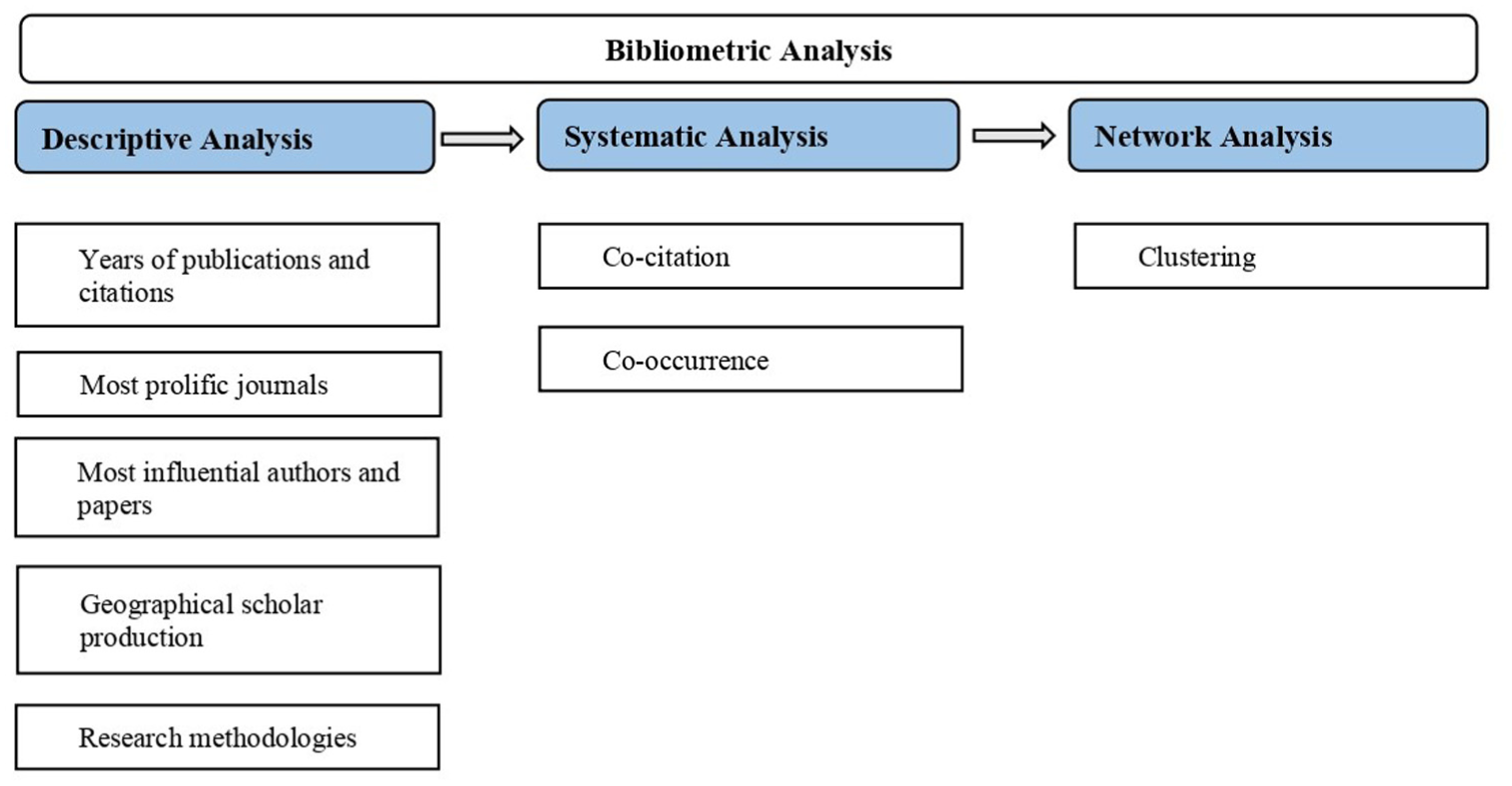
Phases of bibliometric analysis.
Research Findings
Descriptive Analysis
The descriptive analysis provides a comprehensive overview of the current state of research on the topic under examination, including its historical evolution, the most prominent journals, authors, papers, countries and methodologies that have made significant contributions to the field.
Publication Trend
In light of the above, the evolution of research output based on the number of articles and citations on research trends is examined from 2005 to December 2024. The period analysed shows that 2020 and 2021 stand out as the most prolific years, with 46 and 49 publications respectively, marking a notable increase in research on the main topic. This rise in published papers coincides with the post-pandemic period, during which organisations had to adapt their traditional working methods, shifting towards remote and hybrid work models. This transition posed significant challenges for boosting employee engagement and improving internal communication. In response, various studies were conducted to develop strategies aimed at enhancing internal communication and employee engagement in the new work environment.
During the initial period (2005–2010), the number of publications grew moderately. However, from 2011 to 2018, there was a significant increase, peaking in 2021. After 2018, publication volume remained high but with some fluctuations, showing a slight decline in 2023 that appears to stabilise in 2024. The investigation reveals a positive correlation between the number of publications and citations, with a notable peak in academic productivity and impact between 2018 and 2020 (Figure 3).

Number of papers on top journals about internal communication and employee engagement.
Most Prolific Journals
Figure 4 presents the results of the bibliometric analysis, highlighting the leading journals in research on employee engagement and internal communication. The analysis considers journals with at least two publications. A total of 55 papers are published across 30 different journals. The top 3 journals are Public Relations Review (13 papers), Corporate Communications (5 papers), and Journal of Communication Management (5 papers). All of these journals are ranked in the first and second quartiles (Q1 and Q2) of the Journal Citation Reports (JCR). According to this analysis, the fields of knowledge with the highest number of publications on the topic are Communication, Business, and Management.
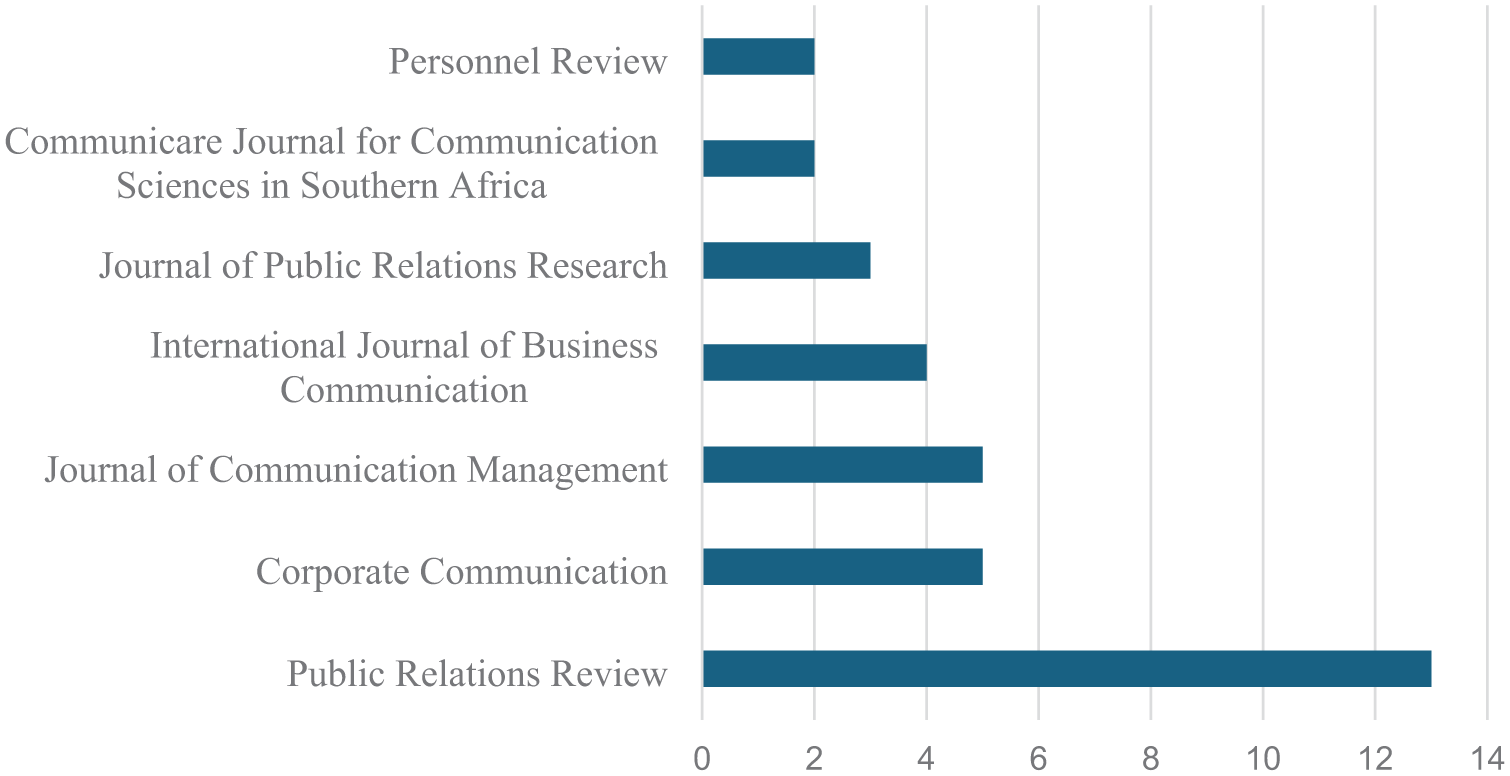
Number of papers on top journals about internal communication and employee engagement.
Most Influential Authors and Papers
Citation analysis is a valuable tool for identifying the most influential articles in any field. The frequency of citations serves as an indicator of a paper’s importance within that discipline. A highly cited article signifies significant recognition for its findings and contributions. Additionally, citation analysis can reveal shifts in the popularity of research topics (Gundolf & Filser, 2013; W. Yue & Wilson, 2004).
Table 2 presents the most influential authors and papers in the area of employee engagement and internal communication, based on citation counts. The analysis focussed on articles with at least 100 citations from the WOS database (cited until December 2024).
Most Influential Authors and Papers for Internal Communication and Employee Engagement.
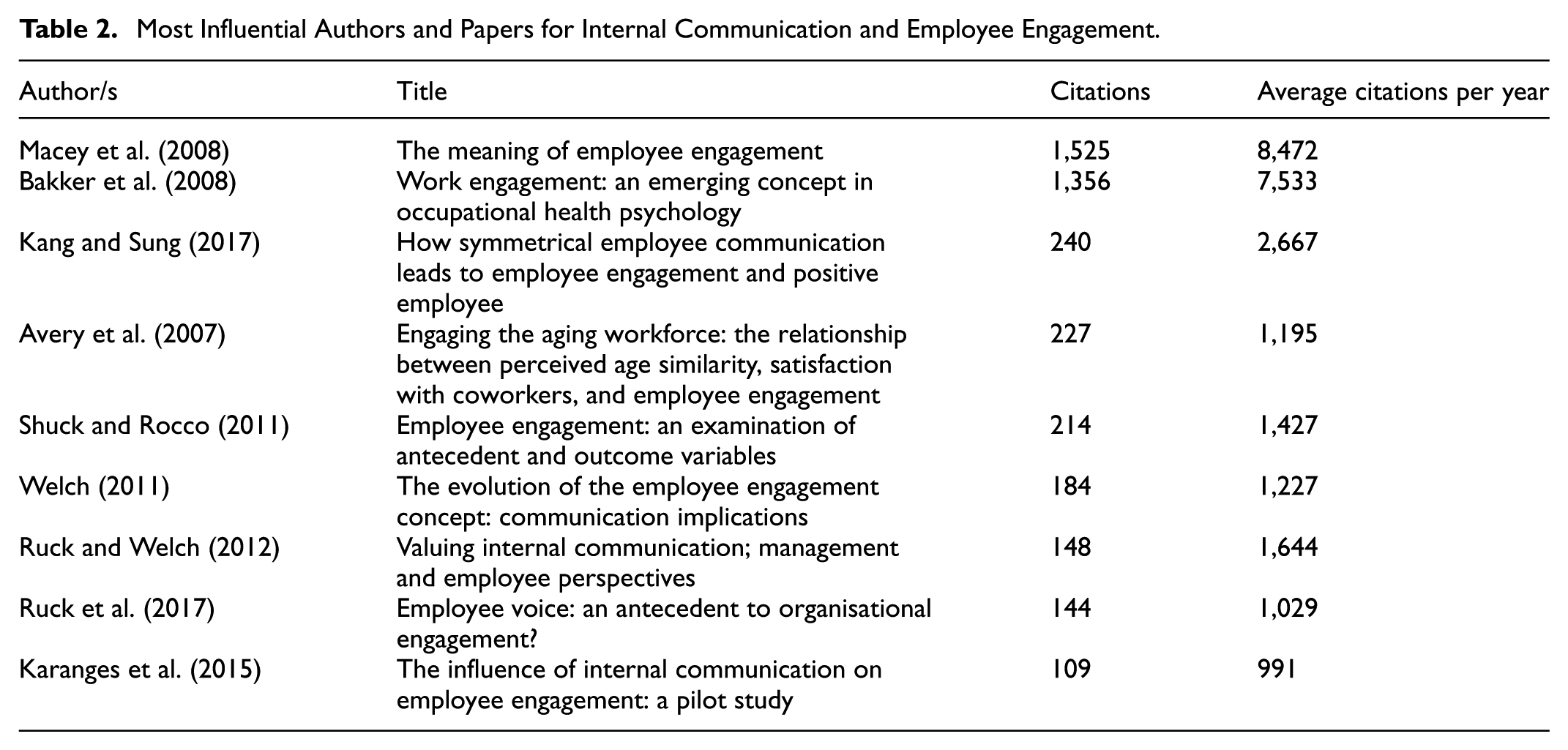
The paper by Macey and Schneider (2008) is the most cited, with an average of 84.29 citations per year out of 1.433 total citations since its publication in 2008. Bakker et al. (2008) is the second most cited, with 1.239 citations and an average of 72.88 citations per year since its publication in 2008. The 9 most influential papers in this field accumulated a total of 3.789 citations, highlighting the significant impact of research in the areas of employee engagement and internal communication.
Geographical Scholar Production
Figure 5 shows the geographic distribution of scientific organisations that have contributed to the overall research on employee engagement and internal communication. North America accounts for 42% of the total. The United States leads with the highest number of publications during this period, making up 38% of all papers in the portfolio, while Canada accounts for 4%. In Europe, England contributes 18%, Croatia 13%, and Spain and the Czech Republic each 4%. This suggests that America is the dominant force in research, with the most publications and citations, followed by Europe. The Asian region includes Australia, China, and India, with a combined share of 15%. Africa is represented by a single paper, which makes up only 0.01% of the total. Since its contribution is less than 1%, this paper is excluded from the figure and categorised under “others.”

Geographical scholar production of portfolio.
Research Methodologies
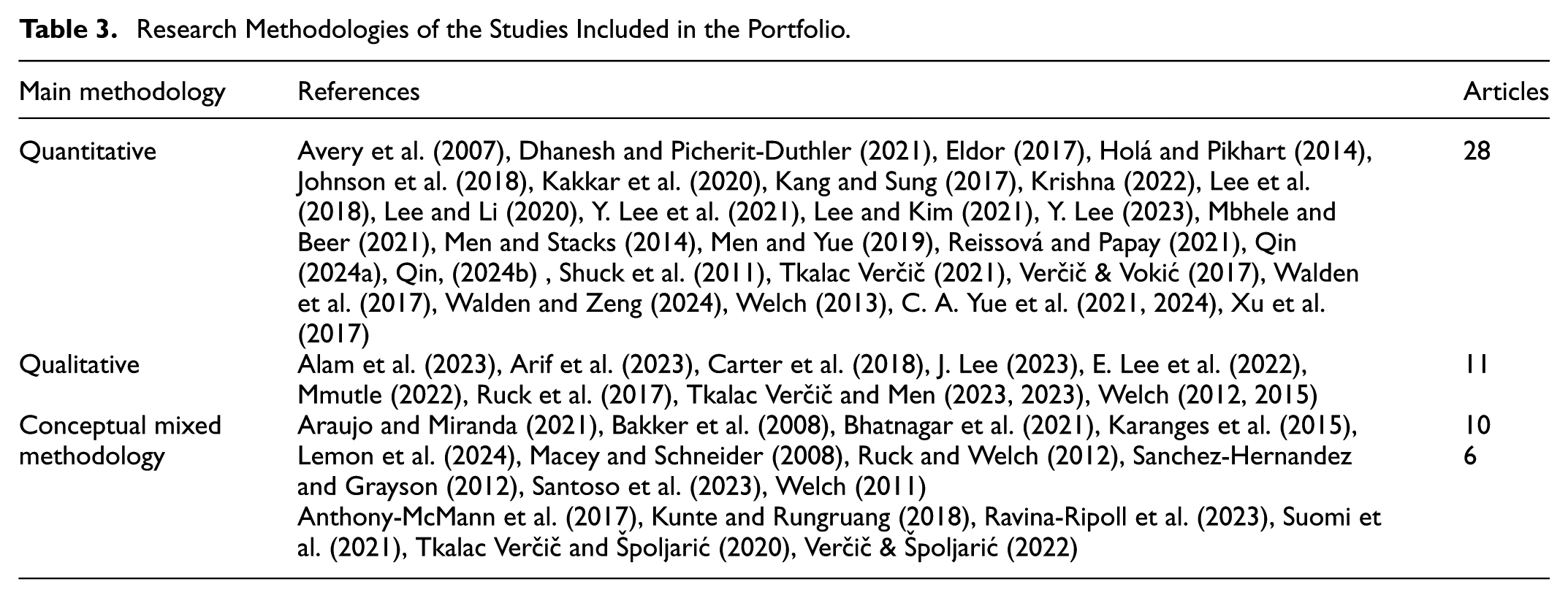
The empirical methodology is the most common, with 39 papers (representing 70% of the total) using this approach. Conceptual papers and mixed methodology (16 papers) accounted for the remaining 30%. The use of case study research would be beneficial to gain a deeper understanding of the topic and represent real scenarios within organisations.
Table 3 illustrates the different methodologies used in the portfolio.
Research Methodologies of the Studies Included in the Portfolio.
Systematic Analysis
Systematic analysis involves examining the connections through scientific mapping of papers (Benatiya Andaloussi, 2024). In this study, co-citation and co-occurrence are used to explore the structural relationships between publications on employee engagement and internal communication. This approach enables the representation of a bibliometric structure of the field and network analysis. The tool VOSviewer (Donthu et al., 2021; Hamidi et al., 2023) is used for this purpose.
Co-Citation
This analysis explores the connections between several authors whose research shares thematic similarities and is frequently referenced in academic literature. It also combines different research fields by examining their overlaps. A co-citation analysis is performed on scientific papers, focussing on documents with at least 10 co-citations. This analysis identified 20 key papers out of a total of 55 scientific documents. According to Figure 6, Saks (2006) serves as a central hub, with Kahn (1990) in the second position in terms of co-cited references (Bouckenooghe et al., 2021).

Co-citation network of internal communication and employee engagement.
Those studies that focussed on internal communication, such as Kang and Sung (2017), Ruck and Welch (2012) and Welch and Jackson (2007), 2011), are located on the left, while those that focussed on employee engagement, such as Macey and Schneider (2008) and Schaufeli and Bakker (2004), are located on the right.
Co-Occurrence
The semantic structure of the research field under analysis is demonstrated, with the links between research topics within a scientific discipline being quantified and the frequency of keywords in the final articles of the portfolio measured (Figure 7). Additionally, it helps to identify future lines of research (Khasseh et al., 2017). In the early stages of the examined period (2016–2018), studies focussed mainly on the psychological conditions of employees and the resources needed to achieve organisational goals. However, in recent years (2020–2024), in line with the post-pandemic period, there has been a shift in emphasis from these initial areas to leadership, transformational management and job satisfaction, with the central focus being employee engagement and internal communication.

Scientific chronological mapping of portfolio.
Figure 7 illustrates the relationship between keywords in terms of research and trends over time. Each node in the network represents a keyword, and the size reflects the frequency of co-occurrence (Benatiya Andaloussi, 2024).
Network Analysis and Clustering
The use of processing algorithms enables the identification of keywords with at least four co-occurrences, thereby creating a network of connections. The subsequent analysis reveals three main thematic clusters, with particular focus on the central node of employee engagement and internal communication in relation to these clusters, given its position at the centre of the bibliometric map (Figure 8). The left cluster, shown in green, contains nine items, including central nodes like internal communication and key terms such as management, behaviours, and impact. This cluster is linked to the second through the main node of employee engagement. The right cluster, in red, comprises 10 items and includes keywords such as work engagement, burnout, and performance. The final cluster, with three nodes in blue, is labelled job satisfaction and contains keywords like commitment and satisfaction with internal communication. All clusters are interconnected, indicating interdependence within the area of study (Benatiya Andaloussi, 2024; Faraji et al., 2022).

Co-occurrence network keywords
Based on the analysis of network data and the interpretation of co-occurring keywords, three thematic groups or clusters were identified and examined: employee engagement, international communication, and job satisfaction. These are explained below.
Employee Engagement (Red C1)
C1 centres on employee engagement levels. This cluster includes key concepts such as performance, work engagement, and burnout. The employee engagement node is closely connected to concepts from several other clusters, making it the main focus of the analysis. The studies within this cluster demonstrate that employee engagement directly influences organisational performance and perceptions. Therefore, fostering and maintaining high engagement levels over time leads to positive long-term outcomes (Tkalac Verčič, 2021; Walden et al., 2017; Woodard, 2022). Various metrics, such as surveys, focus groups, and individual interviews (Gallup, 2023; Ravina-Ripoll et al., 2023), are used to assess and improve these engagement levels.
On one hand, research has primarily examined factors that drive organisational performance and enhance productivity, including opportunities for professional development and growth. Emphasising continuous training and personal growth as key resources and satisfaction sources, this research suggests that a supportive work environment boosts engagement within organisations (Lee, 2023). To foster a climate of trust (crucial for employee engagement, career advancement, skill development, and organisational growth) it is essential to prioritise transparency, cross-communication, and effective leadership (Alam et al., 2023).
On the other hand, employee engagement often highlights positive aspects like work satisfaction, while disengagement relates to factors such as burnout or negative psychological states. During the pandemic, the landscape of employee engagement shifted significantly as methods of internal communication evolved. The post-pandemic work era is now characterised by experiences of disengagement, such as limited employee commitment to tasks (Formica & Sfodera, 2022) that emerged during this time (Einwiller et al., 2021).
Developing a sense of belonging is therefore vital during organisational change. Engaged employees are willing to learn, grow, and contribute to ongoing organisational development (Gallup, 2023; Woodard, 2022). It can be argued that engaged employees are more likely to adapt to changing environments and overcome organisational challenges. Conversely, disengaged employees tend to resist change, have lower motivation, and lack alignment with organisational goals, which can hinder their ability to overcome challenges and contribute to overall success (Lemon et al., 2024). Regarding job burnout, Gallup (2023) noted that “almost six in ten employees resign in silence but are likely to participate in some workplace changes” (p. 1). Research by Bakker et al. (2008), Anthony-McMann et al. (2017), and Schaufeli and Bakker (2004) has examined how working conditions relate to burnout prevention. It was found that improved conditions—such as reduced demands and social support—significantly affect burnout levels.
This research also explored strategies for preventing and addressing burnout through workplace well-being programmes, teamwork, and emotional self-management (Suomi et al., 2021). Additionally, organisational policy changes can influence burnout. As a result, companies that promote high employee engagement levels are more likely to retain and develop talent. Engaging employees in a shared purpose can also cut turnover and the costs associated with recruiting and training new staff. It has been proposed that organisations should shift from merely committing to employees towards achieving strategic engagement. To do this, strengthening the relationship between internal communication by managers and employee engagement is vital, aiming to develop strategic resources (Arif et al., 2023). In summary, the studies in this cluster significantly contribute to understanding the link between employee engagement, organisational performance, and culture, emphasising how engaged employees positively impact business outcomes and create a thriving work environment.
Internal Communication (Green C2)
This cluster centres on internal communication, focussing on leadership and employee behaviour within organisational settings. It highlights key concepts such as leadership, behaviour, and impact.
Internal communication is vital for organisational functioning, with significant implications across various departments. Consequently, the core term that forms the axis of this network is management, which relates to coordination and cohesion in aligning organisational goals and strategies.
Research in this cluster demonstrates that internal communication processes, facilitated by management, influence organisational goals and employee engagement (Arif et al., 2023; E. Lee et al., 2022). Employee engagement improves through communication and active listening with leaders (Lemon et al., 2024). As Karanges et al. (2015) suggest, internal communication from executives significantly boosts employee engagement when social needs are addressed.
A concept closely linked to internal communication is leadership, grounded in pillars such as transparency, trust, active listening, and motivation (Araújo & Miranda, 2021; Mmutle, 2022). Effective leadership not only fosters an environment conducive to internal communication but also plays a key role in achieving organisational goals and strengthening organisational culture (Carter et al., 2018; Tkalac Verčič, 2021).
Within this context, internal communication is crucial for reinforcing organisational culture, acting as a central channel for sharing and solidifying corporate values. Leaders and managers primarily facilitate this through strategic behavioural practices aimed at aligning culture with organisational goals, positively impacting organisational performance (Ravina-Ripoll et al., 2023).
Strategic behaviours by employees that aid in reaching strategic objectives—are essential here. According to Van Riel et al. (2009), employees take specific actions based on their understanding of organisational strategy and goals. Studies suggest that these behaviours translate understanding into practice, striving to meet departmental and organisational targets beyond individual aims.
Recognised as a vital tool for boosting employee engagement and organisational success, internal communication’s importance continues to grow, especially through strategies like campaign planning, crisis management, transparency, and participation (Walden et al., 2017). It encompasses all forms of internal interaction, helping employees better understand organisational strategies and positively influencing outcomes (Arif et al., 2023).
Research highlights several barriers to effective internal communication, including lack of transparency, poor cross-communication, and resistance to change, which can impede organisational alignment and strategic goal attainment (Mmutle, 2022; Ruck & Welch, 2012). The pandemic exposed these barriers and prompted significant shifts in employee engagement, driven by changing outreach methods and internal communication support.
These adaptations reflect responses to new work dynamics like remote work, increased use of ICT, and the introduction of AI (Artificial Intelligence), which are reshaping approaches to managing internal communication and engagement (E. Lee et al., 2022). Remote work’s effectiveness and satisfaction improve when managers set clear interaction expectations and provide suitable technological tools (Larson et al., 2020).
The link between internal communication, ICT, and AI is crucial in creating more efficient, connected, and adaptive organisations. Tools like Zoom and Microsoft Teams, combined with AI, enhance remote employee experiences, facilitate hybrid team collaboration, and boost productivity (Dery et al., 2017). Additionally, integrating these technologies fosters innovation and increases job satisfaction (Kane et al., 2019). As these practices become widespread, AI is expected to play a key role in optimising organisational processes and creating more inclusive, efficient work environments.
Job Satisfaction (Blue C3)
The existing literature in cluster C3 primarily concentrates on the concept of job satisfaction, with key concepts such as commitment and satisfaction with internal communication being most relevant within this cluster. These keywords represent fundamental ideas that demonstrate how the quality of internal communication impacts on the employee experience, thereby linking job satisfaction to employee engagement. The analysis assumes that job satisfaction is not examined in isolation but in relation to the main areas of research. Notably, terms like resources and outcomes connect this cluster to core issues of work performance and organisational resources. As a result, this knowledge can assist in developing strategies that incorporate effective communication and well-being programmes.
Job satisfaction is a complex, multidimensional concept influenced by multiple factors, including internal communication, employee engagement, and leadership (Reissová & Papay, 2021; Sanchez-Hernandez & Grayson, 2012). These variables interact, and job satisfaction results from their combination. A recent study by Lee et al. (2022) found that satisfaction with internal communication is a key component of overall job satisfaction and plays a critical role in boosting employee engagement within organisations.
C1 and C3 are closely linked, and organisations need to adopt comprehensive management strategies that enhance both employee engagement and job satisfaction to foster productive work environments.
Studies by Harter et al. (2002) and Gallup (2023) demonstrate a significant correlation between employee engagement and job satisfaction, with highly engaged employees tending to report higher job satisfaction. Additionally, Saks (2006) proposed a model where job satisfaction is an antecedent to employee engagement. It is argued that employees with high job satisfaction are more likely to demonstrate greater engagement in organisational settings, and both are essential for organisational success.
The literature in this cluster also emphasises the mediating role of organisational commitment in the relationship between employee engagement and job satisfaction, highlighting its importance in identifying key areas for improvement and developing effective strategies. These studies focus on employee commitment, productivity, and job performance as key areas of interest (Kakkar et al., 2020; Y. Lee et al., 2021).
Implementing transparent internal communication strategies has been shown to boost employee satisfaction, autonomy, and competence. This largely depends on how leaders influence employee satisfaction and commitment. Research indicates that employees display high levels of psychological capital when aligned with their leaders, especially transformational leaders (Y. Lee et al., 2021; Xu et al., 2017). Therefore, transformational leadership positively impacts job satisfaction by fostering intrinsic motivation, supporting professional development, and cultivating a positive work environment. This leadership style helps employees see themselves as valued members of the organisation, strengthening their emotional ties to their work, which significantly enhances both organisational and personal well-being (Bass & Riggio, 2006).
Discussion and Conclusions
This systematic review offers a structured and modern synthesis of the literature on employee engagement and internal communication, guided by three key research questions. The findings confirm that the field is experiencing rapid conceptual and empirical development, especially amid digital transformation, post-pandemic workforce changes, and rising expectations for participatory leadership and strategic communication.
Employee engagement remains a central driver of organisational performance and job satisfaction, while internal communication is seen as a vital mechanism that promotes responsiveness, alignment, and psychological safety (Gallup, 2023; Men et al., 2020). However, the field still relies heavily on established causal assumptions, such as internal communication automatically fostering engagement and engagement leading to positive outcomes like productivity and retention. Although these assumptions hold heuristic value, they often lack empirical detail, particularly regarding the contextual factors that influence or change these relationships (Lemon et al., 2024).
Emerging literature challenges this linear causality by introducing more complex, ecosystem-based models of employee communication, engagement, and performance. For example, Tkalac Verčič & Men, 2023 advocate for a dynamic, systems-thinking approach to internal communication, where feedback loops, digital tools, and leadership authenticity collectively shape employee outcomes. However, there remains a shortage of research that examines the effectiveness of internal communication strategies amid ambiguity, decentralisation, and remote work—issues that are increasingly relevant in today’s hybrid and technology-driven organisations Walden and Zeng (2024).
The review emphasises the mediating role of leadership, often described as a facilitator of trust, alignment, and transparency, yet this view is frequently overly idealised (
Despite steady growth in the volume of literature, the field remains methodologically narrow and geographically concentrated, so expansion is needed (
Currently, literature is evolving towards multi-layered conceptions of communication ecosystems, incorporating technology, emotional intelligence, and adaptive leadership. Nevertheless, digital transformation and remote/hybrid work dynamics remain underexplored areas (
The findings of this review affirm that employee engagement and internal communication are becoming even more central to organisational performance amid continuous technological innovation, globalisation, and post-pandemic adjustments (Gallup, 2023; J. Lee, 2023). These dynamics have redefined work interactions, employee expectations, and the roles of leadership and communication.
Building on the PRISMA methodology, this review analysed 55 high-quality articles selected from an initial pool of 577. Publication patterns show a concentration of knowledge production in journals such as Public Relations Review, Corporate Communications, and the Journal of Communication Management, which together account for over 40% of the corpus.
Keyword co-occurrence analysis revealed three major thematic clusters: employee engagement (45%), internal communication (40%), and job satisfaction (15%). These clusters underpin the input-process-output framework model proposed in this review (Figure 9), which provides a holistic view of how internal communication acts as an antecedent, employee engagement as a mediating process, and job satisfaction as a key outcome.
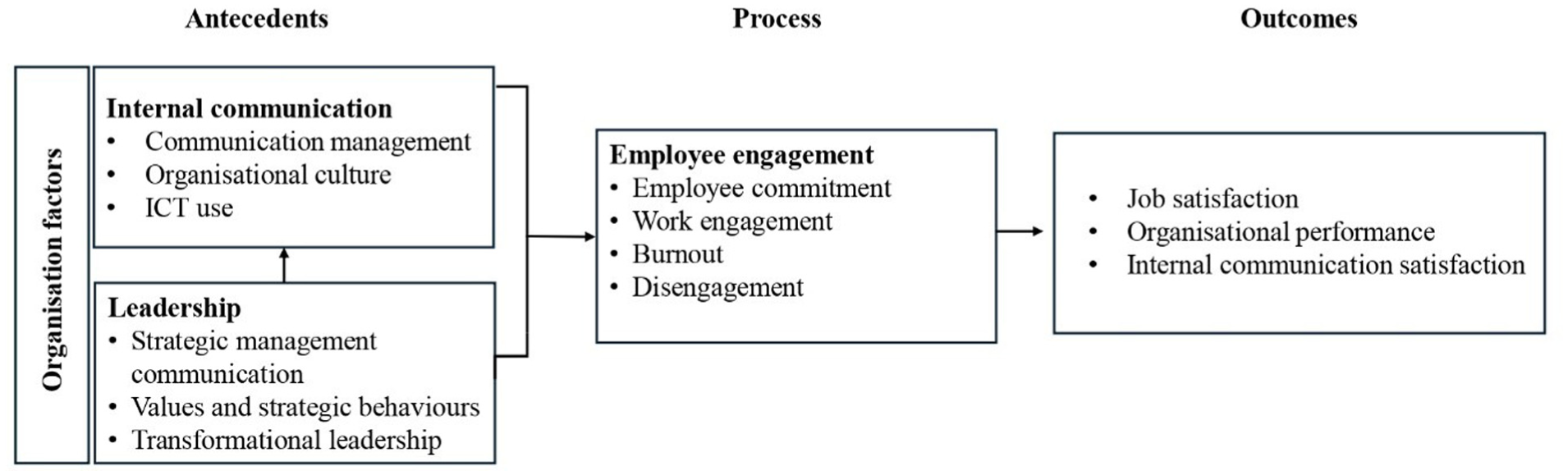
Integrated conceptual framework of employee engagement.
In the employee engagement cluster, recent research emphasises that engagement is influenced by resource adequacy, meaning-making, and leader-employee interactions, especially in uncertain or complex work environments (Suomi et al., 2021). These insights align with the Job Demands-Resources (JD-R) model, which states that employee engagement and well-being are driven by the dynamic interplay between job demands (workload, emotional labour, complexity) and job resources like meaningful communication (Demerouti et al., 2001). In the theoretical framework (Figure 9), resources such as transformational leadership, employee commitment, and strategic communication serve as key motivational drivers, helping employees manage demands while fostering resilience and purpose. The engagement process is increasingly linked to employee well-being, underscoring the need for broader outcome measures beyond performance alone (Einwiller et al., 2021; Lemon et al., 2024).
The internal communication cluster extends beyond traditional top-down approaches to include two-way, transparent, and dialogic communication frameworks. The emergence of new technologies, such as artificial intelligence, internal social media, and real-time dashboards, has sparked a paradigm shift in communication strategies, making them highly personalised and data-driven (Davenport & Ronanki, 2018). However, these advances also require leaders to balance technological efficiency with emotional resonance and trust-building (Men et al., 2020), which can be viewed as critical job resources in the JD-R model that buffer overload and support sustained engagement (Demerouti et al., 2001).
The job satisfaction cluster reflects outcomes related to retention, productivity, commitment, communication satisfaction, and cultural alignment. The role of transformational leadership, combined with effective communication strategies, remains influential (Bass & Riggio, 2006). From a JD-R perspective, perceptions of fairness, psychological safety, and purpose-driven work are essential resources that enhance satisfaction and motivation, especially when employees face high demands (Gallup, 2023; Lemon et al., 2024).
Limitations and Future Research
Although this review offers valuable insights into the connexion between internal communication and employee engagement, a few limitations should be noted. Even though PRISMA guidelines were followed and a thorough search was conducted across Web of Science and Scopus, some relevant studies might have been overlooked due to publication bias, limited indexing, or the exclusion of grey literature such as working papers, conference proceedings, and dissertations. The focus on studies published from 2005 to December 2024 may also have excluded earlier research that could have provided historical context. Additionally, differences in methodological rigour and reporting quality among the included studies may have affected the synthesis. Future research could overcome these limitations by expanding database coverage, including grey literature, and employing longitudinal and mixed-method approaches to better validate and extend these findings.
Focussing on the first cluster, related to employee engagement, it is necessary to further explore the concepts of disengagement and burnout to better understand their effects and consequences in the hybrid work environment and their impact on organisational performance, how it develops over time and response to specific transformational leadership and the role of contextual moderators. To achieve this, which is also related to the second thematic cluster, an analysis of the use of ICT and AI in different organisational contexts should be conducted. This analysis should also suggest approaches for exploring how the adoption of new tools can foster transformational leadership and influence employee engagement and satisfaction with internal communication.
In the third cluster, another emerging area of research is the development of healthy work environments, where implementing well-being programmes with emotional components can help increase employee engagement, job satisfaction, and organisational performance. Given the influence of technology on employees’ psychological well-being, it is crucial to develop strategies aimed at improving modern work environments.
Additionally, from a methodological standpoint, employing mixed methods in the context of these research topics can facilitate a comprehensive analysis of the phenomena, complemented by qualitative longitudinal studies. Furthermore, it would be valuable to extend these analyses to emerging economies and expand the scope of the study by examining employee engagement and internal communication across different organisational cultures.
Footnotes

Ethical Considerations
Not applicable. This article does not contain any studies with human or animal participants. Ethical approval was not required for this study because it was conducted as a literature review.
Consent to Participate
This article does not contain any studies with human or animal participants. An informed consent statement was not required for this study because it was conducted as a literature review.
Author Contributions
Alejandra Nadales-Gallego: Conceptualisation, Formal Analysis, Investigation, Methodology, Writing-Original Draft, Writing-Review & Edition.
Fuensanta Galindo-Reyes: Conceptualisation, Investigation, Methodology, Writing-Original Draft, Writing-Review & Edition.
Aurora Garrido-Moreno: Conceptualisation, Investigation, Methodology, Writing-Original Draft, Writing-Review & Edition.
Funding
The authors received no financial support for the research, authorship, and/or publication of this article.
Declaration of Conflicting Interests
The authors declared no potential conflicts of interest with respect to the research, authorship, and/or publication of this article.
Data Availability Statement
Data sharing not applicable to this article as no datasets were generated or analyzed during the current study.