



Abstract
This study investigates strategies for implementing Green Human Resource Management (GHRM) in Ghanaian Small and Medium Enterprises (SMEs). Using a structured questionnaire, data was collected from 199 respondents across various organizational roles. The analysis employed non-parametric techniques, including the Kruskal-Wallis H test, Wilcoxon signed-rank test, and Kendall’s W to rank 18 identified GHRM strategies. The findings highlight the top five strategies: accessing green grants and subsidies, conducting a cost-benefit analysis, implementing strict regulations and enforcement, fostering a green leadership and organizational culture, and utilizing green rating and labeling. The study makes theoretical contributions to the Resource-Based View (RBV) by highlighting how internal resources and capabilities can foster environmental sustainability in SMEs. Practically, the study provides a ranked strategy framework to guide policymakers, managers, and stakeholders in developing effective GHRM practices within resource-constrained settings. The study emphasizes the importance of aligning financial, cultural, and regulatory strategies to support Green human resource management in emerging economies such as Ghana.
Plain Language Summary
As climate change and environmental challenges become more pressing, businesses of all sizes are under increasing pressure to take action. This study explores how small and medium-sized enterprises (SMEs) in Ghana can embrace sustainability through Green Human Resource Management (GHRM), a strategic approach to eco-conscious people management. By analyzing existing research and engaging with local experts, the study identified 18 practical strategies that SMEs can implement to foster sustainability. A survey with 199 responses highlighted which strategies matter most to industry professionals, revealing insightful trends in business priorities. These include securing green grants and subsidies, conducting cost-benefit analyses, strict rules, regulation and enforcement, green leadership and organizational culture, and adopting green rating and labeling. The study further categorizes the strategies into three themes, providing a clear and actionable framework for SMEs and policymakers. This research offers more than just theory because it presents a roadmap for businesses to build greener, more resilient organizations in the face of evolving environmental demands. As developing economies strive for sustainability, this study serves as a timely and practical guide for driving meaningful change in GHRM implementation.
Keywords
Introduction
Green Human Resource Management (GHRM) has emerged as a strategic response to the growing environmental impact of business operations, particularly those of Small and Medium-sized Enterprises (SMEs). In Ghana, SMEs are defined by the National Board of Small Scale Industries (NBSSI) as firms employing between 6 and 99 people with assets not exceeding US$100,000 (Asante et al., 2021). They constitute over 90% of businesses in Ghana (Adu Sarfo et al., 2024). Globally, SMEs are similarly dominant, as according to the OECD (2021), they account for more than 90% of enterprises and are frequently associated with high levels of energy consumption and environmental degradation. While these businesses contribute significantly to economic development, they also pose serious challenges to environmental sustainability, with their activities accelerating climate change and natural resource depletion (Durrani et al., 2024). Amidst these concerns, stakeholder pressure on firms to adopt sustainable practices continues to intensify. Sheikh et al. (2019) argue that the human resource function is uniquely positioned to champion environmental sustainability within organizations. In alignment with this, Jabbour and Santos (2008) opined that achieving meaningful sustainability requires going beyond regulatory compliance and embracing proactive approaches such as GHRM. This perspective emphasizes GHRM’s potential to integrate environmental considerations into organizational strategy and human resource management processes.
Green Human Resource Management (GHRM) refers to the strategic integration of environmental management principles into human resource policies, functions, and practices (Kodua et al., 2022). This approach aligns key HR activities, such as green recruitment, eco-focused training, sustainable performance management, and environmentally responsible reward systems, with broader organizational sustainability goals (Jackson, 2016; Sprengel & Busch, 2011; Zhu et al., 2021). GHRM plays a vital role in equipping organizations to meet both local and international environmental expectations by nurturing a green workforce and encouraging sustainable behavior among employees (Mathapati, 2013; E. Susanto et al., 2022; Y. Zhang et al., 2019). Implementing GHRM is also essential for fostering green innovation, as it integrates green values into organizational strategy and employee behavior. This enhances green awareness, skill development, and sustainable thinking among employees, which catalyzes eco-innovation in products, processes, and services. This alignment enables firms to improve resource efficiency, meet regulatory standards, and gain competitive advantage, thereby supporting sustainable development and long-term organizational green transformation (Rehman et al., 2021). Moreover, GHRM helps shape a green organizational culture, making green values a central part of decision-making and daily operations. This integration promotes long-term ecological responsibility, green innovation and enhances overall business resilience and reputation (Bushra, 2023).
Despite the beneficial potentials and relevance of prior studies, they are primarily reviewed qualitatively and conceptually, with limited theoretical development and a lack of data-driven prioritization (Sheikh et al., 2019; Vahdati & Vahdati, 2018). Existing literature often presents limited research that offers structured prioritization or ranking to guide practitioners on which strategies to implement first, based on feasibility, impact, or organizational context (Mehrajunnisa et al., 2022). Also, there is a lack of clear empirical basis for linking GHRM to green innovation outcomes. Most studies have treated GHRM as a set of operational strategies designed to improve environmental performance and largely ignored the potential act of GHRM as a driver of green innovation (Amrutha & Geetha, 2020). This study, however, goes beyond viewing GHRM as merely a compliance tool. It directly connects GHRM strategies to green innovation outcomes by identifying and prioritizing GHRM strategies that not only reduce environmental impact but also foster creativity, employee engagement, and leadership that are critical for long-term green innovation. Therefore, a study on the utilization of a data-driven approach to prioritize GHRM strategies based on their feasibility, impact, and contextual relevance is needed to guide practitioners in selecting the most effective and impactful green innovation strategies for implementation in emerging economies, such as Ghana (Mehrajunnisa et al., 2022). This also enables SMEs to allocate their limited resources more effectively, ensuring that high-impact strategic HR practices are implemented first to maximize sustainable innovation outcomes and improve long-term organizational performance.
To provide a robust conceptual foundation, the study draws on the Resource-Based View (RBV) of the firm (Barney, 1991) as its theoretical lens. RBV posits that sustained competitive advantage is achieved through the strategic management of internal resources that are valuable, rare, inimitable, and non-substitutable (Barney, 1991). When applied to GHRM, the RBV emphasizes the strategic role of internal capabilities, such as green leadership, employee commitment, and an environmentally conscious culture, as critical assets for enhancing environmental performance. According to S. Liu (2025), rather than relying solely on external institutional support, SMEs can build resilience and competitiveness by leveraging these intangible, firm-specific resources. Therefore, this study aims to explore how Ghanaian SMEs perceive and prioritize various GHRM strategies and how these strategies can be aligned with internal capabilities to support sustainable business practices. The study is guided by the following research questions:
Specifically, this study makes three key contributions. First, it utilizes empirical data from Ghanaian SMEs to identify and rank the most impactful GHRM implementation strategies, providing a practical framework for prioritizing sustainable actions in resource-constrained settings. This structure will guide SMEs in making informed decisions regarding the strategic implementation of GHRM. Second, it extends the RBV by demonstrating how the internal capabilities of SMEs, rather than external enablers alone, can drive environmental performance, especially in under-resourced environments. These insights not only address a significant gap in the GHRM literature but also offer transferable lessons for other emerging economies. Thirdly, the study targets the SME sector, recognizing its distinct structural limitations, resource constraints, and strategic vulnerabilities. By exploring context-appropriate and prioritized GHRM implementation strategies tailored to small and medium-sized enterprises (SMEs), the research provides practical insights that address the sector’s pressing need for cost-effective and scalable sustainability practices. This contribution enhances the applicability of GHRM in smaller firms, where environmental initiatives are often underdeveloped yet critically needed for sustainable growth and competitive advantage.
The remainder of this paper is structured as follows: Section 2 reviews the relevant literature, Section 3 presents the methodology, Section 4 discusses the findings, and Section 5 concludes with implications, limitations, and directions for future research.
Theoretical Background
This study is grounded in the Resource-Based View (RBV), which posits that internal capabilities, such as human capital, organizational culture, and knowledge systems, are key drivers of organizational performance and competitive advantage (Barney, 1991). Over the years, scholars have widely applied the RBV across disciplines such as strategic management, organizational behavior, and human resource development to explain firm-level performance and competitive advantage (Barney, 1991; Peteraf, 1993; Wernerfelt, 1984). At its core, RBV views organizations as bundles of internal resources, which are both tangible and intangible and are valuable, rare, inimitable, and non-substitutable (VRIN). These attributes determine whether a firm can sustain superior performance over time (Barney, 1991; Newbert, 2008). The theory emphasizes leveraging firm-specific capabilities, such as knowledge, leadership, and culture, to create strategic value, particularly in contexts where external support or market control is limited (Shoaib et al., 2025).
GHRM has been examined through various theoretical lenses, including institutional theory (Marrucci et al., 2023), stakeholder theory (Renwick et al., 2013), and the Ability–Motivation–Opportunity (AMO) framework (Salvador-Gómez et al., 2023). While these theories explain external pressures, stakeholder dynamics, or employee-level mechanisms, they often underemphasize the strategic value of internal capabilities in shaping sustainable practices, particularly within resource-constrained environments. Unlike these theories, the RBV emphasizes the strategic importance of internal capabilities, such as green leadership, employee commitment, and a sustainability-oriented culture, as critical levers for achieving long-term environmental performance (Shoaib et al., 2025). This internal focus is particularly valuable for SMEs in developing countries, where external resources and institutional infrastructure may be limited. By encouraging firms to optimize existing human and organizational capital, RBV offers a practical pathway to sustainability that does not depend on external mandates or substantial financial investments. According to S. Liu (2025), RBV enables firms to view GHRM not merely as an operational requirement but as a source of strategic differentiation. It highlights the potential for organizations to gain a competitive advantage by cultivating VRIN resources through their HR practices. In contrast to transactional models, such as Social Exchange Theory (SET), which emphasize reciprocal exchanges between employees and employers, RBV provides a deeper understanding of how intangible assets, including environmental awareness and a green organizational mindset, can evolve into core competencies that support long-term success (Shoaib et al., 2025).
Furthermore, its theoretical flexibility allows RBV to be integrated with complementary frameworks, such as dynamic capabilities or stakeholder theory, enabling a richer exploration of how internal resources respond to changing environmental and market conditions. Applied in this study, RBV sheds more light on how SMEs can leverage intangible assets, such as environmental training, green leadership, and employee engagement, to foster sustainable behavior and long-term resilience in resource-constrained contexts, like Ghana (S. Liu, 2025). Even in the absence of robust external support, SMEs can gain a strategic advantage by leveraging their internal capabilities to implement green practices. As noted by Hina et al. (2023) and Ghimire et al. (2022), GHRM strategies such as cultivating staff awareness and embedding sustainability into the organizational culture serve as low-cost yet high-impact pathways to improving environmental performance.
Therefore, this study employs the Resource-Based View (RBV) to structure its analysis of GHRM strategies across three domains: capacity building and advocacy, incentives and support, and governance and regulatory frameworks, each reflecting a distinct mode of resource deployment. In doing so, it extends RBV into the context of sustainability in developing economies, demonstrating how internal assets can drive green transformation even in low-resource environments.
Literature Review
GHRM has emerged as a strategic approach to integrating environmental sustainability into organizational operations by incorporating ecological considerations into key human resource management (HRM) functions (Jabbour & Santos, 2008). Through initiatives such as green recruitment, environmental training, and performance evaluation, GHRM fosters environmentally responsible behavior among employees and nurtures a sustainability-oriented organizational culture (Zhu et al., 2021). The benefits of adopting GHRM extend beyond enhancing corporate image; they also include long-term operational efficiencies through energy savings, waste reduction, and improved stakeholder engagement. GHRM enables organizations to respond effectively to mounting environmental demands and regulatory pressures while supporting broader sustainability agendas (Chaudhary, 2019, Chaudhary, 2020; Tang et al., 2018).
In recent years, a growing body of research has focused on the application of GHRM in SMEs, particularly within emerging economies. SMEs, which constitute a significant portion of Ghana’s private sector, are increasingly recognized as critical actors in national sustainability efforts. However, many Ghanaian SMEs remain at an early stage of GHRM adoption and implementation, constrained by resource limitations and institutional challenges. Despite this, awareness of environmental responsibility is gaining momentum, prompting interest in how green HR practices can be tailored and implemented strategically and effectively within these enterprises (Kodua et al., 2022; H. A. Obeng et al., 2024). Haddock-Millar et al. (2016) conducted a multi-case qualitative study using interviews and focus groups with 50 participants across the UK, Germany, and Sweden. The findings showed that managerial commitment and employee engagement emerged as top strategies promoting GHRM sustainability initiatives. Furthermore, Shafaei et al. (2020) used PLS-SEM to analyze survey data from 206 Malaysian hotels and 508 Australian employees. They found that environmental culture within firms positively influenced GHRM and environmental performance, while at the individual level, GHRM implementation enhanced job satisfaction.
Roscoe et al. (2019) also surveyed 204 employees from 60 Chinese manufacturing firms and analyzed responses using a hypothetical model. Their findings showed that pro-environmental HRM practices foster a green organizational culture, which in turn enhances environmental performance. Key strategic enablers included leadership, environmental communication strategy, peer support, and employee empowerment. Aftab et al. (2023) employed PLS-SEM in their GHRM study to analyze data from 410 Pakistani manufacturing managers. Results showed that green innovation, environmental strategy, and pro-environmental behavior significantly improved environmental performance by enhancing operational efficiency and employee engagement in sustainability practices. Afaneh et al. (2023) surveyed 292 employees from Egyptian green hotels and analyzed the data using SmartPLS 4. The study found that job rewards significantly improved corporate performance and environmental strategy.
Additionally, these rewards, when combined with other environmental strategies, have been found to influence corporate performance positively. Afedzie et al. (2022) conducted a review study in sub-Saharan Africa, examining how human resource (HR) departments integrate sustainability into recruitment, training, and employee relations. The findings showed that fostering green awareness and culture in firms enhances productivity, attracts green talent, and reduces environmental degradation, emphasizing the strategic role of GHRM in promoting sustainability. Further supporting the assertions above, other empirical studies have identified key GHRM strategies such as green employee selection, environmental performance appraisal, sustainability training, leadership, and supportive organizational culture as strategies for GHRM implementation (Berry & Rondinelli, 1998; Guerci et al., 2015; Jia et al., 2018; W. Liu et al., 2024).
Notwithstanding the substantial body of work in the field, several critical gaps persist in GHRM research. A primary limitation of previous studies (Haddock-Millar et al., 2016; Iqbal et al., 2024; Islam et al., 2020) is their focus on designing GHRM systems without providing clear implementation strategies. As a result, while GHRM has been widely recognized as a valuable tool for promoting sustainability, the lack of actionable, context-specific implementation plans hinders its full potential. These gaps are particularly evident in the context of developing economies, such as Ghana, where GHRM implementation remains in the early stages, and theoretical frameworks for practical implementation are scarce (Adu Sarfo et al., 2024). Without clear, tailored strategies for implementing GHRM, its impact on organizational sustainability is limited (Yusliza et al., 2019). Second, most of the research (Afaneh et al., 2023; Aftab et al., 2023; Y. Chen & Yan, 2022) conducted has focused on hypothetical models, with limited attention given to real-world applications in resource-constrained environments. This lack of empirical data is a significant barrier to understanding how GHRM strategies can be practically implemented in developing countries. Ghana, in particular, presents a unique context where various challenges, including limited resources, regulatory barriers, and a lack of infrastructural support, hinder GHRM implementation. There is a pressing need for research that bridges the gap between theoretical frameworks and practical implementation, providing evidence-based insights into how GHRM can be successfully implemented in emerging economies (Abekah-Nkrumah et al., 2014; Quayson et al., 2020).
Additionally, much of the extant research (Afedzie et al., 2022; Birbirsa & Worku, 2022; Bombiak, 2020) suffers from theoretical limitations, often lacking robust frameworks to analyze GHRM implementation in complex and dynamic SME settings. In response, this study adopts the Resource-Based View (RBV) as its conceptual foundation. RBV emphasizes the strategic importance of internal resources, including skills, knowledge, and organizational culture, in achieving a sustained competitive advantage (S. Liu, 2025). This theoretical lens is particularly relevant for Ghanaian SMEs, which must utilize their limited resources to achieve maximum impact. Complementing the RBV, this study employs a set of non-parametric statistical techniques, namely the Kruskal-Wallis H test, Wilcoxon signed-rank test, and Kendall’s coefficient of concordance (W), to analyze and rank GHRM strategies based on feasibility and effectiveness. These methods are well-suited for ordinal data and small sample conditions, which are common in SME research, and provide a rigorous basis for prioritizing implementation efforts (Pallant, 2020). Together, the theoretical and methodological approaches of this study aim to deliver context-sensitive insights that can inform strategic decision-making and resource allocation for GHRM implementation in Ghanaian SMEs.
Methodology
The research design process, as presented in Figure 1 below, outlines the four-phase methodological approach employed in identifying, refining, and ranking GHRM implementation strategies tailored to the Ghanaian SME context. Beginning with a comprehensive literature review, the study systematically integrated expert insights, conducted pilot testing, and applied statistical techniques to determine the relative importance of each strategy. This structured approach ensured the contextual relevance, clarity, and empirical rigor of the identified strategies.

The research design process.
Initial Strategies Formulation
This study employed a two-step approach to identify and validate strategies for implementing Green Human Resource Management (GHRM) in Ghanaian small and medium-sized enterprises (SMEs). First, a systematic literature review was conducted using databases such as Scopus, Web of Science, Google Scholar, and ScienceDirect. The review focused on peer-reviewed articles published between 2010 and 2024, using keywords like “green human resource management,”“GHRM strategies,”“sustainable HRM,” and “developing countries.” Studies were selected based on their relevance, empirical grounding, and applicability to SMEs, resulting in an initial list of 15 strategies. To enhance contextual relevance, expert opinions were sought from five business consultants, each with over 10 years of experience in GHRM in Ghana. These experts were selected through purposive sampling from the Small and Medium Enterprises Association of Ghana (SMEsAG) to provide insights into the effectiveness, feasibility, and completeness of the strategy list. Their feedback led to revisions in item phrasing and the inclusion of three additional strategies: opportunities to participate in green programs, corporate environmental communication strategies, and top management support, bringing the total to 18.
An empirical questionnaire was then developed to assess the perceived importance of these strategies. The questionnaire consisted of three parts: an introduction, demographic questions, and a section containing 18 identified strategies. Prior to full deployment, the questionnaire underwent pilot testing with a small sample of 12 SME employees across construction, health and agribusiness sectors. Feedback from the pilot was used to refine ambiguous items and confirm comprehension, ensuring the instrument’s reliability and applicability. The final questionnaire was then reviewed by an industry expert with 20 years of experience in GHRM to ensure clarity and technical accuracy. The final list of 18 strategies is presented below (see Table 1).
Formulation of Initial Strategies.

A snowball sampling method was employed to distribute 250 questionnaires via WhatsApp and email, according to respondents’ preferences, across hospitality, manufacturing, construction, health and agribusiness SMEs in Ghana. This approach, while non-random, was mitigated through deliberate sectoral diversity to enhance representativeness. Informed consent was obtained through a clear and concise introduction at the beginning of the questionnaire. This section explained the purpose of the study, the voluntary nature of participation, and the assurance of anonymity and confidentiality. Participants were informed that they could decline or withdraw at any time without penalty. Only after reading this information and affirming their willingness to proceed did they gain access to the questionnaire. This process ensured that all participants provided informed consent prior to engaging with the study. As a result, the design ensured minimal risk and upheld participants’ autonomy, privacy, and well-being throughout the research process.
Respondents rated the importance of each strategy on a seven-point Likert scale, known for producing precise and interpretable results (Ekanayake & Ofori, 2004). Of these, 199 completed surveys were returned, yielding a 79.6% response rate. Respondents’ profiles included 57 (28%) general employees (GE), 15 (7.5%) consultants (CS), (12) 6% finance officers (FO), 8(4%) entrepreneurs (ENT),10(5%) account managers (AM), 25(12%) health and safety managers (HS), 30(15%) operations officers (OP), and 42(21%) HR managers (HR). Half of the respondents had over 10 years of work experience. This diverse respondent base ensured the study’s credibility and validity. The reliability of the seven-point Likert scale was evaluated using Cronbach’s alpha coefficient, which yielded a value of .813, indicating high reliability for the subsequent analyses (Hair et al., 2019; S. F. Zakaria et al., 2023). Data was analyzed using SPSS 27. The Shapiro-Wilk test indicated non-normality, prompting the use of non-parametric tests, including the Kruskal-Wallis H test and Wilcoxon signed-rank test for comparisons, and Kendall’s W test for agreement analysis to rank strategies.
The study contributes to societal advancement by offering data-driven strategies for implementing GHRM in Ghanaian SMEs, an area critical for achieving environmental sustainability and economic resilience in developing contexts. By identifying context-specific strategies, the findings can guide SMEs toward sustainable practices and promote green innovation at the organizational level. For participants, the research provided an opportunity to contribute to shaping sustainability policy and practice within their respective sectors, potentially influencing decisions that align with their professional values and organizational objectives. Since the data collection involved anonymous, voluntary participation with no sensitive information collected, and all ethical safeguards (including informed consent and data confidentiality) were upheld, the minimal risk posed was far outweighed by the long-term environmental, economic, and policy-related benefits derived from the study.
Data Normality Test
The Shapiro-Wilk test from SPSS 27.0 was used to assess the normality of data distribution, as many numerical tests require a normal distribution of the data (Kim, 2015; Le Boedec, 2016). All the p-values produced by the Shapiro-Wilk test in this study were 0.00 (Table 2), which indicates that the data collected are not normally distributed. This deviation from normality will impact the statistical tests used to analyze the data (Okwe et al., 2023). Please refer to Table 2 for reference.
Strategies to Promote GHRM Implementation.

Note. SD = standard deviation.
The Shapiro-Wilk test result is significant at the significance level of .05 (p < .05).
Descriptive Statistics
The mean and standard deviation (SD) of the data collected were used to rank the strategies in descending order of importance. Following Mao et al.’s (2015) and Darko et al.’s (2017) approach, the strategy with the least SD was given the maximum rank in case two or more strategies had an equal mean score. In promoting GHRM implementation, the application of descriptive statistics, such as the mean and standard deviation (SD), is important for ranking various strategies based on their perceived importance from the participants’ perspective. Even though Darko et al. (2017) utilized this approach in promoting strategies for green building, their findings suggest that using mean and standard deviation (SD) is also an effective and systematic method for promoting green human resource management (GHRM) and ranking its strategies.
Variable Comparison
Similar to the approach used by Darko et al. (2017), this study employed a variable comparison to identify critical strategies for GHRM implementation. To complement the descriptive analysis, the Wilcoxon signed-rank test was applied, aligning with recommendations from various authors regarding its effectiveness in cases where parametric test assumptions are unmet (Coman et al., 2013; Darko et al., 2017; Dwivedi et al., 2017).
Concordance Test
The Kendall’s coefficient of concordance (Kendall’s W) test was utilized to assess the level of agreement among respondents regarding the ranking of strategies. As Vonoga (2023) noted, this test is well-suited for evaluating the extent of agreement among different rankers. Kendall’s W test hypothesizes that “no agreement exists among the rankings provided by participants within a specific group.” The coefficient ranges from 0 to 1, with 0 indicating no agreement and 1 signifying complete agreement (Genç et al., 2022; Lee et al., 2023). If the p-value is less than or equal to .001, the null hypothesis can be rejected, indicating that the level of agreement among rankings is statistically significant (Plant, 2007).
Inter-Group Comparison
According to Shan et al. (2017), it is always important to check if there are any significant differences when you have three or more groups in your study. The Kruskal-Wallis H test, a non-parametric alternative to ANOVA, was used to conduct the inter-group comparison. This test does not impose stringent requirements regarding the underlying distribution of the population, making it more flexible for analyzing non-normally distributed data (Pallant, 2020).
Factor Analysis
Exploratory Factor Analysis (EFA) was conducted to uncover the underlying dimensions of GHRM strategies by examining patterns of relationships among variables. The Kaiser-Meyer-Olkin (KMO) measure and Bartlett’s Test of Sphericity were used to assess sampling adequacy and the suitability of data for factor analysis. A KMO value above 0.60 indicated adequate sampling, while a significant Bartlett’s test (p < .05) confirmed that the correlation matrix was not an identity matrix (Field, 2013). Factors were extracted using principal axis factoring, followed by varimax rotation to enhance interpretability.
Results
Descriptive Analysis
Table 2 presents the descriptive data and the results of the Shapiro-Wilk test for this study. The mean scores for the importance of GHRM strategies ranged from 4.50 to 5.30, all of which exceeded the neutral midpoint of 4.00 on the assessment scale. This illustrates the perceived importance of all strategies, reflecting the growing recognition of sustainability as a vital component of organizational strategy and operations. The top five strategies, with mean scores ≥ 5.18, were: accessing green grants and subsidies (ST5), cost-benefit analysis (ST9), strict rules, regulations, and enforcement (ST7), green leadership and organizational culture (ST10), and green rating and labeling (ST4). These were deemed the most important for GHRM implementation and warrant focused attention for effectiveness (see Table 2). The descriptive data results for group differences in mean scores and ranks of the strategies are presented in Table S1 (see Supplemental Sheet).
Variable Comparison Test Results
Table 3 presents the Wilcoxon signed-rank test results, which were conducted to compare the relative importance of each GHRM strategy. The results indicated that ST5 (Accessing green grants and subsidies) was consistently rated higher than most of the other strategies. Specifically, the pairwise comparisons revealed statistically significant differences (p < .05) between ST5 and 13 other strategies, including ST3, ST1, ST6, ST8, ST2, ST11, ST18, ST16, ST12, ST15, ST17, ST13, and ST14.
p-Values Comparing the Assessments for the Strategies.
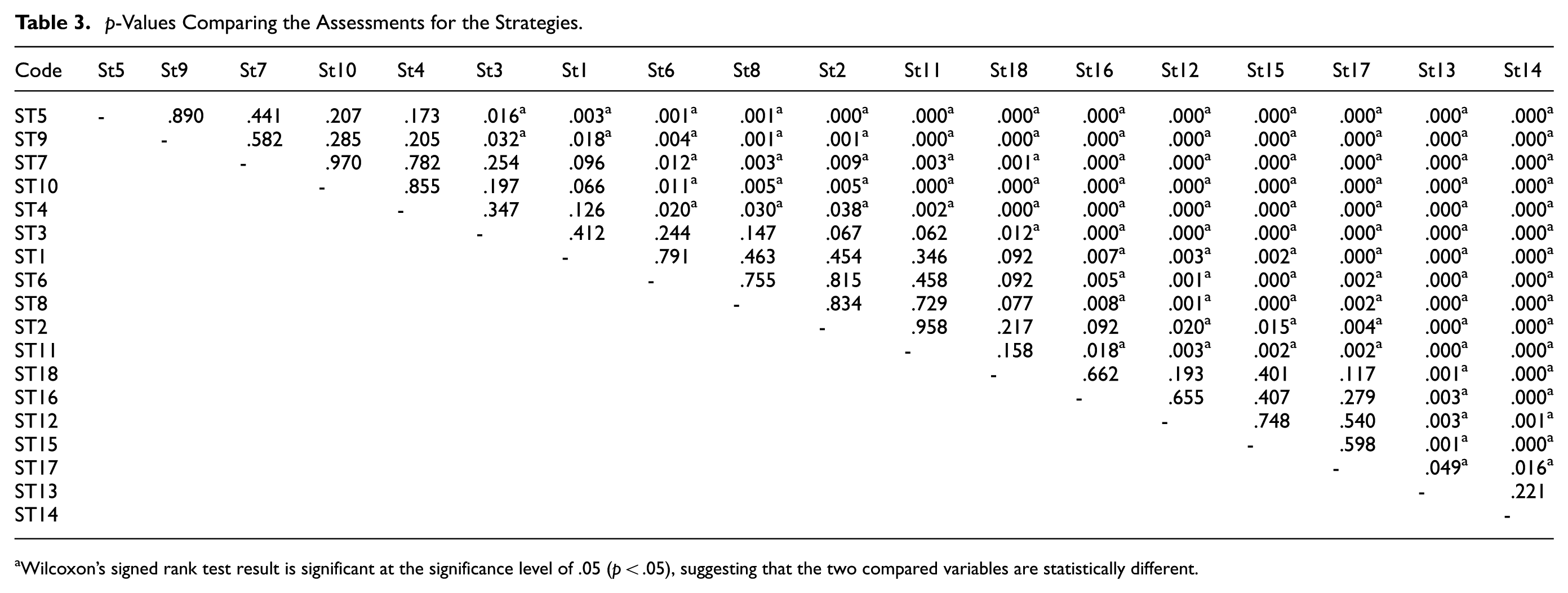
Wilcoxon’s signed rank test result is significant at the significance level of .05 (p < .05), suggesting that the two compared variables are statistically different.
Concordance Test Results
To assess the level of agreement among different respondent groups regarding the importance of GHRM strategies, Kendall’s coefficient of concordance (Kendall’s W) was calculated. The analysis yielded a Kendall’s W value of 0.574 with a significance level of p < .001, indicating a statistically significant and moderate degree of agreement among the eight professional groups, namely general employees, consultants, finance officers, entrepreneurs, account managers, health and safety officers, operations officers, and human resource personnel.
Intergroup Comparison Results
The results of the mean difference analysis performed by the Kruskal-Wallis H test are shown in Table S2 (see Supplemental Sheet). The results revealed that most groups (general employees, consultants, finance officers, entrepreneurs, account managers, health and safety officers, and human resource personnel) placed greater importance on the strategies than the operations officers. This suggests that these groups ascribed more significance to the strategies than their operations counterparts.
In detail, the account managers and operations officers showed the biggest variation in their views on the importance of “support from top management” (ST15, Diff. (AM − OP) = 2.63). The entrepreneurs and operations showed the biggest variation in their views on the importance of “accessing green grants and subsidies” (ST5, Diff. (ENT − OP) = 2.57). Likewise, the consultants and operations showed the biggest variation in their views on the importance of “green ambassadorial deals” (ST6, Diff. (CS − OP) = 2.23). The finance officers and operations showed the largest difference in their views on the importance of “green ambassadorial deals” (ST6, Diff. (FO − OP) = 1.9). The general employees and account managers showed the largest difference in their views on the importance of “publicity from media” (ST13, Diff. (GE − AM) = 1.76). The operations and human resources also showed the biggest variation in the opinion of the importance of “monitoring” (ST8, Diff. (Op − HR) = 1.69). Health and safety, as well as operations, showed the biggest variation in the opinion of the importance of “support from top management” (ST15, Diff. (HS − OP) = 1.63). The results also showed that general employees and the entrepreneurs had the biggest variation in their opinions on the importance of “training programs” (ST14, Diff. (GE − ENT) = 1.57). Furthermore, the general employees and operations showed the biggest variation in the opinion of the importance of “accessing green grants and subsidies” (ST5, Diff. (GE − OP) = 1.42). The entrepreneurs and health and safety officers showed the largest difference in their views on the importance of “green ambassadorial deals” (ST6, Diff. (ENT − HS) = 1.37). The general employees and consultants showed the biggest variation in their opinion of the importance of “training programs” (ST14, Diff. (GE − CS) = 1.27). The consultants and health and safety personnel also showed the biggest variation in their opinions on the importance of “green ambassadorial deals” (ST6, Diff. (CS − HS) = 1.24). The account managers and health and safety professionals showed the biggest variation in their opinions on the importance of “cost-benefit analysis” (ST9, Diff. (AM − HS) = 1.22). The general employees and finance officers showed the largest difference in their views on the importance of “training programs” (ST14, Diff. (GE − FO) = 1.07). The finance officers and account managers showed the biggest variation in their opinion on the importance of “support from top management” (ST15, Diff. (FO − AM) = 1.00). Still, concerning the differences, the general employees and human resources showed the biggest variation in the opinion of the importance of “performance management” (ST17, Diff. (GE − HR) = 0.96). The account manager and human resource showed the biggest variation in their opinions on the importance of “publicity from media” (ST13, Diff. (AM − HR) = 0.95). The entrepreneur and human resources showed the largest difference in their views on the importance of “accessing green grants and subsidies” (ST5, Diff. (ENT − HR) = 0.93). The finance officers and entrepreneurs showed the biggest variation in their opinions on the importance of “opportunity to take or work on special programs” (ST2, Diff. (FO − ENT) = 0.92). The finance officers and health and safety personnel showed the largest difference in their views on the importance of “green ambassadorial deals” (ST6, Diff. (FO − HS) = 0.91). Furthermore, the general employees and health and safety showed the biggest variation in their opinions on the importance of “training programs” (ST14, Diff. (GE − HS) = 0.87). The consultants and account managers showed the largest difference in their views on the importance of “acknowledge, reward, and recognize” (ST1, Diff. (CS − AM) = 0.82). The consultants and entrepreneurs showed the largest difference in their views on the importance of “accessing green grants and subsidies” (ST5, Diff. (CS − ENT) = 0.77). The consultants and human resources showed the largest difference in their views on the importance of “green ambassadorial deals” (ST6, Diff. (CS − HR) = 0.76). The health and safety, and human resources showed the largest difference in the view of the importance of “cost-benefit analysis” (ST9, Diff. (HS − HR) = 0.76). The consultants and finance officers showed the largest variation in their opinions on the importance of “performance management” (ST17, Diff. (CS − FO) = 0.58). Finally, the consultants and account managers showed the largest difference in their views on the importance of “policy development and integration” (ST16, Diff. (CS − AM) = 0.53). The finance officers and human resource personnel showed the largest variation in their opinions on the importance of “performance management” (ST17, Diff. (FO − HR) = 0.49).
The results of the Kruskal-Wallis H test, which was conducted to examine whether statistically significant differences existed in the perceived importance of each strategy when all eight respondent groups were considered together, are also presented in Table S2 (see Supplemental Sheet). The results show that the p-values for “green rating and labelling” (ST4, p = .070), “acknowledge, reward, and recognize” (ST1, p = .179), and “green employee engagement and peer learning programs” (St18, p = .093) were all larger than 0.05. These outcomes suggest that the variations in views on the significance of these strategies (ST4, ST1, ST18) among the eight participant groups were not statistically significant. For the strategies ST2, ST3, ST5, ST6, ST7, ST8, ST9, ST10, ST11, ST12, ST13, ST14, ST15, ST16, and ST17, the variances in opinions of their importance were statistically substantial.
Table 4 also presents the mean rankings from the Kruskal-Wallis H test across respondent groups. Once statistically significant differences were identified, the mean ranks were examined to determine which group contributed most to the variation (Pallant, 2013). The operations officers consistently recorded the lowest mean ranks, corresponding to the lowest mean scores also found in Table S1 (see Supplemental Sheet), indicating that this group was the primary contributor to the observed differences in perceptions across 15 of the GHRM strategies.
Mean Ranks from the Kruskal–Wallis H Test for the Variables with Significant Differences in the Respondents’ Views.
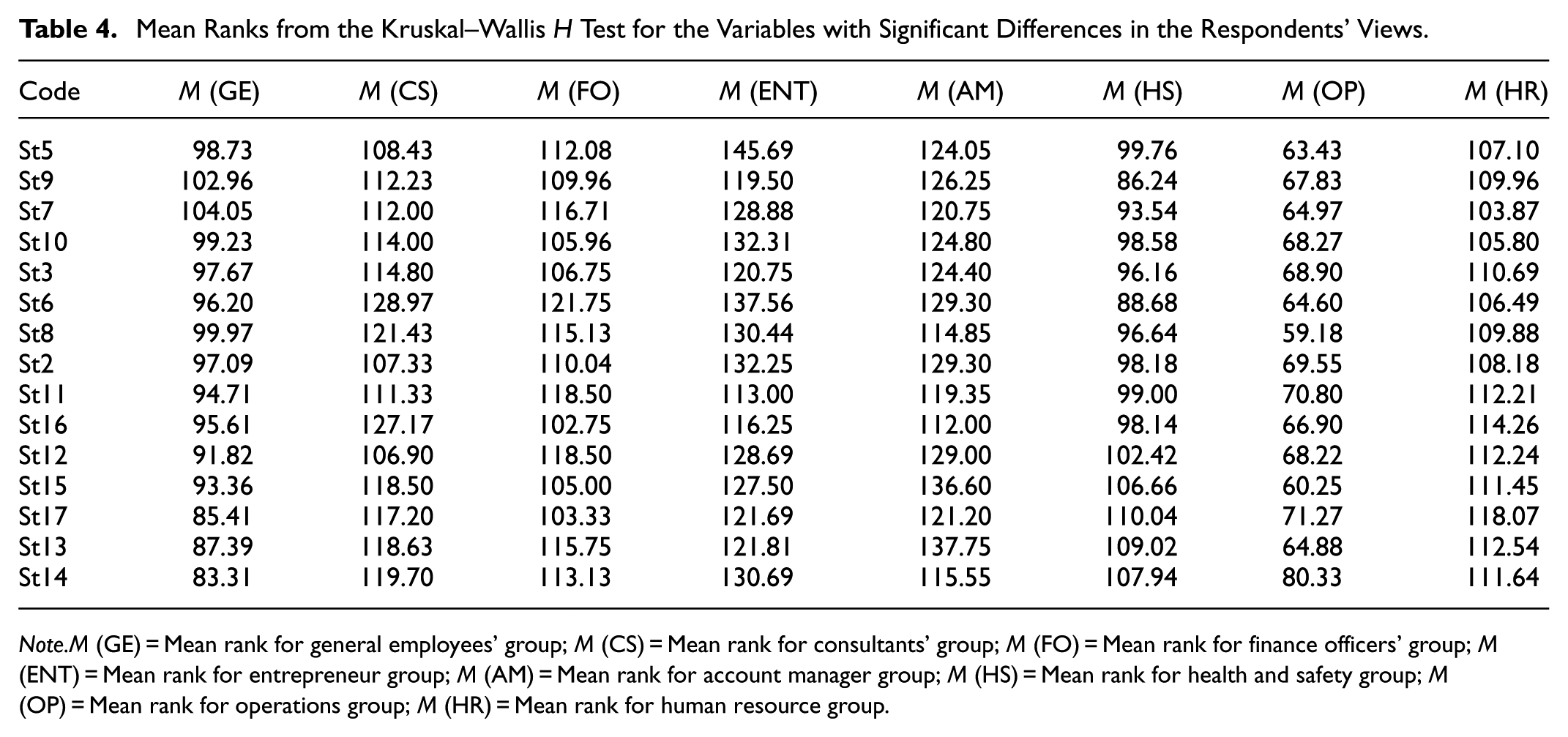
Note. M (GE) = Mean rank for general employees’ group; M (CS) = Mean rank for consultants’ group; M (FO) = Mean rank for finance officers’ group; M (ENT) = Mean rank for entrepreneur group; M (AM) = Mean rank for account manager group; M (HS) = Mean rank for health and safety group; M (OP) = Mean rank for operations group; M (HR) = Mean rank for human resource group.
Factor Analysis
The study further employed exploratory factor analysis (EFA) to uncover the latent structures underlying a set of observed variables, as the relationship among variables was not well established or understood. The application of EFA in this context served several purposes. First, it enabled the empirical identification of thematic clusters within GHRM strategies, thereby providing structure to an otherwise broad and diverse field. Secondly, it established a foundational model that future researchers can build upon. All 18 strategies (variables) were found to be significantly important (see Table 2); therefore, none of them were excluded from the EFA.
Before EFA was carried out, two tests, namely Kaiser-Meyer-Olkin (KMO) and Bartlett’s test of sphericity, were performed to assess how appropriate the factor analysis was for factor extraction. The KMO test value was 0.970, exceeding the standard threshold of 0.5, indicating that the sample is suitable for analysis. The chi-square significance level in Bartlett’s sphericity test was 0.000, indicating that the population correlation matrix is not an identity matrix.
Table 5 shows that all commonalities exceeded 0.60, indicating a robust dataset. Furthermore, since all factor loadings were equal to or greater than 0.50 (Table 6), each variable significantly contributed to its respective factor. This study employed Principal Component Analysis (PCA) with varimax rotation. Using the eigenvalue > 1 criterion, three distinct strategic groupings were revealed, explaining 82.916% of the total variance (Table 7). The groupings were Capacity Building and Advocacy, Incentives and Support, and Governance and Regulatory Frameworks.
Communalities.

Results of EFA on Strategies to Promote GHRM Implementation (Rotated Component Matrix).

Total Variance Explained.

Discussion
Ranking of GHRM Strategies
The findings from Table 2 in this study highlight key differences in the ranking of various GHRM strategies, with a particular emphasis on internal financial mechanisms, regulatory frameworks, and organizational culture. Notably, “Accessing Green Grants and Subsidies” (ST5) emerged as the highest-ranked strategy (mean = 5.30), reflecting its importance as an internal financial support mechanism within Ghanaian SMEs. Moreover, Wilcoxon’s signed-rank test results in Table 3 indicate that ST5 is the only strategy that also emerged as the highest among the top five strategies. Therefore, all respondents perceived ST5 as the most important GHRM overall strategy, suggesting that financially focused strategies are favored. This means that in resource-limited settings, such as Ghana, internal funding is crucial for implementing GHRM practices. According to Bhattarai et al. (2023) and Afedzie et al. (2022), without it, even well-designed strategies may fail. SMEs prioritize internal financial support, as it aligns with RBV, offering more immediate and tangible benefits compared to longer-term strategies, such as training or culture-building, which require sustained investment and commitment.
In contrast, “Cost-Benefit Analysis” (ST9), which ranked second (mean = 5.30), focuses on internal evaluative processes that assess the financial viability and long-term benefits of GHRM strategies. Conforming to RBV, this indicates that Ghanaian SMEs prioritize careful evaluation of the financial implications and returns of implementing GHRM strategies. In line with this, Gelagay and Werke (2024) and T. T. Kim et al. (2023) postulated that firms are more likely to implement green HR practices when they can demonstrate economic value, such as cost savings or efficiency gains. This reflects a results-driven mindset, where environmental initiatives are assessed not only for their sustainability impact but also for their contribution to business performance. While both ST5 and ST9 address financial factors, ST5 directly focuses on acquiring funding to initiate or scale green practices. At the same time, ST9 aims to ensure that such investments align with the organization’s broader financial and sustainability goals.
“Strict Rules, Regulation, and Enforcement” (ST7) ranked third, emphasizing the importance of creating firm-level regulatory frameworks to ensure consistent application of GHRM practices. Conforming to RBV, this strategy emphasizes the importance of formal policies and enforcement mechanisms within SMEs, positioning regulations as a vital tool for integrating sustainability practices into the firm’s daily operations. This means that for Ghanaian SMEs, eco-friendly practices are not optional but embedded into everyday operations. According to Agyabeng-Mensah et al. (2020) and Ansari et al. (2021), clear regulations provide a strong foundation for incorporating environmentally friendly practices into daily operations, thereby supporting the values of GHRM. Implementing these green HR policies promotes a workforce actively involved in sustainability projects. In comparison to ST5 and ST9, which focus primarily on financial mechanisms and resource allocation, ST7 provides a structural and compliance-driven approach to ensuring that GHRM is not left to individual discretion but is enforced as part of the organizational framework.
“Green Leadership and Organizational Culture” (ST10) and “Green Rating and Labelling” (ST4) were also ranked fourth and fifth, respectively, but they serve different functions. In alignment with RBV, ST10 emphasizes the importance of strong leadership in cultivating a culture of sustainability within the organization. At the same time, ST4 focuses on internal recognition and motivation by assigning environmental labels and awards to employees or teams who meet specific green performance standards. This implies that fostering sustainability in Ghanaian SMEs requires both strategic leadership commitment and structured internal motivation. According to Y. Chen et al. (2023) and Anup and Sachdeva (2024), leaders must model and embed green values into the organization’s culture (ST10), while recognition mechanisms like green rating and labeling (ST4) help sustain engagement by rewarding environmentally responsible behavior among all staff, reinforcing long-term commitment to GHRM goals. However, both strategies, while important, rely heavily on the foundational support provided by financial strategies (ST5, ST9) and regulatory frameworks (ST7).
The result that came as a surprise is the relatively low mean score of the strategy “training programs” (ST14), which ranked the least. This is surprising, given the strong research support for training programs as a vital tool for raising awareness, building knowledge, and encouraging sustainable behaviors (Iqbal et al., 2024; Quaye & Mensah, 2019; Trail & McCullough, 2020). However, stakeholders from Ghanaian SMEs perceived it as the least important strategy, a finding that deserves closer attention within their specific context. One likely explanation is the resource constraints commonly faced by SMEs. Formal training programs often require time, money, and skilled personnel, as well as other resources that are already limited. As a result, respondents may view more immediate and practical strategies, such as accessing financial support (ST5) or Strict rules, regulations, and enforcement (ST7), as more feasible and impactful compared to the perceived costs and effort associated with structured training. Another possible reason is how training is perceived in practice. Employees and managers who are focused on meeting daily operational demands might see formal training as disconnected from their immediate priorities. The higher rankings given to strategies that focus on green leadership and organizational culture (ST10) or green rating and labeling (ST4) suggest a preference for informal, workplace-integrated learning approaches over traditional, structured training modules. This highlights a broader need to rethink how training is delivered in SME settings, as this study’s results suggest that approaches embedded into daily operations are preferred. Although the mean score for this strategy was low (Table 2), the results suggest that training programs tailored for SMEs could have a positive influence on GHRM implementation in Ghana.
In summary, the comparative analysis of these strategies reveals that within the context of Ghanaian SMEs, financial strategies and regulatory measures are perceived as more critical for the successful implementation of GHRM practices. The findings suggest that internal financial resources and robust regulatory frameworks must be established as foundational elements for GHRM implementation, enabling organizations to fully leverage cultural and motivational strategies to sustain long-term environmental practices. This suggests that for GHRM to be effectively implemented in Ghanaian SMEs, a phased approach that prioritizes financial and regulatory groundwork, followed by cultural and employee engagement efforts, would be most beneficial.
Group Analysis
The statistically significant Kendall’s W value suggests a moderate to strong level of consensus among various respondent groups regarding the ranking of GHRM strategies. This consensus indicates shared priorities across roles, which is essential for collaborative GHRM implementation. The involvement of diverse roles implies that green HR strategies are increasingly recognized as relevant beyond traditional HR functions. According to Millar et al. (2016), such agreement supports integrated approaches to sustainability within SMEs, emphasizing the importance of fostering cross-functional engagement in environmental initiatives.
According to the group analysis, the consistently lower ratings assigned by Operations Officers (OP) to most GHRM strategies compared to respondents from HR, Finance, Health and Safety, and other departments reflect more than just differences in opinion. Notably, OP respondents placed significantly less value on key strategies such as accessing green grants and subsidies (ST5), cost-benefit analysis (ST9), support from top management (ST15), training programs (ST14), and monitoring systems (ST8). This pattern suggests a deeper organizational divide that could hinder the successful implementation of green human resource management practices.
One likely reason is that operations staff are often focused on immediate priorities such as productivity, cost reduction, and meeting delivery timelines. Within this context, sustainability strategies may appear secondary or even disruptive to day-to-day tasks, especially if their benefits are not directly connected to operational goals. In many SMEs in Ghana, operational departments are under pressure to perform within tight budgets and resource constraints. As a result, strategies that require upfront investment, such as formal training or complex regulatory monitoring, may be viewed as challenging to implement or unnecessary. The low importance attached to top management support (ST15) by OP staff further suggests a possible disconnect from strategic planning processes. If operational staff feel excluded from decisions about sustainability initiatives, they may be less inclined to take ownership of those initiatives, seeing them instead as HR-led or leadership-imposed policies with little relevance to their roles. According to Alkaf et al. (2023), for GHRM strategies to succeed, especially in the SME environment of Ghana, where resources are limited, they must be understood and embraced at all organizational levels. Efforts to promote sustainability cannot rely solely on leadership or HR departments; they also require the active participation of those executing the work on the ground. Building this alignment requires better communication, a more explicit demonstration of operational benefits, and more inclusive strategy development processes that engage operations staff from the outset. Kiptoo and Wabala (2024) postulated that without proper communication, even the most well-designed GHRM strategies may struggle to take root in practice.
From Table 6, the first category, namely capacity building and advocacy, comprised corporate environmental awareness programs, training, policy integration, budget allocation, and top management support. According to Millar et al. (2016), collectively, these strategies help build internal capabilities, promote sustainability-focused mindsets, and foster employee engagement, which is essential for driving organizational change. When SMEs embed these strategies, they provide evidence of how environmental goals can be effectively integrated into HR functions, particularly in resource-constrained contexts like those of Ghanaian SMEs. Such practical implementation can inform national policy by demonstrating the viability of linking workforce development with environmental sustainability. Moreover, advocacy through leadership support and effective communication strategies raises awareness and fosters institutional commitment, encouraging regulatory bodies to align labor and environmental policies with proven corporate initiatives (Larasati & Herachwati, 2024; Samyukta, 2022). Thus, capacity building and advocacy not only strengthen internal sustainability efforts but also serve as a foundation for shaping coherent and context-specific green HRM policies that can support SMEs’ broader environmental and development objectives.
The second category, namely incentives and support, comprises recognition of green employees, participation in green programs, research and development, green labeling, grant access, and green performance management, which help shape both firm-level and national environmental operations and policies. For SMEs, such strategies create a motivating environment where sustainability is not only encouraged but also rewarded, fostering behavioral change and a long-term commitment to environmental goals. These practices institutionalize sustainability by linking it directly to employee appraisal systems, development opportunities, and access to resources (Afaneh et al., 2023). The success of these mechanisms in firms can inform national policy by highlighting the importance of reward systems, innovation funding, and performance-based environmental accountability. Policymakers can draw on these practices to design supportive regulatory frameworks, incentive schemes, and recognition platforms that reinforce corporate environmental responsibility. Thus, this framework serves as both a practical implementation model for firms and a basis for advancing policy coherence in national sustainability agendas.
The third category, namely governance and regulatory frameworks, comprising green ambassadorial roles, strict regulations and enforcement, monitoring, cost-benefit analysis, and green leadership and organizational culture, offers critical direction for both SMEs and national environmental policymaking. For SMEs, these strategies establish internal accountability structures, encourage ethical leadership, and embed sustainability into decision-making processes. According to Hina et al. (2023) and Muisyo et al. (2022), monitoring mechanisms and cost-benefit analyses support evidence-based policy refinement and resource optimization, ensuring that environmental strategies align with performance outcomes. Green leadership and ambassadorial initiatives foster cultural transformation by positioning sustainability champions within organizations to lead change and influence employee behavior (Bushra, 2023; Islam et al., 2020). At the national level, these practices can inform policy by reinforcing the need for enforceable standards, compliance systems, and strategic oversight. Governments can also institutionalize leadership development and public-private partnerships to promote sustainable corporate conduct. Thus, this framework bridges firm-level operations and national sustainability goals, advancing coherence, transparency, and long-term accountability in GHRM implementation.
Theoretical Implications
The findings of this study reinforce and extend the Resource-Based View (RBV) theory (Barney, 1991) by empirically demonstrating how internal resources, particularly financial planning, cultural alignment, and regulatory structuring, can be leveraged to achieve environmental sustainability within SMEs operating in resource-constrained settings. Notably, the top-ranked strategy, accessing green grants and subsidies (ST5), highlights the strategic role of internal financial mechanisms in initiating and sustaining green HR initiatives. This aligns with RBV’s premise that firms gain a competitive advantage through the effective deployment of internal assets, particularly when external resources are limited. By prioritizing internal financial capabilities over external dependencies, the study validates the relevance of the RBV in emerging market contexts, such as Ghana.
The findings further demonstrate how evaluative and regulatory internal systems contribute to sustainable outcomes. These findings advance RBV by illustrating that, beyond financial capital, structured knowledge systems and procedural rigor serve as inimitable capabilities that SMEs can harness to enhance their environmental performance. Furthermore, the emphasis on green leadership and organizational culture (ST10) and green rating and labeling (ST4) highlights the critical role of intangible resources, such as leadership commitment, shared values, and internal recognition frameworks, as key VRIN attributes emphasized by RBV, which are all core drivers of GHRM effectiveness.
Collectively, these findings provide empirical evidence that internal resources, when prioritized and strategically aligned, serve not only as enablers of sustainability but also as sources of organizational differentiation. This extends the theoretical boundaries of RBV by illustrating its applicability beyond financial capital to include cultural, evaluative, and normative assets in SME contexts. It also confirms that in low-resource environments, such internal resources can substitute for institutional voids and deliver long-term strategic value. Thus, the study contributes to advancing RBV by showing how environmental capabilities embedded within HRM functions serve as dynamic, rare, and strategically significant assets in driving sustainability outcomes within SMEs.
Practical Implications
The findings of this study offer several practical implications for organizations, employees, SMEs, and human resource management stakeholders in Ghana and similar developing contexts. First, the top-ranked strategy, accessing green grants and subsidies (ST5), highlights the importance of internal financial support in driving GHRM implementation. This implies that managers should allocate resources through internal sustainability budgets or reinvested savings to support green HR practices. Additionally, organizations should collaborate with policymakers to develop accessible funding schemes tailored to the financial constraints of SMEs. Prioritizing sustainability in budgeting and planning ensures that green initiatives such as training, employee incentives, and audits become embedded in core operations.
The emphasis on cost-benefit analysis (ST9) and strict rules and enforcement (ST7) further indicates a preference for evidence-based and regulated approaches to sustainability. Managers can use these strategies to guide performance metrics, reward systems, and operational decisions, thereby promoting accountability and reinforcing the business case for environmental action. Conversely, the low importance placed on training programs (ST14) suggests a shift toward integrated and flexible learning methods. Instead of relying on formal training, SMEs should adopt peer learning, mentoring, and on-the-job coaching to build capacity more affordably and practically.
The significant differences in strategy importance across roles, especially the lower prioritization by operations officers, reveal a need for cross-functional involvement. Leadership should ensure inclusive planning by engaging operations staff in discussions and the implementation of sustainability initiatives. Initiatives such as joint workshops, feedback channels, and collaborative decision-making will help align strategic and operational perspectives. Collectively, these findings provide a prioritization framework that enables SMEs to sequence GHRM implementation based on resource feasibility and strategic relevance, thereby fostering organizational alignment and achieving long-term sustainability outcomes.
Overall, this research demonstrates that GHRM is a shared responsibility that necessitates a coordinated effort among managerial levels, employees, policymakers, and support institutions. Ghanaian SMEs can establish a sustainable human capital foundation that supports not only environmental performance but also organizational resilience and innovation when these context-specific strategies are implemented.
Conclusion, Limitations, and Future Research
GHRM has recently garnered significant attention due to its potential to enhance sustainability practices within organizations. However, the implementation of GHRM in developing countries, such as Ghana, remains in its early stages and faces numerous challenges. Despite the growing interest, its successful implementation has become a challenge. To address this, this study sought to identify critical strategies that can guide the successful implementation of GHRM within Ghanaian SMEs.
Through a comprehensive literature review and expert analysis, the study identified 18 key strategies that can support the effective implementation of GHRM in Ghana. The study employed a set of non-parametric statistical techniques, including the Kruskal-Wallis H test, Wilcoxon signed-rank test, and Kendall’s coefficient of concordance (W), to compute and validate the identified strategies through questionnaires in Ghana, which provided valuable insights into the feasibility and applicability of these strategies. The results indicated that strategies such as accessing green grants and subsidies (ST5) and cost-benefit analysis (ST9) were of high priority, followed closely by strict rules, regulations, and enforcement (ST7), green leadership and organizational culture (ST10), and green rating and labeling (ST4), respectively.
Comparative analysis has revealed that while many of the critical strategies identified for GHRM implementation in Ghana may differ from those in developed countries such as Canada, the United States, and Japan, accessing green grants and subsidies (ST5) remains a top priority in all countries. This highlights the universal importance of financial incentives in promoting GHRM practices. The study recommends that SMEs in Ghana develop a clear strategy to access these financial grants and subsidies, which can be integrated into their mission and vision statements to further embed sustainability within their organizational culture. The findings not only contribute to closing the gap in the literature regarding GHRM strategies but also provide a valuable reference for policymakers and practitioners. By understanding these strategies, stakeholders can take appropriate actions to mitigate the barriers to GHRM implementation and promote sustainability across organizations in Ghana and similar emerging economies.
Although the paper’s aim was achieved, the study is not without its limitations. The strategies identified in the study could be influenced by the specific experiences and attitudes of the respondents, making the findings somewhat subjective. Additionally, while the sample size used in the study was considered sufficient for statistical analysis, it may still be relatively small compared to Ghana’s overall SME population. Furthermore, the use of snowball sampling may have introduced selection bias, as it relies on referrals, which could potentially limit the diversity of respondents. Additionally, potential non-response bias could have influenced the findings, as individuals who did not participate may have had different perspectives or experiences. Future research could expand the sample size to provide more generalizable results by employing alternative sampling methods, such as stratified random sampling, to ensure that different subgroups within the SME population are proportionally represented. Moreover, future studies could explore how GHRM strategies vary across different regions of Ghana or other developing countries, providing a broader understanding of how GHRM can be effectively implemented in diverse contexts. Lastly, longitudinal studies that test the effectiveness of strategy adoption and examine the long-term impact of these strategies on organizational performance would help better understand their effectiveness in promoting sustainability.
Supplemental Material
sj-docx-1-sgo-10.1177_21582440251398621 – Supplemental material for Driving Green Innovation: Unlocking Strategies for Effective Green Human Resource Management Implementation in Ghana
Supplemental material, sj-docx-1-sgo-10.1177_21582440251398621 for Driving Green Innovation: Unlocking Strategies for Effective Green Human Resource Management Implementation in Ghana by Lois Tweneboa Kodua, Zhao Shurong, Peter Darko Adjei, Dennis Asante, Bright Okyere Ofosu and Gloria Tweneboa Kodua in SAGE Open
Footnotes

Ethical Consideration
This research was conducted in adherence to the Ethical Code of Conduct of the American Psychological Association (APA) and in accordance with the principles of the Declaration of Helsinki. The study protocol was reviewed and approved by the Institutional Review Board of the University of Electronic Science and Technology of China under protocol code 20241109.
Consent to Participate
Prior to the commencement of the study, permission was obtained from the SMEs, and a cover letter was provided to potential participants explaining the purpose of the research, the voluntary nature of their involvement, and the confidentiality of their responses. Participants were informed that they were free to withdraw from the study at any point without any negative consequences. All respondents willingly agreed to take part in the research and provided written informed consent.
Author Contributions
Lois Tweneboa Kodua: Writing – original draft, preparation, Investigation, Conceptualization, Methodology, Visualization, Formal analysis. Zhao Shurong: Supervision, Writing – review & editing, editing and, Validation. Peter Darko Adjei: Investigation, Conceptualization, Methodology, Visualization, Data curation. Dennis Asante: Writing – review & editing, Formal analysis, and Editing, Validation. Bright Okyere Ofosu: Writing – editing, writing and reviewing. Gloria Tweneboa Kodua: Writing, review, and editing.
Funding
The authors disclosed receipt of the following financial support for the research, authorship, and/or publication of this article: This paper is funded by the Sichuan Social Science Planned Key Research Project (SCJJ23ND61) and the 2022 Central University Fundamental Research Program for Humanities and Social Science Cultivation Key Project (No. ZYGX2022FR JH004). Special thanks to all authors for their dedication and support in facilitating this research.
Declaration of Conflicting Interests
The authors declared no potential conflicts of interest with respect to the research, authorship, and/or publication of this article.
Data Availability Statement
The datasets generated during and/or analyzed during the current study are not publicly available due to the nature of their collection through a survey. The datasets are not deposited in a public repository because there is no direct link or standardized format for sharing them but are available from the corresponding author on reasonable request.
Supplemental Material
Supplemental material for this article is available online.
Consent Details
Dear Participant,
Thank you for your participation in this study. The purpose of this research is to prioritize effective strategies for implementing Green Human Resource Management (GHRM) practices in Ghanaian small and medium-sized enterprises (SMEs), with the broader goal of driving green innovation and sustainability. Your responses will be kept strictly confidential and used solely for academic purposes.
Participation is voluntary, and you may withdraw at any time without consequences. No personally identifiable information will be collected. By proceeding with this survey, you acknowledge that you have read and understood this consent form and agree to participate.
If you have any questions, please contact
I consent to participate in this study. □ Yes □ No
References
Supplementary Material
Please find the following supplemental material available below.
For Open Access articles published under a Creative Commons License, all supplemental material carries the same license as the article it is associated with.
For non-Open Access articles published, all supplemental material carries a non-exclusive license, and permission requests for re-use of supplemental material or any part of supplemental material shall be sent directly to the copyright owner as specified in the copyright notice associated with the article.
