



Abstract
Subscribing to multiple over-the-top (OTT) services, known as multi-homing, has become widespread as users seek to satisfy diverse media preferences in OTT consumption. However, platforms face a significant challenge in managing subscription fatigue, which often prompts users to discontinue their services. Based on the stimulus–organism–response model and mental accounting theory, this paper develops a conceptual framework that examines the roles of subscription fatigue and coupling, along with their antecedent factors, in the discontinuation of OTT multi-homing. We conducted an empirical analysis through a survey of multi-homers in South Korea. The results show that high search costs and subscription fees drive discontinuation, while content diversity and efficient recommendations mitigate it. Subscription fatigue and coupling, where users mentally associate the costs and perceived benefits of multiple subscriptions, emerge as significant drivers in discontinuation decisions, with coupling having a greater impact as users consider a wider range of costs and benefits. Age further moderates these effects: younger users prioritize efficient search processes, whereas older users prefer curated content experiences. These findings suggest that OTT platforms can enhance retention by refining content discovery systems, offering flexible pricing, and emphasizing service value, while tailoring strategies to age groups to compete effectively in the OTT marketplace.
Plain Language Summary
Subscribing to multiple OTT platforms (e.g., Netflix, Disney+, Amazon Prime)—i.e., “multi-homing”—has emerged as a defining trend in media consumption. However, managing multiple subscriptions often creates subscription fatigue, which drives users to discontinue certain platforms. This study surveyed multi-homing users in South Korea to uncover the psychological processes that contribute to discontinuation and the strategies that may alleviate it. The results reveal two critical psychological factors: “subscription fatigue,” which stems from the burden of managing multiple platforms, and “coupling,” where users constantly weigh the costs of subscriptions against their benefits. Among these, coupling exerted a stronger influence on discontinuation, as high search costs, subscription fees, and learning costs intensified its effects. In contrast, content diversity and efficient recommendation systems mitigated coupling, encouraging users to retain their subscriptions. Age-based differences further shaped user preferences: younger users prioritized efficient search functionalities, whereas older users valued well-curated and personalized content experiences. These findings highlight the importance of OTT platforms in mitigating service discontinuation by refining content discovery systems, implementing flexible pricing strategies, and tailoring user experiences to specific age groups, thereby enhancing retention and market competitiveness.
Introduction
The global over-the-top (OTT) market is growing rapidly, with global user penetration rates expected to reach 50.6% by 2024 and 61.0% by 2029 (Statista, 2024). This growth establishes OTT platforms as key sources of global media consumption. As more users adopt OTT services, providers face intensified competition, which drives greater content diversity and promotes the trend of “multi-homing.” Multi-homing refers to the simultaneous use of multiple products or services. In the OTT context, it describes users subscribing to several platforms at once to satisfy their content needs (Broadcasting Communications Commission, 2021). For instance, American OTT users subscribe to an average of 2.9 to 4 platforms (Deloitte, 2021; Forbes, 2024), whereas Korean users typically subscribe to 2 or 3, especially in the core demographic of individuals in their 20s and 30s (Korea Creative Content Agency, 2023). Content fragmentation across services (63.8%) and the desire for broader variety (30.6%) primarily drive this multi-homing behavior (Kang, 2022).
As media consumption shifts to multi-homing, its negative side effects—such as “subscription fatigue,” which increases economic, time, and psychological costs—have become more apparent. This phenomenon poses new challenges for OTT providers. Multi-homers who subscribe to multiple OTT services often feel tempted to cancel, and researchers have identified subscription fatigue as a key factor contributing to cancelations (Kang, 2022; Lee & Kim, 2023). Navigating across platforms to find desired content can overwhelm users, leading to decision fatigue (Cao & Sun, 2018; Schwartz & Ward, 2004). This cognitive load increases psychological strain and ultimately drives users to reconsider their subscriptions (Fu et al., 2020). High costs also play a significant role (Chen & Hitt, 2002). As subscription fees accumulate, users may question whether the expense is justified, especially when platforms lack clear differentiation between their services. Indeed, 45% of multi-homing users cancel at least one service, citing high subscription costs as the main reason (Forbes, 2024).
Previous research has examined the drivers of OTT service discontinuation. Lee and Kim (2023) used focus group interviews to analyze the reasons for cancelation across different age groups, finding that habitual use, dissatisfaction with services and subscription costs, platform features (e.g., live broadcasts and international content), and binge-watching fatigue all contributed to discontinuation. Seo (2023) identified economic, functional, and time-related inefficiencies as sources of user resistance, particularly to Netflix. Users canceled services when they viewed them as too costly, of low quality, or time-wasting. However, content diversity, affordable pricing, effective recommendation systems, and high service quality all contributed to reduced rates of discontinuation. Yoon and Kim (2023) further found that higher financial and learning investments in OTT platforms lowered discontinuation intentions. Users who invested in learning how to navigate a platform hesitated to switch because of the added costs and learning curves associated with a new service.
Users cancel their subscriptions when they perceive that the value of maintaining them is insufficient. Accordingly, identifying drivers of discontinuation requires understanding the motivations for retention. Exclusive and diverse content plays a key role in retention. Kour and Chhabria (2022) found that unique and diverse content made users less likely to cancel their subscriptions. Additionally, Gu et al. (2016) emphasized that different experiences across platforms encouraged continued multi-homing. Personalized content recommendations also enhanced satisfaction, reduced information overload, and strengthened retention (Ho & Tang, 2001; Liang et al., 2006).
Despite the prominence of multi-homing as a media consumption behavior, researchers have conducted little empirical work on the discontinuation of multi-homing. Existing studies cite dissatisfaction with content quality and subscription costs (Agarwal et al., 2023; Lee & Kim, 2023), while also identifying psychological factors, such as subscription fatigue, as key drivers (Adhikari & Panda, 2020; Sheng et al., 2023). Examining these psychological mechanisms is crucial for understanding why multi-home users discontinue their subscriptions. Multi-homers frequently experience subscription fatigue and coupling, that is, the mental association of costs and perceived benefits of maintaining multiple subscriptions. Improvements in content availability or service quality are unlikely to resolve these burdens. Users’ perceptions of value and their ability to manage psychological strain largely determine whether they continue multi-homing. Focusing exclusively on expanding content or upgrading features while ignoring these psychological burdens may fail to reduce subscription cancelations.
This study applies the stimulus–organism–response (S-O-R) framework (Russell & Mehrabian, 1974) and mental accounting theory (Thaler, 1980, 1999) to examine the psychological factors that increase subscription discontinuation intentions in multi-homing. The study investigates how external stimuli, such as content and platform features, shape users’ internal psychological states, leading to subscription fatigue and coupling, and ultimately, to discontinuation (Cao & Sun, 2018; Lee et al., 2016; Misra & Stokols, 2012). It also investigates strategies to alleviate psychological strain and promote retention, aiming to advance the literature on multi-homing by identifying the determinants of continuation and discontinuation.
This analysis also considers age as a moderating factor. Younger users tend to explore multiple platforms and prioritize diverse content offerings, whereas older users value convenience and features that simplify their experience (Jo et al., 2020; Mulla, 2022). These differences suggest that perceptions of content and service quality vary by age, leading to distinct patterns of discontinuation.
The purpose of this study is to identify the main factors driving subscription discontinuation among OTT multi-homers, focusing on psychological burdens such as subscription fatigue and coupling. It further examines how these factors influence discontinuation intentions across different age groups, offering a comparative analysis of the determinants of retention and discontinuation in the OTT multi-homing context.
Theoretical Background
Stimulus–Organism–Response (S-O-R) Theory
Russell and Mehrabian (1974) proposed the S-O-R theory, which emphasizes that individuals shape their behavior based on how they perceive and interpret environmental stimuli. As a theoretical framework, the S-O-R model underscores the emotional and cognitive aspects of human behavior, and scholars have widely adopted it in studies of user behavior in mobile apps, e-commerce, and social media. Researchers have used the model to explain how overload stimuli (e.g., information overload, system functionality overload, and social overload) affect users’ psychological states (e.g., fatigue) and trigger discontinuation behaviors, such as discontinuing media use (Cao & Sun, 2018; Lin et al., 2020; Luqman et al., 2017). Prior studies consistently show that overload stimuli create psychological states such as fatigue, which in turn drive discontinuation, although their contexts and focal variables differ.
In information systems research, system characteristics often generate the external stimuli that affect users. Parboteeah et al. (2009) applied the S–O–R model to explain how website features (stimuli) shape users’ cognitive and emotional states (organism), which then drive impulse purchase behaviors (response). Similarly, Poston and Speier (2005) analyzed how content quality and relevance (stimuli) in knowledge management systems influenced users’ perceptions (organism), which in turn shaped their content search and evaluation behaviors (response). Studies on social media have also employed the S-O-R framework to show how information, system functionality, or social overload (stimuli) lead to user fatigue (organism) and ultimately result in media discontinuation (response; Cao & Sun, 2018; Lin et al., 2020; Luqman et al., 2017).
This study extends the S-O-R framework to the OTT multi-homing context. It identifies the core stimulus characteristics of OTT multi-homing and clarifies the mechanism through which these stimuli shape the psychological states of multi-homers and influence their behaviors. In this context, external stimuli (S) comprise cues and signals from multiple OTT platforms, with content being the most influential factor. Research highlights content diversity as a significant driver of OTT user behavior and satisfaction (Agarwal et al., 2023; Mulla, 2022; Nagaraj et al., 2021). Users perceive abundant and diverse content as a positive experience, which enhances satisfaction and promotes continued usage, particularly when platforms offer personalized content tailored to individual interests (Agarwal et al., 2023).
Exclusive content differentiates platforms and motivates multi-homing (Kour & Chhabria, 2022). While users enjoy diverse and unique content, redundancy or poor differentiation often triggers cancelations (X. Zhang et al., 2020). Compared to single-homers, multi-homers process a larger volume of content signals, making recommendation systems indispensable for reducing search costs and preventing information overload (Yoon & Kim, 2023). Since multi-homers interact with diverse platform interfaces and content options, they rely heavily on recommendation systems to enhance browsing efficiency (Han, 2023).
Positive stimuli sustain multi-homing behavior, whereas negative stimuli intensify discontinuation intentions. Previous studies of OTT user behavior emphasized financial costs as barriers to retention (Agarwal et al., 2023; Mulla, 2022), but often neglected non-monetary costs such as search and learning burdens. Users consider financial expenses and cognitive efforts when assessing a service (Burnham et al., 2003). While content diversity is a positive stimulus, it can also increase search costs and create fatigue (Bellman et al., 2006; Schwartz & Ward, 2004). Multi-homers often encounter redundant content across platforms, which causes information overload and reduces perceived value (Schwartz & Ward, 2004).
Although exclusive content drives multi-homing behavior, it also imposes learning costs because users must adapt to unique interfaces and navigation systems for each platform (Bellman et al., 2006; Chen & Hitt, 2002). The greater the usability differences between platforms, the higher the potential for user fatigue (Lurie, 2004). Multi-homers also often face significant financial burdens when they subscribe to several platforms to access exclusive content. If users perceive that the content value does not match the subscription costs, they may cancel the services. For instance, redundant content across platforms may lead users to feel that they are wasting money, which intensifies dissatisfaction and ultimately results in cancelations.
The organism (O) reflects users’ internal states in response to external stimuli. Multi-homers experience positive stimuli, which foster satisfaction and retention, and negative stimuli, which generate subscription fatigue and coupling. In a multi-homing environment, users compare benefits and costs across platforms. Satisfaction with personalized recommendations or exclusive content can offset the burdens associated with search, learning costs and subscription fees. However, if perceived costs outweigh the benefits, users are more likely to discontinue specific platforms.
The final stage, response (R), refers to users’ behavioral outcomes based on their internal states. In OTT multi-homing, responses may manifest as continued multi-homing or selective discontinuation. For instance, users are more likely to continue multi-homing when positive stimuli reduce feelings of fatigue and coupling. In contrast, sustained or prominently perceived negative stimuli often drive users to cancel subscriptions.
In summary, positive stimuli (e.g., content diversity, complementarity, and curation efficiency) and negative stimuli (e.g., search costs, learning costs, and subscription fees) act as external stimuli in the S-O-R framework. These stimuli shape the internal states of multi-homers (e.g., subscription fatigue and coupling) and ultimately influence their behavioral responses, such as intentions to discontinue. By applying the S-O-R model, this study provides a structured explanation of how multi-homing users process external stimuli and develop subscription discontinuation intentions. Accordingly, it defines and applies the model’s components to explore these mechanisms (Figure 1).

Components of the S–O–R model of OTT multi-homing discontinuation behavior.
Hypothesis Development and Research Model
External Stimuli (S)
Cacioppo and Berntson’s (1994) brain processing theory shows that people process internal psychological states along multiple dimensions rather than a single one (Cacioppo et al., 1999). This framework explains why individuals can simultaneously experience positive and negative reactions to the same stimulus. Building on this perspective, Turel et al. (2014) argued that intentions to continue or discontinue arise from various interconnected factors. In the context of multi-homing, this theory provides a suitable foundation for explaining how users evaluate conflicting experiences in parallel and decide whether to maintain or cancel multiple subscriptions. For example, users may enjoy positive stimuli, such as rich content, exclusive content, and personalized recommendations, while simultaneously encountering negative stimuli, including high search costs, subscription fees, and the time required to learn each platform. These stimuli directly affect users’ internal psychological states and critically influence their decision to continue or discontinue multi-homing. While positive experiences encourage continuation, negative ones can strengthen the decision to discontinue.
Content Diversity
OTT platforms compete primarily on content. The quality and variety of content serve as major motivators for user engagement and continued usage, offering a competitive advantage that differentiates platforms (Gwak & Choi, 2019). Content diversity refers to the breadth of genres and options available to users. According to Lee (2020), over 70% of OTT users binge-watch their preferred content and cite content diversity as the main reason for subscribing. Users choose OTT platforms that align with their preferences, and greater content diversity strengthens their intention to subscribe (Menon, 2022). Multi-homing often stems from the pursuit of diverse content, as subscribing to multiple platforms enables users to access titles unavailable on a single platform. When platforms meet users’ expectations for variety, their intention to discontinue multi-homing decreases.
Content Complementarity
Content complementarity refers to the extent to which multi-homers experience distinct offerings across different platforms. Without unique content on each service, users may lose interest in maintaining multiple subscriptions (Gu et al., 2016; X. Zhang et al., 2020). Multi-homers benefit from the unique content and services from each platform (Koukova et al., 2012). For example, Netflix focuses on globally appealing original content, while Disney+ capitalizes on its strong intellectual property (IP)-based franchises such as Disney, Marvel, and Star Wars to attract dedicated fan bases. Other platforms may specialize in producing original dramas or live sports. By combining platforms, users can leverage the strengths offered by each platform, resulting in a more satisfying media experience (Shim, 2007). Perceived complementarity enhances satisfaction and reduces the likelihood of discontinuation (Gu et al., 2016; S. Kim & Koo, 2023).
Content Curation Efficiency
Most OTT platforms design their systems to help users discover content with minimal effort (Menon, 2022). Content curation efficiency refers to the user’s ability to find relevant content through recommendation systems tailored to their tastes. Efficient recommendations are especially critical for multi-homers, who manage larger content pools than single-homers and therefore, rely more heavily on algorithms (Han, 2023). While single-homers depend on one recommendation engine, multi-homers benefit from multiple systems that collectively expand their discovery options. Effective curation reduces cognitive load, delivers relevant and diverse choices, and increases satisfaction (G. Kim et al., 2020; Liang et al., 2006). When recommendations align well with user preferences, multi-homers feel more satisfied and less likely to discontinue. Based on the above, we posit the following hypothesis:
Search Cost
Multi-homing exposes users to a vast pool of content, forcing them to spend more time searching, which can become overwhelming. Beatty and Smith (1987) highlight that gathering information about a service typically requires active searching. In OTT contexts, users must engage in detailed browsing before selecting the desired content, as media consumption represents an “experienced good” (Menon, 2022; Nelson, 1970). In South Korea, the term “Netflix syndrome” refers to the phenomenon of spending excessive time searching for content but ultimately watching nothing due to the prolonged search process. Browsing thumbnails, reviews, genres, plot summaries, and cast lists across different interfaces can create significant stress for users. As a result, multi-homers experience higher search costs than single-homers, which may increase their intention to discontinue multi-homing.
Subscription Cost
Subscription costs significantly influence adoption and retention decisions; high costs can deter service continuation (Berry et al., 2002). Porter and Donthu (2006) identified economic cost as a barrier, noting that even when users perceive a service as useful, a significant cost burden can negatively impact service usage. Dissatisfaction with fees also drives the termination of paid broadcasting services (S. Kim et al., 2021). Similarly, in the context of OTT services, subscription costs are a key predictor of whether users will continue using a service. Yoo and Park (2018) demonstrated that users remain subscribed when they perceive plans as reasonably priced, whereas Seo (2023) showed that perceptions of inefficiency increase discontinuation intentions. For multi-homing users, subscription costs rise with each additional platform. When expenses outweigh the perceived benefits of multiple services, users are more likely to discontinue multi-homing.
Learning Cost
OTT platforms often impose high learning costs, especially on multi-homing users who must adapt to different interfaces and features. Learning costs refer to the time, effort, and cognitive load required to understand platform navigation and functions (Klemperer, 1995). Previous studies show that learning costs encompass behavioral and cognitive demands; non-intuitive interfaces increase the risk of multi-homers discontinuing OTT services. Nabizadeh et al. (2020) argued that user-friendly designs and automated personalization settings are necessary to reduce the learning costs of OTT platforms. Complex or inconsistent interfaces across platforms can lead to fatigue, while repeated account creation and personalization settings further contribute to the burden, making multi-homing more likely to result in disconnection from OTT.
Internal States as Organism (O) and Final Behavior as Response (R)
Subscription Fatigue
Digital fatigue occurs when individuals experience mental stress and discomfort due to information overload or difficulties in using digital devices. It closely aligns with the psychological fatigue that arises from online participation (S. Zhang et al., 2016). For instance, social media users often feel overwhelmed by the frequency of updates and the complexity of interactions, which can lead to exhaustion. Negative emotions during digital service use can strongly influence users’ decisions to discontinue services. Therefore, service providers must actively reduce the negative emotions that users experience when interacting with their platforms.
Researchers classify the causes of digital fatigue into environmental-related and user-related factors. Environmental-related factors, including the complexity of platform features, excessive information, and message overload, all directly contribute to user stress when using the platform. User-related factors, including cognitive abilities, personality, self-expression, and interactions, determine how severely individuals experience fatigue. Lee et al. (2016) and Fu et al. (2020) revealed that excessive messaging and information overload on social media can drain user attention and induce fatigue. As individuals have limited information-processing capacity, those with lower cognitive resources are more susceptible to fatigue (Lang, 2000).
Factors that reduce digital fatigue include perceived usefulness and self-efficacy (Adhikari & Panda, 2020; Li & Ma, 2024). Users who perceive platforms as beneficial feel less fatigued. For example, social media users report lower fatigue when they believe platforms enhance their self-expression and social connections. Similarly, individuals with high self-efficacy in technology usage manage difficult tasks more confidently, which reduces stress and promotes active engagement (Logan et al., 2018).
In OTT services, multi-homing users face increased fatigue as they explore vast content libraries and adapt to diverse platform features. According to the limited capacity theory (Lang, 2000), humans have limited cognitive resources. The vast amount of content on multiple platforms consumes these resources, while the need to learn and remember each platform’s features demands additional time and cognitive effort. As a result, multi-homers exposed to an overwhelming amount of content from multiple platforms face cognitive overload, process information less efficiently, and eventually discontinue some platforms.
Multi-homers experience subscription fatigue when subscription fees, search costs, and learning costs accumulate (Sheng et al., 2023). Although platforms attempt to alleviate fatigue through efficient content curation, the increasing burden of managing multiple subscriptions increases the risk of discontinuation. Subscription fatigue stems from the cognitive and emotional burden of navigating multiple platforms, selecting content, and mastering platform features. As these burdens grow, so does the user’s intention to abandon OTT multi-homing. Therefore, this study examines the drivers of subscription fatigue and their impact on customer disengagement. Accordingly, we formulated the following hypotheses.
Coupling
According to the mental accounting theory (Thaler, 1980, 1999), people evaluate transactions by weighing incurred costs against received benefits. Typically, people avoid losses and maximize gains (Decision Framing: Kahneman & Tversky, 1984). In this process, they naturally experience coupling, the psychological connection between costs and benefits. For example, when using a product or service, consumers form a mental account based on the cost–benefit ratio. If they feel satisfied with the cost paid and the benefit enjoyed, they close the mental account, form a positive attitude toward the service, and continue using it (Kivetz, 1999; Prelec & Loewenstein, 1998). However, if they feel dissatisfied with the value received, they keep the mental account open, which fosters a negative perception of the service.
In the OTT multi-homing context, users assign each platform to a separate mental account and evaluate its costs and benefits. When multi-homing users are satisfied with all their mental accounts, they are likely to continue using all OTT platforms. However, if dissatisfaction arises, they cancel specific platforms to minimize costs while maximizing benefits. In particular, multi-homing users who continually compare platform costs and benefits may experience coupling more frequently. Prelec and Loewenstein (1998) showed that high perceived costs intensify coupling, as users become more sensitive to the associated benefits, while high perceived utility weakens coupling, as users focus more on benefits than on costs. For instance, if a service charges per use, users are more likely to re-evaluate their consumption, which strengthens coupling. In essence, higher perceived costs heighten coupling because users actively seek benefits to justify these costs, whereas high perceived utility lessens coupling by shifting focus to the benefits.
Coupling can influence user behavior in two contrasting ways. Previous studies have shown that when users perceive a strong link between costs and benefits (i.e., strong coupling), they are more likely to increase service use to justify expenses (S. Park & Choi, 2002, 2004; Prelec & Loewenstein, 1998; Thaler, 1999). Loss aversion drives this behavior (Moosa & Ramiah, 2017). Since people strive to maximize benefits relative to costs and to avoid losses (Thaler, 1980; Verhallen & Fred van Raaij, 1986), they are more willing to use services to recover their investments. Indeed, Soman and Gourville (2001) found that higher awareness of coupling leads users to increase service usage.
However, recent studies suggest that service environments shape the impact of coupling, which can encourage continued use or trigger discontinuation. As online transactions become more prevalent, consumers face rising non-monetary costs, such as time and effort (temporal costs). In such situations, consumers might reduce service use to avoid discomfort (Festinger, 1957). In information technology (IT) services, such as social media, perceived costs strengthen coupling, which results in passive or reduced service usage (K. Park et al., 2015; K. Park & Ko, 2014). In OTT multi-homing, subscribing to multiple platforms can impose significant temporal and mental burdens, which enhances coupling. As subscription fees and time demands increase, users might feel compelled to cancel certain subscriptions.
Despite its importance, researchers have not sufficiently examined how the cost–benefit breakdown in coupling affects user behavior. This study analyzes how content diversity, content complementarity, and content curation efficiency reduce coupling in OTT contexts. It also examines how search costs, subscription fees, and learning costs contribute to strengthening coupling. This study also explores how coupling mediates the relationship between these factors and the discontinuation of multi-homing. When users perceive greater multi-homing benefits, coupling weakens and discontinuation decreases. Conversely, when users perceive higher costs, coupling strengthens and discontinuation increases. Based on this discussion, we propose the following hypotheses:
When psychological burdens, such as fatigue or stress, intensify during multi-homing, users might unsubscribe from the platform. Multi-homers might experience emotional stress while navigating content and services across platforms, and the accumulated stress can lead to discontinuation (Sheng et al., 2023). According to cognitive load theory (Sweller, 1988), when information exceeds the brain’s processing capacity, the brain may reduce its decision-making efficiency, leading to decision paralysis and psychological exhaustion. Repeated overload can lead to subscription fatigue, as users become increasingly exhausted from continually evaluating costs and benefits across multiple platforms. In such environments, subscription fatigue and coupling act as mediators of discontinuation. In particular, coupling increases cognitive burden, which triggers subscription fatigue. Thus, the two variables function independently and sequentially as mediators in the formation of discontinuation intention. Based on this discussion, we propose the following hypotheses:
Multi-Group Analysis by Age of OTT Multi-Homers
As individuals age, their capacity to process information declines (De Jong, 2010). Older individuals often experience reduced working memory, which makes it challenging for them to process complex information or handle multiple tasks simultaneously (Halford et al., 1998). Given that digital platforms frequently introduce new features, large volumes of information, and complex interfaces, older individuals might experience greater psychological fatigue and cognitive burdens. Usability barriers and limited experience with digital tools further increase the challenges they face when using new digital technologies (Van Deursen & Helsper, 2015). By contrast, younger users, already highly familiar with digital technology, adapt quickly to changes and can multitask effectively, which reduces their cognitive strain and psychological fatigue on digital platforms (Hargittai, 2010; Van Deursen et al., 2017).
Age also shapes OTT multi-subscription behavior. Users aged 18 to 34, especially those in their twenties and thirties in South Korea, are more likely to subscribe to multiple platforms because they feel comfortable multitasking across digital channels and show a strong interest in diverse content (Kantar, 2024; Korea Creative Content Agency, 2023; Menon, 2022).
However, middle-aged and older adults generally need more time to learn and adapt to new digital technologies. They also tend to experience subscription fatigue and heavier financial burdens, which lowers their likelihood of maintaining multiple subscriptions. Adults aged 55 to 75 typically prefer simple and intuitive platforms (Chanda & Islam, 2024), and they experience more pronounced cognitive burden and fatigue in multi-homing environments.
Younger multi-homers tend to maintain multiple subscriptions because they prefer a wide variety of content and experience less cognitive load when navigating platforms. Older adults, however, often prefer services that minimize cognitive strain, as complex searches can be overwhelming. As a result, older users experience greater psychological fatigue from learning demands and content navigation overload, which increases their intention to discontinue multi-homing. Figure 2 presents the overall research model, illustrating how age-related differences in coupling and fatigue shape multi-homing discontinuation intentions. Therefore, the following research question (RQ) guides our analysis:
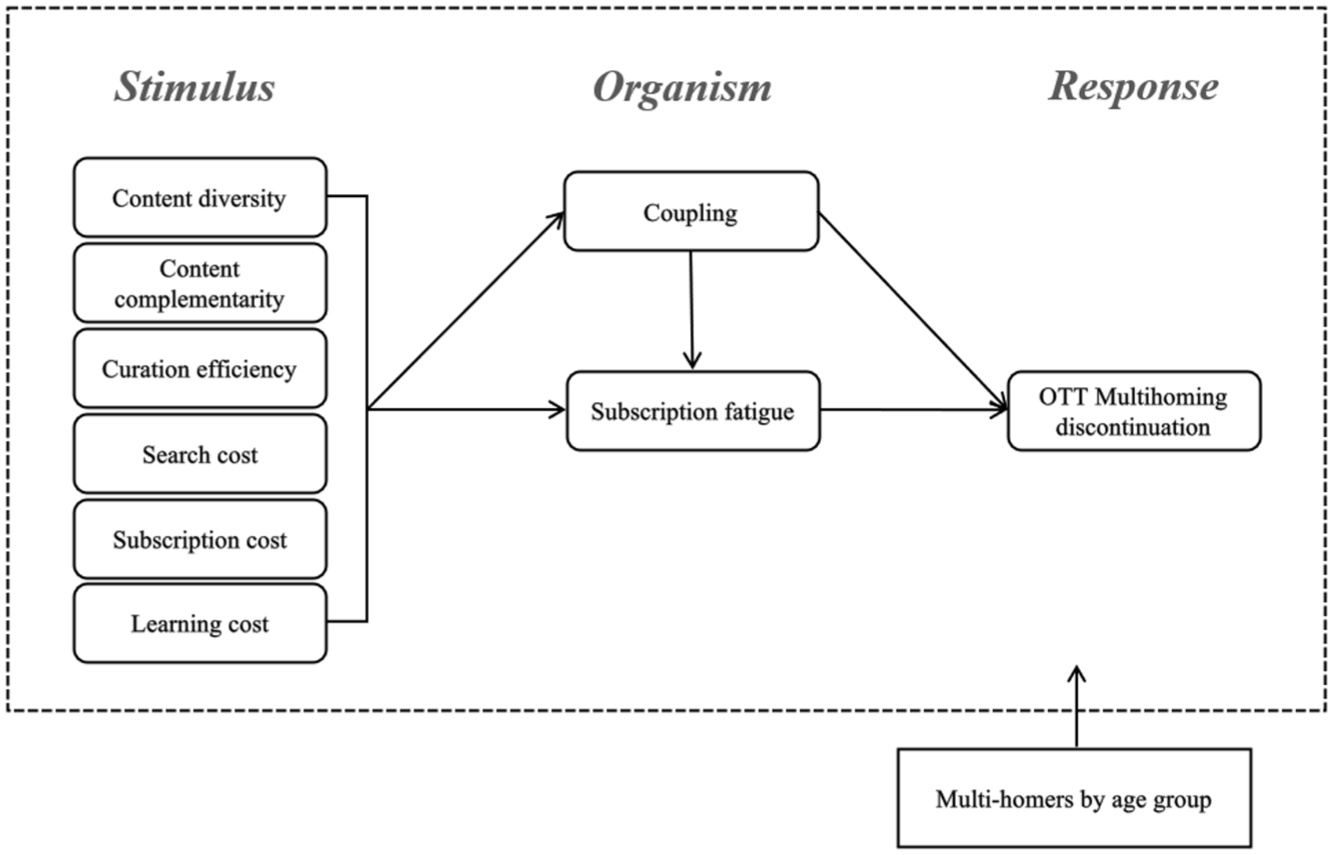
Research model.
Methods
Data Collection and Sample Characteristics
We conducted an online survey from June 3 to 5, 2024, targeting multi-homing users aged 20 to 50 who subscribed to at least two paid OTT services. We recruited respondents through online communities and social networking groups related to OTT. To ensure demographic balance, we applied age- and gender-based quota sampling within these communities. We provided participants who completed the survey with a mobile gift card (approximately USD 10). We also included the number of OTT subscriptions and overall usage patterns as control variables in the structural models.
The study was conducted in accordance with the following ethical procedures. Surveys were administered anonymously without any experimental manipulation or collection of sensitive data. Participants were informed of the study’s purpose and procedure, and only those who provided written informed consent were included. For reward distribution, participants’ contact numbers were collected separately from survey data and deleted within 20 days, in accordance with data minimization principles. Participant risk was minimal and outweighed by the expected academic and social benefits.
A total of 330 people participated in the survey. We excluded 56 responses due to insufficient effort, leaving 274 responses for the final analysis. The sample included 115 males (42.0%) and 159 females (58.0%), resulting in a higher proportion of female respondents. By age group, 112 respondents (73.0%) were in their 20s, 151 (22.6%) were in their 30s, and 11 (4.4%) were 40 and above. These results suggest that people in their 20s represent the most active users of OTT services.
Regarding multi-homing behavior, 200 respondents (73.0%) subscribed to two platforms, 62 (22.6%) to three platforms, nine (3.3%) to four platforms, and three (1.1%) to five platforms. This distribution indicates that most users multi-home on two or three platforms. In terms of usage frequency across platforms, 257 respondents (93.8%) most commonly used Netflix, followed by Wave (12 respondents, 4.0%), TVing (3 respondents, 1.1%), and Coupang Play (2 respondents, 0.7%). These figures confirm Netflix’s dominance among multi-homing users in South Korea.
Research Methodology
We analyzed the data using SPSS 29.0.1 and Smart PLS 4.1.0, along with structural equation modeling (SEM). We employed partial least squares structural equation modeling (PLS-SEM) to estimate path coefficients between latent variables using a least-squares approach. Unlike covariance-based SEM (CB-SEM), which relies on maximum likelihood estimation and stronger parametric assumptions, PLS-SEM yields stable results even with complex models or small sample sizes (Chin, 1998). Whereas CB-SEM is more suited for theory testing, PLS-SEM is more appropriate for theory development and prediction (Hair et al., 2012). Given the study’s primary objective of predicting key structures (e.g., identifying factors influencing the intention to discontinue multi-homing), we selected PLS-SEM as the appropriate analytical method. Nonetheless, as a variance-based and non-parametric approach, PLS-SEM has inherent limitations, particularly in establishing strong causal inferences.
We conducted SEM analysis in two stages. In the first stage, we assessed the measurement model to verify whether each latent variable in the structural model accurately captured the study’s concepts. Specifically, we evaluated convergent validity, discriminant validity, and item reliability of the latent variables. In the second stage, we analyzed the structural model to examine the relationships among factors associated with the intention to discontinue OTT multi-homing services (Hypotheses 1 and 2). We further tested (a) the associations between beneficial·adverse factors and subscription fatigue (Hypotheses 3 and 4), (b) their relationships with coupling (Hypotheses 7 and 8), and (c) the mediating and sequential mediating roles of subscription fatigue and coupling in shaping discontinuation intention (Hypotheses 5, 6, 9, 10, and 11–14). Additionally, we conducted a multi-group analysis to test for age-related effects among multi-homing users (Research Question 1). This approach examined whether path coefficients or outer weights differed significantly across groups (Cheah et al., 2023).
Results
Measurement Model, Validity, and Reliability
We tested the measurement model by evaluating its reliability and convergent and discriminant validity. We assessed reliability using Cronbach’s alpha, composite reliability (CR), and average variance extracted (AVE). Cronbach’s alpha and CR values for all constructs exceeded the standard threshold of 0.7, and the AVE values exceeded the cutoff value of 0.5, demonstrating sufficient construct reliability (Bagozzi & Yi, 1988). We checked item loadings on their respective constructs to evaluate convergent validity (Dijkstra & Henseler, 2015). The factor loadings of the items ranged from 0.70 to 0.92, with all exceeding 0.7, except for content diversity (CD2), which had a loading of 0.66 (Table 1). These results still satisfied the requirement for sufficient convergent validity.
Reliability and Convergent Validity Analysis.

To support discriminant validity, the correlations among the constructs should be smaller than the square root of the AVE of those constructs (Bagozzi et al., 1991). Table 2 shows that the constructs achieved acceptable discriminant validity. We also applied the Heterotrait–Monotrait Ratio (HTMT) of construct correlations to confirm discriminant validity (Henseler et al., 2015). Most constructs had HTMT values below the 0.90 threshold, although two exceeded 0.90. According to Sarstedt et al. (2023) argued that researchers should apply a more lenient threshold of 0.90 or closer to 1 when comparing conceptually similar constructs, such as cognitive and emotional satisfaction. Therefore, we interpreted high HTMT values as reflecting conceptual similarity rather than a strict violation of discriminant validity.
Discriminant Validity Analysis (Fornell–Larcker).
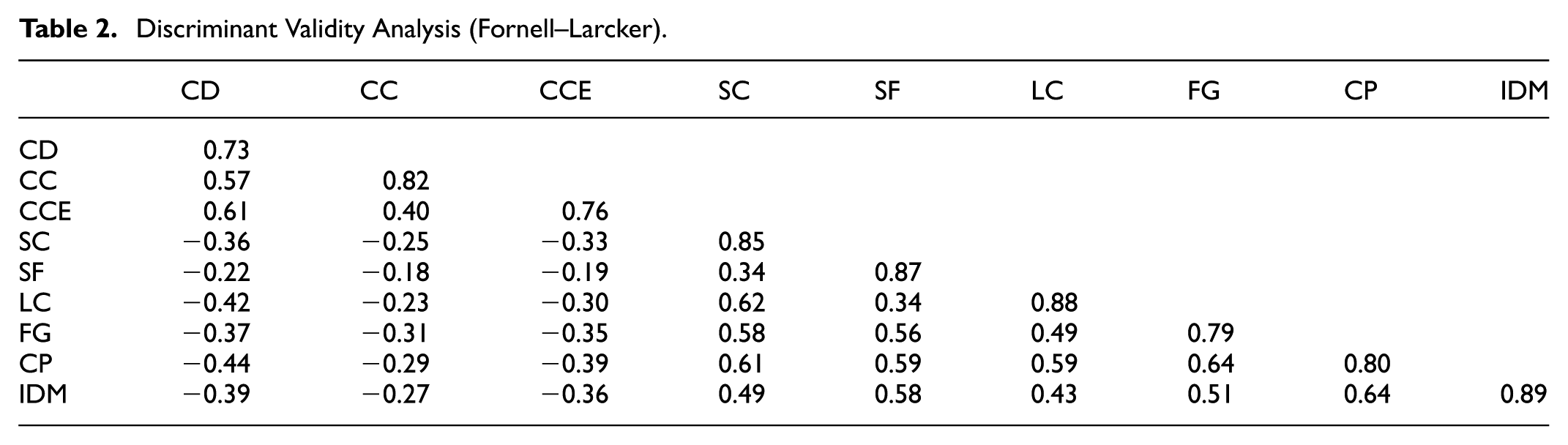
In such cases, an additional review based on cross-loading values is necessary. Henseler et al. (2015) explained that the 0.85 or 0.90 threshold for discriminant validity serves only as a guideline and that values below 1.0 can still support discriminant validity if other evidence, such as cross-loadings, aligns with it. Our review of cross-loadings showed that the content diversity variable loaded most strongly on itself compared to others, thereby supporting discriminant validity. Similarly, content complementarity and content curation efficiency also exhibited the highest loadings on their respective constructs, reinforcing the evidence for discriminant validity. Finally, although the content diversity construct included only two items, prior methodological discussions suggest that researchers can still accept two-item constructs if they provide clear theoretical justification and meet key measurement criteria such as factor loadings, CR, and AVE (Kline, 2023). Supplemental Appendix A provides the detailed measurement items for each construct.
We checked for multicollinearity by applying three criteria to assess the relationships among the independent variables in the structural model: correlation coefficient (r), tolerance, and variance inflation factor (VIF). First, the correlation coefficients between the variables were <.7, which indicated no multicollinearity based on the correlation coefficient criterion. Second, the tolerance values exceeded .1, which further suggests the absence of multicollinearity based on the tolerance criterion. Finally, the VIF values were <10, which confirmed the absence of multicollinearity issues according to the VIF criterion. Based on these results, we confirmed that the model did not exhibit multicollinearity issues.
Structural Model
After evaluating the measurement model, we assessed the structural model. To determine the significance of the model coefficients, we applied the bootstrapping re-sampling method with 5,000 re-samples. Figure 4 presents the results of the structural model. The model explained 60% of the variance in coupling, 53.7% of the variance in subscription fatigue, and 43.5% of the variance in the intention to discontinue multi-homing. All values exceeded the threshold value of 0.30, demonstrating strong explanatory power (Gefen & Straub, 2005).
We evaluated model fit using the standardized root mean square residual (SRMR). With a cutoff value of 0.08 for PLS path models (Henseler et al., 2015), the SRMR value of 0.069 obtained in our study indicates that the model met the fit criterion. Finally, coupling (Q2CP = 0.251), subscription fatigue (Q2SF = 0.493), and the intention to discontinue multi-homing (Q2IDM = 0.422) all exceeded zero, thus confirming the predictive validity of the proposed model. Table 3 summarizes the results of the structural model.
Confirmation of Hypotheses.

Note. SRMR composite model = 0.069; R2CP = 0.600; Q2CP = 0.251; R2CP = 0.435; Q2FG = 0.493; R2CP = 0.537; Q2IDM = 0.422.
p < .001, **p < .01, *p < .05.
Direct Effects: Hypotheses 1 and 2. To test Hypotheses 1 and 2, we conducted an additional analysis to identify the factors that directly influenced discontinuation intention (see Figure 3). Content diversity (β = −.160, p < .01) and content curation efficiency (β = −.120, p < .05) were negatively associated with discontinuation intention, suggesting that users who perceive diverse content and effective recommendations are more likely to continue using the platforms. Search costs (β = .218, p < .01) and subscription fees (β = .424, p < .001) were positively associated with the intention to discontinue multi-homing, indicating that higher costs and search efforts increase the probability that users will discontinue multi-homing.
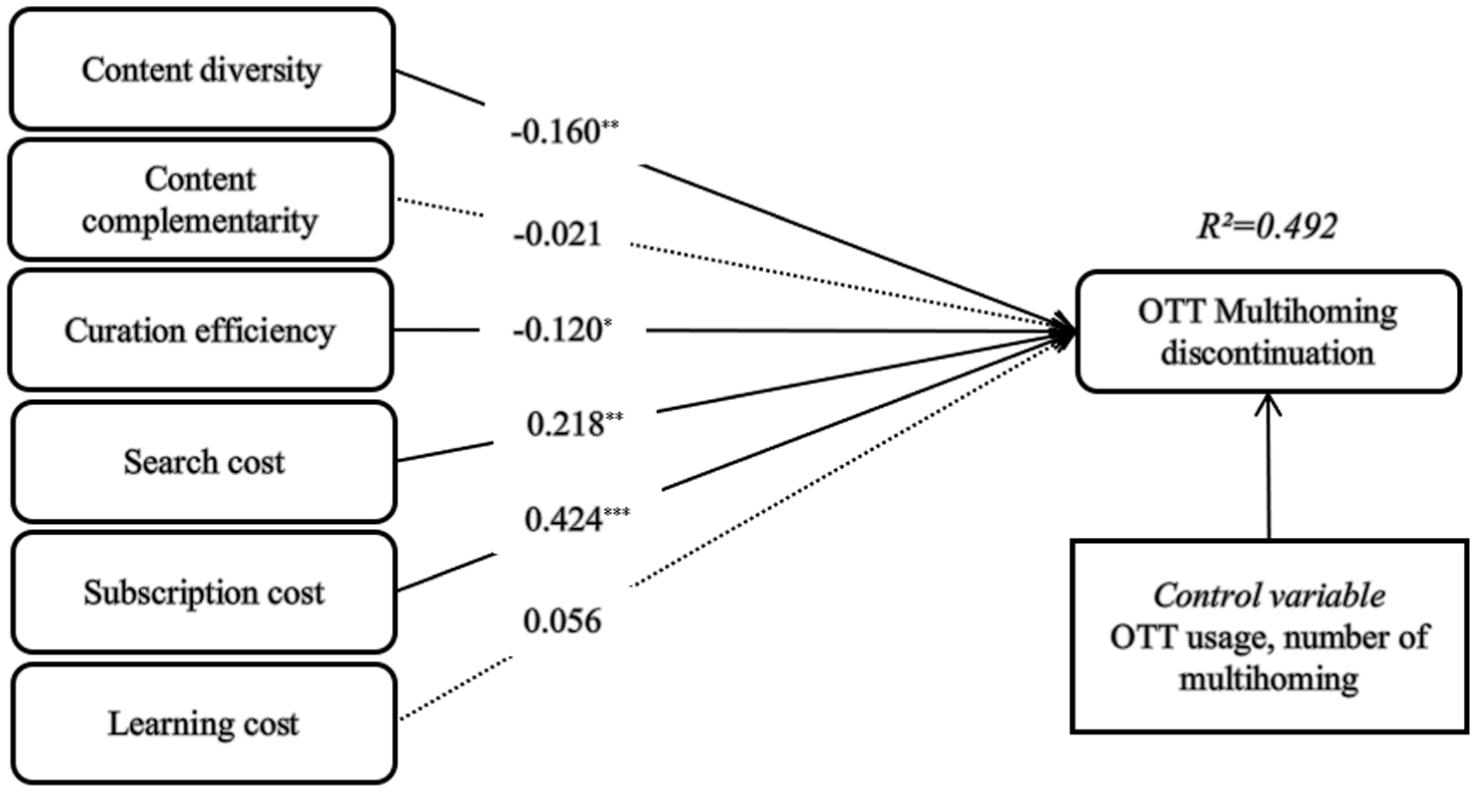
Path analysis of direct effects in the structural model.
Direct Effects on Mediators: Hypotheses 3, 4, 7, and 8. To test Hypotheses 3, 4, 7, and 8, we analyzed the factors associated with subscription fatigue and coupling (see Figure 4). Content complementarity (β = −.088, p < .05) reduced subscription fatigue, indicating that differentiated features and services across platforms can reduce multi−homing fatigue. In contrast, search costs (β = .283, p < .001) and subscription fees (β = .292, p < .001) increased user fatigue, indicating that longer searches and higher costs lead to greater fatigue. Content diversity and curation efficiency did not show significant associations with fatigue.

Path analysis of the structural model.
Regarding coupling, content diversity (β = −.103, p < .05) and curation efficiency (β = −.106, p < .05) weakened coupling, suggesting that diverse and well−curated content reduced the psychological link between costs and benefits. In contrast, search costs (β = .270, p < .001), subscription fees (β = .382, p < .001), and learning costs (β = .216, p < .001) strengthened the coupling, showing that higher perceived costs encouraged users to weigh the benefits more carefully.
Mediator Effects: Hypotheses 11 and 12. For Hypotheses 11 and 12, the results showed that stronger coupling increased subscription fatigue (β = .213, p < .01). This finding suggests that frequent cost–benefit evaluations in a multi-homing context place additional cognitive burdens and intensify fatigue. Moreover, higher subscription fatigue also increased the intention to discontinue (β = .176, p < .01), indicating that fatigued multi-homers are more likely to stop subscribing to multiple platforms. Likewise, stronger coupling (β = .534, p < .001) increased the intention to stop multi-homing, demonstrating that frequent cost–benefit evaluations heighten the likelihood of canceling subscriptions.
Mediation Analysis
We conducted a mediation analysis to examine how factors associated with the intention to discontinue OTT multi-homing operate indirectly through subscription fatigue and coupling (Hypotheses 5, 6, 9, and 10). The results showed that subscription fatigue significantly mediated the effects of search costs and subscription fees. Specifically, search costs (β = .051, p < .05) and subscription fees (β = .053, p < .05) were indirectly related to discontinuation intention through the mediating variable of fatigue (see Figure 5). These findings suggest that when multi-homers invest more time and effort in searching for content and incur higher costs, they experience greater fatigue, which in turn increases their likelihood of discontinuing platform subscriptions.

Mediation effect of subscription fatigue.
Search costs (β = .145, p < .001), subscription fees (β = .205, p < .001), and learning costs (β = .114, p < .001) all were positively associated with discontinuation intention through coupling (see Figure 6). These results suggest that when users perceive higher costs, whether through the effort of searching for content, learning platform functionalities, or paying subscription fees, they compare benefits and costs more consciously, which in turn raises their intention to discontinue multi-homing. In contrast, content diversity (β = −.056, p < .10) and content curation efficiency (β = −.057, p < .05) were negatively associated with discontinuation intention through coupling (see Figure 6). These results suggest that when users perceive content as more diverse and curation as more efficient, they see greater benefits, which reduces their inclination to discontinue multi-homing.

Mediation effect of coupling.
We found an interesting result: the factors that reduced the intention to discontinue multi-homing (e.g., content diversity and content curation efficiency) did not significantly alleviate subscription fatigue, but they showed a negative association with coupling. This result implies that although these factors may not directly reduce subscription fatigue, they still lower discontinuation intention by altering how users weigh the costs and benefits of multi-homing. In other words, when users perceive greater benefits than costs through the coupling process, they become less inclined to discontinue their use of the service. Table 4 provides the mediation analysis results.
Mediation Analysis Results.

Note. ***p < .001, *p < .05, †p < .10.
For the sequential mediation proposed in Hypotheses 13 and 14, coupling and fatigue jointly mediated discontinuation intention only for cost-related factors. Search costs (β = .010, p < .10) and subscription fees (β = .014, p < .10) increased fatigue through coupling, which then reinforced the intention to discontinue (see Figure 7). These findings suggest that OTT multi-homers respond sensitive to accumulated platform costs, which lead them to reassess the service’s value, generate subscription fatigue, and strengthen their intention to discontinue.

Dual mediation effect of coupling and subscription fatigue.
Multi-Group Analysis by Age of Users
We analyzed the moderating effect of age on multi-homing users (RQ1). Using the median age, we divided the sample into an older group (n = 117) and a younger group (n = 157). Table 5 shows the path coefficients for both groups, indicating whether their differences are statistically significant. The analysis revealed that younger users sought greater content complementarity and, as a result, experienced less fatigue. This finding suggests that using multiple platforms reduces subscription fatigue for younger users, whereas using multiple platforms increases fatigue for older users.
Multi-Group Analysis Results.

Note. ***p < .001, **p < .01, *p < .05, †p < .10.
We also found that content curation efficiency significantly reduced fatigue in the older group, but not in the younger group. This result suggests that as people age, they expend more cognitive effort and time searching for content, so efficient curation systems effectively reduce subscription fatigue. For older users, content curation efficiency also reduced coupling, indicating that when they received well-curated content tailored to their preferences, they associated costs and benefits less strongly, which in turn decreased their intention to discontinue. In contrast, the alleviating effect appeared weaker for younger users. This difference suggests that older users place more value on the convenience of content curation, whereas younger users prefer to explore and make selections independently, relying less on curation.
Finally, the younger group showed a stronger tendency than the older group to increase coupling when they perceived higher search costs. This finding suggests that younger users view time and effort as essential to exploring content across multiple platforms. As search costs rise, they weigh costs and benefits more carefully when making content choices. Table 5 summarizes the results of this study’s multi-group analysis.
Discussion
This study examined the phenomenon of multi-homing, a dominant pattern of over-the-top (OTT) consumption and investigated the factors that shape users’ intentions to discontinue multiple subscriptions. Unlike prior studies that assumed overload stimuli directly induce user fatigue, our findings show that content diversity (CD), content curation efficiency (CCE), and learning costs (LC) did not directly affect fatigue. Instead, these factors influenced discontinuation through coupling, underscoring coupling as the central psychological mechanism that transforms external stimuli into subscription fatigue and discontinuation intentions. Against this backdrop, we summarize the key findings as follows.
First, search costs and subscription fees increased users’ tendency to discontinue multi-homing, whereas content diversity and curation efficiency reduced it. These results support the multidimensional brain processing theory (Cacioppo et al., 1999), which argues that positive and negative experiences independently shape user behavior. Previous research emphasized positive stimuli, such as content diversity, as drivers of continued OTT usage (Agarwal et al., 2023; Menon, 2022). Our results align with this perspective, revealing that negative stimuli heighten intentions to discontinue. Thus, users facing economic burdens and difficulties in finding content are more likely to cancel subscriptions, whereas those who perceive the benefits of content variety and curated recommendations are more likely to continue multi-homing.
Second, subscription fatigue and coupling emerged as the major psychological factors driving the intention to discontinue OTT multi-homing. While prior studies have demonstrated that stress from technology use increases service avoidance and discontinuation (Beaudry & Pinsonneault, 2005), our study extends the discussion by clarifying the mechanisms through which external stimuli shape discontinuation. Specifically, search costs and subscription fees increased subscription fatigue, which in turn heightened the intention to discontinue the service. Other factors, such as content diversity, curation efficiency, and learning costs, influenced discontinuation indirectly through coupling, highlighting coupling’s pivotal role as a primary antecedent of fatigue.
The concept of coupling, which is the mental association between costs and benefits, also played a significant role. Frequent cost–benefit comparisons increased discontinuation intentions, supporting prior findings (K. Park et al., 2015; Prelec & Loewenstein, 1998). For instance, higher search, subscription, and learning costs increased discontinuation through coupling, whereas content diversity and efficient curation reduced it. This finding suggests that users who perceive the benefits of multi-homing to outweigh costs are more likely to maintain their subscriptions.
Interestingly, the findings show a correlation between discontinuation intention and a wide range of factors, rather than through subscription fatigue. While fatigue primarily reflects the psychological strain of negative stimuli, coupling operates as a broader evaluative mechanism that links positive and negative stimuli to intentions to discontinue. This finding suggests that discontinuation arises from emotional exhaustion and continuous cost–benefit evaluations that reframe users’ perceived value of multi-homing.
Finally, age differences shaped how users experienced subscription fatigue. Younger users tended to be more sensitive to search costs, which heightened coupling, whereas older users responded more strongly to curation efficiency. These results suggest that users interact with OTT platforms differently based on their age, which in turn affects the cognitive burden they experience. Thus, OTT companies should consider age-specific strategies when designing their services.
Limitations and Future Research
This study has several limitations. First, because we conducted the research with OTT users in South Korea, the findings have limited generalizability to other cultural contexts. South Korea, with its high internet penetration and extensive use of OTT services, represents a leading market in digital content consumption. While the findings provide insights for OTT platforms in other growing markets, future research should include cross-cultural samples to compare multi-homing behaviors across countries.
Second, we recruited participants from OTT-focused online communities and social networking groups. This strategy may over-represent highly engaged OTT users while under-representing less active subscribers. Although we mitigated this concern by applying age- and gender-based quotas and controlling for subscription levels in the models, unobserved differences may remain. Future research should utilize probability-based panels or mixed recruitment frames to minimize selection bias.
Third, this study focused exclusively on subscription-based OTT services, excluding ad-supported or niche content platforms. The growing popularity of ad-supported OTT services may affect subscription behavior and discontinuation intentions. Future studies should compare multi-homing behavior across different types of OTT services.
Fourth, although we considered age-related differences, we grouped respondents broadly into broad into younger and older users. We did not differentiate among specific generations, such as Baby Boomers, Generation X, or Generation Z. Future research should examine these generational distinctions in more depth to clarify how multi-homing behaviors differ across age cohorts.
Conclusion
This study offers academic and practical implications. Academically, we applied the stimulus–organism–response (S–O–R) theory to OTT multi-homing, explaining how various external stimuli shape psychological states such as subscription fatigue and coupling, which in turn related to users’ intention to discontinue subscriptions. By introducing coupling as a psychological variable unique to multi-homing, we expanded the theoretical framework for understanding users’ internal decision-making processes.
Second, this study provides a more comprehensive perspective on discontinuation behavior by simultaneously examining drivers (e.g., search costs, subscription fees, and learning costs) and mitigators (e.g., content diversity, content complementarity, and curation efficiency). Grounded in multidimensional brain processing theory, our findings suggest that the decisions of multi-homers arise from a complex interplay of external stimuli and internal psychological processes.
Third, this study highlighted the importance of managing subscription fatigue. Search costs and subscription fees emerged as the primary factors associated with fatigue, which increased the likelihood of discontinuing multi-homing. From a business perspective, OTT platforms should invest in improving search functions, refining content curation, and offering flexible pricing models to mitigate fatigue.
Fourth, we emphasized the importance of value communication. Reducing fees and search costs is not sufficient; platforms must ensure that users perceive tangible benefits. Effectively communicating the advantages of content variety, quality, and curation can counterbalance coupling effects and enhance user loyalty.
Finally, we underscored the role of age in shaping user experience and differentiated service strategies. The findings show that younger users tend to value efficient search processes and intuitive interfaces, whereas older users prioritize curated recommendations. OTT platforms should develop age-specific strategies to enhance user satisfaction and retention across various demographics.
Supplemental Material
sj-docx-1-sgo-10.1177_21582440251397865 – Supplemental material for Unsubscribing From Over-the-Top: How Subscription Fatigue and Mental Coupling Affect Multi-Homing Users
Supplemental material, sj-docx-1-sgo-10.1177_21582440251397865 for Unsubscribing From Over-the-Top: How Subscription Fatigue and Mental Coupling Affect Multi-Homing Users by DongA Jeong and Sang Woo Lee in SAGE Open
Footnotes

Ethical Considerations
This study was based on an anonymous online survey that involved no experimental manipulation or personally identifiable data. In line with ethical guidelines for non-interventional studies, approval from an Institutional Review Board (IRB) and formal informed consent were deemed unnecessary.
Funding
The authors disclosed receipt of the following financial support for the research, authorship, and/or publication of this article: This work was supported by the IITP (Institute of Information & Coummunications Technology Planning & Evaluation)-ITRC (Information Technology Research Center) grant funded by the Korea government (Ministry of Science and ICT) [IITP-2025-RS-2020-II201749].
Declaration of Conflicting Interests
The authors declared no potential conflicts of interest with respect to the research, authorship, and/or publication of this article.
Data Availability Statement
Data sharing not applicable to this article as no datasets were generated or analyzed during the current study.
Supplemental Material
Supplemental material for this article is available online.
References
Supplementary Material
Please find the following supplemental material available below.
For Open Access articles published under a Creative Commons License, all supplemental material carries the same license as the article it is associated with.
For non-Open Access articles published, all supplemental material carries a non-exclusive license, and permission requests for re-use of supplemental material or any part of supplemental material shall be sent directly to the copyright owner as specified in the copyright notice associated with the article.
