



Abstract
Online hotel booking websites have emerged as a dominant form of electronic service in the hospitality industry. However, existing literature on technology acceptance and e-service quality often examines consumer behavior using limited theoretical perspectives. Moreover, the specific influence of individual e-service quality dimensions on technology acceptance remains underexplored. This study adopts a context-sensitive approach by integrating e-service quality—comprising efficiency, system availability, information quality, and privacy—as key antecedents within the Technology Acceptance Model (TAM) to examine behavioral intention toward online hotel booking. Data were collected through a structured survey of 355 users of online hotel booking websites. Partial Least Squares-Structural Equation Modeling (PLS-SEM) and Importance-Performance Map Analysis (IPMA) were employed for analysis. PLS-SEM findings indicate that efficiency and system availability positively significantly influence perceived ease of use, while privacy and information quality positively affect perceived usefulness. Furthermore, IPMA results suggest that efficiency, perceived ease of use and usefulness should be prioritized in managerial decision-making for enhancing behavioral intention. This research extends the technology acceptance framework by embedding e-service quality dimensions, offering nuanced insights into consumer decision-making in the context of online hotel booking.
Plain Language Summary
This study explores why people continue using online hotel booking websites by combining the Technology Acceptance Model (TAM) with e-service quality factors like efficiency, system availability, information quality, and privacy. The findings suggest that adding e-service quality elements to the TAM model provides a better understanding of why users keep using online hotel booking platforms.
Introduction
Travelers are increasingly preferring to book hotel accommodations through online websites (Chalupa & Petricek, 2024). These online hotel booking websites have become essential service channels, enabling seamless reservation experiences and reinforcing customers’ booking intentions. Research shows that customers are more likely to book when they encounter attractive deals and user-friendly interfaces—particularly in the hospitality industry. In this context, behavioral intention serves as a key predictor of online consumer behavior, including hotel bookings (Agag & El-Masry, 2016a, 2016b; Biswas, 2023).
Existing studies, primarily grounded in the Technology Acceptance Model (TAM) and service quality theories, have significantly contributed to understanding the determinants of consumer behavior and behavioral intention in online hotel booking contexts. One stream of literature applies the TAM framework to explain behavioral intention among e-commerce users. These studies have extended TAM by incorporating various social, instrumental, and emotional antecedents to better reflect the dynamics of technology adoption in hospitality settings (Agag & El-Masry, 2016a; Amin et al., 2021; Baydeniż et al., 2024; Camilleri & Falzon, 2021). This body of work affirms the TAM’s relevance and adaptability in explaining the drivers of online hotel booking intentions.
A parallel line of research draws on e-service quality theories to explore users’ behavioral intentions across diverse e-commerce settings (S. Ahmad et al., 2020; Gera, 2011; Kumar & Patil, 2024; Mohamed Fadel Bukhari et al., 2013; Suh et al., 2013). Originally conceptualized to evaluate consumers’ interaction with websites (Parasuraman et al., 2005), e-service quality reflects the customer’s evaluation of the service experience delivered through online platforms. Prior studies have shown that various e-service quality dimensions positively influence customer satisfaction, which in turn shapes behavioral intentions, revisitation, repurchase, and loyalty (Bag et al., 2021; Goutam et al., 2022; Saha & Mukherjee, 2022; Xiao et al., 2020). Service quality, in this context, functions as a reliable metric for assessing consumers’ evaluation of service transactions and their intention to continue using the technology (Pagnanelli et al., 2025; Taherdoost, 2018).
More recently, studies have begun to theorize perceived service quality as a core antecedent of technology acceptance in service-oriented contexts (Al-Geitany et al., 2023). Broadly speaking, prior research has linked service quality (or e-service quality) to several constructs such as attitude (E. Park & Joon Kim, 2013), behavioral intention (Liu & Mensah, 2024; Taherdoost, 2018), consumer behavior (Zhao et al., 2024; Zhou et al., 2021), and customer satisfaction (Lee & Wu, 2011; Taherdoost, 2018). Within the TAM framework, specific dimensions of service quality—particularly information quality—have been integrated as antecedents to explain users’ behavioral intention in e-commerce and e-travel contexts (Afshardost et al., 2013; Lin, 2010; Taufique et al., 2024; Yoo et al., 2023). Information quality, often characterized by relevance, accuracy, and presentation, has been shown to significantly influence users’ perceptions of usefulness and ease of use. Notably, recent TAM studies have started to recognize the importance of service quality, by proposing service quality to have a collective influence on both perceived ease of use and perceived usefulness (Kim et al., 2023; Pagnanelli et al., 2025; Zhao et al., 2024). These studies, however, overlook the unique and specific effects of individual service quality components.
Building upon these foundations, this study proposes the integration of e-service quality dimensions into the TAM to offer a more comprehensive understanding of behavioral intention in the context of online hotel booking. Whereas TAM captures the subjective perceptions of users, e-service quality reflects their objective service experiences. We argue that e-service quality can serve as a contextual antecedent in the TAM, indirectly influencing behavioral intention through PU and PEOU. Unlike previous studies that model service quality as a collective construct, we posit that its components may exert distinct influences on TAM variables due to their differing characteristics. For instance, PU reflects the instrumental benefits of using a platform, while PEOU represents the cognitive effort required. Moreover, the impact of e-service quality components tends to vary depending on the nature of the service technology (Kim et al., 2023; Pagnanelli et al., 2025; Zhao et al., 2024).
Overall, this study aims to extend the TAM framework by incorporating four key e-service quality dimensions—efficiency, system availability, privacy, and information quality—as antecedents that influence users’ behavioral intention to use online hotel booking platforms. This approach not only deepens the theoretical integration of service quality within TAM but also offers new insights into consumer decision-making in the digital hospitality landscape.
Theoretical Background
Online Hotel Booking
Online hotel booking has emerged as one of the most prominent channels for hotel distribution in recent years (Chalupa & Petricek, 2024). In response to evolving consumer behavior on digital platforms, e-commerce has become an essential medium for attracting and engaging potential customers, thereby increasing hotel booking rates. Consumer behavior in this context is often forecasted by behavioral intention, which is shaped by various antecedent factors (Farah & Shahzad, 2020; Shahzad et al., 2019). A persistent challenge in advancing online hotel booking adoption lies in identifying the motivational drivers that influence and stimulate consumers’ behavioral intentions to utilize these platforms effectively.
Online hotel booking websites support consumers in achieving their instrumental goals by providing comprehensive information about hotel properties, including facilities, pricing, and available amenities (Rezaei et al., 2024). These platforms facilitate product or service comparisons aligned with consumers’ budgetary constraints and personal preferences. Moreover, they substantially reduce consumers’ search time and effort. Well-established platforms such as Agoda and Booking.com enable users to browse, evaluate, and reserve hotels with ease. Their functionality allows for refined search capabilities, offering personalized hotel recommendations that align closely with users’ travel requirements.
Technology Acceptance Model (TAM)
Extant research has consistently demonstrated the efficacy of the Technology Acceptance Model (TAM) in predicting consumer behavioral intentions within the online booking context (Agag & El-Masry, 2016a, 2016b). TAM is an individual-level technology adoption model developed to understand voluntary use of technology (see Figure 1). It is anchored on two primary constructs: Perceived Usefulness (PU) and Perceived Ease of Use (PEOU). PU refers to the degree to which an individual believes that using a particular system will enhance their performance, typically in a task-specific or organizational setting. Conversely, PEOU pertains to the extent to which an individual perceives that using the system will be free of effort. These two constructs exert both direct and indirect influences on an individual’s behavioral intention to use technology. Specifically, PU and PEOU shape users’ attitudes toward the system, which in turn impacts their intention to use it. Additionally, external variables are posited to influence both PU and PEOU, while PEOU is also theorized to have a direct effect on PU. Thus, TAM offers a robust framework for examining the cognitive evaluations that underpin technology adoption decisions in the context of online hotel booking.
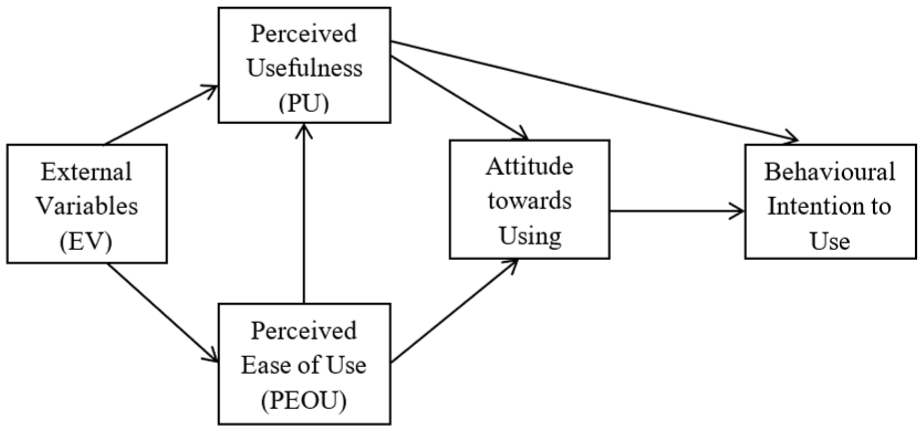
TAM model.
E-service Quality in The Context of Online Hotel Booking Sites
E-service quality, as introduced by Parasuraman et al. (2005), is an adaptation of the traditional SERVQUAL model, specifically designed to evaluate service quality in electronic environments such as online shopping websites. The primary objective of e-service quality is to capture customers’ perceptions and evaluations of their experiences across all dimensions of interaction with a website. The e-service quality framework comprises four key dimensions: efficiency, fulfillment, system availability, and privacy (Parasuraman et al., 2005). Efficiency pertains to the ease and speed with which users can access and navigate the website. Fulfillment refers to the degree to which the site delivers on its promises regarding order accuracy, product availability, and delivery timelines. System availability evaluates the website’s technical performance and reliability. Privacy measures the extent to which the platform ensures the security and confidentiality of customer data. In essence, e-service quality is grounded in the principles of SERVQUAL but tailored for digital service environments. Its validity and reliability have been supported through rigorous psychometric testing (Nguyen et al., 2023).
E-service quality serves as a benchmark for assessing perceived service performance differentiation in a specific industry. However, with the increasing complexity of digital applications, measuring e-service quality has become more challenging from an e-business perspective (Nguyen et al., 2023). One of the most frequently cited limitations of the e-service quality framework is its lack of generalizability across different e-service technologies, due to the contextual uniqueness of customer expectations (Ashiq & Hussain, 2024; M. N. Khan et al., 2023; Ladhari, 2010; Nguyen et al., 2023). For instance, the dimension of empathy, traditionally significant in service quality assessments, may hold varying levels of importance across different e-service contexts. These discrepancies often stem from the extent of customization and user interaction on digital platforms. Consequently, scholars have advocated for contextualized evaluations of e-service dimensions, proposing the adaptation or reorganization of the model to fit specific service settings (Ashiq & Hussain, 2024; Nguyen et al., 2023). In line with this, it is argued that customers’ expectations for online hotel booking services may differ substantially from those for traditional online retail platforms.
To reiterate, we view that the assessment of e-service quality in the context of online hotel booking should align with the specific expectations of users in that environment. Among the four original components of e-service quality, efficiency, system availability, and privacy are deemed relevant and applicable to online hotel booking platforms. These reflect customer priorities regarding ease of access, technical functionality, and information security. However, we argue that the fulfillment component is less applicable in this context, as it is traditionally associated with the physical delivery of goods—an aspect not directly involved in hotel reservations. Therefore, fulfillment may be excluded from the e-service quality construct in the context of hotel bookings.
Conversely, information quality has emerged as an important component warranting inclusion in the e-service quality framework for online hotel booking (K. Ahmad & Sharma, 2023; Janita & Miranda, 2018; Salameh et al., 2022; Zavareh et al., 2012). This construct originates from the WebQual model, which assesses website quality based on user perceptions (Barnes & Vidgen, 2000). Information quality encompasses attributes such as relevance, accuracy, comprehensiveness, and presentation format of content available on the website. Empirical evidence supports the inclusion of information quality as a significant predictor of users’ behavioral intention in service technology adoption, particularly within TAM-based studies (C.-C. Chen & Chang, 2018; YiFei & Othman, 2024; Zheng et al., 2013). In the hospitality sector, where transactions do not involve tangible goods, high-quality information plays a crucial role in enhancing users’ knowledge and confidence, which in turn influences their purchase intentions (Alotaibi, 2025; C.-C. Chen & Chang, 2018; Gursoy, 2019). Thus, integrating information quality as a core dimension of e-service quality offers a more accurate representation of service expectations in the context of online hotel booking.
Research Model and Hypotheses Development
This study develops a research model to examine behavioral intention toward online hotel booking by integrating e-service quality dimensions into the Technology Acceptance Model (TAM) (see Figure 2). While TAM captures users’ subjective perceptions—namely, perceived ease of use (PEOU) and perceived usefulness (PU)—e-service quality reflects users’ evaluation of the performance and quality of their service experience. The model specifically incorporates four e-service quality dimensions relevant to the online hotel booking context: efficiency, system availability, information quality, and privacy. Our study proposes efficiency and system availability will positively influence PEOU while information quality and privacy will positively influence PU. In addition, gender and age are included as control variables. Although prior TAM studies in the tourism and e-commerce domains have reported mixed findings regarding the effects of gender and age, these demographic factors may still relevant on certain type of technology or context (Assaker, 2020; Muhammad et al., 2024; I. Park et al., 2022). Therefore, controlling for gender and age enables a more robust evaluation of the hypothesized relationships.
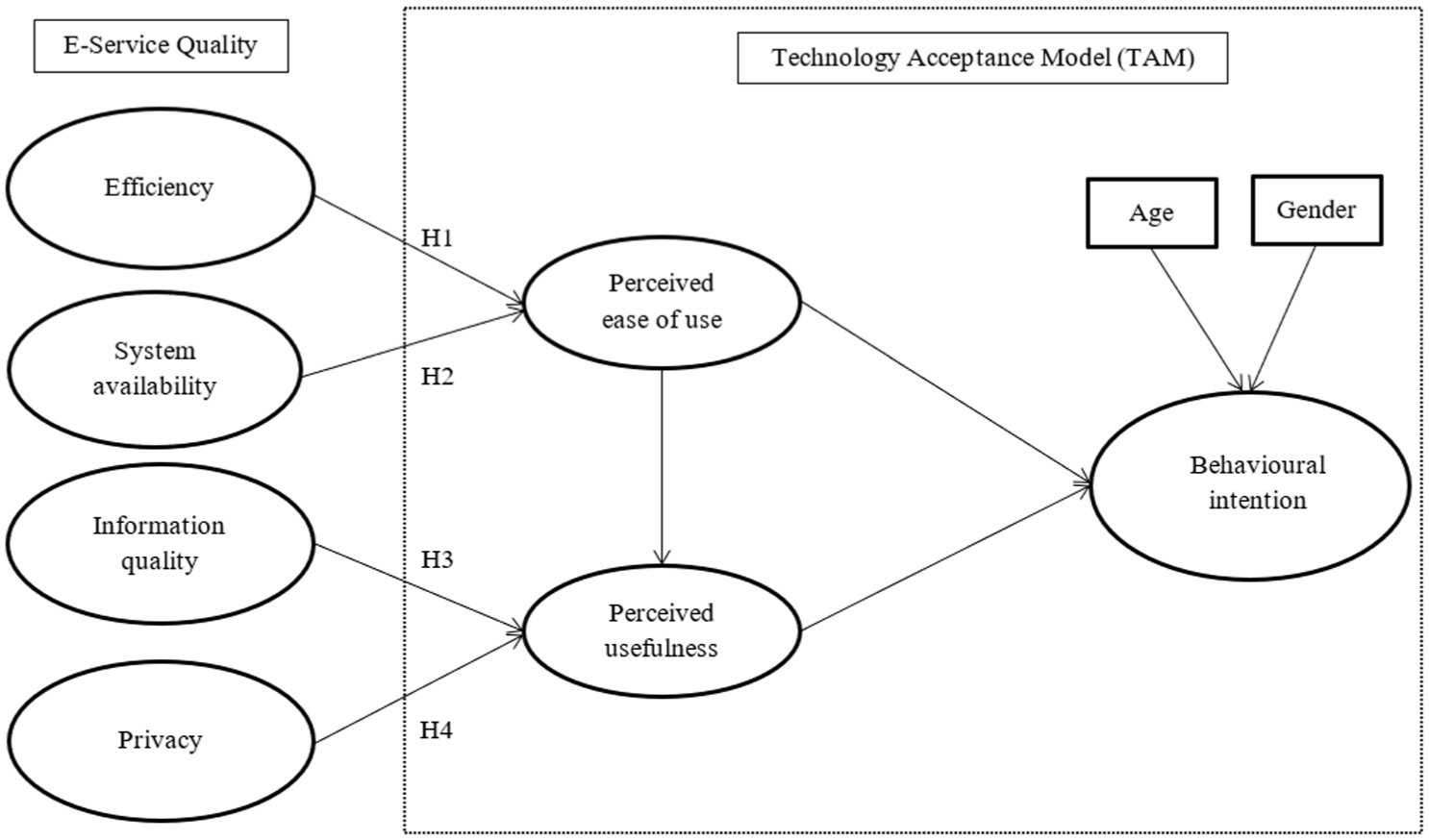
Research model.
Efficiency and Perceived Ease of Use
Higher efficiency reflects faster and more seamless access to service processes (Nissinen et al., 2024). Within the framework of e-service quality, efficiency refers to the ease and speed with which users can access and navigate a website (Parasuraman et al., 2005). A user-friendly and responsive interface enhances perceived convenience and reduces the effort required to complete tasks.
Prior research has demonstrated that efficiency facilitates effective information search, leading to time and cost savings for users during online purchases (N. Chen & Yang, 2021; Dhingra et al., 2020; Li & Shang, 2020). A highly efficient booking site reduces users’ cognitive load, thereby increasing their perception that the system is easy to use. Consequently, users are more likely to report a higher perceived ease of use (PEOU) as a result of efficient service performance.
System Availability and Perceived Ease of Use
System availability refers to the technical performance and operational reliability of a website (Parasuraman et al., 2005). In the context of online hotel booking platforms, it reflects the correct technical functioning and uninterrupted access to system features (Türkdemir et al., 2023). A website with high system availability allows users to browse, search, and complete bookings without encountering errors (or downtime).
Previous studies have emphasized the importance of system availability in fulfilling consumers’ instrumental needs and in fostering satisfaction and loyalty (Ighomereho et al., 2023; Zehir & Narcıkara, 2016). Consistent functionality contributes to a user experience that is free from confusion or disruption, which enhances perceived ease of use (Masri et al., 2020).
Information Quality and Perceived Usefulness
Information quality pertains to the relevance, accuracy, reliability, currency, and completeness of the information presented on a website, all of which are essential for customer decision-making (DeLone & McLean, 2003). It is an important determinant of perceived service quality, customer loyalty and satisfaction especially in the context of e-travel services and online bookings (Ho & Lee, 2007; Masri et al., 2020; Salameh et al., 2022; Yoo et al., 2023).
Empirical research has consistently supported the notion that information quality enhances users’ ability to achieve instrumental goals and make informed decisions (Badr et al., 2024; Y.-L. Chen et al., 2021; A. Khan et al., 2025; Masri et al., 2020). In the context of online hotel booking, information quality enables users to compare options, assess suitability based on preferences and budget, and make confident booking decisions. As such, users are likely to perceive a system as more useful when the information it provides is accurate, comprehensive, and easy to understand.
Privacy and Perceived Usefulness
Privacy refers to the extent to which an online service secures user data and ensures the confidentiality of personal information (Parasuraman et al., 2005). Privacy has been identified as a key determinant of users’ trust, perceived usefulness, and continued intention to use e-services, particularly in the travel and tourism domain (Cheah et al., 2022; Ioannou et al., 2021; Qalati et al., 2021).
Consumers are often concerned about data security risks, including unauthorized access, data breaches, and the misuse of personal information (Salameh et al., 2022; Shoukat et al., 2025). When booking platforms implement robust privacy safeguards, users are more likely to perceive the system as trustworthy and beneficial, thus enhancing their perceived usefulness.
Methods
Instrument Development
The research model integrates constructs from both e-service quality and the Technology Acceptance Model (TAM), utilizing multi-item scales to measure each construct. E-service quality was operationalized using four dimensions: efficiency (6 items), system availability (4 items), privacy (5 items), and information quality (5 items), based on well-established measures in prior literature (Escobar-Rodríguez & Carvajal-Trujillo, 2014; Parasuraman et al., 2005). The constructs for perceived usefulness (PU) and perceived ease of use (PEOU) were each measured using four items, adapted from Lin (2010). Similarly, behavioral intention was assessed with five items, also adapted from Lin (2010). All measurement items were rated on a five-point Likert scale ranging from 1 (strongly disagree) to 5 (strongly agree).
To ensure content validity and clarity of the survey items, the initial instrument was reviewed by two domain experts: a professor with academic expertise in e-commerce and a seasoned e-commerce entrepreneur based in Malaysia. Revisions were made to the questionnaire based on their suggestions to enhance the accuracy and contextual relevance of the items. Following the expert review, a pretest was conducted with 20 participants who were regular users of online hotel booking platforms. The pretest aimed to assess whether the items were clearly understood and interpreted as intended. Based on the feedback from this pretest, several items were revised to improve wording and ensure clarity.
Data Collection Procedure and Sample
This study employed convenience sampling and utilized a self-administered survey questionnaire for data collection. The survey was conducted over four consecutive days at a travel and tourism event held in Johor, Malaysia. To ensure relevance, potential participants were screened for prior experience in using online hotel booking sites. Only those who confirmed they had previously booked hotels online were invited to participate. To encourage participation, a small incentive gift was provided to respondents who completed the questionnaire. A total of 370 responses were collected. After initial screening, 15 responses were removed due to excessive missing data. Further data cleaning involved checking for straight-lining, where responses show the same rating for all items; none were found. Consequently, the final dataset consisted of 355 valid responses.
Table 1 presents the demographic profile of the respondents. All participants were Malaysian users of online hotel booking platforms. The majority were female (66.8%), while male respondents comprised 33.2%. Most participants fell within the 26 to 35 age range (53%). In terms of educational background, 74.9% held at least a college or university degree. Additionally, 64.5% of respondents were employed, with the majority reporting a monthly income between RM 3,001 and RM 4,000.
Sample Demographic.

Common Method Variance
Common method bias (CMB) can pose a threat to the validity of findings, particularly in self-report surveys where data for both independent and dependent variables are collected from the same respondents at a single point in time. Such bias may arise when respondents exhibit systematic response tendencies, potentially inflating (or deflating) observed relationships.
To assess the potential for common method bias in this study, we employed two widely used techniques: Harman’s single-factor test and the full collinearity assessment (J. Hair et al., 2017; Kock, 2015). First, Harman’s single-factor test was conducted to determine whether a single factor accounts for the majority of the variance among the measurement items. The results revealed that the largest variance explained by a single factor was 38.50%, which is well below the 50% threshold, indicating that common method bias is unlikely to be a concern. Second, we conducted a full collinearity test by examining variance inflation factor (VIF) values for all constructs. The highest VIF obtained was 2.17, which is below the recommended cutoff value of 3.30 (Kock, 2015), further suggesting that multicollinearity and CMB are not present in the data. In short, the results from both tests provide evidence that common method variance does not pose a serious threat to the validity of the findings in this study.
Statistical Analysis
This study employed Partial Least Squares-Structural Equation Modeling (PLS-SEM) to assess the psychometric properties of the measurement model and to test the hypothesized relationships (J. F. Hair et al., 2022). Given the exploratory nature of the research—focused on developing and validating a theoretical model by integrating e-service quality and the Technology Acceptance Model (TAM)—PLS-SEM was deemed an appropriate analytical approach. PLS-SEM is particularly suitable for exploratory research involving complex models with multiple constructs, such as the current study’s conceptualization of e-service quality as a construct comprising four dimensions (efficiency, system availability, privacy and information quality). This approach also allows for the simultaneous estimation of measurement and structural path models.
Furthermore, this study employed the Importance-Performance Map Analysis (IPMA) feature within PLS-SEM to enhance the practical relevance of the findings (Cheng et al., 2025). IPMA goes beyond traditional path coefficient analysis by assessing both the importance (total effects) and performance (average latent variable scores) of predictor constructs. This enables researchers and practitioners to prioritize constructs that have the greatest potential impact on a targeted outcome—in this case, behavioral intention—thus offering both theoretical value and actionable managerial insights.
Results
Measurement Model
The measurement model was assessed for indicator reliability, internal consistency, convergent validity, and discriminant validity following the guidelines of J. F. Hair et al. (2022). The results are summarized in Tables 2 to 4. First, all item loadings ranged from 0.72 to 0.88, surpassing the recommended threshold of 0.70, thus indicating acceptable indicator reliability. Second, the values for both Composite Reliability (CR) and Cronbach’s Alpha surpassed the .70 minimum criterion for all constructs, demonstrating satisfactory internal consistency. Third, the Average Variance Extracted (AVE) values for all constructs were above 0.50, confirming that each construct explains more than 50% of the variance in its indicators, thus establishing convergent validity.
Measurement Models.

Notes. CA = Cronbach’s Alpha; CR = Composite Reliability; AVE = Average Variance Extracted.
Fornell-Lacker Criterion.

Note. Bolded diagonal values denote the square root of AVE between the constructs and their indicators. Non-diagonal values represent the correlations between constructs.
Heterotrait-Monotrait (HTMT).

Discriminant validity was evaluated using both the Fornell–Larcker criterion and the Heterotrait–Monotrait Ratio (HTMT). According to the Fornell–Larcker criterion, the square root of AVE for each construct exceeded its correlations with other constructs (Table 3), indicating satisfactory discriminant validity. To supplement this, HTMT values were also assessed. Given that Perceived Usefulness (PU) and Perceived Ease of Use (PEOU) are conceptually distinct but empirically similar constructs, we adopted the more liberal threshold of HTMT.90 (Henseler et al., 2015). All HTMT values in this study were below 0.90 (Table 4), confirming the absence of discriminant validity issues.
Structural Model
To assess the structural model, a bootstrapping procedure with 5,000 resamples was conducted to evaluate path coefficients, t-values, and R2 values. In addition, the blindfolding procedure was used to calculate predictive relevance (Q2) for the endogenous constructs (see Table 5 and Figure 3).
Structural Model.

Note. BI = behavioral intention; PU = perceived usefulness; PEOU = perceived ease of use; ns = not significant.
p < .01, **p < .05.

Results of the research model.
The R2 values for Perceived Ease of Use (PEOU), Perceived Usefulness (PU), and Behavioral Intention were .53, .56, and .57, respectively—each exceeding the recommended minimum threshold of .20 (J. F. Hair et al., 2022). These results suggest that the model demonstrates substantial explanatory power for key consumer behavior outcomes in the context of online hotel booking.
On the other hand, all Q2 values for the endogenous constructs were greater than 0, confirming that the model exhibits predictive relevance for PEOU, PU, and behavioral intention. Effect size analysis revealed that efficiency had a large effect on PEOU (f2 = 0.34), while system availability had a small effect (f2 = 0.04). Information quality had a small-to-moderate effect on PU (f2 = 0.07), while Privacy had a small effect (f2 = 0.02).
Structural path analysis reveals that both efficiency and system availability have a positive relationship with PEOU. Furthermore, information quality and privacy are positively associated with PU. All proposed hypotheses were statistically supported, demonstrating that e-service quality dimensions significantly influence TAM constructs in the context of online hotel booking platforms. Additionally, the inner VIF values (not reported here) were all below five, indicating that multicollinearity is not a concern in the structural model.
Additionally, specific indirect effect analyses showed that the effects of efficiency and system availability on behavioral intention are mediated through PEOU and PU (see Table 6). Furthermore, the effects of information quality and privacy on behavioral intention are mediated through PU. These findings emphasize the important role of perceived usefulness and ease of use as mediators linking e-service quality to behavioral intention.
Mediation Effects.

Note. BI = behavioral intention to use; PU = perceived usefulness; PEOU = perceived ease of use.
p < .01, **p < .05.
Importance-Performance Matrix Analysis
To complement the findings of the structural model, this study employed Importance–Performance Map Analysis (IPMA) to assess the relative importance and performance of key constructs with respect to the target endogenous variable—behavioral intention (see Figure 4). The IPMA plots importance on the x-axis and performance on the y-axis, enabling the identification of constructs that warrant managerial focus (Matzler et al., 2004).

Importance-performance map.
The IPMA results offer the several insights. First, PU and PEOU both exhibit high importance and performance values, indicating that these two constructs are main drivers of behavioral intention to use online hotel booking platforms. Second, efficiency emerges as the most impactful factor among the e-service quality dimensions. It demonstrates higher importance and performance compared to system availability, privacy, and information quality. Finally, system availability, information quality, and privacy scored relatively high in performance, but their importance scores were lower. The results indicating that improvements in these areas may not significantly influence users’ behavioral intentions. Overall, IPMA findings suggest that PEOU, PU, and efficiency possess the highest potential for driving user behavioral intention.
Discussions
This study successfully integrates e-service quality dimensions—namely efficiency, system availability, information quality, and privacy—as antecedents within the Technology Acceptance Model (TAM) to examine user behavioral intention in the context of online hotel booking platforms. All four hypothesized relationships (H1 to H4) were empirically supported, reinforcing the theoretical model and offering meaningful insights into consumer acceptance behavior in e-travel services.
The finding that efficiency positively influences perceived ease of use (PEOU), which is consistent with prior literature (Amin et al., 2021; Chang et al., 2015; George, 2018; Ha & Stoel, 2009). This supports the notion that service functionality—particularly in terms of speed and ease of access—facilitates users’ cognitive appraisals of an online platform. Efficient systems reduce the effort required to complete a task, which enhances the perception that the system is easy to use. On the contrary, inefficiencies can increase cognitive burden and user frustration, which may result in abandonment during the booking process. Therefore, efficiency plays an important role in shaping user experience and influences future engagement.
The results also confirm that system availability is positively related to PEOU, aligning with earlier findings in online service literature (Chang et al., 2015; Handayani et al., 2017; Montazemi & Qahri-Saremi, 2015). System availability represents the technical robustness and reliability of the online platform. Users expect uninterrupted access and responsive system functionality. Any failure in system performance undermines user trust and ease of use perceptions, ultimately reducing their intention to continue using the platform. Therefore, ensuring high system availability is important for retaining users and enhancing usability perceptions.
The study also supports the hypothesis that information quality positively affects perceived usefulness (PU). This finding corroborates prior research in TAM and e-travel contexts (Afshardost et al., 2013; Lin, 2010; Taufique et al., 2024; Yoo et al., 2023). High-quality information assists users in making informed decisions, which enhances their perception of the system’s utility (Chi, 2018; Handayani et al., 2017; Montazemi & Qahri-Saremi, 2015). In online hotel booking, users rely heavily on comprehensive and trustworthy information to evaluate alternatives and minimize booking risks. Therefore, information quality contributes to users’ evaluation of the platform’s functional value.
Lastly, the data confirm that privacy positively influences PU, resonating with findings from prior studies in travel and technology contexts (Cheah et al., 2022; Ioannou et al., 2021; Qalati et al., 2021). In an environment where personal data is routinely collected, users’ perception of data security and privacy assurance becomes central to their trust and evaluation of usefulness. Privacy protections can enhance users’ feelings of safety and control. This, in turn, contributes to higher perceived usefulness of the platform. The findings indicate that privacy not only reduces user anxiety but also enhances the credibility and utility of the online service, further influencing behavioral intention indirectly through PU.
Theoretical Implications
Much of the existing literature on the Technology Acceptance Model (TAM) and e-service quality has examined online consumer behavior in the context of hotel booking through relatively limited theoretical lenses. While TAM studies have explored a variety of antecedents—including social, instrumental, and emotional factors—to explain behavioral intention, the integration of service quality as a multidimensional antecedent remains underdeveloped. Likewise, e-service quality research has typically focused on users’ online purchase behavior but has seldom examined how individual components of service quality directly influence core TAM constructs such as perceived ease of use (PEOU) and perceived usefulness (PU). This study addresses this theoretical gap by offering an integrated framework that links e-service quality dimensions—efficiency, system availability, information quality, and privacy—with TAM constructs in the context of online hotel booking platforms. In doing so, the study demonstrates that experience-driven evaluations of service quality are foundational drivers of technology-related cognitive beliefs. The findings affirm the theoretical relevance of e-service quality as a form of perceived service capability that directly shapes TAM beliefs, thereby broadening the conceptualization of technology acceptance in digital service environments.
Furthermore, our study contributes to TAM literature by empirically verifying that each e-service quality component has distinct and theoretically meaningful pathways to either PEOU or PU. Specifically, efficiency and system availability significantly influence PEOU, while information quality and privacy contribute to PU. This decomposition of service quality provides a new understanding of how service-related experiences translate into technology acceptance beliefs, a relationship that has been largely overlooked in recent research. In short, our study bridges the gap between service experience and technology acceptance in the digital hospitality domain.
Our research context—online hotel booking platforms, as opposed to traditional product-based e-commerce—adds further theoretical value. Online booking services represent experience-based, high-involvement digital services, where users engage in complex decision-making processes (Andersen et al., 2024). To our knowledge, this is among the first attempt to incorporate information quality as a formal component of e-service quality in the hospitality sector. The findings emphasize the role of information quality in shaping perceptions of usefulness in technology-mediated service environments. Moreover, this study addresses an ambiguity in the literature regarding which service quality dimensions are most salient in the online hotel booking context. We show that contextual factors significantly shape customer expectations and evaluations of e-service quality (Ashiq & Hussain, 2024; M. N. Khan et al., 2023; Ladhari, 2010; Nguyen et al., 2023). By situating our findings within the specificity of digital hospitality platforms, we affirm that efficiency, system availability, information quality, and privacy constitute a valid and context-sensitive representation of e-service quality. In short, our study offers a context-sensitive perspective that advances theoretical understanding of technology adoption in high-involvement, experience-based services.
Practical Implications
Online hotel booking plays a fundamental role in differentiating services and attracting potential customers, thereby influencing occupancy rates and overall revenue. These platforms serve not only as reservation facilitators but also as strategic service channels that shape users’ booking intentions through digital experience quality. The Importance-Performance Map Analysis (IPMA) conducted in this study offers valuable insights for prioritizing managerial actions to enhance users’ behavioral intention.
The IPMA findings reveal that PEOU and PU are both high in performance and critical in importance, indicating their dominant role in influencing behavioral intention. PEOU, in particular, stands out as an ‘outlier’ construct with the highest importance value, highlighting its special influence on users’ behavioral intention using online hotel booking platforms. As such, practitioners should invest strategically in improving PEOU and PU by ensuring the interface is user-friendly, intuitive, and functionally efficient. Enhancing these cognitive perceptions can significantly strengthen users’ engagement and intention to make bookings.
Among the e-service quality dimensions, efficiency emerges as the most important factor, despite relatively similar performance levels across all four components (ranging between 75 and 79). Efficiency—defined as the ease and speed of accessing and using the platform—directly influences PEOU and subsequently PU. Therefore, efficiency should be prioritized as a main driver of user satisfaction and behavioral intention. While system availability, information quality, and privacy are also relevant, their importance is comparatively secondary. Nonetheless, they should not be overlooked, as they indirectly influence behavioral intention through their impact on PU and PEOU.
Limitations and Future Research
There are several limitations in this study. First, this research focused exclusively on four core components of e-service quality—efficiency, system availability, information quality, and privacy—in relation to the Technology Acceptance Model (TAM). It is important to note that other dimensions of e-service quality may be more relevant in different digital service environments. Future studies could extend this research by exploring additional or alternative components of e-service quality that are context-specific, particularly across various types of e-service technologies.
Second, the current study does not take into account individual-level factors associated with the digital divide, including social and cultural influences. Cultural dimensions, in particular, can moderate users’ perceptions of usefulness, ease of use, and the value placed on privacy or efficiency (Biscaia et al., 2023; Jan et al., 2024). Future research should incorporate cross-cultural perspectives or segment analyses to better understand how cultural and social factors shape e-service expectations and acceptance.
Third, while this study adopts an instrumental perspective on technology acceptance, non-instrumental factors such as affective, emotional, or social influences remain underexplored. For instance, with the rise of artificial intelligence (AI), the concept of anthropomorphism has emerged as a potential influence on technology-related cognitions (Hui et al., 2024). It is possible that anthropomorphic design elements could reshape the perceptions of e-service quality, thus altering users’ cognitive appraisals (PU and PEOU) and behavioral intention. Future research should examine how such design features moderate (or mediate) the relationship between e-service quality and technology acceptance in digital service contexts.
Conclusion
This study proposed and empirically validated an integrated research model that combines e-service quality dimensions with the Technology Acceptance Model (TAM) to explain users’ behavioral intention toward online hotel booking platforms. Grounded in the premise that service quality serves as an important determinant of users’ evaluations and continued usage of digital services, this research adopts a context-sensitive lens by identifying four salient components of e-service quality: efficiency, system availability, information quality, and privacy. Our findings reveal that efficiency and system availability significantly influence users’ perceived ease of use (PEOU), while information quality and privacy have a substantial impact on perceived usefulness (PU). This distinction provides a new understanding of how different aspects of e-service quality shape users’ technology-related cognitions. Overall, the results highlight the importance of prioritizing PEOU, PU and efficiency in managerial and technological interventions aimed at enhancing users’ behavioral intention toward online hotel booking.
Footnotes
Acknowledgements
The authors would like to express their sincere appreciation to the Editor(s) of SAGE Open, as well as the anonymous reviewers, for their constructive feedback, which significantly enhanced the quality of this article.

Ethical Considerations
This study did not involve any human or animal subjects for experimental purposes. The research is based on a survey designed to collect participants’ opinions.
Consent to Participate
Informed consent was obtained verbally from all respondents prior to data collection, and they were fully informed about the nature and purpose of the study. Participation was voluntary, and all respondents were aware of their right to withdraw at any time without any consequences. The confidentiality of the respondents was assured, and all personal data were handled with strict confidentiality in accordance with ethical research practices.
Author Contribution
LC carried out the main conception design, questionnaires, and analysis of data and drafted the manuscript. CFG contributed to the improvement of conception design, performed the PLS-SEM analysis and finalizes and approves the final version of the manuscript. YML carried out the acquisition of data, questionnaires, and measures design and PLS-SEM analysis and drafted the manuscript. OKT and KYL carried out the planning of data collection, interpretation of data and revised the initial manuscript, and contributed to the improvement of manuscript. All authors read and approved the final manuscript.
Funding
The authors disclosed receipt of the following financial support for the research, authorship, and/or publication of this article: The authors gratefully acknowledge the financial support provided by the Hebei University High-level Talents Startup Fund (No. 521000981012) for the publication of this article.
Declaration of Conflicting Interests
The authors declared no potential conflicts of interest with respect to the research, authorship, and/or publication of this article.
Data Availability Statement
The datasets analyzed during the current study available from the corresponding author on reasonable request.