




Abstract
In the era of digital transformation, workforce training plays a critical role in enhancing employee performance and organizational competitiveness. This study explores the impact of digital workforce training on employee productivity, motivation, job satisfaction, and digital behavior. By examining small and medium enterprises (SMEs) in Vietnam, the research investigates how digital skills development contributes to individual and organizational effectiveness. Using a quantitative approach with survey data collected from 497 employees, the study applies structural equation modeling (SEM) to analyze relationships between digital workforce training, motivation, job satisfaction, digital behavior, and employee performance. The findings reveal that digital workforce training has a significant positive effect on employee motivation, engagement, and adaptability in digital workplaces. Additionally, motivation and job satisfaction serve as mediating factors that enhance employee productivity. The research demonstrates the value of continuous digital skills development in improving employee competencies and ensuring long-term organizational success. The results offer practical insights for business leaders and policymakers aiming to optimize digital workforce training programs, fostering a more innovative and efficient workforce in the digital economy.
Introduction
In today's digital era, digital transformation is not just a trend but a key factor determining the success of businesses, especially for small and medium enterprises (SMEs). The adoption of new technologies requires changes not only in infrastructure and processes but also in mindset and business operations. In the business dynamic context, workforce training plays a crucial role in preparing human resources for the digital revolution. The symbiotic relationship between digital revolution and digital transformation has created a feedback loop where foundational digital innovations enable enterprise-level transformations, which in turn accelerate technological evolution through market demands and implementation challenges, which reshape how businesses operate and compete. Developed countries have recognized the importance of digitalization and have heavily invested in technology to enhance productivity, improve services, and optimize costs. Vietnam, with its young and dynamic population and high technological adaptability, has significant advantages in developing digital transformation. Vietnam has been experiencing rapid growth in telecommunications infrastructure, increasing internet penetration, and widespread use of mobile devices. Moreover, the Vietnamese government has acknowledged the importance of digital transformation and introduced various supportive policies to accelerate this process. The “National Digital Transformation Program” by 2025, with a vision toward 2030, is a clear demonstration of this commitment. The Vietnamese government has implemented comprehensive strategies to bolster business growth and operational efficiency, particularly through targeted digital transformation initiatives aimed at small and medium-sized enterprises (SMEs). A cornerstone of these efforts is the “Plan to support digital transformation for SMEs in Hanoi (2021-2025),” which addresses multiple dimensions of technological adoption and workforce development. This 5-year framework prioritizes infrastructure development through the creation of specialized tools, standardized guidelines, enterprise software solutions, and centralized databases designed to lower technical barriers for SMEs transitioning to digital workflows. Concurrently, the plan emphasizes awareness campaigns to educate business leaders about the strategic advantages of digitization, particularly in supply chain optimization and data-driven decision-making processes. To translate this awareness into action, the initiative promotes practical digital transformation activities within enterprises, including the adoption of cloud-based management systems and automated production monitoring technologies. Recognizing human capital as a critical success factor, the program allocates substantial resources for training programs focused on developing digital literacy among employees and cultivating specialized IT talent pools within the SME sector. The government has adopted a tiered support approach, offering customized digital transformation packages that align with enterprises' current technological capabilities, ranging from basic digital record-keeping systems to advanced IoT-enabled manufacturing platforms. To ensure sustained implementation, authorities are establishing a network of certified digital transformation consultants and subject matter experts who provide ongoing technical assistance to businesses throughout their modernization journeys. These policy measures have generated significant private sector engagement, with a 2022 survey by the Vietnam Association of SMEs revealing that over 1,000 businesses prioritized digital workforce training in their post-pandemic recovery strategies, reflecting heightened recognition of technological competencies as competitive differentiators in both domestic and international markets. The convergence of government support mechanisms and enterprise-level digital upskilling initiatives demonstrates Vietnam's multi-stakeholder approach to building future-ready businesses capable of navigating evolving economic landscapes
Human Resource Management (HRM) plays a critical role in modern business, encompassing workforce development, performance evaluation, and employee engagement. In the era of digital transformation, digital workforce training has emerged as a strategic function of HRM. Beyond imparting knowledge of new technologies, such training enhances employee skills, boosts labor productivity, and cultivates adaptability in rapidly evolving work environments. Numerous studies have identified a strong correlation between digital workforce training and improved employee performance (G. Wang et al., 2024).
International research has further demonstrated that integrating digital technology into training programs not only enhances technical competencies but also positively affects employee motivation, job satisfaction, and overall workplace effectiveness. For example, digital training has been shown to strengthen engagement and leadership capabilities (Zia et al., 2024), improve training quality and organizational commitment (Nicolás et al., 2025), and foster digital competencies and pedagogical innovation in educational settings. However, despite growing evidence, there remains a significant research deficit: existing studies have rarely examined the linkage between digital workforce training and employee performance in real-world business environments, particularly in emerging economies.
This oversight presents several adverse implications. Based on our knowledge, most prior research adopts a linear perspective—treating training as a direct precursor to performance through attitudinal factors like motivation and satisfaction—while neglecting the role of digital behavior and capability adaptation. Such a view fails to explain how training is operationalized at the behavioral level or how it contributes to dynamic process changes. This is especially problematic in emerging-market contexts such as Vietnam, where digital transformation is a national priority, yet the micro-level mechanisms by which training leads to performance remain underexplored. The absence of behavioral and dynamic perspectives risks ineffective training investments and limits the strategic contribution of HRM to digital transformation.
To address this gap, the current study is grounded in Human Capital Theory (HCT) and Dynamic Capabilities Theory (DCT). HCT explains how training develops employees' competencies, motivation, and satisfaction—critical assets in a knowledge-based economy (Kholifah et al., 2025). Meanwhile, DCT accounts for how these enhanced capabilities are enacted through digital behavior to enable workflow adaptation and productivity reconfiguration (Bakhtiar et al., 2024). Together, these frameworks provide a robust cooperative theory that explains both the development and deployment of digital competencies in achieving performance outcomes. Digital workforce training—framed through HCT and DCT—significantly enhances employee performance in emerging-economy settings by not only improving motivation and satisfaction but also by promoting digital behavior as a mechanism for adapting and transforming work processes.
Therefore, the objectives of this study are:
To examine the relationship between digital workforce training and employee motivation, job satisfaction, digital behavior, and employee performance.
To examine the effect of employee motivation, job satisfaction, and digital behavior on employee performance.
This study carries dual significance for both theoretical and practical implications, bridging theoretical innovation with actionable workforce development strategies. Theoretically, it advances human capital development frameworks by demonstrating how digital training in SMEs simultaneously enhances technical proficiency through human capital theory mechanisms and builds adaptive capacity via dynamic capabilities theory principles through the identification of digital upskilling as a critical competitive differentiator. These insights establish a novel conceptual model where digital workforce development operates as a three-phase process—skill internalization, organizational unlearning of obsolete practices, and strategic capability recombination—providing researchers with testable propositions for future investigations into cross-cultural implementation variances and technological obsolescence cycles.
Literature Review
Digital Human Resource Management (DHRM)
In contrast to traditional HR management approaches, Digital Human Resource Management (DHRM) represents a strategic paradigm shift, integrating advanced technology and digital tools into the entire HR value chain. This transformation goes beyond merely utilizing digital platforms or software; it involves a fundamental re-engineering of how HR functions are performed, thereby optimizing the employee experience, enhancing organizational performance, and fostering a sustainable competitive advantage (Bindra et al., 2025).
Furthermore, DHRM plays a pivotal role in fostering employee engagement, a vital component of modern HR strategy. Digital collaboration platforms, intranets, and mobile applications have broken down communication barriers, facilitating teamwork, recognition, and building a strong organizational culture in virtual work environments (Dessler 2019). Therefore, DHRM is not just an operational tool but a strategic lever, empowering organizations to adapt, innovate, and thrive in the digital age.
Digital Workforce Training
In recent years, businesses have increasingly adopted technology to implement employee training programs, capitalizing on benefits such as reduced travel costs, time efficiency, flexibility, and standardized content delivery. This approach not only enhances resource utilization and boosts labor productivity but also ensures a larger pool of trained employees, contributing to sustained competitiveness.
Digital training, as noted by Kamal et al. (2016) offers the advantage of being conducted anywhere and anytime. It provides an advanced learning channel using information technology, enabling more efficient use of time while developing key skills like problem-solving, analysis, and professional knowledge, which benefit both employees and organizations (Hassan et al., 2020).
Ellis et al. (2014) emphasize that digital training's ability to reach more learners in a shorter time, with mobility and global accessibility, makes it an effective solution for modern organizations. Key methods include video conferencing and web-based platforms, which are practical and widely used for employee development.
Taylor (2022) further distinguishes digital workforce training from broader digital learning by focusing on specific skills within a shorter time frame. Rosnafisah Sulaiman (2013) supports this by highlighting the goal of digital training: enhancing job performance and learner satisfaction, while meeting organizational needs in an increasingly globalized market.
Kamal and Aghbari (2016) identify three core components of digital workforce training: infrastructure (learner characteristics, training design, and work environment), training outcomes (improved employee performance and organizational competitiveness), and methodology (careful selection of training methods aligned with employee needs). An effective digital training program can significantly impact both individual and organizational performance.
The COVID-19 pandemic further accelerated the adoption of digital training programs, as businesses sought to maintain operations while complying with health protocols (Abdrakhmanova & Shchigortsova, 2020). Digital training offers the flexibility and scalability needed to meet the challenges posed by the pandemic, proving its essential role in workforce development.
In conclusion, digital workforce training is not only more time-efficient but also provides a strategic advantage in enhancing employee skills, ultimately contributing to organizational success in a rapidly evolving global market.
Employee Motivation
Work motivation is a crucial factor that directly influences employee performance and job satisfaction within an organization. According to Robbins (2013), work motivation is defined as the process of arousing, directing, and sustaining individual efforts to achieve organizational goals. This indicates that motivation is not merely the willingness to work but also encompasses the process of driving and maintaining efforts to achieve set objectives.
The study of Maslow (1943) introduced Maslow's Hierarchy of Needs, suggesting that employees' work motivation is driven by five fundamental levels of needs: physiological needs, safety needs, social needs, esteem needs, and self-actualization needs. He argued that employees would be more motivated when their basic needs are met, and they would continue striving to fulfill higher-level needs in the hierarchy. Tosi et al. (1991), with their Goal-Setting Theory, emphasized that specific and challenging goals create stronger work motivation than vague or easily attainable ones. According to them, employees are more motivated when they participate in goal-setting and receive regular feedback on their progress. This highlights the importance of setting clear goals and providing feedback in enhancing work motivation.
From these perspectives, it is evident that work motivation is a complex factor influenced by various elements, including individual needs, recognition, specific goals, and expectations of rewards. Work motivation is not merely a short-term stimulus but also involves sustaining and developing employees' commitment to their work and organization. Therefore, to create a motivating work environment, managers need to understand employees' needs and desires, set challenging and specific goals, and provide appropriate rewards and feedback.
Job Satisfaction
According to Locke (1976), job satisfaction is defined as a positive or pleasant emotional state that arises when an individual evaluates their job. This feeling stems from the perception that the job is helping them achieve important personal values or goals. Locke emphasized that job satisfaction is not merely a reaction to a single factor but rather the result of a comprehensive assessment of various aspects of work, such as salary, working conditions, promotion opportunities, and relationships with colleagues. Therefore, job satisfaction reflects the degree of alignment between personal expectations and the reality of the job (Locke, 1976). Meanwhile, Spector (1997) argued that job satisfaction consists of employees' perceptions of specific aspects of their jobs, such as job nature, supervision, colleagues, promotion opportunities, and compensation. According to him, job satisfaction is a multidimensional construct, where each aspect contributes to the overall level of satisfaction. Spector also emphasized that job satisfaction not only affects work performance but also influences organizational behavior, such as employee commitment and turnover intentions (Spector, 1997). Judge et al., (2001) developed the Integrative Model of Job Satisfaction, suggesting that job satisfaction depends on four main factors: Job Characteristics, Personal Values, Perceived Fairness, and Personality. Judge and colleagues argued that these factors do not operate independently but interact in complex ways, affecting how employees perceive and evaluate their jobs. For example, an optimistic employee is more likely to feel satisfied even when external conditions are not ideal (Judge et al., 2001).
From these perspectives, it is evident that job satisfaction is a multidimensional and complex concept, influenced not only by objective factors such as salary and working conditions but also by subjective elements like personal emotions, values, and personality traits. Job satisfaction not only reflects employees' emotional states but also significantly impacts work performance, organizational commitment, and turnover intentions. Therefore, understanding and managing job satisfaction effectively can improve productivity, enhance employee engagement, and foster long-term loyalty to the organization.
Digital Behavior
Digital behavior refers to the patterns, habits, and methods through which individuals engage with digital devices and online platforms. In the contemporary digital era, comprehensively understanding users' digital behaviors has become critical for businesses and organizations seeking to develop targeted marketing strategies, enhance user experience, and foster technological innovation (Molinillo et al., 2020). According to Molinillo et al. (2020), digital behavior encompasses multiple dimensions, including content consumption, online shopping, social media interactions, and information-seeking behaviors, reflecting how users search for, consume, share, and engage with digital content across various platforms. A study of Kaplan and Haenlein (2010) highlighted the importance of social media interaction, emphasizing that users actively participate not only in content consumption but also in content creation and sharing. Such engagement significantly influences consumer purchasing decisions and shapes broader social and cultural trends. Research from Li and Zhang (2002) suggested that digital shopping behaviors are shaped by personal factors—including attitudes, perceived risks, and trust—as well as situational elements such as convenience and website design. This theory underscores that online shopping decisions extend beyond mere product needs and critically depend on the overall user experience on digital platforms. Further, Chaffey and Ellis-Chadwick (2019) integrated mobile usage behavior into digital behavior conceptualization, noting how smartphones have transformed user access to information and online engagement. Users commonly adopt multi-device usage behaviors, affecting their interactions with brands and influencing their purchase decisions. In essence, digital behavior is a multidimensional and increasingly essential field of study in the contemporary digital landscape. It's not merely how individuals use digital devices and online platforms, but rather a complex aggregation of patterns, habits, and interaction methods. As Molinillo et al. (2020) indicated, a comprehensive understanding of user behavior is a crucial factor for organizations to build targeted marketing strategies, optimize user experience, and foster technological innovation.
Employee Performance
According to Mangkunegara and Octorend (2015), work effectiveness is a comprehensive concept, not simply about completing tasks but also including both the quality and quantity of the results. He emphasizes that an employee's performance is not only measured by achieving numerical goals, but also determined by meeting the quality standards set for that task. According to Mangkunegara and Octorend (2015), work effectiveness is the result of an employee performing tasks based on their assigned responsibilities and reflects their effectiveness in achieving the desired outcomes. Meanwhile, Dessler (2015) presented a different perspective on work effectiveness, focusing on the comparison between actual employee performance and expected performance. He stresses that an employee's work effectiveness is not just measured by comparing it to quality and quantity standards, but also evaluated based on their ability to achieve set goals. This includes assessing whether the employee meets the expected level of performance and, if not, what corrective actions might be needed to improve their work effectiveness. Hasibuan (2017) offered a view on work effectiveness that relates to the concept that an employee's effectiveness reflects the work they complete based on trust, experience, sincerity, and time. He emphasizes that effectiveness is not just about achieving goals or standards but also reflects an employee's contribution based on personal factors and their prior work. This perspective reflects a deeper understanding of the complexity of work effectiveness, which not only involves the ability to complete tasks but also depends on factors such as reliability, experience, and sincerity. That research also emphasized that effectiveness is part of overall job performance and is referred to as "Performance" in English, reflecting an employee's execution and contribution to their tasks and responsibilities. This shows that effectiveness is not just about completing tasks, but also includes the personal qualities and work experience of the employee. According to Cambell et al. (1990), work effectiveness is defined as observable behavior in which an employee performs their duties to achieve the organization's goals. Therefore, work effectiveness is not just about achieving the final result but also includes specific, observable behaviors that the employee performs during their work process. This implies that work effectiveness is not merely the final result but also relates to how and what actions the employee takes in their daily work. This perspective highlights the importance of considering not only the outcomes but also the specific behaviors and actions of employees in contributing to organizational goals.
From the viewpoints of work effectiveness presented above, the common characteristic of work effectiveness is the employee's contribution to completing their tasks and responsibilities. This includes achieving the expected results in completing the job and reflecting specific actions and observable behaviors in the daily work process. Work effectiveness goes beyond meeting quality and quantity standards and also reflects the contributions and performance of employees based on experience, trust, and other personal factors. This emphasizes the important role of employees' specific behaviors and actions in contributing to organizational goals and achieving desired outcomes.
According to Mangkunegara and Octorend (2015), recognizing an employee's high level of work effectiveness can be based on several clear characteristics. First, they have high personal responsibility, meaning they are accountable for their work and always complete tasks correctly and fully. Second, they dare to make decisions and take risks, meaning they are not afraid to make important decisions and are willing to face risks to achieve goals. Third, they have a work plan and focus on achieving specific objectives, showing self-discipline and determination in their work. Finally, they use real feedback to improve work effectiveness, meaning they proactively seek and accept feedback from others to develop themselves. These characteristics are not just personal qualities but also specific actions that employees need to take to achieve high work effectiveness. Additionally, he states that the goals of performance management implementation relate to several important aspects. First, it helps employees clearly understand the tasks they will perform and the authority they will receive when making decisions during their work process. Second, it provides opportunities for employees to develop new skills and abilities, helping them continuously improve and develop themselves. Third, it identifies barriers to improving performance and addresses the need for adequate resources, enabling the organization to make adjustments and provide the necessary resources for employees. Finally, it helps employees understand their job and responsibilities, creating conditions for them to work effectively and contribute positively to the organization.
Theories (Human Capital Theory and Dynamic Capabilities Theory)
Human Capital Theory (HCT) and Dynamic Capabilities Theory (DCT) provide complementary lenses for understanding how digital workforce training influences employee-related outcomes such as motivation, job satisfaction, and employee performance. HCT centers on the idea that employees are valuable assets whose skills and knowledge can be enhanced through training, thereby increasing their productivity and value to the organization (Strazzullo, 2024; Xiao et al., 2024). In this view, digital workforce training is seen as an investment that equips employees with up-to-date technological competencies (Kholifah et al., 2025). This not only boosts their confidence in handling digital tasks but also reinforces their motivation, as they feel more capable and supported in their roles. Additionally, when employees perceive that their organization is investing in their development, it increases their job satisfaction by meeting their growth and recognition needs (Gupta et al., 2024). Also, work innovation is embedded as an intangible asset within the expertise and capabilities of an organization's human capital (Malibari & Bajaba, 2022).
Dynamic Capabilities Theory adds a strategic perspective by emphasizing an organization's need to adapt, innovate, and reconfigure internal competencies in response to environmental changes (Shuen, 1997). Digital training helps develop these capabilities at the individual level by enabling employees to not only learn new digital tools but also apply them creatively and flexibly. This adaptability translates into enhanced digital behavior, where employees proactively engage with digital platforms, explore new solutions, and improve work processes (Warner & Wäger, 2019; C.-N. Wang et al., 2024). DCT also frames motivation and job satisfaction as outcomes of empowerment and autonomy in dynamic work environments. When employees are encouraged to experiment and adapt, they tend to feel more valued and engaged (Chaubey et al., 2019). Digital workforce training initiates the dynamic-capabilities cycle by equipping employees with the digital “vocabulary” needed to sense emerging technologies and workflow inefficiencies. This heightened perceptual acuity is reinforced by proactive digital behavior—such as systematic online information seeking—which broadens environmental scanning. Moving from perception to adaptation, employees’ motivation and job satisfaction become critical levers: motivated workers are more willing to experiment with new tools, while satisfied employees sustain the effort required to refine revised routines. Together with refreshed skills from training, these positive psychological states enable individuals to seize sensed opportunities, shortening learning curves and accelerating tool adoption. Finally, in the reconstruction stage, sustained digital behavior and continued intrinsic drive allow employees to reconfigure tasks and processes—automating repetitive work, developing data dashboards, or redesigning workflows. These locally generated innovations embed new capabilities in everyday practice, yielding observable improvements in both individual and organizational performance. Thus, digital training, motivation, satisfaction, and digital behavior form a sequential mechanism—perception, adaptation, reconstruction—through which SMEs can translate capability building into superior employee outcomes.
Together, these theories explain how digital workforce training acts as a catalyst that improves employee performance through a chain of positive developments. HCT explains how skill acquisition enhances individual potential and satisfaction, while DCT explains how these skills are applied in evolving work contexts to generate innovative, effective behaviors. Digital behavior, in particular, becomes the bridge between training and performance, reflecting an employee’s ability to integrate learning into meaningful action. In summary, Human Capital Theory explains the foundational value of training, and Dynamic Capabilities Theory illustrates how these enhanced capabilities translate into higher adaptability, motivation, and job performance in the face of digital transformation.
Hypothesis Development
Digital workforce training plays a pivotal role in enhancing employee motivation by equipping individuals with up-to-date technological knowledge and practical skills, thereby increasing their confidence and effectiveness in performing digital tasks. As employees become more proficient in navigating digital tools and systems, they often experience a heightened sense of autonomy and achievement, which intrinsically boosts their motivation. Furthermore, such training initiatives signal the organization's commitment to personal and professional development, reinforcing employee loyalty and fostering a deeper connection with the company. This supportive environment encourages employees to engage more actively and pursue their work goals with greater enthusiasm. Empirical research supports these claims. Digital training platforms, such as Learning Management Systems (LMS), facilitate personalized and efficient learning experiences, allowing employees to acquire new skills at their own pace and convenience (Amelliya et al., 2024; Leuhery, 2024). Companies that invest in comprehensive training programs and create supportive work environments enable employees to adapt quickly to technological changes, thereby enhancing their motivation to achieve work-related goals. Previously, Noe et al., (2014) emphasized that training enhances motivation by improving task-related confidence and skills. Based on these findings, this study proposed the positive linkage between digital workforce training and increased employee motivation.
Work motivation is widely recognized as a central driver behind employees’ efforts, dedication, and creativity, directly influencing both the efficiency and quality of their work. When employees are motivated, they consistently seek ways to streamline processes and innovate, ultimately boosting organizational productivity. Recent studies reinforce this connection: a literature review highlights how intrinsic and extrinsic motivation significantly enhance employee creativity, innovation, and overall performance (Alzyoud et al., 2023). Recent research consistently affirms that employee work motivation is a key determinant of job performance. Drawing on self-determination theory, Nicuţă et al. (2025) found that various forms of autonomous motivation—such as intrinsic and identified regulation—were significantly associated with higher levels of both task performance and contextual performance over time. Their longitudinal study confirmed that motivated employees are more engaged and committed, which leads to improved job outcomes. Similarly, Wagner et al. (2025) highlighted how intrinsic motivation—often shaped by alignment between individual and organizational values—positively predicts workplace behaviors, including performance-related tasks. They demonstrated that employees who perceive their work as meaningful and aligned with their core values tend to invest greater cognitive and emotional resources into their roles, thereby enhancing performance. Additionally, García-Canal et al. (2018) showed that employee motivation mediates the relationship between personal attributes and job performance. Their findings underscore the critical role motivation plays not merely as an outcome, but as a dynamic facilitator of workplace behavior and effectiveness. Together, these studies converge on the conclusion that motivated employees are more productive, proactive, and adaptive—especially in dynamic and digitally transforming work environments. Therefore, motivation does not just increase the quantity of effort, but enhances its quality and alignment with organizational goals, thereby substantially boosting overall employee performance. Hence, this study proposed hypothesis H2:
Digital workforce training has emerged as a critical factor in enhancing job satisfaction by equipping employees with relevant digital competencies, fostering career growth, and strengthening their sense of belonging within the organization. Training programs that focus on digital skills not only improve technical proficiency but also signal to employees that their development is valued, which contributes to their overall job contentment. Research by Liang and Meesubthong (2024) indicated that digital skills training programs positively impact employee satisfaction, particularly when employees feel competent in performing tasks in a digital environment. In Vietnam, a study by Tran et al. (2023) on digital skills training at tech companies also showed that employees participating in digital skills courses tend to feel more satisfied with their work, recognizing the organization's investment in their development. Moreover, Trang (2024) found that in Vietnamese banks, employees who receive digital skills training exhibit a more positive work attitude and higher satisfaction with benefits and promotion opportunities. Digital workforce training plays a crucial role in enhancing employee satisfaction by improving skills, increasing career development opportunities, and fostering a sense of connection with the organization. Empirical evidence examining digital transformation initiatives reveals a significant positive correlation between digital upskilling and employee satisfaction, with digital transformation leading to enhanced job satisfaction and improved job performance (A. I. K. Mohammed, 2024). Furthermore, broader investigations into workplace training efficacy highlight that well-designed training transfer mechanisms contribute to both greater job satisfaction and productivity (Mehner et al., 2025). Based on these findings from exiting scholars, this study proposed that investment in digital workforce training enhances employees’ sense of satisfaction in their roles. Thus, the proposed hypothesis is:
Employee satisfaction is one of the crucial factors determining their work performance. According to Herzberg (1959) employees with higher satisfaction were more motivated to work, which in turn boosts work performance. Research by Judge et al. (2001) confirms that job satisfaction is closely related to performance, especially in industries requiring creativity and high initiative. Additionally, the JD-R model by Bakker and Demerouti (2017) showed that job satisfaction helps employees maintain motivation, reduce stress, and enhance productivity. Employees who are satisfied with their jobs tend to be more productive and engaged, which in turn enhances their overall performance. Research supports this, showing that job satisfaction positively impacts both contextual and task performance (Khuong et al., 2020) Furthermore, Khuong et al., (2020) also indicated that companies that improve employee satisfaction through appropriate career development and benefits tend to achieve better business results. Therefore, the study proposes hypothesis H4:
In the context of digital transformation, digital workforce training plays an important role in enhancing employees' adaptability and digital skill development. According to Davenport and Ronanki (2018), digital skills training programs helped employees not only grasp technology but also develop digital thinking and behaviors to apply effectively in their work. Training processes not only provide knowledge but also affect how employees interact with digital systems, make data-driven decisions, and innovate in digital work environments (Westerman et al., 2014). Furthermore, research by Majchrzak et al. (2016) showed that employees who participate in digital skills training tend to be more proactive in applying technology, which fosters digital behaviors such as online collaboration, information management through digital platforms, and the use of data analytics tools. This indicates a positive relationship between digital workforce training and employees' digital behavior. Therefore, the study proposes hypothesis H5:
According to DCT, digital behavior is not merely a passive manifestation of technology use but also an execution mechanism for acquiring and restructuring work processes in the digital environment. Recent studies Warner and Wäger (2019); Yang et al., (2025) indicate that employees who develop positive digital behaviors—such as flexibly utilizing digital tools, interacting via digital platforms, and applying data analytics to their work—tend to adapt better to change, thereby increasing individual and organizational performance (Yang et al., 2025). According to Abhari (2025), digital behavior is the result of an emotional–cognitive–behavioral process, where employees transform digital experiences into personal capabilities. Positive digital sentiment and digital predisposition foster belief, encouraging proactive digital behaviors like actively learning, sharing data, and process improvement.
In C. Wang et al. (2025)’s study, digital behavior is viewed as a “deployment capability” that helps employees effectively utilize digital tools in their work, thereby increasing productivity, reducing errors, and optimizing time. Furthermore, Yang et al., (2025) shows that digital behavior is also an effective coping mechanism for technostress, rather than avoiding or rejecting technology. Employees with proactive digital behaviors are less likely to fall into "defensive routines"—which reduce performance—and are able to recover and flexibly improve work processes. Based on the above reasoning, the study proposes hypothesis H6:
In the context of digital transformation, digital workforce training not only helps enhance knowledge and technological skills but also significantly improves employee performance. Additionally, digital workforce training is highly significant in promoting employees' digital behavior, helping them improve work performance and achieve significant accomplishments in meeting organizational goals. Providing knowledge and skills related to digital technology helps employees quickly adapt to the changing labor market and society in the digital age. According to Becker (1962), human capital theory emphasizes that investment in training increases labor productivity and work effectiveness. Digital skills training programs help employees quickly adapt to technology, optimize work processes, and improve data-driven decision-making (Brynjolfsson et al., 2014). Digital skills training equips employees with the ability to effectively utilize digital tools and technologies, thereby significantly boosting work efficiency. For instance, the integration of digital tools within higher education settings has been demonstrably linked to improved job performance, underscoring the critical importance of continuous investment in both digital tools and skills training (Vidhani & Mishra, 2024). In the public sector, digital literacy directly correlates with enhanced productivity. Structured digital skills development programs have been shown to motivate employees and unlock substantial productivity gains (Oladimeji et al., 2024). Furthermore, research by Tarafdar et al. (2019) corroborated that employees possessing robust digital skills perform more effectively in digitalized environments, largely due to their proficiency in using technological tools and their adaptability to evolving work processes. According to Vidhani and Mishra (2024) companies that make substantial investments in digital skills training for their employees have observed marked improvements in work performance. This clearly indicates that digital workforce training not only directly impacts work effectiveness but also contributes to increased employee motivation and engagement.Therefore, the study proposes hypothesis H7:
Based on these theoretical and practical foundations, the proposed research model (Figure 1) focuses on exploring the relationship between digital workforce training, employee motivation, job satisfaction, digital behavior, and employee performance. Understanding these relationships will help businesses develop effective training strategies, improving work performance and achieving business goals in the digital age.

Conceptual theoretical model.
Methodology and Measurement Scale
Sample Size
After collecting data through an online survey, the results of the preliminary study will be recorded, compiled, and evaluated. These results will be used to supplement and adjust the variables in the research model. The sample was selected using a convenience sampling method, consisting of 22 observed variables. The authors' team based their sample size calculation on Hair et al. (2006) for this study. For exploratory factor analysis (EFA), the minimum sample size must be five times the total number of observed variables (in this case, 22 observed variables, so the minimum sample size is N = 110). To ensure the most accurate analysis results, the study is expected to distribute the survey questionnaire.
The sample consists of employees from medium and small-sized enterprises currently operating in Vietnam.
Data Collection Method
Based on the results from the referenced studies, the official questionnaire is used for large-scale sampling and is included in the appendix. In the survey, the sample collected ensures randomness, as the respondents are relatively independent of each other.
Measurement of Constructs
Based on the validated measurement scales adapted from Ahmić and Ćosić (2025); Pyo (2022); Nurain et al. (2024); Pham et al., (2025); L. Wang et al. (2022); Chen et al. (2019), Abdulkareem (2025); Ćulibrk et al. (2018) and following the content validity procedures outlined by Trochim, W., Donnelly, J. P., & Arora, K. (2016) the questionnaire was developed for large-scale data collection. The specific details of each scale are provided below (Table 1).
Measurement Items.

Source. Compiled by the authors.
Data Analysis Method
To achieve the research objectives, the study uses a quantitative research method through surveys to collect data, which is then analyzed using the statistical software SmartPLS 4.0 to determine the impact of digital transformation in digital workforce training on employee performance.
Results and Discussion
Descriptive Statistics of the Survey Sample
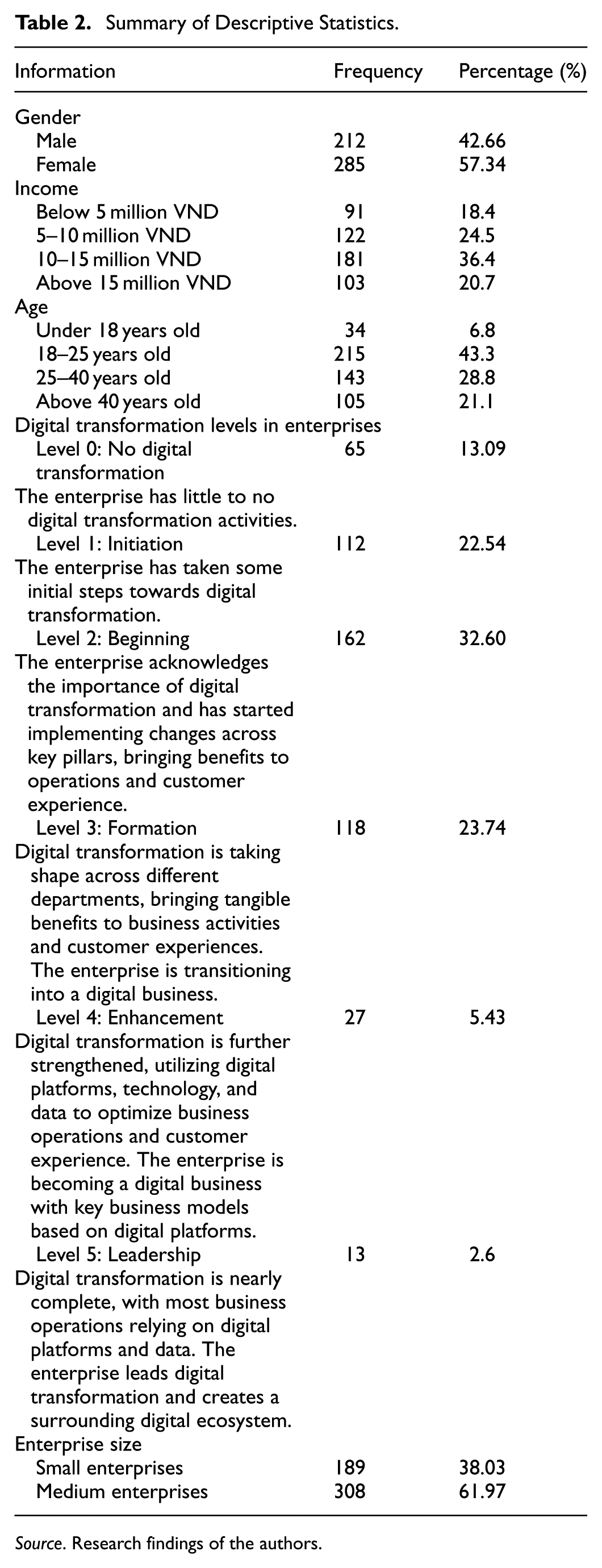
Through the process of data collection using online survey forms, the research team received 519 responses, achieving a response rate of 95.76%. Out of the 519 survey responses, 22 were invalid and subsequently removed, leaving 497 valid responses. The descriptive statistics of the research sample are detailed in the table below:
Table 2 presents the descriptive statistics of the study sample, comprising 497 employees from small and medium-sized enterprises (SMEs) in Vietnam, with a response rate of 95.76%. The survey sample demonstrates a relatively balanced gender distribution, with 42.66% male and 57.34% female respondents. Employee income primarily falls within the 5 to 15 million VND/month range, accounting for over 60% of the sample. Regarding age, the 18 to 40 age group predominates significantly (72.1%), reflecting the young workforce within businesses undergoing digital transformation. Notably, Table 2 also clearly illustrates the level of digital transformation within the surveyed enterprises, with the majority being in the initial (32.6%) and formative (23.74%) stages. This indicates that these enterprises are actively implementing and promoting digital transformation initiatives. Finally, the table also shows that the majority of the study sample belongs to medium-sized enterprises (61.97%), accurately reflecting the general characteristics of the SME market in Vietnam, thereby enhancing the value and representativeness of this study's findings.
Summary of Descriptive Statistics.
Source. Research findings of the authors.
Reliability Assessment of Measurement Scales
Composite Reliability (CR) (Table 3) measures the overall reliability of a scale and is considered a better alternative to Cronbach’s Alpha in PLS-SEM, as it better reflects the reliability of scales with non-uniform factor loadings. According to DeVellis (2012), Cronbach’s alpha ≥ 0.7 and Bagozzi and Yi (1988) CR ≥ 0.7 indicate that the scale is reliable.
Assessment of Reliability and Convergent Validity of the Scales.

Source. Analysis results from SmartPLS software.
Analysis results show that Cronbach’s alpha for all five variables is above 0.7, and CR values are also greater than 0.7, meeting the reliability requirements.
Assessment of Observed Variable Quality
Next, we assess the quality of each observed variable using the Outer loading table. According to Hair et al. (2016), an observed variable is considered of high quality if its Outer loading coefficient exceeds 0.7. Conversely, observed variables with Outer loading coefficients below 0.7 should be considered for removal from the model.
The analysis of the Outer loading table indicates that all 22 observed variables have Outer loading coefficients greater than 0.7. Thus, no observed variables need to be excluded from the model.
Assessment of Convergent Validity
Convergent validity evaluates whether the observed variables adequately represent the construct they are intended to measure. This is assessed using AVE (Average variance extracted). Hair et al. (2016) suggest that a measurement scale achieves convergent validity if its AVE is 0.5 or higher. A threshold of 0.5 (50%) implies that, on average, the latent construct explains at least 50% of the variance of its observed variables. The analysis results indicate that the AVE values for all five constructs exceed 0.5, with the lowest AVE belonging to Digital workforce training (0.595) and the highest AVE belonging to Employee Performance (0.663). This finding suggests that, on average, the latent construct EP accounts for 66.3% (>50%) of the variance in its observed variables, thereby satisfying the criterion for convergent validity.
Assessment of Discriminant Validity
Discriminant validity determines whether a latent variable is distinct from other latent variables. Two commonly used approaches for assessment are the Fornell-Larcker criterion and the HTMT (Heterotrait-monotrait ratio).
The Fornell-larcker method is a widely adopted approach that compares the square root of AVE (SQRT(AVE)) of a latent variable’s measurement scale against its correlation coefficients with other latent variables. In this context, AVE (average variance extracted) represents the average proportion of variance explained by a latent variable in its observed variables. If the SQRT(AVE) is greater than all correlation coefficients with other latent variables, the measurement scale is considered to have satisfactory discriminant validity.
According to the Fornell-larcker criterion, the analysis results demonstrate that the square root of AVE for DB (0.788) is greater than its correlation coefficients with the other four latent variables (0.580; 0.658; 0.672; 0.600). This confirms that the latent construct DB is distinct from the remaining four constructs. Similarly, the results for the other constructs in Table 4 indicate that all five latent variables exhibit satisfactory discriminant validity.
Correlation Matrix of Latent Variables.

Source. Analysis results from SmartPLS software.
Structural Model Assessment
Multicollinearity Check
Before evaluating the model, it is necessary to determine whether multicollinearity exists among the independent variables. This is assessed using the Variance Inflation Factor (Table 5).
VIF Values in the Structural Model (Inner VIF Values).

Source. Analysis results from SmartPLS.
According to Hair et al. (2016), if VIF < 3, then multicollinearity is not an issue. The results indicate that the model does not suffer from multicollinearity.
Path Coefficient Analysis
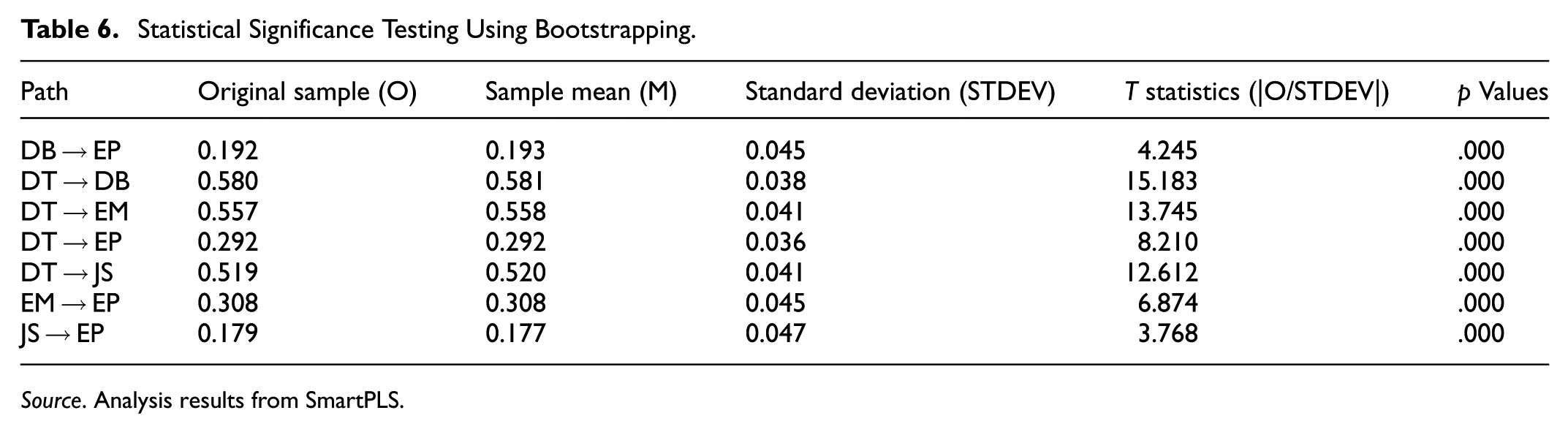
Path coefficients (Original sample) or standardized regression coefficients indicate the impact of independent variables on the dependent variable. These values are statistically tested using the Bootstrapping method.
The results in Tables 6 and 8 indicate that for Employee Performance (EP), the order of impact of the other four variables is as follows: EM (0.308), DT (0.292), DB (0.192), and JS (0.179).
Statistical Significance Testing Using Bootstrapping.
Source. Analysis results from SmartPLS.
Additionally, the statistical significance tests (p-values and T-statistics) confirm that the model is statistically significant (p-values < 0.05, T-statistics > 1.96).
Model explanation power (R2—Coefficient of determination)
The R2 values range between 0 and 1, where values closer to 1 indicate a greater explanatory power of independent variables on the dependent variable.
The adjusted R2 for EP is 65.6% (Table 7), meaning that the influencing variables DB, EM, and JS together explain 65.6% of the variance in Employee Performance (EP).
Model Fit Indicators.

Source. Analysis results from SmartPLS.
Summary of Direct, Indirect, and Total Effects.

Source. Analysis results from SmartPLS.
Mediation Effect Analysis
The results in Figure 2 indicate that all relationships in the model are statistically significant (p-values < 0.05). Specifically:
EP is directly influenced by four variables: EM, JS, DB, and DT.
EP is indirectly influenced by DT through the mediating variables: EM, JS, and DB.
Thus, it can be concluded that EM, JS, and DB play a mediating role in the effect of DT on EP.

Structural equation modeling (SEM).
Table 9 in the results of the model fit assessment using SRMR, d_ULS, d_G, Chi-square, and NFI indices. These results consistently indicate that the research model achieves a good fit with the collected survey data. Specifically, the SRMR value (0.034) for the saturated model is very low, falling below the suggested threshold of 0.08, which reflects a good fit between the theoretical model and reality. Additionally, the NFI index (0.921) significantly exceeds the acceptable level of 0.9, confirming the high suitability and reliability of the proposed model. However, the estimated model's indices (e.g., SRMR = 0.099, NFI = 0.877) are slightly lower than those of the saturated model, but still within an acceptable range. Overall, these indices affirm that the theoretical model and the hypothesized relationships in the study are stable and accurately reflect the empirical data, thereby strengthening the value and reliability of the research findings.
Model Fit.

Source. Analysis results from SmartPLS.
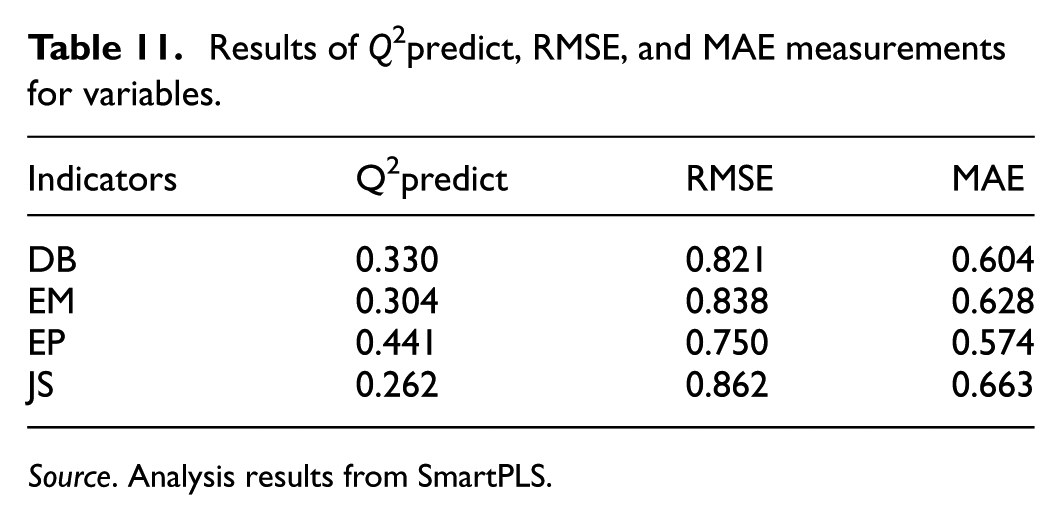
In this study, we use the robust test to validate the reliability and validity of the measurement scales and the overall model. This method is particularly important in addressing issues such as multicollinearity, measurement errors, and non-normality in the data. The application of the robust test ensures that the conclusions drawn from the model are not influenced by small changes in the assumptions or data, thus enhancing the robustness and generalizability of the research findings. The results from Tables 10 and 11, including the indicators Q2predict, RMSE, and MAE, provide crucial information about the stability and forecasting accuracy of the model under different conditions. Specifically:
Predictive validity test results.

Source. Analysis results from SmartPLS.
Q2 predict measures the predictive capability of the model for key variables such as Employee Motivation (EM), Digital Behavior (DB), and Employee Performance (EP). High values of Q2predict indicate that the model has good forecasting ability and stability under different conditions, demonstrating that our model can be applied broadly and has high generalizability.
RMSE (root mean square error) and MAE (mean absolute error) are metrics for measuring the accuracy of the model based on the deviation between predicted and actual values. Low values of RMSE and MAE (as seen in Table 11) indicate that the model is highly accurate, and the predictions are made with minimal error. This confirms that the model not only has stability but also provides reliable forecasts under real-world conditions.
Results of Q2predict, RMSE, and MAE measurements for variables.
Source. Analysis results from SmartPLS.
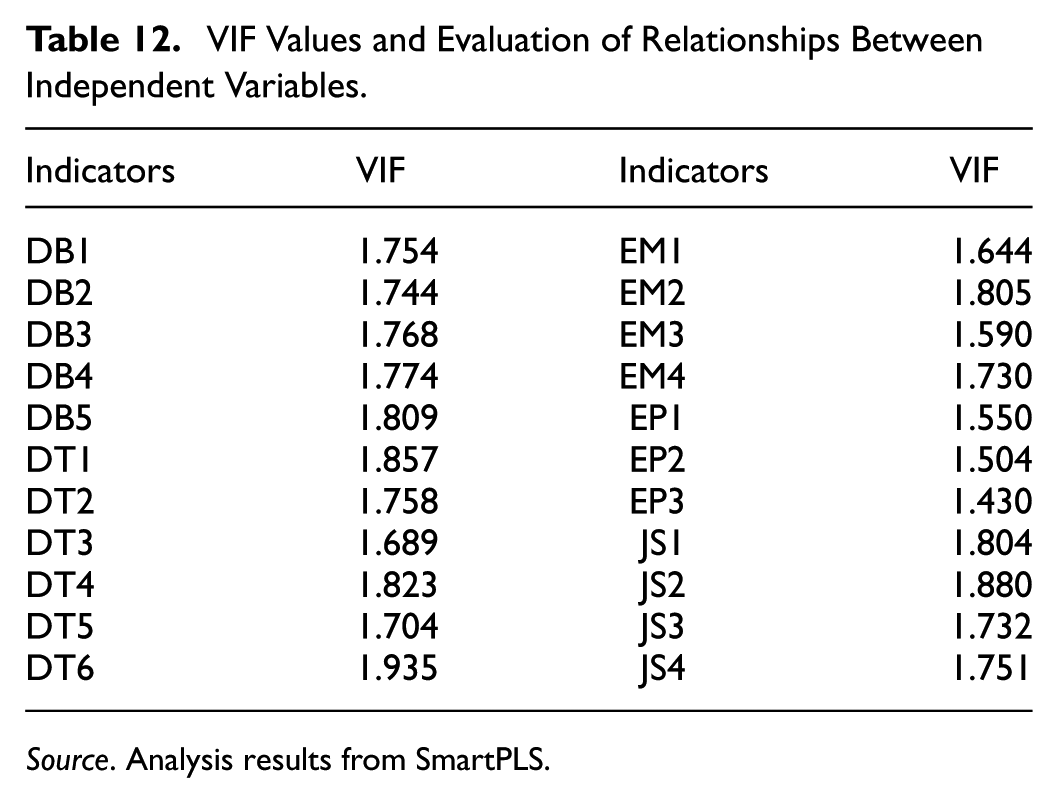
VIF (variance inflation factor) from Table 12 helps check the multicollinearity among the independent variables in the model. When the VIF values are low (below 3), it suggests that there is no multicollinearity issue, meaning that the independent variables in the model are not excessively correlated with each other, ensuring that the estimates in the model are not biased and are highly accurate.
VIF Values and Evaluation of Relationships Between Independent Variables.
Source. Analysis results from SmartPLS.
Conclusion and Discussions
This study makes several key contributions to understanding the role of digital workforce training in enhancing employee performance within SMEs in Vietnam. First, it empirically confirms the direct positive impacts of digital workforce training on employee motivation, job satisfaction, and digital behavior, all of which significantly enhance employee performance. Second, the study identifies employee motivation and job satisfaction as crucial mediating mechanisms linking digital training to performance outcomes. Third, the integration of dynamic capabilities theory and human capital theory offers a robust theoretical framework for understanding how digital competencies translate into improved organizational outcomes. Practically, our findings suggest that SMEs should strategically invest in continuous digital workforce training, emphasizing not only technical skill development but also fostering motivation and satisfaction to fully leverage employee performance. Managers and HR professionals are encouraged to implement integrated training initiatives that actively nurture a culture of digital adaptability and innovation. Finally, this research opens several avenues for future investigation. Further studies could adopt longitudinal designs to capture the temporal dynamics between digital training and performance. Additionally, research integrating other contextual factors such as organizational culture, leadership support, and advanced technologies like AI and blockchain into training programs could enrich theoretical insights and practical applications. Such explorations would further clarify how digital transformation initiatives can be optimized for sustainable competitive advantage in SMEs.
Discussion
The following discussion will delve into the analysis of the results obtained from the study, compare them with previous scientific works, and shed light on the significance of these findings within the context of small and medium-sized enterprises (SMEs). By examining each formulated hypothesis, we will highlight the novel contributions of this research to the understanding of the role of digital workforce training in employee motivation and performance.
The empirical evidence from this study robustly supports Hypothesis H1, demonstrating a clear positive impact of digital workforce training on employee motivation, subsequently enhancing employee performance. This finding aligns closely with Kamal et al. (2016) who highlighted that digital skills training significantly boosts employee confidence and intrinsic motivation, ultimately driving improved job performance. However, the magnitude of the relationship observed (0.557) is moderately lower than reported in previous studies, such as those by Zia et al. (2024) who documented stronger relationships between digital training and motivational outcomes. This variation can likely be attributed to disparities in technological infrastructure and the maturity of digitalization processes in Vietnamese SMEs. Such infrastructural limitations might hinder the complete realization of the motivational benefits typically associated with digital training initiatives in more technologically advanced environments. The hypothesis 2 is confirmed by our findings, revealing a direct positive relationship between employee motivation and performance, with an effect size of 0.308. Nevertheless, the effect size observed in this study is somewhat lower compared to earlier research by (Ariyanti, 2024) who emphasized a notably stronger influence of intrinsic motivational factors on employee performance. This discrepancy is likely due to the distinct motivational landscape prevalent within SMEs in Vietnam, where extrinsic motivators such as financial incentives, job security, and structured reward systems might have a comparatively stronger influence on employee performance relative to intrinsic factors such as autonomy or personal achievement. Our analysis supports Hypothesis H3, highlighting job satisfaction as a significant mediator linking digital workforce training with improved employee performance. These results are aligned with Judge et al. (2001) who established job satisfaction as a critical mediator in enhancing performance. However, the mediating effect identified in our research, while significant, is relatively modest compared to prior findings observed in sectors where job satisfaction is closely tied to organizational culture, management style, and working conditions This suggests that, particularly within Vietnamese SMEs, multiple organizational factors beyond training—such as leadership quality, organizational climate, and available growth opportunities—likely moderate the extent to which job satisfaction mediates the training-performance relationship. The current study confirms Hypothesis H4, providing empirical evidence that digital behavior significantly mediates the relationship between digital workforce training and employee performance. The identified relationship aligns with Majchrzak et al (2016), who demonstrated the pivotal role of proactive digital behaviors in enhancing workplace outcomes. Nonetheless, the relatively lower magnitude of this mediation effect (0.192) compared to those documented in larger and more digitally advanced organizations may indicate limitations arising from the early stages of digital maturity among SMEs. It is because of limited digital infrastructure and inconsistent technological adoption in these enterprises potentially restrict employees’ ability to fully leverage digital behaviors for maximal productivity gains. For Hypothesis H5, the result established a direct and positive effect of digital workforce training on employee performance (0.292). Although statistically significant, the effect size is moderate compared to more robust effects noted in earlier studies, such as those by Brynjolfsson et al. (2014) particularly in technologically advanced industries. This modest effect size underscores the potential impact of external environmental constraints faced by Vietnamese SMEs, including economic fluctuations, technological adoption challenges, resource constraints, and variations in organizational readiness for digital transformation. These contextual factors are likely critical in shaping the observed moderate influence of digital training on employee performance in this study.
Implications
In an era of digital change, education aimed at enhancing digital competencies plays an increasingly central role. Beyond equipping workers with the skills needed to operate advanced digital tools, digital education builds confidence, adaptability, and effectiveness in completing tasks. These improvements translate into greater engagement and motivation—critical drivers of employee performance. Staff equipped with continuous digital training are empowered to take initiative, solve problems promptly, and think creatively—capabilities essential for thriving in digitally driven work environments.
Our study supports a conceptual model in which digital workforce education enhances employee motivation, job satisfaction, and digital behavior, ultimately contributing to improved employee performance. Grounded in Dynamic Capabilities Theory (DCT) and Human Capital Theory (HCT), the model suggests that education enhances not only skills but also attitudes toward work and technology. Employees who receive targeted digital training report stronger engagement, a deeper sense of organizational affiliation, and greater capacity to apply technology for optimized work processes and data-informed decisions. Evidence from Vietnamese firms corroborates these findings: digital training is linked to higher job satisfaction and more positive workplace attitudes.
Importantly, our study challenges the simplistic linear view where education leads to attitudinal change, which in turn improves performance. Instead, we emphasize two often-overlooked mechanisms: (a) behavioral execution—the degree to which digital skills are practiced and embedded in daily work; and (b) the adaptive process through which such execution transforms work routines and capabilities. We conceptualize this transformation using a perception–adaptation–reconstruction cycle: training enhances motivation and satisfaction (perception), enabling employees to modify workflows (adaptation), which ultimately leads to sustainable productivity gains (reconstruction). In doing so, our framework localizes national digital objectives at the firm level, offering a Vietnam-specific extension of DCT.
From a practical implementation perspective, the findings of this study offer critical implications for the strategic design of digital workforce training programs within small and medium-sized enterprises (SMEs) in Vietnam. While the cross-sectional nature of the research precludes causal inference, the robust positive associations observed between digital training and key performance indicators provide a data-driven foundation for evidence-based human resource planning and investment prioritization. Human Resource (HR) departments are encouraged to align training content with empirically identified skill gaps, derived from rigorous employee assessments and performance diagnostics. Additionally, embedding real-time evaluation mechanisms into training delivery—such as feedback loops, digital usage analytics, and adaptive learning tools—can support iterative refinement and sustained learning efficacy. These insights further inform the development of national and sector-specific training frameworks by policymakers and educators, emphasizing the need to contextualize program design around organizational culture, leadership engagement, and digital infrastructure readiness. To maximize training effectiveness, we propose a multi-pronged strategy tailored to the digital maturity levels of Vietnamese SMEs. First, tiered training architectures should differentiate between foundational digital competencies (e.g., office software, communication tools) for nascent adopters and advanced modules (e.g., ERP systems, CRM platforms, data analytics) for more digitally mature enterprises. Second, firms should capitalize on existing public-sector initiatives, notably the Vietnamese government’s SME Digital Transformation Support Plan, by leveraging subsidized training schemes and consulting services. Third, blended learning models—combining synchronous online instruction with hands-on mentoring—can address typical SME constraints related to time, personnel, and financial resources. Fourth, training programs should incorporate behavior-based performance metrics, such as the frequency of digital tool utilization, decision-making efficiency using data analytics, and proactive engagement with digital platforms, to measure learning transfer and real-world application. Finally, recognizing the predominance of extrinsic motivation in the Vietnamese SME landscape, training interventions should be complemented by structured incentive systems, including recognition programs, performance-linked bonuses, and career advancement pathways. Collectively, these recommendations ensure that digital workforce training initiatives are theoretically grounded, empirically validated, and practically attuned to fostering an agile, high-performing workforce equipped for Vietnam’s dynamic digital transformation trajectory.
Research Limitations and Future Directions
This study has several limitations. First, the cross-sectional design restricts our ability to infer causal relationships between digital workforce training and employee performance. We therefore propose that future research adopt a longitudinal design to establish temporal precedence and better understand the dynamic effects of training.
Second, the study did not consider key contextual factors such as organizational culture, leadership support, and technological infrastructure. Future research should explore how emerging technologies like AI and blockchain can be integrated into training programs to enhance their relevance and impact in the Industry 4.0 context.
Finally, a notable limitation is the generalizability of our findings to the entire SME population. To address this, we recommend that subsequent studies employ stratified or quota sampling and be conducted across different business scales to confirm and strengthen the broader applicability of the results.
Supplemental Material
sj-docx-1-sgo-10.1177_21582440251395698 – Supplemental material for Digital Workforce Training, Employee Motivation, Job Satisfaction, Digital Behavior as Determinants of Employee Performance: Empirical Research From Vietnam
Supplemental material, sj-docx-1-sgo-10.1177_21582440251395698 for Digital Workforce Training, Employee Motivation, Job Satisfaction, Digital Behavior as Determinants of Employee Performance: Empirical Research From Vietnam by Thi Ha Anh Dao, Chinda Sisavath, Hien Thi Thao Bui, Thi Quyen Bui and Thu Hanh Le in SAGE Open
Footnotes

Funding
The authors received no financial support for the research, authorship, and/or publication of this article.
Declaration of Conflicting Interests
The authors declared no potential conflicts of interest with respect to the research, authorship, and/or publication of this article.
Data Availability Statement
The data presented in this study are available on request from the corresponding author due to [privacy/ethical restrictions].
Supplemental Material
Supplemental material for this article is available online.
References
Supplementary Material
Please find the following supplemental material available below.
For Open Access articles published under a Creative Commons License, all supplemental material carries the same license as the article it is associated with.
For non-Open Access articles published, all supplemental material carries a non-exclusive license, and permission requests for re-use of supplemental material or any part of supplemental material shall be sent directly to the copyright owner as specified in the copyright notice associated with the article.
