



Abstract
Utilizing Spencer-Oatey’s Rapport Management Theory, this study examines both self-praise and self-denigration used by young people on social media platforms in Jordan. The study aimed to identify self-praise and self-denigration strategies, their roles in rapport management, and their impact on gender roles. The data consist of 359 posts and comments collected from different social media networks, such as Facebook, Instagram, and Twitter. Findings reveal three major self-praise strategies, ranked in order of frequency: self-praising for belonging, self-praising for personality and skills and self-praising for appearance. Conversely, self-denigration is mainly categorized into two strategies comprising self-denigrating for skills and self-denigrating for appearance, arranged by prevalence. These strategies illustrate different aspects of rapport management including face, sociality rights and interactional goals. This indicates how young people regulate self-expression for cultural acceptance and social rapport. The interplay between self-disclosures and cultural norms is particularly evident regarding expectations about gender roles in Jordan.
Plain Language Summary
Introduction: In the digital age, the majority of young people in Jordan have employed useful platforms such as Facebook, Instagram, and Twitter to present different aspects of their identities and cultural backgrounds. Among these communications, both self-praise and self-denigration appear to be prevalent phenomena. Objectives and Research Questions: This study investigates these behaviors, focusing on how young people who create content on social media platforms manage rapport with their network connections through commendation of themselves or belittling of themselves. Specifically, the study seeks to answer the following questions: 1. What are the strategies used by Jordanian youth on online platforms for both self-praise and self-denigration, and what are the corresponding frequencies of these behaviors? 2. How are these strategies impacted by the principles of rapport management? 3. To what extent do men and women use self-praise and self-denigration differently? Method: The data for the study consist of 359 posts and comments collected from different social media networks, such as Facebook, Instagram, and Twitter. These posts were interpreted and coded for the strategies of self-praise and self-denigration employed. The data were also analyzed quantitatively by comparing the frequencies of the identified strategies. Results: Findings reveal three major self-praise strategies, ranked in order of frequency: self-praising for belonging, self-praising for personality and skills, and self-praising for appearance. On the other hand, self-denigration falls into two primary categories, which are based on prevalence: demeaning oneself for one’s appearance and demeaning oneself for one’s abilities. These strategies illustrate different aspects of rapport management, including face, sociality rights, and interactional goals. Quantitatively, the study reveals a number of significant observations about the use of both self-praise and self-denigration in Jordanian culture.
Introduction
In today’s digital age, social media has become a central part of everyday life for Jordanian youth, influencing how they connect with others, express themselves, and shape their sense of identity through platforms like Facebook, Instagram, TikTok, and Twitter. Reflecting global patterns, these platforms are more than just recreational resources; they are key spaces for peer engagement, identity formation, and social validation (boyd, 2014; Livingstone & Sefton-Green, 2016). Recent studies show that social media deeply shapes how Jordanian adolescents think, behave, and express themselves as they balance traditional values with global online trends (AlKhudari et al., 2024; Alodat et al., 2023; Al-Salahat et al., 2024). Similar findings in Saudi Arabia and UAE show that for many young people, social media is more than just a tool for strategic self-promotion; it is also a space where they can genuinely express themselves while navigating the boundaries of conservative cultural norms (Al Ketbi et al., 2025; Muyidi, 2025). This increasing reliance on digital platforms has made online identity performance a defining characteristic of youth culture in Jordan, providing young people with new opportunities for agency, visibility, and social negotiation.
Within these digital platforms, phenomena such as self-praise and self-denigration are frequently observed. In addition to reflecting the youth’s personal interests and values, these behaviors also help them manage social rapport, conform to or challenge sociocultural expectations, and adapt to the communication norms of online platforms. According to Marwick and boyd (2011), social media encourages users to strategically promote themselves in order to preserve their relationships and social capital. This study’s primary focus is on how these behaviors interact with rapport management, sociocultural norms, and the social media environment. The study specifically investigates how young Jordanians who create content on social media manage rapport with their online connections through expressions of self-commendation or self-belittlement.
Self-praise, as defined by Dayter (2014, p. 91), “is a speech act that involves uttering a positive statement about oneself, and can thus be seen as a face-enhancing act directed at the speaker.” From a socio-psych perspective, it evokes self-efficacy, or an individual’s confidence in their capability to carry out behaviors required to achieve particular performance goals (Bandura, 1997). This concept represents a conviction in one’s ability to influence their behavior, motivations, and interactions within the social context. In addition, self-praise is relevant to positioning, a process where individuals are positioned as coherent participants in shared storylines (Badarneh, 2022). According to Davies and Harré (1990, p. 46) and Harré and van Langenhove (1999), this positioning—termed “reflexive” and “interactive”—involves autobiographical talk to define oneself in relation to others and forge a unique social identity.
Through a pragmatic standpoint, self-praise fits within Brown and Levinson’s (1987) positive face notion, reflecting a positive self-image and a desire for likability. Uttering positive statements about oneself, or self-praise, is considered dangerous and can be disruptive, subject to certain circumstances (Dayter, 2018). Thus, both Badarneh (2022) and Parrot (2023) consider self praise as a face- attacking expression as it involves praising one’s own attributes while belittling the other. Self-promotion also contradicts Leech’s (1983) Modesty Maxim, which advocates a reduction in self-praise. Therefore, excessive or narcissistic self-praise may be viewed as self-empowerment or grandiosity (Grijalva & Zhang, 2015), and can potentially harm social rapport. However, an increasing amount of research acknowledges the potential benefits of balanced self-praise and links it to the enhancement of self-confidence and self-esteem. Improvement of self-esteem (Bushman & Baumeister, 2002), motivation, and confidence (Bénabou & Tirole, 2003), fostering unity formation of an in-group (Rudolf von Rohr & Locher, 2020), coping with criticism (Tice & Wallace, 2003), and establishing a particular image or reputation (Peters, 1997) are all examples of positive functions of self-praise. Therefore, modestly commending one’s associations and highlighting their personal traits, achievements or capabilities does not only enhance self-esteem, but it can also promote positive and mutually beneficial interaction, which helps with building social rapport. Conversely, self-denigration is on the other extreme and involves minimizing one’s abilities or placing lower value to oneself. Self-denigration, opposite to self-praise, is the use of negative self-talk to express self-doubt and degrade one’s own abilities or worth (Kobori et al., 2014). According to Swann’s (2012) self-verification theory, self-deprecation can harm interpersonal relationships by making it difficult for people to receive praise or maintain healthy self-respect. In line with this theory, as individuals prefer evaluations that validate their self-views, people suffering from low-self-esteem seek to be evaluated negatively as they see themselves. However, some other researchers (Gu, 1990; Kádár & Zhou, 2020; Teixeira et al., 2012; Zhang et al., 2011) have highlighted the presence of self-denigration in different discourses as a mechanism for conveying respect, sustaining social harmony and enhancing group identity. Thus, self-denigration is viewed by Gu (1990) as a phenomenon that is used in Chinese language contexts for ceremonial or at least extremely deferential interpersonal interactions. Beyond this purpose, Kádár and Zhou (2020) propose self-deprecation serves functions including solidarity-seeking, engaging in humorous interaction, and expressing complaint.
The primary goal of the present study is to investigate how both self-praise and self-denigration among Jordanian youth on online discourse enhance social rapport in different contexts. To do this, it is necessary to identify and measure the strategies employed in these behaviors and comprehend their reasons in relation to Spencer-Oatey’s (2000, 2002, 2008) Rapport Management Theory and the sociocultural norms in Jordan. More specifically, the study seeks to answer the following questions:
What are the strategies used by Jordanian youth on online platforms for both self-praise and self-denigration, and what are the corresponding frequencies of these behaviors?
How are these strategies impacted by the principles of rapport management suggested by Spencer-Oatey (2000, 2002, 2008)?
To what extent do men and women use self-praise and self-denigration differently?
Literature Review
Self-praise and self-denigration have often been examined independently as distinct phenomena. The studies on self-praise and self-denigration are therefore divided into two separate sections in this review. A subsequent assessment of the reviewed literature will be provided.
Research on Self-Praise
Studies on self-praise have explored this phenomenon from different perspectives such as cultural variation, emotional impacts and pragmatic functions. In cross-cultural research, self-praise exhibits cultural variations, affecting its association with self-esteem (Kim & Li, 2017), and social behaviors (Chen & Zhang, 2019; Tong & Xie, 2022). Within the pragmatic contexts, self-praise is recognized as a relatively understudied topic (Matley, 2020), with only a limited number of studies that are relevant. In the realm of online interactions, several research studies (Dayter, 2014, 2018; Matley, 2018, 2020; Sezer et al., 2017) have explored the pragmatics of self-praise in digital technology affordances, including hashtagging and text-image interactions. Dayter (2014) examined the use of self-praise in conjunction with mitigating devices such as self-disapproval, ridicule, or complaint in the Twitter accounts of a group of ballet students and dancers. In their investigation of self-praise on Twitter, Sezer et al. (2018) revealed that gloating while feigning humility is more effective than straightforward bragging in increasing positive feedback from viewers. Matley (2018) found that Instagram posts using brag and humble-brag hashtags played a strategic role in negotiating positive self-presentation, uncovering personal achievements and, ameliorating face-threatening aspects. In her study of Self-praise within what’s-AP discussions, Dayter (2018) found that 5% of corpus messages were self-praising episodes, promoting interactions through sarcasm and humor. Farkas and Bene (2020) approached the use of social media networks by celebrities and politicians for self-promotion, emphasizing the culture of competition and comparison-making. They maintained that this tendency is progressively essential for individuals in the public attention to sustain their followers and relevance. Chalak (2021) examined self-praise in the teaching arena, demonstrating that self-praise, bragging, and humble bragging all created impressions on the audience, with self-praise being a weak self-presentation strategy.
Studies on self-praise in Jordanian culture emphasize its complex, situation-specific, and socially embedded nature in both face-to-face and online contexts. Badarneh (2022) examined self-praise in Jordanian Arabic and found that it operates both as a collective practice tied to tribe connection and as an individual representation of personal attributes such as appearance, achievements, and social status. To elaborate, Al Rousan and Darwish (2023) investigated Instagram posts from 500 Jordanian university students and discovered clear gender differences: males preferred direct self-praise through strategies like competence and exemplification, while females tended toward modest approaches like ingratiation and supplication. Collectively, these studies show how self-praise in Jordan is influenced by language choice, digital platforms, social norms, and gender roles.
Research on Self-Denigration
In addition to self-praise, self-denigration, which refers to minimizing one’s skills, dignity, or accomplishments, has often attracted attention from researchers. Although there has not been much research done in this area, what has been done provides insights into various aspects of self-denigration, such as its emotional impact, association with social identity, effect on self-esteem, cultural variances, and impact on academic performance. For instance, Cramerus (1989) approached this phenomenon from the perspective of psychotherapy, suggesting that chronic self-derogation is a common clinical issue, used to block impulsivity, resist aggression, and defend against helplessness. Kádár et al (2023) also investigated self-denigration in Chinese, revealing self-denigration often minimizes offense, expresses deference and smooths the flow of interaction. In addition, examining how self-denigration is used by Asian English speakers as a relational strategy in talk-in-interaction, Walkinshaw et al. (2019) found self-denigration to be often used in casual, non-role-assigning, non-task-focused encounters, serving as a downplaying strategy, or in response to compliments, criticism, or neutral remarks. Another result was its contribution to face-saving, face-maintaining, and generating shared humor. Moreover, in their study of self-denigration in dissertation defense sessions, Mayahi and Jalilifar (2022) found that self-denigration is a negotiation strategy and conflict management policy meant to foster solidarity and preserve resilience. In online communication, Page (2019) examined self-denigration through the channel of “#uglyselfie” posts on Instagram, revealing how people employ funny self-denigration to boost empathy or humor, or to purposefully portray in a less positive light in order to elicit compliments. Kádár and Zhou (2020) also explored the self-denigration in contemporary Chinese, with an emphasis on interpersonal language use and interactional technologies, especially in online interactions. It was found in their study that these forms can serve different sociopragmatic functions, such as bragging, which contradicts conventional notions of self-denigration as a ceremonial deference behavior. Additionally, Dendenne (2021) studied compliments, self-praise, and self-denigration in the online cross-cultural exchange project, Ibunka, 2019, which included non-native speakers from six countries. He found these speech acts can be utilized as message openers or closes, achieving a crucial function in the regulation of interpersonal relations.
In Jordanian culture, self-denigration has traditionally been a significant part of politeness, and it is strongly associated with the principles of modesty and maintaining social harmony (Feghali, 1997). However, its role in digital communication is evolving. Recent research indicates that psychological and social pressures that come with an online existence may be changing how people utilize self-deprecating behaviors. For example, Al-Nasa’h and Shadid (2024) found that teenagers in Amman who experienced higher levels of fear of missing out (FoMO) tended to express lower self-esteem, potentially leading to increased self-denigration in online interactions. These findings imply that although self-denigration has deep cultural roots, its contemporary forms are increasingly influenced by the demands and concerns of digital youth culture.
Theoretical Framework
The reviewed literature reveals a gradual transformation in how Jordanian youth negotiate self-praise and self-denigration, particularly in digital spaces. Although traditional values like modesty, dignity, and social harmony continue to influence how they express themselves, the openness of digital platforms has encouraged new, more flexible ways of communicating. This shift can be meaningfully understood through Spencer-Oatey’s (2000, 2002, 2008) Rapport Management Theory (RMT), which provides a deep insight of how individuals manage interpersonal relationships in communication by attending to face, rights, obligations, and interactional goals.
RMT aims to explain how individuals participating in communicative actions establish, maintain, or threaten interpersonal relationships. It is a crucial viewpoint in intercultural communication that emphasizes the functional aspect of conversation as well as the interpersonal implications. Although RMT is considered a part of politeness theory, it often goes outside the scope of politeness theory. The core idea of RMT is that people are not merely information-exchanging entities; rather, they are social beings with various emotional and social motivations.
RMT is built on the three-core constructs: face, sociality rights and interactional goals. “Face” is a term initially proposed by Goffman (1967), referring to the positive social value that people claim for themselves in a given interaction. It expresses one’s desire to be respected and approved by others. Spencer-Oatey (2000, 2002, 2008) builds on this concept and presents it as a sense of worth that every individual of a society should respect. According to Spencer-Oatey (2008, p.13, emphasis in original), face is “the positive social value a person effectively claims for himself [sic] by the line others assume he has taken during a particular contact.” Based on this definition, Spencer-Oatey (2002, 2008) suggests that face management and sociality rights and obligations are essential elements of rapport management. According to Spencer-Oatey (2002, 2008), there are three subcategories of the first component: (a) quality face, which is the desire for others to recognize one’s personal qualities; (b) social identity face, which is the desire for others to recognize one’s social identity; and (c) relational face, which is the desire for others to value one’s social relationships with them. Sociality rights, on the other hand, are the rights that determine the nature of relationships between people. These rights signify the expectations and obligations that exist in a relationship. They tackle aspects like association rights (the right to associate or not with others), equality rights (expectations of equal treatment), and territorial rights (the right to personal space and privacy). The violation or respect of these rights could influence the rapport between individuals. In addition, interactional goals typically form an essential part of RMT, pertaining to the specific objectives people wish to achieve during a particular interaction. Acknowledging cultural context in rapport regulation, this theory is applicable for analyzing online self-praise and self-denigration in Jordanian culture with its particular values and parameters. Thus, consistent with Arabs’ tendency to compliment themselves, their family members and relatives during chats (Nydell, 2018), many young online content builders employ self-praise as a token of addressing sociality rights. In addition, a social media user in Jordan may seek help or advice from their network connections to overcome low-self esteem or setbacks, thus tackling interactional goals.
Methods
This section is divided into two parts. In the first part, the procedures for collecting data for this study and the ethical considerations are explained. The coding scheme and the data analysis methods employed are covered in the second part.
Data Collection
Depending on the accessibility of the data, a total of 359 posts and comments were collected from various media networks, such as Facebook, Instagram, and Twitter. To appropriately represent the active online presence of this sample, only postings from public profiles were selected. These data were gathered by searching for particular keywords associated with both self-deprecation and self-praise. For example, when searching for self-praise-associated posts, we utilized keywords like? aftaxir“I take pride”jamāli, “my beauty” and names of well-known tribes. In contrast, in the case of self-denigration, we looked for terms such as ġabi“foolish” and fāšil“failure” among others.
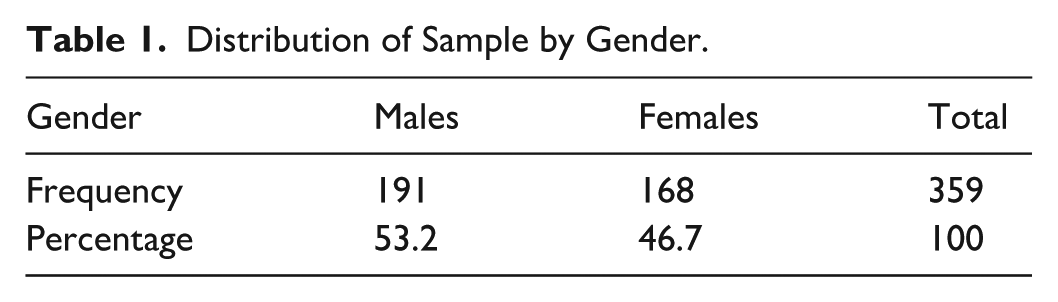
To ensure the reliability of the sample, the digital situation in Jordan was comprehensively established, with a reported 9.95 million internet users in the country as of the beginning of 2023. Given this sizable user base, a considerable sample size was necessary to ensure statistical significance. Using the sample size calculator accessible on the Research Adviser website, it was determined that a sample size of 384 participants would result in a high level of confidence for a population of this ratio. However, for reasons related to availability and validity of the data, the sample size was reduced to 359. Although slightly below the ideal number, this sample remains statistically acceptable to support both qualitative and quantitative exploration, especially given the study’s specific focus on Jordanian youth who are active on social media. As indicated in Table 1, this figure includes two sources of data: males (53.2%) and females (46.7%). Despite the larger percentage of males’ data compared to that of females’, the total number of comments is still adequate to pass generalizations about the population of social media users in Jordan. A summary of the demographic distribution of the participants is displayed in Table 1.
Distribution of Sample by Gender.
Coding Scheme
In analyzing the data, the online comments were interpreted and coded for the strategies of self-praise and self-denigration employed. The data were first skimmed to gain an initial understanding of the content and context, which allowed for the identification of repetitive patterns in the data. Drawing on earlier research (Badarneh, 2022; Dendenne, 2021), three major categories with corresponding subcategories were identified: self-praise, self-denigration, and blended self-praise and self-denigration. However, it is worth noting that, depending on the particular contexts of our data, the naming protocol deviated in some cases from the models used in these studies. Following the categorization of the data, we took measures to ensure the reliability of our classification system. We repeated the categorization process 2 weeks later with the assistance of two graduate students in linguistics. Afterwards, we computed the degree of consistency between the earlier and the latter classification using Holsti’s (1969) coefficient of reliability. A high level of agreement between the two classifications was revealed, with an experimental value of 0.87.
Analysis and Discussion
Using the data collected for this study, the three research questions that explore the online self-praise and self-denigration behaviors of the youth in Jordan are answered in this section. The analysis begins with a qualitative examination of the identified categories, followed by a quantitative analysis that interprets their frequencies and percentages in relation to the study’s objectives.
Self-Praise Strategies
As cited earlier, self-praise refers to the act of expressing admiration or approval of oneself online, often in a bragging or self-satisfied manner. The analysis reveals that it plays a crucial role in establishing rapport between online content builders and their followers. This solidarity is negotiated within three major strategies including self-praising for belonging, self-praising for personality and skills, and self-praising for appearance. In the subsequent sections, these strategies will be defined, exemplified and explored in terms of their contextual usage, frequency, gender dynamics, and adherence to socio-cultural norms, specifically focusing on their role in managing rapport.
Self-Praising for Belonging
This strategy refers to an individual self-praising by expressing their belonging to a broader community such as tribe, region, religion, football team, academic institution, etc. This self-promotion is often intensified by stylistic features such as fervent vocabulary, rhythmic language and formulaic structures, addressing various aspects of rapport management. The following are four examples of this strategy:
1. ?ilbint ?ilmigdādiyih bint šy A ’ilmagdādiyih lady is a daughter of nobility, and her oration exudes pride. Anyone who sees her is captivated by her dignity. She is a privileged lady, remaining steadfast. She is a daughter of high-esteemed people, not tolerating disrespect. She is a mother’s daughter, apathetic towards anyone. She is so proud, with no one filling her eye. 2. ħinnā ?urduniyyah ?ilkul yixšāna fa?in ʕijiz ?ilkalām far-rašāš wa-l-klašinkūf yiʕzif laħin ðikrānā. bint ʕizz wa šaxșiyyah tihizz. (Facebook, 27 Aug 2015) We are Jordanians, and the fear we evoke is tangible. If words fail to convey it, our firearms will reverberate with the echoes of our history. I am a woman of honor and unyielding character. 3. ṯalāth: șifr: țūl ʕumri madrīdi. madrīdi wa ?aftaxir. (Facebook: 11 May 2015) Three vs. zero: I have always been a fan of Riyal Madrid Football Team. I am proud of this affiliation 4. kulunā bašar, bas ?ilʕafū ?anā șarīhi win-nās magāmāt. (Facebook, 2 Nov 2015) We are all human beings, but, if you’ll allow me to speak, I come from șarīh, famous for the elevated social statuses of its people
In example (1), a young woman from ’ilmagdādiyih tribe is complimenting herself through boasting about her tribal affiliation in a post she wrote on Facebook. Using the expressions “daughter of nobility,”“her oration exudes pride,”“a privileged lady,” to describe a ’ilmagdādiyih lady, the self-praiser tackles identity face by positioning herself within a noble ancestry and a high level of elegance. In line with Badarneh (2021), this emphasis on nobility and dignity is enhanced by the poetic language used throughout the post. Specifically, the vocabulary items selected are not only emotional and attention-grabbing, but they are also encompassed by the poetic rhymes ūx, azz, ās, and hā (underlined in the text). As Arabic eloquent language has a deep-seated and enduring tradition, the self-praiser’s employing of these literary forms enables her to convey her message in a culturally significant fashion, nurturing a sense of solidarity within the tribe members. Conveyed through adherence to societal values, this offer of solidarity is considered an endeavor to manage interpersonal relations through addressing relational face which involves an individual’s image in specific social interactions (Spencer Oatey, 2002, 2008).
Similarly, example (2) presents a scenario where self-praise is employed to express loyalty to one’s country. In this instance, a young woman is praising herself by affirming her association with Jordan, portraying Jordan as a resilient nation that serves as a source of inspiration for her strength, dignity and prosperity. She also uses strong expressions like “the fear we evoke is tangible, and “our firearms will reverberate” to attribute positive qualities to herself and her country. This self-praise acts as “a boost to quality face” (Spencer-Oatey, 2002, p. 541) in which the young woman is creating a favorable perception of her image. Additionally, when she says “I am a woman of honor and unyielding character,” she emphasizes her nobility as an aspect of her identity face. This expression associates her with a noble background, potentially highlighting positive social attributes and reinforcing her identity as a person of high status.
Other aspects of rapport management are addressed in the posts in examples (3–4), above. In example (3), after the poster, a young man, expresses his perpetual affiliation with the Riyal Madrid football team using the statement “I have always been a fan of Riyal Madrid Football Team,” he emphasizes this association saying “I am proud of it.” Here, the poster may be asserting his sociality rights in the context of his social or fan community. Specifically, he might feel that his association gives him the right to participate in conversations related to international football matches, and enjoy a sense of camaraderie and victory with fellow fans. Likewise, the young man in example (4) tackles interactional goals by expressing his association with his city of șarīh, whose people are socially privileged. Communicating his sense of social belonging within an affluent community, he is seeking pride in this affiliation and suggesting that he has the potential to achieve a higher social status in the future.
Moreover, the structures and vocabulary used in both examples have been consistently reiterated in the data, rendering the utterances conventional or formulaic when it comes to expressing self-praise of belonging. Each of the utterances consists of a three-part structure including: belonging expression (i.e., madrīdī“a supporter of Riyal Madrid” and șarrīhī“I am from șarrīh”) followed by wa“and” then an expression of boasting (i.e., aftaxir“I am proud of it,”winnās magāmāt“with elevated social status”). As in compliments in American English (Wolfson, 1983) and Jordanian Arabic (Migdadi, 2003), this conventional self-praise enhances the clarity and directness of the positive feelings and boasting. Since expressing belonging is a positive speech act, its obviousness will strengthen the bond between the person conveying affiliation and the group to which they belong, thus fostering a stronger relationship. In addition, this formulaic self-praise addresses the posters’ interactional goals in relation to mediated interaction. Given the users of online platforms often care about time efficiency, conventional commending of one’s own belonging is quicker to produce and understand compared with indirect self-praise, making it particularly helpful in such fast-paced interactions which require brevity of expression.
Self-Praising for Personality and Skills
This strategy refers to an individual expressing confidence in their personal traits and skillfulness, a quality applicable in managing rapport with their followers. The following are three examples in which three content builders are engaging in self-praise by presenting their achievements to their followers.
5. mitʕawid ?akūn biș-șadārah ?ilhawāmiš ?ilhā ?ahlhā (Facebook, 27 Oct 2022) I am accustomed to being in the lead. Margins have their people 6. likul ħad biħkī ʕinnī mā baʕrif ?ațbux ?aw mā bațbux. mā fīh ?aħla min hāða ?ir-rad. (Facebook, 4 Apr 2024) To all people who claim that I cannot cook well or don’t cook at all, there is no better answer than these pictures. 7. ?injāzen ?aftaxir fīhum ?lyom fī dawāmī. ?il?awwal ʕmilit mușșallā saġīr. wilṯāni durjī malyān šaġlāt zākyyih. (Facebook, 23 Feb 2024) There are two achievements that I am proud of today: First, I made a small praying place, and second, my drawer is full of tasty stuff.
In example (5), a young man, updating his Facebook profile, engages in self-praising for accomplishments by asserting that he is accustomed to being the foremost among others and refuses to be relegated to a peripheral role. According to Harré and van Langenhove (1999, p. 62), this description illustrates a mode of intentional self-positioning, in which the speaker expresses his/her personal identity. This definition of identity or self-image is consistent with Spencer- Oatey’s (2002, 2008) concept of identity face, or how the self-praiser wishes to be seen or acknowledged. Additionally, the poster’s self-promoting assertion may impact his relational face by suggesting a hierarchical relationship dynamic where he is in the lead, and others are relegated to the margins. While placing the other in a negative manner, the negative description of the other acts as a resource for constructing a positive self-image (Harré et al., 2009). Therefore, this self-praise expression can be interpreted “as an attempt to establish a superior social identity while assigning an inferior one to the rival” (Parrott, 2003, p. 30). By the same token, the young woman in example (6) brags about her cooking skills by displaying well-cooked dishes that she has prepared. Revealing the positive outcome of her efforts, the young woman is expressing her delight about her culinary ability, which is consistent with Bandura’s (1997) self-efficacy theory. According to this model, the woman, perceiving herself as a capable cook, experiences a greater sense of contentment and achievement. Her self-confidence contributes to her quality face in relation to her social media connections. In addition, when the lady presents pictures of her cooking saying, “to all people who claim that I cannot cook well or don’t cook at all” she is addressing her sociality right through claiming her cooking skillfulness and the right to be involved in certain tasks or discussions of this type. Another case of self-praising for skills is in example (7) in which a young man feels proud of two accomplishments: designing a prayer place and organizing tasty treats in his drawer. By displaying these accomplishments on Facebook, he is contributing to his quality face by presenting positive qualities and skills. In line with Bushman and Baumeister (2002), this is a self-enhancing strategy in which the speaker presents himself positively to elevate self-esteem. Since skills are generally seen as personal assets, highlighting them can positively influence one’s social image, thereby enhancing self-esteem. In addition, by disclosing his accomplishments on Facebook, a public forum, the young man is fostering relationships by asking his social media community to recognize and share his successes. Consistent with Rudolf von Rohr and Locher (2020), this may encourage a feeling of connection and mutual optimism.
Self-Praising for Appearance
This strategy refers to an individual self-praising by boasting about features of appearance, conveying various implications such as self-confidence, individuality, or even superiority to others. In the following two examples, this positivity is conveyed through the content builders’ tackling different aspects of social rapport:
8. ?amliku ?ajmal ʕaynayn wa ?alțaf ?ibtisāmah fī hāða ?alʕālam (Facebook, 26 Feb 2024) I have the most beautiful eyes and the cutest smile in this world. 9. šaklī gamar fi ilsuwar. šaklī gamar filħaqīqah. gamar fiș-șuwar wilħaqīqah. ?anā ?așlan gamar (Facebook, 24 Jan 2022) In photographs, I appear as beautiful as the moon. In reality, I am just as gorgeous as the moon. My beauty surpasses both reality and pictures; essentially, I am similar to a moon. 10. ?illī bitlāgīh tiħkīluh raħ ?aʕawduh ʕan kul ?išī bħyātuh. ?anā farfūših wa ħilwah wa nājħah (Facebook, 27 Jan 2024) If you find one (a groom), tell him I will compensate him for every thing in his life. I am gregarious, sweet and successful
Updating her Facebook profile, a young lady in example (8) is complimenting her own magnificent beauty in a Facebook group exclusive to women. She does this by positioning herself as physically appealing, utilizing two of the material resources of the “self,” namely the eyes and the smile (Carbaugh, 1999, p. 167). Stating that she owns the most beautiful eyes and the cutest smile in the world, she presents subjective and exaggerated self-praise on her femininity and attractive physical characteristics. Inordinate self-praise, seen as self-empowerment or grandiosity, may damage social relationships (Grijalva & Zhang, 2015). However, as suggested by Bushman and Baumeister (2002), such self-promotion by Jordanian women is often not taken to be realistic but perceived as an enhancing tactic to improve personal confidence. Therefore, the lady’s sociality rights are addressed by her self-esteem related to appearance, impacting how the followers will perceive her expectations regarding appearance-related interactions.
Similarly, a young man in example (9) strategically manages rapport through complimenting his face, claiming that it exudes the beauty of the moon in both reality and pictures. Here, the poster alludes to the face as an essential part of the self and its primary symbol (Synnott, 1993, p. 2) and as a physical feature that has a major contribution to social acceptance in Jordan. Therefore, complimenting oneself on having a good-looking face turns into a self-promotion of one’s quality face, enhancing one’s sense of personal self-esteem (Spencer-Oatey, 2002). In addition, by praising his own appearance, the young man could be asserting his sociality rights as a male. In Jordanian culture, men who praise their own appearances, may be criticized or considered as cross-dressers, overconfident or “liars.” However, the young man, by describing the beauty of his face, is defining his own identity and is trying to present himself as he hopes to be seen. This could be a subtle push back against societal beauty standards or a challenging way to establish his place in his culture. Moreover, this young man could be trying to achieve an interactional goal, which is impressing his followers or provoking positive reactions (i.e., likes and comments) challenging societal norms or stereotypes about beauty. Furthermore, a young lady in example (10) is requesting her followers to find her a groom and tell him that she is “gregarious” and “sweet,” thus self-praising for appearance. As this self- promotion is employed to convince the prospective groom to marry her, it is considered indirect, indicating that the woman is rationalizing her need for this self-praise. She therefore views her compliments to herself as “an interactionally accountable action” (Wu, 2011, p. 3156). Another interactional goal is addressed by the young lady’s statement, “If you find one (a groom), please tell him,” whereby she is seeking assistance in finding a potential groom. In addition, her promise of “compensation” for the prospective groom may function as a means to encourage action and engagement from others. The woman is also attending to sociality rights by announcing her desire to find a partner. Specifically, she is expressing her autonomy in signaling that she has the right to define her preferences and make choices regarding her personal life.
Self-Denigration Strategies
In the preceding section, we explored the role of online self-praise in rapport management among Jordanian youth. Self-denigration, or the act of belittling or undervaluing oneself, represents another crucial aspect of relationship building and achieving interactional purposes. Therefore, this practice, though seemingly counter-intuitive, can serve multiple social functions, from signaling humility to facilitating bonding through shared experiences or self-deprecating humor. The data reveals two major distinct strategies of self-denigration, that is, self-denigrating for skills and self-denigrating for appearance, illustrating essential features of self-denigration use in the Jordanian community. These strategies will be defined, exemplified and scrutinized in connection with RMT, illuminating and implications for research on self-denigration.
Self-Denigrating for Skills
This strategy is used when someone talks critically of their own skills/abilities such as intelligence, physical prowess, or communication in an attempt to build rapport with their followers. This managing of rapport is often impacted by the topic of the self-denigration and the co-occurring communicative remarks.
11. kef ?abațil ?ahis hālī fāšlih mā ʕindī ?ay ?injāz muhim, mā ʕumri ħaset ħālī ?insān mumayyaz mā baħis ?ahlī faxūrīn fiyyih (Facebook, 19 Aug 2022) How can I stop the feeling of failure? and I never feel remarkable. . . I even doubt my family is proud of accomplishments 12. maamiiz, kīfkum. biddī titħammalūnī šwayyeh ṣġīrih w tihtammu b-kalāmī. ibnī awwal bebī ʕindī, wa-anā minfaṣleh ʕan wālduh.ibnī ʕumru sanah w ṯamān šuhur, bas anā fiʕliyyan mā ba- ʕrif atʕāmal maʕu.baħiss ħālī fāšleh b-mawḍūʕ il-ummūmah. (Facebook, 15 Feb 2023) Mothers, how are you? Please bear with me a little and pay attention to what I have to say. My son is my first baby, and I’m separated from his father. My son is one year and eight months old, but honestly, I don’t know how to deal with him. I feel like I’ve failed at motherhood. 13. ṣabāyā yisʕid masākum. kīf btiftaħū mawāḍīʕ maʕ ?innās yaʕnī anā aktar min “kīfak” w šū ?axbārak” mā baʕrif aħkī. w hālšī ktīr mu?aṯir ʕalayya, maʕ ?innuh maʕ ?innās illī baʕrifhum Tabīʕiyya. (Facebook, 4 Feb 2022) Good evening, ladies. How do you start conversations with people? I mean, beyond ‘how are you?’ and ‘what’s new?’, I don’t know how to talk. And this really affects me, even though I’m completely normal around people I already know.
In example (11), presuming her own shortcomings, the poster, a young woman, is self-denigrating her general ability by expressing her perceived failure and stating that her family never feel of her achievements. This self-deprecation addresses the lady’s identity face by reflecting her internal conflict regarding self-worth and self-image. This finding aligns with Cramerus’s (1989) observation which characterizes self-victimization and internal conflict as the hallmarks of self-denigration. However, despite her feeling of inadequacy, the lady is attending to her relational face by sharing her vulnerability and struggles openly. This invites empathy and understanding from her social media connections, potentially fostering a supportive environment. Moreover, the woman’s self-denigration is encompassed by an expression of seeking advice, that is, How can I stop the feeling of failure? leading to a further communicative function (Dendenne, 2021). Specifically, she appears to be seeking emotional support or understanding from the followers, thus addressing interactional goals. Therefore, the self-denigration in this example does not only reflect an offer of solidarity, but it also addresses her interactional purposes by eliciting advisory comments from the followers.
In example (12), the speaker’s self-denigration focuses on her maternal ability, an especially sensitive area in Arab societies, where motherhood carries strong moral and cultural weight. By admitting she doesn’t know how to handle her child and calling herself a failure, she openly puts her own quality face at risk (Spencer-Oatey, 2008). However, this self-criticism is managed strategically. The opening phrase—“please bear with me a little”—softens the impact and builds rapport, placing her among peers and inviting understanding rather than judgment. As Dendenne notes (2021), the speaker’s emotional confession—presented as a common experience among new mothers—functions interactionally to prompt sympathy, support, and potential advice. In this way, self-denigration serves to create a modest, emotionally honest persona that increases the chances of receiving empathetic responses.
In example (13), the speaker downplays her social communication skills, expressing discomfort and a sense of inadequacy in initiating conversations. By presenting herself as socially incompetent, she reduces her own social value, which is what Spencer-Oatey (2008) describes as a self-face threat. However, similar to example (12), this admission is framed within a rapport-enhancing strategy. She begins with a polite salutation (“Good evening, ladies”) and frames her comment as a question, subtly asking for advice or support from others.
The speaker’s message shows how self-identity is negotiated in online contexts by using moments of vulnerability to test social expectations and seek reinforcement. This kind of expression is consistent with politeness and self-disclosure theories (Brown & Levinson, 1987; Markus & Kitayama, 1991) as it shows an attempt to manage face and maintain social harmony while revealing personal emotions or flaws in a socially acceptable way. Her clarification—“even though I’m normal with people I already know”—helps protect her public image by drawing a distinction between situational shyness and generalized social incapacity. She displays vulnerability while maintaining her dignity through this conflict between her confident and uncertain self.
Self-Denigrating for Appearance
This strategy pertains to an individual expressing negativity about their own appearance on online platforms, highlighting the resulting psychiatric challenges and seeking support from their followers. Although self-denigrating for appearance could uphold self-respect, it contributes to different aspects of rapport management, depending on the context of this self-deprecation. The following are examples:
14. șabāya bašūf ħālī bišʕah kṯīr ħatta kul illī ħawli biṯbitūli halšai ?anā șah miš ħilwah bas galbi kīr țayib wallah bakrah wujūdī, batmana ?amūt kul yom. kef ?aħib hāli kef ?agbalnī tʕibit wallah. (Facebook, 1 Jan 2024) Ladies, I view myself as very ugly, and everyone around me seems to confirm it. I know that I may not be traditionally beautiful, but my heart is kind. Honestly, each day, I find myself hoping for a way out. How can I nurture self-love? How can I come to accept myself? I’m really exhausted. 15. marħaba șabāya su?āl muhim ?asnāni ?il?amāmiyyih ʕāmlīn lī ʕuqdih li?annuh ?ațwal bikṯīr min ?ilbāgyīn mā baħib šakli wa?ana badħak. wa la ħata baħib ?abayyin asnānī (Facebook, 6 Jan 2024) Hello, ladies, I have an important question. I have a concern with my front teeth as they are observably longer than the others. I’m not content with the way I look when I laugh, and I hesitate to show my teeth. 16. muškilti ?inni qabīħ ?aš-šakl, fahal šakli yu?athir ʕala mustaqbali ?al daʕawi I am troubled by perceiving myself as ugly. Does my appearance affect my prospects in the field of Islamic missionary work? (Facebook, 24 Jan 2024) 17. Girl 1: bašissik nħfaitī ktīr āxir fatrah. Girl 2: āh, nħifit, bas mbaṭṭil aħib šaklī.ħābih azabbiṭ snānī, wajhī, rmūšī. sāyrih akrah šaklī. (Instagram, 15 Mar 2023) Girl 1: “I feel like you’ve lost a lot of weight recently.” Girl 2: “Yeah, I did, but I still don’t like how I look. I want to fix my teeth, my face, my eyelashes. I’ve started to hate the way I look.”
The young woman in example (14) presents a case of self-denigrating for appearance by acknowledging that she is “very ugly” and that it is confirmed by the people around her. However, aware of the negative impact of this harsh self-deprecation on interpersonal relationships, she self-praises her personality saying, “but my heart is kind.” In accordance with Matley (2018), this following of self-denigration by self-praise may be perceived as “double discourse” in which the latter expression serves as a mitigating device of the former. In this manner, the potential of harming interpersonal relationships through self-denigration is reduced by the following self-praising expression, thus contributing to an improved self-concept in relationships. However, when the young woman in this example expresses her hope for a way out saying, “I’m really exhausted,” it is indicated that the sense of self-denigration is still stronger and the lady is reaching out for support. This also addresses relational face needs as the poster shows a desire for understanding and connection. At the end of the post, her explicit questions, “How can I make self-love? How can I come out?” reflect her interactional goal of seeking advice, guidance, and potentially reassurance from her social media community.
In example (15), a young lady expresses self-denigration with respect to one aspect of appearance, that is, her front teeth, explaining that they are longer than the other teeth causing her discomfort, especially when she laughs. Since quality face involves an individual’s perception of their own worth, this self-denigrating for appearance may affect the young lady’s quality face by contributing to feelings of inadequacy and low self-esteem. In addition, her hesitation to open her mouth could impact her relational face by creating barriers to be involved in meaningful interaction with others. However, unlike the case in examples (12–14), this self-denigration is unmitigated by a positively affective remark that is, self-praise or a seeking advice question. An explanation based on the severity of the self-denigration expression may be suggested. Thus, mitigating self-denigration is proportional to the level of low-self esteem this speech act is likely to induce, with sever criticisms having greater potential for reduction than lesser ones. Since the expressions of self-denigration in the previous examples (12–14 ) was so severe, causing perceived low self-esteem, the posters had to compliment themselves on other aspects to mitigate the low self-esteem caused. However, in the current example, the speaker’s “concern” which is centered on one aspect of appearance that is, teeth is so moderate, causing less trouble for the poster. She, therefore, need not minimize the impact of self-denigration on her self-esteem.
In example (16) the effect of self-denigration on self-esteem may be marginal in favor of its potential impact on the self-denigrator’s future career, thus addressing goals related to transactional purposes. In this example, after stating that he is “ugly,” a young man wonders if this “ugliness” could hinder his anticipated profession in Islamic missionary work. According to RMT, the criticizer is addressing identity face by considering how he understands himself and how this understanding might harmonize with his role in a specific field. His downgrading statement can also be seen as an attempt to address relational face by seeking input from the online community. By asking whether his appearance affects his potential in missionary work, the self-depricator is inviting others to share their perceptions and insights. Additionally, the post reflects an important interactional goal: seeking guidance and opinions from the online community regarding the potential impact of his appearance on his missionary work.
Finally, example (17) illustrates self-denigration for appearance as a face-management strategy. Girl 2 rejects a compliment about weight loss and instead emphasizes discontent with her appearance, downgrading her quality face to appear modest and avoid seeming conceited. This is consistent with Jordanian cultural norms which hold that societal harmony is maintained via modesty. By sharing her vulnerability, she builds rapport and solicits emotional support for her uneasiness. The comment also reveals underlying emotional face demands, going beyond beyond strategic face work, and reflects internalized beauty standards and the emotional toll of failing to meet them.
Blended Self-Praise and Self-Denigration
While many posts in the dataset align clearly with either self-praise or self-denigration, a subset of examples presents a more intricate rhetorical structure that blends both. These mixed self-presentation strategies reflect the emotional complexity and relational sensitivity of young Jordanians negotiating their identity on social media platforms. In such posts, speakers reveal personal flaws or insecurities while simultaneously asserting inherent value—often using culturally coded expressions. Consider the following two posts written by a young woman and a young man, respectively.
18. ?anā bint ʕindī rihāb ?ijtimāʕī kṯīr kbīr mā baħib ?aw baʕrif ?atʕāmal maʕ ?in-nās fī ?absaț ?ilmawāqif banħarij ubaxjāl maʕ ?innuh šaxșīty qawiyyih. bafham ?innās min ?awal nazrah bas kṯīr șaʕab ʕalayyi ?atʕāmal maʕhum xof min ?I-l?-iħrāj (Facebook, 25 Oct 2022) I am a girl managing a serious social phobia. I grapple with interacting with people, not because I dislike them, but rather because I don’t know how to deal with social situations. Even in the simplest interactions, I feel embarrassed and shy, despite being confident and able to understand people quickly. However, the fear of embarrassment makes it difficult for me to get involved with others. 19. ?anā mā xalet dawrāt ?inglīzī ?ilā bafūt fīha unlāyyin ?aw wajāhī bas ʕalfādī ʕādī bafham šū bihkū innās bas ?anā tes baʕrifiš ?aħkī ?intahat ħulūl ?il?ard baħiss ?innuh kāmbli zayi umm ʕabbās. (Facebook, 8 Nov 2022) I have never abstained from enrolling in English courses, whether online or face-to-face. However, all my attempts seem useless. While I understand spoken English, I grapple to express myself. I feel as though there are no remedies available to address my problem. My spoken English seems to lack fluency, making me feel somewhat an illiterate person
When self-denigration is accompanied by self-praise as in example (18), its effect on rapport building is measured in light of its interaction with promoting oneself. In this example, the producer of a Facebook post, a young woman, conveys a perceived inability to engage in social interactions despite understanding others and possessing a “strong personality.” As communication skills are pivotal in shaping and maintaining people’s social interactions and relationships (Hargie, 2011), failure to meet these societal expectations may lead to feelings of inadequacy and self-denigration. According to Swann (2012), such self-deprecation can harm interpersonal relationships by making it difficult for people to receive praise or maintain healthy self-respect. However, approaching this lady’s self-denigrating attitude in relation to her followers facing similar challenges, one could notice how it has the potential to boost her connectivity, rendering those followers feel more comfortable. In this manner, her relational face is enhanced by creating a connection based on shared vulnerabilities. This finding resonates those by Kádár and Zhou (2020), Mayahi and Jalilifar (2022) and Kádár et al. (2023) that self-denigration often serves as a method to secure social approval and maintain harmony and cohesion within social circles.
However, the young lady’s statement of possessing “a strong personality” presents a case of self-praise immediately following self-denigration. This scenario is in agreement with Dendenne’s (2021) observation that self-praise and self-deprecation are closely connected and occur in proximity to each other. In this context, Schlenker and Leary (1980; cited in Matley, 2018, p. 4, 8) argue that to present a positive self-image of oneself online, it is advisable to demonstrate “self-enhancement [via self-promotion], accuracy, and modesty [via self-denigration].” Therefore, the combination of self-praise and self-denigration in the young lady’s post indicates that the former speech act is employed as a self-enhancing strategy in response to her diminished sense of self-worth. The poster’s balanced self-portrayal indicates a level of both humility and self-respect, contributing to her quality face. Similarly, a young man in example (19) presents a Facebook post reflecting self-denigration for learning English ability mitigated by an expression of self praise. He indicates an understanding of the material but articulates a perceived inability to communicate effectively, especially when using advanced or sophisticated terminology. The poster’s self-deprecation for his spoken-language proficiency touches negatively on his identity face, creating a hopeless self-image in this regard. Specifically, it expresses frustration about feeling like an “illiterate person” due to perceived weaknesses in spoken English. However, as this weakness is limited to spoken language, the poster’s sense of hopelessness is minimized, contributing to a better self-image on the part of the poster. Therefore, the outcome of this young man’s combination of self-denigration and self praise is a balanced and clearer self-image, rendering his interactional goals more identifiable. He, thus, may be aiming, through clarifying his learning difficulty, to convey his interactional goal of seeking solutions or support (i.e., advice, support, guidance, encouragement, sharing similar struggles) from his network connections.
Quantitative Analysis
When the data are analyzed quantitatively, a number of significant observations about the use of both self-praise and self-denigration in Jordanian culture can be suggested. For example, as indicated in Table 2, a total of 257 self-praise posts and comments were strategically used by Jordanian young men and women in different online platforms. Constituting 71.58% of the data, the posters’ self-praise is found to be more prevalent than self-denigration, accounting only for 28.42% of the data. It is important to clarify that the classification of comments as either self-praise or self-denigration was based on the dominant message conveyed in each excerpt, rather than on any subordinate or peripheral remarks. Therefore, for the sake of quantitative analysis, when the primary intent of a comment was self-denigration— even if it included minor elements of self-praise, as seen in examples (18) and (19)—it was categorized as self-denigration. As a result, the tables present only the categories of self-praise and self-denigration, without including a separate category for “blended self-praise and self-denigration.” This approach is considered sufficient to capture the primary communicative goals and reflect the general implications of the study’s findings.
Frequencies and Percentages of Self-praise and Self-Denigration Interactions Among the Youth.

The predominance of self-praise in the data is attributed to several social and platform-related reasons. For instance, in their attempt to accomplish social approval, the participants invested in self-praise as a practice focusing on solidarity and in-group creation (Rudolf von Rohr & Locher, 2020). This unity and shared identity is considered as a strategy to balance relational face, diminishing the potential threats to face and promoting social harmony.
In addition, the Arab-Islamic norms in Jordan may play a role in forming online behavior. While humility and moderate self-denigration are valued, self-praise is consistent with the cultural emphasis on revealing achievements and positive qualities. In the Quran, the verse “But the Bounty Of thy Lord— Rehearse and proclaim” (Quran, chapter 93, verse 11) orders a Muslim to express God’s favors bestowed upon them. By adhering to these sociocultural norms, the people conveying self-praise express sociality rights by acknowledging cultural expectations related to face. Moreover, content builders may involve in self-praise to seek confirmation and social approval from their online networks. According to Rudolf von Rohr and Locher (2020), this type of mediated discourse is often open to positive social actions like compliments, congratulations, and validations. As the users’ interactional goals include the desire for recognition and acknowledgment, their seeking of positive feedback serves these purposes within the online community.
Table 2 also reveals that men are more likely to use self-praise than women (83.25% vs. 58.33%), but women are more likely to use self-denigration than men (41.67% vs. 16.75%). This finding can be understood in light of the social expectations and stereotypes about gender roles in Jordanian culture. As is the case in other nations, Jordanian women have been associated with traits such as modesty and humility, which may contribute to their self-denigrating of their skills on online settings. Another explanation is related to socialization in Jordanian culture. Boys are often encouraged to assert themselves and take pride in their achievements, while women might be expected to be more deferential. This contributes to a tendency for self-denigration in women and self-praise in men. Within self-praise interactions, Table 3 demonstrates that the most frequently used strategy is self-praising for belonging which accounts for 59.14% of the self-praising data. Its prevalence does not occur independently; it interlinks with the collectivistic norms that characterize Arab culture. Therefore, the youth in Jordan are prone to manage rapport through complimenting the communities to which they belong. Indirectly addressing self, this type of self-praise is considered moderate rather than self-enhancing. This finding resonates that of Chen and Zhang (2019) in which collectivistic cultures were shown to be more engaged in modest self-praise than the people from individualist cultures who were more likely to use self-enhancing forms of self-praise.
Frequencies and Percentages of Self-Praise Strategies Among the Youth.

In addition, young men were found more likely to use self-praising for belonging than young women (61.01% vs. 56.12%), as shown in Table 3. Although the difference is not significant, this finding aligns with young men’s cultural role as preservers and propagators of tribal, regional and religious identity. Therefore, this strategy of self-praise, while apparently a simple discourse of self-presentation, is deeply rooted in the societal fabric, reflecting the influences of nationalism, tribalism, gender roles, and cultural norms. Table 3 also reveals that self-praising for personality and skills ranks second after self-praising for belonging, including 30.35% of the self-praise comments collected. An interesting dynamic to this strategy is the significant gender differences observed. In Jordan, men are more likely to participate in self-praising for skills/abilities (33.96%), with women representing a lesser percentage (24.49%). This pattern of self-promotion is consistent with traditional gender roles in Jordan that place greater importance on attributes associated with success and leadership for men compared with women.
The last strategy of self-praise, namely, self-praising for appearance, occurred in a notably lower percentage including only 10.51% of the self-praise posts. More than two thirds of this percentage were used by woman. This female-predominance was replicated in research in compliments which has indicated that women pay and receive compliments on appearance more than men in different cultural and contextual settings (Holmes, 1988; Migdadi, 2003; Wolfson, 1983). Badarneh’s (2021) study on self-praise has also suggested that there could be differences in how men and women participate in self-admiration regarding their appearance. Thus, social norms and anticipations related to beauty standards may play a role in shaping these behaviors.
Within self-denigration, Table 4 shows that self-denigration of skills is employed more frequently than self-denigration of appearance at a usage rate of 65.69% for the former strategy compared with 34.31% for the latter one. This finding can be explained in relation to the range of topics covered in each of the strategies. Since self-denigration for appearance pertains to a wide range of themes such as intelligence, communication, physical ability, it is likely to be encompassed by a large number of self-denigrating posts used by women. In addition, one of these topics that is, communication, has been demonstrated by researchers to be a source of challenge for women, justifying their self-deprecating in this area. According to Holmes and Schnurr (2006), women are often subjected to more scrutiny and judgment when it comes to communication. Thus, women might self-denigrate due to increased scrutiny or societal expectations related to communication.
Frequencies and Percentages of Self-Denigration Strategies Among the Youth.

On the other hand, self-denigrating for appearance focuses on a limited number of topics such as an individual’s own outer shape, face, and body. That is why it has been addressed in a fewer number of posts on self-denigration than those published about self-denigration for skills/abilities. However, the self-depreciating of appearance among women may have societal explanations. According to Swami et al (2010), societal pressures and expectations for physical attractiveness are often a burdensome for females in many cultures. In Jordan, as many social circles like the media, friends and families emphasize the importance of beauty and physical appearance, women may incorporate these messages, resulting in self-denigration of bodies or appearance.
Conclusion
The previous study investigated how Jordanian young people utilize the two online phenomena of self-praising and self-denigration with reference to Spencer Oatey’s (2000, 2002, 2008) RMT. Based on data from social networks such as Facebook and Instagram, it was revealed that both types of interaction, though contradictory, can be used strategically by the content builders to establish/and or maintain rapport with their network connections. For instance, consistent with its positivity, self-praise is found effective in enhancing self-esteem and confidence, addressing quality face. It also tackles identity face as it allows the self-praiser to position themselves in a particular community or establish a particular image or reputation. Additionally, depending on the context in which the self-praising expressions are employed, the self-praisers’ interactional goals are addressed, often eliciting positive responses from their network connections.
Moreover, self-denigration, despite the negativity it evokes, can be used effectively to manage rapport, consistent with the sense of modesty embedded in one’s criticizing themselves. This managing of rapport is often contingent on the severity of the self-deprecation conveyed. While mild self-deprecation like criticizing one’s front teeth may not necessarily reflect feelings of pessimism, intense self criticism may disguise underlying negative sentiments, leading the self-denigrator to employ mitigating remarks such as self-praise and apology to establish or maintain social rapport. Like self-praise, the rapport building induced by self-denigration is a strategic option used by the content builders to address relational face, especially through sharing vulnerabilities with their network connections. Interactional goals may also be tackled in this behavior through the posters’ seeking of advice for their shortcomings.
Quantitatively, the distribution of both types of self-disclosure in the data is consistent with the socio-cultural norms in Jordanian culture. Thus, the utilization of more self-praising expressions is in line with Jordanians’ desire for social approval as well as a sign of adhering to Islamic principle of revealing divine blessing. In addition, as self-praising for belonging is centered on tribal and regional affiliations, the prevalence of this strategy reflects gender roles as men are considered as protectors of of these associations. Conversely, women’s use of more self-denigrating expressions indicates their tendency for being more deferential or modest in line with the manner they are raised in Jordanian culture.
These findings carry important theoretical implications, as they deepen our understanding of how rapport is negotiated through language in culturally specific digital contexts. They enrich RMT (Spencer-Oatey, 2008) and self-verification theory (Swann, 2012) by showing that self-praise and self-denigration—despite appearing contradictory—can actually function together to serve complementary social goals. In collectivist societies like Jordan, where modesty is valued and reputation matters, users often blend these strategies together to maintain social harmony and manage face. Research on online discourse in similar cultural contexts supports this pattern, which indicates that people deliberately shift between pride and humility to align with group expectations and relational dynamics (Tagg et al., 2017). On a practical level, these insights can guide educators, communication trainers, and social media professionals in developing more culturally aware practices. Previous research shows that self-presentation is shaped by cultural norms (Goffman, 1967; Markus & Kitayama, 1991), and understanding how users blend pride and humility online can enhance training in digital literacy, public speaking and personal branding. By tailoring these practices with cultural expectations, professionals can foster more authentic and effective communication. Nonetheless, this study has certain limitations that should be acknowledged. While social media provides rich, naturalistic data, it does not always capture users’ underlying intentions or their behaviors beyond the digital space. Moreover, since the research focused on young Jordanians, the findings may not be readily generalizable to other age groups or cultural contexts. Future studies could build on this work by exploring how self-presentation strategies function in more individualistic or egalitarian societies, and by investigating their long-term impact through experimental or longitudinal studies.
Footnotes

Ethical Considerations
This study analyzed data from publicly accessible Facebook accounts. The data used were available in the public domain and were anonymized during analysis. According to institutional and APA Ethical Principles (Section 8.05), ethics committee approval was not required for this type of study.
Consent to Participate
Informed consent was not required because the study analyzed publicly available data without collecting or disclosing identifiable personal information.
Funding
The authors received no financial support for the research, authorship, and/or publication of this article.
Declaration of Conflicting Interests
The authors declared no potential conflicts of interest with respect to the research, authorship, and/or publication of this article.
Data Availability Statement
The data that support the findings of this study are available from the corresponding author, Fathi Migdadi, upon reasonable request. Requests for access can be sent via email: