



Abstract
Student engagement is a critical factor in predicting academic achievement and success. Given the complexity of this concept and also to expand the available short, comprehensive, and effective scale in the literature in Vietnam for measuring this construct, the present study aimed to expand the Higher Education Student Engagement Scale in the Vietnamese context (V_EiHES) to include agentic engagement and then to explore the relationship between student satisfaction with the learning environment, student engagement, and academic success. Data were collected from 1,324 students from a university in Ho Chi Minh City. Two structural models were specified to assess the structural relationships between the constructs. The results show that student engagement is a meta-construct, a higher-order construct with three factors: cognitive, affective, and behavioral. Agentic engagement was added to the behavioral dimension. These factors can be measured at two levels: individual and context levels. In this study, the behavioral dimension of student engagement is a second-order concept, including academic, agentic, peer engagement, social engagement with instructors, and beyond-class engagement, combining behavioral engagement at the individual level (academic learning and agentic engagement) and the contextual level (engagement with peers, with instructors, and beyond-class engagement). The results show that student satisfaction with the learning environment positively affects student engagement, and there is a moderate correlation between engagement and learning outcomes. The lack of teaching quality (instruction) contributing to student engagement, the exclusion of online engagement, and the negative link between student-faculty engagement are questions that are worth further investigation.
Keywords
Introduction
Student engagement is a multifaceted concept encompassing active participation, collaboration, and institutional efforts to involve students in shaping their learning experiences (Kahu, 2013; Trowler, 2017). Historically linked to effort (Pace, 1998), time on task (Spanjers et al., 2008), and motivation (Skinner & Belmont, 1993), modern definitions emphasize the critical interaction between students and institutions in achieving academic success (Kuh, 2009). This interaction not only enhances learning but also serves as a crucial countermeasure to academic failure and dropout (Appleton et al., 2008). Research shows that engaged students are more likely to achieve higher grades (Ketonen et al., 2019), develop critical thinking skills (Kilgo et al., 2015), persist in their studies (Kuh et al., 2008), and better mental health (Kotera & Ting, 2021). Thus, student engagement is foundational to both academic achievement and personal development, intertwining with the attainment of educational goals and holistic student growth.
Given the growing importance of student engagement, many researchers have focused on its measurement and its impacts on students’ outcomes. Zhoc et al. (2019) developed the Higher Education Student Engagement Scale (HESES) to provide a comprehensive and psychometrically sound measure of student engagement in higher education. Laranjeira and Teixeira (2024) modified HESES to validate the Engagement in Higher Education Scale (EiHES). Student engagement has been shown to improve students’ academic performance, reduce dropout rates, and enhance well-being (Appleton et al., 2008; Wong et al., 2023). In the Vietnamese context, several studies have been conducted to examine various aspects of student engagement: examine the impacts of digital techniques to enhance EFL students’ engagement (Nguyen, 2021), how engagement increases employability skills (Tran, 2017), or the impacts of out-of-class student engagement on business student competencies (Trinh, 2024), just to name a few. These limited studies have not been able to cover the complexities of the concept of engagement as well as its antecedents and consequences. This present study aimed to expand the Engagement in Higher Education Scale (EiHES) to include agentic engagement for Vietnamese-speaking students to investigate the extent to which student satisfaction with the learning environment affects their level of engagement and how much engagement affects academic achievement.
Student Engagement—a Meta Construct
Student engagement is extensively recognized in academic literature as a multifaceted construct emerging from interactions between students and their educational contexts (Bond et al., 2020; Kahu & Nelson, 2018; Lawson & Lawson, 2013). Definitions of student engagement differ across various levels, including courses, programs, and institutions, with each emphasizing various dimensions such as participation, behavior, action, emotion, investment, and motivation (Appleton et al., 2008). Commonly identified dimensions in educational settings are behavioral, cognitive, and affective (Kahu & Nelson, 2018; Skinner & Pitzer, 2012; Wong et al., 2023), academic, social (Zhoc et al., 2019), and agentic (Reeve & Jang, 2022).
Cognitive engagement involves self-regulated learning processes, including the use of cognitive strategies, such as connecting new ideas to existing knowledge, and metacognitive strategies, such as setting goals, planning, and monitoring progress (Blumenfeld et al., 2006).
Affective engagement, or emotional engagement, encompasses a sense of belonging, relatedness, and identification with the university (Bowden, 2013; Finn & Zimmer, 2012; Schaufeli et al., 2002). It manifests through positive emotions experienced during on-campus and off-campus activities. Studies indicate that students with stronger emotional connections to the university exhibit better psychological and academic adjustment (Pittman & Richmond, 2007).
Academic engagement includes observable behaviors that directly impact learning, such as class attendance, class participation, attention, and homework completion (Finn & Zimmer, 2012). Zhoc et al. (2019) further categorize academic engagement into academic learning and online engagement, the latter involving the use of the Internet and digital platforms. The integration of technology into learning represents a significant shift in higher education, enhancing engagement through online courses and digital tools (Dumford & Miller, 2018). Research shows a strong association between the use of information technologies and improved learning outcomes (Yu et al., 2022). The addition of online engagement makes this scale relevant to the current higher education status, in particular, after the COVID-19 pandemic (Laranjeira & Teixeira, 2024).
Recent research suggests considering social and agentic dimensions of student engagement (Bowden et al., 2021; Reeve et al., 2020; Zhoc et al., 2019). The social dimension involves forming bonds of identification and belonging with peers, academic staff, administrative staff, and other significant figures in the higher education experience (Pekrun & Linnenbrink-Garcia, 2012; Wentzel, 2012). It includes engagement with teachers and peers, where teacher engagement involves classroom interactions and a balanced power structure, and peer engagement includes collaborative learning and beyond-class interactions, such as participation in student societies and extracurricular activities. Social engagement enhances students’ sense of achievement in their university experience (Finn & Zimmer, 2012). Supportive relationships with teachers boost course performance (Micari & Pazos, 2012), and positive student-faculty relationships are linked to college persistence and completion (Hoffman, 2014). Quality peer relationships are associated with higher GPAs (Goguen et al., 2010).
Reeve (2013) introduces the concept of agentic engagement, which involves student-initiated, proactive, intentional, collaborative, and constructive actions. Students actively shape the flow of instruction to enhance their learning and negotiate to create a more supportive learning environment. This includes sharing ideas, interests, and opinions, expressing needs or preferences, and seeking help or asking questions to support their learning (Reeve et al., 2020). Agentic engagement is both a behavior and an action, representing the constructive contributions students make to their learning environment to make it more motivating (Reeve & Jang, 2022). Conceptually, agentic engagement “transcends passive motivation” by prompting students to request resources, negotiate tasks, and co-construct instruction, which in turn predicts need satisfaction, motivation, and learning (Patall, 2024). Longitudinal and reciprocal-effects models show bidirectional links between students’ agentic engagement and perceived autonomy-supportive instruction across an academic year, strengthening the classic “squeaky-wheel” mechanism whereby agentic students help teachers become more supportive (e.g., cross-lagged models with large P-12 samples, now informing higher education practice; Jang et al., 2024). Emerging meta-analytic evidence further indicates that agentic (along with behavioral, cognitive, and emotional) engagement correlates positively—on the order of r ≈ .30—with achievement, social support, motivation, and well-being, and is the strongest predictor of social support, consolidating agentic engagement’s distinct predictive value rather than treating it as a residual category (Reeve et al., 2025). At the course level, studies in higher education identify teaching style as a key lever: autonomy-supportive (vs. controlling) motivating styles raise agentic engagement, particularly for students with stronger self-regulated learning (Gu et al., 2024). Methodologically, recent measure development/validation work tailors agentic engagement to tertiary and technology-mediated contexts—for example, a self-paced/blended agentic engagement scale with sound reliability (Kim & Song, 2023) and task-specific behavioral indicators of agentic engagement within problem-based learning in medical education (Androni et al., 2024). Intervention-style studies begin to show how to raise agentic engagement: structured formative-assessment workflows that require students to request, interpret, and act on feedback (a digital enhancement tool) increased agentive moves in online university writing (Mohammadi Zenouzagh et al., 2025). In this study, it is argued that academic engagement, social, and agentic engagement belong to the third dimension of engagement: behavioral engagement; hence, it is a second-order reflective construct of a meta-construct of engagement.
In sum, the literature review suggests that student engagement is a meta-construct, suggesting that EiHES is a higher-order reflective structure with three components: cognitive, affective, and behavioral, in which behavioral is a second-order construct with six sub-components (H0).
Student Satisfaction with the Learning Environment
As suggested by Trowler (2017), student engagement is attributed to their interactions with the learning environment. In the engagement model of Trowler et al. (2022), students bring their own set of structural and psychological factors when they enter higher education. These students then interact with educational institutions, which also have their own structural and psychological characteristics. They suggest that if all elements align with each other, students will engage in their activities, and learning can occur. They believe the actual process is considerably more intricate.
Student Satisfaction with the Learning Environment and Student Engagement
Various educators (Guo, 2018; Kahu, 2013; Trowler et al., 2022) developed conceptual frameworks of student engagement within a broader socio-cultural context to understand how students engage or disengage. Kahu (2013) sees engagement as a variable state that is influenced by many individual and institutional factors situated in the socio-political environment. Expanding from the previous framework, Kahu and Nelson (2018) propose that when the alignment between individual and institutional factors happens, students engage, and then learning can occur. The alignment could be in the curriculum, learning materials, or supports offered by the university. Guo (2018) found that co-curricular experience is associated with student engagement and then promotes student learning outcomes. This suggests the next hypothesis of this study: There is a positive relationship between satisfaction with the learning environment and student engagement (H1).
Student Engagement and Academic Achievement
Academic achievement reflects how well students have met educational goals across various subjects and domains, with grades being the most common measure in school settings (Steinmayr et al., 2014). Theoretically, various conceptual frameworks have been developed to explain the relationship and interactions between engagement and success (Kahu, 2013; Kahu & Nelson, 2018; Trowler et al., 2022). In the framework suggested by Kahu (2013), student success is one outcome of engagement. Students who are engaged in their studies learn and acquire skills and knowledge as immediate outcomes. This will contribute to their long-term effects: academic, personal growth, and success in life. Numerous empirical studies have confirmed a strong correlation between engagement and academic achievement (Carini et al., 2006; Fredricks et al., 2004; Greene et al., 2015; Lei et al., 2018). Lee (2014) and Wong et al. (2023) identified behavioral engagement, defined as effort and perseverance in learning, as the strongest predictors of academic achievement. Recognizing the impact of student engagement on academic success, Coates (2005) proposed that student engagement should be a key factor in quality assurance for higher education. This suggests a positive relationship between student engagement and academic achievement (H2).
Conceptual Framework of the Study
Kahu and Nelson (2018) refined their engagement framework, which places the educational interface at the center. In this framework, the educational interface, the environment where students live and learn in higher education, is central. Student engagement is shaped by both personal factors (background, skills, motivation) and institutional/contextual factors. The influences are not exhaustive but illustrate key structural and psychosocial elements. Engagement occurs when student and institutional factors align: emotional engagement arises when the curriculum connects to students’ interests and future goals, while cognitive engagement happens when tasks match their skill levels.
Drawn from Kahu and Nelson’s (2018) refined engagement framework, this study examines the role of various factors of a university, which are measured with seven factors contributing to student satisfaction with the learning environment: university support, career consulting, quality of teaching, curriculum, teaching staff, classmates, and facilities (Figure 1).

Conceptual framework of the study.
Purpose of the Study
This study aimed to expand the Engagement in Higher Education Scale (EiHES) by Laranjeira and Teixeira (2024) for a Vietnamese student sample, investigating the effects of satisfaction on engagement and the relationship between engagement and academic achievement. It is hypothesized that:
Method
Participants and Data Collection Procedure
The sample included 1,341 higher education students, consisting of 1,124 females and 217 males, from all 4 years of study (Table 1). The gender imbalance reflects the population of this university, with 75% of students being female. This pronounced imbalance may introduce biases that compromise the validity and generalizability of the findings. MGA by gender, therefore, was run to test gender differences. They were students from various programs, including Economics, Business Management, Marketing, Finance, Accounting, and Law.
Participant Demographic.

Data collection took place in August 2024 at a university in Vietnam. An email was sent to all current students at the university using the university system, along with the questionnaire in Vietnamese in Google Form. Students were informed about the study’s purpose, voluntary participation, and confidentiality when participating in the study. They were given a choice to consent to participate and then continue to respond to the survey. After the first email, two subsequent emails were sent to remind them to participate in the study. After 3 weeks, the survey was closed. Participants’ confidentiality was protected throughout the study and also in this article.
Measures
Engagement in Higher Education Scale (EiHES) and Agentic Engagement
This study adapted the EiHES by Laranjeira and Teixeira (2024), which was developed by combining six subscales from the Higher Education Student Engagement Scale (Zhoc et al., 2019) and one subscale from the University Student Engagement Inventory (Maroco et al., 2016). It consists of 29 items across seven subscales. These items are rated on a five-point Likert scale, with higher scores indicating greater engagement. The original EiHES consists of five dimensions with seven subscales: academic engagement (with two subscales: academic learning and online engagement), social engagement (with two subscales: with teachers and with peers), beyond-class, affective, and cognitive engagement. Each subscale is measured with four items, except for cognitive, which is measured with five items. The Vietnamese version adds two more items to the original academic learning: “Tôi hiếm khi bỏ các buổi học” [I rarely skip my classes] and “Tôi ghi chép chi tiết khi tham gia các buổi học” [I carefully take notes during class time]. The Vietnamese version also adds another dimension, agentic engagement, suggested by Reeve and Tseng (2011).
Agentic engagement, theoretically, was developed from self-determination theory (Reeve, 2012; Reeve & Tseng, 2011). The agentic engagement was developed with a five-item scale to measure agentic engagement in the classroom context. This study generated more items for university-wide agentic engagement and piloted verbally with two students to modify the scale to suit the higher education context. The final version of the scale includes nine items from the 12 suggested ones. Out of nine, four items were excluded, and the CFA result shows that agentic engagement (with five items) showed excellent fit to the data (χ2(5) = 14.39, CMIN/df = 2.88, CFI = .996, TLI = .993, RMSEA = .037). All items loaded significantly on the latent factor with standardized loadings ranging from 0.66 to 0.82 (AgeE_1 = 0.66; AgeE_6 = 0.72; AgeE_7 = 0.71; AgeE_8 = 0.82; AgeE_9 = 0.70). Internal consistency and convergent validity were satisfactory (CR ≈ 0.85, AVE ≈ 0.52). These results support treating agentic engagement as a reliable, unidimensional construct.
Satisfaction Scale
This scale, adapted from the satisfaction scale suggested by Guo (2018), measures students’ satisfaction with collegiate experience using 7 items rated on a 5-point Likert scale from the original 10 items by Guo (2018). It was modified to suit the Vietnamese context. It assesses student satisfaction with various aspects of university life, including university support services, teaching quality, curriculum, infrastructure, career advice and consulting services, teaching staff, peer interactions, and overall satisfaction. Two items that were not included in this study are teaching management services and living conditions, since the pilot with students showed that they did not apply to the university.
Academic Achievement
Academic achievement was measured by students’ cumulative GPA, self-reported on a range of four levels: A, B, C, and D, reflecting their performance throughout their university studies, with A indicating the student’s GPA from 8.5 to 10, B from 7.0 to 8.4, C from 5.5 to 6.9, and D from 4.0 to 5.4. In Vietnam, the GPA system ranges from 0 to 10 and then converts to letter grading (A to D).
Translation
The EiHES translation process largely adhered to standard questionnaire translation protocols (Sousa & Rojjanasrirat, 2011). Two native Vietnamese-speaking researchers in education initially translated the items. Their work was then reviewed and refined by Vietnamese-speaking experts in educational research. Subsequently, a professional bilingual translator, who was not part of the initial translation team, performed a back-translation of the questionnaire. The four translators then convened to compare and discuss the back-translated version with the original, aiming for consensus. To ensure clarity, two Vietnamese students were asked to review the translated questionnaire, resulting in modifications to several items based on their feedback.
Data Analyses
The analysis began with Exploratory Factor Analysis (EFA), using Principal Components for unidimensional structures and Principal Axis Factoring with Promax rotation for multidimensional structures (EiHES). Adjustments were made based on Cronbach’s Alphas (>.7) and item loadings (>.5). Confirmatory Factor Analysis (CFA) was performed using maximum likelihood estimation to validate the measurement model, followed by the assessment of fit indices, including normed chi-square (χ2/df < 3), RMSEA (< 0.08), TLI, and CFI (both >0.90). Discriminant validity was tested using the criteria by Fornell-Larcker. Finally, the scale reliability was evaluated with Cronbach's Alpha (the threshold of α > .7). CB-SEM was then performed to test the structural model and hypotheses, with regression paths confirmed at p < .05.
To test the zero hypothesis (H0), a competing model was also created to compare the results related to its structure and reliability values. Additional analyses examined mean differences in engagement by rank and correlations between engagement and rank.
Results
Exploratory Factor Analysis—EFA
The EFA results show that 2 (of academic learning) out of 40 items were removed from the original scale (Table 2).
EFA results.

The EFA results for the two models were also tested (Appendix 1 and 2). The results indicate that some items have lower loadings than expected (<0.7) yet were retained for CFA analysis because of content validity.
Descriptive Statistics of the Subscales
Student Engagement
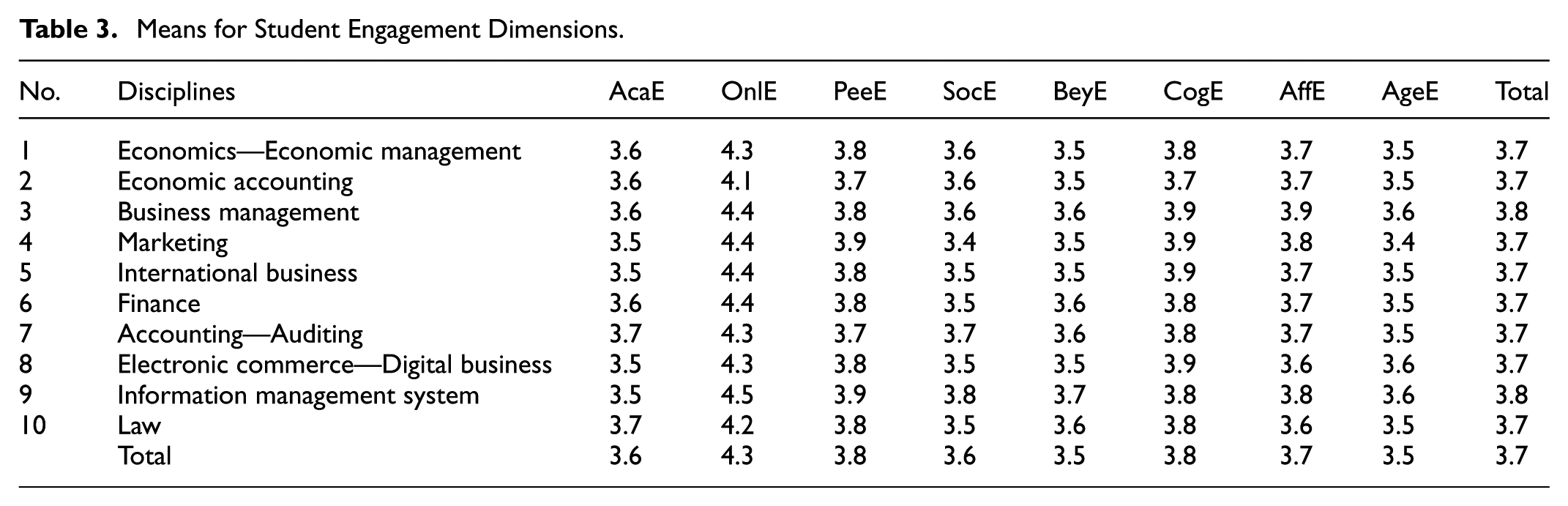
Table 3 shows that students are more engaged with online sources and learning (M = 4.3), followed by Cognitive and Peer Engagement (M = 3.8). The lowest reported level of engagement is for Beyond-Class and Agentic Engagement (M = 3.5). Information Management System and Business Management students reported the highest overall engagement (M = 3.8). The rest of the students in other disciplines indicated their overall engagement at a high level (M = 3.7). In general, student engagement varies by eight dimensions and across disciplines, with certain disciplines showing higher levels in particular areas of engagement.
Means for Student Engagement Dimensions.
Satisfaction
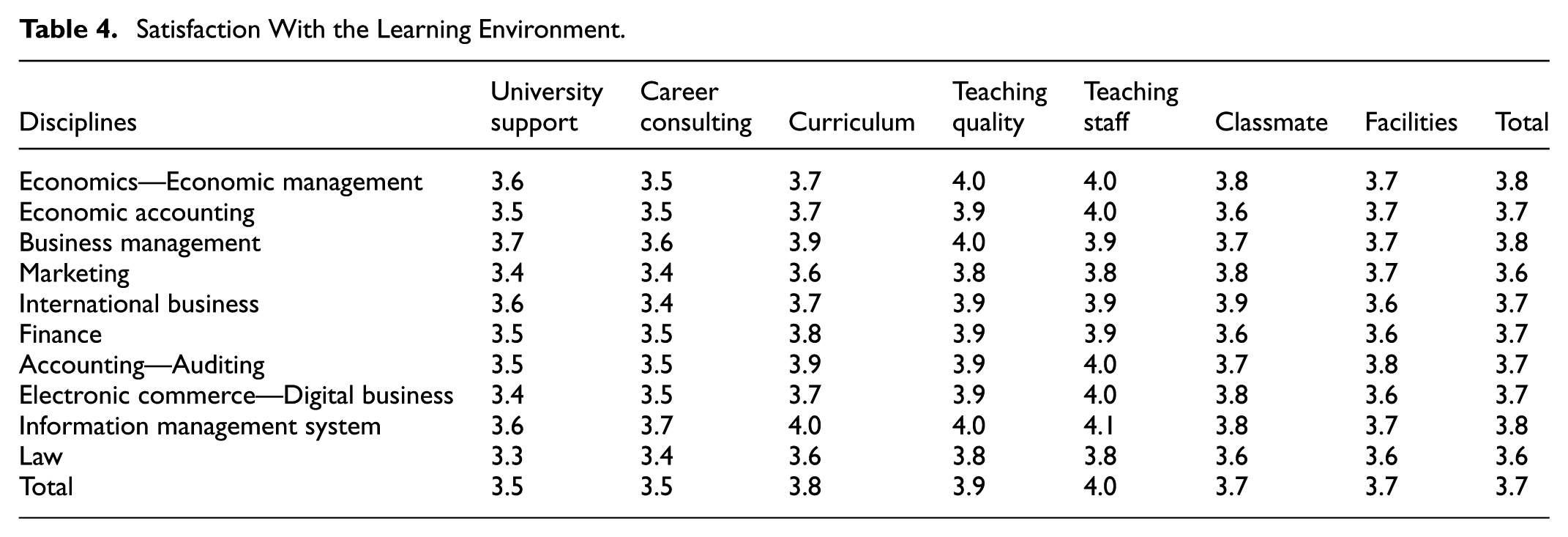
Table 4 displays the means of satisfaction in this study. Students majoring in Business Management and Information Management System are most satisfied with all surveyed aspects (M = 3.8), while Law students report the lowest overall satisfaction (M = 3.6). For other disciplines, the average satisfaction level is 3.7. As regards different aspects of satisfaction, instruction and teaching staff consistently score the highest across most disciplines, with students of Information Management System scoring the highest in teaching staff (M = 4.1).
Satisfaction With the Learning Environment.
SEM Analysis
Confirmatory Factor Analysis-CFA
Figure 2 displays the results of CFA. Academic Engagement was separated into two factors: AcaE1 (classroom attendance) and AcaE2 (behaviors before and during class). For the Online Engagement, one item (OnlE_1) was removed. The Social Engagement with Teachers met all required criteria. The Affective/Emotional, Cognitive, and Agentic Engagement met the criteria. Some items of these constructs had slightly low factor loadings of below 0.7 (AffE_1, CogE_1, CogE_2, and AgeE_1), but they were retained for content validity. The sub-construct of AgeBeyE (agentic and beyond classroom engagement), formed with five items of AgeE and three items of BeyE, does not meet the requirements, indicating that these are two distinct sub-constructs.

CFA for student engagement.
Overall Model
Table 5 shows the results of the overall model. After removing AcaE1 and a few other items, the overall model meets the requirements: AVE > 0.5, CR > 0.6, no cross-loadings, CMIN/df = 5.05 (slightly exceeding 5.0 by just 1%). The model is considered acceptable. Only AcaE has an AVE value slightly below 0.5 (~8% lower), but it is retained for structural model testing to ensure its content validity.
The Result of the Overall Model.

V_EiHES as a Higher-Order Construct (Model B) and a First-Order Construct (Model A)
Two models were developed using AMOS 24.0 to test the factor structure of student engagement and its internal validity, as well as to examine the hypotheses proposed for this study. V_EiHES as a first-order construct (Model A) and as a higher-order construct (Model B).
Figures 3 and 4 display the results of testing student engagement as a higher-order construct (Table 6) and a first-order one (Table 7), which are both satisfactory. Online engagement was excluded. Although CMIN/df = 5.478 > 5.0 (Model B) and CMIN/df = 5.516 > 5.0 (Model A), they are acceptable with the large sample size of >1,000.
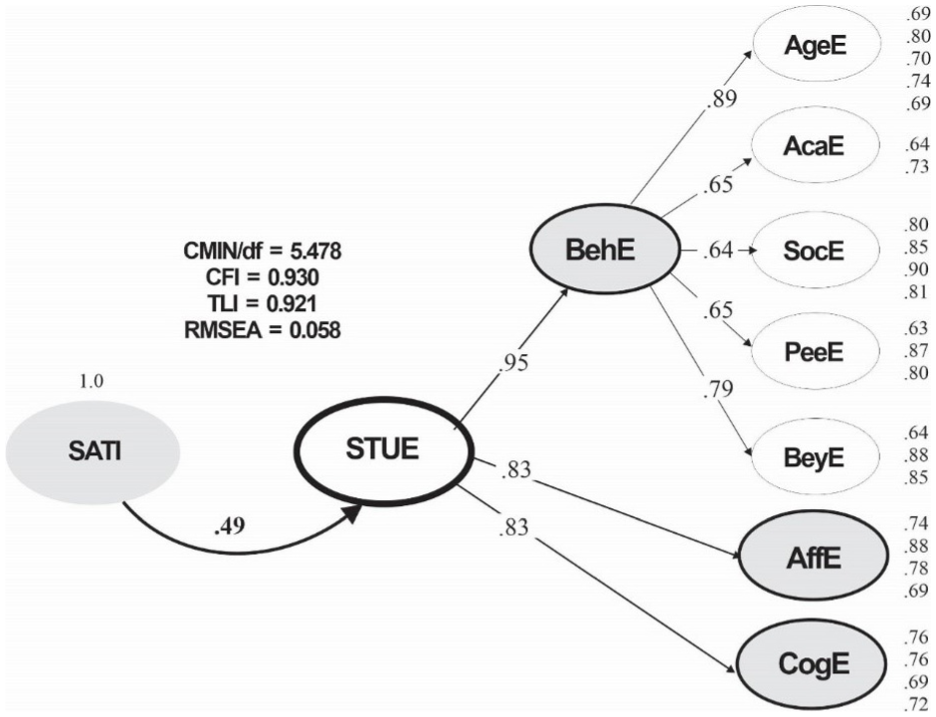
Student engagement as a higher-order construct.

Student engagement as a first-order construct.
Student Engagement as a Higher-Order Construct (Model B).

Student Engagement as a First-Order Construct (Model A).

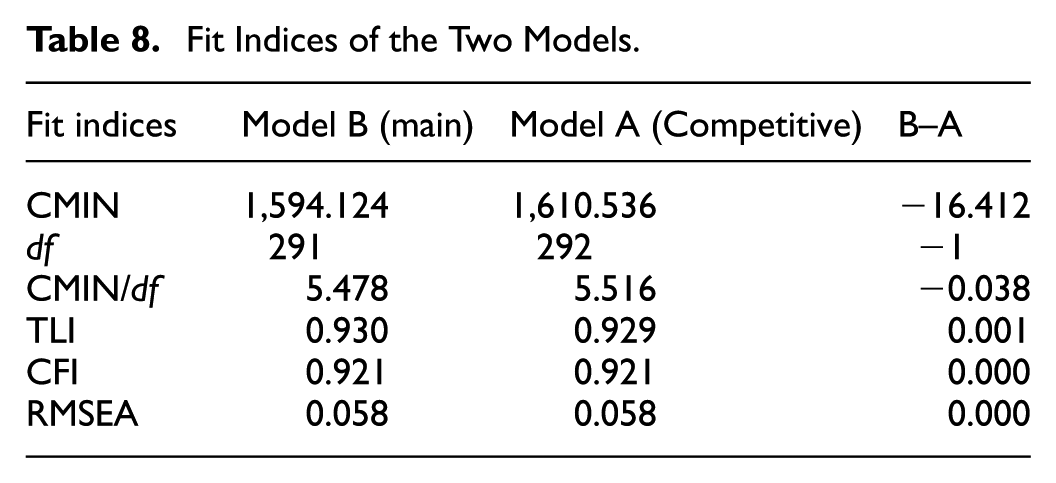
The fit indices indicate that the two models are nearly equivalent, but Model B is slightly more suitable (better CMIN, df, and CMIN/df values). Theoretically, Model B is more appropriate because it defines engagement as consisting of three components: Cognitive, Affective, and Behavioral (Table 8). Therefore, student engagement as a higher-order construct is selected for structural model testing.
Fit Indices of the Two Models.
Model Assessment and Hypothesis Testing
Table 9 displays the results of the model assessment for satisfaction with satisfactory fit indices. The regression coefficients of the SATI construct are all statistically significant. Figure 5 shows the results of the model assessment with a good fit.
Results for Satisfaction (Formative)—Model B.


Model assessment—Model B.
Tables 10 (H1) and 11 (H2) show the results of hypothesis testing.
Hypothesis Testing.

MGA Results for Academic Outcomes (A & B).
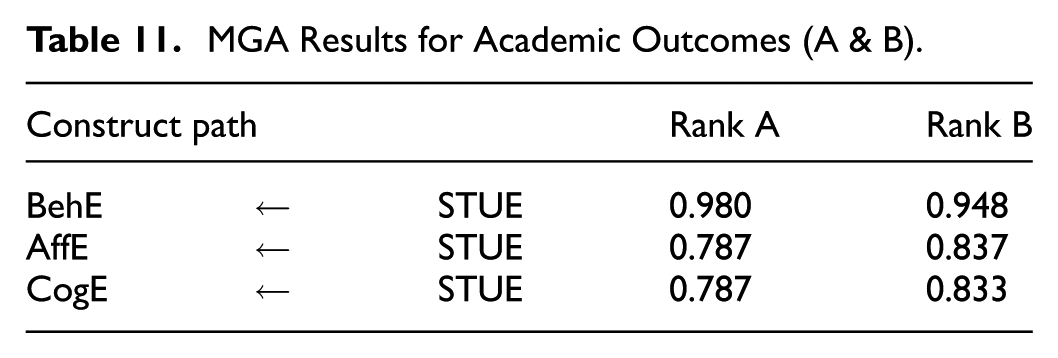
Table 11 displays the results of MGA for academic outcomes for A and B, since the number of students with academic ranks C and D does not meet the criteria for SEM analysis. The results show that there is a significant difference between students with academic ranks A and B (ΔCMIN = 32.476; Δdf = 20; p = .038), indicating a relationship between student engagement and academic outcomes (Table 12).
Correlation Between Engagement and Learning Outcomes.

Correlation is significant at the .05 level (two-tailed), **Correlation is significant at the .01 level ( two-tailed).
There is a moderate correlation between engagement and learning outcomes: the higher the engagement, the higher the academic ranking, except for social engagement with instructors. This may suggest that weaker students require more support and assistance from teachers.
MGA by gender indicated no significant differences between the constrained and unconstrained models, suggesting that the measurement parameters are equivalent for male and female students.
Discussion
Student Engagement as a Higher-Order Construct
This study was conducted to further explore the concept of student engagement in the Vietnamese context and examine its relationship with the learning environment and academic achievement.
In this study, the results demonstrate that V-EiHES is a higher-order construct, consisting of three domains: cognitive, behavioral, and affective domains, of which the behavioral aspect of engagement encompasses five sub-constructs (academic engagement, social engagement with instructors, peer engagement, beyond-class engagement, and agentic engagement) (see Appendix 3 for retained items after CB-SEM). The results of this study confirm the complexities of student engagement and confirm this concept as a meta-construct. This study is significant since it can provide more empirical data for a well-grounded theory related to student engagement dimensions: cognitive, affective, and behavioral. The results challenge other studies considering engagement as a second-order construct with four, five, six, and seven sub-components, such as the engagement model proposed by Finn and Zimmer (2012) and further refined by Zhoc et al. (2019), and recently validated by Laranjeira and Teixeira (2024). This model is also used in this study as a competing model (Model A). As such, other dimensions of engagement, such as academic engagement suggested by Appleton et al. (2006), social engagement by Fredricks et al. (2016), or agentic engagement by Reeve and Tseng (2011), can belong to behavioral engagement. This study acknowledges the theoretical diversity and complexity of student engagement (Wong & Liem, 2022) and then uses empirical data to further test the concept of engagement as a higher-order construct. This study supports the concept of student engagement to be a meta-construct and a higher-order construct, expanding from a widely accepted three-factor construct (Fredricks et al., 2004; Maroco et al., 2016; She et al., 2023), to a four-factor one (Bowden et al., 2021; Finn & Zimmer, 2012), to a five-dimensional engagement model with seven factors (Marcionetti & Zammitti, 2024; Zhoc et al., 2019). Behavioral engagement in this study can refer to how students behave for their learning (learning engagement) and how this learning happens in different contexts: classroom, school, and even beyond the school context (country and society), which supports the Dual Component Framework of Student Engagement by Wong and Liem (2022). This study acknowledges the complexity of measuring student engagement in higher education and critiques relating to the expansion of the construct (Reschly & Christenson, 2012; Wong et al., 2023). The results of this study also suggest that cognitive and affective dimensions of engagement can be second-order constructs, which include learning engagement and engagement with various contexts cognitively and affectively; hence, contributing to a better understanding of the student engagement conceptually and theoretically. Theoretically, this study also offers insights into how the learning environment can enhance student engagement and the relationship between engagement and academic outcomes.
In this context, self-reported “online engagement” items behaved more like usage/exposure indicators than a cohesive, learning-aligned engagement facet. Post-pandemic Vietnamese universities report uneven digitalization and mixed readiness at the course level, so identical “time online/using tools” can reflect very different instructional realities—administrative access, passive browsing, or active study—undermining unidimensional measurement (and hence convergent/discriminant validity) for a reflective OnlE factor (Anh, 2024; Nguyen & Hong, 2025). Methodologically, the single-factor CFA for online engagement (OnlE) showed poor global fit despite adequate reliability: with df = 2, χ2 = 55.150 (CMIN/df = 27.575), RMSEA = .141, and TLI = .903 (below the .95 benchmark), indicating possible substantive misspecification of a unidimensional reflective factor. Although CFI = .968 appears acceptable, RMSEA and TLI signal a lack of fit at the model level (Hu & Bentler, 1999; Kline, 2023). This suggests the items behave more like usage/exposure indicators than a coherent, learning-aligned engagement facet. Retaining OnlE degraded the overall measurement model, whereas excluding it improved parsimony and psychometric clarity. Therefore, OnlE was dropped from the behavioral engagement. Online activity can be treated as a contextual covariate in future studies. Finally, contemporary engagement syntheses emphasize granularity of construct definition and alignment with pedagogy/assessment; without tying items to constructive/interactive, assessment-relevant behaviors, an omnibus “online engagement” factor is unlikely to cohere psychometrically in higher education samples (Papageorgiou et al., 2025).
By incorporating agentic engagement on a scale of student engagement, this study contributes a university-wide operationalization of agentic engagement, extending the construct beyond course-specific behaviors to students’ proactive, instruction- and institution-shaping actions across advising, co-curriculars, clubs, internships, and service systems. By embedding agentic engagement to behavioral facets in a higher-order model, this study demonstrates that students’ university-level agency is a core, reliable indicator of overall engagement—not a niche, classroom artifact. This widens the theoretical lens from “participation in a class” to “participation in the university as a learning ecosystem,” and gives leaders actionable levers (structures that invite initiative, feedback uptake, and shared decision-making) to cultivate engagement at scale.
Satisfaction with the Learning Environment Positively Affects Engagement
The SEM analysis confirms that satisfaction with the learning environment positively affects student engagement. Satisfaction is positively associated with V-EiHES (0.28), indicating that higher satisfaction is associated with higher engagement. Students who feel more satisfied with the learning environment will be more engaged during their university years. Previous studies also suggest a positive association between students’ perceived satisfaction and engagement (Guo, 2018; Guo et al., 2017). Some also explored the direct and indirect relationship between course experience and course satisfaction, GPA, and generic skills development (Guo et al., 2017; Lizzio et al., 2002). Satisfaction with the learning environment is what Li and Xue (2023) called ‘promoters’ for engagement when they examined factors influencing student engagement. In this study, out of seven factors surveyed, six aspects of the learning environment affecting engagement are university support, career consulting, curriculum, teaching staff, classmates, and facilities, except for the quality of teaching, which is not expected. The results support Kahu and Nelson’s (2018) engagement framework. In this framework, the authors suggest both structural and psychosocial factors affecting student engagement in an educational interface. Using a different scale, an involvement scale, Bowden et al. (2021) conclude that students’ interaction and involvement with the learning environment serve as important precursors to student engagement, besides pre-university expectations. They argue that these antecedents function as continual reference points throughout the student experience, directly influencing different aspects of engagement. Through these dimensions, they ultimately contribute to both student and institutional success.
The result that satisfaction with teaching quality was not associated with student engagement was contradictory to other studies. Many studies have emphasized that teachers and teaching quality are key to fostering engagement (Akey, 2006; Garcia-Reid et al., 2005). As students are the intended beneficiaries of teaching, they can provide crucial “customer feedback” not only on what works well but also on what they would like to be done differently and how (Hénard & Roseveare, 2012). Hence, this result requires further investigation for a better understanding of students’ views and a higher level of engagement.
Student Engagement and Academic Achievement
The findings of this study also provide a clear picture of the relationships between student engagement and academic achievement. It highlights significant correlations, both positive (most aspects) and negative (one aspect), suggesting complex interactions between how students engage in different areas and how they perform academically. The students’ achievement was significantly positively correlated with behavioral (except for social engagement with instructors), cognitive, and affective engagement. There is a negative association between social engagement with instructors and academic achievement. All the associations were low. This study’s findings align with previous studies, confirming the associations between behavioral engagement (academic, peers, beyond-class, and agentic), cognitive engagement, and affective engagement and academic achievement via GPA, with a low range (Laranjeira & Teixeira, 2024). Other evidence from the extant literature suggests moderate and high associations between student engagement and academic achievement in general education (Wong et al., 2023) and all levels of education (Chang et al., 2016).
Contradictory results were also reported in the literature, from insignificant relationships between engagement and students’ GPA (Guo, 2018) to only several dimensions of engagement (cognitive and social), having a direct impact on achievement (Zhoc et al., 2019). For agentic engagement, this study found a significant association with students’ GPA, also consistent with related literature (Heilporn et al., 2024; Reeve et al., 2020).
Social engagement with instructors is negatively associated with students’ GPA. At this Vietnamese university, the four indicators of student–faculty engagement—perceived effort to understand learning difficulties, faculty concern for student progress, provision of useful feedback, and time spent discussing learning—appear to capture the frequency and contextual triggers of interactions more than their alignment with assessment-related content. This may help explain the observed negative association with GPA in this study. Prior research indicates that the academic value of such interactions depends significantly on their content: exchanges that are academically focused, feedback-rich, and competence-supportive are positively associated with academic outcomes, whereas informal or misaligned social interactions may correlate negatively with student performance (Kim & Sax, 2017; Loes et al., 2024; Trolian & Parker, 2023). A selection effect may also be operative, wherein lower-performing students initiate more contact (e.g., meetings and messages), thereby generating a negative correlation between interaction frequency and GPA—even though need-contingent, effective help-seeking behavior yields only modest average benefits (Bimerew & Arendse, 2024). Additionally, in Confucian-heritage, high power-distance educational contexts, student–faculty interactions may be shaped by remedial, face-threatening, or control-oriented dynamics that undermine student motivation and academic performance (Han, 2016; Nguyen et al., 2020; Ryan et al., 2022). This phenomenon requires further investigation since it could happen at lower levels rather than higher education. Moreover, any discussions not anchored to graded assessments tend to enhance students’ sense of satisfaction and belonging rather than directly improving academic achievement (Trolian & Parker, 2023).
Limitations of the Study and Future Directions
This study expanded the scale of EiHES to include agentic engagement to examine the impacts of the learning environment on student engagement and its association with academic achievement. The results are promising; however, some limitations should be addressed in future studies. First, it would be important to repeat the study with a larger sample of students and a more representative sample of students in Vietnam to be certain of the generalizability of the results to the entire population of higher education students. Second, to further validate the findings from the SEM, it would be beneficial to conduct longitudinal studies incorporating the constructs examined in this research. This approach would help assess the stability and consistency of the results over time. Third, it would be valuable to examine the differential relationships between academic success, student well-being, and other outcomes. Future studies can also measure precise numerical values of GPA (instead of rank), as suggested by Laranjeira and Teixeira (2024), or self-reported scales of learning outcomes as used in other studies (Bowden et al., 2021; Guo, 2018; Zhoc et al., 2019). To better understand the influencing factors of student engagement, future research can directly investigate the alignment of students and university factors. Fourth, this study also modified agentic engagement from a classroom level to a university-wide one, which warrants further studies to test its cross-cultural validity and reliability. Agentic engagement in this study was considered as a subscale of the behavioral dimension of engagement. Further studies, therefore, can consider agentic engagement as a unique one as originally suggested by Reeve and Tseng (2011). Fifth, from this study’s findings, rather than treating online engagement as a reflective engagement facet, further studies in Vietnamese higher education may model it as an exogenous context/usage variable. Last but not least, since this study supports engagement as a higher-order construct, particularly behavioral engagement as a second-order construct, further studies can investigate cognitive and affective engagement as a second-order construct to address both individual and contextual dimensions of this concept.
Conclusion and Implications
Student engagement, V-EiHES in this study, is a higher-order construct. This result is significant since it can provide more empirical data to support engagement as a meta-construct, a higher-order construct. Student engagement can be examined at the individual and contextual levels. Behavioral engagement in this study is a second-order construct, measuring student learning engagement (academic, agentic) and their behavioral engagement in different contexts (with peers, with instructors, and beyond class). The results also support a holistic engagement framework with various antecedents (except the quality of teaching) and outcomes of engagement (except a negative association between engagement and GPA). These are, to some extent, meaningful for implications.
Implications
Theoretically, this study supports student engagement as a meta-construct and higher-order concept with three factors: cognitive, behavioral, and affective. These factors can be second-order constructs that investigate engagement at the individual and context levels, as suggested by Wong and Liem (2022). Unlike Wong and Liem’s (2022) study, this study provides empirical data and the comparison results of the two models to test the structure of student engagement, offering another approach to conceptualizing and operationalizing this construct. Including agentic engagement at the university-wide level sharpens the construct and underscores that students’ proactive contributions—across courses, services, and co-curriculars—are integral to academic success.
Practically, since limited studies have been conducted using the EiHES in the Vietnamese context, this study demonstrates that V-EiHES is an effective tool to measure student engagement, enabling researchers to conduct studies in the field and allowing the university and other related stakeholders (support service staff) to evaluate students’ engagement levels and identify related challenges (teaching quality, absence of online engagement, and negative links between student-faculty engagement and college GPA). The V-EiHES can be used to assess the effectiveness of interventions designed to enhance student engagement, including the absence of online engagement as found in this study. Considering the importance of technology, AI, and online resources, in particular, after COVID-19, the university should evaluate how these online resources are integrated, perceived, and used by students. A shift toward blended learning models, instructor-led engagement strategies, and more interactive educational tools may be needed to bridge this gap. Focus institutional efforts on task-level, feedback-linked online behaviors that align with assessment—for example, accessing core materials, posting/contributing (not just reading), and demonstrable feedback uptake. Recent studies show these behaviors yield stronger construct coherence and clearer instructional impact than broad, time-online measures. Higher education institutions can benefit from this model by focusing on cultivating all dimensions of engagement: behavioral, cognitive, and affective. To foster student engagement, which leads to achievement, universities can enhance student satisfaction with the learning environment by further investigating the absence of quality teaching and its impact on student engagement. For students, understanding the diverse forms of engagement and their impact on achievement can be empowering. This knowledge enables them to take a more active role in their educational journey, potentially leading to improved outcomes and a more rewarding academic experience. The interconnected nature of engagement in the Vietnamese higher education (V-EiHES) and other variables, in line with related literature, suggests a need for a holistic approach to student engagement in Vietnam. This emphasizes that comprehensive strategies for the learning environment are crucial for enhancing student engagement and achievement. By recognizing and nurturing these various aspects of engagement, both institutions and students can work together to create a more fulfilling and effective higher education experience.
The study’s negative link between student-faculty engagement and GPA implies that the complicated dynamics underlying this relationship indicate that higher levels of reported instructor engagement—when characterized by non-academic, problem-driven, or autonomy-suppressing interactions—may coincide with lower academic performance. These findings propose the importance of designing instructional interactions that are task-specific, feedback-embedded, and autonomy-supportive. The study’s findings also elevate student agency as a priority for institutional policy and practice, guiding universities to design structures that invite initiative, feedback uptake, and shared decision-making.
Footnotes
Appendix
Items After CB SEM Analysis (Vietnamese–English).

| Section | Vietnamese item | English translation |
|---|---|---|
| Academic engagement | Tôi ghi chép chi tiết trong buổi học | I take detailed notes during class |
| Tôi thường hoàn thành bài đọc, bài tập trước khi đến lớp | I usually complete readings and assignments before coming to class | |
| Social engagement with teacher | Giảng viên thực sự nỗ lực để hiểu các khó khăn tôi gặp khi học | Instructors truly make an effort to understand the difficulties I face in learning |
| Đội ngũ giảng viên quan tâm đến sự tiến bộ của tôi | The faculty care about my progress | |
| Giảng viên cho tôi những phản hồi hữu ích, giúp tôi tiến bộ | Instructors give me useful feedback that helps me improve | |
| Giảng viên thường xuyên dành thời gian thảo luận về việc học của tôi | Instructors regularly spend time discussing my learning with me | |
| Peer engagement | Tôi thường tham vấn các sinh viên khác khi gặp vấn đề trong môn học | I often consult other students when I have problems in a course |
| Tôi thường cùng các sinh viên khác thảo luận về các vấn đề học tập | I often discuss academic issues with other students | |
| Tôi thường xuyên học nhóm cùng các sinh viên khác | I frequently study in groups with other students | |
| Beyond-class engagement | Tôi thường xuyên giao lưu với các sinh viên khác trong trường | I frequently socialize with other students on campus |
| Tôi chủ động tham gia các hoạt động ngoại khóa ở trường | I proactively participate in extracurricular activities at the university | |
| Tôi quan tâm đến các hoạt động ngoại khóa và các tiện ích của trường | I am interested in the university’s extracurricular activities and amenities | |
| Affective/Emotion engagement | Tôi thích là một sinh viên đại học | I like being a university student |
| Nhà trường đáp ứng được kỳ vọng của tôi | The university meets my expectations | |
| Tôi cảm thấy mình là một phần của trường | I feel that I am part of the university | |
| Tôi rất thích ở trong khuôn viên nhà trường | I really enjoy being on campus | |
| Cognitive engagement | Khi đọc sách/tài liệu, tôi luôn tự hỏi để bảo đảm mình hiểu chủ đề đang đọc | When reading books/materials, I constantly self-question to ensure I understand the topic |
| Tôi thường nói chuyện với bạn bè ngoài trường về những gì học được trong lớp | I often talk with friends outside the university about what I’ve learned in class | |
| Nếu không hiểu một chủ đề nào đó, tôi cố gắng giải quyết nó | If I do not understand a topic, I try to figure it out | |
| Tôi luôn tích hợp các kiến thức đã học để giải quyết vấn đề mới | I consistently integrate what I’ve learned to solve new problems | |
| Tôi cố gắng tích hợp các môn học khác nhau vào kiến thức chung của mình | I try to integrate different subjects into my overall knowledge | |
| Agentic engagement | Khi được hỏi, tôi luôn đóng góp ý kiến về các quy trình và hoạt động của nhà trường | When asked, I consistently contribute ideas about university processes and activities |
| Tôi thường xin ý kiến giảng viên (GV), cố vấn học tập (CVHT) và bạn bè để cải thiện việc học và phát triển bản thân | I often seek input from instructors, academic advisers, and friends to improve my study and personal development | |
| Tôi chủ động khám phá các cơ hội thực tập, làm dự án hay hoạt động trải nghiệm | I proactively explore internship, project, and experiential opportunities | |
| Tôi chủ động tham gia thảo luận trong các buổi học | I proactively participate in discussions during classes | |
| Tôi chủ động tạo ra hoặc tham gia vào các nhóm hay câu lạc bộ | I proactively create or join groups and clubs | |
| Satisfaction | Tôi hài lòng với các hoạt động hỗ trợ của nhà trường | I am satisfied with the university’s student support services |
| Tôi hài lòng với các hoạt động tư vấn nghề nghiệp | I am satisfied with the university’s career counseling services | |
| Tôi hài lòng với chất lượng chương trình đào tạo | I am satisfied with the quality of the academic programs | |
| Tôi hài lòng với đội ngũ giảng viên | I am satisfied with the faculty | |
| Tôi hài lòng với bạn cùng lớp | I am satisfied with my classmates/peer cohort | |
| Tôi hài lòng với cơ sở vật chất và trang thiết bị | I am satisfied with the facilities and equipment | |
| Nói chung, tôi hài lòng với nhà trường | Overall, I am satisfied with the university |

Ethical Considerations
The authors declare that all participants in this study were informed about its purpose, their voluntary participation, and the confidentiality of their data. All consent was obtained from the participants before joining the study.
Funding
The authors disclosed receipt of the following financial support for the research, authorship, and/or publication of this article: This research is funded by Vietnam National Foundation for Science and Technology Development (NAFOSTED) under grant number 503.01-2021.28.
Declaration of Conflicting Interests
The authors declared no potential conflicts of interest with respect to the research, authorship, and/or publication of this article.
Data Availability Statement
The authors declare that the data supporting this study will be made available upon request.