



Abstract
The double-marginal and bullwhip effects caused by information asymmetry are common in the actual operation of pharmaceutical supply chains. Introducing pharmaceutical group purchasing organizations (GPOs) increases the risk of these effects, leading to decision-making failures and reduced operational efficiency in pharmaceutical supply chains. This study addresses these issues by proposing a quantity discount contract coordination model that includes GPOs and incorporates demand information sharing. This model is solved and simulated using a Steinberg game and the inverse induction method. The results show that under certain conditions, demand information sharing increases the demand of each supply chain member and the revenue of pharmaceutical GPOs. However, quantity discount contracts increase the revenue of medical institutions and decrease their procurement costs. Collectively, these effects can reduce the procurement costs of medical institutions and pharmaceutical purchasers, thus enabling the coordinated operation of the pharmaceutical supply chain. These findings reveal potential cost-saving approaches for medical institutions and pharmaceutical purchasers, which are of great significance for promoting the sustainable development of the medical industry. However, the model construction in this study has limitations, and future research could further explore the influence of combination contracts on supply chain coordination.
Keywords
Introduction
A group purchasing organization (GPO) is a third-party service provider that negotiates purchasing services with suppliers, leveraging the collective purchasing power of multiple members to obtain quantity discounts and more favorable contract terms. Group purchasing is an internationally accepted pharmaceutical procurement model in which a GPO integrates medical institutions’ pharmaceutical needs, negotiates prices with pharmaceutical suppliers with a high degree of centralized purchasing power, and provides medical institutions with quality pharmaceutical procurement services to help reduce pharmaceutical costs and improve the efficiency of pharmaceutical supply chain operations (Nollet & Beaulieu, 2003). Compared to independent procurement, group procurement is more likely to produce a scale effect and significantly affect pharmaceutical procurement prices, transaction costs, and pharmaceutical market development orders.
However, whether pharmaceutical GPO procurement can always yield effects, such as reduced pharmaceutical prices and cost savings, has been controversial (Hu & Schwarz, 2011). The addition of pharmaceutical GPOs increases the number of decision-makers in the pharmaceutical supply chain, and collecting contract management fees and other profit-making behaviors from pharmaceutical manufacturers increases the risk of collusive behavior among members, potentially resulting in higher pharmaceutical prices. However, adding more members to the pharmaceutical supply chain intensifies competition and information asymmetry. If all members seek to maximize their unilateral interests, the overall operating revenue of the pharmaceutical supply chain will likely be lower than the sum of each member’s individual revenue following the introduction of pharmaceutical COPS, creating double marginal bullwhip effects in the pharmaceutical supply chain. These effects can lead to failure in supply chain decisions and reduce operational efficiency (Cachon & Lariviere, 2005). Furthermore, insufficient willingness among members to share information, distortion in the information transmission process, and an imperfect information-sharing mechanism result in unbalanced information distribution in the pharmaceutical supply chain. This information asymmetry makes it challenging for pharmaceutical GPOs to accurately assess medical institutions’ genuine needs. Moreover, pharmaceutical supply chain members have different roles and interests and often reserve key information, such as market demand, production cost, and purchase price, making it difficult for pharmaceutical GPOs to fully comprehend the real supply and demand in the drug market. This not only increases the difficulty of demand consolidation but also makes it harder for supply chain members to reach a consensus when making decisions, thus affecting the operational efficiency and coordination of the entire pharmaceutical supply chain.
Demand consolidation is the main function of pharmaceutical GPOs, and the enormous demand in the pharmaceutical market endows them with a strong advantage in price negotiations. However, in a pharmaceutical supply chain with GPOs, increased information asymmetry among members makes the quantity-for-price problem more complex. Solving this problem requires establishing a mechanism for sharing demand information. This mechanism requires all pharmaceutical supply chain members to share key information, including market demand forecasts and actual sales data, to fully understand market dynamics and patient needs and subsequently make more accurate and wiser decisions. However, against the backdrop of information asymmetry, effectively sharing demand information is not straightforward. Quantity discount contracts can play a vital role as a common supply chain coordination mechanism that encourages buyers to increase their order quantity by providing price concessions, thus realizing the coordinated operation of the supply chain. However, in a pharmaceutical supply chain with asymmetric information, effective implementation of quantity discount contracts faces several challenges. Pharmaceuticals are closely related to human life and health; therefore, without effective quantity discount contracts, fluctuations in the quantity and price of the pharmaceutical supply and failure of pharmaceutical supply chain decisions are likely to lead to a series of governmentally oriented financial and social welfare problems. The quantity–price negotiation advantage of pharmaceutical GPOs can instead become a bottleneck that restricts effective pharmaceutical supply chain operations.
More general research related to the product supply chain indicates that demand information sharing can reduce problems in supply chain operations caused by information asymmetry and enable effective demand forecasting. Dan et al. (2023) suggested that sellers have demand forecast information and can decide whether to share that information with suppliers, and constructed a dynamic game model to analyze the information-sharing strategy in this supply chain and a corresponding demand information-sharing incentive contract. W. L. Wang and Wang (2020) considered competition between two manufacturers, constructed a retailer demand forecasting information-sharing model from the perspective of innovation input, and used Bayesian statistical theory and the Steinberg game approach to explore the effects of competition between manufacturers on retailers’ demand forecasting information sharing. L. Wu et al. (2014) investigated the general role of supply chain partnerships and shared their views on supply chain information sharing. Quantity discount contracts also play an active role in coordination. J. Zhang and Chen (2013) investigated the use of quantity discount contracts to achieve supply chain coordination when demand is uncertain. L. Liu et al. (2021) constructed a supply chain game model with quantity discount contracts to identify intrinsic constraints to achieving supply chain coordination when market demand, price, and risk aversion simultaneously interfere under information asymmetry. However, considering the unique characteristics of pharmaceuticals and the special role of pharmaceutical GPOs in the supply chain, these studies fail to fully explain how demand information sharing and quantity discount contracts influence the coordinated operation of GPO-involved pharmaceutical supply chains. This study addresses this research gap by aiming to resolve the issues of decision-making failures and operational efficiency declines in pharmaceutical supply chains caused by the introduction of GPOs.
This study focuses on the problem in which the introduction of pharmaceutical GPOs may lead to decision-making failures and reduce operational efficiency in the pharmaceutical supply chain. In a four-level supply chain comprising pharmaceutical suppliers, pharmaceutical GPOs, medical institutions, and pharmaceutical buyers, a coordination model of quantity discount contracts in the pharmaceutical supply chain is established, which considers the existence of a GPO under demand information sharing. A Steinberg game model is then used to describe the dynamic interaction process among the main bodies of the pharmaceutical supply chain. Furthermore, the game problem is solved using the inverse solution method, and the effectiveness and practicability of the model are further verified through simulation analysis.
This study makes two main contributions to the literature. First, the members of the pharmaceutical supply chain with GPOs are comprehensively considered using changes in the demand forecast value and actual demand of pharmaceutical GPOs and medical institutions to portray the concept of demand information sharing in a pharmaceutical supply chain with GPOs, and the effects of demand information sharing on the benefits of pharmaceutical GPO supply chain operation are analyzed under various decision scenarios. Second, a quantity discount contract coordination model of the pharmaceutical GPO supply chain under demand information sharing is developed, focusing on the effects of the quantity discount rate, market demand forecast, market competition environment, and degree of demand information sharing on the coordination of pharmaceutical GPO supply chain operations.
Literature Review
This study focuses on pharmaceutical supply chains and selects quantity discount contracts to examine the characteristics of pharmaceutical GPOs for high-volume procurement. Furthermore, the impact of the coordination mechanism of quantity discount contracts on overall supply chain efficiency under demand information sharing is discussed. The literature review considers three main factors based on the content of this study: the role of pharmaceutical GPOs, supply chain information sharing, and quantity discount contracts.
Pharmaceutical Group Procurement
Pharmaceutical group purchasing originated in the United States and is an effective method for controlling pharmaceutical procurement costs and medical expenses in most developed countries. It is also a typical representative of the market-oriented operation of pharmaceutical purchasing (Xu et al., 2020) and a negotiation agent between manufacturers and retailers (Ailawadi et al., 2020). However, the characteristics of pharmaceutical GPOs vary among countries (Vogler et al., 2022). Ahmadi et al. (2019) analyzed the coordinating role of pharmaceutical GPOs in the pharmaceutical supply chain and expounded on the role and principle of GPOs in reducing pharmaceutical prices. In addition to price reduction, pharmaceutical GPO have achieved substantial results in ensuring pharmaceutical supply, standardizing pharmaceutical circulation orders, and simplifying procurement processes (Gao et al., 2020; Xing & Tang, 2021). Despite these advantages, changes in pharmaceutical GPOs may affect hospitals’ supply cost efficiency and their economic benefits, financial status, and service quality (In et al., 2019; Lee et al., 2023; Walker et al., 2021). Furthermore, scholars such as J. C. Lu et al. (2022) have evaluated the influence of pharmaceutical group purchasing policies on pharmaceutical use in public medical institutions, concluding that pharmaceutical group purchasing can gradually concentrate on winning and generic pharmaceuticals, and more importantly, guarantee pharmaceutical quality. From a modeling perspective, Oktay and Barış (2018) developed a two-stage demand, price-stochastic supply chain model comprising multiple buyers, suppliers, and a GPO. Through a case study, they showed that GPOs can help buyers and suppliers effectively reduce demand and price risks and obtain profits. Thus, pharmaceutical GPOs play a crucial role in the pharmaceutical supply chain but also face certain operational challenges.
Supply Chain Information Sharing
Including pharmaceutical GPOs intensifies the bullwhip and double-marginal effects on the supply chain. However, information sharing and establishing a contract model can improve supply chain efficiency to a certain extent. Supply chain information sharing involves exchanging key data (e.g., market demand, inventory levels, costs, and production plans) between upstream and downstream members. This study specifically focuses on demand information sharing because it is most relevant to the coordination of quantity discount contracts in pharmaceutical supply chains with GPOs. W. L. Wang and Wang (2020) examined how an information-sharing model of retailers’ demand forecasts can be built from the perspective of innovation investment in the context of competition between two manufacturers. Furthermore, they used Bayesian statistical theory and the Steinberg game method to explore the influence of competition among manufacturers and their cost reduction innovation on retailers’ demand forecast information sharing. Sun and Cai (2024) found that the preferences of supply chain members with retailer competition under asymmetric demand information are related to the degree of demand uncertainty and intensity of competition. X. M. Zhang et al. (2024) examined the influence of the information-sharing decision of the Cross-border E-commerce Platform on the choice of logistics mode by constructing a multi-stage game model, and found that sharing information is not always beneficial in this context. S. Z. Lu et al. (2024) utilized artificial neural networks and digital twins to build quality models and achieve better management of fresh products in the cold chain.
Some scholars have focused on incentives for information sharing in supply chains. Guan et al. (2019) examined the information sharing and incentive problems in the product-service supply chain when manufacturers provide both products and related services in an uncertain demand environment. By constructing a dynamic game model with incomplete information, the effects of the retailer’s information-sharing level, manufacturer’s service efficiency, and consumer’s service sensitivity on service and information-sharing value were analyzed, and an information-sharing incentive strategy based on two compensation contracts was proposed. Some scholars have focused on the value that information sharing provides. Shi et al. (2019, 2020) studied the influence of the green cost coefficient on information sharing discussed the information sharing of green supply chain demand forecasting under government subsidies and the optimal decision-making and expected profits of upstream and downstream enterprises with and without information sharing, and obtained the value of information sharing by comparing the optimal expected profits.
Quantity Discount Contracts
Effective contract coordination mechanisms and information sharing are important tools for improving supply chain efficiency. Scholars have developed various supply chain contract models, such as quantity discount (Y. W. Zhou et al., 2021), revenue-sharing (Lan et al., 2024), cost-sharing (Jia et al., 2024), return, and quantity flexibility contracts. Among these, quantity discounts can effectively reduce transaction costs and offer sufficient flexibility to achieve profit distribution. Considering that the high-volume procurement characteristic of pharmaceutical GPOs aligns with the core logic of quantity discount contracts, scholars have demonstrated that such contracts can enhance supply chain profit gains and improve operational efficiency. Y. F. Zhang et al. (2020) introduced a quantity discount contract to coordinate the supply chain of time-lagged deteriorating goods and enable the entire supply chain system to achieve an optimal state under centralized decision-making. Zheng et al. (2019) examined the supplier’s optimal pricing decision and the retailer’s optimal purchasing decision under a quantity discount contract for a fresh agricultural product supply chain composed of one supplier and multiple retailers and tested the influence of the deterioration rate on the supply chain’s profits. S. S. Wu and Li (2021) constructed an urgent quantity discount contract and discussed the inherent law of supply chain coordination contracts with stochastic market demand and price and risk-averse suppliers. Furthermore, the risk measurement standard of Conditional Value at Risk has been revised. Blockchain is also expected to solve the problem of transaction resource allocation among several untrusted participants in the fresh fruit supply chain, and smart contracts have been shown to reduce communication and trust costs (Y. Q. Zhang et al., 2022). The influence of the cost advantage on fresh-keeping and outsourcing decision-making considered that the third-party logistics service provider has a cost advantage, and designed a quantity discount contract to develop an improved outsourcing fresh-keeping strategy. They concluded that this strategy can achieve Pareto improvement under an appropriately designed quantity discount incentive contract (G. L. Wang et al., 2023).
The above literature review indicates that domestic and international scholars have conducted several studies on pharmaceutical group procurement, supply chain information sharing, and quantity discount contracts. The findings of these studies hold high reference value; however, several research gaps remain, which are primarily reflected in three aspects. First, research on pharmaceutical GPOs is insufficient, and the literature mainly focuses on the role of the pharmaceutical group procurement model in reducing pharmaceutical prices and ensuring supply, with little research on information sharing between pharmaceutical GPOs and medical institutions. Second, although several studies have examined information sharing in the supply chain, the discussion on information sharing in the pharmaceutical supply chain environment with GPOs remains insufficient. Third, research on the coordination mechanism of pharmaceutical supply chains with GPOs also needs to be expanded, particularly in the context of demand information sharing, while the literature on coordination research using quantity discount contracts is relatively scarce.
Problem Description and Model Building
Problem Description
In a pharmaceutical supply chain involving GPOs, the demand information sharing mechanism between medical institutions and pharmaceutical GPOs is realized by medical institutions sharing their forecasted values of pharmaceutical demand with GPOs. When demand information is shared, pharmaceutical GPOs are consistent with the actual purchase volume of medical institutions. When demand information is not shared, pharmaceutical GPOs decide on the purchasing benchmark quantity based on historical experience, which differs from the actual purchasing quantity of medical institutions. In this study, we consider a pharmaceutical supply chain comprising two medical institutions, a pharmaceutical GPO, a pharmaceutical supplier, and pharmaceutical purchasers. Figure 1 shows a diagram of the procurement process.

Flowchart of pharmaceutical supply chain procurement with a GPO.
This study draws on prior research methods to establish the models (Ha et al., 2011; Hackner, 1999; Nie & Du, 2017; X. H. Wu & Ai, 2022; Xia et al., 2013; J. H. Zhou & Chang, 2022). We retain the basic concepts and research methods applied in previous research and combine them with the content of this study to establish a quantity discount contract model for a pharmaceutical supply chain involving pharmaceutical purchasers, healthcare providers, pharmaceutical GPOs, and pharmaceutical suppliers. The basic hypotheses of this study are as follows:
Demand Function Construction
Referring to Yan et al. (2019) and P. Liu et al. (2023), the inverse demand function for supply chain members is as follows:

where


Let

When
Symbol Description
Table 1 provides descriptions of the symbols used for the main variables in this study.
Description of Model Symbols.

Quantitative Discount Contract Model Construction and Solution Results
Quantity Discount Contract Model Construction and Solution Results Without Information Sharing
According to the above, the profit composition of the medical institution acquires revenue from pharmaceutical sales and procurement costs through the pharmaceutical GPO and membership fee

The profit composition of the pharmaceutical GPO consists of membership fees collected from medical institutions, contract management fees collected from suppliers, revenue from selling pharmaceuticals to medical institutions, and supplier procurement costs. Here,

The medical institutions, pharmaceutical GPOs, consumers, and suppliers in the pharmaceutical supply chain with GPOs comprise the Steinberg game. Pharmaceutical GPOs play the dominant role in this supply chain; therefore, they act as game leaders. The inverse induction method is used to solve the game, which yields expressions of profits among supply chain members and expressions of price and demand under the equilibrium solution (see the Appendix for the proof process), as follows:


Quantity Discount Contract Model Construction and Solution With Demand Information Sharing
Likewise, the profit function of the medical institution is obtained as follows:

With demand information sharing, the demand for pharmaceutical GPOs is the forecasted value of the demand shared by healthcare providers with the GPO (i.e.,

Similarly, the supply chain profit and price and demand expressions with demand information sharing (see the Appendix for the proof process) can be obtained as follows:

Analysis of the Results
Sensitivity Analysis
The relationships between price, demand, and key factors, such as market forecast values, with and without demand information sharing, are analyzed to explore the impact on each member’s price and demand. Detailed proofs are provided in the Appendix.
Proposition 1: With demand information sharing, market forecast values and demand are always positively correlated. Consumer prices, which were previously constant with respect to forecasts, become positively correlated under conditions
Analysis Without Demand Information Sharing

The partial derivation of the purchase price for medical institutions considering the market forecast value shows that when

Here, the results are constantly greater than 0, indicating a positive correlation. The greater the market forecast value, the higher the consumer purchase price.

Here, the results are constantly less than 0, indicating a negative correlation. The larger the market forecast value of pharmaceutical GPOs, the lower the demand.

When
Analysis With Demand Information Sharing

When

When

With demand information sharing, the demand among medical institutions and pharmaceutical GPOs is the same and positively correlated with the market forecast value (i.e., the higher the market forecast value, the higher the demand).
This study is consistent with Zhang and Chen (2013) and L. Liu et al. (2021), who have emphasized the potential of quantity discount contracts to improve supply chain efficiency and realize coordination. However, this study not only analyzes the influence of quantity discount contracts on supply chain coordination but also discusses the role of demand information sharing in depth. Comparatively, prior studies have often considered only quantity discount contracts or information sharing.
Contrast Analysis
Comparative Analysis of Purchasing Prices
Here, we compare procurement prices with and without demand information sharing to evaluate the effects on price levels.
Proposition 2: When
ws Comparison
Corollary 1:
w Comparison
Corollary 2:
When
p Contrast
Corollary 3:
When
When
By comparing the purchase price without demand information sharing, we find that information sharing can reduce purchase costs for pharmaceutical buyers, which is consistent with some previous studies (e.g., L. Wu, Guo, Nie, & Li, 2023). However, this study further indicates that under the joint action of information sharing and quantity discount contracts, medical institutions may face rising procurement costs under certain conditions, depending on the market competition environment and quantity discount rate.
Demand Forecast Analysis
Here, we compare member demand levels with and without information sharing.
Proposition 3: When
D|f——Forecast of demand by medical institutions
Corollary 4:
When
When
D——GPOs’ forecasts of market demand
Corollary 5:
When there is no demand information sharing, the demand for pharmaceutical GPOs is
Supply Chain Revenue Analysis
Here, we examine revenue changes caused by information sharing.
Proposition 4: Demand information sharing increases the GPO’s revenue when forecasts are optimistic. Under certain conditions, competition combined with quantity discount contracts also increases institutional revenue. The details are as follows:
Profit analysis of medical institutions
Corollary 6:
When
When
Pharmaceutical GPO Profit Analysis
Corollary 7:
When
Above, the income changes for each member of the pharmaceutical supply chain are compared without demand information sharing. The results indicate that demand information sharing can increase the income of pharmaceutical GPO and medical institutions under certain conditions. This finding supports previous research conclusions that information sharing can increase the overall income of the supply chain (e.g., Shi et al., 2019, 2020; Zhou, Dan, & Yu, 2017). However, the difference is that this study further considers the role of the quantity discount rate and finds that information sharing and quantity discount contracts can collectively increase supply chain revenue.
Numerical Simulation Analysis
We conduct a numerical simulation analysis using MATLAB to better illustrate the effects of market demand forecasts, quantity discount rates, market competition, and other factors on prices, demand, and revenue in the pharmaceutical supply chain. This analysis validates the main propositions derived in the previous section. All the parameters are set within the previously established ranges:
Sensitivity Analysis
Quantity Discount Contracts Without Demand Information Sharing
Figures 2 to 5 depict the relationships among prices, demand, market demand forecasts, market competition, and quantity discount rates for supply chain members in the presence of a pharmaceutical GPO without demand information sharing. With the red surface as the reference, as shown in Figure 2, when market competition is low, and the quantity discount rate is high,

Graph of the variation of

Graph of the variation of

Graph of the variation of

Graph of the variation of
Quantity Discount Contracts With Demand Information Sharing
Figures 6 to 8 illustrate the relationships among the price, demand, market demand forecast value, market competition, and quantity discount rate for each member of the pharmaceutical supply chain with pharmaceutical GPOs and demand information sharing. As Figure 6 shows, when market competition is low, and the quantity discount rate is high,

Graph of the variation of

Graph of the variation of

Graph of the variation of
Contrast Analysis
Supply Chain Price and Revenue Analysis Under Pessimistic Market Demand Forecast
When

Graph of the variation of

Graph of the variation of
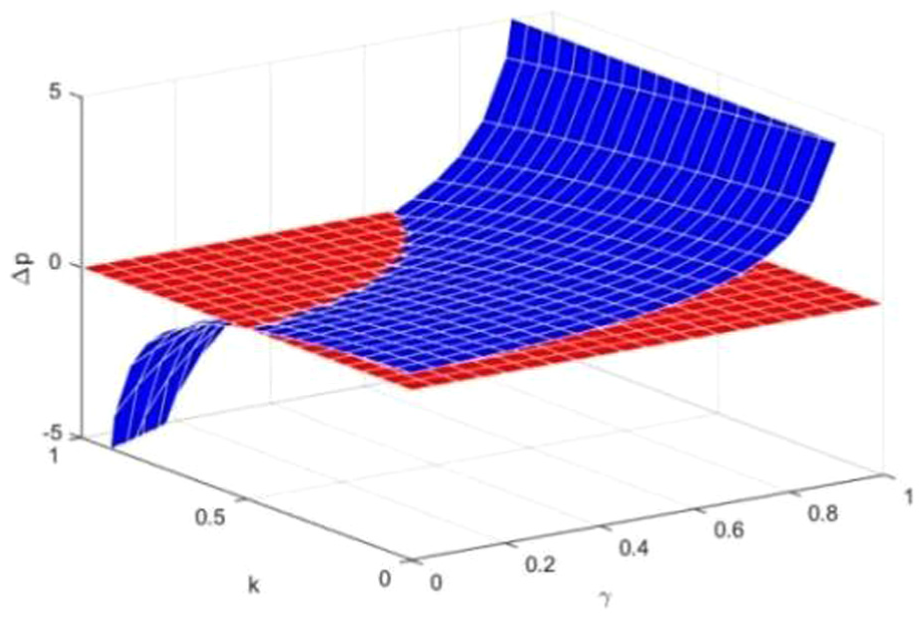
Graph of the variation of
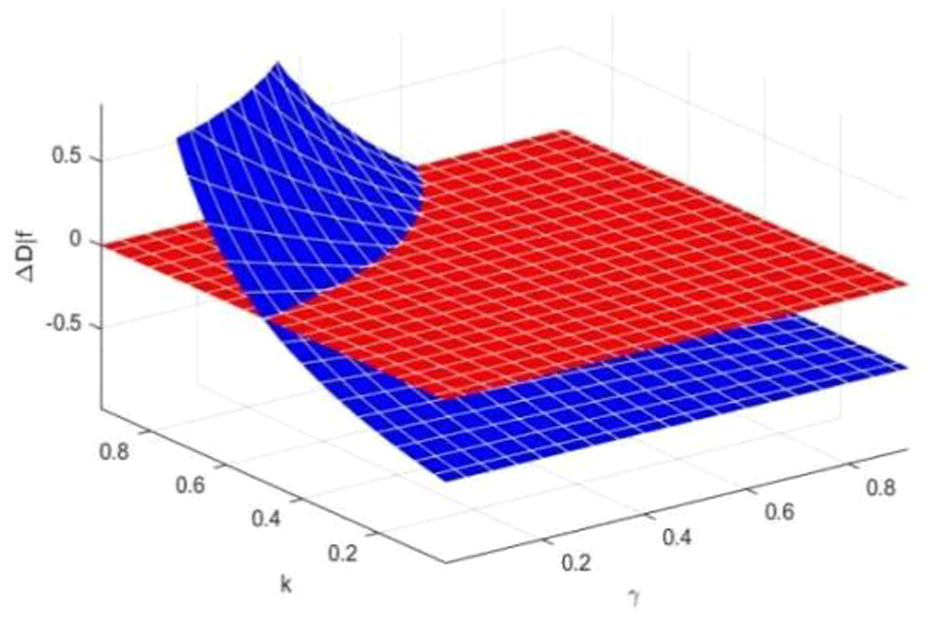
Graph of the variation of

Graph of the variation of

Graph of the variation of
Supply Chain Price and Revenue Analysis Under an Optimistic Market Demand Forecast
When
We then compare the changes in the procurement price and revenue for each member with and without demand information sharing to explore the effects of demand information sharing and quantity discount contracts on supply chain prices and revenues when the market demand forecast is optimistic, as shown in Figures 15 to 20. Figure 15 shows that when
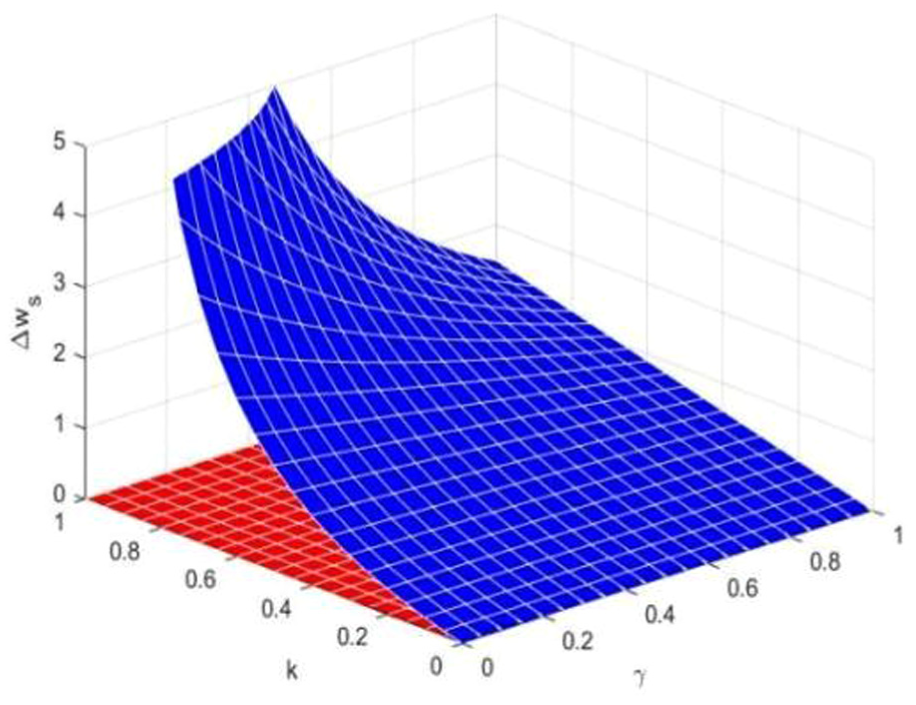
Graph of the variation of
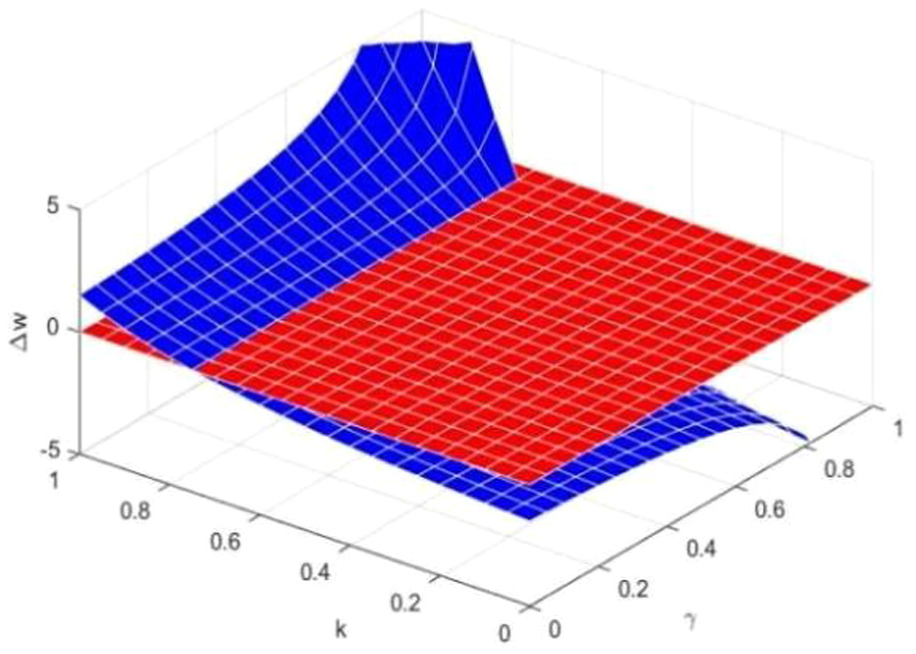
Graph of the variation of
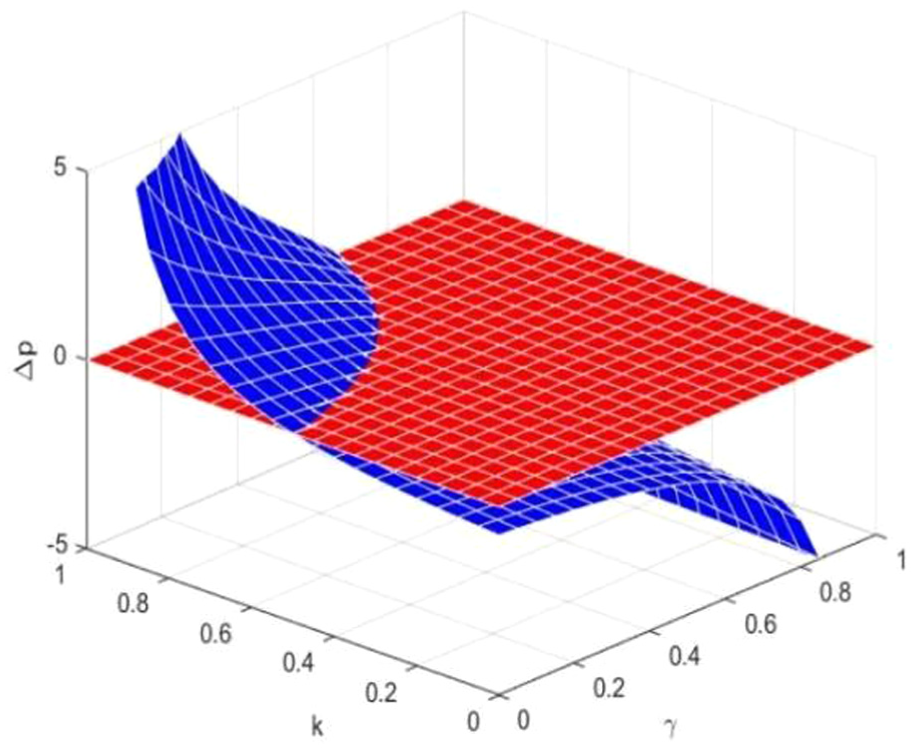
Graph of the variation of

Graph of the variation of

Graph of the variation of

Graph of the variation of
Conclusions and Future Outlook
Conclusions
In this study, to weaken the double-marginal effect, information asymmetry, and bullwhip effect in the pharmaceutical supply chain after the introduction of GPOs, as well as to solve the problems of decision failure and reduced operational efficiency in the pharmaceutical GPO supply chain, a four-level supply chain comprising pharmaceutical suppliers, pharmaceutical GPOs, medical institutions, and pharmaceutical buyers is used as the research object. Furthermore, a quantity discount contract coordination model of the pharmaceutical supply chain with GPOs and demand information sharing is established, solved, and simulated using a Steinberg game and inverse induction method. The following conclusions can be drawn based on our results.
First, with demand information sharing, the higher the market forecast value, the higher the demand and consumer purchase prices. In addition, the pharmaceutical purchaser purchase price is positively correlated with the market forecast value under two conditions:
Second, within a certain range of conditions, demand information sharing can reduce purchase prices for healthcare organizations and increase demand for each supply chain member if
This study’s findings indicate that the information-sharing mechanism between medical institutions and pharmaceutical GPOs can be optimized and improved. In practice, pharmaceutical GPOs can design a reasonable quantity discount contract system based on parameters such as the quantity discount rate and market competition intensity. This system can be flexibly adjusted according to different purchasing quantities and market competition environments to encourage medical institutions to share their real and accurate pharmaceutical demand information more actively, thereby increasing the income of pharmaceutical GPOs. Furthermore, medical institutions with optimistic market demand forecasts, under the combined effect of the market competition environment and quantity discount contracts, should take full advantage of the favorable conditions of demand information sharing to cooperate with pharmaceutical GPOs in depth and further reduce procurement costs by sharing demand information, thus achieving revenue growth. Furthermore, pharmaceutical GPOs can use technologies such as big data, cloud computing, and artificial intelligence to build an efficient information-sharing platform, quickly and accurately collect and integrate pharmaceutical demand forecast information from medical institutions, and reduce the bullwhip effect caused by information asymmetry. In the process of building an information-sharing platform, pharmaceutical GPOs should also consider information security and privacy protection to ensure that information from medical institutions is not leaked or misused.
Limitations
Although this study provides meaningful findings on the influence of quantity discount contracts on the coordination of pharmaceutical GPO supply chains with demand information sharing, it has some limitations.
First, this study mainly focuses on the quantity discount contract, which is flexible in reducing procurement costs and increasing revenue, and has certain applicability in the context of large-scale procurement. However, when there are large fluctuations or high uncertainty in market demand, a single-quantity discount contract may be insufficient to coordinate the supply chain effectively.
Second, to simplify the problem, this study assumes that the membership fee paid by medical institutions is constant in the model. This hypothesis helps us focus on the influence of demand information sharing and quantity discount contracts on supply chain coordination in the theoretical analysis. However, in practice, medical institutions of various sizes may pay different membership fees or membership fees may be adjusted according to changes in order quantity. This may affect the purchasing decisions and cost structures of medical institutions, thereby affecting the coordinated operation of the entire supply chain.
Future Outlook
The coordinated operation of the pharmaceutical group purchasing supply chain requires effective collaboration among all participants, extending beyond just medical institutions and Group Purchasing Organizations (GPOs), to achieve the goals of cost reduction and efficiency improvement. This is consistent with Michael Porter’s concept of value-based healthcare. In light of rising global medical inflation and growing risks of supply chain disruptions, it is urgent to integrate the operation of pharmaceutical group purchasing supply chains with the principles of value-based healthcare. Future efforts may focus on the following areas to build a more effective healthcare order.
First, measuring value-based healthcare performance in pharmaceutical group purchasing. Research should follow the principles of value-based healthcare, align with the operational characteristics of group purchasing, consider the guiding role of medical insurance payment mechanisms and the service value provided by GPOs, clarify the logical links between member collaboration and value-based healthcare goals, and develop clear objectives and corresponding measurement indicators.
Second, formation mechanisms of collaborative behavior among supply chain members. It is essential to clarify the interests of supply chain members as well as stakeholders such as insurers and patients, identify common and conflicting interests, focus on value-based healthcare objectives, determine the factors influencing collaborative behavior, and reveal the conditions and patterns governing its formation and evolution.
Third, Incentive mechanisms for collaboration in value-based pharmaceutical group purchasing. Research should account for the progressive nature of value-based healthcare objectives, define stages of collaboration, introduce new theories and methods for profit-sharing and cooperative games, and identify profit distribution schemes and contractual arrangements that maximize incentives at each stage.
Footnotes
Appendix
Acknowledgements
I would like to express my gratitude to all those who helped me during the writing of this thesis. My deepest gratitude goes first and foremost to Professor Zhao Li, my supervisor, for his constant encouragement and guidance. He has walked me through all the stages of the writing of this thesis. Secondly, I sincerely thank the students in the research group, including Tie Xia, Sheng Chen, Jie Song, Wanzhi Shen, Zhuangzhuang Gu, Shijie Gao, and others, for their guidance and assistance. Last my thanks would go to my beloved family for their loving considerations and great confidence in me all through these years.

Ethical Considerations
This study does not involve humans or animal participants. All simulation parameters are derived from aggregated market data obtained from publicly available sources and anonymized insights gathered through in-depth interviews. No individual-level medical records, financial data, or personally identifying information were collected or stored. All interview responses were anonymized and aggregated prior to analysis.
Author Contributions
Zhao Li: conceptualization, methodology, writing-original draft. Jiping Wang: conceptualization, methodology, writing-original draft, writing-review & editing. Ke Zhao: software, methodology, data analysis, writing-original draft.
Funding
The authors disclosed receipt of the following financial support for the research, authorship, and/or publication of this article: This research was supported by the National Natural Science Foundation of China (72274082; 71804062); Social Science Foundation of Jiangsu Province (22GLB019); Postdoctoral Research Foundation of China (2018M642188); Jiangsu Postdoctoral Research Foundation (2018K062B).
Declaration of Conflicting Interests
The authors declared no potential conflicts of interest with respect to the research, authorship, and/or publication of this article.
Data Availability Statement
Data is available from the authors upon request.