




Abstract
With the growth of internet technologies, online learning has become central in education, yet challenges of low engagement and uneven outcomes remain. Guided by the DeLone and McLean information systems success model, flow theory, and trust theory, this study examined continuance intention among Chinese college students learning English as a foreign language. An integrated model including information quality, service quality, system quality, convenience, interactivity, personalization, trust, and flow experience was tested with data from 990 valid questionnaires using structural equation modeling. Results showed that interactivity was the strongest direct predictor of continuance intention, followed by information quality, convenience, service quality, and personalization, whereas system quality had no significant direct effect and operated entirely through flow experience and trust. Flow experience mediated five of the six antecedents, and trust mediated four; trust did not mediate convenience or personalization. The model explained 77.9% of the variance in continuance intention, indicating strong explanatory power. These findings highlight interactivity and information quality as primary levers, the supporting roles of service quality and convenience, the need to foster flow experience and trust, and the value of leveraging system quality through psychological mechanisms. Insights may inform similar higher-education contexts.
Introduction
With the rapid development of computer and internet technologies, educational technology has undergone continuous evolution, making online learning an indispensable component of modern higher education (Alfaki, 2021). Through online learning platforms, universities are able to more efficiently integrate teaching resources, innovate instructional methods, and enhance students’ learning motivation, interest, and inquiry desire (Kimura et al., 2023; Regmi & Jones, 2020). However, in practice, students face various challenges in online learning, such as inadequate learning preparedness, unstable learning outcomes, and low levels of engagement. These issues are particularly pronounced among English as a Foreign Language (EFL) learners, who often exhibit weak continuance intention (CI) (Muhaimin et al., 2023). Therefore, exploring the psychological and technological mechanisms that influence EFL college students’ CI in online learning has become a pressing topic in the fields of educational technology and learning motivation (Bashiri et al., 2023; Salas-Pilco et al., 2022).
Existing studies commonly employ the DeLone and McLean Information Systems Success Model (D&M model) to investigate the factors affecting CI in online learning. This model highlights the predictive power of three core dimensions (information quality [INQ], system quality [SYQ], and service quality [SEQ]) on user behavior (Al-shargabi et al., 2021; Kendle & Chipangura, 2024; Y. J. Song et al., 2023). For example, Al-shargabi et al. (2021) utilized the D&M model to examine the determinants of online learning CI among students at Jazan University in the Kingdom of Saudi Arabia. Their findings revealed that SYQ, SEQ, and INQ were all key predictors of CI, accounting for 69% of its variance. However, as online learning environments continue to evolve, relying solely on traditional technical dimensions such as SYQ is insufficient to fully explain student behavioral responses within complex interactive settings. In response, recent studies have shifted attention to the positive characteristics of online platforms, specifically convenience (CO), interactivity (IN), and personalization (PE). These features are regarded as essential system attributes that directly reflect learners’ experiences and emotions during platform use (Gherghel et al., 2023; Jha et al., 2023; L. Q. Nguyen, 2022; Pribeanu et al., 2022). Pribeanu et al. (2022) found that PE and CO were critical determinants of students’ CI in online learning, explaining 93.1% of its variance. Similarly, L. Q. Nguyen (2022) confirmed the crucial role of IN in fostering students’ sustained engagement. Collectively, CO, IN, and PE not only represent the flexibility and learner-centered design of online platforms but also help foster students’ sense of identity and belonging in the learning process. Nevertheless, most existing studies adopt single-dimensional predictive models and lack an integrated framework that considers the combined effects of platform quality and positive characteristics. Moreover, the psychological pathways underlying CI remain insufficiently explored.
In recent years, flow experience (FE) has garnered extensive attention in online learning research as a critical psychological mechanism explaining individuals’ continuance learning behaviors. According to flow theory (Csikszentmihalyi, 1976), when learners achieve deep concentration, immersion, and perceived control, they experience enjoyment and satisfaction. These positive states enhance intrinsic motivation and strengthen CI (Li et al., 2022; Shang & Lyv, 2022). Studies have shown that FE not only directly enhances motivation and performance but also mediates the effects of platform quality factors such as INQ, SYQ, and SEQ (Höyng, 2022; Li et al., 2022; Ren et al., 2022; Shang & Lyv, 2022). However, current research on FE remains primarily focused on technological factors, without integrating it into models that include positive characteristics of the platform, such as IN, CO, and PE. In addition, the interplay between flow and trust mechanisms has been largely overlooked.
At the same time, trust, as a core socio-psychological factor in digital education, is vital for shaping learners’ CI toward online platforms (Ch’ng, 2024; Hooda et al., 2023; Liu et al., 2022). Trust theory (Mayer et al., 1995) suggests that trust alleviates users’ uncertainty about online services and technologies, thereby enhancing their acceptance and reliance on the platform, which ultimately fosters CI (Hooda et al., 2023). Empirical studies confirm that trust mediates the relationship between platform characteristics and user behavior, fostering sustained engagement in online learning (Liu et al., 2022).
Methodologically, many studies have applied Partial Least Squares Structural Equation Modeling (PLS-SEM) (Adeyeye et al., 2022; Hooda et al., 2023; Ren et al., 2022), Hayes’ bootstrapping method (Ferrer et al., 2022), and one-way analysis of variance (ANOVA) (Al-shargabi et al., 2021) to explore CI in online learning. For example, Ren et al. (2022) applied PLS-SEM to examine links across several constructs. This method is especially effective for addressing complex variable interrelations. It allows for the simultaneous estimation of direct, indirect, and total effects while correcting for measurement errors, thereby providing more accurate model estimates. These advantages make PLS-SEM an ideal tool for investigating the interactions among multidimensional constructs.
This study introduces theoretical and structural innovations in both framework integration and path construction. It incorporates INQ, SYQ, and SEQ from the D&M model, together with CO, IN, and PE, to capture both platform quality and positive characteristics. Based on this foundation, the study integrates flow theory and trust theory, introducing FE and trust as mediators representing cognitive-emotional and socio-psychological mechanisms. The dual-mediation model systematically explains how platform features influence CI, addressing limitations of prior research that relied on single mediators. Importantly, it specifies trust and FE as complementary and parallel mechanisms linking platform features to CI. By focusing on Chinese EFL learners, the study also situates its findings within a distinct cultural context, offering new insights into how cultural factors shape psychological processes in online learning.
Based on this framework, the study proposes the following three research questions:
Can the quality factors and positive characteristics of online learning platforms significantly predict EFL college students’ CI?
Does FE mediate the effects of platform quality factors and positive characteristics on CI?
Does trust serve as a mediator in these pathways? If both mediators coexist, is there a significant difference in the strength of their effects?
Literature Review
The D&M Model
DeLone and McLean (1992) developed the D&M model to evaluate the outcomes of information systems via SYQ, INQ, satisfaction, usage, and impacts at both individual and organizational levels. Then, DeLone and McLean (2003) revised and extended the model by incorporating additional dimensions such as SEQ, intention to use, and net benefits, thereby enhancing its comprehensiveness. Specifically, INQ concerns the completeness, accuracy, timeliness, and relevance of information; SYQ focuses on the performance, usability, and reliability of the system; and SEQ emphasizes the responsiveness of support services and the overall user experience (Y. J. Song et al., 2023).
Unlike frameworks that focus only on individual psychological factors, the D&M model directly addresses the technological and service dimensions of online platforms, making it particularly suitable for understanding CI in digital learning (Alfaki, 2021; Al-shargabi et al., 2021; Bashiri et al., 2023; Kendle & Chipangura, 2024; Zheng et al., 2023). In mobile commerce, it has been used to identify the relevance of SYQ, INQ, and SEQ to user engagement (Kendle & Chipangura, 2024). In healthcare, it has served as a framework to examine the role of system quality in supporting the adoption of electronic health record systems (Bashiri et al., 2023). In the education, the model has been used to explain sustained student participation in online and blended learning, emphasizing technical performance, information accuracy, and service functions (Alfaki, 2021). These applications consistently demonstrate that system, information, and service qualities are central to sustaining user engagement (Hooda et al., 2023; Shang & Lyv, 2022). Moreover, when combined with theories like flow theory or trust theory, the model not only identifies core quality drivers but also clarifies the psychological mechanisms (e.g., trust, flow experience) through which these qualities influence CI (Shang & Lyv, 2022). Building on this foundation, this study is the first to examine trust and flow as parallel mediators in online EFL learning, underscoring the unique theoretical contribution of the D&M model.
Positive Characteristics of Online Learning
Online learning refers to a mode of education delivery that utilizes information and internet technologies to provide instructional content (Han & Sa, 2022). The prefix “e” in e-learning stands not only for “electronic,” but also connotes characteristics such as efficiency, exploration, experience, expansion, ease of use, and enhancement (Zhou et al., 2020). Research has identified PE, IN, and CO as the three most prominent positive characteristics in online learning environments that are highly valued by learners (Han & Sa, 2022). These factors directly affect learners’ acceptance of online platforms and their CI (Jha et al., 2023; L. Q. Nguyen, 2022; Pribeanu et al., 2022; Tabatabaeichehr et al., 2022; Tan et al., 2022). Existing studies have confirmed that CO, IN, and PE are key determinants of EFL college students’ CI in online learning (Jha et al., 2023; L. Q. Nguyen, 2022; Pribeanu et al., 2022; Tabatabaeichehr et al., 2022; Tan et al., 2022). Studies in high-resource settings often emphasize their role in enhancing learner satisfaction, trust, and motivation, while evidence from bandwidth-limited or rural contexts highlights the structural importance of clear and accessible course organization for sustaining participation (Jha et al., 2023). Rather than functioning in isolation, these attributes are frequently examined in combination, with synergistic effects observed when engaging content, responsive interaction, and well-structured courses are present simultaneously (Pribeanu et al., 2022). Theoretically, these positive characteristics serve as external conditions that shape students’ trust (Shahzad et al., 2024) and FE (Höyng, 2022),which in turn sustain CI. Thus, instead of treating CO, IN, and PE as isolated technical elements, recent research frames them as integral antecedents that operate through psychological mechanisms such as trust and flow. This theoretical positioning underscores their centrality in shaping learners’ CI to persist in online learning environments.
Trust
Trust theory posits that trust involves holding favorable expectations about the behavior of others or organizations, especially when uncertainty or potential risks are present. In online education systems, trust denotes users’ CI toward the platform even under uncertainty or risk (Mayer et al., 1995). Prior studies have shown that trust significantly enhances users’ reliance on systems during use and increases their CI (Ahorsu et al., 2022; Moorman et al., 1992; D. M. Nguyen et al., 2021; Rahman et al., 2023). Research further indicates that positive perceptions of INQ, SYQ, and SEQ enhance trust, which in turn strengthens CI (Ahorsu et al., 2022; Hooda et al., 2023). Likewise, features such as CO, IN, and PE contribute to trust formation and foster ongoing participation (Ch’ng, 2024; Liu et al., 2022). This literature highlights a shift from viewing trust merely as an outcome of quality perceptions to recognizing it as a core mechanism linking technical attributes, user experiences, and long-term engagement with online learning platforms.
Flow Experience
Flow theory posits that flow is a deep psychological state of concentration and immersion, during which individuals experience intense enjoyment and satisfaction as they become fully engaged in an activity (Csikszentmihalyi, 1976). In online learning, FE refers to learners’ immersive state while engaging with online learning platforms. This state is characterized by focused attention on learning content, feelings of enjoyment, and deep involvement with the virtual learning environment (Csikszentmihalyi, 1976; Hewei & Youngsook, 2022). A growing body of research identifies FE as both a direct driver of CI and an important mediator between platform characteristics and learner behavior (Höyng, 2022; Li et al., 2022; Shang & Lyv, 2022). Positive perceptions of INQ, SYQ, and SEQ have been shown to foster FE, which in turn enhances satisfaction and strengthens CI (Li et al., 2022; Shang & Lyv, 2022). Similarly, learner-centered features such as PE, IN, and CO are frequently associated with higher levels of FE, facilitating long-term engagement (Höyng, 2022; Zhang et al., 2024). This literature reflects a shift from treating FE as a by-product of user experience to recognizing it as a central psychological mechanism that translates technical and experiential attributes of online learning platforms into sustained behavioral intentions.
However, most prior studies have examined platform quality, flow, or trust in isolation, often relying on single-mediation models. This study addresses these gaps by proposing a dual-mediation model with trust and flow as parallel mechanisms. By focusing on Chinese EFL learners, it further offers novel insights into how cultural context shapes psychological pathways in online learning, enriching discussions on cultural variations in engagement and CI.
Hypotheses
Quality Factors and CI
Multiple studies have confirmed the significant influence of quality factors (INQ, SYQ, and SEQ) on CI in online learning (Alfaki, 2021; Al-shargabi et al., 2021; Bashiri et al., 2023). For instance, Al-shargabi et al. (2021) emphasized a significant positive relationship between quality factors and the adoption of online learning systems. In another study, Alfaki (2021) used an updated version of the D&M model to evaluate university students’ CI with blended learning in Arabian Gulf universities. The results showed that SEQ, including collaboration, support, and interaction, played a critical role in students’ intention to continue using the blended learning system, explaining 70% of the variance in CI. Based on these findings, the present study proposes that during online learning, higher levels of INQ, SYQ, and SEQ are associated with stronger CI among EFL college students. Therefore, the following hypotheses are proposed:
Positive Characteristics and CI
The significant positive influence of positive characteristics in online learning, specifically CO, IN, and PE, on users’ CI has been widely confirmed (Jha et al., 2023; L. Q. Nguyen, 2022; Pribeanu et al., 2022; Tabatabaeichehr et al., 2022; Tan et al., 2022). For instance, Pribeanu et al. (2022) found that content PE, perceived ease of use, and accessibility play critical roles in students’ acceptance and CI regarding online learning. These factors explained 93.1% of the variance in CI among EFL college students. Similarly, Jha et al. (2023) reported that despite poor internet connectivity in rural areas of India, the flexibility and CO of online courses significantly improved EFL students’ CI. Based on these findings, the present study hypothesizes that in the context of online learning, higher levels of CO, IN, and PE are associated with stronger CI among EFL college students. Therefore, the following hypotheses are proposed:
The Mediating Role of Trust
Extensive research has highlighted trust as a fundamental predictor of CI in online learning settings (Ahorsu et al., 2022; Rahman et al., 2023). Rahman et al. (2023) demonstrated that trust significantly enhances students’ CI in online platforms. Moreover, a growing body of literature has shown that trust mediates the effects of both platform quality (INQ, SYQ, and SEQ) and learner-centered features (CO, IN, and PE) on CI (Ahorsu et al., 2022; Ch’ng, 2024; Hooda et al., 2023; Liu et al., 2022; Rahman et al., 2023; Shahzad et al., 2024). As a mediating construct, trust helps explain how users develop a sense of reliance on and acceptance of the system when perceiving these quality and experiential features, which in turn affects their CI. Hooda et al. (2023) found that perceptions of INQ, SEQ, and SYQ enhance users’ trust in the system, which further strengthens their CI. The survey conducted by Liu et al. (2022) showed that active IN on the platform can effectively increase users’ trust, thereby enhancing their CI. Similarly, Ch’ng (2024) pointed out that the CO and PE features of online systems can effectively strengthen users’ trust in the system, which in turn increases their CI. Based on these findings, the present study proposes the following hypotheses:
The Mediating Role of Flow Experience
The influence of FE on CI has been well established. For example, Ren et al. (2022) used SEM and confirmed that FE significantly shapes the CI of EFL learners engaged in digital learning environments. Previous research has demonstrated that FE plays a crucial mediating role in the relationship between quality factors in online learning, such as INQ, SYQ, and SEQ, and positive characteristics such as CO, IN, and PE, and users’ CI (Höyng, 2022; Shang & Lyv, 2022). Shang and Lyv (2022) integrated flow theory with the D&M model and examined how SYQ, SEQ, and INQ influence students’ CI through FE. Their model accounted for 78.4% of the total variance in CI. Similarly, Höyng (2022) found that FE mediates the impact of positive characteristics in online learning, such as IN, PE, and CO, on students’ intention to continue learning online. Based on these studies, the present research proposes the following hypotheses:
Therefore, based on the hypotheses above, the hypothesized model of this study is presented in Figure 1.

Theoretical model.
Method
Sample and Data Collection
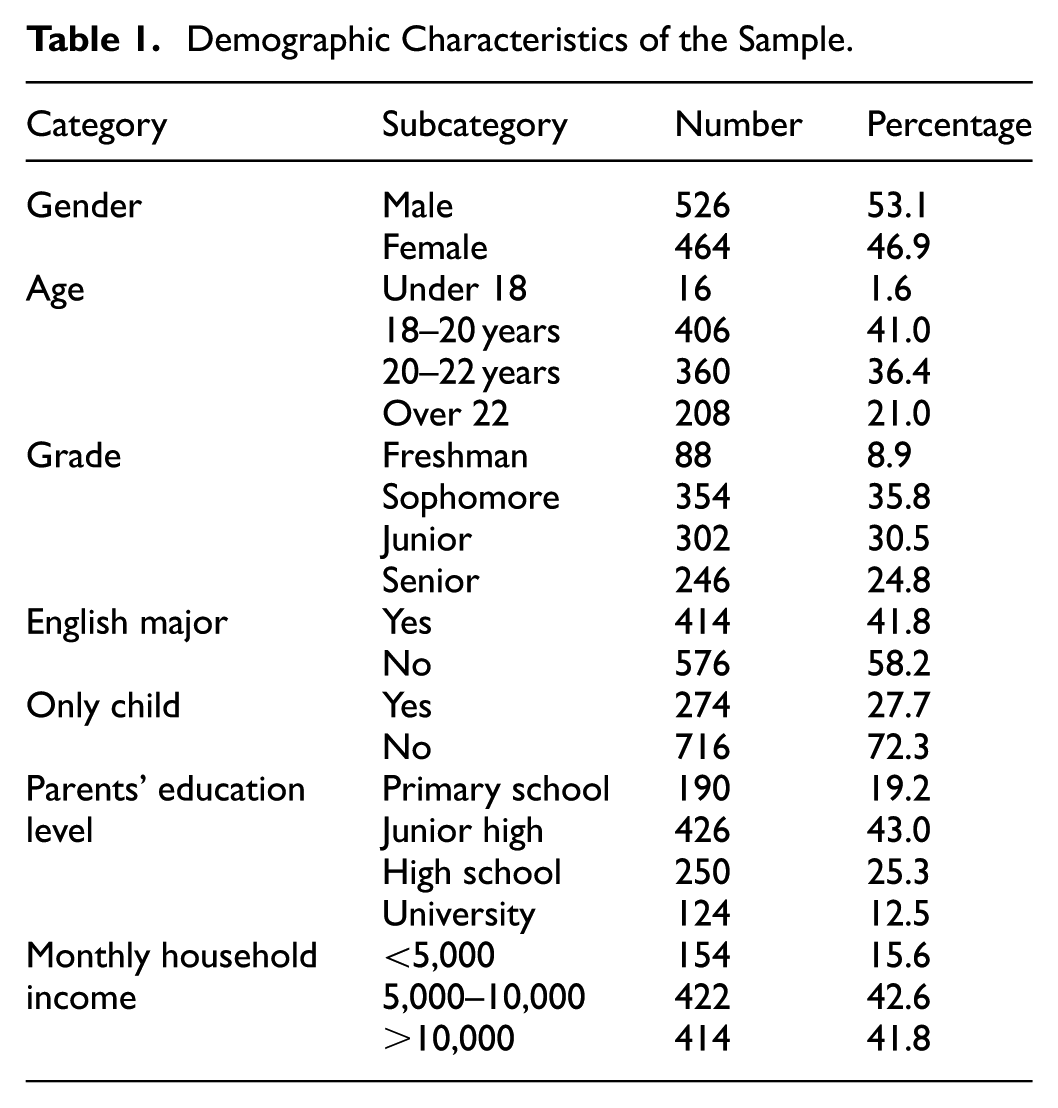
From April to June 2024, this study conducted a questionnaire survey via the Wenjuanxing platform (www.sojump.com) to test the hypothesized model. All participants consented after being informed of the study’s aim, with privacy fully protected. The sample consisted of College Students from three universities in China, selected through random sampling. In collaboration with instructors, the research team introduced the study during class sessions. Teachers explained the research background and randomly selected students to participate. Students accessed the survey via class chat links and joined voluntarily; only those with one semester of Online Learning were analyzed. The courses involved spanned various academic disciplines, including the humanities, engineering, and agriculture, such as Regional Culture, Engineering Mathematics, and New Irrigation and Drainage Technologies. According to Kline (2018) sample size estimation guideline, at least 10 respondents per item are required. To accommodate an anticipated 20% inefficiency rate, the required sample size was set at 492. A total of 1,040 questionnaires were distributed, and 1,006 were returned. After excluding 16 invalid responses, the final valid sample comprised 990 participants. The criteria for excluding invalid questionnaires included: (1) more than 20% of items left unanswered, and (2) clear signs of careless responding, such as selecting extreme options (“Strongly Agree” or “Strongly Disagree”) for more than 80% of the items, which may lead to ceiling or floor effects (D. Wang et al., 2012), compromising the reliability of the data. Demographic analyses were conducted using SPSS Statistics 26. Among the valid responses, 77.4% of participants were between the ages of 18 and 22. Detailed demographic statistics are presented in Table 1.
Demographic Characteristics of the Sample.
Measurement Instruments
To suit the Chinese higher-education online-learning context, we adapted wording without altering the original factor structure or the 5-point format. We harmonized referents (“system,”“service,”“user” rendered as “online learning platform,”“service,”“student”), translated key terms (e.g., ease of use, interactivity, trust, personalization, convenience, continuance intention, flow experience) into natural Chinese, aligned tense/person, and avoided double negatives or ambiguous phrasing. A forward–back translation was followed by expert review (psychology and language education) for semantic equivalence and contextual fit. A pilot with 40 students confirmed clarity with no edits. We then ran SPSS EFA on n = 40 using principal-axis factoring, specifying one-factor solutions without rotation. All subscales were factorable (KMO = 0.700–0.868; Bartlett p < .001), communalities were ≥0.50, no items were removed, and one-factor variance explained was consistently above the conventional threshold (≥50%).
The system quality, information quality, and service quality scales were adapted from Ojo (2017). The system quality scale consisted of four items (e.g., “I find the online learning platform very easy to operate”) that assessed platform performance, ease of use, reliability, and response speed. Reliability testing yielded a Cronbach’s alpha of 0.865, confirming satisfactory scale consistency. The information quality scale included four items (e.g., “The content provided in online learning is highly accurate”) that measured the completeness, accuracy, currency, and overall relevance of the information delivered through the platform; this scale demonstrated a Cronbach’s alpha coefficient of 0.846, supporting its dependability. The service quality scale also consisted of four items (e.g., “The online learning provider offers sufficient technical support to help me use it effectively”), evaluating the reliability, responsiveness, and user satisfaction with the support services, with a Cronbach’s alpha of 0.841.
The personalization scale assessed the extent to which the platform meets individual learning needs. The three items were adapted from Zheng et al. (2023), focusing on learners’ autonomy in content selection, pace control, and progress tracking. Wording was unified in person and tense. Cronbach’s alpha was 0.777.
The measurement items were adapted from the perceived convenience scale developed by Lai and Liew (2021), which contains six items. To fit the online learning context, the referent was standardized as the online learning platform. Content concerning multifunctional design, single platform, and customizability was reframed as functional satisfaction and ease of use derived from simplified design. The time and effort-saving aspect was articulated as easy access to learning materials and faster completion of learning tasks. Functional satisfaction and overall satisfaction were retained to summarize the overall experience. The scale showed good reliability with a Cronbach’s alpha of 0.853.
The continuance intention scale was adapted from the study by Fan and Jiang (2024). It primarily assessed students’ perceptions and evaluations of the platform, as well as their intention to continue using it. The scale comprised 3 items (e.g., “I intend to continue using online learning in the future to replace some of my previous learning tools”), with a Cronbach’s alpha of 0.846.
The flow experience scale was adapted from R. J. Song and Zheng (2024), focusing on students’ immersive experiences during online learning. It included 4 items (e.g., “When using online learning, I feel that time passes very quickly”), with a Cronbach’s alpha of 0.849.
The Trust scale was adapted from H. Wang and Yan (2022) and measured students’ level of trust in online learning. It contained 3 items (e.g., “I trust online learning”), with a Cronbach’s alpha of 0.827.
The interactivity scale was adapted from Hewei and Youngsook (2022), focusing on the extent of communication and interaction experienced by students during online learning. The scale comprised 7 items (e.g., “Online learning has strengthened my communication with classmates and teachers”), with a Cronbach’s alpha of 0.772. All measurement items are listed in Appendix A.
Data Analysis
PLS-SEM was chosen for its predictive focus, tolerance of non-normality and small samples, and suitability for complex models (Hair et al., 2021; Premkumar & Bhattacherjee, 2008). With 990 participants, it was preferred over CB-SEM. This choice was based on the following considerations: first, PLS-SEM imposes less stringent assumptions regarding data distribution and is more capable of handling data that deviate from multivariate normality. Second, it is particularly effective for exploratory research designs and can accommodate complex models involving multiple latent variables. Therefore, this study employed PLS-SEM to analyze the proposed model.
Results
Measurement Model
The robustness of the measurement framework was validated by analyzing the consistency and accuracy of the constructs. Item reliability was first confirmed through outer loadings, with all indicators scoring above the 0.70 benchmark, aligning with the reliability threshold set by Byrne (2013) (see Table 2).
Reliability and Validity of the Measurement Model.

To assess internal cohesion, both Cronbach’s Alpha and composite reliability (CR) were computed. Alpha values spanned from 0.772 to 0.865, surpassing the minimum recommended level. Similarly, CR values, as per Hair et al. (2021), were between 0.776 and 0.865, staying within the optimal reliability zone of 0.70 to 0.90.
Convergent validity was examined via the Average Variance Extracted (AVE), with results between 0.576 and 0.765, all comfortably above the 0.50 guideline (Fornell & Larcker, 1981). According to Henseler et al. (2015), this confirms that the latent variables are sufficiently represented by their items.
Discriminant validity means each construct is distinct from the others (Zaiţ & Bertea, 2011). Using the Fornell–Larcker criterion (Fornell & Larcker, 1981), As shown in Table 3, the AVE square roots were higher than inter-construct correlations, confirming adequacy (Henseler et al., 2015).
Fornell-Larcker Criterion.

Note. Bolded values on the diagonal represent the square root of the AVE.
Structural Model
Key indicators such as multicollinearity, path significance, and the coefficient of determination (R2) are used to evaluate the structural model’s reliability and explanatory capacity.
Common Method Bias (CMB) Test
To detect the presence of common method variance, two distinct techniques were applied. The initial method, Harman’s single-factor analysis, showed that the largest amount of variance attributable to one factor was 26.239%, which falls significantly below the standard 50% cutoff (Podsakoff et al., 2003). Additionally, the marker variable strategy was implemented by incorporating a concept unrelated to the study’s primary constructs into the model (Lindell & Whitney, 2001). The maximum variance shared between the marker variable and the remaining constructs was just 2.15%, which is trivial (Johnson et al., 2011). Accordingly, the tests indicate minimal influence of common method bias in this study.
Multicollinearity Test
As suggested by Hair et al. (2021), the Variance Inflation Factor (VIF) was used to test for multicollinearity. A widely accepted criterion suggests that VIF values should remain below 5. As illustrated in Table 4, all constructs exhibited VIF values between 3.141 and 4.950, indicating that multicollinearity does not pose an issue in this model.
Multicollinearity Test for the Structural Model.

Path Hypotheses
In the structural model, significance testing assessed whether exogenous constructs exerted direct effects on CI. As shown in Table 5 and Figure 2, all paths to CI were significant at p < .05 except SYQ→CI (β = 0.021, t = 0.442, p = 0.658). Among the significant predictors, IN showed the strongest statistical effect (largest t-value) on CI (β = 0.178, t = 3.840, p < .001).
Results of Path Hypotheses Testing.


Path coefficient.
R2 and Predictive Relevance (Q2)
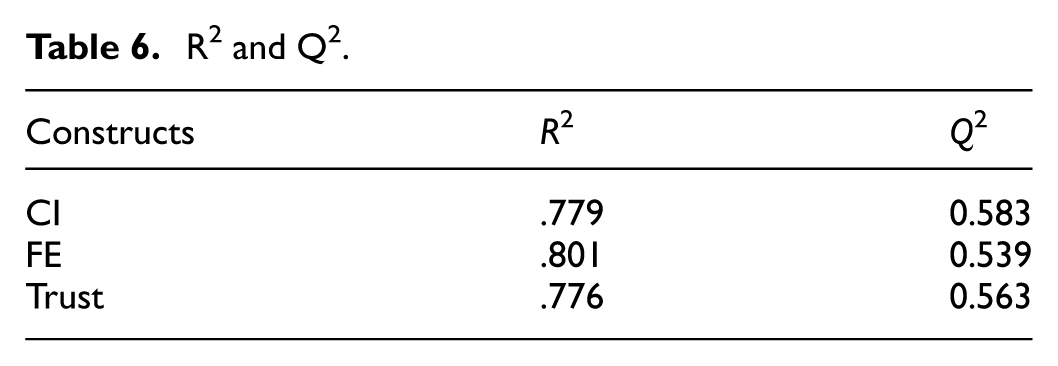
R2 evaluates explanatory capacity, with thresholds of 0.67, 0.33, and 0.19 representing strong, moderate, and weak levels respectively, as proposed by Chin (1998). As shown in Table 6, the R2 values indicate that the model explains a high proportion of variance in the endogenous constructs: 0.779 for CI, 0.801 for FE, and 0.776 for trust. However, as noted by Hair et al. (2023), evaluating model predictive accuracy based solely on R2 is insufficient. Therefore, this research adopted the blindfolding approach, following the Stone-Geisser method (Geisser, 1974; Stone, 1974), to evaluate whether the model possesses predictive accuracy. When Q2 exceeds zero, it reflects meaningful predictive strength of independent latent constructs over dependent ones (Chin, 1998). According to the results shown in Table 6, the Q2 values ranged from 0.539 to 0.583, confirming that the endogenous constructs were well predicted within this framework.
R2 and Q2.
Mediation Analysis
Mediation analysis using bias-corrected bootstrapping in PLS-SEM (Nitzl et al., 2016) tested whether FE and trust transmit the effects of INQ, SEQ, SYQ, IN, CO, and PE on CI. The mediation effects of trust and FE are presented in Table 7. For FE, SYQ→CI was fully mediated; IN, INQ, PE, and CO showed complementary partial mediation; the SEQ→FE→CI indirect path was not significant. For trust, SYQ→CI was fully mediated; IN, INQ, and SEQ showed complementary partial mediation; CO and PE showed no mediation.
Mediation Analysis Results.

Note: NM = no mediation; FM = full mediation; CPM = complementary partial mediation.
Discussion
Grounded in the D&M model, flow theory, and trust theory, this study explored the mechanisms through which platform quality factors and positive characteristics influence CI, with particular emphasis on the mediating roles of FE and trust. The findings revealed that all six platform characteristics significantly predicted CI, with IN emerging as the strongest predictor. Both trust and FE demonstrated partial mediation effects in most pathways, validating the role of psychological mechanisms in mediating user intention. The model explained 77.9% of the variance in CI, with a Q2 value of 0.583, indicating strong predictive power. These findings support the study’s three core research questions and confirm the majority of the proposed hypotheses.
Information Quality, System Quality, Service Quality, and Continuance Intention
Contrary to the initial expectation, SYQ did not have a significant direct effect on CI, instead, its influence was fully transmitted via FE and trust. By contrast, INQ and SEQ showed significant positive direct effects on CI. Consistent with Zheng et al. (2023) highlighted the importance of these quality dimensions, together with teacher quality, learning community, and perceived enjoyment, in shaping students’ CI toward online learning. In our data, INQ and SEQ exert significant direct effects on CI. SYQ does not show a significant direct effect; its influence operates indirectly via flow experience and trust, consistent with the full mediation results. High-quality information content enhances students’ understanding and mastery of learning materials and increases satisfaction with the platform, which translates into stronger CI. System stability and ease of use reduce technical barriers and improve the fluency and sustainability of use; these benefits contribute to CI mainly through greater flow and trust rather than a direct path. SEQ reflects the platform’s technical support, feedback mechanisms, and learning assistance, and its responsiveness strengthens CI. These elements collectively shape students’ positive evaluations of the online learning environment and reinforce their intention to continue using the platform (Alfaki, 2021).
Convenience, Interactivity, Personalization, and Continuance Intention
CO, PE, and IN all have significant positive effects on CI, a result also observed in studies of online learning (Pribeanu et al., 2022). The CO of online learning is reflected in the flexibility of time and location, which effectively meets the diverse learning rhythms and daily schedules of EFL college students. PE features, such as customized course recommendations and adjustable learning paths, enhance the alignment between learning content and individual needs (Jha et al., 2023). IN includes engagement with teachers, peers, and learning content, which helps to strengthen students’ sense of recognition and belonging. This, in turn, fosters a positive learning attitude and increases motivation for sustained learning (Tan et al., 2022).
The Mediating Role of Trust
Trust partially mediates the relationship between IN and CI. A similar mediating pathway has also been observed in studies on users’ CI toward online platforms (Liu et al., 2022). The study found that active IN on the platform enhances users’ trust, thereby influencing their intention to continue using it. Active and responsive interaction strengthens users’ trust by signaling reliability, social presence, and support, and this trust complements the direct influence of interactivity on students’ intention to continue using the platform.
Trust also mediates the effects of INQ, SEQ, and SYQ on CI, which is consistent with the findings of Hooda et al. (2023). Their study emphasized that INQ, SEQ, and SYQ enhance users’ trust in e-government systems, thereby increasing their CI. When students perceive that the platform provides reliable, timely, and authoritative information, operates with stability and responsiveness, and offers a comprehensive and user-friendly service system, they are more likely to develop trust in the platform. This trust then becomes an important psychological mechanism driving their continued use.
However, trust does not mediate the relationship between CO and CI. This result differs from the findings of Ch’ng (2024), and may be explained by the actual needs and preferences of EFL college students in the context of online English learning. For EFL college students, CO is primarily associated with quick access, flexible scheduling, and reduced effort in managing learning tasks. These features provide immediate instrumental benefits that directly translate into CI, without requiring the psychological assurance typically associated with trust. Moreover, since many of these platforms are institutionally recommended or mandated, their credibility is taken for granted, which further reduces the salience of trust in this pathway. As a result, CO operates as a self-sufficient determinant of CI, bypassing relational mechanisms and highlighting that trust may be less critical when functional efficiency is the dominant concern.
Trust does not mediate the effect of PE on CI. This contrasts with Pribeanu et al. (2022), who reported a prominent role for content-level PE in students’ acceptance and CI. A plausible explanation is that PE in our context operates mainly through a direct fit route, while Trust is more responsive to quality assurances captured by INQ, SYQ, and SEQ. Divergence may also reflect differences in PE operationalization, platform maturity, baseline Trust, and institutional context. Practically, convert PE into continuance through transparent, controllable recommendations and relevance calibration, and build Trust primarily via improvements in INQ, SYQ, and SEQ.
The Mediating Role of Flow Experience
FE serves as a mediating factor in the relationship between PE, IN, and CO and CI. This is consistent with the findings of Zhang et al. (2024), who confirmed that PE, IN, and CO in online learning systems significantly influence users’ FE, which in turn helps enhance their engagement. Personalized settings can stimulate a sense of goal orientation in learners and strengthen the balance between task challenge and individual ability, allowing them to enter a state of flow. Rich and timely interactive experiences promote learners’ sense of immersion and control over the learning tasks. CO improves concentration and reduces obstacles in the learning process. Together, these elements contribute to the development of FE, which ultimately enhances learners’ CI.
FE also mediates the effect of INQ and SYQ on CI. This is consistent with the research of Shang and Lyv (2022), who found that when learners perceive high-quality information resources, stable system performance, and quality service, they are more likely to become fully immersed in the learning process and enter a flow state. However, the indirect path from SEQ to CI via FE is not significant. Flow, as a psychological experience characterized by high levels of concentration and enjoyment, helps improve students’ learning motivation and immersion, ultimately increasing their attachment to and sustained use of the platform (Li et al., 2022). Therefore, in addition to improving content quality, system functionality, and service experience, platforms should also pay close attention to how FE can be activated and sustained in order to foster long-term learning engagement.
Implications
Theoretical Implications
First, this study advances the application of the D&M model in educational technology. Whereas prior research has primarily examined the direct effects of SYQ, INQ, and SEQ on CI, the present study incorporates psychological variables to clarify indirect pathways to CI through trust and FE. By integrating these perspectives, the present study refines theoretical accounts of the psychological pathways underlying CI, broadens the explanatory scope of the D&M model, and offers new empirical evidence that technical features and psychological processes jointly drive sustained engagement in online learning.
Second, this study contributes to a more nuanced understanding of CI in EFL online learning by clarifying how platform characteristics affect sustained engagement through psychological mechanisms. Unlike prior research that has often treated Trust and FE as secondary or independent variables, our findings highlight them as parallel mediators that complement each other. Specifically, FE plays a central role by fully transmitting the effect of SYQ and partially transmitting the effects of INQ, IN, PE, and CO on CI. Trust, in turn, reinforces the effects of SYQ, SEQ, IN, and INQ on CI. These patterns suggest that immersive engagement and relational assurance are not isolated influences but work together to explain how technological and informational features translate into sustained participation. In the EFL context, positioning Trust and FE as complementary mechanisms refines continuance models and extends their explanatory power to language education.
Third, the study deepens the theoretical interpretation of positive characteristics in online learning, specifically CO, PE, and IN. Although prior literature has confirmed the importance of these factors, few studies have systematically modeled their connections with deeper psychological mechanisms. Evidence shows that CO mainly exerts a direct influence by enhancing functional efficiency, while IN and PE rely more heavily on the mediating effects of trust and FE. This indicates that different platform features influence CI through heterogeneous pathways. Such differentiated analysis helps move beyond generalized assumptions about the relationship between platform characteristics and intention, encouraging future research to explore the micro-level mechanisms of user experience.
Finally, the structural framework developed in this research explains 77.9% of the variance in CI among EFL learners in online learning, indicating strong predictive power and model adequacy. This outcome underscores the value of integrating theoretical perspectives and provides a foundation for more complex, multi-dimensional predictive modeling in future digital learning research.
Practical Implications
First, for platform developers, the strong influence of INQ and SEQ on CI highlights the need to enhance both trust and FE through targeted design strategies. To build trust, platforms should ensure the accuracy and authority of learning materials through rigorous content review processes, and improve system reliability by adopting cloud-based load balancing and real-time monitoring to minimize service interruptions. Responsive support services that provide continuous online assistance together with timely guidance from qualified tutors can further strengthen students’ confidence in the platform. To foster FE, developers may incorporate adaptive recommendation algorithms that personalize learning paths, integrate gamification elements such as progress dashboards and achievement badges to sustain immersion, and optimize cross-platform compatibility to ensure seamless use across devices. In addition, real-time interactive functions, including peer discussion boards, collaborative whiteboards, and instant polls, help foster a more participatory and immersive learning atmosphere. Collectively, these strategies provide actionable directions for platform design, ensuring that online learning systems simultaneously build trust, sustain immersive experiences, and ultimately enhance learners’ satisfaction, engagement, and loyalty.
Second, for university teaching administrators, research has found that trust and FE are key psychological mechanisms influencing college students’ CI, especially in relation to IN and PE. This suggests that focusing solely on content delivery is insufficient; administrators also need to create conditions that strengthen interaction and psychological support. In practice, this can involve encouraging instructors to increase timely feedback, organizing more interactive online sessions to reduce students’ sense of isolation, and introducing progress tracking functions that give students a clearer sense of control over their learning process. In addition, establishing institutional policies that recognize and reward active participation can further enhance students’ motivation to persist. These measures ensure that online teaching systems not only deliver knowledge effectively but also foster the trust and immersive engagement necessary for sustained learning.
Finally, from the perspective of student users, the study shows that while CO has a significant direct effect on CI, this effect does not rely on the trust mechanism. This indicates that students’ intuitive demand for “efficiency” holds independent significance in the context of online learning. Therefore, it is important to strengthen the analysis of students’ usage habits and behavioral preferences, and to optimize platform operational processes, functional modules, and usability flexibility. For example, platforms should provide multi-terminal coordination features (such as seamless switching between PC and mobile devices), one-click access to learning content, autosave, and offline access functions to meet students’ needs for autonomous learning across different scenarios and time periods. These measures will more accurately align with learners’ expectations for a convenient, efficient, and flexible learning environment, enhancing learners’ engagement and CI in online learning.
Limitations and Future Research
This study integrates the D&M model, trust theory, and flow theory to examine CI in online EFL learning, though some limitations remain, suggesting directions for future study. First, the study relies on college students’ self-assessment through questionnaires, which introduces a degree of subjectivity that may affect the objectivity and accuracy of the findings. As the study relied on self-reported questionnaires, responses may have been affected by tendencies such as social desirability or imperfect memory, which could reduce the accuracy of the data. A possible way forward is to incorporate qualitative techniques (e.g., interviews or case analyses) that allow for more detailed and authentic perspectives. Second, the sample mainly consisted of undergraduate students aged 18 to 22 in China, a group generally familiar with online learning. Such a limitation restricts the applicability of the results to broader groups. Moreover, cultural factors should also be considered, as learning behaviors and perceptions of trust and flow may vary across educational systems and cultural contexts. Future studies should broaden the sample to include learners of different ages, educational backgrounds, and experiences with online learning, and extend comparisons across different cultural settings, in order to enhance the applicability and depth of the results. Finally, this study adopts a cross-sectional design, which is common in this research area and aligns with much prior work. While such a design effectively reveals associations and mediating effects among variables, it cannot establish causal directionality. Future research could adopt longitudinal or experimental designs to capture the dynamic evolution of learners’ psychological processes and provide stronger causal evidence for theory building and practical application.
Conclusion
Drawing on the D&M model, flow theory, and trust theory, this study examined how platform characteristics influence CI among Chinese EFL college students in digital learning contexts, with a focus on the mediating roles of trust and FE. Based on SEM of 990 valid responses, the results showed that among platform characteristics, IN had the largest direct effect on CI, followed by INQ, CO, SEQ, and PE, whereas SYQ had no significant direct effect and its influence was fully transmitted via FE and Trust. FE mediated five of the six characteristics (IN, INQ, PE, SYQ, and CO), while Trust mediated four (IN, INQ, SEQ, and SYQ) and did not mediate CO or PE. The proposed model explained 77.9% of the variance in CI, demonstrating strong explanatory power. By clarifying the complementary mediating roles of trust and FE, this study refines the understanding of CI in the Chinese EFL higher-education context and provides empirically grounded implications for enhancing IN, PE, and SYQ to promote sustained engagement in online learning. However, the findings should be interpreted with caution, as the data were limited to Chinese college students and collected through a cross-sectional design, which may restrict generalizability and causal inference; future studies could employ longitudinal or cross-cultural approaches to validate and extend these results.
Footnotes
Appendix

| Construct | Item | Measurement | Source |
|---|---|---|---|
| System quality | SYQ1 | I find the online learning platform easy to use. | Ojo (2017) |
| SYQ2 | I find it easy to get the online learning platform do what I want. | ||
| SYQ3 | The online learning platform is flexible to interact with. | ||
| SYQ4 | Learning to operate the online learning platform was easy for me. | ||
| Information quality | IQ1 | The information generated by the online learning platform is correct | |
| INQ2 | The information generated by the online learning platform is useful for its purpose. | ||
| INQ3 | The online learning platform generates information in a timely manner. | ||
| INQ4 | I trust the information output of the online learning platform. | ||
| Service quality | SEQ1 | There is adequate technical support from the system’s provider. | |
| SEQ2 | The overall infrastructure in place is adequate to support the online learning platform. | ||
| SEQ3 | The online learning platform can be relied on to provide information as when needed. | ||
| SEQ4 | The output of the online learning platform is complete for work processes. | ||
| Convenience | CO1 | I am satisfied with the functions of the online learning platform. | Lai and Liew (2021) |
| CO2 | The online learning platform has eased work processes. | ||
| CO3 | I am generally satisfied using the online learning platform. | ||
| CO4 | The online learning platform will help overcome the limitations of the paper-based system. | ||
| CO5 | The online learning platform facilitates easy access to learning materials and course information. | ||
| CO6 | Using the online learning platform enables me accomplish tasks more quickly. | ||
| Personalization | PE1 | Using the online learning platform has improved my job performance. | Zheng et al. (2023) |
| PE2 | Using the online learning platform has made my job easier. | ||
| PE3 | I find the online learning platform useful in my job. | ||
| Continuing intention | CI1 | In the future, I plan to continue using online learning platform to replace some of my past tools. | Fan and Jiang (2024) |
| CI2 | I am more inclined to continue using online learning platform in the future. | ||
| CI3 | In the future, I intend to maintain or even increase the frequency of using online learning platform. | ||
| Interactivity | IN1 | I can communicate with others through online learning platform. | Hewei and Youngsook (2022) |
| IN2 | I can participate in comments, browse comments, and post comments through the online learning platform. | ||
| IN3 | I can share ideas and exchange ideas with others through the online learning platform. | ||
| Flow experience | FE1 | Time passed very quickly during use the online learning platform. | Song and Zheng (2024) |
| FE2 | While taking online learning platform, I am not affected by the surrounding conditions. | ||
| FE3 | While taking online learning platform, I am much more focused. | ||
| FE4 | I use the online learning platform to communicate with others. I can experience fun, pleasure, or satisfaction | ||
| Trust | Trust1 | I can rely on this online learning platform. | Wang and Yan (2022) |
| Trust2 | This is a responsible online learning platform. | ||
| Trust3 | I would feel a sense of loss if I could not use the online learning platform. |

Ethical Considerations
The researchers confirms that all research was performed in accordance with relevant guidelines/regulations applicable when human participants are involved (e.g., Declaration of Helsinki or similar).
Consent to Participate
The participants received oral and written information and provided written informed consent before participating in the study.
Author Contributions
Conceptualization: Hanhui Li, Jinpeng Liu; Methodology: Hanhui Li; Formal analysis and investigation: Hanhui Li; Writing - original draft preparation: Hanhui Li; Writing - review and editing: Hanhui Li; Supervision: Fan Yang. All the authors have read and agreed to the published version of the manuscript.
Funding
The authors received no financial support for the research, authorship, and/or publication of this article.
Declaration of Conflicting Interests
The authors declared no potential conflicts of interest with respect to the research, authorship, and/or publication of this article.
Data Availability Statement
The data that support the findings of this study are available on request from the corresponding author.