




Abstract
The internationalization of higher education has become a strategic priority for universities worldwide; however, its implementation has been uneven across various regions. The study examines internationalization processes in Latin America and the Caribbean through a bibliometric analysis of SCOPUS-indexed literature, identifying research trends, thematic shifts, and gaps as universities in the region strive to position themselves as key actors in education and knowledge production. A quantitative methodology employing bibliometric analysis tools was employed to analyze trends in publications, language distribution, country contributions, leading authors, key journals, and thematic evolution over the past decade (2014–2024). The dataset was categorized according to strategic internationalization priorities, allowing for a systematic assessment of the scholarly discourse on higher education internationalization in the region. The analysis reveals a significant upward trajectory in scholarly output, with Brazil and Colombia emerging as the most active contributors. Dominant themes include curriculum development, institutional management, student mobility, and language policies and practices, while academic staff engagement, and outreach/social responsibility are gaining attention. This study provides a comprehensive, data-driven perspective on the evolution of internationalization of higher education in Latin America and the Caribbean. Analyzing the evolving landscape of research trajectories, thematic development, and collaboration networks provides valuable insights for policymakers and institutional leaders seeking to enhance international collaboration and promote a more equitable approach to internationalization in the region.
Keywords
Introduction
Globalization and technological advances have transformed the educational landscape, making the internationalization of higher education a fundamental strategic process for academic institutions. The development of internationalization plans has become a critical component in operationalizing institutions’ internationalization goals (Childress, 2009). In an increasingly interconnected world, universities must adapt to the challenges and opportunities that arise globally. Internationalization has become a priority and an object of their institutional strategy (Knight, 2004; Marinoni & de Wit, 2019).
However, this evolution has not occurred uniformly across geographical regions (Gacel-Ávila, 2020). Internationalization began in universities in the United States and Europe (Lawrence, 2004; Morosini et al., 2017; Ozturgut et al., 2013; van der Wende, 2001), where various strategies and policies have been implemented, resulting in a greater number of scientific publications. Following these regions, Asia has also made strides (Mok, 2007; Shin & Harman, 2009), mainly because internationalization facilitates the building of capacity in emerging regions and is associated with institutional positioning as measured by rankings. Conversely, other regions of the world, including Latin America, lag significantly in terms of policy implementation and scientific research. In Latin America, student mobility remains the primary form of internationalization, although it is relatively limited compared to other regions.
While some progress has been made in the past 2 decades, internationalization remains marginalized by institutions’ main functions of teaching and research, as well as curriculum content (Gacel-Ávila, 2020). This disparity raises a question: What is the current state of scientific research on the internationalization of higher education in Latin America and the Caribbean? The objective of this study is to analyze the evolution of research on internationalization of higher education in Latin America and the Caribbean over the last decade through a bibliometric approach using SCOPUS-indexed literature. This study examines the primary trends, thematic priorities, and research gaps in the internationalization of higher education in Latin America and the Caribbean, as reflected in SCOPUS-indexed publications over the past decade. It considers the differences in publication patterns and thematic orientations between leading contributors and underrepresented countries, while also examining the internationalization strategies most frequently documented across the region.
A quantitative methodology based on bibliometric analysis tools was used to examine the occurrence of publications by year, language, country of origin, prominent authors, affiliations, journals, and themes. The analytical and science mapping techniques employed in this study comprise the examination of affiliations over time, collaboration network analysis, co-citation network analysis, and multiple correspondence analysis. In addition, a framework based on strategic priorities for internationalization is proposed to classify, through content analysis, the topics of the Latin American articles reviewed. The results contribute to a deeper understanding of the dynamics of internationalization and the institutional efforts in the region.
Literature Review
The Phenomenon of Internationalization
University internationalization is not a new concept. Academic exchange was early developed on the European continent as part of the universal orientation of institutions. These initial approaches were ideologically motivated, aiming at extending influence from hegemonic to peripheral countries (Gacel-Ávila, 2000). The phenomenon intensified in the second post-war period, when international activities were linked to international cooperation resources promoting teaching and student mobility through study grants. International activities were not prioritized at the institutional level; rather, they were often tied to national cooperation initiatives. Hence, some scholars refer to this period as one of institutional diplomacy and cultural expansion (Knight & de Wit, 1995).
As the turn of the millennium approached, higher education worldwide was impacted by the trends of trade liberalization, increasing economic interdependence, and the consequent social changes (Court et al., 2002; UNESCO-UIS & OECD, 2003). Globalization has generated an unprecedented demand for undergraduate programs that focus on preparing students as global citizens in an interconnected multicultural world, an imperative for colleges and universities to internationalize both themselves and their curricula (Brewer & Leask, 2012). Consequently, during the first decade of the 21st century, internationalization became a widely adopted management model in institutions worldwide. As a result, internationalization of higher education began to intensify in this period (Wang, 2009) and institutions developed plans and special programs for economic purposes replacing political, sociocultural and academic rationalities (Bennell & Pearce, 2003; De Wit, 2015; Knight, 1999; Knight & de Wit, 1995), which visibly affected institutional strategic planning (Childress, 2009).
Universities in the United States and Europe pioneered strategies to foster student mobility, international collaboration, and cultural diversity within higher education (Lawrence, 2004; Morosini et al., 2017; Ozturgut et al., 2013; van Der Wende, 2001; de Wit, 2002). The internationalization of U.S. universities has evolved significantly—from promoting global awareness through exchange programs after WWI to fostering mutual understanding and supporting educational development in less developed countries via initiatives such as the Fulbright Program after World War II. A notable shift occurred in the 1990s with the rise of the global economy and the need to prepare students as global citizens. This transition reflected a more integrated approach to higher education (Morosini et al., 2017). In Europe, the establishment of the Erasmus program in 1987 promoted closer exchange and cooperation between higher education institutions across the continent. Later, the Bologna Declaration in 1999 initiated discussions among European governments regarding higher education policy reforms aimed at enhancing the competitiveness of the European Higher Education Area, resulting in an integrated system for cross-border student exchange and the creation of the European Credit Transfer System (Reilly & Sweeney, 2022).
Early leadership from Western universities played a significant role in shaping the global landscape of internationalization in higher education. This process has captured the attention of scholars and researchers, resulting in a substantial body of literature that focuses on the internationalization of American colleges and universities, examining both historical perspectives and contemporary practices (Ozturgut et al., 2013). These efforts have become integral to institutional strategies and continue to influence global education policy and practice. Internationalization has enabled universities to attract students and academics from around the world, enriching cultural diversity and yielding significant economic benefits. In some countries, such as the United Kingdom and Australia, international education is a significant export industry, with universities generating substantial income (United Kingdom Department for Business, Innovation and Skills, 2013; Universities Australia, 2023).
In parallel, international organizations such as the World Trade Organization and the Organization for Economic Cooperation and Development develop definitions and regulatory frameworks for these internationalization activities. In 1995, the WTO provided the first conceptual indications of internationalization of higher education by incorporating parameters on four modes of trade in services within the General Agreement on Trade in Services (GATS), and higher education became an exportable service by including provisions on the subject (Knight, 2002, 2006). The 2004 OECD report “Internationalization and Trade in Higher Education Opportunities and Challenges” examines the role of states in the internationalization of higher education, categorizing motivations and strategies into four approaches: mutual understanding, skilled migration, revenue generation, and capacity building. The report concludes that international higher education promotes economic growth by improving quality, building international networks, and accelerating the development of human resource capacities (OECD, 2004).
Internationalization led to increased competitiveness among educational institutions, which deepened with the creation of global rankings that evaluate the quality and performance of universities (Marope et al., 2013). In other regions, such as Asia, Latin America, and Africa, institutions have initiated similar strategies, including establishing international partnerships, offering programs in multiple languages, promoting international mobility, and making efforts to create a global learning community through cooperation. Worldwide, internationalization strategies have evolved according to diverse models shaped by each university’s interests, goals, and values; some commercially driven models in western universities have generated plans to export of education and incorporate principles beyond income generation (Juusola & Nokkala, 2021), while others, generally in emerging countries, focus on enhancing and strengthening curricula or fostering cultural exchange and understanding (Maringe et al., 2013).
Higher Education Trends in Latin America and the Caribbean
In 2023, Latin America and the Caribbean (LAC) had a population of approximately 664 million, growing at an annual rate of .7%. The region’s economy reached a GDP of $7.09 trillion, resulting in an average GDP per capita of $10,681.7. Despite moderate economic growth of 2.2% in 2023 and an annual inflation rate of 4.6%, unemployment remains a concern, affecting 6.2% of the labor force (World Bank, 2023). If considered over a more extended period, over the last decade, LAC countries exhibited a low level of economic growth, with an annual average rate of 0.9% (ECLAC, 2025). Even when governments have made gradual progress in stabilizing the post-pandemic economy, with decreasing inflation and interest rates, many challenges persist in addressing fiscal imbalances, recovering income, and fostering growth, while facing structural issues and high debt levels. Additionally, an aging workforce and escalating violence threaten both economic stability and investment appeal in the region (Maloney et al., 2024). These figures highlight ongoing challenges in economic stability and employment within a region experiencing relatively low population growth and outward migration.
Higher education in Latin America and the Caribbean has made a considerable leap in development over the past 4 decades, with a gross enrolment ratio increasing from 23 % in 2001 to over 58% in 2022, and exceeding 75% in the case of Argentina, Chile, and Uruguay (Holm-Nielsen et al., 2003; World Bank, 2023). Expansion efforts vary by country, but a noticeable trend has been a transition from structures dominated by large public universities to more complex, pluralistic, and socially differentiated systems, with increasing numbers of private and non-university tertiary providers that have broadened access but lack strong institutional integrity (Holm-Nielsen et al., 2003). This multiplicity of institutions results in a diverse landscape, with some focused on research and others on undergraduate education, thereby creating the need for quality assurance regulations across the region.
Despite this progress, many challenges persist. Higher education dropouts are a significant concern within the region, resulting in higher opportunity costs as students delay entering the workforce, which may jeopardize graduation prospects (Ferreyra et al., 2017). Even when female enrolment ratios in undergraduate programs show advancement, with 129 females to every 100 males, a gross enrolment ratio adjusted gender parity index (GPIA) of 1.29 (World Bank, 2023), socio-economic factors continue to be determinants of both access and attainment of higher education; while over 50% of students in the highest income quintile (Q5) are enrolled, in the least favorable (Q1) this indicator is often below 6% (Ríos et al, 2020). The region still lags in graduate education, with limited opportunities, as fewer PhDs are produced per capita compared to OECD nations (Gacel-Ávila, 2020).
Considering these highlights, the OECD has recommended the use of international cooperation as a primary development strategy to help boost education, skills, innovation, productivity, and social inclusion (OECD, n.d); thus, the region must leverage the global process of internationalization optimally (Gacel-Ávila, 2020). LAC universities play a crucial role in research and development (R&D), hosting 75% of the region’s researchers and contributing to 82% of internationally indexed publications. It is also expected that they will play a role in addressing deep-seated social inequalities by training skilled professionals, generating and disseminating scientific knowledge, and facilitating access to technological resources (Henríquez Guajardo, 2018).
Internationalization has also been a trend in LAC higher education. The first international academic cooperation activities in Latin America can be traced back to the post-war period and have undergone different phases of development depending on the era (Gacel-Ávila, 2000). Initially, academic and scientific programs between industrialized and developing countries aimed to train high-level human resources and develop scientific programs supported by national governments’ funds and policies. Later in the 1980s, international activities were integrated into the university’s plans, and the first international relations offices were established to enhance the quality and relevance of education and develop institutional capacities. A significant shift occurred in the early 2000s when universities increased their participation in regional academic networks, created exchange programs, and sought collaborations abroad. In the subsequent years, initiatives continued to add other activities, including foreign language courses, research and development projects, and joint degree programs.
Despite these advancements, there is only one study with a regional scope in this field, which draws its reference from the conceptual framework of comprehensive internationalization (Gacel-Ávila et al., 2024). According to the 2nd Regional Survey on the Internationalization of Higher Education, which considered information from Brazil, Colombia, Mexico, Argentina, and Chile, almost 95% of higher education institutions (HEIs) in Latin America mention internationalization in their institutional development plans, but only 59% include it in their mission statements. Further, institutional internationalization plans featuring clear strategies, objectives, and goals are found in only 55% of respondents. Only 34% of institutions have a quality assurance and evaluation system in place to measure the quality of their international activities. Additionally, only 26% of international offices in the region are at senior hierarchical levels. Of the five countries researched, the key funding sources for internationalization activities included institutional budgets, governmental funds or programs, and funds from international organizations. Most international offices tend to focus on student mobility initiatives (91%); yet only 37% confirm the existence of an institutional policy on the internationalization of the curriculum.
It has been noted that in LAC, internationalization has not reached a sufficient level of importance on the national political agendas as it has in other regions—mainly Europe, but also Oceania and North America—(Gacel-Ávila & Rodríguez-Rodríguez, 2019; Marinoni & de Wit, 2019), this may be due to multiple causes such as the lack of attraction of international students, language barriers, institutional financial limitations, among others. Although some LAC countries have launched important initiatives and programs, these generally lack continuity and long-term funding. Compared to other regions, LAC governments are among the least supportive of internationalization globally (Gacel-Ávila & Rodríguez-Rodríguez, 2019). Even so, several focused private initiatives demonstrate how new commercial providers are promoting, exchanging, and predominantly selling higher education programs in the region (Altbach & Knight, 2007). Although the prevailing internationalization models in most universities are curricular or cultural in nature (Maringe et al., 2013), these initiatives are notable.
While progress has been made in the last 2 decades, internationalization in the region remains marginalized to the core functions of teaching and research, as well as in the curriculum content. For this reason, it is still necessary to strengthen public and institutional internationalization policies to prevent higher education in LAC from losing relevance in the global context (Gacel-Ávila, 2020).
Conceptualizations and Definitions
Given the complexity of the policy challenges, the concept of internationalization has been frequently interpreted in different ways (de Wit, 2011; Knight, 2009, 2011a). Some authors initiated the first efforts to conceptualize it. Although different countries or institutions may share a common understanding or definition of internationalization, their approach to implementing strategy depends on institutional priorities, culture, history, values, policy, and existing resources (Knight, 2004).
As mentioned before, the first efforts were linked to academic exchange, and during the mid-20th century, student mobility was the main activity, often tied to cultural diplomacy and international cooperation. During this period, internationalization was primarily limited to world-class universities and selected programs designed to foster intercultural understanding. Internationalization expanded significantly in the last 2 decades of the 20th century, driven by globalization and rapid technological advancements. Scholars like Knight and de Wit (2018) helped define the concept, incorporating it as part of the purpose and functions of higher education.
One of the first definitions was offered by Jane Knight, who concluded that internationalization was the “process of integrating an international and intercultural dimension into the teaching, research and service functions of the institution” (Knight, 1994, p. 7). On the other hand, Van der Wende (1997) pointed out that internationalization had two levels: global and institutional. The former referred to the efforts made by the national higher education system to respond to the requirements and challenges posed by globalization. The latter focused on integrating the international dimension into the curriculum and teaching methods.
Consequently, internationalization was connected to university management, defined as a continuous and forward-thinking vision that encompasses multiple dimensions and disciplines (de Wit et al., 2015). Internationalization became a key strategic priority for institutions that began developing plans to enhance their global competitiveness and improve visibility in international rankings. To achieve an effective internationalization strategy that adapts to the ever-changing globalized context, strong leadership, collaboration with multiple internal and external stakeholders, and a willingness to undertake internal cultural transformation are required (Ellingboe, 1998; Gacel-Ávila, 2009; Sebastián, 2004). A distinction was made between internationality, which refers to the current state of an institution in terms of its participation in international activities, and internationalization, the process through which an institution increases and enhances its presence and participation in the international arena, aiming to reach a desired state of extended internationality (Brandenburg & Federkeil, 2007).
The concept broadened further to include “comprehensive internationalization” to refer to the depth and breadth of its impact, which is not just a process, but an institutional commitment, confirmed through action, to infuse international and comparative perspectives throughout teaching, research, and community engagement into the missions of higher education institutions (Hudzik, 2011). This new conceptualization permeates the institutional ethos and values of the educational institution, positing that internationalization must be embraced by institutional leadership and governance, academics, students, and all areas of academic service and support.
In this way, it is possible to observe that, from the turn of the century, internationalization began to have a more defined link in the new perspectives of teaching and learning processes. Hsu (2012) envisioned internationalization with the implementation of a wide range of policies, services, and activities designed to integrate intercultural and international dimensions into an institution’s student services, curricula, teaching, and research. Later, it became associated with quality assurance and institutional accreditation processes, as it is expected that the ultimate goal of internationalization is to improve the quality of teaching, learning, and research, as well as technological innovation, economic development, and social welfare. This emphasis on the role of internationalization in enhancing the quality of education and research reassures us about its benefits and importance. Thus, one of the most recent definitions by de Wit et al. (2015, p. 29) states that internationalization is “the intentional process of integrating an international, intercultural or global dimension into the purpose, functions and delivery of post-secondary education, in order to enhance the quality of education and research for all students and staff, and to make a meaningful contribution to society.”
Dimensions, Areas, and Strategic Priorities in Internationalization
Regarding the dimensions, areas, and strategic priorities in university internationalization, theoretical contributions have been added to the discussion. Knight (2004) was the first to distinguish between approaches at the national/sectorial and institutional level. In the latter, she points out that institutions can opt for a strategy that encompasses activities, outcomes, motivations, and processes both at home and abroad.
Knight (2012) later categorized internationalization strategies into those developed within the institution, termed “in-house,” and those carried out externally. The former includes curriculum and program formulation, the teaching and learning process, research and scholarly activity, co-curricular and extra-curricular activities, and engagement with local cultural and ethnic communities. Activities outside the institution are divided into categories: people (students, teachers, researchers, experts), programs (courses, programs, degrees, undergraduate, postgraduate), providers (institutions, organizations, companies), projects (academic and service), and policies (academic, management, institutional, and national). The document also outlines the diverse forms or conditions of mobility, which include semester or year-long programs abroad, complete programs, fieldwork or research, internships, sabbaticals, counselling, twinning, franchises, articulated, validated, joint or double degrees, online or distance programs, campuses abroad, virtual university, company mergers or acquisitions, independent institutions, research projects, curriculum projects, capacity building, educational services, quality assurance, degree levels, credit transfer, academic mobility.
Consistently, the comprehensive internationalization model proposed by the American Council on Education focuses on several strategic areas (Soler et al, 2022). First, institutional commitment and policy include strategic planning, leadership commitment, institutional self-assessment, alignment of goals and policies, assessment and accountability, and continuous improvement. Administrative leadership and structure involve the creation of internationalization committees, international solid leadership, and allocating adequate resources. In terms of curriculum, the focus is on the internationalization of undergraduate programs and courses within disciplines, as well as the incorporation of technology. Support for academics and administrators includes tenure and promotion policies, recruitment guidelines, mobility, and professional development. Mobility encompasses inclusive accessibility, financial support, and international student programs. Finally, collaboration and networking arrangements involve agreements with institutions, governments, and communities, as well as partnerships with the local community and internal networks.
As quality assurance became a transcendent agenda, an urgent need emerged for higher education institutions to systematically assess their internationalization initiatives. To facilitate the task, key indicators to assess international activities have been suggested, including the existence of an internationalization plan, the percentage of international students, international student mobility, international collaboration in teaching and research, and indexed scientific publications. These indicators are intended to be validated in terms of their feasibility and practical usefulness for institutional self-assessment and inter-university comparison (Sebastián, 2011).
Institutions have been encouraged to define specific internationalization goals across various dimensions, focusing on institutional performance and student learning outcomes. These may include clear and articulated commitments, integration of international objectives into teaching and curriculum, collaborative research initiatives, exclusive budget allocation, and active faculty involvement. Regular self-assessments in these areas enable institutions to refine their strategies and prioritize areas for improvement through informed decision-making processes (Green, 2012).
Based on the conceptualization and the institutional development in different contexts, it is not surprising that international research on the field has concentrated on analyzing case studies and practices on specific topics such as student mobility and study abroad programs (Cantwell et al., 2009; de Wit, 2010; Fox & Beech, 2023; Green et al., 2008; Jackson, 2008; Lee, 2010; Teichler, 2017), academic collaborations and partnerships (Knight, 2011b; Kim & Celis, 2016; Knobel et al., 2013; Palacios-Callender & Roberts, 2018), curriculum development and teaching practices (Leask, 2013; Li et al., 2024: Soria & Troisi, 2013; van den Hende et al., 2022; Whitsed et al., 2024) research and development (Heleta & Jithoo, 2023; Kondakci et al., 2024; Kwiek, 2015; Woldegiyorgis et al., 2018; Yemini, 2019), management and institutional policy (Bulut-Sahin et al., 2023; Neale et al., 2018; Zha, 2003), faculty staff development (Jeannin, 2019; Romani-Dias et al., 2019; Sanderson, 2008; Svetlik & Braček Lalić, 2014), provision of services (Altbach, 2015; Naidoo, 2008; Zhang & You, 2021), language policies and practices (Cots et al., 2014; Kurusu et al, 2024; Lasagabaster, 2015; Pradita & Arimi, 2024). Additionally, in the region, two topics have gained relevance recently in the areas of graduate studies (Chu et al., 2024; Rodríguez-Fuentes & O’Neil, 2023; Valero-Ribeiro-Saes & Invernizzi, 2023) and outreach/social responsibility (Jones et al., 2021; Leal et al., 2023; Salcedo-Muñoz et al., 2023). Strategic priorities on internationalization are described in Table 1.
Strategic Priorities in Internationalization.*

Prepared by the authors based on the literature review.
Materials and Methods
To carry out this analysis, a quantitative methodology based on bibliometric analysis tools was employed, following the scheme proposed by Zupic and Čater (2015) and presented by Silva-Díaz et al. (2022). The workflow model is structured in five stages: (a) study design, (b) data collection, (c) data analysis, (d) data visualization, and (e) interpretation.
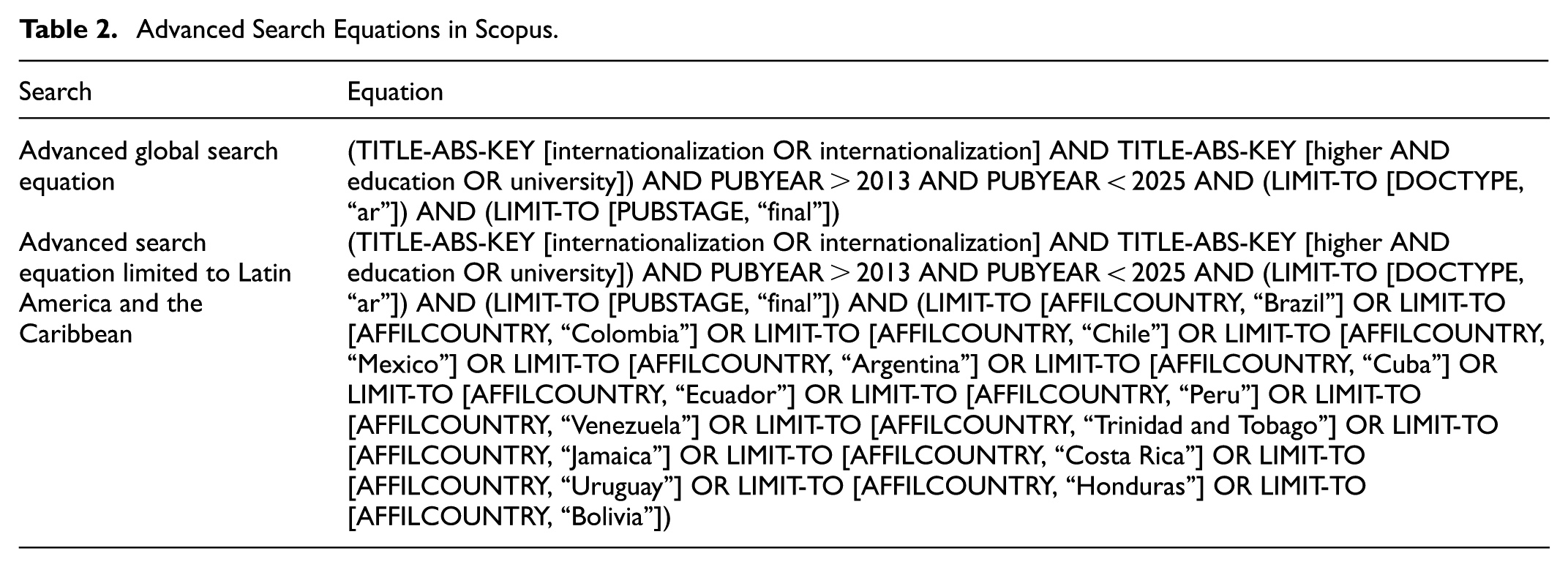
Based on a review of scientific literature on internationalization of higher education, a series of bibliometric indicators was defined to characterize this study. The bibliometric dataset was compiled from Scopus (retrieved on March 10, 2025), using two structured search queries: a global search covering internationalization in higher education, and a Latin America and Caribbean–focused search that captures regional research. The global search targeted publications containing “internationalization” or “internationalization” in combination with “higher education” or “university” in titles, abstracts, or keywords. The time frame was set to 2014 to 2024, and only peer-reviewed articles in the final publication stage were included to ensure quality and relevance. The Latin America and the Caribbean search applied the same criteria but limited results to articles with at least one affiliation in key countries (e.g., Brazil, Chile, Colombia, Mexico, Argentina, among others) to capture regional contributions. Boolean operators and filters were established to limit the search scope based on prior bibliometric studies and preliminary searches, ensuring comprehensive coverage while maintaining specificity. This rationale enhances the transparency and reproducibility of the dataset. The equations used for the document search are listed in Table 2 below.
Advanced Search Equations in Scopus.
SCOPUS was selected as the sole data source because it is a globally recognized database of peer-reviewed scientific journals and a standard reference in bibliometric research, ensuring methodological consistency and comparability of results across studies. SCOPUS offers broad coverage (13,768 active journals in Social Sciences) and includes several journals published in Latin America. Scopus also contains comprehensive author and institutional profiles, reliable impact metrics, and open, single-database accessibility, making it both practical and robust for research evaluation (Pranckutė, 2021). Nevertheless, we acknowledge that this choice may be biased and could underrepresent local or regional research not indexed in SCOPUS, a limitation that future studies could address by incorporating complementary sources, such as regional databases or institutional repositories.
To limit the sample of Latin American and Caribbean production, selection criteria were established as described in Table 3. Duplicates, records lacking abstracts or keywords, and irrelevant disciplines were excluded. As a result, ten articles were eliminated if they referred to other levels of education or addressed topics other than those relevant to the study.
Sample Selection Criteria.

After applying the selection criteria to the document sample, the initial search of 5,853 articles was reduced to only 258 articles. Figure 1 shows the selection and filtering process after the filters were excluded according to the exclusion criteria described above.

Document selection and filtering process.
This study employs a quantitative research methodology grounded in bibliometric analysis to systematically examine the landscape of scholarly publications related to internationalization in Latin America and the Caribbean. Bibliometric analysis offers a structured approach for evaluating patterns of knowledge production and dissemination, facilitating the identification of trends across various dimensions. By quantifying these elements, bibliometric methods facilitate the mapping of both the evolution and current state of research activity, offering insights into the structure and dynamics of the academic field.
The bibliometric analysis was conducted using the R-package Bibliometrix (Aria & Cuccurullo, 2017). After retrieving the dataset from SCOPUS, the records were converted into a compatible format (CSV) and imported into Biblioshiny, the web interface of Bibliometrix. Data cleaning procedures were undertaken to ensure consistency in author names, institutional affiliations, and keywords. As part of this process, lexical harmonization was applied by merging synonymous terms (e.g., internationalization vs. internationalisation; higher education vs. tertiary education) to enhance the accuracy and reliability of subsequent tests.
Several analyses were then performed, including descriptive statistics, performance analysis, and science mapping techniques to identify prominent authors, affiliations, documents, journals, keywords, and citations. Longitudinal examination of affiliations was conducted to track institutional engagement over time, highlighting shifts in regional research participation. Collaboration network analysis was employed to reveal the structure and intensity of inter-author and inter-institutional collaborations, elucidating patterns of knowledge exchange. Co-citation network analysis provided a lens for understanding the intellectual structure of the field by identifying clusters of frequently cited works, which indicate influential research streams and foundational scholarship. Furthermore, multiple correspondence analysis was applied to explore the relationships between categorical variables, such as keywords, authors, and journals, facilitating a multidimensional understanding of thematic convergence and divergence within the literature.
In addition to the work in Bibliometrix, a spreadsheet database was created to apply filters and pivot tables, simplifying the identification of the authors, their affiliations, and the keywords used in the articles. In this spreadsheet, Latin American and Caribbean production was categorized by the subject matter addressed, dividing articles into two broad groups: (a) those centered on theoretical discussion and literature review and (b) those that present findings from practical applications or case studies. The first group comprises papers focused on theoretical discourse and conceptualization, including bibliometric studies, systematic reviews, and content analyses of national policies or recommendations from international organizations. The second group includes studies reporting on institutional practices or application cases that can be categorized into the strategic priorities proposed by the authors in the previous section. To analyze thematic shifts over time, articles were further divided into two 5-year periods: those published between 2014 and 2019 and those published between 2020 and 2024.
To classify the articles into strategic internationalization priorities, we employed a qualitative content analysis approach following Hsieh and Shannon (2005). The coding framework was derived from prior literature on internationalization and adapted to the main functions of universities. Each abstract was initially reviewed and assigned to one of the predefined categories. When an abstract was ambiguous, relevant sections of the full text were examined. During this process, two additional categories (graduate studies and outreach/social responsibility) emerged and were incorporated into the framework. To enhance reliability, the co-author independently verified the classifications, and any disagreements were resolved through discussion until consensus was achieved. Table 1 presents the final set of ten categories with their definitions.
Results
Worldwide Results
The search yielded 5,853 documents, of which 3,034 are scientific articles published between 2014 and 2024 (Figure 2). There is a consistent increase of 11.5% per year in the publication rate, which shows a progressive interest in the subject.
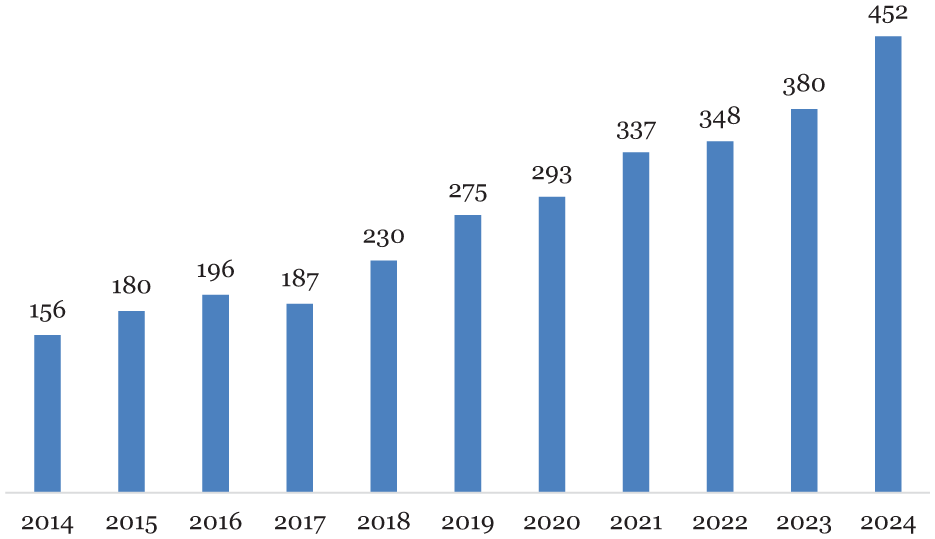
Scopus-registered articles on university internationalization, 2014 to 2024.
If the languages in which these articles were published are analyzed, 89% of the articles are in English, 4% in Spanish, 2% in Portuguese, and 2% in Russian. This indicates a predominance of American and European journals, as illustrated in Figure 3.
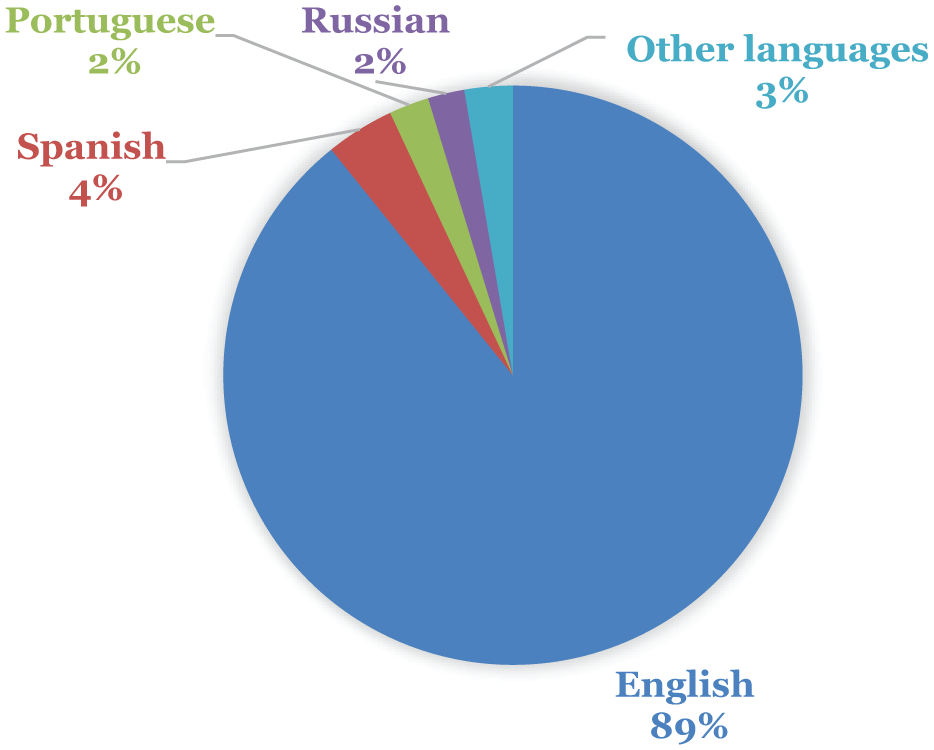
Language of publication of worldwide articles, 2014 to 2024.
However, when the nationalities of the researchers are examined, a difference is observed. Only one-third of the first authors of the publications in the sample are based in English-speaking countries, with the United Kingdom (435) and the United States (326) leading the way. If data is sorted by geographical region, Europe leads scientific research in the area, followed by Asian countries, with China alone reporting 309 articles, almost the same as the United States (Figure 4). The top ten countries with the highest performance by the first author’s nationality are listed in Table 4.

Worldwide articles sorted by the first author’s geographic region, 2014 to 2024.
Top 10 Countries by First Author’s Nationality, 2014 to 2024.

The journals where most of the worldwide articles are published are in the United States, the United Kingdom, and other European countries such as the Netherlands and Switzerland (Table 5). The top ten sources are competitive journals ranked Q1 and have high citation indicators in SCImago (n.d.), considering that they mainly publish on educational research topics.
Leading Journals of Publications on University Internationalization, 2014 to 2024.*

Prepared by the authors with information from SCOPUS and SCIMAGO Journal and Country Rank.
The top researchers in the area are affiliated with universities in Israel, China, the United Kingdom, Canada, and the United States (Table 6).
Leading Internationalization Authors, 2014 to 2024.

Latin American and the Caribbean Results
When analyzing Latin American and Caribbean articles on university internationalization, the sample consisted of 258 articles published in 150 different sources. When separated by year of publication, an average annual upward trend of 35% is observed, with 2022 having the highest number of articles (Figure 5). Production totals 617 authors, with an international co-authorship rate of 29.07%. The average number of citations per document is 4.7, with 2019 being the year with the highest number of citations.

Articles on university internationalization in Latin America and the Caribbean, 2014 to 2024.
Figure 6 and Table 7 present the results of the distribution of articles according to the corresponding authors’ country. Accordingly, the country with the highest number of articles is Brazil (22%), followed by Colombia (9.8%), Chile (5.6%), and Mexico (4.9%).

Latin America and the Caribbean Countries’ collaboration world map, 2014 to 2024.
List of Countries with the Highest Representation in the Affiliation of Corresponding Authors in Articles on Internationalization of Higher Education in Latin America and the Caribbean, 2014 to 2024.

The authors’ affiliation highlights a vast network of associations that extend to other geographic regions (Figure 6). The red lines represent the frequency of collaboration, while the blue shading of the countries indicates the volume of their participation. Brazil is an important hub and a central player in this network. Its multiple connections to the United States, Australia, Europe (especially the United Kingdom, Spain, and Portugal), and other South American countries (like Argentina and Chile) indicate it has a significant involvement. Colombia, Chile, and Mexico hold an important production, but their collaboration ties are frailer.
Regarding the distribution of publications by language (Figure 7), 62% are in English, 22% in Spanish and 16% in Portuguese. This pattern aligns with the predominant languages of the leading journals in which these studies are published (Table 8).

Language of publication of Latin American and the Caribbean articles, 2014 to 2024.
Leading Journal on Latin America and the Caribbean Sample, 2014 to 2024.
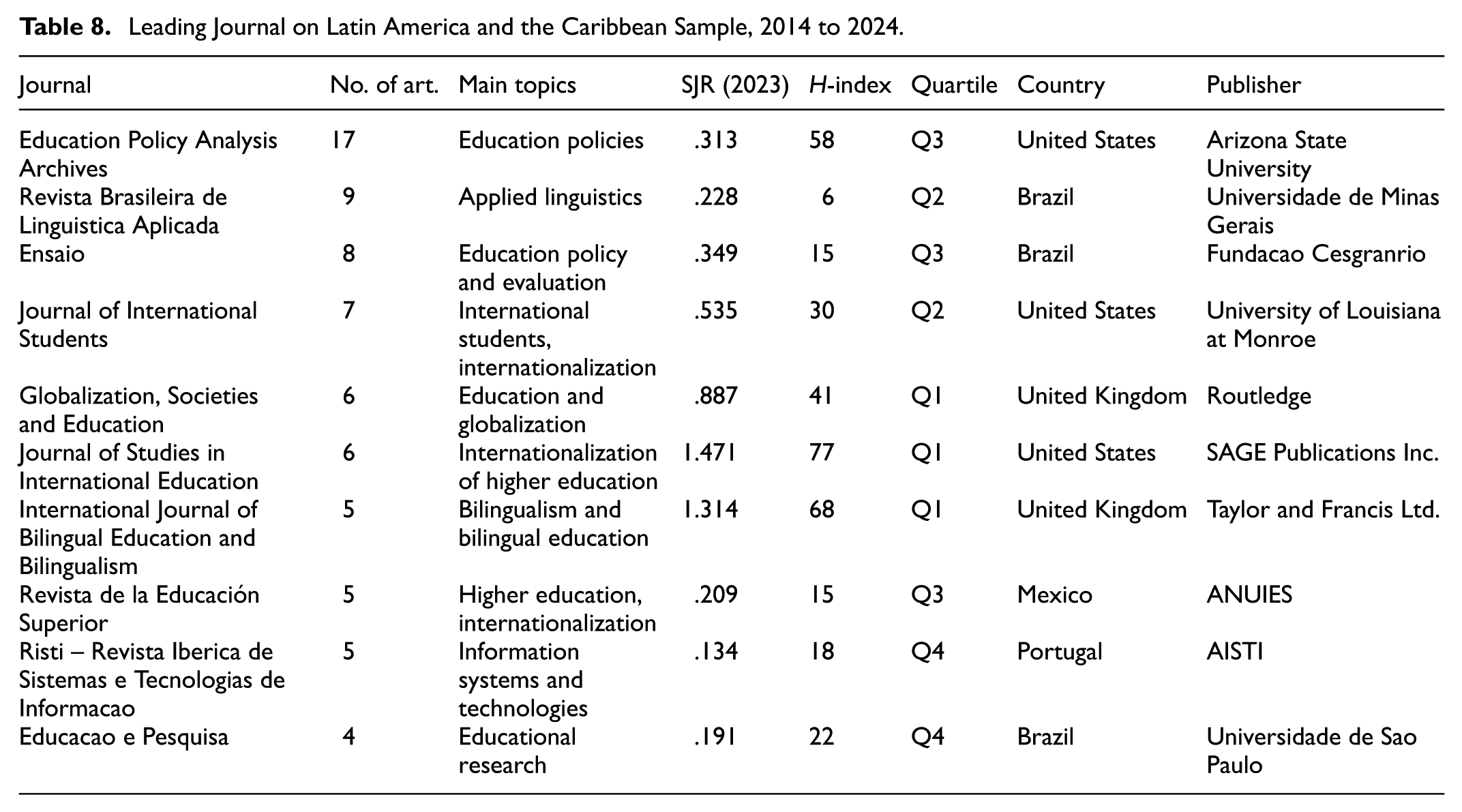
The leading journals are published in the United States, the United Kingdom, Brazil, and, to a lesser extent, Mexico. Table 8 lists the ten primary sources where articles on university internationalization in Latin America have been published. It is worth noting that only three journals correspond to the first quartile (Q1). The scopes of the journals are associated with educational policies and management (3), internationalization of education (4), linguistics (2), and information systems (2).
In the author’s analysis of the results, ten researchers stand out, having produced three or more articles between 2014 and 2024 (Table 9). Most of the authors belong to a small group of universities affiliated with either Brazilian or Colombian institutions.
Leading Latin American and Caribbean Authors, 2014 to 2024.

A comparative analysis among institutions highlights two clear leaders in recent years (Figure 8). The Universidad de Los Andes stands out for its late but accelerated entry into the field, transitioning from no output before 2020 to becoming the most prolific institution, with 37 publications in 2024. In contrast, the Universidade Federal do Espírito Santo reflects a steady accumulation of productivity, with moderate growth until 2019, followed by a sharp consolidation from 2020 onwards, stabilizing at 27 articles in 2024.

Affiliations’ production over time.
The social collaboration network reveals the structure of co-authorship relations within the field (Figure 9). Each node represents a research group, with node size indicating publication volume and link thickness reflecting the strength of co-authorship ties. Three main clusters are especially noteworthy.
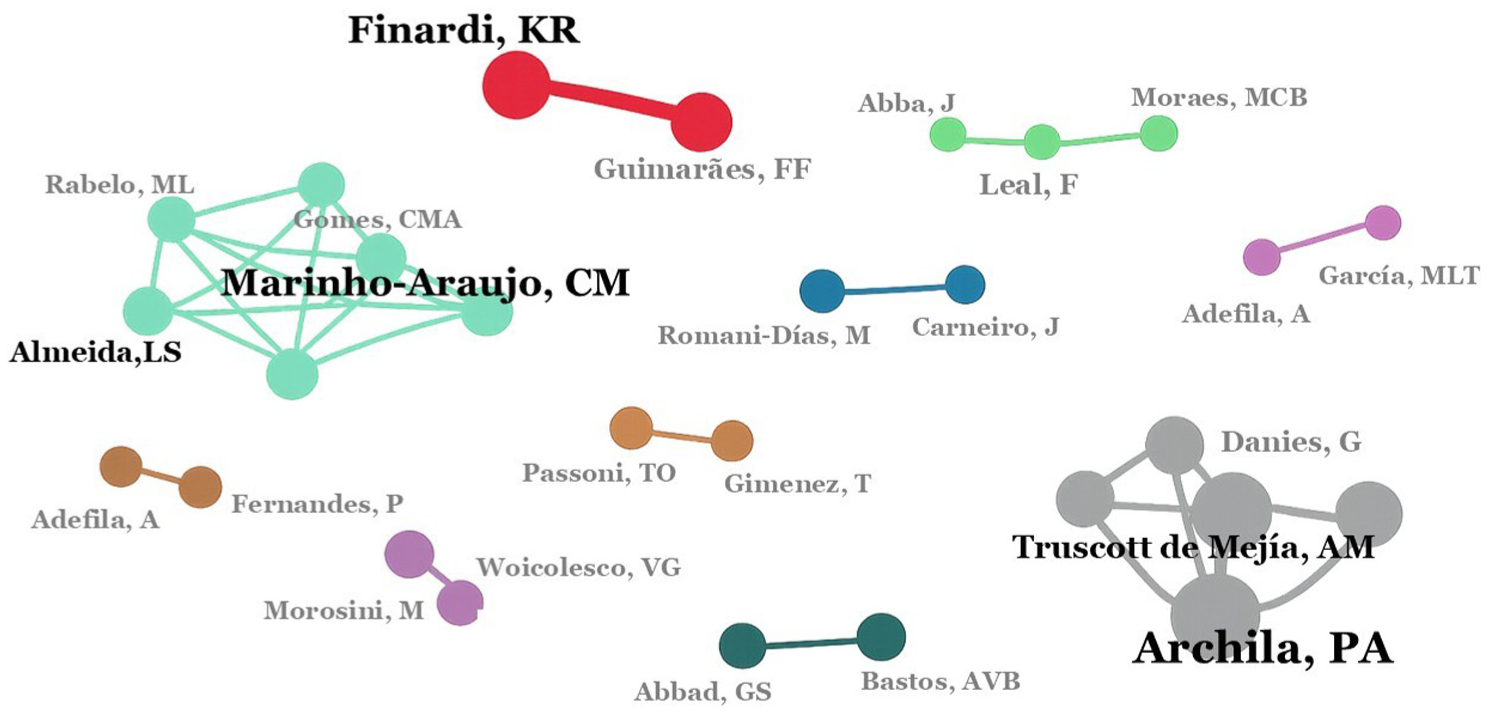
Latin American and Caribbean author collaboration networks in internationalization.
The light blue cluster on the left forms a highly interconnected group, signaling a strong research community where knowledge is co-produced across several actors, led by Claisy Marinho-Araujo (Universidade de Brasilia, Brazil) and Leandro Almeida (Universidade do Minho, Portugal). The gray cluster at the bottom represents another hub with multiple ties, centered around Pablo Antonio Archila and Anne-Marie Truscott de Mejía (Universidad de Los Andes, Colombia). The red cluster at the top consists of two large nodes connected by a thick link, indicating both high publication output and a strong, sustained bilateral partnership between Kyria Finardi and Felipe Furtado Guimarães (Universidade Federal do Espírito Santo, Brazil).
In contrast, the smaller clusters represent more isolated collaborations that have not expanded into broader networks. Overall, the network’s fragmentation suggests that, while certain groups exhibit intense collaboration, the field remains dispersed, with many researchers working in relative isolation.
The co-citation network illustrates the intellectual structure of the field by mapping relationships among frequently cited works. In this visualization, clusters represent distinct research communities, node size reflects the influence of specific publications, and links between clusters indicate areas of conceptual overlap or scholarly dialogue. Five main clusters can be identified (Figure 10).
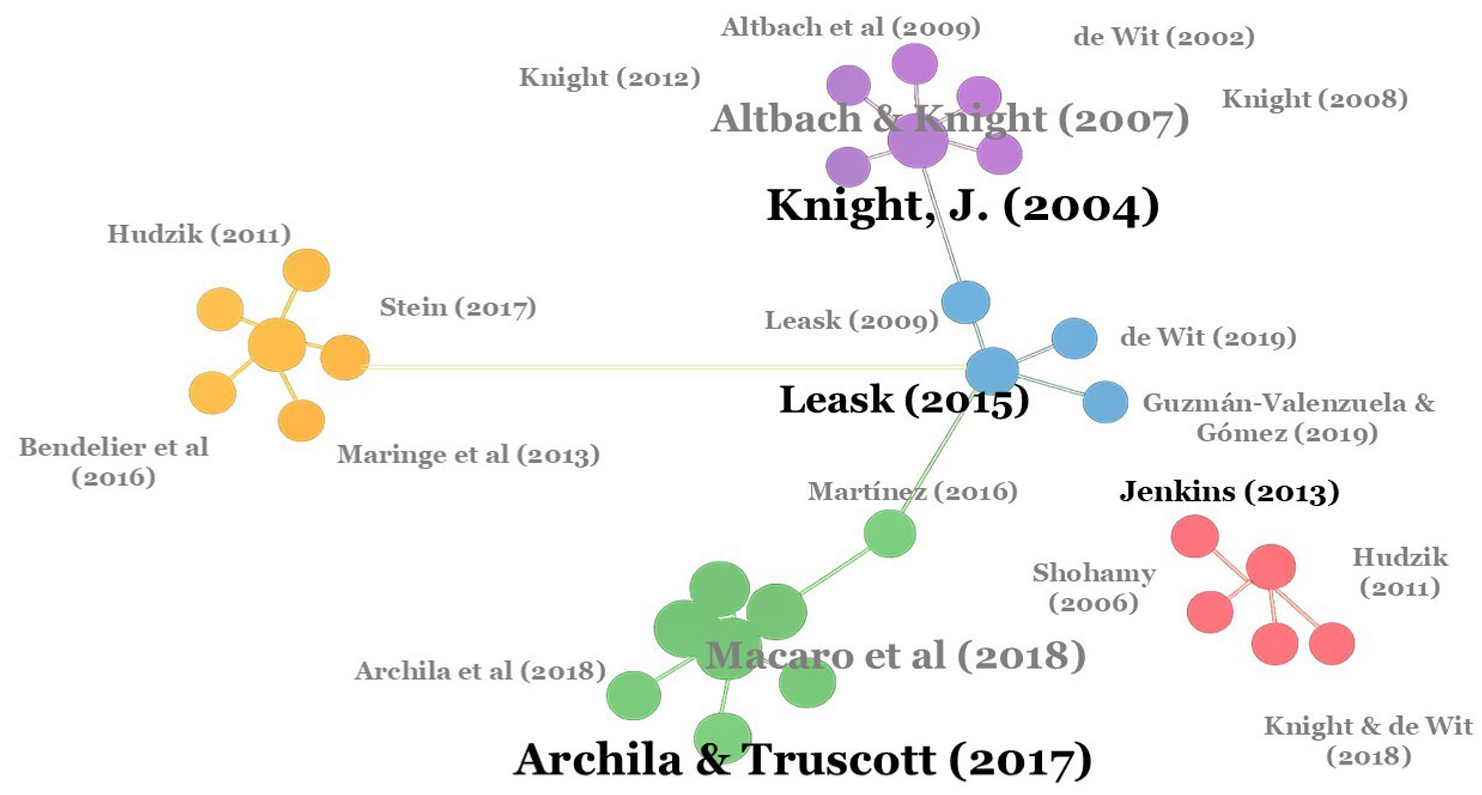
Co-citation network in selected articles, 2014 to 2024.
The purple cluster comprises foundational works on internationalization theory and policy, notably those of Knight (2004), Altbach and Knight (2007), Altbach et al. (2009), which remain central references in the field. The blue cluster is anchored by Leask’s (2015) influential contribution on the internationalization of the curriculum, a theme that has expanded over time, as shown by the diversity of publication years. At the center of the network, the green cluster is the largest and most prominent, organized around Archila and Truscott de Mejía’s (2017) and Archila et al. (2018) studies on language policy and practice in Brazil, reflecting the strong regional engagement with language-related issues. Closely linked is the red cluster, which also addresses language policy and highlights the enduring impact of Jenkins’ (2013) work on English as a lingua franca. Finally, the orange cluster, led by Stein (2017) and Bedenlier et al. (2018), appears more peripheral, suggesting a specialized subfield within the broader discourse.
The presence of multiple works by Knight, de Wit, and Hudzik across clusters underscores their sustained influence and the cross-cutting nature of their contributions to different dimensions of internationalization.
An analysis of publication trends (Table 10) reveals that “internationalization” (64%) and ‘higher education’ (62%) are the most frequently used keywords, reflecting their centrality in academic discussions. “Mobility,”“Latin American countries,”“Institutions,”“science and research,” as well as “language policies,” illustrate the increasing interest in institutional strategies and knowledge production. Additionally, new topics emerging include “COVID-19,”“quality,”“COIL,” and “e-learning,” which highlight contemporary challenges in internationalization. Critical voices are also beginning to appear, particularly from a decoloniality narrative approach. These findings suggest potential areas for research, particularly in addressing regional perspectives.
Keywords in Latin American and the Caribbean articles, 2014 to 2024.

The multiple correspondence analysis reveals four main thematic orientations in the selected literature (Figure 11). The map shows a first axis (Dim 1 = 33.29%) that contrasts terms associated with mobility programs/policies against functions and institutions; the second axis (Dim 2 = 18.31%) differentiates external interactions from internal dynamics. The proximity of terms within each cluster indicates robust thematic associations, whereas terms near the origin are more cross-cutting.

Multiple correspondence analysis.
The red cluster includes “Chile,”“Brazil,”“student mobility,” and “academic mobility.” Their proximity suggests a strong link and indicates research on specific cases of student mobility in these countries is being reported. The term “e-learning” suggests that virtual mobility and international collaborative learning experiences are also taking place. The blue cluster contains “internationalization of higher education,”“foreign students,” and “international academic cooperation,” as these are all closely related terms, representing the globally integrated themes. The orange cluster comprises the terms “academic mobility,”“science without borders,”“language policy,” and “globalization.” This group highlights the key role of government policies and programs in Brazil (Science without Borders and Language without Borders), facilitating academic movement across countries. The green cluster includes terms highly related to institutional policies in research and curriculum. Their position on the left side of the horizontal axis suggests a distinction from international mobility concepts. The term education (purple cluster) is located at the bottom of the plot, relatively close to the center. It serves as a foundational concept but is distinct from the more specific clusters.
When the abstracts from the sample were read and classified according to the subject matter addressed (Figure 12), similar results were discovered. Articles were divided into two groups: (a) discussion papers based on theory, analysis of national policies or international organization recommendations, and the review of scientific production (17%) and (b) analytic papers that discuss findings from concrete realities, institutional practices, or application cases (83%). These last were classified into strategic priorities according to the main topics and results discussed (following the criteria proposed in Table 1) and were divided into two periods (2014–2019 and 2020–2024) to identify emerging topics (Figure 13).

Themes addressed in Latin American and the Caribbean articles, 2014 to 2024.
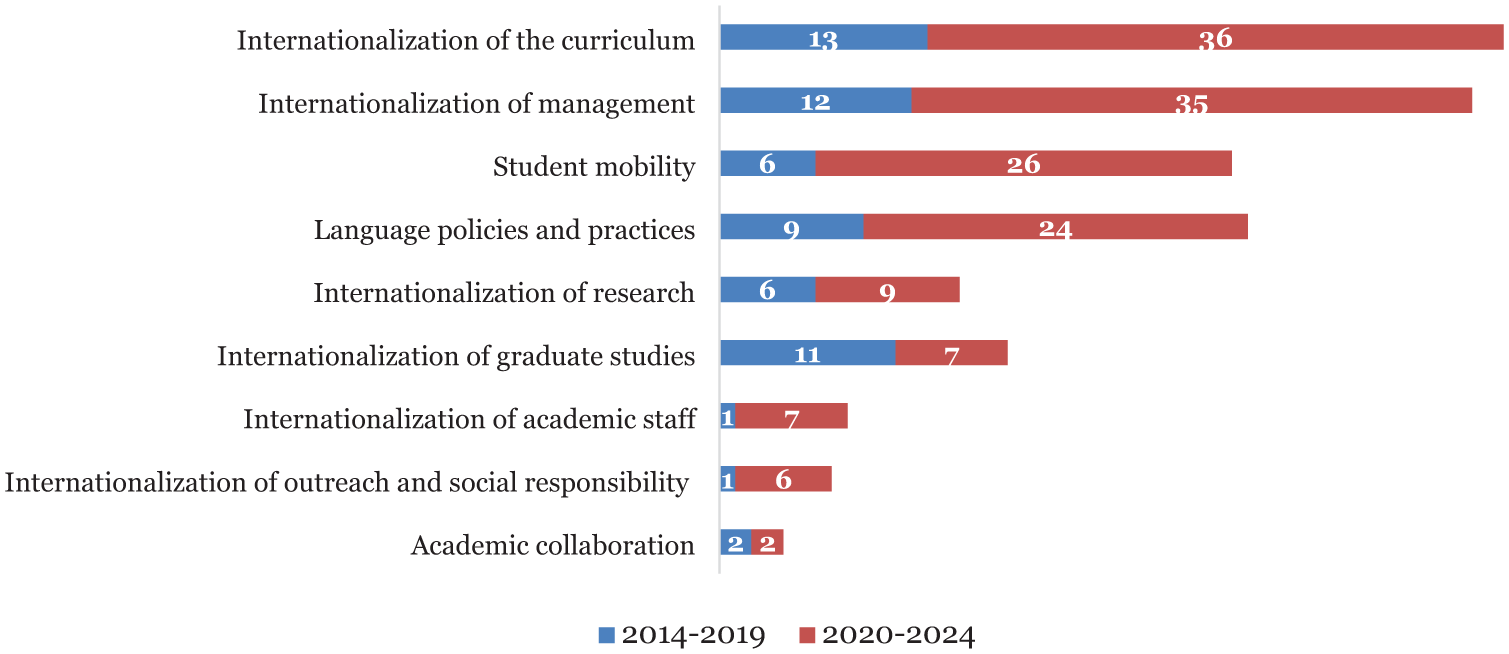
Strategic priorities addressed in Latin American and the Caribbean articles, 2014 to 2024.
A significant number of articles focus on the internationalization of the curriculum, institutional management, student mobility, or language practices and policies aimed at strengthening internationalization. Higher education institutions are increasingly focusing on adapting curricula to meet global standards, integrating international perspectives, and enhancing the global relevance of their programs. Increasing importance of strategic management, leadership, institutional governance, quality, rankings, and a significant shift toward language policy reform are observed as key factors in achieving successful internationalization.
To a lesser extent, there are studies on the internationalization of academic staff, and outreach and social responsibility, which are showing a substantial increase in the last years (increase of 86% and 83% respectively), a trend that indicates a growing recognition of their importance in the context of higher education, possibly in response to the global calls for more socially conscious academic engagement. The data also shows a notable decline in research attention given to graduate studies over the past 5 years, with a slight decrease from 11 to 7 articles. While this area remains a significant focus, the reduced number of publications in the more recent period may reflect a shift in priorities toward other aspects of internationalization.
No studies were identified within the service provision category, which is generally associated with commercially oriented internationalization models. This absence does not imply that institutions refrain from offering special services, courses, or tailor-made programs for international students or partners; rather, such practices are not documented in the reviewed literature. For example, from the selection, 18 articles include the term ‘market’ in their abstract. However, only 10 studies view internationalization as a response to global market dynamics, while the eight remaining are dissenting perspectives. This divergence is explained mainly by the identification of commercialization of education as a primary risk of internationalization in Latin America and the Caribbean, given its association with growing social inequality and a loss of cultural identity (Gacel-Ávila & Rodríguez-Rodríguez, 2019).
Discussion and Conclusions
Building on our objective—to analyze the evolution of research on the internationalization of higher education in Latin America and the Caribbean over the last decade through a bibliometric approach using SCOPUS-indexed literature—and on the comparative analysis between global and regional production, the findings indicate a sustained growth in publications between 2014 and 2024. This steady development reflects the increasing relevance of internationalization within higher education, which may be linked to the growing attention to planning and implementing strategies in higher education institutions (Knight & de Wit, 2018).
Scientific production in the field remains primarily dominated by researchers from European and North American universities. However, over the last decade, contributions from Asia and, to a lesser extent, Africa, the Middle East, and Latin America have become more visible. In the latter region, Brazil is the country with the highest scientific output, followed by Colombia, where the emergence of specialized research groups has played a central role. Based on the data presented, Latin American and Caribbean authors are actively engaged in building collaborative networks with peers abroad. However, the fragmentation of the regional collaboration network, with many actors dispersed working in relative isolation, suggests opportunities for strengthening regional and interregional research ties, particularly among Latin American institutions.
Global and regional production continues to be reported mainly in English, with a predominance of American and European journals. In terms of comparative indicators, while world production is recorded in Q1 journals, regional production is distributed among Q1 to Q4 journals. The predominant themes in the articles include the internationalization of the curriculum, management, student mobility, and language policies, with a particular focus on regional contexts and the associated challenges. The most significant finding is that when analyzing the topics covered, new production is emerging in the internationalization of academic staff and outreach functions. These themes reflect more complex internationalization schemes at the regional level.
These trends do not differ significantly from institutions worldwide. According to the EAIE Barometer on Internationalization (Rumbley & Sandström, 2019), higher education institutions primarily focused on enhancing student mobility and recruitment, followed by providing international mobility opportunities for faculty and staff, as well as developing strategic international partnerships. However, in the latest edition (Rumbley & Hoekstra-Selten, 2024), the top three priorities shifted to include strengthening the international and intercultural aspects of the curriculum, engaging in virtual internationalization activities, and ensuring the well-being of students and staff. This change, particularly the emphasis on virtualization, can be attributed to the effects of COVID-19, which necessitated a rapid adaptation to online learning and collaboration to maintain educational continuity and foster global engagement. Results also align with the findings of Huang et al. (2024), who identified international students, intercultural competencies, language acquisition, experiential learning, student mobility, and post-COVID-19 challenges as recurring topics in scientific literature. The only topic that appears to be different in the regional context when analyzing the sample is the emphasis on market dynamics.
The results reveal both convergences with and departures from global internationalization trends, underscoring the complexity of the regional context. On the one hand, the predominance of themes such as internationalization of the curriculum, research, student mobility, and language policy parallels international priorities reported in other regions (Knight & de Wit, 2018; Rumbley & Hoekstra-Selten, 2024). On the other hand, the lack of studies addressing service provision or commercially oriented models indicates a notable divergence. This absence may be interpreted in two ways: either such practices are less prevalent in regional universities due to structural and cultural resistance to the commodification of higher education, or they are present but are underreported in indexed literature due to limited research capacity, language barriers, reluctance to acknowledge them, or published in local outlets not captured in this revision. In both cases, the gap underscores a persistent tension between global market-driven rationales for internationalization and regional commitments to equity, cultural identity, and social responsibility (Gacel-Ávila & Rodríguez-Rodríguez, 2019).
Since the purpose of bibliometric analyses is to capture trends and gaps in research, our study concludes that future research efforts should prioritize a thorough investigation into the nature and prevalence of commercially oriented internationalization models and service delivery within universities in Latin America and the Caribbean. While such practices may be occurring, they remain largely undocumented in the SCOPUS-indexed literature. To unveil these activities and understand the reasons behind their limited visibility, qualitative research methods, such as interviews with university administrators and international offices staff members, could provide a valuable perspective into institutional strategies and constraints. This approach could uncover critical advancements in this area and foster a deeper understanding of the underlying dynamics.
Despite the increase in scientific production on internationalization, the analysis suggests that specific topics may benefit from further exploration, such as the long-term evaluation of the impact of internationalization policies and a broader consideration of the cultural and socio-economic diversity of the region. Research on the factors influencing international students’ choices and preferences, as well as demand and supply forces, can provide policymakers and institutional leaders with valuable insights for developing more effective, context-specific strategies that foster international collaboration in the region. It is highly recommended that future analyses include a dedicated exploration of the emphasis on market dynamics as a distinct regional characteristic. Investigating its drivers, perceived advantages, potential challenges, and its alignment or divergence from other internationalization priorities will further deepen our understanding of this complex issue. Such comprehensive research can contribute significantly to the advancement of internationalization strategies in the region.
Additionally, there appears to be a lack of studies on internationalization in less developed educational contexts within Latin America. This condition may be attributed to the prevailing perspective that the internationalization of higher education is a trend driven by developed Western nations, whereby particular academic models, most often delivered in English, exert a global influence on educational practices (Tight, 2022), and highlights the need to enhance scientific production in Latin American contexts, which will not only contribute to a more comprehensive and equitable understanding of the phenomenon but also ensure that diverse perspectives are considered in research.
Country-level differences further reinforce this tension. Brazil and Colombia dominate the regional output, a pattern that reflects not only the relative size of their academic systems but also the presence of government programs that have historically promoted internationalization. In contrast, the minimal representation of Central America and the Caribbean cases illustrates enduring structural inequalities and underinvestment in research infrastructure, which limit visibility in global debates despite local engagement with international cooperation. Targeted studies focused on universities in underrepresented countries, such as Costa Rica, Guatemala, El Salvador, Panama, Honduras, Bolivia, Uruguay, Paraguay, Peru, Ecuador, Cuba, and Jamaica, where SCOPUS-indexed research on internationalization remains scarce, are essential. Utilizing alternative data sources, such as regional databases, institutional records, or direct surveys, will provide a richer context and complement existing bibliometric evidence, thereby addressing the current geographical imbalances in scholarly publications. This unevenness complicates any assumption of a unified regional trajectory, suggesting instead a mosaic of national experiences that intersect with broader global debates on knowledge production, hierarchy, and dependency.
These contradictions hold important implications for policy and practice. For ministries of education and university leaders, the findings underscore the need to strengthen institutional and national frameworks that move beyond mobility toward more comprehensive and sustainable approaches. For researchers, the contradictions highlight the importance of examining how regional universities navigate the pressures of globalization while maintaining their cultural and social commitments. Finally, for future research, they suggest that attention must shift toward the underexplored dimensions of market dynamics and service delivery, not only to assess their prevalence but also to critically interrogate their consequences for equity, identity, and quality in the region. Similarly, the critical approach also requires greater attention, as there are dangers of focusing analyses exclusively on economic aspects and ignoring other aspects that contribute to deepening inequalities (Guzmán-Valenzuela, 2023).
This study acknowledges certain limitations. First, the analysis relied exclusively on the SCOPUS database, which, while comprehensive, may not capture the full extent of scholarly production on the internationalization of higher education in Latin America and the Caribbean. Publications in regional or local journals not indexed in SCOPUS may therefore be underrepresented. Second, there is a potential language bias, as SCOPUS has stronger coverage of English-language publications. This imbalance may affect the visibility of regionally oriented research and limit the representativeness of the dataset. Finally, the classification of themes in this study, based on keyword analysis and multiple correspondence analysis, entails an interpretative component. Although systematic procedures were applied, the grouping of keywords and the assignment of thematic orientations involve a degree of subjectivity that may influence the results.
The bibliometric analysis in this paper provides a comprehensive overview of the current state of research on university internationalization in Latin America and the Caribbean over the past decade, highlighting both significant advances and areas that require further development. Findings can serve as a guide for future research and for the formulation of policies to optimize internationalization in higher education in the region. Based on these findings, it is recommended that future studies explore emerging topics such as the internationalization of academic staff and outreach/social responsibility. These topics hold significant potential for further development, both within the regional context and for advancing knowledge in the field worldwide. Future research could address these limitations by incorporating additional databases (e.g., SciELO, Redalyc), conducting multilingual analyses, and complementing bibliometric methods with qualitative approaches to validate thematic classifications.
Footnotes
Acknowledgements
Not applicable.

Ethical Consideration
Not applicable.
Funding
The authors disclosed receipt of the following financial support for the research, authorship, and/or publication of this article: This research was funded by Universidad de Los Lagos, grant number “I23-23.”
Declaration of Conflicting Interests
The authors declared no potential conflicts of interest with respect to the research, authorship, and/or publication of this article.
Data Availability Statement
Data was retrieved from Scopus Database accessed March 10, 2025. Data treatment is described in the Material and Methods section in the article.