




Abstract
This study aims to quantify the influencing factors of quantified self, clarify their associated paths and hierarchical relationships, enrich relevant theories and practices, and provide targeted suggestions for individual health management. Through literature review, 15 influencing factors were identified. Based on Fogg behaviour model (FBM) and fuzzy Delphi method (FDM), an ISM-MICMAC model was constructed to analyse their correlation paths. The results indicate that empowerment support, personality support, and compatibility prompts exert the most profound influences on the quantified self at the root level. Two main correlation paths were identified. Path 1: The ability support dimension activates the prompt trigger dimension, which subsequently stimulates the motivation dimension, ultimately facilitating quantified self behaviour. Path 2: The prompt trigger dimension activates the ability support dimension and enhances the motivational drive dimension, thereby contributing to the formation of quantified self behaviour. Based on these findings, an optimisation strategy is proposed for the governments, enterprises, and communities in designing and implementing quantified self behaviours.
Plain language summary
The study constructs a hierarchical model of quantified self influencing factors based on FBM and employs the interpretive structural modelling-cross-impact matrix multiplication applied to classification (ISM-MICMAC) method to analyse the path relationships among these factors. The findings show that empowerment support, personality support, and compatible prompts are the root reasons for quantified self. Motivation, ability, and prompts can work together to stimulate an individual to conduct quantified self behaviour. This analysis aims to enhance the understanding of individual behaviour patterns in relation to self-tracking and health management.
Introduction
With the increasing prevalence of health information technology, an increasing number of health consumers are embracing diverse mobile devices to quantify, store, and manage their health data (Awad et al., 2021). Such devices offer unparalleled convenience for consumers to comprehend and manage their health data (Deng et al., 2021), and their application also provides references for the development, design and optimization of related devices and applications (X. Fan et al., 2022). With the intensification of the aging trend, health problems of the elderly have become particularly prominent (Tran and Tham, 2025). The research of Xie et al. (2024) pointed out that effective acquisition and utilization of health information not only helps the elderly improve their health information management, but also helps reduce the burden on the national medical system. However, effectively utilizing these data to enhance the health status of individuals necessitates the development and implementation of scientifically sound strategies. To accomplish this objective, it is imperative to construct a robust theoretical framework that comprehensively explains the attitudes, intentions, and behaviours of health-conscious consumers. The quantified self – a key aspect of personal health behaviour – has emerged as a novel phenomenon in tandem with ongoing advancements in digitalisation, artificial intelligence (AI), and wearable devices. The quantified self encompasses the utilisation of data to explore and quantify individuals, facilitating a more comprehensive understanding of oneself and enabling accurate health management (Barker-Canler et al., 2024). The practice of quantified self can not only help individuals form new relationships and habits and enhance happiness (Spence et al., 2024); but it can also generate a “ripple effect,” influencing their family members, friends, etc., and jointly shaping healthy behaviors (Hardey, 2022). Since its emergence, the quantified self has become a popular and pervasive digital trend that is rapidly advancing in various fields. Current research explores quantified self from different perspectives. These include quantified self behaviours in the context of AI (A. Li et al., 2024); the combined application of smart healthcare technologies and ESG (Environmental, Social and Governance) in quantified self (Lin et al., 2025); and the psychological impact of quantified self application on family caregivers (Fujihara et al., 2025). However, there is little research that focuses on the correlation paths among the influencing factors of quantified self behaviours.
Therefore, this paper utilises the Fogg Behaviour Model (FBM) and the interpretive structural modelling-cross-impact matrix multiplication applied to classification (ISM-MICMAC) method to construct a structural model of influencing factors on the quantified self. This model discloses correlation paths between these factors and provides a reliable reference for research on behaviours related to the quantified self. By analysing these path relationships among influencing factors, a better insight can be obtained into health consumers' behaviour patterns in self-tracking and health management. Such insight enables both scholars and practitioners to propose more targeted strategies for the quantified self, thus not only improving individual health but also positively impacting the promotion of public health.
Literature Review
Definition of the Quantified Self
The term “quantified self” was initially proposed by Gary Wolf and Kevin Kelly, editors of Wired magazine, in 2007 (Kelly, 2024; Wolf, 2024). This term encompasses the comprehension of one's physical and mental state through self-tracking and data recording, commonly referred to as “self-tracking,”“life hacking,” or “personal informatics.” Subsequently, Wolf emphasized the introspective nature of the quantified self, likening it to a mirror that plays a pivotal role in fostering self-improvement, self-exploration, self-awareness, and self-cognition, ultimately facilitating systematic enhancement (Gary, 2023). With the advancement of technology, an increasing number of tools and applications have emerged that facilitate individuals' self-tracking and data recording. These diverse tools and applications, encompassing health management, sports fitness, sleep tracking, and mood management, among others, enable individuals to obtain a more comprehensive understanding of themselves through data.
The concept of the “quantified self” focuses on “data processing” in specific contexts. After the term had been proposed, scholars from various disciplines defined different concepts based on their disciplinary backgrounds, but these concepts were mostly “descriptive” rather than “prescriptive” (Ruckenstein and Schüll, 2017). From an information systems standpoint, I. Li et al. (2010) perceived the quantified self as a continuously evolving system comprised of collection and reflection. In other words, effective quantified self behaviour aids users in gathering essential personal information for profound introspection, thereby facilitating a more comprehensive self-understanding. In the biomedical field, Smarr (2012) analysed the quantified self through the lens of systems biology and categorized the quantified self into the two primary domains of macro non-invasive measurement and micro internal measurement. By comparing personal data with population norms, timely detection of data abnormalities becomes possible, enabling interventional treatment. From a data science perspective, Swan (2013) highlighted that the quantified self poses interesting challenges for big data science in terms of the collection, integration, and analysis of data. By leveraging extensive collections of quantitative personal data, comprehensive descriptions can be provided for biological phenomena or other aspects at various levels, while establishing new health norms with greater precision. In the field of human sociology, Lupton (2014) argued that the quantified self is a social practice involving interactions and regimes among individuals. Individuals who have quantified self behaviour usually communicate and share data with other self-trackers through social media and offline activities. In the field of media and communication, Lomborg and Franden (2016) analysed self-tracking from the perspective of media and communication, defining the quantified self as a meaningful and even enjoyable experience closely intertwined with the structure of daily life. In the field of social psychology, the “quantified self” is a process involving data collection, visual representation, and cross-linking to identify correlation, gain insight, and act on that insight. This process is closely related to individual characteristics, and those who are good at self quantification are often able to display their personal characteristics more prominently in the social environment (Maltseva & Lutz, 2018). In the field of engineering technology, the emerging technology of the “quantified self” aims to provide individuals with more knowledge and control, thereby helping individuals to improve their quality of life (De Moya & Pallud, 2020). In the field of clinical psychology, the “quantified self” focuses on the psychological importance of quantification, digital measurement, counting, and comparison, emphasizing the process of individuals using digital tools and technologies to track and analyse their physical, behavioural, and environmental data. Individuals are also encouraged to improve their self-awareness and optimize their personal performance through data (Findeis et al., 2023).
Although academic interpretations of the theory of quantified self present diverse perspectives, they all focus on the systematic collection and in-depth analysis of individual behavioural data, while also covering the complex interaction between individuals and multi-dimensional social elements (technical ecology, cultural forms, and institutional frameworks). Therefore, this paper defines quantified self behaviour as: the operation mechanism of the continuous self-tracking practice, which is centred on data-driven, regulated by social interaction, and constrained by the normative system. The mechanism is manifested in the all-round collection of multi-dimensional data, such as health indicators, behavioural trajectories, and social graphs in daily life through smart terminal devices such as smart phones and wearable devices and their supporting applications. Through systematic statistics and visualization analysis by professional applications, these data can build a precise quantified self portrait, thereby driving individuals to deepen self-awareness, optimize behaviour, and ultimately form a dynamic self-improvement mechanism.
The Influencing Factors of the Quantified Self
In recent years, the academic exploration of quantified self behaviour has deeply integrated the cross-disciplinary theoretical systems of social behaviour science, psychology, etc., forming a research paradigm with innovative value. For instance, the TAM (technology acceptance model) and the extended UTAUT2 (unified theory of acceptance and use of technology) have been widely employed to evaluate and describe the relationship between users' acceptance of wearable devices and their intention to use them. By leveraging these theories, researchers gain a deeper understanding of users' behavioural intentions. This understanding can then be used to better design and optimize wearable devices that meet user needs while enhancing overall user experience (Bianchi et al., 2023; Liang et al., 2024; Talukder et al., 2019). The diffusion of innovation theory offers a robust framework for examining the impact of individual innovation on intentions towards wearable technology. According to this theory, individuals with high levels of innovativeness are more inclined to accept and adopt new technologies. They possess a greater understanding of the advantages and practical value the new technologies offer, thus fostering a positive attitude towards them (Talukder et al., 2019). From an environmental psychology perspective, stimulus-organism-response theory perceives environmental stimuli as external influences that not only affect the perception and response of individuals but also trigger various psychological processes in recipients, including cognition, emotion, and motivation. These processes can be understood as internal responses to external stimuli (Jin et al., 2020; Xu et al., 2022). The cognitive-affective system theory of personality, derived from the field of psychology, integrates cognitive and affective factors. This theory is used to examine how external situations influence individual behaviour through the dual pathways of cognition and emotion, which ultimately determine behavioural choices (J. Fan and Wu, 2021). Based on rational choice theory, valence theory suggests that individuals' actions are guided by a utilitarian logic rooted in cost-benefit assessments. Individuals evaluate the costs and benefits associated with potential solutions to maximize overall gains (De Moya et al., 2021). To better understand users' responses to risks when quantifying themselves, Zhang et al. (2023) introduced coping theory to explore how individuals employ effective coping strategies for self-protection when confronted with threats posed by smart devices. Choi and Kim (2024) constructed a unique “surveillance culture” theoretical framework to comprehensively capture individual perceptions and behaviour related to privacy and surveillance in the context of smart health. Table 1 presents representative studies on the influencing factors of the quantified self in recent years.
Representative Research on the Quantified Self.

The above analysis reveals research in the area of quantified self has been progressively deepened, has garnered substantial scholarly attention across various disciplines, and has yielded noteworthy research outcomes. In terms of research methods, questionnaire surveys and experimental analyses are the main tools. The main target subjects typically focus on wearable device users and college students. The research dimensions revolve around the influencing factors of quantified self. The related achievements mostly rely on multiple frameworks, such as application scenarios of wearable devices, individual psychological characteristics, and community interaction mechanisms. These frameworks are employed to empirically analyse the significance of the influencing factors. However, the level of empirical exploration of the dynamic correlation mechanism and transmission path among the influencing factors in existing research is still relatively weak.
Therefore, this paper adopts a literature review approach to identify influencing factors while employing the ISM-MICMAC method to reveal the hierarchical correlations and interaction paths among the elements. This methodology not only offers insights and references for subsequent research on the quantified self but also clarifies the interaction mechanisms among the elements to offer decision-making bases for optimizing the technical ecosystem of the quantified self.
The Fogg Behaviour Model (FBM)
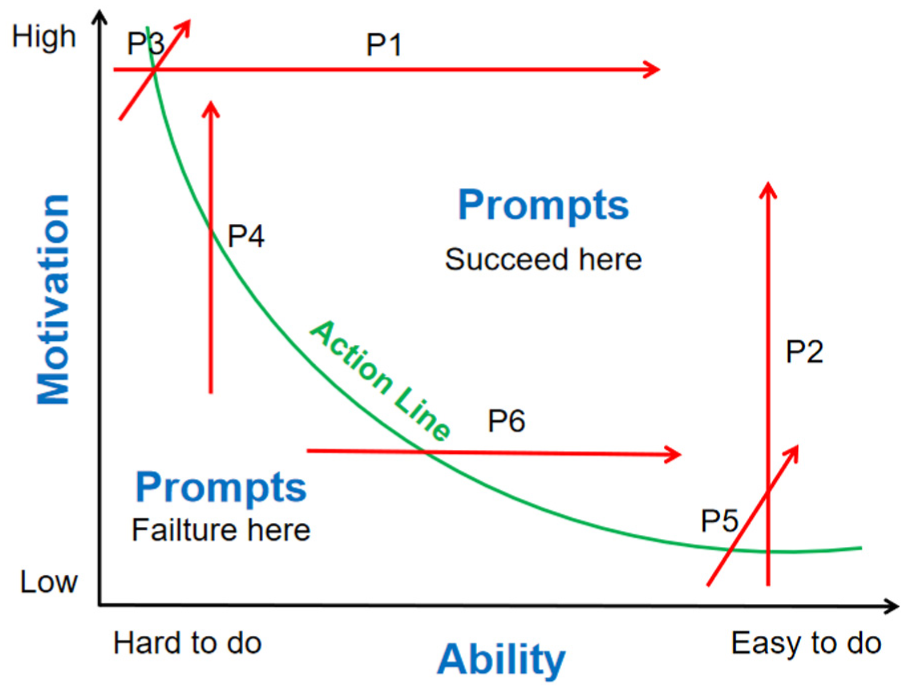
In the process of examining the impact of computer interaction technology on psychology, the renowned psychologist B.J. Fogg introduced the FBM (Fogg, 2024). This model emphasizes that human behaviour is influenced by three fundamental components: motivation, ability, and prompts, denoted as B = MAP. The interconnectedness between these elements and behaviour is illustrated in Figure 1.

Fogg behaviour model (Fogg, 2024).
In Fogg behaviour model, ability and motivation serve as prerequisites for behaviour execution; however, they are not always synchronized. Motivation's influence on behaviour can sometimes be manifested through the dimension of prompts. For instance, the Internet and social media have made the spread of false information much easier, often utilising pleasure/pain motivations to trigger rapid responses and to stimulate information sharing through emotions. Prompts can trigger the unintentional dissemination of misinformation (Muriel-Torrad et al., 2020). Some scholars have adopted the FBM model to identify the influencing factors of HPV vaccine acceptance among caregivers in Nigeria. The results showed that caregivers' abilities (such as understanding vaccination locations and vaccine costs) and motivations (such as misunderstandings of vaccines among community members and the need for advocacy activities) are the main reasons for the low vaccination rate (Agha et al., 2024). The combination of motivation and ability affects the use of family planning products, especially after advertising exposure (prompt) (Agha et al., 2019). Furthermore, FBM is often used to guide behavioural change and system design. For example, the home monitoring system for the elderly (Chatterjee et al., 2018), the role of FBM lies in providing a framework to enhance users' motivation and ability to perform behaviours, enabling the signals that trigger behavioural changes to take effect (Labrecque et al., 2013). In the field of mental health, FBM helps researchers and developers to better understand the behaviours or attitudes that need to be changed and provides guidance on how to design applications to achieve the desired results. For example, an app might increase the user's motivation to battle anxiety by sending regular messages of encouragement, improve the user's ability to record emotions through the design of an intuitive interface, and set up daily reminders as prompts to promote continued use of the app. This kind of design helps to ensure the effectiveness of the application and the engagement of the user (Alqahtani et al., 2019). Several of the most widely used apps today, such as Instagram and Clubhouse, are also examples of Fogg's behaviour design courses (Fogg, 2019).
On the whole, the willingness of individuals to continuously participate in quantified self behaviour stems from their inner drive, which reflects their motivation and ability to quantify themselves when prompted. This motivation can arise from a desire for self-improvement, the pursuit of self-development, or a profound understanding of one's behaviour. Ability encompasses proficiency in utilizing quantified-self tools, a keen perception of one's own behaviour, and accurate interpretation of self-feedback. When individuals possess sufficient levels of motivation and ability for self-quantification, a robust driving force is generated, which encourages individuals to actively engage in responses to appropriate prompts. This behaviour may manifest as regular recording of personal behavioural data, analysis of individual behavioural patterns, or adjustment of personal behaviour based on self-feedback. Such continuous participation not only constitutes a closed-loop system for self-monitoring behaviour but also signifies a commitment to self-growth. This phenomenon offers valuable insights into research on human behaviour and serves as a theoretical foundation for the further exploration of factors influencing quantified self behaviour. However, current research often focuses on superficial aspects of quantified self behaviour, neglecting the research gap, which is the influence factors of sustained engagement in quantified self behaviour, and the interactive relationships between those factors. Therefore, this paper uses FBM as a theoretical framework to further examine these factors. By integrating the ternary interaction mechanism of motivation, ability, and prompt, this study systematically deconstructs and analyses the influence factor matrix of quantified self behaviour. This research approach not only inherits existing academic theory but also constructs a new dimension of persistent behavioural research and provides a methodological guideline for subsequent theoretical construction.
Method
The initial literature was obtained via research, using FBM as the theoretical foundation. Through expert consultation, the three dimensions of motivation drive, ability support, and prompt trigger were identified, comprising a total of 15 influencing factors. Then, ISM was used to clarify the structural model, and the MICMAC cross-matrix multiplication method was used to illustrate correlation paths and classification relationships among these influencing factors.
Data Collection: Identification and Analysis of Factors Influencing Quantified Self Behaviour
This study employs a literature research method and conducts searches in the databases of China National Knowledge Internet (CNKI) and Web of Science. In CNKI, the search was conducted using TS (topic search) = “quantified self” or “self-tracking” or “life hacker” or “personal informatics.” In Web of Science, using TS = “quantified self” or “self-tracking” or “self-quantification” or “life hacker” or “personal informatics.” The steps are as follows: (a) Considering that the concept of “quantified-self” was first proposed in 2007, the search period was limited to 2007 to 2024. The focus was on papers related to research on influencing factors of the quantified self, irrelevant literature was excluded. A total of 239 Chinese papers and 141 English papers were obtained from CNKI and Web of Science, respectively. (b) During the literature selection process, 11 relevant Chinese studies and 13 relevant English studies were identified, based on criteria such as high topic compatibility, narrow period, high citation, and strong authority. (c) Six experts (all are associate professors or professors with at least 8 years working experience in academic research and have quantified self experience) specializing in information behaviour research were invited for two rounds of consultation. This resulted in the initial identification of 26 influencing factors. Considering the characteristics of quantified self behaviour, ambiguous factors were eliminated, while similar factors were combined. Finally, a set comprising 15 influencing factors was obtained.
Based on the results of the literature review analysis, this paper used FBM as the theoretical basis and examined the influencing factors of the quantified self from the three dimensions of motivation, ability, and prompt, as illustrated in Table 2.
Influencing Factors of the Quantified Self.

The dimension of motivation drive encompasses optimization drive, goal drive, revenue drive, social drive, and emotional drive. (a) The behavioural motivation of optimization drive is rooted in self improvement behaviour. Individuals driven by optimization typically tend to possess a high level of self-awareness and cognitive ability, exhibit a keen interest in their physical and mental well-being, and actively take control of their lives by continually enhancing their lifestyle (Gimpel et al., 2013). Technological tools serve as essential support to achieve their goals (Findeis et al., 2013). (b) The concept of goal drive refers to an individual's inclination towards developing and validating their abilities in an achievement-oriented environment. This inclination significantly influences how individuals perceive and approach tasks, as well as their understanding of the malleability of self-abilities (D. J. Li and Zhang, 2018). Goal-driven plays a pivotal role in the process of seeking behavioural feedback. This ultimately shapes individuals' interpretation of negative measurement results and impacts their continuous efforts to engage in self-quantification (Zakariah et al., 2021). (c) The concept of benefit drive is considered a perceived benefit in the theory of privacy computing, which pertains to an individual's anticipation of the actual advantages and outcomes achievable through the adoption of wearable healthcare devices (J. Fan and Wu, 2021). The increase in practical benefits and results can enable consumers to recognize both the value and necessity of adopting and utilizing healthcare wearable technologies; thereby, their willingness to embrace such technologies is enhanced (Gao et al., 2015). (d) Social drive involves individuals quantifying themselves to improve others' perception of their own behaviour (Wittkowski et al., 2020). The hope is to elevate their status and influence in the social environment through self-quantification (Wu et al., 2017). Through quantified self, individuals can assess their strengths and weaknesses, thus unlocking greater confidence in social situations (Xu, Zhu et al., 2023). (e) The concept of emotional drive is derived from the relational aspect of individual cognitive function and experience, and emotional drive exerts a strong influence. Psychologically, emotional drive manifests as positive emotions and feelings of satisfaction, including enhanced self-esteem, reduced loneliness and depression, and strengthened social connections (Talukder et al., 2019).
The dimensions of ability support encompass security, empowerment, personality, cost, belief, and virtual support. (a) Security support refers to ensuring that individuals are not exposed to physical or psychological risks while engaging in quantified self behaviour (J. Fan and Wu, 2021). Concerns arise regarding potential threats posed by wearable medical devices, as well as individuals' apprehension about privacy breaches or misuse of sensitive physiological data. Consequently, when users perceive the existence of security risks, they will assess these risks accordingly and determine whether to continue adopting such quantified self behaviour (Marakhimov and Joo, 2017). (b) Empowerment support emphasizes the provision of adequate knowledge and autonomy for individuals (Ozer, 1990) through specific technologies or devices, enabling them to effectively negotiate appropriate solutions with experts (Camacho et al., 2014). In the context of self-quantification, empowerment support refers to an individual's ability with regard to personal health management (Xu, Han et al., 2023). This support serves as motivation for individuals to take positive actions (Hui and Bateson, 1991; Rodin and Langer, 1977), enhances their sense of control (Labrecque et al., 2013), drives their behaviour, and encourages active engagement with quantified-self applications (apps) for developing an action plan for the quantified self (Roth, 1994). As participants in the decision-making process, individuals should assume responsibility for formulating goals and action plans within behavioural decision-making frameworks (Dellande et al., 2004). Although this may detrimentally impact the effectiveness of decision outcomes, it is an effective measure to improve satisfaction levels (Wathieu et al., 2002). (c) The concept of personality support refers to the impact individuals with diverse personality traits exert on quantified self behaviour. Individuals who self-identify as enthusiastic, sociable, confident, and optimistic are inclined to pursue novel behaviours accompanied by positive emotions (Maltseva and Lutz, 2018). (d) Cost support refers to the self-cost and conversion cost that an individual needs to expend when engaging in self-quantification. Self-cost encompasses the effort required to obtain feedback as well as the perceived risk of potential embarrassment or loss of face during the feedback solicitation process (Ashford, 1986). Conversion cost refers to the increased expenses associated with switching from one app to another. If high conversion costs impede quantified self behaviour, the intention to switch may diminish in individuals (Wang, 2019). (e) Belief support refers to an individual's unwavering determination to achieve a desired behavioural goal, which is essentially a form of self-affirmation. The core concept of self-affirmation holds that individuals are highly motivated to uphold their sense of personal integrity. Highly self-affirming individuals focus more on important values, that is, restoring and strengthening personal awareness by affirming their own strengths, in order to better deal with potential threats (D. J. Li and Zhang, 2018). (f) Virtual support refers to the utilization of existing technology as a quantitative coach, aiding individuals in achieving target behaviours. Individuals who utilize quantified-self apps often tend to perceive these apps as virtual human agents or even friends, and they anticipate the apps’ contribution towards enhancing their lives (Sweeney and Moyer, 2015).
The dimensions of prompt triggers include ubiquitous prompts, self-prompts, compatible prompts, and social prompts. (a) Ubiquitous prompts refer to an individual's awareness of their behaviour within a community environment. That is, an individual's behavioural distinctiveness arises from a comparison between themselves and others within their community (Gimpel et al., 2013). Individuals who engage in quantified-self practices develop a deeper understanding of themselves through such comparisons, while simultaneously gaining insights into their personality and behaviour (X. Fan et al., 2022). (b) The concept of individual prompt can be considered as a cognitive psychological construct that encompasses the overall evaluation of an individual's self-worth and behavioural capabilities. A highly positive individual prompt indicates a heightened sense of reality, control, and cognitive confidence by the individual. Compared with individuals with negative individual prompts, those with positive individual prompts tend to possess stronger executive abilities, ensuring that their target behaviours meet expected standards (Jin et al., 2020). (c) The term “compatible prompt” refers to an individual's perception of the seamless integration of target behaviours into their life, encompassing an evaluation of the correlation between the target behaviour and the individual (Talukder et al., 2019). Once such a behavioural pattern becomes seamlessly integrated into the individual's daily life and work modes, they are more inclined to embrace and adopt novel behaviours (X. Fan et al., 2022). (d) The term “social prompt” refers to the impact of significant others on an individual's decision-making process and behaviour (Bianchi et al., 2023). This influence is often achieved by shaping individuals' perceptions, attitudes, and values towards certain behaviours. In the field of social psychology, social prompts are considered effective interventions that can alter individual behavioural patterns and habits (Wittkowski et al., 2020). Generally, individuals are more inclined to adopt specific behaviours when they are influenced by family members, friends, colleagues, or their social networks (Gao et al., 2015).
Interpretative Structural Modelling Calculation and Construction
Interpretative structural modelling (ISM) (Warfield, 1974) is a method aimed at accurately representing the interaction relationships among influencing factors in a matrix form and processing those influence relationships through relevant mathematical operations. The model constructs a hierarchical and cascading structural model to address the interrelationships among complex influencing factors. The calculation steps are as follows:
The Fuzzy Delphi Method Score Method
In this study, to enhance the diversity of the research and verify the reliability of the data obtained through literature analysis, the FDM (fuzzy Delphi method) (Cairns et al., 2018) is adopted to collect expert opinions. The use of FDM can quantify the fuzziness and uncertainty in experts' subjective opinions, providing a scientific basis for complex decision-making.
Before the FDM began, all experts were provided with written informed consent, which stated the benefits, risks, discomforts, and confidentiality associated with this research. The consent form states the benefits volunteers can get: “Your participation will increase our understanding of quantified self behaviours and help technical developers in designing new quantified self tools to support personal health information management. I will provide you the results of our research if you want.” It also states the risks and discomforts: “Participation is voluntary, refusal to take part in the study involves no penalty or loss of benefits, and you may withdraw from the study at any time without penalty or loss of benefits.” Confidentiality was stated, too. “All data will be kept strictly confidential. It will not be shared with other participants. Excerpts of the data and results of this study may be published in an academic journal/book or used for teaching purposes. Your name or other explicitly identifying characteristics will not be used in any publication or teaching materials.” The consent form was used to ensure that the participants understood their participation in this study was entirely voluntary and they had the right to refuse to answer any questions or to withdraw from the study at any time. After reading the consent form, the experts signed it. Six experts with rich experience and profound knowledge of user information behaviour were invited to evaluate the interaction among factors influencing quantified self behaviour. This assessment used a scale ranging from 0 to 4, with higher scores indicating stronger associations. Specific fuzzy evaluation criteria for these influencing factors are presented in Table 3.
The Fuzzy Evaluation Criteria.

Constructing the Initial Direct Impact Matrix
Individual discrepancies in expert ratings are eliminated, and the initial direct impact matrix A is derived using arithmetic averaging, as presented in Table 4.
Initial Direct Impact on the Matrix A.

Calculating the Comprehensive Impact Matrix
The initial direct impact matrix A is normalized to obtain the normative impact matrix B by adopting the maximum value in both row and column sums. The values of the normative impact matrix B are then accumulated after each self-multiplication to derive the comprehensive impact matrix T, which is illustrated in Table 5.
The Comprehensive Impact Matrix T.

Calculating the Final Reachability Matrix (FRM)
After calculating the initial reachable matrix, it is essential to compute the FRM. The primary function of the initial reachability matrix is to illustrate the direct influencing relationship between factors. The subsequent reachability matrix can depict both direct and indirect influencing relationships among factors. The threshold for obtaining the initial reachability matrix is determined by summing the mean and standard deviation of the comprehensive impact matrix


The following steps include summing the initial reachability matrix and the identity matrix. Then, the resulting matrix

The threshold value of λ is 0.178, which is determined in this paper by calculating the sum of the mean and standard deviation of the comprehensive matrix, followed by further calculation to obtain the FRM, as presented in Table 6.
The Final Reachable Matrix M.

Hierarchical Decomposition of Influencing Factors and Construction of ISM
The reachability set R refers to the set of rows in M where the element is 1, while the antecedent set Q corresponds to the columns in M with an element of 1. Based on the results obtained from the FRM, the reachability set R, the antecedent set Q, and the intersection set S are obtained as shown in Table 7.
Reachability Set, Antecedent Set, and Intersection Set.

The hierarchical relationship is determined based on the statistical results of each factor in Table 7. The hierarchical structure of each factor is as follows: L1 = {F2, F3, F4, F5, F6}; L2 = {F1, F15}; L3 = {F10, F11}; L4 = {F9, F13}; L5 = {F12}; L6 = {F7, F8, F14}. A hierarchical structure figure of the influencing factors of the quantified self is constructed based on calculation results and correlations and is depicted in Figure 2.

Hierarchical diagram of the influencing factors of the quantified self.
Results and Discussion
ISM Analysis and Discussion
According to Figure 2:
(1) As a core element of the direct layer, L1 has an explicit mechanism of action in its composition system, specifically covering four behavioural driving powers: goal drive (F2), benefit drive (F3), social drive (F4), and emotion drive (F5). There is also a key capability support dimension - security support (F6). In the digital society, the practice of quantified self has evolved into a core path by which an individual can pursue health management and performance optimization. Through systematic data collection and continuous self-monitoring, individuals can precisely grasp the physiology dynamics, behavioural pattern characteristics, and psychological fluctuation trajectories. Under motivation drive, individual participation in quantified self not only promotes the quality of individual’s life but also builds a lasting behavioural participation motivation through material rewards and spiritual satisfaction. Chuah (2019) also mentioned that the sense of happiness an individual feels will directly affect their behaviour. It is worth noting that, in promoting quantified practice, it is necessary to adhere to the dual standards of privacy protection and health ethics and to ensure the organic unity of technological innovation and humanistic care by building a standardized data governance framework and establishing a data security protection barrier.
(2) The intermediate layer composed of L2 to L5 encompasses seven core elements: optimization drive (F1), cost support (F9), belief support (F10), virtual support (F11), ubiquitous prompt (F12), individual prompt (F13), and social prompt (F15). This level plays a pivotal role as a bridge in the analysis of quantified self behaviour. Specifically, the operational mechanism of motivation drive, as discussed by Gimpel et al. (2013) and Findeis et al. (2023), is rooted in the individual's continuous pursuit of self, which externalizes into a forging ahead pattern and the implementation of systematic ability enhancement plans. The strategic fulcrum of the ability support dimension lies in the individual's cognitive conviction of the efficiency of transforming its own resources. Whether ability support can effectively identify and integrate multi-dimensional resources directly affects the subsequent choices and development of individual behaviour, as mentioned by Sweeney and Moyer (2015) and Reiby et al.(2022). The prompt dimension builds a continuous behavioural awareness mechanism, through the immediate capture of ubiquitous environmental cues and rational assessment based on data feedback, forming a dynamic calibration system for behavioural patterns. This monitoring ability, which is based on self-feedback, can help individuals improve their abilities. This finding is also consistent with the research results of Gimpel et al. (2013) and Wittkowski et al. (2020).
(3) As a root driving factor, L6 influences the intrinsic mechanism of an individual's quantified self behaviour. This level integrates three core dimensions: empowerment support (F7), personality support (F8), and compatible prompt (F14). Empowerment support essentially stimulates behavioural potential through a psychological empowerment mechanism. When an individual establishes confidence in their abilities, it significantly enhances the sustainability and accuracy of behavioural engagement. This finding is consistent with those of Wittkowski et al. (2020), which indicates that perceived empowerment makes individuals feel and act more proactively, especially when it comes to their own well-being. In the dimension of personality support, tenacity builds a protective barrier against stress, optimistic traits inspire positive behaviours, and self-discipline ensures the systematic and regularity of the quantification process. As De Moya et al. (2021) pointed out, different personality traits shape an individual's value perception and emotional attitude towards behaviour. A compatible prompt emphasizes the resonance effect between environmental information and an individual's value system. When an external prompt aligns with their core value goals, it establishes a continuous behavioural incentive loop, promoting the quantification process to exhibit high precision and subjective initiative. Talukder et al. (2019) noted that higher compatibility means a synergy between wearable devices and the social and cognitive skills of individuals, which enhances performance expectations, effort expectations, and the intention to adopt wearable devices.
(4) Two primary association paths exist that facilitate the occurrence of quantified self behaviour:
Path 1: Ability support dimension (F7 empowerment support and F8 personality support) → prompt trigger dimension (F12 ubiquitous prompt) → motivation dimension (F1 optimization drive, F2 goal drive, and F3 revenue drive) → quantified self.
Path 2: Prompt trigger dimension (F12 ubiquitous prompt, F13 individual prompt, and F14 compatible prompt) → ability support dimension (F10 belief support) → motivation drive dimension (F5 emotional drive) → quantified self.
Path analysis provides robust support for the central role of the motivation dimension in behaviour-driven systems. This path analysis further confirms that the psychological mechanism with dynamic conduction characteristics not only encompasses the vectorial property of goal orientation but also serves as a moderator with value judgment functionality. Also, FBM points out that, when an individual acquires a behavioural ability and receives corresponding prompts, if the motivation index exceeds a specific threshold, the individual will construct the behavioural target path and optimize the new behavioural path by adjusting the existing behavioural patterns. Conversely, those with insufficient motivation frequently experience decision-making delays, resulting in a markedly prolonged behavioural activation cycle. Notably, the motivation dimension exhibits precise predictive validity. Empirical evidence suggests that, under stressful conditions, highly motivated groups are more likely to engage in cognitive restructuring strategies, whereas less motivated groups may display tendencies toward path dependence. This finding is consistent with that of Su et al. (2025), which stated that, when the achievement motivation index exceeds the critical threshold, individuals will spontaneously form a goal-locking mechanism and continuously optimize the execution path through behavioural iteration.
MICMAC Analysis and Discussion
The MICMAC method assesses the degree of mutual influence between factors by analysing the reachable paths and hierarchical cycles among them. The MICMAC method utilizes dependency and driving power indicators to measure the influence of factors. Dependence power reflects the degree of influence a factor has on other factors. The dependence power value is calculated as the sum of columns in which the factor is located. However, driving power reflects the influence of other factors on the focal factor. The driving power value is calculated as the sum of the rows in which the factor is located. The dependency and driving power values of the influencing factors of the quantified self, calculated based on the statistical data in Table 6, are presented in Table 8.
Results of the Dependence-Driving Power Calculation.

The influencing factors are categorized into various quadrants of the drive-dependence space, using an average value of 4.13 for driving power and dependence as threshold, as illustrated in Figure 3. Specifically, Quadrant I represents the linkage barriers, Quadrant II represents the independent barriers, Quadrant III represents the autonomous barriers, and Quadrant IV represents the dependent barriers.

Dependency-driving power quadrants.
Based on the results shown in Figure 3, the analysis is presented as follows:
(1) The influencing factors within the linkage barrier (Quadrant I) encompass F10 belief support and F13 individual prompt. The notable feature of Quadrant I lies in the synergistic effect of high dependence and strong driving power. Such factors play a crucial role in the system architecture, effectively connecting the interaction between the underlying lower-level factors and the upper-level factors.
(2) The influencing factors categorized under the independent barriers (Quadrant II) consist of F7 empowerment support, F8 personality support, F9 cost support, F12 ubiquitous prompt, and F14 compatibility prompt. This cluster features remarkable system permeability and independent stability, with the cluster’s influence radiating throughout the entire system. Optimization measures targeted at this quadrant will generate a significant leverage effect and will effectively activate the coordinated response of other factors.
(3) The autonomous barriers (Quadrant III) are characterized by a drive-dependency equilibrium state of F4 social drive, F6 security support, F11 virtual support, and F15 social prompt. This dynamic equilibrium feature enables Quadrant III to play a unique buffering and regulatory role in the system's evolutionary process, ensuring a stable transition of energy transmission among various factors.
(4) The influencing factors belonging to dependent barriers (Quadrant IV) consist of F1 optimization drive, F2 goal drive, F3 revenue drive, and F5 emotional drive. Factors within the dependent quadrant exhibit characteristics of high dependence and low driving power, and its state evolution is highly dependent on the input and regulation of external factors. Therefore, the performance improvement of other system factors will have a significant resonance and reinforcement effect on such factors.
Quantified Self Behaviour Path Analysis Based on the Fogg Behaviour Model
According to the FBM, motivation is conceptualized as the underlying driving power that propels users to engage in specific behaviours; ability is dependent on the simplification of behavioural pathways, and prompts function as critical triggers that initiate behaviours. Within the activities of quantified self, these three core elements are systematically restructured via digital devices. Motivation is enhanced through data visualization techniques, ability becomes more accessible due to reduced technical barriers, and prompts establish a closed-loop system facilitated by real-time feedback from intelligent devices. These three components synergistically facilitate the transition from “failure action” behaviours to “success action” behaviours (Figure 4). A detailed analysis is presented in Table 9.
Quantified self behaviour optimization path based on the Fogg Behaviour Model (FBM).
Quantified-Self Behaviour Analysis Based on FBM.

Note. + represents that the driving factors of this dimension are sufficiently high; ↑ represents that the driving factors of this dimension are insufficient and need to be increased; − represents that the driving factors of this dimension are relatively low or even nonexistent.
Quantified Self Behaviour Analysis Integrating ISM-MICMAC and FBM
Within the framework of FBM, when analysing the three elements of motivation, ability, and prompt, it is necessary to further deconstruct the underlying logical framework. The dimensions of motivation, ability, and prompt all include the cognitive preferences and emotional driving powers of the person (Person), the specific execution path and resource matching degree of the action (Action), and the spatiotemporal characteristics and trigger conditions of the related context (Context) (hereinafter referred to as PAC). The structured analysis from the PAC perspective can construct an operational theoretical model for practitioners in the field of quantified self behaviour design (Fogg, 2019).
The PAC theory reveals that the motivational factors (F2/F3/F5) which, at the direct layer, serve as the core driving power of the “action-oriented self”. Their activation thresholds are closely related to the contexts. When smart wearable devices push the achievement of exercise goals, the F2 goal driven will trigger the behavioural motivation of individuals, promoting the formation of a closed-loop behaviour chain of “exercise - feedback - adjustment”. Notably, the F5 emotional drive exhibits dual transmission characteristics in social quantification scenarios. Specifically, individuals may either be stimulated to develop a competitive awareness due to their ranking in the social network, or they may be awakened to their responsibility for health management due to continuous data tracking.
In terms of the ability dimension, F7 empowerment support and F8 personality support form the “ability dual core”. The non-linear relationship also reveals the characteristics of the “person-technology” symbiotic system, further maintaining individual behavioural characteristics.
Regarding the prompt dimension, the spatiotemporal distribution pattern of F12 ubiquitous prompt is worth in-depth exploration. The time-efficient feature requires that the prompt design should be embedded with a “dynamic reinforcement mechanism”. For example, in the smart bracelet usage scenario, when the user ignores the exercise prompt twice, the system could automatically switch to the F14 compatible prompt mode, converting the text reminder into a vibration-light effect prompt, which could increase the response rate.
Through the analysis and discussion of the results in Section 4, the final result of the analysis of quantified self behaviour is shown in Figure 5.

Quantified self behaviour analysis from the perspective of the integration of ISM-MICMAC and FBM.
Conclusion
This study employs literature research methods to systematically review the research achievements related to quantified self behaviour. An ISM model is constructed, and hierarchical decomposition is conducted. The dynamic relationships among the factors are deconstructed, based on MICMAC analysis, and the characteristics of key drivers are revealed through the matrix. The research findings indicate: (a) The hierarchy of the ISM model is divided into six layers. Among them, the L1 direct layer focuses on motivation driven, which not only enhances an individual's self-management ability but also stimulates their continuous attention to and in-depth analysis of quantitative data. The intermediate layers L2 to L5 focus on ability support and environmental prompts, serving as a bridge and link between motivation and behaviour, promoting the in-depth development and continuous optimization of quantified self behaviour. The root layer L6 includes three dimensions: empowerment support, personality support, and compatible prompts, all of which influence the behavioural incentive loop. (b) There are two main action paths for quantified self behaviour. Path 1: The ability dimension activates the prompt dimension, triggering the motivation dimension, thus achieving a closed loop of quantified self. Path 2: The prompt dimension forms cognitive traction, strengthens the ability dimension, and then, through the emotional empowerment of the motivation dimension, builds a differentiated achievement path for quantified self. (c) Based on MICMAC analysis, the factors are classified into four quadrants. The influencing factors in the autonomous barriers (Quadrant I) connect the interaction between the underlying basic factors and the upper-level structural elements. The dependent barriers (Quadrant II) feature significant system permeability and independent stability, effectively activating the coordinated response of other factors. The linkage barriers (Quadrant III) play a unique buffering and regulating role in the system evolution process, ensuring a stable transition of energy transmission among factors. The driving barriers (Quadrant IV) show typical high sensitivity and low autonomy characteristics, with its state evolution highly dependent on the input regulation of external factors.
Implications
Based on the FBM, this study deconstructs the hierarchical relationship by integrating the ISM-MICMAC method. Also, an in-depth analysis of the quantified self is conducted using the evolution matrix. Theoretically, this research enriches the theoretical system of the quantified self. By refining the three main dimensions of motivation, ability, and prompt in the FBM, this study explains the interaction mechanism among them, providing a new perspective for understanding the internal driving power of the quantified self. Further, the application of the ISM-MICMAC method not only deepens the understanding of the complex relationships among the constituent elements of the quantified self but also provides a theoretical basis and methodological guidance for subsequent empirical research.
From the perspective of practical implications, the construction of a quantified self model and the analysis of the dynamic relationship among quantified self factors in this study have guiding significance for the government, enterprises, and communities in designing and implementing quantified self countermeasures. This is conducive to promoting the improvement and growth of the nation’s physical fitness. Specifically, this study puts forward the following suggestions: (a) Policy makers should deepen the implementation and promotion of health management policies. By collecting residents' physical condition data through smart devices, a cloud platform for health information should be established to achieve data interconnection and interoperability. Moreover, biometric and dynamic password protection measures should be adopted to ensure the security of wearable device data. (b) Technical developers should optimize the interactive experience of gamified health devices. Smart equipment should be updated by using motion capture and augmented reality technology. Efforts should be made to develop a family multi-person fitness mode equipped with a motion posture recognition engine, and to realize a biomechanical feedback mechanism based on sports physiological parameters. New intelligent technologies should be combined to achieve dynamic scenes. (c) Community service centres should be equipped with an artificial intelligence health assessment terminal equipped with biometric sensors. Health reports should be generated using deep learning algorithms, and efforts should be made to simultaneously match dynamic nutritional meal plans that meet the standards. At the same time, a health behaviour incentive applet should be developed to achieve high-quality service.
Limitations and Future Work
Although this research offers many contributions, it still has three limitations that need to be further addressed in future research. Firstly, the improved ISM method lacks representation of feedback loops between hierarchical levels of influencing factors. Secondly, the need for expert assessment inevitably involves a certain degree of subjectivity in scoring. Thirdly, the differences in cultural and social backgrounds are overlooked. Therefore, in future research, more objective and specific research methods (such as inter-rater reliability checks or larger expert panels, and system dynamics) could be adopted to further explore individual quantified self behaviour. Furthermore, the impact of cultural and social factors on quantified self behaviour should be included.
Footnotes

Ethical Considerations
All procedures performed in studies involving human participants were in accordance with the ethical standards of the institutional and/or national research committee and with the 1964 Helsinki declaration and its later amendments or comparable ethical standards. The approval was obtained from the Ethical Committee of Anhui University (approval number: 20241014SM06).
Consent to Participate
All interview participants were provided written informed consent and volunteered to participate. Benefits: Your participation will increase our understanding of quantified self behaviours and help technical developers in designing new quantified self tools to support personal health information management. I will provide you the results of our research if you want. Risks and discomforts: Participation is voluntary, refusal to take part in the study involves no penalty or loss of benefits, and you may withdraw from the study at any time without penalty or loss of benefits. Confidentiality: All data will be kept strictly confidential. It will not be shared with other participants. Excerpts of the data and results of this study may be published in an academic journal/book or used for teaching purposes. Your name or other explicitly identifying characteristics will not be used in any publication or teaching materials.
Author Contributions
All authors contributed to the study conception and design.
Funding
The authors disclosed receipt of the following financial support for the research, authorship, and/or publication of this article: This project was supported by funding from National Social Science Funding of China (Grant No. 19BTQ033; 23CTQ026; 24CTQ046); Huaibei Normal University (Grant No. 2023SK022); Social Science Funding of Anhui Province, China (Grant No. AHSKY2024D070)
Declaration of Conflicting Interests
The authors declared no potential conflicts of interest with respect to the research, authorship, and/or publication of this article.
Data Availability Statement
The datasets generated and/or analysed during the current study are available from the corresponding author upon reasonable request.