




Abstract
This study explores Organizational Ecology Theory (OET) connected to “green credit” policies to enhance green energy efficiency (GEE), through environmental regulations. The study recruited environmental officers across 227 local government sectors in six African countries, with an online questionnaire toward ecological protective policy decisions. Using Structural Equation Modeling (SEM) with Smart-PLS and the Hayes Process Model for mediation and moderation analysis, the findings revealed that, GEE has direct statistical significance on climate funding (CF), and indirect with policy performance (PP). However, the partial mediation (CF) had significance with GEE had an inverse moderation with green credit (GC). While GC significantly contributes to CF and PP, further dampens a positive effect between GEE and PP. Hypothetically, the study contributed significantly to GC and CF levels of mediation moderation on stakeholders to meet decision-making on green Policy. GC has enabled and optimize GEE to concentrate on financial institutions to increase levels of comprehensive environmental efficiency through environmental behaviors. Recommended GEE is the basis for ecological policies implication for sustainability toward GC, but it also increases the possibility of meeting SDGs for green policy optimization.
Keywords
Introduction
Many scholarly interpretations of sustainable development emphasize the importance of achieving Green Energy Efficiency (GEE). In developing countries, persistent urban energy inefficiency present significant challenges. The scarcity of GEE is closely linked to the availability and effectiveness of green finance policies, which aim to enhance energy efficiency through targeted environmental regulations. According to (Zhao et al., 2024) previous studies have recommended comprehensive strategies such as the use of green credit and climate related funding to address GEE deficits and support policy development. Further, the study by (Klewitz & Hansen, 2014), showed sustainable development to meet current demands without jeopardizing future generations’ capacity to fulfill environmental consequences, which aims to address the model of energy inefficiency and ecological imbalance confronting humanity. The concept established by (Zhao et al., 2024) fostering green innovation to meet the United Nations World Commission on Environment and Development proposed Agenda (UNDP, 2014). Which requires an in-depth examination of GEE, green credit, and funding sustainability. This optimization emphasizes the relevance of energy efficiency in policy effectiveness across regions. However, green energy efficiency (GEE) is lacking in developing economies due to climate change challenges, which continue to impede progress toward energy optimization (Aktar et al., 2021). According to (Bai et al., 2022) effective sustainable development (SD) requires the integration of green energy initiatives, resource availability, sound economic policies, and environmental and social sustainability to achieve meaningful policy outcomes. From green finance (Zhao et al., 2024), the study is driven by climate funds, sustainable development, an interaction of green policy optimization, and green funding. Green finance is increasingly considered a critical factor in sustainability development theory (SDT) to foster energy efficiency.
Moreover, green energy has been seen as the key to achieving the objectives of SD due to its ability to reduce emissions, while also minimizing negative environmental consequences (Kasztelan et al., 2020). Fast forward, the impacts of the green financial crisis and climate change crisis have raised worldwide concerns about the intellectual rigor of GEE toward a path of environmental regulation for Policy. GEE plays a critical role in reducing the negative impacts of climate change and enhancing green policy implementation. According to (Ma et al., 2022), this process fosters the sustainability of energy systems through green innovation and strategic regulatory interventions, who see its value in improving energy security and affordability, as well as speeding up renewable energy transitions (Bespalyy, 2023). This comes as the predicted 2023 rate of development in energy intensity—the primary parameter used to assess the world economy’s energy efficiency—is expected to fall back to 1.3%, down from a higher 2% last year. The lower energy intensity improvement rate mainly reflects a rise in energy consumption of 1.7% in 2023, compared to 1.3% last year. This applies to developed and developing nations (Bespalyy, 2023). For this reason, we employed the policy optimization of green finance and green credit for policy effectiveness. By examining the role of financial instruments like green credit and climate funding, this study aligns with SDGs 7 and 13, offering policy-relevant insights to enhance energy efficiency and promote sustainable economic growth in Africa.
Furthermore, rounded organizational ecology theories (OET) endorse a closed-loop scheme highlighting social, environmental, and political dimensions to drive systemic change (Cheng et al., 2024; Wholey & Brittain, 1986). This theoretical approach aligns closely with government strategies aimed at optimizing renewable energy goals and resource efficiency to achieve long-term sustainability (Dechezleprêtre et al., 2016). Green energy is driven by natural resources such as water, wind, and sunlight, which give the energy to enable the increasing population and organization of environmental processes. Therefore, the study concepts of climate funding will formulate criteria for ongoing green energy policy (Loiseau et al., 2016; Sun et al., 2022). The novelty of OET on green finance and credit will help organizations, governments, and stakeholders make better decisions and strategic policy effectiveness. This is to enhance green credit gen of resource market dynamics and impactful climatic principles on sustainable development by combining empirical facts and theoretical frameworks. Therefore, OET captures GEE as a concern from energy efficiency change, which it refers to as clean, sustainable, or green energy. Also, Green energy production does not release dangerous greenhouse gases into the atmosphere, resulting in little or no environmental effect and a climate-free environment (Cheng et al., 2024). Green energy is regarded as a natural resource the earth offers for human consumption and the color green is often connected with health, nature, and sustainability. Therefore, it stands to reason with energy efficiency linkage that represents nature’s interplay with SDGs (Cheng et al., 2024). Renewable energy is crucial for resolving both climate change and GEE developmental policies. By integrating renewable energy sources with green energy frameworks, governments can enhance the effectiveness of policy instruments under the Organizational Ecology Theory (OET) paradigm. This integration facilitates adaptive policy-making, reduces environmental impact, and promotes more efficient resource allocation—contributing to overall policy optimization (Liu et al., 2023).
Although previous studies have examined green energy efficiency, climate finance, and green credit, most have focused on single-country contexts or tested only direct effects. Few explore these links in developing economies. This study addresses that gap using an integrated model to examine direct, mediating, and moderating effects, offering a fuller understanding of policy outcomes.
Consequently, GEE is crucial for assessing the degree of green credit and finance, initially presented by (Chen et al., 2023) and (Bespalyy, 2023). Efficiency generally refers to acquiring the most output of energy goods with the least input from production. GEE is a comprehensive economic efficiency with which the economic production system achieves more economic outputs and lower environmental costs in a condition of stable input of production or decreasing input of energy, which synthetically considers the constraints imposed by limited resources and environmental effects (Chen & Golley, 2014; Tao et al., 2016). Bai and Li (2023) examine the GEE of 19 leading cities’ economies at geographical and temporal dynamics and the impact of green innovation. China’s favorable city clusters demonstrate the development of a green, solid economy, which improves GEE’s national quality. Anticipated outputs imply that GDP in these clusters is increasing, notwithstanding their declining percentage of overall national GDP. Geographically, inequalities in GEE developed, with high value clustered along the eastern coast and lesser value in the northwest and northeast, following an east-west, north-south pattern (Bai & Li, 2023). This research advances the teething gap of climate funding toward green credit in the framework and conceptualized. Valuable implications for policymakers, economists, and sustainability practitioners encourage additional research into green energy for growth in the developing world context (Bai & Li, 2023). Wang et al. (2022) financial accessibility is critical to a country’s competitiveness, and green energy has emerged as a policy priority on the path to sustainable development, but how to connect such eco-innovation for policy effectiveness (Azzahra et al., 2022).
In this study, Policy Performance (PP) is the dependent variable. Green Energy Efficiency (GEE) serves as the primary independent variable, representing the environmental outcome of interest. Green Credit (GC) is modeled as a mediator, capturing how financial incentives influence the effect of GEE on PP. Climate Funding (CF) is treated as a moderator, affecting the strength of the relationship between GEE and PP. This framework allows us to assess both the direct and indirect effects of green finance tools on policy effectiveness in advancing sustainable energy transitions.
Furthermore, this study offers a novel perspective by examining the under-researched relationship between green credit policies and Green Energy Efficiency (GEE) in the context of African environmental Policy, highlighting unique regional dynamics often overlooked in environmental management literature. We set the tone of GEE’s basic environmental regulation through the policy dimension of GC and CF initiatives. This study aims to (1) evaluate the mediating role of climate funding in the relationship between green credit and Policy performance and (2) assess how green credit moderates the impact of GEE on policy effectiveness in developing economies.
Foundations of Organizational Ecology Theory (OET) and Hypotheses Formulation
Organizations and governments seek to establish collective power to alter systems and often adapt to changing circumstances and policy performance (Wholey & Brittain, 1986). OET has been used to shed light on a wide variety of subjects, including the development and integration of systems of organization, by looking into institutions involved in sustainable ecological behavior (Heutel, 2019). Organizational ecologies incorporating institutional theory have required significant conceptual refinement, including energy efficiency and green credit. Contributions have emerged emphasizing Organizational classification hitches in green performances, population proliferation, and strategic implications of OET in policies, institutional arrangements, and practices that encourage environmental footmarks. For example, they must be strategic about which methods to pursue to effect change and prepared to exploit chances as dynamics emerge in institutions and decision-making settings (Wholey & Brittain, 1986).
For this reason, sustainable development (SD) has emerged as a critical conception for guiding global social and economic change with sustainable development theory (Arshad et al., 2023). OET provides a valuable theoretical framework by emphasizing organizations’ adaptive strategies to meet environmental demands. Applying OET within an African context allows for a nuanced understanding of how financial policies can foster sustainable energy practices under diverse regulatory landscapes.
While these theoretical arguments have garnered much attention, empirical research conducted with an ecological framework has received little consideration; hence, this conceptualized green climate. This study aims to address the imbalance of green credit and climate funding. This research warrants a cautious examination of GEE’s policy performance. OET’s emphasis on adaptation to environmental pressures provides a solid basis for examining how Policy and finance interact to foster sustainable practices. This approach allows for assessing financial mechanisms like green credit as drivers of organizational resilience and adaptability, which are crucial in rapidly developing regions facing ecological challenges.
They constitute preliminary tests of ecological theory and vital markers of areas where theoretical progress is required. Furthermore, the concepts in Figure 1 are relevant to all scholars of organizational ecology theory because they have implications for hitherto unproven assumptions about increased population and social dynamics (Wholey & Brittain, 1986). Since the Industrial Revolution, the human population has grown significantly, and energy usability has increased, but productivity has decreased. Humans have been exploiting the glut of nature, and the number of waste and toxic substances discharged into the environment has progressively grown (Shi et al., 2019). Such issues have compelled humanity to reconsider contributing to OET’s place in the environment and seek new paths toward long-term GEE and the progress of energy efficiency. In this setting, the concept of OET and SDT developed and became a critical approach for guiding the world’s socioeconomic and Policy performance (Ataei et al., 2022; Mensah, 2019). Hence, green finance is part of the critical organizational ecology theory tradition that addresses a sense of environmental challenges that raise questions about our relationships with climate change and nature, particularly in the context of energy efficiency and collective decision-makers pursuing a green policy (Dyer, 2017; Zhang, Du, & Boamah, 2023). This highlights the coordinated linkage between GEE and climate funding policy. While previous studies have predominantly focused on green finance in industrialized regions, limited research addresses how green credit and climate funding influence energy efficiency policies in emerging economies. This study responds to this gap by targeting six African countries, offering insights that can inform both local and global sustainable development agendas.
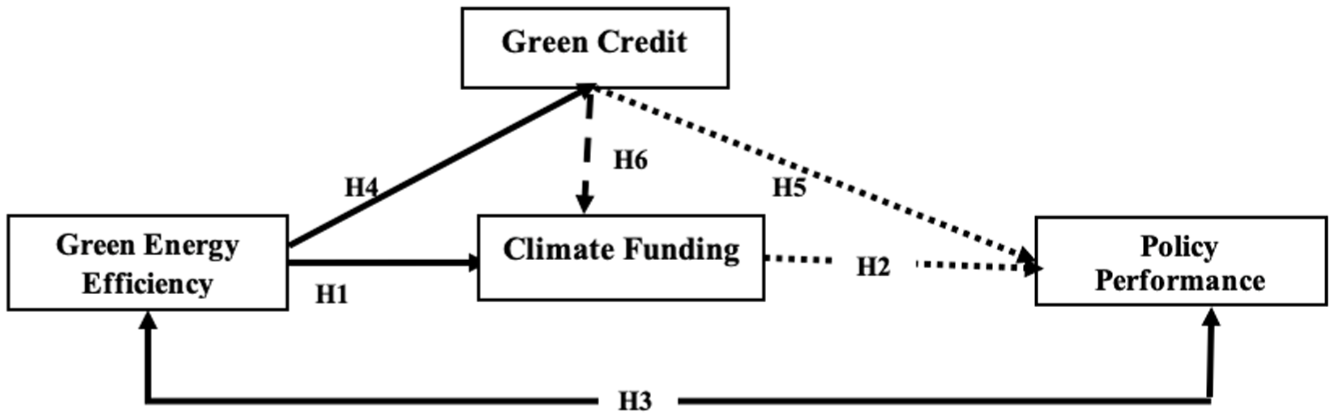
Conceptual framework. This figure illustrates that the conceptual framework of the study, highlights that the proposed relationships between the Green Energy Efficiency (GEE), Green Credit (GC), Climate Funding (CF), and the Policy Performance (PP). Arrows indicate the pathways and hypothesized effects, including GC’s mediation and moderation roles on the relationship between GEE and PP.
Scholars have studied the impact of green funding on the economy across diverse countries and approaches, including Germany, the United Kingdom, Brazil, and South Korea. However our investigation found that China is the primary location for green finance research due to its scale, policy maturity, and active investment in sustainable infrastructure (Lin et al., 2024). This focus is understandable given China’s prominent role in shaping global environmental finance agendas. Nevertheless, addressing global climate challenges requires exploring how different levels of green finance can influence the effectiveness of GEE in diverse national contexts. As (Dyer, 2017). suggests, green finance can serve as a strategic mechanism to promote energy efficiency and mitigate climate change through policy-driven investment frameworks. Environmental challenges have influenced green financial Policy, although their theoretical relevance can be empirically linked with green credit and policy practices (Bai et al., 2024). The paradigm suggests that GEE can be addressed using current methods and objectives of OET concepts of GEE linked with Policy. We theorized that GEE-independent change can affect Policy effectively, as outlined in the framework in Figure 1. The relationship of GEE necessitated climate funding to address new concerns regarding the theory since the Policy for energy efficiency is inclusive (Dyer, 2017). Hence, we hypothesized that;
The second proposed connection between GEE and policy effectiveness in Figure 1 would be novel if SD selection of the variables associated with eco-innovation allowed the mediation of climate funding and PP outcome (Allison, 1994). Climate funding can protect the environment while boosting commercial output. However, climate finance may divert financial resources from other initiatives, thereby slowing industrial production (Bai et al., 2024). Understanding the influence of green finance on industrial productivity is crucial, especially in developing countries with intensive expansion. China is a leading example of green financing (Bai et al., 2024). The step involves the operationalization of GEE and describing model predictability and causality among proposed hypotheses intervention of mathematical conceptualized framework (Sjögren & Wickström, 2019). Rasoulinezhad and Taghizadeh-Hesary (2022) findings indicate that green bonds are an effective way to support green energy initiatives and significantly cut down CO2 emissions. However, it’s important to note that there was no direct cause-and-effect relationship between these factors in the short-term GEE on PP. To foster sustainable economic growth while addressing environmental challenges, governments need to adopt supportive policies that encourage long-term investment in green energy projects. Zhang, Saydaliev, and Ma (2022) suggested a global push for alternative sources of Renewable Energy (RE) and green finance (GF) has sparked a surge in research on these important issue. Zhang, Saydaliev, and Ma. (2022) study employs a cutting-edge panel co-integration and causality model to explore the factors driving the development of green finance in China from 1990 to 2020. It sheds light on how green finance interacts with financial inclusion, particularly through investments made by private firms. With the results indicate that both green finance and financial inclusion (FI) play a crucial role in fostering development, both on a global scale and in more specific contexts (Zhang, Saydaliev, & Ma, 2022). For instance, a 1% increase in RE sources correlates with a .522% uptick in trademark filings and a .1243% rise in private sector investment filings. Additionally, enhancing financial inclusion by .031% boosts trademark and patent activity by .062%. Overall, investment, commerce, and human progress positively influence the relationship we’ve discussed.
Energy efficiency policies, directly and indirectly, impact effectiveness and efficiency, as measured by spatial lags based on proximity matrices, including geographical, social, relational, and technological (Caragliu, 2021). Findings indicate a positive and substantial relationship between GEE and enterprise success. This effect is amplified when CF is extended to additional enterprises that are relationally, socially, and technologically near the treated firms. No correlation was discovered between social, relational, and technical connections and the company’s location. Efficiency is crucial in growing economies, including China, a pioneer in green financing (Caragliu, 2021). Wang, Li, and Razzaq (2023) demonstrated that environmental governance can positively influence technology innovation and institutions, leading to a lower resource footprint. More precisely, the data indicate that environmental governance, institutional quality, and technical advancements are more prominent at higher GEE levels than at lower levels. However, economic growth is a significant and direct source of material footprints across GEE. CF, and PP. Previous empirical findings indicate that environmental governance is essential for sustainable climate resource management. While climate funding is resource-driven for sustainability. Hence, we proposed that;
According to (Wang, Hu, & Song, 2024), research that influences the policies on energy efficiency, specifically the “National Comprehensive Demonstration of Energy Saving and Emission Reduction Fiscal Policy” (ESER fiscal policy). They revealed that in difference-in-difference technique with numerous periods, the analysis concludes that the ESER fiscal policy has dramatically reduced the total factor energy efficiency (TFEE) gap (Wang, Hu, & Song, 2024). Green fiscal policies could close the energy efficiency gap without causing an energy rebound, according to an examination of the effect. These findings shed light on the success of China’s green fiscal policies in promoting sustainability, quality, and efficiency (Wang, Hu, & Song, 2024). The Energy Performance Guidelines for Buildings is a popular policy initiative established by the European Union to address concerns about climate change and energy efficiency (Fuinhas et al., 2022). Most studies from the European nations have concentrated on one or two aspects of energy efficiency policies. To complete past research and address gaps, this study examined the influence of green energy efficiency regulations on energy performance in developing countries relative to government climate funding support. To our knowledge, this is the first study to examine the influence of green energy efficiency measures on the policy performance of low economies. As a result, this study proposed further and analyzed green energy-efficiency policies (Dębkowska et al., 2022). It turns out that the effectiveness of these investments can really differ. However, the comprehensive data were gathered on the results and the funds spent, which created a synthetic efficiency index that shows how much CO2 can be reduced for every EUR 1 invested. It becomes clear that the EU lacks consistent measurements or benchmarks for projects aimed at reducing CO2 emissions. From the broader EU viewpoint, it makes sense to pursue projects that offer the best economic efficiency, regardless of political or geographical factors (Dębkowska et al., 2022). The findings should guide decision-makers in developing reference methodologies and best practices to effectively achieve climate goals, particularly in line with the Energy Performance of Buildings Directive (EPBD). What we really need are standardized measurements and rules across the EU for collecting and analyzing data, along with benchmarks tailored to specific project types (Dębkowska et al., 2022).
Most research on energy efficiency strategies in the housing sector has been undertaken for a specific group of nations. However, we proposed GEE effects on green credit as a significant policy means for financial sectors to support environmental footprint (Song et al., 2024). It is worth considering if green credit policies can fulfill the goals of energy conservation, efficiency improvement, pollution reduction, and carbon reduction (Zhang & Zhou, 2023). Tan et al. (2022), showed that GC policy is intended to be a valuable financial tool for energy conservation and emissions reduction. This strategy would prevent sectors with high pollution, high energy intensity, and overcapacity (known as “two high and one surplus” sectors) from receiving financial support until they improve their performance, which might be demonstrated by energy efficiency. (Bhandary et al., 2021) study suggested a success of climate finance policies really hinges on the criteria we choose to use. Each policy has its own set of strengths and weaknesses. For instance, tools like feed-in tariffs, tax credits, loan guarantees, and national development banks have proven effective in attracting private investment. However, there’s still a lack of solid evidence regarding the effectiveness of national climate funds, targeted lending, disclosure practices, and green bonds (Bhandary et al., 2021). We also face significant gaps in data and research when it comes to understanding the real-world impacts of these climate finance policies, particularly in terms of their environmental benefits and equity implications. When it comes to selecting the right climate finance policies, it’s crucial to find a balance between how well they mobilize resources, their economic efficiency, their environmental integrity, and their fairness (Bhandary et al., 2021).
Bowman and Minas (2019) argues that, the Green Climate Fund (GCF) is an important and potentially groundbreaking addition to the UNFCCC frameworks aimed at boosting financial support for climate change mitigation and adaptation. However, the GCF is grappling with some significant operational challenges, not just because it’s a relatively new international fund, but also due to the impact of U.S. President Trump’s decision to pull the United States out of the Paris Agreement. As a result, the GCF is facing a substantial drop in actual funding contributions, along with governance hurdles at both its Board level and within the UNFCCC Conference of the Parties (COP), to which it ultimately reports. This hypothesis is fulfilling delves into these challenges, referencing the GCF’s internal regulations and its agreements with external parties to show how leveraging certain design features of the GCF could bolster its resilience against these obstacles (Bowman & Minas, 2019). These features include connections with UNFCCC bodies, especially the Technology Mechanism, and improved collaboration with non-Party stakeholders, particularly through its Private Sector Facility. The article argues that strengthening these interconnections would enhance the coherence of climate finance governance and boost the GCF’s capacity to drive ambitious climate action during uncertain times (Bowman & Minas, 2019). Therefore, the study hypothesized that;
GC indicated that the application of China’s Green Credit Guidelines 2012 (GCG2012) increased total factor energy efficiency by 1.21% in “two high and one surplus” industries. Second, the beneficial effect of GCG2012 varies by sector, and it is more robust in sectors with an energy-saving objective, a lower number of state-owned firms, and a higher level of trade openness (Tan et al., 2022). Third, GCG2012 has the potential to impact energy efficiency through three mechanisms: R&D investment, energy mix, and finance limitations. The green credit policy is proposed to be more integrated with other policies, such as climate energy and science and technology. Zhang et al. (2025) studies shows green technology innovation is absolutely essential for China to meet its “carbon peaking and carbon neutrality” targets while also ensuring robust economic growth. To really tap into the benefits of green credit for energy companies, this study looks at the introduction of the Green Credit Guidelines in China as a sort of natural experiment. By employing a difference-in-differences model, this paper explores how green credit policies affect the green innovation efforts of energy firms. The findings reveal that, in comparison to new energy companies that aren’t bound by these policies, the green credit policy significantly boosts the green innovation levels of traditional energy companies. This policy impacts green innovation by tightening financing constraints and promoting the disclosure of environmental information. Interestingly, the positive effects of the green credit policy on traditional energy firms’ green innovation vary; they are particularly strong for state-owned enterprises, those based in eastern regions, companies led by environmentally conscious executives, and those that hold green innovation patents (Zhang et al., 2025). Pan and Lin (2025) studies shows green credit policy (GCP) has become a vital strategy for promoting environmental governance and energy savings. This research dives into how GCP impacts the energy efficiency (EE) of high-polluting enterprises (HPEs) by utilizing a difference-in-differences (DID) model along with data from a Chinese corporate tax survey. It also explores how decisions made by local governments, financial markets, and the public influence the relationship between GCP and EE. The findings reveal that: (1) GCP can effectively boost the EE of HPEs. (2) The positive link between GCP and EE is enhanced by the growth of financial markets and public awareness of environmental issues, while local government regulations tend to have a negative effect. (3) GCP enhances EE through three key pathways: cutting down energy consumption, improving the transparency of environmental information, and fostering technological innovation. (4) In regions characterized by high market activity, significant energy intensity, and large enterprises, the effects of GCP are even more pronounced (Pan & Lin, 2025). By evaluating the outcomes of GCP implementation, this paper provides targeted recommendations for strengthening the green finance system and promoting sustainable development in businesses (Pan & Lin, 2025). This study, therefore, proposed that;
Green energy efficiency (GEE) is critical for sustainable economic growth, especially considering China’s lofty environmental goals (Li et al., 2021). The findings show a considerable improvement in GEE within these areas, driven by advances in green innovation and environmental laws. At the micro level, enterprises in pilot zones have better Environmental, Social, and Governance (ESG) performance and have fewer financial limitations (Li et al., 2021). Green finance policies are more successful in resource-rich and financially efficient locations, indicating that these measures may substantially contribute to sustainable development (Mandel et al., 2022). Green finance policy has a more significant influence on the performance of non-state-owned enterprises (non-SOEs) than on state-owned enterprises (Li & Lu, 2022). However, the micro impacts of green financing policy on the performance of building energy-saving firms outweigh the Policy. It not only assists in understanding the economic implications of green credit policy but also gives corresponding insights for the promotion of green credit policy and the design of energy-saving company growth systems (Li & Lu, 2022). The swift advancement of renewable energy technologies is essential for achieving environmental sustainability (Chen et al., 2025). However, the role of financial tools like green credit in promoting this innovation hasn’t been thoroughly examined. Chen et al. (2025) study looks into how green credit influences the technical innovation of clean energy companies (TICEE) in China from 2010 to 2022, particularly considering how corporate policy catering behavior (CPCB) plays a moderating role. By using a moderated mediation model, the analysis shows that green credit significantly boosts technical innovation in renewable energy firms, with debt structure and corporate innovation serving as crucial mediators. Additionally, the findings indicate that CPCB enhances the positive link between green credit and TICEE, further speeding up innovation (Chen et al., 2025). Statistical analysis confirms that green credit plays a vital role in advancing clean energy technologies, while CPCB improves companies’ responsiveness to policy incentives. These insights highlight the significance of green credit policies in fostering technological advancement and sustainable business practices, offering valuable guidance for policymakers looking to encourage renewable energy innovation and economic growth (Chen et al., 2025). We then proposed that;
Despite extensive research on green finance mechanisms in industrialized economies, the role of green credit and climate funding in policy performance within developing nations, particularly African countries, remains underexplored. This study addresses this gap by providing empirical evidence on the financial mechanisms that support energy efficiency and sustainability goals in these regions. Bai, Wang, and Sun (2025) research shows that green credit policies really slow down how quickly heavily polluting companies can adjust their asset structures. This suggests that these policies have a significant negative impact on how efficiently assets are allocated. On the bright side, green credit policies do help reduce pollution emissions. However, the slow pace at which companies can adjust their asset structures limits how effective these policies are in cutting emissions. When we dug deeper, we found that the main reasons for this slowdown are a lack of opportunities and motivation to make adjustments. Interestingly, our analysis also revealed that this negative effect is even stronger in state-owned enterprises and in companies located in areas with more developed financial systems and stricter environmental regulations (Bai et al., 2025). This study contributes to the literature on green finance and asset allocation efficiency by exploring how green credit policies affect the dynamic adjustment of corporate asset structures. It sheds light on the unintended challenges these policies create for heavily polluting firms, showing that while they do help reduce pollution, they also make it harder for companies to adjust their asset structures efficiently.
Overall, this research provides valuable insights for policymakers who are trying to create strategies that balance environmental goals with corporate needs (Bai et al., 2025). Xu and Lin (2025) this indicates that the impact of green credit on technology has shifted from being minimal in the early days to playing a crucial role in later developments. A closer look reveals that green credit has an N-shaped effect on green technology innovation in the eastern and central regions, while in the western region, it creates a positive U-shaped nonlinear effect (Xu & Lin, 2025). Furthermore, in provinces with low to medium technology, green credit shows an inverted N-shaped impact, whereas in medium-tech provinces, it has a positive U-shaped effect. The analysis of mechanisms shows that the structure of the banking market positively influences green technology innovation in a U-shaped manner, while investments in R&D by companies have an inverted U-shaped effect (Xu & Lin, 2025). Additionally, this article discusses how factors like resource endowment, informatization, fiscal decentralization, industrial structure, and foreign direct investment affect green technology innovation (Xu & Lin, 2025).
Methodology of the Study
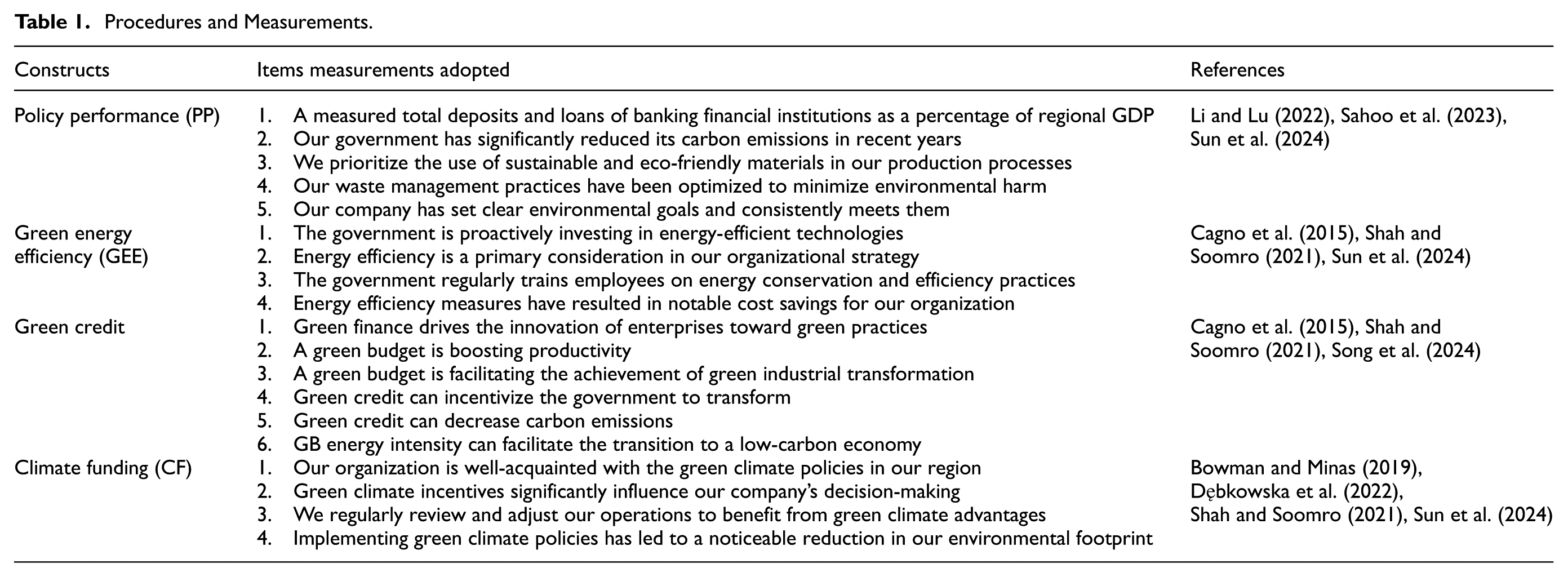
With the approach of promoting an environment and climate change with a progressive pattern of green credit and climate funding. The study recruited environmental sanitation officers across 227 local governmental sectors in six African countries, with an online questionnaire about ecological protection and policy performance (Fernando & Wah, 2017). To achieve this, we purposively focused on six African countries—Ghana, Nigeria, Kenya, Uganda, South Africa, and Tanzania due to their diverse stages of green finance adoption, existing environmental governance frameworks, and varied exposure to climate change-related challenges. These countries represent a spectrum of regional, economic, and environmental contexts across West, East, and Southern Africa, which strengthens the analytical diversity and comparative value of our findings. Environmental sanitation officers are those employed by district and municipal assemblies to ensure sanitation in towns and cities in Africa, they were randomly selected as they are directly involved in implementing and assessing environmental policies, making them ideal respondents for evaluating the effects of green finance mechanisms. Hence, the study employed random sampling techniques with a quantitative approach to address the theoretical and empirical concepts identified in the study. The conceptual framework connected SDT and OET focuses on climate funding and green credit, the principal use of eco-friendly products and services among the Environmental, Social, and Governance ESG to test policy performance (PP). Similarly, we adopted and settled on a procedure according to (Allison, 1994; Clarke & Schythe, 2020) primary data collection approach based on the methodological guidelines, suitable for SEM and algorithmic analysis. Each respondent provided input on all key constructs—GEE, climate funding, green credit, and policy outcomes—enabling a comprehensive assessment of the mediating and moderating effects within government policy systems. To minimize the bias effect, the retrieved information adopted each construct to avoid common method bias. Each of the adopted measures can be found in Table 1.
Procedures and Measurements.
The study also employed the structural equation model (SEM) of Smart-PLS for data analysis. Due to mediation and moderation, we again employed Hayes’s conditional process statistical functions (Bespalyy, 2023; Orgambidez-Ramos et al., 2020). The dataset included indicators of green energy efficiency, energy consumption, and sustainability performance, alongside Environmental, Social, and Governance (ESG) evaluations, correlation metrics, regression results, and predictive measures of policy performance. While methods like regression or path analysis are possible, SEM and Hayes’ conditional process analysis are chosen due to its capacity to test complex interrelationships among variables of interest, which is essential for examining the hypothesized mediating and moderating effects in a single model. These methods suit our study’s structure and help reduce measurement error, making them more reliable for our survey-based data (Okazaki et al., 2020). The Hayes process model further supports this by enabling a robust analysis of conditional relationships, ensuring that findings on green credit and climate funding impacts are statistically sound and reliable (Jun et al., 2022).

In the linear equation, indicated, variable Y is the intercept while GEE represent green energy efficiency. We denoted climate fund as CF, green credit as GC and ε as error term. In the equation 1, the dependent variable is PP representing policy performance. The constant terms are denoted as β1, β2, and β3 for all the individual effects in the structural equation model.
Measurements of Constructs
To develop the measurement scales, the study explored previous knowledge for all the items and measures of constructs examined. Mainly all the items in the construct of policy effectiveness (PE), green energy efficiency (GEE), climate funding, and green credit (Bespalyy, 2023; Ma et al., 2022). Each item was slightly reworded to better reflect the contextual realities of the selected African countries while preserving its conceptual integrity. All items were measured using a 5-point Likert scale, ranging from 1 (Strongly Disagree) to 5 (Strongly Agree), to allow for standardized quantification and enable robust statistical analysis using SEM and regression models. Responses to the individual items of each construct were aggregated to create a composite index by measuring the mean score for all relevant indicators based on procedure consistent with normative SEM techniques to create latent variables and reduce measurement error. Reliability for each construct was tested with Cronbach’s alpha, and all constructs had a reliably acceptable level of internal consistency (α ≥ .70). Table 1 presents a detailed list of all constructs and their corresponding measurement items as used in the analysis.
Dependent construct: Policy performance (PP) is a variety of elements that contribute to the total cost, benefits, competitiveness, intended effects, and environmental impacts (Song et al., 2024; Sun et al., 2024; UNEP, 2022). The procedures for evaluating policy dynamics were based on key sustainability indicators, including the co-benefits of natural energy use and the alignment of policy measures with implementation readiness. Incentives for improving policy performance (PP) in the context of green energy include prioritizing investments in renewable energy, promoting sustainable urban planning, and encouraging cleaner industrial production processes (Chen et al., 2023).
Independent Construct
Green Energy Efficiency (GEE) adopted from the literature (Chen et al., 2023; Song et al., 2024; Sun et al., 2024) focusing on carbon emission increased fossil fuel intake; underlining ongoing use of resources, recycling, or repurposing environment; how the renewable energy sector’s goals of reducing waste and optimizing resource use. Renewable energy systems, such as solar panels, wind turbines, and geothermal turbines, can be built mainly for recyclability and reusability, harmonizing with the circular economy paradigm (Chen et al., 2023).
Mediator/Moderator: Climate Funding and Green Credit
Green Credit promotes energy efficiency by optimizing resource allocation and providing social control. GC maximizes resource allocation at both the macro and micro levels to fulfill the dual objectives of high-quality economic development and emission reduction. On the one hand, the “dual carbon” aims to require micro-enterprises to participate in clean energy production programs that diminish corporate earnings (Cao & Niu, 2022; Song et al., 2024; Sun et al., 2024). In contrast, according to SDT, climate funding has seen an influx of new concepts, followed by several climate funding activities, such as the United Nations Sustainable Development Summit, which has progressed from addressing environmental concerns to dealing with global geopolitical challenges (Shi et al., 2019). The scale adopted is a Likert score from 1 strongly disagree to 5 strongly disagree (Awang et al., 2016).
Control Variables
The study advancement of policy effectiveness toward green energy efficiency often referred to the evolution process of governments, industries, and innovation. Therefore, promoting the GEE from participants could consider the environment and their demographics, such as gender, education, setting, energy structure, and environmental regulation. All are taken into account in the regression equation analysis algorithms.
Although this study draws on Sustainable Development Theory (SDT), it focuses only on the environmental dimension. Economic and social aspects were not measured due to the study’s specific aim of assessing environmental policy tools. Future studies could expand this scope to fully reflect all three pillars of SDT.
Results and Analysis
Table 2 shows a significant difference in policy efficacy across developing countries, with a standard deviation coefficient 2.34 for all controls and main variables. Other variables have standard deviation values below 1 except GB (1.04). The core variables exhibit strong correlations, and there are no severe multicollinearity issues among variables, ensuring the viability of future studies. Education shows a higher average of 2.88 against gender and age (1.94 and 2.00), respectively. The significance of socioeconomics could be associated with most local government environmental officers being enlightened about the constructs.
Zero-Correlation Matrix.

Correlation is significant at the .05 level (2-tailed).
Correlation is significant at the .01 level (2-tailed).
SPSS was used to estimate regression indices and the significance level of proposed hypotheses. This study uses all the benchmark regression models to analyze complete sample data of (n = 412) environmental officers from the local government entities (municipalities) between April 2023 to November 2023. At this point, we intended to investigate the effects of improved energy efficiency on PP better (Wu et al., 2023). The regression findings in Table 3 show varying coefficients of PP connections across sub-sectors. GEE paucity has a considerable positive impact on PP Policy. However, findings show that Hypothesis 1 tested the direct relationship between GEE and policy performance, which was statistically significant (see Table 3), aligning with previous findings that energy efficiency requires financial support to impact policy outcomes effectively (Diesendorf & Hail, 2022). Hence, with a coefficient of .164 at a (p < .005**). Hypothesis 2 tested the indirect relationship between GEE and CF, which was found statistically significant, and found that energy efficiency requires CF mitigation to impact policy outcomes effectively. Table 3 indicated (β = .211, p < .005**). Hypothesis 3 tested the direct relationship between CF on PP, which was also found statistically significant (β = .233, p < .005**), that energy efficiency confirms credit financial support to impact policy outcomes effectively. CF is required at .233 is significant, indicating a low-level of government policy in energy efficiency across African regions. Hypothesis 4 examined the relationship between Green Credit (GC) and Policy Performance (PP), and the results revealed a statistically significant positive effect, supporting the notion that energy efficiency improvements require robust government policy interventions. As shown in Table 3, Green Credit positively influenced policy performance (β = .239, p < .05). Similarly, Climate Funding (CF) demonstrated a strong and significant effect on Policy Performance (β = .505, p < .005), confirming Hypothesis 5 and aligning with previous research emphasizing the importance of climate finance in advancing energy policy effectiveness.
Hypotheses and Path Coefficient.

Notes. PP = policy performance; CF = climate fund; GC = green credit.
p < .05, **p < .01.
We also found from Table 3 no collinearity issues as the threshold was below .5 (Farrar & Glauber, 1967). Multicollinearity happens when a multiple linear regression analysis includes several variables that are not only significantly correlated with the dependent variable but also with each other (Shrestha, 2020). This can lead to some of the important variables being statistically insignificant, which can really complicate your analysis (Shrestha, 2020).
However, the coefficient for green credit is .553, which is significant to PP, indicating a meaningful association between increased energy efficiency and green credit development. The developing countries exhibit a geographical pattern of “inhibiting—promoting—not significant.” This finding highlights a substantial opportunity for developing countries to enhance their energy efficiency regulations. Given the current scenario, much is needed for climate funding policy toward green energy, strong technological capabilities, sophisticated manufacturing methods, and high resource utilization efficiency, so the rebound effect dominates (Wu et al., 2023).
At this level, improving GEE could reduce energy use, promoting the development of a green policy with a variance of R2 = .56. The effect of increased energy efficiency on Policy has yet to be reflected, most likely because different settings have different climate policies in fossil energy resources and are located in less developed countries, so their economic development does not rely heavily on energy. Furthermore, since the layout is primarily an environmental issue relative to climate change that prioritizes preserving environmental energy efficiency, improvement and PP are mutually exclusive.
Analysis of Mediation and Moderation
To estimate the threshold model, Hayes’s MICRO process approach is used to test for the presence of a mediation (Hayes, 2013). After 5,000 iterations of Bootstrap self-sustaining sampling, the findings indicate that in the threshold model test using energy efficiency as the explanatory variable, the GEE level threshold considerably exceeds the single threshold but fails the double and triple threshold tests. On this basis, the regression model with a single-out CF is established as insignificant, and the regression results are produced as shown in Table 4. Partial mediation was established, indicating how developing countries with low green energy have no CF in their policy performance. The study mediation could be associated with a lack of international green credit policy to evaluate the climate financial reform and innovation regulations on increasing population for energy efficiency.
Mediation of CF on PP.

Note. PP = Policy Performance; CF = Climate Fund; GEE = Green Energy Efficiency.
p < .05, *p < .01.
When energy efficiency is lower at the CF level of inverse effects −.275, the coefficient of energy efficiency of .4271 on PP is 1.646, which means that GEE at a low level hinders the development of green energy as a whole. As demonstrated in Table 4. At the threshold where Global Economic Efficiency (GEE) emerges as a valid component of development, GEE’s effect on green policy growth is significant at a statistical p < .05. It should be noted that GEE’s coefficient on Policy Performance (PP) is inverse. In other words, the presents of an accompanying policy, GEE can lead to impactful efficiency. Hence, in developing economies, energy policy can frame energy efficiency into sustainable economies. GEE significantly stands at the 1% level, even with specifying controls that are common determinants of development. Thus, climate finance may certainly expedite urban and rural energy policy efficiency.
Table 5 indicates the moderation obtained from Hayes’s micro-process conditions, as shown in Figure 2 of the interaction effect. The GEE model fits well with future policy optimization. However, the lack of policy is an obstacle. The rebound impact from energy efficiency improvement has not yet peaked, resulting in the adverse effects of green credit for economic growth being thwarted. Hence, Figure 2 indicates that GC dampens the positive effect of GEE and PP. The study found a consistently positive and substantial regression coefficient with limited variance, confirming the long-term validity of the outcomes. The dampening effect of green credit on GEE’s direct relationship with policy performance may reflect the financial sector’s prioritization of resource allocation for broader sustainability projects over direct efficiency measures.
Moderation Effects of GC on PP.

Note. PP = Policy Performance; GC = Green Credit; GEE = Green Energy Efficiency.
p < .05, *p < .01.

Moderation GC dampens a positive relationship between GEE and PP. This figure reports that the moderation effect of the Green Credit (GC) on the relationship among the Green Energy Efficiency (GEE) and the Policy Performance (PP). The interaction indicates that the GC dampens the direct positive relationship between GEE and PP, as shown by the dotted line, also suggesting GC’s influence in altering GEE’s impact on policy effectiveness.
Although ESG (Environmental, Social, and Governance) was introduced as part of the conceptual framing, this study primarily focused on the environmental component through green energy efficiency and climate-related finance. However, the findings contribute indirectly to ESG by highlighting the governance role of policy instruments and the potential for integrating social dimensions in future models. Subsequent research could build on this by exploring how ESG-based frameworks more holistically guide sustainable policy evaluation.
Discussion
To evaluate sustainable pathways on GEE effects on climate funding towards green policy efficiency. The main research question is: How can GEE clout climate and green credit for policy optimization? Based on OET empirical established from sustainable development, the study found that all the proposed hypotheses were significant except H1, which states that green energy efficiency (GEE) is positively associated with climate funding. As a lacuna of this study, financial institutions failed to implement green policies across developing countries and regulate sustainable technology. Data findings reveals a low significant GEE directly on policy performance. It inured to governments and organizations must realign available climate funding and structure resources to provide policy on energy goals. To this end, climate funding is an innovation that requires broader consultation and R&D for sustainability governance that a climate fund collaboration with independent financial institutes in terms of tax levies and subsidies to support and encourage the efforts towards green energy policy. Which is the future option for attaining GEE.
Therefore, the GEE at lower coefficient could be related to policies absence, including institutional rearrangement. Many emerging nations have favored economy-centered development on GEE, yet it has resulted in significant economic and social issues while delivering an economic miracle. Since 2014, For example, China’s earlier urbanization policies before 2014 emphasized rapid industrial expansion, which increased energy demand and environmental degradation despite improvements in economic performance. This policy imbalance eventually prompted a strategic shift: in 2014, China introduced a people-centered urbanization policy aimed at reducing energy overuse and promoting sustainable urban development (Feng et al., 2023). Further (Feng et al., 2023) established that the New-Type Urbanization Policy (NUP) in China resulted in observable changes in GEE, wherein pilot towns recorded an average energy inefficiency decrease of .060 in comparison to non-pilot towns. Innovation in this context means new policy instruments and mixed financing instruments, for example, local green bonds, public-private partnerships and infrastructure-oriented climate funds, to make urban environmental governance more effective and speed up energy efficiency results.
Although Hypothesis 1, which posits a direct positive effect of GEE on Climate Funding (CF), was not statistically supported, the mechanism analysis still highlights the broader relevance of GEE. (Chen et al., 2023), found that in China, GEE influences CF indirectly through innovation and alignment with SDG goals. While China’s centralized governance and financial infrastructure enable rapid policy integration, many African countries operate under more decentralized systems. Thus, this study contributes by examining how GEE, CF, and GC interact within emerging economies that face institutional fragmentation, financial constraints, and diverse governance models—offering insights that complement and extend the findings from the Chinese context (Chen et al., 2023). The results highlight the critical significance of efficient resource utilization in lowering carbon strength. In contrast, development and industrialization are associated with increasing carbon emissions due to increased fossil fuel use. Diversification of energy utilization across the globe is imminent. Policy concepts include incentivizing the adoption of a rounded economy, prioritizing renewable energy investments, encouraging a sustainable development agenda, and supporting green Policy for industrial processes. This study emphasizes the significance of green credit performance, renewable energy uptake, and responsible resource management in the worldwide quest for reduced carbon intensity and increased environmental sustainability (Chen et al., 2023).
Furthermore, the study proposed H2: GEE is positively associated with Green Credit (GC). Consistent with this study are the financial tools available in developing countries to assist green energy funding, including the National Clean Energy Fund (NCEEF; Hultman et al., 2012). The green fund was established to assist economic and social development and small businesses engaged in sustainable energy technology by liaising with financial institutions from groups and organizations. Since its inception, the fund has been actively engaged. Most of its efforts since 2011 have been directed at raising extra funds to support the development of renewable energy technologies (Hultman et al., 2012). Green credit is essential for improving energy efficiency and promoting environmental protection through credit instruments. According to Equator Principle studies, GC adoption significantly improved GEE, thus, international green credit policy (Li & Lu, 2022). The GC significantly impacts increasing GEE levels in many developed nations, state-owned enterprises, low-tech entities, and highly polluting sectors.
According to the mechanism analysis, GC indirectly supports GEE by improving resource allocation and alleviating financial limitations (Li et al., 2023). Luo et al. (2023), a green credit strategy is the key for financial firms to achieve their environmental commitments for green credit policy. It is worth considering if green credit policies can fulfill the goals of energy conservation, efficiency improvement, pollution reduction, and carbon reduction. The heterogeneous findings suggest that the energy efficiency of large-scale, light manufacturing, resource processing, and clean sectors is more strongly affecting GEE. Green credit policies can mitigate environmental energy challenges while also reducing pollution and carbon emissions (see Figure 3). Although the constraint impact of green credit policy has successfully lowered energy intensity, it also causes specific sectors to suffer a vicious cycle of “enhanced financing constraints-weakened innovation impetus,” making it challenging to improve green total factor energy efficiency (Luo et al., 2023). Therefore, GEE is positively associated with green credit for fulfilling corporate social responsibilities (Wen et al., 2021; Zhang & Zhou, 2023; Zhao et al., 2023).
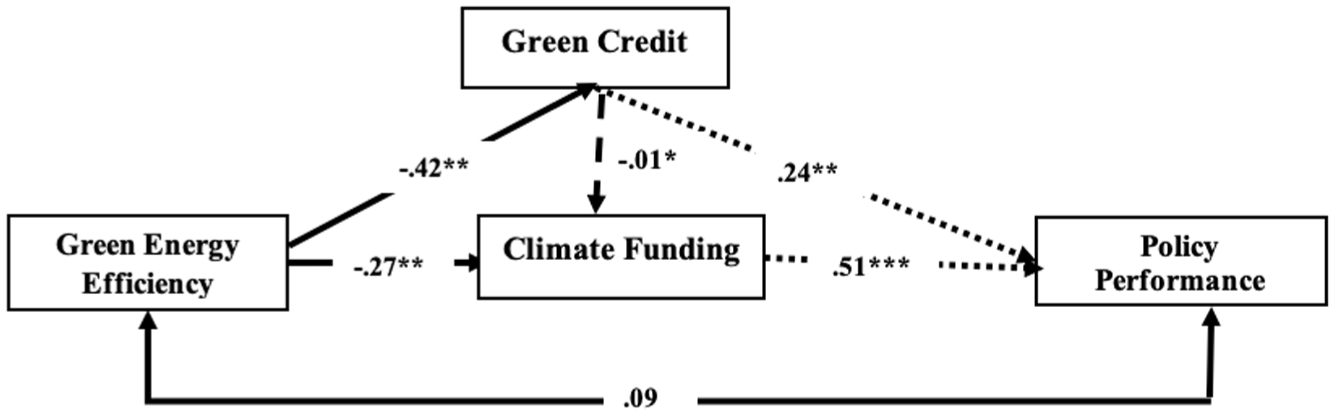
Path coefficient and regression weight. The figure display the path coefficients and significance levels between the constructs in the structural model, including the GEE, GC, CF, and the PP. Solid lines indicate significant paths with coefficients and p-values. While the line which are highlighted in doted represents a non-significant path, providing an overview of direct, indirect, and moderated relationships tested in the study.
In addition, hypothesis three stated that CF is positively associated with PP. Consistent financial support toward climate fund is significant. Consistently, the previous study assessed the possibilities of a Green Infrastructure Policy Assessment Tool (GIPAT) by analyzing national planning guidelines from all the UK states. National planning advice is crucial in developing and implementing green infrastructure policies in statutory development plans and decisions. Hence, we tackle the variable of CF planning focused on individual initiatives rather than a comprehensive review of policy performance (Scott & Hislop, 2024). Similar studies from (Diesendorf & Hail, 2022) found the rapid drive in a transition from fossil fuels to carbon-free energy sources and ensure demand decreases; climate funding is urgently needed in order to gismo four strategies: (i) technology change, that is, implementing the growth of zero-carbon energy production, end-use energy efficiency, and “green” energy carriers, together with ongoing R&D on CO2 elimination; (ii) reducing climate impacts; (iii) reducing energy intake through social and behavioral changes; and (iv) improving human wellbeing while cumulative social justice. Also, CF is associated with GEE to ensure improved well-being with climate change challenges. The latest money theory shows how monetary sovereign governments, using their fiat currencies, can provide the required CF without financial restrictions while limits arise from their economies’ productive capacity. The energy transition might be partially supported by a significant transfer of resources from monetary sovereign nations in the global North to the global South, financed by currency issues (Diesendorf & Hail, 2022). Mallaburn and Eyre (2014) also confirm this hypothesis’s statistical significance relative to CF and PP. The Green Deal is a finance-driven energy efficiency initiative, which is statistically significant for green Policy. Initially focused on consumers, the plan will expand the initiative to include the commercial and public sectors (Mallaburn & Eyre, 2014).
Ideal governments working towards SD and SDG must integrate mediators and moderators to achieve green policy performance. The study hypothesized that GC has a positive relationship with policy performance. CF also has a positive relationship with policy performance. The statutory regulation of energy is also a factor in the ongoing GEE for PP. When it comes to generating GC and CF, the political climate in the nations must exhibit a high level of partial collaboration between the stakeholders and governments, among other policy performances required to achieve these CF and GC. This is also reflected in many developing countries’ regulatory frameworks/policies. Using renewable procurement obligations (RPOs) is a good instance of this concept. State electricity regulators (SERCs) believe that low-interest financing of capital costs significantly contributes to the precipitous decline in solar module prices over the past several years (Destek & Sinha, 2020). Many international investors must include energy in part of the stock market as a single entity, which is formidable for investment (Brito Cedeno & Wei, 2024). Green energy sources are unevenly distributed since this opts for spread across the environment stream. This market fragmentation is exacerbated because it is dispersed across the economies and policies. Huang et al. (2024) study that optimizing nuclear energy technology budgets is critical to GC’s goal of creating a cleaner environment for future generations. By distributing resources, we can reduce pollution, protect ecosystems, and push sustainable growth, ushering in an age of unsurpassed environmental synchronization. Previous study examines the GC and CF impact of green energy expenditures on CO2 emissions in the top ten economies with the most significant nuclear energy R&D budgets (the United States, South Korea, Russia, China, France, Japan, Canada, the United Kingdom, Germany, and India; Huang et al., 2024). Conversely, Huang et al. (2024) study introduces a unique method for policy adoption across borders, which allows each country to provide global but nation-specific perspectives on the relationship between GC and CF policy accentuation.
Our study partial mediation due to non-existential CF for policy optimization. Furthermore, research from (Wu et al., 2023) found that China is currently in a critical period of industrial structure upgrading and energy structure transformation, similar to the GEE mode, which has become significantly upgraded for others to follow; however, the driving power of the new economic growth mode has not yet been fully incubated, for economic growth and green policy regulations (Wu et al., 2023). In comparison, the moderation of GC dampens a positive relationship between GEE and PE. The acceptable level of technology fails the policy and out-performance tests, and there is an inverse statistical effect between GC and CF to PP implementation. OET sustainable development has emerged as a strategic ground response to worldwide environmental issues and green Policy. Green credit is a policy innovation that supports sustainable economic growth and industrial green transformation (IGT; Diesendorf & Hail, 2022). Findings revealed a trend from negative to positive moderation and mediation. This shows that environmental control has a negative moderating impact, similar to (Diesendorf & Hail, 2022) and a partial mediation consistent with (Li & Lu, 2022). As environmental restrictions tighten, green credit’s contribution to SDT and OET will ensure substantial logical reasoning. The intermediate mechanism test shows that green technology innovation and marketization have a partial intermediary function (Diesendorf & Hail, 2022). Green credit is more significant in encouraging industrial green transformation in practices with more robust green finance development and government improvement (Diesendorf & Hail, 2022). Aligning green finance policies with SDG targets could accelerate Africa’s progress toward affordable and clean energy (SDG 7) and climate action (SDG 13), positioning the continent as a leader in sustainable finance adaptation.
Conclusion
This study contributes to the green policy with green credit and climate fund by providing novel insights of African setting. The findings evaluated the potential of GC and CF as strategies for enhancing policy performance of sustainable development goals. Considering that this paper established an equation framework integral of ecology and SDGs, the analysis unearths that GEE has a low statistical difference with CF and policy performance, this could be associated with scarce green finance mechanism. Our study associated GEE and GC improve policy growth for developing countries and energy conservation through GC instruments. However, the linear regression outcome found a varied relationship of GEE on GC and PP but statistically significant. Also, a statistically significant relationship was established between GEE and CF, while green credit and policy performance was not significant. Likewise, the intervention of CF was partially mediated, in light of GC dampens a positive connection between GEE and PP. Overall, GEE enrichments are now the light of expansion from an ecological implication and sustainable policy growth perspective. However, as energy efficiency improves, a hampering impact eventually lessens. Therefore, GC is part of environmental regulation to lessen climate change challenges and support standard financial institutions.
Developing the nation’s GEE sectors will increase resource support through GC and improve environmental constraints; technological advances and GC levels can relieve the difficult energy policy position. The present piece outlines policy implications based on a theoretical framework. Firstly, the government is determined through OET to improve its efforts to transform the green energy capacity while encouraging GEE policy. Given the existence of climate funding regulations resulting in a rebound effect, it is critical to tailor the GEE structure to the distinct properties of various energy sources and the unique characteristics of different areas. In line with SDT and OET, optimizing changing ecological conditions to meet future environments is critical. Further, there is potential to improve energy efficiency by using green logic sources to meet the SDG’s implication on the dynamic model. Efforts should be made to extend the scope and model of OET demographics, such as in hydropower settings and solar energy location demand countries. Specific area environments demand increasing GEE patterns by implementing administrative and energy mechanisms such as energy pricing, taxes, and subsidies. Policymakers could enhance green credit accessibility to foster a more inclusive framework for energy efficiency, notably by tailoring finance policies to local organizational needs within African economies. This could include targeted incentives for green innovations to reinforce policy performance outcomes.
Secondly, we encourage GC institutions, and GC policy will have “penalty effects“ on companies and enterprises to engage in eco-friendly innovations. Research organizations should increase their efforts to promote CF’s commitment to green technology. At the same time, GC should use unique technical developments and management applied through OET institutional collaborations. Simultaneously, it is critical to prioritize cultivating “penalty effects” of appropriate green Policy on climate funding and financial performance, polluting firms towards green credit skilled development and resulting in a synergistic convergence of positives on the value of the environment. This will ensure collaboration and flexibility in the industrialization process for green policy performance. Furthermore, enhancing an eco-friendly environment with green innovation firms can effectively lessen the constraints inhibiting enterprises’ efforts to embrace eco-friendly changes.
Thirdly, marketing financial sectors can remove obsolete capacity and reorganize excess productivity in high-energy-consuming sectors. The regulation through OET will rope in banks and financial institutions GEE supporting policies toward green credit policy, minimizing the counteractive rebound impact of energy policy. Furthermore, improving the GC integration of OET towards SDT, GEE, and CF and today’s green Policy is novel to minimize resource waste and environmental conservation while providing GC for environmentally friendly businesses such as renewable energy and policy performance.
Finally, it is critical to maintain an adequate amount of CF and GC systems. Theoretically, this study found significant GC and CF level collaboration among stakeholders to meet the reality of green Policy, avoiding the traps of insufficient Policy and consistent with GC on the financial performance of construction energy-savings enterprises (Li & Lu, 2022). We expanded OET to green energy from industrial and economic growth. GC may help optimize GEE structures and concentrate on financial institutions to increase comprehensive environmental efficiency and behaviors. Meanwhile, GEE is the basis for improving GC and CF sustainability, but it also increases the possibility of meeting SDGs for green policy optimization. Improving GEE to profitable and secure prospective CF and GC can significantly lower credit financing disparities and promote long-term prosperity. Future research could expand the sample size or apply similar models across different regions to validate these findings, further enriching our global understanding of green finance’s role in environmental policy. As this study employed convenience sampling due to logistical and access constraints, the sample may not fully represent the broader population of environmental officers. This limitation should be considered when interpreting the findings, and future studies could benefit from using probability-based sampling techniques to improve external validity.
Footnotes

Ethical Considerations
The researchers diligently followed the guidelines outlined in the Helsinki Declaration regarding human research, ensuring the utmost adherence to global standards of ethics in handling participants’ information. Before their inclusion in the study, all participants provided explicit consent to voluntarily participate in the survey. This ensured that the study was conducted with the highest regard for ethical considerations and the well-being of the participants.
Consent to Participate
Informed consents from all those who participated in the study with human subjects were duly taken. The study was conducted following ethical standards and maintaining confidentiality. Also, their privacy was protected.
Author Contributions
Syed Muhammad Sikandar conceived and wrote the main manuscript. Sayibu Muhideen and Abdul-Fatahi A. K. Abubakar performed the data collection and refinement. Syed Muhammad Ali designed the methodology, and did the analysis. Zameer Hassan reviewed and edited the paper. All authors have read and agreed to the published version of the manuscript.
Funding
The authors received no financial support for the research, authorship, and/or publication of this article.
Declaration of Conflicting Interests
The authors declared no potential conflicts of interest with respect to the research, authorship, and/or publication of this article.
Data Availability Statement
This study’s data and materials are available upon request. Researchers can contact the corresponding author for dataset or material access. The study encourages research repeatability and transparency.