




Abstract
This study has made an attempt to expand on existing research on workforce diversity by analyzing its effects on employee engagement (EE) and employee retention (ER). It also aims to understand the relationship between job satisfaction and employee performance. The study specifically examines the influence of organizational climate (OC) on the specific outcome. Data was collected from 422 experts working in the IT and ITeS industry. A multi-phase analytical methodology was employed. The variables of workforce diversity were initially discovered using exploratory factor analysis (EFA), which generated five important factors: the benefits of a diverse workforce (BDW), recruitment and selection (RS), orientation, training and development (OTD), and conflict management (CM). To validate the generated factors confirmatory factor analysis (CFA) was used, and structural equation modelling (SEM) was used to evaluate the impact of the identified variables with EE and ER. The results show that RS, OTD, CM, and BDW when considering the importance of diversity, significantly affect the EE and ER. Additionally, the pathways connecting OTD and CM with EE and BDW, OTD, and CM with ER were found to be significantly mediated by OC. This study contributes to both theory and practice by signifying that workforce diversity has an impact that goes beyond traditional indicators of job satisfaction. Inclusive hiring, well-structured training programs, resolving disputes positively, and encouraging more diversity policies can all work together to enhance employee engagement and retention and build a long-lasting workplaces in the IT and ITeS industry. The studies may be expanded in the future by looking at the interaction effects of diversity dimensions, by adding more mediators like knowledge management, and using cutting-edge analytical techniques like artificial neural networks (ANNs). It is also recommend to apply random sampling more widely to improve generalizability across organizational contexts and industries.
Introduction
Workforce Diversity has attracted the interest of researchers in the recent decade. It has multiple dimensions. Most of the research in this area focuses on the perceptions of employees from peripheral groups, including foreign workers, women, individuals with disabilities, the elderly, those with lower educational attainment, and migrant labourers. Generally, such employees experience higher levels of job dissatisfaction compared to other workers in their organization (Mandemakers et al., 2024). In the present business landscape, workforce diversity has gained considerable importance as a pivotal factor influencing employee commitment, productivity, and satisfaction (Dongrey & Rokade, 2023; Mansoor, Farrukh, & Lee, 2021).
Diversity is intricately tied to the organizational climate. This not only encompasses the broader cultural fabric of an organization but also the specific climate of diversity and inclusion within it (Goyal & Shrivastava, 2013). A plethora of research has underscored the significance of the perceived diversity climate and its positive correlation with employees’ organizational loyalty, highlighting the mediating role played by perceived organizational support (Jauhari & Singh, 2013). The need for fostering diversity awareness has been well emphasized. Organizations are promoting a more diverse workforce and bringing attention to the dynamics of age, diverse beliefs, and leadership skills in this context (Turi et al., 2022). The concept of diversity also includes discriminating behavior of leaders based on employees’ gender (Silver et al., 2023).
Understanding the intricate interplay between workforce diversity, employee retention, and engagement is thus vital for organizations aiming to create inclusive and thriving work environments. As demographic shifts, globalization, and evolving societal norms continue to shape the modern workforce, businesses are compelled to navigate the challenges and opportunities presented by a diverse employee base. A positive mediating role of diversity climate between diversity perception and job satisfaction as well as employee commitment has been well established in the extant literature (Mansoor, Tran, & Ali, 2021; McKay & Avery, 2015). Diversity increases creativity, enhanced problem-solving capabilities, and a broader range of perspectives. It contributes to a competitive edge for organizations. However, to fully capitalize on these advantages, organizations must recognize and address the complexities that arise in managing diverse teams. The significance of diversity initiatives is evident across various sectors, as evidenced by studies within the IT industry, which emphasize the importance of positive perceptions of diversity initiatives in enhancing organizational performance, particularly emphasizing the significance of gender-inclusive measures and their influence on perceived performance benefits (Kundu & Mor, 2017). Simultaneously, the healthcare sector, particularly the nursing field, faces significant challenges related to workforce diversity, necessitating intentional actions, measurement, and the use of incentives to improve diversity and retention rates (Rotenstein et al., 2021; Myers & Dreachslin, 2007). It is critical to foster inclusion and perceived organizational diversity, highlighting their substantial impact on turnover intention and employee engagement, and emphasizing the need for effective diversity management strategies (Gupta & Gomathi, 2022).
Organizational climate, characterized by the prevailing attitudes, behaviors, and values within an organization, plays a pivotal role in shaping the experiences and perceptions of employees. An encouraging and inclusive organizational climate can create a sense of belonging and psychological safety for employees from various backgrounds, thereby positively influencing their retention and engagement. Conversely, an unsupportive or discriminatory climate can lead to feelings of alienation, decreased job satisfaction, and ultimately, higher turnover rates among diverse employees. Although existing literature on how workforce diversity and organizational performance are related presents contrasting findings, it emphasizes the need for context-specific and comprehensive research to draw more conclusive inferences (Makhdoomi & Nika, 2018). Therefore, understanding how organizational climate mediates the relationship between workforce diversity and employee outcomes is significant in creating an environment that promotes all employees’ full participation and contribution.
The critical role of diversity management in cultivating employee engagement underscores its potential to foster a culture of fairness, respect, and appreciation within organizations while also highlighting the risks posed by job insecurity (Alshaabani et al., 2021). As the modern workplace continues to evolve, a nuanced understanding of the intricate interplay between workplace diversity, organizational climate, and employee retention and engagement is critical for cultivating inclusive and sustainable work environments that promote both individual and organizational success.
Significance of the Study
In the extant literature, there has been little work in the fields of workforce diversity and its impact on employee retention. Studies by D’Netto and Sohal (1999) cover the impact of workforce diversity on productivity. Similarly in a few studies, specifically in the Indian context, financial measures, gender diversity, organizational performance, and employee perspective have been highlighted (Kundu, 2003; Kundu et al., 2019). There was a need to empirically test the impact of HRM practices when implemented with due consideration to how workforce diversity affects employee engagement and retention. Since there is a dearth of studies in this area as most of the studies are limited to job satisfaction (Mansoor, Farrukh, & Lee, 2021).
Research has consistently shown that HR practices aligned with diversity and inclusion significantly shape employee outcomes. For instance, inclusive recruitment, training, and conflict management not only improve fairness but also enhance work engagement. Luu et al. (2019) highlight that addressing employee diversity directly fosters higher levels of engagement by creating a supportive and equitable environment. Similarly, Downey et al. (2015) demonstrate that well-designed diversity practices and inclusive climates play a critical role in strengthening trust and engagement among employees.
Research Questions and Objectives
Research Objectives
The study also reiterates and reconfirms the mediating role of organizational climate in workforce diversity management, employee engagement, and employee retention.
Based on the above problem, the study drafts the following research question.
To address the above research, question the following objectives were constructed
Research Objectives
To examine the influence of recruitment and selection, orientation, training and development, conflict management, and workforce diversity management on employee engagement.
To analyze the influence of recruitment and selection, orientation, training and development, conflict management, and workforce diversity management on employee retention.
To evaluate the role of the benefits of a diverse workforce in enhancing employee engagement and employee retention.
To investigate the mediating effect of organizational culture on the relationship between HR practices (RS, OTD, CM, BDW, MGT) and employee engagement.
To explore the mediating effect of organizational culture on the relationship between HR practices (RS, OTD, CM, BDW, MGT) and employee retention.
Theoretical Underpinning of the Study
The theoretical background of this study is Resource-Based View Theory (RBVT). The fundamental concept of RBVT is that an organizaitons success in the terms of performance, productivity, profitability etc. depends on its resources. Earlier such resources were largely tangible (Wernerfelt, 1984) but in the modern days those resources have been intangible like sustainable efforts, green business and diversity (Li et al., 2024; Veronica et al., 2020; Wickham, 2025). In the context of Hospitality sector of UAE, Khassawneh and Mohammad (2025) determined that diversity positively affects the organisational performance. The other variables taken in the study were “Training” and “Performance Appraisal.” Similarly, balanced male female ratio (gender diversity) leads to better form performance (Ferrary & Déo, 2022). However, the research is scant in the field of diversity using RBVT, this was one of the motivations that led us to investigate it further with a comprehensive HRM diversity framework.
Literature Review
Workplace Diversity and Organizational Climate
The premise built upon extant literature on Workforce Diversity (WD) indicates that WD positively influences employee retention and engagement, especially when supported by an inclusive organizational climate. A welcoming and inclusive climate ensures that diverse employees feel valued, enhancing overall retention and engagement (Eusebius & Chukwudi, 2023). A supportive organizational climate enhances the positive effects of workforce diversity on employee retention and engagement. Prioritizing diversity and inclusion foster retention and engagement, creating a more productive work environment (Downey et al., 2015). Diversity and inclusion practices foster an innovative organizational climate, emphasizing the role of inherent and acquired workforce diversity in promoting innovation (Chaudhry et al., 2021). Organizational practices significantly impact workforce engagement, surpassing work attributes and supervisory support. The broader organizational context influences employee engagement, challenging the assumption that work engagement alone drives it (Schneider et al., 2017).
A helpful and diverse climate reduces turnover intentions and task conflict while increasing perspective-taking. Cultural distance moderates the relationship between diverse climate and “perspective taking,” emphasizing the importance of a diverse organizational climate that is encouraging, especially in racially diverse work environments (Seriwatana, 2021). Diversity climate shapes employees’ perceptions of diversity and discrimination eradication. It varies based on the community’s diversity levels, emphasizing the pivotal role of the organizational climate in shaping retention and engagement within a diverse workforce (Pugh et al., 2008). Workforce diversity’s impact on employee retention and engagement is moderated by the organizational climate. Community diversity influences diversity climate perceptions, complicating the relationship between workforce diversity, organizational climate, and community dynamics (Yadav & Katiyar, 2017). Organizational climate plays a key role in optimizing employee performance, hence, a holistic approach that includes factors like workforce diversity, employee retention, and engagement, working with organizational climate, is crucial (Asiimwe et al., 2023). Work engagement in educational institutions is influenced by perceived organizational support and the organizational climate. This shows the importance of these factors in fostering employee commitment and engagement (Köse, 2016). Workplace diversity has a positive correlation with leader resilience across diverse age groups, genders, and functions. This highlights the nuanced dynamics of workforce diversity, suggesting the need for further research (Rasool & Fatima, 2022).
Workplace Diversity and Employee Retention
Fostering a supportive diversity climate and organizational backing lowers turnover rates, highlighting their vital role in retaining a diverse workforce. Prioritizing empowerment and inclusive environments moderate the impact of workforce diversity on employee retention and engagement, underscoring the crucial role of organizational climate (Ojih et al., 2023). Especially mid the pandemic, the perceived work environment and organizational support significantly shape workplace diversity and inclusion, impacting employee retention. Advocating resilient human resource strategies, the focus is on employee well-being and engagement, stressing the importance of fostering diversity and inclusivity in the workplace (Rodprayoon & Maj, 2021). HR strategies also rely upon effective talent management. Sustainable collaboration TM can be a long-lasting approach to serve this purpose. However, diversity poses a significant challenge in the implementation of collaborative initiatives (Chew et al., 2024). Understanding the complex interplay between employee workforce diversity, organizational climate, and employee retention is crucial for organizations. With emphasis on the role of a diverse climate, inclusive practices, and a positive diversity climate enhance employee engagement and retention, recognizing the influence of different diversity types (Chaudhary et al., 2014). Implementing diversity management strategies, including performance management and leadership initiatives, is critical for retaining employees with diverse backgrounds. Emphasizing the positive impact of these strategies, the need for inclusive and supportive work environments is underscored (Nnadi & Chinedu, 2019). Relational coordination is essential as it provides a mutually reinforcing mechanism for coordinating work, with communication examined through the lens of relational coordination theory (Bolton et al., 2021). Employing effective communication, diversity policies, and retention programs is also key to mitigating turnover and enhancing productivity. Stressing the importance of exploring individual relationships between demographic diversity, employee retention, and productivity, further research and statistical analysis are recommended (Onyango, 2015). Retaining employees is vital for organizational stability and growth. Strategies such as effective communication, diverse hiring, and employee development programs contribute to increased tenure and performance. Integrating these initiatives into the organizational vision and values builds a supportive work culture and job satisfaction (Cloutier et al., 2015). Recognizing the multifaceted nature of employee retention, various motivational factors such as career development and work-life balance need to be taken care of and advocating for a holistic approach to formulate retention strategies, the emphasis is on engaging work cultures and effective management practices beyond financial incentives (Nagabhaskar, 2014). A positive diversity climate significantly reduces turnover intentions, influencing employee attachment to the organization. Challenging the assumption that diversity initiatives solely benefit minority groups, the need for consistent signals from management to reinforce positive diversity effects, especially concerning pay satisfaction, is emphasized (Kaplan et al., 2011).
Workplace Diversity and Employee Engagement
Workforce diversity impacts employee retention and engagement, emphasizing the importance of an inclusive organizational climate that amplifies diversity’s positive effects, contributing to a productive and harmonious workplace (Albrecht et al., 2018). Inclusive organizational climates supporting workforce diversity foster employee retention and engagement, reflecting the significance of cultivating an inclusive environment for increased satisfaction and commitment (Singh, 2019). Workplace inclusion also positively influences employee engagement and this advocates for a diverse and supportive environment that fosters trust in leadership for organizational success (Goswami & Goswami, 2018). Employees’ psychological safety contributes towards employee engagement in the form of open communication and sharing feedback and concern (Newman et al., 2017). Diversity-oriented HR practices in manufacturing industries in Vietnam positively impact employee work engagement, mediated by diversity climate, and moderated by diversity-oriented leadership and group diversity (Luu et al., 2019). A favorable organizational climate in Malaysian universities enhances work passion and commitment, promoting a model that aligns with employee needs and job involvement beyond monetary benefits, crucial for improved performance and economic growth (Permarupan et al., 2013). Ganji et al. (2021) found that HR practices significantly foster efficient and innovative work behavior.
A study in Nigerian banks by Okoseimiema et al. (2019) highlighted the link between organizational climate dimensions and employee engagement, stressing the importance of incentives and a conducive climate. In a study done by Jerónimo et al. (2021) on a telecommunications company, it was found that diversity practices positively correlate with employee engagement, emphasizing the need to integrate diversity and inclusion policies into the organizational culture and leadership behaviors, recognizing national cultural values’ influence. Shrestha and Commercial banks in Nepal benefit from workforce diversity, suggesting the need for an inclusive climate to mediate the relationship between diversity retention and engagement (Pokhrel, 2023). Shrestha and Parajuli (2021) found that Nepal’s commercial banks show a positive influence of diversity in gender and age on employee performance, highlighting the importance of effective diversity management.
Development of the Research Hypotheses
In the extant literature, there have been many studies that have individually or collectively dealt with the aspects of workforce diversity on employee retention, engagement, and organizational climate. However, this study holistically presents these variables. Table 1 shows the development of hypotheses based on extant of literature.
Demographic Profile of Respondents.

Source. Author prepared the table based on the descriptive analysis done with the data collected through survey.
Recruitment and Selection (RS), Orientation, Training and Development (OTD), Conflict Management (CM), Benefits of Diverse Workforce (BDW) Management of Diverse Workforce (MGT) affect Employee Engagement (EE) and Employee Retention (ER), and the relationships are mediated by Organizational Climate (OC; Figure 1).
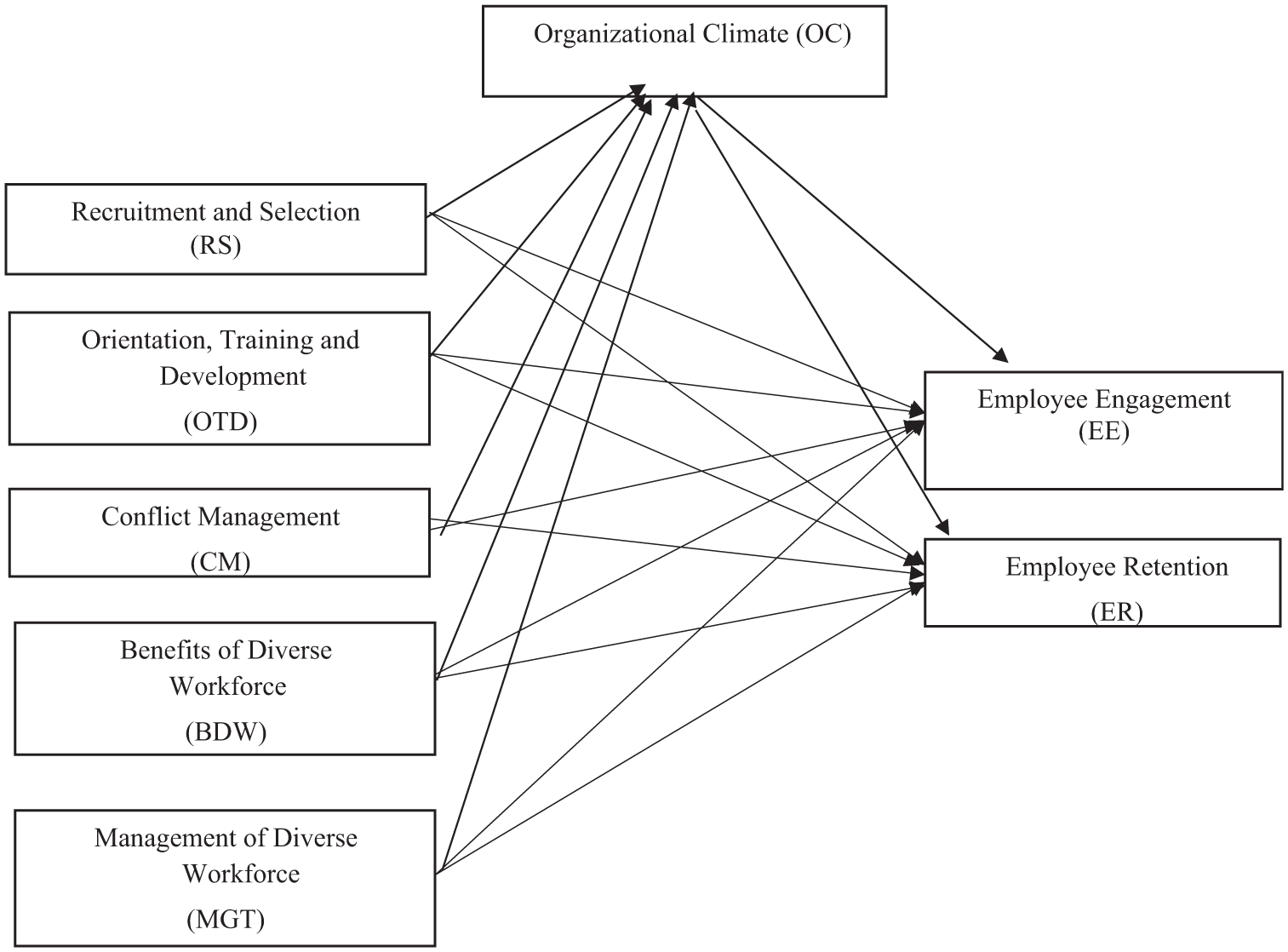
Theoretical framework of the study.
Methodology
Data Collection Procedures and Ethical Compliance
Before data collection, the purpose of the research was shared, and participation was also voluntary. In line with the ethical principles in human research, all the participants provided their prior informed consent. More so, the data collection instrument also provided information pertaining to the participant’s agreement to participate in the study. All participants confirmed their consent on the questionnaire in writing. All the study respondents were briefed on the survey objective before their involvement and assured of their anonymity, confidentiality, and rights to withdraw from the study during the research process.
Survey Instrument
Initially, the survey questionnaire containing 40 items under 8 construct was used. Pilot testing was conducted on a sample size of 80. The minimum recommended sample size for a pilot study is 59 for a study with around 500 respondents
Operational Definitions of Variables
In this study, several organizational and workforce-related variables were considered, each of which was defined both conceptually and operationally to ensure clarity in measurement.
Organizational climate (OC) refers to the overall environment and shared perceptions that employees hold about the workplace, particularly in relation to communication, leadership support, trust, and fairness of policies. For the purpose of this research, it is operationalized through employees’ responses on survey items that assess their views on openness, transparency, and inclusiveness within the organization.
Employee retention (ER) is understood as the organization’s ability to retain its workforce by minimizing voluntary turnover. Operationally, it is captured through employees’ self-reported intentions to remain with the organization, their satisfaction with career progression opportunities, and their perceived level of organizational commitment.
Employee engagement (EE) reflects the degree of enthusiasm, dedication, and emotional involvement that employees demonstrate toward their work. In operational terms, it is measured by employee ratings on dimensions such as vigor, dedication, and absorption, which highlight the extent of their psychological connection to the job.
Management of diverse workforce (MGT) denotes the set of organizational practices aimed at acknowledging and effectively managing differences among employees, including gender, age, cultural, and professional backgrounds. In this study, it is operationalized through employees’ perceptions of inclusivity, fairness, and organizational support for diversity initiatives.
Benefits of diverse workforce (BDW) captures the positive outcomes that diversity can bring to an organization, such as enhanced creativity, innovation, better problem-solving, and stronger customer relations. These benefits are measured through employees’ assessments of how diversity contributes to improved team performance and organizational outcomes.
Conflict management (CM) is defined as the strategies and processes used by organizations to address and resolve disputes in a fair and constructive manner. It is operationalized in this research through employee feedback on the fairness, effectiveness, and satisfaction associated with conflict resolution mechanisms in place.
Orientation, training, and development (OTD) encompasses the formal programs designed to familiarize new employees with organizational practices while enhancing the knowledge and skills of existing staff. In this study, it is measured through employees’ perceptions of the adequacy, relevance, and frequency of training and development opportunities available to them.
Recruitment and selection (RS) refers to the structured process of attracting, evaluating, and appointing individuals suited for specific roles. Operationally, it is assessed through employee perceptions of fairness, transparency, and inclusiveness in the organization’s recruitment and selection procedures.
Data Collection
Data were collected from middle-level employees of IT and ITES companies from the four major cyber-hubs of India namely Noida, Bengaluru, Gurugram, and Hyderabad. We used judgemental sampling along with the pre-specified filter questions based on the judgment criteria. There were three criteria—the employee must be working in the same organization for a minimum of 1 year the number of employees in the company at a similar level must be a minimum of 100 and lastly, the employee must belong to the level of Software Engineer, Sr. Software Engineer, or Team Leader or any other similar designation. The questionnaires were uploaded on Google Forms and circulated virtually. In total, 513 questionnaires were filled by the respondents. Out of these, 91 questionnaires were disqualified due to unengaged responses, and 422 questionnaires were considered for final data analysis.
As a measure of Response Bias (Common method bias), we used Herman single factor test and found that the Single Factor obtained from EFA explains only 27.489% of the variation. Since this is below the threshold of 50%, hence no common method bias was reported. Further, we used online survey method which has been used in many previous studies using survey method (Algunmeeyn & Mrayyan, 2025; Srivastav & Mittal, 2021). Though online survey is slightly biased towards tech savvy respondents (Algunmeeyn & Mrayyan, 2025). However, in our study the respondents were working professionals in IT and ITEs companies from the four major cyber-hubs of India namely Noida, Bengaluru, Gurugram, and Hyderabad, hence such biasness was not expected.
Statistical Techniques, Repeatability, and Reliability
In these studies, similar statistical techniques, that is, EFA, CFA, and SEM, have been applied by the authors. All the studies have obtained adequate levels of reliability and validity of the measurement scale (Al Koliby, 2024; Das & Mittal, 2023; Hsu et al., 2023; Hussein & Song, 2024; Sahu et al., 2024). Under the given limitations of data and methodology the results are repeatable as well as reliable. To ensure this we applied Split half validity test and found all the results robust. To ensure reliability we have rechecked the Cronbach’s alpha and Composite reliability. All the results were found robust. This ensures repeatability and reliability.
Sample Characteristics
Table 1 presents the demographics of the respondents. About 62% were males and 38% were females. 26.54% are below the age of 30 years, about 44% are in the age bracket of 31 to 50 years, and lastly, about 29% are above the age of 50 years. Concerning income, it was found that about 33% are below 20 lakhs, 39.57% are between the income bracket of 20 to 30 lakhs, about 19% are 30 to 45 lakhs and 8.29% are above the income level of 45 lakhs. The respondents were also asked about their experience in the present organization. It was observed that 15% of respondents were <5 years. About 35% are between 5 and 10 years, about 31% belong to the 10 to 15 years of experience and lastly, 19% are above 15 years. Regarding designation, it was observed that about 42% are Software Engineers, 24% are Sr. Software Engineers, 29% are Team Leaders, and approximately 5% were occupying other similar positions.
Validity and Reliability
The content validity was ensured by extracting the statements from the extant literature (D’Netto & Sohal; 1999; Kyndt, 2009). The “Average Variance Extracted” (AVE), is greater than .5, and “Composite Reliability” (CR) as well as Cronbach’s alpha are greater than .7 (Hair et al., 2013), which establishes the convergent validity. “Average Shared Variance” (ASV) is greater than the Maximum Shared variance MSV which establishes the discriminant validity (Table 2).
Discriminant and Convergent Validity Coefficients.

Source. Authors' own data analysis (SEM output).
Analysis and Interpretation
Measurement Model and Results:
Table 3 shows the factor loading, construct reliability, Cronbach’s Alpha, and AVE (Average Variance Extracted) of all the items ranging from .781 to .929 which is satisfactory and above the threshold value of .7, recommended by Hair et al. (2017). As discussed in the section on Validity and Reliability, the CR, AVE, and Cronbach’s alpha are also above their cut-off levels (.7, .5, and .7 respectively).
Results of EFA and Measurement Model (CFA).

Source. Authors’ own work.
Note. EFA = exploratory factor analysis; CFA = confirmatory factor analysis; CR = composite reliability; AVE = average variance extracted.
Figure 2 presents the measurement model. This model has been tested for model fit, convergent validity, and discriminant validity using the measures shown in Tables 4 and 5.
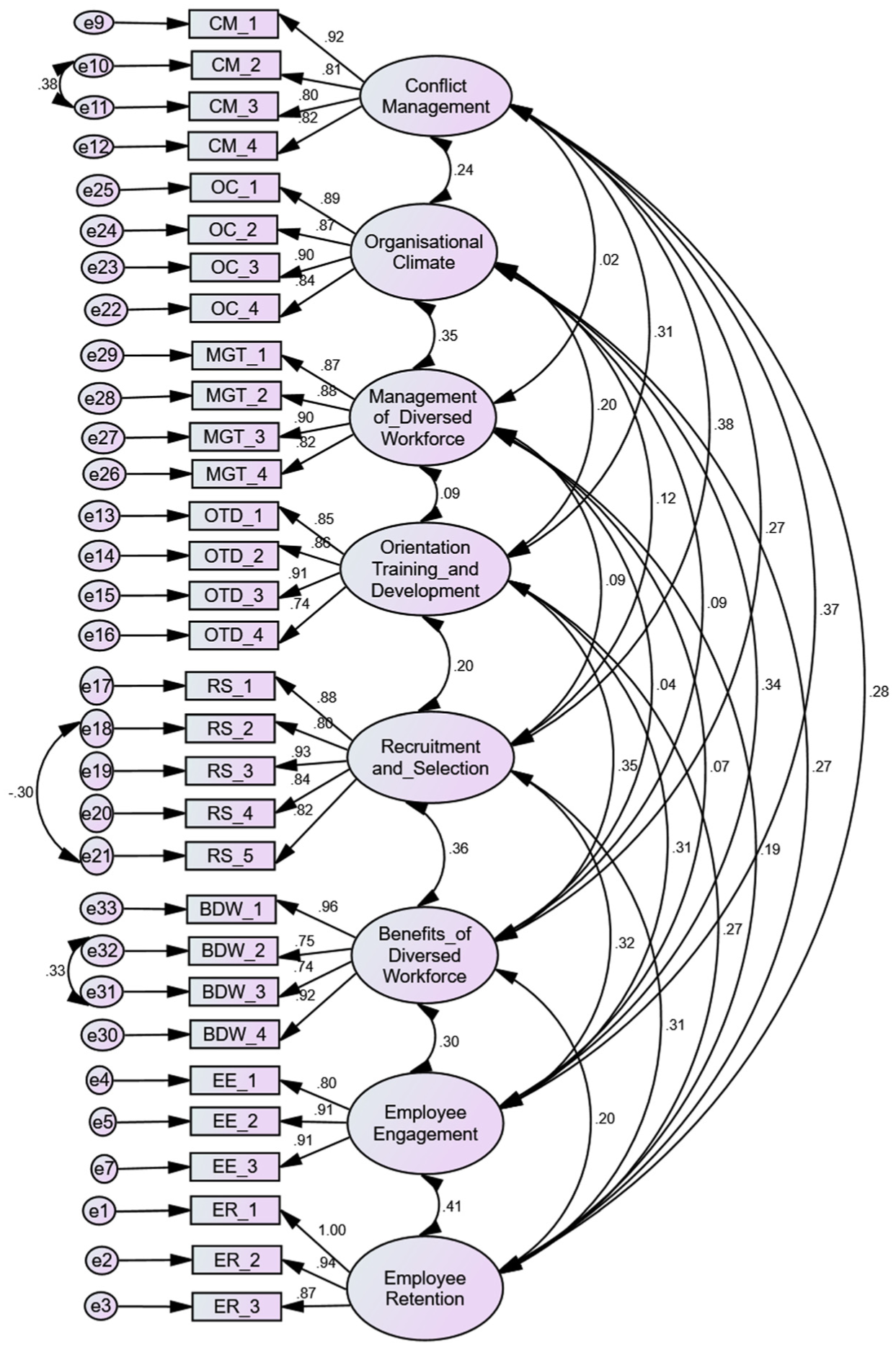
Measurement model.
Model Fit Indices.
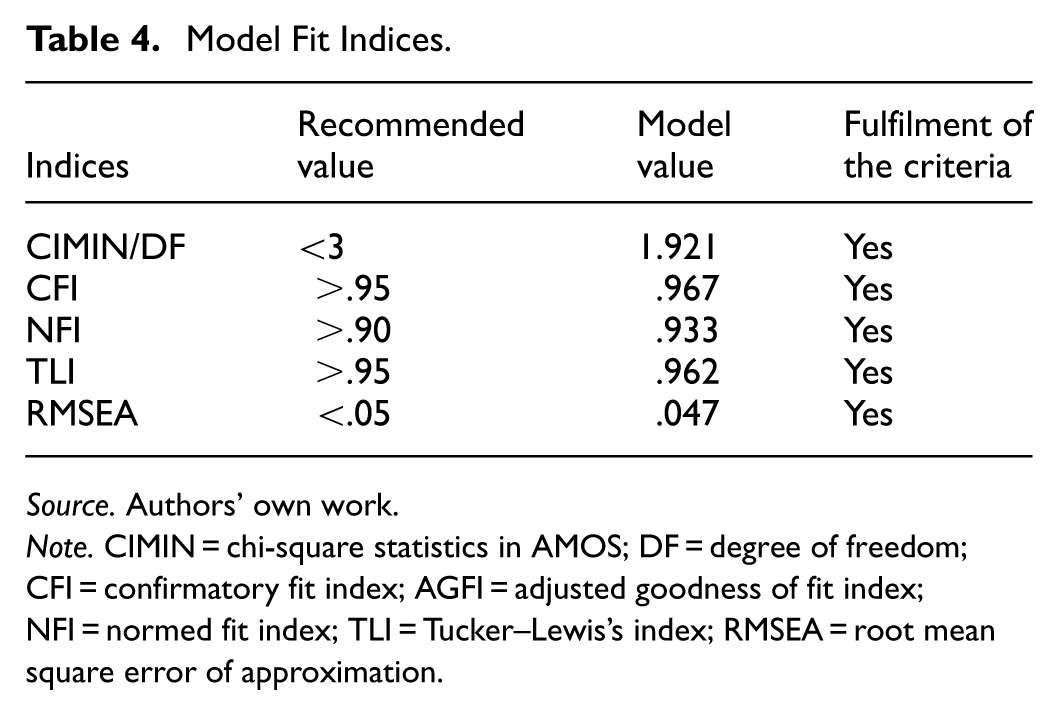
Source. Authors’ own work.
Note. CIMIN = chi-square statistics in AMOS; DF = degree of freedom; CFI = confirmatory fit index; AGFI = adjusted goodness of fit index; NFI = normed fit index; TLI = Tucker–Lewis’s index; RMSEA = root mean square error of approximation.
Validity Analysis.

Source. Calculated with James Gaskin’s Stat Tool Package.
Note. CR = composite reliability; AVE = average variance extracted; MSV = maximum shared variance; ASV = average shared variance.
The bold values in the Validity Analysis table indicate the square roots of the Average Variance Extracted (
Model Fit Indices
Comparing with the minimum cut-off values of various model fit measures—CIMIN/DF, CFI, NFI, TLI, and RMSEA, it was found that specifications of the Model Fit indices have been fulfilled (Table 4).
Table 5 shows the validity measures. CR is above the threshold value of .7 and AVE is above .5 which establishes the convergent validity. The values of MSV and ASV for all constructs are below AVE, which establishes the discriminant validity (Fornell & Larcker, 1981).
Model Validation (Split Sample Validation)
Random variables were generated through SPSS Random Sample of Cases under the Select Cases feature. We prompted the software to generate random variables to split the entire file randomly into two parts. The function slip files into two files of 219 and 203 observations each combining the total sample size of 422 respondents. The results have been shown in the Table 6.
Validity and Reliability Values of Two Models Based on Split Sample.

Validity and reliability statistics were verified for both the models, and it was found that the models are robust, and all the threshold values were met. Additionally, the corresponding CR, AVE, MSV, and ASV are robust across both models without any significant differences (Table 6).
Path Analysis (Direct Relationships)
This study explores the impact of workforce diversification (RS, OTD, CM, BDW, and MGT) on ER and EE, directly as well as through a mediator namely OC. It was found that H1a, H2a, H3a, H4a, are supported which means that RS, OTD, CM, and BDW influence the EE significantly, however, H5a was not supported which interprets that MGT does not influence the EE. In the case of Employee Retention (ER), it was found that BDW does not influence the ER significantly (Table 7 and Figure 3).
Path Coefficient and Hypothesis Testing.
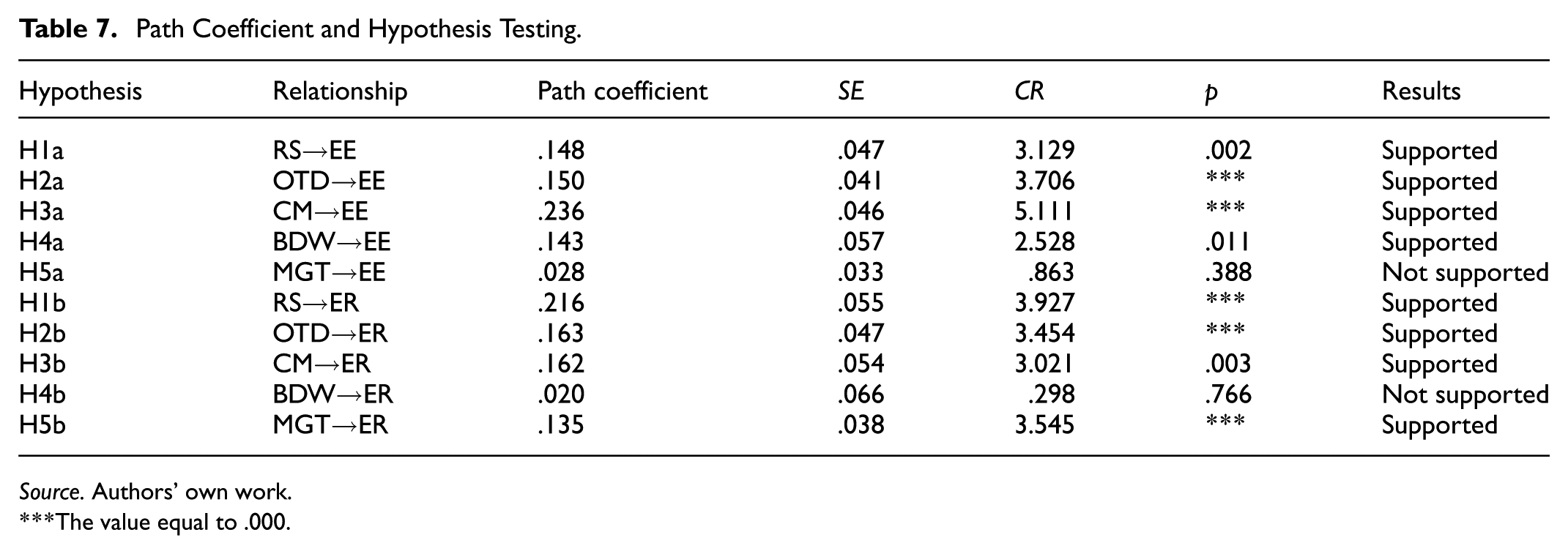
Source. Authors’ own work.
The value equal to .000.

Path model showing direct effects.
Multicollinearity Diagnostics
In the questionnaire after receiving the consent of the respondents we made all the questions necessary in the questionnaire, hence there was no missing data. Further, multicollinearity was measured with the help of Variance Inflation Factor (VIF). VIF Values for all the independent variables were found close to 1 (BDW = 1.308, MGT = 1.178, OC = 1.267, OTD = 1.271, RS = 1.327, CM = 1.370), indicating that multicollinearity is not a concern in the model (Akinwande et al., 2015).
Interaction Effect between Different Dimensions
Regressors namely “Recruitment and selection” (RS) along with “Orientation Training and Development” (OTD) as well as “Benefits of Diversified Workforce” (BDW) were checked for a combined impact (Table 8). Many previous studies indicate this extension of analysis (Du et al., 2021; Nishii, 2012).
Individual and Combined Impact of RS and OTD and CM and BDW.

Note. Values in bold presents the combined impact.
Standardized coefficient.
Combined impact was found better as compared with the average impact of the variables when taken separately. In case of RS and OTD, the individual impact on EE and ER was .174 and .007 and .164 and .153, which combined rose to .256 and .289. Similarly, for CM and BDW, the individual impact on EE and ER was .200 and .300 and −.015 and .175, which combined rose to .289 and .137. Briefly all the combined impacts were found more than the average of the original individual impacts.
Sensitivity Analysis
Sensitivity analysis was applied in the existing structural equation model with the help of ACO “Ant Colony Optimization” guided by Leite et al. (2021). We created a phantom variable and connected it with other variables to calculate the confounding effect (Table 9). A phantom variable connects with all other variables in the study and finds the possible impact of phantom confounder on the various relationships that can flip the significance (negative to positive and vice-verse). The results were obtained for the possible percentage changes, phantom confounders coefficients and mean changes. Largely the results were found robust specially for the relationships between ER and MGT, EE and BDW, ER and OTD, ER and CM, EE and OTD.
Sensitivity Analysis.

A few relationships show high sensitivity to the plausible confounders, however, two of such results are not significant (EE and MGT as well as ER and BDW). This indicates that there are many possible variables affecting these relationships that have not been considered for the present study. We have included such variables in the scope for future research. Furthermore, relationships between EE and CM, and ER and RS are originally significant, though are sensitive towards plausible confounders (Cinelli & Hazlett, 2019; Harring et al., 2017, Shen & Leite, 2022).
Mediation Effect of OC Between the Impact of Workforce Diversity on EE and ER
The study also investigates the Mediating role of OC between the relationships of workforce diversity dimensions and EE as well as ER. Since the direct impact of MGT on EE, and BDW on ER has not been significant, these two relationships were not tested for the mediation effect (Figure 4).
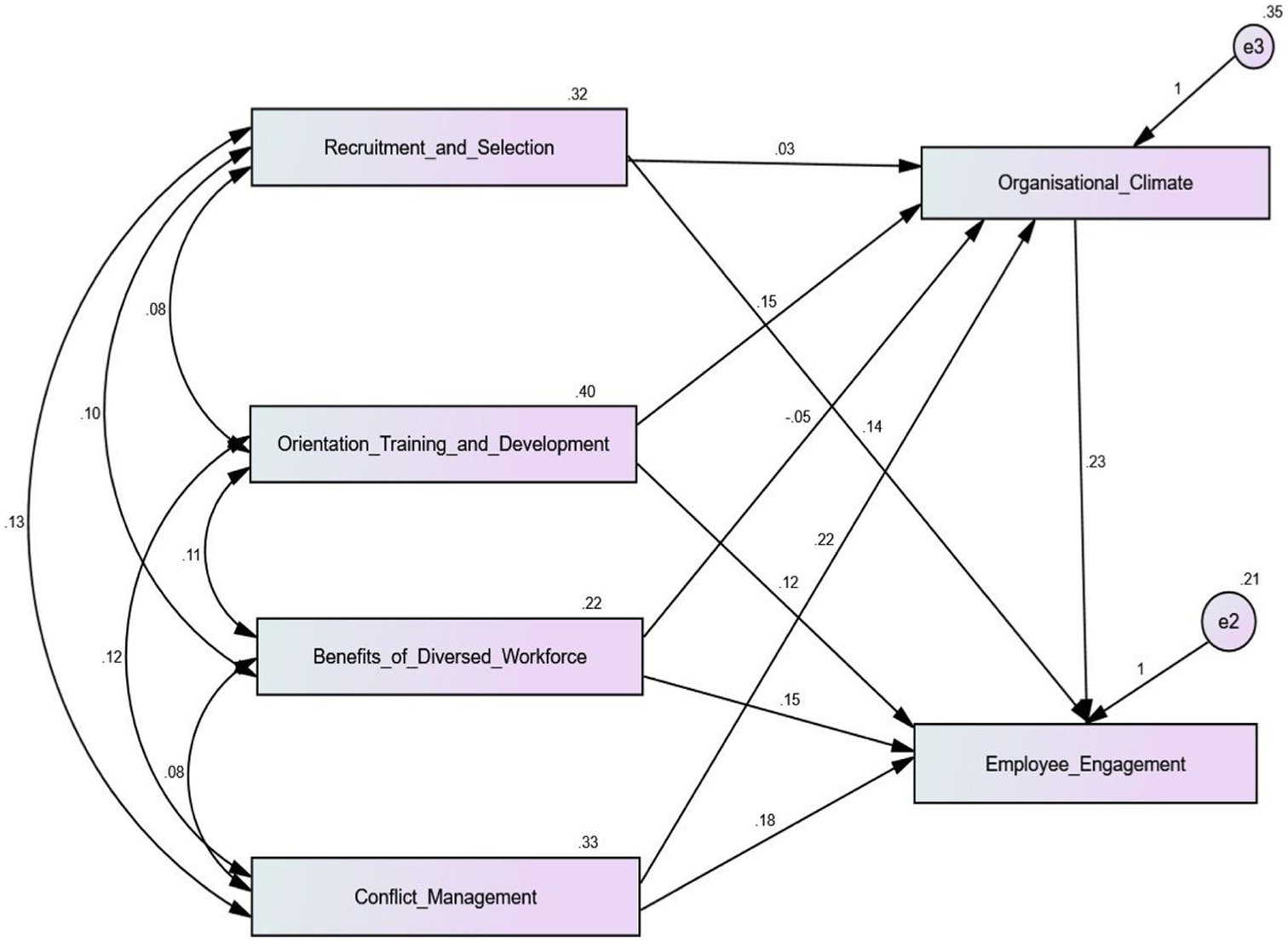
Mediation effect of workforce diversity.
Table 10 presents the mediating role of OC between the various dimensions of workforce diversity and Employee Engagement. It was observed that when OC is a mediation variable between OTD and EE, as well as, CM and EE, the direct, indirect, and total effects are significant which reflects the presence of partial mediation. In the case of the mediation effect of OC between BDW and EE as well as RS and EE, the indirect effect is not significant which reflects no presence of mediation. This reflects that the employees of IT and ITeS industries do not consider recruitment and selection as contributing factors in the organizational climate because the direct relationships of RS with EE and ER are significant.
Direct, Indirect, and Total Effects for the Mediation of Organizational Commitment in the Relationship Between Workforce Diversity and Employee Engagement.

Source. AMOS output.
Table 11 presents the mediation role of OC between the various dimensions of workforce diversity and Employee Retention. It was observed that in the case of the mediating role of OC between BDW and ER, OTD and ER, as well as, CM and ER, the direct, indirect, and total effects are significant which reflects the presence of partial mediation. In the case of the mediation effect of OC between RS and ER, the indirect effect is not significant which reflects no presence of mediation. In the case of EE, climate does not mediate the relationship between conflict management and recruitment and selection. In the case of ER, the mediation of climate is not significant for recruitment and selection.
Direct, Indirect, and Total Effects for the Mediation of Organizational Climate in the relationship between Workforce Diversity and Employee Retention.

Source. AMOS output.
Findings
The findings of this study are consistent as well as an extension of the findings of the previous studies. It has been observed that RS, OTD, CM, and BDW when considering the importance of diversity, significantly affect the EE and ER. The results complement the outcome of the previous studies which found that a conducive diversity environment in the organization helps in better job satisfaction (Mansoor, Farrukh, & Lee, 2021). The organization’s efforts to recognize diverse contributions fostered an inclusive work setting, enhancing employee satisfaction and nurturing a culture of respect and inclusivity. In a pharmaceutical organization, endorsing diversity management policies correlated with heightened job satisfaction and improved employee retention. Emphasizing the prioritization of diversity management, regular policy reviews, and the establishment of an inclusive work environment were highlighted as key factors by Mohanty and Acharya (2020). Many different industries have been covered by researchers in workforce diversity. Obamiro, Kumolu-Johnson, and Ngwamaj (2019) found within the banking sector that gender and ethnic diversity positively influenced job satisfaction and retention. Suggestions included promoting equality, encouraging social interactions, and implementing measures to minimize negative attitudes and ethnocentrism, fostering an environment of inclusiveness, and understanding. In addition to this, work-life balance significantly impacted on staff well-being, and the organizational climate did not mediate the relationship as anticipated. Rahim, Sulaiman, and Ahmad (2019) studied the education sector and recommend that organizations should focus on job training, effective communication, and providing comprehensive employee support to enhance career satisfaction and overall well-being within the organization. There have been studies in the hospitality sector, education (non-teaching) sector, etc. However, this study uncovers the role of workforce diversity in one of the most dynamic fields of business, which is the IT and ITeS industry. The study bridges the gaps between the extant literature where there is a dearth of a holistic model that goes beyond employee satisfaction as an outcome of workforce diversity. This study establishes the connection between workforce diversity and Employee Engagement as well as Employee Retention. Previous studies have established that diversity climate or organizational climate positively mediates workforce diversity and job satisfaction or retention. However, this study determines that this finding does not work for all the dimensions of workforce diversity.
Discussions
The findings of this study reaffirm and extend the results of earlier research, highlighting the critical role of workforce diversity in shaping employee-related outcomes. Specifically, the analysis revealed that Recruitment and Selection (RS), Orientation, Training and Development (OTD), Conflict management (CM), and Management of a Diversified Workforce at work (BDW) significantly influence employee engagement (EE) and employee retention (ER). This aligns with previous research on the widespread influence of diversity across organizational settings but also contributing new perspectives by exploring its significance in the IT and ITeS sector.
The results are consistent with the research of Mansoor, Tran, and Ali (2021), who described that a supportive diversity climate enhances job satisfaction. Likewise, Mohanty and Acharya (2020) also highlighted that organizations by adopting diversified workplace policies permits inclusive situations that enhance employee satisfaction and retention. This study confirms with their findings, that workforce diversity not only enhances employee satisfaction but also strengthens long-term workforce stability.
Research across different industries supports the centrality of diversity in driving positive outcomes. For instance, Obamiro, Ogunnaike, and Osibanjo (2019) found that gender and ethnic diversity in banking institutions improved satisfaction and retention, particularly when coupled with policies to minimize ethnocentrism and encourage equitable treatment. In education, Rahim, Arumugam, and Osman (2019) noted that supportive practices such as training, communication, and career development significantly improve employee well-being. However, this study diverges from some earlier findings by demonstrating that organizational climate does not consistently mediate the relationship between diversity dimensions and employee outcomes, suggesting that contextual differences may alter how diversity translates into organizational benefits.
This study is unique because it focuses on the IT and ITeS industries, which, despite being strategically important to the global economy, have not been studied as much as other areas. Sectors such as banking, pharmaceuticals, and education, are driven by innovation, cross-cultural collaboration, and talent competition, making employee engagement and retention essential for organizational sustainability. By establishing direct links between workforce diversity, engagement, and retention, the study contributes a more comprehensive framework that moves beyond job satisfaction as the sole outcome variable.
Conclusion
This study takes the conversation on workforce diversity a step further by showing that it does more than just improve job satisfaction it also has a strong link with employee engagement and retention. Unlike past research that often focused on single practices or specific industries, this study offers a more complete picture by combining recruitment, training, conflict management, and diversity policies into one framework. It also adds nuance by showing that organizational climate does not always mediate these relationships equally, reminding us that context matters when studying diversity and HR practices.
For managers, the findings send a practical message: investing in diversity and inclusive HR practices is not just the right thing to do, it directly supports retention and engagement. Simple steps like fair recruitment, regular training, constructive conflict management, and recognizing diverse contributions can help create a workplace where employees feel valued and motivated. Managers in the IT and ITeS sector, in particular, should pay attention to how policies are applied in practice supporting work-life balance, promoting equality, and building a culture of respect can go a long way in keeping employees engaged and committed.
For readers, this study offers a broader way of looking at workforce diversity. It connects the dots between HR practices, employee engagement, and retention, and shows that diversity is more than just a compliance requirement it’s a strategy for building stronger, healthier organizations. The insights here also encourage readers to think critically about organizational climate, since its influence may not be the same in every setting. Above all, the study highlights how creating an inclusive environment benefits not only organizations but also the people who work within them.
Theoretical Implications
This study contributes significantly to the existing body of knowledge by establishing the relationship between various dimensions of workforce diversity with Employee Engagement and Employee Retention. In many ways, employee engagement has a higher relevance as compared with employee satisfaction, because engagement is more an outcome of commitment which is evidence of happiness and self-driven involvement in work (James et al., 2012). It also requires a dedicated HR strategy (James et al., 2012; Tomlinson, 2010). This study establishes that organizational climate works well for many HR practices that consider workforce diversity. However, may not work for all. The study motivates future researchers to compare the role of workforce diversity and organizational climate on employee engagement, satisfaction, and retention among different industries while keeping the other aspects of the research such as age, gender, income, and geographical area as same. In this study, the HRM practices that consider the importance of workforce diversity have been taken as proxies to the workforce diversity dimensions. The findings of this study may be used as the foundation for future investigation into these practices on investigating the impact of workforce diversity management on employer branding, with the intention to join the organization by future employees as well as employee performance.
Managerial Implications
This study indicates the importance of workforce diversity management in an organization in terms of employee engagement and employee retention. Efficiently managed workforce diversity in a collaborative work setting fosters employee retention and engagement. Organizational climate assumes a vital role in mediating this correlation by cultivating an inclusive environment that values diversity and promotes a sense of belonging (Kyrillidou & Baughman, 2009). Panicker and Balu (2018) found a strong link between workforce diversity and employee engagement in the retail sector. The mediating function of a diverse climate in shaping employee behavior, stresses the importance of fairness and inclusion in organizational policies. By managing diversity and reducing cynicism, organizations can create positive climates and address dissatisfaction through effective diversity management strategies (Platania et al., 2022). This wide importance of workforce diversity and its empirically tested role in employee engagement and retention indicates that the organizations must develop future leaders in such a way that they give due consideration to the diverse workforce during recruitment and selection and during orientation and conflict management. The study has also indicated that the benefits of a diverse workforce led to employee engagement and retention which further re-confirms the importance of managing a diverse workforce effectively.
Limitations and Scope for Future Research
The present study has certain limitations that pave the way for future research. Initially, the sample restriction and some of these constructs are not considered in this article, such as exploring interaction effects between different dimensions of workforce diversity, such as the combined impact of Recruitment and Selection with Training and Development on Employee Retention, which could reveal nuanced insights, thus future research can be conducted in this line. There are certain new and highly relevant areas which may be merged with the existing variables of this study in the future research. knowledge management may be used as a mediator in the futures studies between the constitutions of diversity with EE and ER (Andini & Ekhsan, 2024; Mittal et al., 2025; Pham & Tu, 2025). Methodologically, the future studies may include ANN (Artificial Neural Network) to further verify the results of SEM (Elareshi et al., 2022; Mittal et al., 2025). This study uses a Judgement sampling. Judgement sampling restricts the generalizability of the study, though it provides a more focused generalzsation of the results to a particular niche of the population (Cooper et al., 2015; Joshi et al., 2025; Memona et al., 2025). Future studies may be conducted on a broader audience using a random sampling method.
Footnotes
Ethical Considerations
Ethics approval and consent to participate According to the “Ethical Review of Biomedical Research Involving Human Beings,” ( ), China, business research and management are not part of life science and medical research activities involving human beings and only require clear and explicit informed consent prior to data collection. No formal ethics approval was therefore required in this particular case because (a) the data are completely anonymous with no personal information being collected; (b) the data are not considered to be sensitive or confidential in nature; (c) the issues being researched are not likely to upset or disturb participants; (d) vulnerable or dependent groups are not included; and (e) there is no risk of possible disclosures or reporting obligations.
Consent to Participate
This study has been performed in accordance with the Declaration of Helsinki. Written informed consent for participation was obtained from respondents who participated in the survey. For the respondents who participated in the survey were asked to read the ethical statement posted at the top of the form and proceed only if they agree. No data was collected from anyone under 18 years old.
Authors’ Contributions
Indradevi Ramasamy: Conceptualization, methodology, investigation, data curation, writing–original draft, software. Sathya Natarajan: Conceptualization, Methodology, Investigation, Validation, Writing – Original Draft, Writing – Review and Editing. Arun Mittal: Methodology, Formal analysis, Investigation, Writing – Original Draft, Writing, Review and Editing.
Funding
The authors received no financial support for the research, authorship, and/or publication of this article.
Declaration of Conflicting Interests
The authors declared no potential conflicts of interest with respect to the research, authorship, and/or publication of this article.
Data Availability Statement
The data that support the findings of this study are available on request from the me Indradevi Ramasamy. The data are not publicly available due to the privacy of research participants.