



Abstract
The purpose of the research is to explore the drivers of radical and incremental creativity in developing country particularly in textile and apparel industry of Bangladesh. Although the recent explosion, growth, and development of creativity, the current investigations have yet to rethink how radical and incremental creativity can be enhanced over time in the developing country context. According to extant research, the factors that influence the enhancement of radical and incremental creativity in developing countries are distinct from those in developed countries. Furthermore, the traditional research model—which has many flaws, including incompatibility, a knowledge-evidence gap, specific respondents, poor prediction capacity, etc.—was used in the majority of creative studies. Therefore, the main objective of this research is to explore the drivers of leader-follower centric for enhancing radical and incremental creativity. In-depth interviews as well as purposive and convenience sampling were used to collect data from the CEOs of the TMOs. Grounded theory and theme analysis are used to describe the conditions and elements that foster creative thinking and creativity. Based on the results, it seems that textile industry leaders are impacted by a participatory atmosphere that allows for individual freedom and encourages creativity. Not only did they create incentive schemes to spur creativity in the workplace, but they also used daily interaction-based activities to promote workers’ radical and incremental creative behaviors and creativity. Accordingly, grounded theory and thematic analysis are used to explain the state and factors of creativity. The results show that a participative atmosphere that allowed for autonomy and encouraged creativity through a variety of leadership techniques had an impact on industry leaders in the textile sector. They also created incentive programs to promote creativity within their companies and employed daily interaction-based techniques to inspire employees’ radical and incremental creative behaviors. Therefore, this study explores the new contextual five drivers like “participative leadership,”“creative process engagement,”“leader creativity expectations,”“radical creativity,” and “incremental creativity” to re-conceptualize creativity. The research has significance for managers looking to enhance both radical and incremental creativity for innovation in their organizations by creating systems of rewards and incentives in addition to initiatives for team and executive development. The research being conducted has relevance for managers looking to enhance both radical and incremental creativity for innovation in their organizations by creating systems of rewards and incentives in addition to initiatives for team and leadership development.
Keywords
Introduction
Today, globalization, competition, rapid communication, and technological developments are big challenges for business organizations. These challenges have put substantial pressure on organizations to enhance their effectiveness and efficiency (N. Nabi & Liu, 2021). In light of the dynamic advancements in smart technologies, scholars and market analysts have undertaken a reassessment of how leaders plan to harness the creative potential of their subordinates, particularly in the context of the shifting landscape of conventional manufacturing procedures (Qu et al., 2017). As a result, work organizations in a number of sectors strive to build and grow their capacity to solve ill-defined and complicated challenges creatively. To solve these, organizational researchers have explored how wide-ranging cognitive and behavioral factors affect radical and incremental creativity (Mumford et al., 2013).
In recent decades, significant scientific and organizational research has focused on enhancing the creative abilities of followers (Qu et al., 2015), particularly in high-income nations. Several studies have examined the cognitive and behavioral aspects of followers, such as cognitive thinking, involvement in the creative process, and leader expectations impacting follower creativity (Habib et al., 2021; M. N. Nabi et al., 2022; N. Nabi et al., 2021).
However, identifying the key elements that foster follower radical and incremental creativity remains unexplored in developing countries, particularly Bangladesh (M. N. Nabi et al., 2022). As the textile and garment industry continues to evolve, there is a need for more research on how leaders can enhance followers’ creativity. This industry is actively working to improve leadership and creativity to navigate complex scenarios. Therefore, there is a call from academics to expand social science and information systems theories to identify factors influencing creativity in specific settings (M. N. Nabi et al., 2022). Accordingly, Adnan et al. (2019) emphasized the importance of formalizing creative constructs to align with the continuous use paradigm. The number of studies on creativity increased dramatically between 2000 and 2020 (Mejia et al., 2021). However, the advancement and enhancement of radical and incremental creativity vary because of changes in cognitive and behavioral elements in unique settings and different contexts (L. Chen, 2020). Evidence suggests that factors influencing radical and incremental creativity in developing countries differ from those in developed countries. Furthermore, most creativity studies have utilized traditional frameworks, which have various limitations (e.g., contradictory evidence, knowledge gaps, high respondent burden, low predictive capability) (L. Chen et al., 2020; Habib et al., 2021; N. Nabi, 2023; Peng et al., 2022). Enhancing follower radical and incremental creativity has been rarely explored in current literature and requires further research.
However, all existing studies, frameworks, and theories are based on developed countries. Therefore, behavioral science researchers are conducting studies with strong theoretical foundations but unique research settings or inconsistent past results (L. Chen et al., 2020; Peng et al., 2022). It is crucial to involve CEOs from the beginning of the acceptance process to accurately assess their understanding, experiences, and perspectives on their subordinates’ creativity. As a result, leadership and creativity researchers are investigating the impact of participatory leadership on fostering followers’ creative thinking and creativity. Participatory leadership has been shown to influence how followers’ creative performance is shaped by their perceptions of the work environment and access to organizational resources (Scott & Bruce, 1994).
Christensen’s disruptive innovation theory explains how innovations disrupt sectors and change market dynamics, focusing on radical creativity characterized by transformative inventions. March’s exploration and exploitation framework contextualizes incremental creativity, emphasizing the strategic balance between innovation and process optimization for a competitive edge. Sternberg’s investment theory of creativity delves into the psychological drivers behind creative outputs, highlighting persistence, risk-taking, and collaboration. Amabile’s componential theory of creativity examines intrinsic motivation, domain-specific expertise, and favorable environmental conditions as key determinants of creativity.
While most studies on leadership have used quantitative and qualitative methods to explore creativity in large businesses in developed economies (N. Nabi & Liu, 2021), recent research indicates inconclusive results on the relationship between leadership and creativity. Given that participatory leadership and creativity may be perceived differently in the expanding Asian-Western context (House et al., 2004), it is essential to qualitatively understand these concepts. The textile and apparel industries are recognized for supporting and producing radical and incremental creativity, particularly in emerging economies (Allocca & Kessler, 2006). Despite limited resources, smaller textile and apparel industries are considered significant drivers of technological advancements and creativity (Curado et al., 2018).
Unlike previous studies that mostly focused on creativity literature accessible in informal settings, this research has revealed the significance of completely rethinking and redesigning the factors of radical and incremental creativity by examining them from the literature and from the perspective of the Chief Executive Officer (CEO) over time. Furthermore, the identified factors related to radical and incremental creativity direct our focus towards the aspects of end-users that are most relevant within manufacturing industry environments. In practical application, achieving effective planning, design, development, and implementation of specific tasks in both radical and incremental creativity requires a shift in task allocation from the conventional to the concurrent paradigm. Therefore, it is crucial to investigate whether, when, how, and where participative leadership is associated with fostering the follower’s radical and incremental creativity. Thus, the objective of this research endeavor was to gather the perspectives of leaders in the textile manufacturing industries, a fast-paced industry in Bangladesh, to explore how they encourage follower radical and incremental creativity. This study aims to contribute both theoretically and practically by addressing a central research question posed by the investigator:
Bangladesh, the world’s least developed nation, does not have a long history of fostering follower creativity. Bangladesh is still in the early stages of establishing a system of radical and incremental creativity based on lessons learned over the last several years. Recently, many industries and organizations have recognized the importance of employees’ radical and incremental creativity for maintaining competitiveness, fostering innovation, ensuring sustainability, and improving long-term performance. Additionally, the Bangladesh government, various textiles industries, universities, training organizations, and professional development bodies have undertaken various projects to enhance follower creativity levels (Azim et al., 2019; Hossain et al., 2020; Nabi, 2021).
In Bangladesh, the enhancement of follower’s creativity has become one of the revolutionized manufacturing systems that have been a primary focus in recent years. Accordingly, public, commercial, and non-governmental organizations (NGOs) have been encouraged to spend considerable sums of money to improve the nation’s technology-based production system. The success of Bangladesh’s ready-made garment (RMG) industry is due to various factors, including Multi Fibre Arrangement (MFA) quota, and the Generalized System of Preferences (GSP), and government incentives and technology transfer from South Korea’s Daewoo Company (Mottaleb & Sonobe, 2011). In addition, Bangladesh’s RMG industry is now the country’s top foreign currency earner, with 248 international brands, 200 purchasing houses, and 4 million employees (90% women and 10% male) employed in 4,563 garment factories (BGMEA, 2021). The RMG industry has played a vital role in Bangladesh’s economy by creating jobs, reducing poverty, and empowering women.
Despite the growing popularity of radical and incremental creativity facilities in Bangladesh, they have not yet reached their full potential. Additionally, Bangladesh has conducted several creative studies from various perspectives. For example, Hossain et al. (2020) investigated how self-performance expectations enhance creativity by increasing followers’ cognitive levels. Similarly, Bhattacharjee and Rahman (2016) assessed the relationship between radical and incremental creativity, emotional intelligence, and empowering leadership. Likewise, Azim et al. (2019) explored the association between participative leadership and creativity engagement. Furthermore, Ahmad et al. (2022) explored the role of work engagement and psychological safety in enhancing employee creativity.
All previous research, however, used the traditional IS paradigm rather than addressing the modern characteristics and aspirations of leader-follower relationships that embrace radical and incremental creativity. In response to this, N. Nabi & Liu (2021) showed how creativity engagement by followers and leader expectations for creativity can enhance follower radical creativity, which is not enough to support this phenomenon. Therefore, there is a need to re-explore and re-examine participative leadership and radical and incremental creativity components in Bangladesh. Additionally, most of the drivers in the research are new in the context of Bangladesh.
In summary, the goals of this qualitative research include: (a) exploring the relationship between constructs and developing facilitators, (b) investigating the key essential factors that significantly impact the radical and incremental creativity framework, and (c) validating the constructs in the Asian context, particularly in Bangladesh. The findings of this qualitative research will inform the development of interventions to enhance follower radical and incremental creativity by examining feedback from industry CEOs.
Furthermore, this study will contribute to the development and enhancement of radical and incremental creativity interventions by analyzing input from followers and leaders. Additionally, this study will provide theoretical and empirical insights into previous creativity studies and radical and incremental creativity literature by re-exploring the facilities from the perspective of chief executive officers in developing countries.
Research on the relationship between participative leadership, willingness to take risks, engagement in the creative process, leader expectations for creativity, and follower creativity (both radical and incremental) in the textile and apparel industry is timely (Li et al., 2021; Lythreatis et al., 2019), as these factors are considered crucial for economic development worldwide. This dissertation emphasizes the importance of studying this relationship for two main reasons.
First, the textile industry plays a significant role in the economy of Bangladesh due to its rapid growth in both quantity and quality (Hussain et al., 2018). Textile industries have had a major impact on the country’s economic development, representing the majority of companies in Bangladesh and making significant contributions to the Gross Domestic Product (GDP) each year (Eggers & Kaul, 2018). Second, Bangladesh is focused on integration with the global economy, leading to high rates of economic growth and poverty reduction (Hussain et al., 2018). As a result, domestic industries in Bangladesh face increasing competition from foreign direct investment (FDI) companies and multinational corporations, which have shown success through enhancing radical and incremental creativity. Therefore, creativity is crucial for the textile industry in Bangladesh to maintain a competitive advantage.
This study aims to address gaps in prior research and theoretical knowledge by reexamining predictors of radical and incremental creativity and how participative leadership can enhance follower creativity through willingness to take risks and engagement in the creative process. Additionally, the study explores how leader expectations for creativity can boost follower creativity in a competitive environment through leadership, risk-taking, and creative engagement.
By answering these research questions, this study contributes significantly to the literature and advances the field in several ways. Firstly, it provides a theoretical contribution by examining the role of leadership, willingness to take risks, and engagement in creativity in promoting radical and incremental creativity at the individual level. Secondly, the research offers a fresh perspective on understanding follower creativity systematically. Thirdly, the study adds empirical knowledge on the role of managers in fostering a creative environment and motivating creative behavior among employees. Lastly, the study aims to construct a theoretical framework to stimulate creative innovation among industry followers and provide valuable insights for policymakers and industry professionals. In conclusion, this study sheds light on the complex interactions between followers and leaders that drive radical and incremental creativity in the textile industry in Bangladesh
Materials and Methods
To investigate the impact of participative leadership and related employee characteristics on stimulating follower radical and incremental creative behavior, interviews were conducted with chief executive officers (CEOs) of textile and apparel industries in Bangladesh, specifically in Chittagong, Dhaka, Nayarayangonj, and other top textile cities. Textile and apparel industries are vital to the Bangladeshi economy due to their rapid growth in both quantity and quality. A grounded theory approach was used to reconsider and redesign the current status of follower radical and incremental creativity to enhance workforce quality (Strauss & Corbin, 1998).
This research employed a methodological strategy combining grounded theory methodology with thematic investigation (Kiger & Varpio, 2020), which is particularly effective in new or unknown fields. Grounded theory informs the entire research design, data collection, analytic methodologies, and the theory that emerges from the investigation. The primary objective was to utilize grounded theory to understand the current scenario and lay the theoretical groundwork for future research on radical and incremental creativity adoption among followers by integrating social context within the organization.
According to Glaser & Strauss (1967), grounded theory would close the theoretical-empirical gap by creating and building a new theory from the evidence. In qualitative research, grounded theory research is conducted through interviews, online discussion forms, observations and document materials. Simultaneously, data collection and interpretation in grounded theory allowed each phase of data gathering and analysis to influence future data collection, allowing researchers to investigate emergent ideas and questions needed for theory building (Strauss & Corbin, 1998). Thematic analysis provides flexibility in data interpretation and simplifies dealing with massive datasets by organizing them into overarching themes. The present investigation adhered to the established protocols outlined in the Consolidated Criteria for Reporting Qualitative Research (COREQ) (Tong et al., 2007).
Research Design
Semi-structured interviews were chosen for this study because they are effective in gathering in-depth information on participants’ opinions and behaviors, allowing room for elaboration. This approach, known for obtaining personalized insights, was conducted in person by researchers using predetermined questions that also allowed for open-ended responses. The interviews prioritized descriptive depth over numerical data to explore participative leadership and creativity within organizations. Following ethical approval, the interviews delved into topics such as collaborative partnerships, fostering radical and incremental creativity, integrating followers into the creative process, and participative leadership. The interviews, conducted in a mix of Bengali and English, lasted between 30 and 60 min and utilized a variety of pre-planned questions. Participants consented to audio recording of the sessions to ensure comprehension and consent. To ensure understanding, all interview materials were provided in both Bengali and English, with careful examination of semantic accuracy and context in each translation. A multilingual researcher categorized the data into themes through manual content analysis of the interview responses. Two independent experts proficient in both languages used back-translation to verify the accuracy and quality of the translations.
Sampling, Participants, and Data collection
The study was led by the principal investigator and associates, with support from two business administration experts experienced in field research. Leaders in the textile and apparel industries were selected using a convenient and focused sampling method based on a list of cutting-edge textile companies. Interviewees, all CEOs who were founders or co-founders at various career stages, were contacted through phone numbers listed on their companies’ websites. Many of the CEOs had studied at the Bangladesh University of Textiles. After reaching out to 39 potential participants, 26 CEOs agreed to be interviewed, thanks to additional connections from the TEM department. In addition to the CEOs, 26 employees from various positions across the front office, including heads of research and development, assistant managers, and top-level employees, were interviewed. Of these, 18 were male and 8 were female, all with higher education and frontline work experience exceeding a year. The participants’ profiles are detailed in Table 1.
Summary of Participants Demographic Information.
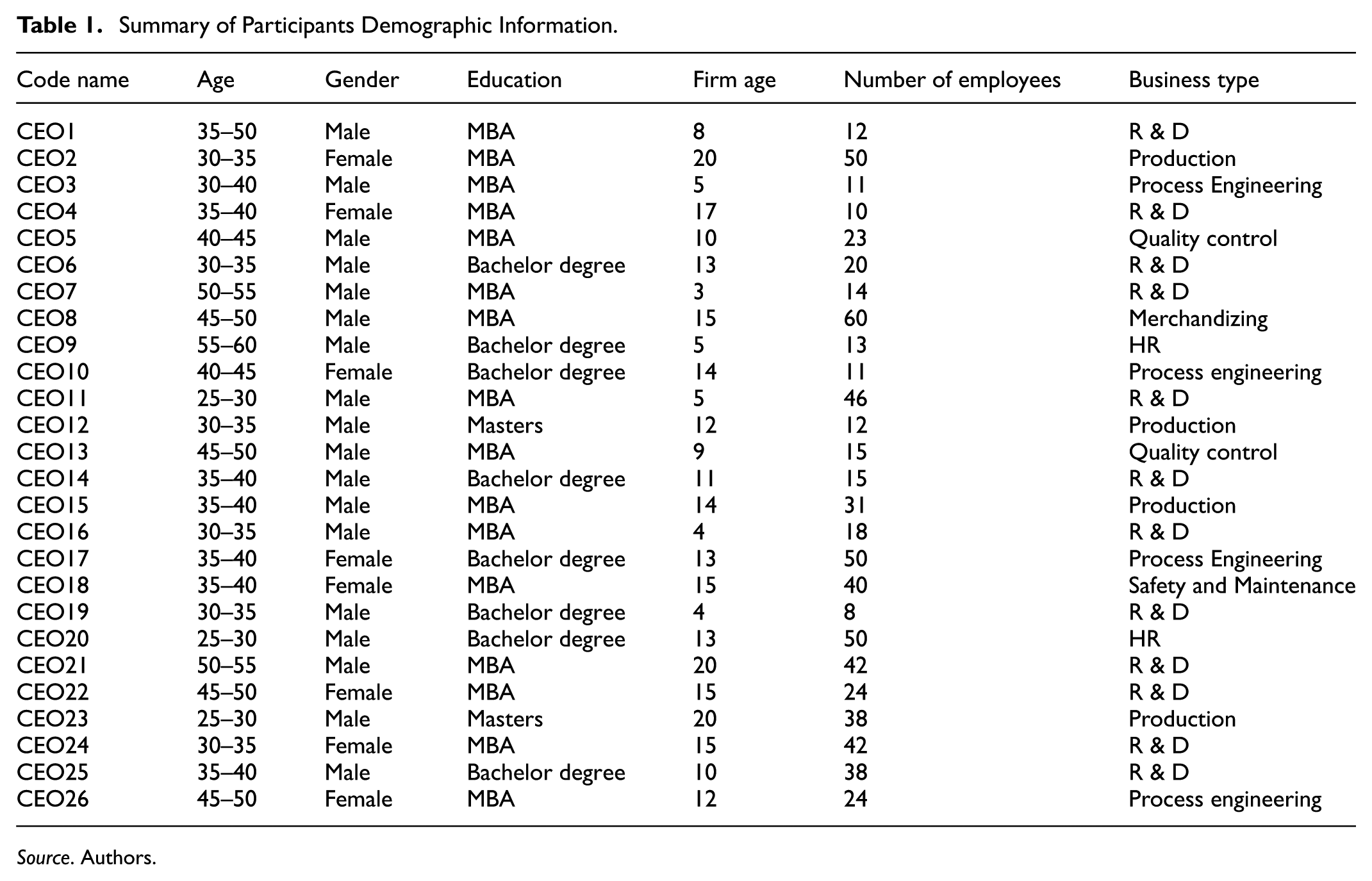
Source. Authors.
Data collection ceased upon reaching data saturation. Although in-depth interviews were planned, participant engagement was hindered by common issues in qualitative research, such as availability, privacy, ambiguity, and willingness. Extensive planning preceded the interviews, involving contacting potential respondents via phone, email, and messages to explain the study’s purpose and obtain informed consent. Interviews were conducted in Dhaka, Gazipur, Narangaonj, and Chittagong, known for their high concentration of creative activity in the textile industry. The investigation aimed to explore factors influencing creativity and their impact on sector productivity and performance. Interviews occurred from October 2020 to May 2021 through Zoom, at respondents’ homes, or workplaces, with all conversations audio recorded and documented. Detailed field notes and memos were maintained throughout to support data analysis.
The Context of the Research: Textile and Clothing Industries
Bangladesh’s export economy has been primarily driven by its textile and apparel sectors for more than 40 years; these sectors account for over 83% of all exports from the nation. As an “emerging tiger,” Bangladesh has shown remarkable economic growth. The World Bank estimated the country’s GDP to be $6.29 billion in 1972, but by 2021, it had soared to $368 billion. Exports accounted for $46 billion of this, of which the ready-made clothing industry contributed $32 billion, or 82% (The World Bank, 2021).
However, Bangladesh is one of the world’s most populated nations, with a population density of 1265 persons per square km and an overall poverty rate of 6%, 59.62% for women and 38.38% for males (The World Bank, 2021). Additionally, Bangladesh’s textile and apparel industry is now the country’s top foreign currency earner (about 82% of total exports), with 248 international brands, 200 purchasing houses (Bangladeshaccord.org, 2021), and 4.5 million employees (90% of whom are women) (Akhter et al., 2010) employed in 4,563 garment factories (BGMEA, 2021).
Eventually, the RMG industry became a critical component of Bangladesh’s economy regarding job creation, poverty reduction, and women’s empowerment (Rahman & Hossain, 2010). Moreover, Bangladesh was the world’s second-largest garment producer in 2016, after China, and is the country’s second-largest exporter, exporting $32 billion (2021). The industry had a target to export $50 billion by 2030.
Bangladesh has exhibited an unwavering dedication to inclusion in the global economy, as evidenced by its remarkable rates of economic growth. As a result, local and foreign-owned multinational companies aiming to foster sustainable innovation and boost creativity are becoming increasingly competitive in the country’s industries (A. T. Nguyen et al., 2016). The textile sector in Bangladesh, accounting for 17.70% of the country’s GDP and being a major contributor, is at a turning point in terms of growth. The industry, accounting for 4.6% of all employment, is currently emphasizing the development of staff originality and creativity.
To maintain its competitive advantage in the global economy, the company must make this strategic shift towards both radical and incremental innovation. Leaders in the sector and the government are working together to develop policies that will encourage these kinds of developments, as the industry is expected to grow positively and have a bright future. This dedication to innovation highlights how important it is as the basis for long-term, sustainable economic growth.
Data Analysis
The audio recordings of the interviews were transcribed in advance to facilitate the process of coding and doing content analysis. In order to capture details like tone, pauses, and emphasis and enhance the context for analysis, this transcription stage combined exact and interpretative transcription. The coding process was executed in accordance with established guidelines (Creswell & Creswell, 2017) for example and continued until data saturation was achieved (Spiegel et al., 2016). As part of the analytical procedure, the first phase was transcribing the raw data, which encompassed audio recordings and written notes.
The transcription process involved repeated reviews of audio files to cross-check the transcriptions for accuracy, ensuring they truly reflected the content of the interviews. Following this, the data was scrutinized thoroughly to confirm its accuracy. After that, the codes and themes were developed, and an interpretation of the significance of the themes was carried out. The procedure of analyzing and interpreting the data continued until all pertinent material was categorized according to codes and themes. During the transcription process, the research assistant provided assistance to reduce the possibility of researcher bias and misconceptions.
The method of analysis, which included iterative and inductive steps, was used to establish the unit of analysis, which may be a single word, an entire phrase, or an entire paragraph. Following the first round of manually coding the data, we moved on to using NVivo (version 11) in conjunction with Microsoft Excel to enhance the precision and transparency of the analysis. Upon importing all transcripts into NVivo, the researcher proceeded to manually code the data inside the NVivo software (Creswell & Miller, 2000). By using NVivo to organize, retrieve, and compare coded data, the researcher was able to quickly find patterns and higher-order themes. NVivo’s analytical capabilities supplemented the human coding procedure, allowing for triangulation and a strong validation of the results.
Initially, the coding was conducted to identify and categorize the data into basic themes. Subsequently, the data was further coded to identify higher-order themes. A collaborative approach to coding was used to improve dependability. Group talks were held to improve codes and come to an agreement on theme definitions following the principal investigator’s first round of independent coding. The group got together to discuss and contrast the various themes and code names. After reaching a consensus on the second stage of coding, each author completed one more round of blank-coding before comparing their own coding strategies and finding a solution to any discrepancies that arose. After determining the final coding, the principal investigator proceeded to code the remaining files. The validity of the coding system was checked using this approach before it was put into use (Jackson et al., 2013). Multiple rounds of blind-coding were incorporated into this procedure to minimize subjective bias and ensure inter-coder reliability. Through repeated discussion, differences in coding approaches were settled, strengthening the coding framework’s precision.
Validation of the coding system was conducted using multiple strategies, including peer debriefing, where an unbiased teammate provided assistance throughout the investigation. This approach ensured that the coding scheme was thorough and logical by providing additional scrutiny. This strategy not only enhanced the breadth and precision of our results but also distinguished our research from traditional qualitative coding approaches by offering a solid framework for understanding the intricate processes we were studying. Utilizing a methodical approach to cross-referencing topics across various data sources further ensured reliability. Examining consistency and connections across multiple perspectives and datasets—which includes investigator and data triangulation—bolstered the validity of the findings. Reflexivity, a crucial component of the analytical process, was also employed to detect and mitigate any researcher biases that could impact how the data is interpreted.
Demographic Information
We reached out to 39 potential industry participants. 82.05% agreed to participate, 15.38% declined participation, and 17.95% were unable to participate. The participants included both males and females, with the majority being male. They were CEOs or leaders, and statutory bodies were the primary decision-makers in their respective fields. The CEOs’ ages ranged from 25 to 60 years. Of the 26 CEOs interviewed, 8 were female (31%), and 18 were male (69%). The selected companies ranged in size from 15 to 60 employees. All the respondents were highly experienced and educated, holding university degrees, master’s degrees, and MBAs, and had been working in the sector for 5 years or more. Additionally, we considered the firm’s age, the number of employees, and the respective business type of the CEOs. Table 1 displays the demographic information of all the participants.
Thematic Analysis
This study revealed 26 sub-themes and five major themes that drove incremental and radical creativity among followers. The concepts were named and classified through an open, axial, and selective coding process. The six most common steps in thematic analysis were followed, including familiarization, coding, generating themes, reviewing themes, defining and naming themes, and writing up (Braun & Clarke, 2006). Analyzing qualitative data such as interview transcripts or survey findings through thematic analysis can provide valuable insights into others’ opinions, ideas, beliefs, knowledge, and experiences. The themes, sub-themes, and illustrative explanatory themes are summarized in Table 2.
Themes, Sub-Themes, Number of Comments, and Number of Respondents.

Source. Authors.
Results and Findings
The qualitative data analysis resulted in five main themes: participative leadership, follower’s creative process engagement, leader creativity expectations, and follower radical and incremental creativity. These main themes were further broken down into four or more sub-themes, with each theme representing a collection of related sub-themes. Table 2 displays the number of comments and respondents categorized under each sub-theme, along with their noteworthy remarks. The major themes are then discussed sequentially.
Participative Leadership
The analysis highlighted that participative leadership, involving teamwork, group discussions, group-to-one or one-to-group conversations, and participative decision-making with leaders and followers, were the most influential themes in fostering creative behaviors and advancing radical and incremental creativity. Fifteen out of 26 participants mentioned meetings, group discussions, and roundtable sessions as tactics for introducing new ideas and exploring creative solutions, while 12 participants mentioned participative decision-making. Four participants noted that they utilized all four strategies to garner support for radical and incremental ideas. For example, CEO 18 emphasized the importance of participative behaviors in encouraging creative ideas and creativity within the organization: “I aim to leverage the participative behaviors of every member of the organization to foster creative ideas and creativity. Everyone is encouraged to voice their opinions, and there are no limits on ideas or their implementation. Open discussions and participative views are highly valued.” (CEO 15).
Additionally, CEOs acknowledged the limitations of overseeing every aspect of their companies and emphasized the importance of followers’ input in reducing uncertainty. Leaders often sought feedback from followers before making decisions about idea implementation, prioritizing followers’ consent. CEO 3 described this process as follows: “I value the input of individuals on new ideas, business solutions, efficiency improvements, etc., in any meeting. Listening to diverse perspectives significantly contributes to final decisions.” (CEO 15).
Moreover, participants stressed the significance of teamwork, cooperation, collaboration, and collective decision-making in overcoming challenges. Leaders played a crucial role in encouraging followers to seek support from team members when facing difficulties. CEO 4 highlighted the importance of collective problem-solving: “When a follower encounters a challenge, they are encouraged to seek support from their colleagues promptly. This allows for open discussions and idea-sharing, enabling the leader to make informed decisions.”
While most leaders emphasized autonomy, freedom, and independent work among followers, some also focused on enhancing organizational creative performance. Sixteen participants prioritized results over methods, setting goals for followers and allowing them to achieve them in their way. CEO 24 emphasized the importance of achieving goals: “I set goals for followers and focus on the outcomes rather than the process. What matters to me is whether they achieve the goal or not.”
Participants also mentioned providing autonomy while guiding followers through technology or reporting systems to ensure efficient use of time. CEO 16 explained: “I require daily reports to track progress and ensure accountability. While I grant autonomy, I monitor the results daily.”
To promote both radical and incremental creativity in their industries, all participants utilized rewards, smart compensation packages, and incentives. Many participants agreed that financial incentives were necessary to acknowledge followers’ creative contributions. However, eight out of 26 CEOs indicated that while financial incentives were effective in the short term, non-financial incentives (such as performance recognition, thank you emails, best performer certificates, promotion opportunities, follower rewards, and share ownership) were more effective in the long term. Additionally, 10 participants stated that a combination of financial and non-financial incentives was the most beneficial approach for stimulating radical and incremental creativity. For example: “Whenever followers present a good idea, I always provide support. Firstly, I can offer direct support, such as praise from middle managers or myself. Secondly, I can showcase the followers and their ideas on the intranet. Additionally, I offer some financial rewards to those followers. However, the monetary compensation varies based on performance, ranging from cash bonuses to special dinners organized by the company.” (CEO 11) “Currently, I am incorporating bonuses into their salaries as a reward system. In the future, I plan to offer free holidays for followers and their families during their annual leave. This will help them rejuvenate both physically and mentally.” (CEO 5)
Followers Creative Process Engagement
All participants fostered a psychologically safe environment to engage followers in the creative process, encouraging them to think unconventionally and generate new ideas to enhance creativity. Creative campaigns, multi-tasking, developmental feedback, specialized training, and career growth planning emerged as significant subthemes in stimulating followers’ creative behaviors and improving radical and incremental creativity. Furthermore, twelve out of 26 participants highlighted the importance of creating a psychologically safe environment to encourage followers to take risks with creative ideas and engage in the creative process while fostering open cultures, respect, confidence, acceptance, and relationships between followers and leaders.
“My organization prioritizes creating a psychologically and physically safe environment for followers to think, create, and innovate products, processes, and services.” (CEO 9) “Participants emphasized that collaboration between leaders and colleagues enhances radical and incremental creativity by promoting a collaborative creative process and setting positive expectations for creativity. The environment is flexible and receptive to radical and incremental ideas.” (CEO 5) “I believe the work environment should be balanced. It should be comfortable, allowing followers to work rather than feeling pressured to do so. Therefore, we should focus on creating an enjoyable environment among top leaders, managers, and staff. A stressful environment will not foster creativity and innovation.” (CEO 11)
Moreover, 14 out of 26 participants mentioned using new idea development campaigns, while 8 participants discussed multi-tasking and developmental feedback as strategies for building strong relationships, engaging in a collaborative process, formulating new ideas, and enhancing radical or incremental creativity. Additionally, six participants recommended special training and career growth planning to encourage followers, motivate them, and enhance their creative ideas through simulation scenarios. For example, CEO 12 stated: “I aim to promote creative behavior within the organization through a creativity campaign and leadership development program. Every follower is encouraged to voice their opinions regularly, and the company hosts a creativity initiative. On-the-spot training like simulations and business games are provided to enhance followers’ creativity and performance.” (CEO 12)
Furthermore, the CEOs explained that in challenging circumstances, they sometimes empower followers through special training and strategic career growth plans. CEO 4 described this process as follows: “Followers will be encouraged to multitask through acquiring multiple skills, knowledge, and experiences, promoting creative idea generation.” (CEO 24) “My organization occasionally conducts simulation and decision-making training sessions for followers to help them identify their potential and overcome negativity. Additionally, career growth plans are emphasized, outlining where they can be in 10 years.” (CEO 19)
Leader Creativity Expectations
All participants expressed a desire for a collaborative and creative environment that would foster both radical and incremental creativity in their followers. Fourteen out of the 26 participants mentioned that the physical environment, including equipment, workspaces, and technology, as well as behavioral factors such as creative discussions, research and development, rules and regulations, and relationships between followers and leaders, played a crucial role in creating an environment that encouraged followers to generate radical and incremental creative ideas for the organization’s benefit. Many leaders emphasized the importance of flexible working hours, streamlined rules and regulations, and simplified work processes to facilitate the implementation of new ideas, thoughts, and concepts. Some examples of their comments are provided below: “I strive to create a comfortable and supportive workplace environment. Instead of shaming or criticizing followers who fail to be creative, I encourage them. When people don’t feel overly controlled, they perform better. Followers are more likely to share their creative ideas and plans with me.” (CEO 24). “I believe that the workspace should be comfortable and inspiring for everyone, although I have not achieved this yet. I am working on creating a spacious office and fostering friendly relationships with colleagues to boost their confidence.” (CEO 26).
Participants also recognized the importance of organizing recreational activities, such as company holidays, bonuses, and monthly parties, to strengthen the bond between followers and leaders. For example: “Our industrial culture revolves around ‘work hard, play hard’. After achieving our targets or completing a major project successfully, we relax by going on trips or simply hanging out together. This strengthens our relationships, especially between followers and leaders. When followers feel psychologically safe, creative ideas flow more easily.” (CEO 1).
Interpersonal practices like communication, collaboration, and knowledge sharing were highlighted by followers when discussing their strategies for managing creative behaviors and expectations. Leaders were encouraged to understand their followers’ creative plans and expectations for the organization, inspiring them with positive remarks. For example: “I always consider my followers’ creative ideas and expectations when making decisions. Sometimes, I prioritize their ideas over mine.” (CEO 14). “To drive radical or incremental change, leaders must share knowledge, information, and creativity expectations with followers.” (CEO 11). “I maintain warm communication with followers, taking into account each individual’s situation to support their creative development.” (CEO 19).
Moreover, some CEOs mentioned that they shared their experience, knowledge, and creativity expectations with followers to collaboratively and creatively solve problems. Participants emphasized that knowledge and experience exchange should be seen as guidance rather than direct orders. For example: “I encourage open discussions in meetings where followers and I can address challenges, opportunities, and creative solutions together.” (CEO 3).
Follower Radical Creativity and Follower Incremental Creativity
In interviews, leaders consistently highlighted the importance of recognizing and supporting followers’ new ideas. They acknowledged that a variety of creative ideas emerged from followers, with the most common being developing new products, improving business strategies, and suggesting upgrades to management and administrative processes. Leaders understood that implementing new concepts could be risky and costly, but they also appreciated the efforts of their followers and collaborated with them to assess the feasibility of these ideas. Ideas were carefully considered and evaluated before being put into action. The following statements from CEOs illustrate this approach: “These ideas can range from product design and customization to marketing strategies and customer approaches.” (CEO 15). “I encourage all followers to continuously generate new ideas to enhance their performance. They are welcome to propose any new projects, even those unrelated to our core business, for mutual analysis within the company.” (CEO 20).
The process from idea generation to idea realization, including radical and incremental creativity, requires groundwork from the CEO. According to participant quotes: “Despite the small size of my company, new ideas are welcomed before being approved by the director. If the ideas are great, they will be implemented without any obstacles.” (CEO 17). “I believe it’s best to provide leadership development training and coaching for followers so that they have sufficient knowledge to realize their ideas creatively.” (CEO 4). “I think training and development courses will enable them to enhance their creativity and build their expertise.” (CEO 7).
Most participants confirmed that performance indicators such as key performance indicators (KPI), benchmarking, and management by objectives (MBO) are vital to measure performance levels and identify gaps between actual performance and set standards, as well as uphold the creative contributions of followers. However, 8 out of 26 CEOs stated that while key performance indicators worked well for assessing followers’ creative performances through assignments, responsibilities, obligations, job rotations, and sharing of knowledge, they found that job rotations and multi-knowledge sharing were more effective and powerful in the long run. Additionally, a combination of KPI and benchmarking was recommended by 10 participants as the most effective method for boosting creativity. For example: “Leaders always measure performance by establishing criteria like job rotations and multi-tasking to improve operational efficiency.” (CEO 4). “I believe that frequent performance assessments will enhance followers’ confidence to be creative and develop a culture of radical and incremental creativity through cohesion and collaboration.” (CEO 22). “Currently, I am using the benchmarking system to measure actual performance against the standard. This will help followers identify their shortcomings and show them ways to improve their performance, giving them the confidence both physically and mentally to explore new ideas cognitively.” (CEO 5).
Discussions
The goal of this qualitative study was to explore how industry leaders approach building creative and collaborative environments within their organizations to encourage both radical and incremental creativity among followers. The study aimed to rethink and redesign radical and incremental creativity among followers in a developing country context, such as Bangladesh. In-depth interviews, along with purposive and convenience sampling, were used to gather data (n=26) from CEOs in the textile industry. Grounded theory and thematic analysis were then employed to describe the conditions and factors influencing follower creativity and to establish a theoretical basis for future research.
The qualitative results suggest that effective communication between leaders and followers, participative leadership, followers’ involvement in the creative process, and sharing creativity expectations are crucial for driving and enhancing radical and incremental creativity within this industry. Additionally, participative leadership was identified as a key factor in enhancing followers’ creativity. Given Bangladesh’s collaborative culture, participative leaders must take responsibility for decisions through effective communication, cooperation, collective decision-making, and participative behavior.
Leaders in the textile industry have significant influence within their companies (Yan & Yan, 2013). The study found that these leaders often maintain a positive work environment, organize team-building activities, and encourage open communication to boost morale and productivity among followers (T. V Nguyen & Bryant, 2004). They also empower followers to voice their opinions and engage in decision-making processes. When followers are given autonomy and authority, they are more likely to generate new ideas and initiatives for radical or incremental creativity. Furthermore, the study revealed that leaders value autonomy, results-oriented approaches, motivation, and trust in their followers, emphasizing outcomes over processes. The results are similar to the previous research (Shanker et al., 2017).
While increased autonomy may not always lead to improved performance, the study highlighted the importance of followers’ engagement in the creative process for enhancing radical and incremental creativity. Most participants noted that followers’ engagement in the creative process, including psychological safety for idea generation, risk-taking for creative ideas, and active involvement, directly impacted their performance outcomes. This engagement enhances creative capacity and fosters radical and incremental creativity. These findings align with previous research on followers’ creative process engagement (Cai et al., 2021; Jung et al., 2020).
In semi-structured interviews, leaders emphasized the importance of setting creativity expectations, building followers’ creative efficacy, and providing support for innovation to encourage radical and incremental creativity. Leaders who promote both types of creativity through campaigns, training, and career development initiatives can inspire followers to be more creative. Strategies such as idea development campaigns, simulations, and decision-making training were shown to enhance creative performance. Additionally, managers can establish performance indicators, such as key performance indicators and management by objectives, to encourage followers’ active participation in creativity, ultimately boosting radical and incremental creativity.
The study also highlighted the significance of participative leadership in shaping followers’ perceptions of their work environment and fostering a positive atmosphere. These findings are consistent with previous research that underscores the impact of participative leadership on organizational change factors like creativity and innovation (Cai et al., 2021; Jung et al., 2020; M. N. Nabi et al., 2022; Zhang et al., 2022). The results and conclusions of qualitative research are integrated with the conceptual diagram (holistic research model in Figure 1). As a result, the research makes a significant contribution by providing a fresh perspective on how followers’ creative process engagement, leader creativity expectations, and followers’ experiences are shaped by participative leadership, to promote radical and incremental creativity—in the present study, particularly in the textile industries.

Proposed conceptual research model.
Theoretical Contributions
This exploratory research provides three theoretical contributions. Firstly, there has not been enough research conducted on the potential of follower radical and incremental creativity from the CEO’s situational and experience perspective, particularly in the least developed country context. The association between participative leadership and radical and incremental creativity in TMOs was explored using a qualitative method.
We highlighted the links between radical and incremental innovation and participative leadership, among other aspects, based on the literature on the drivers of both types of creativity. We also integrated the findings of this empirical investigation. This method not only supports the body of knowledge but also deepens our understanding of the ways in which leadership styles—participatory leadership in particular—influence various kinds of creative processes that occur within organizations. Furthermore, this study resulted in the creation of an integrated framework that consolidated the important empirical findings on radical and incremental creativity, as well as its associations with other characteristics in a variety of organizational contexts.
Secondly, this way of conducting research stands out with the majority of the empirical studies reviewed, which revealed that very few scholars used qualitative methods to study participative leadership and creative relationships. The current literature fails to fully comprehend the role of leadership in developing and engaging followers in creative process engagement and enhancing radical and incremental creativity in TMOs. Accordingly, this study provides a new gateway for creative researchers to explore and develop that incorporate real-time features from the CEO’s perspective and recommendation.
Further, it is expected that this study will inspire academics to re-explore the existing perceptions about the factors and drivers of follower radical and incremental creativity. Apart from that, researchers from the organizational behavior and creativity domain investigate different situational and experimental viewpoints by which one can assess their suggested creativity models in addition to the ones that they have already considered. Additionally, the qualitative study’s main theoretical contribution was the exploration of creativity drivers and how leaders ensure followers’ psychological safety to provide an encouraging atmosphere that seeks to promote radical and incremental creativity in TMOs. This included such factors as autonomy & freedom, teamwork and participative decision-making, incentives and reward systems, creativity and innovation campaigns, training, and career growth planning, KPI, benchmarking, MBO, and supportive working conditions.
Thirdly, the fact that participants were chosen from a variety of backgrounds—including a range of ages, education, work experience, incomes, and multiple departments. Additionally, the study’s findings were reinforced by enhancing qualitative reporting techniques that made employing COREQ (Supplemental Appendix-A) (Tong et al., 2007). Independent interviewers were chosen to ensure that CEOs’ opinions on followers’ creative efforts and engagement levels were unbiased. Finally, this study uncovered new contextual factors for increasing follower radical and incremental creativity, including “participative leadership,”“followers’ creative process engagement,” and “leader creativity expectations.” Reflecting upon all five main themes and 26 sub-themes, these factors will support future studies. As a result, an advanced conceptual framework was put forward that integrated leadership theories, creative process engagement, leader creativity expectations, and creativity with perspectives from a representative group of CEOs.
Implications for Practice and Future Research
The study’s outcomes are significant for professionals, practitioners, academicians, and industry researchers seeking to advance follower radical and incremental creativity. Re-conceptualizing and redesigning elements for followers’ creativity management, along with analyzing findings from industry data, will benefit professionals in the industry by helping them predict future uncertainty and consider appropriate measures. According to theoretical insights, our study highlights the importance of investigating the drivers of follower radical and incremental creativity over time by considering both creativity literature and the perspectives of CEOs.
Previous creativity research mainly focused on general creativity literature to explore radical and incremental creativity enhancement. Researchers and practitioners can utilize this study to identify intervention components that can enhance followers’ performance and creativity. Based on empirical data, we recommend that CEOs (leaders, founders, and co-founders) in the textile and apparel industries use daily interaction-based practices to manage followers’ creative behaviors and promote radical and incremental creativity within their organizations. This approach aims to cultivate an organizational environment supportive of both types of creativity, with interactions influencing the methods used to establish a creative atmosphere. Therefore, although leaders in the current study claimed to prioritize results over procedures in fostering radical and incremental creativity, they indeed focused on promoting processes that maintain a psychologically safe environment for creativity.
The findings from this study offer actionable insights for leadership practices and organizational policies in the textile and garment sector, essential for fostering creativity and innovation in this labor-intensive and highly competitive industry. Participative leadership, as emphasized in the study, plays a crucial role in enhancing follower radical and incremental creativity. For instance, leaders in garment factories can implement strategies like open forums where workers and supervisors collaboratively discuss process improvements or design innovations. This practice fosters psychological safety and encourages employees to contribute ideas without fear of criticism, thereby boosting creativity at all levels. The study also underscores the importance of setting specific creativity goals, which can be achieved through focused programs such as workshops on design innovation or creative contests for textile workers. Empowering employees to generate radical and incremental changes through events centered on topics like creative clothing designs, efficient production techniques, or sustainable fabric development can drive innovation.
Furthermore, establishing clear creativity expectations through targeted training programs, innovation campaigns, and incentive-based reward systems has been shown to create environments that encourage risk-taking and idea-sharing. This is particularly relevant in Bangladesh’s collectivist cultural context, where collaborative decision-making is ingrained. Leaders who hold themselves accountable and actively engage with their teams set the stage for higher employee morale and enhanced creative performance. Additionally, integrating practices like clear goal-setting, performance benchmarking, and participative leadership development programs further strengthen these creative processes. Therefore, the study recommends that organizational policies in the textile and garment sector, as well as other industries facing similar cultural and economic contexts, incorporate these leadership strategies to drive innovation and productivity. This framework not only enhances the theoretical understanding of creativity in a developing-country perspective but also provides practical guidance for improving the overall creative capacity of organizations.
In conclusion, human resources professionals can significantly contribute to fostering new radical and incremental creativity in textile firms and enhancing existing creativity through reward and incentive systems, KPIs, MBOs, benchmarking systems, participative behavior, and team-building initiatives. By creating a supportive and nurturing environment that promotes both radical and incremental creativity through participative leadership, they can drive innovation in various industries.
The results of this study offer empirical support for the information processing and social exchange perspectives, demonstrating that formalizing the role of participative leadership can increase the visibility and awareness of practices that foster creativity and creative behaviors. This strategy may provide new insights into participative leadership practices that promote autonomy for followers, enhance teamwork efficiency, engage followers in the creative process, set expectations for leader creativity, develop creative performance indicators, and provide support for implementing new ideas. Adaptive leadership techniques have a significant impact on followers’ engagement with creativity, leading to the development of both radical and incremental creativity by refining participative leadership in the textile manufacturing context.
Limitations
There are several limitations to studying. Firstly, qualitative research could include subjective and distinct points of view. Additionally, at different phases of the data analysis process, researcher bias may arise due to the methodology’s fundamental characteristics. Therefore, a concentrated and purposeful effort was undertaken to reduce any potential biases by implementing several strategies to ensure the highest level of objectivity while identifying themes, sub-themes, explanatory factors, and categories.
Second, this study gathered the views of 26 textile leaders/CEOs in the textile and apparel industries in Dhaka (the capital city of Bangladesh), Gazipur, Narayanganj, and Chittagong. The leaders/CEOs interviewed are from urban/central areas in Bangladesh. Thus, one of the ongoing limitations of the study is external validity, or the efficacy of extrapolating results to other countries and isolated, underserved places. Consequently, we are unable to recommend generalizing the findings outside of the textile sector. Additionally, the researcher cannot suggest a wider generalization of the results beyond the textile industry.
Leaders are not only the driving force behind followers’ creativity, but followers also play a critical role in redesigning radical and incremental creativity. Consequently, exploring the perspectives of leaders’ and followers’ creativity would be more helpful in understanding creativity drivers. As the first study was qualitative in nature, it has limited transferability due to the convenience design. Furthermore, the sample size for this study was rather small, which may weaken the results. The results do not represent the perspectives of individuals who are unfamiliar with the current scenarios, and the findings do not represent their opinions.
In-depth interviews with chief executive officers (as a result of the convenience approach) may limit the depth of information gathered and introduce bias. Further research is warranted to contrast both leaders’ and followers’ perceptions that lead to follower radical and incremental creativity. Additionally, the investigation is based on a single cultural context, which may limit the generalizability of the findings. Using multiple sectors in future studies may improve the generalizability of the results. Moreover, creativity is a form of interaction that requires time to produce results and challenges to take on new tasks. In contrast, Bangladeshi followers are typically more hesitant to take active and demanding action in a comparatively low-powered nation and culturally diverse. Therefore, leaders fostering creativity for followers in eastern and western societies could differ.
Future quantitative research is advised to conduct a more thorough analysis of the impacts of participative leadership on followers’ creative process engagement, leader creativity expectations, and follower radical and incremental creativity in the textile and apparel industries. In conclusion, the focus of this study was on the viewpoints of the founders and CEOs regarding their behaviors. Confirmation and self-serving biases may be at play, favorably altering their perceptions to reflect how they would prefer others to see them. More study is necessary to compare the perspectives of leaders and their followers on the behavioral and contextual factors that promote both radical and incremental creativity to reduce understanding bias.
Conclusions
The purpose of this research is to enrich and advance the understanding of the influence of participative leadership in the emergence of follower radical and incremental creativity and examine how willingness to take risks, followers’ creative process engagement, and leader creativity expectations could influence the effects of this relationship in the context of Bangladeshi textile industries. By discovering key variables through interviews and exploring the theoretical and empirical aspects, this dissertation reveals the behavioral and cognitive processes for encouraging creativity among followers in the textile industry. In accordance with this, the dissertation re-examines and re-conceptualizes the drivers of follower radical and incremental creativity in a developing country, particularly Bangladesh.
The interview findings established the groundwork for the development of a theoretical framework by highlighting potential correlations between crucial creativity factors and drivers. Participative leadership behaviors were found to leverage followers to form work perceptions related to job roles, and leaders’ behavioral and cognitive characteristics shape followers’ views pertaining to radical and incremental creativity. This inspires followers to be motivated and develop radical and incremental creativity. Additionally, this research provides initial insights into potential facilitators and bottlenecks.
Moreover, this research presents the research methods like the grounded theory approach and research design, participants and data collection procedure, data analysis, and empirical findings of the in-depth interview-based study of (N=26) chief executive officers (CEOs). From the findings, the researcher re-conceptualized “participative leadership,”“followers’ creative process engagement,”“leader creativity expectations,”“follower radical creativity,” and “follower incremental creativity” qualitatively to explore the constructs’ relationship to develop the theoretical framework in developing country perspectives, particularly in Bangladesh.
Supplemental Material
sj-docx-1-sgo-10.1177_21582440251382683 – Supplemental material for A Qualitative Exploration to the Drivers of Radical and Incremental Creativity
Supplemental material, sj-docx-1-sgo-10.1177_21582440251382683 for A Qualitative Exploration to the Drivers of Radical and Incremental Creativity by Md. Nurun Nabi, Zhiqiang Liu, Marzia Dulul, Farjana Sakila and Md. Rashidul Islam in SAGE Open
Footnotes
Acknowledgements
Authors would like to thank to Mst Marium Akter, Lecturer, Sonargaon University, Bangladesh for his honorary assistant to technical support and data collection.

Ethical Considerations
In compliance with local law and institutional regulations, an ethical assessment and permission were necessary for this study involving human subjects. The present research is conducted based on the human opinions, not involving any experimental or animals. The approval committee of the research given oral consent for conducting the research. This study taken verbal approval, constituted ethical clearance by the Textile Engineering Management Department, Ethics and Planning Committee, Bangladesh University of Textiles, Dhaka, Bangladesh.
Informed Consent
Informed consent was obtained from all participants to the collection, storage, and use of their given information for research purposes. There was no coercion used to obtain responses, and all participation was voluntary. Prior to posting or sharing the questionnaire on social media and physical form, participants were informed about the study's purpose and how it could benefit them. It was made clear that participants would not receive any monetary compensation for their participation. An open forum was provided for participants to ask questions and gain insight into the study, and they were informed that they could drop out at any time. All the procedures were followed in accordance with the relevant guidelines and academic regulations.
Funding
The authors received no financial support for the research, authorship, and/or publication of this article.
Declaration of Conflicting Interests
The authors declared no potential conflicts of interest with respect to the research, authorship, and/or publication of this article.
Data Availability Statement
Data are available upon the author’s request.
Supplemental Material
Supplemental material for this article is available online.
References
Supplementary Material
Please find the following supplemental material available below.
For Open Access articles published under a Creative Commons License, all supplemental material carries the same license as the article it is associated with.
For non-Open Access articles published, all supplemental material carries a non-exclusive license, and permission requests for re-use of supplemental material or any part of supplemental material shall be sent directly to the copyright owner as specified in the copyright notice associated with the article.
