




Abstract
In the context of distance learning, student engagement has increasingly become a key concern for school administrators and educators. This study examines the impact of leadership management on the high-quality development of rural schools in Lishui, Zhejiang Province, focusing on four aspects: the responsibilities and decision-making of school leaders, organizational design, talent development, and curriculum planning. A quantitative approach was adopted, involving a questionnaire survey of 130 teachers and 262 students from rural schools in Lishui. The findings reveal that, in terms of high-quality development, both the level of school leadership management and student engagement are relatively low, with gender differences observed in student participation. This suggests that the leadership and management practices influencing the high-quality development of rural schools in Lishui are closely related to student engagement. The study recommends that efforts be made to enhance school leadership skills through targeted activities, to further improve student participation and foster high-quality school development.
Plain Language Summary
This study looks at how school leadership affects student engagement in rural schools in Lishui City, China, especially during the challenges of remote learning. The research focused on how school leaders manage responsibilities, make decisions, organize, and support both teachers and students, as well as how they improve teaching programs. Using a survey, 130 teachers and 262 students from rural schools shared their views in August 2023. The results showed that leadership management aimed at high-quality development was generally low, and student engagement was also low. While students’ age and grade level didn’t show big differences in engagement, there was a notable difference between boys and girls. The study concludes that improving school leadership in rural Lishui schools can help boost student engagement. The report suggests more activities and training to strengthen leadership skills in these schools.
Introduction
Millions of PK-12 pupils have switched to remote learning, making student engagement a significant contemporary educational concern. Engagement has always been a priority for academics and administrators in education. The eradication of illiteracy and the broadening of access to primary education have been essential tenets of the educational philosophy promoted by the Chinese government since the country’s establishment. As China’s rural population has traditionally had a lower education attainment rate, rural education is crucial in accomplishing these objectives.
Before the 1990s, the Chinese government operated many rural schools across the country in the form of village-based institutions. This system was implemented to universalize basic education. Students from rural areas are typically attend schools located within or near their home villages. This facilitates easy access to educational resources and, therefore, a consistent increase in rural enrollment. Recent aging and urbanization have permanently reduced rural primary school enrollment (Han, 2018). China has responded by prioritizing institutional and financial aid for small rural schools. In 2015, the Chinese government began equalizing funding, teaching staff, and rural education conditions. However, rural schools often require community support. Effective leadership can improve community relations among educational institutions and increase support, engagement, and funding. Further, effective school administrations can adopt teaching methods to address challenges and improve rural education. These initiatives reduce educational inequities between urban and rural areas, improve education, and ensure that rural children have equitable access to resources. Therefore, implementing effective management practices can improve rural education.
This study aimed to explore the relationship between student engagement and the degree of leadership management in fostering high-quality development within rural schools in Lishui. Broadly speaking, leadership management refers to the entire scope of leadership and command activities, including decision-making. It encompasses the full process of how leaders develop strategies, plan for the future, motivate teams, and guide team members in achieving organizational goals. In a narrower sense, leadership management refers to management conducted under appropriate conditions. This implies that leaders must adhere to the correct principles, methods, and procedures during the management process to ensure effectiveness and efficiency. School leadership management is responsible for defining the school’s vision and goals, motivating and supporting the teaching team, managing personnel effectively, and fostering strong relationships with parents and the community. Student engagement is a multi-dimensional, integrated concept that reflects students’ level of engagement, motivation, and learning-related behavioral and emotional performance in the learning process. In a nutshell, student engagement refers to the amount of time, energy, and emotion that students put into the learning process. It is not only reflected in basic learning activities, such as students attending classes and completing homework, but also covers multiple dimensions, such as students’ active participation in discussions, active thinking about problems, cooperative learning with peers, and application of their learning. Our results serve as the basis for developing a framework for leadership management.
Strengthening school leadership is essential to enhance students’ academic success (Grissom et al., 2021). Robust school leaders are the result of intentional efforts made by educational institutions. These executives sway student accomplishments through a “backdoor strategy” to inspire educators and pupils, support educators’ efforts, and offer quality educational commands (Smyth, 2023). Therefore, school administrators have an indirect but significant impact on education and student achievement. For example, school leadership significantly and directly influences reading literacy in rural Chinese schools (Zhu et al., 2020). The principal’s effective empowerment positively affects teachers’ curriculum leadership in rural areas (Wang et al., 2022). Elevating teacher commitment is a priority for school leaders. This is especially crucial in rural Chinese schools, where high staff turnover and burnout rates are commonly reported. Principals can increase teacher commitment by employing positive reinforcement and encouragement while minimizing criticism and sarcasm or by implementing transformational leadership strategies (L. Li et al., 2022).
Poor teaching environments and heavy teaching responsibilities lead to a high rate of rural teachers’ resignations, as well as recruitment and retention problems (Gao et al., 2023). Given the unique circumstances of rural teachers, school administrators must implement support measures. There are four main decision-making steps in schools (Ae, 2022): (1) knowledge and abilities to develop innovative teaching strategies that will improve the school; (2) comprehensive data about the institution’s performance and growth; (3) decision-making power; and (4) authority, recognition, and rewards. These four steps are set as specific goals. The school’s mission and values must be prioritized when making decisions based on these goals (Miller, 2021).
Further, addressing staff and curriculum development, and being prepared for unforeseen challenges, is important. It is noteworthy that innovative classroom management and collaborative governance allow rural teachers and administrators to make important decisions (Qiu & Wang, 2019). It empowers rural teachers and eases the strained superior–subordinate relationship caused by school inequality and poor communication (Gao et al., 2023). Organizational skills are an essential human ability (Herrity, 2023a, 2023b). A person may be able to fulfill obligations more quickly, reduce stress, and meet deadlines if organized. The Corporate Finance Institute (CFI) team (Corporate Finance Institute, 2024) stated that a manager’s primary responsibility is not only to lead but also to ensure that the organization, as a whole, is operating cohesively.
One of the most significant functions of rural teachers is to provide students with appropriate supervision to assist them in developing values, encourage them to obtain scientific information, and improve their abilities. In this regard, rural school teaching staff are composed of highly qualified local and international teams endowed with rich cultural knowledge. These teams equip students with contemporary cultural insights to enhance their comprehension of classroom topics (Gao et al., 2023). Additionally, teachers guide students in strategically organizing their learning journey and addressing gaps caused by the unequal allocation of educational resources between urban and rural areas. Moreover, educators dedicate themselves to fostering moral values and exemplary conduct among students, as cultivating potential through academic and professional achievement alone is inadequate (Croce, 2020).
According to previous research, effective instructional leadership and instruction for at-risk children are similar (Mamo, 2023). Instructional leaders can support teachers’ basic instructional requirements by providing them with suitable and sufficient teaching resources, such as programs that assist students in obtaining social and health services to meet their basic needs. Even though they have professional degrees, many teachers are untrained and lack understanding and managerial practice. They rely on a narrow range of teaching methods, failing to utilize effective techniques for introducing or concluding lessons and handling various classroom interactions. This teaching quality has had a significant detrimental impact on students’ learning results (Gao et al., 2023). Considering the shortage of rural teachers, the focus should be on training underperforming teachers instead of dismissing them. Moreover, rural educators must possess teaching qualifications or degrees to guarantee their competency.
The culture of a school constitutes the foundational essence of its high-quality development, while its systemic structures serve as crucial safeguards for such advancements. To advance the school’s distinct educational characteristics and high-quality development, it is imperative to implement multiple strategic layers, such as enhancing cultural identification to optimize the teaching workforce, refining and executing effective management systems, developing a comprehensive moral education curriculum framework, reinforcing the philosophy of “cultivating virtue and educating people” among students, innovating academic curricula to unleash students’ developmental potential, integrating internal and external resources to foster all-around student development, and orchestrating collaborative home-school initiatives to ensure students’ healthy growth. Further, prioritizing and deepening educational reforms, steadfastly enacting burden-reduction policies, enhancing educational quality, fostering student development, and pioneering management innovations are crucial. These efforts lay the foundation for lifelong learning (Cui, 2023).
Beyond the tangible environment, school leadership is integral to the school’s high-quality development. Optimal leadership styles or their combinations are essential for achieving collective objectives, ultimately driving the overall success of the organization/school (Perera et al., 2021). Hence, the majority of existing research on school leadership management has been qualitative, focusing on interpretive discussions related to school development, but has not elevated to the level of framework theories. Additionally, existing studies often concentrate on one or several aspects, such as leadership decisions, teacher teams, financial investment, and curriculum design, without conducting a systematic and comprehensive analysis. These analyses typically do not include significance testing. Therefore, building on the perspectives of previous research, we conduct a quantitative study. We begin by exploring potential significant differences from four aspects: the responsibilities and decisions of school administrators, organizational design, talent development, and instructional planning. Simultaneously, we investigate whether significant differences exist in student engagement and examine the relationship between school leadership and student participation, while striving to construct a relevant framework.
Many impoverished children live in poor conditions and have limited educational opportunities (Han, 2018). In 2012, China initiated a free lunch initiative to promote children’s health. The Chinese government protects left-behind children’s educational rights and their physical and mental well-being. Small schools should also provide psychological consultation facilities. For psychological monitoring, schools must record and report student absences. Shi (2016) found that the key to educational balance lies in how quality educational resources are deployed. The construction of “standardized” rural compulsory education schools will enable rural primary and secondary schools to reach the bottom line as soon as possible, creating a relatively level playing field for rural children (Shi, 2016). Based on this, this study focused on Lishui, a mountainous and mostly rural city in Zhejiang Province, with a relatively underdeveloped education system. Investigating educational management and high-quality student development is crucial for improving local education quality and can offer a significant reference for regions with similar conditions. This study addresses the following research questions:
To what degree is leadership management observed in enhancing the quality of rural schools in Lishui?
To what degree are students engaged in the school?
Do significant differences exist between the demographic profiles of teacher respondents and the observed degree of leadership management in improving rural schools in Lishui, particularly in the areas of school managers’ responsibility and decision-making, organizational design, talent development, and instructional program improvement?
Do significant differences exist in the level of engagement of students surveyed based on demographics?
What is the relationship between leadership management and student engagement levels?
What framework can be developed from the study’s findings?
Materials and Methods
Research Design
We used a quantitative method to determine leadership management in high-quality development of rural schools in Lishui in terms of the school manager’s responsibility and decision-making, organizational design, developing people, and improving instructional programs. A survey questionnaire with a correlational analysis was employed because a relationship was identified between high-quality development of rural schools in Lishui and student engagement.
Research Setting
This study was conducted in rural schools in Lishui, Zhejiang Province, China. In April 2023, Lishui and the Department of Education of Zhejiang Province officially signed a Memorandum of the People’s Government of Lishui and the Department of Education of Zhejiang Province. The memorandum focuses on promoting common prosperity and the all-around development of people, implementing China’s education policy and the fundamental task of building morality and cultivating people, jointly promoting the high-quality development of education in Lishui, and developing an educational model for the old revolutionary base areas in the 26 counties of the mountainous areas of Zhejiang Province. These experiences can serve as references for similar areas nationwide.
Lishui has a large number of small-scale rural schools, accounting for approximately half of all small-scale schools in Zhejiang Province. This is the most significant challenge in the high-quality construction of the Common Prosperity demonstration area (a pilot region for reducing inequality and promoting inclusive development), as well as the biggest weakness of the high-quality and balanced development of compulsory education in China. The Central Committee of the Communist Party of China and the State Council issued the “Rural Revitalization Strategic Plan (2018–2022),” which proposes to “coordinate the layout of rural basic education schools and ensure that students enjoy high-quality education nearby” (Office of the Central Rural Work Leading Group, Rural Revitalization Strategic Plan, 2018).
Population and Sampling
A convenient sampling technique, quota sampling, was used for research purposes. Because this study focuses mainly on rural schools in Lishui. The number of students and teachers in such schools is relatively small. Generally, a school has 10 to 15 teachers. The focus characteristics of the respondents in this study are age, gender, grade level, and education level. Non-proportional quota sampling techniques set minimum requirements for the sample size of each category and are not intended to reflect the overall proportion. On the contrary, this technology focuses on collecting sufficient samples to ensure meaningful discussions about a small portion of the population. This non-random sampling technique ensures sufficient representation of small sample groups. In addition to rural areas in Lishui, there are many similar rural schools in western China. The quality of education and teaching, as well as the level of school management, needs urgent improvement in such schools; hence, non-random sampling methods were used. This study involved 130 teachers and 262 students from rural schools in Lishui.
Questionnaire Design
We designed a questionnaire to collect data, which underwent the following processes: (1) Conducting a needs analysis, which involved clarifying the survey objectives, determining the survey subjects, and designing the survey content; (2) Writing the questions, and, on the basis of the needs analysis, start writing the questionnaire questions. When writing the questions, the following points were considered: the problem statement is clear and accurate, the order of the questions is logically coherent, and the number of questions is reasonable; (3) Designing the questionnaire’s structure, including the opening remarks, the main part, the background, and the conclusion; (4) Pre-testing and revision; (5) Formal investigation and data collection; (6) Data collation and analysis; (7) Result presentation and report preparation; and (8) Feedback and improvement.
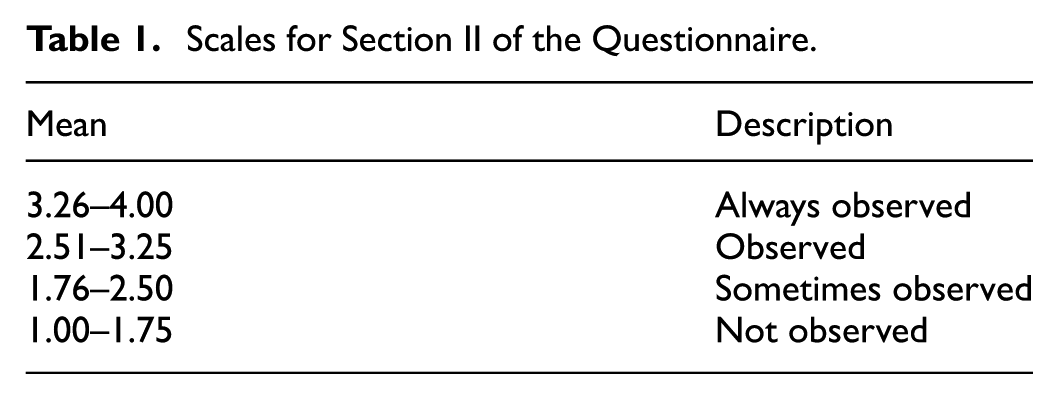
The questionnaire comprised three sections. Section I pertains to the respondents’ demographics. Section II discusses leadership management in high-quality development of rural schools in Lishui in terms of school managers’ responsibility and decision-making, organizational design, developing people, and improving instructional programs. Each aspect consisted of five statements. Respondents used a scale of 1 to 4 to rate each indicator (4 for “Always Observed,” 3 for “Observed,” 2 for “Sometimes Observed,” and 1 for “Not Observed”; Table 1). Section III describes students’ school engagement. Respondents rated each indicator on a scale of 1 to 4 (4 for “Strongly Agree,” 3 for “Agree,” 2 for “Disagree,” and 1 for “Strongly Disagree”; Table 2).
Scales for Section II of the Questionnaire.
Scales for Section III of the Questionnaire.

The overall Cronbach’s α for the questionnaire is .985. Specifically, Cronbach’s α for School Manager’s Responsibility and Decision-Making is .959, for Organizational Design is .930, for Developing People is .959, for Improving Instructional Program is .952, and for Students’ School Engagement is .967. The results of the exploratory factor analysis (EFA) of the questionnaire indicate a high suitability for factor analysis, as demonstrated by a Kaiser–Meyer–Olkin (KMO) Measure of Sampling Adequacy of .946 and a Bartlett’s Test of Sphericity Approximate Chi-square of 3780.696 (p < .001). Specifically, the factor loadings for the dimension of school managers’ responsibility and decision-making range from .628 to .790. The factor loadings for organizational design range from .526 to .805. For developing people, the loadings range from .540 to .856, and for improving instructional program, they range from .618 to .785. These results affirm the robustness of the factor analysis, highlighting the data dimensions that are well-captured by the identified factors.
Data Gathering Procedure
We sought consent from school department heads and, upon approval, distributed an online questionnaire to the participants via Google Sheets. All participants provided verbal informed consent before participating in the study. The survey’s purpose was stated at the beginning of the questionnaire, and only those who had been informed and consented to participate proceeded to complete the survey. The participants were explicitly informed that participation was voluntary, they had the right to withdraw at any point without penalty, and all responses would remain anonymous and confidential. It took more than a month to collect the data because a sufficient number of complete forms had to be gathered. All experimental procedures were approved by the Lishui University Ethics Committee (license number: Lsxyrtjs23007).
Data Analysis
We tabulated, analyzed, and interpreted the data using multiple statistical methods. Percentages were utilized to analyze respondents’ demographic data. The weighted mean tool was used to process data on leadership management in high-quality development of rural schools in Lishui. Analysis of variance was used to determine whether a significant difference existed in the quality of leadership management in high-quality development of rural schools in Lishui regarding the aspects focused upon in the study. It also helped determine significant differences between student engagement and their profiles. Finally, the Pearson-r moment correlation was employed to ascertain the correlation between leadership management to enhance the quality of rural schools in Lishui and student engagement in schools (Table 3).
Scales for Correlation.

Results and Discussion
Respondents’ Demographics
Table 4 shows that 57 out of 130 teacher respondents were aged 20 to 29 years, 36 (27.7%) were aged 30 to 39 years, 23 (17.7%) were aged 40 to 49 years, and 14 (10.8%) were aged 50 years and above. Most respondents were female (n = 105; 80.8%), while male respondents accounted for 19.2% (n = 25) of the sample. One interviewee held a master’s degree, accounting for .8% of the sample. A total of 105 (80.8%) held a bachelor’s degree, and 24 (18.5%) held associate degrees.
Teachers’ Demographics.

The findings reveal that most teachers were young (20–29 years old), female, and held bachelor’s degrees. The growing number of young teachers in China is reported by Shou (2022) using information provided by the Ministry of Education, which stated in 2021 that the number of full-time teachers in China increased by 26% over the last decade, reaching a total of 18.4 million. The percentage of elementary school instructors with a bachelor’s degree or higher increased to over 70% from 32.6% in 2012.
Table 5 shows that most student respondents were aged 11 to 13 years, accounting for 59.2% (155 out of 262) of the sample. Additionally, 80 (30.5%) were aged 9 to 10 years, while 27 (10.3%) were aged 7 to 8 years. Regarding gender, most respondents were female, accounting for 51.1% (n = 134) of the sample, and 128 (48.9%) were male. In terms of grade level, the majority were in primary school (grades 4–6), accounting for 74% (n = 194) of the sample. Sixty students were in grades 1 to 3 of primary school. There were only 8 (3%) junior high school students (grades 7–9). Thus, most students were 11 to 13 years old, female, and enrolled in primary school grades 4 to 6.
Students’ Demographics.

Extent of Observed Leadership Management in High-Quality Development of Rural Schools in Lishui (Question 1: 1. To What Degree is Leadership Management Observed in Enhancing the Quality of Rural Schools in Lishui?)
Table 6 shows that in terms of school managers’ responsibility and decision-making, the item with the highest mean score is regular and clear communication of school leaders on compelling developments for the school’s future, with a mean value of 1.82. This is followed by the school leader’s initiative to involve staff, students, and parents in the decision-making process related to the school’s direction (1.81). The item with the lowest mean value is consistent monitoring of progress toward achieving the school’s strategic leadership objectives (1.71). In general, school managers’ responsibility and decision-making has a computed mean score of 1.77. Each item is described as being sometimes observed.
Leadership Management in High-Quality Development of Rural Schools in Lishui Based on School Managers’ Responsibility and Decision-Making.
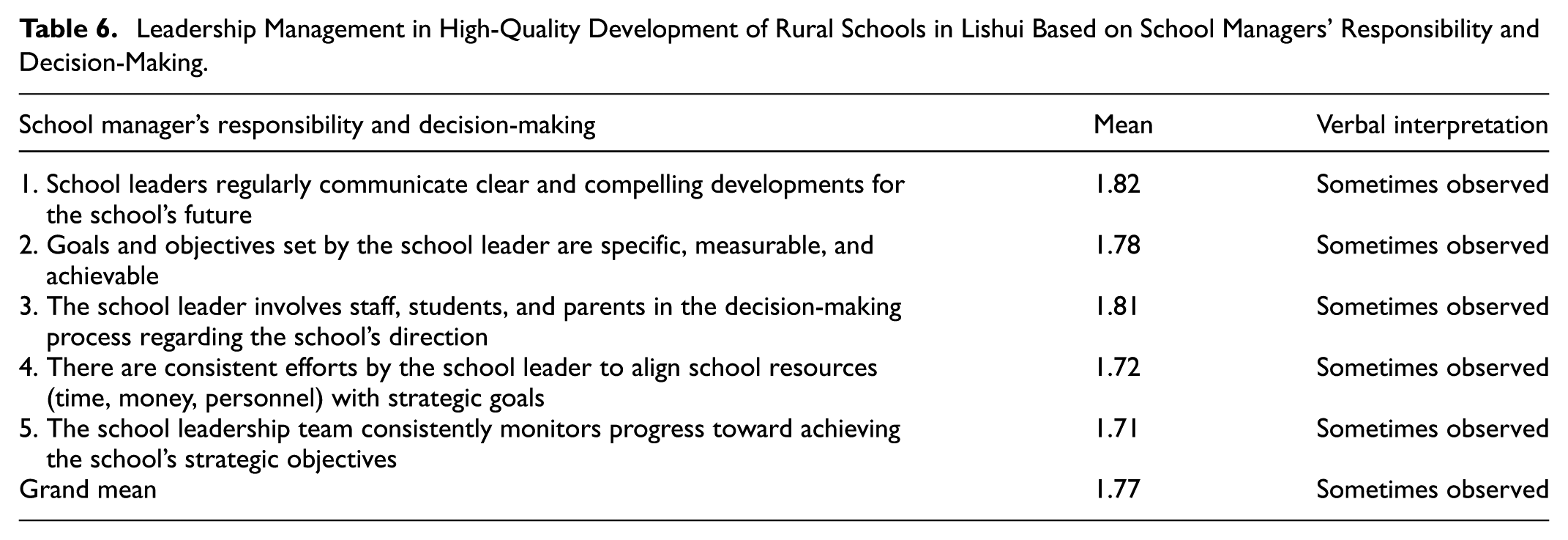
The results indicate that the items with the highest mean emphasize the importance of communication with respect to the school manager’s responsibility and decision-making. However, this is observed only sometimes among school managers.
Items related to school managers’ responsibility and decision-making are not regularly observed by teacher respondents, including regular communication and staff involvement to consistently monitor progress in meeting the school’s strategic objectives. Thus, leaders in rural schools have fewer observed leadership skills related to communication. This could be because most rural school leaders spend time cultivating local community connections and organizations and less time working and communicating with other school leaders because of disparities among schools (Darling-Hammond et al., 2020), their wide variety of responsibilities, and a tendency to work alone. Additionally, school administrators must engage with stakeholders to guarantee their comprehension of the school’s vision, policies, and practices. Clear, open, and inclusive communication minimizes misinformation and conflict (Bloetner, 2023).
In this process, the following points must be observed. First, establish a regular communication mechanism, such as parent meetings and staff conferences, to ensure that all parties are kept informed about the latest developments and policy changes at the school. Second, school administrators should promptly address concerns and issues raised by stakeholders, providing solutions. This helps to enhance trust and a sense of belonging among all parties. Third, during communication, administrators must respect the privacy of all parties, avoiding the disclosure of sensitive information or causing unnecessary disturbances. Fourth, by collecting and analyzing feedback from all parties, administrators should continually refine communication strategies and content to adapt to the ever-changing environment and needs. In conclusion, school administrators must engage in clear, open, and inclusive communication with stakeholders to ensure their understanding of the school’s vision, policies, and practices. This would reduce misinformation and conflicts and enhance the school’s overall image and operational efficiency.
Table 7 shows that, regarding organizational design, the item with the highest mean score is the school having a platform for managing conflicts and submitting comments and feedback (1.75). This is followed by fostering collaboration and teamwork among staff members through the school’s organizational structure (1.72). However, conduciveness for learning with minimal disruption and distraction has the lowest mean score (1.52). Overall, organizational design has a computed mean score of 1.65. All items are reported as being sometimes observed.
Leadership Management in High-Quality Development of Rural Schools in Lishui Based on Organizational Design.

Table 7 highlights that the average score of rural school leaders in “organizational design” is low, especially in issues such as “conducive learning environment, minimal interference and distraction” and “leaders ensuring that infrastructure (such as classrooms, laboratories, and libraries) meets the students’ and teachers’ learning needs.” This indicates that school leaders lack organizational design skills. Communication with rural school principals indicates that this is because of insufficient investment in rural school education, deterring the creation of a good environment for teachers and students. Further, rural school teachers have a relatively large workload. They teach two or more courses and are involved in school administrative work. Hence, they do not have free time to upskill.
In response to the above phenomenon, school leaders need to improve their organizational design capabilities, create a more favorable working and learning environment for teachers, and ensure they pay more attention to the reform and practice of education and teaching. Improved rural school infrastructure is an important foundation for improving the quality of education; however, funding shortages are often a bottleneck. Therefore, rural school leaders should effectively utilize their abilities, strengthen connections with local education departments, enterprises, institutions, and people from all walks of life, actively strive for funds and resources, improve school infrastructure, and create a harmonious learning environment for teachers and students. Moreover, they should strengthen communication and exchange with other rural schools to achieve effective circulation of teacher resources. The mobility of teachers between two to three rural schools can, to some extent, solve the problem of insufficient subject teachers and reduce their workload.
Table 8 presents the mean scores of leadership management in high-quality development of rural schools in Lishui in terms of developing people. School leaders prioritizing professional development opportunities for staff has the highest mean score (1.74). This is followed by acknowledgment and incentivization of exceptional staff performance and noting commitment (1.72). Conversely, promoting a culture of mutual respect, trust, and collaboration among all members has the lowest mean score (1.61). In general, developing people obtained a mean score of 1.69. All items are reported as being sometimes observed.
Leadership Management in High-Quality Development of Rural Schools in Lishui Based on Developing People.

Table 8 shows that rural school leaders generally scored low on developing people. In particular, their scores are low on items such as “The school promotes a culture of mutual respect, trust, and collaboration among all members,”“Staff feel valued and supported by school leaders, thereby improving their job satisfaction and teaching performance,” and “The school provides consistent feedback, fostering a culture of continuous improvement.” Discussions with rural school principals revealed that, on the one hand, the principals hold outdated ideas and employ traditional management models, failing to foster a collaborative cultural atmosphere among teachers and between teachers and students. On the other hand, the stability of rural school principals has been insufficient in recent years, with frequent adjustments made by educational authorities. Principals are typically reassigned every 2 to 3 years, which hinders the continuity and improvement of school culture and reduces job satisfaction among staff.
To improve collaboration in schools, local authorities should create additional platforms for dialogue, enabling rural school teachers to exchange ideas and engage in constructive debates (Gao et al., 2023). For example, academic seminars, teaching workshops, and team-building activities organized by one or several rural schools can promote teachers’ communication and cooperation. These platforms can help teachers share experiences, learn from one another, express their thoughts, and improve teaching quality. Moreover, rural school leaders should encourage interdisciplinary collaboration, where teachers from different subjects jointly develop the curricula and design teaching activities to broaden students’ knowledge and cultivate their comprehensive abilities. Additionally, the importance of teamwork in teaching and management should be emphasized, leveraging collective wisdom to solve problems and improve efficiency and quality. Frequent collaboration among teachers would set a positive example for students participating in school activities.
Table 9 reveals that rural school leaders scored very low on “improving teaching methods and classroom teaching.” The highest-scoring item is “school leaders use data-driven decision-making to guide instructional improvements and interventions” (1.74). The scores are particularly low for “school leaders consistently emphasize the importance of high-quality instruction for all students” (1.53), “the school provides regular professional training to staff to improve teaching methods and classroom teaching” (1.60), and “School leaders are open to innovative and diverse teaching methods to cater to different learning styles” (1.66). This may seem surprising for Chinese schools, which prioritize academic performance. However, the same is not always true for rural schools in China.
Leadership Management in High-Quality Development of Rural Schools in Lishui Based on Improving Instructional Programs.

On the one hand, rural schools have relatively weaker student populations, mostly consisting of left-behind children whose parents work away from home. These children are cared for by grandparents with limited education, who struggle to provide adequate supervision or academic support. On the other hand, rural school principals prioritize the safety and healthy growth of these children, providing them with as many enriching school activities as possible. This is related to the educational goals of rural schools, which focus on cultivating students’ life and survival skills, leading to low scores in “improving teaching methods and classroom teaching.”
The findings reveal that improvement of instructional program activities, which is related to proving the importance of high-quality instruction for all students and the provision of regular staff training to improve instructional competencies, is not regularly observed. School leaders place less emphasis on improving school instruction programs, especially on the development of quality instruction. Researchers suggest that the Chinese government should ensure sufficient resources, address the needs of rural teachers (including their desire for professional growth (Gao et al., 2023), secure additional funding from universities and collaborate with them, enhance rural teachers’ involvement through various means, and employ technological solutions. This will improve rural teachers’ professional development. Schools should prioritize improving the teaching curriculum. They should define clear teaching objectives to ensure that the curriculum aligns with the school’s vision, mission, and values. This will ensure the relevance and effectiveness of the teaching plan. Based on students’ learning needs and future development trends, the curriculum should be optimized to ensure the scientific, practical, and forward-looking nature of the content. At the same time, attention should be paid to the coherence and systematization of the curriculum to avoid repetition and disconnection. Increasing the proportion of practical teaching by incorporating hands-on experiments, social practices, project-based research, and other methods will enhance students’ practical and innovative abilities. By improving the teaching curriculum, especially in developing high-quality instruction, the goal of high-quality education can be achieved, providing strong support for the comprehensive development of students.
As seen in Table 10, leadership management has the highest mean score for school manager responsibility and decision-making (1.77), followed by developing people (1.69). Organizational design and improving instructional programs have a mean score of 1.65 each. All items are reported as being sometimes observed.
Composite Table for Leadership Management in High-Quality Development of Rural Schools in Lishui.
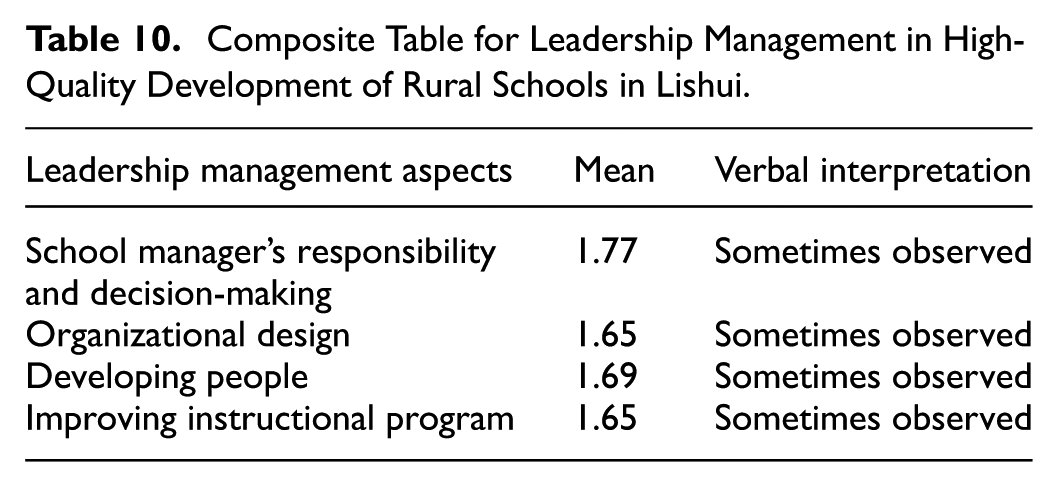
The findings reveal that the school leaders of rural schools in Lishui do not demonstrate leadership management regularly in terms of the four aspects covered in this study. Several factors may explain the lack of good school leadership in rural areas. A lack of resources can hinder efforts to provide quality education, maintain infrastructure, and support teachers. This may influence school leaders’ decision-making, provision of training for teachers, creation of collaborative activities, and effective instructional programs. Factors potentially contributing to the limited implementation of school leadership among rural schools include challenges in retaining teachers, remote locations of schools, varied needs of learners in rural settings, and restricted access to supportive services, such as special education programs, counseling, and healthcare facilities.
Researchers have suggested that teacher empowerment promotes better leadership in rural schools. The quality of teachers in rural schools should be professionally enhanced, and the tension in superior–subordinate relationships, caused by school inequality and poor communication, should be alleviated (Gao et al., 2023). Enhancing teacher commitment is the primary task of school leadership (L. Li et al., 2022). This is especially crucial in rural Chinese schools, where high staff turnover and burnout rates are common. Principals can increase teacher commitment by employing greater positive reinforcement and encouragement while minimizing the use of criticism and sarcasm, or by implementing transformational leadership strategies.
Additionally, the principal must possess knowledge about each teacher’s interests, hobbies, abilities, and specializations. This enables the principal to allocate responsibility to the most suitable individual, ensuring that every teacher contributes to the promotion of teacher commitment (L. Li et al., 2022). Further, principals should establish a favorable collaborative culture as a collaborative culture serves as a substantial moderator for administrators to promote teacher collaboration. These findings align with previous research indicating that school administrators can enhance teacher dedication by promoting collective decision-making, a cooperative atmosphere, professional learning communities, and participatory decision-making. Principals can establish both the necessary time and organizational framework for teachers to engage in collaborative efforts and cultivate highly productive teams (L. Li et al., 2022).
Level of Student School Engagement (Question 2: To What Degree are Students Engaged in the School?)
Table 11 shows that rural students’ school engagement scores are generally low. The highest-scoring item is “I feel that my teachers and classmates value my opinions and ideas” (1.77), followed by “I regularly attend office hours or seek help when needed” (1.73). The mean scores for the remaining items are all low, ranging between 1.56 and 1.70, indicating that students’ responses leaned toward “disagree.”
Students’ School Engagement.

Rural living conditions are poor, with insufficient public facilities and limited recreational options for students after school, resulting in a lack of extracurricular and off-campus activities. Opportunities for study trips or excursions are even scarcer. Most rural students are left-behind children under the care of grandparents, whose ability to supervise daily life and assist with homework is weak, affecting the efficiency of homework completion after school. Since most rural parents work away from home, they spend little time with their children, lack emotional and psychological communication, and rarely take their children out to broaden their horizons. These factors hinder rural students’ ability to set personal goals and build self-confidence, affecting their clarity about their future.
Table 12 shows that most students have low engagement (243 out of 262; 92.7%). Eighteen (6.9%) respondents reported average engagement, while one (0.4%) reported high engagement.
Level of Students’ School Engagement.

We suggest the following actionable measures to improve students’ engagement: First, the government should work to improve rural students’ living conditions and increase resource investment, particularly by adding public facilities that enhance the spiritual culture of rural communities, such as libraries, cultural centers, and sports facilities. This is key to creating a conducive learning environment. Second, rural boarding schools can provide left-behind children with safe and comfortable accommodation, improved dining conditions, and psychological support, ensuring their physical and mental well-being. Third, increasing education funding, optimizing the allocation of urban and rural educational resources, and improving teacher benefits can enhance school infrastructure and teaching quality. This will motivate teachers to dedicate more time and energy to students, motivating them to actively participate in school life and learning. Finally, building modern campuses, enriching campus cultural activities, and strengthening home-school collaboration can help create a positive learning atmosphere and boost students’ self-confidence. These efforts will collectively improve students’ learning efficiency and comprehensive abilities, promoting all-around development.
In February 2017, the General Office of China’s Ministry of Education issued the “Guidance on After-School Services for Primary and Secondary Schools,” with some schools piloting the program in April 2017. Lishui fully implemented the “5 + 2” model (5 days a week, at least 2 hr a day) in 2022. After-school services include homework assistance and interest-based activities such as sports, arts, and school club activities. These initiatives have greatly enriched students’ campus lives, provided rural students with more enjoyment and higher engagement, and alleviated the burden on parents.
Differences in Teachers’ Perception Based on Age, Sex, and Educational Attainment (Question 3: Do Significant Differences Exist Between the Demographic Profiles of Teacher Respondents and the Observed Degree of Leadership Management in Improving Rural Schools in Lishui, Particularly in the Areas of School Managers’ Responsibility and Decision-Making, Organizational Design, Talent Development, and Instructional Program Improvement?)
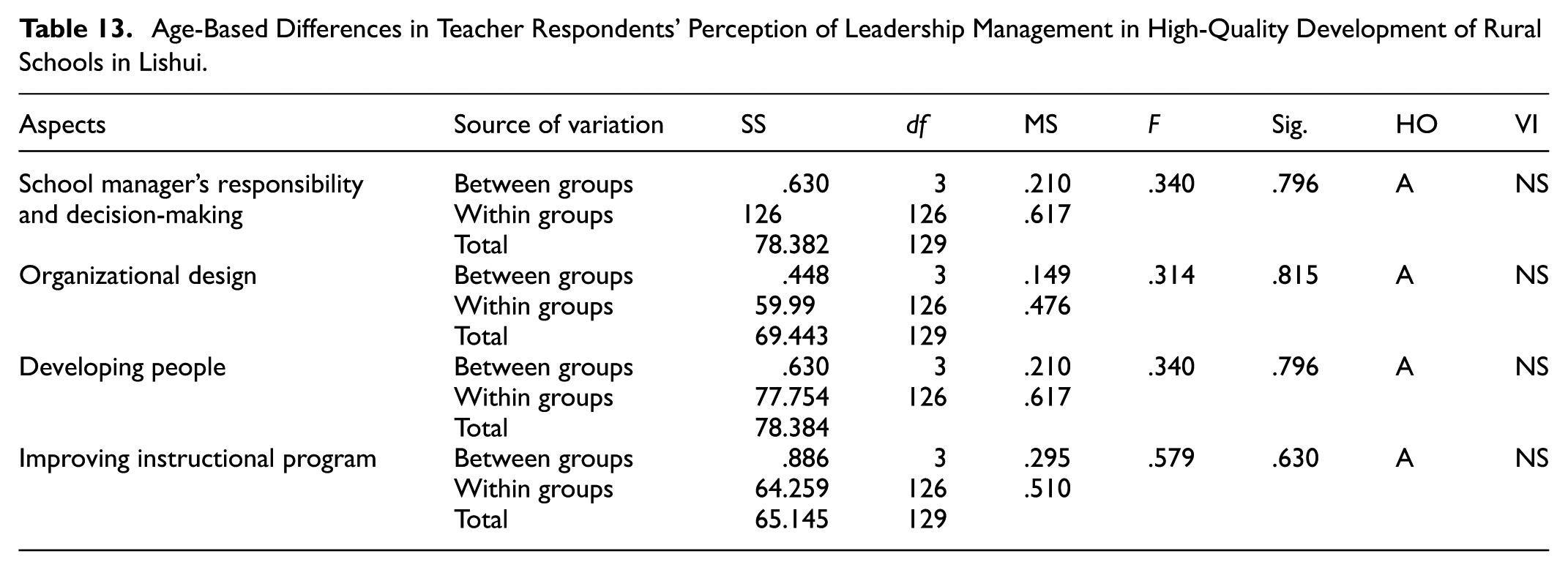
The significant differences in teacher respondents’ perception of leadership management in high-quality development of rural schools in Lishui in terms of the four aspects were classified according to teachers’ age (Table 13). The computed F-values were .340, .314, .340, and .579, respectively. This resulted in p-values of .796, .815, .796, and .630, respectively. As the computed p-values were greater than the set alpha value of .05, the null hypothesis was retained. Therefore, no significant difference was observed based on age among teacher respondents regarding school managers’ responsibility and decision-making, organizational design, developing people, and improving instructional programs. Hence, rural school teachers share the same perception of the school leader’s leadership management, irrespective of their age.
Age-Based Differences in Teacher Respondents’ Perception of Leadership Management in High-Quality Development of Rural Schools in Lishui.
When teacher respondents are categorized by gender, the differences are indicated by computed F-values of .322, .095, .122, and .027, respectively (Table 14). These result in p-values of .572, .758, .727, and .869, respectively. Since the p-values are greater than the set alpha value of .05, there is insufficient evidence to warrant the rejection of the null hypothesis. Consequently, no substantial discrepancy based on teachers’ sex exists in the perception of leadership management.
Sex-Based Differences in Teacher Respondents’ Perception of Leadership Management in High-Quality Development of Rural Schools in Lishui.

The findings reveal that, irrespective of gender, rural school teachers in Lishui share the same perception of their school leader’s leadership management in high-quality development with respect to school manager responsibility and decision-making, organizational design, development of people, and improving instructional programs.
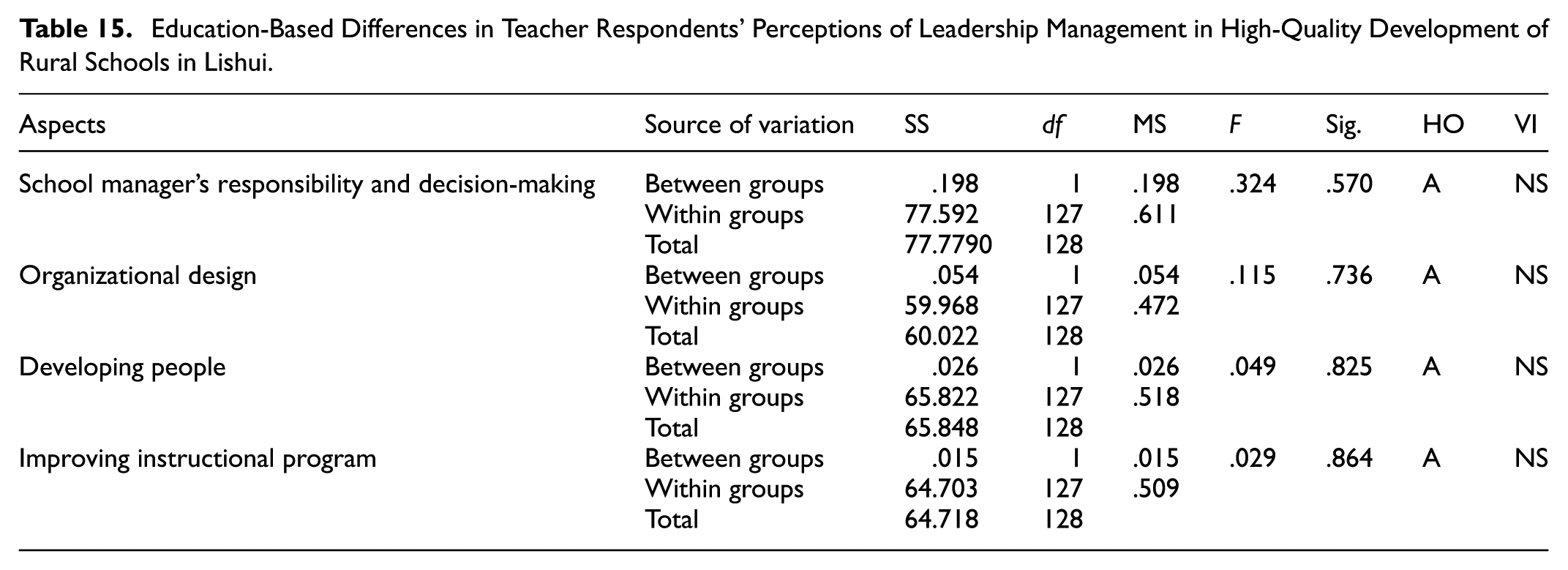
Table 15 presents significant differences in teacher respondents’ perceptions of leadership management in high-quality development of rural schools in Lishui based on the four aspects of school manager responsibility and decision-making, organizational design, developing people, and improving instructional programs based on educational attainment. As the p-values are greater than the set alpha value of .05, the evidence is inadequate to reject the null hypothesis. Therefore, teachers with master’s and bachelor’s degrees from rural schools in Lishui share the same perception of the school leader’s leadership management. These findings indicate that educational attainment is not a factor in how teachers perceive school leaders’ management. To alleviate the tension in hierarchical relationships caused by school inequality and poor communication, rural teachers should be further empowered (Gao et al., 2023).
Education-Based Differences in Teacher Respondents’ Perceptions of Leadership Management in High-Quality Development of Rural Schools in Lishui.
Differences in School Engagement of Student Respondents Based on Age, Sex, and Grade Level (Question 4: Do Significant Differences Exist in the Level of Engagement of Students Surveyed Based on Demographics?)
Table 16 demonstrates the difference in student engagement when student respondents are classified according to age, sex, and grade level. For age and grade, the corresponding F-values are .027 and .490, respectively, resulting in p-values of .973 and .613, respectively. Given that the calculated p-values exceed .05, insufficient evidence exists to discard the null hypothesis. Consequently, there is no significant variance in students’ engagement levels when grouped by age and grade level. However, when student respondents are classified by sex, the computed F-value is 7.159, corresponding to p < .05. Therefore, the null hypothesis is rejected, indicating a statistically significant difference in students’ engagement when classified by sex.
Differences in Student Engagement When Student Respondents are Classified According to Age, Sex, and Grade Level.

The findings reveal that, when grouped by age and grade, students demonstrate the same level of engagement. However, male and female students have different engagement levels. This indicates that school factors affect the engagement of male and female students. Schools should tailor their approach according to the actual situation to encourage the participation of all students, irrespective of their gender, harnessing their enthusiasm and engagement in school activities.
Relationship Between Leadership Management and Students’ Engagement (Question 5: What is the Relationship Between Leadership Management and Student Engagement Levels?)
As shown in Table 17, since the p-values are less than the set alpha value of .05, sufficient evidence exists to reject the null hypothesis. Therefore, significant relationship exists between the four aspects of leadership management in high-quality development of rural schools in Lishui and student engagement.
Relationship Between Leadership Management in High-Quality Development of Rural Schools in Lishui and Student Engagement.
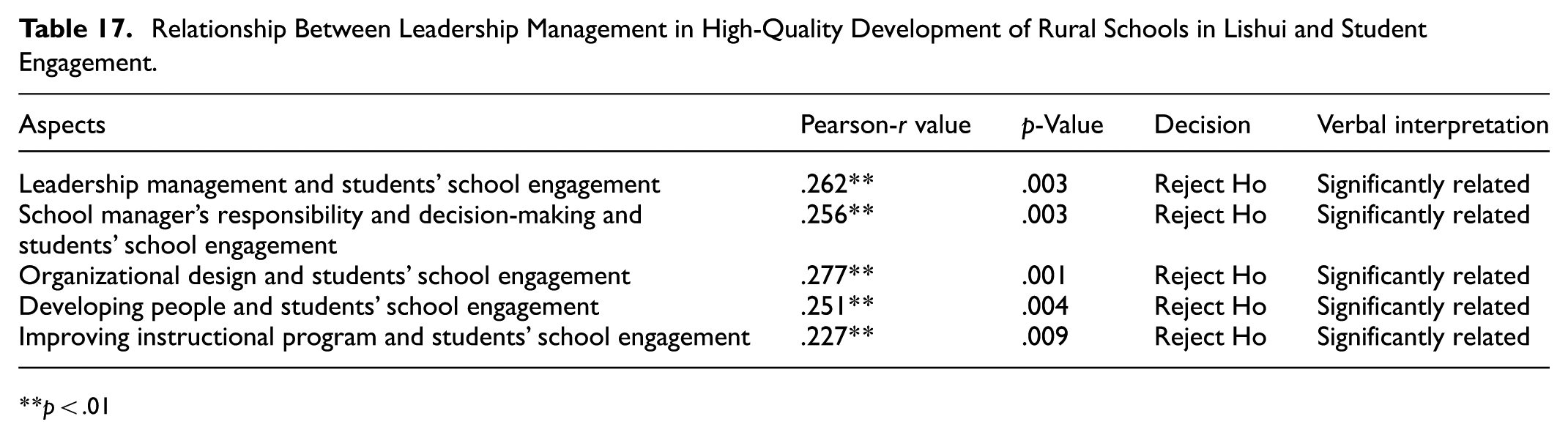
p < .01
The findings indicate that the observed school leadership and skills in terms of the school manager’s responsibility and decision-making, organizational design, developing people, and improving the instructional program are low, as is student engagement. This implies that factors related to school leadership, such as a collaborative culture among teachers, better teacher training and professional development for teachers, an enhanced conducive learning environment for students, and effective communication among school leaders and stakeholders, will promote positive student engagement. Low student engagement justifies the low school leadership observed in rural schools in Lishui. This is supported by Han (2018), who argued that small rural school teachers lack professional training and use practices that discourage student engagement and learning.
Small rural schools have struggled to establish creative teaching approaches. J. Li et al. (2023) suggest that successful professional development for primary school teachers in China involves cooperation and communication among teachers; however, it does not include professional development, individual teaching reflection, and innovation. The impact of principal leadership in providing instruction about students’ academic achievement is not directly significant. Nevertheless, employing effective teaching strategies can serve as a mediating factor linking principals’ instructional leadership and teachers’ effective professional development to students’ academic achievement. Principals’ instructional leadership directly affects teaching strategies by promoting professional development for teachers, which, in turn, affects students’ academic achievement. This study contends that not all forms of professional development are effective for Chinese primary school teachers in pursuit of sustainable, high-quality education. Principals can enhance students’ academic performance by fostering teacher collaboration and communication to enhance pedagogical approaches. Chinese principals should redirect their focus from administrative affairs to the sustained advancement of teaching and learning.
Developed Theoretical Framework on School Leadership and Student Engagement (Question 6: What Framework can be Developed from the Study’s Findings?)
Positive school leadership affects student engagement. Factors related to school leadership, such as a collaborative culture among teachers, better teacher training and professional development, a conducive learning environment for students, and effective communication among school leaders and stakeholders, promote positive student engagement. The developed theoretical framework presents factors related to positive school leadership, such as ensuring clear communication between superiors and subordinates (Figure 1). This pertains to the instructions provided by the principal to meet school goals. Staff training is another factor related to positive school leadership. This may include activities aimed at professionally improving teachers and school staff. Staff recognition is necessary for motivating teachers to work and become efficient. Recognition may come in the form of promotions or the acknowledgement of teachers’ professional achievements and accomplishments. Besides the professional improvement of staff and teachers, personal improvement is necessary. Activities that contribute to staff personality improvement are vital for promoting positive school leadership. Collaboration among teachers is necessary to enhance their professional skills.

Theoretical framework on school leadership and student engagement.
Positive school leadership is reflected in student engagement. Student engagement is important because students engaged in school are less likely to develop problems related to socialization, thus promoting their social and physical well-being. Students’ engagement is the first step toward improving their academic achievement. Students who are engaged in school should participate in schoolwork and always try to be present. Students with high school engagement show better attendance and no tardiness, participate well in school activities and events, and actively participate in extracurricular activities.
It is noteworthy that most respondents were female, aged 20 to 30 years, and had high educational attainment. The low level of school leadership among rural schools of Lishui in the four aspects of school manager’s responsibility and decision-making, organizational design, developing people, and improving instructional programs could be due to various factors, such as limited resources. A lack of resources can hinder efforts to provide quality education, maintain infrastructure, and support teachers. This may influence school leaders’ decision-making, provision of training for teachers, creation of collaborative activities, and effective instructional programs. Other factors associated with low school leadership implementation in rural schools are teacher retention, the school’s location (usually in remote places), diverse learners’ needs, and limited access to support services, such as special education programs, counseling, and health care facilities. The low level of student engagement can be due to poor living conditions and learning environments, and a lack of resources to promote children’s physical and mental health.
This study’s findings suggest that rural school leaders must clarify their responsibilities. They should fulfill administrative duties and guide teaching practices. In other words, rural school principals must enhance their leadership skills in curriculum and teaching reforms, exerting a guiding influence on teachers for their overall improvement. With enhanced teaching abilities, teachers will pay more attention to reforming classroom teaching models and focus on student participation and learning outcomes. Moreover, rural school leaders must strengthen their cultural leadership, particularly in guiding the spiritual culture. The physical facilities in rural Chinese schools are well-equipped, with a strong emphasis on creating a material culture, which has significantly improved over the years. However, the spiritual culture remains relatively weak. For example, the school’s philosophy, collaborative culture among colleagues, and communication culture between teachers and students or between schools and families require further enhancement. Principals should lead teachers in carrying out consistent activities and teaching projects, establish implementation processes, establish fixed practices within the school, and develop the school’s brand culture, reflecting the overall spirit of its teachers and students.
Rural school leaders should design and organize diverse teacher activities, involving teachers in the decision-making, to foster cohesion and a sense of belonging among teachers. Teachers should feel valued and supported, as their attitudes toward life and work directly impact student engagement. School leaders should communicate with the government and educational authorities to secure resources and learning opportunities for teachers and students. They should encourage teachers to embrace reform and innovation, improve their teaching capabilities, demonstrate diverse teaching styles, and enhance student participation, elevating the overall quality of rural education and contributing to China’s rural revitalization plan. Therefore, effective management by rural school leaders in China is the key to bridging the “last mile” in building a high-quality education system and delivering education that satisfies the Chinese people (Figure 2).

The relationship diagram between the four elements of school leadership management and student engagement.
Based on these findings, future research should focus on the relationship between student participation and the leadership style of school principals, and further analyze the reasons for gender differences in student participation, to reveal the factors related to leadership style that affect student participation. Comparative studies can be conducted regarding rural and urban students’ participation. Because of the unique geographical location of the Lishui mountainous area, the research results are applicable only to regions with similar educational conditions, such as southwestern China. Future research can expand the geographical scope and strengthen comparative studies in different regions.
Conclusion
This study finds that, first, the leadership style of school leaders in rural China affects student engagement, which, in turn, affects student learning and well-being. Second, open communication between school staff and leaders should be encouraged, and teachers and other school staff should be allowed to participate in decision-making to motivate them. Third, schools should focus on creating a good working and learning environment to improve teachers’ and students’ participation.
Footnotes
Acknowledgements
The authors would like to express their gratitude for the support from the educational administrative departments of the various counties and districts in Lishui, Zhejiang, China. Special thanks are due to the teachers and students at the small rural schools in Songyang County, Qingtian County, Jinyun County, Qingyuan County, Jingning County, and Liandu District for their support and cooperation with the questionnaire survey. Additionally, the authors would like to thank Dr. Gali Gervi (University of Perpetual Help System DALTA, Philippines) and Prof. Shi Leishan (Lishui University, China) for their assistance in the preparation of the article.

Ethical Considerations
All experimental procedures were approved by the Ethics Committee of Lishui University (Permit No. lsxyrtjs23007).
Consent to Participate
All participants provided verbal informed consent prior to participating in the study.
Consent for Publication
Not applicable.
Author Contributions
Xu-Feng Ji: Conceptualization, Data curation, Formal analysis, Methodology, Supervision, Visualization, Writing – original draft. Yin-Die Li: Validation, Writing – review & editing.
Funding
The authors disclosed receipt of the following financial support for the research, authorship, and/or publication of this article: This work was supported by the Philosophy and Social Science Program of Zhejiang Province, Zhejiang Federation of Humanities and Social Sciences, provided to X-FJ., under Grant (24NDJC05Z).
Declaration of Conflicting Interests
The authors declared no potential conflicts of interest with respect to the research, authorship, and/or publication of this article.