



Abstract
The IEE serves as a vital foundation for national economic development. However, it remains at a developmental stage in China and faces numerous challenges. Based on survey data from faculty and students, this study employs the Grey-DEMATEL method to conduct a quantitative analysis of fifteen key factors constraining college students’ IEE. The results indicate that imperfect multi-party collaboration systems and constraints of outdated traditional mindsets are the most significant causal factors, exerting the greatest influence on other constraints. Meanwhile, students’ lack of perseverance and inadequate infrastructure emerge as core resultant factors. Additionally, weak campus culture, uneven development levels among colleges, and constraints of traditional mindsets constitute the three highest-centrality key nodes. These factors exhibit significant systemic interconnections and are jointly influenced by regional culture and institutional environments. Based on the findings, this study proposes pathways to advance IEE, including establishing dynamic collaborative mechanisms, promoting mindset transformation, and optimizing resource allocation. This research outcomes can offer theoretical foundations and practical guidance for colleges and educational administrations in formulating differentiated policies.
Introduction
The awareness and spirit of innovation are the key factor and prerequisite of the entrepreneurship success that focuses on pioneering. If there not enough innovation awareness and still followed by the established model, it will be difficult to make a breakthrough in the process of entrepreneurship (Tam et al., 2023). In that case, even if modest progress is made, we will still struggle and has difficult to move forward (Boutillier, 2019; Sieg et al., 2023; Wei et al., 2024). Entrepreneurship is the ultimate destination that the innovation consciousness and spirit to be recognized (Aly et al., 2021). A person’s innovative thinking be fully, objectively and truly reflected only through entrepreneurial practice and the entrepreneurs can also get the home and comfort of heart (Carpenter & Wilson, 2022; Fan et al., 2024; Karlsson et al., 2021). The promotion of IEE mechanism in colleges reflects the reform and innovation of talent cultivation mechanism in the new era, which has far-reaching significance to the country, society and college students (Amalia & Korflesch, 2021; Murry et al., 2023; Pinho, 2017). First, the promotion of IEE mechanism is conducive to the implementation of innovation-driven development strategy (Ibarra-Vazquez, 2023). At present, China’s economic and social development has stepped into a new era, and more attention should be paid on the innovation-driven, scientific and technological progress, that is identified an important driver to promote the country’s leapfrog development and build an innovative country (Du et al., 2024). The implementation of innovation-driven strategy is inseparable from a large number of talents with innovative consciousness, entrepreneurial ability and highly qualified (Wang, 2023). Second, the promotion of IEE mechanism is conducive to the leapfrog development of college talent training mode (Kyvik, 2018). At present, although the scale of domestic higher education is increasing, restricted by many factors such as the homogenization of training mode, the lack of innovation consciousness and the disharmony between practice and theory, the teaching quality, graduates’ employment competitiveness and other key indicators, it difficult to obtain qualitative improvement and the problem of college students’ employment is increasingly prominent (Blankesteijn, 2021; Gomez, 2024). The educational concepts, educational reform and innovate talent training mode can be improved by the promotion of IEE mechanism. In this way, high quality talents can be trained for economic transformation and social development, and the sustainable and leap-forward development in personnel training can be achieved in colleges (Murmann et al., 2023). Third, the promotion of IEE mechanism is conducive to giving full play of students’ professional advantages and realizing their own value (Pirson et al., 2019). Limited by traditional employment and official thinking, many college students set their employment goals on stable government jobs, such as government agencies, enterprises and public institutions, and even abandon the professional knowledge learned in college in real life. The implementation of IEE mechanism can promote college students to change their employment concept, stimulate innovation enthusiasm, fully tap the potential of professional knowledge and actively adapt to the needs of economic transformation and social development, that not only smoothly solve their own employment problems, but also optimize the social employment structure to a certain extent (Mandrup et al., 2017).
The 21st century is a new economic era of information and knowledge competition. In view of the grand goal of building an innovative country proposed by China, the key is to cultivate innovative and entrepreneurial talents who can undertake this task (Huang et al., 2023). The emergence of IEE is a new education mode to adapt to the knowledge economy era development, which aims to cultivate a group of innovative and entrepreneurial talents with innovation and entrepreneurship consciousness, thinking and ability (Sorokin & Chernenko, 2022). The developed countries has always attached great importance to the study of innovative and entrepreneurial education, that the start time and related practice activities began relatively early and achieved a certain important results (Lu et al., 2021) From the perspective of regarding IEE as the direct driving force of economic development, a relatively complete education and entrepreneurship education system has been constructed (Deepu & Ravi, 2021; Duval-Couetil et al., 2021; Monte et al., 2022; Schmitz et al., 2017). Compared with the developed countries, the implementation of IEE in China is still in the initial stage, and there exists many problems in the practice or reform process of IEE. The literatures on theoretical research is mostly general and very few involves specific cases, that lacking empirical and targeted. It is not integrated with professional education at the practical level, and it lacks systematic research from the practical training level at the same time (Li et al., 2021; Zhang et al., 2023). There are few researches the restrict factors of IEE, which mainly focus on the importance and related countermeasures of IEE. Since the IEE of China’s college students is in the development stage, it is very important to carry out quantitative research on restrict factors, which can provide a basis for the formulation of relevant policies and provide directions for the smooth implementation of policies. There are many and complex factors affecting IEE, and the correlation between each factor is unclear, which causes great difficulties in continuously promoting and improving IEE. Therefore, there is an urgent need for effective methods to determine the key factors affecting IEE, that is facilitate the formulation of reasonable and effective relevant policies. The Grey-DEMATEL method is an effective mean to identify the interaction between various uncertain factors in a system by using graph theory and matrix correlation principle, which is widely used at present (Mubarik et al., 2021; Nalbant, 2024). The barriers that influence implementation of an end-of-life vehicles management system in Brazil was identified and analyzed from organizational, environmental, academic and governmental perspective by Grey-DEMATEL method and the result indicated that the absence of specific legislation was the most important barrier (Soares et al., 2023). The Grey-DEMATEL method was adopted to analyze the barriers based on the sample data obtained from a questionnaire of senior experts in China’s shale gas industry and some policy suggestions were put forward based on these results (Wei et al., 2019). There is no literature report on quantitative research on the restrict factors of IEE using Grey-DEMATEL method. Therefore, it is of great practical significance to carry out this study.
Based on the above problems, this study first identifies the restrict factors that affect the IEE of college students through literature research and expert interviews. Then, the key restrict factors are determined by calculating the centrality, causality and sensitivity analysis via Grey-DEMATEL method. This study is the first to apply the Grey-DEMATEL method to analyze restrict factors and breaks new ground by combining a novel methodology with a focused analysis of understudied factors in China’s college IEE, offering both theoretical and practical advancements. This hybrid approach combines grey system theory (handle incomplete information) and DEMATEL (map causal relationships), addressing the subjectivity and data scarcity issues common in traditional analyses. The integration of sensitivity analysis ensures robustness against expert bias, a novel contribution to methodological rigor in this field. The results can provide a scientific basis for colleges to continuously and effectively implement IEE, optimize the education mechanism, and improve the efficiency of education. In addition, this can cultivate more innovative talents for the development of innovative national strategy.
Literature Review
Problems of IEE
As a key part of the whole higher education system, the IEE is both an opportunity and a challenge for colleges. Through the research on the current situation of college students’ innovation, the authors believe that the following problems facing the IEE in this state.
Inaccurate Subject Positioning
Many colleges in China do not set up an independent and complete IEE section in the main education system, which is only involved in business management or technical economy related disciplines. This directly leads to the positioning absence of IEE in the entire education system, resulting in many questions about the attribution of this type of education and its relatively vague positioning (Chen et al., 2023; Nguyen et al., 2025). There are two main reasons for this situation. First, due to the urgency for quick success and instant benefits in IEE, some colleges do not really realize the multiple significance and key role of IEE curriculum system on talent quality training, and do not incorporate IEE into the overall talent training plan, which makes it difficult to effectively carry out work at teaching level (Teixeira & Pereira, 2019). Second, the administrators of colleges have a one-sided understanding of IEE. They believe that the entrepreneurship and innovation are technical innovation, and ignore the innovative education at the level of ideological concepts and social consciousness, which is more important for young students (Gao et al., 2024; Wang et al., 2024).
Separation from the Professional Education System
Because it is not included in the overall quality evaluation, talent training and discipline construction planning system, the IEE fails to integrate with specific professional education in many cases, and its pertinency is greatly reduced (Ding, 2017). In addition, the research on IEE in China’s colleges is relatively late, the curriculum has a certain degree of randomness, and the educational content needs to be improved. The above reasons have resulted in the separation of IEE and professional education system, which is obviously contrary to the original intention of establishing this discipline (Uddin et al., 2025; Vankov & Wang, 2024). Compared with traditional education, which focuses on consolidating students’ basic knowledge of various majors, the IEE has certain metaphysical characteristics, and pays more attention to the cultivation of students’ innovation consciousness and entrepreneurial ability (Gong et al., 2025). The improvement of the upper quality is based on the solid professional knowledge of college students at the lower level. If we blindly emphasize IEE while ignoring the important carrier of students’ professional knowledge, the effect is not obvious.
Insufficient Educational Means and Scarce Resources
At present, the lack of educational means and resources has gradually become a hindrance to the further development of IEE in colleges. First, whether IEE can achieve the expected results, excellent teachers staff play a crucial role. Due to the particularity of IEE curriculum, teachers are required to teach students not only unique innovation consciousness and systematic entrepreneurship theory, but also have rich entrepreneurial experience and social experience (Gu & Tang, 2025). However, the majority of colleges in China are not only difficult to ensure the knowledge structure and entrepreneurial experience of teachers, but also need to improve the unified coordination and integration of teachers. Second, compared with some countries that started earlier and developed in education, the IEE in China’s colleges is limited by the arbitrariness of courses, and the high-quality localized textbooks are very scarce (Wang et al., 2025). At the same time, the optionally of systematic integration and landing in the introduction of foreign teaching materials makes the actual teaching process lack of sufficient theoretical guidance and scientific support (Pan et al., 2024). Third, the most commonly used forms of IEE mainly include writing entrepreneurship reports and participating in entrepreneurship competitions, that lack normative aspects. In addition, many colleges lack material conditions such as venues and funds to carry out entrepreneurship practice, which greatly limits the coverage of IEE (Sima, 2023).
Inadequate Social Support
It is mainly reflected in the following two aspects. First, the supported policy is not clear. Although the state strongly supports the development of IEE, and the government has issued many policies to guide the progress of IEE in accordance with the requirements of the state, neither the state nor the government has a set of sound policies to guide the development of IEE in colleges, and the publicity of relevant policies has not been fully implemented (Anjum et al., 2021). As a result, college students are unable to understand relevant national policies. Although national policies and government financial support provide strong impetus for college students’ innovation and entrepreneurship, the overall investment support is insufficient, the implementation of policies is not in place, and the complicated procedures for applying for loans and other factors have a negative impact on IEE to a certain extent. Second, Lack of deep understanding of society. For the current situation of the whole society, most people do not realize the true connotation and significance of IEE, and there are misunderstandings about its practical significance. What’s more, the development of IEE courses and related activities is regarded as a way to solve the employment problem of college students. The goal is to teach college students how to start a company and avoid the severe social employment situation. They do not know that the IEE is a comprehensive form of education to cultivate people’s quality and ability (Song et al., 2025; Zhou & Zhou, 2022).
At present, the IEE of China’s colleges students is faced with many problems, which hinder its smooth implementation and development. It is very important to find a suitable method to carry out the study on the key restrict factors of IEE, which can provide a basis for the formulation of relevant policies.
Related Concepts and Theoretical Methods
Grey System Theory
The methods commonly used to study uncertain systems include probability statistics, fuzzy mathematics, rough set theory and grey system theory. The probability statistics is mainly applied to the problem of random uncertainty of large sample data, and statistical rules are analyzed through probability statistics and typical distribution of data. The fuzzy mathematics is mainly applied to the problem of cognitive uncertainty based on experience, and the objective cognitive expression is analyzed by fuzzy sets (Xie et al., 2023). The rough set theory is mainly applied to the problem of unclear boundary and incomplete data. It realizes concept approximation by classification and obtains decision rules by special matrix. The grey system theory is mainly used in small sample data to find realistic law targets. It is an applied mathematics subject that studies the phenomenon of uncertainty with some clear information and some unclear information (Li & Xue, 2025). The study on the influencing factors of the optimization and promotion of IEE of college students is relatively complex. There are many influencing factors, including not only the educational system and social reasons, but also the reasons influenced by students themselves and national policies. Moreover, each factor has different emphases, and influence proportion of each factor on innovation and entrepreneurship of college students is unknown (Zheng et al., 2025). Therefore, based on the limited condition of incomplete information, it is more suitable to adopt the grey system theory to explore the key factors of continuous optimization of IEE of college students.
The grey system theory is a kind of control theory which studies the problem of uncertainty with few data and poor information. It was founded by professor Deng in 1982. The core of grey system theory is to fully develop and utilize explicit and implicit information in data under the condition of limited data, find the potential correlation of information and data, and find the relationship between each factor, that provide the basis for prediction accuracy analysis and system decision making. In the objective world, human cognition of different things has a great one-sidedness and the information obtained by human beings is also incomplete limited by the existing technology and knowledge experience (Xie et al., 2024). Therefore, a system in which the information is partly clear and partly unclear is called grey system. The grey interval is introduced into the grey system theory to make the decision model more flexible.
In the analysis of influencing factors of IEE, experts and scholars in relevant fields should be invited to score each factor. It is hoped that the evaluation information of experts can be expressed by using gray interval to improve the objectivity of data results. The grey interval algorithm in the grey system theory is used to process the data, extract the potential correlation in the data, and determine the relationship between various influencing factors. It can provide data support for the analysis of internal driving factors of the continuous optimization of IEE of college students.
DEMATEL Method
The DEMATEL method, commonly known as decision making trial and evaluation laboratory method, is a scientific method that uses graph theory and matrix tools to simplify complex system structure (Luthra et al., 2017). This method proposed by Battelle institute in 1971 is a way to effectively identify the interaction between factors in a system (Gan et al., 2022). It is considered to be an effective method for factor analysis and identification, especially for those systems with uncertain factor relationships. The DEMATEL method is applied to simplify complex problems by constructing the internal logical relations among factors in the influence matrix analysis system, thus calculating the causation degree and centrality of each factor and the correlation to other factors, and determining the causal relationship between factors and their position in the system. At present, scholars at home and abroad pay much attention to DEMATEL method. The case study of floods in India and critical success factors for implementation of effective humanitarian supply chain management was studied using grey decisionmaking trial and evaluation laboratory (DEMATEL) method (Behl et al., 2019). This study explored 10 causal enablers and 8 effect-based enablers that are further clustered using principal component analysis, and proposes a conceptual model which could further be tested using empirical data. A new approach integrating cloud model and DEMATEL proposed was proposed to determine critical causal criteria for green supplier evaluation with qualitative heterogeneous judgments (Gao et al., 2021). The results indicate that this method can handle heterogeneous judgments effectively as well as that staff environmental training, green production innovation, green marketing and green corporate culture are the critical causal criteria for the given application. The 43 challenges were identified and the key challenges were investigated when choosing appropriate human resources practices for start-ups by A fuzzy DEMATEL method (Priyanka et al., 2023).
Review of the Literature
The combined grey system theory and DEMATEL method is a system analysis method of each factors using graph theory and matrix tools (Liu et al., 2021). On the basis of DEMATEL quantitative analysis, it introduce grey theory that can also carry out qualitative analysis and reduce the subjective influence of experts (Asad et al., 2016). The importance and causality of each factor are judged by studying the causality, centrality and sensibility of the restrict factors. Due to the late implementation and promotion of IEE courses of China’s college students, the teaching effect is not obvious. There are many reasons that affect the smooth promotion of IEE of China’s college students, such as college education system reasons, social reasons, college students’ own reasons and government policies reasons, and each aspect has its own different influencing factors. The influence proportion of each factor on IEE is unknown, and the relationship between them is also unclear. Therefore, the Grey-DEMATEL method was introduced to analyze the identified factors that restrict the IEE of college students in this paper. The information evaluated by expert is expressed by grey number decision model, which avoids the expert evaluation is too absolute and is more consistent with the actual situation.
Methodology
Method and Data Sources
This study adopted combined Grey-DEMATEL method to analyze the identified factors that restrict the IEE of China’s college students, that was proposed by Deng in 1982 and Battelle in 1971, respectively. The study model and procedures were carried out according to the results of professor Xia’s published paper (Xia et al., 2015). The process of IEE involves the influence of college, society, family, government and college students’ themselves (Suryavanshi et al., 2020). The identification restrict factors of IEE was conducted by following steps. First, the restrict factors were summarized from four aspects, college education system reasons, social reasons, college students’ own reasons and government policy reasons via the research of relevant literature (Alnafrah & Mouselli, 2020; Wan & Lv 2021; Yang, 2021). Second, a questionnaire survey on above four aspects was conducted, filled out the questionnaire and counted the results among the part of senior students and teachers. The sample of this questionnaire was 3648, including 3526 students and 122 teachers. We counted a total of fifteen restrict factors that the options higher than 5%. Third, we invited four experts in the field to score the identified fifteen restrict factors, and finally completed the calculation and analysis of the data according to the part of procedures of the Grey-DEMATEL Method. The calculation and analysis of all data in this paper were completed by SPSS 18.0 software.
Procedures of the Grey-DEMATEL Method
Interaction Between Each Constraint
Firstly, it summarize the constraints that affect the IEE of college students through literature review, questionnaire survey, expert interview and other ways. Then, the experts in the field of IEE are invited to make a comparative interaction analysis of each influencing factor, and the corresponding numbers are used to indicate the degree of mutual influence between two restrictive factors in the system, in which the 0, 1, 2, 3, and 4 represent no influence, weak influence, medium influence, strong influence and very strong influence of the constraint i on constraint j, respectively (Sun et al., 2022). The expert score are shown in schedule Tables A1 to A4. Finally, the matrix form with strong and weak mark is obtained by combining grey number theory. The range of grey numbers among each restrict factor evaluated by the expert is shown in Table 1.
Range of Grey Numbers Among Each Restrict Factor Evaluated by Experts.

Establish the Grey Number Matrix
The experts are given different weights that are fuzzy according to the different mastery degree of each expert in the research field. The semantic variables of expert weight is shown in Table 2. The expert evaluation opinions are transformed into grey number matrix, and then the influence matrix of N×N order restrict factors denote as ⊗x is obtained (Konstantinou & Gkritza, 2023).
Semantic Variables of Expert Weight.

Obtain the Direct Influence Matrix A
The gray number matrix is sharp processed by the following formulas, where the k is the number of experts. The upper and lower bounds of grey numbers are standardized according to formula 1 and 2 (Gan et al., 2022).


Where, the
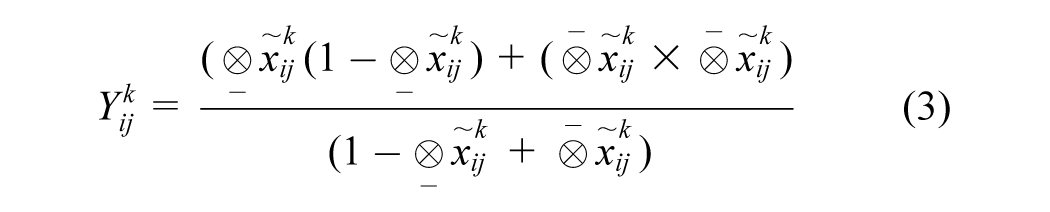
The clarity value is calculated by the formula 4.

The total weight matrix of the k experts is calculated by formula 5, namely, the direct influence matrix A (Garg, 2021).

Where,
Obtain the comprehensive influence matrix T
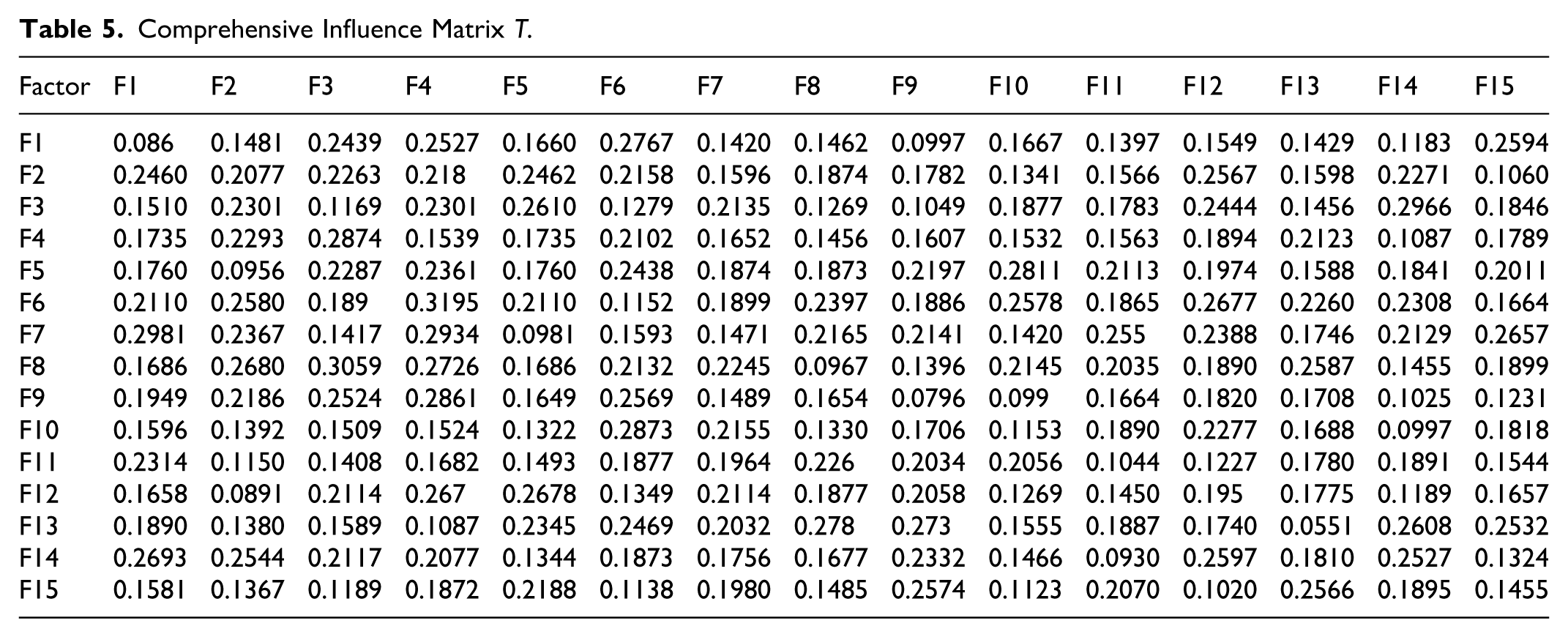
According to formula (6) and (7), the direct influence matrix A of restrict factors on IEE is standardized, and the standardized influence matrix D is obtained. Then, the comprehensive influence matrix T (T=[tij]n×n) is calculated by the formula (8). The influence degree Ri and affected degree Cj are calculated in the comprehensive impact matrix (Jain & Qureshi, 2022).


As for
Where, the Ri, named the influence degree, represent the sum of the elements in row i of the matrix T, indicating the direct and indirect influence value of the i constraint factor on other constraint factors of IEE. The Cj, named the influenced degree, represents the sum of the elements in the column j of matrix T, indicating the specific influence value of the direct and indirect influence of the j factor in the column restricting factors of IEE on other factors.
Calculation of Centrality (Pi) and Causality (Ei)
The centrality Pi and causality Ei of each restrict factor is calculated by formulas (9) and (10) (Douglas & Prentice, 2019).


The centrality refers to the degree of the key role of the restrict factor in the whole evaluation system. The greater the centrality, the more critical the role is. If the value of causality is greater than zero, it indicates that this restrict factor has a great influence on other factors, and it is called the causal factor. On the contrary, the restrict factor named as result factor is greatly influenced by other factors under the condition of the value of causality is less than zero.
The cartesian coordinate system is established based on the centrality and causality of restrict factors of IEE, and the relative positions of each restrict factor are plotted in the coordinate system. In addition, in order to intuitively and clearly describe the mutual influence between each constraint relations, there given an initial value of α according to the mean value and standard deviation of obtained comprehensive influence matrix T. if the elements tij is not less than α, it underline the number to indicate that factor i has a great influence on the factor j.
Results
Identification of Restrict Factors
The fifteen identified restrict factors are described below.
College Education System Reasons
(F1) Lagging Concept of Practical Education
The IEE must establish the educational concept of practical education and always insist on putting it in the key point of education. The successful experience of IEE tells us that only paying attention to practice can fundamentally improve the awareness and ability of IEE. However, the IEE only stops at offering compulsory courses and cannot adhere to the policy of practice education in many colleges and universities in China. The relevant practice links are not highly valued, and the real effectiveness of IEE for college students cannot be effectively reflected.
(F2) Professional Ability of Instructors is Generally Low
The guidance teachers should be able to organically combine the theoretical knowledge of entrepreneurship education with specific practical activities, and have the knowledge and skills of venture capital and entrepreneurship at the same time through professional learning, training and enterprise practice (Yan & Guan, 2019). However, there are not enough professional teachers specializing in IEE in most colleges and universities until now, and more counselors are part-time teachers to guide college students to start their own businesses, that shows a lack of professional level.
(F3) Incomplete Teaching System for Innovation and Entrepreneurship
As the focus of China’s higher education reform, the curriculum formulation of IEE should pay attention to the guidance and cultivation of college students’ entrepreneurial consciousness, spirit, passion and values to improve the success rate of college students’ innovation and entrepreneurship (Yu et al., 2021). In addition, it is necessary to support the practice platform to transform theoretical knowledge into practice. At present, there are few cooperative projects between universities and enterprises, entrepreneurship practice bases set up by the government, and entrepreneurship competitions held jointly by the society, and the teaching system is not perfect enough.
(F4) Unbalanced Development Level of Colleges and Universities
The country has different requirements and management methods for different regions on regional economic development, government measures, policy implementation and so on. In some regions, there are many colleges and universities with abundant teaching resources and the early start of IEE, which will certainly be of great help to the construction of IEE platform and the combination of industry, university and research. However, it is difficult to carry out IEE activities in the areas with weak educational resources due to the late start and inability to form joint effect. In addition, the areas with good economic conditions and strong local support are conducive to develop the IEE in colleges and universities to keep up with the trend of the times (Brüne & Lutz, 2020). The areas with poor economic foundation suffer from backward development and slow policy implementation, resulting in poor IEE for college students. Therefore, the differences in educational resources, economy and government support become the key of hindering the IEE developed successfully.
(F5) Unsatisfactory Results of the Implementation of Three Comprehensive Education Model
The ideological and political education as the guidance and solid guarantee of IEE, colleges and universities should put the mode of three comprehensive education throughout the whole process of IEE. In contrast, no matter in the teaching goal and course content design or teaching design and innovation entrepreneurship results fall to the ground, most colleges and universities have not made use of the this model of ideological and political education (Khan et al., 2023). It is impossible to improve consciousness of college students’ innovative undertaking effectively in this case.
(F6) Weak Campus Atmosphere of Innovation and Entrepreneurship
The driving and support force of IEE are disconnected from each other in many colleges and universities. It is only the work task of a single department, without forming a linkage mechanism which inevitably leads to the disadvantages of poor operability and unsatisfactory effect. If a multi-party linkage system and an open external environment cannot be formed, the development of IEE for college students will be delayed. The practice platform of IEE in China colleges is in a very weak stage, and college students can not directly put it into practice, that is easy to make the college students willing to carry out innovation and entrepreneurship give up. In addition, the promotion of national policies to encourage innovation and entrepreneurship in colleges and universities is not in place, and the college students’ understanding of innovation and entrepreneurship only stay in the course learning. On the whole, the atmosphere of IEE on campus is relatively cold.
Social Reasons
(F7) Restrained by Traditional Backward Concept
From the perspective of China’s policies and social environment, whether it is the ancient policy of emphasizing agriculture and suppressing commerce and the thought of learning to be an excellent official, or the utilitarian value tendency of the whole society or the traditional thought of iron rice bowl, they have always dominated Chinese people’s life concept as an invisible belief. It can be seen that the shackles of traditional backward ideas hinder the IEE of college students. These old ideas seriously affect the cognitive level of IEE of college students, and they have no initiative and enthusiasm for the activities related to IEE. The traditional exam-oriented education thought has dominated the study career of every college student. The lack of initiative and creativity cultivated by the traditional exam-oriented education stifles the innovative thinking of college students, and even has a negative impact on their self-confidence, enterprise and independence, leading to the lack of ideas and interest in innovation and entrepreneurship of college students. Therefore, college students are bound to pay no attention to the courses and activities offered by IEE and only complete them as academic tasks, which affects the atmosphere of IEE in the whole society and creates certain obstacles to the development of IEE for college students.
(F8) Incomplete Multi-force System
The IEE of foreign college students is not a single action of a certain subject from beginning to end, but the joint effort of the government, universities and individuals, which is the common responsibility of various forces. Therefore, in the new development situation, if we want to promote the construction of a complete education system of IEE in China’s universities, we need the joint participation of the government, universities, enterprises and other forces. University students’ innovative undertaking education there is a strong social education discipline, due to the geographical environment, economic development, the characteristic, the enterprise concept of multiple factors such as different constraints, leading to the government, universities, enterprises of the resultant force is not formed, unable to realize the related guidance and services throughout the course of the college students’ innovative entrepreneurial activity of Moreover, the IEE of college students cannot be sustained, and relevant policies of IEE cannot be truly implemented, and the whole society cannot finally form an open atmosphere conducive to the development of IEE of college students (Nakara et al., 2021).
(F9) Infrastructure of IEE is not Perfect
After studying the development of IEE in British universities, relevant experience and conclusions can be drawn. In the process of IEE for college students, relevant infrastructure construction is constantly improved, which provides a guarantee for the smooth development of IEE for college students. However, for the current situation of China’s development, the relevant infrastructure of IEE for contemporary college students is lacking and imperfect. It is mainly manifested in the inadequate implementation of government policies, inadequate investment of social funds, ineffective integration of resources inside and outside the school, and inconsistent construction of incubation platforms. Because of these deficiencies, college students are not willing to take the initiative to try innovation and entrepreneurship, which indirectly becomes the hindrance factor for college students to carry out innovation and entrepreneurship activities, and cannot effectively protect the achievements of college students’ innovation and entrepreneurship, which makes it difficult for college students to innovate and entrepreneurship.
College Students’ Own Reasons
(F10) The Initiative of Innovation and Entrepreneurship needs to be Improved
The rate of innovation and entrepreneurship among college students in China is lower than that in developed countries. Although some college students accept innovation and entrepreneurship in the new era and are willing to make attempts, many college students are still stuck in a conventional way due to the influence of traditional and backward ideas. They have high employment expectations and do not attach importance to innovation, believing that innovation and entrepreneurship are too risky (McClure, 2015). Basically, they hope to find a stable job after graduation, and their parents also hope that their children can find a stable job after graduation. Therefore, they are opposed to their children’s innovation and entrepreneurship. Neither college students nor their parents have included innovation and entrepreneurship into their own development plans. Will this option out of the innovative undertaking their own career choices, lead to college students in innovative undertaking without initiative, creative consciousness is weak, think innovation the development of entrepreneurship education is specifically for innovation and entrepreneurship willingness of part of the man, college students’ innovative undertaking education cannot be carried out smoothly.
(F11) Lack of Perseverance
Most of the contemporary college students are the only child and are spoiled in the family. They are afraid of challenging new things, lack the spirit of bearing hardships and perseverance, unable to go out of the harbor of home, and cannot bear the blow of failure. As a result, college students unwilling to challenge the innovative and entrepreneurial activities. At the same time, China’s exam-oriented education makes college students live in ivory tower for a long time, causing the lack of innovation spirit, social experience and practice. It is difficult to combine the theoretical knowledge of IEE with the practice, which is not conducive to the development of IEE (Linton & Klinton, 2019).
(F12) Lack of Understanding of IEE
For ongoing practice of college students innovative undertaking to investigate and found that they are the starting point of innovation entrepreneurship education is biased, this part of the innovation of college students entrepreneurial activity is just in order to solve the problem of their own jobs, so they still cannot take the initiative to actively participate in the innovation entrepreneurship practice activities, do not belong to the active model of innovative entrepreneurial activity. Another part of college students do not really understand the relevant knowledge of innovation and entrepreneurship before carrying out innovation and entrepreneurship practice activities, lack of understanding of innovation and entrepreneurship, there are only some unrealistic ideas in their minds, so they cannot ensure the continuity and success of innovation and entrepreneurship activities.
Government Policy Reasons
(F13) The Supporting Policies for College Students’ Innovation and Entrepreneurship is Incomplete
China has ushered in the best era of entrepreneurship, and college students have ushered in the best era of entrepreneurship under the support of relevant policies (Mwatsika, 2021). The government proposed to improve the guidance system for college students to start their own businesses, the government should improve and strengthen the implementation of the executive meeting put forward the requirements, so that college students really enjoy the preferential policies for entrepreneurship. For incubation bases, science and technology industrial parks, and start-up sites set up by college students, the government has formulated relevant regulations in terms of rent, software, and Internet to subsidize them and actively encourage and support college students to start their own businesses.
(F14) Specialized Business Guidance Agency
In order to support college students to start their own businesses, the government should establish special guidance institutions to provide guarantee. Such institutions should provide professional guidance in consultation, training, financial support, policy approval and other aspects in the process of college students’ entrepreneurship, and open a green channel to form a trinity entrepreneurship service system of government, society and school, solve the problem of market failure, and ensure the orderly promotion of college students’ entrepreneurial activities.
(F14) Investment of Supporting Funds for Innovation and Entrepreneurship
One of the key factors for college students to succeed in entrepreneurship is financial security. College students generally take longer time from capital investment to profit than social entrepreneurs. At present, the government pays more attention to college students’ entrepreneurship, and alleviates the problem of college students’ entrepreneurship funds by setting up special funds, venues and network preferential policies (Talmage, 2021). For the national encourage industry entrepreneurship projects, the government coordination in terms of loan conditions, interest rate conditions to give preferential. In addition, the government can grant tax reduction and exemption to college students’ start-up projects to reduce operating costs.
The restrict factors of IEE for college students are summarized and shown in Table 3.
Restrict Factors of IEE for College Students.

The Results of Interaction Between Each Restrict Factor
The influence degree of each factor on a specific factor is represented by the number 0~4, representing no influence, weak influence, medium influence, strong influence and very strong influence, respectively (As shown in Table 1). In this paper, the weights of constraint factors evaluated by the invited experts are [0.7, 1], [0.5, 0.9], [0.4, 0.7], and [0.3, 0.5], respectively. We invited four experts to grade the influence degree of these factors. The score of the four experts are shown in Schedule Tables A1 to A4. Different weight proportions are assigned to the different experts according to the expert’s professional authority in this field (As shown in Table 2). The weights of restrict factors evaluated by the invited experts are [0.7, 1], [0.5, 0.9], [0.4, 0.7], and [0.3, 0.5], respectively. Therefore, four experts are invited to grade and register as expert A, B, C, and D in turn. The influence matrix of 15×15 order restrict factors denote as ⊗x can be obtained by multiplying influence degree of each restrict factor and the score weight of expert. The influence matrix is transformed into the direct influence matrix A according to the equation (1) to equation (5) and the results are shown in Table 4. The comprehensive influence Matrix T is calculated from the equation (6) to equation (8) and the results are shown in Table 5. Finally, the centrality Pi and causality Ei of each restrict factor is obtained by formulas (9) and (10) and the results are shown in Table 6.
Direct Influence Matrix A.

Comprehensive Influence Matrix T.
Centrality and Causality of Each Restrict Factor.

Analysis of Centrality (Pi) and Causality (Ei)
The centrality indicates the importance degree of this influencing factor to IEE that is positively correlated with the value of centrality (Campbell & Carayannis, 2016). When the causation is positive, the corresponding factor is referred to as the cause factor, which indicating the degree of influence on other factors that is positively correlated with the value (Marchesani et al., 2022). On the contrary, it is referred to as the result factor when the degree of cause is negative, which indicating the degree of influence by other factors that is positively correlated with the value. The centrality (Pi) and causality (Ei) of the restrict factors of IEE are plotted and the causality diagram is shown in Figure 1. It can be seen that the causal factors (Ei > 0) influenced the IEE of Chinese college students are F2, F5, F6, F7, F8, F10, F13, and F14, and are ranked as F8, F7, F6, F13, F5, F14, F2, and F10 according to the value of the Ei. Incomplete multi-force system and Traditional backward concepts emerged as the most influential causal factors, directly driving systemic challenges. These reflect institutional fragmentation and cultural inertia, where insufficient collaboration among universities, governments, and enterprises hinders policy implementation and resource integration. Other causal factors, such as weak campus atmosphere and incomplete supporting policies, further compound systemic inefficiencies. The result factors (Ei < 0) are F1, F3, F4, F9, F11, F12, and F15, which are easily influenced by other factors and become the constraint factors of IEE that are easy to change in generally. The result factors are ordered as F11, F9, F15, F3, F12, F1, and F4 according to the value of the Ei. Students’ lack of perseverance and insufficient infrastructure are the most sensitive to external interventions. These factors stem from exam-oriented education systems, limited practical exposure, and inadequate funding, resulting in low student resilience and underdeveloped innovation ecosystems. The factors that influence the IEE of college students are ranked as F6, F4, F7, F5, F3, F8, F2, F12, F14, F13, F1, F9, F15, F11, and F10 according to the value of the centrality (Pi), in which the weak campus atmosphere for innovation and entrepreneurship (F6), unbalanced development level of colleges and universities(F4) and restrained by traditional backward concept (F7) are the three most important factors in turn.

The relationship diagram of centrality (Ri + Cj) and causality (Ri − Cj).
First, from view of the cause factors, the incomplete multi-force system is the main influencing factor, which has the greatest influence on other factors, followed by the constraints of traditional backward ideas. The obvious manifestation is that most colleges and universities do not include the IEE into their talent training plans, and do not connect IEE with majors that is only stagnant at the shallow level and the relevant teachers are seriously insufficient. Therefore, we should firstly coordinate the joint functions of universities, governments, enterprises and college students themselves, abandon the traditional and backward educational concepts, and strive to effectively implement the guidance and services related to IEE for college students when solving the problems of IEE when solving the problems. Second, from view of result factors, the social entrepreneurship atmosphere and insufficient support from society and family are the most easily changed among the result factors. It is not hard to understand that there is a small group of students to start their own businesses in a weak social entrepreneurship atmosphere and lack the social and family support because of the existence of other constraints, such as the low conversion rate and the low success rate of college students in innovation and entrepreneurship. Finally, the lack of innovation and entrepreneurship concept and attention are the key factors affecting the IEE of college students. In view of these factors, colleges are required to deepen and implement the concept of IEE. The college students should establish the awareness of IEE and the relevant courses should be based on professional conditions that combined education theory with practice. The IEE should aim at cultivating excellent talents from the perspective of social development and social needs.
Analysis of Sensibility
Although the invited experts have rich knowledge and practical experience in the research field, it is still difficult to avoid the disadvantages of subjective scoring. In order to further study the effect of subjectivity and potential bias on decision-making results, the Grey-DEMATEL method is used to conduct the sensitivity analysis on the above results. The sensitivity analysis method that changing the weight of one of the invited experts while keeping the weight of other experts unchanged is introduced to calculate, compare and analyze the changes of the results and decisions in the previous section. The expert A has been engaging in the professional work of the guidance and education students’ innovative entrepreneurial for 28 years, and he has provided a lot of constructive suggestions to the local government on the formulation policies related to students’ innovative entrepreneurial education and construction process of communication platform. Meanwhile, he has maintained a close contacts with local enterprises in the entrepreneurship and employment of college students. This expert has rich experience in IEE, and enjoys considerable popularity in the industry. Therefore, the weight of this expert is assigned as [0.7, 1] in the previous section. In the sensitivity analysis of this section, the weight of expert A will be reduced to [0.5, 0.9], [0.4, 0.7], and [0.3, 0.5], respectively, while the weight of other experts will remain unchanged. Under this condition, the centrality, causation and causality diagram of influencing factors of IEE are recalculated, as shown in Figures 2 to 4.

The causality diagram of restrict factors when the weight of expert A is [0.5, 0.9].

The causality diagram of restrict factors when the weight of expert A is [0.4, 0.7].

The causality diagram of restrict factors when the weight of expert A is [0.3, 0.5].
The causal relationship compared with the weight of expert A decreased from [0.7, 1] to [0.3, 0.5] shows that the centrality of influencing factors along the horizontal axis of IEE does not change obviously as a whole and the order of each influence factor remains the same. The order of causation alone the vertical axis is consistent and factors have not changed significantly except for a few factors. The sensitivity analysis form the centrality-causality diagram shows that changing the weight of a single expert has little effect on the final decision. The Grey-DEMATEL calculation result in the previous section is not affected by the weight change of expert A. This method basically excludes the events that the evaluation results is fluctuated due to the strong subjectivity of one expert and can reflect objective facts. Adjusting expert weights confirmed the robustness of results, with minimal fluctuations in centrality-causality rankings. This underscores the Grey-DEMATEL method’s capacity to mitigate subjective biases.
Discussion
Causal Factors: The Driving Forces of IEE
The causal factors identified in this study, particularly the incomplete multi-force system and traditional backward concepts, play a pivotal role in shaping the effectiveness of IEE. The incomplete multi-force system reflects a lack of coordination among colleges, governments, industries, and students, leading to fragmented support structures. This finding aligns with recent research by Marchesani et al. (2022), who argue that entrepreneurial ecosystems thrive only when multiple stakeholders collaborate effectively. Similarly, Kyvik (2018) emphasizes that innovation-driven economies require strong institutional linkages to foster entrepreneurial mindsets. The persistence of traditional backward concepts, such as the preference for stable government jobs over entrepreneurial ventures, remains a deep-rooted cultural barrier. This is consistent with Nakara et al. (2021), who found that societal attitudes significantly influence students’ willingness to engage in entrepreneurship. Moreover, Boutillier (2019) highlights how traditional educational models, which prioritize memorization over creativity, further stifle innovation. To mitigate these barriers, policymakers should implement national awareness campaigns (e.g., promoting entrepreneurial success stories) and integrate entrepreneurship into K-12 education to shift cultural perceptions early. Additionally, the weak campus atmosphere and unsatisfactory implementation of the three comprehensive education model emerged as influential causal factors. These findings resonate with Wang (2023), who underscores the necessity of embedding entrepreneurial culture within university curricula.
Result Factors: The Consequences of Systemic Failures
The most significant result factors, lack of perseverance and imperfect infrastructure, highlight the downstream effects of poor educational and policy frameworks. The lack of perseverance among students can be attributed to exam-oriented education systems that discourage risk-taking, as noted by McClure (McClure, 2015). This issue is exacerbated by limited real-world exposure, which leaves students ill-prepared for entrepreneurial challenges. Recent studies by Tam et al. (Tam et al., 2023) suggest that resilience training and experiential learning programs (e.g., startup incubators) can enhance students’ persistence. Meanwhile, imperfect infrastructure, such as inadequate funding, outdated facilities, and weak industry partnerships, directly limits students’ ability to test and scale their ideas. This aligns with Malik et al. (Malik et al., 2023), who argue that digital entrepreneurship labs and public-private funding models are essential for modern IEE. Furthermore, Talmage (2021) advocates for government-backed innovation hubs, where students can access mentorship, funding, and prototyping tools. Another critical result factor is students’ lack of understanding of entrepreneurship, which stems from theoretical-heavy curricula with minimal practical application. It found that case-based learning and interaction with successful entrepreneurs significantly improve students’ comprehension and motivation. Thus, universities should revamp syllabi to include real-world business simulations and guest lectures from industry leaders.
Centrality: the Most Influential Factors in IEE Success
The centrality analysis revealed that weak campus atmosphere and unbalanced development levels are the most critical factors influencing IEE outcomes. The weak campus atmosphere, characterized by low student engagement, scarce extracurricular activities and poor policy awareness, corroborates findings by Gomez (2024), who stresses the need for university-wide innovation festivals and student-led entrepreneurship clubs. The unbalanced development levels reflect regional disparities in educational resources, funding, and industry access. This finding supports Du et al. (2024), who argue that decentralized policy interventions, such as regional innovation grants and inter-university collaboration networks, can reduce inequities. Additionally, Wei et al. (2024) propose digital entrepreneurship platforms to bridge gaps between urban and rural institutions. Interestingly, supporting policies and funding investments ranked moderately in centrality, suggesting that while policy and finance are crucial, they alone cannot drive IEE success without cultural and institutional alignment. This aligns with Veiga et al. (2020), who found that policy effectiveness depends on grassroots implementation.
Based on the above discussion, it is suggested that the IEE should be optimized from the following three aspects in the future. First, the collaborative mechanism should be strengthened, and a dynamic connection platform among the government, colleges and enterprises should be established to ensure the effective implementation of policies. Second, it is necessary to break through the conceptual barriers and reshape the entrepreneurial culture through curriculum reform, alumni case libraries and failure education. Third, precise resource allocation is required, with priority given to improving high-centrality factors (e.g., interdisciplinary practice platforms) to enhance intervention efficiency.
Conclusion
In this paper, the restrict factors of the IEE of China’s college students were firstly identified, and the centrality, causality and sensibility of the restrict factors were quantitatively calculated by using the Grey-DEMATEL method. The results show that the incomplete multi-force system and traditional backward concepts serve as core causal factors exerting the most substantial systemic impacts. Meanwhile, lack of perseverance and insufficient infrastructure emerge as primary resultant factors with high modifiability. The triad of weak campus entrepreneurial atmosphere, uneven institutional development across universities, and persistence of traditional ideologies constitute the highest-centrality factors, playing pivotal roles in the system. Compared with existing studies, this research not only confirms the critical importance of collaborative mechanisms and cultural cognition in innovation-entrepreneurship education but also reveals the inhibitory effects of risk-averse cultural norms prevalent in Western China on entrepreneurial intentions. These findings enrich empirical analyses in innovation-entrepreneurship education while providing scientifically grounded decision-making references for university administrators. Subsequent studies should be focous on the longitudinal tracking data of questionnaire surveys, cross-cultural and cross-national comparisons, and integration of emerging technologies in the future to validate the long-term efficacy of identified policy leverage points. These directions aim to bridge theoretical rigor with actionable solutions, ensuring IEE research remains responsive to evolving societal and economic demands.
Footnotes
Appendix
Scoring Scale Matrix

Ethical Considerations
Ethical approval was not required for this study, as only anonymized survey data were collected and no personally identifiable information was obtained.
Informed Consent
Informed consent was obtained from all participants. An information sheet outlining the study’s purpose and procedures was provided at the beginning of the survey. Participants indicated their consent by selecting ‘‘I Agree’’ on the Microsoft Forms platform. Only those who provided consent were able to proceed with the questionnaire.
Author Contributions
Yang Li: Conceptualization, Methodology, Data curation, Writing-original draft, Supervision. Lu Zhao: Software, Visualization, Model optimization. Feiya Huang: Test data comparison, Rationality analysis.
Funding
The authors disclosed receipt of the following financial support for the research, authorship, and/or publication of this article: This study was supported by the Humanities and Social Science Research Youth Fund project of Ministry of Education of China in 2021 (Grant No 21YJC710060) and the Pilot project of education system and mechanism reform in Sichuan Province (Grant No G6-01).
Declaration of Conflicting Interests
The authors declared no potential conflicts of interest with respect to the research, authorship, and/or publication of this article.
Data Availability Statement
The data supporting this study’s findings are available from the corresponding author upon reasonable request.