




Abstract
The adoption of e-government is regarded as a potential way to improve people’s trust in government. However, due to the digital divide rooted in urban-rural divide, the impacts of e-government use on urban and rural residents’ political trust might be different. This is one of the earliest research that concentrates on this problem. The objective of this research is to understand whether trust in e-government services has significant impacts on urban and rural residents’ political trust. A conceptual framework was constructed to investigate the relationship between citizens’ trust in e-government services and their overall political trust based on trust theories and previous literature of e-government, including institutional-based trust, process-based trust, characteristic-based trust and other factors. The conceptual framework was tested via a survey of 539 urban residents and 409 rural residents in Chongqing. The findings indicate that trust in e-government services has overall significant and positive impacts on both urban residents’ and rural residents’ political trust. In addition, structure assurance and familiarity only have impacts on urban users, while expectation confirmation toward e-government and reciprocity of liking greatly affect both two groups. Moreover, perceived characteristics similarity has significant negative effects on rural residents, but not urban citizens.
Introduction
China, a country of extraordinary economic growth and poverty reduction achievement, is now confronting with multidimensional inequality rooted in urban-rural divide (B. Zhang & Zhu, 2021). These imbalances between urban and rural areas lead to many obstacles to China’s sustainable development, one of challenges in political field is the deteriorating public trust in government. As Gong et al. (2017) have argued, over the past 30 years, the extensive urbanization pattern in China has severely damaged the balances in many spheres, which in return causes the declining political trust among citizens. Notably, trust levels in mainland China has been very high before rapid urbanization started, with 97% of the respondents expressing trust in the central government and 96% in the national legislature in 1980s (Wang, 2005). In 2012, however, these trust levels had declined significantly, to 84% and 77% respectively (C.-M. Park, 2017). Comparing the levels of political trust across population groups, rural residents are found to be less trusting in local authority (53%) compared with urban residents (68%) (Niu & Zhao, 2018; Sun et al., 2013). Thus, currently an important task for Chinese government is to improve citizens’ trust in the context of urban-rural divide.
The government in China uses different ways as responses to restore citizens’ trust. For instance, the central government in China improves the legal and regulatory system to safeguard social equity (Li & Li, 2024). In addition, local governments in China built citizens’ hotline to encourage citizens’ participation and widely gather public opinions (Gao et al., 2024; B. Zhang et al., 2024). Furthermore, government in China also promptly activated the emergency response mechanism to save people’s lives and property security during the COVID-19 pandemic (Zhu et al., 2022).
The evolution of information and communication technology (ICT) makes electronic government (e-government) becomes a new tool to establish government-citizen relationship in the digital era (Chadwick & May, 2003; Rho & Kim, 2007). Based on different forms of digital services, such as AI-driven services and VR/AR services, e-government has great potential to improve public trust in government by promoting the self-reform in government organizations to achieve administrative interoperability, service efficiency, transparency improvement and citizen centricity (Brewer et al., 2006; Morgeson et al., 2011). Thus, e-government may provide a considerable way for Chinese government to improve political trust.
Although numerous studies have proved that e-government use is positively linked with citizens’ trust in government, very few concerns have taken into account this association in the context of urban-rural divide. According to previous studies, the interaction between the political system and the decreasing political trust is complex (Citrin & Stocker, 2018). One possible cycle is that the shortages of political system, such as unbalanced educational chances, fragmentation of the social welfare system, and employment discrimination, will lead to decrease of political trust. Then, the decreasing political trust will further make the political system become inefficient (Chen et al., 2023). Another possible interaction is that the shortages of political system reduce people’s trust in government, but government takes positive actions to fix the political system and improve political trust (C. Zhang & Quick, 2024). E-government is one of the tools to repair the governmental service system and enhance trust in government.
However, the impact of e-government in shaping political trust is also influenced by urban-rural divided. First, the digital literacy gap between urban and rural residents is leading to significant disparity in e-government service usage efficiency (Seo & Bernsen, 2016). According to a report by Chinese Academy of Social Sciences, the digital literacy level of urban residents in China is 56.3, far more than the level of rural residents (18.6) (Zhao & Hu, 2017). Such gap makes rural residents more difficult when using e-government, and thus weakens service experiences and political trust. Second, the gap of infrastructures and facilities leads to unbalanced e-government provision in the context of urban-rural divide (B. Zhang & Zhu, 2021). In the urban areas, the infrastructures and facilities are advanced to support various adoptions of e-government, such as AI-based chatbots (Z. Zhang et al., 2023). However, rural regions continue to struggle with poor connectivity and sluggish internet speeds (B. Zhang & Zhu, 2021), which in return causes lower experiences of e-government services. Thus, e-government influences urban residents’ political trust better than rural people.
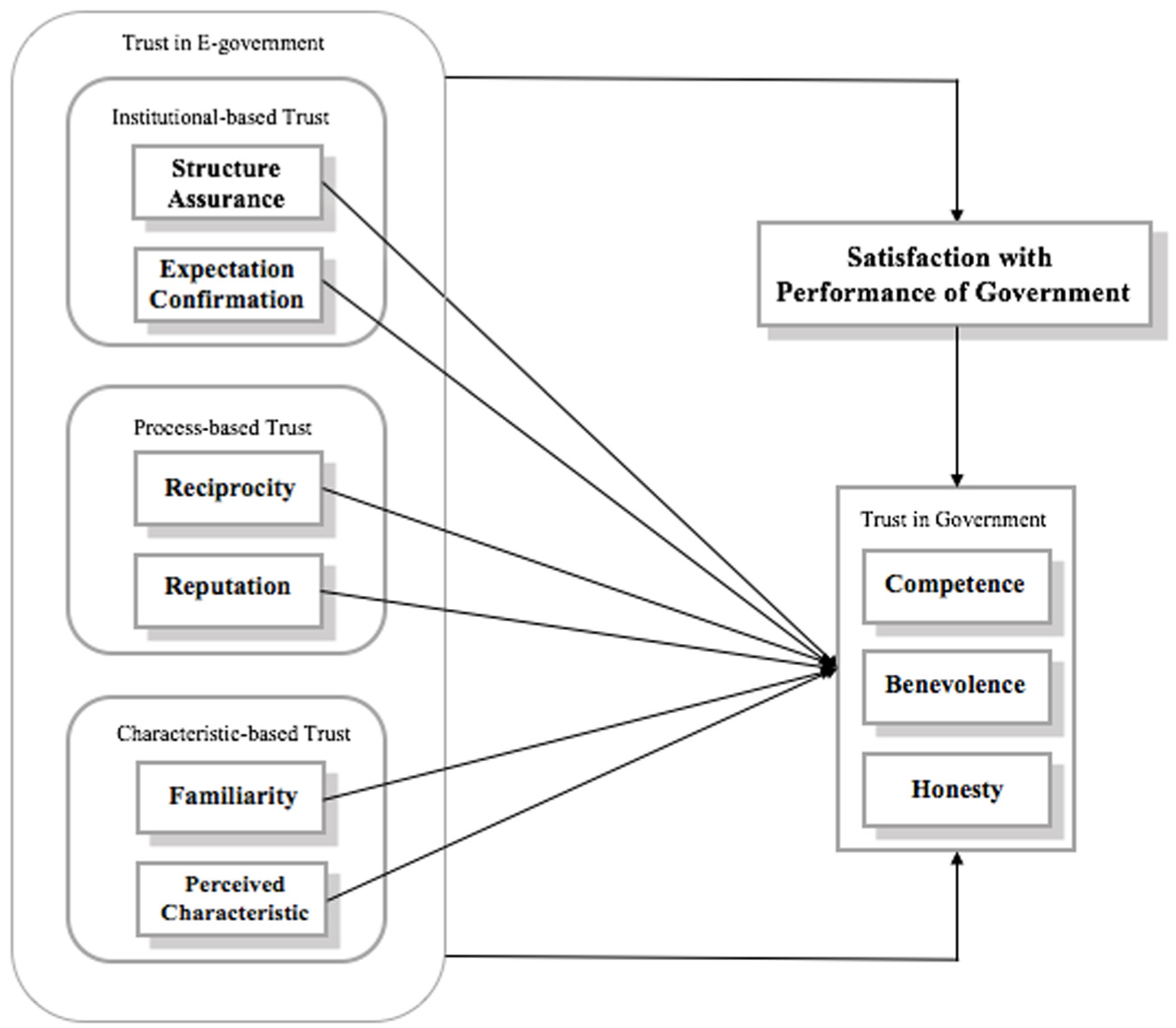
This paper developed three research objectives: (1) Investigating the relationship between e-government use and political trust among people in urban and rural areas. More specifically, it seeks to understand whether citizens’ trust in e-government services has significant impacts on their political trust. In order to do this, the study employs Zucker’s trust theory and McKnight’s trust theory to respectively constitute the structural component of trust in e-government services (Institutional-based, process-based and characteristic-based) and the structural component of political trust (Competence, benevolence and honesty). (2) Comparing the impacts of trust in e-government services on political trust between urban residents and rural residents and identifying the specific differences between them.
To achieve these goals, this study conducted an empirical study in Chongqing, the only inland municipality in China where has made remarkable progress in economic and social development since 1997 (Bao et al., 2019). But the city is also fraught with multidimensional imbalances rooted in urban-rural divide. Following with the previous research (B. Zhang & Zhu, 2021), this study defined urban residents as those long-term residents who live in urban fields and rural residents referred to those long-term residents who live in rural areas.
The article is articulated as follows: In Literature Review, the conceptual framework and related hypotheses are presented according to previous studies on adoption of e-government and trust in government. The Research Method describes the research method adopted, followed by the Results. The discussion and the main policy implications of this research are presented in Discussion and Implications. Finally, the last section offers limitation and conclusion.
Literature Review
Trust in Government
Generally, citizens’ trust is important to the sustainable development of government. As studies have shown, citizens tend to show negative attitudes toward public policy when their levels of political trust are low (Murphy, 2004), which in return causes many challenges to sustainable development, such as slow economy growth and high criminal rate (Fukuyama, 1995).
Within the body of trust in government literature, public perceptions of trustworthiness are generally divided into three constitutive dimensions: competence, benevolence, and honesty (Hetherington, 1998; Levi & Stoker, 2000). The first dimension, competence, refers to people’s perceptions that their government processes the capacity to fulfill its functions. Benevolence, the second dimension, means that public sector keeps people’s best interests and wellbeing in mind and take actions based on them. The last dimension, honesty, reflects citizens’ perceptions that the government is truthful and sincere (McKnight et al., 2002). Positive evaluations of these three dimensions give citizens greater motivation to accept public policy and ultimately trust their government (S. E. Kim, 2005). In this study, these three dimensions constitute the structural component of political trust.
Trust in E-government Use and Trust in Government
A great deal of previous literature has proved the positive association between adoption of e-government and trust in government (Bannister & Connolly, 2011; Brewer et al., 2006). However, very few studies investigate this association from an urban-rural divided perspective. In many developing countries, such as China, urbanization widens the gap between urban and rural fields in numerous spheres, such as income, job, ages, and education. As a result, digital divide rooted in urban-rural divide becomes a serious problem in these regions. According to those studies on the link between digital divide and adoption of e-government, e-government services have more positive and significant effects on those individuals with higher levels of income, those individuals who more frequently use ICT in their daily life, those individual with higher levels of education and younger people (Doong & Ho, 2012; Myeong et al., 2014). Compared with rural fields, urban areas commonly show obvious advantages in income, education, and ICT infrastructures. Thus, urban residents’ political trust may benefit much greater frome-government use than rural residents, and this gap may increase even more in the future. In order to solve this problem, it is urgent to conduct a comparative study between urban and rural residents on how theire-government usage is linked with their political trust.
Some previous studies offer a great angle to understand the relationship between adoption of e-government and political trust in depth: the bridge between citizens’ trust in e-government services and their trust in government. Heider’s (1958) cognitive balance theory offers an explanation to this bridge. According to the theory, social media users seek to keep a balance between their attitudes towards social media services and their evaluations of social media platforms. In this sense, those who highly trust the qualities of social media services can transfer their perceptions to the platforms which provide these services. According to this relational feature of trust, it is possible that citizens can expand their trust in e-government services (social media services) to their trust in overall government (platform brand). M. J. Park et al. (2015) have demonstrated this possibility via an empirical research model. This study continues to research the association between trust in e-government services and overall political trust, and employs this link to understand the situation of digital divide between urban and rural fields in current China. Based on the arguments above, we hypothesize that:
H1a (b): Urban residents’ (rural residents’) trust in e-government services has positive impacts on their overall political trust.
Trust in Government and Satisfaction With Performance of Government
Various types of satisfaction are associated with citizens’ political trust (Christensen & Lægreid, 2005). One of important types is citizens’ satisfaction with the performance of their government. Previous studies have found that citizens’ overall trust in government can be significantly influenced by their evaluation of the performance of the government (DeHoog et al., 1990). Even though some literature have denied this straightforward association (Kampen et al., 2006; Van de Walle & Bouckaert, 2003), the stable and positive link between citizens’ satisfaction with the performance of public sector and their overall political trust is proved by more empirical studies (S. Kim, 2010; Weitz-Shapiro, 2008).
The positive relationship between citizens’ satisfaction with the performance of public sector and their overall political trust provides a new perspective for this paper: citizens’ trust in e-government services may first improve their evaluation of the performance of their government and ultimately grow their overall trust in government. In this sense, satisfaction with the performance of public sector may become a mediate variable between trust ine-government services and overall political trust. Based on the above arguments, we hypothesize that:
H2a (b): Urban residents’ (rural residents’) satisfaction with performance of government will mediate the influences of their trust in e-government on political trust.
Structural Components of Trust in E-government Services
In trust theory, a key point is that people’s trust is shaped through a process instead of a moment (C. W. Thomas, 1998). Based on this mechanism, the processes of trust building were classified into three dimensions of trust: Institutional-based trust, process-based trust as well as characteristic-based trust (Zucker, 1986). Currently, many studies pay attention to institutional-based trust but ignored other two dimensions of trust (Welch et al., 2005). However, according to M. J. Park et al. (2015),e-government employs ICT platforms to possess a convenient environment that enables customized services, such properties also highlight the importance of characteristic-based trust and process-based trust. Thus, based on Zucker’s theory and some previous studies, this paper employs all three dimensions of trust to constitute the structural component of trust in e-government services.
Institutional-Based Trust
When people receive recommendations or guarantees from reliable third parties, institutional-based trust in their minds are formulated (Shapiro et al., 1992). As Zucker (1986) has argued, institutional-based trust can play the most important role in trust creation when participants come from different cultural backgrounds or societies and have no previous interaction with each other (Zucker, 1986). Generally, the effect of institutional-based trust is linked to the existence of structures assurance (Pavlou & Gefen, 2004). According to Tolbert and Mossberger (2006), people’s positive evaluations that government is accountable, transparent, and effective can formulate structure assurance. E-government can devote to the formation of positive evaluations (S. K. Kim et al., 2015). Through adoption of e-government, citizens are able to access news, data, policies, and visions of government more timely and convenient. Furthermore, e-government also devotes to efficiency improvement and budget savings in public administration fields, which in return makes citizens perceive government as transparent, effective, and responsible (Zucker, 1986). Based on the arguments above, the following hypothesis is developed:
H3a (b): Structural assurance towards e-government services is positively associated with urban residents’ (rural residents’) trust in government.
According to Ba and Pavlou (2002), when one party ensures that another party will take a particular action based on confident expectation in an uncertain environment, trust is formulated. In this sense, trust is a subjective assessment. Generally, when people obtain the expected benefits in the transactional process, they tend to improve the levels of trust in the transactional partner (Lewis & Marsh, 2023). In this sense, when people’s expectations to an e-government service receive a positive feedback, their levels of satisfaction with e-government tend to be improved, which in return increases their overall political trust (Welch et al., 2005). M. J. Park et al. (2015) named this interaction process as “expectation confirmation.” Therefore, the following hypothesis is developed:
H4a (b): Expectation confirmation towardse-government services is positively associated with urban residents’ (rural residents’) trust in government.
Process-Based Trust
According to Khodyakov (2007), process-based trust should be created through constant interaction. This interaction is dependent on a stable relationship of social exchange. Mutual reciprocity is regarded as the core of process-based trust and it is also the important factor in building the trust between citizens and government. The role of reciprocity in the improvement of trust in government stems from the evaluation that government is accessible and responsive (Tolbert & Mossberger, 2006). When citizens perceive government as accessible and responsive, their levels of trust in government can become higher. It is believed that e-government is positively linked with the increase of reciprocity because it can provide new opportunities for citizens to interact with officials that are accessible and quick (Khodyakov, 2007). Thus, e-government may further positively affect political trust through the improvement of reciprocity. Based on above arguments, the following hypothesis is formulated:
H5a (b): Reciprocity of liking e-government services is positively associated with urban residents’ (rural residents’) trust in government.
As mentioned above, process-based trust is shaped by a stable relationship of social exchanges, successful experiences of a social exchange can cultivate trust for next one. However, because currently people usually interact with others whom they may not know well, it is difficult to make sure that next social exchange would be successful. In this context, if a well-known and trustworthy intermediary could guarantee the trustworthiness of the potential trustee, people’s trust in this potential trustee would be significantly improved (Uslaner, 2002). Therefore, the reputation of intermediary becomes the key factor in this process. Based on the argument above, the following hypothesis is developed:
H6a (b): Reputation toward e-government services is positively associated with urban residents’ (rural residents’) trust in government.
Characteristic-Based Trust
The similarity between the trustor and the trustee in their characteristics constitutes characteristic-based trust. It is believed that characteristic similarity originates from the sense of belonging. People seek to understand and find which group they belong (Zucker, 1986). Social identity theory suggests that similar attitudes, cultural backgrounds and evaluation about life can wake up cultural stereotypes and categorize individuals into social “in-groups” (Tajfel & Turner, 1986). This theory can be also applied in the interaction between individuals and e-government. First, several previous literature have proved that the reason why a person feels familiar with a new electronic device is that this device successfully invokes cultural stereotypes of this individual, such as similar knowledge, attitudes and values. Commonly, people prefer to show more trust in such a device which can offer them familiar feelings (Nass et al., 1996). Thus, we hypothesis that:
H7a (b): Familiarity with e-government services can positively influence urban residents’ (rural residents’) trust in government.
Second, perceived characteristic similarity may also significantly affect people’s intentions to use e-government and their actual behaviors (M. J. Park et al., 2015). As Pentina et al. (2013) have argued, it is important to understand how strongly an e-government service can match and reflect people’s personalities because people usually are willing to use services which match their personalities. According to the feedback from e-government users, governments are able to improve e-government services and create a trustworthy e-government brand, which in return can improve the public relationship between governments and citizens. Therefore, it is believed that perceived characteristic similarity among citizens is beneficial for the improvement of trust. Based on above arguments, the following hypothesis is formulated:
H8a (b): Perceived characteristic similarity toward e-government services is positively associated with urban residents’ (rural residents’) trust in government.
In this paper, the conceptual framework is shown in Figure 1. This conceptual framework contains the 16 hypothesizes above and it was statistically tested to accept or reject the formulated hypothesizes.
Conceptual framework of the research.
Research Method
Data
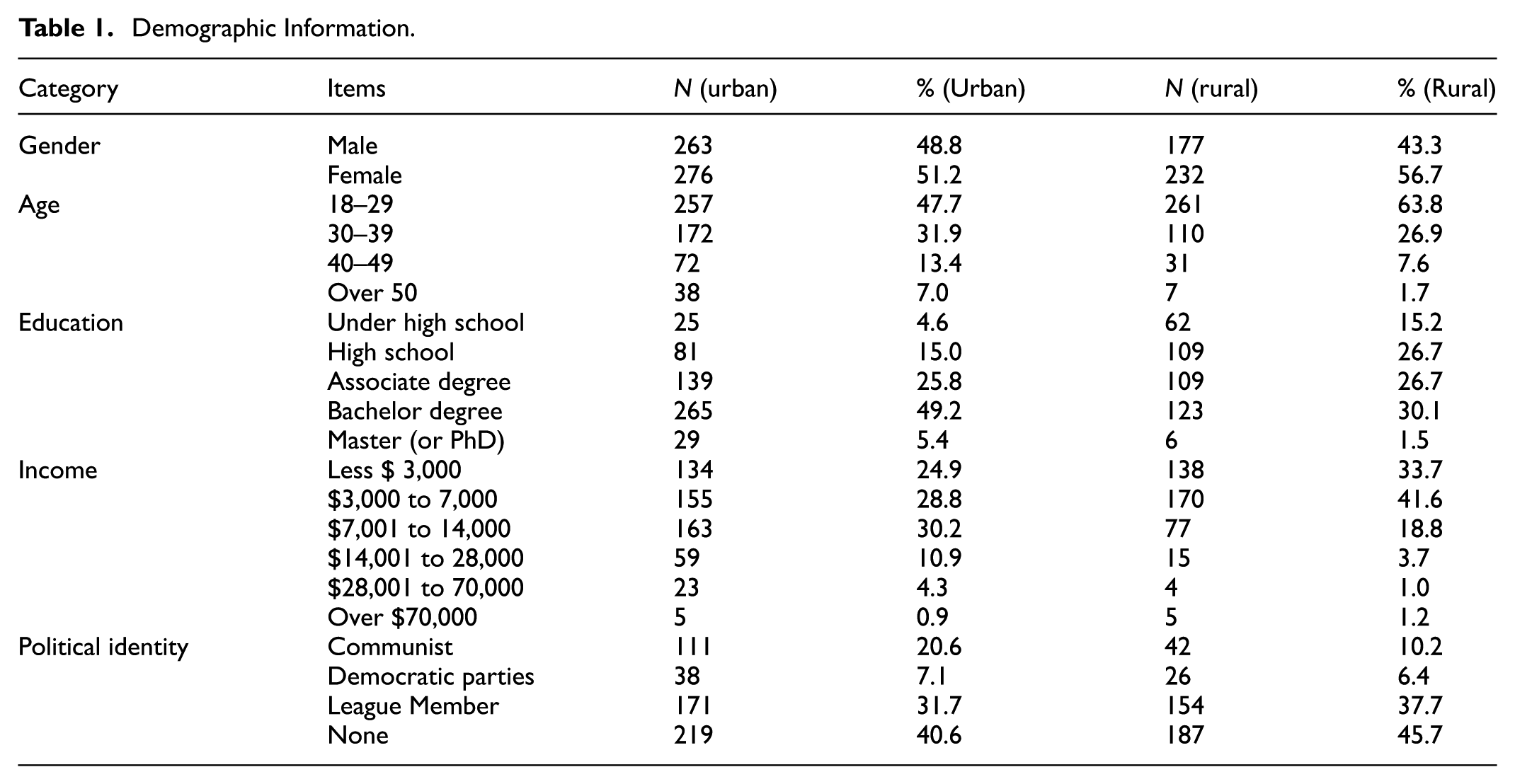
The data used in this paper were collected from a survey conducted among urban and rural residents in Chongqing between March 2023 and September 2023. In order to ensure the validity of the samples, we requested cooperation with several local administrative departments in Chongqing. These local departments are the Zhongliangshan Industrial and Commercial Bureau (in rural region), the Shipingqiao Industrial and Commercial Bureau (in urban-rural mixed region), the Baishiyi Industrial and Commercial Bureau (in urban-rural mixed region), and the Yangjiaping Industrial and Commercial Bureau (in urban region). Then, paper-based questionnaires were distributed from the service centers of these local departments and online questionnaires were distributed through websites and social media applications. As a response, totally 1972 questionnaires were returned. First, those incomplete and overlapping surveys were discarded. Also, we discarded those surveys which do not match characteristics of target samples according to age, location, and income. In addition, those surveys completed within 5% of allocated time were discarded. After the data cleaning, 948 surveys were remained, including 539 urban residents (56.8%) and 409 rural residents (43.2%). The demographic information is presented in Table 1.
Demographic Information.
Context
As the only inland municipality in China, Chongqing has made great progress in economic growth and urbanization development over last 3 decades: the GDP growth rate was the fastest between 2009 and 2017 in China and the urbanization level was doubled from 31% in 1997 to 64.1% in 2017. Currently, Chongqing is the newest and largest province-level city in China in terms of area (1,573.02 km2 built-up area in 2017) and population (30.75 million residents in 2017) (Bao et al., 2019). On the other hand, Chongqing is a typical mountain city with huge rural population (11.04 million in 2017) and complicated geographic environment. These factors cause serious urban-rural divide problems in Chongqing (Yang, 2017) but also make it become a focal point for the experiment in urban-rural integration in China (B. Zhang & Zhu, 2021). The government in Chongqing used many ways to improve citizens’ trust in government. For instance, The “Backbasket Special Line” is a heartwarming urban-rural integration initiative launched on Line 4 of Chongqing Rail Transit. Opened in June 2022, this 48.5-km line connects Shichuan Town in Yubei District with the city center, enabling local farmers to sell fresh produce daily via subway. Dubbed the “Backbasket Line” for passengers carrying bamboo baskets of vegetables, it offers free rides for seniors over 65, special carriage allocations, and streamlined security checks. The line has spurred markets in defunct air-raid shelters and vibrant rural fairs, fostering economic exchange and cultural ties between urban and rural communities.
Since 2023, the government in Chongqing has begun the program “Digital Chongqing.” This program makes e-government becomes one of the most significant tools to improve service qualities and enhance public trust. Thus, when taken together these points, Chongqing provide a particular useful context for this research. Additionally, the Chongqing’s experiences in this study possibly have meaningful values for many other mountain cities where are also searching new methods to enhance public trust in government in digital era.
Measures
Trust in Government
As mentioned above, citizens’ political trust is gauged based on their evaluations of three dimensions: competence, benevolence, and honesty. Specifically, respondents’ evaluations of competence were measured with four items, benevolence with three items, and honesty with five items. Each item was measured by five-item Likert scale that ranges from 1 (highly disagree) to 5 (highly agree) (Porumbescu, 2016). All items in this part can be found in Table A1 in the Appendix A.
Structure Assurance
The trust in e-government services consists of six dimensions, structure assurance, expectation confirmation, reciprocity, reputation, familiarity, and perceived characteristics match. Because currently informational service and transactional service are regarded as the dominant types of e-government services (Carter & Belanger, 2004; Edmiston, 2003; Nam, 2014; Sipior & Ward, 2005; Zhu & Kou, 2019), each dimension was divided into two parts: the evaluation of this dimension on informational service and the perception of this dimension on transactional services. As to structure assurance, first, we used three items to measure the structure assurance toward informational services of e-government. Then, we used the same three items to measure the structure assurance toward transactional services of e-government. Thus, totally six items were employed to measure the structure assurance of e-government.
Expectation Confirmation
Respondents’ expectation confirmation towards e-government services was also measured by six items, such as “As to service quality, the informational services (transactional services) of e-government successfully meet my expectations” and “As to system quality, the informational services (transactional services) of e-government successfully meet my expectations” (M. J. Park et al., 2015).
Reciprocity
As to reciprocity, totally four items were used, including “Government has positive impacts on me through the informational services (transactional services) of e-government and I also have positive impacts on government” and “When I use informational services (transactional services) of e-government, the communication process between government and me is satisfied” (M. J. Park et al., 2015).
Reputation
Similar to reciprocity, this study also employed four items to evaluate the dimension of reputation, including “My families and friends have a positive have positive views on participation and use of the informational services (transactional services) of e-government” and “My experience using the informational services (transactional services) of e-government is beneficial” (M. J. Park et al., 2015).
Familiarity
To assess perceptions of the familiarity with e-government services, four items were adapted from M. J. Park et al. (2015): “I am not strange to use the informational services (transactional services) of e-government to communicate with government” and “I am not strange to the contents and knowledge of the informational services (transactional services) of e-government and I can share such knowledge with others.”
Perceived Characteristics Similarity
Based on M. J. Park et al.’s (2015) study, we created four items to measure perceived characteristics similarity, including “The characteristics of the informational services (transactional services) of e-government match with me well” and “The technological features of the informational services (transactional services) of e-government match with me well.”
Satisfaction With the Performance of Government
To assess this factor as a mediator, we employed two items in total: “the informational (transactional) services offered by government make me feel more satisfied with government.” Each item was measured by Five-items Likert scale.
Results
Assessment of the Measurement
This study employed confirmatory factor analysis (CFA) to assess the measurement model. SEM was used as statistical method, as suggested by previous studies (Zhu et al, 2023). SEM is superior to describing the relationship between a dependent variable and one or more independent variables (Hocking, 1976). It has drastic implications for statistical measurement in political behavior research (Achen, 1992). According to M. J. Park et al. (2015), Cronbach’s a value was used to assess the reliability of the measurement tool. As shown in Table 2, Cronbach’s a value for all the variables was greater than .85. Thus, the measurement tool reliability in this paper can be considered as appropriate (Gefen & Straub, 2005). In addition, the CR values for all factors were above .70, establishing internal consistency (Zhu et al., 2025). Furthermore, factor loadings and AVEs were tested to evaluate the factors’ convergent validity. In this research, factor loadings were all above the recommended level of 0.60 and AVEs for all the factors were higher than the recommended level of 0.5, indicating adequate convergent validity (Chi et al., 2021; Lee & Lee, 2014; Zhu et al., 2024).
Measurement Properties (Factor Loadings, CR, AVE, and Cronbach’s Alpha).

Note. TG = trust in government; SPG = satisfaction with performance of government; SA = structure assurance; EC = expectation confirmation; R = reciprocity of licking; RP = reputation; F = familiarity; CS = characteristic similarity.
Fornell-Larcker criterion was employed to evaluate discriminant validity (D. R. Thomas, 2006). According to Tables 3 and 4, the value of AVE for each construct was above its squared correlations with other constructs. Thus, discriminant validity was acceptable (B. Zhang & Zhu, 2021).
Discriminant Validity Results (Urban Residents).

Discriminant Validity Results (Rural Residents).

Moreover, the goodness of fit was examined according to the following statistical recommendations: χ2 statistics/degree of freedom (df) should be no more than 3, goodness-of-fit index (GFI) should be higher than 0.9, comparative fit index (CFI) should be greater than 0.9, root mean squared residual (RMR) should be less than 0.05, root mean square error of approximation (RMSEA) should not exceed 0.08, incremental fit index (IFI) should be greater than 0.9 (Zhu & Janssen, 2025). As shown in Tables 5 and 6, all fit indices satisfied these requirements. Therefore, the measurement models returned a good model fit.
Measures of the Model Fit (Urban Residents).

Measures of the Model Fit (Rural Residents).

Hypothesize Testing
This section introduces the results of 16 hypothesizes. It respectively presents the results of urban and rural groups.
Urban Residents
According to Figure 2, the relationship between urban citizens’ trust in e-government services and their overall trust in government is significant and positive (β = .341, t = 21.889). Urban residents’ structure assurance toward e-government services is positively correlated with overall trust in government (β = .370, t = 2.286). Also, their expectation confirmation toward e-government services is positively and significantly correlated with their overall political trust (β = .695, t = 5.066). Furthermore, the results indicate that the reciprocity of liking and familiarity exert a positive and significant effects on urban citizens’ overall political trust (β = .661, t = 3.074; β = .487, t = 2.539). However, reputation and perceived characteristic similarity are not significantly associated with urban residents’ political trust (β = −.305, t = −1.276; β = −.143, t = −0.746). Thus, five out of the seven hypothesizes are supported (H1a, H3a, H4a, H5a, H7a).
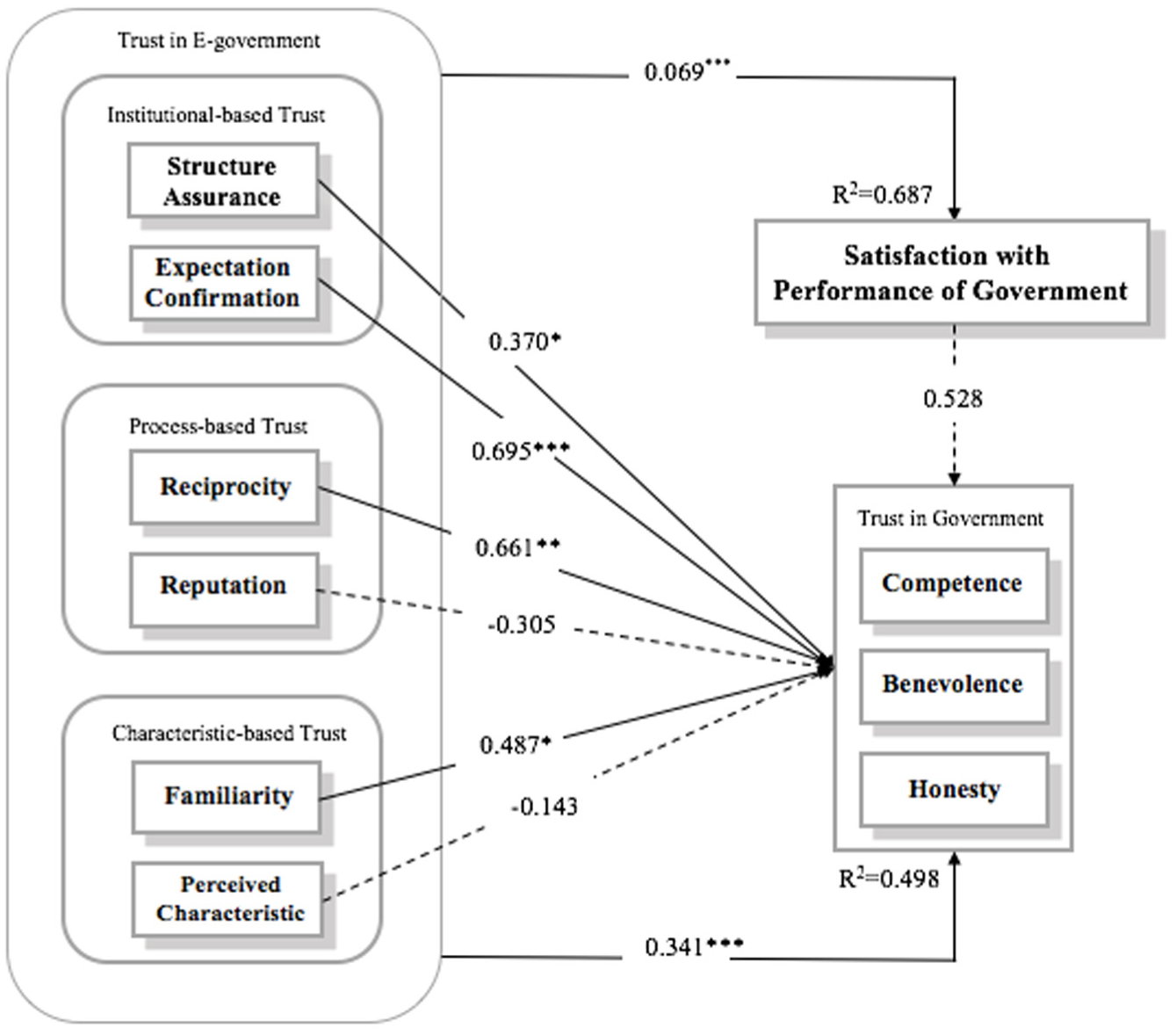
Results of path analysis for urban residents.
Rural Residents
As shown in Figure 3, rural residents’ trust in e-government services is significantly and positively correlate with their overall political trust (β = .349, t = 21.180). There is a significant positive association between rural residents’ expectation toward e-government services and their overall political trust (β = .780, t = 4.772). Also, reciprocity of liking has significant correlation with rural citizens’ overall political trust (β = .972, t = 4.795). On the other hand, there is no evidence to support that rural residents’ trust in government and structure assurance are positively related, reputation and familiarity (β = .121, t = 0.683; β=.313, t = 1.414; β = .220, t = 1.219). Additionally, the results indicate that there is a significant negative link between rural residents’ perceived characteristic similarity toward e-government services and overall political trust (β = −.469, t = −2.25). Thus, three out of the seven hypothesizes are supported (H1b, H4b, H5b).
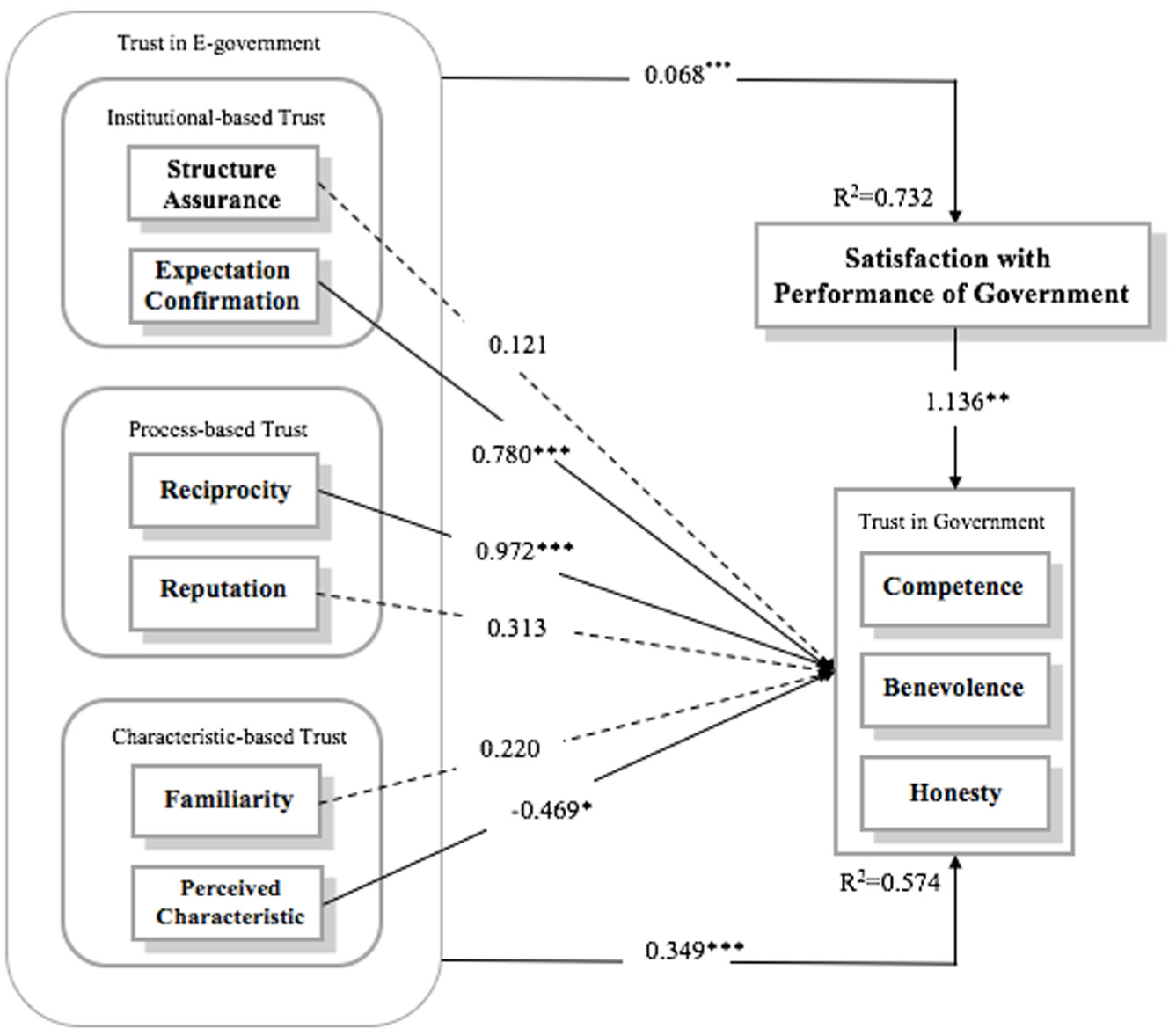
Results of path analysis for rural residents.
Satisfaction With Performance of Government as a Mediator
According to Table 7, rural residents’ satisfaction with performance of government mediated the influence of their trust in e-government services, which translated into the overall political trust. However, urban residents’ satisfaction with performance of government failed to mediate the influence of their trust in e-government services on their overall political trust. These evidences support H1b but reject H1a. Thus, further studies could seek to find the mediator between urban residents’ trust in e-government and their overall political trust. Table 8 shows the overview of research hypotheses in this study.
Results of the Mediating Effect Test.
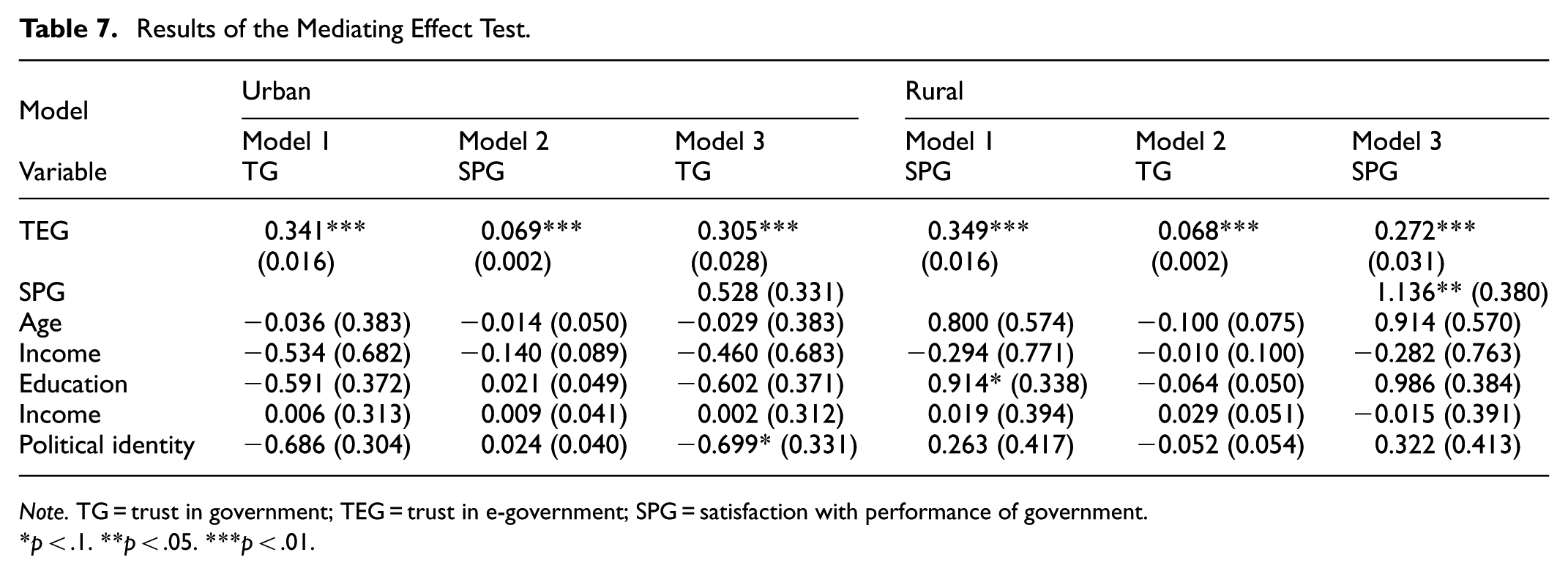
Note. TG = trust in government; TEG = trust in e-government; SPG = satisfaction with performance of government.
*p < .1. **p < .05. ***p < .01.
Hypotheses Overview.

Discussion and Implication
This section starts with a discussion of the research results. First, in contrast with the research by Ji et al. (2024), this research found that trust in e-government services has overall great impacts on both urban residents’ and rural residents’ political trust, there is no significant gap between them. This reveals that e-government becomes an effective and efficient tool to cope with the declining political trust among Chinese citizens in the context of urban-rural divide. Prior studies have proved that the effects of e-government use on urban residents are usually much greater than rural residents due to digital divide (Seo & Bernsen, 2016; B. Zhang & Zhu, 2021). Thus, the results in this study also demonstrate that the administrative reform via e-government in Chongqing has made process in the elimination of digital divide between urban and rural fields.
Second, although there is no significant gap between urban and rural users, some specific differences still exist. According to the findings, structure assurance and familiarity only have impacts on urban users, while expectation confirmation toward e-government and reciprocity of liking greatly affect both two groups. Further, perceived characteristics similarity has significant negative effects on rural residents, but not urban citizens. These findings further develop insights into the relationship between trust in government and overall political trust based on the research by M. J. Park et al. (2015). In the study by M. J. Park et al. (2015), they explored the impacts of institutional-based trust, process-based trust, and characteristic-based trust on people’s overall political trust, but they did not analyze the influences from a perspective of urban-rural divide. The findings in this study revealed that urban residents’ trust in government benefit greater from e-government use in some ways, which means there is still a digital divide between urban and rural fields in this topic.
Third, this paper demonstrates that satisfaction with the performance of government successfully links rural residents’ trust in e-government services and their overall political trust, but fail to mediate the impact of trust in e-government services on urban residents’ political trust. This result may reflect there are some differences in the knowledge and perception of e-government between urban and rural residents.
The findings above revealed that the role of e-government services in political trust enhancement is still unbalanced between urban and rural residents. First, because of the digital literacy gap between urban and rural residents, urban residents usually have better knowledge, skills, and experiences of e-government (Ge et al., 2023). These differences lead to different attitudes when using e-government. For instance, because urban residents have more user experiences of e-government than rural residents, they tend to have more expectations on e-government services (Bhuiyan et al., 2022). Thus, compared to rural residents, it is more difficult to meet urban residents’ needs and make them satisfied. This partly explains why user satisfaction positively influences rural resident’s trust in government but fail to mediate the impact on urban people. Second, due to the unbalanced infrastructure and facility development between urban and rural areas, those who live in urban fields are more likely to receive e-government with high qualities (Bhuiyan et al., 2022; Wong et al., 2025). Thus, structure assurance (both in information service and transactional service) shows much more significant influences on urban residents’ political trust.
Theoretical Implications
First, to the best of our knowledge, this is the first study that proposed a conceptual framework to evaluate the relationship between citizens’ trust in e-government services and their overall political trust based on Zucker’s trust theory and McKnight’s trust theory. Thus, it extended the research boundaries of Zucker’s trust theory and McKnight’s trust theory.
Second, the research model tested the impacts of institutional-based trust, process-based trust, and characteristic-based trust on political trust (competence, benevolence, and honesty) in an urban-rural divided context. The research model provides a new perspective to understand how the use of e-government influence people’s trust in government. It also enhances the literature on e-government and political trust.
Future Implications
According to the research findings, several suggestions are offered to enhance political trust in the future. In summary, while trust in e-government services generally has a significant and positive impact on political trust for both urban and rural users, urban residents benefit more, revealing an ongoing imbalance. Given e-government’s proven role in addressing declining political trust amidst urban-rural divides, it is strongly recommended that Chinese governments continue developing e-government in both regions to maintain a stable government-citizen relationship and promote social sustainability. Institutional-based trust in e-government services positively correlates with residents’ trust in government, with structure assurance and expectation confirmation significantly influencing urban residents, and expectation confirmation notably impacting rural residents, highlighting the need for improved e-government service content and quality (Aharony, 2012). Reciprocity of liking positively affects trust in government for both groups, suggesting continuous interaction based on mutual reciprocity, rather than temporary events, underpins the positive relationship between e-government use and political trust, necessitating regular updates to e-government communication processes and contents; however, the reputation of intermediaries has an insignificant impact, indicating a need to enhance e-government’s social influence and reputation (C. Zhang & Quick, 2024). Furthermore, a significant gap exists between urban and rural residents in terms of the relationship between characteristic-based trust and political trust, with familiarity strongly linked to urban residents’ political trust, while negatively affecting rural residents, suggesting current e-government services fail to resonate with rural residents’ cultural stereotypes and characteristics. Therefore, Chinese governments should focus more on rural residents’ characteristics, cultural backgrounds, and attitudes, creating a customized e-government environment to better connect with citizens, such as incorporating chatbots for warmer communication and fostering a sense of belonging.
Limitation and Conclusion
This paper seeks to understand whether citizens’ trust in e-government services has significant impacts on their political trust. In addition, it also comparing the impacts of trust in e-government services on political trust between urban residents and rural residents and identifying the specific differences between them. To achieve these objectives, this research proposes a conceptual framework based on Zucker’s trust theory, McKnight’s trust theory and other literature on adoption of e-government and political trust. This conceptual framework is applied to two groups of people (urban residents and rural residents) in Chongqing, China and the results are compared. The findings showed that structural assurance, expectation confirmation, reciprocity of liking e-government services, and familiarity with e-government services are positively associated with political trust among urban residents. In addition, expectation confirmation, reciprocity of liking e-government services, and perceived characteristic similarity are positively related to trust in government among rural residents. Moreover, trust in e-government services has overall significant and positive impacts on both urban residents’ and rural residents’ political trust. To the best of our knowledge, this is one of the earliest attempts that concentrated on the impacts of trust in e-government on political trust in the context of urban-rural divide. This research extends the research boundary of Zucker’s trust theory and McKnight’s trust theory.
However, some limitations should be interpreted with caution. First, data collection method in this research has potential bias. For instance, distributing paper-based surveys in the service centers of four departments (Zhongliangshan area, Baishiyi area, Shipingqiao area, and Yangjiaping area) could create bias against individuals who never visit there. Distributing surveys online could also create bias against residents who rarely use or never use computers or mobile phones. Also, disproportional responses between offline and online questionnaires may create bias, although we found there is no differences between them. Second, respondents over 40 years old only account for 15.6% in this study. Thus, those people with age from 18 to 39 greatly influence the results and could create potential bias in results. Third, we only employ two items to measure citizens’ satisfaction with the performance of their government. It might be not enough to evaluate citizens’ precisions.
Footnotes
Appendix A
Measurements in the Conceptual Framework.

| Construct | Items | Description |
|---|---|---|
| Trust ingovernment | Competence(Porumbescu, 2016) | I think government can work efficiently. |
| I think government is skillful. | ||
| I think government is professional. | ||
| I think government is accountable. | ||
| Benevolence(Porumbescu, 2016) | I think government tries to help citizens. | |
| I think government seeks to achieve citizens’ best interest. | ||
| I think government cares about citizens’ happiness. | ||
| Honesty (Porumbescu, 2016) | I think government is sincere. | |
| I think government is honest. | ||
| I think government is not corrupt. | ||
| I think government is fair. | ||
| I think government can keep its promises. | ||
| Structural assurance | Appropriateness of contents(M. J. Park et al., 2015) | I think contents of informational (transactional) services are appropriate to users. |
| Accuracy of contents(M. J. Park et al., 2015) | I think contents of informational (transactional) services are accurate to users. | |
| Timeliness of contents(M. J. Park et al., 2015) | I think contents of informational (transactional) services are well-timed to users. | |
| Expectation confirmation | Feedback(M. J. Park et al., 2015) | As to feedback and response from government, informational (transactional) services of e-government successfully meet my expectations. |
| System quality(M. J. Park et al., 2015) | As to system quality, informational (transactional) services of e-government successfully meet my expectations. | |
| Service quality(M. J. Park et al., 2015) | As to service quality, informational (transactional) services of e-government successfully meet my expectations. | |
| Reciprocity of licking | Positive effects(M. J. Park et al., 2015) | Government has positive impacts on me via informational (transactional) services of e-government and I also have positive impacts on government. |
| Satisfaction (Zhu & Janssen, 2025) | When I use informational (transactional) services of e-government, the communication process between Chinese government and me is satisfied. | |
| Reputation | Perspective (M. J. Parket al., 2015) | My families and friends have a positive views on participation and use of the informational (transactional) services of e-government. |
| Beneficial experience(M. J. Park et al., 2015) | My experience using the informational (transactional) services of e-government is beneficial. | |
| Familiarity | Communication | I am not strange to use the informational (transactional) services of e-government to communicate with government. |
| Information sharing (M. J. Park et al., 2015) | I am not strange to the contents and knowledge of informational (transactional) services of e-government and I can share such knowledge with others. | |
| Perceived characteristicssimilarity | Service-user fit | The characteristics of informational (transactional) services of e-government match with me well. |
| Technology-user fit (M. J. Park et al., 2015) | The technological features of informational (transactional) services of e-government match with me well. | |
| Satisfaction with performance | Performance satisfaction | The informational (transactional) services offered by government make me feel more satisfied with government. |

Consent to Participate
We declare that written or verbal consent was taken from the participants of our survey/questionnaire.
Funding
The authors received no financial support for the research, authorship, and/or publication of this article.
Declaration of Conflicting Interests
The authors declared no potential conflicts of interest with respect to the research, authorship, and/or publication of this article.
Data Availability Statement
Data sharing not applicable to this article as no datasets were generated or analyzed during the current study.