




Abstract
The COVID-19 pandemic has influenced many movements of rapid digitization in several sectors/areas used by the public. The three primary sectors/areas affected by such digitization process are identified as healthcare, transportation, and public domain registration. There are only a few studies investigating the impacts of the COVID-19 pandemic on the digital divide for the expatriate population. To fill this research gap, this study investigates these three primary sectors/areas while highlighting the growing digital divide in the expatriate population, using Chinese cities as case studies. The study finds that the emerging barrier is beyond language barriers related to digital access and utilization issues. The study finds that the ongoing digital inequality is related to the autonomy of use, suggesting the urgency for technological upgrades, inclusive digital platforms, and reversing digital design marginalization. This study is sample-based research, using limited samples of expatriate populations in nine major cities in three primary economic clusters in China. The user perspective is assessed against five digital inequalities, namely “technical means,” “autonomy of use,” “social support networks,” “experience,” and “skills.” The analysis is followed by further research on digital divide barriers, addressing how the newly installed digital devices/facilities/services affect the expatriate population beyond the traditional language barriers. The analysis evaluates challenges based on four DDB pillars (i.e., availability, access, renovation, and utilization) and language barrier. The findings show the high correlation between the autonomy of use and digital utilization has led to further disparities and disconnection of the expatriate population from the smart city movements, such as digitized healthcare, transportation, and public domain registration. This study contributes to digital divide research, enhancing awareness of such research related to technological/digital changes and the expatriate populations.
Plain language summary
The study finds that the emerging barrier is beyond language barriers related to digital access and utilization issues. The study finds that the ongoing digital inequality is related to the autonomy of use, suggesting the urgency for technological upgrades, inclusive digital platforms, and reversing digital design marginalization. This study is sample-based research, using limited samples of expatriate populations in nine major cities in three primary economic clusters in China.
Introduction
Considering China’s emerging new economy and Information Technology (IT) sector (Meng & Li, 2002), the dynamics of digital divide, which largely affects Chinese rural areas and the elderly population (Liu et al., 2021), is changing and growing in a new direction. A less-studied group affected by widening digital divide gaps is the group of expatriates, who often face language barriers in accessing and using digital platforms (Canhilal et al., 2020; Ottey et al., 2018). Nonetheless, controlling language barriers have proven to be an effective way of utilizing sound governance to bridge the digital divide (Ngwainmbi, 2005). In some contexts, this bridging effect is still not in place, and have become just part of the bigger challenge. Language barriers are a natural divide that the expatriate population suffers from passively. However, only a few studies investigate the impacts of the COVID-19 pandemic on the digital divide for the expatriate population (Gatti & Strizzolo, 2020; Tai et al., 2021). This study expands the general understanding of digital inequalities, specifically in China, by analyzing data generated by the affected group. The relevance of such perspectives stands on the need for advocating to governments, agencies, and Information and Communication Technologies (ICTs) engineers/designers for inclusive, diverse, and multi-language platforms where technologies play an essential role in human lives. Taking actions in these aspects can contribute to the advance of the United Nations’ Sustainable Development Goals (SDGs), specifically SDG 10—Reduce Inequality, and its targets 10.2 “promote social, economic and political inclusion of all,” and 10.3 “eliminate discriminatory practices” (United Nations, n.d.).
Previously, in countries like China, issues of digital divide were mainly related to language barriers (Baasanjav, 2002), lack of access (Aaronson & Leblond, 2018), online learning (Guo & Wan, 2022), geographic/social background (Zhong et al., 2021) and the use of ICTs to access information or media. Recently, China made large investments in processing digital data from its citizens, and the creation of digital health codes and its co-dependent certificates were aligned with government goals (Cong, 2021), but in disarray with embracing social strategies. Thus, the ongoing COVID-19 pandemic has opened up new doors for growing digital divide, widening the gap between expatriates and local residents in China.
This study delves into this ongoing widening of digital divide through a user perspective analysis. In doing so, the study identifies the ways in which digital divide is growing, and reflects on how such challenges could be addressed in the future. The underlying assumptions and findings of this research apply especially to the context of China. Hence, issues discussed in this paper are context-specific that differ to other contexts like in Europe, North America, and elsewhere. The user perspective analysis is based on daily uses and related to three key digitization movements of (1) healthcare, (2) transportation, and (3) public domain registration. These three sectors are identified as the main recent digitization movements in China, leading to potential digital divide for special groups such as elderly, expatriates, those with digital illiteracy, etc.
During the ongoing COVID-19 pandemic, there are many global examples of digitization of healthcare (Bhambere et al., 2021; Cheshmehzangi, 2021; Khan et al., 2020), transportation (Piñeiro et al., 2021; Ploch & Palatková, 2022; Poliński & Ochociński, 2020), and public domain registration (Gavrila & de Lucas Ancillo, 2021; Gavrila & de Lucas Ancillo, 2022; Lee et al., 2021). China is no exception, as the country’s stringent safety and security measures have led to a rapid digitization process of these three areas. Despite the existing barriers to the digitization process (Annosi et al., 2021; Effah & Nuhu, 2017; Marcon et al., 2019; Tangi et al., 2020; Thun et al., 2021), the new movements have led to the installation of new facilities and devices in healthcare facilities, major transportation hubs, and public domains such as hotels and commercial units. In healthcare facilities, the new installed devices and facilities provide support to patients to speed up the process of registration, payment, getting prescriptions, printing the reports, etc. In major transportation hubs, and mainly in railway stations, new facilities are used to speed up the process of getting on trains and purchasing or printing tickets. For the public domain registration, the new installed systems are mainly used for check-in processes in hotels, travel registrations in city borders for track and trace recording of individuals, and some commercial and business units, such as banks. However, in all cases the installed devices only recognize the 18-digit Chinese Resident National identity cards but not foreign passport numbers or foreign alphabets. This limitation has led to widening digital divide between expatriates and local residents in China. Thus, this study focuses to this emerging issue to see how it can be addressed in the near future.
The aim of the study is to conduct a user perspective analysis of the growing digital divide (DD) for expatriates in China. In doing so, the study’s objectives are to (1) map the growing DD in three sectors of healthcare, transportation, and public domain registration, (2) provide a user perspective analysis through surveys, and (3) suggest direction to bridge the growing digital divide in the expatriates group. This study only focuses on the context of China.
The paper is structured in the following five sections: literature review, methods, results and analysis, discussions and recommendations, and conclusions. At first, the study provides a comprehensive literature review of DD and its barriers (DBB). The literature review ends with the current literature of DD due to the COVID-19 pandemic, particularly in the context of China. Then methods of the study are introduced to indicate how the research is conducted in line with the research objectives. The results and analysis are then followed based on the user perspective analysis approach, highlighting the effect of DD on everyday operations experiences by expatriates living in China. This user perspective approach helps verify existing and growing challenges beyond just the language barrier and digital illiteracy, leading to discussions and recommendations of the study. In the user perspective analysis, the study delves into evaluating digital inequalities (DIs) and DDB. The study provides a brief discussion to highlight issues and suggests a few recommendations. Lastly, a summary of findings and future research directions are provided in the conclusion section.
Literature Review: Barriers of Digital Divide (DD)
Definition of DD and Its Evolution
Digital divide (DD) has various definitions, and its meaning has been evolved and derived into many other concepts, such as digital inclusion, digital inequality, information gap, etc. For instance, Hargittai (2003) argues that “digital divide” can be refined into “digital inequality,” which emphasizes the inequality among different population groups in the digital age after access to the digital technologies is nearly universal. The issues around DD are also related to the outcomes from technology usage requiring people to have specific equipment, software or access as it is described in the following paragraphs.
Issues with ICTs inequality are said to have existed as long back as the late 1960s (Hackers, 1984; The Digital Divide: A LIBR 562 Project, 2011), while the term “digital divide” firstly appeared in mid-1990s after the internet came into the public, it originally refers to “the gap inequity between those who have access to computers and the Internet and those who do not” (Bernard, 2011). The Telecommunications Services Act of 1996 was passed by the Federal Communications Commission in 1996 to address the DD following the merger of telecom and internet businesses. The expression “digital divide” has since become extensively used. In 1998, a speech on the digital divide by Clinton, the US president of the time, stated that “[digital divide] will not disappear of its own accord. History teaches us that even as new technologies create growth and new opportunity, they can heighten economic inequalities and sharpen social divisions” (Old Dominion University, 2014; The Digital Divide: A LIBR 562 Project, 2011). These remarks made “digital divide” come to the global stage. van Dijk (2017) has a different opinion about the term’s origin. According to him, the National Telecommunications and Information Administration of the US Department of Commerce published it in its official journal at first.
The term “digital divide” used to have binary meaning: “the gap between someone either has access to the digital technologies or does not; or the gap between someone either uses digital technologies or not” (Hargittai, 2003, p. 821). The term “digital divide” (DD) has changed to emphasize the gap between those who have access to and benefit from modern ICTs and those who do not as a result of advancements in ICTs, the expansion of digitalization, and globalization (Steele, 2019). Similarly, other authors define DD as “the gap that exists between those with ready access to ICT tools and those without such access or skills to enable access” (Naidoo & Raju, 2012, p. 34). Today’s population still lacks access to computers and the internet to a degree of roughly 50%. Thus, the United Nations (2021a) defined DD as “the gap between those who have access to computers and the internet and those who don’t” (Bacchi, 2021; United Nations, 2021a, no page).
Types of DD and Its Barriers
According to Calderón Gómez (2018), studies on DD can be divided into three levels. First, studies from the 1990s focus on ICTs access and the Internet. Second, studies after the mid-2000s covered the conceptualization of digital inequality and new DD barriers/gaps, including skill gap, motivation gap, and emotional gap. And third, recent years’ studies involving the offline outcomes and benefits brought by ICTs and the digital society can be concluded as utility gap (Calderón Gómez, 2018; Ragnedda, 2017). These three levels are represented in Figure 1 as a hierarchical pyramid.

Levels of DD studies.
It is claimed that the extent and the nature of DD hinge upon the type of access defined, which cause the information inequality, implying that digital divide barriers (DDB) can be divided in terms of four different forms of access: mental access (interests, attractiveness), material access (possessing equipment), skill access (usability, education, and social support) and usage access (usage opportunities; van Dijk & Hacker, 2003). In other words, DDB can be summarized as mental, material, skill, and usage gaps.
In 1999, van Dijk identified four main types of information access barriers: lack of interest, lack of computers and network connections (hardware), lack of digital skills, and lack of usage opportunities. By analyzing American and Dutch official statistics from the 1980s to 1990s, van Dijk and Hacker (2003) reveal that the usage gap is estimated to increase while age and gender have greater impacts than education while both skill gap and usage gap are tending to be increased (van Dijk & Hacker, 2003). While at the Web Summit in 2021, experts pointed out some invisible DDB include high cost, low digital literacy, and complicated user interfaces, which still can all fall into the skill gap and usage gap.
In addition, it is argued by Norris (2001) that DD can be classified into three levels as global, social, and democratic based on the types of internet use. This classification refers to gaps among developing and developed countries, gaps among the population within one country, and gaps among people who do and do not use ICTs in public life, respectively (Hargittai, 2003; Norris, 2001). Building upon this, Wilson (2000) proposed the classification of full social access consists of finical access (i.e., whether the ICT is affordable to both individuals and communities), cognitive access (i.e., whether people have the skills to find and estimate their needs of information), production of content access (i.e., whether the available material is enough to fulfil users’ needs), and political access (i.e., whether users have access to the institutions that regulate the ICTs they use; Hargittai, 2003). In a study of issues affecting internet use in Afghanistan and developing countries in the Middle East, the authors state that DD is “a fact of life in Afghanistan and developing countries in the Middle East” (Ghashghai & Lewis, 2002, p. 3). Lacks of education and literacy, technology infrastructures (e.g., electricity), and income differences are identified as the main cause of DD in the Middle Eastern countries.
Regarding digital inequality for individuals, Hargittai (2003) identified five types of factors. These factors include technical means (quality of the equipment), the autonomy of use (location of access, freedom to use), social support networks (assistance and promotion of use), experience, and skills (ability to use). Alternatively, in a study on digital exclusion in higher education institutions, Khalid and Pedersen (2016) states that studies on DD, DDB, and digital exclusion deal with similar factors, but these are experienced differently regarding different contexts. Hence, they grouped these factors into social exclusion (income, motivation, etc.), digital exclusion (lack of hardware and internet), and accessibility (information literacy, rural-urban divide, etc.).
In a study that examines the impacts of digital technologies on young people, the authors categorize DD into three barriers/gaps: skill gap, motivation gap, and emotional gap (Calderón Gómez, 2018). The author argues that the negative emotion caused by material, social or cognitive limitations that constrain their access to digital technologies will become barriers to internet use and eventually lead to the digital exclusion by themselves (Calderón Gómez, 2018). Such factors include lack of time, lack of suitable equipment, and lack of skills. They can all fall into the four main types of barriers based on access types. Regarding the vivid gaps in digital inequality, Steele (2019) divides DD into three types: gender (women has less access to ICT and internet), social (social media platforms and social circles), and universal access divide (physical disabilities, digital literacy skills).
On the other hand, Lythreatis et al. (2021) categorize the factors that influence DD into nine categories, including sociodemographic (e.g., age, gender, geographic disparity, urbanization), socioeconomic (e.g., education, income, occupation), personal elements (e.g., privacy concerns, risk perceptions, values), social support (e.g., access to support, social interaction & connections), type of technology (e.g., overreliance on smartphones, digital training (e.g., ICT training or assistive technology training), rights (e.g., net neutrality or civil liberties), infrastructure (e.g., underwater cables and electrical access), and major events (e.g., COVID-19). Among all these factors, Lythreatis et al. (2021) claim that gender, age, education, quality of support, and privacy concerns have a significant association with DD within their categories. It also tells that those factors influencing DD vary from the individual level to regional, national levels, and some factors can be applied to multiple levels.
In summary, due to the complexity and multidimensionality of DD, even though DDB could be divided in different ways regarding different contexts and issues, those factors/sub-classifications/types could always fall into the four types/gaps/barriers proposed by van Dijk and Hacker (2003) based on the access types: mental barriers, material barriers, skill barriers, and usage barriers. The most potent determinants of DD or factors that build up DDB so far are age, education, gender, and so on; implying the underlying interactions or mutual reinforcements effects among digital inequity/DD and other social inequities such as gender divide, education, or financial disparities.
Impacts and Solutions of DDB
Like all issues caused by and deepening other social inequity, DDB has various impacts across all the sectors, such as lack of communication, remoteness, a barrier to education and knowledge, gender discrimination, technological discrimination, etc. (Iberdrola, 2021). For instance, Yalina et al. (2020) found DD had a substantial improvement to food security while ICTs significantly reduced poverty in Indonesia. In a study of DD’s impacts during COVID-19 pandemic, the authors identified five main contributions to DD in healthcare, involving built environment (e.g., limited access to free public internet, housing insecurity), social and community context (e.g., telemonitoring, mistrust of technology), education (e.g., literacy), economic stability (inconsistent access to devices, inability to upgrade devices, etc.), and access to healthcare (e.g., decisions about technology/programs closely correlated with reimbursement, etc.; Ramsetty & Adams, 2020).
Furthermore, DDB also has influences on sustainable development. Kerras et al. (2020) analyze the DD impacts between European Union and the Maghreb. Their results indicate that gender DD negatively impacts countries in achieving United Nations’ SDGs. In particular, SDGs 2, 3, 4, 5, 8, 9, and 10 have been impacted by ICTs and gender DD the most, while technology disposition has positive impacts on them. Regarding material barriers, the Internet portal World Stats from May 2020 shows that only 39.3% of people in Africa have internet, which is low compared to America with 96.4%. This fact implies the technological gaps between countries/regions are the root causes of available DDB, which is very difficult to overcome. Moreover, van Dijk (2017) also argues that the gaps of DDB are hard to bridge. Meanwhile, the elderly and those with lower levels of education experience more DDB than the young and highly educated groups.
In a bibliometric analysis of DD, Basit et al. (2021) state that the DDB of some countries is due to their digital transformation failures, and DD is very complex. Meanwhile, it is evident that the ongoing COVID-19 pandemic is increasing DD. In response to three levels of DD, Basit et al. (2021) suggest that the priority is to bridge the first level of DD (i.e., DD access) by promoting access and connectivity and reducing DDB. This level is also taken as the main focus of this study.
Furthermore, many studies suggest that DD does not necessarily reduce but heightens existing social stratification to its intersectionality of dominance and vulnerability (Zheng & Walsham, 2021). As DD has roots in social inequality (Zheng & Walsham, 2021), barriers and gaps of existing social inequalities could have multiple influences on DDB. Based on the four types of DD proposed by van Dijk and Hacker (2003), and the three types of DDB identified by Calderón Gómez (2018), it can be argued that DD has the following four pillars include digital availability, digital access, digital utilization, and digital renovation. Some gaps and/or DDB take part in multiple pillars of DD. For instance, material gaps mainly refer to the physical possessions of the equipment, infrastructure, and/or hardware for providing digital services. It is closely linked to the availability, access, and renovation pillars. More specifically, material gaps of the digital availability pillar are primarily subject to the nation’s development status in aspects of financial growth, social stability, technological advances, etc. Whereas material gaps of digital access pillar are mainly subject to individual’s personal status such as income, education level, gender, age, acceptance to digital technology, etc.
Moreover, it may be claimed that among the four pillars of DD, digital utility is the most crucial because the purpose of digital technology is to give services or utility. It involves the largest numbers of stakeholders and most types of interactions while reflecting the greatest DD challenges and other intangible DDBs. Meanwhile, concerning the critical role of digital utility in unrevealing and understanding DD and DDB, remediation strategies for utility DDB could also benefit from bridging the skills gaps and mental gaps for access to DDB. This could work especially for DD-prone populations such as low-educated elder females with disabilities who live in low-income countries. It can be noted that DD exaggerates current social inequalities, disparities, and gaps with an extremely rapid rate of the digital revolution. Figure 2 summarizes four pillars of DD and related gaps of DDB. For instance, for digital access, three DDB gaps are identified as material gaps (i.e., at the individual scale), mental and awareness gaps, and socio-economic gaps.

Four pillars of DD and related gaps of DDB.
DD and Expatriate Population
Germann and Serdült (2014) explore the expatriate population using internet voting during the Swiss i-voting rollout phase and find out that expatriate i-voters are likely to be young, male, and with a trend of an upper-class bias. The results indicate that there are age and gender gaps of DD existing in internet voting in Swiss while implying skill gaps regarding education and income levels. While the expatriate population is likely to be vulnerable to DD in terms of material and usage gaps and even applicable for skill and mental gaps, minimal studies are discussing the DD and expatriate populations together.
Regardless of citizenship, it is argued that DD can cause significant impacts for the foreign-born population as the discrimination can be amplified due to insufficient access to digital media. This is despite the fact that sometimes ICTs can provide opportunities to enhance social inclusiveness and reduce inequalities (European Commission, 2018). For instance, fake news, dis/misinformation, and anonymous network speech related to racist content and hates will widen the prejudices and deepen the discrimination resulting in adverse effects on society, immigrants, and the expatriate population (European Commission, 2018).
Generally, it can be argued that the main DDB for the expatriate population is a skill gap, particularly language skills if the available ICTs do not provide user-friendly utility functions. This fact implies that filling skills gaps to reduce DDB can only remediate digital access, not digital utility. Some DBB associated with digital utility cannot be simply solved by skills solely, which requires a comprehensive remedy from the side of suppliers or service providers, policymakers, etc. Hence, skills are not necessarily an issue for this particular category. Additionally, it can be argued that focusing on studying DD on the access and usage aspects of digital technologies within particular population groups is useful for identifying and examining the most visible and significant DD. It is also critical to acknowledge, “digital inequality is closely entangled with the positionality of individuals within multiple systems of power” (Zheng & Walsham, 2021, p. 4). Thus, the intersectional approach is suggested to unreal invisible inequalities in socially marginalized groups and those be further marginalized by DDB.
DD Challenges During COVID-19 Pandemic: From Global Examples
Lythreatis et al. (2021) see DD as a magnificent societal challenge. It is argued that digital exclusion contributes to social inequality, and the most challenging part is that “digital connectivity is not automatically a remedy for the social disease” (Zheng & Walsham, 2021, p. 2). Due to the COVID-19 pandemic, the world has been relying much more on digital technologies than before (Cheshmehzangi, 2021). People have never been so dependent on ICTs ever since the outbreak and lockdowns. Regarding the gender, age, education, and economic gaps existing in DDB, it is assumed that the elders, people with disabilities, and the low-educated people (or those with ICT/IT illiteracy) and/or women are more vulnerable to suffer from difficulties caused by DD during this non-ordinary pandemic time.
Cho and Kim (2022) contend that COVID-19’s limits on activities and examination of the effects of DD on individuals with disabilities during the pandemic in South Korea have increased social inequality in vulnerable groups. Their results indicate that people without disabilities tend to be more aware of, utilize, and value ICTs and digital services. Meanwhile, gaps between people without and with disabilities regarding the changes in internet usage during the pandemic have been found in these five digital services (from the greatest to the least): (1) social networking; (2) search, email, and contents services; (3) daily services (weather forecast, maps, internet banking, government services, etc.); (4) information creation and exchange; and (5) social participation (Cho & Kim, 2022). This study indicates that DDB affects people with disabilities based on both access and utility gaps during the COVID-19 pandemic, revealing DD challenges among marginalized groups for internet usage.
Regarding DD challenges in education, in a study on the mental impact of DD from online learning (i.e., during COVID-19) on students, Saha et al. (2021) state that promoting online learning with ICTs during the pandemic will only deepen the existing gaps (e.g., gender, economy, etc.). The impacts are severe in learning inequality concerning the high level of DD or digital inequality in Bangladesh and other developing countries with similar situations. For instance, in Bangladesh, 5% of family units do not have a mobile phone, and 62.4% do not have internet access, representing a significant DD with material gaps (Saha et al., 2021). Again, the authors identify access gaps as the primary DD, followed by lacking skills, literacy, and computer efficiency. According to Saha et al. (2021), the top three DDBs in online learning for students in Bangladesh are poor internet connectivity (66.67%), intermittent electricity (50.56%), and incompatible device (48.89%). Other learning difficulties include burden with assignments, inappropriate study environment, time management, and inefficiency in understanding online materials, resulting in students’ mental stress and debilitation. Their findings highlight that DD could relate to context-specific factors with various other inequalities. In China, in a study involving 27,710 online learning high-school students, 18.4% reported issues with the quality or condition of equipment, and 37.3% point out the internet connection as an obstacle for learning (Guo & Wan, 2022). Thus, it is challenging to minimize DD and reduce DDB as some inequalities/divide share multiple determinants and factors with DD making them reinforce each other mutually.
Another study examines DD in accessing online learning in Nigeria. In this study, Azubuike et al. (2021) find out that socio-economic status and types of schools (public or private) play a significant role in accessing online learning. In addition to this factor, the education level of students’ parents also has a strong positive effect in supporting their children’s online education during the pandemic. Furthermore, costs of internet data and phone credit (38%), digital access tools (28%), and electricity (24%) are the three biggest challenges reported by Nigerian students for online learning (Azubuike et al., 2021), reflecting that the material gap is the hardest DDB for them. Moreover, for digital health during the period of COVID-19, Ahmed et al. (2021) recognize various DDBs that include lack of (suitable) infrastructure, lack of digital literacy, and other socio-economic factors of patients from socially marginalized or disadvantageous population groups.
However, since people living in low-income countries account for most of the world’s population who do not have access to the internet, it can tell that the impacts of DD vary differently by country (Watts, 2020). For instance, the UK (as a developed country) has three major types of DD during the pandemic, including material gap, mental gap (motivation), and skill gap. In the case of the UK, it is argued that improving material access (equipment/hardware) is not enough. Hence, the country must recognize the importance of delivering support and digital literacy in bridging skill gaps to overcome DDB (Watts, 2020). As for China, one major issue brought by DD during the COVID-19 pandemic is the social exclusion created by digital tracing systems provided by smartphones with GPS. In order to control the spread of the disease, individuals are required to show a digital health certificate (in green, orange, and red colors) before entering any public places or taking any public transportation meanwhile people also have to fill online forms to report their health status daily to keep their code valid (Zheng & Walsham, 2021). As a result, people already suffering from social inequalities from age, income, education, and other gaps are more likely to be excluded from enjoying the mobility and equal treatment when they go out during this pandemic due to DDB (Zheng & Walsham, 2021). DD in China is like the UK. Not only the material gaps have to be resolved but also those skill gaps related to utility and access DDBs.
In short, DD varies differently regarding the global inequity in the world among different population groups. Secondly, DD is amplified by existing social inequalities because they share similar (or even the same) factors, determinants, and barriers. While the COVID-19 pandemic has been acting like a catalyst to deepen DD and widen DDBs within DD-prone, the impacts have been on particular social groups. On the other hand, this has been partially beneficial to people in the areas/sectors that use ICT intensively or depend heavily on those digital technologies during the COVID-19 period like the internet industry, education, public health, social networking, communication, etc. Furthermore, improving the utility of DD or filling the utility DDB could also remedy skill gaps and mental gaps of access to DD, especially for those socially disadvantageous population groups or marginalized groups. In a word, focusing on minimizing utility DD is a promising way to reduce DDB and tackle DD challenges. However, it is unlikely that DD could play a significant role in providing solutions and strategies to resolve social inequity, achieving SDGs with the growing digital revolutions, and further shaping the world of the post-COVID-19 period.
As the literature highlights, studies on the impact of DD and/or DDB on the expatriate population are very limited. This is a major research gap since most DD studies focus on other disadvantaged groups. In addition, to date, there are no studies in this area in the context of the COVID-19 pandemic time. Nonetheless, the COVID-19 pandemic has widened the DD gaps and brought new barriers to the expatriate population in some contexts, such as China. This impact requires further attention from the research perspective. This growing DD issue is beyond just access or language barriers and includes utility and services, especially those that have changed during the ongoing pandemic. The new facilities installations and the use of digital services due to the pandemic’s safety and security measures are suitable examples to study the growing DD on the expatriate population. As a response to this research gap, this study aims to evaluate the impact of growing DD on the expatriate population from the user perspective analysis, using China as an example. China is used as the case study mainly because of its significant language barriers for the expatriate population. Thus, this study highlights that the language barrier is no longer the only DDB for the expatriate population. Other growing DD factors need to be studied and evaluated, and this study’s findings help to highlight them.
Methods
This research study is conducted based on the recent digitization of three sectors of healthcare, transportation, and public domain registration in the context of China. These are areas with significant digitization movements in line with China’s smart development and operational optimization strategies. Such movement has led to the installation of new facilities and digital services in healthcare units and facilities, transportation hubs (coach and bus stations), and as part of new systems for public domain registration in hotels, airports, banks, and some other public buildings. The devices are often installed to ease the registration process and/or for safety and security purposes. But there is no definite indication that such services are meant to respond to the growing digital demand or the other way around. This means it can be concluded that the ever-increasing number of such services and facilities that lead to a higher dependency of users on digital services, which are often sold as the growing digital demand by the public.
An user perspective analysis is conducted based on a questionnaire survey of the expatriate population in nine selected cities of three major economic regions in China. The regions are selected as three primary economic hubs (i.e., apart from Beijing and Wuhan regions). The three selected cities have the highest expatriate populations in their respective regions. The surveys are conducted for three selected sectors, recording their experiences since the implementation of digitized systems and the installation of digital devices/services and facilities in hospitals, transportation hubs (only for coach and train stations), and other public domains. These are primarily associated with the safety and security measures of the COVID-19 pandemic and are in line with better data management and smart city development in the country. In doing so, survey samples of up to 30 participants were collected from each selected city. The data is then used and assessed based on the growing digital divide challenges for the expatriate population, using the user perspective analysis. Figure 3 summarizes the methods adopted in this research study.

Methodological framework of the study.
Data Gathering and Initial Analysis
The first step for data gathering is the selection of expatriate participants. The qualified participants must be expatriates with or without language barriers, holding a foreign passport. To have a more diverse selection, returning Chinese-ethnics (including Hong Kong, Macau, and Taiwan) with foreign or non-mainland passports are also included in all selected cities. A total of nine cities are selected based on their higher expatriate populations in their respective regions, and each includes up to 30 expatriate participants (i.e., minimum 26 and maximum 30). At least three to five participants are Chinese-ethnics with non-mainland or foreign passports with no language barriers. Nine selected cities are from three major economic regions, including (1) an inland central-west region with three cities of Chongqing, Chengdu, and Changsha, (2) an eastern region with three cities of Shanghai, Suzhou, and Ningbo, and (3) a southern region with three cities of Shenzhen, Guangzhou, and Sanya. All expatriate participants are residents of the selected cities and are not temporary visitors.
Tables 1 to 3 summarize the selected cities and details of participants for each city. Variables such as gender, age, and employability are not considered influential to the study and are not processed in the data collection and analysis.
Aggregated Data for Region 1 (Inland Central-West Region) for All Participants.

Aggregated Data for Region 2 (Eastern Region) for All Participants.
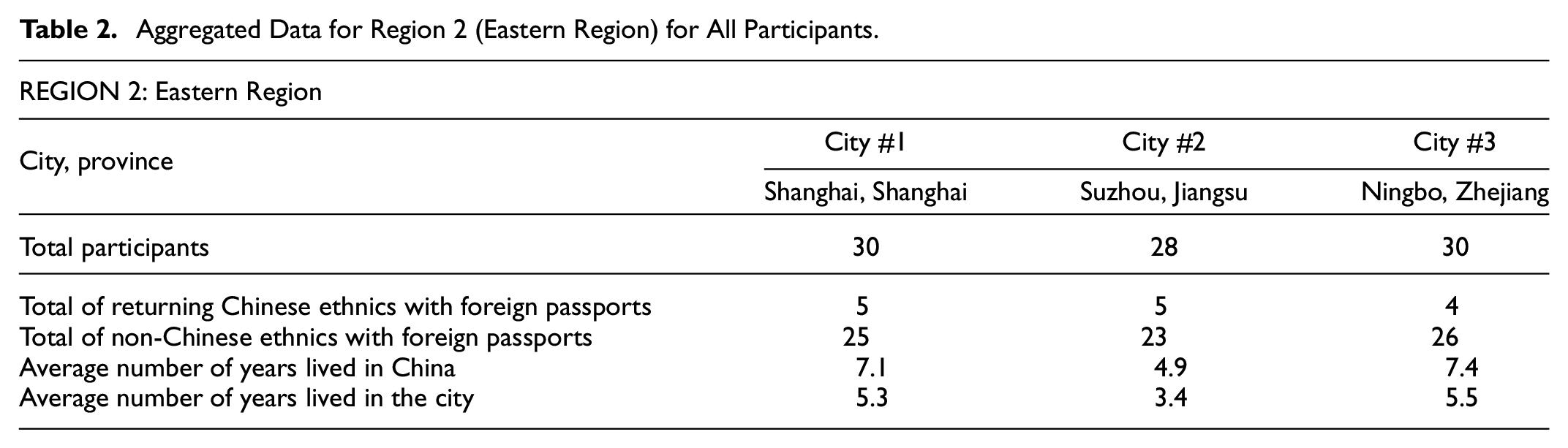
Aggregated Data for Region 3 (Southern Region) for All Participants.

The selection includes a record of the participant’s language capabilities for reading and speaking, the number of years they lived in China, and the selected city (see the Appendix file). All participants must have had an experience of a visit to healthcare facilities, coach or train stations (or both) for domestic travel, and public domain registration between June and December 2021. A half-year cycle is selected to ensure all participants are qualified for our user perspective analysis after successfully implementing the digitization of selected sectors. Aggregated information for each city is provided in Tables 4 to 6, using Likert scale analysis for language proficiency and frequency of experiences in three selected sectors. Records of individual surveys are included in the Appendix file.
Aggregated Data for Region 1 (Inland Central-West) for Language Proficiency (Speaking and Reading), Frequency of Visits to Healthcare Services/Facilities, Frequency of Visits to Major Transportation Hubs (Coach and Train Stations), and Frequency for Public Domain Registration.
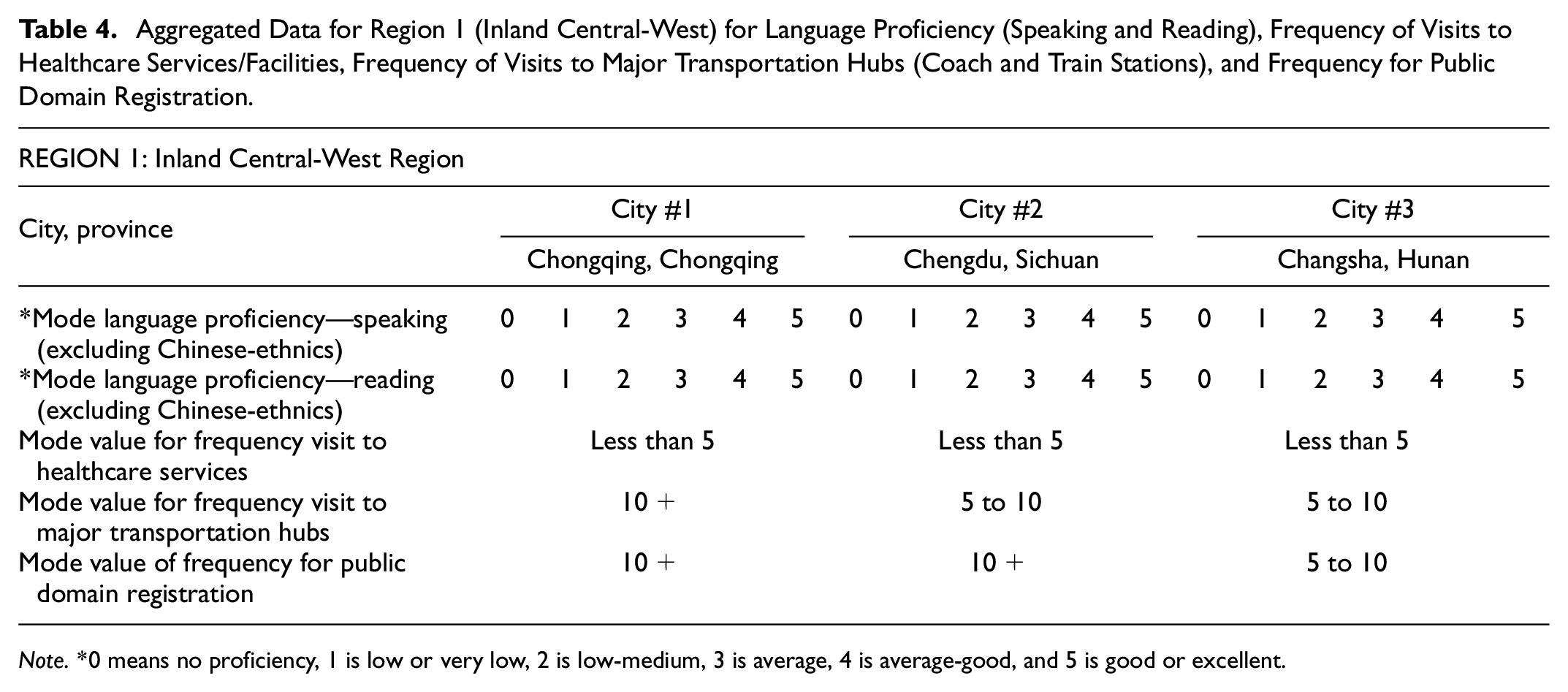
Note. *0 means no proficiency, 1 is low or very low, 2 is low-medium, 3 is average, 4 is average-good, and 5 is good or excellent.
Aggregated Data for Region 2 (Eastern) for Language Proficiency (Speaking and Reading), Frequency of Visits to Healthcare Services/Facilities, Frequency of Visits to Major Transportation Hubs (Coach and Train Stations), and Frequency for Public Domain Registration.

Note. *0 means no proficiency, 1 is low or very low, 2 is low-medium, 3 is average, 4 is average-good, and 5 is good or excellent.
Aggregated Data for Region 3 (Southern) for Language Proficiency (Speaking and Reading), Frequency of Visits to Healthcare Services/Facilities, Frequency of Visits to Major Transportation Hubs (Coach and Train Stations), and Frequency for Public Domain Registration.

Note. *0 means no proficiency, 1 is low or very low, 2 is low-medium, 3 is average, 4 is average-good, and 5 is good or excellent.
Further Data Analysis: Identifying Challenges for Everyday Use
As the data in Tables 4 to 6 shows, the frequency of visits to healthcare services (F1), frequency of visits to transportation hubs (F2), and frequency for public domain registration (F3) are comparatively higher in larger cities of each region. The patterns are similar as they reflect on regular uses of healthcare services and transportation hubs. Nonetheless, the frequency of public domain registration is increasing compared to the time before the pandemic. The digital registration of travel records in airports and hotel check-in registration remains the highest amongst all current public domain registration.
Furthermore, in all cases, the expatriates and non-mainland passport holders (of Taiwan, Hong Kong, and Macau) could not use newly-installed digital facilities in all three sectors. All surveyed participants could not use such facilities in hospitals and clinics, as the only mode of using the installed services is by having a valid Chinese Resident National ID card. It is also recorded that all registration should still happen through a non-digital mode, using passports for manual registration after queuing up at the hospital or clinic registration desks. While volunteers and helpers are present at such places, the expatriates cannot use the digital services, as their registration should go through the traditional manual process and to be recorded in the computers in designated registration desks and by the assigned members of staff.
The same situation applies to coach and train stations, where the newly-installed digital facilities for ticket booking and ticket collection can only recognize the Chinese Resident National ID cards. Hence, all foreign and non-mainland passport holders should queue up at the designated ticket offices or ticket booths to book their tickets and/or collect them. The only main difference is that since mid-2020, the travel system by coach and train is now connected to both Chinese Resident National IDs and passports. This means the system allows people to travel by scanning their ID cards and passports without printing their tickets. This can only work if the tickets are purchased online using ID cards or passports. Nonetheless, passport holders (and those without ID cards) have a separate line, as the newly-installed machines at both the security and the check-in gates only recognize Chinese Resident National ID cards. The security checks happen manually at the security gates for passport holders, while the Chinese Resident National ID holders can scan their ID cards in the digitized gates. The check-in gates slightly differ, as passport holders (and those without ID cards) must use a different installed digital system. Usually, for train stations, each check-in area has one individual installed a machine for reading the passports and manual input of ID cards in case of those who do not carry their Chinese Resident National ID cards. For other passengers, they can scan their ID cards at the check-in gates before departure.
The public domain registration differs between different types of registration and location. Based on the surveys, airports and hotels are identified as two main public domain registration points due to the COVID-19 pandemic control. The newly-installed digital devices at the airports are used for arrival checks, mainly in larger cities. During the lockdown and more restricted periods, these devices were used in small and medium-sized cities, while larger cities continuously kept such registration processes. The digital devices are usually located in designated areas at entry gates to airports, after arrival and right before entering the arrival hall, or both. In larger cities, such devices are located in both arrival and departure zones, while in smaller cities, either arrival or departure checks are made. In all cases, an official supervisor sits next to such devices for monitory purposes. Only Chinese Resident National ID cards could be used for such devices, and all foreign and non-mainland passports should register manually. This is normally done in two ways, either via manual entry done by the official supervisor or via completing a physical form using the passport and personal information. In hotels, the newly-added digital devices are only used for Chinese Resident National ID registration. These digital devices can scan the ID cards and take a photo of the passengers. The passport holders need to follow the traditional registration process and have their passports and visas copied or scanned. Those holding the Chinese resident permit cards should also use their passports for the hotel registration process.
In all cases, there are tangible digital inequalities (DI) and digital divide barriers (DBB) for the expatriate population. As a result, the following user perspective analysis is conducted to evaluate both DI and DDB based on five factors of DI and four pillars of DDB and language barrier (4+1). The following analysis helps us to verify the growing digital divide for the expatriate populations, its causes, and areas that require further attention.
Digital Inequality (DI) and Digital Divide Barrier (DDB) Analysis
Recording of Experiences: By Analyzing “Digital Inequality” (DI)
Based on five factors of digital inequality, the user perspective analysis is conducted to analyze experiences for healthcare digital facilities/services, transportation digital facilities/services, and digital public domain registration. As summarized in Figures 4 to 6, “autonomy of use” is identified as the prominent digital inequality for using the newly installed digital facilities/services. This DI highlights that factors like experience and skills have no or minimal effect on the use of such devices. While technical means were also identified as the secondary DI, they remain minimal compared to the autonomy of use. Figure 7 summarizes all data against “autonomy of use,” indicating that the majority of participants have identified this factor as the primary DI in all cases, and all nine studied cities.

Evaluating digital inequality (DI) for healthcare digital facilities/services use for all nine cities, using five factors of “technical means,” “autonomy of use,” “social support networks,” “experience,” and “skills.”

Evaluating digital inequality (DI) for transportation digital facilities/services use for all nine cities, using five factors of “technical means,” “autonomy of use,” “social support networks,” “experience,” and “skills.”

Evaluating digital inequality (DI) for digital public domain registration for all nine cities, using five factors of “technical means,” “autonomy of use,” “social support networks,” “experience,” and “skills.”
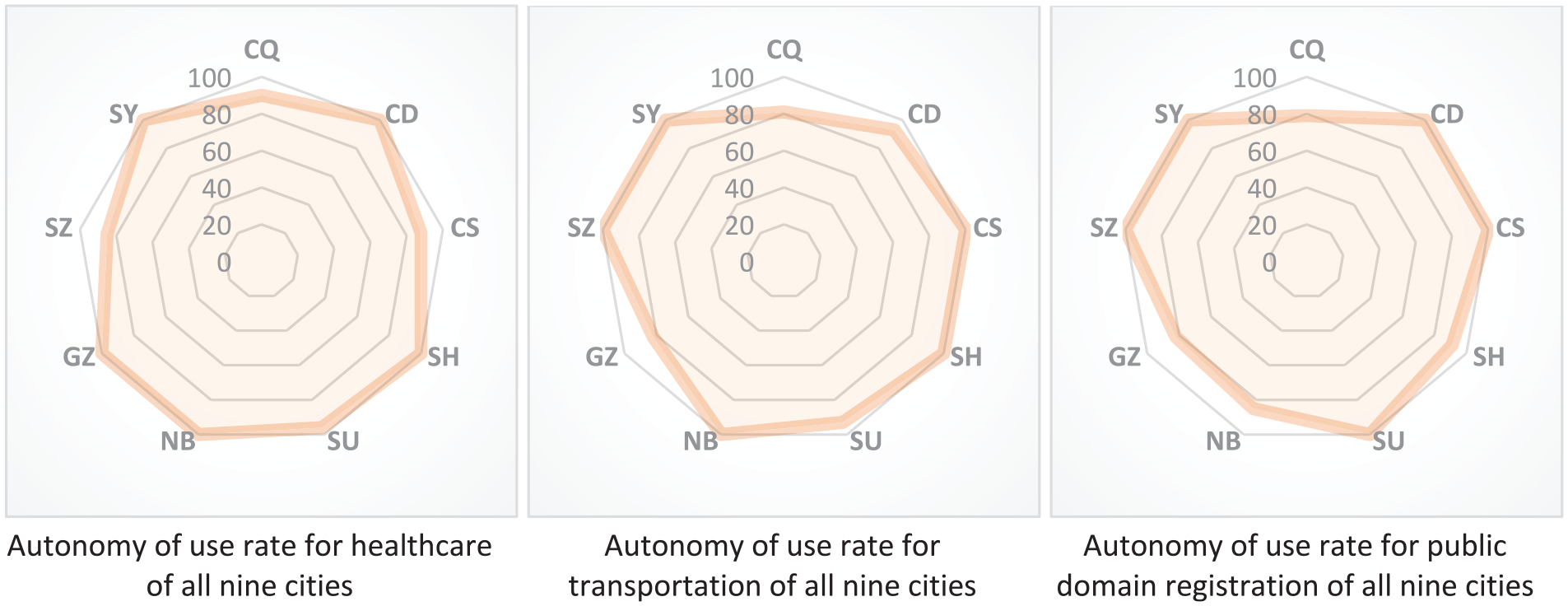
Summary of “autonomy of use” rate against all three areas of healthcare, transportation, and public domain registration for all nine cities.
Mapping Experienced Challenges: By Analyzing “Digital Divide Barriers” (DDB)
The study analyses digital divide barriers to map experienced challenges by the expatriate populations of all nine cities. In doing so, four pillars of “digital divide barriers” and “language barrier” are assessed to analyze barriers for the use of healthcare digital facilities/services, transportation digital facilities/services, and digital public domain registration. As summarized in Figures 8 to 10, “digital utilization” is the main DDB for using the newly installed digital facilities/services. This barrier highlights that while the language barrier remains an issue, it is no longer the primary barrier for the expatriate population. The matters of utility and utilization have now become a significant challenge for various registration processes. While the language barrier remains a barrier, it is now minimal compared to the digital utilization barrier. Figure 11 summarizes all data against “digital utilization,” indicating that most participants have identified this factor as the main DDB in all cases and all nine studied cities. In particular, for the public domain registration, all participants have identified digital utilization as the first barrier.

Evaluating digital divide barrier (DDB) for the use of digital healthcare facilities/services for all nine cities, using “digital availability,” “digital access,” “digital renovation,” “digital utilization,” and “language barrier.”

Evaluating digital divide barrier (DDB) for the use of digital transportation facilities/services for all nine cities, using “digital availability,” “digital access,” “digital renovation,” “digital utilization,” and “language barrier.”

Evaluating digital divide barrier (DDB) for digital public domain registration for all nine cities, using “digital availability,” “digital access,” “digital renovation,” “digital utilization,” and “language barrier.”
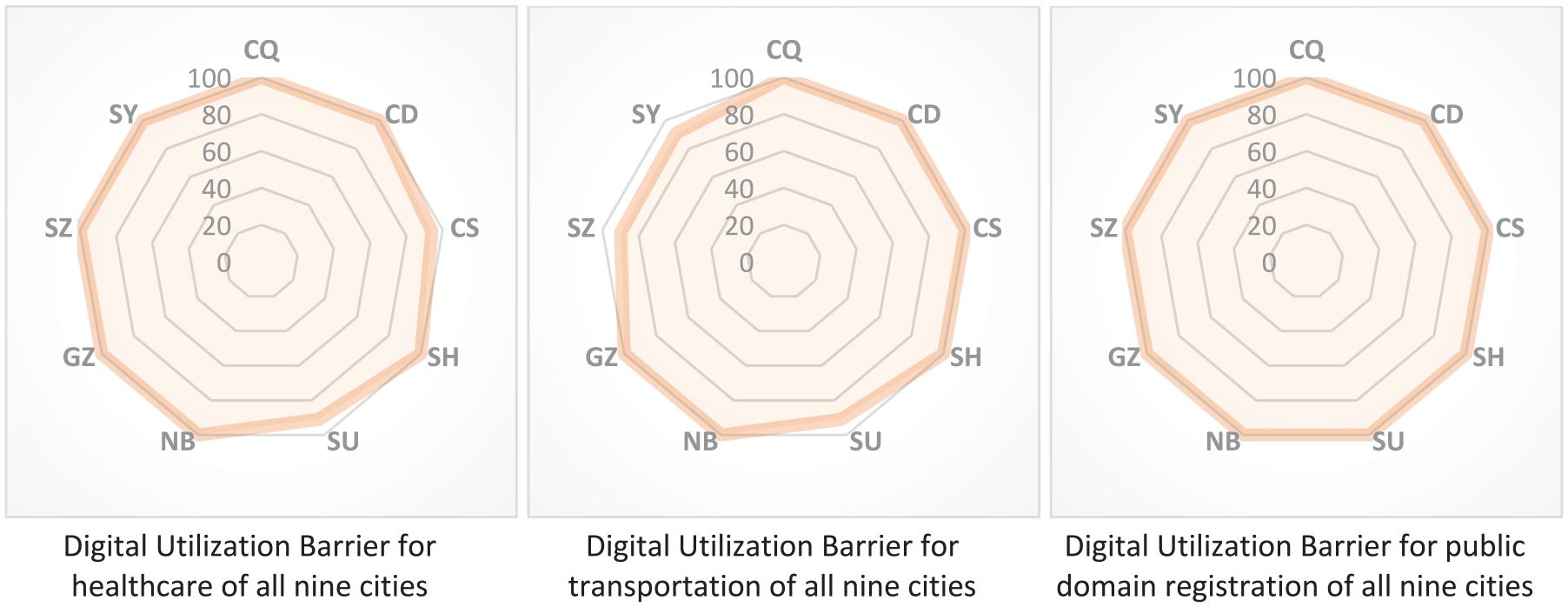
Summary of “Digital Utilization” barrier against all three areas of healthcare, transportation, and public domain registration for all nine cities.
Discussions
During the ongoing COVID-19 pandemic, inequality in the usage and access of ICT and the internet—that is, digital divide (Iberdrola, 2021; United Nations, 2021b), is increasing. But the actual barriers of the digital divide are more than just access inequalities. Apart from technological barriers and invisible barriers like high costs and illiteracy (Calderón Gómez, 2018), it can also be argued that language barriers play a significant part in increasing DD in countries like China. The language barrier is usually a more significant variable in places where expatriates often struggle to learn the native language. Since the emergence of e-commerce and other digital platforms, the language barrier for expatriates has become a more significant challenge. The use of online/digital platforms has become more difficult but not impossible. For many expatriates, there were always ways of dealing with the language barrier through learning the language, using translation tools, and getting support from friends or family members (Canhilal et al., 2020), which is time consuming or might led to frustrating situations where a person cannot travel or shop for food. Nonetheless, as the findings of this study highlight, the greatest digital divide barrier due to control and safety measures of the COVID-19 pandemic is digital utilization. In addition, as a significant digital inequality, the autonomy of use has become a more perceptible challenge, as the newly installed digital devices are not yet operating in an all-inclusive manner. Hence, the language barrier issues have become minimal, and instead, there is a growing digital divide on utility, utilization, and usage of digital devices. While digital tools and applications also suggest some limitations, the actual DDB is the utilization of new digital services and facilities.
Since the beginning of the COVID-19 pandemic, mobility has been severely affected in China; and consequently, access to places and transportation has been heavily controlled via digital applications. For instance, vaccination proof was required for travelling between provinces, and travelers had to integrate this information into smartphone applications. From 2020 to 2022, at least four digital certificates were required for intercity travel, accommodation, or accessing public facilities: 48h Acid Nucleic Test Results, COVID-19 Vaccination, Itinerary Code (check if the person has visited a high-risk zone in 14 days) and Health Status (see Figure 12). Different user actions obtained each code, and despite the integration with applications (i.e., Alipay and WeChat), expatriates had to resolve these connections without general or multilingual support. At the same time, it is known that digital support to expatriates improves their social engagement and participation (Canhilal et al., 2020).
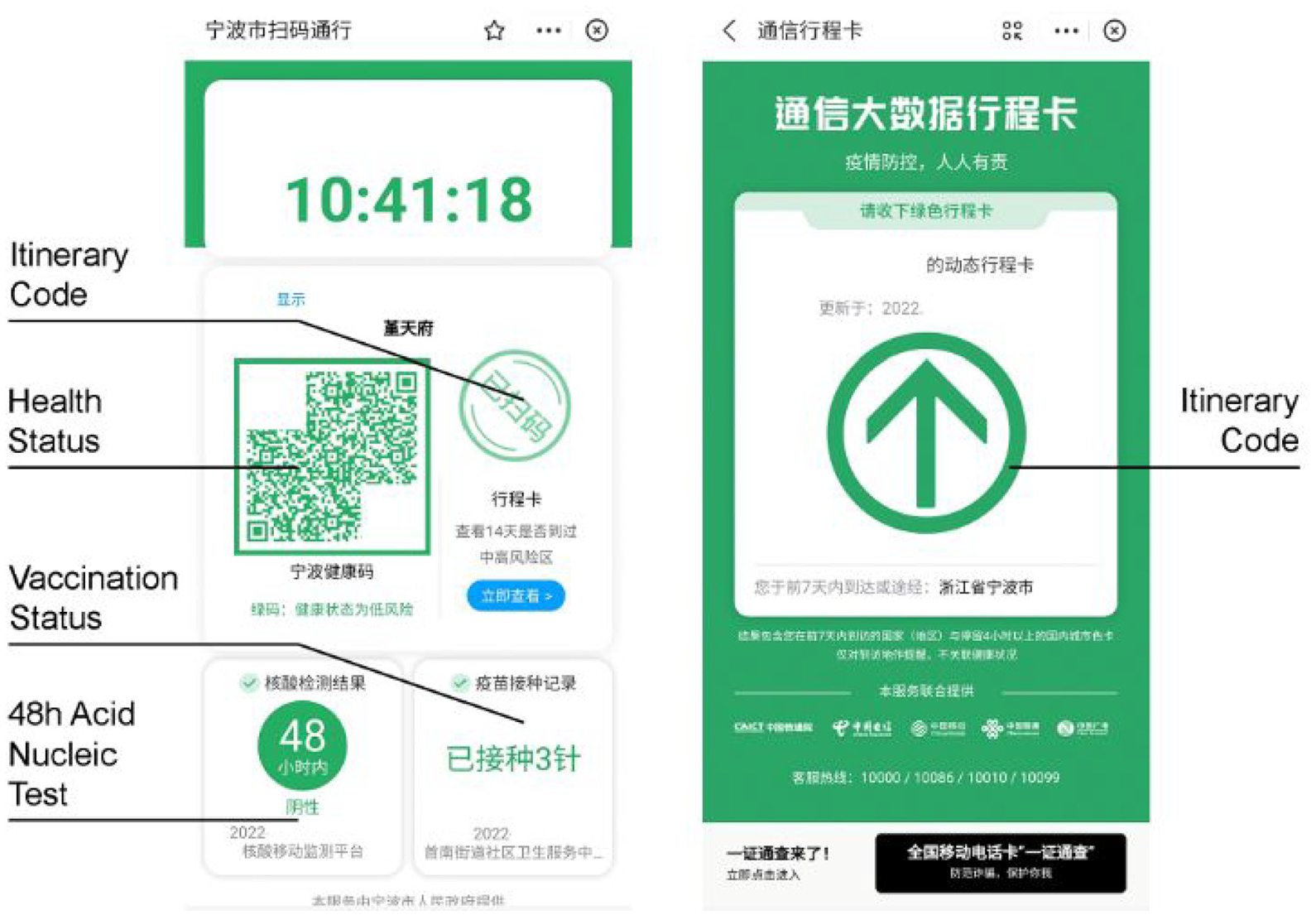
Two screens of a smartphone application showing required green codes for mobility and access in Ningbo.
These requirements created multiple barriers for travelers, since each city or province required individual registration upon arrival, usually by scanning and creating new temporary digital profiles in restrictive platforms (Cong, 2021). As this study presents, digital utilization affected all expatriates. To exemplify these issues, one can observe that applications did not provide a multilingual interface and required certain digital skills to add information. It is not common for the application blocked translation options under the prerogative of safety. Another aspect is that authorities controlled the information about every person’s traveling history by frequently requesting scans of QR codes at public places and transportation (including taxis) and demanding digital certificates to permit mobility. Not having these certificates would make it impossible to reach anywhere.
Previous studies, such as Gatti and Strizzolo (2020), discussed the improbability of exporting the Chinese epidemic ICT model to other countries due to adopting technology for control; a hypothesis confirmed by Tai et al. (2021). And despite positive efforts to reduce problems caused by COVID-19 using ICTS in the Asia-Pacific region, for example, linking international efforts to standardize travel acid nucleic tests (United Nations, 2021b), coordinated processes within China are still vague. It is not possible to learn about the data collected by Chinese authorities by scanning the codes or how decisions were made based on this information (Cong, 2021). From the expatriates participating in this study, there is a clear gap identified in Accessibility and Inclusiveness, which created several barriers for non-Chinese speakers.
DD expresses a new complex, unstable condition of our contemporary society, making it challenging to map and represent. However, a growing digital divide of expatriates in China has negative impacts on the following four factors:
(1) Exclusivity. As the usage of digital devices/services is currently limited to Chinese Resident National ID Card holders, the results show a lack of inclusivity, and hence, affecting the expatriate population. The digital utilization should rather help to enhance inclusivity, but as it is correlated with the “autonomy of use,” the results indicate a growing digital divide for the expatriate population. Such issues also exist in other smart city movements where the digital divide is usually not addressed but widened.
(2) Disparities in access to digital platforms. While digital tools and applications are the same for all users, there are new disparities in access to digital platforms. Hence, digital utilization is affected widely. This condition is also related to cultural and social context as characterized by Tai et al. (2021), and, most likely, will continue challenging Chinese society due its enclosed borders.
(3) Disconnection and marginalization. The new issues of DDB lead to further isolation, introducing additional barriers, and worsening social inequalities between residents. Such disconnection traditionally exists as part of the urban-rural divide but has become more tangible in cities and their different populations (Guo & Wan, 2022). This situation is aggravated by the lack of technical support in general and especially in other languages.
(4) Technical non-compatibility. Lack of technical compatibility lead to accentuating social differences (i.e., related to inclusivity), increasing isolation (i.e., leading to social disparities), and disconnecting some groups of society from digital devices/tools/facilities (i.e., leading to disconnection). Currently, the newly installed digital services and facilities have not bridged the digital divide between local and non-local residents. Such situation might become a critical issue for all population in the future, as the Chinese government quickly progress with digital data governance strategies (Cong, 2021) by creating a self-centered political narrative.
These negative impacts can be minimized or eradicated by taking into consideration the suggested 4A-Is of ICT for development: Awareness, Availability, Accessibility and Affordability; and Inclusiveness, Interoperability, Infrastructure, and Inter-Governmental Coordination as suggested by Tongia et al. (2005) and complemented by the United Nations (2021b). The 4A-Is are considered essential in any project aiming at reducing DDs. In this sense, to reflect on the above negative impacts and issues, we propose the following four strategies for future developments:
(1) Inclusivity. Technical support and other relevant support are needed to have better digital access and utilization to avoid issues of triple D’s, that is, disparities, discrimination, and disconnection. Future directions should help promote equalities. For example, they should add different modes of digital platforms/operation systems for particular disadvantageous groups to use more easily (e.g., language options, teenager mode, senior mode, personalized settings, etc.).
(2) Access and utilization. Through the humanization factors, digital access and utilization should be enhanced. For instance, the digital services providers and promoters should consider user-friendly design, holistic interfaces, and upgrade their digital services/devices to read all sorts of IDs, including foreign and non-mainland passports. Regulations on user interface design and detailed user manual should provide with new user tutorial on the digital platform, which are suggested for improving utilization and reducing users’ knowledge barriers.
(3) Reversing digital design marginalization (DDM). Beyond issues of access, adoption, and value of using smart systems/facilities/services, digital services’ providers should reflect on the current digital interfaces and help to reverse the current process of excluding certain users (i.e., the expatriate population). As digital access and utilization have become limited to the expatriates, such factors could lead to further marginalization of those people and other disparities that could be more harmful to them and the society in the long run. Besides suggestions mentioned in the previous two points (1) & (2), this would also need a quick response and adaptive actions from the digital service providers to amend and upgrade their platforms/digital products with proper prompt digital governance, supervision and administration of system designing, operating, and upgrading.
(4) Technological upgrades. To have better technical support, there is an urgent need for technological upgrades for the newly installed devices/facilities/services. This issue could be resolved in two ways, either to upgrade the devices to read other official IDs, such as foreign and non-mainland passports, or to provide a compatible ID card for all non-mainland and foreign residents. The latter requires a much longer process at the national level, which also leads to further institutional support. Even more noteworthy to the point, sometimes (under most current circumstances) it is not about technological problems. It is about inclusive awareness, fostering inclusive awareness in both enterprises and industry while emphasizing it in corporate social responsibility may prevent some manmade digital barriers at the first stage.
Conclusions
This study highlights the growing digital divide in the expatriate population in countries like China. The ever-increasing digital inequality is due to the “autonomy of use,” leading to further disconnection and disparities. The new DDB is beyond language barriers and more related to digital utilization. This study maps the growing DD in three sectors of healthcare, transportation, and public domain registration. It also provides a user perspective analysis through surveys to highlight DI and DDB issues. The discussions highlight the critical negative impacts of DD on the expatriate population, suggesting exclusivity (i.e., against inclusivity), disparities in access and utilization, disconnection and marginalization, and technical and technological factors.
This study is limited to one context and suggests how the growing digital divide could lead to other barriers apart from language barriers. Lessons learned from this study could help China and other countries identify ways of bridging the digital divide for expatriates and marginalized populations, those with ICT/IT illiteracy, the elderly, people with learning disabilities, etc. This study is limited to samples from three regions and nine cities in China. Thus, future research could increase the number of samples and cases and towards potential cross-country or cross-regional comparisons. However, in doing so, contextual digital compatibilities and barriers should be accessed carefully to ensure cases are comparable. The findings also highlight issues beyond the language barrier emerging faster due to digitization practices. Such issues could lead to further disconnections and inequalities, reversing some of the overarching inclusivity trends and technical upgrades for daily operations. Future research to study the less-studied expatriate population are also recommended. While this study only looks into one context and limited digital services/facilities/devices, future research could focus either on one particular area or on more areas that are yet to be discovered and analyzed. In future studies in the DD area, DI and DDB should not remain hidden for the expatriate population. Factors such as utilization, access, and inclusivity need further attention leading to further innovation and interventions that could minimize and address issues of DD.
Supplemental Material
sj-docx-1-sgo-10.1177_21582440241274613 – Supplemental material for Growing Digital Divide for Expatriates Population in China: A User Perspective Analysis During the COVID-19 Pandemic
Supplemental material, sj-docx-1-sgo-10.1177_21582440241274613 for Growing Digital Divide for Expatriates Population in China: A User Perspective Analysis During the COVID-19 Pandemic by Ali Cheshmehzangi, Tong Zou, Zhaohui Su, Ayotunde Dawodu, Saeid Pourroostaei Ardakani, Maycon Sedrez and Tian Tang in SAGE Open
Footnotes
Declaration of Conflicting Interests
The author(s) declared no potential conflicts of interest with respect to the research, authorship, and/or publication of this article.
Funding
The author(s) received no financial support for the research, authorship, and/or publication of this article.

Supplemental Material
Supplemental material for this article is available online.
References
Supplementary Material
Please find the following supplemental material available below.
For Open Access articles published under a Creative Commons License, all supplemental material carries the same license as the article it is associated with.
For non-Open Access articles published, all supplemental material carries a non-exclusive license, and permission requests for re-use of supplemental material or any part of supplemental material shall be sent directly to the copyright owner as specified in the copyright notice associated with the article.
