




Abstract
This study explores the preferences and satisfaction levels of EFL college students using DeepSeek, an AI-powered learning tool, in their language learning practices. Utilizing a phenomenographic qualitative analysis, the research categorizes students’ attitudes and experiences with DeepSeek based on thematic interview questions. The number of participants is 40, namely 20 from University of Diyala and 20 from University of Hradec Kralove. Using phenomenographic qualitative analysis and the methodology developed by Stenfors-Hayes et al. (2013), the findings categorized thematically based on the interview questions. The findings reveal that a significant portion of students incorporate DeepSeek into their daily routines, appreciating its effectiveness, reliability, and utility. While 35% of students use DeepSeek daily and 15% twice a day, 50% rely on it occasionally for specific academic challenges. The study also highlights that most students prefer to use DeepSeek in combination with other AI applications, leveraging its affordability and reliability alongside tools like ChatGPT, Google AI Studio, Copilot, and Gemini. The strategic use of multi-tool integration strategy enhances learning outcomes by allowing students to customize their educational experiences and focus on complex problem-solving. In addition to its outstanding capabilities, some concerns regarding privacy and ethical concerns are raised by the participants. The research underscores the importance of understanding student preferences to refine AI applications and improve their efficacy in language instruction. By examining the unique features and advantages of DeepSeek, this study contributes to the ongoing development of AI-powered learning tools, ensuring they remain effective and accessible for EFL students.
Plain Language Summary
This study explores the preferences and satisfaction levels of EFL college students using DeepSeek, an AI-powered learning tool, in their language learning practices. Utilizing a phenomenographic qualitative analysis, the research categorizes students’ attitudes and experiences with DeepSeek based on thematic interview questions.
Keywords
Introduction
Artificial intelligence (AI) apps are revolutionizing language learning and instruction by offering instructors and students individualized, effective, and captivating experiences (Derakhshan, 2025; Xia et al., 2024). They can provide courses that are specifically designed to accommodate different learning preferences and skill levels, guaranteeing more efficient development (Pikhart et al., 2024). Chatbots and language models are examples of AI technologies that mimic real-world discussions to improve fluency and communication abilities (Kim & Kwon, 2023). They also offer rapid feedback on communication, vocabulary, writing, grammar, and pronunciation, enabling students to reinforce their learning and make corrections right away (Almanea, 2024; Mahapatra, 2024). AI helps teachers with class planning, assignment grading, and student performance analysis, freeing up time for deeper conversations. Furthermore, AI apps facilitate access to a variety of linguistic and cultural resources, promoting global communication and a greater comprehension of linguistic subtleties (Ding et al., 2023). In addition to making learning more accessible, this incorporation of AI into language instruction enables teachers and students to accomplish their objectives more quickly and accurately (Rezai et al., 2024).
College students studying English as a foreign language (EFL) probably do form particular preferences for AI apps based on their learning objectives, demands, and the characteristics these tools offer (Pikhart et al., 2024). AI apps that provide real-time feedback grammar correction, vocabulary growth, and speech improvement might be preferred by many students (Banihashem et al., 2024). To improve their speaking and listening abilities, some students might like applications that mimic conversational practice using interactive chatbots (Farrokhnia et al., 2023; Hu, 2025). Additionally important are accessibility and usability, since students tend to favor apps with user-friendly interfaces and interesting content (Cascella et al., 2023). Furthermore, their tastes may be greatly influenced by AI apps’ capacity to personalize learning paths and provide progress tracking (Derakhshan & Ghiasvand, 2024; Merino-Campos, 2025). Additional factors that may influence EFL students’ preferences include affordability, linguistic diversity, and integration with academic resources (Kohnke et al., 2023).
Among the various AI apps, students, notably EFL learners, frequently like ChatGPT from OpenAI2. Because it can mimic real-life interactions, offer immediate, thorough explanations, and help with writing assignments, it is quite popular (Bodani et al., 2023; Bransen, 2024; Klimova et al., 2024). Furthermore, the interactive and gamified nature of programs like Duolingo makes language learning enjoyable and engaging (Smith et al., 2024). Another popular app for improving writing and correcting grammar is Grammarly which is also preferred by EFL students (Dewi, 2022). Microsoft Copilot does, however, provide some special benefits. It can help students by offering tailored feedback, producing original content, and responding to intricate questions in several languages. Its adaptability makes it a useful instrument for learning and practicing languages (Alkadi & Ali, 2024). Another application is the AI assistant Gemini from Google was created to support learning, planning, and writing. Gemini also provides features designed for students, meeting their educational demands (Williams & Roberts, 2024). Regarding the use and features of DeepSeek and because of its reasoning capabilities and open-source nature, DeepSeek is becoming more and more popular as a flexible AI application. It provides tools like DeepSeek-V3 and R1, which are excellent in coding, debugging, logical reasoning, and even producing artistic outputs like graphics (Choi & Chang, 2025). Students and instructors around the world can use it because of its low cost and multilingual assistance (Ali & Khan, 2025). Because of its emphasis on effectiveness and flexibility, DeepSeek is a formidable competitor in the AI market, standing up to other well-known models (Choi & Chang, 2025). Although preferences differ according to personal requirements, these applications are notable for their usability, accessibility, and efficacy in enhancing language proficiency (Kittredge et al., 2025).
Understanding the preferences and level of satisfaction of EFL students using AI applications will help identify ways in which AI tools improve language instruction and learning (Pikhart et al., 2022, 2024). Developers can improve features like real-time feedback, conversational practice, and accessibility by knowing students’ preferences. By focusing on DeepSeek, the degree to which it facilitates language learning by tackling issues like enhancing fluency, comprehension, and cultural nuances can be determined by satisfaction levels. Despite the fact that DeepSeek has many benefits, little thought has been given to how students view and use the platform. DeepSeek is still relatively unexplored despite providing a unique combination of multimodal input capabilities, adaptive reasoning using models like DeepSeek-R1, and semantic search (Guo et al., 2025). Previous research has mostly focused on mainstream AI tools like ChatGPT in EFL learning, emphasizing grammar correction and conversational engagement (Lo et al., 2025). It stands out as a unique substitute for individualized language learning help due to its open-source architecture and possibilities for incorporation into academic establishments (Gao et al., 2025). Thus, by examining the preferences and satisfaction of EFL college students using DeepSeek, this study closes a significant research gap and provides comparative analysis that demonstrates its technological and pedagogical advantages over other AI-powered tools. Because there is still a dearth of research on user preferences and satisfaction, the image of how it affects learners’ motivation, engagement, and overall experience is still lacking (Tawafak et al., 2024). This knowledge gap is important since learning about students’ preferences could help make customized changes and improve how well the platform serves educational needs. Thus, our research endeavors to investigate and tackle this crucial domain. Furthermore, this kind of research could reveal the tool’s shortcomings or potential areas for enhancement, encouraging ongoing development and adaptation for educational settings. In the end, this study may help develop AI-powered learning and guarantee that resources like DeepSeek continue to be useful and effective for students.
Research Questions
The present study attempts to provide answers to the following questions:
What is the frequency of EFL college students’ use of DeepSeek for AI-related tasks and activities?
In comparison to other AI apps, what particular characteristics set DeepSeek apart as the student’s favorite?
What are the main tasks or abilities that EFL college students use DeepSeek for, and how does it meet their needs?
How satisfied are EFL college students with DeepSeek, and what aspects of the program affect their loyalty or propensity to utilize other apps?
Literature Review
The Emergence of DeepSeek
In January 2025, DeepSeek, which was founded in China in May 2023, gained international notoriety after it was said to be comparable to one of OpenAI’s most recent models, bringing in over 11.79 million new users per month (DeepSeek, 2024). The United States, Russia, and China are the top three nations using DeepSeek. The majority of DeepSeek’s users are younger adults, with 22.03% of users being between the ages of 18 and 24 and 34.47% being between the ages of 25 and 34 (Antony, 2025). Across a range of subjects, DeepSeek’s models perform well. Their R1-Zero model, for instance, exhibited significance for educational applications in math and maybe other subjects, as evidenced by its 71.0% accuracy on the AIME 2024 mathematics test (Turow, 2025).
From its founding in May 2023 to its rise to prominence in the artificial intelligence space by January 2025, the DeepSeek Model Evolution Timeline demonstrates the company’s explosive development and innovation (DeepSeek, 2024). Initially, the emphasis was on programming applications, beginning with the November 2023 release of DeepSeek Coder. An important step toward more sophisticated language modeling was taken in early 2024 with the release of the DeepSeek LLM (67 billion parameters). DeepSeek-V2 was released in May 2024, while DeepSeek-Coder-V2 (236 billion parameters) was released in late 2024, demonstrating the dedication to scaling capabilities (Antony, 2025). Lastly, a move toward sophisticated reasoning was highlighted with the January 2025 release of DeepSeek-V3 (671 billion parameters) and the R1 model, indicating DeepSeek’s intention to compete with top AI systems in the market. This history highlights unwavering innovation and a desire to advance general intelligence and artificial intelligence (DeepSeek, 2024).
Many studies dealt with DeepSeek among them is Choi and Chang (2025) recent study who evaluate the commercial and open-source large language models (LLMs), with a particular emphasis on DeepSeek and OpenAI’s ChatGPT. It draws attention to the benefits of open-source models, namely their cost-effectiveness and flexibility, while also pointing out their drawbacks in terms of support and scalability. On the other hand, commercial solutions like as ChatGPT may be opaque and offer limited customization choices, but they excel in user experience and dependability. The study sheds light on the compromises between these two methods of developing LLMs. In a thorough safety assessment of DeepSeek’s multimodal models, Ying et al. (2025) identified flaws in algorithmic bias and content creation in various sociocultural situations. Their findings and multilingual dataset highlight the necessity of culturally aware safeguards in AI-assisted learning resources.
DeepSeek in EFL Context
In the context of language instruction, the study by Ali and Khan (2025) investigates the opinions of Saudi EFL teachers regarding the use of DeepSeek as a generative AI learning tool. The study, which involved qualitative research with 20 randomly chosen teachers, discovered that DeepSeek is regarded as an open-source, inexpensive, and user-friendly application. Its accuracy and precision were emphasized by teachers, who acknowledged it as a useful teaching aid in EFL classes. The results indicate that DeepSeek has the potential to improve teaching strategies. The study by Mohammed et al. (2025) investigates how three major language models: ChatGPT, DeepSeek, and Grok can improve language instruction. Though it has issues with accuracy and ethics, ChatGPT is notable for its usefulness in lesson preparation, individualized learning, and resource creation. Acclaimed for its coding skills, logical reasoning, and context-driven error detection, DeepSeek provides an affordable, open-source alternative with creative and understandable explanations. A more recent addition, Grok, is excellent at producing captivating, narrative-focused content that makes learning fun. In addition to recommending that future research address these models’ weaknesses and investigate novel applications, the article proposes integrating various AI models to produce more efficient, customized, and captivating educational experiences.
Though interest in AI-powered language learning tools is growing, most of the material that has been written about DeepSeek is descriptive in nature and concentrates on its open-source accessibility, technological architecture, and benefits over well-known models like ChatGPT (Guo et al., 2025). Although research has looked at DeepSeek’s function in academic writing and individualized tutoring (Ali et al., 2025; Liu, 2025), few studies have experimentally investigated its effects from the viewpoint of the learners, especially in EFL situations. Though these results are restricted to genre-specific writing assignments and do not provide general insights into user happiness and preference, research on students’ use of AI-generated feedback in writing classes points to encouraging results for programs like DeepSeek (Liu, 2025). Furthermore, comparison studies reveal that DeepSeek surpasses ChatGPT in terms of academic accuracy and reasoning depth (Bouchra et al., 2025); nevertheless, little is known about how students perceive usability, support, and learning value. DeepSeek’s performance in assessing CET-4 essays was assessed using generalizability theory in a recent work by Gao et al. (2025). They found that DeepSeek-R1 performed better than human raters in terms of scoring consistency and gave more pertinent input on a variety of writing aspects. These results imply the pedagogical potential of DeepSeek in extensive EFL training, but they do not address learner preference and satisfaction, which are important aspects that this study aims to investigate. By examining the preferences and satisfaction of EFL college students using DeepSeek, this study fills these gaps and provides a learner-centric assessment to supplement current system-level evaluations.
The Contexts of the Study
A purposeful disparity in socioeconomic circumstances, digital infrastructure, and pedagogical exposure to AI technology is reflected in the selection of EFL students from Taiwan (Taiwanese students study in Czech Republic) and Iraq. Iraq is a post-conflict country with limited infrastructure and disjointed institutional support for digital transformation, but it is becoming more interested in integrating AI into public services and education (Al-Obaydi & Pikhart, 2025; Hadi et al., 2025). On the other hand, Czech’s national investment in educational technology and cross-border academic mobility have generated advanced digital ecosystems and AI-enhanced learning settings that benefit Taiwanes students, especially those studying overseas (Zhao, Li & Kang, 2024). The study tries investigate how students from different technological and cultural backgrounds interact with DeepSeek thanks to this comparative lens, which provides insights on cross-cultural differences in AI adoption, learner autonomy, and perceived utility. Through contextualizing the data within regional research on digital transformation and AI preparedness, the study advances a more nuanced understanding of how socio-technical factors influence learners’ experiences with generative AI tools.
To sum up, DeepSeek is a generative AI tool that shows promise and has a variety of uses in education and other fields. A large audience can utilize it because to its affordability, open-source nature, and ease of use. It excels in logical reasoning, context-driven error detection, and technical skills like coding, all of which enhance its imaginative and straightforward explanations. It is valued for its accuracy and capacity to facilitate successful instruction in the field of education, especially in scenarios involving EFL. All things considered, DeepSeek shows itself to be a useful tool for improving educational experiences and accurately and effortlessly handling challenging tasks. Nevertheless, there is still a dearth of empirical research examining how EFL students view and interact with DeepSeek in actual classroom settings, despite its increasing popularity. Prior research has tended to concentrate on technical comparisons or system-level performance, ignoring learner-centered aspects like task-specific value, preference, and pleasure. This study fills that knowledge gap by examining the DeepSeek experiences of EFL college students, providing current insights regarding its pedagogical relevance and useful integration in language instruction.
Methodology
Design
This study used a phenomenographic research design. Based on the interpretivist paradigm, phenomenographic qualitative analysis aims to identify the qualitatively distinct ways in which people perceive a given phenomenon, in this example, the use of DeepSeek by EFL students. Purposive sampling was used in this study to choose a varied group of students, and semi-structured interviews were used to extract in-depth descriptions of how students view and use the AI tool. Transcripts are divided into meaning units, which are subsequently categorized into categories of description that represent various ideas, in accordance with Marton and Booth’’s (1997) paradigm. These groups are arranged in an outcome space, which is a logical map that illustrates the structural connections between different experiences. Peer debriefing, member checking, and keeping an audit trail all contribute to credibility, making sure the results are believable, founded in context, and represent the opinions of the students.
Since phenomenography aims to comprehend EFL students’ subjective experiences, preferences, and satisfaction with DeepSeek rather than gauging performance outcomes or tool efficacy from an outside viewpoint, it is consistent with the research objectives. Since learners with varied language backgrounds and levels of technical familiarity may understand DeepSeek’s features, feedback quality, and user interface differently, phenomenography offers an organized lens through which to record these qualitatively different concepts. The findings are guaranteed to represent authentic learner viewpoints by emphasizing how students perceive DeepSeek as a learning aid rather than how DeepSeek functions objectively. This aligns with the more general objective of determining how AI technologies are assimilated and appreciated in educational settings and reinforces the focus on the social, emotional, and cognitive aspects of AI adoption.
The researchers used Stenfors-Hayes et al. (2013)‘s seven-step phenomenographic analysis framework which consists of data familiarization, condensation, comparison, contrast, grouping, articulation, and final labeling to guarantee methodological coherence. This framework informed the creation of the interview procedure itself in addition to providing guidance for the coding and classification of interview material. In line with the interpretivist paradigm and second-order phenomenographic approach, the questions were created to elicit a range of students’ ideas about DeepSeek. With the use of the framework, the researchers were able to classify qualitatively different experience categories into an outcome space that represents the structural connections between learners’ views. This method made sure that data gathering and analysis were methodically coordinated and conceptually supported.
Participants
This study examines how students in the English Department at the University of xxx’s College of Education in xxx, Iraq, and the EFL college students at the University of xxx’s Faculty of Informatics in the xxx, Czech republic, use DeepSeek. The choice to include participants from Iraq and Taiwanese students studying in the Czech Republic stems from both practical and conceptual considerations. First, the researchers are affiliated with institutions in these two regions, which facilitated access to participants and ensured cultural and linguistic familiarity during data collection and interpretation. More importantly, this combination of participant backgrounds introduces a rich comparative dimension to the study. Iraq and Taiwan differ significantly in terms of cultural norms, educational systems, economic development, and technological integration, while the Czech Republic adds a European academic context that influences the Taiwanese students’ experiences. By examining EFL learners from such diverse settings Middle Eastern and East Asian students, with the latter immersed in a European learning environment the study captures a broader and more nuanced spectrum of attitudes toward AI-powered tools like DeepSeek. This diversity enhances the generalizability and relevance of the findings, offering insights that go beyond a single cultural or regional perspective. Including only students from similar countries, such as two European nations, would risk producing a narrower view of learner experiences. Instead, this cross-cultural synergy allows the research to explore how DeepSeek is perceived and utilized across distinct educational and sociocultural contexts, thereby contributing more meaningfully to global discussions on AI in language learning.
It is not a comparative study, and the participants in the two scenarios are treated as a single sample, with the exception of a few questions that use the percentages for the two groups independently to further elucidate the concept. Instead of comparing situations, the study aims to investigate broad trends in AI-assisted language acquisition. Instead of focusing on contextual variations, treating participants as a single sample supports the objective of uncovering shared educational insights.
A phenomenographic research design was employed in this study, which suitably exposes how a group of people perceives a particular phenomenon (Hajar, 2021). By including students from two distinct higher education contexts, the researchers aimed to increase the variety and generalizability of replies. The interview and its recording were approved by the participants, and all privacy laws were followed. No personal information was gathered, and all interviews were anonymized by removing names and other identifying information. The study was authorized by the Ethics Committee xxx. As per GDPR standards, participation in this survey was completely optional.
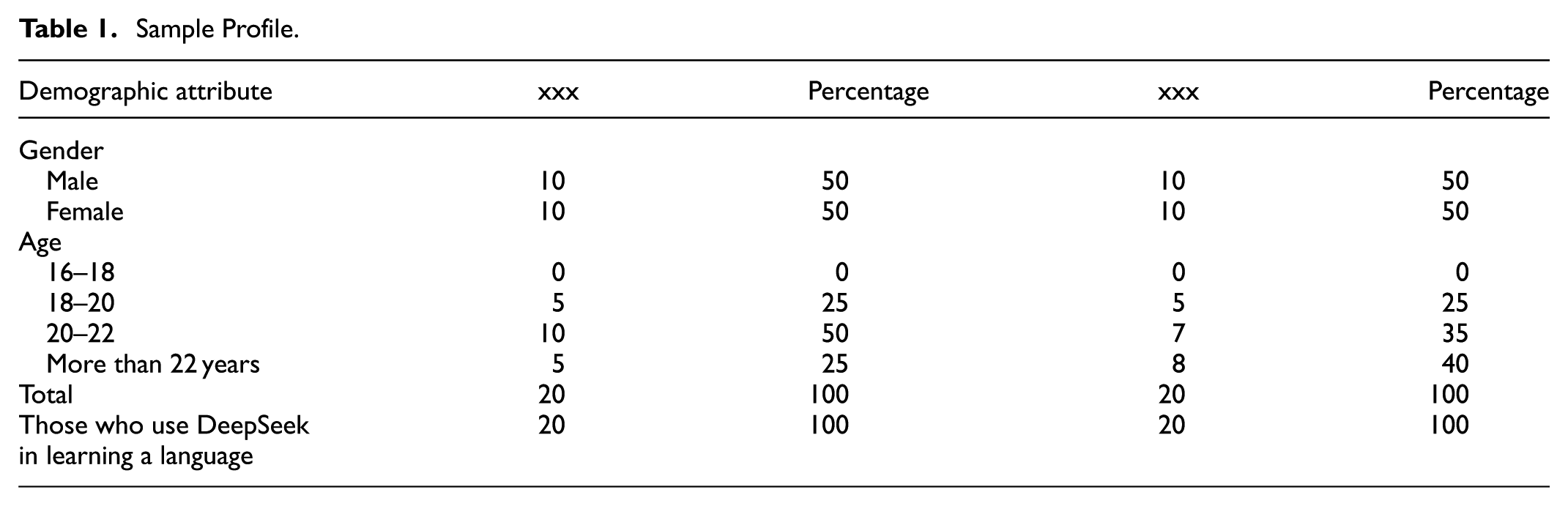
Table 1 displays the demographic data for the sample profile of responders. According to the current study’s findings, the number of participants is 40, 20 from Iraq and 20 from Taiwan studying at the University of xxx, Czech Republic. Both scenarios have an equal number of male and female participants, all of whom are older than 18, and 100% of whom are enrolled in college. This suggests that the present study’s participants are all older, experienced college students, mostly male and female, who are familiar with artificial intelligence and technology.
Sample Profile.
Instrument
In accordance with the aims and objectives of the study, a semi structured interview was used to collect data efficiently. This approach gave researchers the freedom to investigate participant viewpoints while allowing for more in-depth conversations and discoveries. It’s a popular method for gathering detailed information in qualitative research. The researchers followed Creswell’s (2013) standard procedures for conducting qualitative interviews in order to meticulously develop the instrument. This methodical approach probably included creating questions that are clear, pertinent, and in line with the goals of the study. It also probably involved taking ethical procedures into account, making sure that the questions were reliable, and encouraging an open-ended style that allowed for the collection of detailed data. This thorough planning would improve the caliber and breadth of the information gleaned from the interviews. Then, in accordance with the goals of the study, the researchers created eight open-ended questions. Five experts were then presented with the questions to verify their content and face and content validity in terms of linguistic appropriateness, relevance, and lucidity. Following some feedback and changes, the interview questions were accepted as appropriate. There were two parts to the interview; the first one dealt with the background data of EFL students and six questions in the second main part address how they use DeepSeek in their regular routines. The interview was conducted in-person, interactive, and was recorded on audio using an iPhone in a calm setting.
Data Analysis
The researchers adopted the seven-step methodology developed by Stenfors-Hayes et al. (2013), which involves data familiarization, condensation, comparison, contrast, grouping, articulation, and final labeling, in order to adhere to a standard structure in phenomenographic qualitative analysis. To enable a methodical review of the participants’ answers about their past experience or exposure to DeepSeek AI-driven technology in learning practices, the analysis’s findings categorized thematically based on the interview questions. The participants’ diverse attitudes, beliefs, and points of view are comprehensively understood thanks to this categorization, which also provides insights into the reasons influencing their opinions regarding the use of AI in education.
Results
The following are the results of the study based on the questions of the interview.
Do You Usually Use DeepSeek in Your Daily Use of AI? How Many Times a Week?
An examination of the answers to the question about the amount of exposure to or experience with DeepSeek in learning practices shows that many students prefer to use this application more than others. Many of the participants are enthusiastic and receptive to incorporating DeepSeek into their daily practices. The fact that different students use DeepSeek at different times shows how well it fits with their schedules and needs as in the following. Accordingly the students show the following repetitive use:
35% of the students are daily users. The students who probably use DeepSeek as a key component of their study regimen. It can be used for continuous tasks like writing essays, practicing coding, or keeping track of their study plans. Users appreciate how it helps them with their daily academic grind and streamlines it.
Users who use DeepSeek twice a day consist 15%. During busy periods, these students use DeepSeek for more demanding assignments like studying for tests or working on significant projects. They may utilize it in shorter spurts, like once in the morning to organize their plans and once in the evening to assess their development.
50% of the participants are occasional users, meaning they prefer to use DeepSeek when they have particular difficulties, such finishing a challenging project, planning their research, or figuring out challenging coding problems. For them, rather than being a continuous companion, the app is a dependable resource when needed. When the affordance of other programs is limited or they are not sufficiently satisfied, the students in this category turn to DeepSeek.
So, it is clear that the students incorporate DeepSeek into their daily routine due to its effectiveness, dependability, and utility. Student number 5 from Taiwan mentioned that “time is saved by its quickness in creating material, summarizing research, and scheduling, particularly during busy times like deadlines or tests. I like to use it daily because it is constantly available”.
A subset of very active learners is indicated by Table 2 and Figure 1, which reveals that although 35% of students use DeepSeek daily, a smaller group (15%) reported using it twice a day. The majority (50%) are sporadic users, indicating more task-specific or selective use. These results demonstrate the variety of ways users interact with the tool, which can be further explored by analyzing qualitative feedback. According to interview data, students mostly use DeepSeek for translation jobs, vocabulary growth, writing criticism, and grammatical improvement, particularly prior to turning in assignments. While one student used DeepSeek “only for paraphrasing academic texts,” another described it as a “revision partner” when preparing essays. It is noteworthy that most of interviewees reported utilizing the platform for lexical inquiries and translation, highlighting its function as an additional language tool rather than a full-service trainer.
The Daily Use of DeepSeek.
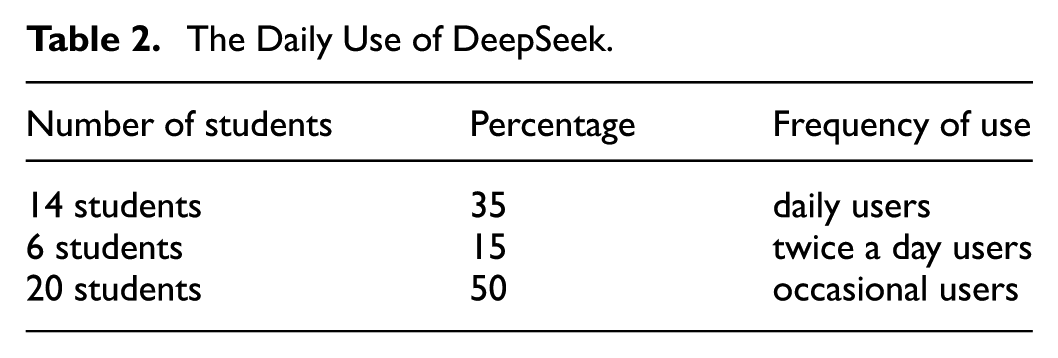

The daily use of DeepSeek.
Do You Use it Alone or With Other AI Apps?
Results show that only 30% of the Iraqi students and 15% of the Taiwanese of the sample used Deepseek alone, and the rest of the sample used it in combination of other AI applications which a strategy that is dependent by most college students. Deepseek appears to be a clever option for sustaining output without going over budget. It provides students with a range of possibilities for various tasks specifically when paired with programs like ChatGPT, Google AI Studio, Copilot, and Gemini. These applications seem to be used in combination to create a dynamic toolset for a variety of applications. According to the results, DeepSeek has a major advantage over other competing AI apps because it is dependable and free, especially for users who value affordable solutions. Its availability guarantees continuous assistance for daily chores, data collection, and research without the concern of subscription expirations. Beyond its affordability, the students look at DeepSeek as a great tool for integrating into a variety of workflows due to its reliable performance and versatility. In many respects, its value lies not just in being free but also in enabling users to stay empowered and productive despite financial limitations. According to the Iraqi student, number 10, “When available, combining it with paid apps like ChatGPT or Gemini can result in a complementing environment in which Deepseek acts as the cornerstone.” This enables students to use it for more general, daily need and save premium features for really specialized activities. The potential advantages and usefulness of DeepSeek in raising student engagement and teaching efficacy are frequently mentioned by the students. DeepSeek is frequently used by students, since it effectively and reliably meets their main academic and personal needs.
According to Table 3 and Figure 2, the majority of Taiwanese students in the Czech Republic (85%) and Iraqi students (70%) reported utilizing DeepSeek in conjunction with other AI tools, indicating that it is not a stand-alone solution but rather a component of a larger ecosystem. By comparison, just 15% of Taiwanese students and 30% of Iraqi students utilize DeepSeek on their own.
The Number of Students Who Use DeepSeek.


The number of students who use DeepSeek and other applications.
This pattern might be a reflection of contextual variations in digital literacy, learning autonomy, and familiarity with AI tools. These preferences are further contextualized by interview responses: Taiwanese students noted using DeepSeek in conjunction with Reverso and QuillBot, especially for academic paraphrasing and fluency enhancement, whereas Iraqi students frequently used it with ChatGPT or Grammarly for pre-submission evaluation. These results highlight how students view DeepSeek as a functional complement, preferring it for source checking, translation, and idea generation over complete composition.
Which Strategies Do You Usually Use When Consulting AI tools Such as DeepSeek?
According to the data gained, 95 % of the participants use AI applications in ways that are either multi-tool AI integration techniques or AI-assisted learning diversity. In essence, it involves integrating specialized AI tools for complementing learning objectives. Students customize AI programs to improve their learning outcomes. One of the Iraqi participants mentioned that “it is essential for me to incorporate different AI applications into my work since they increase my productivity, customize learning, and encourage creativity.” According to the results, students can concentrate on tackling complicated problems by using different AI tools to automate repetitive chores and save time. They assist students in addressing their individual needs and strengths by offering specialized educational support. To get better outcomes, a Taiwanese student mentioned “I might, for instance, utilize an AI writing aid to write content, a language translator to facilitate worldwide collaboration, and an analytical tool to handle data.” This idea is applicable to DeepSeek as well as other AI tools like Gemini, Copilot, and ChatGPT. Combining DeepSeek with other AI tools is an example of “multi-tool AI integration,” in which each tool adds special skills to a common goal. According to them, with the help of this synergistic method, they tackle difficult problems in a holistic manner, utilizing the advantages of several technologies to get improved outcomes quickly. Maximizing the potential of this integration requires balancing their use and comprehending how they enhance one another. The participants stated that this method encourages more in-depth learning, a range of viewpoints, and customized problem-solving.
Why Did You Choose it Specifically? Does it Have Any Good Features Than Other AI Applications?
As EFL college students, the sample considers DeepSeek to be a useful resource, especially because of its user-friendliness and free availability. The students list some important services such as doing assignments, research projects, or even language practice, so they value its capacity to deliver precise and timely information. One significant benefit is its accessibility, particularly for students who do not have the funds for expensive programs like ChatGPT or Gemini. In addition, students appreciate DeepSeek as a dependable fallback option that guarantees uninterrupted work in the event that other resources are unavailable. They would probably commend its usefulness and contribution to their educational process overall. Students number 1 from Taiwan mentioned that “By concentrating on DeepSeek, I may use it as a bridging tool when memberships to premium services expire, while completing my responsibilities using other apps, such Google AI Studio for analysis, ChatGPT for creative outputs, or Gemini for specific jobs. This strategy makes the most of each platform’s advantages while maximizing my productivity.”
Does the DeepSeek Has Specific Features for Language Learners Than Other Apps Do Not?
According to the students, DeepSeek provides them with special features that can help them learn English language, especially its capacities for natural language processing (NLP). This makes it simpler for them to locate complex data, reports, or study materials without requiring sophisticated search strategies by enabling them to enter searches in conversational English. Furthermore, DeepSeek’s multilingual accuracy allows it to process inquiries in a variety of languages, which can revolutionize language practice or study. Student number 3, from Iraq, comment “DeepSeek is excellent at giving precise and pertinent information that is suited to language learning requirements, whereas other apps, such as ChatGPT, concentrate on conversational flow. Additionally, because it is open-source, it is affordable and available all the time.” Other student from Taiwan 4 call it “a journey smoother” referring to its wide range of help received.
Numerous other AI systems offer more general capabilities that can be successfully applied for educational objectives, including language acquisition, even though platforms like DeepSeek may have features specifically designed for language learning. Gemini, copilot, and ChatGPT are a few examples. According to student number 1 from Taiwan “using several programs at once can be quite advantageous since it enables us to take advantage of each tool’s benefits and special capabilities.”
In Which Skill or Activity Do You Use it Most Often?
Students’ replies are varied about the main activities the DeepSeek is used for. According to the participants in the two contexts, the main uses are related to language learning including translation. One participant from Iraq, number 6, comment “since DeepSeek can accurately translate text into more than 50 languages, it’s a useful tool for learning and practicing foreign languages. I personally like it too much in translation.” Some participants mentioned that they improve their writing and comprehension abilities by using tools linked to document summarizing, writing feedback, and human-like text production. They added that in order to enhance communication skills, it can also practice dialogues, pose queries, and get prompt feedback. Additionally, it is a flexible tool for EFL learners since its capacity to identify cultural nuances helps them comprehend linguistic nuances in many cultural contexts. Other uses include searching for references and asking for solutions. The results of each use are as follows:
Translation and other language learning activities 80%.
Searching for references and novels to read 40%.
Talking about life, personal problems 60%.
Figure 3 shows the utilization frequency, integration context, and task kinds that are triangulated to show that DeepSeek is mostly used for linguistic support, with 80% of students using it for language acquisition and translation tasks. This highlights how useful it is as an adjunct to conventional classroom training, especially for improving grammar and lexical clarity. Furthermore, 60% of students said they used DeepSeek to discuss personal and life-related topics, indicating that they saw it as a useful tool for effectual support or conversation, which is not a function typically associated with artificial intelligence in educational settings. However, 40% of users used it to look up books and references, indicating that it is being used for both leisure and academic enrichment. The student who said, “I use DeepSeek every day before submitting any task it helps me explain ideas I’m afraid to say in English,” is an example of how these preferences reflect interview narratives. “When I ask about books or technical topics, it feels more objective than ChatGPT,” said another. These findings demonstrate that student engagement with DeepSeek goes beyond frequency and reflects a range of goals and individualized learning approaches.
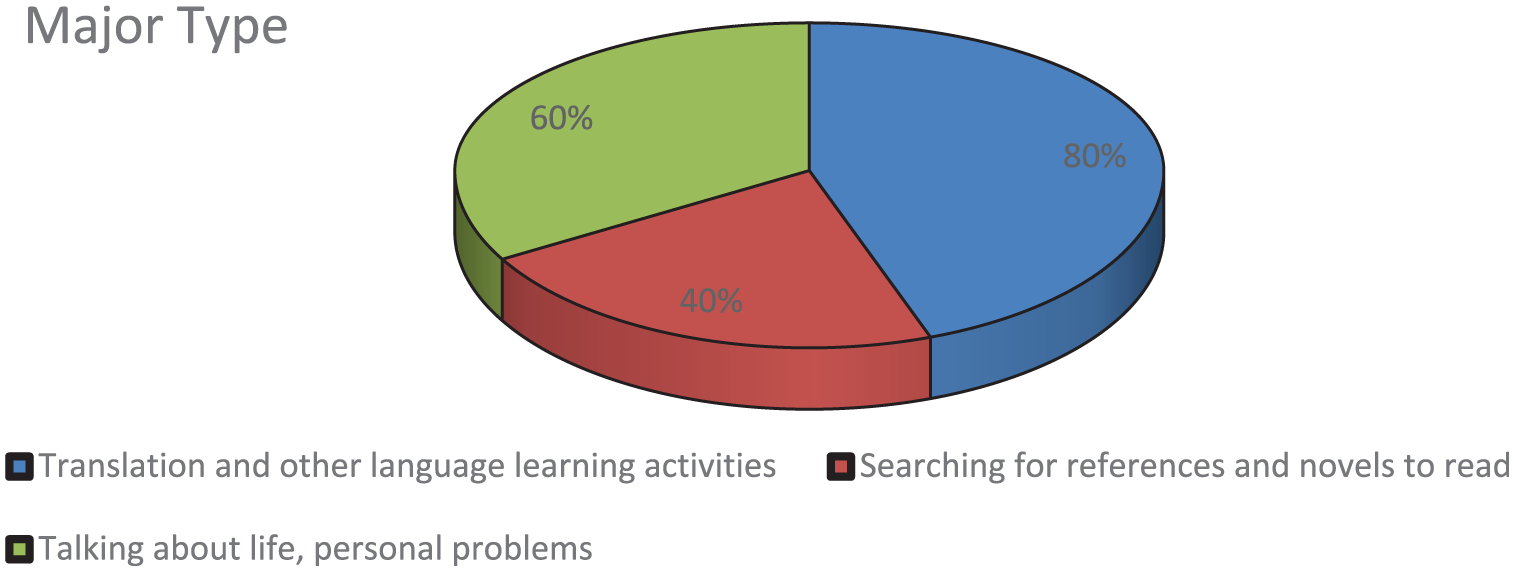
The percentages of the activities used.
Are You Satisfied With Using it or Will You Leave it if You Find Other Better Applications?
DeepSeek is often seen favorably by students. They appear to have found DeepSeek to be dependable and efficient, and they have had a good experience with it. They all compare it to ChatGPT very quickly. Their analogy to ChatGPT implies that they believe both tools are capable, possibly providing comparable quality and adaptability. The findings indicate that when students evaluate an AI tool’s efficacy, they pay greater attention to its practical performance and influence on their assignments than to its name or modernity. They take into account things like the tool’s capacity to effectively meet their unique needs, the precision and clarity of its outputs, its usability, and its versatility. For example, they might assess whether the technology facilitates their ability to learn more quickly, solve challenging issues, or effectively come up with original ideas. Additionally, students consider whether the tool improves their comprehension of a subject, saves them time, or requires less effort. Therefore, switching between various AI applications depending on the work at hand is not only a natural but frequently strategic action. Since every AI tool has different characteristics and advantages, students can take advantage of each one’s best qualities by switching between them. One tool may be better at data analysis, for example, while another is more appropriate for brainstorming or creative writing. With this method, students can effectively and efficiently handle a variety of facets of a single project or several assignments.
Do You Typically Face Challenges When Using DeepSeek in Academic Settings?
Actually, DeepSeek’s effectiveness and affordability have made it more and more popular with students. However, students report significant disparities, difficulties, and worries related to its use. Among these challenges is the fact that DeepSeek gathers a lot of personal data, such as cookies, technical data, and user input. The possibility that this data is kept on servers located outside of the user’s country raises questions regarding data security. Thus, students and instructors should use DeepSeek with caution, according to them, especially when it comes to privacy and ethical considerations, despite its outstanding powers. Furthermore, DeepSeek is susceptible to exploitation for academic dishonesty, including plagiarism, just like other AI technologies. In addition to that, DeepSeek exposes user information to outside parties, such as service providers and advertising partners, which may jeopardize user privacy. One of the Taiwanese participants 8 comments “advertisements bothered me too much.” Another important point is raised by students which is the oral communication aspect of the application. Although DeepSeek is most known for its text-based generative skills, there is no concrete evidence that it also has speech-to-text or text-to-speech capabilities for oral communication. An Iraqi students 11 comment “Unfortunately there is no audio messages, thus, there will be no English speaking improving. You know of course the importance of speaking for us.” The same student added saying “I don’t have a native English friend that’s why I usually speak with AI to improve my speaking skill.”
Thematic Analysis of DeepSeek Usage in EFL Contexts
This study applies Task-Technology Fit (TTF) theory in the theme analysis because it links task demands to technological aspects, explaining why students use DeepSeek in particular ways. By demonstrating how perceived fit differs across learning environments, it promotes cross-cultural comparisons and deepens your topics (such as satisfaction and tool integration). Additionally, your findings are more credible and broadly applicable when viewed via this theoretical perspective.
Usage Patterns and Integration Behavior
Both Taiwanese and Iraqi student groups reported using DeepSeek mostly for language learning and translation tasks (80%), followed by academic enrichment (40%) and private interactions (60%). 50% of students reported using it occasionally, whereas 35% reported using it frequently, suggesting task-specific involvement. Interestingly, compared to Iraqi students (70%) Taiwanese students studying in the Czech Republic were more likely to combine DeepSeek with other AI technologies (85%).
Depending on TTF, Taiwanese learners have a strong task-technology fit, as evidenced by this trend, and they probably view DeepSeek as an adjunct to other tools for challenging academic assignments. The TTF model developed by Goodhue and Thompson (1995) states that when a tool’s capabilities match the demands of a job, technology adoption is maximized. Taiwanese students may undertake more non-routine, interdependent tasks as a result of being exposed to richer digital ecosystems, which may lead to the use of several tools to improve performance.
Satisfaction Drivers and Affective Engagement
TTF theory can be used to analyze how satisfied students are with DeepSeek’s writing and grammatical instructions, as well as their accuracy, clarity, and relevance of feedback (Goodhue & Thompson, 1995). Technology adoption and performance outcomes are best, according to TTF, when a tool’s features closely match the particular tasks users want to complete. Particularly during pre-submission review, DeepSeek’s features—such as error detection, linguistic precision, and revision support showed a strong fit with students’ academic writing assignments. Quotes from interviews that characterize DeepSeek as a “objective reviewer” or “revision partner” demonstrate this alignment and imply that students thought the tool was a good fit for their assignment needs. Students also found a functional fit for emotive or reflective work outside of academic contexts, as seen by its use for addressing personal concerns, which is attributed to its emotional neutrality. According to these results, students are more likely to use a tool regularly and believe it to be helpful and efficient in reaching their learning objectives when they have a good task-technology fit.
Cross-Cultural Variation in Tool Adoption
The difference between Taiwanese and Iraqi students demonstrates how socio-technical settings affect the adoption of AI. Taiwanese students favored using DeepSeek in conjunction with programs like ChatGPT or Reverso, whereas Iraqi students frequently used it alone. This implies varying ideas about the autonomy and usefulness of AI.
Technology adoption and utilization are impacted by how well a tool’s features match the particular tasks users must complete, according to the TTF model (Goodhue & Thompson, 1995). In order to increase performance efficiency, Taiwanese students in this study, who frequently performed complex academic activities including paraphrase, lexical refinement, and multi-source synthesis, tended to combine DeepSeek with other AI tools. DeepSeek is viewed as a component of an adaptable toolkit designed for complicated learning tasks, demonstrating a strong task-technology fit. On the other hand, Iraqi students were more likely to use DeepSeek as a stand-alone application for basic functions like grammatical correction and translation. Their use points to a stronger functional fit, influenced by less exposure to complementing technologies and infrastructure constraints. These differences demonstrate how the incorporation of AI tools in teaching is mediated by perceived task complexity and socio-technical circumstances.
Discussion
The study’s findings, which reveal a variety of DeepSeek usage patterns, provide important new information about user preferences, accessibility, and behavior. These results can help shape the way AI applications like DeepSeek are made to meet a variety of demands, making sure that both regular and infrequent users are supported efficiently. It also identifies elements that impact engagement, such perceived utility, usability, and challenges, which can direct advancements in educational technology. Furthermore, recognizing gaps or difficulties can help create plans for balanced use, avoid over- or under-reliance, and promote fair access and results for various student populations (Turow, 2025). Although DeepSeek uses sophisticated language modeling to provide reliable translation and grammar detection, its effects are best seen in the subjective experiences of the students. Students frequently praised DeepSeek as a trustworthy revision partner, praising its accuracy and clarity, which are characteristics that are closely related to its underlying technical architecture. In the end, this comprehension improves the tool’s influence and function inside learning ecosystems. The discussion of the result of each research question are in the following:
What is the Frequency of EFL College Students’’ Use of DeepSeek for AI-Related Tasks and Activities?
The results of the study highlight the varied usage patterns of DeepSeek among EFL college students in the two contexts. The diverse ways in which students use DeepSeek point to variations in how people depend on its features and incorporate it into their learning processes. A significant portion of students, 35%, use DeepSeek daily, integrating it into their regular study routines for tasks such as essay writing, coding practice, and study planning. This frequent usage underscores the app’s effectiveness and reliability in supporting daily academic activities. Additionally, 15% of students use DeepSeek twice a day, particularly during busy periods, to manage demanding assignments and track their progress. The remaining 50% of students use DeepSeek occasionally, relying on it for specific challenges like complex projects or research planning. Furthermore, the results indicate that only 15% of the Taiwanese and 30% of the Iraqi students in the sample utilized Deepseek alone; the remaining students used it in conjunction with other AI applications, a tactic that is reliant on the majority of college students. This varied usage demonstrates DeepSeek’s flexibility in meeting different student needs and schedules, making it a valuable tool for both continuous and situational academic support. These variations show how adaptable and appealing the tool is to a wide range of learning requirements and styles, highlighting its significance in serving a wide range of users and guiding efforts to maximize its capabilities for a variety of use cases, as supported by Passarelli and Kolb (2021) and Hattie and O’Leary (2025).
In Comparison to Other AI Apps, What Particular Characteristics Set DeepSeek Apart as the Student’’s Favorite?
According to the results, DeepSeek AI sets itself apart with its real-time data processing capabilities and superior natural language processing for multilingual content creation and smooth communication. It provides a straightforward, user-friendly interface, automates repetitive tasks, and adjusts to different sectors with adjustable choices. It is adaptable for both individuals and enterprises seeking to increase productivity and efficiency thanks to these capabilities. The ability to provide accurate and timely information is valued by the students, who mention a number of crucial services like completing assignments, research projects, and even language practice (Ali & Khan, 2025). Accessibility is one of its main advantages, especially for students who lack the money for pricey systems like ChatGPT or Gemini (Choi & Chang, 2025). DeepSeek also has the significant advantage of being valued by students as a reliable backup alternative that ensures continuous work in the case that other resources are not available. Most likely, they would praise its value and overall contribution to their educational experience (Ali & Khan, 2025).
What are the Main Tasks or Abilities That EFL College Students Use DeepSeek for, and How Does it Meet Their Needs?
According to the participants in the two situations, language learning activities, including translation, is the primary use. The use of AI technologies related to document summarization, writing feedback, and human-like text output helps them become better writers and readers, though sometimes the reverse is true specifically if the technology tools used extensively (Al-Obaydi et al., 2025). Additionally, they stated that it can practice dialogues, ask questions, and receive immediate feedback to improve communication abilities. Furthermore, because of its ability to recognize cultural subtleties, DeepSeek is a versatile tool for EFL learners who need to understand linguistic nuances in a variety of cultural situations. Additional applications include looking up references and requesting answers. All these tasks and much more provided by the facilities provided by and admitted by the participants (Ali & Khan, 2025; Kittredge et al., 2025; Mohammed et al., 2025).
How Satisfied are EFL College Students With DeepSeek, and What Aspects of the Program Affect Their Loyalty or Propensity to Utilize Other Apps?
Students seem to view DeepSeek favorably. Although they all promptly compare DeepSeek to ChatGPT, they seem to have had a positive experience with it and have found it to be reliable and effective. The study also reveals that most students prefer to use DeepSeek in combination with other AI applications, rather than relying on it alone. Only 30% of Iraqi students and 15% of Taiwanese students use DeepSeek exclusively, while the majority integrate it with other tools like ChatGPT, Google AI Studio, Copilot, and Gemini (Alkadi & Ali, 2024). This strategic use of combining allows students to leverage the strengths of multiple AI apps, creating a dynamic and versatile toolset for various tasks. This flexible use of several tools instead than focusing on a single answer shows flexibility and results-orientedness (Ali & Khan, 2025). It also mimics the way people use conventional techniques or resources, such as consulting many books, websites, or specialists for a range of viewpoints. This technique of integrating and switching between tools enhances the learning process as a whole, provided the transition is seamless and intentional (Luo et al., 2025). The decision to switch between various AI applications according to the task at hand is therefore not only instinctive but frequently strategic. Because every AI tool is different, students can take use of each one’s best features and characteristics by switching between them. For example, one tool might be very good at analyzing data, while another is more appropriate for brainstorming or creative writing (Luo et al., 2025). Students can effectively and efficiently handle several facets of a single assignment or several jobs with this method. DeepSeek’s affordability and reliability make it a popular choice for students who need consistent support without the financial burden of subscription-based services. The ability to integrate DeepSeek with other AI tools enhances its value, providing students with a comprehensive and cost-effective solution for their academic needs.
In relation to students’ satisfaction, the participants show some weaknesses. Although DeepSeek is becoming more and more popular among students due to its affordability and effectiveness, students still express substantial discrepancies, challenges, and concerns regarding its use. One of the difficulties is that DeepSeek collects a lot of personal information, including cookies, technical information, and user input, as supported by Ying et al. (2025). There are concerns about data security given the potential that this information is stored on servers situated outside of the user’s country (Antony, 2025). Additionally, like other AI technologies, DeepSeek can be used for academic dishonesty, such as plagiarism (Al-Obaydi et al., 2023; Al-Rahmi et al., 2025; Choi & Chang, 2025). Additionally, users are irritated by its excessive partner advertising. While DeepSeek is primarily recognized for its text-based generating abilities, there is no hard proof that it can also do text-to-speech or speech-to-text tasks for oral communication which is an essential matter for EFL learners.
The results indicate that although DeepSeek provides encouraging assistance for EFL students, strong privacy protections must be included when integrating technology into teaching environments. Institutions should utilize data reduction techniques, anonymize user inputs, and make sure that laws like FERPA and GDPR are followed because AI technologies frequently handle sensitive learner data. It is recommended that educators steer clear of entering personally identifiable information into generative models and instead choose AI platforms with clear data regulations. The study emphasizes the significance of creating AI tools that are both pedagogically and morally sound by connecting student preferences to these models. In order to guarantee that learners’ cognitive and emotional safety is given equal weight with technical progress, future implementations should incorporate AI literacy training, permission procedures, and frequent audits.
Both DeepSeek’s functional limits and complimentary capabilities are reflected in students’ propensity to integrate it with other AI technologies. DeepSeek lacks multimodal interactivity, sophisticated conversational fluency, and real-time online access, despite its superiority in translation, grammar correction, and factual retrieval. Because of this, students frequently combine it with programs like ChatGPT, Grammarly, or Reverso to improve their writing, paraphrasing, or contextual feedback. The work TTF concept, which holds that users embrace technologies that best suit their work requirements, is consistent with this multi-tool approach. For example, Taiwanese students had higher integration rates, which are probably the result of their exposure to AI-enhanced learning settings and higher levels of digital literacy. On the other hand, due to limited access and insufficient infrastructure, Iraqi students tended to use DeepSeek alone. These trends highlight how cultural settings influence AI preferences, supporting research showing that individualist cultures prioritize autonomy and control whereas collectivist cultures may see AI as an extension of the self.
Finally, the strategies employed by students when using AI tools like DeepSeek reflect a sophisticated approach to maximizing learning outcomes. The majority of participants, 95%, use AI applications in ways that involve multi-tool integration and AI-assisted learning diversity. This approach allows students to customize their learning experiences, automate repetitive tasks, and focus on complex problem-solving (Tawafak et al., 2025; Zhao et al., 2024). By combining DeepSeek with other specialized AI tools, students can address their unique needs and strengths, enhancing productivity and creativity. This synergistic method promotes deeper learning, diverse perspectives, and personalized problem-solving, making AI tools like DeepSeek indispensable in modern education. Understanding these strategies and preferences is crucial for developers to refine AI applications and better serve the educational needs of EFL students.
Conclusion
This study provides valuable insights into the preferences and satisfaction levels of EFL college students using DeepSeek as an AI-powered learning tool. The findings indicate that DeepSeek is widely appreciated for its effectiveness, reliability, and affordability, making it a preferred choice among students for various academic tasks. The diverse usage patterns, ranging from daily to occasional use, highlight the flexibility of DeepSeek in accommodating different student needs and schedules. Additionally, the integration of DeepSeek with other AI applications enhances its utility, allowing students to leverage a comprehensive toolset for improved learning outcomes.
Understanding these preferences and satisfaction levels is crucial for developers to refine AI applications and better serve the educational needs of EFL students. By focusing on the unique features and advantages of DeepSeek, this study contributes to the ongoing development of AI-powered learning tools, ensuring they remain effective, accessible, and tailored to student needs. The insights gained from this research can guide future research that are related to learning enhancements, promoting deeper engagement and more personalized learning experiences for EFL students. The main limitations related to the present study is the limited learning contexts which represent two countries only. Based on that, a call for more studies that include more than two learning contexts is important. While the study focuses on participants from only two national groups—Iraqi students and Taiwanese students studying in the Czech Republic—this limited scope is acknowledged as a constraint on the broader generalizability of the findings. However, the distinct cultural, educational, and socio-economic backgrounds of these groups provide a meaningful contrast that supports the development of relevant and robust conclusions. Despite the limitation, the diversity within the sample offers valuable insights into cross-cultural experiences with AI-powered language learning tools. The privacy, bias, and accuracy issues that can affect their efficacy should also be the main topics of future research. Although DeepSeek shows promise in EFL settings, there are a few drawbacks that should be noted. First, learners who benefit from visual or aural scaffolding find it difficult to engage due to its lack of multimodal involvement. Second, DeepSeek’s reactivity to contemporary linguistic trends and cultural references is limited by its training data cutoff and lack of real-time web access. Third, institutional adoption is ethically challenged by privacy issues, such as data retention on servers located outside of GDPR-compliant states. These limitations emphasize the significance of regional deployment tactics and AI literacy training, as well as the necessity of cautious integration. Future studies should examine DeepSeek’s long-term effects on learner autonomy, cultural differences in the adoption of AI tools, and comparative efficacy across task kinds and skill levels. Additionally, research might look into how DeepSeek fits into frameworks like Self-Determination Theory and I-PACE, which provide insights into the motivational, emotional, and cognitive underpinnings of AI-assisted language learning. In the end, DeepSeek’s effects transcend beyond its technological capabilities; it deserves ongoing scientific study for its influence on learner agency, moral behavior, and innovative teaching.
In conclusion, DeepSeek stands out as a versatile and dependable AI tool that significantly supports language learning and academic activities. Its ability to provide real-time feedback, interactive practice, and integration with other AI tools makes it an indispensable resource for EFL students. Continued research and development in this area will further enhance the efficacy of AI-powered learning tools, ensuring they meet the evolving needs of students and educators alike.
Footnotes

Ethical Considerations
This study was conducted in accordance with the ethical standards of ethics committee of the University of Hradec Kralove.
Consent to Participate
All participants were provided with detailed information regarding the purpose, and procedures of the study. Written informed consent was obtained prior to participation. Anonymity and confidentiality were ensured throughout the research process.
Funding
The authors disclosed receipt of the following financial support for the research, authorship, and/or publication of this article: The APC was funded by the Faculty of Informatics and Management, University of Hradec Kralove, Czech Republic.
Declaration of Conflicting Interests
The authors declared no potential conflicts of interest with respect to the research, authorship, and/or publication of this article.
Data Availability Statement
Data is available when request.