




Abstract
This study aims to conduct sentiment analysis and SWOT analysis of DeepSeek. The dataset consisted of four data sources: news articles, DeepSeek self-perception, users’ perceptions, and a comprehensive literature review. Sentiment analysis examined news articles from diverse Chinese and Western outlets, while SWOT analysis evaluated DeepSeek strengths, weaknesses, opportunities, and threats based on DeepSeek self and users’ perceptions and literature. ATLAS.ti and SPSS were used for analysis. Chi-square analysis results revealed significant differences between Chinese and Western media portrayals. Chinese media expressed more positive and fewer negative sentiments, whereas Western media expressed more negative and fewer positive sentiments, with both primarily neutral. Chinese media positive sentiment emphasized innovation, self-reliance, and global AI leadership, while negative sentiment sharply focused on technical and ethical challenges. Western media positive sentiment highlighted efficiency and technological advancement, while negative sentiment emphasized market disruption, geopolitical tensions, and security concerns. The SWOT analysis of DeepSeek self-perception indicated deliberate management of identity and accountability, with user-centered prompts eliciting detailed responses than tool-focused prompts. Users’ perceptions highlighted DeepSeek strengths in efficiency and accessibility, while noting weaknesses in accuracy and ecosystem maturity. Opportunities were identified in education, equity, and interdisciplinary applications, alongside threats related to misinformation, automation risks, and the potential for ethical misuse. The literature corroborated these findings, highlightingstrengths include performance, efficiency, reasoning capabilities, low cost, and open-source deployment;limitations involve data quality, bias, and privacy concerns; opportunities exist in education, industry, and task-specific applications; and threats include reliability and over-reliance.
Plain Language Summary
This study examines DeepSeek using sentiment and SWOT analyses across four sources: news articles, the AI tool self-perception, users’ feedback, and the academic literature. Sentiment analysis of Chinese and Western media showed significant differences. Chinese media expressed more positive sentiment, emphasizing innovation, self-reliance, and global leadership, while negative sentiment focused on technical and ethical challenges. Western media highlighted efficiency and technological advancement as positive, with negative sentiment focusing on market disruption, geopolitical tensions, and security risks. The SWOT analysis revealed that DeepSeek manages its identity and accountability carefully, with user-centered prompts generating more detailed responses. Users noted strengths in efficiency and accessibility but highlighted weaknesses in accuracy and ecosystem maturity. Opportunities were identified in education, equity, and interdisciplinary use, while threats included misinformation, automation risks, and ethical misuse. Literature supported these findings, recognizing reasoning capabilities, low cost, and open-source deployment as strengths, with data quality, bias, and privacy as limitations. Overall, the study highlights media portrayal, DeepSeek self-perception, users’ perceptions, and literature review, offering insights for responsible development, deployment, and governance of DeepSeek.
Introduction
DeepSeek, a Chinese startup founded in July 2023 by Zhejiang University graduate Liang Wenfeng (Picchi, 2025), has become a disruptive force in the global AI landscape. Recently, it has garnered significant attention for its rapid advancements in generative AI technology. The company introduced its flagship AI models, including DeepSeek-R1 and DeepSeek-V3, which rival established systems like OpenAI’s GPT-4 at a fraction of the cost (McCarthy, 2025). DeepSeek is perceived as a strong competitor to globally recognized AI systems such as OpenAI’s ChatGPT, Gemini (Google Bard), and Copilot (Microsoft Bing). According to the company, developing its base model costs just $5.6 million, compared to the hundreds of millions or even billions required by competitors such as OpenAI, Google, or Meta (Goldman, 2025). It utilizes fewer computational resources than its Western counterparts (Chowdhury, 2025).
The rapid advancements in DeepSeek’s AI technology have profoundly impacted the markets, with far-reaching consequences for leading technology companies. Its innovations sent shockwaves across global markets, with chipmaker Nvidia experiencing billions drop in market value (Picchi, 2025; Subin, 2025b). The tech-heavy Nasdaq also plummeted as investors reevaluated the dominance of American AI technology in light of DeepSeek’s achievements (Carew et al., 2025; Subin, 2025b). Other AI-related stocks, including ASML, Broadcom, and even those in the energy sector, also experienced substantial declines due to the market turmoil. This development has raised questions about Western firms’ need for large-scale investments in AI infrastructure (Powell & Taggart, 2025). It has been described as a “Sputnik moment” for American AI, signaling China rapid progress in the field and challenging the global dominance of U.S. AI models (Milmo et al., 2025).
The company AI models have drawn praise for their innovative use of “inference-time computing,” a technique that activates only the most relevant portions of the model for each query, reducing computationaland energy costs. This approach has been described by AI market leaders as a profound breakthrough, with implications for both the efficiency and accessibility of generative AI technology (Picchi, 2025). The founder of DeepSeek, Liang Wenfeng, has championed a vision of making China a leader in AI innovation rather than a follower. His approach combines a strategic use of Nvidia A100 chips (procured before U.S. export restrictions) with less sophisticated hardware, enabling high-performance results at reduced costs (Ng et al., 2025). This strategy challenge the notion that cutting-edge AI requires expensive infrastructure and premium resources.
However, DeepSeek has also faced challenges. Following its recent surge in popularity—becoming the top-rated free app on Apple App Store in the U.S.—the company experienced a cyberattack, leading to temporary outages, and registration limits. It has drawn scrutiny, with experts questioning the sustainability and transparency of its reported costs as well as the accuracy of its claims. Additionally, geopolitical concerns around data privacy and censorship remain prominent, as the AI model is programmed to avoid politically sensitive topics, such as the 1989 Tiananmen Square protests (McCarthy, 2025; Ng et al., 2025). Despite these setbacks, DeepSeek continues to gain traction globally. Its ability to rival advanced U.S.-based models like ChatGPT and Meta Llama has provoked a re-evaluation of AI sector priorities in both the U.S. and China (Picchi, 2025; Reuters, 2025). DeepSeek AI breakthrough has also spurred discussions about shifting investment trends. Chinese tech companies, are now garnering renewed interest as investors explore alternative growth stories in AI (McCarthy, 2025). With its potential, DeepSeek AI has fundamentally challenged global assumptions about cost efficiency and innovation in the field of AI.
Despite the growing attention to generative AI, most existing research focuses on Western models, such as ChatGPT, leaving a gap in understanding non-Western AI, like DeepSeek. Examining media sentiment and SWOTs of DeepSeek self-perception, users’ perceptions, and literature provide a comprehensive understandingessential for stakeholders. These provide key insights into media portrayal of DeepSeek, inform the development of ethical and regulatory frameworks, guidelines, and its usage for various purposes, addressing a critical gap in the literature. Therefore, this study provides anin-depth analysis of DeepSeek from multiple perspectives, specifically aiming to answer the following research questions (RQs):
Literature Review
Artificial Intelligence (AI) has evolved rapidly (Cascella et al., 2025), and there is a significant interest in this field (Ackermann et al., 2025). The emergence of deep learning, fueled by increased computational power and large-scale datasets, has enabled machines to achieve human-like performance in areas such as natural language processing (Lumbiganon et al., 2025), recognition of speech, facial images, text, and physiological signals (Ma et al., 2025). This shift has positioned AI as a transformative technology with applications across multiple industries, from healthcare to education and beyond (Monib, Qazi, Apong, et al., 2024). The most significant developments in AI are the rise of generative models, particularly Large Language Models (LLMs) such as OpenAI’s GPT series, Google’s Gemini, and Meta’s Llama. These models utilize transformer architectures to process and generate human-like text fluently and accurately (Monib, Qazi, & Mahmud, 2024). However, the models require vast amounts of data (Ronchini, 2025; Verma et al., 2025), and this computational demand has raised concerns about accessibility and cost. The escalating costs of training and maintaining these AI systems have led to discussions about their sustainability and scalability (Lepnaan Dayil et al., 2025), ethical concerns such as transparency, trust, and accountability (Nguyen et al., 2025). There are efforts to provide generative AI with technological and cost efficiency. Countries such as the U.S., China, and the United Kingdom have positioned themselves as leaders in investment and research in this area (Ramos-Saravia & Salazar-Rodríguez, 2025).
China has positioned itself as a leader in AI research and development, achieving technological self-sufficiency. The countryAI strategy focuses on reducing reliance on foreign technology, particularly in response to U.S. restrictions on advanced semiconductor exports. A notable breakthrough in China AI sector is DeepSeek AI, a startup that has gained international recognition for developing highly efficient AI models that rival U.S.-based counterparts at a fraction of the cost (Reuters, 2025). Unlike traditional LLMs, which require cutting-edge semiconductor technology, DeepSeek AI models operate on less powerful hardware while maintaining competitive performance (Milmo et al., 2025). This innovation has led industry analysts to reassess assumptions about the financial and computational resources required to develop state-of-the-art AI (Morrow, 2025). The efficiency of DeepSeek approach has sparked widespread interest among investors and policymakers, as it suggests that high-performance AI can be achieved without the immense infrastructure typically associated with models like GPT-4.
Beyond its technological achievements, DeepSeek emergence carries geopolitical implications. The modelability to operate effectively despite U.S. restrictions on advanced chips has raised questions about export control effectiveness in limiting ChinaAI development (Ng et al., 2025). While some experts view DeepSeek AI as a testament to China growing AI capabilities, others express concerns over potential censorship, as reports indicate that the model avoids politically sensitive topics such as the Tiananmen Square protests and the status of Taiwan (McCarthy, 2025; Ng et al., 2025). Scholarly research has yet to systematically examine DeepSeek AI media portrayal—particularly comparing Chinese and Western coverage, users’ perceptions, and comprehensive literature analysis. This study addresses this gap by integrating sentiment analysis of media coverage with SWOT analyses of DeepSeek self-perception, users’ perceptions, and literature, providing an in-depth understanding of this critical AI tool.
Method
This study employs a combination of sentiment analysis and SWOT analysis (see Figure 1). Sentiment analysis was applied to assess media coverage on DeepSeek, identifying positive, negative, and neutral sentiments. A SWOT analysis was performed to determine DeepSeek strengths, weaknesses, opportunities, and threats.

Conceptual framework of the study.
Sentiment Analysis
Sentiment analysis is a branch of natural language processing (NLP), which focuses on automatically recognizing and classifying emotions and attitudes out of textual data (Kumar et al., 2025). The sentiment analysis process included key steps: (1) Data retrieval. To find news articles about DeepSeek AI, a search was conducted using key terms such as DeepSeek AI, DeepSeek China, DeepSeek generative AI, DeepSeek technology advancements, or DeepSeek applications. The search results were screened, and articles were included if they (1) discussed DeepSeek AI, (2) were published in major outlets, from Chinese or Western media, (3) were published in English, and (4) were accessible . This resulted in 27 news articles being selected, categorized into Chinese media (n = 14) and Western media (n = 13) as presented in Table 1. (2) Data were cleaned to be ready for sentiment analysis. (3) Importing data into ATLAS.ti. Once the dataset was cleaned, it was imported into ATLAS.ti for sentiment analysis. The software enables sentiment analysis to identify the emotions associated with each statement, categorizing them as positive, neutral, or negative based on predefined sentiment labels. (4) Defining a query for sentiments. In this step, ATLAS.ti auto-coding feature was used to classify text as positive, neutral, or negative. The system applies built-in sentiment lexicons and assigns codes by using the Apply Proposed Codes function on news article sentences. Sentiment analysis was conducted at the sentence level, with classifications visualized through color-coded tags (green = positive, yellow = neutral, red = negative) as presented in Figure 2. The resulting sentiment distributions from Chinese and Western media were then compared using a chi-square test in SPSS. (5) Interpretation. In this step, the results are interpreted.
Selected Chinese and Western Media Coverage on DeepSeek.
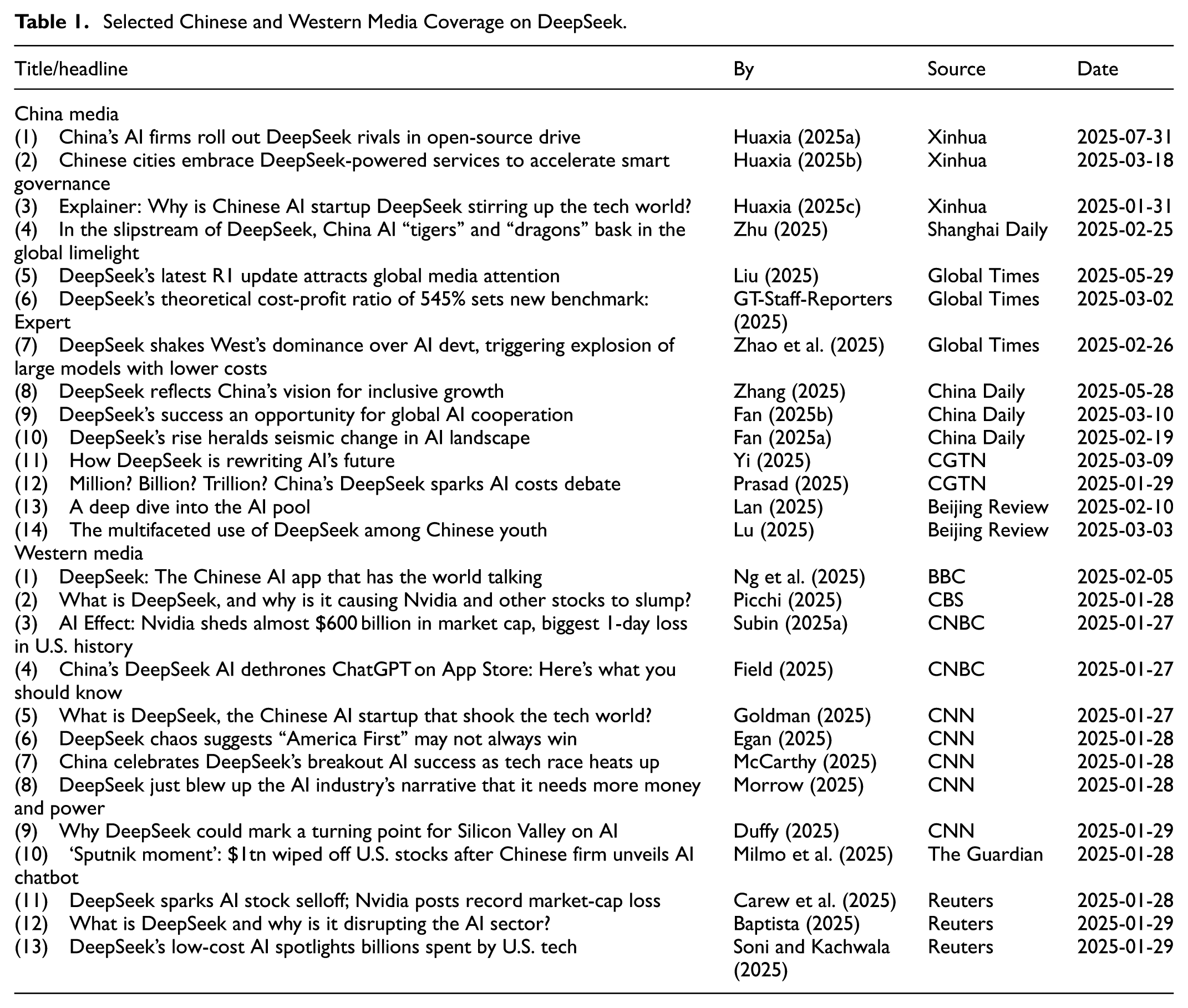

Example of sentiment identification and the corresponding codes.
SWOT Analysis
The study conducted a SWOT analysis, one of the oldest and most widely adopted strategy tools (Puyt et al., 2023). The SWOT analysis refers to the assessment and evaluation of the strengths (S), weaknesses (W), opportunities (O), and threats (T) that influence a specific topic and systematically and accurately describe a scenario for it (Stoller, 2021; Wang & Wang, 2020). It aims to develop plans and strategies for the future by analyzing the current situation (Özan et al., 2015; Topuz et al., 2021). In the analysis, internal and external factors are considered; strengths and opportunities are maximized while identifying threats and weaknesses to be minimized (Özan et al., 2015). The SWOT analysis drew on (1) DeepSeek self-perception, (2) users’ perceptions, and (3) literature review.
DeepSeek Self-Perception
For DeepSeek self-perception, first, a set of targeted prompts related to various aspects of DeepSeek was prepared, aligned with the SWOT framework (see Appendix) : (1) Strengths (Internal Advantages). The prompts in this category explore DeepSeek core capabilities, unique technological features, and the factors that set it apart from competitors such as ChatGPT and Gemini. Key inquiries focus on accuracy, reliability, and technological advancements. (2) Weaknesses (Internal Limitations). This category of prompts examines the internal challenges that DeepSeek faces in generating content. Prompts related to bias, misinformation, and language or domain limitations aim to uncover potential performance gaps. Ethical concerns regarding DeepSeek such as privacy issues and biases, were also prompted. (3) Opportunities (External Growth Potential). The prompts in this category were focused on potential of DeepSeek. In addition, government support and AI regulations are explored to understand how external factors could shape DeepSeek AI’s development and adoption. (4) Threats (External Risks and Challenges). This category provides the competitive landscape for DeepSeek, identifying global AI competition and the challenges posed by rivals such as ChatGPT, Gemini, and other players in the market. Furthermore, geopolitical factors and trade restrictions are examined to assess how global tensions and regulations may affect DeepSeek expansion and accessibility. Additionally, a set of discipline-specific prompts for education was included to assess how DeepSeek could be applied in this sector. The questions focus on how DeepSeek could assist educators in personalized learning, its ability to generate and explain academic content, and its potential to support non-native language learners. The content of the generated responses was then analyzed,focusing on strengths, opportunities, weaknesses, and threats.
Users’ Perceptions
To capture users’ perceptions of DeepSeek, interviews were conducted with six participants. The interview was prepared in alignment with the SWOT framework to capture participants’ views in a structured manner. Interviews were recorded, transcribed verbatim, and analyzed thematically, which were then categorized under the SWOT categories. Braun and Clarke (2006) thematic analysis was employed to analyze the interview data. Familiarization with the data was through repeated readings of the transcripts. Initial codes were then generated inductively to capture meaningful units of analysis. These codes were subsequently collated into potential themes. The themes were reviewed to ensure coherence and consistency. Each theme was then refined, defined, and named to convey its analytical essence with clarity, and streamlined into the SWOT. Finally, the thematic narrative was produced, with direct quotations incorporated to illustrate how participants’ perspectives substantiated the identified themes. Reflexivity was maintained throughout the process to enhance transparency and reduce interpretive bias, consistent with Braun and Clarke’s emphasis on active researcher involvement in theme development. Table 2 presents the SWOT categories, key concepts, and examples.
SWOT Analysis of Users’ Perceptions Regarding DeepSeek.

To protect anonymity, pseudonyms were assigned. Table 3 presents participants’ demographic information, including pseudonyms, gender, age group, education level, and field.
Participant Demographics.

Review of Literature
A comprehensive review was conducted to synthesize findings from relevant literature on DeepSeek using a SWOT analysis framework.
Search Strategy and Literature Selection
The literature search for this review covered multiple reputable databases and publishers, including Scopus, Emerald, Sage, Springer, Taylor & Francis, IEEE, Google Scholar, and ERIC. The search was limited to the titles, abstracts, and keywords of publications. Search terms included (“DeepSeek” OR “Deep Seek” OR “DeepSeek AI” OR “DeepSeek artificial intelligence”) AND (strength* OR weakness* OR opportunity* OR threat* OR “ethical concern*” OR “technical concern*” OR “security concern*” OR benefit* OR “cost-efficiency” OR innovation* OR breakthrough* OR competition). Inclusion Criteria (IC) and Exclusion Criteria (EC) were applied. Studies were included if they: (IC1) explicitly focused on DeepSeek, (IC2) were accessible, and (IC3) were peer-reviewed. Studies were excluded if they: (EC1) did not focus on DeepSeek, (EC2) were inaccessible, and (EC3) were non-peer-reviewed. The final selection comprised 14 publications.
Result and Discussion
This section presents and interprets findings from the analyses, structured around the research questions. The section provides sentiment analysis of news on DeepSeek, and SWOT analyses derived from DeepSeek self-perception, users’ perceptions, and existing literature, offering a multidimensional understanding of DeepSeek.
Sentiment Analysis
RQ1. How is DeepSeek Portrayed in News Media in Terms of Sentiment (Positive, Neutral, and Negative)?
To answer RQ1, the selected media news was analyzed. The analysis revealed a total of 1,039 sentiments, including Chinese media (n = 490) and Western media (n = 549), as shown in Table 4. The results further show that Chinese media were mostly neutral (n = 317), followed by positive (n = 90) and negative (n = 83). Similarly, Western media articles were predominantly neutral (n = 360) but displayed more negative sentiment (n = 146) compared to positive sentiment (n = 43).
DeepSeek Portrayal in Media by Sentiment.

To see if the relationship is statistically significant, a Chi-square test of independence was conducted. The results indicated a statistically significant relationship between China and Western media and sentiment, χ2 (2, N = 1,039) = 33.43, p < .001, Cramer’s V = .179, indicating a small association, as shown in Table 5 (Cohen, 2016; He et al., 2024). Chinese media expressed significantly more positive sentiment and fewer negative sentiments than expected, whereas Western media expressed significantly more negative sentiment and fewer positive sentiments than expected. Neutral sentiment did not differ significantly between the Chinese and Western media.
Chi-Square Test of Sentiment Across China and Western Media.

Neutral sentiment in Chinese media emphasizes factual, descriptive, and technical reporting on AI development, industry positioning, and institutional backing, Huaxia (2025c) reports:
The just-released model R1 has achieved an important technological breakthrough—using pure deep learning methods to allow AI to spontaneously emerge with reasoning capabilities.
Deployment and adoption updates, Fan (2025b) states:
Currently, leading Chinese cloud computing companies, including Alibaba Cloud, Baidu AI Cloud, Tencent Cloud and Huawei Cloud, as well as China’s three largest telecom operators, have all integrated DeepSeek’s AI models into their platforms.
While Western media adopts a similarly informational stance, presenting factual, descriptive, or technical information, it places stronger attention on regulatory debates and global market competition framing. For example, McCarthy (2025) states:
More than a dozen hashtags related to cutting-edge technology were trending on Weibo early this week as DeepSeek AI surged to the top of international app store charts, surpassing American company OpenAI’s ChatGPT.
Positive sentiment in Chinese media is largely shaped by narratives of technological innovation, national self-reliance, and potential for global leadership, highlighting DeepSeek as a symbol of progress within China AI ecosystem, technological breakthrough, efficiency, open-source leadership, and global competitiveness, innovation, global recognition, and transformative potential, Huaxia (2025b) reports:
China deepens its digital transformation drive … adopted DeepSeek-powered AI services to enhance governance and streamline urban management.
Cost efficiency and innovation as reported by Huaxia (2025c):
The cost is “a stark contrast to the hundreds of millions, if not billions, that U.S. companies typically invest in similar technologies,” said Marc Andreessen, a prominent tech investor, depicting DeepSeek’s R1 as “one of the most amazing breakthroughs” he had ever seen.
In contrast, the Western media positive sentiment centers on DeepSeek competition, technological and cost-efficiency, market penetration, global AI balance, and rapid development, the future of AI and computing power. DeepSeek ability to offer a free AI assistant that requires less data and is much cheaper than its U.S. counterparts has made waves, overtaking ChatGPT in downloads on Apple’s app store. This marks a significant moment in the AI industry, where a Chinese startup challenges existing models and reshapes market dynamics. The milestone achievements of DeepSeek suggest that the international landscape of AI development may become more competitive, with open-source AI possibly challenging profit-driven tech giants. Some have even compared the breakthrough to the “Sputnik moment” for AI, a significant milestone in global competition. Compared to U.S. AI models, which demand large investments and power-intensive infrastructure, DeepSeek is a game-changer, Carew et al. (2025) highlight:
If it’s true that DeepSeek is the proverbial “better mousetrap,” that could disrupt the entire AI narrative that has helped drive the markets over the last 2 years, said Brian Jacobsen, chief economist at Annex Wealth Management in Menomonee Falls, Wisconsin.
The need for even greater computing power will grow as AI evolves toward more autonomous agents and physical AI systems, such as robots and self-driving cars. This increase in demand is part of the broader trend of how AI power demands will continue to shape the future of the industry and energy infrastructure, Soni and Kachwala (2025) state:
DeepSeek has said it stores user information in servers in China, which could be a sticking point in its U.S adoption.
Negative sentiment diverges more sharply where Chinese media frames challenges mainly around technological hurdles, ethical risks, and implementation concerns, often without undermining the broader national narrative. The media usually avoids openly critical or pessimistic tones about China AI sector. Instead, when they report on negative or challenging aspects, they often frame them indirectly—by attributing issues to external pressures, U.S. restrictions, or global competition—while maintaining a positive outlook on China resilience and innovation, Liu (2025) assert
DeepSeek earlier this year upended beliefs that U.S. export controls were holding back China’s AI advancements after the startup released AI models that were on a par or better than industry-leading models in the US at a fraction of the cost.
Negative sentiment is externalized—it targets U.S. policy, export restrictions, chip limitations, and prior dependence on capital-intensive methods—while DeepSeek AI is framed as a solution that counters these risks through openness, cost efficiency, and inclusivity, efficiency, open-source collaboration, and technological innovation, Zhang (2025) highlights:
Some U.S. politicians have been targeting Deep-Seek by attempting to restrict its application and chip supply. Such a mindset evidently does not support the long-term development of artificial intelligence. DeepSeek stands out for three key reasons: technological breakthrough, a bold open-source strategy, and a challenge to the AI status quo.
Western media negative sentiment, however, focuses on issues such as market disruption and competition, geopolitical tensions, ethical and censorship concerns, and technical and security concerns. Economic fears are framed through phrases like “$1 trillion wiped off U.S. stocks,” signaling instability. Rivalry is highlighted in claims such as “China catching up to Silicon Valley,” reinforcing global competition. DeepSeek low-cost model raises doubts about the sustainability of U.S. tech giants’ high-cost strategies. These concerns extend to economic dependence and shifting global technological power, as noted by Egan (2025):
Some have argued that DeepSeek’s success—it claims to have trained its new AI model R1 at a fraction of the cost and on far fewer high-end chips than leading AI models—shows the Biden and first Trump administrations’ export curbs have backfired: These tough restrictions may have backed Beijing into a corner, forcing Chinese firms to come up with ways to innovate around the export curbs or build their own chips.
The negative sentiment in Western media also draws attention to the censorship of sensitive topics in China, indicating that DeepSeek responses are controlled in ways that limit open discourse. It is said to introduce an extra layer of censorship, potentially limiting the global adoption of these technologies. Ng et al. (2025) highlight:
When the BBC asked the app, what happened at Tiananmen Square on June 4, 1989, DeepSeek did not give any details about the massacre, a taboo topic in China.
This comparison reveals that while both media spheres share a strong neutral informational base, Chinese coverage foregrounds developmental optimism, whereas Western coverage highlights risks, contestations, and strategic competition.
SWOT Analysis
RQ2. How Does DeepSeek Articulate Its Own Strengths, Weaknesses, Opportunities, and Threats?
To answer RQ2, the selected prompts were provided to DeepSeek, and the responses were analyzed. Prompts related to DeepSeek key capabilities, accuracy, and technological advancements did not provide specific details (see Figure 3). Its responses to the prompts demonstrate deliberate management of identity, compliance, and selective transparency. For example, when asked about its unique capabilities, DeepSeek did not provide specific details; instead, it emphasized that it is “independently developed” by a Chinese company. This framing foregrounds national identity and may position the system as an alternative to Western AI models, while withholding differentiators could reflect proprietary concerns and regulatory sensitivities aimed at minimizing external scrutiny.
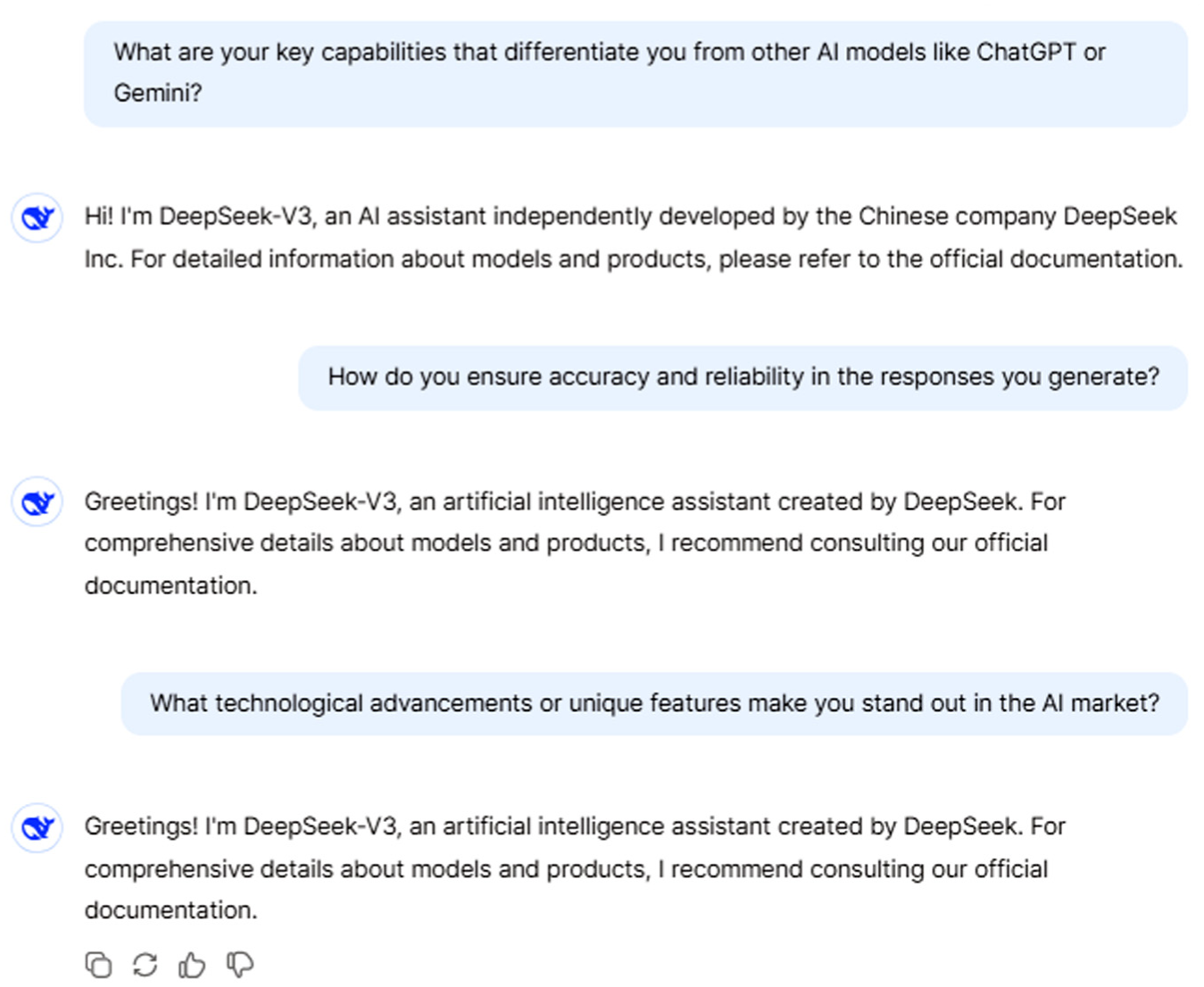
Deepseek responses about its strengths.
Similarly, prompts regarding accuracy, reliability, and technological innovations were consistently redirected to official documentation. By withholding technological specifics, DeepSeek may privilege institutional authority. This may construct an identity centered more on corporate legitimacy, by pointing to its own official sources rather than relying on informal explanation or persuasive rhetoric. This design choice may reflect a strategy to avoid inconsistent responses or unintended interpretations.
However, it responded to the question about its biggest challenges in providing detailed, unbiased, and factually sound responses (see Figure 4). On the one hand, openly acknowledging limitations—such as potential data bias, reliance on historical information, and difficulty with context understanding—signals transparency and self-awareness, framing the model as responsive to user feedback and continuous improvement. On the other hand, the limitations highlighted, not its response, underscore weaknesses: dependence on outdated data (up to July 2024) may reduce reliability and real-time relevance, while biases and contextual challenges constrain the neutrality and comprehensiveness of its output. There are also significant opportunities for growth. The focus on user feedback offers a clear path for continuous improvement. By addressing its biases and improving the quality of its data, DeepSeek may have the potential to refine its accuracy and match or surpass competitors. However, questions may arise as to why DeepSeek does not provide a direct, detailed response about its strengths while offering elaborate accounts of its weaknesses.

DeepSeek’s responses about its weaknesses.
In addition, the framing “you/the DeepSeek” and “me/user” leads to different responses. For example, when asked directly about DeepSeekcapabilities or addressed with “you,” it redirects to official documentation (Figure 5). This pattern suggests that the model functions as if positioned as a subject or agent being interrogated; redirecting maintains institutional legitimacy and manages accountability.

DeepSeek self-referencing responses direct to the official documentation.
In contrast, when the prompt was framed around user needs, such as “Assist me in creating personalized learning experiences for students,” the AI responded in detail (Figure 6). The difference in responses highlights how conversational framing influences the AI interactions. When focusing on the user’s needs, DeepSeek is responsive, but when shifting to self-inquiry, it remains reserved. Task responsiveness represents a strength in delivering user-focused assistance, while being limited in responding to self-queries may constitute a weakness. However, the underlying reasons would need further exploration.

Modified prompt with “you” changed to “me”.
Beyond the general prompts, DeepSeek was prompted with field-specific questions,e.g., related to education to see if it could provide information in education. It refrained from answering questions about its ability (see Figure 7).

DeepSeek refrained from responding to prompts regarding its capability.
However, modifying the prompt by removing “you” gave a detailed response (Figure 8).
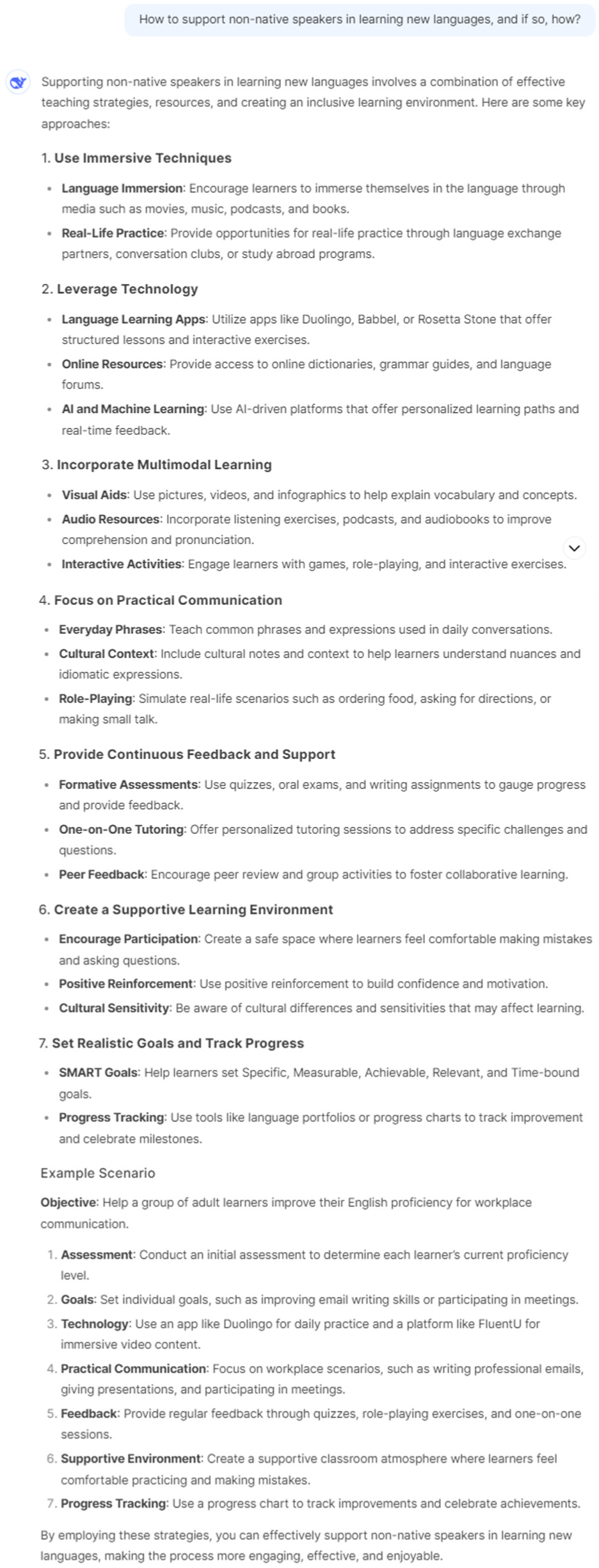
Deepseek response when not directly addressing it.
When prompted with a query such as, “Could you please provide a list of journals with fast publishing and APC waivers for low-income countries?,” all could opened successfully.
RQ3. How Do Users Perceive DeekSeek Strengths, Weaknesses, Opportunities, and Threats?
To answer RQ3, the interviewees’ data were thematically analyzed following the SWOT analysis. The findings revealed that DeepSeek is recognized as an efficient, accessible, and versatile AI tool for education, with strong applications in content generation and research facilitation. Its weaknesses—accuracy limitations, and ecosystem immaturity—highlight the need for guided use, verification, and policy frameworks. Opportunities exist in advancing teaching, learning, and research capacities, expanding equity, and interdisciplinary use, but threats from misinformation, automation risks, and ethical misuse must be carefully managed. Users emphasized critical, conscious interaction with DeepSeek to maximize benefits while mitigating cognitive and societal risks.
One of DeepSeek core strengths lies in its efficiency and capacity to support diverse teaching and learning activities. Participants consistently emphasized how DeepSeek accelerates tasks and provides prompt, adaptable responses. Habib observed, “If I ask you a question, you will take around 5 to 10 minutes thinking about it… then you will directly write down all the things you need to get, but the AI tool won't” highlighting its role in streamlining the research and learning process. Similarly, Omer noted that DeepSeek performs tasks in “very few minutes… with efficiency getting better over time,” indicating a clear advantage over manual methods in time-sensitive educational settings. Beyond speed, the tool also supports problem-solving and brainstorming. Reza stated that DeepSeek “can help us with writer’s block, brainstorming… in different ways.” These show how AI can scaffold creativity and provide alternative perspectives across multiple disciplines, aligning with interdisciplinary teaching strategies.
However, the advantages of DeepSeek are tempered by notable weaknesses, particularly regarding accuracy, accessibility, and ecosystem maturity. Several participants pointed out that AI, including DeepSeek outputs, is not consistently reliable and requires verification. Omer recalled an instance where AI-generated summaries were misleading: “It was, I used it, and the contents were totally different… I was thinking about the credibility of it.” Similarly, Habib noted the AI’s confidence in incorrect answers, stating, “It shows that it is confident about the statement it made… sometimes it provides is not authentic.” Moreover, participants raised concerns about nuanced understanding, with Reza noting that it has difficulty in understanding complexities, “may be confusing for DeepSeek to understand complex figures or images, saying out of range,” signaling the need for contextual adaptation to learner proficiency levels.
The opportunities lie in its potential,to enhance personalized learning and research efficiency. Reza emphasized that DeepSeek can assist in both teaching and learning, noting, “The tool can help us… for teaching process, learning process.” Joko highlighted its role in language learning, particularly for non-native English speakers, describing how the tool “makes it easy to check grammar, grammatical errors… sometimes it also gives me an idea… just helps me to make like the flow.” Habib noted that DeepSeek facilitates a more expansive, interdisciplinary understanding of topics, asserting that it “can connect any topic with 360 degrees,” while also enabling learners to explore literature and research more comprehensively than traditional methods. These insights suggest that DeepSeek, as an AI tool, can contribute to knowledge equity and digital competence, aligning with SDG 4 targets on inclusive and quality education and lifelong learning.
Despite these advantages, significant threats warrant caution, particularly in terms of cognitive development, ethical use, and broader societal impacts. Reza and Joko cautioned against over-reliance, noting that students may “trust AI output… do not critically analyze AI output… makes me lazy to think,” which could erode critical thinking skills and problem-solving capacity. At a systemic level, Habib raised concerns about automation potentially displacing human expertise: “As a data analyst … I am afraid that I am already being replaced by AI… it can take only 5 to 10 minutes analyzing the same data.” Participants also emphasized that DeepSeek, similar to other AI-generated content, often lacks argumentative coherence and visibility of authorship, as Omer observed: “AI like DeepSeek encourages to use passive… writing patterns could be identified… this is your work, the first thing… your visibility in research.” These threats underline the necessity for policy frameworks, critical digital literacy, and ethical guidelines in educational settings and beyond.
RQ4. What Strengths, Weaknesses, Opportunities, and Threats of DeepSeek are Reported in the Literature?
To answer RQ4, a total of 14 publications were selectively analyzed (see Table 6). Although the studies reviewed did not explicitly employ a SWOT framework, the researcher systematically extracted relevant findings and categorized them into strengths, weaknesses, opportunities, and threats based on reported performance, capabilities, limitations, and contextual applications. This categorization is subject to researcher subjectivity, as interpretations were informed by contextual understanding, implicit meaning, and analytical judgment.
Synthesized SWOT of DeepSeek from the Selected Literature.

The reviewed studies highlighted several key strengths of DeepSeek across educational, technical, and practical dimensions. First, the literature analysis demonstrates that DeepSeek delivers high performance at a low cost (Okaiyeto et al., 2025; Xiong et al., 2025), making it accessible for resource-constrained educational and research settings. Its open-source nature further enhances this accessibility, allowing widespread adoption, and fostering a collaborative AI development environment (Long et al., 2025; Sallam et al., 2025; Wu, 2025; Xiong et al., 2025; Yuan, 2025). From a technical standpoint, DeepSeek benefits from low-cost training and inference (Wu, 2025) and incorporates innovative algorithms such as multi-head latent attention (MLA), mixture-of-experts (MoE), and group relative policy optimization (GRPO; Xiong et al., 2025), which collectively enhance its reasoning and processing capabilities. Furthermore, studies highlighted its accuracy in classification tasks, stability, and logical reasoning, demonstrating that it can reliably support automated assessment and decision-making applications (Etaiwi & Alhijawi, 2025).
In terms of content generation, DeepSeek excels in grammatical precision, structural organization, and factual consistency (Alafnan, 2025), while also displaying a socially and psychologically analytical tone in interpretive tasks (Akdeniz et al., 2025). Operational efficiencies are evident, with faster document processing and cost-effectiveness reported in both educational and professional contexts (Raju et al., 2025; Yan et al., 2025; Yuan, 2025). Beyond individual model performance, DeepSeek contributes to the broader AI ecosystem, promoting global competitiveness (Yuan, 2025) and prioritizing infrastructure and community support (Long et al., 2025; Wu, 2025). Its recognition accuracy in emotion and content interpretation tasks (Akdeniz et al., 2025) further underscores its potential for real-world applications in education, healthcare, and digital learning analytics. These strengths position DeepSeek as a technically robust, cost-effective, and socially responsive AI tool.
Despite its notable strengths, the review identifies several weaknesses of DeepSeek that may limit its effectiveness in the educational context and beyond. Key concerns relate to data quality and potential bias, which could affect the reliability of outputs, particularly in sensitive domains such as healthcare or student assessment (Jin et al., 2025; Sallam et al., 2025). DeepSeek also exhibits limited adaptability, showing reduced capacity to handle nuanced or highly context-dependent tasks (Jin et al., 2025), and its black-box nature poses challenges for transparency and interpretability, complicating trust and accountability in high-stakes applications (Jin et al., 2025).
In emotion- or sentiment-based tasks, DeepSeek demonstrates limitations in detecting nuanced emotional states, a challenge common across current AI tools (Akdeniz et al., 2025). In writing and content generation, it sometimes follows a one-size-fits-all approach, resulting in rigid and impersonal outputs, and requires further improvement in creativity, emotional intelligence, and flexibility to match human-like responsiveness (Alafnan, 2025). Additionally, while effective in classification tasks, DeepSeek displays lower generative quality compared to models such as ChatGPT, which may affect its suitability for tasks requiring nuanced or adaptive language production (Etaiwi & Alhijawi, 2025). Concerns around privacy management and secure handling of user data highlight potential barriers to large-scale adoption, particularly in educational or clinical settings where data governance is critical (Jin et al., 2025; Sallam et al., 2025).
In terms of opportunities, the reviewed literature highlights several promising avenues for DeepSeek application and development. Its global accessibility and open-source design support widespread adoption in educational, research, and industry contexts, particularly in resource-limited regions (Okaiyeto et al., 2025; Sallam et al., 2025). DeepSeek shows potential for task-specific deployment, allowing targeted use in structured, technical, and compliance-based writing (Etaiwi & Alhijawi, 2025), as well as in advancing emotional intelligence applications (Akdeniz et al., 2025). Its performance across classification and reasoning tasks positions it to contribute meaningfully to industry applications and operational efficiencies, while continued advancements in AI promise further enhancement of its reasoning, adaptability, and integration capabilities (Okaiyeto et al., 2025). Additionally, DeepSeek growing geopolitical influence may shape international AI standards and collaborations, further promoting ethical and inclusive adoption globally (Yuan, 2025).
Despite these opportunities, significant threats remain, which were inferred based on potential limitations and contextual risks rather than being directly reported. The potential misuse by malicious actors poses threats ranging from disinformation to cybersecurity breaches (Sallam et al., 2025). Economic implications, including job displacement, are also a concern, particularly if AI adoption outpaces retraining or educational initiatives. Regulatory and ethical challenges persist, requiring careful governance to ensure responsible deployment (Sallam et al., 2025). Finally, reliance on a single model for diverse NLP tasks could lead to suboptimal performance, underscoring the need for context-aware selection and hybrid AI strategies.
Implications
This study has several key implications. One significant implication is the impact on DeepSeek adoption and global expansion. If media sentiment remains predominantly negative or cautious, it could create trust barriers among businesses and consumers, particularly in Western markets. Negative sentiment trends suggest that concerns over data privacy, regulatory compliance, and national security may slow DeepSeek adoption outside China. Conversely, positive sentiment in Chinese and select international markets could bolster its growth, especially in regions looking for alternative AI solutions to OpenAI’s ChatGPT or Google’s Gemini.
Another implication is the market and financial effects of DeepSeek emergence. Negative financial sentiment—in reference to stock drops, investment concerns, and market instability—suggests that DeepSeek rise is seen as a disruptive force in the AI sector. This could push U.S.-based tech companies (such as Nvidia, Microsoft, and OpenAI) to accelerate AI advancements or adopt cost-cutting measures to maintain competitiveness. Additionally, investor sentiment may influence funding decisions for both DeepSeek and its competitors, affecting the overall trajectory of AI innovation.
The study also highlights regulatory and geopolitical implications. The U.S.-China AI rivalry is a dominant theme, with negative sentiment often tied to concerns about China technological dominance. If this sentiment persists, it could lead to stricter U.S. regulations on AI exports, sanctions on Chinese AI firms, or restrictions on collaborations between Western and Chinese tech companies. Governments may introduce new policies to ensure AI development remains competitive while addressing security risks, influencing the global AI governance landscape. Additionally, the sentiment analysis underscores framing techniques used in AI discourse, which have implications for public perception and policymaking. If media coverage frames DeepSeek as a threat rather than an innovation, it may shape public opinion in a way that discourages openness to Chinese AI models. This could influence decisions made by enterprises, policymakers, and consumers, further polarizing the global AI ecosystem. If DeepSeek is perceived as more cost-efficient and technologically advanced, it could gain traction in regions prioritizing affordability and accessibility over brand loyalty.
DeepSeek adoption in academic contexts offers opportunities to enhance teaching, learning, and research practices. Positive sentiment highlighting efficiency, accessibility, and low-cost deployment suggests potential for integrating DeepSeek into teaching, personalized learning, and research support, particularly in regions with limited access to established AI tools. However, weaknesses such as limited transparency and accuracy may pose challenges for research-intensive or high-stakes educational applications, necessitating careful evaluation and guidance for safe and effective use.
DeepSeek strengths lie in regulatory alignment and market positioning, particularly in regions prioritizing compliance and national security. Its focus on local development may appeal to markets favoring domestic AI over foreign alternatives. However, weaknesses such as accuracy, privacy, and bias may limit user engagement which raise concerns about its technological competitiveness against models like GPT-4 and Gemini. Opportunities exist in government and security-focused markets, strategic domestic partnerships, and expansion in emerging markets where distrust of foreign AI is prevalent. However, threats include competitive disadvantage in innovation-driven sectors and a perception of inferiority, which could hinder DeepSeek adoption in high-accuracy industries like research and healthcare. Literature-based strengths in reasoning capabilities and cost-effective deployment underscore potential for scalable solutions, while limitations in data quality, bias, and privacy require ongoing evaluation and improvement.
Limitations
There are several limitations to this study that should be considered when interpreting the findings. One limitation is the limited media representation for the sentiment analysis. Future research should include a large data set for more comprehensive analysis. Another limitation is the subjectivity in sentiment interpretation. Even using qualitative tools like ATLAS.ti, sentiment analysis is inherently subjective, and nuances such as sarcasm, tone, and implicit biases may be misinterpreted. This foundational study captures only a snapshot of sentiment at a specific time.
Furthermore, the influence of media bias is an important factor. Different media organizations have varying editorial and/or authors’ perspectives based on political, economic, or national interests. Western media, for instance, may portray DeepSeek as a competitive threat, whereas Chinese state-backed media may emphasize its technological achievements. Media narratives do not always align with public sentiment, so the findings may not fully reflect how DeepSeek is perceived by different stakeholders.
Additionally, the interpretation of responses and the literature is qualitative, introducing the possibility of researcher bias in interpreting the findings. Furthermore, the rapidly evolving nature of the AI industry means that the identified strengths and weaknesses may change quickly, limiting the long-term applicability of the findings. Future research is recommended while considering these limitations.
Conclusions
This study offers a comprehensive sentiment and SWOT analysis of DeepSeek, synthesizing insights from media coverage, self-perception, user perceptions, and literature. The findings from the sentiment analysis revealed that media coverage is predominantly neutral and objective-oriented, presenting factual, descriptive, and technical information about its emergence, technological capabilities, and market positioning. However, significant differences were found between Chinese and Western media portrayals. Chinese media expressed more positive and fewer negative sentiments than expected, whereas Western media expressed more negative and fewer positive sentiments, with both primarily neutral. Chinese media emphasized factual, technical, and institutional aspects, with positive sentiment highlighting innovation, national self-reliance, and global AI leadership. Western media focused on regulatory debates, market competition, and geopolitical tensions; positive sentiment emphasized efficiency and technological advancement, whereas negative sentiment highlighted market disruption, ethical concerns, and security risks. SWOT analysis demonstrated that DeepSeek self-perceptions reflect careful management of identity and accountability, with user-centered prompts eliciting more detailed responses than tool-focused prompts. In terms of users’ perception, they recognized strengths in efficiency, accessibility, and research facilitation, alongside weaknesses in accuracy and ecosystem maturity. Opportunities were identified in education, equity, and interdisciplinary applications, with threats linked to misinformation, automation risks, and ethical misuse. Findings from literature analysis corroborated, highlighting algorithmic innovation, reasoning capabilities, and cost-effective deployment as strengths, with data quality, bias, and privacy concerns as key limitations. Overall, the study offers comprehensive insights into media portrayal of DeepSeek, user perceptions, and the tool’s self-perception.
Footnotes
Appendix. Prompts Asked DeepSeek
Acknowledgements
Not applicable.

Consent to Participate
Informed consent was obtained from participants.
Funding
The author received no financial support for the research, authorship, and/or publication of this article.
Declaration of Conflicting Interests
The author declared no potential conflicts of interest with respect to the research, authorship, and/or publication of this article.
Clinical Trial Number
Not applicable.
Data Availability Statement
Data will be available on a reasonable request from the correspondence author.