




Abstract
This research paper examines the impact of media exposure and chronological age on women’s feelings of objectification and self-worth in Lahore City, Pakistan, drawing upon feminist Objectification Theory. Utilizing the Self-Objectification Theory framework, the study investigates how media portrayals of idealized beauty standards influence women’s perceptions of their bodies, leading to self-objectification. A quantitative approach was employed, surveying 200 women, including 147 college-aged individuals and 53 retirees. Data were collected via a structured questionnaire incorporating scales on body surveillance, self-esteem, body control, and media influence, and analyzed using SPSS. The findings reveal significant age-related differences in self-objectification tendencies. Older women reported higher body surveillance scores (M = 3.11, SD = 1.12) compared to younger women (M = 2.64, SD = 0.94), as well as higher scores in body control (M = 3.19 vs. M = 2.94, p < .05). Contrary to expectations, retirees also scored higher on self-esteem measures (M = 2.11, SD = 0.91) compared to college-aged women (M = 2.09, SD = 0.82), reflecting resilience to media influence. Additionally, a moderate positive correlation (r = .42, p < .001) was observed between body surveillance and media influence, confirming the pervasive role of media in shaping body image across generations. These results challenge the notion that younger women are disproportionately affected by self-objectification and emphasize the sustained impact of media on older women. This study underscores the need for targeted interventions, including media literacy programs, to empower women across age groups by promoting critical engagement with media and fostering positive body image.
Plain Language Summary
This research paper explores how exposure to media images of beauty impacts how women in Lahore, Pakistan, view themselves. It focuses on women of different ages and uses a theory called Self-Objectification Theory to understand how media influences their feelings of self-worth and objectification. The study involved 200 women from different age groups, and data was collected through a questionnaire. The findings showed that older women tended to be more concerned about their bodies and influenced by media than younger women. Overall, the study suggests that media exposure can affect how women see themselves, especially as they age. Understanding these dynamics can help develop programs to promote positive body image and self-esteem among women in Lahore. This research adds to our understanding of how media affects women’s perceptions of their bodies.
Introduction
Body image concerns have become an increasingly prevalent issue in contemporary society, with a considerable impact on individuals’ mental and physical well-being (Skowronski et al., 2022). The portrayal of unrealistic beauty standards perpetuated by mainstream media has been identified as a significant factor contributing to body dissatisfaction and self-objectification among women. In women’s magazines, commercials, and TV shows, these unrealistic beauty ideals for women have been widely discussed in the literature (Daniels et al., 2020). Numerous studies show that media exposure negatively affects women’s body image, self-esteem, and eating habits low self-esteem and distorted self-perception affect women’s mental health more than men’s (Fox et al., 2021).
Due to media portrayals of thinness, women talk about their bodies, weight, and shape more than men (Veldhuis et al., 2020). Understanding one’s body involves thoughts, feelings, actions, and body perception (Gillen & Markey, 2021). The media’s portrayal of beauty standards has changed from fuller hips and smaller waists in the 1950s to stick-thin models today (Allen, 2022; Lee, 2022).
According to Fredrickson and Roberts (1997) sexual objectification theory, young women and girls develop self-objectification because they are objectified and valued solely for their use (Fredrickson & Roberts, 1997). Self-objectification occurs when women internalize the external observer’s gaze, causing constant self-surveillance (Frederick et al., 2022). Excessive exposure to sexually objectifying media has been linked to women placing more value on beauty and popularity (Goel et al., 2021). According to Fredrickson and Roberts (1997), self-objectification increases women’s body shame and insecurity and decreases awareness of bodily sensations. However, sexual objectification affects women differently (Vandenbosch et al., 2022). However, escaping Western culture’s constant media glorification of the ego is difficult, especially given the strict appearance standards for women.
While research has extensively explored the influence of media on body image perceptions, there remains a critical gap in the understanding of how age may interact with these influences, shaping body image experiences across the lifespan of women (Watson et al., 2019). This study examines how media affects women’s body image and self-objectification. It examines how media portrayals of unrealistic beauty ideals affect women’s body image and objectification. The study explores these dynamics to gain insights into the complete relationship among media, image, and self image of women (Yao et al., 2021). Employee rates of self-objectification can be measured against these ideals and so research aims to help understand possible distinctions and trends regarding self-objectification trends in women of different ages.
Thus, the present study aims to fill the gap of limited research in Pakistan on the impact of media portrayals and stereotypes on women’s self and empowerment (Daha, 2020). Studies suggest that media promoting an unrealistic thin body ideal and the emphasis on weight and body shape can have adverse effects on women’s self-esteem and mental health. This cultural context of Pakistan adds an additional lens through which to view the dynamic between media and body image (Sheikh et al., 2019). In societies the values of humility and fitting in are commonly highlighted; this could intertwine with the prevalent media representations and heighten their influence, on how people perceive their own bodies. Moreover the wide range of age groups in Pakistan—from girls to adolescents to adult women—offers a chance to study the development of self objectification tendencies, as individuals age and how media impacts differ among various age brackets (Zubair, 2022).
Literature Review
The media has an impact, on defining what is considered beautiful in society by portraying an unrealistic and narrow view of the perfect body shape. Many studies have shown that seeing images of models in the media can make women feel unhappy with their own bodies (Allen, 2022). Magazines and TV programs commonly promote these beauty standards through platforms, like social media channels which can influence women to adopt these ideals as their own and engage in self-objectification. According to the self-objectification theory developed by Fredrickson and Roberts (1997) emphasizes how people absorb beauty norms and start seeing themselves as objects for judgment and assessment due to constant exposure to media representations that objectify women triggers self-objectification where individuals prioritize their looks as the key determinant of their value and worthiness while leading to various adverse effects such, as body dissatisfaction disordered eating habits and reduced mental health (Fox et al., 2021).
The impact of media on body image varies across different age groups of women. Adolescents, being at a vulnerable stage in forming their identity and self-concept, are particularly susceptible to media messages. A study by Veldhuis et al. (2020) found that adolescent girls who frequently engage with appearance-focused media content are more likely to experience body dissatisfaction and engage in unhealthy weight control behaviors. In contrast, adult women may face challenges related to media influence, but these challenges manifest differently. Aging and societal expectations regarding beauty create a unique set of pressures for older women. Research by Gillen and Markey (2021) suggests that older women are not immune to the negative effects of media-induced body dissatisfaction, emphasizing the need for a lifespan perspective when examining the impact of media on body image.
Pakistan, with its rich cultural diversity, presents a unique backdrop for investigating the interplay between media and body image. While traditional values still hold significance, the increasing influence of global media and changing societal norms may contribute to evolving beauty standards. Research by Jamal and Gentile (2015) highlights the dual influence of Western and local media on body image perceptions in Pakistan, suggesting a need for a nuanced exploration of how these dynamics manifest across different age groups in Lahore City. Media, a significant root of body dissatisfaction among Pakistani women, especially urban women dwellers, is unveiled in Lahore. Ahmad et al. (2020) point out that these manipulated images receiving often unrealistic body ideals reverse the body dissatisfaction and disordered eating amongst the young women but it does not mean that the dynamics is only limited to them, it is also necessary to explore this phenomenon in other age groups.
Self-objectification theory makes this process clearer: as women of different ages in Lahore internalize media-driven ideas of a body ideal, they start to see themselves as objects instead of subjects. A recent study within that context has revealed a positive association between media exposure and self-objectification among girls 18 to 25 years old, which suggests that the excessive consumption of media content that is focused on achieving high levels of physical attractiveness leads to ones behavior of controlling and evaluating one self based on external standards (Khan et al., 2022). Nevertheless, whereas the media tend to influence all women, there is also evidence that the differences in body image perceptions have been found to depend on age groups, and younger women tend to have higher dissatisfaction levels compared to the older generations (Mahmood et al., 2021).
Lahore’s socio-cultural background is also one of the major determining factors of women’s experiences of their body image and the media stimulation. Cultural norms which are considered to be traditional stand against worldwide media representations, giving women some extra complexity in the perception of their bodies. Ali et al. (2020) underline the role of cultural factors in moderating body image dissatisfaction of Pakistani women via media, tailored to their culture and illustrate the necessity of culturally relevant interventions. This result suggests at that not only global mass media but also local cultural regulations have to be taken into consideration in the attempts for the positive self-image of women in Lahore.
The emergence of social media companies have raised new challenges concerning how women view their body from the younger age group. Instagram and Facebook, serve as the outlets against which women get to compare themselves and strive to live up to, pointing to a worsening situation among Pakistani women (Rafique et al., 2023). The concept of everyone aspiring for “fitspiration” and influence culture makes things worse by spreading unhealthy conceptions and high amounts of dissatisfaction all around Lahore among the women community. During these adversities, media literacy programs serve as a useful tool in erecting the self-confidence and resilience among Pakistani women. Malik et al. (2024) stress the fact that media literacy interventions are an effective tool for teaching viewers how to critically and skeptically watch media representations of beauty and fight the cultural standard of the perfect appearance. Teaching these females how to break down and think about media messages gives them the ability to deal with media’s effects in a thoughtful way and build healthier views of their bodies.
We need to think about how different parts of a person’s identity mix together when we look at how media affects body image. Women don’t all have the same experiences – things like race, culture, and money play a role. Cusumano and Thompson’s (2019) research shows that media’s impact on body image isn’t simple and ties into other parts of who someone is. For instance, women of color might face special challenges because media often pushes European beauty ideals. To fight the bad effects media can have on body image, people have started to focus on teaching media smarts. These programs aim to help people pick apart media messages and see beauty more (Levine & Piran, 2019). If we use these programs with women of all ages, it could help them push back against harmful media messages and feel good about their bodies.
Theoretical Framework
Sexualization
Initial investigations into sexualization, which were based on how women are portrayed in the media, criticized the presentation of women as objects solely for the purpose of pleasing others. This phenomenon is referred to as sexual objectification (Ward, 2016). Objectification, as defined by Fredrickson and Roberts (1997), refers to the evaluation of individuals based solely on their physical appearance rather than their personal qualities. This idea went beyond how media showed things to cover broader social patterns (Fredrickson & Roberts, 1997; McKinley & Hyde, 1996). The American Psychological Association (APA) described sexualization as a tricky state that involves things like judging a person’s value by how sexy they look and treating them just as something to desire (APA Task Force on the Sexualization of Girls, 2007). At first, people used these words to mean the same thing, but now scholars see a difference between sexual objectification and sexualization so we need clearer words (Ward, 2016).
Studies show that people who are sexualized are more likely to be seen as things, without human qualities, and might end up alone (Bernard et al., 2020). Women face more sexualization in different places, like in media and when talking to others, but research shows that the American Psychological Association’s idea of sexualization can fit men too even though there are different cultural rules about how they should look (Vandenbosch & Eggermont, 2013). When media shows sexualized men, it often focuses on a strong muscular body making them look powerful and active instead of weak and passive (Gill, 2009). In recent years, there has been an increase in study on the frequency and effects of sexualization in boys, despite the lack of substantial data (Gill, 2009; Hatton & Trautner, 2011; Pope et al., 2001; Vandenbosch & Eggermont, 2013, 2015).
Prevalence of Sexualization in the Media
Sexualized images of women appear often in many types of media, Research shows that music videos, TV programs, ads, magazines, and video games have a lot of sexual content. Studies by Frisby and Aubrey (2012), S. L. Smith et al. (2012), Flynn et al. (2015), Stankiewicz and Rosselli (2008), and Downs and Smith (2010) back this up. Women usually appear in skimpy clothes or nude, but men are also starting to be shown in sexy ways, though not as much (Burgess et al., 2007; Vandenbosch et al., 2013; Verhellen et al., 2016). Social media has made sexy content even more common showing both men and women in sexual situations (Carrotte et al., 2017; Davis, 2018; Tiggemann & Zaccardo, 2018). This exposure raises concerns because people young ones spend so much time looking at media. It’s worth noting that young people spend over 3 hr each day just on social media. (DAK-Gesundheit, 2017). Due to the promotion of specific beauty standards by sexualized media (Fredrickson & Roberts, 1997), there is an increasing worry about how this may affect people’s perception of their own bodies. Therefore, additional investigation is required to examine the effects of being exposed to sexualized media on views of body image and self-esteem.
Theory of Objectification
The theory of objectification, developed by Fredrickson and Roberts (1997), provides a thorough framework for comprehending the connection between the consumption of sexualized media and worries about body image, especially in women. Based on this idea, women adopt societal standards that treat their bodies as objects, resulting in self-objectification. This refers to a condition where individuals perceive themselves as objects to be judged only on their physical appearance. The idea proposes that self-objectification can be understood through two dimensions: the importance placed on physical appearance and the act of monitoring one’s own body. Valuing appearance refers to giving higher importance on physical appeal rather than competency, whereas body surveillance is continuously monitoring one’s own body in response to societal standards that are perceived. Although formerly considered a vulnerability factor for body image difficulties, subsequent research indicates that self-objectification is more accurately viewed as a component of broader body image disorders. Fredrickson and Roberts emphasize the media’s involvement in sustaining objectification through the use of sexualized imagery, which leads to a greater tendency for women to view themselves as objects. Empirical data from both correlational and experimental studies supports the connection between exposure to sexualized media and increased levels of valuing physical appearance and engaging in body surveillance. Nevertheless, there is currently ongoing research on the objectification of men and the impact of media, suggesting the necessity for additional inquiry.
To summarize, objectification theory offers useful insights into the intricate relationship between sexualized media, self-objectification, and body image problems, specifically in women. Although males may also encounter objectification, they are likely to be less impacted by it because they have less exposure to it and face fewer cultural constraints in this regard. Nevertheless, both males and females are prone to experiencing the detrimental effects of objectification, underscoring the importance of ongoing research and awareness in this domain.
Sexualized Media and Self-Objectification
The relationship between being exposed to sexualized media and self-objectification, as suggested by objectification theory, is understood mainly through correlational and experimental research. Correlational studies consistently find that there are positive connections between self-objectification and various kinds of sexualized media, such as music videos, social media, magazines, and television (Aubrey, 2007; Fardouly et al., 2015; Grabe & Hyde, 2009; Morry & Staska, 2001). But what about the media form that is the most interactive and engaging? Until very recently, video games have escaped the sustained academic interest that has been directed at other media forms. Yet, in the past few decades, gaming has grown into a gigantic industry that reaches around 133 million Americans and pays its main stars in the hundreds of millions of dollars. Nevertheless, there is a scarcity of longitudinal study on this subject, particularly when it comes to more recent media types like social media and video games.
Studies demonstrate that viewing sexualized media content results in higher levels of self-objectification compared to viewing neutral media content. The result strengthens the validity of objectification theory according to current evidence. The studies conducted by Aubrey and Gerding (2015) and Daniels (2009) along with Aubrey et al. (2009) and Grey et al. (2016), and Halliwell et al. (2011) all support this conclusion. Studies have yet to extensively examine male reactions to sexualized media yet initial findings indicate potential links to self-objectification (Linder & Daniels, 2018; Michaels et al., 2013). Research shows that viewing sexualized fitness images on social media platforms could result in heightened levels of body dissatisfaction. Studies by Tiggemann and Zaccardo (2015) and Prichard et al. (2017) show this idea is strongly linked to self-objectification. Research has not yet explored how sexualized social media images affect self-objectification.
Studies of video games show that female university students and teens who play games featuring sexualized characters tend to objectify themselves more frequently. The full comprehension of this phenomenon requires further investigation as suggested by studies from Fox et al. (2015), Vandenbosch et al. (2017), and Read et al. (2018) Researchers still debate how media creates self-objectification through its basic mechanisms. While many scientists utilize priming theory to account for these effects, others put forth the Proteus effect, which posits that users assimilate attitudes and beliefs through their interactions with virtual characters (Aubrey et al., 2009; Fox et al., 2013; Yee & Bailenson, 2007, 2009). Overall, several types of research, including correlational, longitudinal, and experimental studies, consistently provide evidence that supports the claims made by objectification theory. These claims suggest that there is a connection between being exposed to sexualized media and experiencing self-objectification. Additional research is required, specifically focusing on more recent media formats and the fundamental mechanisms via which media impacts self-objectification.
Objectives of the Study
The objectives of this study are as follows:
To examine how media influences women of different ages to self-objectify.
To investigates how media and stereotypes shape women’s self-perception as objects.
To understand the cultural and social factors that have raised awareness of self-objectification.
Hypothesis of the Study
Methodology
This quantitative research study aimed to examine the impact of media on body image and self-esteem across different age groups of women in the Lahore area. A purposive sampling technique was employed to select participants based on specific inclusion criteria, ensuring representation across different age groups. The study targeted women residing in Lahore who regularly consume media content. A total of 200 women participated, with a 147 women aged 18 to 39 and 53 women aged 40 to 59. Participants completed a questionnaire containing three scales: the Revised Objectified Body Consciousness Scale by Quinn and Lewis (2005) to assess objectified body awareness, The Self-Esteem Scale developed by Rosenberg (1965) was used to measure participants’ global self-worth, with 10 items rated on a Likert scale ranging from strongly agree to strongly disagree, and, the Media Influence Scale by Stice et al. (1996) was employed to measure participants’ interest in media portrayal of the skinny ideal body, with 10 items rated on a 5-point Likert scale. Data analysis was performed using IBM SPSS Statistics 23.0, where responses were recorded and tallied. To investigate potential differences between the age groups, independent t-tests were conducted, and Pearson correlation analysis was employed to explore relationships between the variables (objectified body awareness, self-esteem, and media influence). The study aimed to provide statistical evidence to support its hypotheses, shedding light on how media influences body image perception and self-esteem in women across different age brackets in the Lahore area. While this study provides valuable insights into media influence on women’s body image, it has some limitations. The sample size, particularly for the older age group, was relatively small, which may affect the generalizability of the findings. Additionally, the use of self-reported questionnaires may introduce bias, as responses are subject to individual perception and social desirability. The study was also limited to Lahore, restricting its applicability to other cultural and geographical contexts
Results and Discussion
The results are useful in providing insights into how the media representations of beauty standards influence women’s body image perceptions and tendencies toward self-objectification in the city. Survey data analysis revealed that women with greater exposure to media, especially fashion magazines, social media sites, and television programs that promote beauty standards, had more self-objectification. This was true for both age groups, suggesting that media influence on body image is an endemic and intergenerational problem in the city. The study emphasizes the need to introduce media literacy courses that dismantle beauty stereotypes and encourage women to use different body shapes. Descriptive statistics have been computed herebelow to examine the demographic variables and their frequency among the participants.
The demographic breakdown presented in Table 1 provides key information regarding the study participants’ characteristics. As indicated, the overwhelming majority of the participants were women aged between 18 and 39 years, representing 73.5% of the total sample. This dominance of young women fits the trends found in several studies that examine media influence on body image and self-esteem (An, 2019). However, it is important to recognize the lack of adequate representation of older women in the sample, representing only 26.5% of the participants. This imbalance might limit the generalizability of the study findings, especially when it comes to their applicability to the broader population of women living in the Lahore city metropolitan area (Vendemia et al., 2021).
Descriptive Statistics for Demographic Variables.

The average age among participants, computed as 1.7650 years with standard deviation 0.84460, provides the quantitative representation for the age within the sample group. Although an average age closely correlates with expected average age characteristics among young females, the above-average standard deviation points to noticeable variability in terms of age in the participants. This variability in age could refer to a divergence in life background and perspective captured in the sample group, conceivably potentially influencing responses within the study based on body perceptions and media evaluation (Rodgers et al., 2020).
By occupation, students constituted the highest proportion of the participants at 48.0%. This is expected against participant recruitment by this study, where participants engaged in the University of Wisconsin-Stout were targeted. The high proportion of participant students has the potential to introduce some biases to studies that evaluate the effects by the media on body image perception, as students have common social and environmental factors from learning institutions (Aksar et al., 2022).
Homemakers are another important demographic segment included in the sample and account for 33.0% of the participants in the sample. Including the demographic strengthens the sample by capturing the experience and views of women who are not formally educated or employed. Nonetheless, the relatively low percentages of the employed (17.0%) and unemployed (2.0%) segments necessitate cautious consideration, particularly when researching metrics like media usage patterns and the impact of societal beauty standards (An, 2019).
Also, the average number of working hours per week for participants was 2.2000 and, at standard deviation, was 1.33751. The figure provides information regarding participants’ labor status, as well as load variability, which indicates possible differences in time availability, socioeconomic status, and variables potentially influencing study outcomes. The relatively low average of weekly working hours may also indicate the trend of participants to engage in part-time work or have care responsibilities, as this may influence participants’ television viewing behavior, as well as their self-perception (Vendemia et al., 2021).
Table 2 data illustrate significant differences between younger and older women in media influence and the perception of the body. Insights into the intertwining relationship among age, personal experience, social expectation, self-concept formation, and reception of media-perceived beauty appear through the evidence.
Means and Standard Deviations for All the Variables Used in the Older and Younger Women Analyses.

To start with, differences in average scores of body surveillance by age illustrate notable differences. Younger women had lower scores on body surveillance with a mean score of 2.6395 compared to older women, who had higher levels of body surveillance with a mean score of 3.1132. This is congruent with other studies showing that older women are more appearance-concerned and have more body monitoring behaviors (Lennon & Johnson, 2020). Greater observation might be attributed to age and appearance-driven changes because of social pressures, as well as social pressures, necessitating interventions in support of body acceptance and prevention of self-objectification among older women.
Similarly, measurement of body shame score also showed a divergent pattern across age groups. That is, younger women scored higher on body shame (M = 1.9388) compared to their older counterparts (M = 1.8302), but the difference was not statistically significant. The results are in line with previous literature indicating that younger women internalize conventional cultural beauty ideals and support negative body-image-based emotions (Comiskey et al., 2020). However, one should remember that body shame is a complex construct open to a variety of influences such as cultural standards, media exposure, and personal vulnerabilities.
In terms of self-image perception and body control, older women registered higher mean scores (M = 3.1887) compared to younger (M = 2.9388) women. The finding means older women are better able to display more confidence and autonomy in defining themselves and challenging cultural norms to fit unrealistic standards of beauty. The findings affirm previous research in how the positive correlation of age-self-acceptance results from people’s acceptance of being at ease with themselves and valuing distinctness as opposed to searching for acceptance from other people (Daniels et al., 2020).
Notably, the two age groups also shared the same level of self-esteem with mean scores set quite close to 2.1. This runs contrary to the existing literature that had suggested age and self-esteem have a positive correlation (Frederick et al., 2022). However, it should be acknowledged that self-esteem is a multi-variable phenomenon motivated by various variables other than age, including social support, success, and body image. Therefore, while age may influence self-esteem development, its influence may be counteracted by other situational variables.
In terms of media influence, older women’s higher average scores (M = 3.4340) were compared with their younger generations (M = 2.9932) and showed greater resistance to external beauty standards and media messages. This result corroborates previous findings that older participants are more critical of media messages and develop resiliency toward negative body images (Daniels et al., 2020; Lennon & Johnson, 2020). This resiliency can be attributed to having more life experiences, higher levels of self-consciousness, and a more entrenched sense of self, thereby being able to sense and counterargue unrealistic external beauty standards derived from media outlets.
Hypothesis Testing

The hypothesis testing results confirm that there was no statistically significant difference between body surveillance among older and younger women, as revealed by the t-test results (t(200) = −1.812, p = .072). Older women, contrary to the first hypothesis, reported slightly higher body surveillance levels (mean = 2.7128) compared to younger women (mean = 2.5438). Despite this counterintuitive finding, it is consistent with earlier research confirming that women of all ages are concerned with body image and engage in self-surveillance habits (Prichard et al., 2023) confirmed that women of different ages are dissatisfied with their bodies and engage in monitoring the bodily appearance. This finding confirms that societal expectations and beauty standards promoted by the media affect women of all ages, contrary to the suggestion that only young women are obsessed with body surveillance. Tiggemann (2022) also confirms this by revealing that individuals, irrespective of age, including men and women, are likely to compare themselves with media representations of beauty.
Additionally, while significant body surveillance differences across age may not be present, separate dimensions of body image perception may vary in different age ranges. For instance, Comiskey et al. (2020) determined that while women from various age groups are unhappy with their bodies, young women are more likely to want to be thin compared to their older age counterparts. (Naqi et al., 2022) suggest that younger women are more susceptible to the pressures of society in relation to body image ideals, which can lead to more preoccupations with body shape and weight. Clarke (2002) suggests a different scenario in that women, as they age, are more likely to focus less on external looks and more on internal qualities. This shift in thinking can lead to higher self-acceptance and resistance to negative body image effects such as decreased self-esteem. Similarly, research by Lennon and Johnson (2020) and by Tiggemann (2022) verifies that as women age, there is a shift toward focusing on internal qualities over the external look, leading to higher self-acceptance and less susceptibility to media pressures.
While the current research did not show significant age-related differences in body surveillance, it adds to the body of knowledge that body image concerns are pervasive across the age range. This finding underscores the importance of introducing interventions and providing support addressing body image concerns throughout the life cycle. By recognizing the influence of societal pressures in impacting women across the age spectrum, health practitioners, educators, and policymakers are in a better position to introduce interventions aimed at promoting positive body image and mental health across age groups.
Correlations
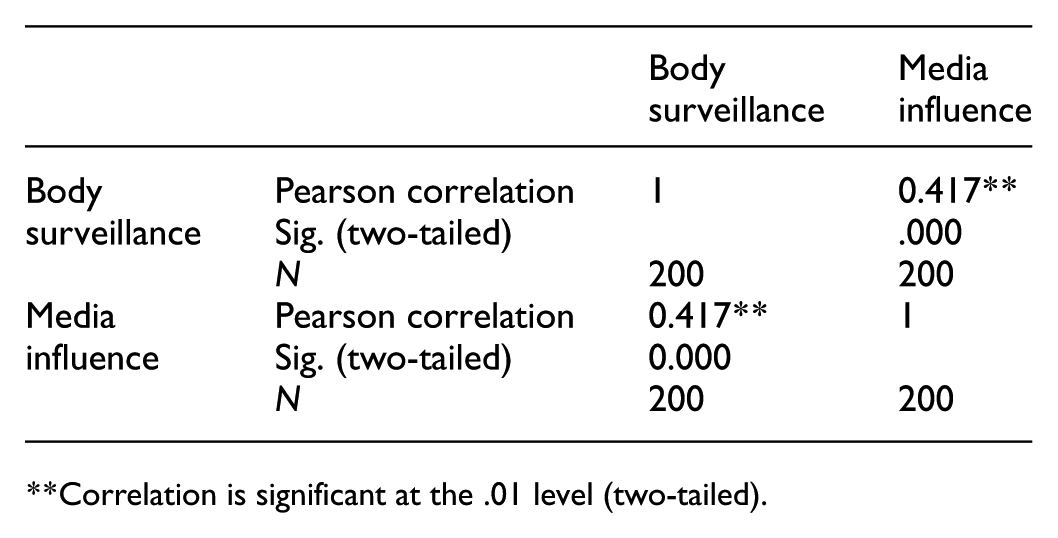
Correlation is significant at the .01 level (two-tailed).
According to the findings of the correlation analysis, there is likely to be a significant positive correlation between body surveillance and the influence of the media. A moderately positive relationship can be inferred between these variables based on the value of the correlation coefficient, which is .417. The portrayal of idealized body images in the media tends to have a greater impact on the thought processes of women who engage in higher levels of body surveillance. The fact that the p-value for this hypothesis is .000 indicates that it is extremely likely that there is a correlation between body surveillance and media influence.
These findings align with previous research by Ullah (2014), who observed that Pakistani television advertisements frequently highlight a woman’s physical attractiveness as the sole measure of her worth. These findings are consistent with previous research by (Gillen & Markey, 2021). This emphasis on bodily looks may shift women’s focus from self-improvement to adherence to social notions of beauty, leading to insecurity and self-acceptance issues. Personal growth remains an utmost concern for women. Daniels et al. (2020) identified the same view, stating that Indian advertisements prefer to present women based on social and family expectations. These advertisements thus reify stereotypes and reinforce sexism, as well as reinforce male hegemony. Furthermore, Daha (2020) spoke of pervasive male hegemony in Indian society, as well as in media.
These arguments highlight the need for critical examination of media representation. The media not only mirrors conventions in society but also has the ability to influence people’s attitudes and perceptions. It is therefore crucial to highlight the vast impact media representation can have on people’s social prejudices and beliefs. Chambers (2021) has posited that women in the media are typically represented in a way that reinforces existing stereotypes and not attempting to subvert them.
In conclusion, evidence attests to the existence of a positive relationship between media influence and body surveillance. Evidence agrees with current research and points toward the impact of media representation and social opinion on women’s bodies. There is a need for more research on the impact of media, and a shift toward more diverse and inclusive media so that social stereotyping is not perpetuated and a positive body image can be fostered.

Correlation is significant at the .01 level (two-tailed).
According to the findings of the analysis of correlation, there is a significant positive correlation between self-esteem and body image. A moderately positive relationship exists between these variables, as indicated by the correlation coefficient, which is equal to .333. There is a correlation between women who have a more favorable body image and higher levels of self-esteem, and vice versa. The p-value for the relationship between body image and self-esteem being .000 indicates that this correlation is highly significant.
These findings are consistent with those of a previous study that was conducted by Fredrickson and Roberts (1997). According to the study authors women often face judgment based on their looks which leads to higher self-consciousness and more frequent low self-esteem and negative emotions when they fail to meet beauty standards. Research conducted by Bilal et al. (2021) reveals that women across different age groups face societal pressure to meet ideal standards of youthfulness and thinness. As discussed by Harriger et al. (2023), social pressure of this nature can lead to shame experiences as well as the formation of unhealthy eating habits in the attempt to conform to the dominant societal expectations. Further, such findings align with Male Gaze Theory by Mulvey (1975), which establishes that women internalize the male gaze and perceive themselves as objects to be gazed at and judged. The ubiquity of self-surveillance behaviors across various age groups highlights the extent to which media representations conform to the male gaze (Bilal et al., 2021). Young women, who are notably exposed to social media and contemporary standards of beauty, may subject themselves to such pressure in a more intense manner, while older women may have increasingly internalized such standards, thus perpetuating their body monitoring behaviors.
The intense influence of media messages and cultural representations on women’s body image and self-esteem cannot be overemphasized. Women are likely to internalize guilt, anxiety, and body dissatisfaction due to media representations that tend to depict an idealized and unrealistic view of the “perfect” woman (Naqi et al., 2022). These feelings may be brought on by the media’s presentation of an unrealistic and idealized version of the “perfect” woman. According to Aksar et al. (2022), this type of internalization can play a role in the development of eating disorders as well as the adoption of unhealthy exercise routines.
In conclusion, the findings support the hypothesis that a significant positive correlation exists between self-esteem and one’s perception of one’s body. The findings align with those of previous studies and highlight the impact that societal beauty standards and messages conveyed through the media have on women’s perceptions of their bodies and psychological health. It is of the utmost importance to encourage healthy body image development in women, combat unattainable beauty standards, and combat the promotion of unrealistic beauty standards.
Conclusion
Women have long been exposed to media depictions of the ideal body type. Girls have always tried to attain the ideal figure, regardless of how the standards of beauty may have changed through time. Some studies have shown that young women are more likely to objectify themselves, have lower levels of self-esteem, and have a more negative view of their bodies than older women. Despite growing interest, research on perception problems in women as they age remains understudied. This study sets out to examine how media representations of women, whether young or old, affect their feelings of self-objectification and self-worth in Pakistan. Results of this study suggest that elderly women have greater anxiety about being seen than their younger counterparts. Nevertheless, older women also earned higher means on body control, self-esteem, and media influence scales. Findings counter the prevailing wisdom in our culture and most previous studies. Because of this, we know that concerns about one’s physical appearance do not diminish as women mature. More time spent in front of the screen correlates positively with a greater desire to adhere to the media’s standards for a woman’s appearance. A favorable association between body image and self-esteem shows evidence that those women who have a more positive opinion of their physique feel more confident about themselves. Briefly, this study sheds light on the complex interplay between media, body image, and self-objectification among women in Lahore City, Pakistan. The findings highlight the importance of promoting media literacy, body diversity, and self-empowerment initiatives to foster positive body image and psychological well-being among women of all ages in the city. By understanding and addressing these issues, society can take steps toward cultivating a healthier and more inclusive perception of beauty and self-worth. Given the study’s limitations, future research should explore larger sample sizes and integrate qualitative methods to provide a more comprehensive understanding of the phenomenon
Supplemental Material
sj-docx-1-sgo-10.1177_21582440251379748. – Supplemental material for Media and Body Image: Analyzing Self-Objectification Theory Across Different Ages of Women
Supplemental material, sj-docx-1-sgo-10.1177_21582440251379748. for Media and Body Image: Analyzing Self-Objectification Theory Across Different Ages of Women by Umair Ahmed, Zaryab Fatima and Zahra Zulfiqar in SAGE Open
Footnotes

Funding
The authors received no financial support for the research, authorship, and/or publication of this article.
Declaration of Conflicting Interests
The authors declared no potential conflicts of interest with respect to the research, authorship, and/or publication of this article.
Permission to Reproduce Material
Permission has been obtained to reproduce any copyrighted material used in this research. Proper attributions are provided where necessary.
Data Availability Statement
All relevant data supporting the findings of this research are available upon request. Please contact the corresponding author.
Supplemental Material
Supplemental material for this article is available online.
References
Supplementary Material
Please find the following supplemental material available below.
For Open Access articles published under a Creative Commons License, all supplemental material carries the same license as the article it is associated with.
For non-Open Access articles published, all supplemental material carries a non-exclusive license, and permission requests for re-use of supplemental material or any part of supplemental material shall be sent directly to the copyright owner as specified in the copyright notice associated with the article.
