



Abstract
This study investigated the factors influencing body-image depression among 952 Chinese senior high school students, with particular focus on the moderating role of physical education learning engagement. The results demonstrated that online interpersonal sexual objectification experiences significantly predicted students’ self-objectification tendencies. Self-objectification exerted a significant effect on body-image depression, with a notable mediating effect observed between these variables. Furthermore, physical education learning engagement has a significant negative moderating mediation effect on the indirect relationship between online interpersonal sexual objectification experience, self-objectification, and body image depression. Based on these findings, targeted recommendations are proposed to foster the psychological well-being of senior high school students.
Plain Language Summary
The rapid development of the internet has had a certain impact on the mental health of high school students, making the study of body image depression in this group particularly meaningful. This study explored the effects of online interpersonal sexual objectification experience based on social media on self-objectification and body image depression among high school students, as well as the moderating effect of physical education learning engagement. The study found that online interpersonal sexual objectification experiences significantly predicted students’ self-objectification tendencies. Self-objectification exerted a significant effect on body-image depression, with a notable mediating effect observed between these variables. Furthermore, physical education learning engagement has a significant negative moderating mediation effect on the indirect relationship between online interpersonal sexual objectification experience, self-objectification, and body image depression.
Keywords
Introduction
According to the World Health Organization, in 2023, there were 280 million people worldwide suffering from depression, and it is estimated that one in seven (14%) adolescents between the ages of 10 and 19 worldwide suffer from mental disorders (World Health Organization, 2023, 2024). Depression is intricately linked to body image; studies have shown that adolescents with negative body images may experience depression in adulthood (Rogers, 2020). With the development of the internet, social media platforms such as Xiaohongshu and Weibo have been widely used to disseminate appearance-oriented content, including weight loss and beauty-related information (Du et al., 2023). High school students, in particular, are undergoing significant changes in their bodies, cognition, and social domains during the second peak of puberty, leading them to focus on their external appearance (Slater & Tiggemann, 2010). However, excessive concern about appearance can lead to psychological issues such as body image depression and low self-esteem (Baceviciene et al., 2022). Severe body image depression can impact daily life, social interactions, learning, and emotions, and may even result in irreversible consequences such as suicide (Greydanus & Apple, 2011). Therefore, it is crucial to study the factors influencing body image depression among high school students.
In China, adolescents often perceive physical appearance as a part of self-worth and social competitiveness. While grappling with the intense academic pressure of an “involuted” or “nèijuăn” education system, many also immerse themselves in the highly curated, idealized body images prevalent on social media, exacerbating their body image anxiety (Zhu, 2023). Platforms such as Weibo, Xiaohongshu, and TikTok—dominant social media channels in China—frequently expose young users to content reinforcing the notion that “looks determine one’s worth.” This environment fosters a tendency toward social comparison based on appearance and the internalization of unrealistic beauty standards. In recent years, trends such as the “BM style” (Brandy Melville-inspired fashion) and the “BM girl” aesthetic have gained popularity on Xiaohongshu, promoting slenderness, fair skin, and a delicate physique as the ideal. Consequently, many adolescents engage in self-evaluations of whether they “fit the BM standard,” often leading to self-doubt and body shame (BBC News, 2021). On Weibo, candid (“raw”) photos of female celebrities frequently become trending topics, with minute physical details—such as “thick waistlines” or “deep nasolabial folds”—scrutinized and amplified in public discourse. This phenomenon objectifies women’s bodies as subjects for public critique, often provoking emotionally charged or even hostile remarks (Xu, 2021). Evidently, the current digital social landscape intensifies adolescents’ susceptibility to body image dissatisfaction, thereby increasing the risk of associated psychological distress.
Online interpersonal sexual objectification experience represents a prevalent manifestation of self-objectification. Luo et al. (2019) operationally defined this construct as an individual’s perception of being objectified in digital environments due to others’ persistent focus on their physical appearance. Such experiences may lead to self-objectification, a process whereby individuals come to view their own bodies from a third-person perspective, rather than perceiving the self through internal bodily sensations (Fredrickson & Roberts, 1997). The use of social media increases the frequency and richness of appearance-related comments, further enhancing the risk of self-objectification (Hummel & Smith, 2015). Under the influence of online objectification information, individuals strive to align themselves with the ideal images portrayed in the media, constantly monitoring their body, leading to self-objectification. However, achieving these ideal body standards is often difficult, resulting in depressive emotions (Baudson et al., 2016).
To further explore the psychological mechanisms through which online interpersonal sexual objectification contributes to body image depression in senior high school students. This study introduces self-objectification as a mediating variable based on existing research. Online objectification experiences in daily life, such as the presentation of perfect images on social media, can induce users’ self-objectification and further increase the risk of body image depression (McKay, 2013). While some studies suggest that women are more prone to self-objectification and that higher self-objectification increases the risk of body image depression (Strelan & Hargreaves, 2005), most research has focused on women’s self-objectification (Breines et al., 2008; Daniels et al., 2020). However, Brown and Bardoukas (2013) proposed that over time, more men have also begun to pay attention to their body image. Thus, both men and women today place significant importance on their body image, necessitating research on self-objectification for both genders.
The effects of online interpersonal sexual objectification experience and self-objectification on body image depression may be moderated by other factors, particularly the role of sports, which deserves attention. Therefore, this study introduces physical education learning engagement as a moderating variable. Physical education learning engagement refers to an individual’s active effort to acquire knowledge and skills in sports activities, manifested in preferences for participating in sports and actively engaging in sports learning (Bevans et al., 2010). As previously mentioned, the theoretical model posits that online interpersonal sexual objectification promotes body image depression, with self-objectification serving as a key mechanism in this pathway. Physical education learning engagement, including active participation in sports after school and proactive learning of sports knowledge and skills, can enhance exercise enthusiasm and improve body shape to some extent (W. Yang et al., 2023). Can physical education learning engagement alleviate body image depression in high school students?
Based on this, this study aims to investigate how online interpersonal sexual objectification influences self-objectification and body image depression among Chinese senior high school students, while also examining the moderating role of physical education learning engagement in this process. The findings are expected to provide insights for promoting adolescents’ psychological well-being.
Literature Review
Online Interpersonal Sexual Objectification Experience
Conceptually, Sexual objectification theory posits that women and girls who experience interpersonal sexual objectification are more likely to engage in harmful behaviors, such as restrictive eating, because their objectification experiences lead them to adopt an observer’s perspective on their own appearance. This perspective emphasizes their physical appearance over their internal characteristics, resulting in detrimental downstream effects on emotional health (Fredrickson & Roberts, 1997). Interpersonal sexual objectification refers to sexual objectification that occurs within interpersonal relationships and social interactions, specifically manifesting as objectifying gazes and sexual evaluations (Garcia et al., 2016). Experiences of sexual objectification are a form of gender discrimination with lingering effects, which can be conceptualized as insidious trauma (Miles-McLean et al., 2015).
Extending this framework, Thompson et al.’s (1999) tripartite influence model suggests that family, peers, and media influence an individual’s body image, with media having the most significant impact. When using social media, individuals internalize the ideal beauty standards propagated by mass media as their evaluation criteria and unconsciously compare themselves with others. If there is a significant gap between reality and these ideals, individuals may develop body image depression (Arroyo, 2014). Self-objectification’ refers to the phenomenon wherein individuals perceive their own bodies as objects to be observed and evaluated by others, prioritizing physical appearance over internal bodily experiences. This cognitive-behavioral tendency frequently manifests as habitual body monitoring (Fredrickson & Roberts, 1997).
Consequently, numerous scholars have studied interpersonal sexual objectification experiences. The findings of Meier and Gray (2014) concluded that there is a positive correlation between female students’ internet appearance exposure and self-objectification and body image disturbances. Sáez et al. (2019) showed that different forms of sexual objectification impact women’s mental health. A study by Dvir et al. (2021) found that experiences of sexual objectification led to increased self-objectification and feelings of exclusion among women, thereby threatening and reducing their basic need satisfaction. Research by Dakanalis and Riva (2013) indicated that individuals with higher levels of online interpersonal sexual objectification experiences are more prone to depressive emotions, which can lead to eating disorders.
Furthermore, Cooley’s Looking-Glass Self theory provides additional theoretical support for this relationship. This seminal theory posits that individuals’ self-perception is fundamentally shaped by their interpretation of others’ views and evaluations (Silva & Calheiros, 2022). In the era of social media, the proliferation of feedback mechanisms such as likes and comments has significantly amplified this “looking-glass” effect. Adolescents become particularly susceptible to viewing themselves through others’ perspectives, thereby reinforcing self-objectification tendencies and predisposing them to depressive symptoms. Therefore, this study aims to understand the impact of online interpersonal sexual objectification experiences based on social media on senior high school students’ self-objectification and body image depression, and proposes the following hypotheses:
Self-objectification
Research on objectification theory initially focused on women, positing that “women typically internalize others’ perspectives as the primary view of their physical self.” In other words, self-objectification is a tendency to describe one’s body through perceived external features rather than internal characteristics (Fredrickson & Roberts, 1997). It predicts an increase in negative emotions and mental health risks such as body shame, depression, and eating disorders (Fredrickson et al., 1998; Noll & Fredrickson, 1998). Harrison and Fredrickson (2003) found that self-objectification becomes more pronounced between early and middle adolescence and that there are relationships between self-objectification, body shame, eating disorders, and depression. Additionally, self-objectification has a direct relationship with restrictive eating, bulimia, and depressive symptoms (Mehak et al., 2018). In recent years, research has also shown that self-objectification is not solely a product of female bias but also occurs in men. Hallsworth et al. (2005) applied objectification theory to men, studying factors influencing the body image and self-objectification of male bodybuilders.
At the same time, the role of self-objectification as a mediating variable has been confirmed by numerous scholars. Karsay and Matthes (2020) investigated the mediating effect of self-objectification in young women concerning sexually objectifying media content and selective exposure, finding that exposure to sexually objectifying media increases self-objectification, which in turn increases preference for objectifying media content. Harper and Tiggemann (2008) found that women exposed to thin-ideal media had higher levels of self-objectification, leading to weight-related appearance anxiety, negative emotions, and body dissatisfaction. Therefore, this study aims to understand the impact of online interpersonal sexual objectification experiences based on social media on high school students’ self-objectification and body image depression and proposes the following hypotheses:
Body-image Depression
Body image, also known as body schema, was first introduced by Australian psychoanalyst Schilder (1936), who defined it as the mental image people form of their bodies, that is, the image of the body in people’s minds. It is not merely a sensory construct but also a result of self-attitude and others’ evaluations. Liang et al. (2017) defined body image depression as a psychological anomaly that arises from the discrepancy between an individual’s perceived actual body image and their ideal body image. Grogan (2021) expanded the meaning of body image, considering it as an individual’s perception, thoughts, and feelings about their body. As part of an individual’s physical self, body image profoundly impacts personal development and life (Tylka & Wood-Barcalow, 2015). Numerous studies have shown that depression is triggered by negative body image (Ahuvia et al., 2021; McLean et al., 2022). A study by Brausch and Gutierrez (2009) on senior high school students revealed that body image depression leads to suicidal ideation among high school students. Du et al. (2023) found that body image depression is significantly negatively correlated with online objectification experiences and physical activity, and online objectification experiences can indirectly affect physical activity through body image depression. Ching et al. (2021) concluded that interpersonal objectification experiences exacerbate the relationship between self-worth, self-esteem, and depression. Additionally, Self-Discrepancy Theory offers a crucial theoretical lens for this study. The theory points out that when discrepancies exist between an individual’s actual self and either their ideal self or ought self, it may trigger negative affective states such as depression and anxiety (Vartanian, 2012). In the context of adolescent social media engagement, prolonged exposure to platforms emphasizing unrealistic beauty standards often leads to the internalization of heavily edited appearances as their ideal self, while overlooking the uniqueness of their actual self. This perceived gap can lead to a heightened sense of discrepancy, ultimately contributing to the onset of depressive symptoms.
Physical Education Learning Engagement
Learning engagement is a positive and fulfilling mental state related to learning, characterized by the absorption of behaviors, cognition, and emotions (Skinner et al., 2009). It is divided into three dimensions: behavioral engagement, cognitive engagement, and emotional engagement (Garn et al., 2017). Integrating learning engagement with physical education has positive significance for maintaining long-term physical exercise. However, at present, there is a lack of systematic research on the regulating effect of sports learning engagement.
Scholars have studied the moderating effects of variables such as physical exercise and forms of exercise. Han et al. (2022) found that, in the context of COVID-19, physical exercise behavior significantly moderates the relationship between fear and negative emotions among college students. Q. Yang et al. (2022) showed that during the normalization of COVID-19 prevention and control, the form of exercise can mitigate the impact of different physical activities on the subjective well-being of the elderly. Liang et al. (2021) indicated that physical exercise promotes brain recovery and remodeling by regulating the expression levels of epigenetics, neuroplasticity, and neurotrophic factors.
In view of the fact that sports learning engagement not only affects individual sports participation, but also may regulate the impact of sports activities on mental health (Hao et al., 2025), this study attempts to study sports learning engagement as a moderating variable. Specifically, sports learning engagement may mitigate the negative psychological effects of social media by enhancing individuals’ cognitive, emotional, and behavioral engagement in physical activity (Wu et al., 2025).
According to social cognitive theory, individuals acquire knowledge or motivation by observing the behaviors of others, which in turn fosters a sense of self-efficacy and promotes positive behavioral engagement (Bandura, 2014). In physical education contexts, adolescents not only acquire motor skills but also cultivate stronger participation willingness and self-efficacy at both affective and cognitive levels. Importantly, such positive behavioral engagement may serve as a protective factor when confronting online sexual objectification experiences and appearance-related evaluations, potentially mitigating adverse psychological effects and promoting mental well-being. Therefore, this study aims to understand the moderating effect of learning engagement in physical education on the relationship between online interpersonal sexual objectification experience based on social media and high school students’ self-objectification and body image depression. The following hypotheses are proposed:
Based on the above theoretical foundations, this study integrates Sexual Objectification Theory, the Tripartite Influence Model, Looking-Glass Self Theory, Self-Discrepancy Theory, and Social Cognitive Theory to construct a systematic analytical framework. Specifically, Sexual Objectification Theory provides the foundational basis for this study, positing that when individuals are sexually objectified in online environments, they tend to internalize this external “observer’s perspective,” thereby developing self-objectification tendencies. The Tripartite Influence Model further elucidates the external social sources contributing to this phenomenon, such as the combined influence of family, peers, and social media. Meanwhile, Looking-Glass Self Theory complements this understanding from the angle of social feedback, suggesting that frequent interactions such as likes and comments on social media platforms amplify individuals’ sensitivity to others’ evaluations, thereby deepening their experiences of self-objectification.
Building on this, Self-Discrepancy Theory explains the emotional consequences of self-objectification: when individuals perceive a discrepancy between their actual self and their ideal self-image, they are prone to negative emotions such as anxiety and depression. Social Cognitive Theory also provides a basis for understanding the moderating role of engagement in physical education learning. By actively participating in physical education learning, individuals can enhance their self-efficacy and sense of bodily control, which may help mitigate the negative psychological impacts associated with online experiences. In summary, this study aims to investigate the impact of social media-based online interpersonal sexual objectification on high school students, focusing specifically on how it influences body image depression through the mechanism of self-objectification. It also seeks to examine the moderating effect of learning engagement in physical education within this context. A conceptual model has been constructed as shown in Figure 1.

Research model.
Research Method
Research Tools
The design of this study’s scale primarily employs a seven-point Likert scale (1 = Strongly Disagree; 2 = Disagree; 3 = Somewhat Disagree; 4 = Neutral; 5 = Somewhat Agree; 6 = Agree; 7 = Strongly Agree). The scale is divided into two parts: the first part covers demographics, including gender and grade level, while the second part consists of 51 items corresponding to the variables in the conceptual model of this study.
All measurement scales used in this study were translated following the cross-cultural adaptation procedures proposed by Beaton et al. (2000). First, two native Chinese-speaking graduate students majoring in English independently translated the original questionnaires into Simplified Chinese (Mandarin). Subsequently, the research team developed a preliminary Chinese version of the questionnaire based on the translated Chinese version, taking into account the research context and target population of this study. Then, two native English-speaking graduate students majoring in Chinese independently back-translated the preliminary Chinese questionnaire into English. Finally, with the assistance of two professors of sport psychology who have extensive research accomplishments in this field, the research team evaluated the original scales, translated versions, and back-translated versions together, ultimately determining the final Chinese version of the scales used in this study. The specific contents of the scales are as follows.
The Online Interpersonal Sexual Objectification Experience Scale
The Online Interpersonal Sexual Objectification Experience Scale was adapted from Luo et al.’s (2019) Online Interpersonal Sexual Objectification Experience Scale and consists of six items. Previous studies have demonstrated the scale’s strong reliability (Cronbach’s α = .82) as well as good convergent and discriminant validity (RMSEA = 0.072, χ2 = 6.82, df = 6, CFI = 0.987, TLI = 0.967, SRMR = 0.021). This study’s validity measures through Confirmatory Factor Analysis (CFA) yielded satisfactory results: factor loadings > 0.5, χ2 = 246, df = 9, TLI = 0.983, CFI = 0.972, SRMR = 0.004, with Average Variance Extracted (AVE) values > 0.5 and Composite Reliability (CR) values > 0.7, indicating good validity. The reliability analysis showed a Cronbach’s α of .993 for the Online Interpersonal Sexual Objectification Experience Scale, confirming its excellent internal consistency.
The Self-objectification Scale
The Self-objectification Scale, referenced from Lindberg et al.’s (2006) Self-objectification Scale, comprises 14 items and includes three dimensions: Body Shame, Body Surveillance, and Appearance Control Beliefs. Previous studies have demonstrated the scale’s strong reliability (Cronbach’s α: Body Shame = .77, Body Surveillance = .82, Appearance Control Beliefs = .80) as well as good convergent and discriminant validity (χ2 = 84.27, df = 3, p < .01, fit indices were above .9). In this study, the validity assessment using Confirmatory Factor Analysis (CFA) yielded the following results: factor loadings > 0.5, χ2 = 559, df = 74, TLI = 0.984, CFI = 0.980, SRMR = 0.009, with Average Variance Extracted (AVE) values > 0.5 and Composite Reliability (CR) values > 0.7. These results indicate excellent validity. Reliability testing through Cronbach’s α also confirmed strong internal consistency, with values of .989 for Body Shame, .991 for Body Surveillance and .987 for Appearance Control Beliefs, demonstrating excellent reliability.
The Body-image Depression Scale
The Body-image Depression Scale, referenced from Gao et al. (2005) and used by Du et al. (2023), consists of 17 items and includes two dimensions: Physique and Appearance. Previous studies have demonstrated the scale’s strong reliability (Cronbach’s α: Physique = .816, Appearance = .910) as well as good convergent and discriminant. In this study, the validity assessment using Confirmatory Factor Analysis (CFA) yielded the following results: factor loadings > 0.5, χ2 = 2084, df = 118, TLI = 0.952, CFI = 0.945, SRMR = 0.009, with Average Variance Extracted (AVE) values > 0.5 and Composite Reliability (CR) values > 0.7. These results indicate excellent validity. Reliability testing through Cronbach’s α also confirmed strong internal consistency, with values of .992 for physique and .994 for Appearance, demonstrating excellent reliability.
The Physical Education Learning Engagement Scale
The Physical Education Learning Engagement Scale is derived from the NSSE (National Survey of Student Engagement) questionnaire introduced by Tsinghua University from the United States and has been modified to suit the characteristics of Chinese universities, forming the NSSE-China (Han, 2014; National Survey of Student Engagement [NSSE], 2000), which includes 14 items and three dimensions: Behavioral Engagement, Cognitive Engagement, and Emotional Engagement. For the purposes of this study, the scale was further modified to suit Chinese senior high school students, forming the Physical Education Learning Engagement Scale. Previous studies have demonstrated the scale’s strong reliability (Cronbach’s α = .927) as well as good convergent and discriminant validity (χ2 = 323.435, df = 82.299, GFI = 0.913, NFI = 0.932, IFI = 0.953, TLI = 0.943, CFI = 0.954, RMR = 0.034) (W. Yang et al., 2024). In this study, the validity assessment using Confirmatory Factor Analysis (CFA) yielded the following results: factor loadings > 0.5, χ2 = 771, df = 74, TLI = 0.973, CFI = 0.978, SRMR = 0.018, with Average Variance Extracted (AVE) values > 0.5 and Composite Reliability (CR) values > 0.7. These results indicate excellent validity. Reliability testing through Cronbach’s α also confirmed strong internal consistency, with values of .986 for Behavioral Engagement, .993 for Cognitive Engagement and .990 for Emotional Engagement, demonstrating excellent reliability.
Data Collection
The questionnaire for this study was reviewed and approved by the Academic Ethics and Moral Committee of Shanghai Normal University (Approval Number: 2024082) prior to conducting the survey. Using a multistage convenience sampling method, the research team visited high schools in several cities in China, including Shanghai, Jiangsu Province, Zhejiang Province, Hefei City, Wuhu City, and Ma’anshan City in Anhui Province, from March to May 2024. The target population consisted of high school students from grades 10 to 12. Prior to questionnaire distribution, the research team provided detailed explanations to participants and their legal guardians regarding the study’s purpose, background, and estimated time commitment. Formal consent was obtained from participants’ guardians, homeroom teachers, and school administrators in strict compliance with ethical guidelines for research involving minors. Each questionnaire included a cover page with informed consent documentation, clearly stating participants’ right to decline participation by selecting the “disagree” option if they had any objections to the consent terms, which would immediately terminate their survey participation. A total of 970 questionnaires were distributed and collected. After excluding 18 invalid questionnaires with incomplete responses, the final effective sample size was 952. The specific demographic results of the survey respondents are shown in Table 1:
Demographics.

Data Analysis Method
Following the exclusion of samples with irregular or missing data, this study employed SPSS 26.0 and AMOS 24.0 statistical software for data analysis. First, confirmatory factor analysis (CFA) and Cronbach’s α reliability analysis were conducted to validate the validity and reliability of the data. Second, the correlations and normal distributions among the variable dimensions were verified. Finally, a structural equation model (SEM) incorporating direct, indirect, moderating, and moderated mediation effects was constructed using AMOS to examine the hypothesized relationships.
Results
Model Testing and Reliability and Validity Testing
This study used confirmatory factor analysis (CFA) to validate the construct validity of the scales. The results, as shown in Table 2, are as follows: χ2 = 5,439.933, p < .001, df = 1,188, IFI = 0.964, TLI = .962, CFI = .964, RMSEA = .061, and SRMR = .013. When RMSEA < 0.08, SRMR < .1, TLI and CFI > .9, the standardized factor loadings of each measurement item are greater than .5, the average variance extracted (AVE) values are greater than .5, and the composite reliability (CR) values are greater than .7, the measurement scale data are considered to have good convergent validity. Reliability analysis results indicate that the Cronbach’s α values for all latent variables are greater than .7, suggesting that the measurement items within the latent variables meet statistical requirements and exhibit consistency.
Confirmatory Factor Analysis and Reliability Analysis.
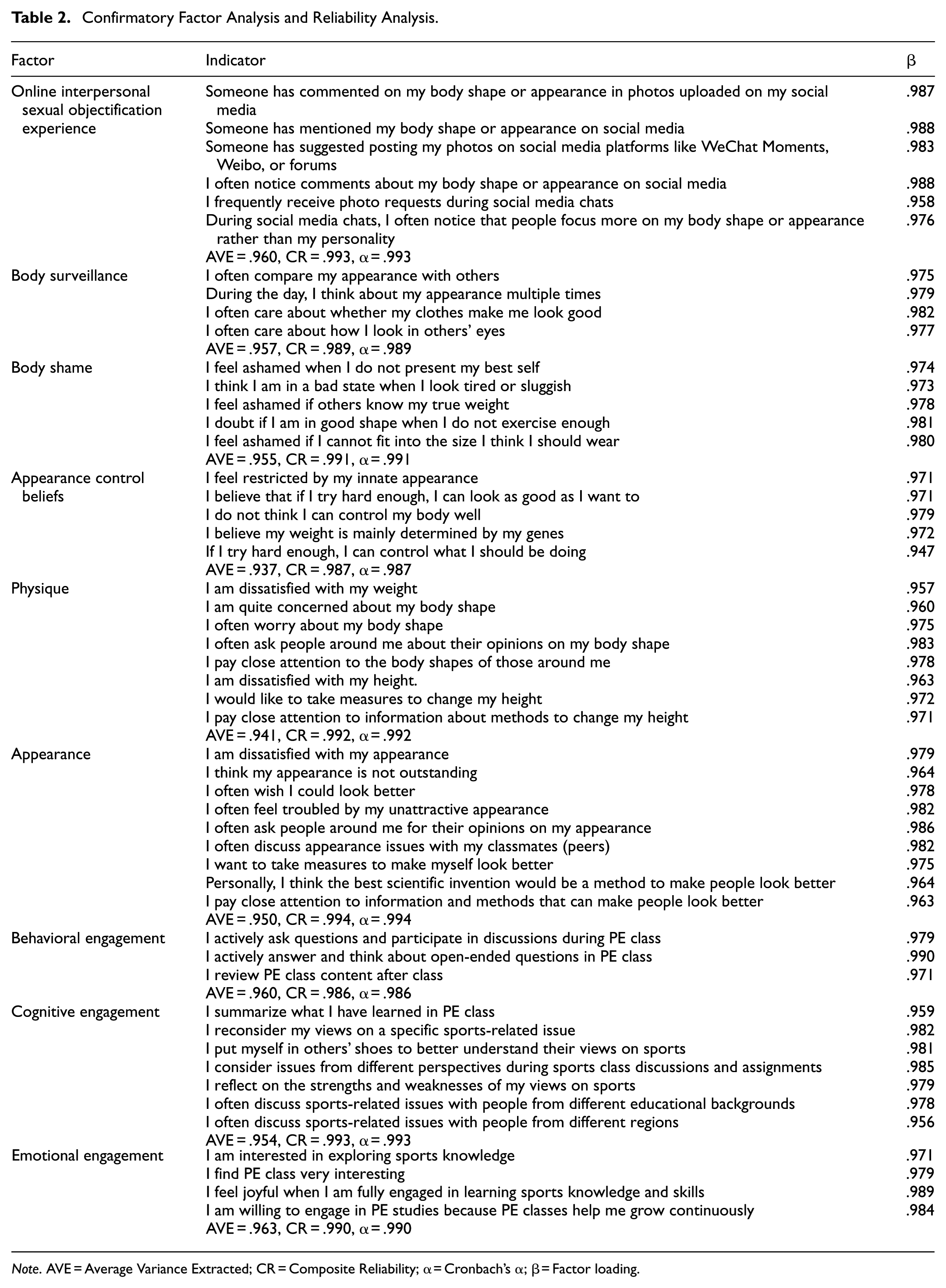
Note. AVE = Average Variance Extracted; CR = Composite Reliability; α = Cronbach’s α; β = Factor loading.
To test the discriminant validity of the research data, this study employed the Heterotrait-Monotrait ratio (HTMT) correlation method proposed by Henseler et al. (2015). As shown in Table 2, the results indicate that all correlations between the latent variables, that is, HTMT values, are <0.85 (Table 3).
HTMT Ratio Analysis.

Note. A = Online Interpersonal Sexual Objectification Experience, B = Body Surveillance, C = Body Shame, D = Appearance Control Beliefs, E = Physique, F = Appearance, G = Cognitive Engagement, H = Behavioral Engagement, I = Emotional Engagement..
Correlation Analysis and Normality Test
To study the correlations between the variables, this research used Pearson’s Correlation Analysis (Cohen et al., 2009). As shown in Table 4, most variables exhibit significant positive correlations, except for behavioral engagement, emotional engagement, and some other variables which do not show significant correlations. The correlation coefficients are all below 0.8, indicating that there is no multicollinearity problem among the variables. Finally, the analysis confirmed the normal distribution of the data within the ranges of Standard Deviation (SD) ≤±2, Skewness ≤±2, and Kurtosis ≤±4 (Hong et al., 2003).
Results of Correlation Analysis and Normal Distribution.
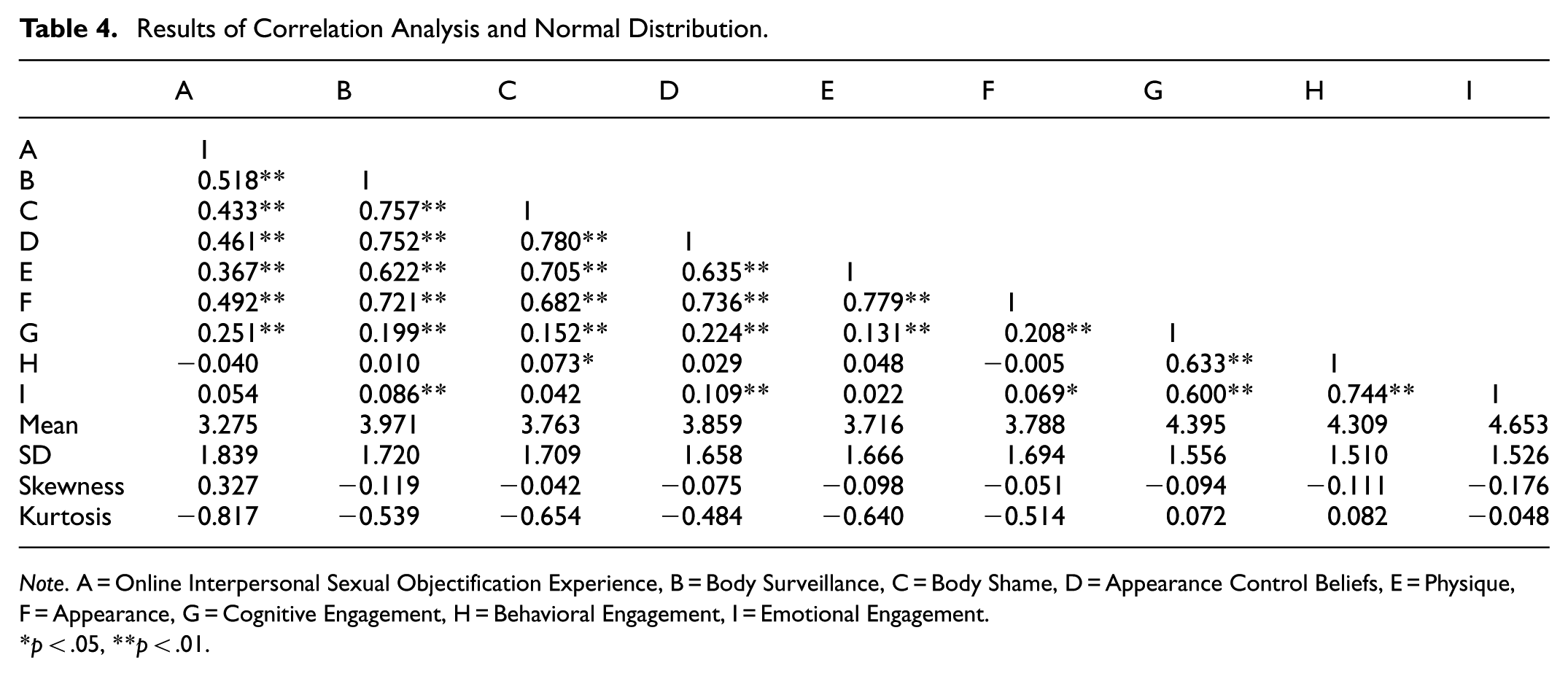
Note. A = Online Interpersonal Sexual Objectification Experience, B = Body Surveillance, C = Body Shame, D = Appearance Control Beliefs, E = Physique, F = Appearance, G = Cognitive Engagement, H = Behavioral Engagement, I = Emotional Engagement.
p < .05, **p < .01.
Hypothesis Test
This study incorporated gender and grade as control variables and constructed a structural equation model (SEM) integrating direct, indirect, moderating, and moderated mediation effects. To assess whether the model fit met statistical criteria, goodness-of-fit tests were conducted after model specification. The results indicated: χ2 = 1,233.582, p < .001, df = 121, IFI = 0.948, TLI = 0.934, CFI = 0.947, RMSEA = 0.098, and SRMR = 0.078. These values satisfy the criteria of RMSEA < 0.1, SRMR < 0.1, and IFI, TLI, CFI > 0.9, suggesting an acceptable fit between the data and the hypothesized model (Hu & Bentler, 1999).
The results of the structural equation model are presented in Table 5. Regarding direct effects, online sexual objectification experience had a significant positive effect on self-objectification (β = .563, p < .001). Self-objectification had a significant positive effect on body-image depression (β = .880, p < .001). Thus, H1 and H3 were supported. The direct path from online sexual objectification experience to body-image depression was not significant (β = .032, p < .05), and therefore H2 was not supported.
Results of the Structural Equation Model Analysis.
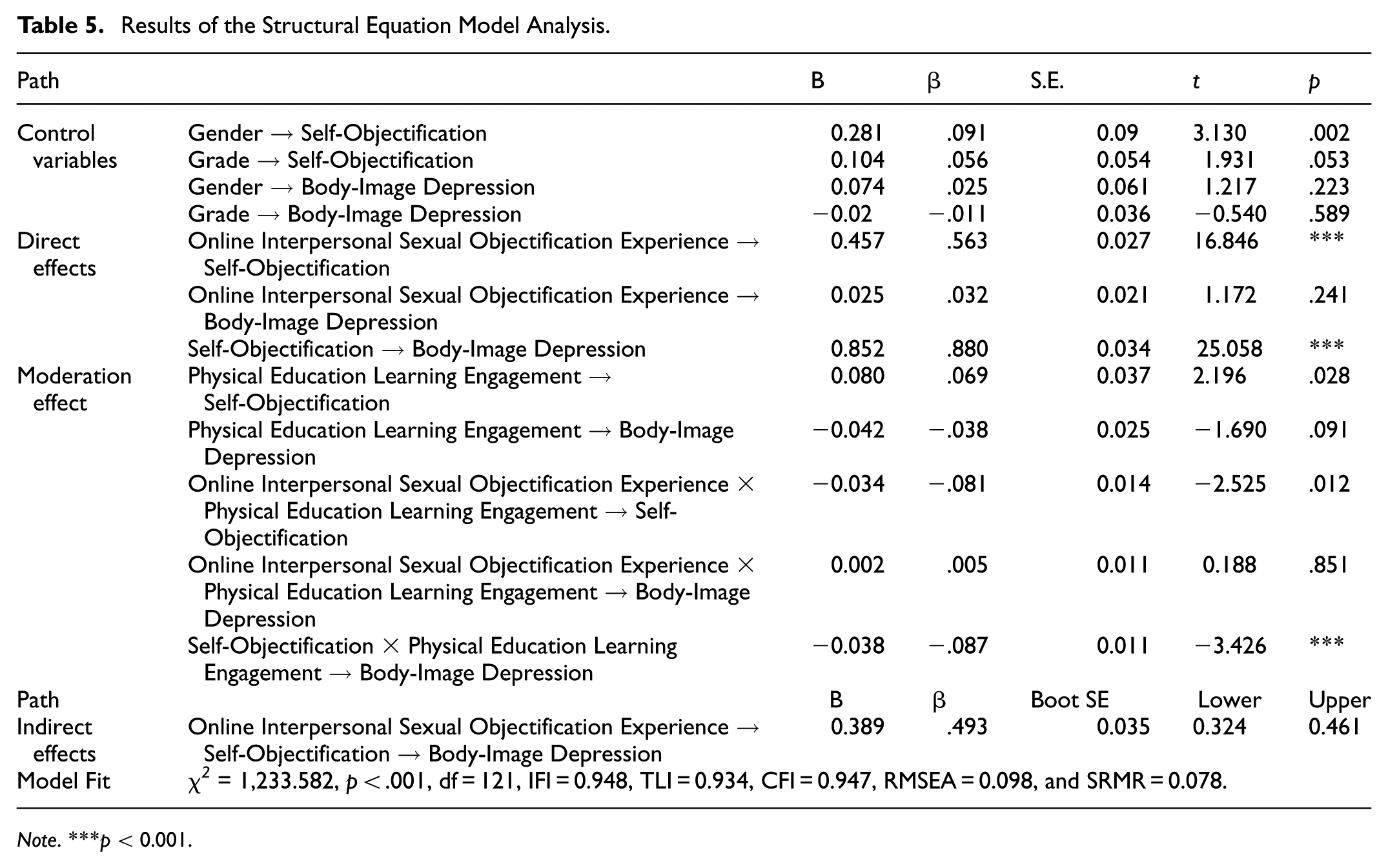
Note. ***p < 0.001.
For indirect effects, the bootstrap method (bootstrapping with 10,000 resamples and 95% confidence intervals) was employed to test the mediating role of self-objectification. The indirect path (online sexual objectification → self-objectification → body-image depression) showed that the 95% confidence interval did not include zero (β = .032, 95% CI = [0.324, 0.461]), indicating a significant mediating effect of self-objectification between online sexual objectification experience and body-image depression. Thus, H4 was supported. This suggests that although online sexual objectification experience does not directly affect body-image depression among high school students, it may increase body-image depression by elevating levels of self-objectification.
Regarding the moderating effect of physical education learning engagement, it demonstrated a significant negative moderating effect on the path from online sexual objectification experience to self-objectification (β = −.081, p < .05). However, it did not show a significant moderating effect on the path from online interpersonal sexual objectification experience to body-image depression (β = .002, p > 0.05). In contrast, physical education learning engagement had a significant negative moderating effect on the path from self-objectification to body-image depression (β = −.038, p < .001). Consequently, H5 was not supported. Nonetheless, since physical education learning engagement exhibited significant moderating effects on both the path from online sexual objectification experience to self-objectification and the path from self-objectification to body-image depression, it is plausible that physical education learning engagement may function as a moderator in the mediated pathway (online sexual objectification experience → self-objectification → body-image depression), suggesting a potential moderated mediation effect.
In this study, the level of Physical Education Learning Engagement was categorized into three groups: low (M − 1SD), average (M), and high (M + 1SD). The Bootstrap method (Bootstrapping: 10,000 resamples, 95% confidence interval) was employed to examine the specific moderating effects of Physical Education Learning Engagement across different pathways. As shown in Table 6, low, average, and high levels of Physical Education Learning Engagement all demonstrated significant moderating effects on the relationship between Online Interpersonal Sexual Objectification Experience and Self-Objectification (βLow = .491, 95% CILow = [0.406, 0.571]; βAverage = .560, 95% CIAverage = [0.391, 0.521]; βHigh = .480, 95% CIHigh = [0.355, 0.488]). The results indicate that as the level of Physical Education Learning Engagement increases, the effect of Online Interpersonal Sexual Objectification Experience on Self-Objectification decreases from 0.640 to 0.480. This suggests that higher engagement in physical education learning can mitigate the extent to which Online Interpersonal Sexual Objectification Experience contributes to Self-Objectification. The slope plot in Figure 2 further illustrates that among groups with higher levels of Physical Education Learning Engagement, the relationship between Online Interpersonal Sexual Objectification Experience and Self-Objectification becomes flatter.
The Moderating Effect of Physical Education Learning Engagement on the Relationship Between Online Interpersonal Sexual Objectification Experience and Self-Objectification.

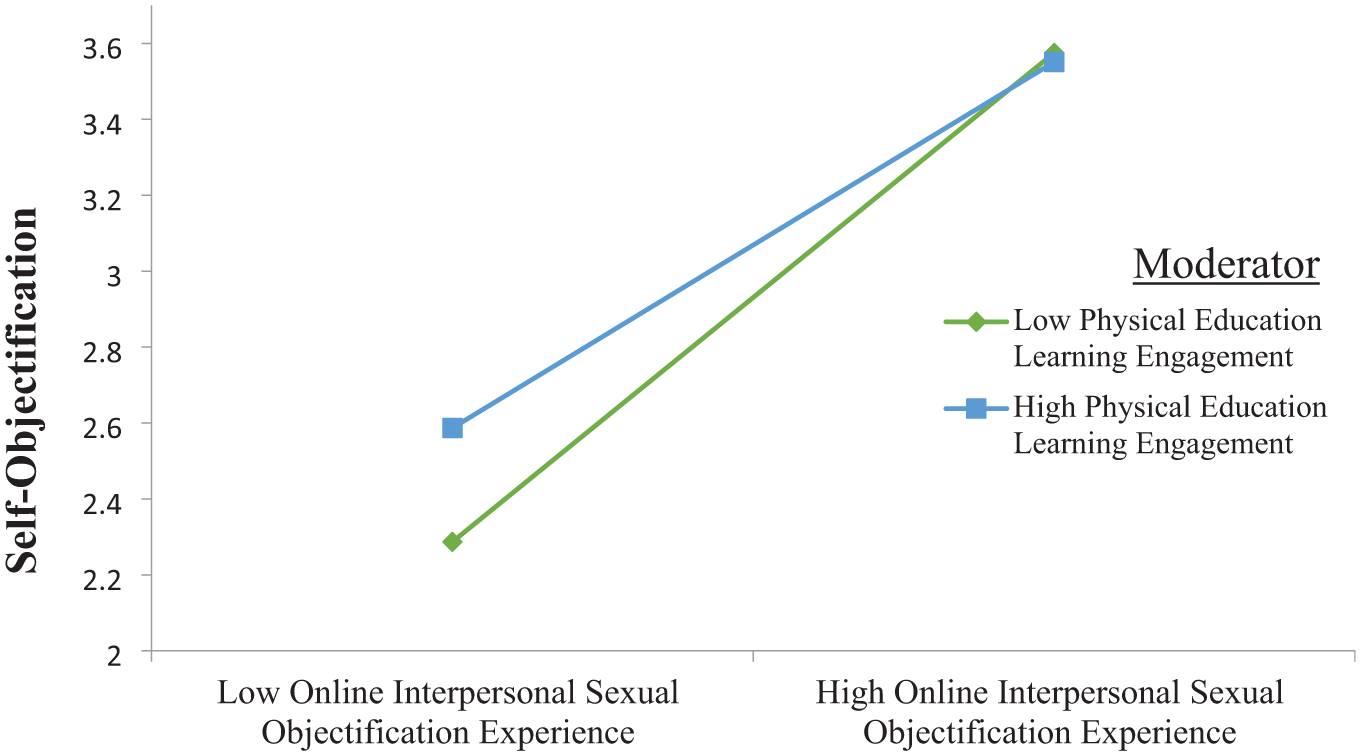
Slope plot of the moderating effect of physical education learning engagement between online interpersonal sexual objectification experience and self-objectification.
Similarly, Table 7 categorizes the level of Physical Education Learning Engagement into three groups: low (M − 1 SD), average (M), and high (M + 1 SD) to examine its specific moderating effect between Self-Objectification and Body-Image Depression. As presented in Table 7, low, average, and high levels of Physical Education Learning Engagement all demonstrate a significant moderating effect on the relationship between Self-Objectification and Body-Image Depression (βLow = .970, 95% CILow = [0.783, 1.001]; βAverage = .880, 95% CIAverage = [0.759, 0.947]; βHigh = .790, 95% CIHigh = [0.343, 0.497]). Consistent with previous findings, the results indicate that as the level of Physical Education Learning Engagement increases, the effect of Self-Objectification on Body-Image Depression decreases from 0.640 to 0.480. This suggests that higher engagement in physical education learning can mitigate the extent to which Self-Objectification contributes to Body-Image Depression. The slope plot in Figure 3 further illustrates this moderating effect, showing that the relationship between Self-Objectification and Body-Image Depression becomes progressively flatter among groups with higher levels of Physical Education Learning Engagement.
The Moderating Effect of Physical Education Learning Engagement Between Self-Objectification and Body-Image Depression.


Slope plot of the moderating effect of physical education learning engagement between self-objectification and body-image depression.
Finally, this study further calculated the Index of moderated mediation to test the moderated mediation effect of Physical Education Learning Engagement along the path from Online Interpersonal Sexual Objectification Experience to Self-Objectification to Body-Image Depression, using the Bootstrap method (Bootstrapping: 10,000 resamples, 95% confidence interval). As detailed in Table 8, the 95% confidence interval for the index of moderated mediation did not include zero, indicating a significant moderated mediation effect of Physical Education Learning Engagement among Online Interpersonal Sexual Objectification Experience, Self-Objectification, and Body-Image Depression (β = −.121, 95% CI = [−0.087, −0.009]). Thus, Hypothesis 6 (H6) is supported. Furthermore, significant moderated mediation effects were also observed across the low (M − 1 SD), average (M), and high (M + 1 SD) groups of Physical Education Learning Engagement (βLow = .621, 95% CILow = [0.348, 0.535]; βAverage = .493, 95% CIAverage = [0.324, 0.461]; βHigh = .379, 95% CIHigh = [0.285, 0.412]). Specifically, higher levels of Physical Education Learning Engagement were associated with a weaker indirect effect of Online Interpersonal Sexual Objectification Experience on Body-Image Depression through Self-Objectification.
Results of Moderated Mediation Analysis for Physical Education Learning Engagement Among Online Interpersonal Sexual Objectification, Self-Objectification, and Body-Image Depression.

In summary, the findings indicate that Online Interpersonal Sexual Objectification Experience exacerbates Body-Image Depression by increasing Self-Objectification. Physical Education Learning Engagement serves as a protective factor, mitigating both the impact of Online Interpersonal Sexual Objectification Experience on Self-Objectification and the impact of Self-Objectification on Body-Image Depression. Ultimately, the results confirm that Physical Education Learning Engagement weakens the indirect effect of Online Interpersonal Sexual Objectification Experience on Body-Image Depression via Self-Objectification. The final model with all significant path coefficients is presented in Figure 4.

Path impact effect graph.
Discussion
The Relationship between Online Interpersonal Sexual Objectification Experience, Self-objectification and Body-image Depression
The results of this study show that online interpersonal sexual objectification experiences have a significant positive impact on all dimensions of self-objectification among high school students, which is consistent with the findings of many scholars. Karsay et al. (2018) confirmed that the use of sexualizing media significantly impacts self-objectification. Jiao et al. (2022) found that interpersonal sexual objectification significantly affects self-objectification. Lin et al. (2022) demonstrated a positive correlation between online sexual objectification experiences and self-objectification in adolescent girls, emphasizing that in today’s information age, sexual objectification experiences have extended to social media and becoming the online interpersonal sexual objectification experience, which is a risk factor for self-objectification. Nowadays, under the influence of social media, pathological ideal aesthetic standards such as “swan neck” and “chopstick legs” continuously affect individuals’ self-perception. High school students, transitioning from adolescence to adulthood, are particularly sensitive to self-awareness and others’ evaluations, and they prioritize their appearance more than adults (Papageorgiou et al., 2022). When confronted with daily promotions of “plastic surgery” and “slimming” on social media, high school students constantly compare themselves to celebrities and internet influencers with excellent physiques and looks. Under the influence of negative comments from parents and peers, they continually monitor their body image, leading to self-objectification. Therefore, schools should strengthen the education and promotion of healthy body images, helping high school students understand that the unrealistic beauty standards promoted online is unhealthy. Schools should also continuously monitor students’ mental and physical health. Regardless of their body image, parents should affirm their children’s body image, encourage them to accept their “imperfections,” and continuously enhance their emotional value and self-confidence.
The results of this study show that self-objectification among high school students has a significant positive impact on body image depression. Harrison and Fredrickson (2003) found that self-objectification significantly impacts depression. Grabe and Jackson (2009) studied the relationship between self-objectification and depressive symptoms among Asian Americans and white Americans, finding a positive correlation between self-objectification and depressive symptoms among white American women. These findings are consistent with the results of this study. Fredrickson and Roberts’ (1997) objectification theory suggests that individuals with high levels of self-objectification are more likely to focus on their body image and that self-objectification is a significant predictor of depression. Lindner et al.’s (2012) objectification cycle theory posits that self-objectification can also lead to the objectification of others, increasing attention to others’ body images. Under the influence of social media, high school students often focus on others’ body images and engage in comparisons. Individuals with high self-objectification are more likely to experience pressure, leading to depressive emotions. Therefore, schools should strengthen psychological education for high school students, continuously instilling correct thoughts and aesthetic standards. Parents should also play a supervisory role, encouraging their children to pursue healthy body images and continuously monitoring their physical and mental health, addressing issues promptly to ensure their children’s well-being.
The Mediating Effects of Self-objectification on the Relationship between Online Interpersonal Sexual Objectification Experience and Body-image Depression
The results of this study indicate that self-objectification has a significant mediating effect between online interpersonal sexual objectification experience and body image depression. Harper and Tiggemann (2008) found that self-objectification has a significant mediating effect between thin-ideal media images and body image. Similarly, Niu et al. (2020) concluded from self-cognition theory and objectification theory that self-objectification has a significant mediating effect between SNS selfies and restrained eating among young adult Chinese women. These findings are consistent with the results of this study. Sexual objectification experiences can negatively impact individuals’ emotions and behaviors through self-objectification, leading to body shame, anxiety, and other issues. This is due to the media’s excessive emphasis on body image, where social media often showcases modified and beautified positive images. The more positive images high school students are exposed to, the more likely they are to engage in continuous body surveillance, comparing their own bodies to ideal or socially mainstream aesthetic standards. This excessive focus on appearance and others’ evaluations increases the degree of self-objectification, and the inevitable gap between their actual and ideal body images leads to negative emotional experiences, such as body image depression and anxiety.
Therefore, in addition to exploring issues related to online interpersonal sexual objectification experiences, self-objectification, and body image depression, it is also important to conduct research from a prevention and intervention perspective. First, society should promote a correct image, guiding the public to treat everyone equally and creating a positive online environment to reduce the negative effects of self-objectification. Second, as students are a high-risk group for psychological issues like depression, schools should actively implement intervention programs, such as psychological health lectures and weight management programs for overweight students, to reduce dissatisfaction with their bodies and guide them in forming correct and healthy body and value perceptions. Finally, high school students should not focus solely on their appearance but should also develop other abilities beyond appearance, such as academic and practical skills, interpersonal communication skills, and critical analysis of the “ideal images” propagated by social media. They should learn to respect and accept their body state, preventing the risk of depression.
The Moderating Effects of Physical Education Learning Engagement
The results of this study indicate that physical education learning engagement has a significant negative moderating effect in the indirect relationship between online interpersonal sexual objectification experience, self-objectification, and body image depression. This suggests that the higher the level of physical education learning engagement, the lower the negative impact of online interpersonal sexual objectification experience on self-objectification and body image depression. Learning is the primary task for high school students, and physical education learning spans their entire academic journey, playing a vital role in their development. On one hand, physical education learning engagement can promote increased frequency of physical exercise. When individuals develop an interest in physical activity and invest time and energy in learning related knowledge and skills, they are more likely to participate actively in physical exercise. Physical exercise has repeatedly been shown to bring cognitive, emotional, and physical benefits, and to prevent and alleviate anxiety and depression (Archer et al., 2014). Campbell and Hausenblas (2009) confirmed that individuals suffering from body image depression could achieve their ideal body image through physical exercise. Moreover, physical activity constitutes an active participatory process that fosters self-expression and experiential learning, representing a form of behavior less susceptible to external evaluation (Shilling, 2012). Through sports engagement, students demonstrate greater capacity to shift focus from external appraisal to internal competence and bodily awareness, thereby mitigating the adverse effects of objectification experiences (Jankauskiene et al., 2022). On the other hand, physical education learning engagement can foster positive interactions between high school students and their peers and teachers (Zhang et al., 2024). Vendemia and Fox (2024) suggested in their study that negative comments and attention from peers on social media can trigger self-objectification, leading to appearance anxiety and depressive emotions. Through engagement in physical education, high school students can maintain good relationships with their peers, reducing the risk of interpersonal sexual objectification experience and thus improving body image depression. Furthermore, the study by Varnes et al. (2013) found that, compared to non-athletes, athletes reported more positive body image and lower levels of objectification. This suggests that participation in sports may serve a protective role in promoting body satisfaction.
From the perspective of social identity theory, individuals derive self-definition through their membership in social groups (Hogg, 2016). Physical education, typically conducted through team collaboration and group interaction, facilitates adolescents’ social integration, fostering both a sense of belonging and collective identity that promotes positive self-concept development (Martin et al., 2018). Within this context, students naturally orient their attention toward collective goal achievement and skill mastery rather than external appearance evaluation. Consequently, even when exposed to online objectification experiences, the positive social identity cultivated through sports participation serves as a protective buffer against self-objectification tendencies and their associated negative emotional consequences. Therefore, schools should continuously strive to improve the educational environment, multicultural construction, and teaching quality, providing students with a positive physical education learning atmosphere. This will stimulate students’ interest in physical education, increase their engagement levels, and mitigate the negative impacts of online interpersonal sexual objectification experiences. Moreover, in the context of intense academic pressure and the phenomenon of “nèijuăn” (involution) in China, the emotional regulation and psychosocial value of physical education classes become particularly important. Schools should consider offering courses such as yoga or fitness training to help students b improving their body image, gradually guiding them to focus on a healthy perception of the body while de-emphasizing excessive appearance-based evaluations. Ultimately, through physical activity, students can enhance their self-efficacy and reduce the psychological risks associated with self-objectification.
Theoretical Contribution and Practical Significance
This study explored the impact of online interpersonal sexual objectification experience based on social media on high school students’ self-objectification and body image depression, as well as the moderating effect of physical education learning engagement. While most existing literature examines the relationships between variables such as social media, self-objectification, body dissatisfaction, and restrictive eating, few studies have investigated the relationship among online interpersonal sexual objectification experience, self-objectification, and body image depression from the perspective of social media. Furthermore, existing studies primarily focus on college students or adults, lacking research on high school students who are in a critical stage of psychological and physiological development, transitioning from adolescence to adulthood. Additionally, previous studies have often provided a generalized definition of learning engagement without focusing on a specific subject, and research on physical education learning engagement is particularly scarce. This study not only introduces physical education learning engagement as a variable but also verifies its role as a moderating variable. Therefore, this research offers new insights from different angles to the relevant fields and provides valuable references for the psychological health development of high school students.
The results of this study offer practical suggestions for families, schools, and society to jointly promote the psychological health of high school students. Firstly, by targeting high school students who are highly susceptible to the pathological aesthetic standards prevalent on the internet during adolescence, this study proposes specific measures to prevent body image depression induced by social media. Secondly, although the content of social media cannot be controlled, the study’s findings suggest that parents should strengthen their supervision and show greater concern for their children’s psychological health. Schools and teachers have a duty to help students form healthy body images and self-awareness, cultivate critical thinking, and guide them in the right direction. Finally, we propose that all sectors of society should take all necessary measures to intervene in the negative impacts of social media, creating a healthy and positive online social environment, thereby continuously promoting the psychological health development of high school students.
Limitations and Suggestions
Based on the limitations of this study, the following suggestions are made for future research. Firstly, the sample in this study was obtained through a multi-stage convenience sampling method from high school students in China, which may limit the generalizability of the findings due to cultural differences. Future research should expand the scope of investigation by including high school students from other countries to allow for a more comprehensive analysis of how online interpersonal sexual objectification experience influence self-objectification and body image depression across different cultural contexts. Secondly, this study utilized a cross-sectional design. Future studies could consider employing experimental methods and longitudinal research to further investigate body image depression among high school students, which would provide a deeper understanding of the causal relationships between the variables. Thirdly, this study focuses on the relationship between online interpersonal sexual objectification experience, self-objectification and body image depression among Chinese high school students in China’s mainstream social platforms such as wechat, QQ and Weibo, and fails to fully explore the relationship between these variables in platforms widely used around the world, such as TikTok, Instagram and Snapchat. Future studies should further expand the scope of social platforms and pay attention to the relationship between variables in different domestic and foreign social platforms.
Conclusion and Suggestions
The rapid development of the internet has had a certain impact on the mental health of high school students, making the study of body image depression in this group particularly meaningful. Therefore, this study explored the effects of online interpersonal sexual objectification experience based on social media on self-objectification and body image depression among high school students, as well as the moderating effect of physical education learning engagement. The study found that online interpersonal sexual objectification experiences significantly predicted students’ self-objectification tendencies and body-image depression, and that online interpersonal sexual objectification experience affects body image depression through self-objectification. Additionally, physical education learning engagement has a significant negative moderating mediation effect on the indirect relationship between online interpersonal sexual objectification experience, self-objectification, and body image depression. Based on the results of this study, high school students should use rational thinking when viewing “idealized” body images presented on social media, learn to respect and accept their own bodies and appearances, and avoid blindly following trends. Maintaining a positive mindset is crucial. Parents and schools should work together to monitor the dynamics of high school students, prevent the emergence of negative psychological states, and strengthen education on healthy body images. This guidance will help students establish correct values and body perceptions. Society should vigorously promote more diverse and healthier body images, guiding high school students to build positive body images and promptly stopping the spread of negative body images to ensure the physical and mental health of high school students.
Footnotes

Ethical Considerations
The study’s survey involved human participants and was reviewed and approved by the Academic Ethics and Morality Committee of Shanghai Normal University (Approval No: 2024082). The investigation was carried out in strict accordance with the standards of the Declaration of Helsinki of 1964.
Consent to Participate
The questionnaire for this study was completed with the consent of the principal and class teacher of the relevant study participant. Additionally, it was administered after obtaining the informed consent form signed by the study participant and securing informed consent from the legal guardian of participants under 16 years old.
Consent for Publication
All data in this study was collected through anonymisation and was used and released with the consent of the participants. And data provided by participants under the age of 16 was also used and released with the consent of their legal guardian.
Author Contribution
Conceptualization, Weinan Zhou, Hanzhi Xu, Yurong Lu; Methodology, Weinan Zhou; Software, Weinan Zhou; Data curation, Weinan Zhou; Investigation, Weinan Zhou, Hanzhi Xu, Lijuan Zhang, Yurong Lu; Validation, Weinan Zhou; Formal analysis, Weinan Zhou, Hanzhi Xu, Yurong Lu; Supervision, Yurong Lu; Visualization, Weinan Zhou, Hanzhi Xu, Yurong Lu; Project administration, Yurong Lu; Resources, Lijuan Zhang, Yurong Lu; Writing - original draft, Weinan Zhou, Hanzhi Xu; Writing - review & editing, Weinan Zhou, Yurong Lu.
Funding
The authors received no financial support for the research, authorship, and/or publication of this article.
Declaration of Conflicting Interests
The authors declared no potential conflicts of interest with respect to the research, authorship, and/or publication of this article.
Data Availability Statement
The data that support the findings of this study are available from the corresponding author upon reasonable request.