




Abstract
In the context of global demographic aging, investigating the role of tourism in promoting healthy aging constitutes a vital area of interdisciplinary research with far-reaching implications for public health and socio-economic development. Researchers in the tourism literature also focus on older people as a niche market. The purpose of this study is to systematically review the tourism literature related to healthy aging. By comparing theoretical frameworks, research methods, and conceptual and methodological approaches, this article attempts to provide an overview of tourism research on the topic of healthy aging. After a thorough search of the Emerald, Sage, Science Direct (Elsevier), Scopus, Taylor and Francis, Web of Science and databases, 66 articles that met the criteria were selected for the systematic review. The objectives, methods, data sources and conclusions of the content of the selected papers were all examined. The systematic compilation of the research results within the conceptual framework of the articles shows that the tourism sector makes a decisive contribution to the well-being, satisfaction and quality of life of older people. Most of the studies employed qualitative methods and were based on samples drawn from China. The findings suggest that market segmentation strategies tailored to the needs of older adults are more effective when essential characteristics such as health status are taken into account. The article also highlights the importance of encouraging field research on topics not yet covered in healthy aging studies and drawing attention to the tourism industry’s focus on this particular niche market.
Plain language summary
This study explores how tourism can support healthy aging. As people live longer, finding ways to improve their quality of life has become more important. Traveling is one activity that may help older adults stay active, social, and mentally engaged. To better understand this topic, we reviewed 66 academic studies about tourism and healthy aging. We searched trusted scientific databases such as Scopus, Web of Science, and others, focusing only on journal articles. Our findings show that tourism can have positive effects on older adults’ health and well-being. The study also highlights how tourism businesses, healthcare professionals, and local communities can work together to create more age-friendly travel experiences. This research can guide future studies and help shape tourism services that support healthy aging for everyone.
Introduction
The World Health Organization, defines aging as the cumulation of a wide variety of molecular and cellular damage. It is estimated that by 2050, the global population aged 60 and over will exceed 2 billion (World Health Organization, 2024). Aging, beyond its biological dimension, involves a gradual decline in physical and cognitive capacities, posing a significant challenge in individuals’ lives particularly due to the rising prevalence of multimorbidity (Gianfredi et al., 2025). Older people often face a variety of challenges due to health problems and declining physical performance. Participation in tourism activities has been shown to have a positive impact on the physical and mental health of older adults (Harahousou et al., 2003; D. Kim & Jang, 2019). Population aging is one of the most significant global demographic transformations of our time. This shift necessitates a rethinking of health, quality of life, and opportunities for social participation among older adults. Healthy aging is concerned with leading a better life and delaying the deterioration of functional capacity (Wirtz et al., 2025). In particular, healthy aging is a multidimensional process that aims to enable individuals to maintain their physical, mental, and social functions for as long as possible.
Population aging within the tourism and hospitality industry has led to a shift in the profile of travelers (Connell & Page, 2020). In this context, research has shown that tourism is associated with various positive health outcomes among older adults, such as reduced stress levels, increased life satisfaction, and mitigation of the effects of chronic illnesses (Hunter-Jones & Blackburn, 2007). In an empirical study, Ma et al. (2025) found that travel may alleviate loneliness in older individuals. The tourism sector must take appropriate steps to meet the needs of this growing older travel market by understanding its demographic characteristics (Connell & Page, 2020; Hu & Wen, 2025). Gianfredi et al. (2025) emphasize the need for coordinated efforts to address the challenges that the aging population poses to healthcare, social services, and public policy.
The World Health Organization (WHO) recommends maintaining and enhancing the functional abilities of older people and creating environments that support this goal to ensure they can live their lives to the fullest (Rudnicka et al., 2020). Within the framework of WHO’s healthy aging approach, tourism and travel are considered potential contributors to the creation of supportive environments that help older individuals maintain their functional capacity. This has led to the emergence of both empirical studies and systematic literature reviews focused on older adults in tourism research (Figueiredo et al., 2024; Hu & Wen, 2025; Rahman et al., 2024; Zhong et al., 2025).
Reviewing studies of older adults provides a useful framework for research on aging in tourism. For example, Hu et al. (2023) examined eight studies that explain how tourism can promote longer lives through physical activity, dietary habits, social engagement, and pleasant emotions, and showed that few studies have evaluated were the possible positive effects. Hung and Lu (2016) analyzed 52 studies on aging published in 6 leading tourism and hospitality journals over a 30-year period from 1984 to 2013. Nielsen (2014) reviewed 35 empirical studies on the behavior of older tourists; Patterson and Balderas-Cejudo (2023) examined the function of tourism as a mechanism to promote healthy lifestyles and increase positive well-being among older travelers in 62 studies.
Recent studies indicate a growing interest in systematic reviews within the fields of tourism, hospitality, and health. Rahman et al. (2024) conducted a systematic literature review focusing on hospitality in healthcare, based on studies published in hospitality, tourism, and recreation journals. This review included research related to aging, well-being, and service published in the Scopus database. Similarly, Hu and Wen (2025) carried out a systematic review of existing literature addressing the aging population within tourism and hospitality. Their review incorporated studies from both the Scopus and Web of Science databases. Zhong et al. (2025) investigated how the concept of hospitality is conceptualized and applied in health services such as medical care and eldercare through a systematic literature review.
These studies demonstrate that older adults have been examined in tourism and hospitality research through systematic reviews across various databases. However, there appears to be a limited number of reviews specifically exploring how healthy aging among older adults is addressed within tourism and hospitality research. For instance, Hu et al. (2023) conducted a review of tourism and health-related journals in the Scopus, Web of Science, and PubMed databases between December 2022 and January 2023. Another study by Y. Fan et al. (2024) used the Web of Science database to conduct bibliometric and thematic analyses in July 2023, focusing on elderly workers in the tourism sector, senior tourist experiences, and research on older adults in general.
In contrast to these studies, the present review targets only tourism, hospitality, and leisure journals, and includes literature from Emerald, Sage, ScienceDirect, Scopus, Taylor and Francis, and Web of Science databases, with a specific focus on older adults. A noticeable gap exists in the systematic literature regarding the methodological approaches and future research directions of studies that explore healthy aging among older adults within tourism and hospitality research. In this context, it becomes evident that the role of tourism and hospitality in supporting healthy aging in later life remains underexplored in current literature.
There is no study in the tourism literature that comprehensively addresses the topic of healthy aging. In order to remedy this deficiency, a comprehensive and up-to-date study was carried out to provide the necessary information. In order to provide a systematic and integrated overview of the research findings disseminated in the tourism literature and to explain the developments and trends regarding the methodological and theoretical features of these studies, the following research questions were established:
The study aims to provide a deeper understanding by presenting a systematic literature review of research on healthy aging in the tourism sector through the following questions. This study examines the role of elder health in the tourism literature. In this regard, it provides insight into a rich interdisciplinary field of study. The contribution of this study in terms of methodological approaches is to provide researchers with new ideas for identifying common methodological approaches in tourism research. Significant research directions on tourism and healthy aging are indicated by the findings. New areas for successful and healthy aging through the use of travel and tourism are also being explored in future research. Lastly, recommendations for future researchers and practitioners in the tourism industry for senior citizens are included in this systematic literature review.
Healthy Aging
Aging is a complex process characterized by the progressive deterioration of physiological capabilities, leading to increased susceptibility to disease and mortality. The aging process, which changes biologically, psychologically and socially over time (Christensen et al., 2009), is influenced by the interaction of genetic, environmental and lifestyle factors. Advances in medical science and public health have significantly increased life expectancy, leading to a growing proportion of older individuals within the global population. This demographic shift presents both challenges and opportunities for societies worldwide. The societal implications of population aging are far-reaching, influencing economic systems, healthcare infrastructures, and intergenerational relationships (R. Y. M. Li et al., 2022).
The World Health Organization (WHO) report shows that the world population aged 60 years and older, which was 900 million in 2015, is expected to reach 2 billion by 2050 (WHO, 2018). The United Nations estimates that one in six people worldwide will be over 65 years old by 2050, reporting a significant demographic shift toward older age groups (United Nations, Department of Economic and Social Affairs, Population Division, 2019). These changes are forcing societies to adapt to promote the health, economic security and social engagement of older people. As the population ages, understanding the biological mechanisms of aging, supporting healthy aging, and developing strategies to improve the quality of life of older adults are becoming increasingly important (Yang et al., 2022).
Healthy aging is defined as “the process of developing and maintaining functional capabilities that enable well-being in old age” (WHO, 2015). Functional ability is the capacity of individuals to do the things that are important to them throughout their lives. This ability includes mobility, cognitive health, emotional well-being and social engagement. The concept of healthy aging highlights the need for societies to adapt to demographic changes by ensuring that older adults not only live longer, but also healthier lives.
Research shows that eating habits, exercise routines and social contacts have a significant impact on healthy aging. The positive relationship between a healthy lifestyle and the physical and cognitive performance of older people has been highlighted by Haveman-Nies et al. (2002). According to the study on successful aging conducted by Rowe and Kahn (1997), maintaining physical health, cognitive abilities and engagement in life are essential elements for aging well. For this reason, a healthy lifestyle means maintaining social relationships, managing stress, eating a balanced diet and exercising regularly.
The WHO framework for healthy aging focuses on creating environments that enhance the capabilities of older people and suggests various interventions, from promoting physical activity to ensuring social participation and safety (WHO, 2015). Participation in travel and leisure activities contributes to healthy aging (McHugh & Shaw, 2005; Noe & Noe, 2014). Leisure activities provide physical, cognitive, and social stimulation to maintain functioning and well-being in old age (Menec, 2003). Additionally, engaging in meaningful activities is associated with a lower risk of dementia and higher life satisfaction in older adults (Akbaraly et al., 2009).
The Senior Market in Tourism
The growing number of older adults with disposable income and free time, as well as the desire for new experiences, has made the senior market an important focus for tourism operators. Older tourists tend to value cultural and educational experiences, seek comfort and convenience, and prefer slow-paced tourism that allows them to explore new environments at their own pace (Huang & Tsai, 2003). Special travel programs for seniors, such as cultural tours, nature excursions, and health tours, are popular in this segment (Litvin et al., 2008). It is critical to understand the specific needs and preferences of this population and develop targeted tourism products and services that enhance and contribute to their travel experiences. Research has shown that travel can have positive effects on the health and quality of life of older adults by providing opportunities for physical activity, social interaction, and mental stimulation (S. C. Chen & Shoemaker, 2014). In addition, travel and leisure activities can promote the principle of active aging, promote purposefulness, and contribute to a longer, healthier life (Huang & Tsai, 2003).
In conclusion, there are connections between the topics of aging, healthy aging, and senior travel that represent the larger societal difficulties associated with providing for an aging population. Societies can better meet the needs and aspirations of older adults by learning about the scientific basis of aging and implementing policies that support healthy aging. Innovative strategies for catering to this market include accessible facilities, health resorts, affordable travel packages, and group travel options. Additionally, older people can now plan their travels more easily thanks to the integration of digital technologies. Specifically, by customizing its offerings to older travelers’ needs and preferences, the tourism industry can significantly improve the well-being and quality of life of these travelers and promote healthy aging.
Methodology
This study adopts a systematic literature review approach to investigate healthy aging in tourism. The current study attempts to identify theoretical approaches, relevant variables and outcomes of healthy aging in the tourism literature and is based on a systematic literature review. Systematic literature reviews are a method for synthesizing large bodies of knowledge and a way to help answer questions about what works and what doesn’t (Petticrew & Roberts, 2008). Systematic literature reviews vary and the differences between them are mostly related to the research protocol used. The PRISMA protocol developed by Tranfield et al. (2003), Gaur and Kumar (2018) and Snyder (2019) served as a guide. The PRISMA protocol is a flow diagram that illustrates the study selection process in detail at each stage of a systematic review (MacMillan et al., 2019). This four-phase flow diagram, adapted from the Preferred Reporting Items for Systematic Reviews and Meta-Analyses developed by Moher et al. (2009), serves as a fundamental guide for presenting the flow of information (i.e., studies) throughout the systematic review process (Peters, 2017). It comprises the phases of identification, screening, eligibility, and inclusion, and documents all stages such as the number of results obtained from databases, the number of articles meeting the eligibility criteria, and the final selection of studies included in the review (MacMillan et al., 2019).
The current research used scientific databases that were used in previous studies based on systematic literature reviews in the tourism field. These include:
(1) Science Direct (B. Ali, 2024; Rosalina et al., 2021),
(2) Emerald (Rosalina et al., 2021),
(3) Scopus (R. Ali et al., 2024; Eusébio et al., 2020; Japutra et al., 2022; Rosalina et al., 2021),
(4) Taylor and Francis (Chang & Katrichis, 2016; Hashemkhani Zolfani et al., 2015),
(5) Web of Science (R. Ali et al., 2024; Iskender et al., 2024; Japutra et al., 2022), and
(6) Sage (Khoo-Lattimore et al., 2019; Rosalina et al., 2021).
To ensure completeness, a literature search was conducted using all six databases. To ensure inclusion of all relevant research findings in the data set, articles that were not accessible during creation were not included.
In the article searches, the title, abstract, and keywords were used together with Boolean operators such as “OR” and “AND” to ensure the inclusion of all potential records. The terms “active aging,”“aging well,”“healthy aging,”“aging gracefully,”“robust aging,” and “successful aging,” were all mainly searched in the title, abstract and keywords during the screenings. The terms “aging,”“mature market,”“older people,”“older tourist,”“retired,”“senior tourists,”“silver market,” and “elderly people” were then reexamined in articles that contained at least one of these ideas. The keywords were selected based on previous studies in the literature (S. X. Chen & Kuok, 2024; Hu et al., 2023; Jiang & Yu, 2025; Qiao et al., 2022). The Tourism, Hospitality, Events, and Leisure category included about 15,000 articles retrieved from each database; only English-language articles were selected. Following the final review, studies that will make up the dataset were selected in accordance with the protocol’s inclusion and exclusion criteria. The current study examines the status of healthy aging research in the context of the tourism and hospitality industry. Thus, the publications examined for this study were added to the dataset under the following inclusion criteria:
(1) they primarily deal with older people;
(2) they work in the tourism industry and related fields; and
(3) they are published in journals that focus on tourism, hospitality, service, and leisure,
Articles were excluded from the analysis if they met any of the following exclusion criteria:
(1) employment;
(2) occupants of senior living facilities or home care agencies;
(3) research on sports and professional players; and
(4) studies using a student sample.
First, this review excluded all studies that were not directly related to healthy aging and tourism. Specifically, studies that did not focus on older adults were excluded from the scope. Additionally, although some studies addressed the topic of older adults, they were excluded if they did not explicitly examine healthy aging. For example, a study by Alén et al. (2014), which explored the factors influencing travel duration among older individuals, was excluded because it did not directly address healthy aging.
Second, despite being associated with healthy aging, all studies that did not include older adults as the primary focus were also excluded. For instance, Tao et al. (2023) investigated the quality of food services in relation to healthy aging; however, the study reflected the perspectives of care home administrators, not older adults themselves, and was thus excluded. Similarly, research focusing on the perspectives of students or employees in tourism and hospitality schools toward older adults (e.g., Hertzman & Zhong, 2016), as well as studies focusing on older employees working in the tourism sector (e.g., Cheung & Woo, 2021), were excluded from the review.
The data used for this study were collected in July 2024. The journal restriction was applied to identify studies in the tourism, hospitality and service industries. In the selected journals, 189 publications on older people’s participation in tourism were identified. To verify the inclusion criteria for each article, the abstract of each article was reviewed manually and individually by the authors. In cases where the title and abstract were insufficient for inclusion in the data set, the entire article was analyzed. Both conceptual and empirical studies on aging in the tourism sector were included in the dataset. As a result of reviewing all articles, 123 articles were excluded from the dataset because they did not address the research questions and/or did not meet the inclusion criteria, leaving 66 articles to be included in the set.
Findings
In the systematic literature review, 66 articles were analyzed. The PRISMA (Moher et al., 2009) flow chart of this research is presented in Figure 1.
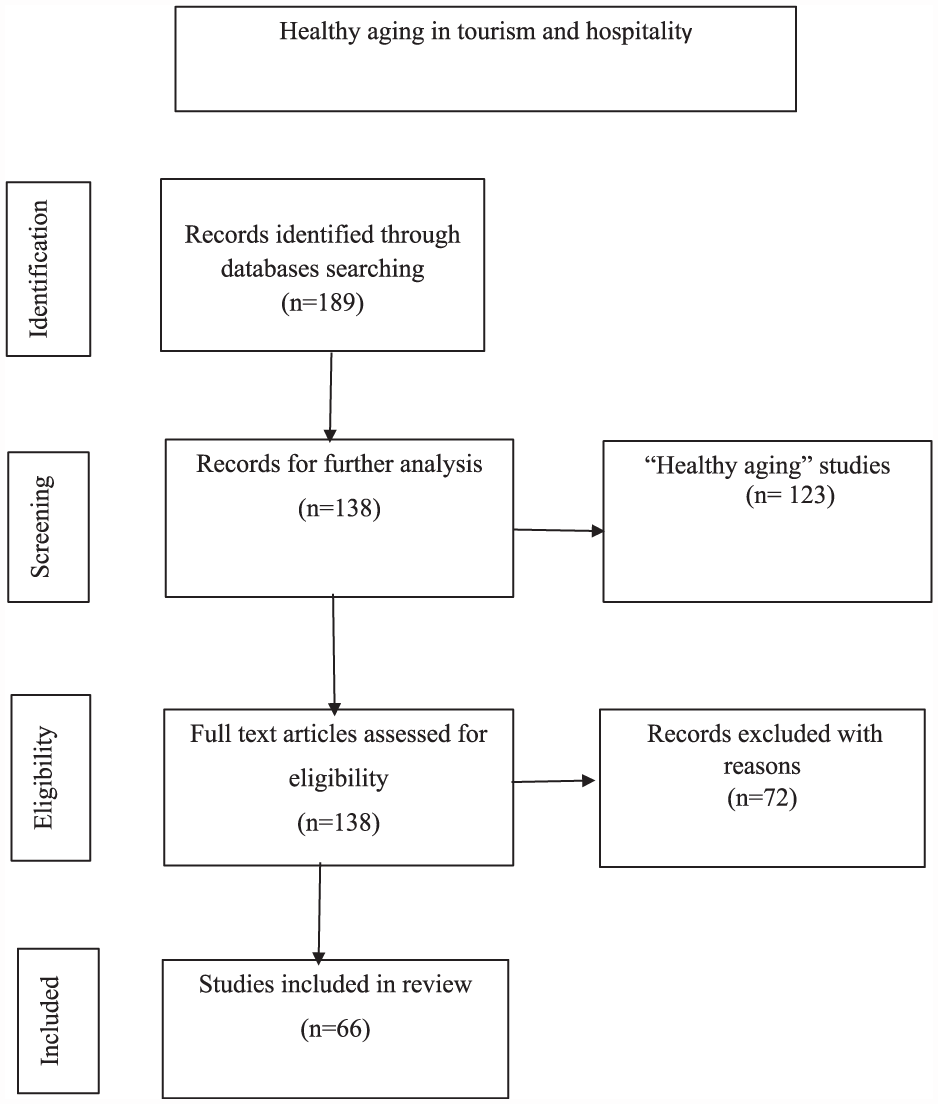
The PRISMA flow diagram.
This chapter consists of two main sections. The first section provides a descriptive study of 66 studies on healthy aging. The content of the research questions was then examined.
Descriptive Analysis
Paper’s Year and Journal Background
Looking at the articles published in the area of healthy aging, one can see that before 2002 there were no studies on this topic (Table 1). Therefore, the research is still in its early stages. A notable turning point in the field of studies on this topic is the year 2021, in which more research has been carried out on this topic. This suggests that while progress has been made, active aging research remains in a relatively early phase and requires further long-term studies. This study can be repeated over the next 10 years and provides a basis for further research.
An Overview of Publications on Healthy Aging in Tourism and Hospitality by Journal (n = 66).

The 66 selected articles were published across 31 different journals, and the distribution of articles in the top 16 journals is shown in Table 1. Most articles were published in Annals of Tourism Research (8 articles, 12.12%), World Leisure Journal (7 articles, 10.60%), and Tourism Management (6 articles, 9.09%). These journals are followed by Annals of Leisure Research, Current Issues in Tourism, Tourism Review, and the Journal of Sustainable Tourism, each of which published three articles (4.55%). Among them, Annals of Tourism Research, which significantly contributes to the field, is the leading journal in terms of article publications.
Paper’s Country Background
In total, 66 articles utilized samples drawn from 20 different nations. Of these, four were systematic literature reviews and five were conceptual studies, none of which involved empirical sampling. An analysis of the geographical distribution of samples reveals that the majority of studies were conducted in China (n = 14), followed by the United States (n = 9) and the United Kingdom (n = 5). Each of the following countries had three studies conducted: Australia, Canada, Denmark, Malaysia, Spain, and Taiwan (n = 3 each). Two studies employed samples from Belgium, while only one study was identified in each of the following countries: Estonia, France, Greece, Hungary, India, Iran, the Netherlands, New Zealand, Portugal, and South Korea. Figure 2 illustrates the distribution of studies that included samples from countries.

Paper’s country background.
Table 2, presents the objectives, theoretical framework, sample, year, and author information of 66 articles published between 2002 and 2025 on the topic of healthy aging.
An Overview of the Theory, Methods, Sample/Country, and Aims of Research on Healthy Aging in Tourism.

Content Analysis
Research Question (1) What Are the Main Theories in the Tourism Literature on Healthy Aging?
A significant proportion (22 = 33,33%) of studies on “healthy aging in tourism” did not use a theoretical framework. If we look at the distribution of articles by using the theory where the sample was collected, the using theory (35 = 53.03%), the conceptual or review studies (9 = 13.64%). What is noteworthy is that there is no similarity between theory-based studies. Two theoretical frameworks for healthy aging are emerging, which are located in the field of tourism.
The first is continuity theory, which is used in five studies (Hsu et al., 2007; Hung & Lu, 2016; Loroz, 2004; Nimrod, 2008; Xiang & Qiao, 2023). According to Atchley, people tend to retain the skills, habits, relationships and preferences that become part of their personality over time and are acquired in adulthood. “Continuity theory suggests that when middle-aged and older adults make adaptive decisions, they attempt to preserve and maintain existing internal and external structures; and they prefer to achieve this goal by using strategies that are tied to their previous experiences of themselves and their social world” (Atchley, 1989, p. 183). The internal constructs of identity include emotions, patience, experience, inclinations, choices, and abilities, whereas the external constructs (relationships) are associated with a person’s historical talents and achievements in various roles and activities.
The second is activity theory, which represents the theoretical framework used in four studies on healthy aging (D. X. F. Fan et al., 2025; H. Kim et al., 2015; D. Kim & Jang, 2019; Loroz, 2004). The paradigm assumes that high levels of life satisfaction in old age can be achieved through sustained activity in life, rather than disengaging from the social environment and isolating oneself. Quality of life and satisfaction depend on activities in daily life (Rose, 1964). Activity theory is a psychosocial framework of aging that aims to clarify individual and societal circumstances that promote optimal fulfillment and enjoyment as individuals cope with the various challenges of aging. This theory states that positive aging involves maintaining, to the greatest extent possible, the activities and attitudes typical of middle age (Havighurst, 1961). Older adults are more likely to age more effectively if they stay active. This includes maintaining social interactions (e.g., volunteering, joining social organizations or activities) and taking on productive roles in society. It has even been suggested that as people age, they reclaim roles that they previously lost (Teles & Ribeiro, 2019). Xiang and Qiao (2023) emphasized the importance of the positive energy aspect of continuum theory and the dynamic aspect of mind-body interaction. In their research based on activity theory, D. Kim and Jang (2019) found that older adults who view themselves as “young at heart” and those who view themselves as “old, gloomy/useless” are likely to have a more optimistic outlook on life and are more inclined to engage in activities such as going to a restaurant. According to activity theory, H. Kim et al. (2015) claimed that tourist experiences improve the overall quality of life and health of elderly individuals.
Research has identified several theories in addition to the commonly utilized ones. Chung et al. (2021) employ Baltes’ theory of selective optimization by trade-offs to demonstrate how individuals navigate challenges and progressively adapt to changing circumstances through SOC techniques during COVID-19. The leisure innovation theory posits that novel leisure activities for older adults can promote healthy aging (T. E. Li et al., 2024). In contrast, research grounded in ecological feminism (McAnirlin & Maddox, 2022) reveals paradoxical relationships between recreational pursuits, despite women experiencing empowerment through outdoor activities. These hypotheses are considered the most robust theoretical frameworks used in research on the healthy aging of older individuals in the context of tourism.
Research typically points to the benefits of aging in a healthy way. Numerous studies emphasize the reasons behind and obstacles to travel that older adults face (Balderas-Cejudo et al., 2022; Cheng et al., 2022; Gregory, 2023), as well as the effects of traveling with parents on productivity, intergenerational well-being, and the encouragement of active and positive aging (e.g., Gram et al., 2019). Though the literature on tourism has acknowledged the importance of healthy aging, only about half of the thirty papers (30 articles) included in the systematic literature review addressed tourism and healthy aging in older persons without providing a theoretical framework. It is thought that doing theoretically based research on this topic is crucial.
The primary theories identified in the reviewed studies are the Continuity Theory and the Activity Theory. It is not necessary to prefer one theory over the other; rather, their complementary aspects should be utilized. Continuity Theory emphasizes the importance of individuals’ past experiences, habits, values, and social roles. In contrast, Activity Theory posits that maintaining active and productive engagement contributes significantly to healthy aging. As Glass (2003) also noted, incorporating psychosocial and subjective criteria in defining healthy aging can lead to a broader and more inclusive understanding of the concept. Since the experience of aging varies according to individual and cultural differences, it is not feasible to establish a single, universal model of successful aging. Instead, it has been suggested that psychosocial aging theories should be employed (Deneau et al., 2022). These theories have been found to be used in various contexts within the reviewed studies, and their effectiveness has been demonstrated. For instance, the Selection, Optimization, and Compensation Theory (Y. Chen et al., 2025; Chung et al., 2021) and the Socio-Emotional Selectivity Theory (SST; Kang et al., 2023; Moal-Ulvoas, 2017) are among the theoretical frameworks applied.
Research Question (2) What Are the Methodological Attributes of Research on Healthy Aging in Tourism Literature?
The methodological information of the articles is shown in Figure 3. A total of 66 studies on healthy aging published in the tourism literature had a qualitative proportion of approximately 47% (31). It almost corresponds to the number of qualitative studies (25) that are quantitative in nature. A mixed technique combining quantitative and qualitative methods was used in only one study. There were four systematic literature reviews and five conceptual studies. In this study, most of the articles selected for systematic review have an empirical focus. The analysis focused on articles about older tourists who are active, healthy and have positive experiences with aging.
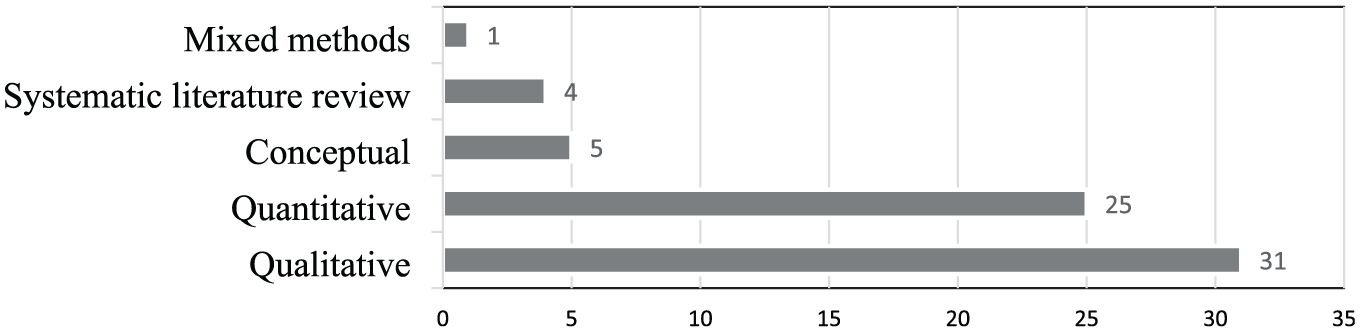
Methods used in the articles (n = 66).
Research Question (3) What Do We Know About Healthy Aging From the Existing Empirical Research on the Tourism Industry?
The connection between tourism and healthy aging is highlighted in the 66 publications examined. There is a lack of important research that clearly sets out the complex relationship between tourism and healthy aging, with the exception of the study by Fisher et al. (2002), which examined the social and environmental factors that promote or hinder physical activity among older adults.
Based on the above discussions, it is evident that a wide range of factors influence healthy aging among older adults. In the majority of the reviewed articles, it was noted that prior literature was adopted without being grounded in a theoretical framework. There appears to be a lack of an integrative framework that incorporates diverse perspectives to better understand the role of tourism in promoting healthy aging and to encourage greater participation of older adults in tourism experiences. Therefore, in order to highlight the impact of tourism on healthy aging, this study proposes an integrated model in which the influential factors are categorized collectively. Figure 4 shows a model that illustrates the conceptual connection between tourism and healthy aging. The factors proposed to be included in this model have been identified from the reviewed studies.

Model of healthy aging in tourism.
The characteristics of senior tourists have been incorporated into the framework as a fundamental factor. In the reviewed studies, it has been demonstrated that not only the attributes that position older adults as a niche market in tourism (such as greater leisure time and relatively stable socio-economic conditions) but also their constraints on participation (such as health limitations, physical and cognitive impairments) play a significant role (Diekmann et al., 2020; Emerson et al., 2022). Therefore, it is recommended that these characteristics be taken into account within the proposed model.
Senior tourists have also been included as a key component in the model due to the potential impact of tourism on achieving healthy aging and facilitating active aging, as opposed to passive aging. The potential benefits that older adults may derive from participation in tourism are outlined at the final stage of the model, based on the findings of the reviewed studies. These benefits include opportunities for social interaction, maintenance of an active lifestyle, enhanced quality of life, escape from daily routines, promotion of productivity, a sense of freedom, positive perceptions of psychological health, and improvements across multiple dimensions of wellbeing (namely physiological, psychological, social, and spiritual; Moal-Ulvoas, 2017). Additional factors such as overcoming loneliness (Morgan et al., 2015), escaping traditional gender roles, and achieving greater life satisfaction are also included as potential outcomes in the model.
In the tourism literature, research on healthy aging often emphasizes the significant influence of gender differences on the well-being of older people. Women working in tourism may face numerous challenges in adapting to the physical changes associated with aging. Gregory (2023) pointed out that the lack of comfortable, safe and designated changing rooms for women is a gender barrier that hinders participation in sports such as scuba diving. The fact that adults turn to individual activities for reasons such as shame about the changes in their older bodies is a factor that determines their preference for activities.
Den Hoed (2020) has shown in his research that it is beneficial for the active mobility of older adults to stay close to home. As far as the mobility of older people is concerned, tourist activities take place close to home and are adapted to the spatial and temporal conditions of their surroundings (Den Hoed, 2020). The main reason for this is the deterioration of physical characteristics. P. Zhou et al. (2023) report that the park and its components pose a risk to some user groups. The success of healthy aging in older people depends on the provision of components such as transportation, accessible infrastructure, social support and sufficient funding, health and minimal physical limitations (W. C. Wang, 2022).
In their leisure time, people seek satisfaction by participating in various tourist activities, which include both sporting and culinary experiences (Kozak, 2023). Women aged 60 to 64 are more inclined to attend cooking classes and maintain their enthusiasm under different conditions, which is due to their generation’s emphasis on proper nutrition and physical activity (Balderas-Cejudo et al., 2022). Midlife for older adult women brings with it more responsibilities, including managing health issues, “empty nest” syndrome and dealing with menopausal symptoms (Smith, 2018). Engagement in tourism activities, especially in Eastern societies, reinforces women’s social and personal identity while providing an escape from family obligations, daily routines and gender constraints (Nikjoo et al., 2022). Chronic health problems have been identified as the main barrier preventing older travelers from taking longer trips (Huang & Tsai, 2003; Musa & Sim, 2010).
Another factor that affects healthy aging in tourism is the level of activity, whether active or passive. Deneau et al. (2022) discovered that active older male participants characterized successful aging as “avoiding illness and disability,” emphasizing the need to maintain functional independence. Active individuals typically sought consistent engagement through organized exercise and sports, whereas inactive participants were satisfied with a broader range of leisure activities, including tasks of daily living. Active older people have higher levels of life satisfaction and better post-exercise experiences, indicating more positive emotions and a better perception of “Aging Well.” Research shows that older adults who engage in regular physical activity have better health and are significantly less susceptible to age-related deterioration in their ability to perform daily tasks than their inactive counterparts (Harahousou et al., 2003).
Research Question (4) What is the Future of Research Around Healthy Aging in Tourism?
This study attempts to propose a framework for healthy aging in tourism based on a literature review. This study has identified several key shortcomings in the study of healthy aging in tourism literature. There is no consensus on the primary theoretical framework for the study of healthy aging in tourism. The systematic literature review revealed several areas for further exploration in future research.
The first study on healthy aging in the context of tourism was conducted in 2002, and 2021 marks the turning point in this research. It is widely believed that the COVID-19 pandemic has successfully motivated scientists to rethink and study the problems of adults over the age of 60. Travel is often seen as psychological rehabilitation for this population group, as it provides the opportunity to socialize and meet new people. The impact of tourism on the wellbeing of this population is undeniable, particularly in alleviating loneliness, grief and increased health problems. Another important factor is that all of these payments are more economical. The tourism sector, an important service industry where guest satisfaction is paramount, has a responsibility to enable older people to age healthily. However, research on healthy aging among tourists is still in its infancy. Many areas of research are still unexplored. Additional research is recommended. As the world’s population ages, further research is essential to understand the importance of tourism in helping older people maintain optimal health.
Discussion and Future Research Directions
Numerous academic disciplines are involved in healthy aging. Travel diaries are fast becoming the center of research on healthy aging. As people age, they face social, emotional, and physical challenges everywhere in the globe. Research focusing on this age group has expressed a variety of opinions, particularly during the COVID-19 pandemic (Chung et al., 2021; Humberstone, 2022). Research has also indicated that travel benefits the elderly. The literature on healthy aging and the tourist sector is thoroughly reviewed in this study. Relevant publications in the topic of tourism studies have been synthesized through comparison and contrast based on conceptual and methodological approaches, research techniques, and theoretical frameworks. Only journals published with an explicit focus on older adults in the areas of tourism/service, lodging, recreation, and leisure will be taken into consideration for this study. The databases Science Direct (Elsevier), Emerald, Scopus, Taylor & Francis, Web of Science, and Sage contain these journals. Notwithstanding its shortcomings, this study establishes the foundation for future investigations that will emphasize the ways in which travel promotes good aging by benefiting senior citizens on a social, psychological, and physical level. The following bullet points outline the gaps in the existing body of knowledge regarding the healthy aging model within the tourism sector and suggest directions for further research:
This study draws attention to the existing conceptual and empirical gaps in the healthy aging literature within the context of tourism. It offers suggestions to address these gaps and outlines potential directions for future research as follows:
The study reveals that, among theories of aging used to examine healthy aging in tourism, the continuity theory and activity theory are the most commonly applied. However, it is not feasible to reduce the aging experience to a single theoretical model, as aging is a life stage inherently shaped by individual and cultural differences. The findings indicate that there are opportunities to explore aging through theoretical frameworks that conceptualize it as a holistic process affecting individuals’ mental, emotional, and social dimensions.
In particular, it is important to consider the diversity of aging experiences among older adults with varying physical, cultural, and social characteristics. This conclusion aligns with Zhao et al. (2025), who emphasized the need to include socio-cultural and socio-environmental variables when predicting successful aging among individuals with spinal cord injuries. Therefore, rather than relying solely on one-dimensional theories of aging, future research should be guided by psychosocial models that can more comprehensively capture the dynamics of healthy aging in the tourism context.
Secondly, the review of the current literature reveals that qualitative research methods are predominantly used. This finding aligns with the notion that qualitative approaches are favored due to their ability to capture the subjective aspects of aging, especially within the context of service industries (Rahman et al., 2024). Nonetheless, the literature also indicates a considerable number of studies employing quantitative methods. However, a noticeable gap exists in the application of mixed methods approaches. This observation is consistent with the argument by Goh et al. (2025), who suggest that netnographic insights can be combined with interviews or mixed methods to better capture the broader spectrum of elderly travel experiences. The limited number of mixed-method studies highlights a significant research gap in the field.
Third, it has been identified that there is a limited number of studies explicitly demonstrating the strong connection between tourism and healthy aging in the current literature. While general topics such as motivations for travel participation in later life are addressed, there is a scarcity of research focusing specifically on the healthy aging process of older adults with physical limitations. As noted by Goh et al. (2025), existing studies fall short of offering a comprehensive explanation of how travel constraints affect the active aging of elderly solo travelers in the context of different destinations and motivations. Therefore, further research is needed to examine how travel and tourism experiences influence the healthy aging process of older tourists.
Fourth, it is evident that studies on the relationship between healthy aging and tourism present significant opportunities for investigation across different countries. According to the current literature, countries such as China, the USA, and the UK are most commonly represented in research. China’s status as one of the fastest-aging countries aligns with this finding (Rudnicka et al., 2020). Conducting studies in developing countries is expected to provide valuable insights. As emphasized by Higo and Khan (2015), population aging poses substantial challenges, particularly for developing countries. These nations are only recently encountering the challenges of aging, yet they are experiencing this demographic shift at a much faster pace than developed countries. Conducting comparative analyses between developed and developing countries is essential for gaining a deeper understanding of the differences and similarities. Therefore, studies examining the similarities and differences in healthy aging practices across different national contexts should be encouraged.
Previous studies have examined how tourism influences older adults’ ability to age healthily, as well as the underlying reasons and limitations associated with travel. These studies have considered a range of demographic factors, including age groups (e.g., Emerson et al., 2022; Hsu et al., 2007) and various cultural and ethnic contexts (Nikjoo et al., 2022). It has been noted that age differences do not significantly impact travel preferences, behaviors, or the realization of anticipated benefits from travel. The study argue that age differences have minimal impact on healthy aging (e.g., Kang et al., 2023). Instead, it asserts that researchers would find greater value and utility in classifying older individuals based on unique characteristics rather than solely on age, while also considering their health conditions. Seniors with celiac disease face different travel restrictions and motivations compared to those with cognitive disorders such as dementia and Alzheimer’s disease. M. J. Kim et al. (2013) highlighted the importance of promoting environmentally friendly eating habits among seniors, noting that this demographic values different attributes. Anticipated health issues must be clearly defined and approached from an interdisciplinary perspective, particularly within the context of tourism.
Considering the significance of travel and its connection to healthy aging, adopting travel as a lifestyle choice and engaging in leisure activities—even passive ones—in any environment can enhance the mental and psychological well-being of senior citizens. Cheng et al. (2022) discovered that, contrary to popular belief, urban seniors residing in rural areas favored innovation and an active lifestyle during their post-retirement years over a passive approach to aging. Another study indicated that older adults who maintain positive views about their physical and mental health actively seek a wider variety of dining options, which correlates with the frequency of their purchases. Morgan et al. (2015) demonstrated that vacations for older adults, particularly those taken after a loss, assist them in navigating their new identities in social contexts and addressing the pervasive loneliness they often experience during the grieving process. Leisure was identified as a protective factor helping older adults with chronic conditions cope with loneliness, social isolation, and boredom (An et al., 2023). Tourism and leisure activities should be supported as protective factors in later life. Therefore:
Furthermore, the pandemic has exacerbated the social exclusion of older adults, transforming it into a global issue that must be acknowledged alongside the age-related decline in physical strength. According to P. Zhou et al. (2023), it is crucial to consider the potential conflicts that may arise from differing objectives in the use of public recreational spaces, particularly among groups such as senior citizens and professional athletes. Factors such as reduced retirement income, age-related physical deterioration, bereavement, and the necessity for family members or children to provide care highlight the need for policies that support this demographic. Consequently, travel can significantly enhance the physical, mental, social, and spiritual well-being of older adults. Participation in educational excursions offers seniors the opportunity for personal growth and the acquisition of new knowledge regarding life experiences. These excursions serve as a temporary respite from daily routines and provide a conducive environment for reflection (Smith, 2018).
Policies and procedures tailored to the unique needs of the senior adult population must be implemented promptly. The establishment of policies that facilitate strategic initiatives aimed at creating “age-friendly cities,”“age-friendly tourism enterprises,”“age-friendly therapeutic public spaces,” and “age-friendly social policies” targeted at the senior demographic will be essential in the near future.
Furthermore, additional research is required to evaluate public initiatives designed to support the healthy aging of older adults within the framework of preventative healthcare. Current research is deemed inadequate to inform the development of industry practices effectively.
The motivations for travel among elderly individuals are influenced by various factors, including their emotional state (Jang & Wu, 2006), levels of stress and loneliness experienced at home (Morgan et al., 2015), and their overall health, which affects their capacity to engage in proactive decision-making (D. Kim & Jang, 2019). To effectively cater to senior citizens, innovative concepts such as “therapeutic landscapes and” dark sky dreams can be developed. Furthermore, travel, leisure, and tourism offerings can be tailored to meet the needs of disadvantaged individuals who are grappling with mental and physical health challenges, such as dementia and Alzheimer’s disease. It is feasible to design spa and wellness tourism itineraries specifically aimed at these populations. Koskinen (2019) asserts that spa trips can enhance seniors’ perceptions of their health. In this context, both self-agency- the capacity to make informed decisions regarding one’s health and social support, particularly in the form of travel companions, are crucial for fostering a positive and health-promoting experience.
Based on the findings of this review, key future research directions are summarized in Table 3.
Future Research Directions in Healthy Aging and Tourism.

Source. Designed by the authors.
It would be advantageous to advocate for the design of travel products that specifically cater to the needs of women and the middle-aged demographic, even if these products are not explicitly aimed at the elderly population. By seeking opportunities for social engagement with their peers, individuals within these age groups may experience enhanced independence and self-confidence, thereby enabling them to prioritize self-care and address the needs of their aging bodies. Furthermore, educational programs that incorporate both theoretical and practical components can be developed for children and adolescents, with the objective of promoting awareness and lifestyle modifications conducive to healthy aging. Additionally, given the scarcity of research encompassing diverse cultural perspectives, further studies in this area are warranted.
Conclusion
The increasing prevalence of an aging global population and its associated implications render tourism an increasingly vital avenue for addressing societal challenges. This comprehensive review of the existing literature establishes a foundation for understanding the current state of knowledge regarding healthy aging within empirical research related to the tourism industry. It also examines the methodological approaches employed in these studies and outlines potential future research directions. Furthermore, this paper identifies the limitations of theoretical frameworks utilized in this field, despite its inherently multidisciplinary nature, and offers recommendations by elucidating the core concepts prevalent in research on healthy aging in the context of tourism. The findings of this study underscore the positive effects of travel on individuals’ subjective, psychological, and social well-being. Additionally, it provides a basis for future inquiries into the factors that sustain this beneficial impact.
Limitations
The objective of this research is to analyze peer-reviewed journal articles pertaining to healthy aging within the tourism industry, specifically those published in journals focused on travel and hospitality. The scope of this study is not limited to journal articles; it may also encompass books, book chapters, conference papers, and doctoral dissertations relevant to the topic. This approach allows for a broader perspective on the impact of healthy aging on the tourism sector. The review is currently restricted to literature published in English, excluding works written in other languages. However, incorporating research published in various languages could facilitate a more comprehensive evaluation of the subject through the inclusion of linguistic diversity.
One notable limitation of the PRISMA protocol’s identification phase is its tendency to restrict discussions of healthy aging in the context of tourism to senior citizens. Consequently, studies that included participants beyond the older demographic were excluded from consideration, despite the researchers’ comprehensive review of their findings. The study’s predominant focus on the tourism sector has hindered the precise formulation of actionable objectives at the corporate level. While the intention is to highlight the positive effects of tourism on healthy aging, a more nuanced understanding of the commercial obligations and responsibilities of the tourism industry can be achieved by adopting a business-oriented perspective that encompasses various sectors, including accommodation, food and beverage, leisure, and airlines. Furthermore, this approach may prove more effective in generating tangible application outcomes and management benefits for businesses.
Current research exhibits similar characteristics in terms of data and methodology. The majority of the publications in this study employ standard social scientific methods, including surveys and interviews. To elucidate the impact of tourism on healthy aging, it is essential to obtain more robust evidence. It is recommended that more rigorous medical procedures, such as experimental and case-control studies, be conducted in collaboration with interdisciplinary scientists to address this requirement. Additionally, it is crucial to ascertain whether the benefits of travel for healthy aging are transient or enduring, as well as to understand the mechanisms through which this effect evolves.
Footnotes
Acknowledgements
This proposal is an original work that has not been submitted to nor published anywhere else. All authors have read and approved the proposal and have met the criteria for authorship.

Author Contributions
Literature investigation, data collection and analysis were performed by Hatice Güçlü Nergiz & Fidel Toker. The first draft of the manuscript was written by all authors commented on previous versions of the manuscript.
Funding
The authors received no financial support for the research, authorship, and/or publication of this article.
Declaration of Conflicting Interests
The authors declared no potential conflicts of interest with respect to the research, authorship, and/or publication of this article.
Data Availability Statement
Data sharing not applicaple to this article as no datasets were generated or analyzed during the current study.