




Abstract
Housing adaptation is recognized as a rehabilitation intervention that makes modifications to the physical environment for older people active aging at home. However, the current delivery of adaptation is centered on a reactive approach that modifies the home when an individual get to crisis. This study aimed to assess the contribution of housing adaptation research outputs across the world and disclose housing adaptation as a public issue not just a private trouble. A comparative bibliometric approach was adopted. All available publications on housing adaptation for healthy aging between 2006 and 2022 in the Web of Science Core Database was retrieved and reviewed systematically. CiteSpace software was first performed to generate a knowledge network, this was followed by HistCite analysis to gain chronological historiographs. There has been a gradual increase of housing adaptation research papers since 2006, with a total of 406 published by 116 journals in 2022. 1,152 authors from 672 institutions in 42 countries have been involved. Housing adaptation has been given research priority in some countries like the US, the UK and Sweden. However, cooperation between researchers is subject to the regional level. Researchers from different countries and institutions came into this scientific field, the dynamic research process can be divided into three stages. Housing adaptation is a public issue in need of expanded interdisciplinary research worldwide. International collaboration will help developing countries to tackle the challenges in the provision of housing adaptation. A gradual shift from reactive towards proactive will encourage an earlier adaptation intervention to maximize inclusive living.
Plain language summary
Purpose: This study aimed to assess the contribution of housing adaptation research outputs across the world and disclose housing adaptation as a public issue not just a private trouble. Methods: A comparative bibliometric approach was adopted. All available publications on housing adaptation for healthy aging between 2006 and 2022 in the Web of Science Core Database was retrieved and reviewed systematically. CiteSpace software was first performed to generate a knowledge network, this was followed by HistCite analysis to gain chronological historiographs. Results: There has been a gradual increase of housing adaptation research papers since 2006, with a total of 406 published by 116 journals in 2022. 1,152 authors from 672 institutions in 42 countries have been involved. Housing adaptation has been given research priority in some countries like the US, the UK and Sweden. However, cooperation between researchers is subject to the regional level. Researchers from different countries and institutions came into this scientific field, the dynamic research process can be divided into three stages. Conclusion: Housing adaptation is a public issue in need of expanded interdisciplinary research worldwide. International collaboration will help developing countries to tackle the challenges in the provision of housing adaptation. A gradual shift from reactive towards proactive will encourage an earlier adaptation intervention to maximize inclusive living. Implications and limitations: This study visualized the landscape and evolution of housing adaptation research from different perspectives. There might be some samples and points outside the WoSCC were missing.
Background
The population is aging at a rapid rate that shaping the world profoundly (Yang et al., 2021). In 1960, there were 4.97% of the world’s population aged 65 and over, this number increased to 9.1% in 2019 (United Nations, 2020) and is projected to reach 16% in 2050. Meanwhile, the 80-and-older group is expected to have a sharp rise from 143 million in 2019 to 426 million in 2050 (United Nations, 2019). Aging is partly a consequence of substantial progress in improving health and reducing mortality, meaning that people are living longer and more actively than before (United Nations, 2015). However, from the perspective of biology, the aging progress is characterized as an accumulation of damages to cells and tissues, leading to declining capacity and enhanced vulnerability to chronic illness (Jin, 2010). This inevitably results in an expanding demand for healthcare and public services (Lloyd-Sherlock, 2000). To address these challenges and promote healthy aging, a range of strategic initiatives have been set up by such organizations as the United Nations (e.g., the UN Decade of Healthy Aging), the WHO (e.g., Global Strategy and Action Plan on Aging and Health), and the European Union (e.g., European Innovation Partnership on Active and Healthy Aging). All these strategies highlighted the importance of coordinating initiatives in different aspects including physical environments, personal activities and social services to improve health and well-being in later life (Agu, 2013; World Health Organization, 2015). In this regard, the living environment is a major contributor to active aging in place.
Recognition of the role the physical environment played has opened up more investigation of interrelationships between housing and healthy aging (e.g., Gitlin, 2003; Rubinstein & de Medeiros, 2015). Evidence has shown that life limiting illnesses created environmental barriers for older people to live independently, such as stopping them to reach the toilet (Haywood et al., 2001) and causing fall-related injuries (Mitchell-Fearon et al., 2014; Yu Mei & El Fakiri, 2015). According to the WHO global report (World Health Organization, 2007), approximately 28% to 35% of people aged 65 or over fall every year compared with 32% to 42% for those over 70, and most of these falls occurred in their house and by indoor hazards such as slippery floors and poor lighting (Stevens et al., 2001). However, when people are getting older, they spend a large proportion of their time (around 80% in very old age) at home (Baltes et al., 1999; de Jonge et al., 2011). If the home environment is inappropriate for older people to perform daily activities, they often have to move to residential settings or even institutional care (Iecovich, 2014; Iwarsson et al., 2004). This is apparently much more expensive and contrary to general expectancy. Croucher’s study found that over 85% of older people have a strong desire to remain in their own homes and communities for as long as possible (Croucher, 2008). To achieve this goal, adaptation to make the rooms and facilities accessibility and suitability is of the essence (Cunningham & Michael, 2004; Milligan, 2016). As pointed out by Hwang et al. (2011), “home modifications play an important role in facilitating aging-in-place, with clear implications for health and social policy for older people.”
Housing adaptation or home modification has been used interchangeably, with different definitions across the world. Pynoos et al. (2003) and Sanford (2012) used housing adaptation to describe an installation of devices like the shower chair or a temporary rearrangement of furniture like the bookcase, while Chiatti and Iwarsson (2014) and Hwang et al. (2011) defined it as a permanent alternation to the home environment to support older people’s daily activities. In this study, housing adaptation refers to modifications of indoor and immediate outdoor features, including changes to the layout or the installation of fixtures, in order to remove environmental barriers and to restore independent living.
Given its significant contribution to remain independence, housing adaptation has received particular attention in national housing strategies and actions around the world. For example, in 2008 the UK government launched its first housing strategy, Lifetime Homes Lifetime Neighborhoods (Department for Communities and Local Government, 2008), to provide housing related services like adaptations in meeting the needs and expectations of older adults. In the United States, the Section 202 Supportive Housing for the Elderly program have offered assistance and supportive services since 1990 to make lower-income elderly residents’ homes more accessible and more habitable for aging in place (Versey et al., 2019). In Canada, the Federal Residential Rehabilitation Assistance Program, which was developed in 1973 provides grants and loans for modifications to older people’s houses. Policy responses to create the barrier-free housing have ignited a heated research and debate about housing adaptation for healthy aging in different countries.
In spite of this, very few of studies have focused on a broad overview of all possible effects of housing adaptation for healthy aging in place and an inclusive approach to make home environment accessible at the earlier stage. There is an urgent need to review research on adaptation practices across different countries and reframe it as a central mechanism within the policy context to ensure proactive instead of reactive approaches. This study is aimed at filling this gap by conducting a comprehensive review of the existing evidence in CiteSpace and HistCite. It addresses the following questions: (i) what is the current status of housing adaptation related research, covering publications, countries/regions, institutions, journals and authors, (ii) which classifications and themes of housing adaptation knowledge have been performed, (iii) what are the emerging hotspots and research frontiers as well as the potential future research on housing adaptation for aging in place.
Literature Review
From the theoretical perspective, Lewin introduced ecological equation B = f (P, E) to explain that behavior (B) is a function of the person (P) and the environment (E) (Lewin, 1951). It highlights the dynamic interaction between the aging person and the physical-social environment. Lawton and Nahemow (1973) proposed ecological theory of aging, which presented two valuable concepts of personal competence and environmental press. The competence-press model described an optimal person-environment fit when personal competence is compatible with the environmental demand as well as a misfit when the environmental press exceeds individual ability. This model was subsequently elaborated, leading to various theoretical frameworks. Rowles (1978) developed the concept of “physical insideness” to account for the cognitive connection between the person and their place, while Kahana (1982) put forward the person-environment congruence model to advocate the contribution of the environmental conditions to desired behaviors and psychological well-being. Further, Carp and Carp (1984) introduced the complementary/congruence model that linked personal outcomes with environmental features, and Cutchin (1999) proposed the concept of place integration to capture the dynamic process of the person environment interaction. These different theoretical models disclosed physical, social and psychological aspects of person-environment fit, which support older people to carry out adaptations for aging at home. This is also underpinned by two key factors of physical necessity and spatial restriction. Physical necessity suggests that after years of living in a dwelling older adults have been familiar with their own environments and so been in a position to maximize their physical function in the face of health deteriorated. Spatial restriction recognizes that older adults are more likely to minimize environmental barriers accompanied by their declining health.
From the experimental perspective, housing adaptations have been recognized as an effective intervention to improve home accessibility and suitability (Pettersson et al., 2018), which can be beneficial to individuals, families and governments. For individuals, Watson and Crowther (2005) demonstrated that major adaptations contributed to an increase in older people’s independence, while Thordardottir et al. (2016) and Stark (2003) found the potential of housing adaptation to improve older adults’ participation in community activities. Pettersson et al. (2012) confirmed that adaptation interventions prevented fall accidence and ensured safe at home. Stark et al. (2017) reported that well-designed modifications enabled older people to improve not only their physical fitness but also mental health. Meanwhile, other research, such as Whitehead et al. (2016) and Boström et al. (2018), identified that quality of life has seen to be better by the provision of adaptation services. For families, Gitlin et al. (2001) found environmental interventions helped caregivers to decrease upset and boost self-efficacy, and Reschovsky and Newman (1990) demonstrated that housing adaptations saved both time and money for family carers. Heywood (2005) further reported that home modification improved the relationship between disabled people and their families as well as provided them with a safe place to establish a family identity. As proved by Brewis (1997), burden on older caregivers increased with their declining health, resulting in a breakdown in relationships. For government, a range of studies have revealed that adaptation services have led to an accumulation of savings across National Health Service (NHS) spending, home care costs and social service budgets (Heywood & Turner, 2007; Plautz et al., 1996; Rogers & Islam, 2004). Specifically, home adaptations played a key role in preventing fall accidents among older people that were estimated to cost £579 million for the NHS in the United Kingdom (UK); (Scuffham et al., 2003). Likewise, adaptation program have achieved savings by promoting older people’s wellbeing and reducing their need for their domiciliary care (e.g., Adams, 2016; Care and Repair Cymru, 2011; Unwin et al., 2009). In short, housing adaptations serves as important vehicles for moving towards broader independent living options (Fänge & Iwarsson, 2003; Renaut et al, 2015), as well as sophisticated machines that guarantee the effective usage of public resources (Heywood & Turner, 2007; Howard-Wilsher et al., 2016).
Methods
Literature Searching
This study adopted a bibliometric analysis to systematically review the retrieved publications related to housing adaptations for healthy aging. Compared with traditional review, systematic review follows a scientific and transparent process to collect existing evidence comprehensively and to avoid an arbitrary selection because of author’s bias. It has been applied widely by using mathematical and statistical methods to measure quantification and information of extant literature, including authors, journals, institutions and citations in a given field (Moher et al., 2009). The Web of Science Core Collection (WoSCC) was selected, since it is the world-leading and authoritative platform indexing a multidisciplinary set of academic journals. Its core databases of Science Citation Index Expanded (SCI-EXPANDED), Social Sciences Citation Index (SSCI), Arts & Humanities Citation Index (A&HCI), and the Emerging Sources Citation Index (ESCI) were searched to identify and collect the relevant studies within a time span of January 1, 2006 to December 31, 2022. The year of 2006 was chosen as it was the initial year when the earliest literature relevant to housing adaptation was found, and a period of 17 years was considered to be a research cycle.
Data Extraction
Research studies were derived from WoSCC on December 2022, and advanced retrieval was applied to identify all possible resources and remove duplicates. The data cleaning strategy was formulated as follows (Figure 1): (i) Terms = “housing adaptation” or “home modification” or “environmental gerontology” or “housing for older people” or “person-environment fit” or “home environmental intervention,” deriving from titles, abstracts and keywords of publications, (ii) the search timespan was set without any restriction, covering from the earliest year of 2006 to the end of 2022, (iii) publication type was subjected to “articles” or “reviews,” (iv) “public environmental occupational health” or “gerontology” or “geriatrics gerontology” were selected as research areas in accordance with the purpose of this study. The filter was developed on basis of the PRISMA checklist to evaluate publications and report results systematically. After applying the criteria, a total of 3,407 records were retrieved. During the retrieval of each set of keywords, papers that met the criteria were included in the tag list of Web of Science, and each selected paper was shown to have been listed in following searches. As a result, there were no duplicate papers in the screening process. Then the titles and abstracts of the 3,407 papers were initially screened to receive 790 papers. The text of each paper was assessed for its suitability by at least two authors, 384 irrelevant papers were excluded and finally 406 papers were included for eligibility in this review.

Flow chart of the study selection procedure.
Data Analysis
CiteSpace and HistCite software was employed to analyze the available evidence at two stages: the first is CiteSpace analysis to thematically code and categorize these samples, this was followed by HistCite analysis to gain chronological historiographs and citation frequencies of studies. The CiteSpace program, introduced by Chen (2004), was a Java-based software tool for producing literature network and burst detection (Chen, 2004; Chen et al., 2014). The version of CiteSpace 6.1.R6 was applied, with the set of analysis parameters as: (i) Time slicing is between 2006 and 2022, (ii) Node type = author, institution, country, and keyword, (iii) Links = strength: cosine, scope: within slices, (iv) Selection criteria = the top 50 most cited literature per slice, (v) Pruning = pathfinder and pruning the merged network. The size of the nodes shows statistical analysis of source countries, research institutions, authors and keywords of the collected literature, reflecting current research status of housing adaptation. The lines connecting difference nodes define relationships between cooperation or cocitation (Fei et al., 2021), their colors indicate the first year for building this cooperation or cocitation. Betweenness centrality is performed to identify the top influential nodes in a knowledge network, nodes with higher betweenness centrality tend to be key basic points with purple outer rings. Keyword clustering analysis are processed to group related keywords for understanding key nodes, close connections and structural features. Two metrics, Q (Modularity Q) and S (Mean Silhouette), are used to evaluate analysis effectiveness in accordance with network structure and clustering clarity. Normally, the cluster structure is significant when Q value is >0.3, while clustering is reasonable when S value >0.7 (Hu et al., 2022).
The HistCite program, created by Garfield et al. (2006), is a large-scale software tool for mapping direct citation linkages between central studies. It applied for a historiography analysis of bibliographic collections to present the network of the 50 most-cited papers on housing adaptations. Two statistical indicators of HistCite, the Total Global Citation Score (TGCS) and the Total Local Citation Score (TLCS) (Yu & Shi, 2015), were used to measure the significance of each paper in a scientific field. The TGCS calculates the total score of citation frequency to all the publications based on the WoSCC, while the TLCS measures the total citation number to a paper within the local collection of 406.
Results
Descriptive Analysis of Global Research
Figure 2 presents the annual amount of publications and citations on housing adaptation between 2006 and 2022. Overall, 406 articles have been published, with the TGCS of 8,279, There were 10 publications on housing adaptation at the beginning year of 2006. After dropping to the lowest of 3 in 2008, the number went up to 22 in 2011 and later experienced a gap fluctuation to stop at 11 in 2016. Since then, housing adaptation research attracted significant attention from scientists, its publications have trebled to 37 in 2017, and the upward trend remained to reach a peak of 52 in 2020. Although there was a slight fall of seven publications in 2021, it has been climbing steadily to 47 in 2022. In terms of TGCS, there were a total of 535 citations on housing adaptations in 2006, followed by a substantial increase of over 200 to 749 in 2007. After falling rapidly to less than 300 in 2008 and 2009, the number has been driven by a drastic rise to the largest of 1,138 in 2012. Then, there has been a steady decrease of all the citations. It seems to contrast with the trend observed for publications, the number of annual total citations has declined sharply from 712 in 2017 to 23 in 2022.

Annual records and citation score of housing adaptation publications between 2006 and 2022.
Journal and Country Statistics
In this study, the selected 406 papers on housing adaptation for aging were published by 116 journals. Table 1 lists the top 20 journals based on the records of relevant publications, TGCS, average global citation score (AGCS) and their ranks. The International Journal of Environmental Research and Public Health published the most articles of 56 in total, twice more than the number of 27 in the second journal of Gerontologist. The next four journals with over 10 records were Aging & Society (19), Journal of Aging and Environment (15), BMC Geriatrics (14) and Journal of the American Geriatrics Society (13). In the case of TGCS, Gerontologist received the most attention, with 1,645 references citing the papers in this journal throughout the WoSCC database. Next came to Journal of the American Geriatrics Society with 857 citations and Age and Aging with 629. However, as for AGCS, average citation per publication in Age and Aging ranked the first at 78.63, compared with the second of 65.92 in Journal of the American Geriatrics Society and the third of 60.93 in Gerontologist. Notably, although International Journal of Environmental Research and Public Health had the largest number of publications on housing adaptation, their TGCS was relatively low at 405, with only 7.23 of AGCS ranking 16.
Top 20 Journals Based on Records.

In the past 17 years (2006–2022), there were 42 countries involved in the publication of 406 articles on housing adaptation for aging across the world. Figure 3a–c shows the sum of records and citations throughout 20 key countries. Of these countries, 12 are from European, 4 from Asia, 2 North America and anther 2 from Oceania. The United States (US) contributed to the maximin records of 130 publications on housing adaptation, taking up around 32% of the total. Another two most productive countries, the UK and Sweden, have published 64 and 58 articles respectively. The following countries were Canada (37) and Australia (36). China, as a developing country, ranked 6 with a contribution of 34 publications. Based on the TLCS of 406, there were the largest number of 207 publications citing the 130 articles from the US, compared with 182 from Sweden and 163 from the UK. Significantly, in Germany and Latvia, although only 29 and five papers were published with the rank of 7 and 20, they have been referenced by 128 and 78 publications respectively to rank 4 and 5 inside the local collection. Likewise the US was the leading provider of high quality papers on with the highest TGCS of 2,880, over 1,000 more than the second-rank citations in the UK. In spite of 37 papers published in Canada, they have been cited by the third highest number of 1,685. Meanwhile, publications on housing adaptation in New Zealand and Latvia were relatively small but drew attentional priority with the TGCS of 958 and 470, while China and South Korea published more papers but received less citation scores of 297 and 128.
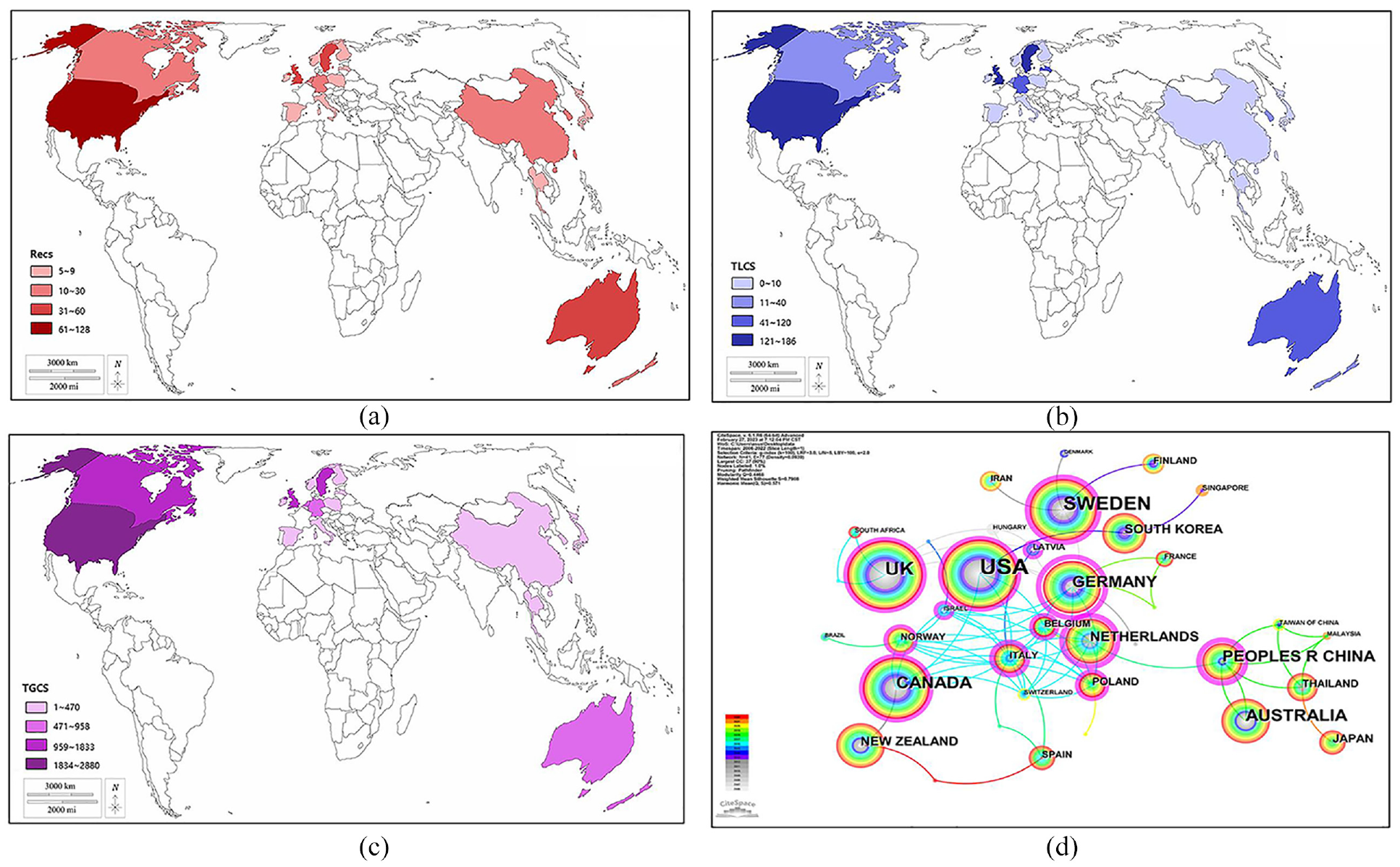
(a) Distribution of publications across 20 key countries, (b) distribution of total local citation score across 20 key countries, (c) distribution of total global citation score across 20 key countries, and (d) the map of collaboration between countries.
Figure 3d displays academic interaction between different countries and territories within the field of housing adaptation for aging. The size of nodes represents the counts that countries or regions occurred in articles retrieved. The thickness of the lines represents the co-occurred counts of the connected two countries. Time is reflected by different colors. The cooperation network consists of 41 nodes and 77 links, which indicates that 41 countries have by and large established 77 partnerships to facilitate broad researches on housing adaptation. The node size counts the quantity of relevant articles published in a country, while its color marks the year when the first publication being produced. As shown by the circular nodes in the map, the US, Sweden and England were the leading players of the housing adaptation topic, accounting for nearly half of the total publications, and they all have the first article published in 2006. The line between different countries reflects their cooperation relationships. Its thickness and color show the volume of documents published by authors together and the first year of the cooperation established between authors respectively. In other words, the thicker the lines were, the closer country connections were. Apparently, European countries such as Sweden, England and Germany have built the basis for long-term cooperation and joint development from very early. Meanwhile the US has collaborated with a range of countries including Australia, Canada and UK, but their cooperation was not constant and continuous. In addition, close cooperation between geographical neighbors was also found in Asian countries like China, Thailand and Malaysia at a relatively later stage. However, few partnerships can be seen between developed countries and developing countries, indicating that more collaboration and stronger links should be encouraged between these countries to address housing issues for aging in place worldwide.
Institution and Author Statistics
Figure 4a presents the collaboration network between research institutions. The size of nodes represents the counts that institutions occurred in articles retrieved. The thickness of the lines represents the co-occurred counts of the connected two institutions. Time is reflected by different colors. Overall, 672 institutions and 1,466 connection lines were identified, indicating that the topic of housing adaptation for aging is favorable for international cooperation. As the top-level research institution, Lund University has built the widespread and long-term partnerships with various organizations like Heidelberg University, Riga Stradins University and University of Liverpool. Another leading research organizations, Washington University and Karolinska Institute, appeared to develop collaborative working with a range of institutions. In addition, some strong links can be seen between geographically proximate institutions, such as Simon Fraser University, Oregon Health & Science University and Emory University, implying that multilateral cooperation should be reinforced to deepen the housing adaptation research.

(a) The map of the collaboration between institutions and (b) the map of the collaboration between authors.
Many organizations have played an active role in the housing adaptation research. Table 2 lists the top 20 institutions contributing most publications to the research body. Of the top 20 institutions 10 are from Europe, 7 from North America and 3 from Oceania. Lund University in Sweden was the most productive institution with 39 publications, over four times more than the second largest number of 9 at Simon Fraser University in Canada and Washington University in the US. This was followed by eight records at Karolinska Institute in Sweden, University of Florida in the US and University of Otago in New Zealand. In terms of TGCS, Lund University, Thomas Jefferson University and Heidelberg University are leading three institutions with prominent academic influence. Their publications have been cited by 953, 682 and 628 respectively. Significantly, although Lund University held the first position in publication quantity and their citations, the average citation times per publication were just 24.44 (rank 7), compared with 104.67 (rank 1) in Heidelberg University and 97.43 (rank 2) in Thomas Jefferson University. This suggests that the quality of publications in Lund University varied substantially.
Top 20 Institutions and Authors Based on Records.
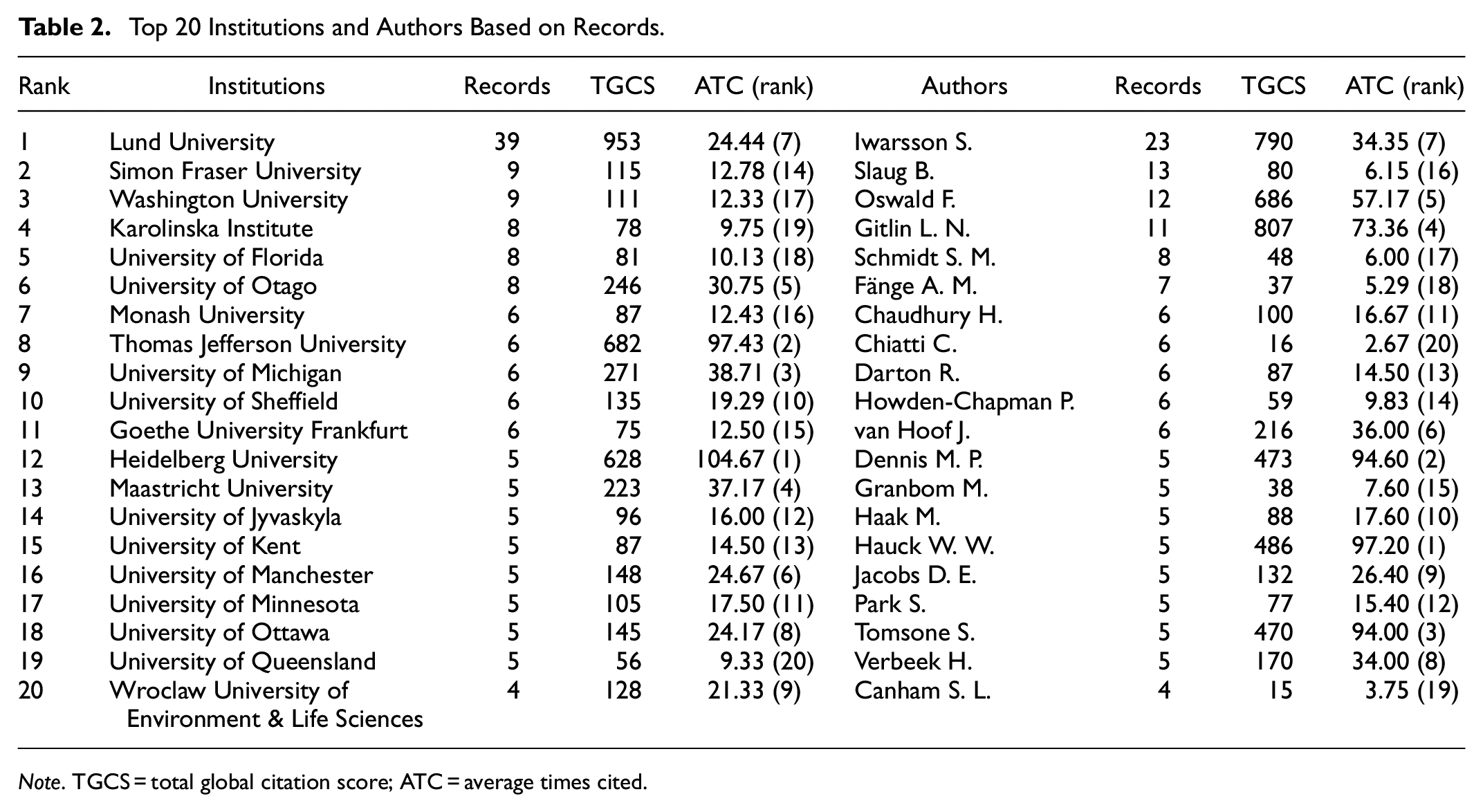
Note. TGCS = total global citation score; ATC = average times cited.
It is crucial to understand the existing collaborations in a given field for further improvement of research productivity. As shown in Figure 4b, the key authors have collaborated each other to form a network map. The most productive author, Susanne Iwarsson, has worked in collaboration with multiple influential authors, such as Frank Oswald, Hans-Werner Wahl and Judith Sixsmith from different institutions and countries. Their close partnership seems to have a positive effect on publishing productivity. Similarity, as leading researchers, Björn Slaug and Agneta Malmgren Fänge and Robin Darton have conducted many research activities and established the explicit co-authorship with other authors like Steven M Schmidt, Carlos Chiatti and Ann Netten.
Based on the WoSCC from 2006 to 2022, a total of 1,152 authors published 406 articles on housing adaptation research. Table 2 shows that the top 20 most active authors have published 148 articles with a total citation of 4,875, taking up 36% of all related publications and 59% of the TGCS. Of these authors, 7 are from Sweden, 6 from the US, 2 from Netherlands and 1 from Germany, Canada, England, New Zealand and Latvia. Apparently, the most productive author was Susanne Iwarsson from Sweden, who published 23 articles, around doubled the number of articles authored by Björn Slaug (13) from Sweden and Frank Oswald (12) from Germany and Laura N. Gitlin (11) from the US. However, given the TGCS, Laura N. Gitlin was the most influential author, as his 11 papers have been referenced by the largest number of 807 publications with the average citations per paper of 73.36 at the 4th rank. More remarkably, Walter W Hauck, Marie P Dennis and Signe Tomsone can be seen as the top-ranked authors. Their articles, despite 5 per person, have attracted great attentions and been cited by 486, 473 and 470 publications, with an average number of citations to each article ranking 1 to 3 at 97.20, 94.60 and 94.00 respectively.
Evolutionary Analysis of Research Topics
Citation Linkages and Research Hotspots
Citation analysis is crucial to identify the most valuable article within a certain knowledge domain, HistCite can help to visualize direct citation linkages and map the information flows. Figure 5 shows the citation network in the field of housing adaptation. The network contains the top 50 articles or nodes as the most referenced in the LCS and their reciprocal citations of 76 links from 2006 to 2022. The larger the node size, the more citations it received, and connecting lines indicate citation relationships. The research process can be divided into three stages, including 24 nodes in 2006 to 2011, 22 nodes in 2012 to 2016, and 4 nodes in 2017 to 2022.
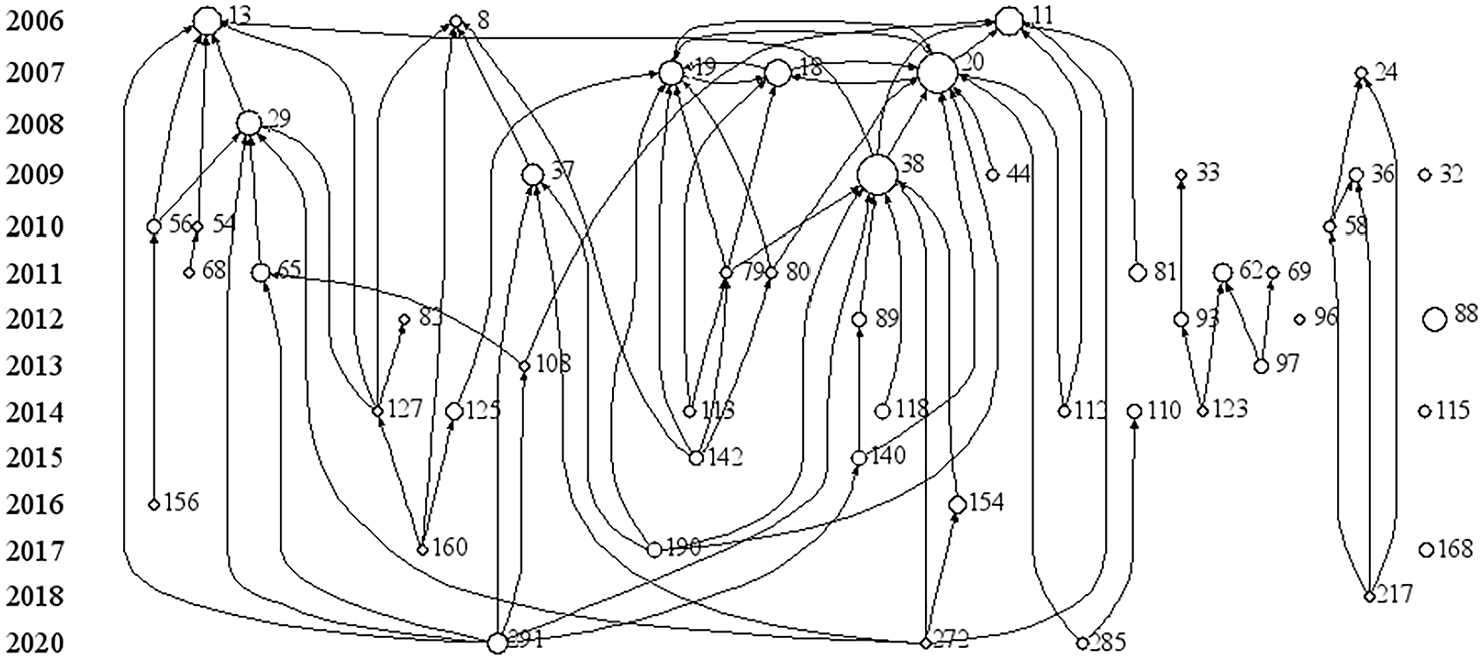
The citation network in the field of housing adaptation for older people.
The most influenced and valuable articles was the 20th of Relationships Between Housing and Healthy Aging in Very Old Age With 38 TLCS and 221 TGCS (Oswald et al., 2007). It was published by Oswald et al. in 2007 to examine the relationship between housing accessibility and healthy aging from the perspective of environmental gerontology. Next came to the 38th of The Home Environment and Disability-Related Outcomes in Aging Individuals: What Is the Empirical Evidence? with 38 TLCS and 180 TGCS (Wahl et al., 2009), while provided supportive evidence for a link between housing environment and functional ability by Wahl et al. in 2009. The 11th of A randomized trial of a multicomponent home intervention to reduce functional difficulties in older adults (Gitlin et al., 2006) and the 13th of Home environment risk factors for falls in older people and the efficacy of home modifications (Lord et al., 2006) were spotted at second with 19 TLCS and 250 TGCS and third with 19 TLCS and 170 TGCS. Both articles highlighted the importance of housing adaptations to reduce functional disabilities and accidental falls. The 88th article, The Meaning of “Aging in Place” to Older People (Wiles et al., 2012), received the most citations with 691 TGCS but less local attention with 14 TLCS.
Keywords are commonly search terms that represent the core component of an article (Su & Lee, 2010), their analysis can reveal current study hotspots and future research directions. Figure 6a shows the top 20 keywords related to housing adaptation research in terms of frequency and centrality. In the field of housing adaptation for aging, the most frequently used keyword is “older people” with 92, almost doubled the second most frequently appeared keywords of “housing” (47) and over tripled the third of “personal-environmental fit” (30) and the fourth of “aging in place” (30). From the keyword co-occurrence network, “activities of daily living” (0.47), “accessibility” (0.31) and “personal-environmental fit” (0.3) have the highest betweenness centrality. It makes sense that housing adaptation is a key intervention to facilitate the performance of daily living and make home accessible based on the person-environment fit theory (Pomeroy et al., 2011; Pynoos et al., 2010).

(a) Top 20 keywords based on frequency and (b) the map of keywords clusters.
Latent semantic index (LSI), log-likelihood ratio (LLR), and mutual information (MI) are three clustering algorithms in CiteSpace, they apply different calculations that extract professional words from keywords to create label clusters and present core concepts of each cluster. Following analysis and visualization, results obtained by using LSI algorithm were more in line with the characteristics of this research, so LSI was adopted. Figure 6b presents the scientific map of keyword clusters that contains 371 nodes and 810 links with an overall network density of 0.0118 (Q = 0.6281, S = 0.8661), indicating the clustering structure being significant and its results being reasonable. There was a total of 10 clusters, including #0 home modification, #1 independent living, #2 nursing homes, #3 environmental health, #4 scoping review, #5 person-environment fit, #6 risk factors, #7 home environment, #8 environmental factors and #9 fall prevention. Each cluster is composed of several closely related keywords. The smaller the sequence number of the cluster, the more keywords the cluster contains. Cluster #0 in red was the most significant clusters with 48 nodes, its main terms, such as “home modification,”“daily living,”“complex intervention,”“informal care,” and “meaningful activity,” reflected on the purpose of housing adaptation to support everyday life. Cluster #1 in orange and Cluster #2 in yellow ranked the second and third with 43 nodes and 39 nodes respectively, their articles focused on adapting the house to remain independent living instead of moving to nursing homes. Cluster #3 disclosed the connection between environment and health by representative terms of “environmental health,”“public health,” and so on, while scoping reviews regarding community care and care dependency were scanned in Cluster #4. Other clusters were particularly concerned at the theory of person-environmental fit or the practice to remove environmental barriers, reduce risk factors and prevent accidental falls.
Keyword Bursts and Time Zone View
The keywords with an increased appearance in citation within a particular time can be identified as indicators of knowledge frontiers and emerging trends. Burst detection algorithm has been applied to detect the frequency of keywords in a period of 2006 to 2022, with the purpose of evaluating emergent research trends in housing adaptation. Figure 7a presents top 20 keywords with the longest burst duration period and the strongest burst value. Between 2006 and 2011, the keyword of “accidental falls” has been detected as a strong citation burst on basis of its correlation with housing adaptation, with the longest duration of 2006 to 2015 and the strongest burst value of 2.84. Another four terms were observed to have strong citation bursts, with “environmental modification” the longest, “assistive technology” the strongest, and “home care” and “dementia” appearing in different bursting periods. From 2012 to 2017, four emerging keywords of “housing enabler,”“epidemiology,”“enable-age,” and “environmental gerontology” were becoming popular, indicating academic attention shifting to the causal link between housing adaptation and health outcome as well as its underlying theory. Since 2018, scholars have been devoted to the research of “aging in place” with the strongest burst value of 4.24 in years of 2020 to 2022 and its social determinant of “home modification” with the second burst strength of 3.92 during 2019 to 2022, which will continue to the leading research themes in the future.
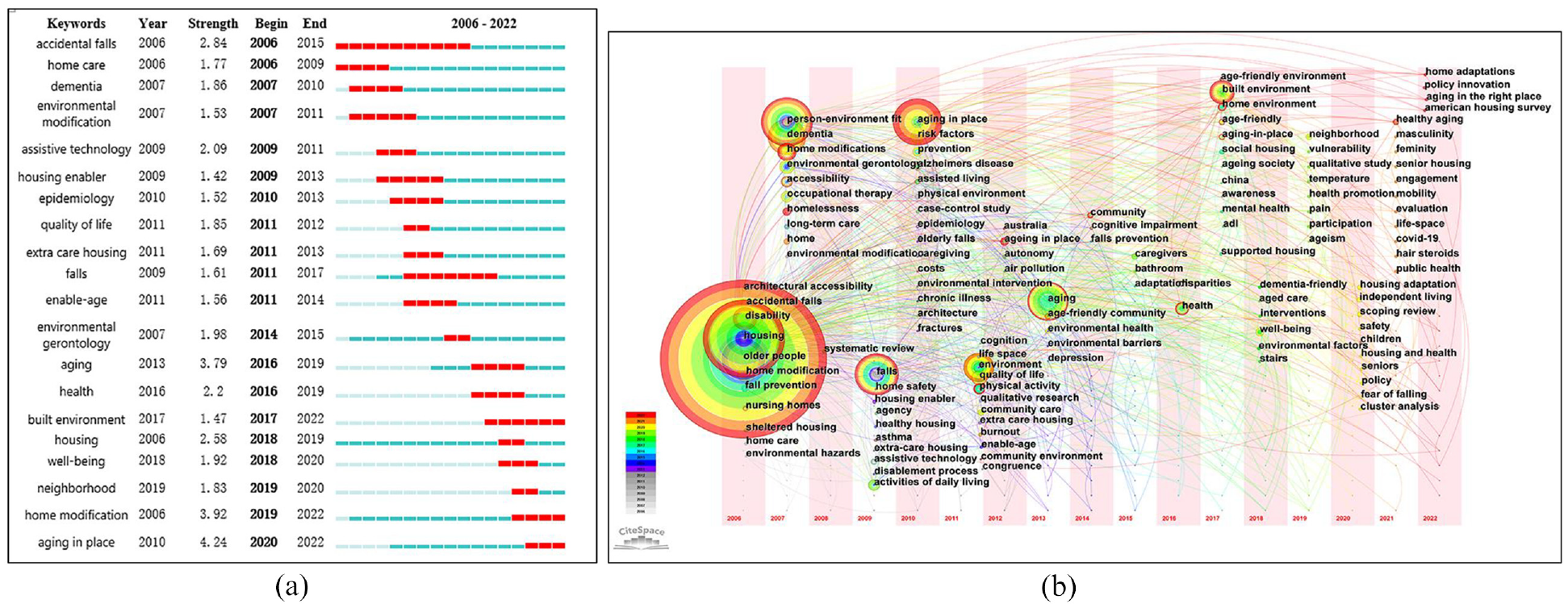
(a) Top 20 keywords with the strongest citation bursts and (b) Time zone view of keywords.
Figure 7b shows a time zone view of keywords in the order of appearance. The location of each node represents the time when the corresponding keyword first appears. Each node represents a keyword, its node size positively correlates with the frequency of occurrences. And the line between two nodes mirrors keywords co-occurrence, its thickness indicates the strength of node connection. Obviously, the most popular keywords, such as “older people,”“home modification,”“person-environment fit,”“falls,”“aging in place,” and “quality of life,” were first appeared between 2006 and 2011. In the following years of 2012 to 2017, other keywords like “environment,”“aging,” and “age-friendly environment” were found frequently in the topics on housing adaptation. After then, many new keywords of “well-being,”“neighborhood,”“independent living,”“Covid-19,” and “policy innovation” were published in journal articles, signifying the increasing attention towards the impacts of housing adaptation.
Discussion
This study analyzed a total of 406 papers by using of CiteSpace and HistCite software, leading to some important findings. Firstly, research on housing adaptations was first published in 2006 and then received widespread support across the world. This indicates that adaptation to an old house is more significant compared with migration to a new place, especially under demographic change. Existing papers in this field have provided theoretical and practical bases for the delivery of housing adaptation. Overall, the design and provision of housing adaptation calls for interdisciplinary research that spans gerontology, medicine, architectural design and public health. There have been an ever-growing number of publications on housing adaptation since 2017, while articles with high citations (9 out of 10 top cited) were published before 2012. Although research on housing adaptations involves the combination of multiple academic disciplines, over half of top 20 journals that published articles on this topic falls within the field of gerontology.
Secondly, the US researchers contributed to the largest number of publications and citations on housing adaptation, their cooperation with other researchers in neighbor countries has built up but subject to geographic locations. This was similar to Sweden, where the importance of housing accessibility for older people have been investigated at a very earlier stage by inter-regional research collaboration. However, since population aging is spreading globally, housing adaptation has become a universal and common issue that requires international cooperation and integrated approach to address environmental barriers towards independent living. This can provide an important input to developing countries for tailoring adaptation interventions to support older people aging in their own home. In addition, only a small number of international research groups (e.g., Iwarsson from Sweden, Gitlin from the US) maintained a collaborative effort in this field, other researchers and institutions worked rather independently on different aspects of housing adaptation for healthy aging. However, cooperation is a crucial and meaningful behavior to solve global challenges in developing strategies for housing adaptations, in particular in some developing countries, where a rapidly aging population with the rising physical impairment created more needs for adaptations. Lund University has been the top ranked institution in publications and citations on housing adaptations, the most productive researchers of Iwarsson and Slaug have made a fundamental contribution to the research work. Other institutions, such as University Montreal and Thomas Jefferson University, carried out studies on the subject of housing adaptations at an earlier stage with some profound implications.
Thirdly, in accordance with keyword analysis, research on housing adaptations can be divided into three stages, which highlights a gradual shift from reactive to proactive. At the first stage of 2006 to 2011, “accidental falls” and “environmental modification” were the popular keywords and became the hot topics. This indicates that at the beginning researchers focused more from the practical perspective on the role of housing adaptation to reduce environmental hazards after a health crisis, especially among older people with disabilities and dementia. Correspondingly, national policies, such as lifetime homes lifetime neighborhoods in the UK (Chiatti & Iwarsson, 2014), were launched to provide home adaptations for older persons with disabilities. Then the second stage of 2012 to 2017 showed academic attention essentially on the theoretical framework that underpinned the interaction between individual capability and environmental characteristics, keywords of “age-friendly environment,”“built environment” first appeared in 2017, and “environmental gerontology” was on the rise. Different theoretical approaches were proposed to stress the key contribution of housing adaptation to active aging in a familiar environment. In other words, housing adaptation has featured as a crucial element of the physical environment, which opened up more investigations of the interrelationship between housing and active aging. In this regard, “aging in place,”“environmental factors,”“housing and health,” and “healthy aging” became the main research hotspots during the third stage of 2018 to 2022. Based on a life course perspective, authors put particular emphasis on prevention benefits and cost savings of housing adaptation following an earlier implementation of home improvements for independent living. For example, DiGuiseppi et al. (2010) found that several interventions to home accessibility were helpful to reduce fire-related deaths and injuries. Indeed, housing adaptation is not only a crucial element in meeting the changing situations across the life course, but also a vital vehicle for moving to a broader choice of healthy aging. Therefore, there will be a top priority of deepening future research on housing adaptation in a proactive way. Besides, the keyword of “policy innovation” was appeared in recent articles, implying the need for creative adaptation policies moving from permissive to a more positive approach. As highlighted by McCall (2022), proactive approach to adaptations can make a significant difference to the outcomes for individuals and public services, there should be proactive policy interventions to remove structural barriers and support inclusive living.
Overall, there is a growing body of evidence to highlight the positive effect of housing adaptations, a shift from active to proactive perspective has been proposed in some researches. Active aging is aimed at reconstructing the practical society of the aging process by changing negative age stereotypes (Stenner et al., 2011). Scientific research have shown that the aging process could be reshaped earlier in the life course to compensate for reducing physical and mental functions in the later life (Kuh et al., 2014). In this regard, the focus of housing adaptation policies should not be limited to older people in need of care but at all stages of the life course. There should be more research focusing on specific policies that facilitates housing adaptation projects for healthy ageing in place. What’s more, housing adaptation policies should be included in national strategy of active aging across the global.
Contributions and Limitations
This study has made some substantial contributions to knowledge as well as practice. First, both CiteSpace and HistCite software were employed to identify and review the scientific literature on housing adaptations with a bibliometric analysis to capture the main topics and recent research trend. This systematical review, compared with traditional literature review, helps to visualize the landscape and evolution of housing adaptation research from different perspectives. It displays a network map of all publications from 2006 to 2022 in the field of housing adaptations, including their authors, journals and countries across the world. This can provide scholars with a high level of completeness on all research records and their development characteristics, contributing to identify innovative practices and existing deficiencies in the provision of housing adaptation for aging at home. In addition, this study analyzed highly cited articles using the threshold of the top 50 by evolution of segmentation in time, which deliver insights to track research progress and identify pivotal points. This filled the gap through bibliometric analysis to summarize the contribution of prominent publications on housing adaptations. It also gives useful insights into research hotspots and global trends that build an interdisciplinary understanding of the interaction between residential environment and healthy aging. Second, as an integral part of independent living, housing adaptation has been given research priority in many countries like the US, the UK and Sweden. It connects to a range of topics, such as accidental fall, age-friendly environment and healthy aging, which requires policymakers taking a more proactive approach to redesign the adaptation system and provide early intervention services. Finally, although housing adaptations can help achieve value for money and many policy objectives, the current approach to carry out adaptations is still reactive. This study encourages national and local governments to adopt a proactive approach and lay down detailed guidelines for long-term planning of adaptation provision.
While this study brought a broader understanding of housing adaptation for healthy aging, there are some limitations. First, when visualization analysis identified the hotspots and frontiers of housing adaptation research based on keyword clustering, there might be a risk that some key points in the articles were missing. To address this, analysis and interpretation manually has been used, resulting in a time-consuming and inefficient process. Second, samples obtained from the WoSCC were representative but small in number, some relevant publications did not be covered in this study. Future studies are needed to expand the number and types of literature from multiple databases, in order to produce a more comprehensive overview of housing adaptation for healthy aging.
Conclusion
All in all, there has been a gradual increase in the number of publications on housing adaptation for healthy aging during the past 17 years. New researchers from different countries and institutions came into this scientific field, leading to an expansion of housing adaptation research towards various disciplines covering environmental gerontology, healthy aging, social services and housing studies. However, only a few authors have constantly concentrated on housing adaptation research, and their publications have laid an ongoing and profound impact on this field. According to the geographical contribution map, cooperation between researchers is currently subject to the regional level. However, housing adaptation has become an universal issue that requires researches from different countries and institutions working together. This is crucial for developing countries to adapt to a wide spectrum of challenges in the provision of housing adaptation for healthy aging.
In view of keyword analysis, adaptation research focus has evolved from accidental fall, environmental gerontology to healthy aging. It has been stressed that an earlier adaptation intervention can help adults to avoid a later crisis and result in appreciable cost savings. Indeed, housing adaptations should be regard as a public issue rather than a private trouble. It is an integral part of inclusive living rather than a supplementary measure for older people with disabilities. There needs to be certain policies to encourage the adoption of a proactive approach to ensure preventative strategy for adaptation provision in a holistic way.
Footnotes
Acknowledgements
The authors would like to thank all colleagues who provided their assistance and comments.
Abbreviations
NHS: National Health Service; UK: United Kingdom; WoSCC: Web of Science Core Collection; SCI-EXPANDED: Science Citation Index Expanded; SSCI: Social Sciences Citation Index; A&HCI: Arts & Humanities Citation Index; ESCI: Emerging Sources Citation Index; TGCS: Total Global Citation Score; TLCS: Total Local Citation Score; AGCS: average global citation score. US: United States; LSI: Latent semantic index; LLR: log-likelihood ratio; MI: mutual information.
Authors’ Contributions
All authors contributed to the design of the research and approved the final manuscript version. More specifically, WSZ and JZJ organized data collection as well as drafted and revised the manuscript, XYL and BYJ analyzed the data and interpreted the results, YXH revised the manuscript.
Declaration of Conflicting Interests
The author(s) declared no potential conflicts of interest with respect to the research, authorship, and/or publication of this article.
Funding
The author(s) disclosed receipt of the following financial support for the research, authorship, and/or publication of this article: This study was financially supported by the National Social Science Fund of China, the project is “Research on the coordinated development of ‘welfare-industry’ for housing adaptations” (Grant no.: 23BRK024), and Zhejiang Office of Philosophy and Social Science, Research on Performing Mechanisms of Social Protection for Workers in New Forms of Business (Grant no.: 23YJRC11ZD-2YB).

Data Availability Statement
Data sharing not applicable to this article as no datasets were generated or analyzed during the current study.