




Abstract
Air pollution in densely populated urban areas such as Jakarta poses significant environmental and public health challenges. A proposed solution is the adoption of electric vehicles (EVs), which produce zero emissions during operation. However, public acceptance and adoption are critical to the success of this transition. This study investigates public awareness, willingness to adopt electric vehicles and the factors that influence these attitudes among Jakarta residents. Using a mixed-methods triangulation approach, quantitative data was collected from 920 residents through structured questionnaires, while qualitative insights were gathered from in-depth interviews with 30 current EV owners. Quantitative results revealed high levels of awareness, and 80% of the participants reported being familiar with EVs. However, actual ownership remained low, largely due to concerns about affordability, limited charging infrastructure, and range anxiety. The qualitative findings provided additional context, illustrating how personal experiences and perceptions influenced attitudes. Demographic factors such as age, educational attainment, income level, and housing status emerged as key predictors of positive attitudes towards the adoption of EV. Younger people, those with higher education and income and those living in family-owned homes expressed a greater openness to switching to electric vehicles. Participants also emphasised the importance of strong government support, including financial incentives and infrastructure development, to facilitate greater adoption of electric vehicles. The findings contribute to the fields of environmental psychology, urban sustainability, and technology adoption, providing practical information for policymakers and stakeholders who aim to reduce urban air pollution through cleaner transportation solutions.
Plain language summary
Air pollution is a big problem in Jakarta, a crowded city. This study looks at how electric cars might help reduce pollution there. We asked 920 people what they thought about electric cars and talked to 30 people who own one. Most people knew about electric cars, but not many owned one. The main reasons were that electric cars can be expensive, there aren’t enough places to charge them, and people worry they might run out of power. We also learned more from talking to the electric car owners. They told us about their experiences and what they think about electric cars. We found that younger people, those with more education and money, and people who live in family-owned homes like electric cars more. Our study also showed that the government can help by making policies and giving incentives to encourage people to use electric cars. This research can help people who make decisions about the environment, cities, and technology. We hope that by sharing this information, more people will understand the benefits of electric cars and help make Jakarta a cleaner and healthier place to live.
Keywords
Introduction
In recent years, the topic of air pollution in Jakarta has garnered significant media coverage, attracting the interest of many online news outlets and televised broadcasts. Significantly elevated levels of pollution, mostly attributed to motorised vehicles, trash incineration, coal-burning companies, and coal-fired power plants, have generated substantial apprehension (Handhayani, 2023; Syuhada et al., 2023). Although it may be convenient to ascribe the city’s environmental difficulties exclusively to the increase in motorised cars (Zulkarnain & Ghiffary, 2021), it is apparent that the problem is complex and firmly established (see Figure 1).
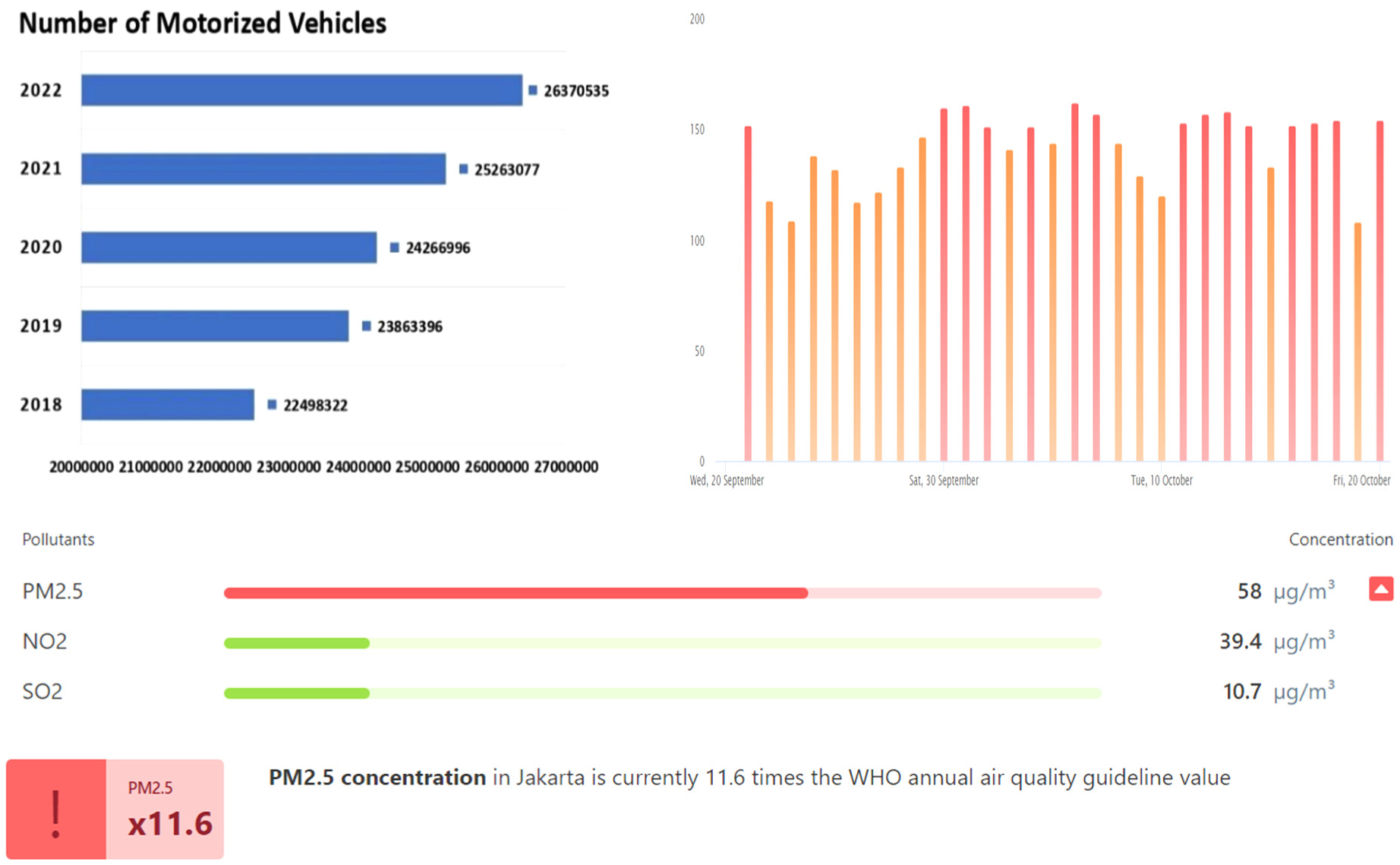
Motorised vehicles and air quality in Jakarta for the year 2023.
The increasing number of motorised vehicles is frequently identified as a key contributor to the decline in air quality (Nurhidayat et al., 2023). However, it is imperative to acknowledge that this matter goes beyond mere congestion, as it has resulted in extensive ramifications, such as deterioration of air quality. The clustering of industrial facilities in the megapolitan areas of JABODETABEK adjacent to Jakarta, along with the uncontrolled combustion of garbage and the arid climatic conditions prevalent in the region (Sukwika et al., 2023), exacerbates the issue of air pollution. Furthermore, Jakarta, the capital city, has been designated as one of the most densely populated urban areas in the world, as evidenced by a survey carried out in 2020 by Anggrahita, a speciality organisation specialising in congestion index (Anggrahita et al., 2020).
Despite multiple government efforts to address traffic-related issues, these policies have shown limited efficacy (Huang & Loo, 2023; Murad et al., 2018). Implementing policies such as the three-in-one and odd-even car number scheme have failed to provide the anticipated results (Rahardjo & Prihanton, 2020). As a result, the Jakarta government has implemented additional measures, such as proposing regulations to limit the use of older vehicles by 2025 (Benita, 2023). The decision is informed by the projections made by the Euromonitor International survey. According to these forecasts, it is expected that there will be a significant increase in traffic congestion by 2030 (Sitawati et al., 2022). This situation would be further aggravated by the insufficient transition from private vehicles to public transportation (Purwoko et al., 2022).
In March 2023, the government implemented Presidential Instruction No. 7 of 2022, which aims to encourage the utilisation of battery electric vehicles (BEVs) for official and operational purposes (Siahaan et al., 2021; Veza et al., 2022). Subsidies were allocated with the aim of facilitating the adoption of more environmentally friendly energy alternatives (Pandyaswargo et al., 2021). Contrary to expectations, the implementation of this strategy in Jakarta did not produce the anticipated improvements in air quality, therefore requiring a more comprehensive review of the prevailing circumstances.
The aforementioned analysis resulted in a divergence of points of view between the Jakarta ministries and the municipal administration. According to the Ministry of Environment and Forestry, motorised vehicles were responsible for 43% of air pollution, while steam power plants accounted for 34% (Indriana et al., 2022; Sakti et al., 2023). However, the Ministry of Maritime and Investment proposed a significantly higher 75% contribution from motorised vehicles, with power plants only contributing 25% to overall pollution levels (Aji Tritamtama et al., 2023).
An analysis revealed that Jakarta’s streets were inundated with a staggering 26 million motorised vehicles in early 2023, with motorbikes comprising approximately 74% of the total count (Sugiarto et al., 2021). Passenger cars and buses/trucks comprised the remaining percentage. Despite the implementation of a telecommuting policy by the Jakarta government in August 2023 to combat deteriorating air quality, pollution levels remained elevated, prompting a shift in focus towards industrial pollutants and coal power plants (Mulyana et al., 2021). Furthermore, the Centre for Research on Energy and Clean Air (CREA) presented compelling evidence that pollutants from outlying areas contributed significantly to Jakarta’s air pollution levels, with coal-fired power plants identified as the main contributors to the environmental problem (Centre for Research on Energy and Clean Air [CREA], 2020).
The implementation of the Air Pollution Standard Index (APSI) in Indonesia revealed that Jakarta frequently exceeded the air quality guidelines established by the World Health Organisation (WHO), classifying it as one of the most polluted capital cities within the region of the Association of Southeast Asian Nations (ASEAN). Jakarta’s air pollution crisis cannot be decoupled from the global broader threat of climate change. As one of the most vulnerable countries in the world to climate-related disasters, increasing sea levels, extreme weather, and decreasing food security, Indonesia is under increasing pressure to adopt mitigation strategies (CREA, 2020). The transportation sector, a significant emitter of greenhouse gases, plays a critical role in shaping national climate outcomes. Therefore, the transition to electric vehicles (EVs) not only addresses urban air quality but also constitutes a strategic pathway to meet Indonesia’s Nationally Determined Contributions (NDC) under the Paris Agreement. This situates the discussion of EV adoption within an urgent environmental imperative and underscores the importance of understanding the drivers and barriers to EV adoption in Indonesian cities like Jakarta.
The ongoing discussions continue to identify the main sources of pollution and advocate for the reduction of automobiles and power plants. However, the optimal percentage of reduction and many elements that exert influence on this matter are currently subject to examination. It is important to note that Indonesia currently has an excess of electrical capacity, raising doubts about the need for additional power plants.
The complex relationship between legislation, industrial emissions, and the integration of electric vehicles poses a complex and multifaceted problem for Jakarta. The study presents a holistic approach to address these difficulties and promote improved air quality in urban areas taking into account the wider systemic dynamics involved.
Our manuscript systematically progresses from methodology to implications. After the introduction and the Literature review, the Materials and Methods section delineates our mixed method research design, which combines quantitative and qualitative approaches to investigate the adoption of electric vehicles (EV) in Jakarta. The “Results” section presents a comprehensive analysis that integrates statistical data, graphical interpretations, and thematic insights from qualitative feedback. In the “Discussion” section, these findings are contextualised within the existing literature, exploring their theoretical and practical significance. The paper concludes with the conclusions, synthesising key findings, offering stakeholder recommendations, and suggesting avenues for future research. This cohesive structure ensures a logical flow that guides readers through the study’s objectives, findings, and contributions to the discourse on sustainable urban transportation.
Climate Change and the Urgency of Transport Decarbonisation
Climate change represents one of the most urgent global challenges of the 21st century, with the transport sector contributing significantly to greenhouse gas emissions. According to the Intergovernmental Panel on Climate Change (Intergovernmental Panel on Climate Change [IPCC], 2023), transportation accounts for approximately 15% of global emissions, with urban motorised transport being a major driver of fossil fuel use and air pollution. In this context, the transition to electric vehicles (EVs) is widely recognised as a key strategy to achieve deep decarbonisation and improve climate resilience, especially in rapidly urbanising cities.
Indonesia, as a signatory to the Paris Agreement, has pledged to reduce its greenhouse gas emissions by 29% unconditionally and up to 41% with international support by 2030, as part of its nationally determined contributions (Ministry of Environment and Forestry, 2023). Given the significant role the transport sector plays in emissions, the adoption of electric vehicles has become a national priority. Jakarta faces severe challenges: a high density of internal combustion engine (ICE) vehicles, chronic congestion, and increasing energy demands, all of which intensify its carbon footprint. The capital is also highly vulnerable to climate-related risks such as sea level rise, coastal flooding, heatwaves, and worsening air quality, which disproportionately affect lower-income populations (Asian Development Bank, 2021). Although EV initiatives in Jakarta are often framed around air pollution or traffic solutions, they also have profound implications for climate mitigation and urban adaptation.
Research Question and Study Objective
The research questions that guide this investigation on the adoption of electric vehicles (EVs) in Jakarta are as follows:
a) What is the current level of awareness and adoption of electric vehicles in Jakarta, Indonesia?
b) What are the main factors that influence the decision to adopt electric vehicles among Jakarta residents?
c) How do demographic characteristics affect the willingness to embrace electric vehicles in Jakarta?
d) What are the perceived barriers and benefits of adoption of electric vehicles from the perspective of Jakarta residents?
e) What strategies and policy recommendations can be proposed to promote the adoption of electric vehicles in Jakarta?
The objectives of this study are structured to methodically address these questions.
a) Assess current awareness and adoption rates of electric vehicles among Jakarta residents, using both quantitative and qualitative data.
b) Identify and analyse the key factors that influence the decision-making process related to the adoption of electric vehicles in the Jakarta context.
c) Examine the role of demographic factors such as age, education, and income in shaping attitudes and intentions towards the adoption of electric vehicles.
d) To use thematic analysis to explore perceived challenges, opportunities and general sentiment regarding electric vehicles among different demographic groups in Jakarta.
e) Propose recommendations and strategies based on the findings to improve the adoption of electric vehicles, thus contributing to the reduction of urban air pollution and the promotion of sustainable transportation in Jakarta.
Review of the Literature
Urban Air Pollution Crisis in Jakarta
Urban air pollution in Jakarta and its surrounding areas has reached critical levels, especially during the arid season, exacerbating health problems (Santoso et al., 2020; Sari & Purwaningsih, 2022). Recent studies highlight vehicular emissions as the main contributor, surpassing traditional industrial sources (Puryanti & Yudhistira, 2023). During monitoring in 2019, particulate matter (PM) 2.5, known for its health risks, constituted 42% to 57% of pollution, related to vehicles, coal plants, waste burning, construction and road dust (Ostro, 1995; Irwan Putri et al., 2021; Shiddiqi et al., 2022) (Figure 2).

Jakarta air pollution.
The strict enforcement of vehicle emission testing policies is crucial in Jakarta, where many unfit vehicles continue to emit hazardous exhaust gases, highlighting the urgent need for stronger regulations (Lubis et al., 2013). In addition to this, promoting public transportation and accelerating the transition to electric vehicles (EVs) are essential strategies to reduce urban emissions (Manullang & Sinaga, 2022; I. C. Setiawan & Setiyo, 2022). According to the Ministry of Environment and Forestry (2023), Jakarta is home to approximately 25.5 million registered motor vehicles, with motorcycles accounting for 78% of this total. These vehicles are an important source of urban air pollution, contributing more significantly to passenger-related emissions than private cars or buses.
Electric Vehicles and the Future of Sustainable Transportation
Electric vehicles (EVs) offer significant environmental advantages, particularly in improving air quality in urban environments by producing zero tailpipe emissions during operation (Ismail & Mulyaman, 2021; A. D. Setiawan et al., 2022). Their increasing adoption contributes to cleaner streets, enhancing the overall quality of life for pedestrians and cyclists in congested city areas (Maso & Balqiah, 2022; Petrauskienė et al., 2022). According to Candra (2022), a single electric vehicle can prevent approximately 1.5 million grams of carbon dioxide emissions per year, equivalent to four round trips between London and Barcelona.
In response to high levels of vehicular pollution, the UK government has set a target to phase out gasoline and diesel vehicle sales by 2030 and achieve net zero carbon emissions by 2050 (Browne et al., 2005; Ma et al., 2021; Quilter-Pinner & Laybourn-Langton, 2016). EVs not only reduce air pollution, but also help mitigate noise pollution in cities, particularly in areas with slower traffic speeds (Salsabila et al., 2023).
While the battery manufacturing process for EVs is energy intensive, studies from the International Energy Agency confirm that EVs produce significantly fewer emissions throughout their life cycle compared to conventional internal combustion engine (ICE) vehicles (Citaristi, 2022; Liu, 2021). As energy grids transition to greener sources, the environmental performance of EVs improves further (Asim et al., 2022; International Energy Agency, 2023). Battery production currently accounts for more than one-third of an EV’s lifetime carbon footprint (Ajanovic & Haas, 2019; Angamarca-Avendaño et al., 2023; Matalata et al., 2023; Zhang et al., 2022), yet EVs still emit approximately 17% to 30% less CO2 than gasoline or diesel cars, especially when charged using low-carbon electricity sources (Arcadia, 2017).
This is particularly promising for users who choose green energy providers. For example, in the United Kingdom, EDF, a major low-carbon electricity provider, offers a “Go-Electric” tariff that is 100% carbon-free (Han et al., 2019). This enables EV owners to make environmentally conscious charging decisions, maximising the sustainable impact of EV adoption and supporting the broader transition towards cleaner mobility.
Plug-in hybrid electric vehicles (PHEVs), which combine electric motors with internal combustion engines, also contribute to emissions reduction, though to a lesser extent. Their environmental impact depends on factors such as the frequency with which the electric mode is used and the carbon intensity of the electric source. Policies that promote zero-carbon electricity, such as the Go Electric tariff, can also help increase the environmental efficiency of PHEVs, strengthening their contribution to national decarbonisation goals.
Current State of Electric Vehicles in Indonesia
The state of electric vehicles (EVs) in Indonesia reflects a pivotal stage, characterised by both challenges and emerging opportunities (Gunawan et al., 2022). Although still in its developmental phase as of 2021, the country shows growing potential for sustainable transportation (Maso & Balqiah, 2022). Increasing environmental awareness, particularly around urban air pollution, has prompted a shift towards cleaner alternatives such as electric vehicles (Anwar et al., 2022; Candra, 2022). This transition is reinforced by government support through tax incentives, infrastructure development, and regulatory frameworks designed to accelerate EV adoption (Kavanagh et al., 2018; Vassileva et al., 2015; Veza et al., 2022).
Government initiatives have played a central role in shaping public interest and market readiness. These include import duty exemptions for electric vehicles and components, which have reduced costs; sales tax incentives that increase affordability; and an expanding national charging infrastructure aimed at reducing range anxiety (Ismail & Mulyaman, 2021). These policies are aligned with Indonesia’s broader goals of reducing fossil fuel dependency and lowering carbon emissions.
Private sector involvement is also gaining momentum. Progressive corporations are incorporating electric vehicles into their fleets, driven by sustainability goals and cost efficiency (Yuniza et al., 2021). However, despite increasing awareness, adoption remains limited due to high upfront costs and a lack of widespread infrastructure (Dolganova et al., 2020; Gondoiswanto & Wijaya, 2023).
The Indonesian electric vehicle market has attracted attention from both global and local players. Tesla’s entry into the market signals growing international interest, while domestic startups focus on producing affordable electric vehicles that meet local needs (Gondoiswanto & Wijaya, 2023; Maghfiroh et al., 2021; Yuniza et al., 2021). Japanese automakers such as Toyota and Nissan have also identified Indonesia as a strategic market, using technological expertise to strengthen their presence (Ismail & Mulyaman, 2021; Utami et al., 2020). This diverse and expanding ecosystem reflects the increasing importance of the country in the global transition towards sustainable mobility (Kuzior et al., 2022; Brodny & Tutak, 2023; Jonek-Kowalska, 2022).
Theoretical Perspectives on Electric Vehicle Adoption: Integrating Awareness, Ownership, Environmental Concerns, Infrastructure, and Future Intentions
The adoption of electric vehicles (EVs) is a complex process shaped by cognitive, infrastructural, economic, and sociocultural factors. Although traditional behavioural models have provided foundational insight, the dynamic and context-specific nature of urban settings in the Global South, such as Jakarta, requires a more flexible framework. This study integrates classical theories like the Technology Acceptance Model (Davis, 1989), Theory of Planned Behaviour (Ajzen, 1991), Theory of Reasoned Action (Fishbein & Ajzen, 1977), and Value-Belief-Norm Theory (Stern, 2000), with the sociocognitive Mindsponge Theory (Vuong, 2022) to capture a broader and more context-sensitive view of EV adoption.
TAM highlights perceived usefulness and ease of use as drivers of acceptance, while TPB adds subjective norms and perceived behavioural control, acknowledging structural enablers such as charging infrastructure. TRA similarly emphasises the influence of attitudes and norms. VBN adds an environmental dimension by linking ecological values and beliefs to pro-environmental personal norms, though it acknowledges that concern alone is insufficient for behavioural change.
However, these models are often static and linear, lacking sensitivity to real-world complexities such as information overload, distrust, and cultural variability. Mindsponge theory (Vuong, 2022) addresses this by conceptualising decision making as an ongoing information filtering process, where individuals accept or reject information based on perceived value, trustworthiness, and alignment with internal beliefs. By integrating Mindsponge theory with established frameworks, this study offers a multidimensional understanding of EV adoption, combining quantitative predictors with qualitative insights such as trust, values, and cultural relevance elements crucial for both theoretical enrichment and practical policy making in rapidly evolving urban contexts.
Materials and Methods
Research Method and Tool
This study used a diagnostic method to collect data on public perceptions and intentions about electric vehicles and their environmental impact.
A survey questionnaire was designed specifically for this study to collect quantitative data and an interview questionnaire to obtain qualitative data.
Quantitative Component
A survey questionnaire included structured questions focused on awareness, ownership, environmental concerns, charging infrastructure, and future intentions with respect to electric vehicles. It used multiple choice and Likert scale questions to gather measurable data.
Qualitative Component
An interview questionnaire comprised open-ended questions that allowed participants to express their views and experiences in their own words. This approach was intended to capture the depth and nuance of participant perceptions and attitudes towards electric vehicles.
Study Participants
The study targeted a diverse population of Jakarta residents. Efforts were made to include a wide range of demographics to ensure the representation of various points of view. Jakarta has a population of approximately 10,679,951 people. When planning the sample size for the quantitative study, the formula for qualitative characteristics (with a finite sample) was used. 10,679,951 was used as the size of the estimated fraction. Furthermore, a 95% probability was assumed that the result obtained in the investigation would not deviate from the actual value of the population by more than 5%. According to these estimates, the minimum sample size is 384 people. Therefore, the achieved sample size (N = 920) exceeded its minimum level by more than double.
In order to obtain a representative sample for quantitative research and to be able to make inferences about the population on probabilistic grounds, the sample selection was random. The survey questionnaire link was sent to 15,000 randomly selected people throughout Jakarta. The response rate was 6.1% and is close to the average values for surveys distributed by email.
Quantitative Participants
A sample of 920 respondents was chosen to provide a robust quantitative dataset. Participants included EV owners, those considering EV ownership, and individuals without prior exposure to EVs.
Qualitative Participants
A group of 30 people were qualified for the interviews. Selection criteria included diversity in demographics, EV ownership status, and willingness to provide detailed responses.
Data Collection
Quantitative data was collected using an online survey platform designed to ensure easy access and anonymity for participants. Qualitative data collected during the interviews were recorded on a Dictaphone and then coded using specialised software.
Questionnaire Development
Quantitative Phase
The survey included sections on awareness, ownership, environmental concerns, charging infrastructure, and future intentions of electric vehicles. Each section contained questions with multiple choice, Likert scale, and open-ended response formats. The questionnaire was designed to collect quantitative data.
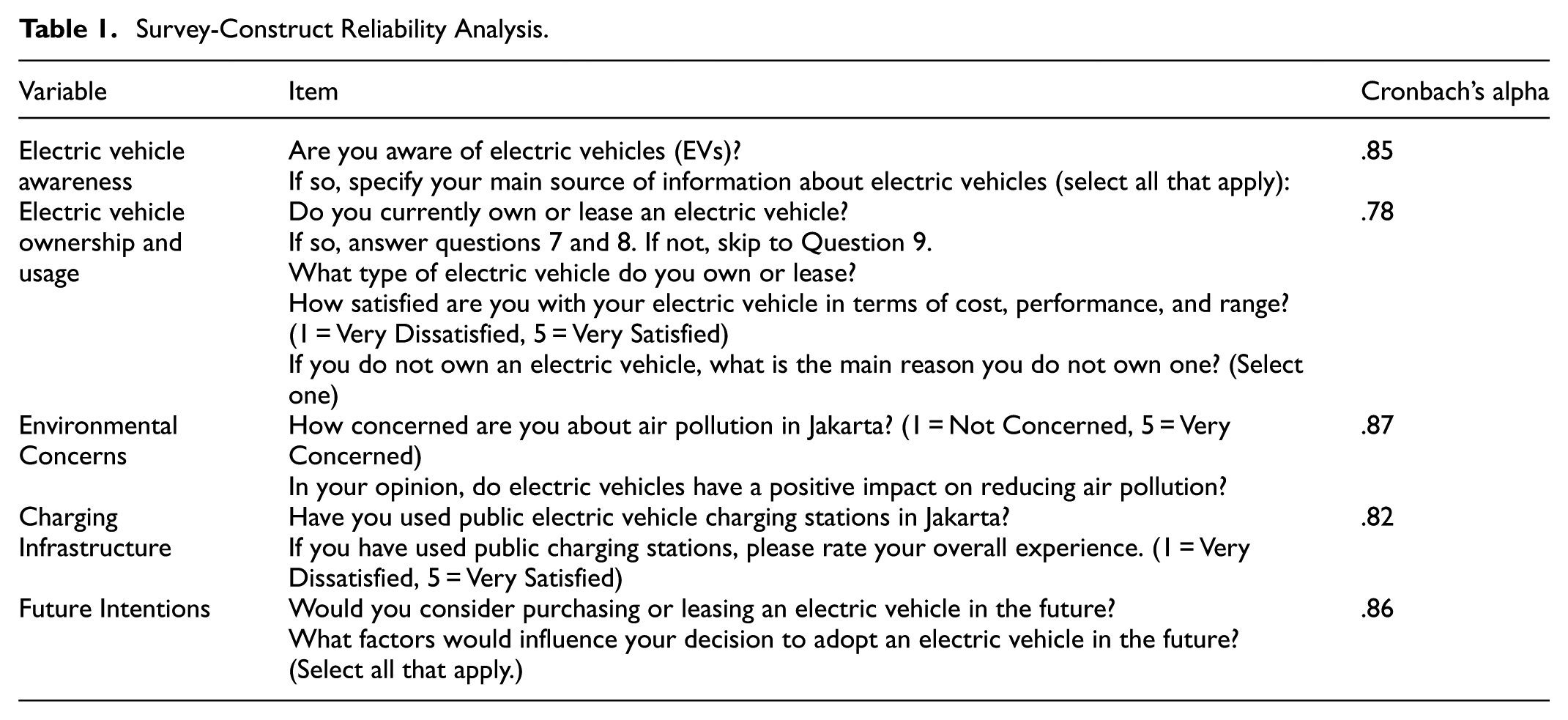
To evaluate the reliability of the questionnaire, Cronbach’s alpha was calculated. Cronbach’s Alpha assesses the internal consistency of a survey by measuring the degree to which multiple questions intended to measure the same concept produce similar results. In our survey, Cronbach’s Alpha was calculated for each section to ensure that the questions within each section were reliable indicators of the intended construct.
Cronbach Alpha scores for each section were calculated as follows (Table 1):
Survey-Construct Reliability Analysis.
Qualitative Phase
In the qualitative part, the interview questionnaire consisted of open questions aimed at gaining in-depth insights into the attitudes and perceptions of the participants about electric vehicles. These questions explored areas such as personal experiences with electric vehicles, detailed opinions on electric vehicle technology and infrastructure, and nuanced views on environmental impacts.
Table 2. shows the structured format of the open-ended questions in the interview questionnaire. These questions are intended to provide a deeper understanding of the participants’ experiences and views, allowing a comprehensive understanding of the various aspects that influence the adoption and perception in Jakarta.
Qualitative Questions of the Interview Questionnaire.

Data Analysis
Quantitative data collected from the survey were analysed using statistical software SPSS 22. Descriptive statistics, such as means, frequencies, and percentages, were used to summarise the responses. Inferential statistical techniques were used to identify associations and trends in the data.
Qualitative data was analysed using MAXQDA’s 2022 specialist software. This process involved coding the responses and identifying recurring themes and patterns, providing a qualitative understanding of attitudes and perceptions towards electric vehicles in Jakarta.
Results
Demographic Response
In the demographic section of the survey, the characteristics were collected to provide a complete understanding of the group (see Table 3). The age distribution reveals a diverse range, with 25 to 34-year-olds representing 24.02%, indicating strong young adult and professional involvement. Those 35 to 44 years follow at 14.02%, showing fair mid-career participation. In particular, 65 years and older comprise 35%, potentially signifying high interest among older adults or methodological bias. In terms of gender, participation is balanced, with 48% male and 52% female. Educationally, 40% hold bachelor’s degrees, 28% have master’s degrees, and 20% possess Ph.D.’s, showing a highly educated cohort. Additionally, 12% completed high school or less, contributing to a variety of perspectives.
Demographic Profile of the Respondents.

Regarding work status, 48% are employed, 8% are self-employed, and 25% are students. Retirees make up 12%, while 4% are unemployed, reflecting diverse occupational circumstances. In terms of monthly salary, 27% earn IDR 13,500,000 to IDR 18,000,000, and 23% earn above IDR 18,000,000, indicating a sizable higher-income bracket. Middle-income earners, between IDR 4,500,000 and IDR 18,000,000, constitute 21% and 19%, respectively. 10% earn less than IDR 4,500,000. In housing, 50% own homes, 23% rent, 13% lease, and 14% reside in family-owned properties, showcasing varied living arrangements.
Electric Vehicle Awareness and Ownership
Table 4 provides a complete summary of public perceptions and intentions about electric cars in Indonesia. Data are derived from responses from 920 participants. The data provided illuminate the multiple aspects of knowledge, possession, and the determinants of electric vehicle adoption that impact prospective adoption.
Result of Survey Responses and Key Findings.

Increasing Awareness of Electric Vehicles
The survey findings reveal that a significant proportion of participants (80%) demonstrated knowledge about electric vehicles, while a minority (20%) indicated a lack of awareness of this subject matter. When analysing the main sources of information among people who are knowledgeable about electric vehicles, it was found that the majority of the respondents relied predominantly on online news (34%) and information obtained from friends and family (28%) to acquire knowledge about electric vehicles. Additional sources of information were social media, which represented 24% of the respondents; television, which accounted for 6% of the respondents; and dealerships, which accounted for 8% of the respondents.
The Ownership and Usage of Electric Vehicles
A minority of the participants (22%) indicated that they currently have or have a lease agreement for an electric car. In comparison, most (78%) do not have a lease agreement for an electric vehicle. Among those who possess or rent an electric vehicle, 67.30% expressed a preference for battery electric vehicles (BEVs), while 32.70% chose to use plug-in hybrid electric vehicles (PHEVs). In relation to satisfaction ratings, people who own or lease electric vehicles have communicated their satisfaction in various dimensions, with an average rating of 4.1 for cost, 4.2 for performance, and 3.9 for range. When examining the key factors contributing to the absence of electric vehicle ownership among individuals who do not possess an electric vehicle, the prevailing rationales encompassed financial considerations (46%), inadequate availability of charging infrastructure (26%), concerns over the restricted driving range of electric vehicles (16%), insufficient options for electric vehicle models (8%) and other factors (4%).
The Topic of Environmental Concerns is of Great Significance in Modern Society
Data collected from respondents indicate a substantial degree of apprehension about air pollution in Jakarta, as evidenced by an average rating of 4.2 on a 5-point scale. A substantial majority of the respondents (78.80%) expressed the belief that electric vehicles exert a favourable influence on reducing air pollution, while a lower proportion (6.40%) had an opposing point of view. A portion of the participants (14.80%) expressed uncertainty about the impact in question.
The Topic of Discussion is Related to the Establishment and Development of Charging Infrastructure
Approximately 36% of the participants who possess or rent an electric vehicle said that they use public charging stations. The charging infrastructure received an average satisfaction rating of 4 out of 5 among its users.
Future Ambitions
A significant proportion of the participants (61.20%) indicated their desire to consider the acquisition or lease of an electric vehicle at a later time. When asked about the determinants that impact their decision-making process, the participants indicated several crucial elements. The key reasons that contributed to the adoption of electric vehicles were cost (52%), government incentives (33.20%), longer range (29.20%), and increased charging infrastructure (20%). The decision-making process of the individuals was influenced by environmental concerns, accounting for 14.80% of the factors considered, along with other contributing factors, which represented 6.80% of the overall decision-making process.
The findings mentioned above offer significant information on the current state of attitudes and intentions of electric cars in Indonesia. These insights have the potential to play a crucial role in the development of future policies and strategies aimed at promoting the adoption of electric vehicles within the country.
Willingness to Embrace Electric Vehicle Adoption
Table 5 presents a comprehensive analysis of the demographic characteristics of the participants, categorised according to their willingness to accept the modifications associated with the adoption of electric vehicles (EV). This table offers valuable information on the various aspects that impact their predispositions. The attributes mentioned above have been classified into two discrete categories: individuals demonstrating a pronounced inclination to embrace change and others displaying a diminished preparedness for this process.
Demographic Traits That Change the Adoption of Electric Vehicles.
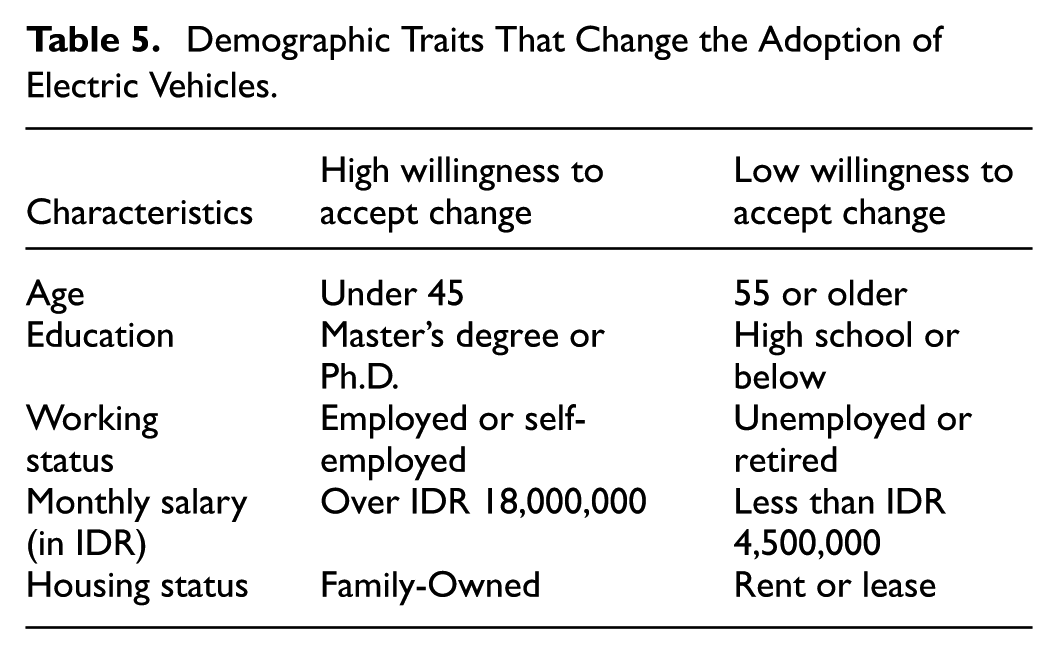
Younger people (under 45) are more open to electric vehicles (EVs), driven by tech familiarity and environmental awareness, while older adults (55+) tend to resist change. Higher education levels, especially postgraduate degrees, correlate with greater acceptance of electric vehicles, while those with fewer education show less interest, often due to limited awareness or cost concerns. Employed and self-employed people are more receptive, possibly through exposure in the workplace to green initiatives. On the contrary, unemployed or retired people often cite financial limitations or reduced travel needs. Higher income (above IDR 18,000,000/month) is linked to stronger interest in EV, while affordability remains a barrier for lower income groups. Housing also matters those in family-owned homes are more open to electric vehicles due to stability and charging access, whereas renters are less inclined. These insights can help shape targeted policies and strategies to increase the adoption of electric vehicles.
Logistic Regression Analysis
A logistic regression analysis was performed to examine the factors that influence awareness of electric vehicles (EV) among a sample of 920 respondents (see Table 6). The model included variables such as electric vehicle ownership, satisfaction with electric vehicles, concerns about air pollution, usage of charging stations, experience with charging infrastructure, and intentions for future EV adoption.
Regression Result.

In our logistic regression analysis of 920 respondents (see Figure 3), “Future EV Intention” emerged as the strongest and most significant predictor of electric vehicle (EV) awareness. This variable showed a substantial positive association, with a coefficient of 1.834 and a highly significant p-value < .001, indicating that people with a stronger intention to adopt electric vehicles are considerably more likely to be aware of them. Other predictors, such as “EV satisfaction” and “Charging station experience,” also demonstrated positive relationships with awareness of EVs, although with smaller effect sizes. These results suggest that higher satisfaction levels and more favourable charging experiences modestly contribute to greater awareness.

Logistic regression analysis.
Interestingly, variables including “EV Ownership,”“Concern About Air Pollution,” and “Usage of Charging Stations” were associated with negative coefficients. Although counterintuitive, these findings may reflect complexities in the data, such as differing interpretations of “awareness” or potential anomalies within the simulated dataset. These variables also had higher p values, indicating weaker statistical significance. Overall, the analysis underscores “Future EV Intention” as the most reliable and statistically significant predictor of EV awareness in this model, highlighting the importance of forward-looking attitudes in shaping public knowledge of EVs.
The coefficients of the logistic regression model were visualised on a bar graph, with each bar representing a variable and its corresponding coefficient. The p-values were annotated on each bar to demonstrate statistical significance. This graphical representation aids in quick comprehension of the relative importance and significance of each variable in the model.
Qualitative Results
This section presents a detailed analysis of the qualitative data obtained from the interviews. Thematic analysis was conducted on open-ended responses from 30 participants, focussing on their perceptions, experiences, and attitudes towards electric vehicles (EV) in Jakarta.
Table 7 shows the demographic breakdown of the participants who contributed qualitative responses.
Participant Demographics for Qualitative Analysis.

From the thematic analysis, it was found that there are eight themes capable of illustrating social awareness of the acceptance of electric vehicles (EVs) in Indonesia. These consist of personal experience, perceptions of EV technology, opinions on EV infrastructure, environmental impact, barriers to EV adoption, the future of EVs, government policies and incentives, and personal intentions. Figure 4 shows each theme and the factors that influence them.
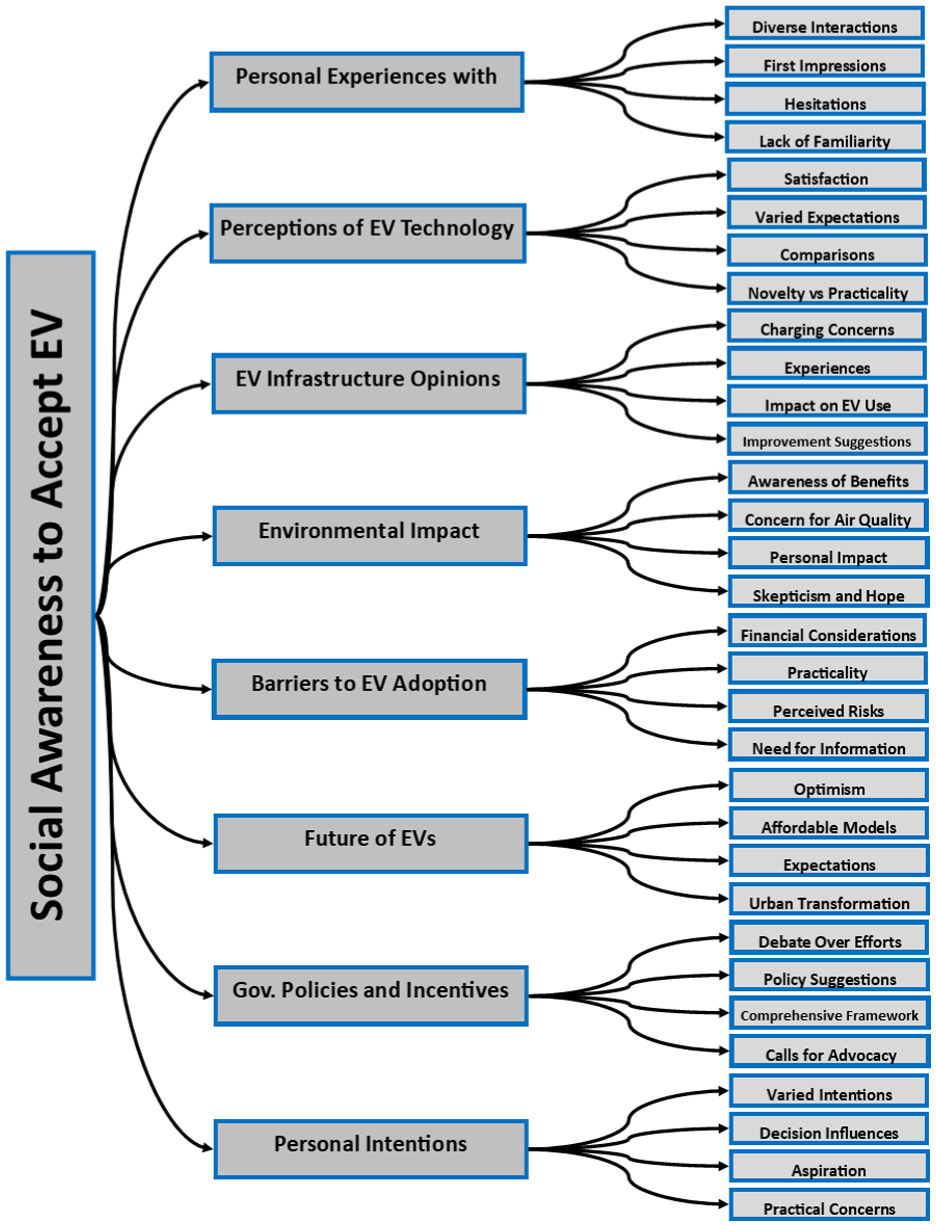
Theme social awareness to accept EV.
Theme 1: Personal Experiences With Electric Vehicles (Q1)
The participants’ interactions with electric vehicles revealed a spectrum of experiences. P3, a marketing manager, noted quiet operation and smooth handling during her test drive, but remained hesitant about switching to electric vehicles. This hesitation despite positive experiences was common among newcomers to electric vehicles. On the contrary, P8, an engineer, expressed curiosity about EVs, but cited the lack of exposure in Jakarta as a barrier, indicating a gap in first-hand experience. First impressions of electric vehicles often left a lasting impact. P12, a university student, found the sleek design and eco-friendliness of an EV at a technology expo intriguing, positively shaping her perception. However, even among those with positive experiences, there was a hesitancy. P17, a graphic designer, appreciated the silence of an EV, but expressed concerns about daily practicality in a busy city like Jakarta. A recurring theme was the lack of familiarity and the desire for more exposure to electric vehicles. P23, an artist, expressed the wish for more opportunities to experience electric vehicles in real-life situations, highlighting the need for increased accessibility and exposure to electric vehicle technology among the general public.
Theme 2: Perceptions of Electric Vehicle Technology (Q2)
Many participants, especially current electric vehicle owners, expressed satisfaction with the current state of electric vehicle technology. P2, an electric vehicle owner, was enthusiastic: “The technology has exceeded my expectations, especially in terms of efficiency and environmental friendliness.” This satisfaction was often linked to the environmentally friendly nature of electric vehicles and their technological innovations.
The expectations and concerns about electric vehicle technology varied among participants. P15, contemplating an EV purchase, voiced his reservations: “I am excited about EVs but concerned about their range and charging time.” These concerns were especially prevalent among potential buyers who were weighing the pros and cons of switching to an electric vehicle.
Comparisons between electric vehicles and conventional vehicles were common. P9, a retired professional, compared her experiences: “Driving an electric vehicle felt different from my usual petrol car. It is quieter and smoother, but I miss the familiar engine rumble.” This comparison highlights the adjustments and trade-offs that potential users anticipate when considering electric vehicles.
The balance between the novelty of electric vehicle technology and its practical application in daily life was a recurring theme. P18, an accountant, summarised this balance: “EVs represent an exciting technological leap, but I am waiting to see how they fit into the practical aspects of daily commute and travel in Jakarta.”
Theme 3: EV Infrastructure Opinions (Q3)
The need for a more robust and reliable electric vehicle (EV) charging infrastructure has emerged as a major concern among participants. P14, an IT specialist, noted: “The charging network is insufficient and unreliable. It needs significant expansion,” reflecting a common view that inadequate infrastructure remains a core barrier to EV adoption.
Experiences with existing charging facilities were often frustrating. P19, an EV owner, shared: “There are just not enough charging stations, and it makes using EVs less convenient than it should be,” highlighting how infrastructure limitations reduce the overall practicality of EV ownership.
Concerns about accessibility also influenced future purchase decisions. P27, a social worker, stated: “I would consider an EV, but the thought of being stuck without a charging station nearby is daunting.” This sentiment illustrates how perceived risk undermines consumer confidence and adoption intentions.
Participants also provided concrete suggestions for infrastructure improvement. P22, a chef, proposed: “More charging stations, especially in public areas and shopping centres, would make EVs more appealing.” These perspectives demonstrate strong public interest in expanding and strategically placing EV infrastructure to increase accessibility and convenience.
Theme 4: Environmental Impact (Q4)
The environmental benefits of electric vehicles (EVs) were widely acknowledged by participants. P6, a businessman, emphasised their role in improving urban air quality: “Eco-consumption vehicles are a great solution to reduce air pollution in Jakarta.” This view was echoed by many, particularly those living in densely populated areas, who saw EVs as essential for reducing emissions. As P21 noted: “Their potential to reduce emissions is immense. This is crucial for our city’s air quality.”
For several participants, EV adoption was also framed as a personal contribution to sustainability. P29, a pharmacist, expressed: “Choosing an electric vehicle isn’t just about driving; it is about making a responsible choice for our environment,” reflecting a sense of environmental responsibility in personal transportation choices.
While most participants were optimistic, some expressed critical reflections on EVs’ full environmental impact. P18, an accountant, cautioned: “EVs could help, but only if their energy comes from renewable sources. Otherwise, we are just shifting the problem.” This perspective illustrates a more nuanced understanding—that the benefits of EVs are contingent on the sustainability of the energy grid.
Theme 5: Barriers to EV Adoption (Q5)
Affordability and uncertainty emerged as major barriers to electric vehicle (EV) adoption. P4, a tech professional, noted: “High cost and lack of infrastructure are major turn-offs,” a concern echoed across demographic groups, highlighting affordability as a critical influence in EV decision-making.
Practical concerns regarding maintenance and long-term viability were also common. P11, a homemaker, shared: “The initial cost is too high, and I am worried about maintenance,” emphasising the need for clearer guidance on ownership responsibilities and after-sales support.
Participants also expressed hesitation due to perceived risks and uncertainties. P13, a consultant, stated: “There is a lot of uncertainty about battery life and resale value, which makes me hesitant,” pointing to concerns about long-term reliability and financial risk.
A recurring theme was the need for better information and public awareness. P24, a musician, remarked: “There is a lack of clear information on the long-term benefits and costs of owning an electric vehicle, which makes it hard to decide.” This suggests that beyond technical improvements, clear and accessible consumer education is essential to build trust and facilitate informed decision-making.
Theme 6: Future of Electric Vehicles (Q6)
Participants expressed strong optimism about the future of electric vehicles (EVs), largely tied to expectations of technological advancements. P12, a university student, remarked: “I think electric vehicles will become more mainstream as technology improves and prices drop,” reflecting a belief that innovation will gradually overcome current adoption barriers.
Affordability was a recurring theme, with many participants hoping for wider access. P22, a chef, noted: “I hope to see more affordable models and better infrastructure soon,” pointing to cost and infrastructure as essential enablers of market growth.
The importance of charging infrastructure was also emphasised. P17, a graphic designer, stated: “A more extensive network of charging stations would make me more confident about owning an EV,” highlighting how the lack of convenience remains a key concern.
Beyond individual benefits, participants also acknowledged EVs’ potential to shape urban transformation. P28, a fitness trainer, shared: “EVs could redefine city life, making it cleaner and more sustainable. I am excited to see that transformation.” This reflects a broader vision of EVs contributing to healthier, greener urban environments.
Theme 7: Government Policies and Incentives (Q7)
The effectiveness of government policies and incentives to promote the adoption of EVs was a point of debate among participants. While some acknowledged existing efforts, many felt they lacked impact. P7, a journalist, commented: “The policies are there, but not enough to make a real impact. We need more incentives.” This sentiment was echoed across interviews, with participants calling for more robust support mechanisms.
Several participants recommended practical improvements. P26, an engineer, suggested: “Subsidies or tax breaks could encourage more people to consider EVs,” highlighting the perceived power of financial incentives in reducing entry barriers and encouraging uptake.
Beyond isolated initiatives, participants emphasised the need for a comprehensive policy framework. P9, a retired professional, argued: “A well-thought-out policy that addresses all aspects of EV adoption, from purchase to infrastructure, is needed.” This reflects a broader call for strategic, long-term planning that integrates regulation, infrastructure, and consumer support.
Public education was also considered critical. P20, an entrepreneur, stressed: “Government should play a bigger role in educating the public and promoting the benefits of EVs.” Participants believed that awareness campaigns, along with financial and infrastructure support, are essential to shifting public perception and accelerating adoption.
Theme 8: Personal Intentions (Q8)
The decision to buy or lease electric vehicles (EVs) reflects diverse intentions and considerations among participants. P16, a teacher, cautiously expresses interest, awaiting a broader range of models: “I am planning to buy an EV once there are more models available.” This sentiment reflects a pragmatic perspective, balancing enthusiasm for new technology with practical considerations of choice and variety. The participants’ decisions are influenced by various factors. P30, a journalist, emphasises the importance of technological improvements and infrastructure development: “I am still undecided. I need to see more improvements in technology and infrastructure.” This highlights the complexity of the decision-making process, considering advancements and supporting infrastructure.
Some participants are eager to be part of the EV movement. P18, an accountant, sees adopting EVs as contributing to a cleaner environment: “I am drawn to the idea of being an early adopter and contributing to a cleaner environment.” This reflects a desire to embrace new technologies and environmental responsibility. However, practical concerns remain significant barriers for many. P23, an artist, expresses concerns about daily practicality, especially in Jakarta’s traffic: “I love the idea of EVs but am concerned about the practicality in daily use, especially in Jakarta’s traffic conditions.” This underscores the need to address challenges such as traffic patterns and charging logistics to facilitate EV adoption.
Theme 9: Recommendations (Q9)
The participants emphasised the importance of making electric vehicles more affordable and accessible. P5, a graduate student, remarked, “Manufacturers should focus on affordability. Many people are interested in electric vehicles but are put off by the high prices.” Several others echoed this view, identifying cost as a major barrier to adoption.
In addition to affordability, the participants stressed the need for greater public awareness and education. As P20, an entrepreneur, noted: “Awareness campaigns and more charging stations would help a lot. People need to be educated about the benefits of electric vehicles, not only for the environment but also for their long-term cost savings.” Improved knowledge was seen as a path to increased acceptance.
Another common theme was the need for better charging infrastructure. P18, an accountant, stated: “The government and the private sector need to collaborate on expanding the charging network. It is not just about quantity but also about convenience and speed of charging.”
Lastly, government incentives and subsidies were considered effective motivators. P26, an engineer, commented: “Offering incentives like tax breaks or subsidies for EV buyers can significantly lower the entry barrier. These kinds of policy could make EVs more attractive to the average consumer.” This reflects a broader expectation for strong government support in accelerating EV adoption.
Triangulation of Results: Integrating Cognitive and Contextual Insights
This study adopted a triangulation strategy not merely to cross-validate the findings across data sources, but to capture the complex psychological, structural, and contextual dimensions that shape the adoption of electric vehicles (EVs) in Jakarta. By integrating quantitative data demographics, survey measures, and logistic regression with qualitative insights from participant narratives, this approach reveals how people engage with EV-related information, negotiate tensions between intention and action, and navigate systemic constraints. Rather than assume uniform information uptake, the findings indicate that participants selectively absorb or reject EV-related messages based on perceived relevance, feasibility, and credibility. The triangulation here serves to map the convergence and divergence between expressed attitudes, statistical patterns, and lived experiences, providing a more holistic view of the decision-making processes involved (see Table 8).
Thematic Convergence of EV Adoption Factors Through the Lens of Information Filtering Dynamics.

Key Themes From Cross-Data Synthesis
The findings reveal five interrelated themes that shape public perceptions and decision making around the adoption of EV in Jakarta (see Table 8 for details). First, future intentions emerged as the strongest predictor of current awareness in quantitative analysis, indicating that people who envision themselves purchasing electric vehicles are more likely to actively seek and engage with related information even without immediate purchase plans. This was supported by qualitative data, where participants described aspirational behaviours, such as comparing EV brands or following developments in EV news, reflecting a future-orientated cognitive engagement. Second, despite the high levels of environmental concern, a paradox of inaction was observed. Concern about air pollution showed a negative relationship with awareness of EVs, suggesting that scepticism about the environmental impact of electric vehicles or doubts about their personal efficacy may lead people to filter out relevant information, dampening action despite the underlying values. Third, cost and infrastructure were consistently identified as persistent structural barriers between data sources. Although many participants expressed interest in electric vehicles, perceived affordability and inadequate charging infrastructure created a sense of inaccessibility, preventing values-aligned intentions from translating into behaviour. Fourth, government policy and institutional trust emerged prominently in the interview data. Participants questioned the consistency of incentives and the reliability of implementation, leading to disengagement from initiatives related to electric vehicles. Finally, technological optimism was common, with participants expressing hope for future advances. However, this optimism was often conditional, accompanied by a cautious “wait and see” approach in which adoption was deferred until structural challenges, particularly cost and infrastructure, were addressed.
This integrative analysis reveals that the adoption of EVs is not simply driven by awareness or environmental concerns, but shaped by selective engagement, practical constraints, and institutional trust. Contradictions, such as high concern but low adoption, make sense when viewed through this dynamic lens. These findings highlight the need for policy approaches that go beyond information campaigns to also address trust and structural barriers, especially in complex urban contexts like Jakarta.
Discussion
Adoption of electric vehicles (EV) in Jakarta reveals a complex interplay of psychological, infrastructure, and sociodemographic factors, reflecting both global patterns and context-specific dynamics in a rapidly urbanising Southeast Asian city. Through a triangulated mixed methods approach, the research provides a comprehensive lens that not only integrates diverse data but also extends existing frameworks in environmental psychology and transportation behaviour studies. This dual methodological strategy enriches our understanding of EV adoption by capturing both the breadth of statistical tendencies and the depth of personal narratives, which resonates with previous research that underscores the importance of mixed approaches in sustainability studies (Franke & Krems, 2013; Sovacool et al., 2018).
A central finding is that 80% of participants reported being aware of electric vehicles, reflecting the global trend of increasing knowledge and exposure to information among urban populations (Asim et al., 2022; International Energy Agency, 2023). However, this high level of awareness does not translate into proportionate adoption, echoing the persistent intention-behaviour gap previously documented in EV research (Liu, 2021). Although participants express interest and acknowledge environmental benefits, actual ownership remains low due to economic constraints, infrastructure limitations, and psychological concerns such as range anxiety (Citaristi, 2022). These structural limitations confirm the existing barriers reported in emerging economy contexts, adding to the body of literature by examining these phenomena in a Southeast Asian megacity.
Sociodemographic factors such as age, education, income, and housing status significantly influence attitudes and intentions of EVs. The results align with the findings of Angamarca-Avendaño et al. (2023), who demonstrated a similar pattern of demographic influence on EV preferences. Younger, higher-income, and better educated individuals tend to show more favourable dispositions towards EVs, corroborating established theories such as the diffusion of innovations, where early adopters are often characterised by these traits. Importantly, the role of housing status specifically residing in family-owned homes provides a novel dimension to the discourse, highlighting how living arrangements and infrastructure accessibility shape perceived behavioural control, a concept rooted in Ajzen’s theory of planned behaviour (Candra, 2022).
Environmental concerns were widely expressed among the participants; however, they were not a sufficient catalyst for behaviour change. Participants who expressed strong ecological awareness still refrained from buying electric vehicles due to pragmatic challenges such as affordability and charging convenience. This aligns with the conclusion that pro-environmental values must be supported by enabling structures to manifest sustainable action (Candra, 2022). This result refines the value-behaviour models by emphasising that attitudinal strength is moderated by situational feasibility.
To further explain this discrepancy between value-orientated awareness and constrained behaviour, this study incorporates Mindsponge theory (Vuong, 2022). This sociocognitive framework conceptualises decision making as a dynamic process of information absorption and rejection, influenced by the perceived value, trustworthiness, and contextual relevance of information. Individuals selectively internalise new information based on how well it aligns with their core beliefs, past experiences, and social environment. In the case of electric vehicles, even when participants are exposed to environmental narratives and sustainability discourses, adoption decisions are filtered through concerns about trust in government programmes, affordability, daily usability, and the compatibility of electric vehicles with their lived realities.
The Mindsponge mechanism helps to clarify why increased awareness, and even positive attitudes may not produce corresponding behavioural change: the information has not passed the subjective thresholds of relevance, credibility, and feasibility. For example, participants who distrust institutional promises about infrastructure or feel disconnected from national environmental campaigns may cognitively reject pro-EV messages, even if they agree with them in principle. This internal filtering process highlights the need for policy communication and incentive structures to align with people’s perceived realities and values, elements that Mindsponge Theory identifies as crucial to behavioural assimilation.
Beyond individual and infrastructure factors, the escalating climate crisis must be recognised as a central driver of the adoption of electric vehicles, especially in climate-vulnerable nations such as Indonesia. As part of its Nationally Determined Contributions (NDCs), Indonesia has committed to reducing greenhouse gas emissions, with the transport sector playing a crucial role. Jakarta’s increasing exposure to extreme heat, flooding, and deterioration of air quality underscores the urgent need for sustainable mobility. EVs, when integrated with clean energy and circular production systems, represent a viable path to decarbonising urban transport. However, this transition demands systemic change: a greener electricity grid, infrastructure for battery reuse and recycling, consistent policy support, and changes in consumer culture. This study contributes to this broader discourse by offering empirical insights into public perceptions and sociopsychological barriers to EV adoption - critical inputs for designing climate-conscious and people-centred transportation policies that prioritise equity, engagement, and long-term resilience.
Government policy and incentives emerged as decisive elements in shaping the behaviour of EV adoption. Participants identified the absence of consistent infrastructure planning and inadequate financial incentives as key deterrents to adoption. These insights echo the findings of Zhang et al. (2022), who emphasised the critical role of policy reliability and trust in stimulating sustainable mobility transitions. Testimonies from interview participants, such as the call of P26 for a long-term commitment to subsidies, highlight the public’s sensitivity to governmental consistency and institutional trustworthiness. This contributes to a refinement of the theory of policy feedback by suggesting that public perception of policy continuity is equally as important as policy substance.
Another important outcome concerns the role of intention in predicting the adoption of EVs. Logistic regression analysis demonstrated that future intention was a strong predictor of awareness of EV, but qualitative data clarified that intention alone cannot overcome barriers such as cost or infrastructure. These findings deepen our understanding of Ajzen’s theoretical framework by showcasing the interaction between psychological readiness and external constraints. When intention is not met with opportunity, motivation for behavioural change stagnates, especially within lower-middle-income urban environments like Jakarta.
Qualitative data added an interpretive richness to the study, providing insight into the lived experiences of the participants, the emotional drivers, and the sociocultural context. Personal narratives revealed concerns about charging network availability, perceptions of government credibility, and community influence. These perspectives confirm the findings of Liu (2021) and Asim et al. (2022), while extending them by embedding the Indonesian perspective, thus contributing a locally grounded account to the growing international literature on EV adoption.
Jakarta represents a unique context that addresses a notable geographic gap in EV research, which has been mainly centred in Western and East Asian countries. Although previous studies have established the general contours of electric vehicle hesitancy, this research advances the field by focussing on the lived experiences and socioeconomic complexity of a major city in the global South. By integrating the Mindsponge perspective, the study provides a context-sensitive and psychologically dynamic understanding of EV adoption behaviour—one that considers not only structural barriers, but also how individuals process, filter, and ultimately act upon sustainability information. These findings suggest that universal policy models may fail unless adapted to local realities and highlight the urgency of developing context-sensitive strategies to achieve transportation decarbonisation.
Conclusions
This study explored the process of adopting electric vehicles (EV) in Jakarta, providing a comprehensive viewpoint using a combination of different research approaches. The results demonstrate a terrain characterised by a strong awareness of electric vehicles (EV) and a stated readiness to adopt more environmentally friendly transportation alternatives. The quantitative data presented a strong foundation, demonstrating that a considerable segment of the population is aware of electric vehicles, concerned about environmental decline, and receptive to the idea of owning an electric vehicle.
In theory, this research adds to the existing body of knowledge on the acceptance and spread of technology, the field of environmental psychology, and the concept of urban sustainability. The statement supports the theory of planned behaviour, which suggests that people’s intentions to embrace environmentally friendly acts, such as using electric vehicles, are influenced by their attitudes, subjective norms, and perceived control over their conduct. The incorporation of demographic characteristics into the adoption intent enhances the discussion on the socioeconomic division of technology adoption.
The insights are extremely helpful for policy makers and industry stakeholders. The constraints identified, specifically cost and infrastructure, indicate the need for smart fiscal and infrastructure strategies to reduce the requirements for those considering adopting electric vehicles. Using demographic preferences, marketing initiatives can be customised more efficiently, resulting in precise outreach and allocation of resources.
This study has several limitations. Its geographic focus in Jakarta restricts the generalisability of the findings to other regions with different infrastructure and socioeconomic conditions. The use of nonprobability sampling may introduce bias and limit representativeness, especially among marginalised or less connected groups. The sample size, while adequate for exploration analysis, may not reflect the broader public perceptions. Reliance on self-reported data also raises the potential for social desirability bias. Finally, the cross-sectional design limits the ability to capture changes over time. Future research should consider longitudinal approaches, expanded regional coverage, and more inclusive sampling strategies to strengthen generalisability and depth.
Although this work has made valuable contributions, it is important to recognise its limits. The study is limited to Jakarta, which may limit the generalisability of the results to other areas with varying socioeconomic characteristics. Furthermore, the sample size, although sufficient for initial investigation, may not encompass the complete range of variety within the community, potentially resulting in a biased portrayal of beliefs and experiences.
To enhance future research, it is recommended to broaden the geographical and demographic reach by incorporating diverse urban and rural contexts. This would yield a more comprehensive understanding of the patterns of electric vehicles (EV). The use of longitudinal designs would allow observation of changes over time in perceptions as infrastructure and policy landscapes develop. Furthermore, conducting more in-depth qualitative research could reveal the intricate stories underlying statistical patterns, providing a more detailed perspective on the individual and communal factors that influence the adoption of electric vehicles.
In general, this research contributes a significant section to the ongoing narrative of the adoption of electric vehicles (EVs) in metropolitan areas. The text highlights the willingness of Jakarta’s citizens to transition to sustainable transportation and outlines the plan to address obstacles to its implementation. This serves as a strong and urgent appeal for collaborative efforts to establish a long-lasting vehicle system, which is essential for the well-being of urban settings and the worldwide movement towards environmentally friendly transportation.
Footnotes
Acknowledgements
We wish to express our sincere gratitude to all the authors, participants, and reviewers who played an essential role in shaping this research project with their valuable contributions.

Ethical Considerations
Our university’s ethical guidelines mandate Ethics Commission approval for specific research types outlined in the document. These include studies involving individuals unable to provide informed consent, vulnerable populations, behaviour-changing research, contentious topics, and demanding research. Our study did not involve any of these conditions. None of the participants faced limitations regarding consent, susceptibility to trauma, mental health issues, or involvement in controversial or demanding research.
Consent to Participate
Informed consent was obtained from all subjects involved in the study.
Funding
The authors received no financial support for the research, authorship, and/or publication of this article.
Declaration of Conflicting Interests
The authors declared no potential conflicts of interest with respect to the research, authorship, and/or publication of this article.
Data Availability Statement
Data sharing not applicable to this article as no datasets were generated or analysed during the current study.