



Abstract
Poverty remains one of the main development challenges in rural areas of sub-Saharan Africa (SSA), where most rural people rely on small-scale subsistence farming as their primary source of food and income. The study explores the potential, challenges, and fate of rural livelihood diversification, rural development and poverty alleviation in SSA. The study was guided by the PRISMA procedure to systematically review and analyze 48 peer-reviewed articles published from 2015 to 2025. The study revealed that rural tourism and eco-tourism, agricultural diversification, rural electrification, aquaculture, and information and communication technology have the potential for livelihood diversification in SSA. Limited access to finance, inadequate infrastructure, lack of education and training, and climate change hinder the effective alleviation of rural poverty in SSA. To overcome these challenges, investing in low-cost innovation, human capital, improving credit availability and accessibility, market access, and infrastructure improvement is crucial. The study provides three key novel contributions: an integrated multi-sectoral diversification pathway, an analysis of the interdependencies between infrastructure deficits, climate resilience, and policy gaps, and a stakeholder-oriented framework for implementing solutions.
Keywords
Introduction
Despite several efforts made by the international development agencies and specific countries, poverty remains one of the main development challenges in many developing countries, particularly sub-Saharan Africa (SSA). For instance, in 2015, the United Nations established the Sustainable Development Goals (SDGs), which, among other things, intend to alleviate extreme poverty in all its forms by 2030. Nevertheless, the number of people living in extreme poverty is increasing day after day, with global crises such as COVID-19, climate change, and wars around the world worsening the situation. In March 2024, the World Bank estimated that approximately 700 million people worldwide live in extreme poverty, unable to spend beyond the international poverty line of $2.15 (Andres et al., 2024). Most people living in extreme poverty live in developing countries. For instance, in 2019, roughly 60% of the world’s extremely poor resided in SSA alone (Aguilar et al., 2023). Extreme poverty also impacts the achievement of SDG 2, which is to achieve zero hunger by 2030. For example, in 2022 alone, between 690 and 783 million people worldwide faced hunger, most of which reside in developing countries, particularly SSA (FAO et al., 2023).
Poverty remains mainly a rural phenomenon in developing countries due to the development divide between urban and rural settings. For a long time, development strategies in most developing countries have been directed at urban areas while neglecting rural areas. Limited livelihood diversification in rural areas remains one of the leading causes of extreme poverty. In many developing countries, such as SSA, most people rely on small-scale subsistence farming as their primary income source (Giller et al., 2021; Ndimbo & Haulle, 2024). Nevertheless, small-scale subsistence farming has failed to address the problem of poverty and food insecurity in developing countries or promote overall rural livelihoods because agriculture in SSA faces the problem of low productivity due to various challenges such as climate change, limited inputs, limited knowledge and information, and limited access to stable markets (Minot & Sawyer, 2016; Ndimbo et al., 2025). Besides, the region is also endowed with many natural resources, such as minerals. Nevertheless, the abundance of these resources has not helped the region build economic resilience, with poverty increasingly becoming a rural phenomenon.
In SSA, poverty remains one of the significant development challenges, and rural dwellers, who primarily rely on agriculture as the primary source of food and income, are the most vulnerable to extreme poverty (Chikandanga et al., 2025). In Tanzania, for example, agriculture employs more than two-thirds of the entire population and more than 80% of the rural population (Epaphra & Mwakalasya, 2017; World Bank, 2019a). Nevertheless, the poverty rate remains high, as the most recent estimates show that more than 26.4 percent live in poverty. In 2018, around 14 million people were below the national poverty threshold of TZS 49,320 per adult equivalent per month, while almost 26 million (approximately 49% of the population) lived beneath the international poverty level of $1.90 per person per day (Figure 1). Vulnerability is also still high: three fell into it for every four Tanzanians who moved out of poverty (World Bank, 2019a). Besides, poverty levels differ across regions, with rural areas being highly vulnerable to poverty than their urban counterparts.
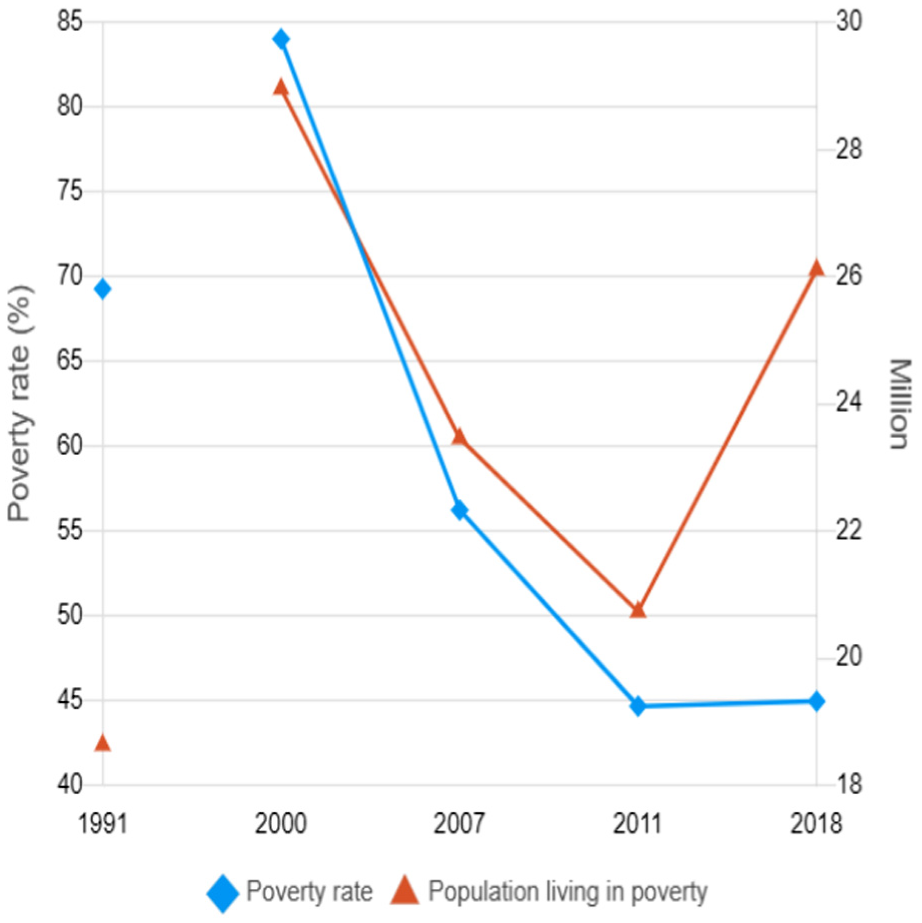
Tanzania’s share of the population and population living in poverty below the international poverty line of $2.15 per day (1991–2018).
Diversifying rural livelihoods remains one of the viable strategies for addressing poverty in rural areas of SSA. Diversifying rural livelihood strategies means constructing a diverse portfolio of income-generating activities and social capabilities for poor rural households to survive and improve their living standard (Ellis, 2000; Martin & Lorenzen, 2016). These strategies are very effective in lifting people out of poverty and improving the general rural livelihoods. Rural livelihood diversification could include two significant things: crop diversification and non-agricultural activities or off-farm livelihood diversification (Chmielinski et al., 2023). Non-agricultural income prepares rural smallholder farmers for market price fluctuation, natural disasters, climate change, and other shocks. At the same time, crop diversification helps farmers build resilient livelihoods during shocks or crises that may face agriculture, such as climate change or market crises.
Against this background, the present study intends to explore the potentials and challenges for rural livelihood diversification and poverty alleviation in SSA—one of the regions with high rural poverty rates despite having different assets for development. The rationale for studying these three themes is guided by their close interconnectedness and how every aspect impacts one another. Livelihood diversification is a strategic approach to reducing poverty by creating diverse income sources. Rural livelihood diversification is a tool for improving farmers’ income and, hence, improving different development sectors, including infrastructure, education, health, environment conservation and economic opportunities, which are crucial for diversification. Livelihood diversification is also a viable tool for rural development and poverty alleviation, which is a primary focus of international development agencies, continents and countries’ development visions.
Research Method
The present study employs a systematic review to explore the potential and challenges for rural livelihood diversification in SSA—one of the regions with high poverty rates. The Preferred Reporting Items for Systematic Reviews and Meta-Analyses (PRISMA) guided the study in obtaining and examining relevant literature on poverty alleviation and rural livelihood diversification in SSA. PRISMA helps obtain more unbiased and reliable analytical outcomes from diverse sources (Liberati et al., 2009). PRISMA also helped the researchers to “transparently report why the review was done, what the authors did, and what they found” (Page et al., 2021).
Search Strategy
A comprehensive search was conducted using three academic databases: Web of Science, Scopus, and Google Scholar. While Scopus and Web of Science were prioritized for their indexing rigor, Google Scholar was included to ensure broader coverage of the topic and include region-specific peer-reviewed articles and gray literature not indexed in Scopus and Web of Science. These search engines contain diverse academic and gray literature, including peer-reviewed articles, reports, books, and theses on livelihood diversification. Keywords such as “rural livelihood diversification” OR “livelihood diversification” OR “income diversification” AND “rural development” OR “community development” OR “rural progress” OR “rural economic growth” AND “poverty alleviation” OR “poverty reduction” OR “poverty eradication” OR “poverty elimination” AND “sub-Saharan Africa” OR “Africa,” were identified to get the relevant literature. The first search from the three search engines produced 1,936 results. Further, the articles were screened based on the title to remove irrelevant articles. We conducted a full-text review of the remaining articles based on inclusion and exclusion criteria.
Inclusion and Exclusion Criteria
To obtain valid results, the researchers set out inclusion and exclusion criteria. These criteria were developed to ensure that only those studies relevant to the central research question are included in the review. The following inclusion criteria were used.
Peer-reviewed articles that cover the Sub-Saharan Africa region
Articles published between January 1, 2015 and April 2025
Articles that discussed livelihood diversification and its connection to rural development and poverty alleviation
Articles published in English
Studies with precise and clear methods and relevant findings
The following criteria excluded studies irrelevant to the central research question and inclusion criteria.
Studies focusing on other regions apart from Sub-Saharan Africa
Studies that do not discuss issues related to poverty alleviation, rural development, and livelihood diversification
Articles published in a language other than English
Studies published before January 2015
Non-peer-reviewed papers (except in cases of highly relevant gray literature)
Screening and Selection Process
The screening stage examined article types, titles, and abstracts to avoid data duplication and determine article relevancy. The full-text screening was conducted separately by the first and second author to assess the relevance of the studies, and their method was straightforward. After a deep review, the studies that met the full-text screening criteria were selected for detailed data extraction. The authors used extraction guidelines to record relevant information such as research objectives, methods, key findings, and recommendations. These ultimately helped the authors to draw a clear direction of what is happening in SSA based on potentials and challenges for livelihood diversification, rural development, and poverty alleviation. In the first search, 1,936 results were obtained. After removing some records based on the inclusion and exclusion criteria, the authors had 48 peer-reviewed literature for review (Appendix 1). The last author confirmed the search strategy and screening process before reaching the final decision. The overall literature search process can be seen in Figure 2 below.

A literature search using the PRISMA guide.
Results: Authors, Methods, Year of Publication and Themes in Rural Livelihood Diversification and Poverty Alleviation
This section summarizes the systematic review results under four broad headings: year of publication, author demographics, research methods and themes in rural livelihood diversification and poverty alleviation. An Excel sheet was used to visually represent the results presented in this section.
Distribution of the Reviewed Articles Based on the Year of Publication
It was important to describe the trend and distribution of the reviewed articles based on the year of publication (Figure 3). 2016 was ranked as a year with many reviewed articles, where nine out of 48 reviewed articles were published this year. The highest trend was also observed in 2018 and 2022, with seven and six publications, respectively. 2019, 2021, and 2025 were ranked with the least publications, with only two reviewed articles each year. The remaining years are 2015, 2023, and 2024, with three articles, and 2017 and 2020 with four articles each. The peak in 2016 may reflect the increased academic and policy interest in poverty alleviation after introducing the United Nations Sustainable Development Goal in 2015, which mainly focused on poverty eradication and rural livelihood improvement. Again, the increased number of publications on the topic in 2018 and 2022 can be linked to the duration of the SDGs implementation review in 2018 and the post-COVID-19 focus on resilience and economic recovery in 2022. A few publications on the topic in 2019 and 2021 might correlate with the disruption caused by the COVID-19 pandemic, which diverted research priorities toward health and economic crises rather than long-term development strategies. For 2025, we used only articles published within 4 months.

Distribution of the reviewed articles based on the year of publication.
Distribution of the Reviewed Articles Based on Authors’ Demographics
We analyzed the reviewed articles based on the author’s demographics. To ensure clarity, our analysis of the author demographics was based on the institutional affiliation of the first author (Figure 4). Based on this analysis, 14 out of the 48 reviewed articles appeared to be written by authors affiliated with institutions located in Ethiopia. This was the only highest trend recorded in our review. The second highest trend was observed in Nigeria, where six reviewed articles appeared to be written by authors affiliated with institutions in Nigeria. South Africa followed this trend with five articles, and authors affiliated with institutions from Australia with three articles. The rest of the articles appeared to be written by authors affiliated with institutions from Ghana, Tanzania, the United Kingdom, the USA, and Zimbabwe, and two articles appeared from each country. The rest of the countries were presented with one article each. Ethiopia’s dominance in this study area highlights its active research focus on rural livelihood, possibly because of the high rural poverty rate and government initiatives promoting diversification (Eyasu, 2020). Nigeria and South Africa’s contribution reflect their larger economies, with Nigeria focusing on agro-pastoral challenges and South Africa on policy and infrastructure. Limited representation from other countries shows the gap in research coverage from different countries, with unique contexts requiring further exploration.

Distribution of the reviewed articles based on authors’ demographics.
Distribution of the Reviewed Literature Based on the Methods
It was important to analyze the reviewed articles based on the methods (Figure 5). 18 (38%) out of 48 reviewed articles used mixed methods. Besides, 15 reviewed articles (31%) employed quantitative methods, and 11 reviewed articles (23%) used qualitative approaches. The remaining four articles (8%) were reviewed articles. The trend observed in the method used, which is dominated by mixed methods, indicates a recognition of the complexity of livelihood diversification, requiring numerical data and qualitative narratives such as stakeholder perceptions.

Distribution of the reviewed literature based on the methods.
Themes in Rural Livelihood Diversification and Poverty Alleviation
All the reviewed articles had themes of rural livelihood diversification and poverty alleviation. Most of the reviewed articles presented the diversification out of agriculture, where rural people opt for other income-generating activities in combination with agriculture. Some studies suggested diversification within agriculture, particularly in crop diversification or combining crop cultivation, animal keeping, aquaculture and beekeeping. Most studies emphasize diversification within agriculture (crop diversification, aquaculture) or outside agriculture (tourism, ICT and business). Diversification out of agriculture influences the shift from substance farming to multiple income sources, aligning with global economic complexity trends. Diversification within agriculture highlights the importance of climate-resilient practices such as agroforestry and aquaculture for food security and risk mitigation. The subsequent section discusses the potential and challenges limiting rural livelihood diversification and poverty reduction in SSA.
Potentials for Rural Livelihood Diversification and Poverty Alleviation in SSA
As stated earlier, SSA is one of the regions with a high rural poverty rate. Overreliance on agriculture as the main source of food and income is cited as one of the reasons for the high poverty rate in this region. However, the region is blessed with abundant potential that could be used to combat poverty in combination with agriculture. This section describes some potential opportunities that, if well utilized, could help transform the SSA’s rural economy, alleviate poverty, and promote rural development. These five potentials were identified based on their recurrence in the literature, aligned with sustainable development goals and scalability across SSA, specifically in rural contexts. Other potentials, such as mining, were noted, but their coverage was limited to localized case studies, suggesting lower generalizability. The selected potentials collectively address poverty and ensure rural development.
Rural Tourism and Eco-tourism
Across the globe, tourism is considered an industry that highly contributes to income generation and job creation (Bires & Raj, 2020). Rural and eco-tourism represent high-potential livelihood diversification and poverty alleviation in Africa, where rural areas have a rich cultural heritage and natural resources yet to be utilized to transform rural livelihoods. Rural tourism and eco-tourism can integrate income generation, environmental conservation, and cultural preservation. The study found that SSA has many rural tourist and eco-tourism opportunities that are unexplored and yet to be utilized to transform local peoples’ livelihoods (Haulle et al., 2024). Eco-tourism initiatives such as community-based wildlife management can offer significant potential for reducing poverty and promoting rural development in SSA. Rural tourism creates many employment opportunities to help rural people generate income that helps to improve households’ livelihoods and fund community development projects (Bires & Raj, 2020). Rural tourism in Ethiopia provides an alternate livelihood option for rural households. In protected areas, conservationists and managers of natural resources might recognize tourism as an alternative livelihood strategy for local communities residing in and around these places. Tourism’s contribution to rural areas leads to poverty reduction and decreased income inequality in rural areas.
In northern Tanzania, rural tourism has successfully created economic opportunities for the Maasai community by generating revenue through game drives, cultural tours, and walking safaris (Mbowe et al., 2021). The revenue collected is used to fund community development projects and provide direct income to residents. The communities gain economic benefits through participation in nature-based tourism, environmental awareness, and conservation, promoted by the link between tourism development and biodiversity conservation. In Botswana, the tourism sector has been identified as a new engine of growth, with the potential to conserve natural resources, diversify the economy, and improve local livelihoods (Kolawole et al., 2023). Cultural resources found in rural areas can also significantly enhance rural livelihood diversification and hence create resilient rural livelihoods (Mgonja et al., 2015; Mtani, 2023). Rural development and poverty alleviation can be achieved should all potential for rural tourism and eco-tourism available in SSA be effectively utilized.
Rural Electrification
In many African countries, electricity penetration in rural areas has rapidly increased in the past decade. Rural electrification is essential in ensuring livelihood diversification and rural development in Africa. Improving the availability of electricity in rural areas influences socio-economic opportunities that the rural people can use to diversify from depending only on agricultural activities (Haulle & Ndimbo, 2024). Besides, electricity enhances agricultural productivity, ensures food security, provides the chance for agro-processing and value addition, and creates new income for rural households (Loison, 2015). Electricity supports the establishment of small and medium enterprises, such as milling, welding, and carpentry workshops, which provide employment and economic growth. The study from Ethiopia shows that different electrification programs have played a significant role in electrifying rural communities, which enabled the rural household to engage in diverse income-generating activities such as poultry farming, grain milling, and small-scale manufacturing (Soressa & Gebre-Egziabher, 2024).
Elsewhere in Kenya, electricity supply in rural areas has enhanced the growth of small business operations, leading to livelihood diversification. Electrification has enhanced electric production tools for milling and packaging for value addition (Kuloba, 2017). In Rwanda, solar energy projects have increased rural access to electricity and enabled the emergence of new economic activities, such as small-scale industries and improved education and health services (Hakizimana et al., 2020). Similar achievements have been reported in Tanzania, where rural electrification has enabled the emergence of off-farm activities and businesses such as milling, tailoring, and retail shops, which often operate alongside farming activities. Non-farm activities help communities reduce their dependence on agriculture as their primary source of income (Bensch et al., 2019). Effective utilization of rural electrification can create an avenue for rural livelihood diversification and hence help to alleviate rural poverty and promote rural development in SSA.
Agricultural Diversification and Intensification
Most rural people in SSA engage in small-scale subsistence agriculture, which only helps them to obtain food with little or no surplus. One of the main challenges is relying on single, mainly staple food crops such as maize and rice or simply relying only on crop production while ignoring animal keeping or vice versa. Nevertheless, agricultural and crop diversification is important for building resilient rural livelihoods. Many rural areas of SSA have potential for food and cash crop production and animal keeping. Crop diversification can help rural households reduce the risk of crop failure, climate change, and market fluctuation (Waha et al., 2018). Besides, combining crop production with animal keeping helps to diversify income sources and build resilient rural livelihoods (Musumba et al., 2022). In SSA, crop diversification can serve as a strategy for poverty reduction, as households that cultivate different types of crops are less likely to be poor (Michler & Josephson, 2017).
Different countries have implemented policies that influence agricultural diversification to improve the livelihood of farmers and rural communities at large. Evidence from Ghana shows that cocoa agroforestry systems combine cocoa cultivation with timber and fruit trees, ensure the maintenance of biodiversity, improve soil fertility, and provide diverse income sources for farmers (Asare et al., 2016). In Kenya, the government has emphasized crop diversification and value addition in agriculture. The diversification from staple crops to horticultural crops such as passion fruit has been identified as one of the valued fruits that can add more income because they are resistant to drought conditions. The fruit’s return is higher than other cereal crops grown in the area. Farmers growing more than three crops receive a higher return than those producing only one kind of crop (Kassie et al., 2017; Kemboi et al., 2020). Poultry farming is another opportunity that can be integrated with crop cultivation to improve rural livelihoods. Poultry farming can help farmers acquire higher income as it requires less land and feed, ensuring a quick income source, especially for women and landless households (Melketo et al., 2019). Rearing animals such as rabbits, chickens and goats have been identified as one of the major strategies of livelihood diversification in Nigeria and women from Wareri and Dilmari communities generate income that meets their needs and reduces the impact of harvest loss (Mohammed & Favretto, 2025) The adoption of agricultural diversification and intensification not only contributes to poverty alleviation and rural development but also contributes to creating resilient rural livelihoods since it enables rural people to overcome shocks and stress such as climate change and other related stresses (Kassie, 2018).
Fisheries and Aquaculture Development
Aquaculture represents another important opportunity that can be used to transform rural livelihoods in SSA. With abundant water resources such as rivers, dams, lakes, and oceans, most of them located in rural areas, SSA has the potential to harness this opportunity and serve as a tool for rural poverty alleviation. In some areas, aquaculture has become one of the forms of farming practiced alongside traditional agriculture. It provides rural households with an alternative food source and income (Gambe, 2015). Small and large-scale fisheries and aquaculture have contributed to the development of rural households by providing employment and ensuring food security (March & Failler, 2022). To some extent, aquaculture requires access to start-up capital and running costs that create barriers to low-income households (Adeleke et al., 2021). However, fisheries and aquaculture are the best strategy for rural households. Ensuring the availability of capital and credit can influence rural individuals to diversify their livelihood and obtain income.
Furthermore, aquaculture is less labor-intensive than other agricultural activities. A study from Angola shows that apart from small-scale fishers obtaining food from fishing, they also get diversified income to cope with climate change (March & Failler, 2022). Households diversifying to aquaculture activities earn higher incomes than non-aquaculture households (Kemboi et al., 2020). Although aquaculture has been considered a potential way for poverty reduction and food in SSA, only a few farming households make their primary income from aquaculture, which means there is still good potential for developing aquaculture activities in Africa that can benefit a large rural population (Kaminski et al., 2024). Aquaculture contributes 12% of households’ income from those with diversified livelihoods (Kassam & Dorward, 2017). Aquaculture can contribute significantly to resilient rural livelihoods if combined with other livelihood activities such as crop cultivation and animal keeping (Limuwa et al., 2018).
Information and Communication Technologies (ICTs) and Digital Services
ICTs and digital services are among the profound tools that could help rural people make a difference in their lives. In many rural areas of SSA, the penetration of ICT tools and digital services has rapidly increased over the past two decades. The penetration of ICT and digital services into the countryside helps rural people to engage in different income-generating activities by improving access to important information, markets, and services (Baird & Hartter, 2017). The penetration of mobile banking and digital payment technologies has enhanced financial inclusion, allowing rural communities to participate in many economic activities, including small-scale trading. ICT creates new economic prospects in rural areas, linking these regions with national and global information, knowledge, and breakthrough mobile technologies that may inspire young entrepreneurs to pursue a broader range of endeavors (Onuoha & Chidinma, 2016). Access to digital financial services in rural areas is directly associated with the diversification into non-farm income, influenced by the allocative efficiency of these services, especially credit access, which provides the rural populace with capital to initiate non-farm enterprises (Atta-Ankomah et al., 2024).
There is a high advancement of digital services, and people get self-employment from the advancement of the digital world. This growth enhances livelihood diversification and rural household participation in digital businesses (Li et al., 2024; Wang & Wei, 2023). This proves that digital ability and livelihood diversification positively influence household income. In Tanzania, mobile phones have been used for income-generating activities and transferring money between individuals. Young men seeking wage labor migrate from rural areas to Arusha town to support their rural households, use phones to stay connected with sending areas, and support social networks (Baird & Hartter, 2017). ICTs also help to revolutionize agriculture by enhancing farmers’ access to agricultural knowledge, technologies, market information, weather forecasts, and financial services (Ndimbo et al., 2024, 2025; Nyagango et al., 2023). In Malawi, ICTs have been reported to raise women’s income as they enhance women’s access to information on the establishment and operation of micro-enterprises and markets (Malanga & Banda, 2021). Using ICTs in the wider rural contexts can help create many opportunities for rural people and hence help diversify the economy away from agriculture.
Challenges for Livelihood Diversification and Poverty Alleviation in SSA
This section describes challenges limiting rural livelihood diversification and poverty alleviation in SSA to achieve the 2030 UN Agenda for Sustainable Development. Despite having lots of potential for rural livelihood diversification and poverty alleviation, it is argued that SSA still lags behind in implementing the strategies that could help achieve the 2030 UN agenda for sustainable development. Limited access to finance, infrastructure deficits, inadequate education and skills training, and climate change impacts are among the main challenges hindering SSA’s rural livelihood diversification and poverty alleviation.
Limited Access to Finance
Access to finance is one of the essential components for improving rural development and promoting livelihood diversification in SSA. Despite the importance of finance, many rural households face challenges in obtaining credit (Habib et al., 2023). Rural people lack collaterals that meet the criteria in financial institutions such as banks. For instance, although rural people in SSA own land, in most cases, their land cannot be used as collateral to access loans. In many sub-Saharan African countries, the land tenure system is classified into two groups: (i) customary/traditional and (ii) statutory/state land tenure system. The most commonly used land tenure system is the customary land tenure system, where land rights are organized based on traditional arrangements and mainly governed by chiefs, rules, or village councils. The statutory land tenure system is primarily organized in statutory forms of legal security, such as individual land titles (Msangi et al., 2023). However, most of the rural people in SSA own land under a customary land tenure system without legal land titles, and financial institutions cannot issue loans without individual land titles recognized by the public institutions (Kalidou et al., 2024; Msangi et al., 2023).
The lack of financial institutions and services that can provide services and meet the specific needs of rural people is another challenge. Most financial institutions are located in urban areas, and their services mainly target urban dwellers. This makes it difficult for rural people to travel to urban areas looking for financial services. Even a few financial services benefiting rural people fail to benefit them mainly due to a lack of perfect information. In many countries, such as Nigeria, the level of financial inclusion in the agriculture sector and the ability to access formal financial services among rural smallholder farmers is very low, limiting agricultural diversification (Arowolo et al., 2022; Fowowe, 2020). Financial exclusion among the rural people limits their ability to invest in farm and off-farm economic generating activities. Rural people also fail to invest in new technologies that could enhance productivity and efficiency. In most cases, rural people find it difficult to diversify into new livelihood opportunities due to a lack of start-up and working capital (Habib et al., 2023; Mohammed & Favretto, 2025). Lack of credit limits the opportunities for scaling up the operations (Musumba et al., 2022). Furthermore, the absence of financial services such as savings accounts, insurance, and mobile banking imposes challenges on rural people, making rural households vulnerable to economic shocks and natural disasters. For example, in Ethiopia, the lack of credit facilities and market accessibility has reduced the ability of the pastoralists to diversify from doing only livestock keeping to other activities (Debele & Desta, 2016).
Infrastructure Deficits
The availability of infrastructure, such as roads, electricity, and communication networks, substantially improves economic opportunities and livelihoods in rural areas (Habib et al., 2023; WorldBank, 2019a). Nevertheless, many rural areas of SSA lack reliable infrastructures that could help to catalyze livelihood diversification, reduce poverty, and promote rural development. Road networks are crucial infrastructures that are needed to enhance development. However, in many countries, rural roads are poor, and governments prioritize constructing and renovating urban roads while marginalizing rural ones. Most rural roads in SSA are seasonal and cannot allow people and goods to move during the rainy season (Ngezahayo et al., 2019). Poor road networks in rural areas limit access to the market as farmers face difficulties in transporting their produce, leading to post-harvest losses and reduced incomes (Olorunfemi, 2020). Poor road quality means that farmers are forced to sell their produce at a lower price, which in turn reduces the ability of the rural household to acquire enough income to allow them to serve enough capital for livelihood diversification (Wu et al., 2019).
Furthermore, limited access to electricity in many rural areas limits the use of modern farming tools and preservation technologies, which can be essential for improving agricultural productivity and sustainability. Farmers cannot use advanced technologies such as irrigation systems, mechanized farming tools, and refrigeration without enough electricity or with high costs. This lowers productivity and limits income, leading to low investment in other diversified livelihood opportunities. Besides, in areas with rural electrification schemes, the ability of rural people to use electricity as a catalyst for livelihood diversification or agricultural production is constrained by the high cost of electricity (Kalidou et al., 2024). In some parts of the world, such as Southeast Asia, the governments have not only ensured electricity supply in rural areas but also subsidized the cost to ensure that farmers effectively use electricity to increase agricultural productivity (Mutambara et al., 2016).
Limited communication networks also limit the availability of important information and services. Limited internet and mobile connectivity impede access to market information, weather forecast information, and agricultural extension services, which can help make informed decisions (Yona & Mathewos, 2017). Rural communities still face challenges when diversifying their livelihood beyond farming, such as a lack of access to markets, technology, and information (Debele & Desta, 2016). As the world rapidly moves toward the digital economy, effective digital platforms linking rural and urban dwellers could help rural people. In SSA, post-harvest losses due to a lack of infrastructure and inadequate preservation technologies have reduced the revenue of fishers and traders (March & Failler, 2022). These problems limit income growth and increase poverty among rural dwellers.
Inadequate Education and Skills Training
Lack of education and vocational training in SSA has a greater impact on livelihood diversification and rural development. Limited access to quality education left the rural population lacking skills that could enable them to engage in higher-paying jobs and business activities (Yona & Mathewos, 2017). Limited availability of educational infrastructure such as schools, trained teachers, and educational materials exposes the rural population to low educational attainment and poor quality education in rural areas (Loison, 2015). Lack of education influences the cycles of poverty and underdevelopment as individuals in rural areas fail to pursue higher education or training that could help them get employment and economic potential (Asfaw et al., 2017). Without enough skill, the rural population remains trapped in traditional agricultural activities, unable to penetrate diverse economic opportunities. Due to limited skills and training in rural areas, some important income-generating activities, such as agro-processing, small-scale manufacturing, or other service-oriented businesses, such as tourism and hospitality, remain underutilized (Sallawu et al., 2016). Both entrepreneurship and economic development require enough skills and education to ensure critical thinking, problem-solving, and innovation. With insufficient education and training, individuals lack the skills to create and operate new businesses, limiting economic diversification and job creation in rural areas. Also, limited educational opportunities cause rural household generations to remain trapped in low-income and subsistence agriculture, facilitating the growth of the cycle of poverty and hindering the overall rural development and economic growth in SSA (Tenaw, 2016). Besides, lack of formal education and skill training reduces an individual’s opportunities to obtain paid work, particularly in government (Nyathi, 2024).
Climate Change Impacts
Climate change poses significant challenges to livelihood diversification in SSA, specifically agricultural households. Climate change directly affects rural development and poverty reduction efforts in SSA. Due to high reliance on rain-fed farming, many households in SSA rural areas are highly affected by climate change (Kuhl et al., 2022). One of the biggest impacts of climate change on agriculture is low agricultural productivity, which directly reduces rural household’s income and food security (Duale, 2024). Climate change impacts affect the efforts to improve agricultural productivity. Climate change discourages farmers from investing in a more commercialized farming system that requires high capital investment. With the impact of climate change, rural development and efforts to improve agricultural practices and infrastructure are highly affected, and farmers fail to plan and invest in other diversified activities. In Ethiopia, the financial instability resulting from low harvests makes farmers less likely to take risks or invest in diversification strategies that could protect them from climate shocks (Habib et al., 2023). Climate change makes farmers vulnerable to shocks and less capable of sustaining their living (Mishi et al., 2020). When agricultural income decreases due to climate change, households obtain fewer resources to invest in education, healthcare, and other social services (Admasu et al., 2022). Nyathi (2025) highlighted that the fishing industry faces challenges due to changing sea currents and the increase of warming in the ocean, which reduces the fish population and hence affects the income and food security of the households depending on fishing.
Way Forward for Livelihood Diversification and Poverty Alleviation in SSA
Given the challenges of livelihood diversification and poverty alleviation in SSA, this section describes various strategies that can be taken to enhance rural livelihood diversification, alleviate poverty, and foster rural development. These strategies range from investing in low-cost innovation, investing in human capital, enhancing credit and market access, and infrastructure development, as detailed below:
Invest in Low-Cost Innovation
Allocating resources in a low-cost innovation is important in promoting rural diversification in Africa. Rural households mostly depend on agriculture for their livelihood. However, agriculture is highly affected by climate change, price fluctuation, and market challenges. Investment in low-cost innovations such as solar-powered irrigation systems can allow rural livelihood to diversify their economies by ensuring employment availability and increasing agricultural productivity (Jauhiainen & Hooli, 2019). Innovation involves introducing new products, processes, or services. It may also involve technology, business, or physical activities, which are critical for development (Ndesaulwa & Kikula, 2016). This innovation has to align with the local conditions to ensure effectiveness. A solar-powered irrigation system can be more effective in a ride region or as a mobile-based agricultural advisory service for remote communities. For example, pilot projects in Tanzania and Kenya have demonstrated the significance of solar dryers in reducing post-harvest losses, yet scalability remains low due to funding gaps (Amjad et al., 2023; Mwaijande, 2024).
Encouraging innovation through supportive policy that can enhance the acquisition of cheap entrepreneurial skills can improve the livelihood of informal players (Makate et al., 2019). Developing and scaling up locally grounded technological innovation could solve the lack of sound industrial and technological framework for addressing the local problem of food insecurity and agricultural productivity (Mujeyi et al., 2015). Therefore, governments, the private sector, investors, development institutions, and organizations must focus on creating supportive policies that include infrastructure development, education, and access to finance. Also, ensuring good public policies that foster innovation will enhance the adoption of new technologies among rural individuals. For instance, the government in collaboration with universities and private sector can establish innovation hubs in rural areas to develop affordable technologies. Furthermore, community participation in designing and implementation of innovations facilitate adoption and sustainability.
Invest in Human Capital
Investing in human capital is vital for livelihood diversification and rural development in SSA, where most rural households rely on small-scale subsistence agriculture. Human capital includes knowledge, skills, and health that enhance individual productivity (Wondim, 2019). There is a need to facilitate human capital, specifically in rural areas, to ensure skilled personnel’s capability to create and innovate new products and processes to diversify their livelihood. Rural households must be equipped with skills and training to increase their productivity (Douglas et al., 2018). Expanding vocational training programs directed to rural needs, such as agro-processing, eco-tourism and small business management, can positively influence household participation in income diversification activities. Farmers with higher educational levels are more likely to diversify livelihood strategies into non-farming activities. Developing skills through training significantly impacts rural households (Debele & Desta, 2016). Farmers who access the training are likelier to improve agricultural production and productivity to fulfill household needs (Asfir, 2016). In Maasai Mara, Tanzania, adopting different livelihood strategies is associated with the household head’s educational level. Households with literate heads are more likely to choose diversified livelihood activities than those with illiterate household heads (Asfir, 2016). In Ethiopia, studies show that education enhances the capability of households to make informed decisions concerning the choice of non-business activities, revealing that educated individuals in rural households have greater access to technologies and can design and implement alternative livelihood opportunities besides farming activities (Asfaw et al., 2015; Dzanku, 2015; Fassil & Elias, 2016). Women in Nigeria acknowledge that capacity building training on alternative income generating activities such as making of detergents, soaps and pomades from non-governmental organization has expanded their knowledge and enhanced their income generation capacity (Mohammed & Favretto, 2025). Generally, families with strong human capital are more likely to be highly diversified than those with weak human capital (Helmy, 2020). In this view, enough efforts are required to ensure rural households have enough human capital to make decisions on livelihood diversification and improve the living standard of rural communities.
Enhancing Credit and Market Access
Access to credit and market are among the main challenges limiting livelihood diversification in rural Africa. Many African rural households still face challenges in accessing market and financial services. Improving smallholder farmers’ and rural households’ access to credit and markets can help diversify their livelihoods and hence help to reduce poverty (Tsegay et al., 2021). Access to credit will allow rural households to invest in productive activities and modern technologies and engage in non-farm income-generating activities (Sallawu et al., 2016). Credit availability positively affects livelihood diversification, as access to credit allows rural households to establish non-farm activities (Musumba et al., 2022). The research on non-farm enterprise activities in six countries in sub-Saharan Africa found that rural households with access to credit are more likely to engage in non-farm enterprises (Nagler & Naudé, 2017). In Ethiopia, it was found that farmers who lack capital sources and credit access were directly affected by engaging in the non-farm sector. Therefore, education, land ownership, and access to credit for work are the key determinants of livelihood diversification (Mentamo & Geda, 2016). The study from Algeria shows that access to market information significantly influences rural household on-farm diversification (Sallawu et al., 2016). Accessibility to market areas is considered a determinant for the rural population to engage in non-farm activities, as better access to market sites ensures the profitability of non-farm activities (Asfaw et al., 2017).
Infrastructure Development
Infrastructure development has been cited as a crucial tool for promoting development. Both physical and soft infrastructure are crucial in promoting rural development and enhancing rural livelihood diversification. However, as stated earlier, SSA faces a significant challenge due to limited infrastructure, particularly in rural areas. Infrastructure is seen as an element that enhances economic performance in the development of economic growth theory. For instance, robust infrastructure is a critical element that fosters the expansion of the agricultural sector (Wu et al., 2019). Infrastructure includes public utilities such as electricity, telecommunications, piped water supply, sanitation and sewage systems, solid waste management, piped gas, public works, and various transportation sectors, including roads and irrigation (Helmy, 2020). Access to infrastructure services, including electricity, water and sewage, markets, transport networks, telecommunications, education, and healthcare, is recognized as a crucial determinant for sustained and accelerated growth (Nagesso et al., 2018). Improving rural infrastructure will lead to the expansion of the markets, improving food security, job opportunities, and greater access to factors of production and productivity, allowing diversification of livelihood strategies (Nagesso et al., 2018). Rural livelihood diversification is facilitated by infrastructure development, emergency of rural towns, and linking rural to urban. In many instances, the quality of public infrastructure correlates closely with the diversification of livelihood strategies in rural communities as rural households transition from a singular approach to many strategies. Depending on the available infrastructure, they initiate various trades and participate in both skilled and unskilled labor for wages (Loison, 2015).
Conclusions
Rural livelihood diversification presents promising potential for facilitating rural development and eliminating poverty in SSA. This study has explored the potential and challenges for rural livelihood diversification and poverty alleviation in SSA. The findings show that, despite having a high potential for rural development and poverty alleviation, SSA is one of the regions with high rural poverty rates highly associated with limited rural livelihood diversification. Most rural people in this region rely on agriculture as their only source of earning a living. Development potentials in these areas have not yet been utilized to improve people’s livelihoods. Diversifying rural livelihoods could allow the rural economy to diversify away from agriculture and create room for poverty alleviation and rural development. Rural livelihood diversification can be a viable way to improve rural household welfare and help people build resilience against climate change, pandemics, and other common problems.
Addressing challenges that constrain rural livelihood diversification and poverty alleviation in SSA is an aspect that needs collaborative efforts from government and non-government actors as well as multi-sectoral linkages. These cooperative efforts should put rural communities at the center, ensuring that rural diversification plans, implementations, and evaluations are based on rural people’s decisions. These collaborative and participatory efforts would help bring sustainable solutions to rural poverty since different rural settings need different development solutions. Furthermore, this study suggests investment in low-cost innovation, human capital development, and the creation of supportive policies to address rural development challenges and provide a pathway for unlocking livelihood diversification potentials in SSA. Innovations such as renewable energy-powered irrigation systems and ICT-driven solutions could give rural households more opportunities for income generation. Moreover, investment in education and vocational training could provide rural people with knowledge and skills to diversify their livelihoods. Besides, ensuring rural people’s access to credit and markets is an aspect that could help improve agriculture and other rural-based economic sectors, alleviate poverty, and promote rural development. SSA could move in a good direction toward achieving the 2030 UN Agenda for Sustainable Development, which, among other things, aims to end poverty in all its forms and improve people’s welfare should there be deliberate, collaborative efforts from different stakeholders and sectors.
Limitations of the Study and Areas for Further Research
Despite its contribution, this study has limitations. The review primarily focuses on sub-Saharan Africa, which may limit the generalization of the findings to other regions with different socio-economic contexts. Future research should assess the long-term impact of livelihood diversification strategies, and comparative studies across various regions can be done to provide a deeper understanding of context-specific solutions.
Footnotes
Appendix
List of the Reviewed Literature.

| SN | Name of authors | Year of publication | Author’s nationality | Title | Journal/publisher | Methodological distribution | Theme in livelihood diversification, rural development, and poverty alleviation |
|---|---|---|---|---|---|---|---|
| 1 | Gamble | 2015 | Zimbabwe | Diversification of rural livelihoods in Chivi district, Masvingo: exploring the contributions of aquaculture | Journal of international academic research for multidisciplinary | Qualitative | Diversification of rural livelihoods and aquaculture |
| 2 | Asfaw et al. | 2015 | Italy | Livelihood Diversification and Vulnerability to Poverty in Rural Malawi | AgECon Search | Quantitative | Livelihood diversification and poverty |
| 3 | Loison | 2015 | Sweden | Rural Livelihood Diversification in Sub-Saharan Africa: A Literature Review | The Journal of Development Studies | Review | Rural livelihood diversification |
| 4 | Asfir | 2016 | Ethiopia | Determinants of Rural Households Livelihood Strategies: Evidence from Western Ethiopia | Journal of Economics and Sustainable Development | Mixed research method | Determinant of livelihood strategies |
| 5 | Sallawu et al. | 2016 | Nigeria | Determinants of Income Diversification Among Farm Households in Nigeria State in Nigeria | Russian Journal of Agricultural and Socio-Economic Sciences | Quantitative method | Determinants of income diversification |
| 6 | Asfaw et al. | 2016 | Italy | Diversification strategies and adaptation deficit: Evidence from rural communities in Niger | AgEcon Search | Quantitative | Diversification strategies and adaptation deficit |
| 7 | Hilson | 2016 | United Kingdom | Farming, small-scale mining and rural livelihoods in Sub-Saharan Africa: A critical overview | The Extractive Industries and Society | Quantitative | Farming, small-scale mining, and rural livelihoods |
| 8 | Onuoha & Rajc | 2016 | Nigeria | ICT for Sustainable Economic Development and Growth in Rural Areas | International Journal of Computer Science and Mathematical Theory | Qualitative | ICT and sustainable economic development |
| 9 | Eshetu & Mekonnen | 2016 | Ethiopia | Determinants of off-farm income Diversification and Its Effect on rural households’ poverty in Gamo Gofa Zone, Southern Ethiopia | Journal of development and agricultural development | Quantitative | Innovation and development |
| 10 | Debele & Desta | 2016 | Ethiopia | Livelihood Diversification: Strategies, Determinants and Challenges for Pastoral and Agro-Pastoral Communities of Bale Zone, Ethiopia | International Review of Social Sciences and Humanities | Quantitative | Livelihood diversification: strategies, determinants and Challenges |
| 11 | Nagler & Naude | 2016 | Netherland | Non-farm entrepreneurship in rural sub-Saharan Africa: New empirical evidence | Food policy | Mixed research method | Non-farm entrepreneurship in rural Africa |
| 12 | Tenaw | 2016 | Ethiopia | Constraints of Pastoral and Agro-pastoral Livelihood Diversification in Eastern Ethiopia: The Case of Mieso District, Oromia Regional State | International Journal of Sciences: Basic and Applied Research (IJSBAR) | Mixed Method | Pastoral, Agro-pastoral, and livelihood diversification |
| 13 | Michler & Josephson | 2017 | Zimbabwe | To Specialize or Diversify: Agricultural Diversity and Poverty Dynamics in Ethiopia | World development | Quantitative | Agricultural diversity and poverty dynamics |
| 14 | Kassie | 2017 | Ethiopia | Agroforestry and farm income diversification: synergy or trade-off? The case of Ethiopia | Environmental System Research | Quantitative | Agroforestry and farm income diversification |
| 15 | Kassie et al. | 2017 | Ethiopia | Determinant factors of livelihood diversification: Evidence from Ethiopia | Cogent Social Sciences | Mixed research method | Determinant factors of livelihood diversification |
| 16 | Yona & Mathewos | 2017 | Ethiopia | Assessing challenges of non-farm livelihood diversification in Boricha Woreda, Sidama zone | Journal of Development and Agricultural Economics | Mixed Method | Livelihood diversification |
| 17 | Timothy et al. | 2017 | USA | Livelihood diversification, mobile phones and information diversity in Northern Tanzania | Land use policy | Mixed research method | Livelihood diversification and information diversity |
| 18 | Waha et al | 2018 | Australia | Agricultural diversification is an important strategy for achieving food security in Africa. | Global change biology | Quantitative | Agricultural diversification and food security |
| 19 | Kassa | 2018 | Ethiopia | Determinants and challenges of rural livelihood diversification in Ethiopia: Qualitative review | Journal of Agricultural Extension and Rural Development | Qualitative | Determinants and challenges of rural livelihood diversification |
| 20 | Etuk et al. | 2018 | Nigeria | Determinants of livelihood diversification among farm households in Akamkpa local government area, Cross River state, Nigeria | Agrosearch | Mixed research method | Determinants of livelihood diversification |
| 21 | Nyathi et al. | 2018 | South Africa | Diversification and Farm Household Welfare in Grasslands’ A’ Farm, Kwekwe District, Zimbabwe | Kamla-Raj | Qualitative | Diversification and farm household |
| 22 | Achiba | 2018 | Kenya | Managing livelihood risks: Income diversification and the livelihood strategies of households in pastoral settlements in Isiolo County, Kenya | Pastoralism: Research, Policy and Practice | Quantitative | Livelihood strategies of households in pastoral settlements |
| 23 | Nagesso et al. | 2018 | Ethiopia | Public Infrastructures and Livelihood Strategies: The Case of Rural Households in Kersa District, Jimma Zone | Multidisciplinary Journal for Education, Social and Technological Sciences | Mixed research method | Public infrastructures and livelihood strategies |
| 24 | Adzawla et al. | 2019 | Senegal | Effects of climate change and livelihood diversification on the gendered productivity gap in Northern Ghana | Climate and Development | Quantitative | Climate change, livelihood diversification, and gender productivity |
| 25 | Kimengsi et al. | 2019 | Cameroon | Measuring Livelihood Diversification and Forest Conservation Choices: Insights from Rural Cameroon. | MDPI Forest | Mixed research method | livelihood diversification and forest conservation |
| 26 | Helmy | 2020 | Egypt | Livelihood Diversification Strategies: Resisting Vulnerability in Egypt | Working Paper | Mixed Method | livelihood diversification strategies |
| 27 | Mishi et al. | 2020 | South Africa | Livelihood strategies and diversification amongst the poor: Evidence from South African household surveys | The Journal for Transdisciplinary Research in Southern Africa | Mixed research method | Livelihood strategies and diversification |
| 28 | Biresa & Rajc | 2020 | Ethiopia | Tourism as a pathway to livelihood diversification: Evidence from biosphere reserves, Ethiopia | Tourism management | Mixed research method | Tourism and livelihood diversification |
| 29 | Melketo et al | 2020 | Ethiopia | Understanding Livelihood Diversification Patterns among Smallholder Farm Households in Southern Ethiopia | Sustainable Agriculture Research | Mixed method | Understanding livelihood diversification |
| 30 | Abebe et al | 2021 | Ethiopia | The Impact of Rural Livelihood Diversification on Household Poverty: Evidence from Jimma Zone, Oromia National Regional State, Southwest Ethiopia | The scientific world journal | Mixed research method | Rural livelihood diversification and poverty |
| 31 | Mbowe at al | 2021 | Tanzania | Tourism Development in Northern Circuit of Tanzania and Its Contribution to Improving Local People’s Livelihood | Applied Economics and Finance | Qualitative | Tourism development and local people’s livelihood |
| 32 | Admasu et al. | 2022 | Ethiopia | Determinants of Livelihood Diversification among Households in the Sub-Saharan Town of Malawi, Ethiopia | Advances in Agriculture | Mixed research method | Determinants of livelihood diversification |
| 33 | Arowolo et al. | 2022 | Nigeria | Effect of Financial Inclusion on Livelihood Diversification among Smallholder Farming Households in Oyo State, Nigeria | Nigeria Agricultural Journal | Mixed research method | Effect of financial inclusion, livelihood diversification, and smallholder farming households |
| 34 | Musumba et al. | 2022 | USA | Household livelihood diversification in rural Africa | Journal of the international association of agricultural economics | Quantitative | Household and livelihood diversification |
| 35 | Lawi et al. | 2022 | Nigeria | Non-farm livelihood diversification and sub-Saharan Africa’s rural structural transformation: a review | FUDMA Journal of Sciences (FJS) | Qualitative | Livelihood diversification and rural structural transformation |
| 36 | March & Failler | 2022 | United Kingdom | Small-scale fisheries development in Africa: Lessons learned and best practices for enhancing food security and livelihoods | Marine policy | Review | Small-scale fisheries development and food security and livelihood |
| 37 | Roscher et al. | 2022 | Australia | Sustainable development outcomes of livelihood diversification in small-scale fisheries | Fish and Fisheries | Mixed research method | Sustainable development, livelihood diversification, and small-scale fisheries |
| 38 | Kolawolea et al. | 2023 | Botswana | Agrotourism as peripheral and ultraperipheral community livelihoods diversification strategy: Insights from the Okavango Delta, Botswana | Journal of Arid Environments | Qualitative | Agrotourism and livelihood diversification |
| 39 | Ndimbo et al | 2023 | Tanzania | ICTs, smallholder agriculture and farmers’ livelihood improvement in developing countries: Evidence from Tanzania | Information development | Mixed research Method | ICTs, smallholder agriculture, and livelihood diversification |
| 40 | Habib et al | 2023 | Australia | The influence and impact of livelihood capitals on livelihood diversification strategies in developing countries: a systematic literature review | Environmental Science and Pollution Research | Review | Livelihood capital and livelihood diversification |
| 41 | Kaminski et al. | 2024 | Zambia | Smallholder aquaculture diversifies livelihoods and diets, thus improving food security status: evidence from northern Zambia. | Agriculture and food security | Qualitative | Aquaculture, livelihood diversification, and food security |
| 42 | Duale | 2024 | Ethiopia | Challenges and Opportunities of Livelihood Diversification in Ethiopia: A Review Article | International journal of agricultural economics | Review | Challenges and opportunities of livelihood diversification |
| 43 | Mbewana & Kaseeram | 2024 | South Africa | The determinants of livelihood diversification among small-scale rural farmers in Alfred Nzo and King Cetshwayo District, South Africa | Cogent Economics & Finance | Quantitative | Determinants of livelihood diversification and small-scale rural farmers |
| 44 | Ankomaha et al. | 2024 | Ghana | Digital financial services and livelihood diversification in rural Ghana | Cogent Economics & Finance | Quantitative | Digital financial services and livelihood diversification |
| 45 | Atta-Ankomah et al. | 2024 | Ghana | Digital financial services and livelihood diversification in rural Ghana | Cogent Economics & Finance | Quantitative | Digital financial services and livelihood diversification |
| 46 | Nyathi et al. | 2024 | South Africa | Motives and Constraints of Rural Livelihoods Diversification in Dry-Land Agrarian Settings of Matabeleland, Zimbabwe | Journal of Asian and African Studies | Qualitative | Motives and constraints of rural livelihoods diversification |
| 47 | Mohammed & Favretto | 2025 | Nigeria | Livelihood diversification among women farmers in Nigeria’s f lood-resilient drylands | Climate Risk Management | Qualitative | Livelihood diversification and disaster resilience |
| 48 | Nyathi | 2025 | South Africa | Rural transformation in the Global South: Livelihood shocks, Diversification and Household well-being | International Review of Philanthropy and Social Investment | Qualitative | Determinants of rural livelihood diversification and its subsequent impact on household well-being |

Ethical Considerations
Not applicable. The study did not involve human participants.
Consent to Participate
There are no human participants in this article and informed consent is not required
Funding
The authors received no financial support for the research, authorship, and/or publication of this article.
Declaration of Conflicting Interests
The authors declared no potential conflicts of interest with respect to the research, authorship, and/or publication of this article.
Data Availability Statement
Data sharing not applicable to this article as no datasets were generated or analyzed during the current study.