




Abstract
The phenomenon of indigeneship in Nigeria has been a source of significant socio-political tension, influencing policy formulation and the allocation of opportunities. This study investigates how the politics of indigeneship contributes to social exclusion and discrimination against internal migrants. Utilizing a qualitative study design, we conducted 30 in-depth interviews with internal migrants across four main geo-political regions in Nigeria (North, West, East, and South). Participants were selected using purposive and snowball sampling techniques to capture a variety of experiences relevant to the study’s focus. Data were collected through face-to-face, semi-structured interviews and analyzed using thematic analysis. Our findings reveal that the demand for indigeneship fuels social exclusion, with internal migrants facing significant barriers to permanent employment and lucrative opportunities. These exclusionary practices, rooted in ethnic and regional biases, undermine the constitutional rights of Nigerians and threaten national unity. The study highlights the need for policy reforms to address these inequalities and promote social inclusion.
Introduction
In Nigeria and many other regions, indigeneship has been a persistent and contentious issue. It is often used as a criterion to determine resource allocation, employment and political representation. It arouses powerful emotions and often lead to systematic social exclusion of internal migrants. Identity, entitlement, and belonging are all entwined with indigeneship, and this influences relationships and social dynamics within communities (Alabi, 2021). Because of Nigeria’s varied ethnic, religious, and regional makeup, the value of indigeneship has increased. Although diversity contributes to cultural richness, it has also made it difficult to achieve national cohesion and equitable development (Ataide & Enebong, 2020). Indigeneship in this context denotes the condition or state of being an original inhabitant of a particular geographic area. It encompasses a sense of belonging and entitlement to land, resources, and cultural heritage, distinguishing the original inhabitants from newcomers or migrants.
The phenomena of social exclusion, in which certain groups are systematically marginalized and denied full participation in the country’s socioeconomic and political life, is central to the question of indigeneity. Social exclusion can take many different forms, including limited access to education, employment, healthcare, and political representation (Steinert, 2021). The relationship between indigeneity and social exclusion is especially strong in Nigeria, where local laws and policies frequently contradict the federal constitution’s principles of equality and nondiscrimination. Thus, social exclusion is a multidimensional process in which particular persons or groups are systematically disadvantaged, marginalized, or denied full participation in a community’s or society’s social, economic, political, and cultural life (Subedi, 2022).
Indigeneship is a contested term that has divided opinions in Nigeria. Many people have suggested that the politics of indigeneship in Nigeria have influenced state policy creation and the distribution of political and economic opportunities over time, and this is a recurrent subject in the country’s politics (Elom, 2021; Patrick et al., 2021). Who is an indigene, a true native and or, who determines this? The identification certificate given out by local or state government representatives serves as an example of how the term “Indigenous” has evolved into a secondary level of citizenship that is managed by state and local governments as well as individual actors (Mang & Ehrhardt, 2018). The key to unlocking opportunities is this certificate. Gender-based exclusion is the predominant way in which social exclusion is portrayed in certain academic debates. However, Cuesta et al. (2024) note that it is a condition in which people are unable to fully engage in political, social, economic, and cultural life, as well as the processes that create and maintain such a situation. Although it is controversial, it is widely accepted that the root of the problem is a lack of social participation (Birchall, 2019). Although the terms “Indigeneship and social exclusion” have many different connotations, it is important to understand that in Nigeria, indigeneship has covertly evolved into a second degree of citizenship that exacerbates social isolation. In numerous regions of Nigeria, migrants face persistent challenges or social exclusion due to the assumption that they can only be members of a specific ethnic group. Because of this, individuals might not be able to benefit from living in a place or interacting with communities that speak different languages, cultures, or histories (Khatri & Assefa, 2022).
Nigeria is a country known for its ethnic, religious, and cultural diversity, with more than 250 ethnic groupings. This diversity, while providing a rich cultural history, has also played an important role in the nation’s sociopolitical dynamics (Adediran et al., 2021). Nigeria’s indigene-migrant dichotomy stems from the country’s colonial history, which set administrative boundaries and policies that perpetuated ethnic identities and divisions. The colonial administration in Nigeria established a system of indirect authority that supported local ethnic leaders while reinforcing ethnic borders (Uchegbu, 2021). This system created the framework for the modern indigene-migrant divide by establishing a precedent for favoring certain ethnic groups over others within certain boundaries. Nigeria has struggled to balance the interests of its numerous ethnic groups since gaining independence. The federal form of governance was established to provide equitable representation and resource distribution throughout the many regions. However, implementing federal character principles has frequently led to the entrenchment of ethnic divisions, as political elites utilize indigeneity to acquire resources and influence for their constituency (Hamza Bamidele et al., 2020).
The indigene-settler dichotomy in Nigeria has serious implications for social exclusion. Despite constitutional guarantees of equality, state and local regulations frequently discriminate against non-indigenous peoples, preventing them from obtaining jobs, education, and other opportunities. Because of the prevalence of these discriminatory practices, many government officials have normalized them, promoting and legitimizing state and municipal prejudice (Oamen & Erhagbe, 2021). The demand for indigeneship certificates to gain access to numerous opportunities reinforces discriminatory practices (Afonne, 2024; Mang & Ehrhardt, 2018). These policies prioritize ethnic and regional identities over national unity, hence undermining federalism principles and contributing to societal disintegration.
It is estimated that Nigeria will account for 37% of the increase in the urban population and the highest absolute increase in the rural population between 2014 and 2050 (Abubakar et al., 2022; Fox et al., 2018). Other countries are India and China. Considering the magnitude of this projection, internal migration in Nigeria is bound to increase (Akinyemi et al., 2017). In migration literature, internal migration has mostly been discussed as a crucial factor in gaining upward social mobility and economic enhancement (e.g., Umar et al., 2018). The “brain drain/gain” dichotomy, which views the migrating subject as an economic agent, has also been a topic of discussion in migration studies (Braun Střelcová et al., 2023; Liu-Farrer et al., 2023; Lu, 2022). However, in this research, we want to go beyond the economic framings and direct the focus to the everyday discrimination against migrants manifested in the form of social exclusion in a multi-ethnic society such as Nigeria; re-evaluating the overly contested issue of indigeneship. Nigeria does not have a cohesive internal migration policy that would allow the nation to fully capitalize on the potential that comes with internal migration (Amare et al., 2024; Bang et al., 2022).
Existing literature has explored various aspects of indigene-migrant relations in Nigeria. Some of these highlight discrimination in employment, education and political participation (Onwuzuruigbo, 2023). Some scholars argue that indigeneity has evolved into a second-tier citizenship status that restricts access to state resources (Adenuga, 2022; Ejobowah, 2013; Mang & Ehrhardt, 2018; Xiao, 2021). Others focus on the colonial origins of ethnic divisions and how they have been institutionalized in contemporary governance (Archibong, 2018; Jacob et al., 2024; Suberu, 2013). However, there is a limited understanding of the everyday lived experiences of internal migrants and the subtle ways in which exclusion manifests in different regions of Nigeria.
Beyond Nigeria, issues of indigeneity and social exclusion are prevalent in various global contexts. In India, the caste system historically determined social and economic exclusion (Munshi, 2019), which mirrors the patterns of indigeneship-based discrimination in Nigeria. Also in Europe, indigenous rights movements highlight struggles for recognition and equitable treatment within nation-states (Shrinkhal, 2021), much like the marginalization faced by non-indigenes in Nigeria. Similarly, South Africa’s history of apartheid and its lingering socio-economic disparities provide a comparative framework for understanding exclusionary practices tied to identity and belonging (Musavengane & Leonard, 2019). Through the situating of the Nigerian case within a broader global context, this study contributes to a deeper understanding of the intersection between migration, identity, and exclusion.
Despite these insights, gaps remain in the literature. There is not enough focus on the lived realities of internal migrants in Nigeria and how indigeneity intersects with economic survival, social mobility, as well as political representation. While studies have examined policy frameworks and historical antecedents, fewer have analyzed the specific ways migrants navigate exclusionary practices in everyday life. This study seeks to fill this gap by providing a qualitative investigation of the lived experiences of internal migrants and illustrates how indigeneship functions as a gatekeeping mechanism that limits access to opportunities.
In light of this, this paper investigates how the horn for “indigeneship” fan the ember of social exclusion as manifested in discrimination against Nigerians by Nigerians. Exploring this relationship allows an examination of both the politics of indigeneship and its resultant implications, both intended and unintended, providing a fresh perspective on the evolving dynamics of this issue. The central argument is that, while internal migration can help migrants progress in their careers and find new pastures, it can also expose them to the harsh reality of “indigene” and “non-indigene” conflagration in Nigeria, which eventually causes them to feel socially excluded in both their personal and professional lives.
Study Context
Currently, Nigeria is a federation of 36 states with 774 local governments a population of over 200 million people and over 300 ethnic groups living across Nigeria (Worldometer, 2023). However, Hausa, Igbo, Yoruba and Fulani peoples are the major ethnic groups (Okoko et al., 2023). Ekoi, Edo, Ibibio, Idoma, Igala, Ijaw/Izon, Itsekiri, Gwari, Jukun, Kanuri/Beriberi, Nupe, Urhobo, and Tiv, are the other large ethnic groups (Akor, 2022). The amalgamation of 1914 saw a fusion of pre-existing independent ethnic groups. Following the cry for unity, people began to migrate across ethnic groupings in 1914 (Odeyemi, 2014), among other reasons, to investigate resources that could be accessible. When these disparate ethnic groups came together, there was a sudden fear of local dominance and a determined attempt to protect their identity and territory (Madueke, 2018).
As observed by Lange et al. (2021) and Young (2023), The current politicization of the “native” in the modern state has its roots in colonialism. Immigrants quickly discovered that, in contrast to migrants who come from other places, the “Indigeneship” (native or son of the soil) status of a certain region in Nigeria allows the holder to claim historical belonging (Mang & Ehrhardt, 2018). Migrants were branded names such as non-indigenes, settlers, etc, as a way of identification. Nwangwu (2016) argues that ongoing indigene/settler conflicts in Nigeria stem from contested definitions of identity and access to rights, which is driven by ethnic competition over scarce resources. This often result in violence, displacement and widespread social instability.
Consequently, Igbafe (2021) argues that the relationship between Nigerian indigenous people and settlers is firmly founded on the concept of exclusion. Also, Bamidele and Ikubaje (2004) noted that the persistent indigene/settler conflicts in Nigeria are rooted in contested definitions of belonging, where indigene status determines access to rights and resources. This has fueled ethnic-based competition, leading to violence, displacement, and widespread social disruption. The greater implication of this paradox is that, although every citizen is guaranteed certain rights by the constitution, these rights may be restricted if they are migrants, settlers, or strangers (Kehinde & Olufemi, 2021; Wiggins, 2024).
Methods
Study Design and Study Area
This study used a qualitative study approach to investigate the lived experiences of internal migrants in Nigeria. This approach was used to better comprehend the participants’ viewpoints and the sociopolitical forces that influenced their experiences. The study was conducted in Nigeria. We used Nigeria’s four major geopolitical regions (North, West, East, and South) to gather our research participants. In the North, we visited the states of Nassarawa and Kano. These are traditional commercial locations. Moving to the West, Lagos and Oyo were selected. Lagos, like Kano, is a commercial state. It is the commercial “nest” of Nigeria and traditionally will attract migrants from across the nation and even from neighboring African countries. Oyo on the other hand is a mixture of industrial and academic communities. In the southern region, we traveled to the states of Rivers and Delta. These two states are oil-rich states and naturally one will find “expatriate” workers and a mixture of civil servants and the business community. The last region visited was the Eastern region with Enugu and Anambra states as the chosen states. Enugu is regarded as the headquarters of the Eastern region and would naturally attract migrants whereas Anambra is more or less a commercial/industrial state.
Sample Size and Sampling Technique
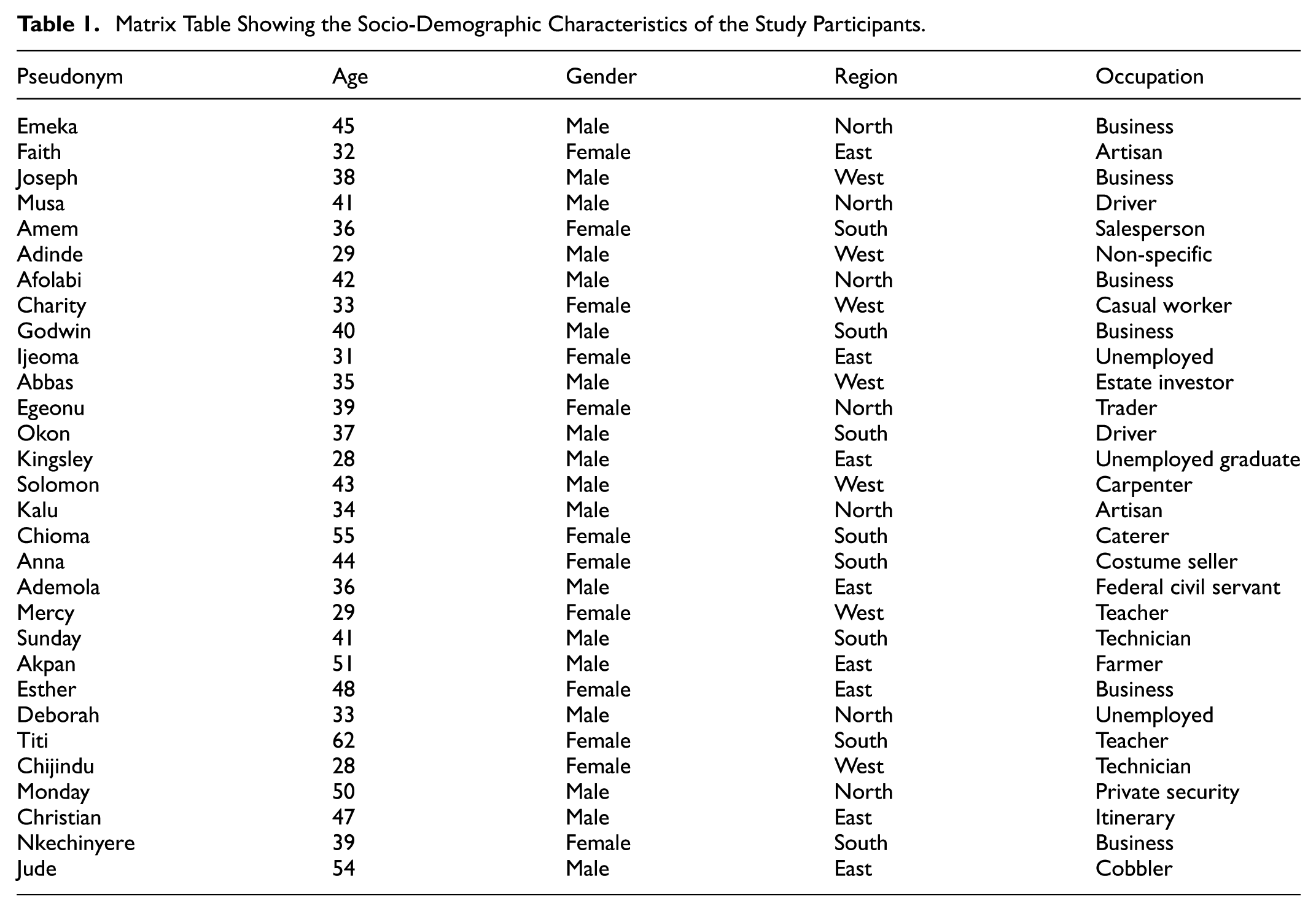
The study comprised 30 participants of both male and female from various regions of Nigeria. A sample of 30 allows for diverse viewpoints while maintaining a manageable dataset for thorough analysis (Creswell & Poth, 2018). The inclusion of participants from different regions was informed by the need to capture diverse experiences related to the indigene-migrant dichotomy. The selection aimed to provide a comprehensive understanding of the subject of interest. Purposive sampling was used to select respondents, which involved identifying and approaching prospective participants based on their relevance to the study’s objectives. Snowball sampling was employed because it is particularly useful in studies involving marginalized or hard-to-reach populations (Naderifar et al., 2017). This technique is widely used in qualitative research to gather insights from individuals with shared experiences while overcoming recruitment barriers (Atkinson & Flint, 2001). Participants who expressed interest were assessed for eligibility and then included in the study sample. The participants of the study consisted of 18 males and 12 females. Purposive sampling was used in this study to guarantee that participants were explicitly relevant to the research objectives, which focused on the indigene-migrant dichotomy in Nigeria. The study used purposive and snowball sampling, which are widely accepted qualitative methods (Palinkas et al., 2015). Unlike quantitative methods, qualitative research captures rich contextual insights that are essential for understanding complex social issues such as indigeneity and exclusion (Denzin & Lincoln, 2018). These approaches ensure that participants with relevant experiences are included, making the sample size appropriate. This method allowed us to choose people who had firsthand experience with internal migration and the resulting socioeconomic and cultural issues.
When the initial sampling did not produce the desired number of participants, a snowball sampling method was used. This entailed asking previously selected respondents to refer us to others they thought might be interested in participating in the study. Many potential participants were first hesitant to participate in the study. Snowball sampling helped circumvent this barrier by leveraging the networks of previously chosen individuals. These participants suggested individuals who had comparable experiences and would be willing to participate in the study. The participants’ viewpoints were reinforced by existing literature.
Data Collection
Data was acquired through face-to-face, semi-structured interviews with individuals. This approach was adopted to allow for a thorough grasp of the participants’ experiences and viewpoints on Nigeria’s indigene-migrant dichotomy. Each interview was held in a place that was convenient for the participant, ensuring their comfort and willingness to disclose extensive information. The interview guide included open-ended questions intended to elicit thorough responses on participants’ experiences with social exclusion and discrimination based on their indigenous status. Interviews typically lasted 45 min to an hour and were audio-recorded with participants’ permission to assure accuracy and allow for further analysis.
During the interview, audio recordings and notes were made to capture crucial points and observations. The taped interviews were transcribed verbatim, and the transcripts were checked against the audio recordings to ensure correctness. This procedure guaranteed a comprehensive and dependable dataset for analysis. To enhance the study’s credibility and reliability, multiple measures were implemented. Thematic analysis was informed by existing scholarship on indigeneship (e.g., Mang & Ehrhardt, 2018; Uchegbu, 2021). This ensures alignment with established conceptual frameworks. This iterative process enhanced the credibility of emergent themes while preserving the authenticity of participants’ voices. This method is consistent with Wang et al. (2020) and Cooper et al. (2024) which maintain that this approach enhances qualitative rigor. We also checked the transcripts for accuracy. We used reflexivity journal to document potential biases in order to prevent undue influence on interpretation. Furthermore, all data were anonymized to protect participants’ confidentiality and uphold ethical standards.
Data Analysis
The interview data was transcribed verbatim and analyzed using thematic analysis. This method involved coding the data to identify significant themes and patterns related to the research questions. The analysis was iterative, with themes refined through multiple rounds of review and discussion among the research team. The thematic analysis was conducted, and the study is structured under three broad themes: The nexus between indigeneship and primordial belief: an overview of migrants’ exclusion process; The everyday politics of indigeneship and social exclusion of migrants: some reality check; The silent, yet omnibus roles of state governments in the sustenance of the indigene-migrant dichotomy. These themes emerge from the data
Ethical Considerations
In conformity with the University of Nigeria ethical guidelines, informed consent was duly obtained from each participant in the study. Participants were informed about the purpose of the study, their right to withdraw at any time, and the measures taken to ensure confidentiality and anonymity. Informed consent was obtained from all participants included in the study. To ensure confidentiality, all participants were anonymized.
Result
Socio-Demographics
The Nexus Between Indigeneship and Primordial Belief: An Overview of Migrants’ Exclusion Process
Many participants explained that exclusion is not only institutional but also rooted in longstanding cultural and historical narratives. Several participants noted that indigenous communities often believe they are the rightful custodians of their land and that outsiders, regardless of how long they have lived there, should never fully belong. The following excerpts from the study participants lend credence to this discussion (Table 1).
Matrix Table Showing the Socio-Demographic Characteristics of the Study Participants.
One participant from Kaduna noted: “It is not just about policies; people genuinely believe that their ancestors left the land for them alone. They think allowing migrants to integrate would dishonor their forefathers.” (Emeka, male participant, Northern Region).
Another respondent from Enugu stated: “I have been here for 15 years, yet I am still reminded that my ancestors were not part of this land. Even in the community where I live, I am referred to as ‘onye obia’ (visitor). I am saddened by this” (Faith, female participant, Eastern Region)
A businessman from Osun expressed frustration about land ownership discrimination: “I tried to buy a piece of land for my business, but the local leaders said the area is reserved for indigenes only. I even offered a higher price, but it didn’t matter. Is that not discrimination?” (Joseph, male participant, Western Region)
A participant from Bauchi but lives in Nasarawa described the cultural barriers to inclusion: “Even if you speak the language and follow the customs, they still call you an outsider. It doesn’t matter how long you’ve lived here. I am from this region but they say I am not from the state” (Musa, male participant, Northern Region).
A woman from Akwa Ibom added: My grandparents moved here decades ago, yet my children are still treated as in certain issues. It’s like we will never truly belong. I must have to say that we lie in peace here. The people here are quite friendly and social, but we have not been able to fully partake in somethings. I have been trying to get employment at the local government headquarters but it has been difficult. (Amem, female participant, Southern Region)
These narratives show that migrants in many parts of Nigeria experience social exclusion. This methodological exclusion leads to migrants’ displacement which negatively impacts their livelihoods and creates a sense of marginalization and discrimination.
The concepts discussed in this article are situated within the larger framework of prejudice against Nigerian indigenous migrants, or “settlers.” The purpose of this argument is to demonstrate the ongoing exclusion and discrimination that the practice of granting uneven access to benefits based on indigeneship inadvertently causes, rather than to defend or legitimize the rightness or wrongness of indigeneship practices as they exist in Nigeria. Since “sons and daughters of the soil” have exclusive access to a village, town, or state, it depicts how indigeneship practices have snowballed into prejudice and exclusion and impact people’s imaginaries and experiences in the day-to-day lives of migrants in these areas.
The Everyday Politics of Indigeneship and Social Exclusion of Migrants: Some Reality Check
This section discusses the everyday experiences of migrants on social exclusion. Using the ethnic group as the unit of analysis, it draws on 6 months (February to July of 2022) of research on the hotly debated topic of indigeneship as it relates to social exclusion in Nigeria. Additionally, it goes a step further by incorporating these ethnic groupings into larger scales of states and regions to establish the migrant/indigene dichotomy. In the context of this study, the term “migrant” is defined as individuals who are residing in a region or state different from where they were born or where their family originates. This includes both individuals who move from other regions in Nigeria seeking opportunities and those who, despite being born in the area, are considered outsiders due to differences in language, ethnicity, or culture. It is important to note in this context that the term migrant as used in this study differs from expatriates. The term “expatriate” is, however, a disputed term that is embraced by some as rejected by others (Kunz, 2020). There is a growing body of work that sees “expatriates” as migrants (Hutchings, 2022; Kunz, 2023). Nonetheless, some research in academia shows that those who understand themselves as “expatriates” imperatively do not identify themselves as migrants (Bamberger et al., 2021; Varma et al., 2022). In the context of this research and the wider Nigerian society, expatriates are not necessarily viewed through the lens of migrants but as skilled foreigners who work in highly involved sectors such as oil and gas, telecommunication, and construction industries. They do not necessarily engender competition with the natives because in most cases, their skills are sought for, they have spaces already created for them before deciding to migrate. Conversely, the category “migrant” in a critical sense echoes a sentiment of competition as “natives” or “sons” of the soil see migrants from other ethnic groups or regions from the lens of competitors who have come to usurp their opportunities.
Oftentimes, in many Nigerian cities and communities, migrants have to contend with the often overbearing influence of ethnic inclination espoused in the differential treatments they face (Lentz, 2019). Though this comes in different folds, they in no small measure, highlight the nexus between indigene–settler polarities in Nigeria. This participant narrates his first experience of the conundrum.
A few months after my National Youth Service (NYSC), on the advice of my uncle, I moved to this place (Oyo) in search of opportunities to better my life. With the orientation courses I had during NYSC camping weeks, I set about looking and applying for jobs with the mindset that as far as I am a Nigerian, I can work in any state of my choice. After many job interviews without success, despite my qualifications, I decided to find out why after the last one. Upon my investigation, I discovered that my ethnic identity was the bane of my problem. A director in a commission revealed to me that they do not employ non-indigenes. He advised that I should look for a federal job but if I insist on staying, that I should look for casual but non-permanent jobs. My effort to justify my position was futile. There and there, I quickly realized that my qualifications were sacrificed on the altar of ethnicity (Adinde, male Participant, Western Region).
It will not be counterproductive at this juncture, to use a line or two in explaining the NYSC scheme earlier mentioned and its objectives. General Yakubu Gowon’s military administration founded the National Youth Service Corps (NYSC) in 1973. The Nigerian Civil War (1967–1970), which left several areas of the nation in ruins, inspired the creation of the plan, which aims to rebuild, mend, and rehabilitate the nation. More mistrust and division among the nation’s major ethnic groups resulted from the civil war, which was partially sparked by political split and ethno-religious tensions. Decree No. 24 of May 22, 1973, established the corps in response to the unfortunate precedent in the history of the country (Jemisenia et al., 2021). The program was established to include Nigerian graduates of universities and polytechnics under 30 years of age in the development of their country (Odeh, 2022). Members of the Youth Corps are typically assigned to 1-year national service assignments outside of their home states, where they are expected to not only positively impact the host communities but also serve as change agents in a variety of roles (Partners West Africa Nigeria, 2022). In conclusion, the program was created to support national unity and the appropriate encouragement and development of communities through Nigerian youth.
This narrative of the above interviewee points to the fact that state of origin, ethnic group and/or region creates barriers to obtaining full access to permanent jobs and thus subvert one’s capacity to realize career aspirations. The position of this interviewee is akin to that of many other interviewees who reported similar experiences. The vast majority of the participants were of the opinion that they were dismayed by the reality they found on the ground as it contradicts the preachments in popular government adverts and jingles that Nigeria is one and that a Nigerian can work or live in any part of Nigeria without discrimination. Their expressions are a clear indication of their frustration at being excluded from jobs and opportunities in which they are qualified because of their identity. Following the development discussed above and without justifying the claims made therein, it is viable to argue that the indigeneship problem in Nigeria is deep.
Some participants in this study indicated that social exclusion does not only occur in the formal sectors but also in the informal sectors. In this regard, the narratives of these two participants explain more: Since 2016, I have been in this state doing business. However, I, just like every other migrant here pass through a lot of challenges. At any slight misunderstanding or provocation with the “natives”, our (migrants) shops are usually the target for destruction. Some locals tell us to our face that we should trade carefully because this is not our state where we can do anything we want. This constant reminder is a sort of psychological tool that constantly makes one feel rejected and unwanted because they want you to partake in any social function. They do not even like to see you with their women (Afolabi, male participant, Northern Region)
Similarly, this migrant in the western part of the country narrates her experiences in the following manner: Imagine that this person (natives) will sometimes ask migrants (the supposed non-indigenes) to leave their lands for them for no tangible reasons. When you try to find out their reasons; their position will be that migrants have taken over their businesses and that their people are not doing well again in their businesses. But when you try to explain to them that as a Nigerian you have the right to live and do business in any part of Nigeria, they would not listen. But the truth is that this allegation is unfounded. We pay rent and taxes. I think it is just a sheer act of hatred or jealousy (Charity, female participant, western Region).
It is clear from the above narratives that there is a feeling of insecurity and precariousness among migrants and these feelings are often intensified through the constant reminder that they are settlers and not indigenes. Meanwhile, reading through the lines, one could decipher that this indigene-migrant conflagration that culminates in social exclusion often results from an inferiority complex on the part of the locals who feel threatened by the success or anticipated success of the so-called migrants. This is evidenced by the explanations of some of the migrants that the locals complained that they (migrants) have taken over their businesses.
Accordingly, there is evidence that the practice of social exclusion as a result of one’s ethnic belonging cut across all the zones and ethnic groups in Nigeria, making it more of an imbibed attitude rather than a spontaneous action. Although some ethnic groups are said to be more accommodating than others in terms of the migrants’ exclusion process, it comes to a time when your ethnic belonging determines where and how you work.
I have travelled to many states in Nigeria and with my experiences; I am relatively at peace here. At least, I do not get threats to my life or business. Although I have tried so many times in the past to work in the state’s civil service but was turned down because of my state of origin. Nevertheless, I am okay; I am still able to do other small jobs without much difficulty (Godwin, male participant, Southern Region).
The argument put forward by this migrant indicates that comparatively, there is variation in the degree of social exclusion as practiced across the country. However, one thing that is deducible is that it is seen across the board. It therefore calls for a reevaluation of the social relationships amongst the various ethnic groups that make up this social entity, Nigeria. The following narrative of an interviewee further paints a gloomy picture of the situation.
I am just wondering why as a Nigerian I cannot work in any state of my choice. Must it be a federal government job before? (He questioned rhetorically) I know what I am denied here just because I am from a different ethnic group (Ijeoma, female participant, Eastern Region).
A young professional from the Northern Region expressed: Despite my qualifications and experience, I was overlooked for a job. My colleague, who is an indigene, got the job even though I had better performance reviews. It’s frustrating and demoralizing to find out that this problem exists in our society in this democracy (Abbas, male participant, Western Region).
Furthermore, other migrants described various forms of everyday discrimination apparent in their localities. For instance, a trader from Plateau shared: “I applied for a trade permit as soon vacant was announced at the council area, but it took me months longer than it did for indigenes. I was asked to bring extra documents that were not required from ‘indigenes’.” (Egeonu, female participant, Northern Region)
Another respondent in Rivers noted: “When there are job openings, even in the private sector, they first ask where you are from. If you are not from here, your chances drop. You hardly find someone from other state working in the local council here” (Okon, male participant, Southern Region)
An unemployed graduate in Kano recounted an experience: “At an interview, they asked for my state of origin before my qualifications. When they found out I wasn’t from here, they simply said, ‘we are looking for someone from the community because the job requires somebody with local experience’”. (Kingsley, male participant, Eastern Region)
Additionally, a carpenter in Lagos narrated that “indigenes get contracts easily. Even when I bid lower, they still prefer to give jobs to their own people. I think they don’t trust us. They think we will disappear with their money. That is how I see it” (Solomon, male participant, Western Region). From the above, it can be seen that although there are increasing requests and attempts from numerous policymaking and academic groups for true federalism and consociational connections among states to manage ethnic diversity and advance democratization, such models have hardly yielded success.
The Silent, Yet Omnibus Roles of State Governments in the Sustenance of the Indigene-Migrant Dichotomy
The reviewed literature has shown that the problem of indigeneship and identification in Nigeria was caused by several factors, including the country’s colonial past, the elite’s quest for status and power, the shifting value of land and other natural resources, and the need for a distinct identity. The indigene-settler problem as well as the migrant exclusion process in Nigeria has called into question the basis of citizenship in Nigeria. Although Nigeria has had experiences of ethnoreligious crisis, intra-communal conflicts and inter-community feuds (e.g., Zangon-Kataf issue in Kaduna State, 1992–2001, the fight between the Hausa/Fulani tribes and the Atyaps [natives] in Taraba State, 1999–2001) which borders on indigene and settler issues, such physical conflicts have reduced in recent years. However, a recent trend has shown that indigene-settler conflagration in Nigeria has assumed the form of social exclusion directed toward migrants (non-indigenes). And oftentimes, this process seems to be supported by the apparatus of the state.
Result indicates that for Nigerian residents to access a variety of opportunities and public services at the federal, state, and local government levels, certificates of indigeneship granted by various levels of government have grown in significance. Even as much of these discriminations and exclusion contravenes the Nigerian Constitution, most migrants state that they have no way to fight the problem because government officials are reluctant to take their complaints seriously. Some of the participants report that some indigenous officials try to justify this sort of exclusion by intimating that the migrants’ ethnic kinsmen in other parts of Nigeria would not hesitate to shell out identical treatment to them. For instance, this migrant explains thus: In June 2019, I was denied a job offer because the identification certificate I presented was from a different state other than the state I am applying under. Even though there was no explanation as to why I was denied the job, a source privy to the discussion told me that the director acknowledged that I had the requisite skills and qualifications but was not comfortable with my state of origin. I would not want to mention the state but I know that this is obtained in most states of the federation only that the degree of practice might vary (Kalu, male participant, Northern Region).
Another participant narrates thus: In my experience, even though I have lived here for over 20 years, I am still seen as an outsider. My children, who were born here, also face discrimination in school admissions through the use of quotas because indigenes have to be considered first (Chioma, female participant, Southern Region).
Furthermore, many noted that these policies manifest in employment, education and access to social services where preference is given to indigenes at the expense of long-term residents. Participants highlighted instances where government jobs required indigene certificates and by so doing, denied opportunities to qualified non-indigenes. Others reported that scholarships funded by state resources were exclusively reserved for indigenes. Also, state-imposed barriers to business registration and land ownership further marginalize migrants. The participants’ views are captured below.
A costume seller described how state benefits favor indigenes in this way: “Indigenes get priority for scholarships, grants and even hospital subsidies. Even though I have lived here for 20 years and pay taxes, I don’t qualify for any of these.” (Anna, female participant, Southern Region)
Equally, a federal civil servant in Anambra explained the role of state bureaucracy in the exclusionary process. According to him, “to get a state government job, they require an indigeneship certificate. Even though I have lived here all my life, I could not get one because my roots are viewed differently.” (Ademola, male participant, Eastern Region) A young teacher in Oyo shared a personal experience: I was offered a teaching job, but the principal later called to say that he noticed that I am not from the state but I told him that I am now married to an indigene of the state. I think that is why they gave me the job, otherwise, it would have been the same story I used to get in the recent past before I got married. (Mercy, female participant, Western Region)
Furthermore, a technician from Edo spoke about state-imposed business restrictions that make it nearly impossible to operate. According to him, “Some state governments make it harder for non-indigenes to register businesses. You need local endorsements, which can be very challenging because you will need somebody to attest to your credibility.” (Sunday, male participant, Southern Region)
This result implies that state governments play an active role in perpetuating systemic exclusion and discrimination against non-indigenes in Nigeria. In addition, the data suggest that state policies rather than being neutral are structured in ways that favor indigenes while marginalizing migrant. These policies reinforce a second-class status for migrants and contradict constitutional guarantees of equality and undermines national unity. The data highlight an urgent need for policy reforms to address these systemic disparities and promote inclusivity across Nigerian states.
Discussion
This study investigated the everyday experience of internal migrants in a multi-ethnic setting. The findings of this study highlight the significant impact of the indigene-migrant dichotomy on social exclusion in Nigeria. The study found that the concept of indigeneship is deeply ingrained in Nigeria’s socio-political structure and it often serve as a mechanism for exclusion rather than integration. Indigeneship is commonly used to determine access to political, economic and social resources. Thus, creating an unequal system where non-indigenes face systemic discrimination. This suggests that indigeneship functions not just as a gatekeeping tool but as a normative framework shaping migrants’ sense of belonging and identity within their host communities. This finding aligns with previous studies (Elom, 2021; Mang & Ehrhardt, 2018) that describe indigeneship as an informal form of second-tier cpitizenship that restricts migrants from full participation in their host communities. Bajide (2022) also aligns with this finding when it points that traditional authorities modify the concept of indigeneship to meet regional patterns of identification and rivalry. This local variation underscores how exclusionary norms are continually re-produced by power brokers and signals that any policy reform must engage both state and customary actors. The institutionalization of this exclusion, especially through the requirement for indigeneship certificates for employment and education grants and scholarship perpetuates economic and social inequalities which undermine the constitutional rights of all Nigerians. Beyond material inequalities, the certificate requirement erects symbolic boundaries that can fuel collective grievances and destabilize social cohesion which echoes Tarrow’s (2011) analysis of how institutional barriers drive contentious politics.
The findings also reveal that internal migrants face significant barriers to securing employment, particularly in state government institutions due to their non-indigene status. Many participants reported being denied opportunities despite having the necessary qualifications. This pattern of exclusion serves as a form of administrative guard that not only blocks migrants from jobs but also erodes their sense of professional identity and belonging. This aligns with the findings of Human Rights Watch (2006) and Kehinde and Olufemi (2021) which indicate that local and state governments implement policies that prioritize indigenes in employment which limit the career advancement of non-indigenes. Schultz (2020) contends that such practices not only restrict economic mobility for internal migrants but also contribute to broader economic inefficiencies by prioritizing identity over meritocracy. In our interviews, several respondents described how repeated rejections nurtured deep frustration and distrust toward formal institutions. This suggests possible long-term effects on migrants’ social integration and mental well-being. The normalization of these exclusionary practices contradicts national policies aimed at fostering unity and equal opportunity. While the Nigerian Constitution guarantees equality and non-discrimination (e.g., Chapter IV, Sections 25-27 and Section 42), local and state governments often enact laws that can contradict these provisions. For instance, Maliki et al. (2018), Arowosegbe (2016) and Isumonah (2006) observed that many states require state of origin certificates for employment and educational opportunities, which effectively discriminate against non-indigenes. This gap between constitutional ideals and everyday policy highlights the need for stronger oversight mechanisms. It suggests that without reform, these exclusionary laws will continue to undermine both social cohesion and economic development.
Beyond structural barriers, this study also highlights the everyday experiences of social exclusion faced by internal migrants. Participants reported experiencing discrimination in both formal and informal sectors, with some being subjected to exclusion from social networks. Such social isolation not only limits access to informational and emotional support but can also erode migrants’ agency; which aligns with Lederach’s (2013) findings on the psychosocial costs of community fragmentation. Similar findings have been documented in studies on ethnic-based exclusion (Igbafe, 2021; Oamen & Erhagbe, 2021), where migrants are often treated as outsiders regardless of their length of residence in a community. This finding suggest that the indigene-settler distinction fosters an environment of suspicion and resentment which leads to fragmented communities where social integration is difficult to achieve. In our data, several respondents described a prevalent us-versus-them mindset. This highlight how symbolic boundaries reinforce material inequalities and perpetuate cycles of mistrust (Edgell et al., 2020). Over time, this persistent exclusion can contribute to feelings of alienation and socio-economic disenfranchisement and may further deepen ethnic and regional divides. In extreme cases, such exclusionary tendencies may also escalate into inter-group conflicts (Umoh & Nwinkol, 2024), because marginalized groups may push back against discrimination. These insights suggest that interventions should focus not only on legal reform but also on community-based reconciliation efforts that bridge identity divides, as recommended by Tom (2022).
One of the study’s critical findings is the role of state and local governments in reinforcing indigeneity-based discrimination. This dynamic illustrates how formal authority not only mirrors existing social hierarchies but actively legitimizes them, and reveals the porous boundary between institutional policy and everyday exclusion. The demand for indigeneship certificates to access jobs and education is not only a social practice but also a policy-driven phenomenon supported by local governance structures. Indigeneship certificate is required is a prerequisite to the enjoyment of certain rights and privileges. Enshrining indigeneity in legal documentation, governance structures transforms a social identity marker into a formal barrier and intensify the exclusionary effects beyond mere custom (Birrell, 2016). This resonates with the studies of Oki (2021) and Patrick et al. (2021), which argues that the politicization of indigeneship serves the interests of local elites who use it as a tool for resource control and political dominance. Also, Oamen and Erhagbe (2021) posit that the issue of indigeneity has created new kinds of parochialism where none had existed before because many states in Nigeria discriminate against one another’s non-indigene residents even though there are no meaningful ethnic or cultural differences between them, and even though both populations may once have been part of the same state. Through the embedding of these discriminatory policies into governance systems, state and local authorities effectively institutionalize exclusion and prevent national policies on equality from being realized at the grassroots level. This institutional capture suggests that effective reform must target both legislative frameworks and administrative practices. It crucial to decentralize certificate issuance and curb elite manipulation in order to restore genuine equality.
Policy Implications
Given the widespread impact of indigeneity-based exclusion, there is an urgent need for policy reforms that prioritize inclusivity. The study’s findings underscore the importance of enforcing the constitutional provisions that guarantee equal rights for all Nigerians irrespective of their state of origin. Policies should be aimed at eliminating indigeneship certificates as a requirement for employment and education grants and scholarship, and replace them with more inclusive criteria that promote national unity. Furthermore, public awareness campaigns and civic education programs could help challenge long-held perceptions of indigeneship and promote the idea of a unified national identity over regional or ethnic affiliations.
Limitations
While this study provides important insights into the indigene-migrant dichotomy in Nigeria, it has some limitations. First, it primarily focuses on the experiences of internal migrants without including the perspectives of indigenes who uphold these exclusionary practices. Future research could explore the motivations behind indigeneity-based discrimination using “indigene” as the basis of analysis. Equally, a comparative study of policy approaches in states with more inclusive practices could provide good insights into potential solutions for addressing the indigene-migrant divide in Nigeria.
Conclusion
Internal and international migration is critical for gaining access to opportunities and capital. Despite the benefits, internal migrants in Nigeria face a continuing challenge: balancing the interests of numerous ethnic and regional groupings. This study demonstrates how the indigene-migrant dichotomy continues to affect job possibilities and career growth for migrants, who frequently experience systemic exclusion due to their non-indigene status. Exclusionary practices are not just practical concerns; they are also promoted by local laws and policies that contradict the constitutional rights of equality. These activities undermine federalism principles and lead to migrant marginalization, limiting people’s access to key services and opportunities.
Local concerns about identity and cultural preservation are frequently the root reason for these discriminatory practices. This perceived threat leads to discriminatory policies and behaviors that violate the Nigerian Constitution’s provisions on nondiscrimination and equal rights. In summary, addressing these issues requires a refined understanding of both legal and practical dimensions. A concerted effort to reconcile local practices with constitutional guarantees is essential to reducing the social exclusion of internal migrants and fostering greater unity and equality within Nigeria.
There were some limitations of the work. The first was the non-inclusion of the views of indigenes in the research. While the focus was on exploring the experiences of internal migrants and how the indigene-migrant dichotomy affects them, the perspectives of indigenes who are integral to this dynamic were not captured. Including the views of indigenes could have provided a more balanced understanding of the socio-political interactions and the underlying reasons for the exclusionary practices observed. Secondly, the use of Focus Group Discussion would have added breadth to the data. Future research could explore these limitations.
Footnotes

Ethical Considerations
In conformity with the National Health Research Ethics Committee’s (NHREC, 2020) guidelines, informed consent was duly obtained from each participant in the study.
Funding
The authors received no financial support for the research, authorship, and/or publication of this article.
Declaration of Conflicting Interests
The authors declared no potential conflicts of interest with respect to the research, authorship, and/or publication of this article.
Data Availability Statement
Data sharing not applicable to this article as no datasets were generated or analyzed during the current study.