




Abstract
This study explored game-based learning structured with design-led workshop activities to augment 75 third-year undergraduate graphic design students’ learning about climate change and environmental sustainability matters in a Ghanaian university. The aim was to motivate them to understand the role that design and designers can play in addressing climate change to promote environmental sustainability. This design research gathered data via interviews, survey and observation during participatory design workshop activities. Analysis of the students’ survey responses revealed that, 18 knew much about climate change and environmental sustainability; 6 understood how the graphic design industry contributes to climate change; and 27 recognised graphic design as a viable tool to promote environmental sustainability. Consequently, the students were engaged to interrogate critical environmental challenges in Ghana and co-design solutions that communicate simple sustainable messages. They demonstrated their learning with sustainable design projects that focused mainly on illegal mining (galamsey), illegal logging, water pollution and sanitation, using text, images, video and audio recordings. This indicates the viability of game-based learning and sustainable graphic design as tools for mediating climate change communication to promote environmental sustainability.
Plain Language Summary
In this paper, we report on using game mechanics or the fun elements of games and game mindsets through design thinking as an instructional tool to convey the abstract concepts of climate change and environmental sustainability. Participants in the study were 75 undergraduate graphic design students within the non-gaming context of design education in the premier university that trains designers for the operational to management levels of the local graphic design industry in Ghana. The aim was to raise awareness about climate change and environmental sustainability issues so the young designers would understand the role that design and designers can play in addressing climate change through sustainable design practice. This experiential learning approach to climate change education via the graphic design curriculum in Ghana was adopted as a practical sustainability strategy through design methods to enlighten the young designers to appreciate climate change and its impacts and risks as a way to encourage them to take care and sustain the natural environment that supports life on Earth. This study is significant because Ghana as a developing economy largely depends on rain-fed agriculture, energy and forestry, which are climate sensitive. Ghana’s vulnerability to climate change is worsened by land and soil erosion, bush fires, flooding and droughts in the northern regions; sea level rise and erosion along the coastal belt; and illegal mining of natural mineral deposits in the forest regions, which is gradually taking over arable lands that support cocoa, oil palm and other cash crops, as well as staple food crops that feed the nation. The net result is massive land degradation, pollution of water bodies, depletion and decimation of the natural flora and fauna, particularly in the mining areas, which in turn threatens food security, health and well-being of the citizens.
Introduction
Graphic design is both a profession and academic discipline or a specific type of visual artefact. Also known as “communication design” and “visual communication” (Lou, 2017), the discipline uses visual elements such as typography, images, colour and space to convey ideas and communicate information. As an academic discipline, graphic design is inherently practice-based, collaborative, involves beliefs about expertise and how one achieves that status (Motley, 2017). Hence, the teaching and learning of graphic design courses typically involve studio work, critique and exercises in the design process, which are professional design practices the students would follow in their future careers (Boling et al., 2016; Motley, 2017; Snaddon et al., 2019). Besides online advertising, the output of graphic design usually takes the form of physical artefacts and services that include packaging, posters, billboards and outdoor advertising that are based on visual language (Cristina et al., 2015; Yu & Sangiorgi, 2014). A typical example is packaging products that are created with plastics and other materials, which are mainly non-degradable and become waste materials that pollute the environment (Janks, 2014; Mason-Jones & Towill, 2016). By-products of graphic design production such as waste chemicals from printing and burning of spoiled papers also have negative consequences for our planet (Bonsu et al., 2020). Because the graphic design industry relies heavily on natural resources like water and wood for its survival (Konchada, 2014), the industry is tagged as part of the contributors to the world’s environmental degradation problem (Grönman et al., 2013; Manzini, 2007). However, graphic designers retain tools that they can deploy to communicate the complex and often abstract concept of climate change in appropriate messages that people can understand and act upon.
Litterature Review
Climate Change
Climate change is a multifaceted social and scientific phenomenon that the world neither fully understands nor knows how to tackle its risks and vulnerabilities (Krasny & DuBois, 2016; Stevenson et al., 2017). This critical environmental variable that has overwhelmed the earth and its ecosystem (Asante & Amuakwa-Mensah, 2014; Müller-Kuckelberg, 2012; NOAAWS, 2007) has resulted from excessive release of greenhouse gases (GHGs) such as carbon dioxide and other heat-trapping emissions since the industrial revolution to pollute the earth’s atmosphere beyond the levels that the earth’s soils, plants and oceans, that serve as carbon sinks, can sequester (Amekudzi et al., 2017; Arias et al., 2021; Cao et al., 2017; Hu et al., 2022; Riedy, 2016; Rodrigues et al., 2023). Thus, the global community of scientists blame climate change on global warming induced by human activities like modern farming, oil drilling, mining and industrial production and excessive consumption of fossil fuels that have contributed to the rise in the average global temperature (Lynas et al., 2021; Gustafsson & Ijla, 2016; Nicholls, 2016; Whitmee et al., 2015). The climate change phenomenon is manifesting in frequent occurrence of droughts, heatwaves, sea level rise, rainfall-triggered landslides, flooding, natural disasters and altered rainfall patterns (IPCC, 2021; Reckien et al., 2017; Hu & Chen, 2016). It is even feared that “allowing the planet to warm beyond 1.5°C will be deleterious for humanity and for biodiversity” (Pörtner et al., 2022; Malhi et al., 2020; IPCC, 2018).
The IPCC’s heightened concern that humanity is in an “unprecedented period of change” (Gebreyes et al., 2017) underscores the urgency of actions needed to mitigate the risks of climate change by curbing GHGs and bolstering the earth’s natural carbon sinks (Abbass et al., 2022; Amekudzi et al., 2017; Cao et al., 2017; Kabani, 2016; NASA Science, 2024) to avert its threat to the natural environment and the world’s sustainability (IPCC, 2014; National Research Council, 2012; Krasny & DuBois, 2016; Stevenson et al., 2017). However, climate change is often an abstract concept that people struggle to make meaning of (Iltus, 2015) and also difficult to communicate in appropriate messages that people can understand and act on (Malhotra et al., 2013; Moser & Dilling, 2004).
Climate change in the Ghanaian context
Like most African countries, Ghana’s economy primarily depends on agriculture, energy and forestry, which are climate sensitive, for socio-economic development (Institute of Green Growth Solutions, 2015; Besada & Sewankambo, 2009). Agriculture in Ghana depends mainly on rainfall and a large population of smallholder farmers who earn their living from the land (Arndt et al., 2015). As the backbone of Ghana’s economy (Ofosu et al., 2020), agriculture contributes about 30% to the GDP, employs about 60% of the labour force and supplies over 70% of the national food requirements (Danyo & Osei-Bonsu, 2016). Changing climatic conditions in Ghana therefore poses a serious threat to agriculture and its output, the health and well-being of the citizens, water resources and energy generation (Kayaga et al., 2020; Ministry of Foreign Affairs, 2018; National Climate Change Adaptation Strategy, 2014).
Ghana is vulnerable to climate change in at least, three ways that are crucial to the long-term economic development of the country (Institute of Green Growth Solutions, 2015). Firstly, agriculture is a major sector of the economy and largely dependent on rainfall and smallholder farmers (Arndt, Asante & Thurlow, 2015; Asante & Amuakwa-Mensah, 2014: 79; Institute of Green Growth Solutions, 2015). Secondly, Ghana has three different ecological and climatic zones, which range from the dry, hot Sahel area in the northern parts to the wet rainforests in the middle belt, to the savannah zone along the coastline. The northern regions in particular, are prone to climate change hazards like land and soil erosion, bush fires, flooding and droughts while the coastal regions are susceptible to sea level rise and erosion (Ministry of Foreign Affairs, 2018; National Climate Change Adaptation Strategy, 2014; Stevens et al., 2013). Thirdly, mining of natural mineral deposits such as bauxite, manganese, gold and diamonds in the forest regions of Ashanti, Bono, Ahafo, Eastern and Western, in particular, is gradually taking over arable lands that support cocoa, oil palm and other cash crops, as well as staple food crops that support the citizens in the country (Danyo & Osei-Bonsu, 2016).
Ghana is a signatory of the Rio de Janeiro Earth Summit accord on the United Nations Framework Convention on Climate Change and the Hyogo Framework for Action 2005–2015 on disaster reduction. In 2014, Ghana showed commitment to advocate environmental sustainability by launching the National Climate Change Adaptation Strategy (NCCAS). Ghana also launched a Climate Change Education in Schools programme to serve as a trigger to deal with climate change challenges (Institute of Green Growth Solutions, 2015; National Climate Change Adaptation Strategy , 2014). Unfortunately, climate change has not been fully promoted in Ghana’s educational system and to the public at large (Boakye, 2015; Boateng & Boateng, 2015).
The severity of the climate change situation in Ghana is further illustrated by media reports (GhanaWeb.com, 2017; Ghana Broadcasting Corporation, 2017) of widespread pollution of water bodies, destruction of farmlands and forests as a result of illegal mining activities (locally referred to as galamsey, colloquial for “gather them and sell”), particularly in the cocoa-growing areas of the Ashanti, Central, Eastern, Bono and Western regions (Danyo & Osei-Bonsu, 2016; Ocansey, 2013). Mining of natural mineral deposits such as bauxite, manganese, gold and diamonds in these forest regions is gradually taking over arable lands that support cocoa, oil palm and other cash crops, as well as staple food crops that support the citizens (Nti et al., 2020; Obeng et al., 2019). Galamsey is also causing widespread deforestation in the headwater sources of prime rivers such as Ankobra, Pra and Tano, large scale pollution of these water bodies, leading to massive flooding and disruption of farming activities in various communities during the rainy season (Danyo & Osei-Bonsu, 2016; Institute of Statistical, Social and Economic Research, 2020).
Knowing that climate change education is not a prominent feature in Ghana’s educational system (Boakye, 2015; Boateng & Boateng, 2015:7), this study explored game-based learning structured with design-led activities to motivate young graphic designers to understand the role that design and designers can play in addressing climate change by adopting pro-environmental attitudes and behaviour (Ro et al., 2017) such as sustainable or “green” design practice (Bonsu et al, 2020; Society of Graphic Designers of Canada, 2018; Dritz, 2014; Dougherty, 2008) to protect the natural environment. This approach to environmental sustainability education (Janakiraman et al., 2018) involves “providing knowledge about sustainability, creating feelings of empathy for the environment and others, and also encouraging learners to perform environment-friendly practices.”
Game-Based Learning
Game-based learning (GBL) is an approach to “using actual games, game-like interactions, simulation strategies or structures to support educational goals” (Israel, 2017:3). The concept implies the design of learning activities to present learning content and applying specific gaming values in real situations to engage and immerse the players or learners in the teaching-learning process and guiding them in a pleasurable way to a desired end (Codish & Ravid, 2015; Trybus, 2015). This process of taking a learning process and applying game principles to it provides flexible, learner-centred or constructivist environments that offer opportunity and structure for learners to share information and ideas with peers, collaborate to perform tasks and solve problems, which assist them to understand and retain what they learn, and recall such information better than with other teaching situations (Adipat et al, 2021). Thus, game-based learning incorporates class activities that engage learners, make use of their prior knowledge, reminds them of what they have learned already, and generally make complex lessons easier to teach (Israel, 2017; Roodt & Ryklief, 2019).
One of the most defining characteristics of game-based learning environments is their ability to provide effective and engaging learning experience that affords opportunity for concepts to be introduced incrementally, immediate feedback on learner achievement provided and guiding users towards an end goal (Balakrishna, 2023; Plass et al., 2015). This constructivist approach to instruction emphasises playful learning through doing that increases the interest, motivation and engagement of learners to learn, and enables specific skills or objectives to be taught or achieved (Avdiu, 2019; Israel, 2017; Roodt & Ryklief, 2019; Wiggins, 2016). It also gives students real-world tasks that allow them to take what they have learned and apply it to new situations (Franco-Mariscal et al., 2016).
The opportunity for learners to work together and share knowledge in game-based learning environments enables them to accomplish higher levels of understanding that promotes scaffolding, analytical and critical thinking and improves learning for different types of learners (Bigueras, 2020; Plass et al, 2015). In this regard, this study explored game-based learning as an instructional tool to extend climate change and environmental sustainability thinking to graphic design students so they would understand the role that design and graphic designers can play in addressing the two phenomena through sustainable design practice to protect the natural environment.
Methods
The study was situated within the constructivist research paradigm, which views knowledge and meaning as co-constructed (Wahyuni, 2012) and conducted through design research methods in the context of graphic design, a field that is criticised as part of the contributors to the world’s environmental degradation problem due to packaging waste (Manzini, 2007; Mason-Jones & Towill, 2016; Yu & Sangiorgi, 2014). Constructivism is grounded on the premise that people’s understanding of the world they live in comes about through the subjective meaning of experiences they develop (Creswell and Creswell, 2018). It advocates participatory learning approaches that convert passive learning to active learning via shared knowledge (Dinata et al., 2023; Hinduja, 2021) and emphasises experiential learning (Kolb & Kolb, 2017) because effective learning results from constructing and co-constructing knowledge and meaning from direct hands-on experiences in real-world problem solving contexts (Meulenbroeks et al., 2024; Motta & Galina, 2023).
This study mainly adopted design research methods. Design research is qualitative in nature, human-centred and widely used in design inquiry (Heather & Walters, 2016; Nova, 2015). It is usually explored through participatory methods such as brainstorming and co-design until the desired results are obtained(Bratteteig, 2014; Sanders & Stappers, 2014; Seidel & Fixson, 2013). Design methodologies are often reflexive and flexible and do not follow a linear research design methodology (Frauenberger et al., 2015). Since the research was design related and part of a sustainable design course, visual-based design methods such as photographs, storytelling, images, audio and video recordings (Cohen et al., 2018; Collins, 2010) were largely used for data collection.
The population studied comprised a purposive sample of 75 third-year undergraduate graphic design students in a university of technology in Ghana. They were registered in three specialised graphic design course options: Advertising and Media Management (N=35), Multimedia and Photography (N=31), Filmmaking and Animation (N=9). Gender played no role in the selection of the population studied and the analysis of the data obtained from the survey.
The research and all related publications received ethical approval from Cape Peninsula University of Technology, South Africa, and the host university in Ghana. It adhered to the fundamental principles of social science research. This study was designed with no risk of harm to participants’ safety and no incentives were offered to influence participation. All participants signed informed consent forms.
Data harvested were the 75 graphic design students’ ideas and experiences on climate change and environmental sustainability. This was done via whole-class and focus group interviews, survey by questionnaire administration and observation in design-led workshop activities, which are typical qualitative and quantitative enquiry instruments (Creswell & Creswell, 2018; Leedy & Ormrod, 2005). The survey questionnaire on the two concepts was administered anonymously via Email as Google Forms, and were accessed, completed and submitted by the students via mobile devices and laptop computers they were working on in class. This integrated approach to data collection was adopted because “purposeful data integration enables researchers to seek a more panoramic view of their research landscape, viewing phenomena from different viewpoints and through diverse research lenses” (Shorten & Smith, 2017:74). The research question was “how can game-based learning be applied as instructional tool to enhance graphic design students’ understanding of the abstract concept of climate change and environmental sustainability within the context of design education?”
Results and Discussion
In line with the view that “game-based learning can take the form of game-like interactions to support educational goals” (Israel, 2017:3), this section reflects the game features that were harnessed in relation to classroom interactions and design thinking workshop activities to enhance the graphic design students’ understanding of climate change and environmental sustainability to support pro-environmental graphic design practice. The game level defines the progression or the flow of activities that engaged the students and maintained their motivation in the activity.
Level 1 Activities: Climate change and the Environment
This one-hour question-and-answer session assessed the students’ knowledge about both concepts. Topics covered were climate change, climate change effects seen in Ghana, climate change impacts on the natural environment, environmental sustainability, how the graphic design industry contributes to climate change, and how design is being used to promote the SDGs for environmental sustainability. To make the subject come alive for the students, we analysed the local graphic design industry and explored possible ways in which the industry is contributing to climate change, locally and globally.
The learning experiences elicited conversations that made reference to droughts, floods and wildfires, which are becoming more extreme in recent times (Kayaga et al., 2020). Google images and videos such as those in Figures 1 and 2 were downloaded and discussed to draw attention to environmental concerns in Ghana and other parts of the world due to negative human activities.

Flooding caused by torrential rains.

Millet crops affected by shifting weather patterns.
We engaged the students to reflect on their shared experiences or readings about climate change. In particular, we talked about how the adverse effects of climate change on the natural environment over time could affect national security in parts of the world. An example that materialised during the discussion concerned media reports on herdsmen who had migrated from the dry Sahelian regions of West Africa and were grazing their cattle on food crops in Ghana, leading to armed conflicts in various communities in the Eastern and Ashanti Regions.
We discussed the security breaches to life and property in those communities until the government of Ghana set up “Operation cow leg”, comprising joint military and police teams that were dispatched to both protect the people and the food crops, as well as flush out the herdsmen and their cattle. This scenario brought home to us the real cost of climate change and the urgent need to sustain the natural environment to prevent desertification, the risk of food insecurity and conflict over natural resources, particularly in Africa (Connolly-Boutin et al., 2016).
Emphasis at this point was laid on the notion that climate change is “a complex social and scientific phenomenon” (Nelson et al., 2007: 397), which is often an abstract concept for people to grasp (Iltus, 2015). Some of the students described lessons they were taught on climate change in social studies and integrated science while they were in senior high school. Some of them reported finding those lessons very difficult to understand and relate to. Some students who resided in the northern parts of Ghana said the descriptions offered by their teachers were familiar living conditions so they understood what they were taught about concepts like “variable weather conditions” and related issues that the teachers based their lessons on. This discussion was reinforced by the notion that Ghana has different ecological and climatic zones that range from coastal savannah to the humid rainforests in the middle belt and the dry, hot Sahel in the north of the country (Ministry of Foreign Affairs, 2018). We reiterated the fact that Ghana is primarily an agrarian economy and highly vulnerable to climate change (Arndt et al., 2015; Institute of Green Growth Solutions. 2015).
Level 2 Activities: Graphic Design and the Environment
Considering the changes that the world has experienced regarding climate change in particular, the discussion touched on the negative effects of artefacts such as packaging, which the design industry produces using plastic and other materials that are not biodegradable and end up as waste that pollutes the environment. The discussion focused on sanitation and other environmental concerns encountered in Ghana due mostly to plastic waste that is commonly seen on roadsides and in open drains in some local communities. The discussion made it obvious why the world is blaming the graphic design industry for contributing to environmental pollution on a large scale (Yu & Sangiorgi, 2014). Online images that were used as reference points to illustrate this discussion include what is shown in Figure 3.

Packaging waste material.
From this position, the discussion shifted to the positive side of graphic design as an industry that is able to “re-think the design process to create new sustainable solutions through advertising, packaging, and other forms of communication design” (Reese, 2014: 4). This enabled the students to appreciate graphic design as a suitable tool for advocating difficult concepts such as climate change in different formats (Cristina et al., 2015). The discussion pointed out the role of text, images and other visual-based design tools in breaking complex information into simple messages that ordinary people can understand (Geise & Baden, 2015). An example that was used to support this conversation is shown in Figure 4, which illustrates different water branding designs that make use of the visual language of image and text in packaging.

Packaging and water branding.
Sustainable advertising messages on water conservation and re-use of water bottles were also conveyed through the illustration seen in Figure 5.
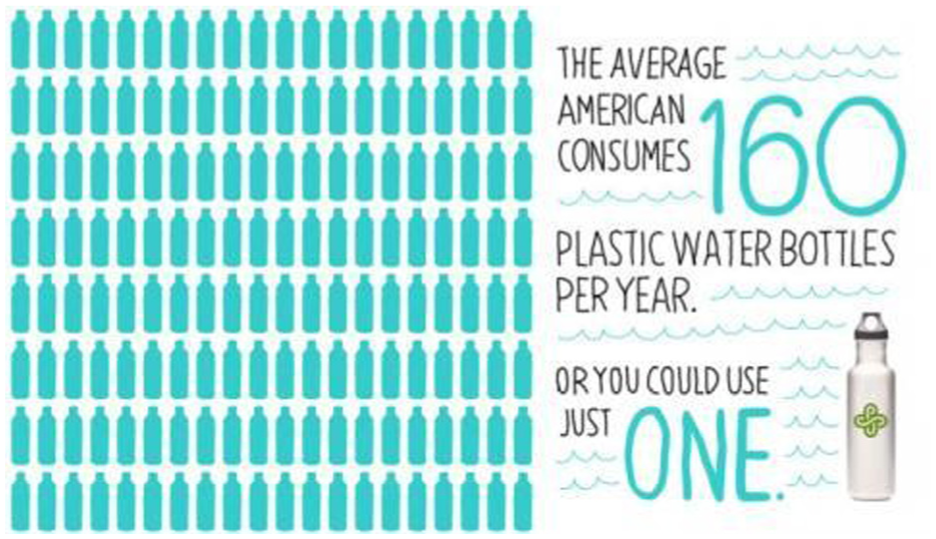
A sustainable advert using graphic design tools.
The important consideration here was inducing the students to appreciate graphic design as a unique tool for promoting environmental sustainability and sustainable ways of living.
Level 3 Activities: Graphic Design and Sustainability
At this point, the discussion focused on the use of graphic design as an advocacy tool for promoting sustainable ways of living. The example used was the research study conducted by Whitehair et al. (2013) that focused on reducing food waste among students at a Finnish university, using two types of graphic design messages on food waste as seen from the illustration in Figure 6.

(a) (Left) and (b) (Right). Graphic design messages on food sustainability and the environment (Whitehair et al., 2013).
The Whitehair et al. (2013) study showed that simply responding to printed messages on food waste motivated the university students who participated in this experiment to take action to live more sustainably. The students’ action reduced food waste and led to improved food services on their campus.
In addition, examples of images of graphic design products that use visual language to design sustainable messages on packages were examined and discussed, including what is seen in Figures 7 and 8.

a (Left) and b (Right). Examples of sustainable ways of living using graphic design messages.

a (Left) and b (Right). Advertisements on sustainable ways of using fuel and water.
It must be emphasised here that all these examples showed the students how simple graphic design messages can be used to communicate and promote sustainable ways of living. This was a very interactive session that emphasised how graphic design contributes to environmental degradation and also presents difficult concepts in visual formats that people can understand and act upon.
Level 4 Activities: Assessment of Learning
After these whole-class interactions, the students were tasked to answer a survey questionnaire that was aimed at assessing their understanding of the abstract notions of climate change (CC), environmental sustainability (ES), the graphic design industry and any knowledge gaps that needed to be filled through intensive gamified learning in design-led workshop activities.
As Mochizuki and Bryan (2015:12) explain, “people need a basic understanding of the causes (who, what and how) and the severity of the impacts of climate change (who is affected and how they are impacted by it), as well as the range of different mitigation and adaptation options which are available to enable them make informed decisions about the actions they need to take”. Consequently, a questionnaire was designed on these different dimensions of climate change with open and closed-ended questions (Bryman & Bell, 2015; Cohen et al., 2018; Creswell, 2014). The study participants were also allowed to make suggestions for improving the adoption of the findings as demonstrated in the following sections.
Survey was appropriate because it is “ideal for gathering information about population groups in educational settings to learn about their characteristics, opinions, attitudes or previous experiences” (Leedy & Ormrod, 2005: 183). Administered via Email, the students accessed the information on the mobile phones and laptop computers they were working on. Completing the survey and submitting them was seen as another level of the game and generated some competition and “high fives” as individuals and groups of students submitted their forms. The lively atmosphere in the learning space is the most plausible reason the questionnaire achieved a 100% return rate, with almost every questionnaire item answered by every student.
The following sections provide the survey results that are organised thematically (Braun & Clarke, 2019; Xu & Zammit, 2020) to provide the perspectives of the different research participants, highlighting the similarities and differences, and generating unanticipated insights.
Field Design Experience
This item measured their association with the field of graphic design. The responses revealed the students’ field design experience ranged from two to 10 years, which justifies their selection as “information-rich” (Creswell, 2014) population. The details are shown in Figure 9.

Study participants’ years of design experience.
Familiarity with CC and ES
Data regarding this theme focused on the students’ awareness and understanding of climate change (CC) and environmental sustainability (ES), their perceptions of the importance, causes, effects and impacts of CC on the global and local environments, in addition to aspects of sustainability they were familiar with. For the purpose of the study, only 18 study participants (coded SP subsequently) supplied valid responses that reflected literature on both concepts.
Expressed Knowledge of CC
Examples of expressed views included the following:
Change in global or regional climate patterns, in particular, a change apparent from the mid to late 20th century onwards and attributed largely to the increased levels of atmospheric carbon dioxide produced by the use of fossil fuels (SP 4).
Change in climate due to conditions such as global warming (SP 27, SP 61).
The statements generally reflect literature on climate change such as “change in either the average climate or climate variability that persists over an extended period” (Riedy, 2016) and “the long-term variations in global and regional climate patterns” (Pender, 2010). Having only 18 of 75 students able to express relevant knowledge about CC suggests the need for the remaining 57 students to be educated on it.
Expressed Knowledge of ES
Examples of statements that were used to define environmental sustainability were the following:
The maintenance of the practices that contribute to the quality of the environment on a long-term basis (SP 3).
The act of managing the natural resources so as not to deplete them for future generations (SP 26).
These statements generally reflect the view of ES as a means of “preserving the environment and the earth’s natural resources for the benefit of future generations” (Jones et al., 2016) as well as the idea of “preserving the environment and the earth’s natural resources to leave a legacy for the benefit of the unborn generations” (Dritz, 2014). This suggests that the 18 students were knowledgeable about environmental sustainability (ES).
The concept of ES showed up in 27 other responses that related the idea of sustainability to reforestation, which is a recommended climate mitigation practice of planting trees and adopting forestry practices that improve the plant cover on Earth to serve as carbon sinks that get rid of carbon dioxide from the earth’s atmosphere (Amekudzi et al., 2017). In effect, 45 of the 75 students were knowledgeable about ES even though not all of them could express their ideas as expected.
Familiar Aspects of ES
The aspects of environmental sustainability that the students reported as being familiar to them were reforestation, waste recycling and sanitation. Those who cited reforestation were 19; six cited waste recycling and two others cited sanitation. Recycling and reforestation are indeed sustainability strategies that are being encouraged as a means to reduce excessive use of natural resources towards sustaining the environment (Reckien et al., 2017; National Research Council, 2012). Examples of statements that were used to express these ideas included the following:
Afforestation, which means planting trees to replace the already cut down trees (SP 5)
Using renewable forms of energy and using recyclable materials (SP 42)
The students’ responses show that roughly one-third of them knew much about environmental sustainability. The level of knowledge exhibited by this population of students justified their inclusion in the study.
Sources of CC and ES Information
To satisfy this theme, the students had to select options of combined sources of information on climate change and environmental sustainability. The response options that had TV/ Radio/ Newspapers/ Internet was selected by 69 or 93.2.0% of 74 students as their sources of learning about climate change and environmental sustainability. This shows the advantage that these mass communication media (Ghanem, 2023; Geise & Baden, 2015) offer as viable resources for communicating information on CC and ES to educate people globally, including those in Ghana.
The School/College/University/Government agencies/Information Services/Public libraries option of the closed-ended responses as the source of learning received the least selection of five (5) responses. These are avenues where students and the public can easily access readily available and relevant resources and information on climate change and environmental sustainability. Having only five (5) students select this option of expected responses confirmed our initial assertion that climate change is not a prominent feature of the school curriculum in Ghana, and confirmed by the findings of Boakye (2015) and Boateng and Boateng (2015). Additionally, the option of responses that included Specialist publications, Academic journals and Environmental groups were selected by 24 of 74 students. The implication is that these educational resources may be available and accessible to the students as facilities that offer opportunities to supplement what is taught to them in the schools and HEIs.
Importance of CC
The 74 students’ rating of the importance of climate change ranged from Very important with the lowest frequency of 10 responses to Quite important with 33 responses and Not very important with 31 responses. This means 43 of the 74 students considered climate change an important issue to discuss. It is, however, worrying that a significantly large proportion (31) of them rated climate change as Not very important. This suggests a lack of awareness of the looming adverse effects of the phenomenon as a threat to the very survival of humans, plants and animals on this earth (IPCC, 2014; Vardoulakis et al., 2015). These 31 students also seemed unaware of advocacy campaigns and research studies on the global stage that are urging people and governments to take action to sustain the natural environment and life on Earth” (Stevenson et al., 2017; Nicholls, 2016).
It is acknowledged that Ghana lies across three main ecological zones - the coastal south, the middle forest and the dry Sahel regions in the northern parts of the country (Ministry of Foreign Affairs, 2018; National Climate Change Adaptation Strategy , 2014) and the majority of students in this university are normal residents of different parts of Ghana where environmental conditions and living experiences differ. The differences in the students’ experience of climate change in their respective locations of residence in Ghana is likely to have influenced their rating of the phenomenon.
Causes of CC
The responses recorded for this survey item showed that all 75 students had some idea of the causes of climate change (see Table 1). The only responses that had any connection with the graphic design industry were “lack of designs about the effects of climate change” and “excessive use of ink in design” given by two students respectively.
Causes of CC.
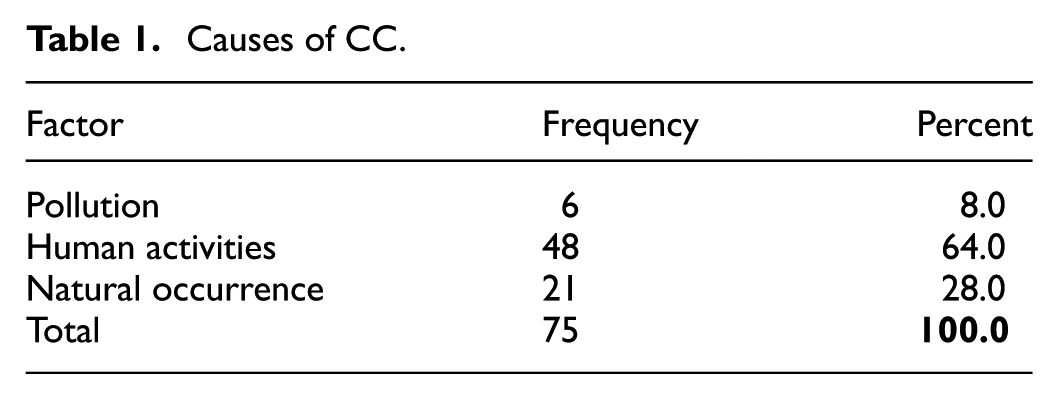
Overall, 48 or 64.0% of the students perceived human activities as a cause of climate change. Indeed, “the world’s scientific community blames human activities, particularly, excessive global reliance (to drive industrialisation) on fossil energy for the climate change phenomenon” (IPCC, 2014). However, 21 of them identified climate change as a natural occurrence, which reflects the notion that “climate naturally changes over time; decades, centuries and Millennia” (Amekudzi et al., 2017; Adedeji et al., 2014).
The survey responses pointed out that “lack of education on the causes of climate change” is what pushes people to resort to activities that contribute to the fast-changing climatic conditions. There is also “lack of advocacy campaigns” to educate and create awareness to make people aware of the situation to induce them to take responsibility for their behaviour towards the environment. Hence, this study responds to the recommendation “to facilitate understanding of climate change risks, encourage judicious use of existing natural resources and positive attitudes and behaviour towards sustaining the natural environment” (Gustafsson & Ijla, 2016).
Impacts CC May Have on the Environment
Multiple responses were given to this survey item on what the students personally perceived as the ways in which climate change may affect the natural environment. The students who interpreted climate change impacts in terms of all the six elements (drought, flooding, rising temperatures, increasing intensity and frequency of extreme weather events, sea level rise, global warming) numbered 22. The majority (64 and 62 respectively) of the 75 students selected global warming and rising temperatures. The element that received the lowest selection was sea level rise. Interestingly, all the students recognised global warming and rising temperatures as impacts climate change has on the environment. As many as 55 (or 73.3%) of the students expressed awareness that “climate change has some impact on the environment”.
CC Impacts that Will Mostly AFFECT GHANA
Of the six climate change impacts listed as options of responses, 30 or 40% of the 75 students selected global warming as the impact of climate change that will mostly affect Ghana. In addition, 26 selected rising temperature. Overall, all the 75 students perceived that everyone in Ghana, including plants and animals, was at risk of climate change impacts.
Awareness of CC Campaigns in Ghana
On whether the students had observed any climate change awareness campaigns going on in the country recorded 49 or 65.3% “Yes” and 26 “No” responses from 72 students. This implied some awareness of the occurrence of climate change campaigns in Ghana at the time of data collection.
Examples of expressions that were used to communicate this perception are the following:
Yes, but I believe not everyone is exposed to the campaign (SP19, SP29, SP37).
Yes, but more effort is needed in the campaigns to fully attract our attention (SP30, SP31).
The next level was finding out if climate change awareness campaigns were happening at the study university at the time of data collection. This item recorded the majority (48, or 66.7%) “No” responses from 72 students to indicate the absence of any such awareness campaigns. There were 12 “Not enough” and “Not sure” responses, with the same number of “Yes” responses. In effect, those who confirmed awareness of climate change campaigns in the university numbered only 16 of the 72 students. Two students reported sighting awareness campaigns as part of exhibitions and class assignments respectively. One “gold nugget” of a response was “Not to my knowledge. Trees are even being cut down in my university in the name of giving aesthetic features to the university” (SP18). This suggests awareness of happenings that were not pro-environment on the campus.
Schools Teaching About CC
This survey item recorded 40 or 55.6% “Yes” responses from 72 students as confirmation that schools in Ghana teach their students about climate change. This response runs contrary to the findings made by Boakye (2015) and our initial assumption that climate change education is not a prominent feature of Ghana’s school curriculum. The “No” responses totalled 23, with nine other “Not sure” answers. Having 21 “No” and 17 “Not sure” responses suggest No or Inadequate teaching about CC in some of the schools these students attended. The scenario reflects Boakye’s (2015) finding that climate change is not effectively taught in all of Ghana’s schools.
“I Was Taught About CC”
This survey item sought to know if the students in the study had prior tuition about climate change in their previous schools before attending the university or not. The responses gathered revealed that, 30 of the 75 students were taught about climate change. Additional information that was provided in nearly all the 30 “Yes” responses are that “climate change as a topic is taught from primary school through senior high school to the university level. It is taught to students who study environmental science, geography, biology and social studies”.
This reflects the idea of McKeown and Hopkin (2010) that climate change education is typically provided through geography and the science disciplines. This study therefore afforded the participating graphic design students an equal opportunity to learn about the phenomenon, particularly those who attended senior high schools that did not teach this topic.
Measures Exist for Designers to Tackle CC
The question of whether the participating students knew of anything that could be used to tackle climate change recorded 46 (63.0%) “Yes” and 27 “No” responses from 73 students. All the students called for awareness campaigns to be mounted to educate the public on climate change impacts in Ghana. This implies the students believed it was possible to deal with climate change.
Additional information that was recorded among the “Yes” responses included the following statements:
Human activities and ignorance of people contribute significantly to the changing of the climate and therefore raising awareness of the people/public would help actors to institute pragmatic measures to curb the situation (SP63).
Public educational programmes on the climate change menace, practices that cause climate change, negative effect of climate change, etc. can be facilitated using social media platforms, television, radio, posters (SP35).
Personal Changes to Minimise CC Effects
Only 14 of the responses given by 66 students who answered this survey item focused on personal changes they were willing to make to increase their preparedness to minimise the effects of climate change. The responses showed they were willing to change their attitudes to climate change issues. Eighteen of them would use design to educate others and 16 would join a campaign team. Examples of the 14 expressed responses included the following statements:
As a designer, I will be willing to change my ignorant attitude to climate change (SP16, SP23, SP31).
Use less ink for design (SP7).
These are valid personal actions that can be encouraged. However, the expected personal touch was absent from the majority of the students’ responses to this item.
Examples of the design-related responses given on this matter included the following:
By designing billboards, posters and making/creating awareness through advertising and social media (SP1, SP11, SP23).
Create an awareness campaign which will stick in the minds of people to help avoid the causes (SP7, SP33, SP65).
Designers’ Contribution to CC and ES
Generally, 65 of the responses given to this survey item reflected the design of products such as posters, advertisements and billboards to create awareness and educate the public on climate change and environmental sustainability. One of the students wrote “designers do not play any role in contributing to climate change and environmental sustainability”.
The following are examples of statements recorded on this issue:
By communicating with visuals and audio-visuals to create awareness to the public (SP 51, SP55).
Create an awareness campaign which will stick in the minds of people to help avoid the causes (SP7, SP33, SP65).
Nearly all the responses given to this item by 73 students did not link the graphic design industry with extensive use of natural resources such as water and paper produced from wood to generate the products and services that humans need (Konchada, 2014). This also implies a lack of awareness of the capacity of the graphic design industry to generate sustainable solutions that the environment needs (Reese, 2014; Yu & Sangiorgi, 2014), including non-degradable products that contribute to the waste that pollutes the environment (Grönman et al., 2013).
How Designers Can Help to Curb CC
Eight of the 75 students said “No” to suggest they were not aware of anything designers can do to help curb climate change. The other responses, which included 33 that cited commercial adverts, rather centred on designing products for use in awareness creation campaigns. The “personal involvement” that the item sought for was not seen in the students’ responses.
Suggested Designers’ Actions to Help Sustain the Environment
The students were unable to provide the expected answers for this open-ended survey item. The suggestions to solve the problem of climate change in order to sustain the environment focused on the use of designs. These ideas were expressed in such statements as the following:
Design and use posters, videography, pictures or graphical imagery, T-shirts, banners, flyers, among others to create awareness and educate the people around them about the climate change issue (SP13, SP35, SP41).
Designers should come out with campaign projects, a short documentary for publication, commercial TV programme to create awareness. A unified campaign which designers can easily pitch in with their work with a focus of a central theme (SP16, SP11, SP44).
Overall, the survey data presented showed that not all the 75 students responded to the survey items posed on climate change (CC) and environmental sustainability (ES) as expected. The responses revealed that the majority (57 or 71%) of them had limited knowledge about CC and 30 or 40.0% reported not being taught about the phenomenon in high school. This reiterates the point that climate change is not a prominent feature of Ghana’s educational system (Boakye, 2015; Boateng & Boateng, 2015), which makes this study significant in terms of educating the young designers to appreciate the need to design eco-friendly products and services to protect the natural environment.
However, all 75 students generally understood ES in terms of “preserving the natural resources available to humanity on Earth”, with 25 of them identifying reforestation and waste recycling as aspects of ES they were familiar with. Only five of them had learned about both phenomena from public agencies such as schools, libraries and the Information Services department of the Ministry of Communications in Ghana. Only 10 of 74 students perceived CC as a very important topic to discuss. Those who reported awareness of CC campaigns in Ghana formed 64.0% of 72 students while 66.7% of them denied any campaigns were happening in the study university.
While all (100%) the 75 students recognised global warming and rising temperatures as CC impacts that affect the natural environment, the majority (55 or 73.3%) of them expressed awareness that CC has some impact on ES. They all (100%) agreed that everyone in Ghana, including plants and animals, were at risk of CC impacts. However, the responses revealed “change of attitude to the environment” as the main personal action 14 of the students were willing to take to minimise the effects of CC, as designers.
The survey results revealed that only a minority (8.0%) of the 75 students understood how the output of designers and the graphic design industry in general, contribute to CC. Only 37% of them recognised design as a tool that can be used in public education, for example, to promote environmental sustainability. This knowledge gap needed to be filled through design workshop activities.
Level 5 Activities: Engaging with Sustainability
Informed by the gaps identified in the survey responses, the students were organised into random groups to enable them discuss what they knew about climate change (CC) and environmental sustainability (ES), to define what each term meant to them as design students, and to brainstorm possible solutions to critical local sustainability challenges and CC effects they could identify from the pictures, online videos shown to them and storytelling about their own personal experiences of the phenomenon. The students documented their shared views about CC and ES through mind mapping on large sheets of manilla card. Each group also received a different set of coloured markers to identify, designate and represent the respective groups in order to make it easy to differentiate between these groups. They took photographs using cameras and mobile phones, recorded audios and videos of the events, which they incorporated in their design projects.
The students demonstrated their learning in sustainable graphic design with projects that focused mainly on illegal mining (galamsey), deforestation and water pollution, using text, images, video and audio recordings. The learning activities were characterised by open display and active presentation of each group’s project to the larger group. The process enabled members of other groups to ask questions of the presenters, critique the projects, and assess the extent to which the core values of environmental sustainability and sustainable design practices had been incorporated in them. The students submitted their projects as part of their design portfolio at the end of coursework. Figures 10–12 show examples of the students’ designed projects.
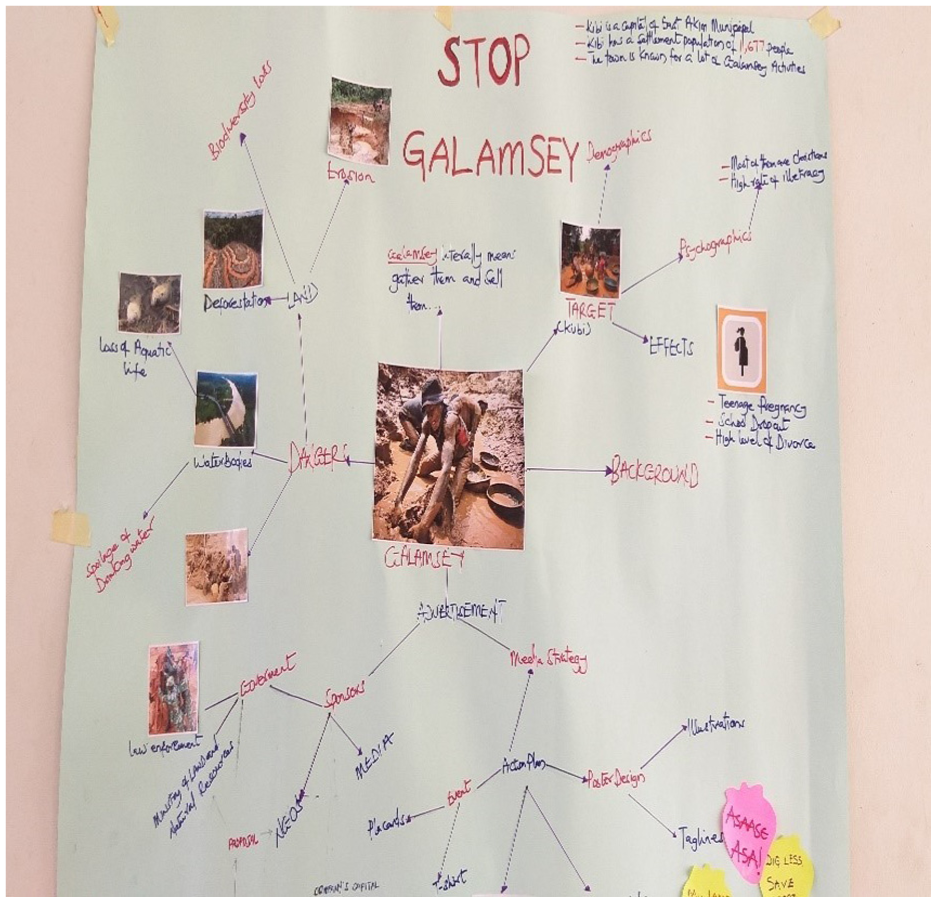
Poster on illegal mining (galamsey).
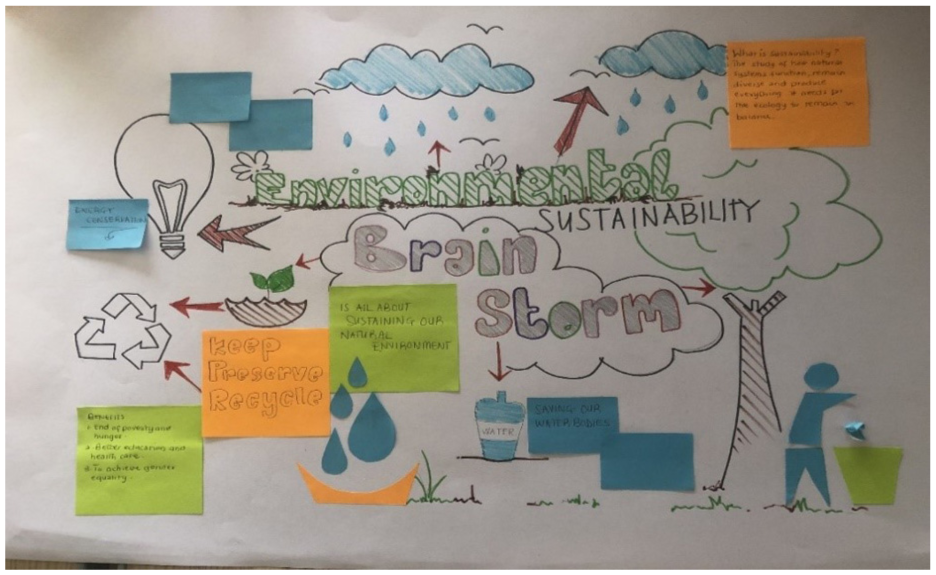
Poster on environmental sustainability strategies.

Poster on forest conservation strategies.
Conclusions
The interactions on climate change and environmental sustainability and the time the students spent watching and discussing relevant videos and images gathered from various parts of the world obviously gave them a better understanding of the phenomenon and made the reality and relevance of climate change advocacy campaigns clear to them. The survey pointed out that lack of education on the causes of climate change is what pushes people to resort to activities that contribute to the fast-changing climatic conditions. There is also a lack of advocacy campaigns to educate and create awareness to make people aware of the situation so they can take responsibility for their behaviour.
The students demonstrated increased awareness about climate change and environmental sustainability matters via the advertising campaign projects they designed on illegal mining, water pollution, sanitation and deforestation, that are hurting the local environment.
The study attests to climate change education being available to students who study environmental science, geography, biology and social studies. However, graphic design and game-based learning offer a feasible approach to implementing climate change education in the context of higher education on the basis of their capacity to break complex information such as climate change into simple messages that ordinary people can understand (Geise & Baden, 2015). Thus, this study makes a significant contribution to the global conversation on climate change, environmental sustainability and climate mitigation from the Ghanaian perspective.
Recommendation and Future Study
A more intensive gamified learning approach structured with design thinking strategies that focus on critical sustainability challenges in Ghana could be applied to address the 75 graphic design students’ knowledge gaps on climate change and environmental sustainability matters to enable them understand the need for sustainable graphic design practice to protect the natural environment.
Footnotes

Funding
The authors received no financial support for the research, authorship, and/or publication of this article.
Declaration of Conflicting Interests
The authors declared no potential conflicts of interest with respect to the research, authorship, and/or publication of this article.
Data Availability Statement
Data sharing not applicable to this article as no datasets were generated or analyzed during the current study.