




Abstract
The growing need to persuade sports fans to support the domestic sports industry has driven the integration of ethnocentrism into the industry, leading to the concept of sports fan ethnocentrism. While existing literature acknowledges the relevance of sports fan ethnocentrism, there is a lack of evidence regarding its drivers in both developed and developing countries. This study aims to fill this gap by exploring the drivers of sports fan ethnocentrism. Data were collected from 329 fans of Simba Sports Club and Young Africans Sports Club in Tanzania. The results, analyzed using partial least squares structural equation modeling (PLS-SEM), indicate that both fan identification and fan community identification contribute to sports fan ethnocentrism via perceived sacredness. The study recommends that fan ethnocentrism can be promoted when fans strongly identify with their sports team and the broader fan community. Additionally, the study offers specific recommendations for sports managers and outlines avenues for future research in this area.
Plain language summary
This study explores what drives sports fan ethnocentrism, which is the tendency of fans to support their domestic sports industry over foreign ones. While the concept is recognized, little is known about its causes in both developed and developing countries. The study collected data from 329 fans of two popular Tanzanian soccer clubs, Simba Sports Club and Young Africans Sports Club. Using statistical analysis, the results showed that fans who strongly identify with their team and the fan community are more likely to develop sports fan ethnocentrism, influenced by their perception of the team as sacred. The study suggests ways for sports managers to encourage fan loyalty and provides recommendations for future research.
Introduction
The sports industry in developing countries, particularly in Africa, holds substantial potential for growth (Hassan et al., 2022; Hemmonsbey et al., 2021; Knott & Tinaz, 2022); however, its development lags behind the steady expansion observed in developed economies (Acquah-Sam, 2021; Agyemang et al., 2024; Amani, 2019; Onyishi & Okou, 2016; Zhai et al., 2024). Research highlights that African nations have not fully leveraged the sports industry as a tool to address poverty, particularly that driven by youth unemployment (Acquah-Sam, 2021; Onyishi & Okou, 2016; Zhai et al., 2024). As of 2023, the global sports market was valued at approximately $512.14 billion, with projections estimating growth to $623.63 billion by 2027 (Agyemang et al., 2024). While the African sports industry has shown notable progress (Amani, 2025), a significant disparity persists between Africa and other regions (Acquah-Sam, 2021). Studies indicate that a substantial portion of the African population, particularly football enthusiasts, exhibits a deep passion for sports (Agyemang et al., 2024; Amani, 2023a). Goldblatt (2019) reports that 72% of Africans are highly enthusiastic about sports, with football being the most prominent. Notably, 55% of African sports fans favor the English Premier League (EPL), and 39% closely follow iconic players within the league (Goldblatt, 2019). Furthermore, Amani (2023a) estimates that each EPL season attracts over 200 million viewers from developing countries, with Africa contributing significantly to this audience.
Despite widespread enthusiasm for sports in developing countries, particularly in Africa, the literature indicates that the sports industry remains under-commercialized and is primarily perceived as a source of entertainment rather than a catalyst for social and economic development (Agyemang et al., 2024; Amani, 2025). This disparity highlights the urgent need for strategic initiatives to unlock the industry’s potential for broader socio-economic impact (Amani, 2019). Existing research suggests that efforts to transform the sports industry in developing countries are impeded by insufficient support from key stakeholders within the sports ecosystem (Akpabli, 2023; Igwe et al., 2021). While a limited number of studies have explored support for the sports industry, most focus on developed countries (Agyemang et al., 2024), with scant evidence from developing nations (Amani, 2023a). The need to understand the multifaceted nature of support for the sports industry has given rise to the concept of sports fan ethnocentrism, which refers to the tendency of fans to favor domestic sports teams and their affiliates due to feelings of patriotism and nationalism (A. W.-L. Hu & Bedford, 2012). This phenomenon positions the sports industry as a potential driver of social and economic development, emphasizing the importance of fostering greater stakeholder engagement to enhance its impact in developing countries (Agyemang et al., 2024; Amani, 2025).
Sports fan ethnocentrism originates from the broader concept of ethnocentrism, a socio-psychological phenomenon rooted in sociology and social psychology (Chiu & Won, 2022; A. W.-L. Hu & Bedford, 2012). Ethnocentrism is characterized by in-group cohesion, solidarity, and loyalty, coupled with a sense of superiority over out-groups and a readiness to defend the in-group’s interests against those of out-groups (Josiassen et al., 2022; Kock et al., 2019; Lever et al., 2023). The literature demonstrates that ethnocentrism is frequently employed to examine in-group bias or favoritism as drivers of specific psychological behaviors (Kock et al., 2019; Lever et al., 2023). Initially conceptualized in political science, ethnocentrism was adapted to marketing as consumer ethnocentrism, reflecting a biased preference for domestic products over foreign ones (Shimp & Sharma, 1987). This concept gained traction during globalization, which transformed the world into a free market by reducing barriers to the exchange of goods and services across borders (Karoui & Khemakhem, 2019). Globalization has similarly influenced the sports industry, enabling fans worldwide to support teams, players, and professional leagues beyond their national boundaries (Akpabli, 2023; Igwe et al., 2021). Although ethnocentrism has been extensively studied in marketing (Amani, 2024), empirical research on its application within the sports industry remains limited (Chiu & Won, 2022). The increasing tendency of sports fans in developing countries to support foreign teams, international players, and global leagues highlights the need to foster sports fan ethnocentrism to promote local sports industries and their socio-economic potential.
Drawing on the established benefits of ethnocentrism in consumer markets (Amani, 2023b), integrating and examining this concept within the sports industry could serve as a pivotal strategy for transforming the sector, enhancing its commercialization and professionalism (Chiu & Won, 2022). Despite the potential of sports fan ethnocentrism to drive such transformation, there is a notable scarcity of empirical studies linking it to other relevant constructs in sports marketing and management (Chiu & Won, 2022). Existing research primarily positions sports fan ethnocentrism as a driver of various fan behaviors. For instance, studies indicate that it influences viewing behavior (Chiu et al., 2015), team identification and media consumption intentions (Chiu & Won, 2022), community consciousness and antagonistic behavior (Pyun et al., 2011), and the consumption of global sports brands, including merchandise (A. W.-L. Hu & Bedford, 2012). Additionally, sports fan ethnocentrism fosters interest in sports, news-seeking, fan engagement, and consistent viewing habits (W. L. Hu & Tsai, 2008). Gao et al. (2024) further demonstrate that team identity and national identity can elicit ethnocentric sentiments in elite sports. When viewed through the lens of nationalism and patriotism, Berendt and Uhrich (2016) note that fans in competitive sports may exhibit hostility toward foreign products. However, there remains limited empirical evidence on the drivers of sports fan ethnocentrism in both developing and developed countries. This gap stands in contrast to the growing advocacy from scholars and practitioners for promoting sports fan ethnocentrism among key stakeholders within the sports ecosystem (Chiu & Won, 2022). Addressing this research deficiency is critical to unlocking the potential of sports fan ethnocentrism to drive socio-economic benefits and advance the commercialization of the sports industry.
To address the existing research gaps concerning the drivers of sports fan ethnocentrism, this study proposes a conceptual model that investigates fan identification and fan community identification as predictors of sports fan ethnocentrism, with perceived sacredness as a mediating mechanism. Grounded in social identity theory, the model posits that favoritism behaviors stem from intergroup relations, which shape how individuals perceive themselves as significant members of an in-group in contrast to out-groups (Hogg & Turner, 1987; Tajfel & Turner, 1986). Applying this theory, the study conceptualizes fan identification as a psychological connection to a sports team, leading fans to perceive their team as a sacred entity distinguished by exceptional qualities compared to rival teams (Dalakas & Phillips Melancon, 2012). In this context, perceived sacredness is defined as an individual’s profound sense of reverence and awe, elicited by sensory stimuli associated with grandeur, which elevates the team to a sacred status, fostering emotional attachment and a sense of inviolability (Amani, 2023a). Additionally, the model proposes that fan community identification predicts perceived sacredness and, consequently, sports fan ethnocentrism. Through the lens of social identity theory, fan community identification is conceptualized as the deep bond shared among fan community members, coupled with a collective sense of distinction from those outside the community (Gordon et al., 2021). In summary, the proposed conceptual model suggests that the interplay of fan identification, fan community identification, and perceived sacredness drives sports fan ethnocentrism. This study addresses the following research questions:
Literature Review and Hypothesis Development
Social Identity Theory
This study is anchored in social identity theory, a framework widely utilized in research to explore and predict outcomes when individuals perceive themselves as either unique individuals or members of a group (Stets & Burke, 2000). Developed by Tajfel and Turner (1986) the theory provides theoretical insights into how group membership integrates into an individual’s self-concept, shaping their perceptions of both in-group members and out-group individuals, including rival groups. Social identity is defined as an individual’s awareness of belonging to a specific social group or category (Hogg & Turner, 1987). Such groups comprise individuals who share a common social identity, view themselves as significant members, and distinguish themselves from those outside the group (Stets & Burke, 2000). The theory emphasizes intergroup dynamics, particularly how individuals perceive themselves as integral members of their in-group in contrast to out-groups, which can foster self-categorization and a pronounced sense of ethnocentrism (Hogg & Turner, 1987). Consequently, social identity theory posits that individuals tend to define themselves in relation to their in-group, establishing a framework for differentiating their group from others. This in-group favoritism, as articulated by the theory, provides a robust theoretical foundation for understanding fan identification and fan community identification, which ultimately enhance the perceived sacredness of a sports team.
Perceived Sacredness
The concept of sacredness, traditionally rooted in theology, has increasingly extended into diverse disciplines, including marketing (Wang et al., 2019). This expansion reflects the recognition that certain objects, such as brands, embody unique qualities capable of eliciting profound spiritual or emotional responses, leading individuals to perceive them as “sacred” (Joshi & Garg, 2022). Similar to religion’s role in fostering a sense of community and belonging among its adherents, brands similarly cultivate connection and identity among consumers (Amani, 2023a; Wang et al., 2019). This parallel between religious and brand-related experiences has given rise to the concept of “brand sacralization,” defined as the process by which brands acquire sacred status in the eyes of consumers (Sarkar et al., 2015). In marketing, a sacralized brand transcends its utilitarian function, serving as a powerful medium for self-expression and personal identity. Such brands deliver extraordinary experiences that extend beyond mere consumption, evoking feelings of reverence and belonging akin to religious devotion (Amani, 2023a; Joshi & Garg, 2022). Consumers, driven by these deep emotional connections, come to regard the brand as a sacred entity one that embodies meaning, purpose, and even transcendence in their lives (Rohman et al., 2023; Tamitiadini et al., 2021). It hinges on the emotional and symbolic value a brand provides, mirroring the role of religion in enriching individual identity and lived experience (Amani, 2023a).
The literature underscores that perceived sacredness is particularly pronounced in the sports industry, where fans frequently ascribe a sacred status to sports teams and the industry itself, akin to religious reverence (Schindler & Minton, 2022). Scholars in sports marketing and management widely recognize that highly devoted fans exhibit behaviors paralleling religious devotion, characterized by profound emotional commitment and unwavering loyalty to their teams (Amani, 2023a; Price, 2023). Fans who perceive their team as sacred develop deep emotional bonds, viewing the team as an embodiment of their personal values, beliefs, and identity (Statz et al., 2022). This perception often elevates the team to a sacred entity that reflects fans’ characteristics and aspirations. Such intense devotion can lead to significant behavioral outcomes, including, in extreme cases, fan aggression, or violence when the team is perceived to be disrespected (Amani, 2023a). However, perceived sacredness also drives positive behaviors, such as increased loyalty, patronage, and word-of-mouth advocacy (Joshi & Garg, 2022). Fans who view their team as sacred are motivated to publicly express their support through actions like wearing or displaying team merchandise. The sacredness of a team also cultivates ritualistic behaviors, wherein fans share cultural identities and values through their collective support (Price, 2023). This fosters a profound sense of belonging and collective spirit, often transcending generations (Statz et al., 2022). Fans who regard their team as sacred demonstrate heightened loyalty, a willingness to pay premium prices for merchandise, and active contributions to enhancing the team’s reputation (Amani, 2025).
Fan Identification
Fan identification represents the emotional and psychological connection that sports fans form with their preferred teams (Weng, 2022). This bond is grounded in social identity theory, which posits that individuals derive a significant portion of their self-concept from their membership in social groups (Amani, 2019). For sports fans, identification with a team constitutes a central component of their social identity, encompassing commitment, a perceived sense of belonging, and emotional engagement as spectators (Dalakas & Phillips Melancon, 2012). Consequently, fans experience the team’s successes and failures as personal events, reflecting their internalized affiliation with the team. Social identity theory suggests that fans categorize themselves and others into groups, such as their favored team versus rival teams (Amani, 2023a). This categorization promotes in-group favoritism, whereby fans perceive their team as superior and derive self-esteem from its achievements (Wann et al., 2017). The emotional attachment to the team manifests in various team-related outcomes. For instance, fan loyalty, a direct outcome of identification, increases the likelihood of fans attending games, purchasing merchandise, and traveling to matches (Toder-Alon et al., 2019). Fan identification influences affective, cognitive, and behavioral outcomes (Amani, 2019). Affective outcomes include emotions such as sympathy, enjoyment, and heightened arousal during games, driven by fans’ emotional attachment to their team. Cognitive outcomes involve fans’ knowledge and perceptions of their team relative to rivals, often marked by biased evaluations favoring their team. Behavioral outcomes encompass actions reflecting fans’ social identity, such as demonstrating loyalty through prosocial behaviors or, in some cases, exhibiting aggression toward rival fans. Additionally, behavioral outcomes may influence fans’ self-presentation and psychological well-being, which are shaped by their identification with the team.
Scholars in the social sciences, particularly in sports marketing, have long explored the concept of individual identification with a focal object (Amani, 2025). In sports marketing, fan identification significantly influences fans’ loyalty, often leading to fervent devotion to their preferred team (Arroba et al., 2021). This identification manifests as deep emotional and psychological attachments, with fans perceiving themselves as integral to the team’s identity. Drawing on social identity theory, fan identification involves the construction of both personal (individual) and social (group) identities, shaped by the distinctive traits that define the individual and the social group here, the sports team (Stets & Burke, 2000). The strength of fan identification is often determined by the extent to which the team reflects an individual’s characteristics and values (Amani, 2023a). In essence, fan identification represents an individual’s effort to integrate the team’s identity into their self-concept. Moreover, fan identification can elevate sports teams to a sacred status, worthy of admiration and reverence. Highly identified fans not only form strong emotional connections with their team but also develop a profound affinity for fellow supporters (Gordon et al., 2021). These fans are notably resistant to changing allegiances, as such a shift would threaten their social identity. Following a team’s loss, highly identified fans often engage in attributional adjustments to protect their self-image and maintain their sense of belonging to the group (Amani, 2019). This deep psychological investment highlights the challenge of altering fan affiliation, as it is intricately intertwined with both personal and social identities. Based on this conceptualization, the present study proposes the following hypothesis:
Fan Community Identification
Fan community identification refers to a psychological state characterized by an intrinsic connection and sense of belonging among members of a fan community, coupled with a collective perception of distinction from individuals outside the community (Gordon et al., 2021). From a social identity perspective, fan community identification reflects the degree to which sports fans perceive the fan community as integral to their identity (“me”) or distinct from it (“not me”), shaping their behavior based on the identity most salient in a given context (Amani, 2019, 2023a). This identification manifests as fans’ awareness of their affiliation with a specific sports team community, leading them to view themselves as symbolic or active members of that community (Gordon et al., 2021). It fosters a sense of kinship among sports fans, extending to fellow supporters and others associated with the team. Grounded in social identity theory, fan community identification posits that individuals derive part of their self-concept from membership in social groups, such as fan communities, which are built on structured social relationships among admirers of a focal entity, such as a sports team or brand (Ashforth & Mael, 1989). Social identity theory further explains that fans identify with others in the community based on shared characteristics and group membership, cultivating a sense of unity. Fan communities, like other social groups, are defined by two core dimensions: social identification and commonality. These dimensions shape behaviors aligned with community characteristics, including consciousness of kind, rituals, traditions, and a sense of moral responsibility. Amani (2019) describes “consciousness of kind” as the intrinsic sense of connection with in-group members and the perceived distinction from out-group members. In the sports marketing context, this consciousness manifests as fans perceiving themselves as unique and distinct from supporters of rival teams. As Kuo and Feng (2013) suggest, individuals with strong social identification often develop a collective sense of belonging, which may lead them to distance themselves from those outside the group.
Rituals and traditions within sports fan communities often encompass behaviors such as sharing stories and experiences related to team support, reflecting on the team’s history, or engaging in distinctive practices like unique greetings among fans (Rose et al., 2021). These practices reinforce a sense of moral responsibility, manifested through actions such as encouraging fellow fans to remain loyal, recruiting new supporters, and fostering a strong commitment to the team (Amani, 2019). According to social identity theory and self-categorization theory, fan identification with a sports team community is rooted in the perceived alignment between an individual’s personal values and those espoused by the team and its supporters (Gordon et al., 2021). In this context, fan community identification reflects a complex interplay among the fan, the sports team, and the broader community (Amani, 2019; Gordon et al., 2021). For fan community identification to occur, there must be congruence among these three entities. The sports team serves as the focal point around which the fan community coalesces, driven by shared passion for the team. This convergence fosters a sense of belonging and strengthens group cohesion, as fans recognize shared interests and values that reflect and amplify the sports team’s brand identity. Amani (2023a) asserts that the perception of sacredness likely arises from this deep-seated connection, where the team transcends mere entertainment to become a central, revered entity in fans’ social and emotional lives. Based on this theoretical conceptualization, the present study proposes the following hypothesis:
Sports Fan Ethnocentrism
Ethnocentrism, a concept rooted in sociology and psychology, refers to the tendency of individuals to view their own ethnic group as central and superior to others (Chiu & Won, 2022). This belief leads individuals to prioritize their ingroup, often considering it more important or morally superior than other ethnic groups. Ethnocentrism fosters the perception that one’s own group embodies the highest form of humanity, while others are regarded as inferior (Lever et al., 2023). Sumner (1906) characterized ethnocentrism as an attitude marked by loyalty, solidarity, and a strong commitment to one’s ingroup, accompanied by a sense of superiority over outgroups and a willingness to defend ingroup interests. Furthermore, ethnocentrism is closely associated with negative feelings and hostility toward outgroups, often manifesting in both pro-ingroup favoritism and anti-outgroup discrimination (Karoui & Khemakhem, 2019). Shimp and Sharma (1987) extended the notion of ethnocentrism to consumer behavior, introducing the concept of consumer ethnocentrism. This socio-psychological and attitudinal construct reflects the tendency of patriotic consumers to prefer domestically produced goods over foreign alternatives (Kibret & Shukla, 2021). From this standpoint, ethnocentric consumers perceive the purchase of imported products as economically harmful and fundamentally unpatriotic, as it may contribute to job losses and undermine the domestic economy (Ulker-Demirel et al., 2021). More broadly, ethnocentrism relates to ethnicity a core dimension of human social identity that has existed since ancient times. Within this framework, consumer ethnocentrism strengthens group solidarity by reinforcing the belief that supporting local products contributes to the prosperity and cohesion of one’s ethnic or national group (Karoui & Khemakhem, 2019).
Recently, the concept of ethnocentrism has been extended to the sports domain, leading to the emergence of the notion of sports fan ethnocentrism (Chiu & Won, 2022). This extension was motivated by scholarly observations that ethnocentric tendencies are increasingly evident among sports spectators worldwide (Chiu et al., 2015; Chiu & Won, 2022). The relevance of sports fan ethnocentrism has grown significantly due to the ongoing commercialization and professionalization of the sports industry in both developed and developing countries. As the sports industry becomes more commercialized, individual nations are striving to protect and promote their domestic sports sectors, recognizing their potential contributions to national social and economic development (Agyemang et al., 2024). Globally, governments and sports organizations are actively working to position fans as critical actors within the sports ecosystem by encouraging support for local leagues, domestic players, and national teams (Agyemang et al., 2024; Amani, 2023a). Sports fan ethnocentrism is thus defined as the tendency of sports fans to exhibit psychological attachment and behavioral preference toward their domestic sports industry demonstrated through support for local professional leagues, national teams, and homegrown players (Chiu & Won, 2022; W. L. Hu & Tsai, 2008). This form of ethnocentrism is attitudinal in nature, where fans are driven by a sense of pride and identity that is closely linked to their local sports institutions (A. W.-L. Hu & Bedford, 2012). Ethnocentric fans often perceive domestic leagues, athletes, and sports organizations as superior and worthy of loyalty and devotion. Based on this conceptualization, the present study hypothesizes that:
Methodology
Study Setup
The study adopted a positivist approach, which involved proposing hypotheses that were then tested empirically using statistical methods (Amani, 2023c). To evaluate the proposed hypotheses, the study applied multivariate data analysis techniques, as illustrated in Figure 1. In particular, Partial Least Squares Structural Equation Modeling (PLS-SEM) was employed, which is part of a broader set of multivariate data analysis methods (Hair et al., 2019). PLS-SEM provides increased flexibility for handling non-normally distributed data, is more appropriate for smaller sample sizes, and yields reliable results for reflective structural models (Hair et al., 2017). The research focused on sports fans of Simba Sports Club and Young Africans Sports Club in Tanzania. It was conducted in Dodoma, the capital city of Tanzania, which is a prominent area for studies requiring a diverse population (Amani, 2023b; Hamza et al., 2022). Simba Sports Club and Young Africans Sports Club were chosen for the study because they are among the largest sports teams in sub-Saharan Africa (Amani, 2019; Omari, 2019). The International Federation of Football History and Statistics (IFFHS) ranks Young Africans Sports Club and Simba Sports Club 4th and 15th, respectively, among the best football clubs in Africa (International Federation of Football History and Statistics [IFFHS], 2024). The Confederation of African Football (CAF) indicates that Simba Sports Club and Young Africans Sports Club have 39 points in 5th place and 31 points in 13th place, respectively (Yahu, 2024). These clubs form one of the most competitive and popular derbies in Africa, known as the Kariakoo Derby (Amani, 2019, 2025; Beez, 2006), following four other notable derbies: the Cairo Derby, Soweto Derby, Casablanca Derby, and Tunis Derby (Amani, 2025; Ditlhobolo, 2021). This research utilized a cross-sectional design with the goal of estimating the prevalence of the phenomena by gathering and analyzing data at a single point in time (Saunders et al., 2007; Zikmund & Carr, 2009).
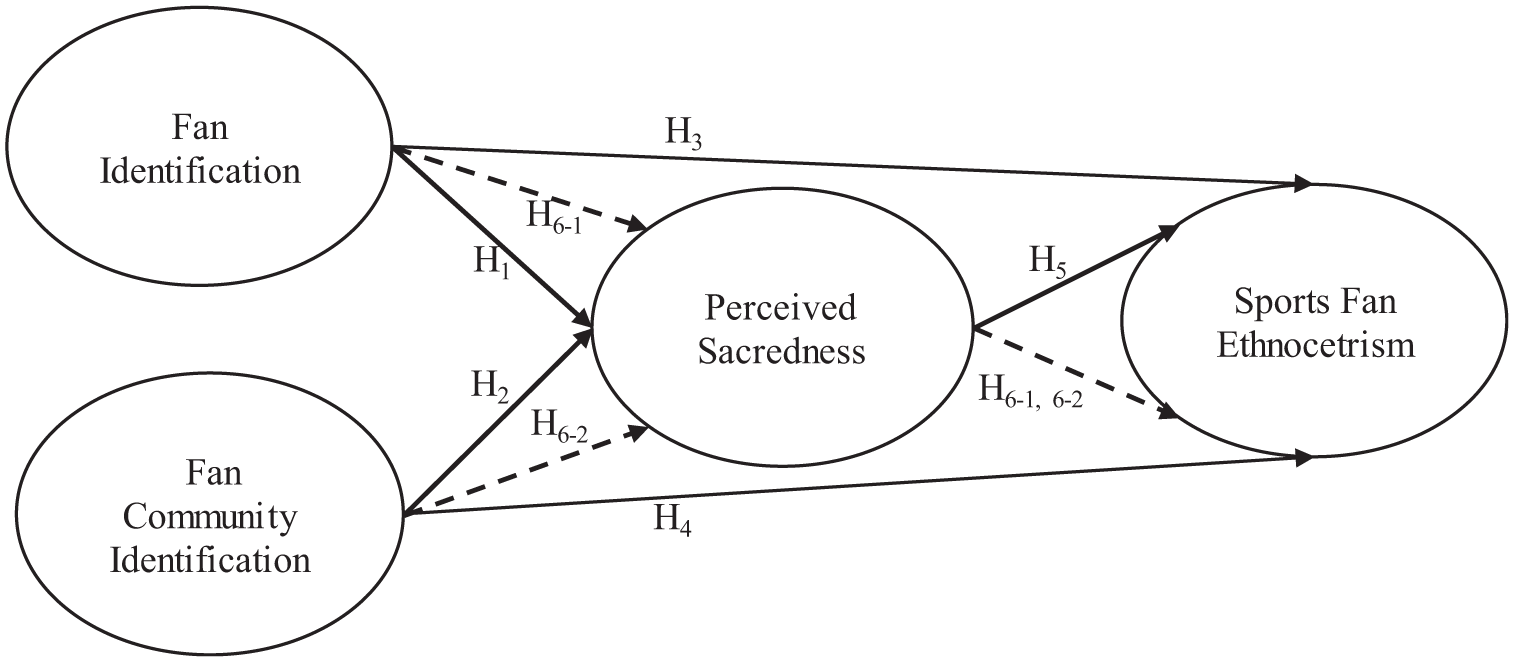
Conceptual model.
Survey Instrument
The survey instrument includes measures adapted from previous studies in the fields of sports marketing and management as shown in Appendix 1. It was developed following a systematic literature review focused on fan identification, fan community identification, perceived sacredness, and sports fan ethnocentrism. Conducting a systematic literature review is recommended in social science research as a scientific method to effectively situate the study within its domain of knowledge (Amani, 2024). The study employed multiple items to ensure that all important attributes of the constructs were captured, minimizing the errors that could arise from using a single item (Churchill, 1979). While maintaining the original meaning and intent of the measures, some wording modifications were made to align them with the study’s context and settings. Respondents were asked to rate each question or item using a 5-point Likert scale, anchored from 1 (strongly disagree) to 5 (strongly agree). Fan identification was measured using instruments from (Amani, 2019, 2023a; Arroba et al., 2021), while fan community identification was assessed using measures from Amani (2023a) and Gordon et al. (2021). Perceived sacredness was evaluated using measures from Amani (2023a) and Wang et al. (2019), and sports fan ethnocentrism was measured using instruments borrowed from Chiu and Won (2022) and A. W.-L. Hu and Bedford (2012).
Survey Administration
The study employed a convenience sampling technique to determine the required and suitable sample size. Convenience sampling is a non-probability technique utilized when the population is not well defined, allowing respondents to be selected based on their availability and accessibility during the study period (Jawad, 2022). To mitigate potential biases inherent in convenience sampling, this study implemented methodological measures recommended by Jawad (2022) and Stratton (2021). These included: (1) administering questionnaires across varied high-traffic time periods to capture diverse respondent profiles, (2) ensuring sample representativeness with respect to gender and age demographics, and (3) employing a sufficiently large sample size to enhance the reliability and robustness of the findings. The street-intercept method was used to obtain a representative sample of the eligible population within a specific geographically defined catchment area in Dodoma, Tanzania. This method involves collecting in-person survey responses from individuals present in public or private spaces or those passing through the area at the time of data collection (Palamar & Le, 2020).
Selected respondents were recruited from high-traffic locations, including university campuses, recreational and entertainment centers, shopping malls, and city centers. The final sample consisted of 329 respondents, significantly exceeding the recommended minimum of 150 for multivariate data analysis techniques (Hair et al., 2019). This study received approval from the Research and Ethics Committee. Participants were thoroughly briefed on the purpose of the study and assured of the confidentiality and anonymity of their responses. Measures were taken to anonymize the data, ensuring that the findings could not be traced back to specific individuals, groups, or communities. Verbal consent was obtained from each respondent before they received and completed the questionnaire. To enhance the response rate and reduce non-response bias, the study adopted a drop-off/pick-up approach during the data collection process. This approach is particularly well-suited for social science research, as it encourages greater participation, fosters interaction, and builds rapport between researchers and participants factors essential for enhancing response rates and minimizing non-response bias (Allred & Ross-Davis, 2011; Junod & Jacquet, 2023). The questionnaire was distributed to respondents who consented to participate in the study, and the data collection procedures were conducted in July 2024.
Data Analysis and Results
Respondents Profile
Table 1 presents the demographic profile of respondents based on their sports team affiliation, gender, marital status, and age. As shown in the table, 173 respondents (52.6%) were affiliated with Young Africans Sports Club, while 156 respondents (47.4%) were affiliated with Simba Sports Club. In terms of gender, 186 respondents (56.5%) were female, and 143 respondents (43.5%) were male. The data also indicates that 297 respondents (90.3%) were single, while 32 respondents (9.7%) were married. The age distribution includes 293 respondents (89.1%) in the 18 to 25 age group, 23 respondents (7%) in the 26 to 35 age group, and 13 respondents (4%) in the 36 to 45 age group.
Respondents Profile.

Psychometric Properties of Measurement Model
The psychometric properties of the measurement model were assessed using reliability and validity metrics. Reliability was evaluated through the composite reliability coefficient and Cronbach’s alpha. The results in Table 2 suggest that the measurement model demonstrated good reliability, with composite reliability coefficients ranging from 0.710 to 0.874 for CR (rho_a) and 0.837 to 0.903 for CR (rho_c), all exceeding the recommended threshold of 0.7 (Peterson & Kim, 2013). Additionally, Cronbach’s alpha values ranged from 0.705 to 0.871, also above the recommended threshold of 0.7 (Cronbach, 1951; Peterson & Kim, 2013), further supporting the reliability of the measurement. Validity, including convergent and discriminant validity, was assessed using factor loadings, average variance extracted (AVE), the Heterotrait-Monotrait (HTMT) ratio, the Fornell-Larcker criterion, and cross-loadings. The results in Table 2 show that factor loadings exceeded 0.7 (Awang, 2014), indicating strong convergent validity. Furthermore, as shown in Table 2, the AVE for all constructs was greater than 0.5 (Said et al., 2011), further signifying good convergent validity.
Validity and Reliability of the Measurement Model.

For discriminant validity, the HTMT values were below 0.9 as shown in Table 3, indicating the presence of discriminant validity (Henseler et al., 2015). Additionally, Table 4 shows that the square root of the AVE was greater than the inter-construct correlations (Ab Hamid et al., 2017; Fornell & Larcker, 1981), further confirming good discriminant validity. The cross-loadings in Table 5 also indicate that each item loaded strongly onto its respective construct compared to other constructs, reinforcing the presence of discriminant validity (Hair et al., 2020). Finally, common method bias was addressed using both procedural and statistical remedies (Podsakoff et al., 2003). Procedural remedies were implemented during the development of the survey instruments, ensuring that measures were carefully selected following an extensive literature review. Participants were also informed of confidentiality and anonymity, with data collected solely for research and academic purposes. Statistically, Harman’s single-factor test was conducted, revealing that no single factor accounted for more than 50% of the variance (Fuller et al., 2015), suggesting that common method bias was not a concern in the data.
Discriminant Validity Using Heterotrait-Monotrait (HTMT) Ratio.

Discriminant Validity Using Fornell-Larcker Criterion.

Note. Bolded value denotes square root of AVE.
Cross Loadings.
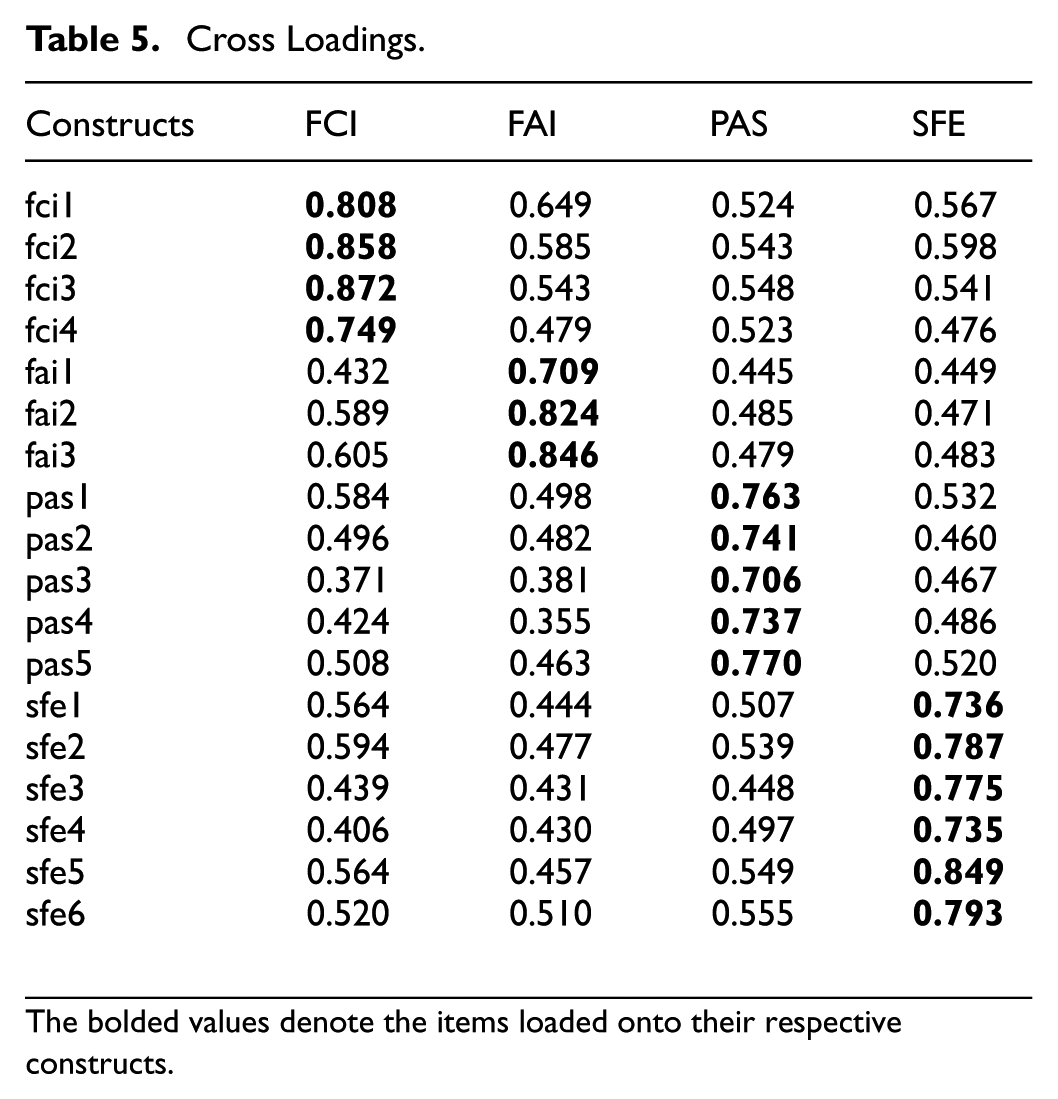
The bolded values denote the items loaded onto their respective constructs.
Structural Model and Testing of Hypotheses
The robustness of the structural model was assessed using the Coefficient of Determination (R2), effect size (f2), and predictive relevance (Q2). According to Cohen (1988), R2 values for endogenous latent variables are evaluated as follows: 0.26 signifies substantial, 0.13 represents moderate, and 0.02 indicates weak. The R2 values for perceived sacredness and sports fan ethnocentrism are 0.460 and 0.548, respectively, indicating substantial explanatory power for the endogenous latent variables. Additionally, according to Hair et al. (2019), the f2 value is classified as small if ≥0.02, medium if ≥0.15, and large if ≥0.35. The f2 value for fan identification’s effect on perceived sacredness is 0.209 (medium), for fan community identification’s effect on perceived sacredness is 0.075 (small), and for perceived sacredness’s effect on sports fan ethnocentrism is 0.790 (large). A Q2 value above zero indicates that the model has predictive relevance (Hair et al., 2019). The Q2 values for perceived sacredness and sports fan ethnocentrism are 0.449 and 0.452, respectively, confirming the model’s predictive relevance. The hypotheses were evaluated using Partial Least Squares Structural Equation Modeling (PLS-SEM), with results interpreted through standardized path coefficients (β), t-statistics, and p-values.
The findings, presented in Table 6, confirm that all hypotheses were supported, indicating significant relationships among the constructs. Specifically, strong identification with a sports team and its fan community enhances the perception of the team as a sacred entity, which subsequently fosters ethnocentrism among fans. Hypothesis 1 posited that fan identification positively influences perceived sacredness. This hypothesis was supported (β = 0.277, t > 1.96, p < 0.001), suggesting that fans with high levels of identification are more likely to regard their sports team as a sacred object deserving reverence. Hypothesis 2 proposed that identification with the fan community positively affects perceived sacredness. This hypothesis was also supported (β = 0.459, t > 1.96, p < 0.001), indicating that fans who strongly identify with their team’s community are more inclined to view the sports team as sacred. Hypothesis 3 asserted that fan identification directly influences sports fan ethnocentrism. The results confirmed this hypothesis (β = 0.148, t > 1.96, p < 0.001), demonstrating that highly identified fans exhibit a stronger sense of support for domestic sports teams and related industries. Hypothesis 4 proposed that fan community identification influences sports fan ethnocentrism. This hypothesis was supported (β = 0.330, t > 1.96, p < 0.001), suggesting that fans with strong ties to a sports community are more likely to display ethnocentric support for domestic sports teams. Hypothesis 5 posited that perceived sacredness positively affects sports fan ethnocentrism. This hypothesis was confirmed (β = 0.363, t > 1.96, p < 0.001), indicating that fans who perceive their sports team as a sacred entity are more likely to exhibit ethnocentric attitudes, viewing the team as worthy of reverence and prioritization.
Hypotheses Testing.

p < .001. **p < .05.
Analysis of Mediation Effect
Hypotheses 6-1 and 6-2 were tested using a bootstrapping approach to assess the indirect effects. The study applied a bias-corrected bootstrap with a 95% confidence interval (CI) and 5,000 bootstrap samples, a method widely recommended as the most reliable for testing the significance of indirect and total effects (Hayes, 2022). The results were evaluated based on standardized coefficients, t-statistics, p-values, and the 95% confidence interval. All proposed mediation hypotheses were supported, indicating that fan identification and fan community identification predict sports fan ethnocentrism through perceived sacredness. Hypothesis 6-1 posited that perceived sacredness mediates the relationship between fan identification and sports fan ethnocentrism. This hypothesis was accepted, as shown in Table 7 (β = 0.100, t-statistic > 1.96, p < 0.001; 95% CI = [0.057, 0.158]), implying that highly identified fans develop a sense of ethnocentrism when they feel awe toward the team. Similarly, Hypothesis 6-2 proposed that perceived sacredness mediates the relationship between fan community identification and sports fan ethnocentrism. This hypothesis was also accepted, as presented in Table 7 (β = 0.166, t-statistic > 1.96, p < 0.001; 95% CI = [0.096, 0.247]), suggesting that fans who strongly identify with fan communities are more likely to develop ethnocentrism when they experience feelings of sacredness toward the sports team (Figure 2).
Summary of Results for Mediation Effect.

Note. LLCI = lower-level confidence interval; ULCI = upper-level confidence interval.
p < 0.001.

Path model.
Discussion
This study seeks to advance the understanding of the predictors of sports fan ethnocentrism by proposing and testing a conceptual model that examines the influence of fan identification and fan community identification on sports fan ethnocentrism, with perceived sacredness as a mediating factor. The findings confirm that both fan identification and fan community identification are significant drivers of sports fan ethnocentrism. Moreover, the study elucidates the mediating role of perceived sacredness in explaining the relationship between fan identification, fan community identification, and sports fan ethnocentrism. Specifically, the results indicate that fan community identification significantly enhances perceived sacredness. From a social identity perspective, fan identification fosters favoritism or bias toward a preferred sports team (Chung et al., 2019; Toder-Alon et al., 2019). Fans who develop a self-identity or self-image closely aligned with their team are more likely to perceive their team as a sacred entity (Amani, 2023a). Existing sports marketing literature, grounded in social identity theory, suggests that strong identification with a sports team can lead to discriminatory behavior toward rival teams and their affiliates (Amani, 2019; Dalakas & Phillips Melancon, 2012; Toder-Alon et al., 2019). Additionally, fan identification is known to drive various fan behaviors, including loyalty, game attendance, and merchandise purchases (Wu et al., 2012). The findings further suggest that highly identified fans perceive their team’s superiority as deserving of respect, often resulting in feelings of reverence, as if the team is a sacred object. This aligns with Amani (2019), who posits that highly identified fans exhibit oppositional brand loyalty toward rival teams and their affiliates, including sponsors. Similarly, the results corroborate Amani (2023a), who found that highly identified fans elevate their team’s brand value through “eFANgelism,” a form of fervent advocacy. Collectively, these findings contribute to a deeper understanding of the mechanisms underlying sports fan ethnocentrism and highlight the pivotal role of perceived sacredness in shaping fan behavior.
The study further elucidates the significant influence of fan community identification on perceived sacredness. The findings indicate that when fans develop a sense of belonging and identification with their fan community, they are more likely to cultivate admiration for their sports team (Amani, 2019, 2023a; Gordon et al., 2021; Kim & Manoli, 2023; Yoshida, Gordon et al., 2015). This suggests that interactions with in-group members foster positive behaviors toward the team (Yoshida, Heere, & Gordon, 2015). Fans who strongly identify with a specific fan community also tend to develop favorable attitudes toward the team and its affiliates, including sponsors (Amani, 2019). From a social identity perspective, fan community identification engenders in-group bias or favoritism (Gordon et al., 2021). Consequently, fans perceive their own fan community (the in-group) as superior while dismissing rival fan communities (the out-group) (Amani, 2023a). This dynamic leads fans to view their team, which forms the basis of the fan community, as a sacred entity deserving of admiration (Wang et al., 2019). These findings align with Amani (2023a), who found that fans with strong fan community identification are more likely to engage in extra-role behaviors, such as “eFANgelism,” characterized by fervent advocacy for their team. Moreover, the study underscores the mediating role of perceived sacredness in fostering sports fan ethnocentrism. A plausible explanation is that perceiving a sports team as a sacred object cultivates deep devotion among fans (Balcaite et al., 2015). This sense of sacredness serves as a critical driver of strong devotion, manifesting as sports fan ethnocentrism. These results are consistent with Dailey (2003), who posits that a sense of sacredness promotes positive behaviors, such as purchasing merchandise and making recommendations. Collectively, these findings enhance the understanding of how fan community identification and perceived sacredness contribute to sports fan ethnocentrism.
Conclusion
This study investigates the antecedents of sports fan ethnocentrism within the Tanzanian sports industry, proposing that fan identification, fan community identification, and perceived sacredness interact. Grounded in social identity theory, the research demonstrates that fan identification and fan community identification influence perceived sacredness, which mediates their effects on sports fan ethnocentrism. The findings reveal that fans with strong team and community identification view the team as a sacred entity, fostering ethnocentric behaviors, such as a preference for domestic sports. The study offers managerial implications, including leveraging media, community-building activities, and stadium atmospheric cues to promote ethnocentrism and enhance fan engagement. Despite limitations, such as its focus on Tanzanian football fans, this research contributes to theoretical understanding and provides avenues for future studies to explore additional variables and diverse global sports contexts.
Theoretical Contribution
Since the introduction of sports fan ethnocentrism in the sports industry, limited research has explored its relationship with other variables within the sports marketing domain. The increasing relevance of ethnocentrism across various sectors, including the global sports industry, underscores the need for a deeper understanding of the factors driving sports fan ethnocentrism. Existing literature has primarily examined the predictive role of sports fan ethnocentrism in behaviors such as game attendance (Chiu et al., 2015), team identification and media consumption intentions (Chiu & Won, 2022), community consciousness and antagonistic behavior (Lee et al., 2004), and the consumption of global sports brands, including merchandise (Pyun et al., 2011). However, few studies, such as Gao et al. (2024), have identified team identity and national identity as factors that elicit ethnocentric sentiments in elite sports. This study contributes to the literature by investigating fan identification and fan community identification as key drivers of sports fan ethnocentrism, with perceived sacredness as a mediating factor. Grounded in social identity theory, the study offers novel insights by proposing that team identification, encompassing both fan identification and fan community identification, acts as a catalyst for sports fan ethnocentrism. From a social identity perspective, these forms of identification foster social categorization, whereby fans align themselves with a specific sports team. This self-categorization cultivates a sense of superiority toward their team, which theoretically underpins the perceived sacredness of the team. In this context, fans view their team as a sacred entity, evoking feelings of awe and reverence. By exploring these dynamics, this study represents a pioneering effort to stimulate ongoing scholarly discourse on the drivers of sports fan ethnocentrism. It aims to broaden the discussion on factors influencing this phenomenon, which remain underexplored and inadequately conceptualized in the fields of sports marketing and sports management.
Managerial Recommendations
The study systematically explored the mechanisms underlying sports fan ethnocentrism within the sports industry. The proposed conceptual model posited that sports fan ethnocentrism is amplified through fan identification and fan community identification, a hypothesis that was statistically validated. Drawing on these findings, the study offers several evidence-based recommendations for sports managers to cultivate sports fan ethnocentrism. First, sports managers should prioritize initiatives that enhance fans’ knowledge and awareness of their team, particularly its history and heritage. Such knowledge has been shown to strengthen fans’ sense of belonging and loyalty. To further bolster fan support, sports managers should focus on enhancing the enjoyment derived from fans’ interactions with the team. This can be achieved by optimizing elements such as game performance, pre-game rituals, team celebrations, and related events. Moreover, organizing communal gatherings where fans can celebrate team achievements and share in the team’s storied legacy can reinforce a robust sense of community and belonging.
Equally important is the creation of atmospheric cues within stadiums to foster a deeper connection between fans and the club. These cues may include tailored stadium decorations and other visual elements designed to elevate the fan experience. Finally, sports managers should strive to cultivate a sense of personal investment in the team’s success, encouraging fans to perceive the team’s achievements or setbacks as integral to their own identity. By fostering this emotional connection, managers can motivate fans to actively support the team through consistent game attendance and participation in pre-game activities.
The study further recommends that sports managers actively foster interactions among fans to cultivate a robust community comprising supporters, investors, sponsors, and other stakeholders centered around the sports team. The significance of fan communities in today’s highly competitive sports industry cannot be overstated. To strengthen fan community identification, sports managers should promote membership registrations and facilitate social gatherings among members. Leveraging the team’s heritage through organized social events can further solidify the sense of community among fans. Additionally, the study advocates for the strategic use of digital platforms, including social media, to establish vibrant online fan communities where supporters can exchange opinions and engage with team-related content. Encouraging fans to subscribe to or follow the team’s official social media accounts is essential for building a closer connection between fans and the team. Sports organizations must prioritize effective utilization of digital platforms by investing in innovative content creation that captivates fans and encourages active engagement. By fostering interactive and dynamic online spaces, managers can inspire fans to share their perspectives and strengthen their emotional investment in the team.
Limitation and Avenues for Further Studies
This study advances the understanding of the mechanisms driving sports fan ethnocentrism within the sports industry, with a particular focus on developing countries. Nevertheless, several limitations must be acknowledged, which offer valuable opportunities for future research in sports management and marketing. The research model was developed and tested within the context of the Tanzanian sports industry, where socio-cultural factors significantly influence fan behavior. Given the impact of these socio-cultural variations, future studies should replicate the model in diverse settings to validate the findings and enhance their generalizability. Additionally, the use of convenience sampling may introduce bias, further constraining the findings’ applicability. To address this, future research should employ probability sampling techniques to improve the robustness and generalizability of the results.
To further advance the understanding of sports fan ethnocentrism, future research could investigate additional mediating variables, such as team love or psychological ownership. Exploring these factors would provide a more comprehensive perspective on the drivers of sports fan ethnocentrism, thereby enriching the theoretical framework and contributing to the advancement of knowledge in the field. The current study did not adopt a comparative approach. Future research could address this gap by conducting comparative analyses in several areas: (1) gender differences between male and female sports fans, (2) comparisons among fans of multiple teams, and (3) cross-country analyses of sports fans supporting different teams. Such studies would provide a more nuanced understanding of the factors influencing sports fan ethnocentrism across diverse demographics and regions. Lastly, as a cross-sectional study, the research captured fan behavior at a single point in time. Given the dynamic nature of fan behavior, longitudinal studies are recommended to track changes in sports fan ethnocentrism over time, offering valuable insights into its evolution and long-term trends.
Footnotes
Appendix 1: Questionnaire
Acknowledgements
Not applicable.

Ethical Considerations
Not applicable.
Funding
The author received no financial support for the research, authorship, and/or publication of this article.
Declaration of Conflicting Interests
The author declared no potential conflicts of interest with respect to the research, authorship, and/or publication of this article.
Data Availability Statement
Data will be available upon reasonable request from the corresponding author.