



Abstract
As ecological and environmental challenges intensify globally, countries are increasingly prioritizing the enhancement of green innovation capacity. While existing research has primarily examined the influence of external factors—such as financial development and industrial upgrading—on green innovation, the role of internal drivers and their interactions with external factors remains underexplored. The expansion of higher education has generated a significant pool of highly skilled talent, which serves as an intrinsic driver of green innovation capacity. Drawing on 3,348 panel observations from 31 Chinese provinces between 2011 and 2022, this paper employs STATA to conduct panel econometric analyses—including two-way fixed effects models, moderation analysis, and spatial Durbin models—to examine how the scale of higher education influences green innovation capacity. It further explores the moderating roles of industrial structure upgrading and financial development, as well as the spatial spillover effects and heterogeneity of this impact. The results indicate that the scale of higher education significantly enhances green innovation capacity but produces negative spatial spillover effects on neighboring regions. Furthermore, both industrial structure upgrading and financial development act as positive moderating factors in this relationship. Heterogeneity analysis reveals that the effect of higher education scale on green innovation capacity is more pronounced in the eastern region and at the undergraduate level, relative to the central and western regions and specialized levels. This study clarifies the intrinsic connection between higher education and green innovation, offers evidence to optimize educational resource allocation and tailor green development policies, and provides policy insights to support global efforts toward education-driven green transformation and the achievement of the Sustainable Development Goals (SDGs).
Plain Language Summary
Drawing on 3,348 panel observations from 31 Chinese provinces between 2011 and 2022, this paper employs STATA to conduct panel econometric analyses—including two-way fixed effects models, moderation analysis, and spatial Durbin models—to examine the impact of higher education scale on green innovation capacity. It further explores the moderating roles of industrial structure upgrading and financial development, as well as the spatial spillover effects and heterogeneity of this impact. The results indicate that the scale of higher education significantly enhances green innovation capacity but produces negative spatial spillover effects on neighboring regions. Furthermore, both industrial structure upgrading and financial development act as positive moderating factors in this relationship. Heterogeneity analysis reveals that the scale of higher education in the eastern region and at the undergraduate level has a stronger positive impact on green innovation capacity compared to the central and western regions and specialized education levels.
Keywords
Introduction
Today, green development has emerged as a global trend, with the green economy becoming a central focus in the new wave of global industrial competition. Innovation and sustainability are now key themes in this new stage of development (D. Wang et al., 2025). To accelerate the adoption of a growth model that prioritizes environmental protection and resource conservation, promoting green innovation in regional development is an essential strategy for achieving mutually beneficial outcomes—both environmentally and economically—for all nations (Dai et al., 2025). Green innovation, when compared to traditional technological innovation, is more environmentally focused in terms of its outcomes. Green innovation contributes to environmental protection by reducing pollution and promoting efficient resource use, while also producing positive externalities through spillover effects. This results in a “double externality,” encompassing both “spillover effects” and “external environmental costs” (Bai et al., 2024). However, China’s overall green innovation capacity remains low (Tan et al., 2022), with green and low-carbon patents accounting for only 5.2% of all valid invention patents in 2022, indicating that the potential for green innovation remains largely untapped. Therefore, effectively stimulating the core drivers of green innovation has become an urgent and critical challenge (J. Zhang & Li, 2023).
Education—particularly higher education—is widely recognized as a key driver (Su et al., 2021). Endogenous growth theory highlights education as fundamental to innovation. Higher education not only plays a crucial role in talent development but also sustains green innovation by cultivating a growing pool of innovative professionals (Hondroyiannis et al., 2022; B. Huang et al., 2022). Since the expansion of higher education in 1999, China’s gross enrollment rate rose from 17% in 2003 to 57.8% in 2021 (S. Z. Huang et al., 2022), marking China’s shift to universal higher education and building a strong talent base for green innovation. Thus, examining how higher education scale affects green innovation capacity—particularly in the context of ongoing green transitions and economic restructuring—has important theoretical and practical implications.
In recent years, academic interest in green innovation has grown significantly both domestically and internationally (Huo et al., 2024), with particular focus on its measurement and driving factors. Scholars typically evaluate green innovation from two perspectives: efficiency and output. Efficiency is often assessed using Stochastic Frontier Analysis (SFA) and the Slack-Based Measure (SBM) model (Dong et al., 2022; Long et al., 2020; Y. Wang & Yu, 2021). However, the SFA approach heavily depends on the specification of the production function, which introduces subjectivity (H. Zhang & Dou, 2024), whereas the SBM model overlooks the proportional relationship between target and actual outputs (S. Zhang & Cao, 2025). Output is primarily measured by the number of green patent applications and grants, because of their accessibility and broad coverage (Duan & Du, 2022). Regarding the drivers of green innovation, existing studies mainly emphasize external environmental factors such as industrial structure upgrading (Qiu et al., 2023) and financial development (Du et al., 2024; He et al., 2024). Industrial upgrading strengthens green innovation by facilitating resource reallocation and promoting knowledge spillovers, thereby improving the efficiency of information flows (Fang et al., 2022). Financial development supports green innovation by optimizing resource allocation and easing financing constraints, thus providing both financial support and institutional assurance for corporate innovation activities (Fan et al., 2022; Y. Lin et al., 2024; Ma et al., 2022).
Compared to the indirect effects of external factors, higher education, as a direct source of green knowledge and technology, serves as a crucial endogenous driver of green innovation (Y. Sun, 2025). Extensive research has examined the socioeconomic impacts of higher education and widely recognizes it as a fundamental pillar of economic development (X. Zhou et al., 2024). Numerous studies indicate that higher education fosters economic growth by enhancing human capital and advancing technological progress (Agasisti & Bertoletti, 2022; Sadiq et al., 2022). However, some scholars argue that the high costs associated with education may divert fiscal resources from other vital sectors, thereby constraining economic growth or even causing adverse effects (S. Chen, 2025). For instance, Ruzima and Veerachamy (2023) found that public education expenditure in India negatively impacted human development. In the context of regional innovation, higher education is widely acknowledged as a major catalyst (Yu et al., 2024; Y. Zhang et al., 2024). Furthermore, Yang et al. (2025) demonstrate that the quality of higher education plays a critical role in enhancing regional collaborative innovation through knowledge creation, talent cultivation, and university-industry cooperation.
Despite increasing academic interest in green innovation, the direct influence of higher education on it remains underexplored. Existing research focuses mainly on the role of higher education in shaping human capital, which positively influences green innovation (Shahbaz et al., 2022; J. Zhang & Li, 2023). Moreover, universities contribute to the transformation and application of green technologies through university–industry collaboration (Jing, 2024). However, realizing China’s shift from a “demographic dividend” to a “talent dividend” necessitates a more systematic investigation into the role of higher education as the primary source of human capital (Y. Sun, 2025). However, existing research presents several limitations. First, many studies equate human capital with educational attainment (X. Lin, 2024), overlooking the independent impact of higher education scale on green innovation (Nguyen et al., 2025). Second, most research on green innovation concentrates on single dimensions (M. Li et al., 2024), but lacks a comprehensive perspective that integrates higher education with external drivers such as industrial upgrading and financial development. Finally, spatial spillover effects arising from regional socioeconomic disparities remain underexplored (Z. Li et al., 2022). It is widely recognized that regional green innovation relies on local factors and innovation networks spanning adjacent cities (Shao et al., 2022).
To address these limitations, this study leverages panel data from 31 Chinese provinces spanning 2011 to 2022 and applies a two-way fixed effects model to investigate how the scale of higher education influences green innovation capacity. Furthermore, it applies a moderating effects model to examine whether industrial structure upgrading and financial development moderate this relationship. Additionally, a Spatial Durbin Model (SDM) is employed to analyze spatial spillover effects, while subgroup regressions are conducted to identify heterogeneity across regions and education levels. Accordingly, the study addresses three key questions: (1) Does the scale of higher education significantly enhance regional green innovation capacity? (2) Do industrial structure upgrading and financial development moderate this effect? (3) Are there spatial spillover effects and heterogeneous impacts of higher education scale on green innovation?
China offers a compelling context for this investigation. Since the introduction of the “Revitalize the Country through Science and Education” strategy in 1995, China has implemented successive higher education reforms—including “Project 211,”“Project 985,” and the 1999 expansion—establishing a globally influential higher education system (Xiong et al., 2022). Concurrently, green development has been elevated to a national strategy (R. Zhao et al., 2025), with the adoption of the “dual carbon” goals significantly boosting the supply of green technologies and generating an urgent demand for high-quality human capital. Additionally, China’s uneven regional development and educational resource distribution (Yang et al., 2025) create favorable conditions for examining spatial spillover and regional heterogeneity. These features not only position China as an ideal subject for study but also provide valuable insights for other emerging economies pursuing green transitions and educational reforms.
The marginal contributions of this paper are as follows: First, it quantitatively examines the impact of higher education scale on green innovation capacity by considering both internal and external driving mechanisms. It addresses the existing gap due to the unclear definition of the relationship, and incorporates moderating variables to enrich the theoretical framework of green innovation determinants. Second, this study empirically investigates the spatial spillover effects of higher education scale on green innovation capacity, elucidating the cross-regional diffusion mechanisms of green innovation and offering a theoretical foundation for strengthening regional collaborative innovation capacity. Third, this study reveals the heterogeneous effects of higher education scale on green innovation from the perspectives of regional disparities and educational levels. The findings offer policy recommendations to optimize educational resource allocation and promote regional green transition and coordinated development.
The paper proceeds as follows. In Section 2, the theoretical foundation is established and the key hypotheses are proposed. Section 3 explains the research design and methodological approach. Section 4 reports the results of the empirical analysis. Section 5 offers an extended discussion of the empirical findings, and Section 6 concludes with policy implications.
Theory and Hypotheses
Direct Effects of Higher Education Scale on Green Innovation Capacity
From the perspective of new economic growth theory, education fosters economic growth by improving the quality of human capital, with innovative human capital nurtured through higher education exerting a particularly strong influence on economic growth (Bulina et al., 2020; B. Huang et al., 2022; F. Wang & Wu, 2021). J. Liu and Bi (2019) further argue that the expansion of higher education positively influences economic growth, thereby contributing to the sustainable development of the green economy. Since green innovation demands substantial technological inputs and relies heavily on human capital, the extent of higher education is vital in shaping the regional availability of skilled labor (X. Zhou et al., 2024). On the one hand, green innovation seeks to drive the green transformation of industries by adopting environmentally friendly production technologies. High-quality human capital, particularly in green innovation and R&D talent, has emerged as a critical driver of green technology investments. In recent years, the expansion of Chinese colleges and universities has significantly increased the scale of higher education, thus providing robust human capital support for green innovation (J. Zhou et al., 2023).
Meanwhile, higher education enhances labor skills, thereby improving resource utilization efficiency and reducing pollution emissions (Liao & Li, 2022). It also promotes the dissemination of green innovation knowledge and fosters shifts in related concepts and ideologies, encouraging societal acceptance of green consumption and advancing the green transformation of residents’ consumption patterns (Rana & Paul, 2017). On the other hand, environmental pollution in China predominantly stems from enterprises employing outdated production technologies that generate high levels of emissions (Lu et al., 2022). Green innovation, as a critical approach to energy conservation, emission reduction, and pollution control, relies on the continuous influx of innovative talent cultivated through higher education (Kong et al., 2022). This talent supply plays a foundational role in transforming traditional industries and advancing the green economy (Yusoff et al., 2019). Correspondingly, we argue:
Hypothesis 1. The scale of higher education has a positive effect on green innovation capacity.
Moderating Effects of Industrial Structure Upgrading and Financial Development
This paper argues that industrial structure upgrading and financial development are critical factors influencing the way in which the scale of higher education affects green innovation capacity. Industrial structure upgrading generates a demand for higher education (H. Huang et al., 2023). According to Clark’s theorem, as economic development progresses, the labor force shifts toward higher value-added industrial sectors with industrial structure upgrading. The upgrading of the industrial structure, particularly the transition to a green, high-end, and intelligent modern industrial system, is typically accompanied by an increased demand for high-tech and green innovation talent. In this context, the expansion of higher education facilitates the integration of high-quality human capital into emerging industries, aligning industry needs with talent availability and driving green innovation. Furthermore, the theory of appropriate technology asserts that the successful implementation of advanced technologies depends on alignment with high-quality human resources, thereby maximizing their technological impact (Acemoglu, 1998). In regions with more advanced industrial structures, the demand for green technologies and talent in emerging industries becomes increasingly specialized and complex. As a result, the expansion of higher education can better meet this demand, thereby playing a more significant role in enhancing green innovation capacity. Hence, we further propose:
Hypothesis 2. The impact of higher education scale on green innovation capacity is positively moderated by industrial structure upgrading, particularly in regions with more advanced industrial structure upgrading.
Green innovation activities are characterized by long-term, high investments and high risks (M. Zhang et al., 2022), making it challenging to secure sufficient financing through traditional investment channels alone. To ensure the sustainability of green innovation, the financial sector needs to meet its funding requirements by offering diverse financing channels that back both research and development efforts and the market introduction of green technologies (Y. Liu et al., 2022; X. Zhao et al., 2023). Financial development plays a crucial role in supporting the growth of higher education by supplying necessary funding for research investment, infrastructure development, and talent cultivation (X. Zhou et al., 2024). Moreover, financial development, by easing credit restrictions, enables both individuals and the public sector to increase investments in higher education, thereby improving its accessibility and quality. This, in turn, not only promotes educational equality but also enhances both the quantity and quality of human capital, further driving the development of green innovation. Therefore, we propose:
Hypothesis 3. Financial development positively moderates the effect of higher education scale on green innovation capacity, especially in regions with more advanced financial systems.
Spatial Spillover Effects of Higher Education Scale on Green Innovation Capacity
Higher education is a public good with positive externalities. The expansion of higher education scale not only influences local green innovation (Xu, 2023) but also generates spatial spillover effects that promote green innovation and economic development in other regions (G. Sun & Jin, 2023). Due to the quasi-market nature of China’s higher education system, resources allocated to support green innovation activities are relatively scarce across regions. As a result, regions compete intensely for these limited resources, which in turn creates a significant polarization effect of higher education scale on green innovation capacity. For example, regions in China with a larger number of higher education institutions are generally more economically developed. These regions, with their advanced educational facilities, abundant resources, and broad employment prospects, continuously attract a large influx of talented human capital, creating a “siphoning effect” that draws high-quality talent from other areas, further exacerbating the regional imbalance of human resources. Therefore, while the expansion of higher education enhances a region’s green innovation capacity, it may simultaneously undermine green innovation in other regions due to limited resources and intense competition. This leads to the following proposed hypothesis:
Hypothesis 4: The scale of higher education exerts a negative spatial spillover effect on the green innovation capacity of neighboring regions, due to talent siphoning and resource competition.
Figure 1 illustrates the logical relationships between the research hypotheses, based on the above theoretical analysis.

Logical relationships among the research hypotheses.
Study Design
Variables and Their Descriptions
Explained Variables
Green innovation capacity (gi) serves as the dependent variable in this study. Existing studies indicate that green patent authorizations or applications are commonly used to measure green innovation capacity (Ley et al., 2016). Patents are the most significant manifestation of new technological development and innovation activity, serving as direct outputs of innovation (Amore & Bennedsen, 2016). Given the differences in green innovation capacity and foundational elements across Chinese provinces, using green patent authorizations as an indicator has inherent limitations. Green patent authorizations are influenced by the patent examination cycle, which introduces a time lag. In contrast, data on green patent applications are generally more stable, reliable, and timely (Qi et al., 2018). Therefore, this paper measures green innovation capacity using the logarithm of green patent applications, while also employing green patent authorizations for robustness testing.
Primary Explanatory Variables
The scale of higher education (hes) is primarily measured by key indicators including the number of enrolled students, the number of graduates, and the total number of higher education institutions. The scale of higher education generally denotes the overall capacity of higher education within a specific region. The number of enrolled students serves as a comprehensive indicator of an institution’s ability to provide student housing, teaching facilities, and other fixed assets. Additionally, it reflects the scale of the faculty, which is allocated based on a reasonable student-to-teacher ratio. However, graduate numbers are primarily determined by the number of enrolled students. Moreover, there are substantial differences in scale among universities in China, and simply counting higher education institutions does not provide a complete assessment of education resources within a region (Liang & Jiang, 2021). Therefore, following the methodology of many scholars (G. Zhou et al., 2023; Zou, 2024), this study measures higher education scale by taking the logarithm of the number of enrolled students in higher education institutions.
Moderating Variables
The moderating variables used in this study are industrial structure upgrading (isu) and financial development (fin). The former is represented by the ratio of the tertiary sector’s value added to that of the secondary sector in each region. Financial development is quantified as the ratio of financial institutions’ deposit balances to the regional GDP. This indicator effectively captures the supply capacity and scale of regional financial resources at the macro level and has been widely adopted in relevant studies (Syed et al., 2022; Ye & Zhang, 2024).
Control Variables
Following relevant research on green innovation (Yao et al., 2023; X. Zhou et al., 2024), this study incorporates the following control variables: (1) Marketization level (market). The marketization index measures the level of regional market development. (2) Economic development (econ). Per capita regional GDP serves as a measure of economic development. (3) Environmental regulation (er). The proportion of completed investments in industrial pollution control to industrial added value reflects the intensity of environmental regulation. (4) R&D investment (rd). The proportion of R&D expenditure by large-scale industrial enterprises to provincial GDP measures R&D investment. (5) Government technology expenditure (gts). The proportion of provincial government science and technology spending within the local public budget reflects government technology spending.
Econometric Methods
The benchmark model (1) examines how the scale of higher education influences green innovation capacity.

In this context, the subscript i refers to the province, t to the year, gi denotes green innovation capacity, hes indicates the scale of higher education, and Z encompasses a range of control variables. The fixed effects for province i and year t are captured by
This study examines how industrial structure upgrading and financial development moderate the relationship between the scale of higher education and green innovation capacity. Based on the baseline model (1), models (2) and (3) introduce interaction terms between higher education scale and industrial structure upgrading, and financial development, respectively, to test their moderating effects. This method assesses the direct influence of higher education scale on green innovation capacity, while also revealing the moderating roles of industrial structure upgrading and financial development. This approach contributes by integrating internal and external factors, thereby enhancing understanding of the drivers of green innovation and providing a solid theoretical basis for policy development.

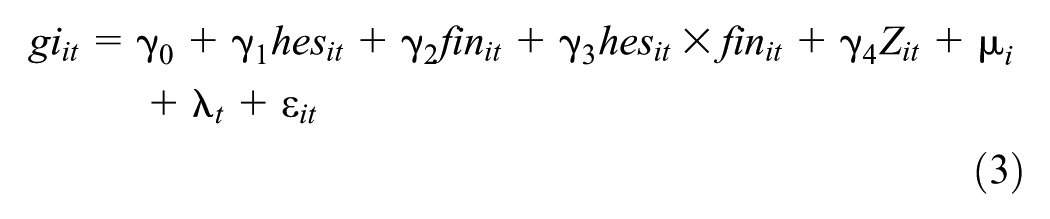
In models (2) and (3),
To examine how the scale of higher education affects green innovation capacity spatially, this research considers both the direct contribution of local higher education scale to regional green innovation capacity and the spillover effects impacting neighboring regions. Accordingly, a spatial panel econometric model (4) is constructed to test Hypothesis 4 by incorporating spatial interaction terms of higher education scale, green innovation capacity, and other control variables from the benchmark model (1).

Here,
Data Sources and Statistical Descriptions
This study uses data from 31 Chinese provinces—excluding Hong Kong, Macau, and Taiwan—covering the period from 2011 to 2022. Data for all variables were obtained from authoritative sources, including the China National Research Data Service Platform (CNRDS), the National Bureau of Statistics, and the Provincial Marketization Index Report. Missing values for certain variables were supplemented using interpolation methods, resulting in a final sample of 3,348 observations. Data processing and model estimation were conducted using Stata software. Descriptive statistics for each variable are summarized in Table 1.
Descriptive Statistics.

Results
Direct Effects
The results of the baseline estimation for direct effects are shown in Table 2. Consistent across models with or without control variables, the impact of higher education scale on green innovation capacity remains significantly positive, supporting Hypothesis 1. Additionally, as control variables are progressively added, the model exhibits an enhanced fit, suggesting that the inclusion of these variables is justified.
Direct Effects.

Note. t-statistics in parentheses.
p < .01.
Moreover, the results of Column (6), which contains all control variables, show that the marketization level (market) has a positive effect on green innovation capacity by ensuring the improvement of market mechanisms (Z. Chen et al., 2021). The positive coefficient of economic development (econ) indicates that economic growth provides essential financial support for green innovation and thereby enhances green innovation capacity, consistent with the findings of M. Li et al. (2024). Both R&D investment (rd) and government technology expenditure (gts) contribute to enhancing green innovation capacity. Environmental regulation (er) has a significant negative effect on green innovation capacity at a 1% significance level. This result contradicts the Porter Hypothesis but aligns with the findings of Song et al. (2024). A reasonable explanation is that as environmental regulation intensifies, the tax burden on enterprises increases, forcing them to focus more on pollution control while still pursuing economic gains. However, the rising costs often lead companies to reduce investments in green innovation, which, in turn, negatively affects their green innovation capacity (Petroni et al., 2019).
Robustness and Endogeneity Tests
Robustness Tests
This paper employs three robustness testing methods: replacing primary explanatory variables, substituting dependent variables, and trimming the tail of the dependent variables. Table 3 displays the results. First, for replacing the primary explanatory variables, the number of graduates and the number of full-time teachers in higher education institutions—both log-transformed—are used as indicators of the scale of higher education in the baseline regression, as shown in Columns (1) and (2) of Table 3. Second, for the substitution of dependent variables, Column (3) reports the regression results with log-transformed green patent applications serving as an indicator of green innovation capacity. Third, to shrink the dependent variables, Column (4) reports the estimation results after 1% bilateral shrinkage to remove outliers from the green innovation capacity indicator. The magnitude, direction, and significance of the coefficient for the higher education scale remain stable across all three robustness tests, providing strong evidence for the robustness of the findings.
Robustness Tests.

p < .01.
Endogeneity Tests
Although fixed effects models effectively mitigate omitted variable bias, endogeneity can still bias regression results (Xiao et al., 2025). Addressing this concern, the first-order lag of the higher education scale (L.hes) serves as an instrumental variable in a two-stage least squares (2SLS) regression. Table 4 reports a p-value of .0000 for the Kleibergen–Paap rk’s LM statistic, thereby rejecting the null hypothesis that the instrumental variables are underidentified. With a Kleibergen–Paap Wald F statistic of 2.1 × 10⁵, which is much higher than the 16.38 critical value at the 10% level, weak instrument concerns are ruled out and the instrument’s validity is confirmed. After controlling for endogeneity, the coefficient of higher education scale on green innovation capacity is still positive and significant at the 1% level. These findings confirm the robustness of the baseline regression results.
Endogeneity Tests.

Note. [ ] denote p-values; { } indicate the 10% critical values from the Stock–Yogo weak instrument test.
p < .01.
Moderating Effects
Table 5 shows the findings on the moderating effects. Column (2) introduces industrial structure upgrading (isu) and its interaction term with the scale of higher education (hes × isu) after centering, based on Column (1). The interaction term’s coefficient is 0.965 and statistically significant at the 5% level, suggesting that industrial structure upgrading positively moderates the effect of higher education scale on green innovation capacity, thereby supporting Hypothesis 2. The underlying logic is that industrial structure upgrading creates a more favorable environment for the transformation and application of higher education outcomes by optimizing resource allocation, promoting technological advancement, and improving production efficiency (D. Wang et al., 2025). Meanwhile, expanding higher education has cultivated a larger pool of high-quality talent (Y. Sun, 2025), which can better support green innovation capacity as industrial structure upgrading advances.
Moderating Effects.

p < .01. **p < .05.
Based on Column (1), column (3) incorporates financial development (fin) and its interaction term with the scale of higher education (hes × fin) after centering. The interaction term’s coefficient is 0.154 and statistically significant at the 1% level, indicating that regions with advanced financial development provide a more favorable financing environment. These regions are better equipped to offer sufficient funding, enhance financing efficiency, and effectively diversify risks (Du et al., 2024). Consequently, the positive influence of higher education scale on green innovation capacity is amplified in these regions, thereby confirming Hypothesis 3.
Further Research on Spatial Spillover Effects and Heterogeneity Analysis
Spatial Spillover Effects
Before testing for spatial effects, this paper sequentially applies several tests, including the LM test, Hausman test, LR test, and Wald test, to assess the suitability of the panel econometric model. Table 6 shows the results of these model selection tests. The statistics for the LM-Error, Robust LM-Error, and Robust LM-Lag are 106.308, 117.804, and 12.948, respectively, all significant at the 1% level. The Moran’s I statistic of the residuals is 10.580, resulting in the rejection of the null hypothesis. This indicates spatial correlation in green innovation capacity. Additionally, the significance of both LR-Lag and LR-Error tests confirms that the spatial Durbin model (SDM) does not degrade into either the spatial lag model (SAR) or the spatial error model (SEM). Furthermore, the rejection of the null hypothesis in both the Wald-Lag and Wald-Error tests indicates that the spatial Durbin model is the optimal choice. The Hausman test yields a statistic of 108.77 with a p-value of .000. In conclusion, the spatiotemporal two-way fixed effects Durbin model is an appropriate choice for the analysis in this study.
Model Selection Tests.

To reduce estimation errors resulting from incorrect spatial weight specifications, the neighbor matrix (W1), the economic distance matrix (W2), the inverse squared geographic distance matrix (W3), and the nested economic-geographic matrix (W4) are employed to assess the spatial effects. To verify the robustness of the spatial regression findings, this study primarily uses the Spatial Durbin Model (SDM) and supplements it with the Spatial Autoregressive Model (SAR) as a robustness check. Table 7 presents the estimation results of spatial effects based on various spatial weight matrices. The coefficients representing the effect of the higher education scale on green innovation capacity are all positive and statistically significant at the 1% level, further supporting Hypothesis 1. Significant negative spatial autoregressive coefficients for green innovation capacity indicate the existence of spatial spillover, where the innovation capacity of neighboring regions adversely affects that of the local area.
Spatial Effects Estimation Results.

p < .01. **p < .05. *p < .1.
Our finding is consistent with the conclusion of Fang et al. (2022), who used provincial panel data, but contrasts with Peng et al. (2021), who found positive spatial spillovers at the city level. The discrepancy likely stems from different diffusion mechanisms across spatial scales: at the provincial level, intense competition for key resources—scientific talent, green technology, and finance—enables leading regions to siphon resources via agglomeration, hindering neighboring regions’ green innovation. In contrast, at the city level, closer proximity and stronger knowledge networks promote collaborative innovation. This scale difference reflects structural imbalances in China’s cross-regional green innovation flows. To reduce negative interprovincial spillovers, it is crucial to strengthen regional collaboration and ensure efficient, equitable flows of talent, technology, and financial resources.
To illustrate the spatial spillover effects of the scale of higher education, this study decomposes its direct, indirect, and total effects, shown as bar charts in Figure 2. Across both the SDM and SAR models and four spatial weight matrices, the direct and total effects are positive, while the indirect effects are mostly negative. This indicates that expanding higher education promotes local green innovation but may suppress it in neighboring areas, supporting Hypothesis 4. Moreover, the bars representing direct effects are notably taller than those representing indirect effects, suggesting that local benefits outweigh neighboring inhibition. The growth of higher education, on the whole, positively affects the regional green innovation capacity.

Decomposition of spatial effects.
Heterogeneity Analysis
Given the marked regional disparities in both the scale of higher education and green innovation capacity across China, as well as the distinct characteristics and advantages of different types of higher education institutions, the sample is divided across three geographic areas: the eastern, central, and western zones. It further classifies higher education into two levels: undergraduate education and specialized education. The paper then examines regional differences in the impact of the higher education scale on green innovation capacity, and explores the effects of different educational levels. Heterogeneity tests are shown in Table 8.
Heterogeneity Analysis.

p < .01.
Regional Heterogeneity
Results from the regional heterogeneity test indicate that the influence of higher education scale on green innovation capacity is strongest in the eastern region, followed by the central and western regions. This is mostly because of the eastern region’s strong historical foundation, advanced economic development, and abundant, high-quality higher education resources (X. Zhou et al., 2024). These advantages allow universities in the east to produce a large pool of highly skilled individuals, providing a solid intellectual foundation for green innovation. Conversely, the central and western regions lag in higher education resources, economic development, and innovation infrastructure, resulting in a weaker green innovation effect from the scale of higher education.
Heterogeneity of Educational Levels
As shown in Table 8, the undergraduate education scale has a significantly greater influence on green innovation capacity compared to the specialized education scale. This is because undergraduate education, compared to specialized education, provides a broader foundation in theoretical knowledge and interdisciplinary learning. Undergraduate programs emphasize the development of students’ overall skills and innovative capabilities. Since green innovation often requires a solid theoretical grounding and interdisciplinary expertise, the scale of undergraduate education offers greater potential to enhance green innovation capacity. In contrast, the skills-focused professionals trained through specialized education are less equipped to meet the demands of green innovation.
Conclusions and Recommendations
Research Findings
This paper empirically analyzes the influence of higher education scale on green innovation capacity, as well as how industrial structure upgrading and financial development moderate this relationship, based on panel data from 31 Chinese provinces spanning 2011 to 2022. Additionally, it explores the spatial spillover effects and heterogeneity of this impact. The findings address the three key questions posed in this paper. First, the higher education scale exerts a significant positive influence on green innovation capacity, and this result holds under multiple robustness tests, confirming the positive role of higher education in promoting green innovation. Second, both industrial upgrading and financial development enhance the positive effect of higher education scale on green innovation capacity. These effects are more pronounced in regions with more advanced industrial structures and better financial development, confirming the moderating role of external environmental factors. Third, the scale of higher education exhibits a notable negative spatial spillover effect on green innovation capacity, which can be attributed to the siphoning effect of human capital and R&D resources between regions. Fourth, the heterogeneity analysis reveals that the scale of higher education contributes more significantly to green innovation capacity in eastern regions and at the undergraduate level, compared to both the central and western regions and specialized education. The spatial spillover and heterogeneity analyses jointly confirm the spatially diffusive and heterogeneous nature of the role of higher education scale in green innovation capacity.
Policy Recommendations
According to our findings, we offer the following proposals to support the integrated development of higher education and green innovation.
First, adopt a differentiated strategy to expand higher education and effectively cultivate talent for green innovation. Empirical evidence shows that the scale of higher education significantly enhances green innovation capacity, particularly at the undergraduate level and in eastern regions. Local governments should prioritize expanding enrollment in undergraduate majors related to green innovation, such as new energy and environmental engineering, and incorporate relevant green technologies and sustainable development content into curricula. To strengthen green innovation capacity in central and western universities, the central government should establish special funds to support green disciplines under the “Double First-Class” initiative, as well as for talent recruitment and research infrastructure. Eastern universities are encouraged to promote regional cooperation through strategic partnerships and joint training programs to alleviate talent siphoning. Meanwhile, specialized colleges should focus on cultivating skilled workers in green manufacturing and environmental engineering, thereby building a complementary talent cultivation system alongside undergraduate education.
Second, optimize the industrial and financial environments to enhance the role of higher education scale in driving green innovation capacity. Our study shows that industrial upgrading and financial development significantly enhance the positive impact of higher education scale on green innovation capacity. Local governments should tailor strategies to regional contexts. In regions dominated by traditional industries, higher education institutions should focus their research on green manufacturing and low-carbon technologies while enhancing collaboration with industry and research institutions. In financially developed regions, it is essential to improve green financial support by developing diverse instruments such as green loans and bonds to ease funding constraints for green R&D. Optimizing industrial structures and financial systems will effectively amplify the positive impact of higher education scale on green innovation capacity.
Third, promote a balanced allocation of higher education resources to reduce negative spatial spillover effects caused by resource siphoning. Empirical evidence shows that the concentration of research talent, green technologies, and capital in developed regions inhibits green innovation in neighboring areas. To address this, a balanced strategy combining regional specialization with cross-regional collaboration is needed. Leading universities in developed regions should strengthen core technological research and talent development. Meanwhile, regional cooperation mechanisms should establish cross-regional green technology platforms and joint talent training programs to promote interregional resource sharing and collaborative innovation. This will facilitate the effective flow of talent, knowledge, and capital. Special fiscal funds should support green innovation infrastructure and industry–academia–research integration in underdeveloped regions. Additionally, enhancing incentives for the local application of research outcomes will foster coordinated regional development and improve green innovation capacity across regions.
Limitations and Future Directions
This study examines how the scale of higher education influences green innovation capacity and how external factors—industrial structure upgrading and financial development—moderate this relationship, thus expanding the analytical framework for green innovation research. Despite the comprehensive empirical findings, several limitations remain.
First, although heterogeneity across regions and education levels has been examined, the mechanisms through which internal structural characteristics of higher education—such as institution type, discipline composition, research funding, and faculty distribution—influence green innovation remain underexplored. These factors likely impact the efficiency of green technology outputs by shaping talent supply and knowledge transfer pathways. Future research should use university-level or more granular data to develop a multi-layered analytical framework examining the alignment between educational structures and green innovation outcomes.
Second, because this study relies on Chinese provincial-level data, its findings are limited to the country’s specific institutional context. Given global variations in educational systems and green policies, future studies should apply this framework to other countries and regions. Cross-country comparisons and replication studies can validate the universal mechanisms and boundary conditions through which higher education fosters green innovation, thereby enhancing the international relevance and theoretical significance of these findings.
Footnotes
Acknowledgements
The authors gratefully acknowledge the supports of Shanxi Normal University.

Ethical Considerations
This article does not contain any studies with human or animal participants.
Consent to Participate
There are no human participants in this article and informed consent is not required.
Author Contributions
Funding
The authors disclosed receipt of the following financial support for the research, authorship, and/or publication of this article: This research was supported by the Shanxi Province Higher Education Institutions Philosophy and Social Sciences Research Project (2024W041); the Shanxi Province Philosophy and Social Sciences Planning Project (2024QN057); the Shanxi Province Key Research Project on High-Quality Finance and Economics Development (SXCJGZLZS006); and the Shanxi Province Higher Education Teaching Reform and Innovation Project (J20240714).
Declaration of Conflicting Interests
The authors declared no potential conflicts of interest with respect to the research, authorship, and/or publication of this article.
Data Availability Statement
Data will be made available on request.