




Abstract
The open innovation (OI) paradigm has significantly impacted higher education, especially within the context of the global networks of societies. The COVID-19 pandemic spurred innovation, creating online educational communities and transforming the academic approach. While OI, the movement towards online learning, and the industry-academia cooperation for a better grounding in labor market demands have been discussed in previous studies, this quantitative study furthers the understanding of the preparedness and efficiency of the education system for the new labor market. This study investigates the potential correlation between the education system and various socio-economic indicators, such as education expenditure, mobility opportunities, digital inclusion, employment, and urbanization. The regression analysis was conducted on the dataset obtained from the open-access EUROSTAT database.
Keywords
Introduction—What Is the Vision for the Future?
Higher education institutions (HEIs) are now the key players in the knowledge economy, whose roles extend beyond education and research to include regional development, innovation ecosystem, and workforce transformation. This development is especially notable in the concept of open innovation (OI), in which HEIs are encouraged to be actively and symmetrically involved in knowledge exchange with enterprises, public institutions, and society Barnett (2012). With higher education becoming increasingly strategically aligned with labor market needs as a consequence of digitalization and technological change in global labor markets, the imperative for such strategic alignment is pressing and complex.
The employability of graduates has long been regarded as the traditional focus of the university-enterprise relationship, with undergraduate education being perceived as the central aspect of this interaction and the primary means of producing human capital to join the workforce upon graduation. However, this emphasis tends to overlook the other half of the relationship, where education is often a product, particularly in postgraduate and research-intensive cultures. In this respect, HEIs generate not only work-ready graduates but also innovative outputs, advanced research competencies and expertise, and specialized knowledge that contribute to long-term technological and societal growth Benavides et al., 2020; Zhang et al., 2022).
It is essential to draw the line between these two layers of education as an object (undergraduate training and labor market alignment) and education as a product (postgraduate research and innovation capability) to see the entire picture of what the university adds. However, the transitions between these layers are rarely smooth and well-explained. Policy and institutional frameworks often address them distinctly without their mutual dependence on generating dynamic environments of innovation.
Additionally, education and labor systems are undergoing transformation in tandem with the digital revolution. HEIs must incorporate digital skills into the curriculum and adjust to the innovative modes of learning provision, whereas employers seek digitally literate and innovation-oriented graduates. Such pressures have only accelerated in the post-pandemic recovery, in which technological acceleration has rendered the acquisition of digital skills not merely desirable but the only path toward future employability and sustainable economic resilience (Mochnacs et al., 2024).
On its part, there is an increased desire to examine how HEIs, especially across the varying European settings, are responding to these pressures and aligning their outputs with the changes occurring in the labor market. The study will be systemic in finding the contribution of HEIs towards the development of the workforce in terms of direct training and long-term ability to innovate (Miranda et al., 2021; Ramírez-Montoya et al., 2020). Through this, it ties together the twofold roles of education, object, and product into the larger logic of open innovation and digital transition.
The primary objective is to evaluate the role of higher education in the context of labor market expectations and regional growth plans. It involves investigating the impact of various HEIs strategies, the state of digital maturity, and institutional design on their interaction with the enterprise and capacity to support employability, research production, and innovation (Bygstad et al., 2022; Gul et al., 2022; Miotto et al., 2020).
Literature Review
As the world is entering a new era of technological advancements, from day-to-day applications to complex design thinking and programming, it is easy to get distracted (Marshall, 2018). Transformational thinking alongside the technocratic drive for innovation (Marshall, 2018) has pushed universities away from the real challenges of today. Most universities worldwide seem to be more focused on marketing and advertising to attract students (Bonilla Quijada et al., 2021; Tomlinson, 2017) rather than reaching new heights through their primary activity of education. Technology is the central element of change, and since its beginnings, some educators perceive it as a cause rather than a means. While technology can be a catalyst for renewal and innovation, it might not be a solution for transformation (Ali, 2020; Cowan & Farrell, 2023; Gleason, 2018; Penprase, 2018). At the same time, education is a critical pillar of security and prosperity for society, and its implications and importance have been transcribed into strategic international documents such as the Universal Declaration of Human Rights. Nevertheless, the last few decades have showcased the dramatic influence of human capital on the global economy. Among all the other resources, human capital is the backbone of the wealth of a nation, and it can never be acquired through money but built through knowledge (Abraham & Mallatt, 2022; Giuri et al., 2019; Hakami et al., 2022). Hence, education offers considerably more benefits than wealth.
Rising inequality has generated conflicts and social disorder, while most human capital has yet to have primary access to education globally. Developed economies showcase the significance of education in improving quality of life, as the former is associated with a longer life span, healthier lifestyles, and active involvement in civic life (Wilson, 2023). Developed nations also benefit from economic prosperity and growth at individual and collective levels. Although the value of education is forever understood and acknowledged, the modern world still faces several challenges. Among those is the high cost of higher education and the gap between labor market demands and higher education studies (Aljohani et al., 2022; Pardo-Garcia & Barac, 2020). There are barriers to attending higher education classes while also failing to deliver much-needed outcomes. Moreover, thousands of jobs are transforming the labor market, with high responsiveness to the change in terms of necessary skills and knowledge (Grigorescu et al., 2020). The education sector is going through a shift in its capacity to sustain, grow, and deliver significant benefits to our society (Chankseliani & McCowan, 2021; Žalėnienė & Pereira, 2021).
What Does the University of the 21st Century Represent?
Since its beginning in medieval times, the university has represented a place where endless possibilities are created, imagination and exploration have transformed into knowledge, and intellectual culture has flourished. In short, universities have been the “birthplace of the future.” The last few decades have experienced a different truth regarding what the university has stood for, as the institution has become a pawn of “knowledge capitalism” (Barnett, 2012). In contrast, it could have preserved the sense of “knowledge socialism.”
Eppard and Giroux (2022) have defined the cultural mission of the university as the obligation to critically reflect on the sociocultural context and intervene in real-time to initiate societal change. In this sense, the university remains a place where students understand and influence the social forces shaping reality in a liberated discourse (García-Morales et al., 2021). The higher education sector must remain a vital component of the mature public sphere and an opportunity for students and academics to acquire knowledge, skills, and ethical vocabulary necessary for broadened civic participation (Watson et al., 2011). In this regard, the university must provide access to cultural competence, maintain the capacity to critically intervene in reality, and wield a sense of social responsibility.
What Challenges Lie Ahead?
The university, as a social institution, has played an important role, generally in a leading position to the transformative times generated by society or technology evolution, and on the cusp of a new world of possibilities, the university has had ever-expanding relationships with the state, society, and knowledge (i.e., knowledge production, knowledge transfer, intellectual culture, knowledge economy, etc.) (Calof et al., 2020; de las Heras-Rosas & Herrera, 2021). In the emergent future, one can clearly distinguish how higher education is in a phase of hyper-modernization: cross-institutional collaborations, the tangibility between private and public, the various forms of knowledge and its role in the economy, the globalization of higher education, and the singularity and independence of academies (Díaz-García et al., 2022). Its boundaries of knowledge no longer restrict the university, as its shape becomes ill-defined and fluid.
Standaert (2012) introduced the concept of a networked university to respond to the challenges of a networked society and avoid being caught in the trap of the past. Within the societal networks integrating multi-disciplinarity, the web of science, the relationship between science and humanities, fragmentation/defragmentation, and the “in-between” architecture of higher education, the role of university de-institutionalizes to avoid subservience to any authority. Future universities face additional challenges, such as maintaining responsibility of educating youth for the labour market needs, demonstrating courage and leadership, acquiring knowledge and wisdom, and ultimately becoming society’s “breeding ground” (Vlasova & Roud, 2020; Wrigley & Mosely, 2023).
What Are the Possibilities for the Future of Education?
The possibilities for future education correlate with globalization (Swindell & Wright, 2022). University systems in each country have their background, history, and circumstances. Discussing the perspectives of the university has its complexity and is bounded by context. The commonality of all those systems stands with the goal of higher education: performance, applicability, liberalization, and vocalization. The future university will be based on country-specific narratives in the global context but will always drive towards the common purpose of performance, innovation, and openness (Goh & Abdul-Wahab, 2020). However fast-moving the currents in each university system are, the important aspect of this discussion remains the search for progressive ideas or “feasible utopias” as Barnett (2012) puts it.
At the same time, simplicity has always been the best option available. The future of education should be based on the needs of society at large. Therefore, higher education and its institution—the university—are meant to help society, create virtue, facilitate a harmonious and respectful world, develop rationality in the public space, and generate a fairer society shaped by the sense of the common good. Moreover, the conversation between student and professor should be placed in the realms of free thinking, under the form of discovery, without the boundaries of social status, economy, or even performance. The university’s openness will be visible through knowledge creation based on many-to-many interactions, helping birth knowledge socialism. At the same time, the higher education system must encompass the idea of living and working together under the forces of uncertainty, complexity, indeterminacy, and transformation. It must create the conditions for students to learn to adapt to a continuously changing world by generating collective knowledge and building a locus of societal inclusion.
Are HE Institutions Ready for an Open Innovation Paradigm?
Whether HE institutions are ready for an open innovation paradigm is pertinent when innovation-evoking HE institutions gradually emerge as critical actors in shaping innovation systems. Chesbrough (2003) advanced the idea of open innovation, which focuses on using external partners for innovation. Compared to businesses, HE institutions of open innovation are highly potent, given their knowledge assets and variety of contacts (Chaudhary et al., 2022; Huggins et al., 2020).
Nevertheless, many HE institutions need help adopting open innovation to a greater extent (Laine et al., 2015). This raises a question of how these models work in environments where traditional academic approaches often focus on creating and maintaining internal knowledge repositories and specialized research communities, which can contrast with open innovation values of cooperation and openness. In addition, many universities reward faculty whose work appears in top-tier scholarly journals more than those who disseminate knowledge to other stakeholders outside their institutions (Perkmann & Walsh, 2007). These barriers can hamper the state of HE institutions to embrace the open innovation model fully.
However, there are positive signals that universities are embracing this paradigm shift. The increase in university business relationships, research unions, and public-private partnerships illustrates new tendencies towards cooperation rather than competition in innovation processes (Dabrowska & Savitskaya, 2014; Etzkowitz & Leydesdorff, 2000; Schuhmacher et al., 2022). Furthermore, more and more universities offer entrepreneurship education and run innovation centers, which supports the assumption that HE institutions are starting to follow the principles of open innovation. Coordination in digital platforms and using big data also enable a more expanded and decentralized cooperation of researchers and other external actors.
However, system and culture changes will be required to foster open innovation in HE institutions (Pénin et al., 2011). The focus here should be on better graduate employability, sharing of knowledge, and participating in joint undertakings rather than the economic value of individual scholarly articles. However, the authors’ also pointed out that policies such as flexible protection of intellectual property and the tendency to make research publications open access could drive this change. In conclusion, with HE institutions moving towards open innovation, it has been pointed out that a more radical shift is required to ensure the optimal realization of the open innovation paradigm.
Finally, the future university and the global higher education system should view their responsibility to work toward togetherness, care and concern, recovery, reasoning, enlightenment, and value creation.
The connection between the challenges faced by higher education institutions (HEIs), their social role, and the Open Innovation (OI) paradigm reveals a significant yet underdeveloped research area (McGahan et al., 2021). Thus, dedicated to reshaping HEIs, the OI paradigm, emphasizing collaboration, knowledge exchange, and the integration of external ideas into innovation processes, has huge potential (Beck et al., 2022). With OI principles, universities can drive up their societal role, break status silos and build dynamic partnerships with industries, governments, and communities. Nevertheless, it needs wider integration into higher education and is constrained by its application’s structural, cultural, and systemic limitations. Nowadays, many institutions are still concentrating on internal knowledge creation, traditional teaching models, and a rigid evaluation system that ignores external collaboration (Sivam et al., 2019).
The fact that OI’s potential to address HEI challenges is not fully realized leads to a disconnect in research relevance in this field. For example, universities are well endowed with knowledge assets and networks, though their capacity to mobilize these resources to address societal issues and labor market needs has been underexposed. Furthermore, the social role of HEIs is mostly confined to a narrow picture of OI, enabling the democratization of education, digital inclusion, and sustainable development.
This gap needs to be bridged for research to become more relevant and applicable. Connecting these two sides would enable actionable understandings of how HEIs can become open, collaborative, and impactful institutions in tune with societal needs and the requirements of the 21st-century workforce.
Study Objectives and Hypotheses
This study aims to investigate the preparedness and efficiency of higher Education Institutions (HEI) in responding to the changing needs of the labor market within an open innovation (OI) paradigm. This research assumes that investigating the relationship between socio-economic variables (such as employment, digital inclusion, education expenditure, mobility, and urbanization) and higher education outcomes contributes to a comprehensive understanding of the barriers and possibilities for HEIs. This study, in particular, looks at the regional variation in terms of digital transformation trends in the EU-27, Iceland, and Romania on the one hand and the impact of the digital transformation on HEIs’ capacity to produce graduates with market-relevant skills on the other. The study ultimately seeks to provide actionable insights to fill the gap between the labor market demands and demands from higher education institutions (HEIs), as well as a closer alignment of HEIs to the OI principles and principles of a knowledge-based economy.
This study was constructed around finding correlations between various socio-economic indicators, introduced in the research as independent variables, and the magnitude of individuals graduating from higher education as the dependent variable.
The pillars considered for the link between HEIs and labor market analysis were identified starting from the challenges and strategic directions we are considering nowadays (Figure 1)

The study context and pillars identification.
The study can improve its theoretical robustness by explicitly linking the five dimensions: employment, digital inclusion, geographical dispersion, education expenditure, and student mobility to the foundational principles of the Open Innovation (OI) paradigm. The framework is justified as an essential dimension necessary to how higher education institutions (HEIs) adopt and implement OI practices and thus strengthens the framework to align with the study objectives (Yun & Liu, 2019).
Employment outcomes reflect the OI paradigm’s key goal of how HEIs prepare students to respond to labor market demands. Knowledge transfer between stakeholders through collaborative programs, for instance, internships, apprenticeships, and co-developed curricula, illustrates how such programs may translate to obtaining workforce readiness. With OI, value creation through HEIs is measured by employment outcomes, and external collaboration is emphasized. It involves delivering graduates in roles that draw on their technical and professional skills from their disciplines to the progressive needs of innovative industries, often in technology-driven areas. The real-world application reveals that the effectiveness of OI is measured by metrics ranging from graduate employability rates and their alignment with industry skill requirements (Del Giudice et al., 2018).
Digital inclusion allows access to the technologies used to share and collaborate on knowledge, which are fundamental tools to OI (Mubarak & Petraite, 2020). HEIs can, through digital platforms, share, create, and apply knowledge in real-time, bypassing the traditional barriers to innovation. An HEI’s readiness for OI practices is evidenced by integrations of digital tools (e.g., learning management systems and virtual research networks). HEIs enable this participation in open and collaborative ecosystems by ensuring equitable digital access to students, faculty, and external partners, enabling them to do so.
By geographical dispersion, the need for open networks across location-based barriers is addressed. Decentralization is vital to OI, as HEIs easily pool resources and expertise across regions and countries. This dimension captures the extent to which OI supports the participation of the rural, urban, and remote regions. By creating virtual and physical networks, HEIs can democratize knowledge access and promote innovation regardless of geographic constraints (Bigliardi et al., 2021). Metrics such as graduates’ urbanization level or rural academic programs correlate with the HEIs’ capacity for fostering diverse innovation ecosystems through facilitating diverse and spatially dispersed innovation.
Education and research investment are demonstrative of OI and a commitment to innovation and partnership with external stakeholders (Pegkas et al., 2019). HEIs with greater educational expenditures can better finance leading-edge research, interdisciplinarity, and public-private partnerships. The funding foundation supports the core of OI infrastructure and the resources needed to underlie the OI—innovation hubs, industry-sponsored research projects, and entrepreneur ecosystems.
OI’s foundational pillars of cross-border collaboration and global knowledge exchange are laid by student mobility (Bogers et al., 2018). Mobility programs expose students to several new ideas and skills that individuals might not know how to blend, enabling the cross-pollination of ideas and skills necessary for innovation. It shows how mobility opportunities, such as exchange programs and international collaborations, support students in participating in global OI networks through HEIs. This dimension brings into focus the role of the HEIs in pursuing the process of International Partnerships and building graduates ready to thrive in the new interconnected global workforce.
Thus, each dimension of the study’s framework must be explicitly associated with measurable outcomes and based on theoretical and empirical evidence. This explicit justification not only justifies the selection of these dimensions but also provides the overall objectives of the study for focusing on these dimensions, aligning them to the broader objectives of the study, which reinforces the OI paradigm’s congruence with the transformation of HEIs (Akour & Alenezi, 2022; Alenezi, 2021; Kopp et al., 2019). The study framework is presented in Figure 2.

The study framework.
The hypotheses of the study are based on the following aspects:
Hypothesis 1—Correlation between employment rates and higher education graduates—Are graduates hired into the employment market?
The employment to population (EMP-POP) ratio by level of education hypothesis is based on the capability of higher education to improve employment chances. Employers in an environment where open innovation practices are encouraged and the practice of dragging knowledge across industries and sectors is embraced, graduates who engage in interdisciplinary learning and industry link programs are more desirable. Fostering communication between university and business and open innovation can promote the employability of the graduates, validating the linkage with the economic return to higher learning.
Hypothesis 2—Correlation between digital inclusion and higher education graduates—Do graduates obtain digital skills that apply to the labor market?
The relationship between digital integration and graduates in higher education. Open innovation thrives with the use of digital resources and assets. We used this hypothesis to determine whether higher graduates possess digital skills for the labor market. Digital competency development and free platform access can prepare graduates for blurred boundaries between business and society and open innovation. The growing expectations on digitally skilled employees mean that digital integration in learning directly translates into effective market outcomes for learners.
Hypothesis 3—Correlation between the population’s geographical location and higher education graduates—Does location influence the number of graduates from higher education programs?
The existing relationship between location and higher education graduates shows that open innovation breaks geographical location/region constraints as it encourages decentralization and cross-country collaboration. This hypothesis explores how the graduation rate among HEIs is influenced by location. By integrating open innovation strategy elements and focusing on learning that is done online and in virtual space, immediate access to education is removed as an inhibitor to reaching rural citizens. This implies that geographical disparity in graduation rates can be eliminated; the value of geographical location hence comes to light regarding the number of higher education graduates.
Hypothesis 4—Correlation between education expenditure and higher education graduates—Does spending on research and technological advancement relate to higher education attainment?
Academic and research spending involves risk-taking, creativity, knowledge discovery, and value generation to change educational-related expenditures, which are critical and fundamental for education efficiency. This hypothesis explores whether there is a correlation between the amount of spending on education and the number of graduates produced. More government funding for research, technology, and vocational partnerships leads to innovation and higher graduation rates; education spending and higher education attainment both rise in tandem. Unfortunately, this hypothesis was not confirmed by the data set used; it should be explored individually.
Hypothesis 5—Correlation between student mobility and higher education graduates—Are students interested in studying abroad?
Mobility about student exchange as knowledge production similar to higher education graduates. This hypothesis is used to examine if mobility affects graduation performances in the institution. Thus, mobility increases the education opportunities open in an open innovation model, it doesn’t represent a motive to attract more enrolments in higher education programs. They are more of a chance for the students to access the global education.
The scope of the hypotheses was to cover all of the elements defining the OI paradigm—networks, the online world, digital skills, and globalization and correlate them with results from higher education, namely the number of graduates.
HEIs are navigating hugely complex challenges, which include 1) how to adapt to technological transformation, 2) how to meet labour market demands and 3) how to align with global sustainability goals and 4) retain existing position as drivers of societal change (Albats et al., 2020). OI has the potential to integrate HEIs into collaborative hubs comprised of the institution interacting with the industry, government, and society (Huggins et al., 2020). OI puts up quite a heavy lift in terms of altering institutional culture, reward systems, and IP frameworks, which they are just not seeing with academia yet.
In addition, the relevance and effectiveness of OI in HEIs are still under incomplete research. Less attention is given to the implications of bridging the gap in higher education and labor market needs, developing inclusive digitalization, or promoting sustainability (Rauter et al., 2019; Yun et al., 2020). Nevertheless, there are positive indicators (such as the development of public-private partnerships and digital platforms), but there still remain obstacles that are a source of strong resistance and lack of alignment (Cheng et al., 2021; Al-Maadeed et al, 2023).
Without a robust theoretical and empirical foundation, OI, in this context, shortens its relevance as a transformative paradigm for HEIs. These gaps must be filled by future research that discusses how HEIs can operationalize OI principles to enact their ever-changing roles in a more interconnected and knowledge-based, globally integrated society. This will make a stronger case for OI as a 21st-century university paradigm.
An evolving framework to address the challenges of HEIs in fulfilling their complex social roles, the Open Innovation (OI) paradigm is entering a new phase. However, Its emergence as the future paradigm needs further justification. OI promotes collaboration, cross-domain knowledge sharing, and multidisciplinary integration, but this is frequently opposed to university tradition focused on internal knowledge production and specialized one-discipline research (Beck et al., 2022). This disconnect, however, leaves universities uncertain if and how they can effectively align OI principles with the rest of their mission (Ahn et al., 2019).
The study was performed as a panel data analysis, comparing the EU-27 trends to those observed in Iceland and Romania. Even though Iceland is not an EU country, it has special agreements and is part of projects where comparisons are encouraged. The study’s limitations are based on the dataset obtained from Eurostat (2023). Continuing the study by gathering primary data and remodeling the database for further clarification is essential.
Research Methodology
The research methodology uses panel data regression analysis, including 18 variables from EU-27, Iceland, and Romania. The focus is on Iceland, Romania, and EU-27 because the study is part of more extensive research on digital transformation in Higher education Institutions (HEIs) for the new normal after the COVID-19 pandemic (Grigorescu et al., 2023a, 2023b). The selected variables measure the relationship between education and the five pillars we consider essential for the future of HEIs, as we mention at the aim of the study (employment, expenditure, mobility, digitalization, and location).
The dataset was constructed from the Eurostat free access databases and comprises information from 2019 to 2022 (Table 1). Each variable has between 3 and 12 observations. The following tables will describe and summarize the data used in the research.
Variable Description.

Source. Author’s synthesis.
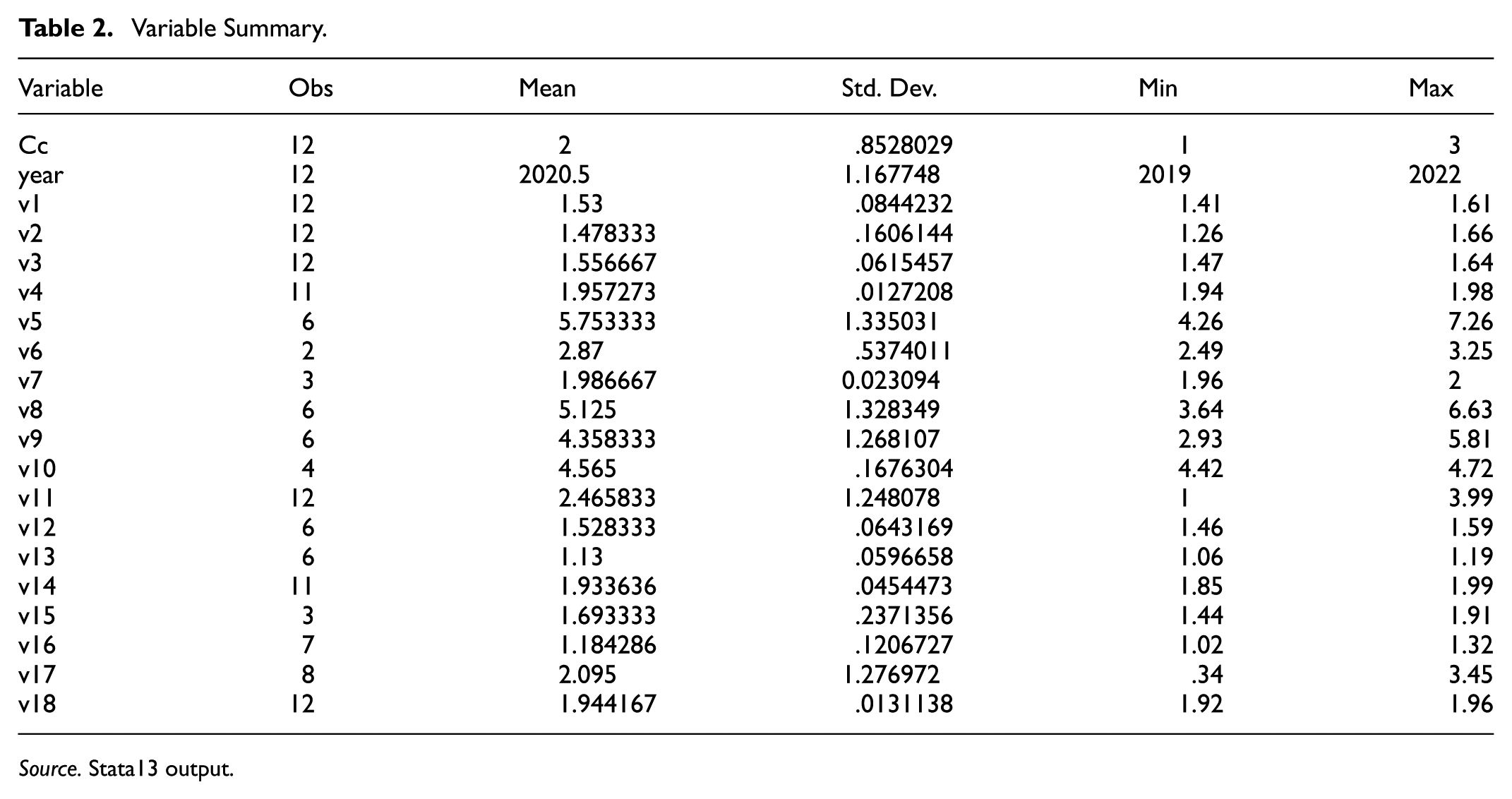
The variables have been rendered to logarithm values, which removed error effects and allowed for observing variables’ elasticities (Table 2).
Variable Summary.
Source. Stata13 output.
The hypotheses of the research are based on the following aspects (Table 3):
Hypotheses of the Research.

Source. Author’s own development.
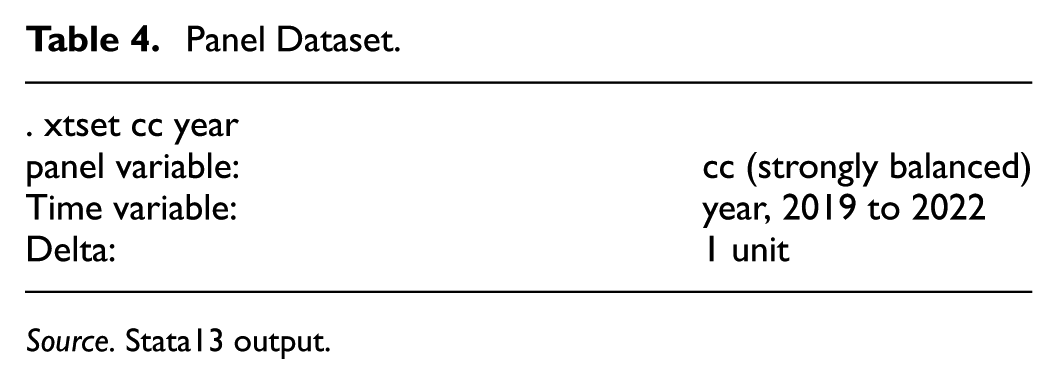
The scope of the hypotheses was to cover the elements defining the OI paradigm—networks, online world, digital skills, and globalization—and correlate them with the higher education result, namely the number of graduates. The econometric model is based on a strongly balanced panel dataset (Table 4).
Panel Dataset.
Source. Stata13 output.
The panel data exploration has been illustrated in Figures 3 and 4. The countries included in the study were marked as follows: EU-17 = 1; RO = 2; IS = 3. From the outline of the dependent variable, we can observe the EU-27 mean of graduates from higher education, and we can also locate the trend registered in Romania versus Iceland. Although Iceland has a generally higher education graduates-to-population ratio, the trend is descending compared to Romania, where the ratio of graduates of higher education programs to the overall population is increasing.

Exploring panel data (1).

Exploring panel data (2).
The panel data has also been assessed in terms of heterogeneity across countries (Figure 5) and years (Figure 6).

Heterogeneity across countries.

Heterogeneity across years.
Results and Interpretation—OLS Regression
In the following part of the research, the results from the OLS regression testing have been developed and interpreted based on the hypotheses below.
Hypothesis 1—The Number of Graduates from Higher Education Is Correlated to the Employment Effect
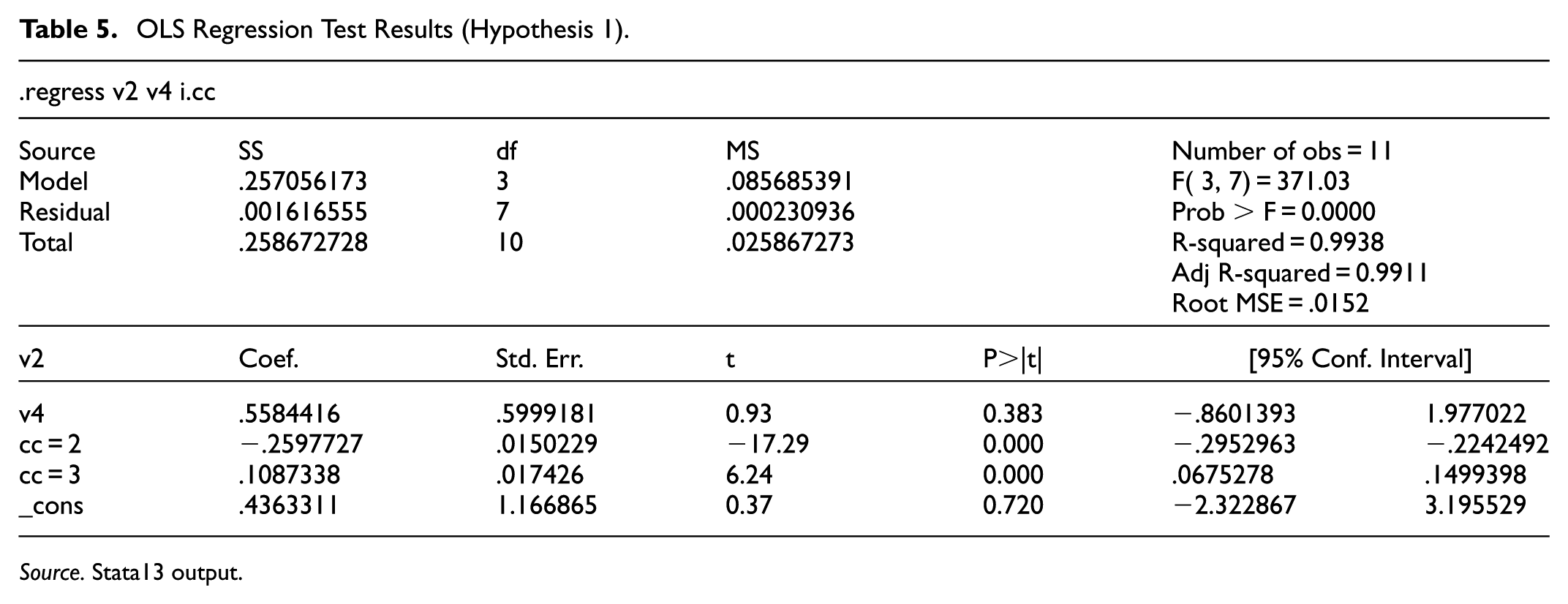
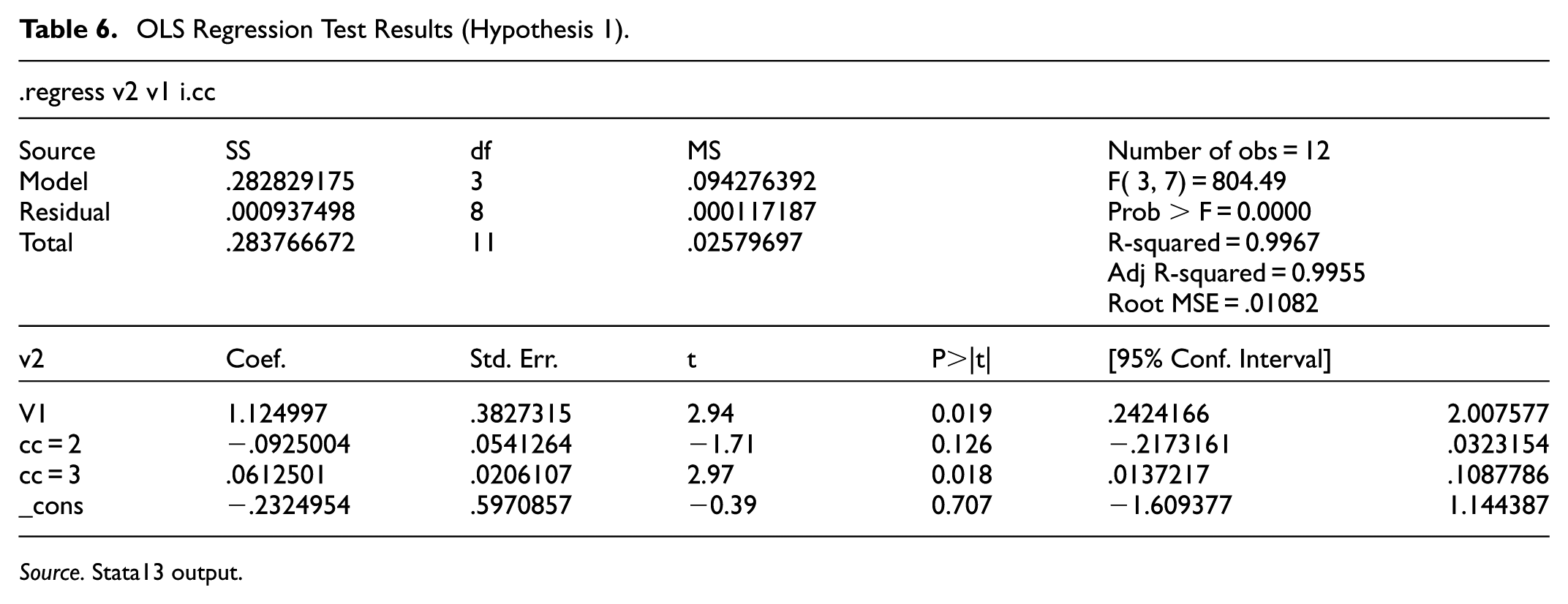
Based on the results obtained from the linear regression testing, the first hypothesis is to partially confirm the correlation between the number of graduates from higher education programs and the number of employees by educational attainment level, based on EU-27 observations (Table 5). However, no correlation is observed between the dependent variable and the employment rates of young people not in education or training and the employment rates in technology and knowledge-intensive sectors (KIS) at the national level. Independently looking at the country effect, Romania showcases a negative correlation between the number of graduates from higher education and the employment rates of young people (up to 34 years of age). This means that inclusion in the labor market occurs rather later, compared to Iceland, where the relationship is positive. Subsequently, in the case of Iceland, the 1% increase in the employment rate of young people determines a 10.8% increase in the number of graduates from higher education, meaning the labor market is linked to the education programs and incentivizes individuals to work on their skills and build up knowledge in their field of interest. The results also showed that Romanian higher education programs are not linked to the needs of the labor market (Table 6). In contrast, for the EU-27 and Iceland, there is a correlation of positive nature between the two variables.
OLS Regression Test Results (Hypothesis 1).
Source. Stata13 output.
OLS Regression Test Results (Hypothesis 1).
Source. Stata13 output.
OLS Regression Test Results (Hypothesis 1).

Source. Stata13 output.
Although it was expected to showcase a form of relationship, the connection between the graduates from higher education and the employment in technology and KIS was not observable (Table 7). This is a phenomenon concerning the EU-27 in its entirety and demonstrates, to a certain level, that higher education programs are still behind when it comes to accommodating the needs of the labor market, especially in terms of digital factors and KIS aspects (Table 8). The same conclusion can be drawn from the test results related to the employment of ICT specialists and the number of employed persons with ICT education (Table 9). Based on the country effect, for Romania in particular, the effect of the enterprises that employ ICT specialists and the number of graduates from higher education is negative, explaining that employment of ICT specialists is not based on their education but on other factors unrelated to higher education programs, such as professional development courses and/or self-learning (Table 10). In the case of Iceland, the effect is positive, meaning there is a certain level of alignment attained between higher education programs and the labor market’s needs for ICT skills.
OLS Regression Test Results (Hypothesis 1).

Source. Stata13 output.
OLS Regression Test Results (Hypothesis 1).

Source. Stata13 output.
OLS Regression Test Results (Hypothesis 1).

Source. Stata13 output.
Hypothesis 2—The Digital Inclusion Influences the Number of Individuals That Graduated from Higher Education
The second hypothesis has been confirmed, having a varied impact on a country basis. In Romania, digital inclusion (defined by individuals who had at least Internet access once a week), has a negative effect on the number of graduates from higher education (Table 11). Therefore, every 1% increase in the number of individuals accessing the Internet at least once a week determines a 22.8% drop in the number of higher education graduates. This phenomenon can be linked to several factors, including social media trends (e.g., earning opportunities online, aspiring to influence roles online, higher education programs minimizing effects on wealth and personal development discussions, etc.), self-education via online courses, studying through online forums and other readily available sources. In Romania, the number of graduates of various higher education programs exceeds the number of open job positions in the field of study. For Iceland, the 1% increase in digital inclusion determines an almost 1% increase in graduates. This means that the compatibility between higher education and the labor market is considerably higher compared to Romania.
OLS Regression Test Results (Hypothesis 2).

Source. Stata13 output.
Based on the lack of observation, the correlation between graduates and individuals with basic or above basic-level digital skills needs to be tested more conclusively. This would be of great interest for a future study and could form the basis for further investigating the hypothesis.
Hypothesis 3—The Geographical Location Impacts the Number of Graduates from Higher Education
The correlation between geographical location and higher education could not be determined based on the country effect due to the lack of observations on Iceland (Table 12). Nevertheless, urbanization impacts the number of graduates from higher education programs, both in absolute terms and for single persons. For each 1% increase in the urbanized population, there is a 110% increase in the number of individuals with academic education.
OLS Regression Test Results (Hypothesis 3).

Source. Stata13 output.
Hypothesis 4—The Governmental Expenditure on Education Draws More Students to Enroll in Higher Education
The fourth hypothesis cannot be confirmed based on the observations available from the Eurostat database due to the inconclusive results. It is believed that funding the education system would determine its modernization and development. This topic could be further assessed in another study.
Hypothesis 5—The Student Mobility Influences the Number of Graduates from Higher Education
Based on the test results, mobility opportunities do not influence the number of graduates from higher education programs (Table 13). Mobility programs do not represent significant incentives for students to enroll and graduate from higher education studies.
OLS Regression Test Results (Hypothesis 5).

Source. Stata13 output.
In conclusion, these hypotheses demonstrate how open innovation can shape educational and employment outcomes for higher education graduates, with collaborative and digitally inclusive frameworks playing a crucial role.
Conclusion and Discussion
George Ritzer initiated an intriguing discussion in 1996, coining the term McUniversity, to refer to the mechanistic provider of higher education. He described a place where studies were de-personalized, and mass education was provided to a mass market that rarely produced significant research. Moreover, Ritzer (1996) challenged the assumption that knowledge could be measured and submitted to ranking and accreditation based on streamlined approaches and impersonal control. Other authors (Izak et al., 2017) inferred that such a perspective would fail to cultivate the capacity for critical thinking and lack engagement from students. The focus on graduating from a “good school” has turned higher education into more of a product instead of seeking knowledge (Bhattacharya, 2018). Subsequently, it has been underlined how this assumption of the future university has failed, coming short of performing its expected social and economic role. Moreover, previous studies also suggest that the university's role is double-sided; one considers the objective of lowering the unemployment rate as the primary scope, while the other emphasizes the impact on society as a whole (Izak et al., 2017). Other authors (Haiven & Khasnabish, 2014) argue that the university replaced the factory and emerged as a place to discuss the future of humanity. Hence, a paradox emerges—the university remains a place that exists and does not exist.
We live in a world where the old system has proved outdated, but no new system has yet been instituted. Consequently, the university has become a business, with developed countries exporting higher education programs. For example, the Australian education system is the fourth largest GDP generator sector, with more than 60% of its international students graduating from business school. Today's university has gained corporation-like features, with high competitiveness in revenues and profits.
In this context, the results of the current study have underlined a series of aspects that will help deepen our understanding of the future of higher education. There is a generous gap between higher education and the labor market based on location and source of formal education programs. Nevertheless, the average EU-27 country exhibits a correlation between the number of graduates from higher education studies and the number of employees with academic degrees. This means that although the university presents similarities to a 20th-century factory, at least part of the knowledge it transfers to the market through its graduates is valuable for society in its current state. Another considerable gap was found through the dimension of digitalization. The ICT and KIS present no correlation to the education system, meaning that the skills employed in these domains are not transferable through higher education studies. This aspect would require further investigation and, if statistically proven, would help improve universities' approaches to their study programs. Moreover, the current research has determined that the ICT sector does not employ specialists based on their education level; thus, finding a job as an ICT specialist does not require completing a formal education program. Although this is the case at the EU-27 level, there is still a visible positive correlation between higher education programs and ICT skills needed for the market, confirming there are universities, especially with more technology programs, that manage to transfer the knowledge and skills usable in the field of study.
The effect of digital inclusion on the number of graduates from higher education programs is one of the essential aspects of this study. In Iceland, for every 1% increase in the digital inclusion indicator, there is a similar increase in the number of graduates from higher education programs. On average, this situation is not mirrored at the EU-27 level, as there are countries where greater Internet access lowers the graduation rate from academic studies. This result might be linked to a series of factors, hypothetically described as socio-economically generated factors, such as social media trends and country and region-level influences. It may also be a result of reliance on self-education and informal studies due to lack of funding or non-mandatory skill sets for the labor market, as well as factors intrinsically generated by the education services provided, such as lack of compatibility between formal education and the labor market, lack of focus on the applicability of skills, redundancy of services offered and skill set acquired, a factory-like approach to knowledge sharing and lack of knowledge freedom. Some of the factors mentioned above have been previously hypothesized by scholars (Haiven & Khasnabish, 2014; Izak et al., 2017).
As expected, at the EU-27 level, the urbanization effect is correlated to individuals graduating from higher education studies, showcasing a clustering of universities in urban and metropolitan centers. The study was inconclusive regarding the impact of government expenditure on education and mobility opportunities for students on the number of graduates from higher education programs. The dataset did not include sufficient observations for the statistical analysis.
Conclusively, the aim of the future university and future education system should be that of paradigm change and idea generator, with solid cooperation between formal education institutions, public authorities, and private organizations, based on knowledge transfer from customized course modules that are tailor-made for specific job profiles and career interests. Moreover, the university of the future should be the place for counseling on career advice and management support, intra- and inter-departmental collaboration, and promoting entrepreneurship. Most importantly, the university of the future must be a space of disruption, radical innovation, virtual and digital perspectives, boundless learning (online and offline), and societal freedom.
This study has implications both theoretically and practically. It, theoretically, adds to the literature on the OI paradigm by merging it with socio-economic development and the higher education context. It contributes to understanding how HEIs can serve as platforms for innovation and labor market alignment through their strategic use of digital transformation and interdisciplinarity.
From a practical point of view, the study offers the policymakers and the HEI administrators ideas on optimizing education systems for labor market needs. It pays attention to the need to promote digital participation in designing educational programs that follow technological trends, reiterating that mobility and cooperation interdisciplinarity are encouraged. The research also identifies gaps, including the non-alignment between ICT education and market demand, and suggests pathways in reengineering educational frameworks to improve employability and innovation capabilities. These findings prompt their urgent adoption of OI-driven strategies for sustainability and global competitiveness by HEIs.
The study's limitations come from its pillars, since we are aware that the analysis can be done using more variables that contribute to OI adoption in HEIs, but the database restricts the availability of data. Further study developments can explore the stakeholders' perceptions about the HEIs' readiness for OI and the link between HEIs and the labor market.
Footnotes
Acknowledgements
This publication was realised with the EEA Financial Mechanism 2014 to 2021 financial support through the Project Moving towards the new normal in digital learning—new dimension of human capital in higher education, contract number 20-COP-0043. Its content does not reflect the official opinion of the Programme Operator, the National Contact Point and the Financial Mechanism Office. Responsibility for the information and views expressed therein lies entirely with the authors.

Ethical Considerations
The study does not involve humans or animals; ethical approval and consent are not needed.
Funding
The authors disclosed receipt of the following financial support for the research, authorship, and/or publication of this article: The authors received financial support for the research from EEA Grants/Norway Grants, EEA Grants 20-COP-0043, but no funds for the publication of this article were received.
Declaration of Conflicting Interests
The authors declared no potential conflicts of interest with respect to the research, authorship, and/or publication of this article.
Data Availability Statement
Data used are public and available on Eurostat.